The Buenos Aires provincial election is a test of Milei’s popularity ahead of upcoming congressional polls next month.
Published On 8 Sep 20258 Sep 2025
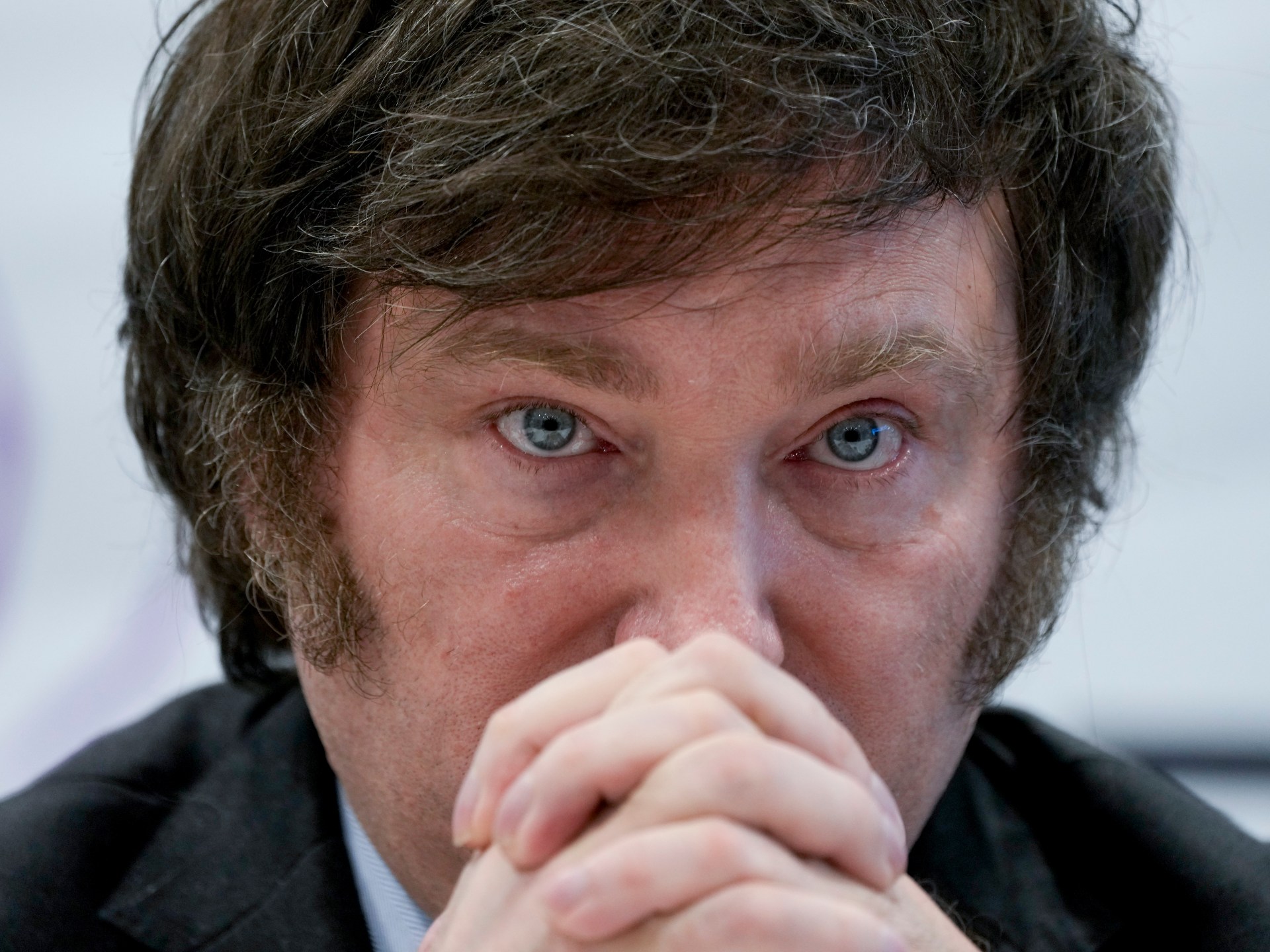
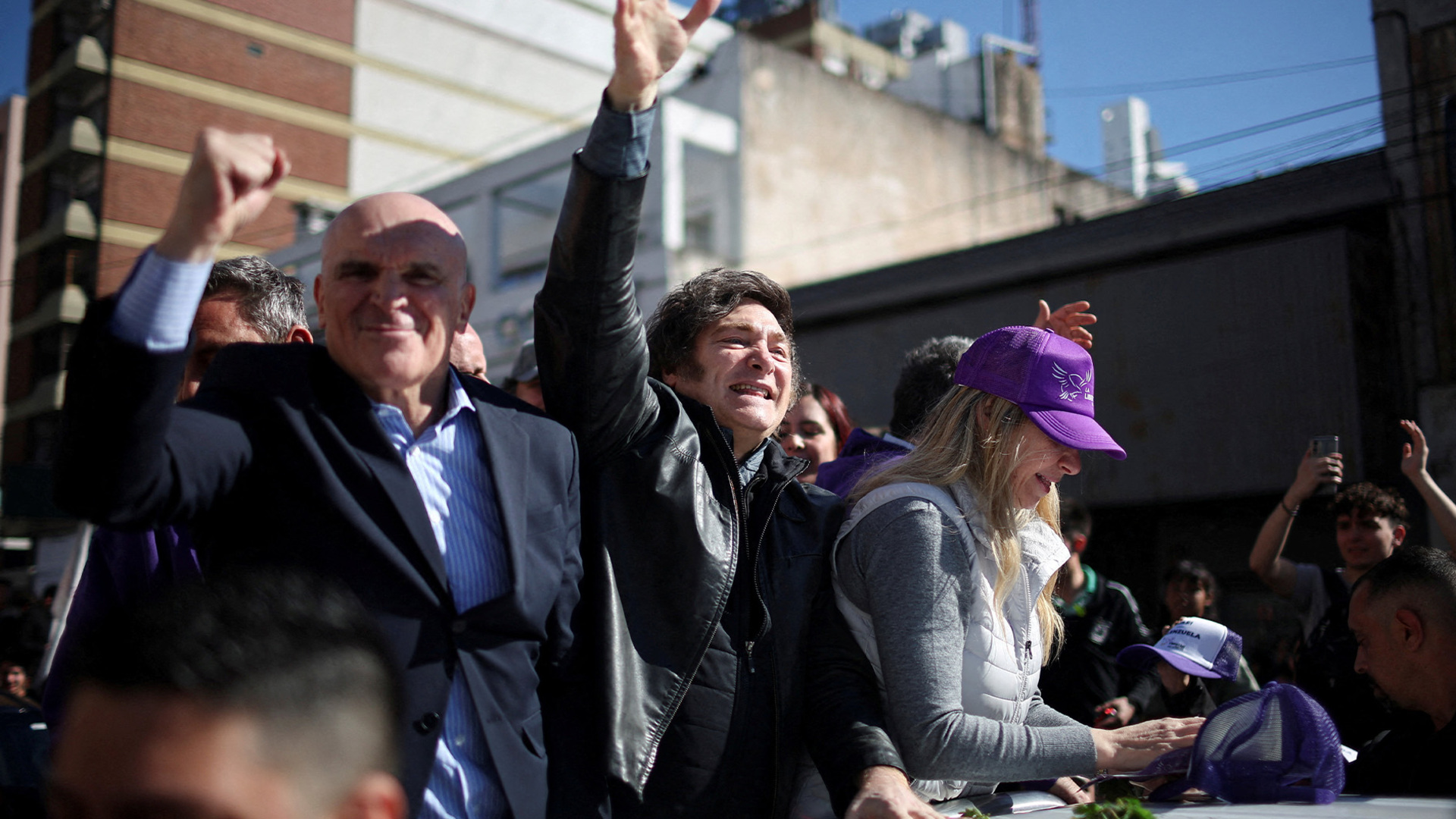
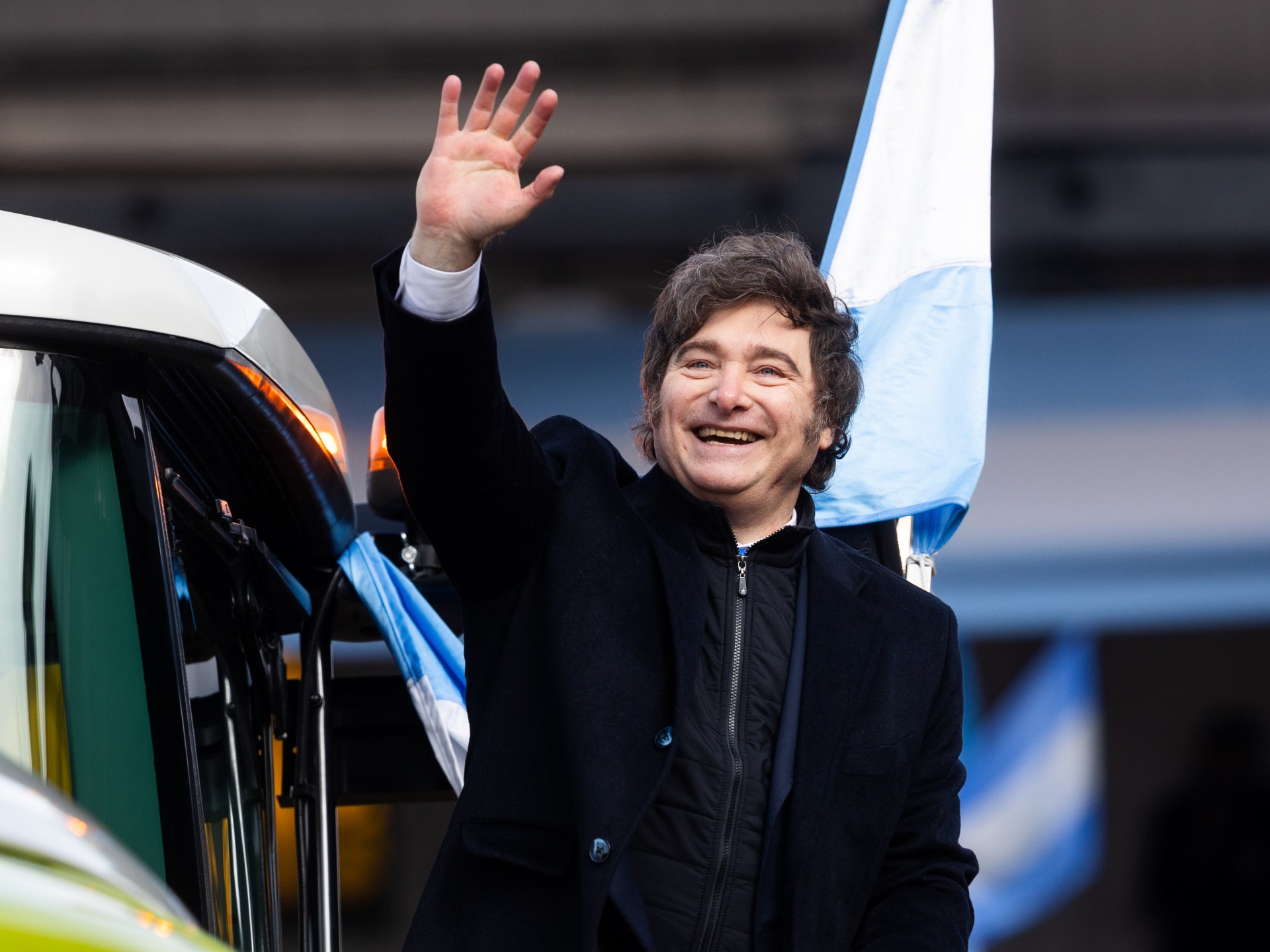
The party of Argentina’s libertarian president, Javier Milei, has suffered a crushing defeat in local elections in the capital, Buenos Aires, even before he completes two years in office, in the most significant act of frustration with his deep-cutting economic austerity policies.
The results, announced on Sunday, put the candidate for Milei’s recently formed La Libertad Avanza (LLA) party, or Liberty Advances, Diego Valenzuela, who captured 34 percent, far behind Gabriel Katopodis, the Peronist left-wing challenger who received 47.4 percent.
Recommended Stories
list of 3 itemsend of list
LLA won just two of the eight electoral districts of the Buenos Aires province.
Milei conceded that his right-wing party’s crushing 13-point loss to his rivals represented “a clear defeat”.
“We suffered a setback, and we must accept it responsibly,” he said after the results came in. “If we’ve made political mistakes, we’re going to internalise them, we’re going to process them, we’re going to modify our actions,” he added.
In a post on X, Argentina’s former Peronist president, Cristina Kirchner, said, “Did you see Milei? … Get out of your bubble, brother … things are getting heavy.”
However, the 54-year-old economist pledged not to retreat “1 millimetre” from his agenda to aggressively roll back the Argentinian state and cut public spending. “We will deepen and accelerate it,” he said.
The election for the leadership of Argentina’s wealthiest province is viewed as a litmus test for Milei’s so-called “chainsaw” measures, as 40 percent of the country’s population lives in Buenos Aires, and it accounts for a third of the country’s gross domestic product (GDP).
Argentina will go to the polls at the end of October for congressional midterms, which will be a crucial test of deep political support, with half of the seats in Argentina’s lower house up for grabs and a third of its senate.
Congress is already dominated by opposition parties, and the defeat in Buenos Aires will represent a blow to Milei’s hopes of expanding his influence.
Unemployment figures in Argentina are currently at their highest since 2021, during the COVID pandemic, and Milei’s government has also been caught in a corruption scandal linked to his sister and close aides.
Argentina also saw widespread protests after Milei vetoed a bill aimed at increasing pensions and disability spending. Congress later overturned his veto.
The governor of the southern Chubut province, Nacho Torres, said the vote was a “wake-up call from the citizenry”, while the governor of the northeastern Santa Fe province said voters were giving a “clear warning” to Milei. “People no longer want more shouting; they want facts. We Argentines want to grow and develop with security and in peace,” he added.
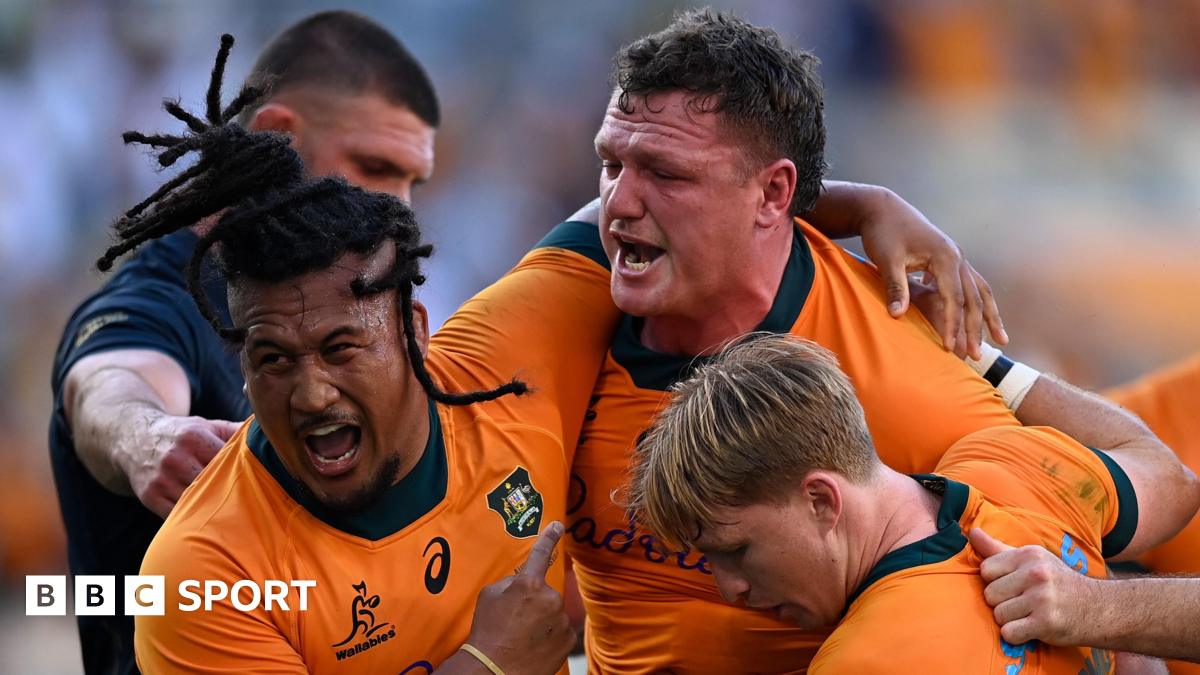
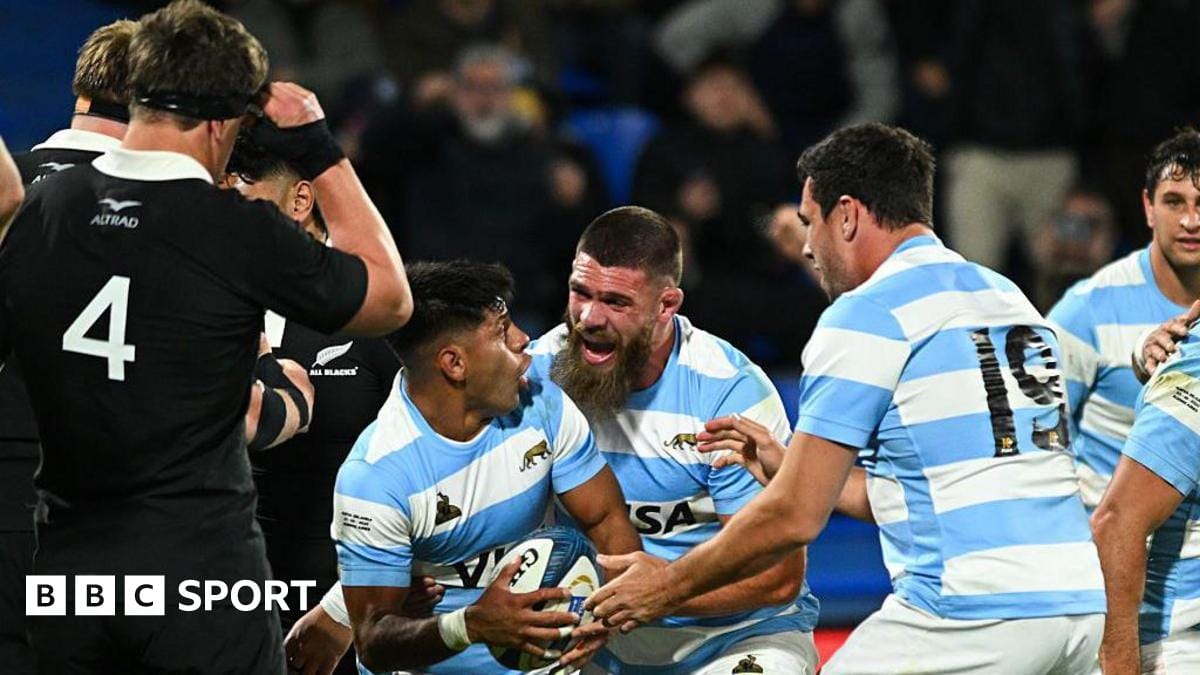
Angus Bell scored a dramatic winning try six minutes after the final hooter as Australia overturned a 21-7 half-time deficit to beat Argentina 28-24 in the Rugby Championship.
Juan Cruz Mallia had put Argentina 24-21 up with a penalty in the 79th minute but, after the Wallabies turned down three opportunities to level with their own kick, Bell went over the line.
“Full credit to the team, we could have gone for goal there and taken the draw,” said Australia captain Harry Wilson, whose side recovered from 22-5 down to beat South Africa 38-22 last month.
“Everyone believed that we could finish the job. And if boys want to win a game, we may as well back them.
“[I’m] proud of the boys, we weren’t at our best, but to find a way to get a win against such a high-quality opposition is a real credit to them.”
The Pumas had travelled to Queensland on the back of a first home win against New Zealand in their previous game.
And, despite a Nic White try for Australia, they went 21-7 up with the help of Bautista Delguy and Mateo Carreras tries, along with three penalties from Santi Carreras.
Two tries from Joseph Suaalii hauled Australia level at 21-21 before the late drama earned the hosts victory.
“It was far from a good performance,” said Pumas skipper Julian Montoya.
“Congrats to Australia, they took their opportunities. But in the second half, we gave away a lot of penalties that we can control, like offside, and then we gave them position pretty easy.”
A sold out stadium of 85 thousand in Buenos Aires witness two farewell Lionel Messi goals in World Cup qualifier.
Published On 5 Sep 20255 Sep 2025
Lionel Messi made sure he had good memories of playing a home qualifier with Argentina’s national team for the last time in his illustrious career.
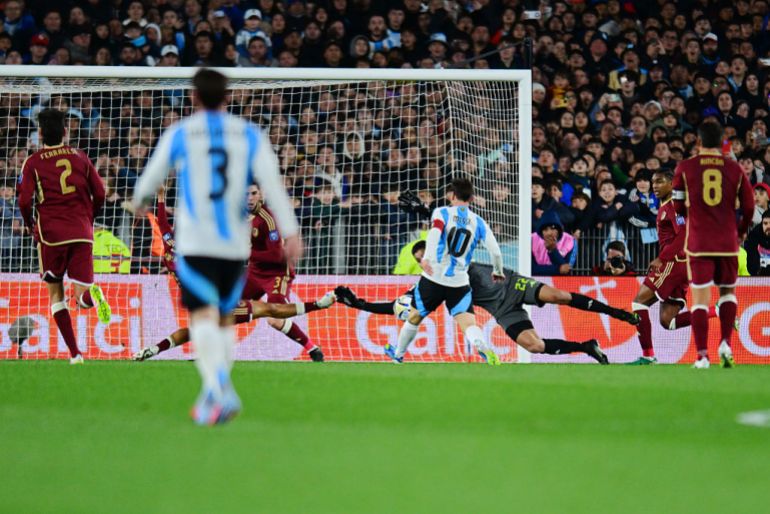
The former Barcelona forward scored twice on Thursday in Argentina’s 3-0 victory over Venezuela in front of a raucous sellout crowd that had gathered at Estadio Monumental to bid him farewell.
Recommended Stories
list of 4 itemsend of list
“Being able to finish this way here is what I’ve always dreamed of,” Messi said.
“I’ve experienced a lot of things on this pitch, both good and not so good, but it’s always a joy to play in Argentina, in front of our fans.”
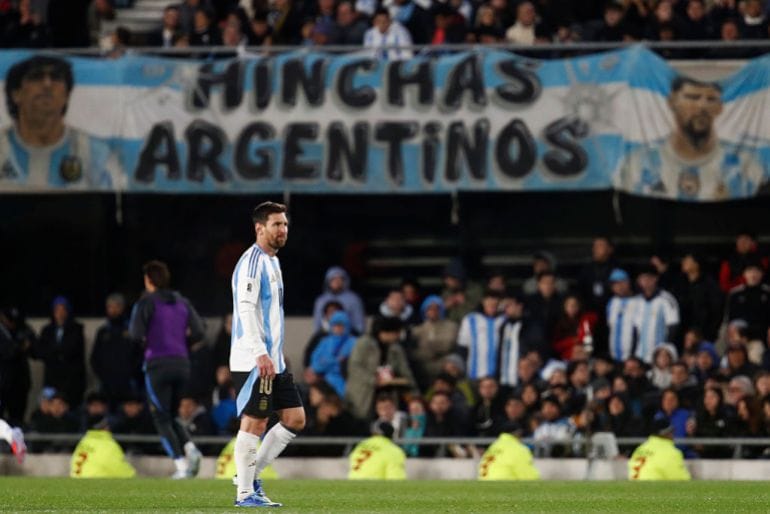
Lionel Messi of Argentina stands in front of one of the many banners prepared for him by the home fans during the World Cup qualifier [Marcos Brindicci/Getty Images]
Messi is yet to give any clues about when he will retire from the top level of the sport, but the qualifiers for the 2030 World Cup will begin in 2027, when he is 40.
The Argentina captain scored in the 39th and 80th minutes, and Lautaro Martinez added a goal in the 76th.
Messi now has 36 goals in South American World Cup qualifiers and remains the all-time scoring leader.
His Inter Miami teammate, Luis Suarez, has 29 goals in continental qualifying, but he has retired from Uruguay’s national team. Bolivia’s Marcelo Moreno Martins is third with 22.
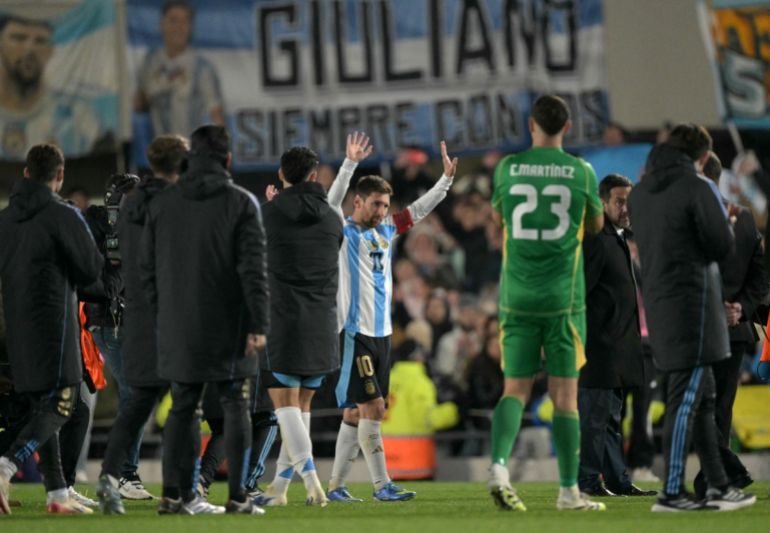
Argentina’s forward Lionel Messi bids final farewell as a player on home soil as he leaves the field in Buenos Aires [Juan Mabromata/AFP]
Looking ahead, Messi clarified he will only compete in next year’s World Cup if he feels physically fit.
“I’m excited, eager. It’s day by day, feeling the sensations. If I feel good, I enjoy it; if not, I’d rather not be there,” he said, adding that the nine months until the tournament kicks off “is a long time”.
Already qualified, the World Cup champions extended their tally to 38 points and will remain atop the South American qualifying standings regardless of what happens in the last round next Tuesday.
Venezuela, trying to qualify for its first World Cup, remains on 18 points and in seventh place. They’re still in contention to advance to an intercontinental playoff.
Lionel Messi of Argentina shoots to score his team’s first goal during the South American FIFA World Cup 2026 Qualifier match against Venezuela [Marcelo Endelli/Getty Images]
Authorities in Argentina have opened a criminal investigation into the daughter of a former Nazi official and her spouse after an 18th-century painting stolen from a late Jewish art dealer was recovered from one of their properties.
Prosecutors announced the probe on Thursday, which will focus on Juan Carlos Cortegoso and his wife Patricia Kadgien, whose father was the fugitive Nazi officer Friedrich Kadgien.
Recommended Stories
list of 3 itemsend of list
The elder Kadgien died in the late 1970s. He spent the final decades of his life in Argentina, having fled Germany at the end of World War II.
He is believed to have brought with him priceless artworks looted from the collections of Jewish families and businesses, including that of the Dutch art dealer Jacques Goudstikker.
Goudstikker had amassed a collection of nearly 1,400 pieces, according to the meticulous records he kept.
But that made his collection a target for Nazi officials like Hermann Goring, who sought to seize the artwork for himself. The elder Kadgien was Goring’s financial adviser.
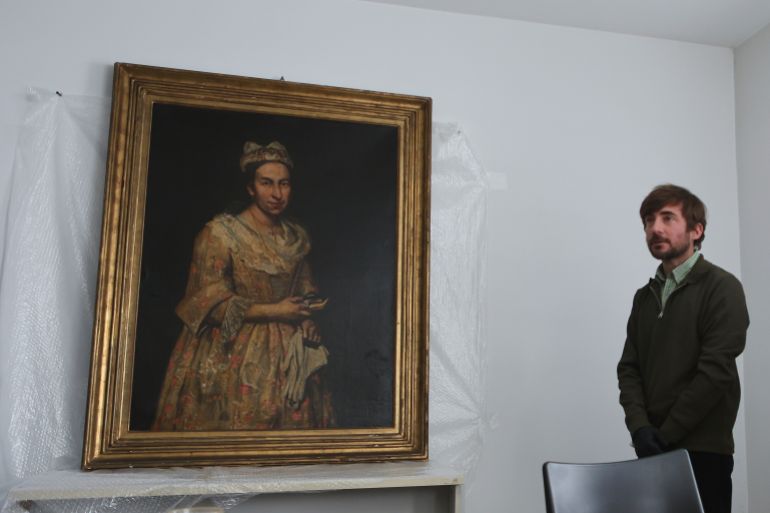
It is unclear how Kadgien came to own Portrait of a Lady by Giuseppe Ghislandi, an Italian portraitist prolific during the Baroque and Rococo periods.
The painting, a large portrait of the Contessa Colleoni holding gloves and a book, had not been seen in decades. As far as researchers knew, only black-and-white photographs of the artwork survived.
Goudstikker had been forced to sell many of his artworks to Nazi officials as the Holocaust unfolded in Europe.
In May 1940, the art dealer would ultimately die from a fall on board the SS Bodegraven, as he fled a genocide that would claim at least six million Jewish lives, as well as millions of prisoners-of-war, dissidents, LGBTQ people and those with disabilities.
Goudstikker’s heirs have been seeking to recover his collection ever since.
Prosecutors display Giuseppe Ghislandi’s 18th-century painting Portrait of a Lady at a news conference in Mar del Plata, Argentina, on September 3 [Christian Heit/AP Photo]
Thought lost, Portrait of a Lady reappeared suddenly last month, as the result of internet sleuthing.
Dutch journalists with the publication Algemeen Dagblad had been investigating the late Kadgien’s dealings with the Nazis, and they stumbled across a real estate listing from February for a house belonging to his daughter, Patricia Kadgien.
A picture in the listing showed Portrait of a Lady hanging above a green velvet couch.
The journalists published their findings on August 25, and soon after, police in Argentina raided the residence, which was located in the coastal city of Mar del Plata.
But the painting was nowhere to be found. Instead, authorities reported they had recovered other paintings, this time from the 19th century, that they suspected may also be Nazi-looted artwork.
A tapestry was found hanging where Portrait of a Lady was once photographed. The real estate listing, meanwhile, appeared to have been removed.
Police have since raided several properties belonging to Patricia Kadgien and her sister. On Wednesday, it was announced that the painting had finally been recovered.
Juan Carlos Cortegoso, husband of Patricia Kadgien, attends a hearing on September 4 [Jose Scalzo/Reuters]
But in Thursday’s hearing, federal authorities revealed they were charging Kadgien, 59, and her husband, Cortegoso, 62, with attempting a cover-up.
Prosecutor Carlos Martinez accused the couple of hiding the painting, despite being “aware that the artwork was being sought by the criminal justice system and international authorities”. That, he said, amounted to obstruction of justice and concealment.
“It was only after several police raids that they turned it in,” Martinez explained.
Patricia Kadgien and Cortegoso were briefly put under house arrest on Monday, though that was lifted in favour of a 180-day travel ban and a requirement that they seek court approval before leaving the house.
A lawyer for the couple reportedly asked a civil court this week to allow them to sell the painting, but that request was denied.
Martinez, meanwhile, told journalists on Thursday that Marei von Saher, one of Goudstikker’s heirs, had already reached out to the Federal Bureau of Investigation in the United States to ensure the painting’s restitution.
He explained that prosecutors had requested Portrait of a Lady be held at the Buenos Aires Holocaust Museum for now.
UK fintech Revolut will enter the Argentine market after agreeing to purchase Cetelem Argentina from BNP Paribas Personal Finance. This will be the fourth Latin American country where Revolut will have a presence.
The deal is subject to regulatory authorization, including that of the Central Bank of Argentina. Revolut will be able to use Cetelem Argentina’s banking license and operate as a bank. Financial terms of the acquisition have not been disclosed.
“Argentina is an important milestone in our mission to build the world’s first truly global financial super-app,” says Nik Storonsky, co-founder and Chief Executive Officer of Revolut. “We see immense potential to transform how people in Argentina manage their money by offering digital banking experiences that are transparent, flexible, and designed around their needs.”
Services will include multi-currency accounts with the US dollar accepted as a tool to arbitrate against fluctuations in the peso. In addition to fee-free transfers, currency exchange, credit, savings, and investment services are available.
Agustín Danza was appointed earlier this year as the Argentine CEO for Revolut, having previously served as head of Newports Capital and head of banking and payments at Mercado Libre.
Revolut debuted in Brazil with a multi-currency account that offers remittance capabilities, as well as cryptocurrency investments. In April 2024, they received a banking license from Mexico’s National Banking and Securities Commission, allowing them to operate a neobank subsidiary. In October 2024, Revolut announced plans to apply for a banking license in Colombia through the Superintendencia Financiera de Colombia.
Cetelem is one of the two smallest banks in the Argentine system of 73. Its total assets amount to $6.4 million. The deal is reported to include both the banking license and the assets. Other interested parties included Southern Cross Group, led by businessman Norberto Morita, and brokerage firm Criteria.
With banks in Argentina now able to offer mortgages, Revolut will face significant competition from traditional institutions as well as the likes of Mercado Libre and Ualá.
“With a thriving fintech scene and ambitious economic momentum, we are confident that Revolut’s disruptive approach to finance will flourish,” says Danza.
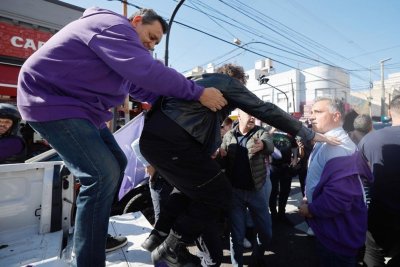
Argentine President Javier Milei (C) is guarded during an election campaign event in Lomas de Zamora, Argentina, on Wednesday. Milei was evacuated during the event after opposition protesters threw objects at the open-top vehicle in which he he was traveling, leading to clashes between some protesters and police officers. Photo by Juan Ignacio Roncoroni/EPA
Aug. 29 (UPI) — For the first time since taking office, Argentine President Javier Milei’s approval rating has fallen below 40%, according to a recent opinion poll.
The drop is no coincidence. In recent weeks, Milei has faced a series of corruption scandals affecting his inner circle, including his sister, Karina Milei, who serves as secretary general of the presidency and who the president calls “the boss.”
A poll by the Argentine consulting firm Tres Punto Zero, published this week, showed a sharp drop in the president’s approval rating after the scandals. In July, 48% of Argentines viewed his administration positively. However, three weeks later, that number fell to 39.8%, while 57% said they disapprove of his presidency.
The report also found that corruption has become the top concern for Argentines at 44.5%, far ahead of poverty at 16.1% and insecurity at 13.2%.
The results strike at the core of Milei’s campaign promise to end what he calls the “political caste,” a derogatory label he uses for an elite he says lives off and benefits from the state and political system.
Milei’s image has taken a major hit after the leak of audio recordings attributed to his lawyer, Diego Spagnuolo, recorded while he was executive director of the National Disability Agency, in which he allegedly referred to requests for bribes.
The recordings suggest a bribery scheme in the agency’s purchase of medicines, with 8% of contracts allegedly set aside for illicit payments to officials close to the president, including his sister, who also is hit top aide..
The fallout deepened because the leak coincided with Milei’s veto of a law declaring a “disability emergency” — a measure that, among other provisions, would have updated fees and created a non-contributory pension.
While the administration argued the veto stemmed from lack of funding, the opposition called it a budget cut aimed solely at meeting the government’s zero-deficit goal.
In that context, the leaked recordings became ammunition for critics who question the government’s consistency on the issue and fueled tensions in congress and in the streets, to the point that on Wednesday, Milei suspended a campaign event for the upcoming legislative elections in Buenos Aires after protesters threw stones at the presidential motorcade.
“Everything [Spagnuolo] says is a lie. We will take him to court and prove he lied,” Milei told reporters Thursday.
He added that the violence against him comes amid “crude defamatory accusations,” which he said “faithfully reflect the behavior of the caste in a new attempt to stop the process of change the country is undergoing.”
Public opinion analyst Shila Vilker, director of the consulting firm Tres Punto Zero, said the poll results were not surprising, noting that Milei has been embroiled in several controversies that have eroded his image while pursuing fiscal austerity measures that affected parts of the population, including vetoes of benefits for retirees and people with disabilities.
“There has been an overlap of problems. You have the pension veto, tensions over disability, pressure from the rising dollar and higher prices. And now there’s this new chapter, with corruption starting to surface,” she said.
Even so, Vilker stressed, Milei has not lost the trust of his base, as more than 75% of those who voted for him remain convinced of their choice.
“Three out of four are confident in their vote. They have not regretted it,” Vilker said.
Santiago Giorgetta, director of the consulting firm Proyección, said thst “those who support the president are also having a hard time.”
According to a national survey by his firm, only 35% of respondents consider Milei credible, while perceptions of his honesty have dropped to 32%.
He said the turning point in public opinion came in February, when the president promoted on social media the cryptocurrency $Libra, which was later accused of fraud.
“Before that, Milei had all the indicators in the green. After $Libra, they turned red,” Giorgetta said.
The Milei government is weathering a bribery scandal as a pair of important elections approach in September and October.
Published On 28 Aug 202528 Aug 2025
Argentina’s President Javier Milei has been forced to leave a campaign rally in Lomas de Zamora, a suburb of Buenos Aires, after protesters pelted his vehicle with small rocks, bottles and other objects.
On Wednesday, Milei and members of his libertarian party, La Libertad Avanza, held a rally for voters ahead of two key upcoming elections.
On September 7, the province of Buenos Aires is expected to hold local races. And on October 26, the country faces midterm elections, which will see half of the 257-seat Chamber of Deputies up for grabs, as well as a third of the Senate.
The elections are seen as major tests for Milei as he reaches the midpoint of his four-year term as president.
But Milei, whose dark-horse election victory in 2023 upset Argentina’s political establishment, has faced backlash for the dramatic “shock treatment” he has attempted to undertake with the country’s economy.
His administration has also been rocked by a bribery scandal involving his sister, Karina Milei.
As Milei and Karina stood on the bed of an open pick-up truck on Wednesday, waving to supporters and signing autographs, witnesses reported seeing objects flying in their direction as protesters attempted to approach the vehicle.
Presidential spokesperson Manuel Adorni shared a picture on the social media platform X, with a circle highlighting what appeared to be a rock thrown in the president’s direction.
“They could have killed anyone,” Adorni said of the protesters. “They don’t care about human life, and they’ll care even less about the country. The end.”
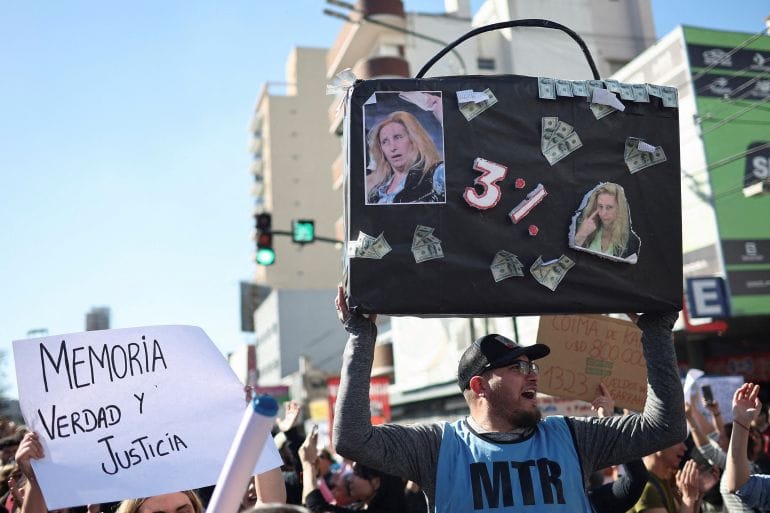
Video captured the pick-up truck accelerating to escape the crowd. One protester held aloft a mock suitcase with Karina Milei’s face on it and dollar bills sticking out in odd places. Others chanted, “Out with Milei!”
The news agency AFP reported that one Milei supporter had to be transported by ambulance for medical care after clashes with protesters resulted in rib injuries. But no officials in the Milei pick-up truck were injured.
Milei himself used the incident to campaign on social media against “Kirchnerism”, a left-wing political movement.
“The empty-headed nutters throwing rocks resorted to violence again,” he wrote in one post. “On September 7 and October 26, let’s say at the polls: KIRCHNERISM NEVER AGAIN.”
In another, Milei put the choice more starkly: “Civilisation or barbarity.”
A demonstrator holds a mock suitcase with fake dollar bills in reference to a corruption scandal involving the president’s sister, Karina Milei [Agustin Marcarian/Reuters]
Milei has taken dramatic action to regulate Argentina’s spiralling inflation, but his austerity campaign has included cuts to social safety-net services, widespread government layoffs and sweeping deregulation.
He famously campaigned with a chainsaw to symbolise his approach to government bureaucracy. But critics warn that his efforts have left Argentina’s poorest citizens more vulnerable. While official statistics indicate inflation has dropped, unemployment and poverty have risen.
The bribery allegations have heightened the backlash against his administration.
Karina Milei occupies a high-level position in Milei’s government, as a general secretary to the president.
But audio recordings have captured Diego Spagnuolo, the head of the National Disability Agency and a close ally of Milei, claiming that Karina took a cut from government contracts intended to help those with disabilities.
Milei has since fired Spagnuolo, and in his public appearances on Wednesday, he repudiated the recordings.
“Everything he says is a lie,” Milei told reporters in Lomas de Zamora. “We are going to bring him to justice and prove he lied.”
Milei put on a united front with his sister at Wednesday’s rally, appearing side by side with her in the pick-up truck.
There were emotional scenes in Buenos Aries as Argentina celebrated their first home victory over New Zealand with a 29-23 triumph in front of a raucous crowd.
The Pumas avenged last weekend’s 41-24 Rugby Championship defeat in Cordoba that had seen the All Blacks return to the top of the world rankings.
Juan Martin Gonzalez and Gonzalo Garcia scored tries either side of the break as Argentina ended their 15-match run without a home win against New Zealand that stretched back to their first meeting in 1976.
There were also 13 crucial points from the boot of Santiago Carreras.
Billy Proctor, Fletcher Newell and Samisoni Taukei’aho went over for New Zealand. However, they were left to rue an ill-disciplined performance that saw three players sent to the sin-bin – including two in the space of three minutes shortly before the break.
Damian McKenzie’s last-minute penalty at least secured a losing bonus point for the visitors, who top the table with six points from two games.
Argentina remain bottom but are now level on points with South Africa, who beat Australia 30-22 earlier on Saturday, with all four teams having won one game.
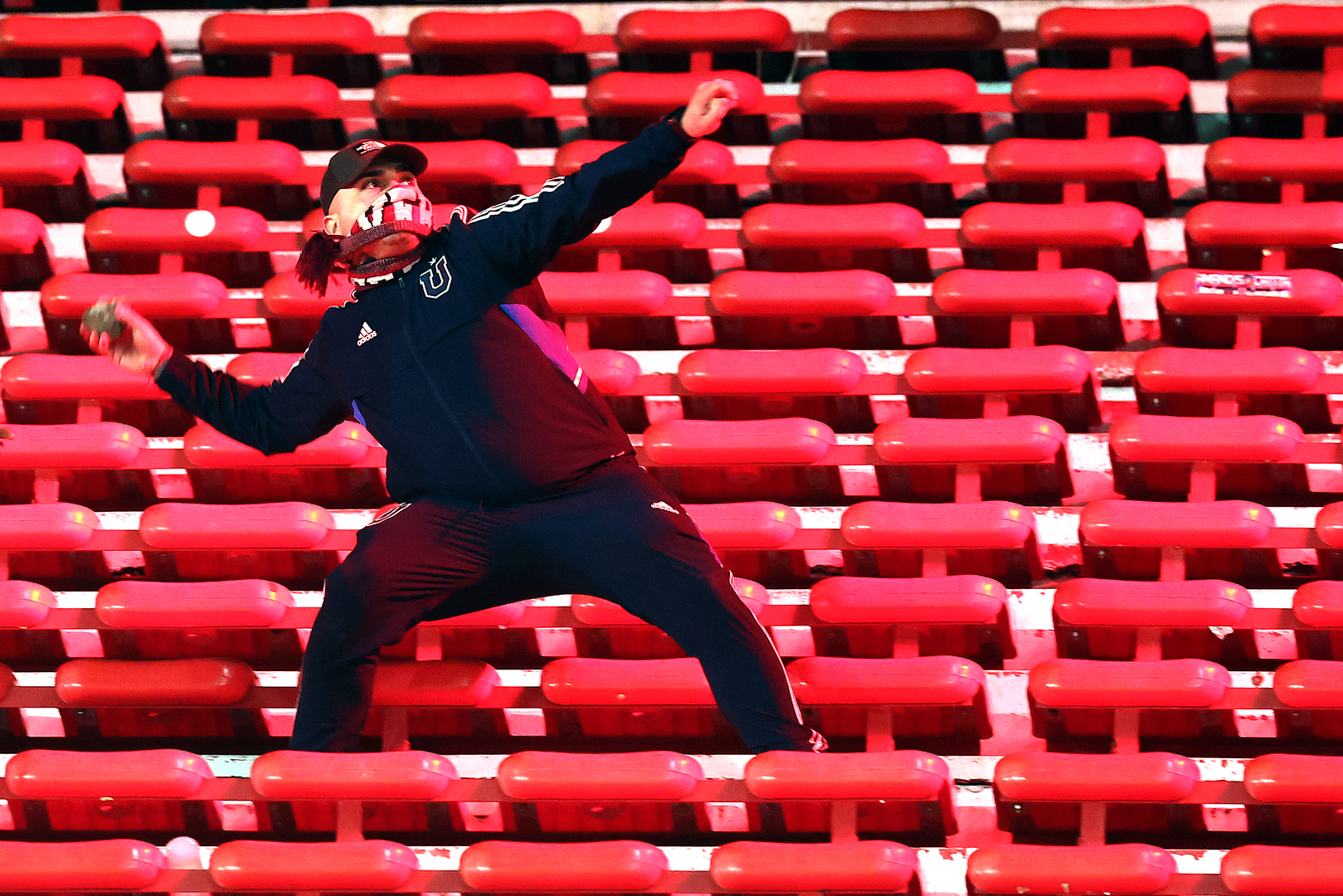
Argentine and Chilean fans hurled sticks, stones, and stun grenades during violent clashes at a Copa Sudamericana match in Buenos Aires that left 19 injured. Officials said at least 90 men and 5 women remain in custody. FIFA has condemned the “shocking” violence.
Police claim Brazil’s ex-President Jair Bolsonaro wrote letter seeking asylum in Argentina as coup investigation ramped up in 2024.
Brazil’s federal police said that messages found on the mobile phone of former Brazilian President Jair Bolsonaro showed he once wanted to flee to Argentina and request political asylum from Argentinian President Javier Milei.
The police said in a report released on Wednesday that the letter seeking asylum was saved on Bolsonaro’s mobile phone in February 2024, just days after the former president’s passport was seized amid an investigation of his involvement in an alleged coup plot.
It was unclear whether the asylum request was sent, and the Argentinian president’s office did not immediately respond to a request for comment.
The asylum request document revealed on Wednesday was part of the final police report that formally accused Bolsonaro and his United States-based son, Eduardo, of working to interfere in the ongoing legal process related to the ex-president’s forthcoming trial for allegedly plotting a coup.
Bolsonaro’s trial is expected to start on September 2, in which he faces up to 40 years in prison if convicted of plotting to overthrow his democratically elected successor as president, Luiz Inacio Lula da Silva, in 2022.
Police have now recommended that the ex-president and his son be charged with “coercion in the judicial process” and “abolition of the democratic law” related to interference in the coup case. The combined sentence for the two offences could reach up to 12 years in prison.
Brazilian news outlet O Dia said on Wednesday that recordings were also found on a device seized during the police investigation of Bolsonaro, which indicated “attempts to intimidate authorities and impede the progress of the investigations related to the inquiry into the attack on democracy, including attempts to use external influence”.
Bolsonaro – who has been under house arrest since early August – has maintained his innocence in the coup trial, which US President Donald Trump, an ally, has called a “witch-hunt”.
Bolsonaro’s son, Eduardo, stepped down from his position as a Brazilian congressman in March and moved to the US, where he is campaigning for the Trump administration to intercede on his father’s behalf.
Those lobbying efforts have been successful, with the Trump administration taking punitive action against Brazil over the case, including sanctions against court officials.
Trump has also imposed a massive 50 percent tariff on many Brazilian exports to the US, citing Bolsonaro’s trial.
President Javier Milei of Argentina has proposed a new $1m initiative to strengthen relations between Latin America and Israel, ahead of an anticipated visit from Israeli Prime Minister Benjamin Netanyahu.
On Monday, the Genesis Prize Foundation — a group that offers an annual award to members of the Jewish community — announced that Milei, its most recent winner, would use his prize money to launch a new nonprofit, the American Friends of the Isaac Accords (AFOIA).
“AFOIA is a vehicle to promote Milei’s bold vision and encourage other Latin American leaders to stand with Israel, confront antisemitism, and reject the ideologies of terror that threaten our shared values and freedoms,” Genesis Prize co-founder Stan Polovets said in a news release.
The statement explained that the new nonprofit was inspired, in part, by efforts under United States President Donald Trump to normalise relations between Israel and its Arab neighbours.
During Trump’s first term, from 2017 to 2021, countries like Bahrain and the United Arab Emirates agreed to establish diplomatic relations with Israel in a series of deals known as the Abraham Accords.
Milei’s efforts, meanwhile, come as Israel faces growing condemnation in Latin America over its war in Gaza, which United Nations experts have compared to a genocide.
Countries like Colombia and Bolivia have severed diplomatic ties with Israel since the start of the war in 2023, and Brazil recently became the latest nation to join a case against Israel brought by South Africa before the International Court of Justice.
“The Isaac Accords aim to mirror the success of the Abraham Accords by fostering diplomatic, economic, and cultural cooperation between Israel and key Latin American nations,” the news release said.
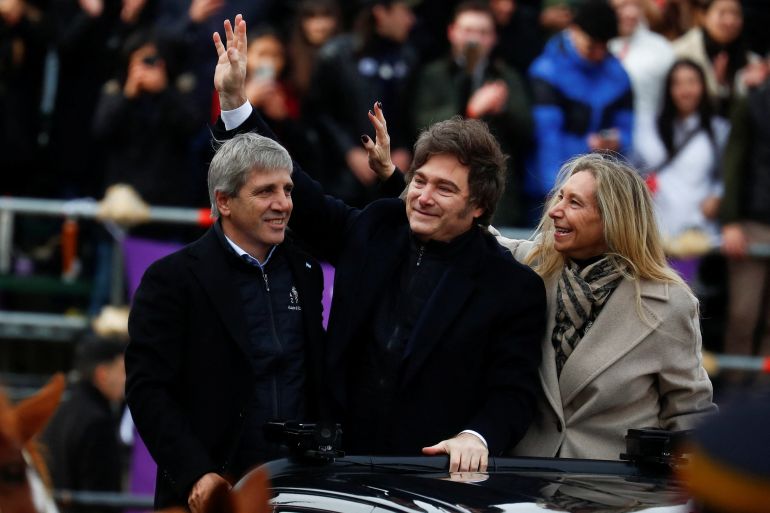
President Javier Milei waves as he stands between Economy Minister Luis Caputo and General Secretary of the Presidency Karina Milei on July 26 [Matias Baglietto/Reuters]
Pushing against a regional trend
The nonprofit will initially focus its efforts on three Latin American countries: Uruguay, Panama and Costa Rica. The news release credits regional analysts as saying those countries are “primed for enhanced cooperation with Israel”.
“These nations stand to benefit significantly from Israeli expertise in water technology, agriculture, cyber defense, fintech, healthcare, and energy,” it said.
But the Isaac Accords nonprofit ultimately aims to expand its mission to Brazil, Colombia, Chile and potentially El Salvador by 2026.
Danny Danon, Israel’s ambassador to the United Nations, applauded the establishment of the nonprofit and praised Milei as “setting an example for his neighbors in the region”.
But he acknowledged that several high-profile Latin American leaders have spoken out against Israel’s military campaign in Gaza.
“Given the hostility toward the Jewish state from some nations in the region, support of Israel by Latin American countries which are now on the sidelines is very important,” Danon said in the release.
Top leaders like Brazilian President Luiz Inacio Lula da Silva have forcefully denounced the human rights abuses unfolding in Gaza, where more than 61,500 Palestinians have been killed and many risk perishing from hunger.
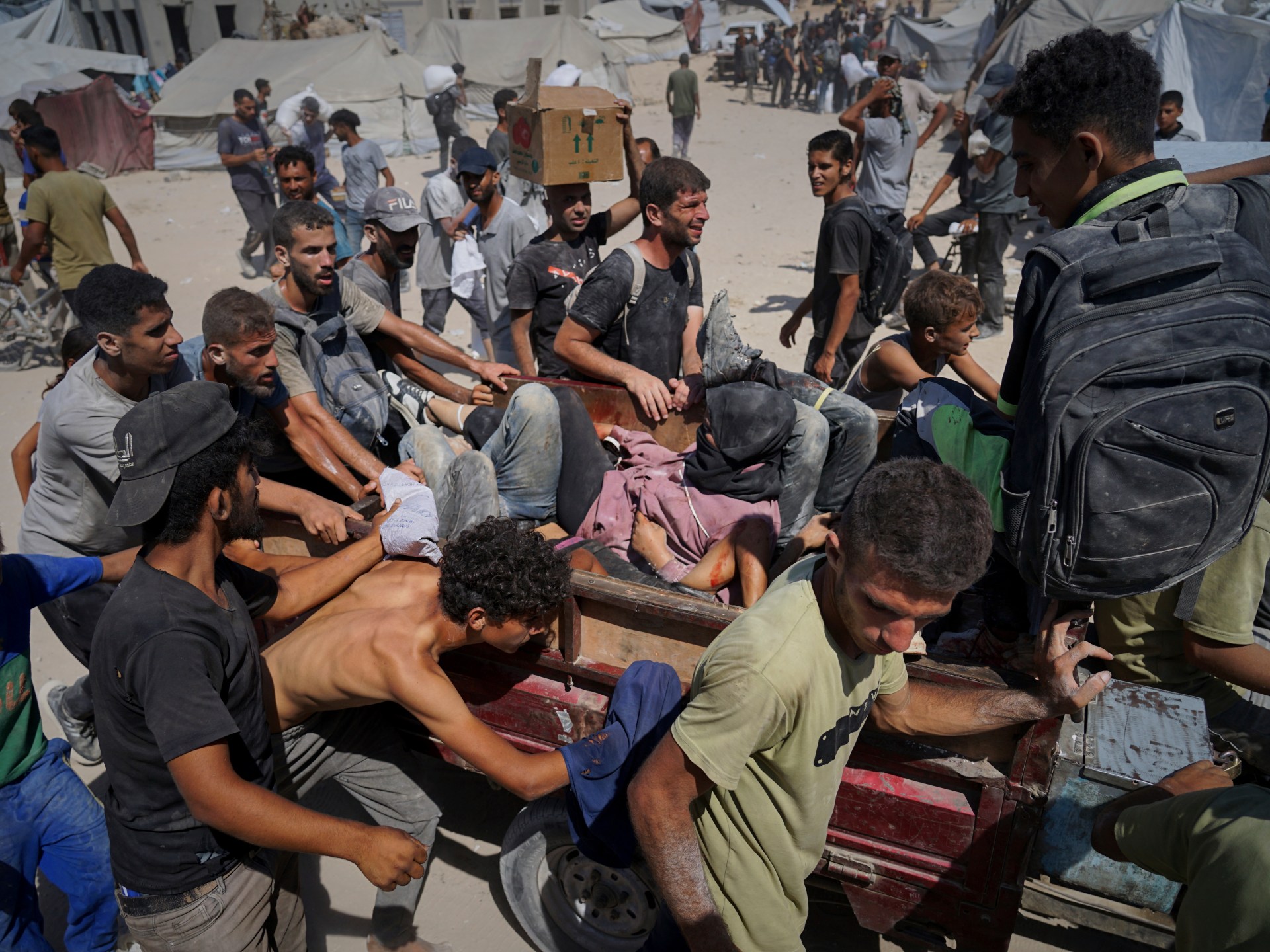
The enclave is under an Israeli blockade that restricts the amount of food, water and essential supplies reaching residents. Last month, the UN warned of “mounting evidence of famine” and “catastrophic hunger” in Gaza.
“We cannot remain indifferent to the genocide carried out by Israel in Gaza, the indiscriminate killing of innocent civilians and the use of hunger as a weapon of war,” Brazil’s President Lula told the BRICS economic alliance in July.
Milei embraces Israel
But while left-wing Latin American leaders like Lula take steps to distance themselves from Israel, Milei, a libertarian, has taken the opposite approach.
In June, for example, Milei confirmed his intention to move Argentina’s embassy in Israel from Tel Aviv to Jerusalem by 2026, despite conflicting Israeli and Palestinian claims on the city. Trump made a similar decision in 2018.
Milei has also praised Israel for its human rights record, including in a social media post this past May honouring the 77th anniversary of its establishment in 1948, which resulted in the mass displacement of Palestinians.
“I congratulate the State of Israel on its short but glorious 77 years of existence,” the Argentinian president wrote. “Like Argentina, Israel is a beacon of FREEDOM and DEMOCRACY.”
Milei, a Catholic, has even expressed interest in converting to Judaism, which would be a first for an Argentinian president.
His selection as the 2025 Genesis Prize winner is considered a first for a non-Jewish person, and it is tradition for winners to give the cash award to a cause they support.
But Milei’s pro-Israel stance has prompted public backlash in Argentina. On Saturday, thousands of protesters flooded the streets of the capital Buenos Aires to condemn Israeli actions in Gaza.
“We not only demand the opening of borders and the entry of humanitarian aid: We support the fight for a #FreePalestine. Zionism is not Judaism,” one group involved in the protests, JudiesXPalestina, posted on social media.
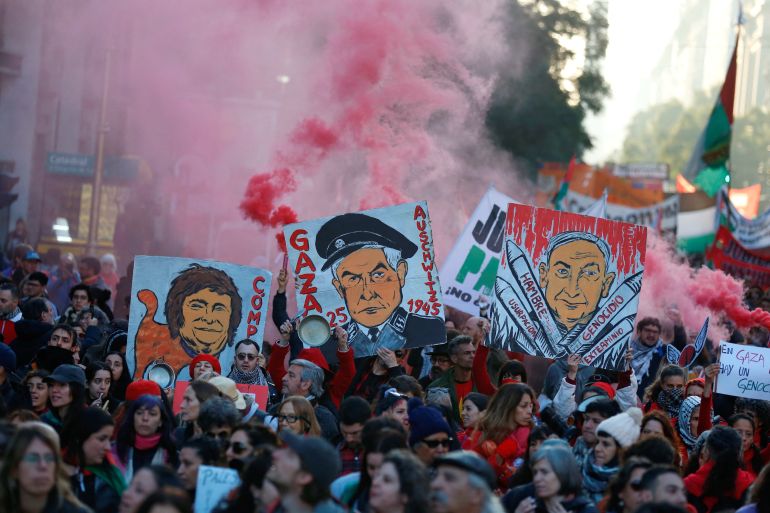
Protesters hold signs denouncing President Javier Milei and Israeli Prime Minister Benjamin Netanyahu in Buenos Aires, Argentina, on August 9 [Francisco Loureiro/Reuters]
A test for the International Criminal Court
Many demonstrators also voiced opposition to reports that Netanyahu would visit Argentina in the coming weeks.
The Israeli prime minister’s arrival would test Argentina’s commitment to the International Criminal Court (ICC), of which it is a member.
In 2024, the ICC issued arrest warrants for Netanyahu and his former defence minister, Yoav Gallant, on the basis that there are reasonable grounds to believe they had overseen war crimes in Gaza.
The ICC, however, relies on member countries to carry out such arrests. Argentina’s decision to welcome Netanyahu may therefore be seen as a rebuke to the court’s authority, further weakening its power.
From a festival celebrating the International Day of the World’s Indigenous Peoples in El Salvador to solemn commemorations marking the 80th anniversary of the atomic bombing in Japan and the ongoing Israel-induced starvation and malnutrition crisis in Gaza, here is a look at the week in photos.
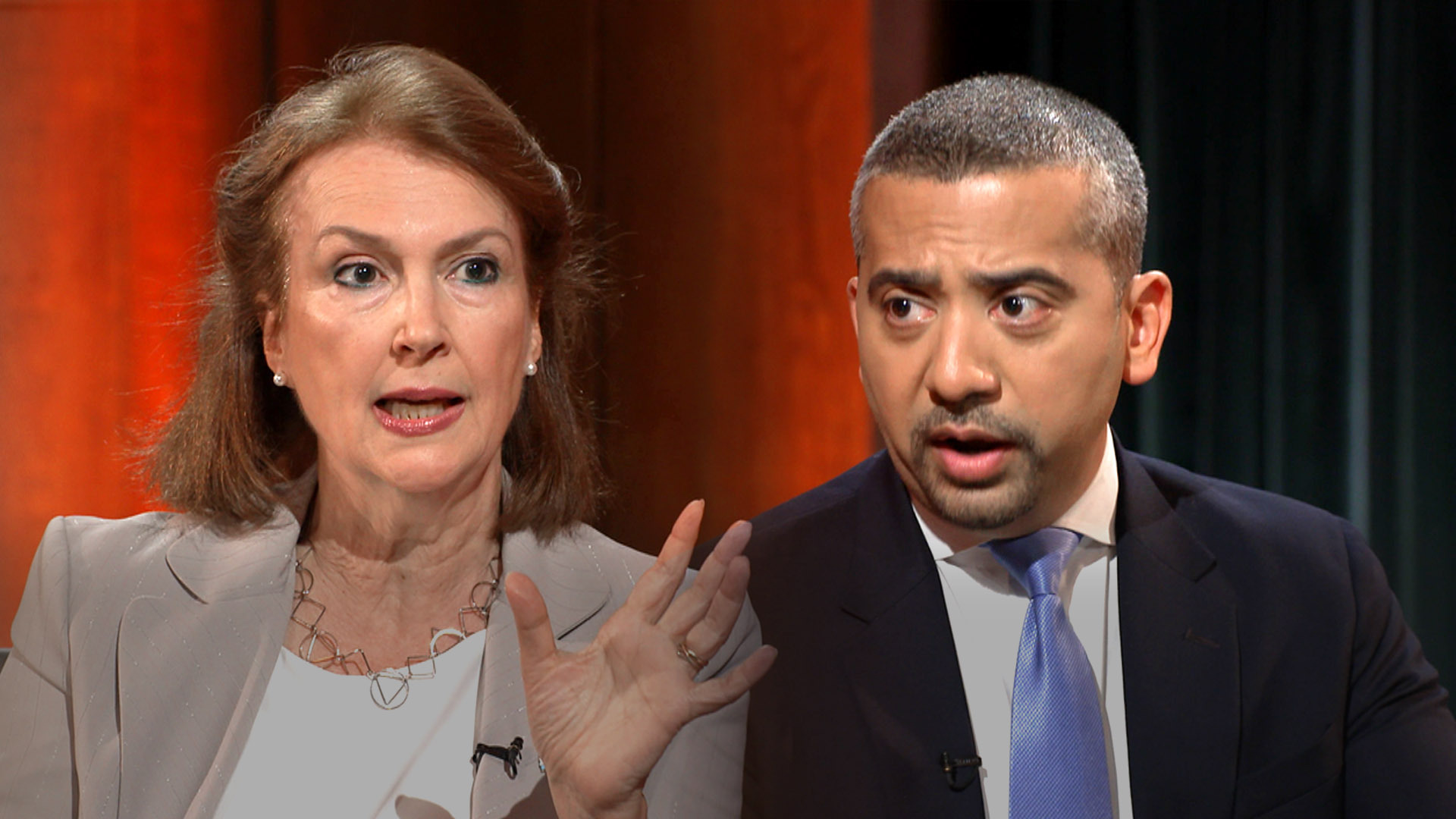
Mehdi Hasan debates ex-FM Diana Mondino on Milei’s fitness to lead and his radical ‘chainsaw’ economics.
In 2024, Argentina’s far-right President Javier Milei launched an economic overhaul that slashed public spending, gutted state institutions and triggered massive protests.
The government dubbed it “chainsaw economics”. Critics say it’s deepening poverty and pushing the country into chaos, while Milei continues to make headlines for bizarre behaviour, including claims he takes political advice from his dead dog’s clones.
So who is really running Argentina – and at what cost?
Mehdi Hasan goes head-to-head with Diana Mondino, who served as Milei’s foreign minister before being abruptly fired. She defends the president’s policies, brushes off Milei’s personal attacks, and distances herself from his more extreme views, including his support for organ sales and his insults towards the late Pope Francis.
Joining the discussion are: Matias Vernengo – Economics professor at Bucknell University and former official at Argentina’s Central Bank Maxwell Marlow – Director of public affairs at the Adam Smith Institute Martina Rodriguez – Member of the Argentina Solidarity Campaign and the Feminist Assembly of Latin Americans
Despite his austerity measures, the president’s party is expected to do well in the crucial October mid-term elections.
Argentina’s libertarian president, Javier Milei, has vetoed bills aimed at increasing pensions and disability spending, amid ongoing protests against his austerity fiscal policies, which are hitting many people in their day-to-day lives.
Milei’s administration announced the decision on Monday, less than three months before the crucial mid-term elections, saying the country does not have enough money to finance the legislation.
The vetoes can still be overturned by a two-thirds majority in the Congress, where politicians passed the laws in July.
The Argentinian president, whose party only holds a small number of seats in parliament, will hope for a repeat of last year, when he managed to successfully stop pension rises, thanks to support from the conservative PRO bloc.
In a statement published on X on Monday, the president’s office suggested that the now-vetoed laws had been approved by Congress in an “irresponsible manner”, without identifying funding sources.
It claimed that the spending rises would have amounted to 0.9 percent of gross domestic product (GDP) this year and 1.68 percent of GDP in 2026.
“This president prefers to tell an uncomfortable truth rather than repeat comfortable lies,” the president’s office said.
“The only way to make Argentina great again is with effort and honesty, not the same old recipes,” it added, echoing the “make America great again” rhetoric of the United States President Donald Trump.
Since taking office in December 2023, Milei, a self-described “anarcho-capitalist”, has slashed federal spending in an attempt to reduce inflation.
As part of these largescale economic changes, his government has removed tens of thousands of civil service jobs and made drastic cuts to social spending and public works.
In 2024, Milei’s policies saw Argentina gain its first annual surplus in 14 years, and in June, Argentina’s monthly inflation rate fell below 2 percent for the first time since 2020.
However, the president’s measures have been blamed for tipping millions of people into poverty in the first half of last year.
Unemployment has also grown, and prices are up 40 percent year-on-year, conditions which have led people to protest.
Researchers say pensioners, who have been at the centre of weekly demonstrations, are the hardest-hit group.
Despite the public protests, polls show that Milei’s party holds a sizeable lead ahead of October’s mid-term elections, which will be seen as a referendum on his first two years in office.
BUENOS AIRES, Argentina — The United States and Argentina on Monday announced that they are working on a plan to allow Argentine tourists to again travel to the U.S. without a visa.
It probably will take two to three years before visa-free travel becomes a reality for Argentine passport holders, but the Trump administration’s move to kickstart the process marked a show of support for President Javier Milei, its staunchest ally in South America and a darling of conservatives around the world.
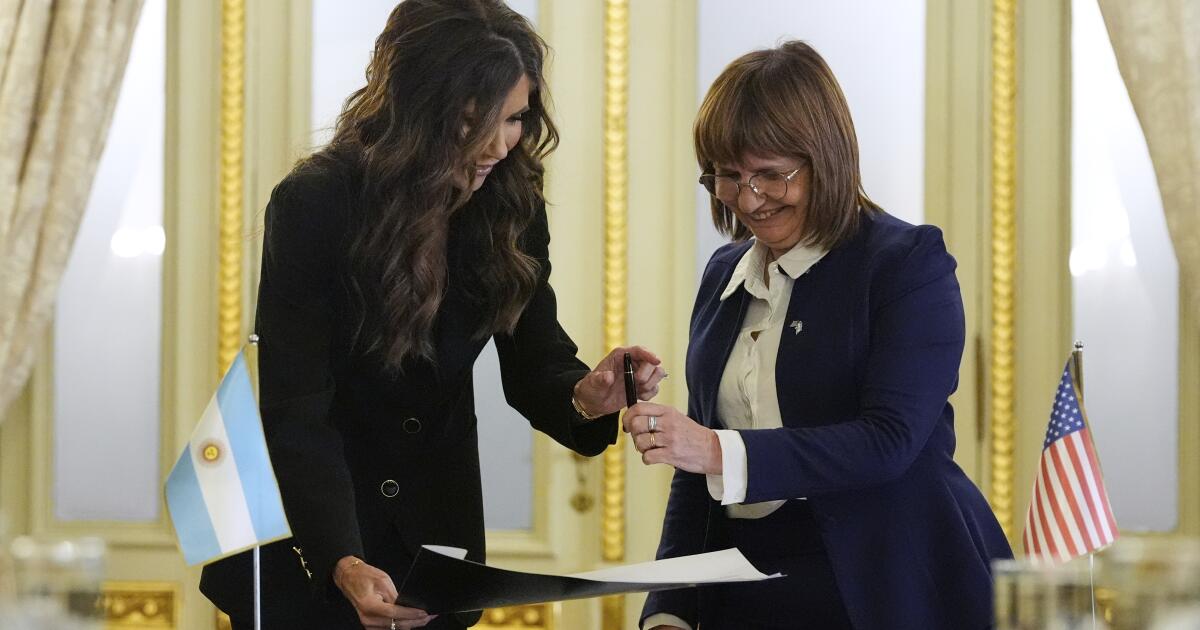
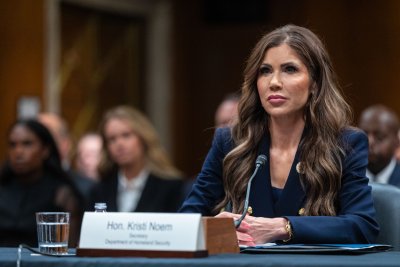
The gesture coincided with a visit by Homeland Security Secretary Kristi Noem to Buenos Aires, the Argentine capital, for closed-door meetings with Milei and his officials. Noem signed the statement of intent alongside Security Minister Patricia Bullrich in Milei’s office.
Noem, on horseback at the country’s sprawling Campo De Mayo army base and donning a cowboy hat and jeans, told reporters that the Trump administration would put Argentina on an “expedited path” to enrollment in the Visa Waiver Program.
Still, she cautioned that securing approval within the next year “would be very difficult,” according to a White House pool report.
The Department of Homeland Security praised Milei for reshaping Argentina’s foreign policy in line with that of the U.S.
“Under President Javier Milei’s leadership, Argentina is becoming an even stronger friend to the United States — more committed than ever to border security for both of our nations,” the statement said.
This first step toward waiving visa requirements for Argentines, it added, “highlights our strong partnership with Argentina and our mutual desire to promote lawful travel while deterring threats.”
The department cited Argentina as having the lowest visa overstay rate in the U.S. of any Latin American country.
Trump’s loyal ally in South America
The removal of rigorous U.S. visa requirements — particularly at a time when President Trump is tightening restrictions for foreign nationals — would offer a symbolic victory to Milei, a self-described “anarcho-capitalist” who rose to power as a far-right outsider mimicking Trump’s war-on-woke rhetoric and skillful use of social media.
When he became the first world leader to visit Trump after the U.S. election, Milei pranced around Mar-a-Lago like an excited school boy.
At the Conservative Political Action Committee convention in Washington in February, he gifted billionaire Elon Musk a bureaucracy-slashing chainsaw to support his DOGE campaign to eliminate government waste.
When not riding the far-right, pro-Trump speaking circuit, Milei is focused on straightening out South America’s second-largest economy after years of turmoil under left-wing populist rule. Through tough budget cuts and mass layoffs, Milei has succeeded in driving down Argentina’s notorious double-digit inflation.
The last time Argentines didn’t require a visa to enter the U.S. was in the 1990s under another free-market devotee, the late former President Carlos Menem.
Menem’s neo-liberal reforms and pegging of the peso 1 to 1 to the U.S. dollar destroyed Argentina’s industry, exacerbating poverty in what a century ago was one of the world’s wealthiest countries.
In the crisis that followed, the U.S. reimposed visa restrictions in 2002 as young Argentines seeking to flee misery lined up at European embassies and began to migrate illegally to the U.S.
“Argentina has had the advantage of the program before, and they’re looking to get back on track and reenrolled,” Noem, who grew up on a farm in rural South Dakota, said while feeding sugar cubes to a dark brown horse named Abundance, according to the pool report.
When pressed about her talks with Milei, she was short on specifics, saying they discussed security partnerships and “the business we could be doing together.” She said she appreciated Milei’s “embrace” of Trump’s policies.
The Argentine presidency described Monday’s preliminary agreement as “a clear demonstration of the excellent relationship, based on trust” between Milei and Trump.
After riding Abundance through the grassy fields of the army base, Noem rejoined U.S. and Argentine officials for asado — the traditional meat-centric barbecue and a national passion.
She is the third member of Trump’s Cabinet to meet Milei in Buenos Aires this year, after U.S. Treasury Secretary Scott Bessent and U.S. Health Secretary Robert F. Kennedy Jr.
Tough limits on travel to Trump’s America
More than 40 mostly European and wealthy Asian countries belong to the exclusive club that allows their citizens to travel to the U.S. without a visa for up to three months. However, border officers have the power to turn anyone away.
About 20 million tourists use the program each year. Currently, Chile is the only Latin American country in the program.
Overseas travel to the U.S. plunged in the early days of Trump’s return to the White House as tourists, especially from Latin America, feared being caught in the administration’s border crackdown. Some canceled travel plans to protest his foreign policy and anti-immigrant rhetoric.
But those numbers began to rebound in April, with more than 3 million international arrivals — 8% more than a year earlier — from countries other than Mexico or Canada, according to the International Trade Administration, an agency under the U.S. Department of Commerce.
In addition to clamping down on the southern border, Trump has put up additional obstacles for students, tourists and others looking to travel to the U.S.
His recently passed “big, beautiful” bill of domestic priorities calls for the enactment of a new “visa integrity fee” of $250 to be charged in addition to the cost of the visa itself.
Travel industry executives have expressed concern that the charge could drive away tourists who contribute more than $2 trillion annually and 9 million jobs to the U.S. economy, according to the International Trade Administration.
About a quarter of all travelers to the U.S. come from Latin America and the Caribbean, the agency says.
Arrivals from Argentina have jumped 25% this year — a bigger increase than from any other country.
Debre and Goodman write for the Associated Press. Goodman reported from Medellin, Colombia.
July 28 (UPI) — The Trump administration finalized a plan Monday that will help Argentina reinstate visa-free travel for its citizens.
Argentina’s re-entry to the Visa Waiver Program, which is expected to take up to three years before Argentine passport holders can travel without a visa to the United States, was announced Monday by Homeland Security Secretary Kristi Noem following meetings in Buenos Aires.
“Under President Javier Milei’s leadership, Argentina is becoming an even stronger friend to the United States — more committed than ever to border security for both of our nations,” said Noem.
“Argentina now has the lowest visa overstay rate in all of Latin America and 25% more Argentines traveled to the United States in the first four months of this year compared to last year — the biggest jump of any of the top international arrivals,” she added. “That is why we are now taking steps to allow Argentina back into the Visa Waiver Program.”
While Argentina was removed from the Visa Waiver Program in 2002, Monday’s intent to reinstate the country shows a growing support between the two nations and between President Donald Trump and Milei.
The Argentine government called Monday’s signing a “clear demonstration of the excellent relationship” between President Milei and Trump. Last week, a report from J.P. Morgan found a “deep and surprising” recovery in Argentina’s economy under Milei, as the country’s president has managed to lower inflation, secure fiscal balance and strengthen foreign reserves.
Noem signed the agreement along with Argentine Foreign Minister Gerardo Werthein and Argentine Minister of National Security Patricia Bullrich.
“This statement of intent I signed alongside Minister Werthein and Minister Bullrich highlights our strong partnership with Argentina and our mutual desire to promote lawful travel while deterring threats,” Noem said. “This kind of diplomatic leadership, spearheaded by President Trump, will help increase the safety of both countries.”
The Visa Waiver Program requires Argentina meet strong security requirements before final reinstatement, including revised travel policies, enhanced border security and data sharing.
The U.S. Visa Waiver Program allows citizens from certain counties to travel to the United States for business or pleasure for up to 90 days without needing a visa. More than 40 countries, including in Europe and Asia, are already part of the program. Argentina’s inclusion could benefit the country, politically and economically, and raise its global standing.
Former leader accused of using a broker married to his personal secretary to secure government insurance policies.
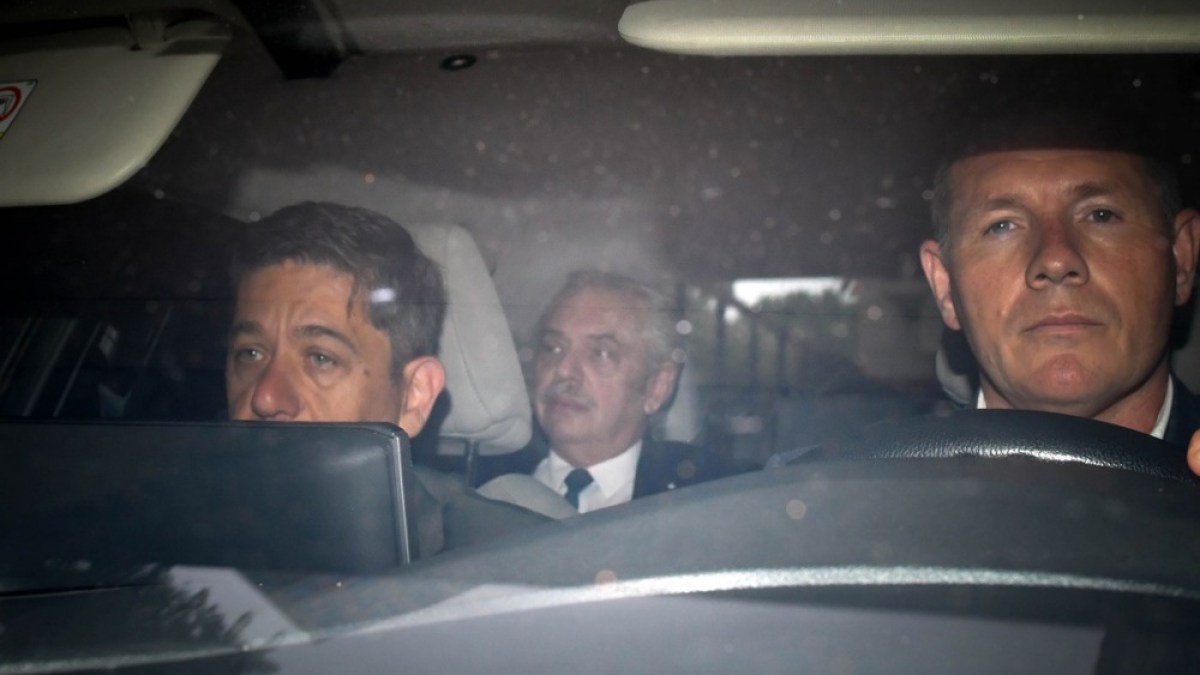
Argentina’s former President, Alberto Fernandez, has been ordered to stand trial for alleged corruption related to insurance policies taken out by the government for the public sector during his 2019-2023 term.
Fernandez will be prosecuted for “negotiations incompatible with the exercise of public office”, according to Judge Sebastian Casanello’s ruling published in Argentinian media on Thursday, and confirmed by the former leader’s lawyer, Mariana Barbitta.
The 66-year-old stands accused of fraudulent administration over his government’s use of brokers – one of whom allegedly had ties to his office – to contract insurance policies that could have been negotiated directly.
The judge noted in his order that in December 2021, in the middle of his presidency, Fernandez issued a decree that forced the entire public sector to contract exclusively with Nacion Seguros SA, an insurance company then led by Alberto Pagliano, a friend of Fernandez.
It resulted in a boon and tremendous growth for the company.
The main broker of the deal was allegedly the husband of Fernandez’s personal secretary.
The court ordered a freeze on about $10m of Fernandez’s assets as the case proceeds, according to Thursday’s ruling.
Some 33 other people are also named in the case. Fernandez did not immediately comment on the case.
Fernandez did not seek re-election after serving a single term, handing the keys of the presidential palace to self-described “anarcho-capitalist” President Javier Milei in December 2023.
The corruption allegations emerged when a court ordered an examination of his secretary’s phone while investigating assault claims made against Fernandez by his ex-partner Fabiola Yanez.
Yanez filed a complaint accusing Fernandez of having beaten her during their relationship, which ended after he left office.
He faces a separate trial on charges of domestic abuse.
Fernandez’s leftist Peronist movement, which dominated Argentinian politics for most of the country’s post-war history, has been dogged by allegations of corruption.
Ex-President Cristina Kirchner, another senior Peronist, is serving a six-year sentence under house arrest after being convicted of fraud involving public works contracts awarded during her two terms.