arch

Plans for Trump’s Triumphal Arch ‘horrifically flawed,’ nonprofit says

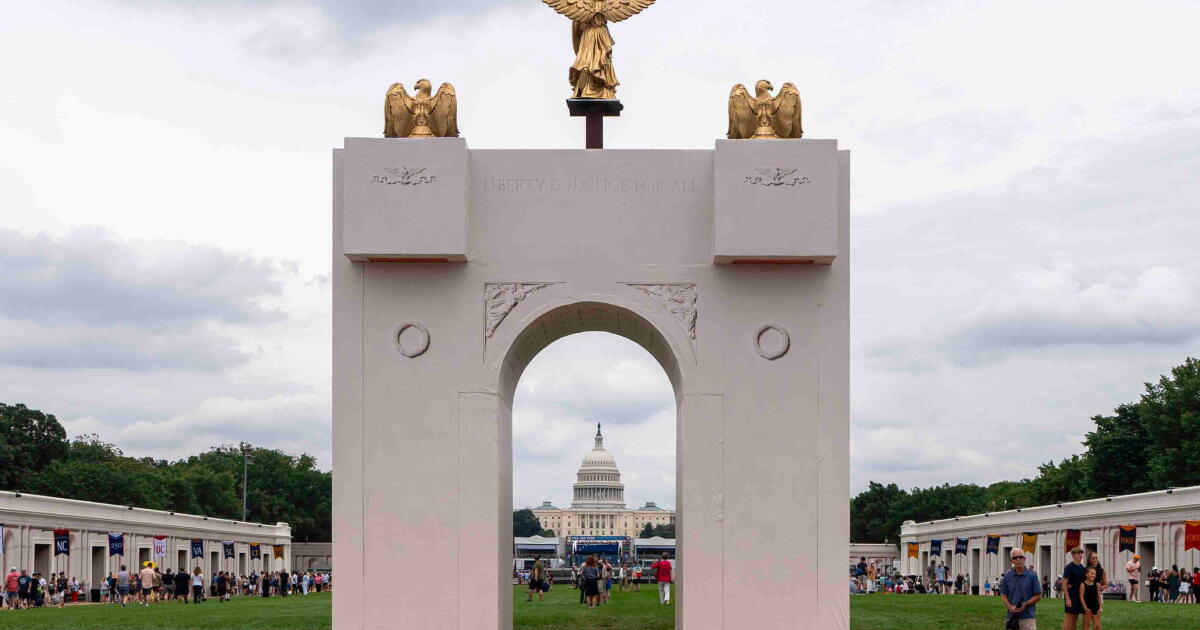
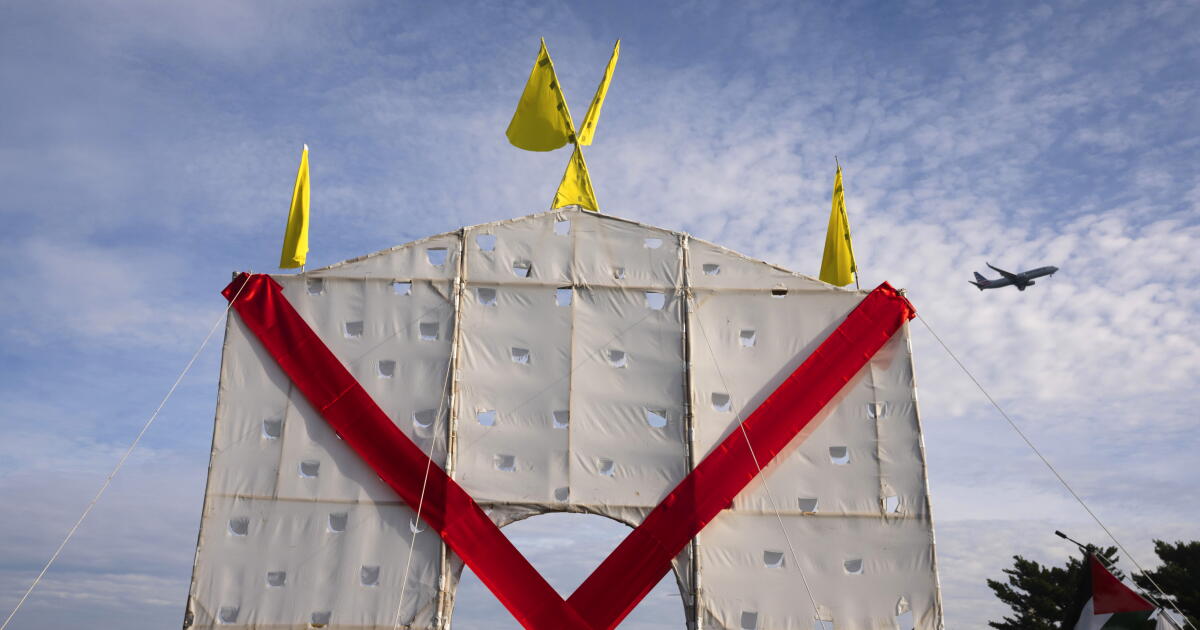
As the country fixates on the sad saga of the ruined Lincoln Memorial Reflecting Pool in Washington, D.C., the Trump administration’s plans to build a 250-foot arch at the western terminus of Memorial Bridge have marched forward.

The project received final design approval in late May from the Trump-appointed U.S. Commission of Fine Arts. The problem with that, critics quickly pointed out, was that this approval occurred before a key part of the National Historic Preservation Act — Section 106 — was initiated.

For background: President Lyndon B. Johnson signed NHPA into law in 1966 during an era of rampant unregulated building in order to protect the country’s shared cultural heritage. Section 106, which the Trump administration has been trying to gut, allows for a period of public comment about proposed projects in advance of their approval. This gives time for reasonable concerns to be raised and for pivots in design and siting to take place accordingly.

In a letter submitted to the National Park Service on Thursday by the nonprofit Cultural Landscape Foundation (TCLF) as part of the federal-level reviews of the Triumphal Arch under Section 106, the group’s founding president and chief executive, Charles Birnbaum, called the chain of events leading to the arch’s approval a “radical departure from a well-established series of processes that have made the Monumental Core a global paragon of civic art, landscape architecture, architecture, and planning.”

Birnbaum, who served as coordinator of the Historic Landscape Initiative at the NPS from 1992 to 2007, also noted, “The process for the selection and siting of the Triumphal Arch has been horrifically flawed from the outset. Remarkably, there was no design competition, which is a dangerous and radical decision for what would be the second largest monument in the Monumental Core after the Washington Monument.”

The letter was sent several days after the NPS released a preliminary assessment that found the arch could have significant adverse effects on the historic structures around it. Birnbaum and TCLF, however, worry — based on linguistic hedging in NPS correspondence — that a final “adverse effect determination” will not be made, thus depriving concerned parties of the ability to continue to advocate against the project.

“Given the extensive documentation of adverse effects in the preliminary finding, the suggestion that any uncertainty exists about the final determination is both confounding and alarming,” Birnbaum wrote.

During his tenure at NPS, Birnbaum was the lead author of “The Guidelines for the Treatment of Cultural Landscapes,” which includes a section on “Spatial Organization and Land Patterns,” which, he writes in the letter, “is clear about what is and is not recommended.”

“Identifying, retaining and preserving the existing spatial organization and land patterns of the landscape as they have over time,” is recommended, for example, while, “Allowing spatial organization and land patterns to be altered through incompatible development or neglect,” is not.

“A 250-foot-tall arch in Memorial Circle sited between the Lincoln Memorial and Arlington National Cemetery and Arlington House and in the Monumental Core is undeniably incompatible development,” Birnbaum wrote, noting that any new development is stipulated to be in agreement with the cultural landscape guidelines. “The Arch as proposed will not be consistent with the Guidelines and any certification otherwise would not only be factually baseless (in short, a lie), but declaring so would be unprofessional, fraudulent, and, perhaps, illegal.”

Strong words that may very well fall on closed ears, if recent history is any guide. Nonetheless, the resistance forges ahead.

I’m arts editor Jessica Gelt, building an arch to future goodness. This is your arts and culture news for the week.

You’re reading Essential Arts

Our critics and reporters guide you through events and happenings of L.A.

The week ahead: A curated calendar

FRIDAY

Judy Collins performs at the Ryman Auditorium in Nashville in 2025.

Judy Collins performs at the Ryman Auditorium in Nashville in 2025.

(Jason Kempin / Getty Images)

Judy Collins: Sweet Judy Blue Eyes Farewell Tour
The singer-songwriter-musician with the lilting voice and eclectic catalog is joined by Bruce Cockburn for an evening of folk-infused heartfelt songs.
8 p.m. The Ford, 2580 Cahuenga Blvd. East. theford.com

Versa-Style Street Dance Company
The troupe marks its 20th anniversary with “Box of Hope” (2nd Edition), a multidisciplinary program featuring West Coast Hip Hop and Street Dance Styles.
8 p.m. Friday and Saturday. Sierra Madre Playhouse, 87 W. Sierra Madre Blvd. sierramadreplayhouse.org

SATURDAY

Betty Boop’s Birthday Bash for a Cause
Kate Micucci hosts an evening of live music — headlined by indie-pop group Dressy Bessy and Allison Wolfe of Bratmobile — animation, comedy, pop-culture nostalgia and the Bob Baker Marionettes to benefit the nonprofits organizations the Birthday Party Project and Saturday Morning Cartoons United.
6:30 p.m. Alex Theatre, 216 N. Brand Blvd., Glendale. thealex.evnsong.com

The Improvised Shakespeare Company
The troupe takes a single audience suggestion and spontaneously turns it into a full-blown Elizabethan-style comedy that could (possibly) make the Bard himself wish he had written it.
8 p.m. The Ford, 2580 Cahuenga Blvd. East. theford.com

The Complete History of American Musical Theater: The 1950s
An evening of theatrical history, storytelling and live performances revisits the Golden Age of the American musical, featuring such classics as “Guys and Dolls,” “The King and I,” “My Fair Lady,” “West Side Story” and “The Music Man.” With Eileen Barnett, Camryn Hamm, Scott Harlan, Hayden Kharrazi, Tony nominee Mary Gordon Murray and Tony nominee Rory O’Malley. Narrated by Dan Fishbach and Mark D. Kaufmann. Produced by the Odyssey Theatre and the Los Angeles Musical Theatre Studio.
8 p.m. Odyssey Ensemble Theatre, 2055 South Sepulveda Blvd. odysseytheatre.com

James Morris, from left, Christopher Reiling and Jasmine Kimiko in the play "Slava Ukraini! (or Waiting for Elon)."

James Morris, from left, Christopher Reiling and Jasmine Kimiko in the play “Slava Ukraini! (or Waiting for Elon).”

(Deverill Weeks)

Slava Ukraini! (or Waiting for Elon)
A Few Thoughts Theatre Company presents a new play by Keith Szarabajka about three soldiers — two Ukrainian and one Russian — trapped together during the siege of Mariupol. Directed by Tony Pasqualini.
8 p.m. Fridays, Saturdays and Mondays; 3 p.m. Sundays through Aug. 31. (no performances Aug. 16, 17) . Atwater Village, 3269 Casitas Ave., Theater #3, Los Angeles afewthoughtstheatercompany.org

SUNDAY

Jazz keyboardist Carey Frank.

Jazz keyboardist Carey Frank.

(Courtesy of the artist)

Carey Frank Organ Trio
Joined by guitarist Nadav Peled and drummer Jake Reed, the jazz keyboardist powers a contemporary take on jazz, swing, blues and soul.
8 p.m. Sierra Madre Playhouse, 87 W. Sierra Madre Blvd. sierramadreplayhouse.org

Summertime! with Bob Baker Marionettes and Kate Micucci
The marionettes and Micucci have a busy weekend, going from Betty Boop at the Alex to celebrating all things sunny and funny at the Ford.
The Ford, 2580 Cahuenga Blvd. East. theford.com

TUESDAY

Mozart Under the Stars
A pair of celebrated Canadians, conductor Nicolas Ellis and pianist Angela Hewitt, join the Los Angeles Chamber Orchestra for their Mozartian summer tradition.
8 p.m. Hollywood Bowl, 2301 N Highland Ave., Hollywood. hollywoodbowl.com

WEDNESDAY

Giselle, the chandelier set piece that travels with the North American tour of "Phantom of the Opera."

Giselle, the chandelier set piece that travels with the North American tour of “Phantom of the Opera,” photographed the Hollywood Pantages Theatre in July.

(Ariana Drehsler / For The Times)

Phantom of the Opera
The new North American touring production of Andrew Lloyd Webber’s hit musical, featuring Maria Björnson’s original design — including a really big chandelier — and based on the direction of Harold Prince, with musical staging and choreography by Gillian Lynne, shifts to Orange County.
Through Aug. 30. Segerstrom Hall, Segerstrom Center for the Arts, 600 Town Center Drive, Costa Mesa. scfta.org/events

Stanley Jordan Trio
The virtuoso jazz guitarist is joined by drummer Chris Wabich and bassist Ahmet Turkmenoglu.
7 and 9:30 p.m. Blue Note Los Angeles, 6372 Sunset Blvd. bluenotejazz.com

THURSDAY

Michael Douglas and Glenn Close in "Fatal Attraction" directed by Adrian Lyne in 1987.

Michael Douglas and Glenn Close in “Fatal Attraction” directed by Adrian Lyne in 1987.

(Sunset Boulevard / Corbis via Getty Images)

A Weekend With Adrian Lyne
The director known for his sleek, erotic thrillers will be on hand for screenings of “Fatal Attraction” (1987) and “Unfaithful” (2002) at the Academy Museum and the theatrical premiere of “Deep Water” (2022), starring Ana de Armas and Ben Affleck, at Brain Dead Studios.
7:30 p.m. Thursday (“Fatal Attraction”) and Friday (“Unfaithful”). Academy Museum, 6067 Wilshire Blvd. academymuseum.org 7:30 p.m. Saturday (“Deep Water”). Brain Dead Studios, 611 N. Fairfax Ave. studios.wearebraindead.com

Helado Tropical
The night will be full of Latin beats, rhythms and experimental sounds as Helado Negro and Reyna Tropical team up following the recent release of their nine-song collaborative album.
8 p.m. The Ford, 2580 Cahuenga Blvd. East. theford.com

— Kevin Crust

Retrospective

L.A. Times arts coverage from the past …

Rehearsal of a new work by choreographer Lincoln Jones, background, at the American Contemporary Ballet in DTLA in 2016.

Ballet dancers Rochelle Chang, Emily Parker and Raffaella Stroik rehearse a new work by choreographer Lincoln Jones, background, in 2016.

(Mel Melcon / Los Angeles Times)

How a new dance gets made: Behind the scenes at American Contemporary Ballet
Aug. 7, 2016

Emily Parker stood still on pointe. Arms spread like wings, she fixed her gaze somewhere in the distance. Dancers spun around her like ribbons in a breeze. A bend, a twist, a slide of foot, a flutter of light. On and on, with no music, only the tap, tap, tap of toe shoes and the sound of texting from those stretching and waiting in the wings.

Parker relaxed her pose. The other dancers flitted toward windows. Choreographer Lincoln Jones walked among them, hand to chin, thinking, and at times twirling alone as if chasing whispers. The afternoon pressed in. He called a break and headed for a laptop. Dancers from American Contemporary Ballet, which on Aug. 11 [2016] will perform an original work by Jones, dispersed in the studio heat.

A ballet troupe is a small army of fine lines and grace. Some dancers have been with the company for years, others like Parker are new, finding their places amid mats, bags, tape, calluses, balm, egos, sore backs, battered toes and torn tights. They are led by Jones, a dark-haired man who between smiles and asides moves with quiet intensity. His new production for the company’s “Music + Dance: LA II” series was inspired by 19th century French composer Adolphe Adam and set amid a countryside, a lake and a wedding. READ MORE

— Jeffrey Fleishman

Culture news and the SoCal scene

The Boyle Heights side of 6th Street PARC underneath the 6th Street Viaduct.

The Boyle Heights side of 6th Street PARC underneath the 6th Street Viaduct.

(Carlin Stiehl / For The Times)

As the once heralded, now neglected 6th Street Bridge continues its precipitous decline, a new park is being built beneath it that supporters hope could uplift the neighboring community of Boyle Heights and help renew the bridge in the process. Called Sixth Street PARC and scheduled to open later this year, the 12-acre green space is meant to serve as a vital community hub connecting downtown’s Arts District with the Eastside neighborhood. It will take more than good intentions to make that plan work, Sam Lubell writes in a detailed story about the project.

Times classical music critic Mark Swed is currently in Austria, taking in the many wonders of the annual Salzburg Festival. Among them: Gustavo Dudamel leading Mahler’s “Resurrection” symphony with the Vienna Philharmonic. “In Salzburg, Dudamel indulged the Vienna Philharmonic’s incomparable lushness, those plush strings, glowing winds, golden brass, voluminous timpani. The symphony received mixed reviews, with critics complaining of a lack of transparency, argument and depth. Had they been in Disney Hall, they would have had it all,” Swed writes.

The D.C.-based anonymous arts activist group Secret Handshake is taking its satirical work on tour. The group recently started an Instagram page to chart the journey of a 10-foot golden cup dedicated to Trump, “The Iran War Participation Trophy.” The trophy went to New York City after appearing late last month on the National Mall. This week it popped up on the lawn of the Capitol Building in St. Paul, Minn. Other cities will follow, Secret Handshake promises.

Enjoying this newsletter? Consider subscribing to the Los Angeles Times

Your support helps us deliver the news that matters most. Become a subscriber.

Dorothy Wolpert, board chair of the Fountain Theatre for 12 has died. She was 91.

Dorothy Wolpert, board chair of the Fountain Theatre for 12 has died. She was 91.

(Fountain Theatre)

The Fountain Theatre is mourning the death of Dorothy Wolpert, who served as the theater’s board chair for 12 years. She was 91. Wolpert was deeply involved in the life of the city through her love and support of the arts as well as in her professional life. As the co-founder of Bird Marella, a Century City law firm, Wolpert was involved in cases that advanced equity and social justice, including the landmark school desegregation case Crawford v. Los Angeles Board of Education. She also used her legal expertise in the fight against human trafficking.

Wolpert received UCLA Law’s Trailblazers Lifetime Achievement Award and the ACLU Humanitarian Award, and in 2022 UCLA Law established the Dorothy and Stanley Wolpert Public Interest Fellowship in her honor.

Wolpert became the Fountain’s board chair in 2013, and served until 2025. In an email, the Fountain’s co-founder Stephen Sachs wrote that Wolpert was “instrumental in expanding [the Fountain’s] board, strengthening its leadership, and raising its national profile. She was also a generous supporter of numerous LA arts organizations and a devoted patron of LA Opera.”

“On a personal level, Dorothy was my trusted mentor and confidant. Whenever I faced a difficult decision, she was the person I turned to first. She had a remarkable gift for asking exactly the right question. Her wisdom shaped not only the Fountain, but many of us fortunate enough to know her,” Sachs wrote.

— Jessica Gelt

And last but not least

Here are 18 things you should do if you can afford to go to Carmel-by-the-Sea.

Source link

D.C. planning panel advances plans for Trump’s triumphal arch

July 9 (UPI) — A federal Washington, D.C., planning agency advanced plans Thursday night for President Donald Trump‘s 250-foot triumphal arch, clearing a key procedural hurdle toward construction despite staunch opposition from historic preservation groups.

The National Capital Planning Commission approved preliminary site and building plans in an 8-1 vote, with three members voting present, during a meeting at its Washington headquarters.

The sole objector, Evan Cash, representing D.C. Council Chair Phil Mendelson on the panel, said he would not vote in its favor. He said the plans would “have the effect of upending decades of NCPC practice and thee century-old height framework.”

According to the proposed plans, the arch would be constructed across the Potomac River in Virginia. At 250 feet tall and 166 feet wide, it would be twice the height of the Lincoln Memorial.

Rob Nieweg, senior vice president of the National Trust for Historic Preservation, also objected to the project.

Nieweg told the commission that the arch would “overwhelm” nearby historic landmarks, including the Lincoln Memorial, Arlington House and Memorial Bridge, while being inconsistent with “the solemn character of Arlington National Cemetery.”

“Each new rendering submitted for this proposal is totally inappropriate in its scale and location,” he said.

“The new images clearly show that the arch blocks the view of the Lincoln Memorial from vantage points on the Virginia side. It looms larger on the skyline than everything other than the Washington Monument. From the District side, placing the arch in the foreground completely overpowers the sacred rolling wooded hills and rows of white grave markers at Arlington National Cemetery.”

The vote comes after the U.S. Commission of Fine Arts approved a modified design of the arch in May. A final vote on the plan will take place at the September commission meeting, NCPC Chair Will Scharf said.

“It’s disappointing that the NCPC approved the preliminary site and building plans for the Monumental Arch today, and we remain strongly opposed to its scale and locations,” the National Trust for Historic Preservation told UPI in an emailed statement.

Trump proposed the arch as he has sought to remake the capital in his own image, including plans for a new White House ballroom and renaming the John F. Kennedy Center for the Performing Arts to include his name, among others. Several of those efforts have been met with lawsuits.

Olympic canoeist David Hearn departs the Moultrie Courthouse after pleading not guilty to damaging the Lincoln Memorial Reflecting Pool on Thursday. Hearn was indicted on July 2 on one count of destruction of property of more than $1,000 for allegedly damaging the Reflecting Pool, carrying a maximum penalty of 10 years in prison if convicted. Photo by Bonnie Cash/UPI | License Photo

Source link

L.A.’s Sparkletts bottling plant is now a historic landmark

For nearly a century, Sparkletts bottled its water in a vast building on Lincoln Avenue designed to look like a Moorish palace, or maybe an industrial oasis.

Now Sparkletts has moved out, the owners aren’t talking and L.A. city officials, hoping to save the building, have named the site a historic-cultural monument.

“We’ve always had an eye on the building because it’s such an icon in the community,” said Frank Parrello, Landmarks and Advocacy chair for the Eagle Rock Valley Historical Society. “We want to make sure that whatever happens in the future, the building is considered.”

The plant, which drew water from subterranean springs and bottled it for distribution through Southern California, went up in 1929 on E. Lincoln Avenue along the Eagle Rock-Highland Park border, filling the block between N. Avenue 45 and N. Avenue 46. Designed by architect Richard D. King, its main building features arches, towers and domes, a white-washed brick exterior and wrought-iron lanterns.

The L.A. Conservancy calls it a bold example of Moorish Revival industrial style and a prime illustration of “the industrialization of drinking water in Los Angeles.”

Neighbors call it “the Taj Mahal,” resident Anthony Carmona says.

This 1929 Sparkletts building on the Eagle Rock-Highland Park border was designed in a Moorish Revival style.

The Sparkletts building, built in 1929, was designed in a Moorish Revival style. The building, idle since 2025, has been added to the L.A. City Historical-Cultural Monument list.

(Christopher Reynolds / Los Angeles Times)

Questions about the building’s future began to multiply in 2025, when Sparkletts ceased operations on the site. A 4.4-acre portion of the property was listed for sale, then for lease. The L.A. Conservancy warned that the building was “at risk of redevelopment.”

The Instagram site Save Iconic Architecture also sounded an alarm, saying the Sparkletts building “tells the story of Los Angeles’ innovation, design, and relationship with its most precious resource: water.”

Meanwhile, the Eagle Rock Valley Historical Society nominated the building as a historic-cultural monument, which led to a site visit and votes by the city of Los Angeles Cultural Affairs Commission and City Council.

On June 24, the council voted to protect the building as a monument. The designation “does not guarantee that the building cannot be demolished,” but it does allow city officials to delay demolition for up to 360 days “to allow for time to preserve the monument.”

The city Planning Department staff report on the historic monument nomination lists the owners as Sparkletts Drinking Water Corporation and Foremost Water Corporation. Neither commented to the city on the monument nomination and Primo Brands (Sparkletts’ parent company) did not respond to requests for information Monday.

The city’s staff report on the site says the architect may have been influenced by a Moorish design trend in the 1920s that included the film “The Thief of Bagdad” (1924). The El Capitan Theater on Hollywood Boulevard and Shrine Auditorium near USC, both completed in 1926, are also known for their Moorish features.

Architectural historians David Gebhard and Robert Winter included the Sparkletts building in their “Architectural Guidebook to Los Angeles,” noting its mosque-like presence and saying “the best remaining element” is the tiled mosaic oasis scene over the entrance.

The building has seen some changes. As the Eagle Rock Valley Historical Society nomination notes, the building’s largest Sparkletts sign was removed in July 2025. City records show that decades ago, in the course of repairs after the 1971 San Fernando earthquake, at least one minaret was removed.

The entrance, however, remains largely intact, featuring three arches and a set of steps framed by a pair of tall palm trees. Just above the front door and beneath a surviving Sparkletts sign hangs the tilework that Gebhard and Winter enjoyed.

Moreover, “it’s very impressive inside,” Parrello said. “It’s a big open industrial floor plan, which could be used for a lot of things.”

The Sparkletts building, idle since 2025, has been added to the L.A. City Historical-Cultural Monument list.

The Sparkletts building, idle since 2025, has been added to the L.A. City Historical-Cultural Monument list.

(Christopher Reynolds / Los Angeles Times)

If public agency or nonprofit is able to play a role in the property’s future, Parrello added, “it could become a housing complex, or a community center for a housing complex.”

A similar answer came from Carmona, 51, a restaurant worker who lives in an RV about a block away from the Sparkletts building. Carmona said he’d love to see it become a gathering place where neighbors can trade products, services, ideas, “lemons, oranges, whatever.” In a perfect world, Carmona said, “there should be free water for everyone, but of course that’s not going to happen.”

The city of L.A. began designated historic-cultural landmarks in 1962 and has given that status to more than 1,000 buildings and other structures.

The closure of the Eagle Rock Sparkletts operation followed a 2024 merger between Sparkletts’ parent company, Primo Water, and another bottled water company, BlueTriton, to from Primo Brands.


Source link

Design plan for Trump’s proposed Washington arch is approved by key federal agency

The U.S. Commission of Fine Arts on Thursday approved the design for the triumphal arch that President Trump wants built at an entrance to the nation’s capital.

Commissioners, all of whom were appointed by Trump, approved the design despite overwhelming opposition from the public. Approval is a key step in the project’s process.

The proposed arch is one of several projects the Republican president is pursuing alongside a White House ballroom to leave his imprint on Washington.

He has said some of his other projects, such as adding a blue coating to the interior of the Lincoln Memorial Reflecting Pool, will beautify the city in time for July 4 celebrations of America’s 250th birthday.

The U.S. Commission of Fine Arts approved the concept for the arch at its monthly meeting in April.

As presented to the federal agency, the arch itself would stand 250 feet tall from its base to a torch held aloft by a Lady Liberty-like figure on top of the structure. The statue would be flanked on top by two eagles and guarded at the base by four lions — all gilded. The phrases “One Nation Under God” and “Liberty and Justice for All” would be inscribed in gold lettering atop either side of the monument.

A public observation deck on top would provide 360-degree views of the surroundings.

The commission’s vice chairman, architect James McCrery II, said in April that he preferred the arch without the figures on top. Removing them would significantly reduce the arch’s height by about 80 feet. Critics of the project, including an overwhelming number of people who submitted public comment in April, said the arch would be taller than any other monument in the capital city and dominate the skyline.

At a height of 250 feet, the arch would dwarf the Lincoln Memorial, which is 99 feet tall, and be close to half the height of the Washington Monument, an obelisk that is about 555 feet tall.

McCrery also recommended that the lions on the base be removed because that animal is “not a beast natural to the North American continent.” And he objected to plans for an underground tunnel for pedestrians to get to the arch, which would be built on a traffic circle between the Lincoln Memorial and Arlington National Cemetery in Virginia.

Preliminary surveys and testing of the site began last week.

A group of veterans and a historian have sued the Trump administration in federal court to block construction on grounds that the arch would disrupt the sightline between the Lincoln Memorial and Arlington House at Arlington National Cemetery, among other reasons.

Trump and Interior Secretary Doug Burgum have argued that Washington is the only major Western world capital without such an arch. Burgum’s department includes the National Park Service, which manages the plot where Trump wants to put the arch.

Trump’s rehab of the Lincoln Memorial Reflecting Pool is also the subject of a court challenge brought by the Cultural Landscape Foundation, which said the administration’s moves to repaint the bottom of the Reflecting Pool blue without first undergoing relevant reviews ran afoul of federal preservation laws governing historic sites.

The nonprofit group argued in a lawsuit filed last week that the changes at the Reflecting Pool are part of Trump’s broader effort to push through dramatic renovations in Washington without proper reviews and undermine the tone of the area.

A hearing in the case was scheduled for Thursday afternoon in federal court in Washington.

Superville writes for the Associated Press.

Source link