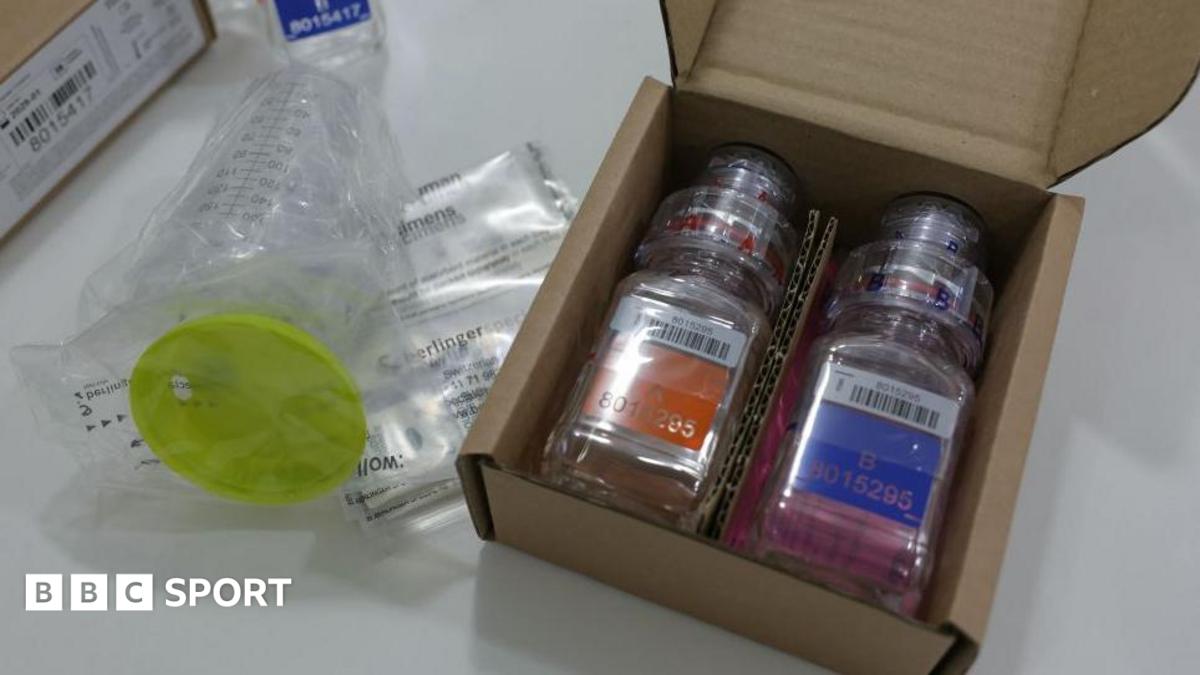
Toue de France 2026: Why anti doping tests are being carried out at night
To put it simply, the testing could help to combat micro-dosing. This is where tiny amounts of performance-enhancing drugs are ingested but are in and out of the rider’s system within a few hours, leaving only a short window for detection.
If a rider knows they have a seven-hour window where they are not normally tested, some believe it could be an opportunity to micro-dose.
Vaughters said: “If you introduce a low enough dose of a peptide hormone, the clearance time can be four hours. If you take it at 11pm, it’ll be out of the system at 3am, so it makes a difference.”
He added testing technology is evolving quickly but, where riders and teams push the boundaries, doping is always going to be a risk factor.
On night testing, he added: “It sucks if it happened all the time – but it’s happening once or twice a year. Listen, it’s a great deterrent. One night of lost sleep; lose a little sleep – gain a lot of credibility.”
Generally, the days when riders boosted blood values using first EPO and then moved on to blood transfusions (which is why the night-time hotel room is such a taboo backdrop in cycling) are thought to have largely gone from the top of the sport.
Since the 1990s and decade from 2000, when the disgraced once seven-time winner Armstrong tricked the world into thinking he was clean when dominating the sport, the athlete biological passport (ABP) used by Wada is sophisticated enough to pick up seemingly all inconsistencies recorded.
There have been cyclists banned recently but no high-profile names.
The sport’s lower-tiers frequently has seen riders busted for being tempted back to EPO and human growth hormones.
The ITA told BBC Sport: “Due consideration has been given to minimise as much as possible the impact testing activities have on riders.
“However, the ITA, on behalf of the UCI, has the responsibility to ensure the effectiveness of the cycling anti-doping program and the integrity of cycling races.
“As such, effective testing must, in limited and justified circumstances, be capable to occur outside standard daytime hours.”