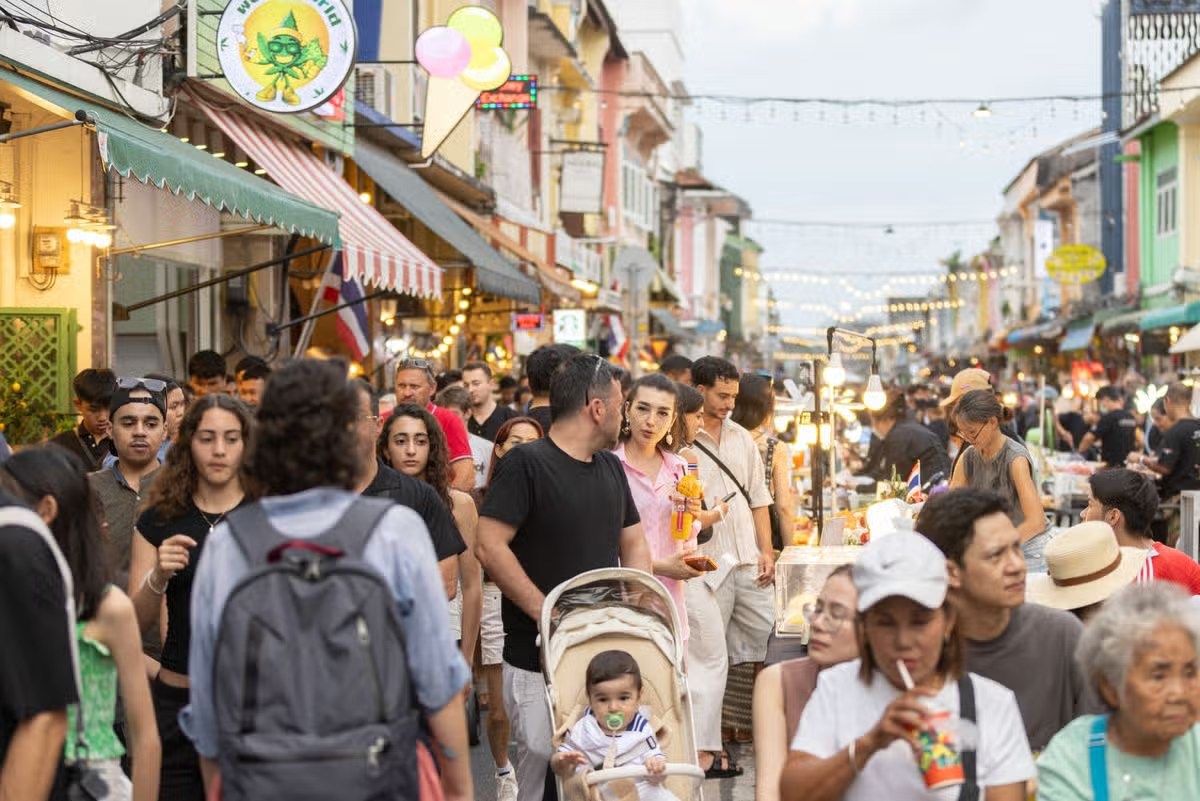
Anti-tourism

Exact date of Spanish islands protests revealed as ‘kill a tourist’ graffiti spotted

Brits heading to popular Spanish islands this summer may find themselves at the heart of anti-tourism protests, with a pressure group insisting that there will be a “historic turnout”

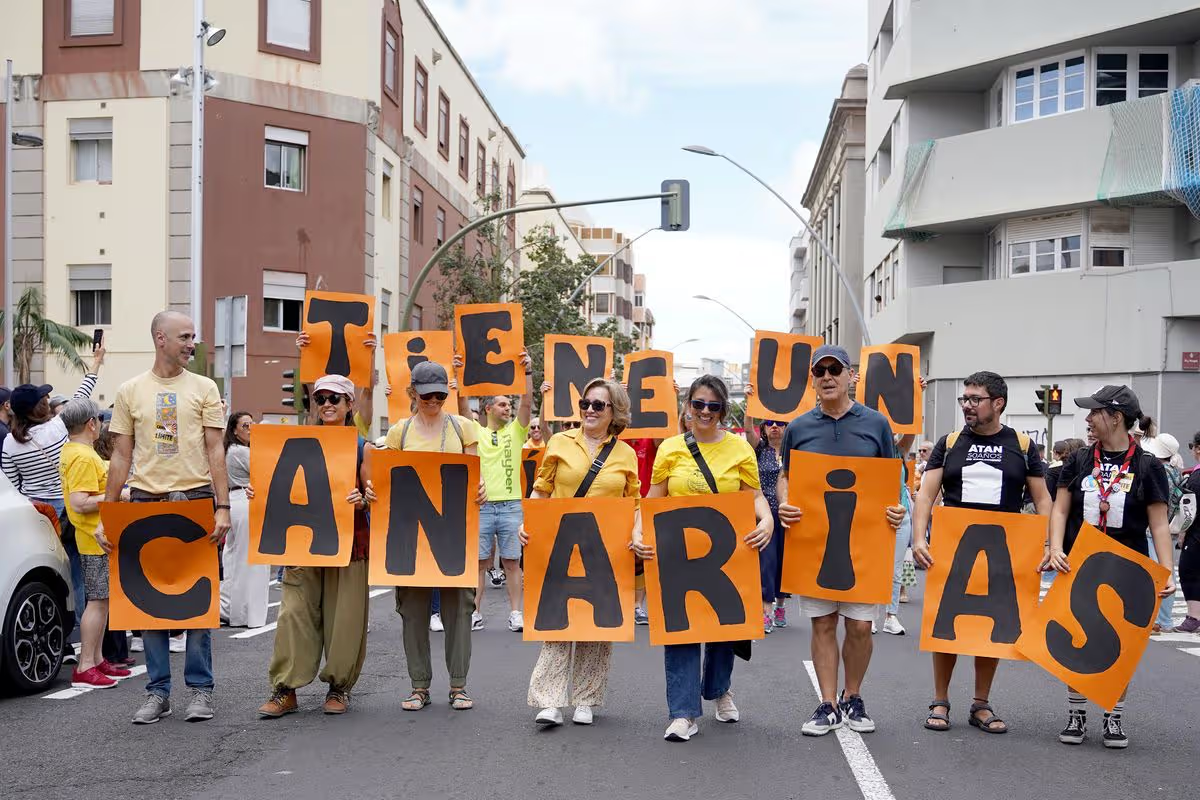
Spain’s anti-tourism protests could escalate this summer, as pressure group Menys Turisme Més Vida (Less Tourism More Life) announced plans for a major demonstration that it expects to have a “historic turnout”.

The news comes as sites in the Canary Islands have been daubed with anti-tourist graffiti, including reports from local news outlet Canarian Weekly of a ‘kill a tourist’ slogan being spotted in Tenerife. The graffiti was spotted by two expats hiking in Punta del Hidalgo, who then claimed they saw further disturbing graffiti during a walk to Bollullo Beach on the island’s north coast.

In a separate incident last week, five estate agents in Majorca with international names were daubed with graffiti including ‘guilty’ and ‘Guiris out!’ in an overnight attack. Guiri is a derogatory Spanish term used for tourists from Northern Europe.

Menys Turisme Més Vida announced a protest in Palma, a popular destination for Brits on the island of Majorca on July 26, which coincides with the start of the busiest school holiday season. Meanwhile there are protests planned in Menorca on June 13 with a similar anti-tourism sentiment.

In a statement on its website, the group said: “️We consider that the demands expressed during previous mobilisations have been ignored while problems such as the housing access crisis, tourist saturation, the destruction of the territory, the precariousness of living conditions and the pressure on public resources and services continue to worsen.

“Under the slogan ‘Majorca at the limit’, the call aims to once again demonstrate the strength of existing social unrest in the face of an economic model that continues to break tourism records while the living conditions of a growing part of the resident population worsen.”, it added.

The group claims that the protest has the support of 53 social , environmental, trade union, neighbourhood and cultural groups on the island, which sees nearly 13 million tourists annually, with Brits the second-largest percentage after Germany.

Majorca saw protests last June that organisers claim were attended by 30,000 people, although varying reports claim numbers from 5,000 to 8,000. This included reports of some people sitting on terraces being harassed by protestors. Another notable protest took place in Barcelona on June 15, 2025, in which smoke devices were used and tourists soaked with water pistols.

While there have been reports of a tourist slowdown in the Balearics and Canaries, anti-tourism protests do not seem to have a massive impact on visitor numbers. In April, the Canaries saw a drop in visitors of 8.3% compared to the year before, but this meant 1.2 million foreign tourists still visited the islands. It was also the first drop seen on the volcanic archipelago since the pandemic.

Over Easter, the Balearics reported a fall of nearly 20% in in-person tourist spending by card, despite an overall increase in spending across Spain as a whole, suggesting visitors were choosing to spend their money elsewhere.

Have a story you want to share? Email us at webtravel@reachplc.com

Source link

Canary Islands ‘on brink of disaster’ as 2.5 miles of coastline lost every year

The Canary Islands are experiencing a tourism crisis, with activists warning the coastline is unsustainable as locals say the ‘land is being destroyed and speculated on’

The Canary Islands have witnessed mounting demonstrations in recent years. Frustration has been building amongst residents, who argue the surge in tourism to the sun-soaked Spanish archipelago is unmanageable. They point to outdated regulations that allow property speculators to purchase land for hotels and holiday flats, while paying only minimal tax.

Consequently, Canarians claim they receive the lowest average salaries in Spain and face difficulties securing affordable accommodation. Yet now they have a further complaint against holidaymakers. The islands are suffering coastal erosion at an alarming pace. Campaigners say the Canary Islands’ coastline is on the brink of disaster.

Each year, based on a report from SOS Costas Canarias, approximately 21⁄2 miles of coastline disappears. Anne Striewe, the foundation’s director, states that hotels, apartment blocks, housing estates and marinas, amongst other structures, are being constructed on this “lost” territory.

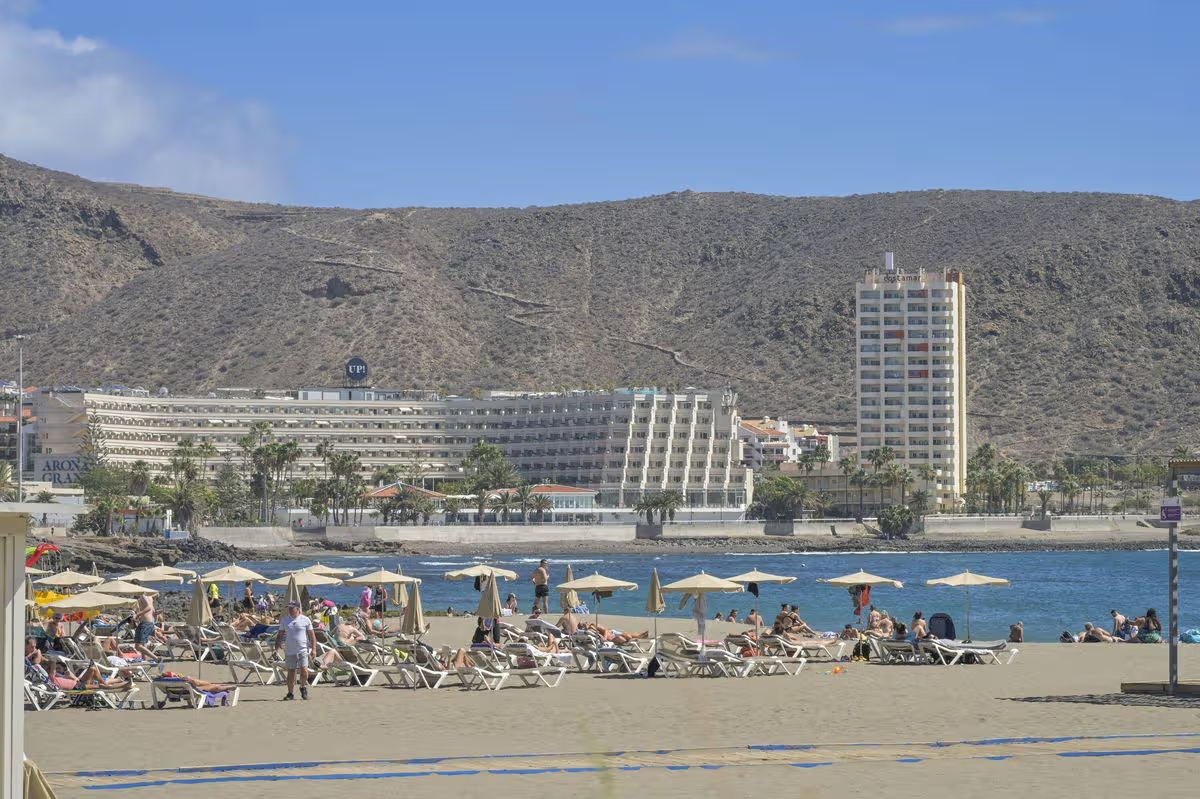
The organisation cautions that throughout the eight islands, roughly 18% of the territory within the first 500 metres from the sea has already been developed. Beyond protected natural areas (PNAs), this figure skyrockets: it surpasses 40% on multiple islands and coastal sections, reaching 43% in Lanzarote and Gran Canaria.

Nearly 20% of the living space on the Canary Islands is dedicated to tourism – in comparison to around 4% on the Spanish mainland. Five municipalities on the Canaries possess more tourist beds than permanent inhabitants: Yaiza (Lanzarote), Pájara (Fuerteventura), Mogán (Gran Canaria), San Bartolomé de Tirajana (Gran Canaria) and Adeje (Tenerife).

Ms Striewe highlights that, beyond holiday accommodation, there is a vast array of tourist-related infrastructure including access roads, golf courses and desalination plants, which fail to show up in hotel occupancy figures yet remain part of the same problem.

Sharon Backhouse, director of GeoTenerife, told Sky News that the Canary Islands are a “biodiversity jewel in the Atlantic,” yet local authorities provide minimal protection for the islands’ natural habitats.

She warned that each year more “beautiful landscapes are cemented over” to make way for new tourist resorts.

She added: “The problem with these resorts is that we just don’t have enough resources in terms of water, what happens to all the rubbish, how is it all recycled.”

Carmelo Javier León, director of the UNESCO Chair in Tourism and Sustainable Economic Development at the University of Las Palmas de Gran Canaria (ULPCG), describes a conflict between those who wish to protect the islands’ natural beauty and “the development of ever more accommodation options.”

The authors of the SOS Costas Canarias report are demanding an immediate halt and the scrapping of planning permissions for undeveloped coastal land.

They argue that the seemingly relentless construction not only obliterates irreplaceable natural habitats and undermines the very scenic beauty that attracted tourists to the islands in the first place, but also dramatically heightens the risk of localised flooding. Approximately 80,000 inhabitants are already vulnerable to coastal flooding risk, yet almost half of flood-susceptible territory has already been designated for housing.

Irma Ferrer, a lawyer for Urban Planning Transparency and Civic Action Against Corruption, highlights that this demonstrates the institutions are failing to operate properly. “In urban planning and environmental matters, legislation is not enacted to defend the public interest,” she complains.

She added that the islands now possess an economy which is essentially “based on the destruction of the land and on speculation.”

Source link