Company says move amid US-Israel war on Iran comes after a request from the US government.
Published On 5 Apr 20265 Apr 2026
Satellite imaging company Planet Labs has said it will indefinitely withhold visuals of Iran and the region of conflict in the Middle East to comply with a request from United States President Donald Trump’s administration.
The US company announced the decision in an email to customers on Saturday, with news agencies quoting it as saying the government had asked satellite imagery providers to impose an “indefinite withhold of imagery”.
The restriction expands upon a 14-day delay on imagery of the Middle East that Planet Labs implemented last month, which extended an initial 96-hour delay, a move the firm said was meant to prevent adversaries from using the imagery to attack the US and its allies.
Planet Labs said it will withhold imagery dating back to March 9 and that it expects the policy to remain in effect until the end of the war, which began on February 28 when the US and Israel launched aerial attacks against Iran. The conflict has since spread across the region, with Iran firing missile and drone barrages at Israel and US assets, as well as civilian infrastructure across the Gulf.
Planet Labs, which was founded in 2010 by former NASA scientists, said in its email to customers that it would switch to a “managed distribution of images” deemed not to pose a risk to safety.
Under a new system, Planet Labs will release imagery on a case-by-case basis for urgent, mission-critical requirements or in the public interest.
“These are extraordinary circumstances, and we are doing all we can to balance the needs of all our stakeholders,” the California-based company was quoted as saying.
Military uses of satellite technology include target identification, weapons guidance, missile tracking and communications. Some space specialists say Iran could be accessing commercial imagery, including pictures obtained via US adversaries. Satellite images also help journalists and academics studying hard-to-reach places.
A UK budget airline has added new routes and destinations to their summer itinerary with prices of return flights only costing around £50 for British holidaymakers
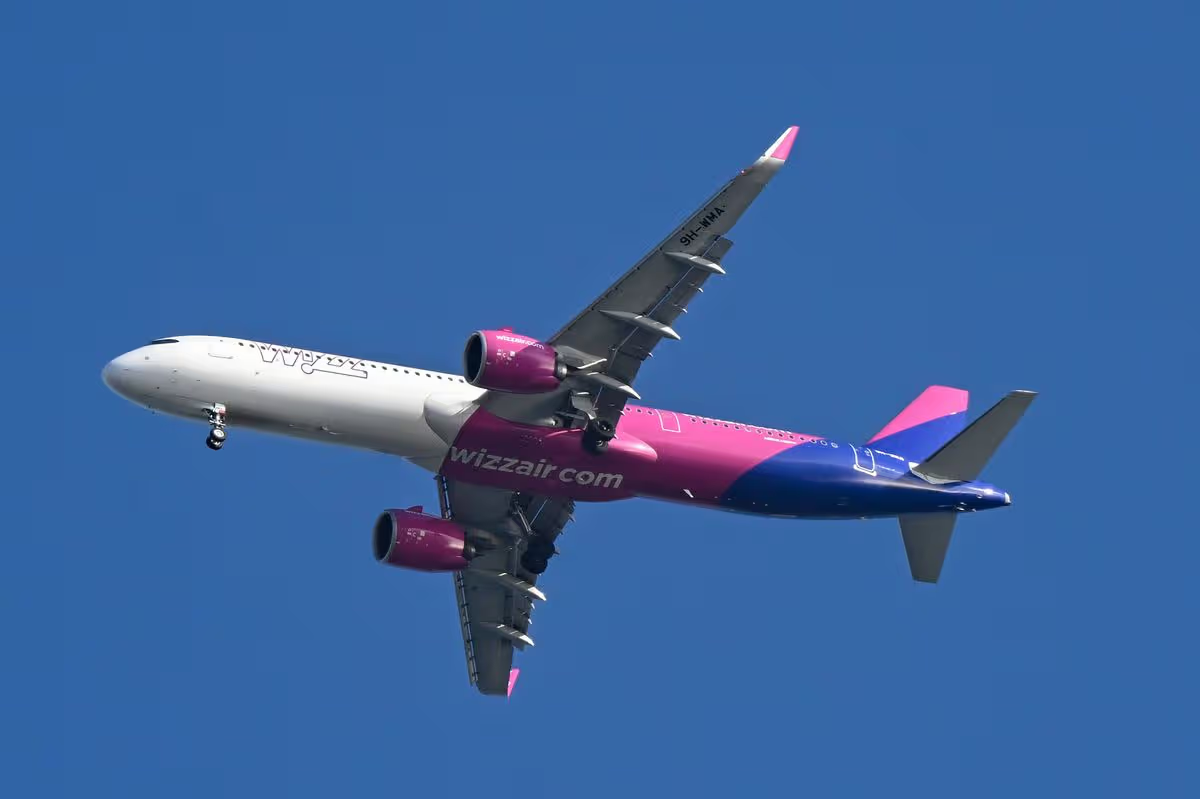
The airline has announced a £50 summer sale with new routes(Image: Horacio Villalobos, Corbis via Getty Images)
A popular UK budget airline has announced a £50 summer flight sale from London airports with the launch of new travel destinations.
Wizz Air has announced it will take holidaymakers to 77 destinations from the UK this summer – with return prices starting as low as £50 per person.
The budget carrier will run more than 104 routes from the UK, with 69 routes from Luton Airport and 20 from Gatwick.
Luton will now carry passengers to Bilbao, Barcelona, Madrid, Valencia, Alicante and Seville.
It will also continue to run daily flights to Madrid and two daily services to Barcelona.
The airline will also serve seven destinations in Greece from London, including Athens, Mykonos and Crete.
Flights between London and destinations in Europe between June and September are currently on sale for bargain prices.
A return flight from London Luton to Kosice in Slovakia in June cost £42.98 per person and a return flight to Lyon in September is on sale for £31.98.
These prices do not include cabin bags or hold luggage.
Wizz Air UK managing director Yvonne Moynihan said: “ This summer, our customers told us exactly what they wanted – more sunshine, more choice and unbeatable value – and we listened.
“We’re stepping up while others step back, launching more routes, more flights and even better prices to Europe’s most loved destinations.
“From buzzing Spanish cities to iconic Greek escapes, we’re delivering the routes people actually want, at the best prices in the market.”
Subscribe now to read the latest news in your city and across Canada.
Exclusive articles from Barbara Shecter, Joe O’Connor, Gabriel Friedman, and others.
Daily content from Financial Times, the world’s leading global business publication.
Unlimited online access to read articles from Financial Post, National Post and 15 news sites across Canada with one account.
National Post ePaper, an electronic replica of the print edition to view on any device, share and comment on.
Daily puzzles, including the New York Times Crossword.
SUBSCRIBE TO UNLOCK MORE ARTICLES
Subscribe now to read the latest news in your city and across Canada.
Exclusive articles from Barbara Shecter, Joe O’Connor, Gabriel Friedman and others.
Daily content from Financial Times, the world’s leading global business publication.
Unlimited online access to read articles from Financial Post, National Post and 15 news sites across Canada with one account.
National Post ePaper, an electronic replica of the print edition to view on any device, share and comment on.
Daily puzzles, including the New York Times Crossword.
REGISTER / SIGN IN TO UNLOCK MORE ARTICLES
Create an account or sign in to continue with your reading experience.
Access articles from across Canada with one account.
Share your thoughts and join the conversation in the comments.
Enjoy additional articles per month.
Get email updates from your favourite authors.
THIS ARTICLE IS FREE TO READ REGISTER TO UNLOCK.
Create an account or sign in to continue with your reading experience.
Access articles from across Canada with one account
Share your thoughts and join the conversation in the comments
Enjoy additional articles per month
Get email updates from your favourite authors
Sign In or Create an Account
or
Article content
SERVICES OR FOR DISSEMINATION IN THE UNITED STATES
Article content
Article content
TORONTO — Sherritt International Corporation (“Sherritt” or the “Corporation”) (TSX:S) today announced that it has agreed with certain new and existing shareholders of the Corporation to complete a non‑brokered private placement of common shares of Sherritt (“Common Shares”) for aggregate gross proceeds of up to $50 million (collectively, the “Private Placement“). As part of the Private Placement, Seymour Schulich, through a corporation controlled by him, has agreed to subscribe for up to 68,600,000 Common Shares for aggregate gross proceeds of up to $14,406,000.
Article content
Article content
Pursuant to the Private Placement, the Corporation will issue up to 238,095,238 Common Shares from treasury at a price of $0.21 per Common Share. The Private Placement is expected to close on or about April 7, 2026, subject to customary closing conditions and the receipt of required regulatory approvals, including approval of the Toronto Stock Exchange.
Article content
Top Stories
Get the latest headlines, breaking news and columns.
By signing up you consent to receive the above newsletter from Postmedia Network Inc.
Thanks for signing up!
A welcome email is on its way. If you don’t see it, please check your junk folder.
The next issue of Top Stories will soon be in your inbox.
We encountered an issue signing you up. Please try again
Article content
The net proceeds from the Private Placement are expected to be used for general corporate purposes and to support the Corporation’s operations and strategic initiatives.
Article content
An existing shareholder of the Corporation holding approximately 13.5% of the outstanding Common Shares is expected to participate in the Private Placement. Such participation constitutes a “related party transaction” within the meaning of Multilateral Instrument 61‑101 – Protection of Minority Security Holders in Special Transactions (“MI 61‑101”). The Corporation expects to rely on exemptions from the formal valuation and minority shareholder approval requirements of MI 61‑101 on the basis that the fair market value of the securities issued to the related party does not exceed 25% of the Corporation’s market capitalization. The Private Placement will not result in a change of control of the Corporation.
Article content
The securities offered have not been, and will not be, registered under the United States Securities Act of 1933, as amended, or any U.S. state securities laws, and may not be offered or sold in the United States absent registration or an applicable exemption from the registration requirements. This news release shall not constitute an offer to sell or the solicitation of an offer to buy nor shall there be any sale of the securities in any jurisdiction in which such offer, solicitation or sale would be unlawful.
Article content
Commenting on the Private Placement, Brian Imrie, Chair of Sherritt’s board of directors (the “Board”) said, “This private placement marks a significant development for Sherritt as we continue to navigate through a challenging operating environment. We appreciate the strong support shown by both new and existing shareholders, which reflects their confidence in Sherritt’s future prospects.”
Article content
Board of Directors Update
Article content
In addition, Sherritt announces that Louise Blais has stepped down from its Board effective today, to focus on her commitments at her strategic advisory firm Blais Global.
Article content
“On behalf of the Board, I would like to thank Louise for her invaluable contributions and dedication during her tenure,” said Mr. Imrie. “Her insights and leadership have helped guide Sherritt through an important period, and we wish her continued success in her future endeavors.”
Article content
Article content
About Sherritt
Article content
Sherritt is a world leader in using hydrometallurgical processes to mine and refine nickel and cobalt – metals deemed critical for the energy transition. Leveraging its technical expertise and decades of experience in critical minerals processing, Sherritt is committed to expanding domestic refining capacity and reducing reliance on foreign sources. The Corporation operates a strategically important refinery in Alberta, Canada, recognized as the only significant cobalt refinery and one of just three nickel refineries in North America. Sherritt’s Moa Joint Venture produces cost competitive critical minerals while maintaining high sustainability standards and has an estimated mine life of approximately 25 years.
Article content
The Corporation’s Power division, through its ownership in Energas, is the largest independent energy producer in Cuba, processing domestically sourced raw natural gas to generate electricity for sale to the Cuban national electrical grid. Sherritt’s common shares are listed on the Toronto Stock Exchange under the symbol “S”.
Article content
Forward-Looking Statements
Article content
This press release contains certain forward-looking statements. Forward-looking statements can generally be identified by the use of statements that include such words as “believe”, “expect”, “anticipate”, “intend”, “plan”, “forecast”, “likely”, “may”, “will”, “could”, “should”, “suspect”, “outlook”, “potential”, “projected”, “continue” or other similar words or phrases. Specifically, forward-looking statements in this press release include, but are not limited to, statements regarding the Private Placement, including the intended use of proceeds therefrom.
Article content
Forward-looking statements are not based on historical facts, but rather on current expectations, assumptions and projections about future events, including commodity and product prices and demand; the level of liquidity and access to funding; share price volatility; production results; realized prices for production; earnings and revenues; global demand for electric vehicles and the anticipated corresponding demand for cobalt and nickel; the commercialization of certain proprietary technologies and services; advancements in environmental and greenhouse gas (GHG) reduction technology; GHG emissions reduction goals and the anticipated timing of achieving such goals, if at all; statistics and metrics relating to Environmental, Social and Governance (ESG) matters which are based on assumptions or developing standards; environmental rehabilitation provisions; environmental risks and liabilities; compliance with applicable environmental laws and regulations; risks related to the U.S. government policy toward Cuba; and certain corporate objectives, goals and plans for 2026. By their nature, forward-looking statements require the Corporation to make assumptions and are subject to inherent risks and uncertainties. There is significant risk that predictions, forecasts, conclusions or projections will not prove to be accurate, that the assumptions may not be correct and that actual results may differ materially from such predictions, forecasts, conclusions or projections.
Céline Dion is officially coming back to the stage.
The singer announced on Instagram that she will return to the stage this fall, performing 10 shows at the Paris La Défense Arena. In 2022, Dion canceled her North America tour due to muscle spasms. She was later diagnosed with stiff-person syndrome, an autoimmune neurological disorder, which prevented her from performing.
The concert announcement comes after speculation last week by fans in Paris who spotted posters around the city referencing Dion’s songs, including “Power of Love” and “Pour Que tu M’aimes Encore.”
Dion, who turned 58 on Monday, called this news “the best gift” of her life.
“I’m so happy. I’m so ready to do this. I’m feeling good. I’m strong,” Dion said. “I’m feeling excited, obviously. Of course, a little nervous, but most of all, I am grateful to all of you. I can’t wait to see you again.”
While Dion performed at the opening ceremony of the 2024 Olympics in Paris and at an Elie Saab fashion show in Saudi Arabia, she has not headlined her own concert since her Courage World Tour in 2020. In her video, Dion thanked her fans, who supported her in the “most difficult times.”
“Over these last few years, every day that’s gone by, I felt your prayers and support, your kindness and love,” Dion said. “You’ve helped me in ways that I can’t even describe, and I’m truly so fortunate to have your support. I’ve missed you so much.”
Dion will perform twice a week — on Wednesdays and Saturdays — from Sept. 12 to Oct. 14. In a press statement, Frédéric Longuépée, president of La Défense Arena, called Dion’s residency a major milestone for the venue, which opened in 2017.
Fans can register for presale tickets until April 2, and general ticket sales will go on sale April 10.
Dion discussed her battle with stiff-person syndrome in her 2024 documentary, “I Am: Celine Dion.” In the film, the singer explained how SPS causes a vocal strain that makes it difficult for her to perform. Before her 2022 diagnosis, she had already experienced symptoms for 17 years.
While SPS has no known cure, Dion did not lose motivation to continue performing.
“If I can’t run, I’ll walk. If I can’t walk, I’ll crawl, but I won’t stop,” Dion said.
The six-part hostage drama is based on a “must-read” novel.
Damson Idris will lead the Netflix thriller(Image: NETFLIX)
Netflix’s latest thriller was inspired by a story hailed “quite brilliant in its twists and turns”.
Fans of political thrillers are in for a treat as Netflix has announced a brand new drama from the creators of Humans and the author of House of Cards.
The series, which will be led by British actor and entrepreneur Damson Idris and is one of Netflix’s many hit thrillers, centres around a “nightmare scenario” which sees the government of the United Kingdom taken hostage.
Parliament is now enemy territory and ex-spy Harry Jones (Idris), is the perfect man to save the government if it were not for one problem – he is also a convicted traitor.
The title of the new series is The Lords’ Day, and it is based on the book by Michael Dobbs, who also happens to be a member of the House of Lords.
Netflix promised the thriller will be “an electrifying ride through England’s halls of power.”
The synopsis reads: “On the State Opening of Parliament, British spy Harry Jones finds himself inside the Palace of Westminster amid a lockdown.
“As a hostage siege escalates, loyalties are tested and selfless sacrifices are made, leading to a desperate fight for survival where not everyone will emerge alive.
“Can Harry use his skills and training to be the country’s saviour?”
Actor Idris, 34, is best known for his roles in Snowfall, Outside the Wire and F1, and he is the only casting announced so far. Production will begin soon in the UK.
Get Netflix free with Sky
This article contains affiliate links, we will receive a commission on any sales we generate from it. Learn more
Sky is giving away a free Netflix subscription with its new Sky Stream TV bundles, including the £15 Essential TV plan.
This lets members watch live and on-demand TV content without a satellite dish or aerial and includes hit shows like Stranger Things and The Last of Us.
Fans of the original source material took to Goodreads to share their thoughts, with one commenting: “A must read book by Michael Dobbs that was equally as good as the Francis Urquart series!”
Another shared: “Excellent read, I was engrossed with every page. Again, Harry Jones at his best.”
A third called it “fascinating”, adding: “Quite brilliant in its twists and turns and details. Utterly plausible in it’s plot and characterisation. I have found a new favourite author.”
Another reader shared: “A real page turner. Never a dull moment with plenty of action and political intrigue. Edge of the seat thrills and twists.”
The book reviews suggest the TV adaptation will be one of Netflix’s most gripping thrillers.
Viewers of NBC’s morning program learned Friday that Guthrie will be back to her hosting duties at the network’s Rockefeller Plaza studio in New York on April 6.
Guthrie has been absent from “Today” since Feb. 2, the day after learning her mother Nancy was abducted from her Tucson home. She appeared on the program this week in a taped interview with Hoda Kotb, her first since her mother went missing..
Guthrie’s re-entry on “Today” is certain to generate significant viewer interest. Her 84-year-old mother’s case, still being investigated by law enforcement, generated an outpouring of public affection for the co-host.
Many media industry insiders expressed serious doubts over whether Guthrie would return to television before law enforcement determined what happened to Nancy Guthrie. But people close to Guthrie believe her grit and deep religious faith will provide her with the strength to move forward.
Guthrie’s daily presence on “Today” will also help keep her mother’s case in the public eye. NBC is also airing a special “Dateline” episode on the abduction on Friday.
Guthrie has spent most of the last seven weeks in Tucson with her family. She canceled plans to be a part of NBC’s coverage of the Winter Olympics in Milan and before this week only appeared on TV and social media in taped messages asking for the help in finding her mother.
Nancy Guthrie was last seen Jan. 31, when she spent the evening with family members. Law enforcement officials believe she was removed from her Catalina Foothills home later that night against her will as her phone, wallet, car and medication were left behind.
Surveillance videos of a masked man who was outside Guthrie’s front door on the night she disappeared were released by the FBI.
Christmas is still quite some way away, but one attraction is already putting tickets on sale for its magical experiences, and if previous years are anything to go by it could sell out quickly
This immersive experience takes kids on a magical journey to meet Father Christmas(Image: LaplandUK)
It doesn’t feel that long since the Christmas decorations were packed away, but one festive attraction is already putting its tickets on sale today (March 27) for the Christmas 2026 season.
Tickets for LaplandUK, which has locations in Ascot and Cheshire, will go on sale tomorrow at 10AM with over a million people expected to join the queue. The experience is often likened to booking Glastonbury tickets, as hopeful parents will need to wait in a virtual queue and have ten minutes to complete their order once they reach the front.
Ticket prices for 2026 have been confirmed, starting at £60 for midweek dates in November, up to £155 per person for peak weekends in December. Both venues will also host a ‘Superstar Day’ on November 25 which is “adapted for families and guests with access requirements to create a quieter, more relaxed and accessible environment.”
While the tickets are costly, the cost does include a range of experiences that set it apart from the average Santa’s grotto. Families receive a special gift boxed invitation ahead of their day out to build the excitement, and this message from Father Christmas personally invites little ones to visit LaplandUK to help the elves with toy-making.
On arrival, visitors step into a magical world, walking through several different interactive experiences from the Elven Bazaar, where guests have to work out how to enter the door to Lapland, to the Lapland Bakery where kids can help make some Christmas treats before enjoying storytime with Mother Christmas.
The experience lasts around four-and-a-half hours, according to the LaplandUK website, and also includes ice skating, a soft toy for every child, a small toy to give to kids on Christmas Day, and of course, a special visit with the man in red himself, deep in a snowy forest.
Husband-and-wife founders of LaplandUK, Mike and Alison Battle, took to Facebook to update fans of the attraction about changes that are being made for 2026. Alison said: “Every year, we challenge ourselves to make the experience more special, more magical, more believable. And this year, we’ve got some very exciting things in store for you.”
The pair announced that invites would be sent earlier this year, towards the end of the summer, to build anticipation of the event. They added that the return experience will be upgraded, so that “coming home will be just as magical”, and that visitors to Little Rudy’s Stables will now be able to make reindeer food to take home with them.
One of the major changes will be in the Elven Village, which the pair said has expanded over the years to be more immersive and include more characters. Guests will now get more time in the village to listen to stories at Fable’s Library, skate on the ice rink, and meet characters along the way.
Those hoping to grab tickets for LaplandUK can either register on the official site to get a ticket booking link ahead of the sale, or visit the website from 9am to join the queue.
LaplandUK’s Facebook page confirmed that both sites will have their own booking queues accessed through a unique link. It said: “Upon entering a queue, you will be randomly assigned a place before bookings open. When the queue begins moving at 10 AM, you’ll gradually make your way forward.
“Once you reach the front, you will have 10 minutes to complete your booking for your chosen location.. We truly cannot wait to welcome you to Lapland to make treasured memories together this Christmas.”
Have a story you want to share? Email us at webtravel@reachplc.com
March 24 (UPI) — NASA on Tuesday announced plans to spend $30 billion on a permanent lunar base and send astronauts to the moon every six months after the Artemis V mission.
Speaking at a so-called “Ignition” event at NASA headquarters in Washington, D.C., Administrator Jared Isaacman discussed plans to accelerate construction of a moon base.
“There will be an evolutionary path to building humanity’s first permanent surface outpost beyond Earth,” he said.
“NASA is committed to achieving the near-impossible once again: to return to the moon before the end of President [Donald] Trump’s term, build a moon base, establish an enduring presence, and do the other things needed to ensure American leadership in space.”
NASA’s plan was initially to focus on what it called the Gateway program — a space station that was going to orbit the moon. Then the agency would build a base on the moon.
Carlos Garcia-Galan, the program executive for NASA’s Moon Base program, said the systems and hardware already established for the Gateway program would be repurposed to build the moon base.
Isaacman said the moon base plan will comprise three phases.
The first phase would include a series of missions to send small robotic landers and vehicles astronauts can drive on the surface to the moon. It would also encompass communications and scientific instruments.
The second phase would involve the construction of a “semi-habitable infrastructure” for astronauts on the lunar surface.
The third phase would start construction of a more permanent structure.
The first two phases would involve an investment of $20 billion over the next seven years and dozens of missions to the moon. The third phase would cost another $10 billion.
“The moon base will not appear overnight,” Isaacman said.
Isaacman said NASA also plans to launch a nuclear-propelled spacecraft to Mars by 2028.
NASA’s launch window for Artemis II is set to open April. The crewed mission is expected to send the Space Launch System and Orion spacecraft to orbit the moon over 10 days and return to Earth. The crew will test whether the spacecraft operates in deep space.
The long-term goal of the Artemis program is to re-establish a human presence on the moon in preparation for the ultimate aim of putting a human on Mars.
NASA’s Space Launch System rocket emerges on Saturday morning from the Vehicle Assembly Building to start its journey to Launch Complex 39B at the Kennedy Space Center in Florida. Photo by Joe Marino/UPI | License Photo
IT ISN’T even summer yet but we wouldn’t blame you if you are already excited about Christmas – and there’s good reason to be with some changes coming to LaplandUK.
LaplandUK – the huge family-friendly Christmas attraction – will be dropping tickets for both the Ascot and Manchester experiences this week,
Sign up for the Travel newsletter
Thank you!
LaplandUK has a number of changes being introduced this yearCredit: LaplandUK
Ahead of the drop on March 27 (this Friday) at 10am, the attraction has also revealed some big changes to the experience this year.
One of the biggest changes is that guests will get more time in the Elven Village.
This means guests will have more time to go ice skating, letter writing and enjoying the magical atmosphere of the Elven World.
Whilst LaplandUK hasn’t yet confirmed how long visitors will now have in the Elven Village, in previous years visitors had 90 minutes to enjoy the area.
Another change for this year is that every child will now have the opportunity – included in their ticket – to create their own reindeer food with the Elves, ready to lay out on Christmas Eve for Father Christmas’ reindeer.
There is also a new invitation box this year, meaning that anyone who books a LaplandUK experience for 2026 will receive their invitations by the end of summer.
Returning this year will also be Mother Christmas’s Kitchen where kids will get more time to decorate gingerbread before meeting with Mother Christmas and the Elves for traditional story time.
LaplandUK is also bringing back the portal that takes humans ‘back to the UK’, but making it bigger for this year.
This year, LaplandUK will run from November 7 to December 24, with tickets costing between £60 and £195.
Last year, 350,000 tickets were available and before the tickets were released, over 750,000 people were waiting in the virtual queue online.
On March 27, when tickets go on sale, there will be a virtual queue online from 9am.
Guests will need to select their preferred venue – either Ascot or Manchester, – and then at 10am when tickets are released, each guest will automatically be allocated a random place in the queue for the venue they selected.
Once they reach position one in the queue, they will be able to select the number of tickets they want and the date they wish to visit.
After purchasing their tickets, in the following months guests will be sent a personalised invitation.
On the day of visiting, guests will venture through “secret portals in the Whispering Woods of the UK and follow magical pathways to arrive in Lapland”.
Visitors will get more time in the Elven Village for exampleCredit: LaplandUK
And throughout the day there will be performances and interactive activities such as helping out the Elves in the Toy Factory to make a toy to pop in Father Christmas’ Sleigh.
Kids will get a special moment with Santa as well, where they get a gift to take home and their parents are handed the toy they created in the Lapland Toy Factory to be given on Christmas Day.
The Venezuelan acting president called for a rational use of electricity in the coming weeks. (EFE)
Mérida, March 23, 2026 (venezuelanalysis.com) – The Venezuelan government announced a 45-day electricity saving plan as extreme temperatures and regional outages impact Venezuela’s power grid.
The announcement, made by Acting President Delcy Rodríguez on Saturday, comes on the heels of recurring blackouts, particularly in western states.
“We are entering a period where solar radiation will impact our territory directly, intensifying heat and drought across the country,” Rodríguez stated during a televised cabinet meeting with officials responsible for the electricity and infrastructure portfolios.
She explained that the “perpendicular passage” of solar rays would significantly increase energy demand for cooling. Alongside drought forecasts, officials expect a greater strain on Venezuela’s electricity generation and transmission infrastructure.
As part of the contingency plan, the Ministry of Electric Energy is set to publish a protocol urging reduced air-conditioning use other rationing measures. In addition, the government has authorized the deployment of thermal drones to monitor high-temperature areas and prevent forest fires from compromising transmission lines.
In March 2025, the Nicolás Maduro administration implemented a similar electricity-savings plan and was compelled to reduce public sector work hours to half a day to ease demand. While the 2025 measures were temporary, the recurrence of shortages underscores the systemic vulnerabilities of the electric grid.
Last Friday, residents in Zulia, Táchira, Mérida, and Trujillo experienced widespread power outages lasting several hours. Local media outlets in the Andean region reported that some sectors are facing daily rationing of up to four hours. Nationwide electricity fluctuations were likewise registered on Monday, with parts of Caracas suffering temporary outages.
The origins of Venezuela’s electrical instability extend over a decade, culminating in the 2019 widespread nationwide blackouts that authorities blamed on “cyber-sabotage.” The alleged attacks compounded infrastructure hard-hit by years of economic sanctions, as well as underinvestment, inadequate maintenance, and the departure of skilled personnel.
Venezuela’s electric grid remains heavily dependent on the Simón Bolívar Hydroelectric Plant, also known as the Guri Dam, in southeastern Bolívar state, which provides approximately 80 percent of the nation’s power.
However, the transmission lines stretching from the southeast to the western border are often unable to handle the load, with thermoelectric plants in the region unable to cover the additional demand. Current estimates indicate that while Venezuela has an installed generation capacity of approximately 34 gigawatts (GW), only around 12 to 14 GW are currently operational.
Sanctions and push for private investment
In her Saturday address, Rodríguez reiterated the damage caused by US-led unilateral coercive measures and called for their removal. The Venezuelan acting president argued that sanctions hampered the state’s capacity to procure essential technology and components from international suppliers.
“The blockade has impeded the full recovery of this essential service,” Rodríguez said. “Though we have recovered capacity through our own efforts, sanctions limit our response to a demand that grows alongside the economy.”
The Venezuelan government has also announced plans to scale back state control over the electricity sector in order to attract private investment. Earlier this month, authorities unveiled a “pilot plan” to promote foreign investment into the electric grid, following similar blueprints from the oil industry.
Under the proposed framework, the government aims to update the Organic Law of the Electricity System (LOSSE) to allow private companies to assume control of generation and distribution through joint ventures.
According to the Venezuelan Chamber of Construction (CVC), a preliminary investment of US $1.29 billion could lead to the reincorporation of over 6,300 MW to the grid in two phases. The CVC is specifically promoting a project with the Latin America Development Bank to stabilize 2,000 MW in the central industrial region.
The new electricity management model would allow private actors to take control of specific “industrial nodes,” ensuring a reliable supply for manufacturing while retaining a portion of the proceeds to cover maintenance costs.
However, the immediate focus for the Venezuelan executive remains on electricity rationing. Rodríguez concluded her address by calling for “national consciousness,” urging the public to see energy saving not just as a government mandate, but as a collective necessity to navigate the coming weeks of extreme heat and drought.
England’s World Cup-winning captain Zoe Stratford has announced she is pregnant with her first child.
Announcing the news on Instagram the 29-year-old said the baby is due in September.
“We are so incredibly grateful and excited,” added Stratford.
The news comes seven months after she led the Red Roses to a World Cup triumph on home soil.
Stratford’s news will rule her out of the Women’s Six Nations, where England will open their campaign against Ireland at Allianz Stadium, Twickenham on Saturday, 11 April.
England are yet to confirm who will lead the side in the 2026 campaign, but Marlie Packer and Meg Jones were vice-captains during the World Cup, with Alex Matthews taking the skipper’s armband for their pool match against Australia.
Red Roses head coach John Mitchell will name his Six Nations squad on Friday.
Stratford was named World Player of the Year in 2021 and has also co-captained her club Gloucester-Hartpury to three back-to-back Premiership Women’s Rugby titles.
ALICE Evans has shared the devastating news that her father has passed away – just months after losing her brother.
The actress, 57, revealed that her dad David died on Friday as she shared a heartbreaking tribute post with fans today.
Sign up for the Showbiz newsletter
Thank you!
Alice Evans has announced the sad news that her father has diedCredit: Instagram/ @aliceevansgruffThe actress paid tribute to her beloved father with a touching postCredit: Instagram/ @aliceevansgruffAlice said she lost her dad on Friday as she listed all the ways he’s inspired herCredit: Instagram/ @aliceevansgruff
Alice shared a series of throwback photos of her dad and her late mum when they were younger, along with a photo of her with her parents.
She penned: “Dear Dad, You left us on Friday. Only six months after the death of your beloved son Tony.
“Now all three of you are gone – you, Mum, Tony and it’s just me and Phil from the OG family.
“I hope the three of you are together. I hope there is a place where we get to see the people we’ve lost and that the three of you are having a blast, free from pain and the worry and anxiety and sometimes pure hell of life on earth.”
She continued: “I hope you know how much wisdom you passed on to me that I am now passing on to my girls.
“Your crazy maths problems, brain teasers, your brilliant anecdotes, encompassing both the respect you had for the incredibly high position you reached in the world of academia, and at times the absurdity of the whole system.
“You taught me to laugh. You taught me that there is humor in almost anything. You taught me to play the piano.
“You taught me not to care what people thought because ‘if you do A, they’ll say you should have done B.
“And if you do B they’ll say you should have done A’. That stayed with me forever.
“Godspeed, Dad. Give Mum and Tone the biggest hug from me.
“David Vincent Evans 27th October 1940. – 13th March 2026 RIP.”
Alice was flooded with messages of support from her followers.
One wrote: “I am so sorry for your loss!!! Sending you all my love.”
A second posted: “Oh Alice, I’m beyond sorry, my heart goes out to you. You’ve endured so much loss, but know your parents’ love and legacy live on through you. Sending you love, prayers, and compassion God bless sweetheart.”
Alice lost her brother Tony in August 2025Credit: Instagram
Another added: “So sorry to hear this news. Thinking of you. My condolences. I fully understand how painful this must be right now.”
In August 2025, Alice revealed her beloved brother Tony has tragically passed away.
She had previously revealed that her brother Tony has been through a lot of trauma.
Aliceshared a series of touching photos from their childhood together, as well as special moments from each other’s weddings,
She wrote in the caption: “I can’t believe I’m writing this. On Thursday, at 6.42pm, our beloved Tone left this earth.
“My brother, my best friend, the most incredible husband to Rachel, and beloved Uncle Tone to my girls who became so close to him in these past few years thanks to the wonders of face time.
“Tony was the kindest, most loyal, funniest, warm person I could have ever hoped to have had as a sibling.
“He will leave a gaping hole in the lives of me and the girls, that I have no idea how I will fill.
“Rachel, you are the strongest person I know and this week has been hell for all of us but especially you.
“You are the most caring, beautiful person and my sister forever. You and Tone were meant for each other.
“I have never met another couple so in love and so dedicated. It’s just unthinkable that your story has to end here.
“Tone – I don’t remember life without you in it and I have no idea how to even go about trying. RIP my beautiful, perfect brother.”
Hollywood star Ioan also obtained a restraining order in 2022 against AliceCredit: InstagramIoan and Alice split in 2021 and was divorced two years laterCredit: Getty
March 16 (UPI) — The Israeli military announced Monday that soldiers were conducting “limited and targeted ground operations” in southern Lebanon against Hezbollah, amid its larger war against the militant organization’s backer, Iran.
Israeli troops were reported in Lebanon earlier this month, but Monday’s announcement appears to formalize and broaden the mission. The language in the announcement was also consistent with other reports that Israel may be planning to significantly expand its ground operation.
“This activity is part of broader defensive efforts to establish and strengthen a forward defensive posture, which includes the dismantling of terrorist infrastructure and the elimination of terrorists operating in the area, to create an additional layer of security for residents of northern Israel,” the IDF said in a social media statement.
Israel has been attacking Hezbollah in Lebanon for years, and launched a ground operation there in October 2024 that ended with a fragile cease-fire, with both sides accusing the other of violations. Fighting erupted again late last month after the United States and Israel launched a war against Iran.
Specifics about the ground operation were minimal, including the day it began, with the IDF stating on Telegram that the troops entered Lebanon “in recent days.”
Troops from the 91st Division are conducting what the Israel Defense Forces called “limited and targeted ground operations” against Iran-backed Hezbollah strongholds.
Videos of the operation taken from apparent night-vision cameras worn by the soldiers and distributed by the IDF online show Israeli forces and military vehicles seemingly operating in southern Lebanon.
The operation was aimed at enhancing the forward defense area and was part of broader efforts to strengthen Israel’s forward defensive posture, the IDF said, which is consistent with reporting by Axios that Israel plans to seize all of Lebanon south of the Litani River and will be a major operation.
The IDF said airstrikes were conducted before the soldiers of the 91st Division moved in, with a Hezbollah site attacked on Saturday. Troops on Sunday searched the area and found a storage facility housing dozens of rockets, explosive devices and guns, it said in a Monday update on the operation.
Photos included in the release show rockets laid upon a couch inside a debris-filled residence.
Two Hezbollah operatives were also killed, it said, stating the militants had advanced on the Israeli troops.
“The IDF will continue to operate with determination against the Hezbollah terrorist organization following its deliberate decision to attack Israel on behalf of the Iranian regime,” the IDF said.
“The IDF will not tolerate any harm to the residents of the State of Israel.”
במסגרת מאמץ משימת ההגנה הקדמית: כוחות צה”ל חיסלו מחבלים ואיתרו מצבור אמצעי לחימה של מחבלי ארגון הטרור חיזבאללה
במהלך פעילות מבצעית של אוגדה 91, חיל האוויר תקף מבנה צבאי של ארגון הטרור חיזבאללה בו זוהתה פעילות של מחבלי הארגון בסוף השבוע.
אתמול, הכוחות סרקו במרחב המבנה ואיתרו בו… pic.twitter.com/IfLTvjhIZp— צבא ההגנה לישראל (@idfonline) March 16, 2026
Thousands of Brits were left stranded following the outbreak of the Middle East conflict but now British Airways has announced it will suspend its daily rescue flights from Muscat
IT MIGHT be super early to start thinking about Christmas but it is that time of year again where LaplandUK tickets drop soon.
LaplandUK has announced that tickets to its sought-after festive experience will be released later this month on March 27 at 10am.
Sign up for the Travel newsletter
Thank you!
LaplandUK tickets will be released on March 27Credit: LaplandUKLast year, 750,000 people joined the waiting roomCredit: LaplandUK
The high-demand tickets usually sell out within a few hours after launch and this year is expected to be the same with the newer £30million Manchester LaplandUK experience running for its second time.
Similar to the rush for Glastonbury but for Christmas, LaplandUK is predicting that over one million people want to get tickets.
Last year, 350,000 tickets were available and before the tickets were released, over 750,000 people were waiting in the virtual queue online.
This year, LaplandUK will run from November 7 to December 24, with tickets costing between £60 and £195.
Once guests purchase their tickets, they will be sent a personalised invitation.
Guests can join the online waiting room this year at 9am and then will be assigned a queue position at 10amCredit: LaplandUKThis year will be the second year the Manchester experience is openCredit: LaplandUK
Then, when it comes to the day of visiting, families will get to explore a snow-filled world with Elves, a frozen pond for skating and a Toy Factory.
Around the experience there will also be smells of the Lapland Bakery and the glistening of twinkling lights.
When guests arrive they will venture through “secret portals in the Whispering Woods of the UK and follow magical pathways to arrive in Lapland”.
The experience also includes performances and interactive activities such as helping out the Elves in the Toy Factory to make a toy to pop in Father Christmas’ Sleigh.
And of course, each child gets a special moment with Santa himself, who will give them a gift to take home and another surprise for Christmas Day – the specific toy they created in the Lapland Toy Factory.
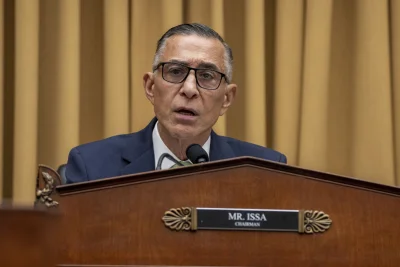
March 7 (UPI) — Rep. Darrell Issa, R-Calif., announced he is retiring at the end of his term and put his support behind San Diego Supervisor Jim Desmond.
Issa issued a statement Friday on social media saying he will not be seeking re-election in this year’s midterm elections.
“This decision has been on my mind for a while and I didn’t make it lightly,” Issa wrote. “First, we built the right campaign infrastructure, support has been overwhelming — including from President Trump — and our polling was unmistakable: We would win this race. But after a quarter-century in Congress — and before that, a quarter-century in business — it”s the right time for a new chapter and new challenges.”
Issa offered his “enthusiastic endorsement” to San Diego Supervisor Jim Desmond, who filed to run for Issa’s seat on Friday.
The announcement comes after Gov. Gavin Newsom‘s ballot measure to redraw state congressional districts, which passed in November, transformed Issa’s district from safely Republican to an area more friendly to Democrats.
Issa had previously been rumored to be considering a run for Congress in Texas, but he told Fox News in December that the plan would not be going forward.
“I’m thrilled to set the record straight and here’s the truth: Texas House members and residents of that state did ask if I would consider running there following Gavin Newsom’s historically corrupt gerrymander,” he said at the time. “I appreciate the opportunity, but California is my home. I told them I’m going to stay in Congress, and I don’t need to go to Texas for that.”
Anna Elsasser, spokesperson for the Democratic Congressional Campaign Committee, celebrated the news of Issa’s retirement in a statement.
“After over two decades of disastrous representation, Darrell Issa is once again running for the exits — and good riddance. Issa abandoning his voters now is the clearest sign yet that Republicans know he can’t win on his record of skyrocketing prices, gutting health care, and looking out for himself and wealthy special interests above all else,” Elsasser said. “Any Republican who tries to parachute into this race with the same extreme agenda will face the same fate.”
Christian Martinez, a spokesman for the National Republican Campaign Committee, praising Issa for his “decades of dedicated service” in a statement provided to Politico.
“We are optimistic that this district will continue to be represented by a Republican who will stand for common sense and reject the radical agenda and chaos that progressive Marni von Wilpert and socialist Ammar Campa-Najjar would bring,” Martinez said.
March 7 (UPI) — President Donald Trump announced at Saturday’s “Shield of the Americas” summit in Florida that a new military coalition will focus on drug trafficking and cartels.
Trump said at the Doral meeting with 12 Latin American leaders that “America’s Counter Cartel Coalition” will conduct operations against cartels across the region.
At least 17 nations have already signed on to the agreement.
“The heart of our agreement is a commitment to using lethal military force to destroy the sinister cartels and terrorist networks once and for all,” Trump said. “We’ll get rid of them. We need your help. You have to just tell us where they are.”
Trump had pledged earlier this year to hunt down drug cartels. His pledge was followed by a series of attacks on on alleged narco-terrorist vessels in the Caribbean Sea.
The president’s Saturday remarks also touched on the January capture of Venezuelan President Nicolás Maduro, an operation he described as “18 minutes of pure violence.”
Trump praised Venezuela’s interim leader, Delcy Rodriguez, whose country re-established diplomatic relations with the United States earlier in the week.
“I mean, she’s doing a great job because she’s working with us,” he said. “If she wasn’t working with us, I would not say she’s doing a great job. In fact, if she wasn’t working with us, I’d say she’s doing a very poor job. Unacceptable.”
The summit was attended by Argentine President Javier Milei, Bolivian leader Rodrigo Paz, Chilean President José Antonio Kast, Costa Rican President Rodrigo Chaves, Dominican Republic President Luis Abinader, Ecuadorian President Daniel Noboa, Salvadoran President Nayib Bukele, Honduran President Tito Asfura, Guyanese President Mohamed Irfaan Ali, Panamanian President José Raúl Mulino, Paraguayan President Santiago Peña and Trinidad and Tobago President Christine Kangaloo.
The government in Havana has claimed that the 10 people on board the speedboat had planned to unleash terrorism in Cuba.
Published On 7 Mar 20267 Mar 2026
Share
The government of Cuba has announced that a fifth person died as a consequence of a fatal shootout last month involving a Florida-flagged speedboat that allegedly opened fire on soldiers off the island nation’s north coast.
The island’s Ministry of Interior said late on Thursday in a statement that Roberto Alvarez Avila died on March 4 as a result of his injuries.
Recommended Stories
list of 3 itemsend of list
It added that the remaining injured detainees “continue to receive specialised medical care according to their health status”.
On February 26, authorities in Cuba said that Cuban soldiers confronted a speedboat carrying 10 people as the vessel approached the island and opened fire on the troops.
They said the passengers were armed Cubans living in the United States who were trying to infiltrate the island and “unleash terrorism”. Cuba said its soldiers killed four people and wounded six others.
“The statements made by the detainees themselves, together with a series of investigative procedures, reinforce the evidence against them,” the Cuban Interior Ministry said in its statement.
It added that “new elements are being obtained that establish the involvement of other individuals based in the US”.
Earlier this week, Cuba said it had filed terrorism charges against six suspects who were on the speedboat. The government also unveiled items it claimed to have found on the boat, including a dozen high-powered weapons, more than 12,800 pieces of ammunition and 11 pistols.
Cuban authorities have provided few details about the shooting, but they said the boat was roughly 1.6 kilometres (1 mile) northeast of Cayo Falcones, off the country’s north coast.
They also provided the boat’s registration number, but The Associated Press news agency was unable to readily verify the details because boat registrations are not public in the state of Florida.
The shooting threatened to increase tensions between US President Donald Trump and Cuban authorities.
The island’s economy was, until recently, largely kept economically afloat by Venezuela’s oil, which is now in doubt after a US military operation abducted and deposed former Venezuelan President Nicolas Maduro.