annexation

Nearly 20 countries slam Israel’s ‘de facto annexation’ drive in West Bank | Occupied West Bank News

Joint statement says Israeli land grab is ‘deliberate and direct attack’ on the viability of a Palestinian state.

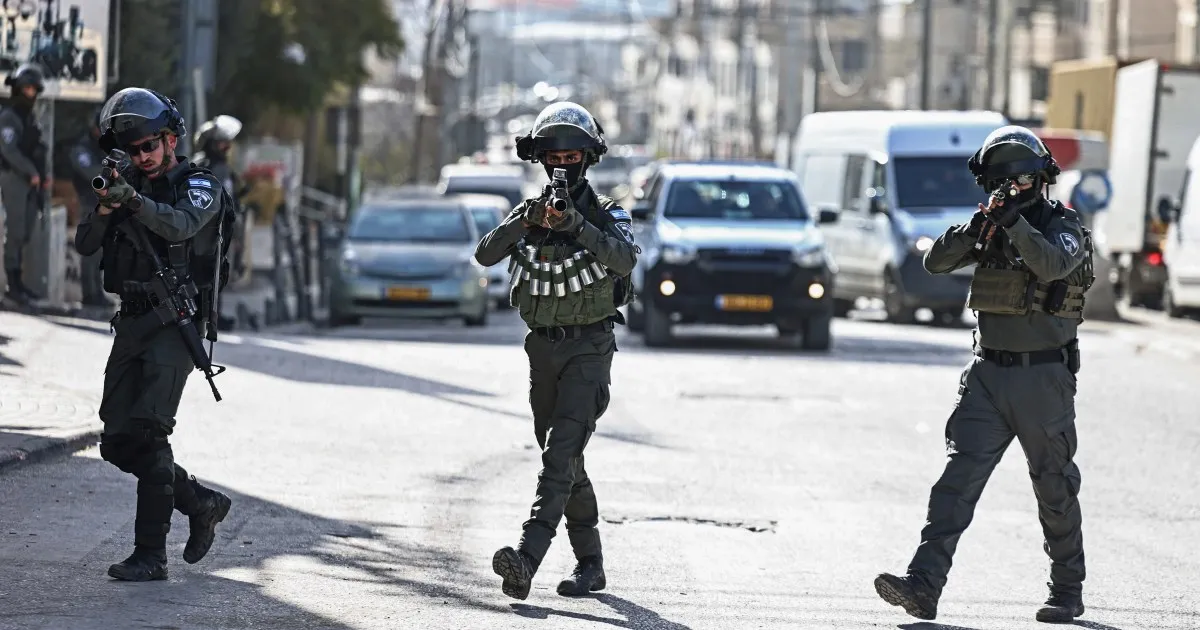
Foreign ministers of 19 countries, including Turkiye, Qatar, France and Brazil, have signed a joint statement condemning Israel’s moves to unlawfully extend and consolidate its control over Palestinian land.

The statement issued late Monday by the Turkish Ministry of Foreign Affairs described Israel’s plans to begin land registration in the occupied West Bank, which will sanction the seizure of land from Palestinians who cannot prove ownership, as “de facto annexation”.

Recommended Stories

list of 4 itemsend of list

“Changes are wide-ranging, reclassifying Palestinian land as so-called Israeli ‘state land’, accelerating illegal ⁠settlement activity, and further entrenching Israeli administration,” said the joint statement, also signed by Saudi ‌Arabia and Egypt, as well as the heads of the Arab League and Organisation of Islamic Cooperation.

Israel’s plans, signed on February 15, will see registration introduced across Area C, which makes up about 60 percent of the West Bank’s territory, according to the illegal settlement monitoring organisation, Peace Now.

The joint statement warned Israel’s moves could permanently alter the “legal and administrative status” of territory that is largely under Israeli military control, with limited Palestinian self-rule, but which would constitute part of a future Palestinian state.

“Such actions are a deliberate and direct attack on the viability of the Palestinian State and the implementation of the two-State Solution,” the statement said, rejecting measures altering “the demographic composition, character and status of the Palestinian Territory occupied since 1967, including East Jerusalem”.

INTERACTIVE - Displacemnt across the occupied West Bank -west bank - February 17, 2026 copy-1771321245

Signatories also called on Israel to end settler violence against Palestinians, pledging to take “concrete steps, in accordance with international law, to counter the expansion of illegal settlements in Palestinian territory and policies and threats of forcible displacement and annexation”.

The foreign ministers stressed that Israeli settlements constitute “a flagrant violation of international law”, including previous United Nations Security Council resolutions and the 2024 Advisory Opinion of the International Court of Justice (ICJ).

The landmark ICJ ruling stated that Israel’s “abuse of its status as the occupying power” rendered its “presence in the occupied Palestinian territory unlawful”.

According to the ICJ, approximately 465,000 Israeli settlers live in the occupied West Bank, spread across some 300 settlements and outposts, which are illegal under international law.

INTERACTIVE - Settler attacks across theoccupied West Bank (2024-2025)-west bank - October 14, 2025-1771321248

Earlier this month, UN Secretary-General Antonio Guterres warned that Israel’s land registration plan could lead to the “dispossession of Palestinians of their property and risks expanding Israeli control over land in the area”.

Signatories of the statement urged Israel to immediately release withheld tax revenues owed to the Palestinian Authority in accordance with the 1994 Paris Protocol.

They also stressed the importance of preserving the historic and legal status quo in Jerusalem and its holy sites, particularly during the holy month of Ramadan.
Source link

Over 80 UN member states condemn Israel’s de-facto annexation of West Bank | Occupied West Bank News

UN warns that Israel’s plan will lead to widespread dispossession of Palestinian land in the occupied West Bank.

More than 80 United Nations member states have condemned Israel’s plan to expand control over the occupied West Bank and claim large tracts of Palestinian territory as Israeli “state property”.

“We strongly condemn unilateral Israeli decisions and measures aimed at expanding Israel’s unlawful presence in the West Bank,” Palestinian Ambassador to the UN Riyad Mansour said on Tuesday, speaking on behalf of the coalition of 85 member states and several international organisations.

Recommended Stories

list of 4 itemsend of list

“Such decisions are contrary to Israel’s obligations under international law and must be immediately reversed. We underline in this regard our strong opposition to any form of annexation,” Mansour said.

“We reiterate our rejection of all measures aimed at altering the demographic composition, character and status of the Palestinian territory occupied since 1967, including East Jerusalem,” he said.

“Such measures violate international law, undermine the ongoing efforts for peace and stability in the region, run counter to the Comprehensive Plan and jeopardise the prospect of reaching a peace agreement ending the conflict”, he added.

The Comprehensive Plan is a November agreement between Israel and Hamas to end Israel’s genocidal war on Gaza, which includes a halt to Israel’s illegal settlement activity in the occupied West Bank.

Signatories to the joint statement on Tuesday include Australia, Canada, China, France, Pakistan, Russia, South Korea, Saudi Arabia, Turkiye , the United Arab Emirates, the European Union, the League of Arab States and the Organisation of Islamic Cooperation.

The joint statement follows Israel’s decision to implement land registration in Section C of the West Bank for the first time since 1967, when Israel began its occupation of Palestinian territory.

Section C makes up about 60 percent of the West Bank’s territory, according to the illegal settlement monitoring organisation Peace Now.

UN Secretary-General Antonio Guterres, earlier this week, warned that Israel’s land registration plan could lead to the “dispossession of Palestinians of their property and risks expanding Israeli control over land in the area”.

Guterres warned that the process could be both “destabilising” and unlawful, citing a landmark 2024 ruling by the International Court of Justice (ICJ) that stated Israel’s occupation of the West Bank and Gaza is unlawful and must end.

Israel’s “abuse of its status as the occupying power” renders its “presence in the occupied Palestinian territory unlawful”, the ICJ said in its ruling.

“Israeli settlements in the West Bank and East Jerusalem, and the regime associated with them, have been established and are being maintained in violation of international law,” the court added.

According to the ICJ, approximately 465,000 Israeli settlers live in the occupied West Bank, spread across some 300 settlements and outposts, which are illegal under international law.

Separately on Tuesday, a 13-year-old Palestinian child was killed, and two other children were seriously injured, in the occupied West Bank’s central Jordan Valley area by ammunition discarded by the Israeli military, the Palestinian Wafa news agency reported.

The injured children, aged 12 and 14, are receiving treatment in hospital, Wafa said.

Source link

Palestinians sense West Bank annexation after Israel approves new rules | Occupied West Bank News

Israeli government moves to change rules around land registration in the West Bank, making it easier for Israeli Jews to buy property in the illegally occupied territory, are raising alarm among Palestinians, fearful that the new rules will establish defacto Israeli annexation.

The Israeli cabinet announced the decisions on Sunday. In addition to allowing Jews to buy property in the West Bank – a Palestinian territory that Israel has occupied since 1967 in defiance of international law – the Israeli government has also ordered that land registries in the West Bank be opened up to the public.

That means that it will be easier for Israelis looking to take territory in the West Bank to find out who the owner of the land is, opening them up to harassment and pressure.

The cabinet also decreed that authority over building permits for illegal Jewish settlements in Hebron, and the Ibrahimi Mosque compound, would pass to Israel from the Palestinian Hebron municipality.

Moataz Abu Sneina has seen Israel’s efforts to seize Palestinian land first hand. He is the director of the Ibrahimi Mosque in Hebron, a Palestinian national symbol and an important Islamic holy site due to its connection to the Prophet Ibrahim, also known as Abraham.

Abu Sneina said that the latest Israeli decisions reflect a clear intention to increase Israeli control over Hebron’s Old City, and the Ibrahimi Mosque compound.

“What is happening today is the most serious development since 1967,” Abu Sneina said. “We view it with grave concern for the Old City and the Ibrahimi Mosque, which is the symbol and beating heart of Hebron, and the shrine of the patriarchs and prophets.”

The Ibrahimi Mosque site is also revered by Jews, who refer to it as the Tomb of the Patriarchs.

An Israeli Jewish settler killed 29 Palestinians after opening fire on Muslims praying at the mosque in 1994. Shortly afterwards, Israeli authorities divided the site into Jewish and Muslim prayer areas, and far-right Israeli settlers continue to strengthen their control over areas of Hebron.

Despite only numbering a few hundred, the settlers have taken over large areas of the city centre, protected by the Israeli military.

Abu Sneina explained that Israel has repeatedly attempted to strengthen its foothold inside Hebron and the mosque, and that the latest government moves are a continuation of Israeli policy that has only increased since the October 2023 start of Israel’s genocidal war on Gaza.

“This has taken the form of increased settler incursions, restrictions on worshippers, control over entry and exit, and bans on the call to prayer – all part of a systematic policy aimed at complete control over the holy site,” Abu Sneina said.

“[Israel] continues to violate all agreements, foremost the Hebron Protocol, closing most entrances to the mosque and leaving only one fully controlled access point,” he added. “This paves the way for a new division or an even harsher reality than the temporal and spatial division imposed since the 1994 massacre.”

Taking over Hebron

Mohannad al-Jaabari, the director of the Hebron Rehabilitation Committee, a Palestinian organisation focused on the restoration of Hebron’s Old City, said that the Israeli government was already increasing its presence on the ground, in an effort to take control of the city.

He pointed to the confiscation of shops belonging to the Hebron Municipality in the Old City, the construction of dozens of illegal settlement units, and the reconfiguration of water pipes by connecting them to an Israeli water company’s network, creating what he described as “a massive apartheid system”.

Al-Jaabari warned that the ultimate goal is to establish a Jewish quarter linking settlements to the Ibrahimi Mosque by emptying Palestinian neighbourhoods of their residents.

“All Hebron institutions are preparing for a difficult phase,” he said. “We are bracing for a fierce attack on Palestinian institutions, foremost the Rehabilitation Committee.”

The Israeli government’s latest decisions open the door for what has happened in Hebron to happen elsewhere, with Israeli settlers establishing a presence in other Palestinian cities, forcing locals out, experts say.

Nabil Faraj, a Palestinian journalist and political analyst, called the Israeli government’s moves “dangerous” and added that they “have driven the final nail into the coffin of the peace process”.

He explained that Israel is reengineering the geographic landscape of the West Bank, expanding infrastructure to serve settlements, and seeking to strip the Palestinian Authority of administrative and security control.

The Hebron model

Palestinians in Bethlehem are now worried that they will get a taste of what Hebron has already experienced.

One of the Israeli cabinet’s decisions on Sunday stipulated that the Bilal bin Rabah Mosque in the city, known to Jews as Rachel’s Tomb, would be placed under Israeli administration for cleaning and maintenance, after previously being under the jurisdiction of the Bethlehem municipality. The mosque’s cemetery has also been affected.

“It will affect the living and the dead,” said Bassam Abu Srour, who lives in Bethlehem’s Aida refugee camp. “Annexing the area would prevent burials and visits to the Islamic cemetery. This is extremely serious and completely unacceptable to us.”

In Bethlehem, Hebron, and the rest of the West Bank, Palestinians feel powerless to stop what they view as a creeping annexation.

Mamdouh al-Natsheh, a shop owner in Hebron, said he now has a growing sense that what is unfolding is an attempt to impose a permanent reality.

“The city is being taken from its people step by step,” he said. “Daily restrictions are turning it into a fixed policy that suffocates every detail of life.”

He added that the deepest impact is on children and young people, growing up in a city that is “divided and constantly monitored”, stripping them of a natural sense of the future.

“I fear the day will come when we are told this area has been officially annexed, and that our presence depends on permits,” al-Natsheh said. “In Hebron, a house is not just walls – it is history and identity. Any annexation means the loss of security and stability.”

Source link

Trump opposes Israeli annexation of occupied West Bank: White House | Occupied West Bank News

BREAKING,

White House official says Trump sees stability in the Palestinian territory as a ‘goal to achieve peace in the region’.

United States President Donald Trump opposes Israel’s annexation of ⁠the occupied West Bank, a White House official has said.

“A stable West Bank keeps ‌Israel secure, and is in ‌line ‌with this ⁠administration’s goal to achieve peace ‌in the region,” the official said on Monday, according to the Reuters news agency.

The comment from the White House comes after eight Muslim-majority countries denounced Israel for approving controversial new measures to expand control over occupied Palestinian territory, making it easier for Israelis to acquire land for new settlements, which are illegal under international law.

On Monday, Egypt, Indonesia, Jordan, Pakistan, Qatar, Saudi Arabia, Turkiye and the United Arab Emirates condemned Israel’s move “in the strongest terms”, according to a statement from the Saudi Arabian Ministry of Foreign Affairs.

This is a breaking news story. More to follow shortly.

Source link

Muslim countries slam Israel for ‘illegal annexation’ push in West Bank | Israel-Palestine conflict News

In joint statement, countries urge international community to ‘compel Israel to halt its dangerous escalation’.

Eight Muslim-majority countries have denounced Israel for trying to impose “unlawful Israeli sovereignty” in the occupied West Bank, after it approved controversial new measures expanding its control and making it easier for Israeli settlers to buy land.

Egypt, Indonesia, Jordan, Pakistan, Qatar, Saudi Arabia, Turkiye and the United Arab Emirates condemned Israel’s move “in the strongest terms” on Monday, according to a Saudi Foreign Ministry statement.

Israel’s new measures, greenlighted Sunday by its security cabinet, have major implications on property rights and Israeli security procedures in the occupied Palestinian territory.

The Times of Israel, citing a joint statement by Israel’s far-right Finance Minister Bezalel Smotrich and Defence Minister Israel Katz, said the new rules would allow Jewish Israelis to buy private real estate in the territory and open up previously confidential land registries to the public.

The measures will also allow Israeli authorities to take charge of managing some religious sites and increase Israeli supervision and enforcement in areas run by the Palestinian Authority (PA), according to Israeli media reports.

Smotrich said the move was aimed at “deepening our roots in all regions of the Land of Israel and burying the idea of a Palestinian state”.

‘Dangerous annexation push’

Palestinian President Mahmoud Abbas said the decision amounted to de facto annexation, and called on US President Donald Trump and the United Nations Security Council to intervene.

Al Jazeera’s Nida Ibrahim, reporting from the town of Birzeit in the West Bank, said Palestinians view the development “as the most dangerous push towards annexation and the most critical decision since Israel occupied the West Bank in 1967”.

She noted that under the new rules, there was nothing that would prevent Israeli settlers from owning land and “coming to Palestinian city centres”.

In the joint statement, the eight Muslim-majority countries said Israel is trying to put in place “a new legal and administrative reality” that accelerates its “illegal annexation and the displacement of the Palestinian people”.

The countries affirmed Palestinians’ right to “self-determination and statehood” and urged the international community to “compel Israel to halt its dangerous escalation”.

The European Union also condemned the Israeli move, calling it “another step in the wrong direction”.

INTERACTIVE - Occupied West Bank population-1743158487
(Al Jazeera)

The West Bank is among the areas that Palestinians seek for a future independent state, along with the Gaza Strip and occupied East Jerusalem. Currently, much of the West Bank is under direct Israeli military control, with extremely limited Palestinian self-rule in some areas, governed by the Western-backed PA.

More than 700,000 Israelis live in settlements and outposts in the occupied West Bank, which are illegal under international law, while some 3.3 million Palestinians live in the territory.

Israeli forces regularly carry out violent raids, conduct arrests, and impose restrictions in the occupied West Bank, where attacks by Israeli settlers against Palestinians have also intensified, often under the protection of Israeli soldiers.

In January alone, at least 694 Palestinians were driven from their homes in the West Bank due to Israeli settler violence and harassment, the highest number since Israel’s genocidal war against Palestinians in Gaza erupted in October 2023, according to the UN.

Source link

‘Regavim’: Israel’s new Rafah border site carries coded annexation message | Israel-Palestine conflict

Name of Israeli military facility at Gaza crossing with Egypt linked to Zionist anthem and pro-settler NGO, signalling a shift, analysts say. from security control to West Bank-style land grab and dehumanisation of Palestinians.

The Rafah border crossing between Gaza and Egypt has reopened partially for a few Palestinians after an 18-month closure in tandem with an added restriction to control the movement of returnees. The Israeli army has set up a checkpoint called Regavim in an area under its control outside the crossing for those entering Gaza from Egypt.

As the first trickle of humanity passed through the gates on Monday, official Israeli military documents gave it a name that indicates the facility is no longer being treated as a border crossing but as an operation for population control.

In an official statement published on its website on Sunday, the Israeli army announced the completion of what it called the “Regavim Inspection Nekez”.

While the Israeli military frames this technical language as routine, analysts told Al Jazeera that the choice of the words “Regavim” and “Nekez” indicates Israel’s long-term intentions.

Al Jazeera spoke to Israeli affairs experts who argued that these terms reveal a dual strategy: invoking Zionist nostalgia to claim the land while using engineering terms to dehumanise the Palestinian people.

Historical code: ‘Clod after clod’

For analyst Mohannad Mustafa, the name Regavim is not random; it is a deliberate ideological trigger intended to resonate with the Israeli government’s far-right base.

“In Hebrew, Regavim means ‘clods of earth’ or patches of arable land,” Mustafa explained. “But it is not just a word. It is a trigger for the Zionist collective memory of land redemption.”

The term is inextricably linked to the Zionist children’s song and poem Dunam Po Ve Dunam Sham (A Dunam Here, a Dunam There) by Joshua Friedman, which was an anthem for the early settlement movement. The lyrics celebrate the acquisition of land: “Dunam here and dunam there/Clod after clod (Regev ahar regev)/Thus we shall redeem the land of the people.”

“By officially naming the Rafah corridor Regavim, the army is sending a subliminal message,” Mustafa said. “They are framing their presence in Gaza not as a temporary security mission but as a form of ‘redeeming the land’ identical to the ideology of the early pioneers.”

Political code: The ‘West Bank model’

Beyond the historical nostalgia, the name has a direct line to the present-day architects of Israel’s annexation policies: the Regavim Movement.

This far-right NGO, cofounded in 2006 by Finance Minister Bezalel Smotrich, has been the primary force behind the expansion of Israeli control in the occupied West Bank. A 2023 investigation by the Israeli newspaper Haaretz detailed how the organisation essentially became the “intelligence officer” for the state, using drones and field data to map and demolish Palestinian structures in Area C, the 61 percent of the occupied West Bank under full Israeli control.

Mustafa argued that applying this name to the Rafah crossing signals the transfer of the “civil administration” model from the West Bank to Gaza.

“It suggests that Gaza is no longer a separate entity but a territory to be managed with the same tools used to prevent Palestinian statehood in Judea and Samaria,” Mustafa said, using the Israeli terms for the West Bank.

Operational code: A ‘political brand’ and a ‘drain’

Analyst Ihab Jabareen takes the name Regavim a step further. He argued it has evolved beyond its linguistic meaning into a modern “political brand” for the settlement right and is being used to normalise a long-term Israeli presence.

However, Jabareen said the use of the term Nekez in the Israeli military statement portends even more danger.

“While Regavim operates as a political brand, Nekez reveals the cold, engineering mindset of the military,” Jabareen told Al Jazeera. “A Nekez is a drainage point. It is a hydraulic term used for managing sewage, floodwaters or irrigation – not for processing human beings.”

Jabareen argued that describing a human border crossing as a “drain” reflects three chilling assumptions now formalised in military doctrine:

  1. Dehumanisation: “The Palestinian is no longer a citizen. They are a ‘fluid mass’ or a ‘flow’ that must be regulated to prevent overflow,” Jabareen said.
  2. The end of negotiations: “You do not negotiate with a drain. Rafah is no longer a political border subject to sovereignty. It is an engineering problem to be managed.
  3. Infrastructure, not a border: “Security is now being managed like a sewage system – purely technical, devoid of rights.”

“This is colder and more dangerous than standard settlement rhetoric,” Jabareen warned. “It converts the political issue of Gaza into a permanent technical function.”

A formula for ‘quiet control’

Both analysts agreed that the official adoption of these two terms points to a reality that is neither a full withdrawal nor declared annexation.

“It is a formula for ‘quiet control’,” Jabareen explained. “Israel doesn’t need to declare immediate settlement to control the territory. By treating the land as ‘Regavim’ (soil to be held) and the people as a ‘Nekez’ (a flow to be filtered), they are establishing a long-term reality where Gaza is an administered space, never an independent entity.”

Mustafa concurred: “The name ‘Regavim’ tells the settlers: ‘We have returned to the land.’ And the official designation ‘Nekez’ tells the security establishment: ‘We have the valve to turn the human flow on or off at will.’”

INTERACTIVE - Proposed Rafah crossing Gaza plan February 1
(Al Jazeera)

Source link