Angela Eagle

UK food ban for airport travellers update as minister issues statement

Currently anyone found with five types of food – even bought in duty free – will have the seized, destroys and face £5,000 fines

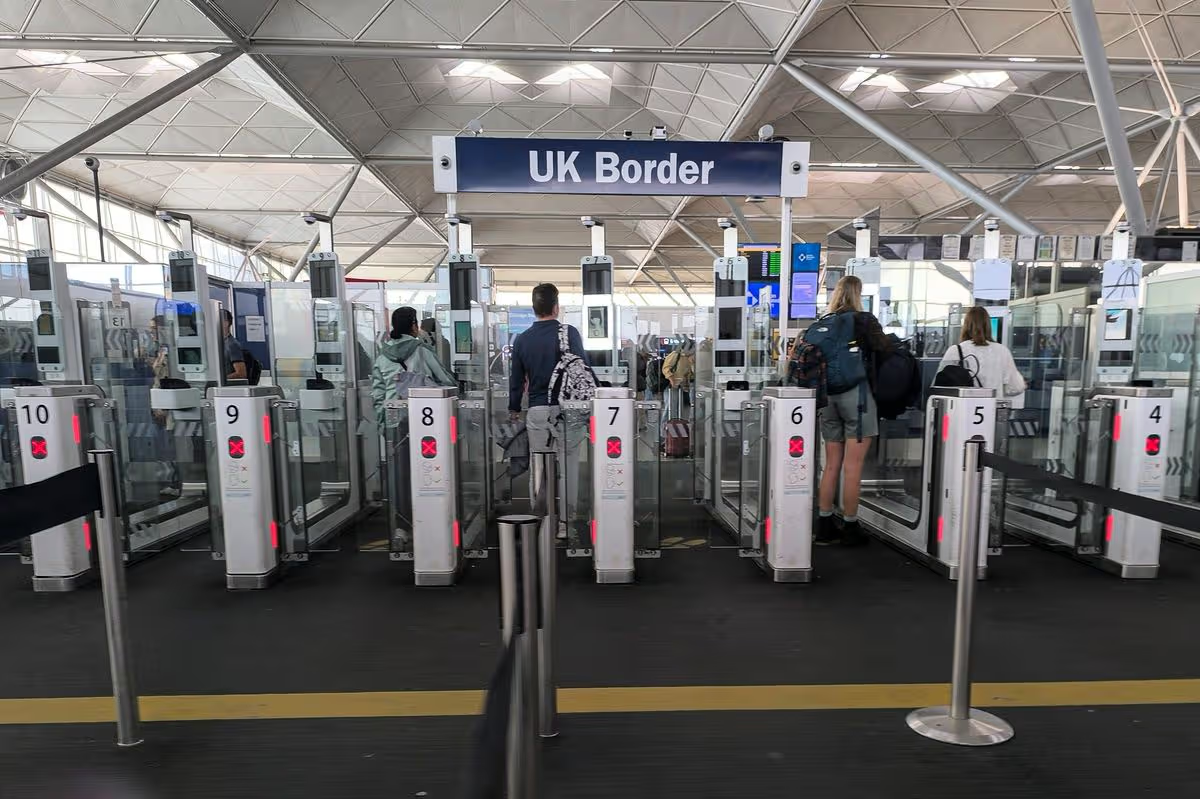
A government minister has given an update on a ban on anyone bringing food into the UK on aircraft. Since last April passengers face being stopped at the UK border and having items confiscated and could face fines of £5,000.

The ban is in place because of a food and mouth outbreak in Europe. The Department for Environment, Food & Rural Affairs (DEFRA) banned items like sandwiches, cheese, cured meats, raw meats or milk into Great Britain.

Travellers are not allowed to bring cattle, sheep, goat, and pig meat, as well as dairy products, from EU countries into Great Britain for personal use, to protect the health of British livestock, the security of farmers, and the UK’s food security.

And yesterday the government issued an alert about a new outbreak in UK holiday hotspot Cyprus, meaning more restrictions have been brought in on commercial imports.

UK Chief Veterinary Officer Dr Christine Middlemiss said: “Foot and Mouth disease has now been confirmed in Cyprus, we remain in contact with our European counterparts to understand the latest situation.

“Robust plans are already in place to minimise the risk of disease incursion to support Britain’s farming community and food security.”

Those found with these items will need to either surrender them at the border or will have them seized and destroyed. In serious cases, those found with these items run the risk of incurring fines of up to £5,000 in England.

In a new parliamentary written question Labour MP Ben Goldsborough asked if enough was being done to inform the public and asked the Secretary of State for Environment, Food and Rural Affairs Emma Reynolds “If she will make an assessment of the potential merits of funding public awareness campaigns, including advertisements at airports and ports, on (a) foot and mouth disease and (b) African swine fever.”

DEFRA minister Dame Angela Eagle said extensive efforts have been made recently to highlight the ban: “ Biosecurity is a priority for this Government. To protect UK farmers and animals from serious diseases like Foot and Mouth Disease and African Swine Fever, we used the Christmas period as an opportunity to remind the public about the personal imports ban on travellers from the EU and EEA countries bringing dairy and meat products to GB, that came into force last year.

“This included promoting awareness of the rules to the travelling public and extending our reach through partnership channels across Government and with industry. Our insights survey results indicate that over 90% of respondents are aware that they should not bring back meat and dairy products from these countries.

“Any decisions on funding paid campaigns will be made based on the current threat level, evidence of effectiveness and available resources, ensuring maximum impact in protecting UK biosecurity.”

Restrictions on meat, dairy and animal products for human consumption

You cannot bring in any of the following:

  • cheese, milk and dairy products like butter and yoghurt
  • pork
  • beef
  • lamb
  • mutton
  • goat
  • venison
  • other products made from these meats, for example sausages

You can bring the following into Great Britain from any country without any restrictions:

  • bread, but not sandwiches filled with meat or dairy products
  • cakes without fresh cream
  • biscuits
  • chocolate and confectionery, but not those made with a lot of unprocessed dairy ingredients
  • pasta and noodles, but not if mixed or filled with meat or meat products
  • packaged soup, stocks and flavourings
  • processed and packaged plant products, such as packaged salads and frozen plant material
  • food supplements containing small amounts of an animal product, such as fish oil capsules

Ensure our latest headlines always appear at the top of your Google Search by making us a Preferred Source. Click here to activate or add us as your Preferred Source in your Google search settings.

Source link

Airport food EU ban extended into 2026 list of 8 items ‘could get £5,000 fine’

The UK Government confirmed a ban on people bringing some duty free from European Union into Great Britain will continue into 2026 to prevent spread of disease

A Government prohibition on travellers bringing food products from the European Union into Britain has been prolonged, ministers have confirmed. The rules mean that if border and customs officers discover such items, which many purchase at duty-free shops, they will be seized, disposed of, and the individual may face a financial penalty.

Ministers confirmed this week that the protective measures against the transmission of foot and mouth disease (FMD) amid increasing outbreaks throughout Europe will extend into 2026. Holidaymakers are prohibited from bringing beef, lamb, goat and pork products, alongside dairy goods, from EU nations into Great Britain for personal consumption, safeguarding British livestock welfare, farming stability and the nation’s food supply chain.

This encompasses items such as sandwiches, cheese, cured meats, raw meats or milk entering Great Britain – irrespective of packaging or whether purchased from duty-free retailers.

Restrictions on meat, dairy and animal products for human consumption

You cannot bring in any of the following:

  1. cheese, milk and dairy products like butter and yoghurt
  2. pork
  3. beef
  4. lamb
  5. mutton
  6. goat
  7. venison
  8. other products made from these meats, for example sausages

The Department for Environment, Food and Rural Affairs has verified the restriction will stay in force. Labour’s Dr Rosena Allin-Khan questioned Environment, Food and Rural Affairs Secretary Emma Reynolds: “Whether her Department plans to end temporary restrictions on the import of (a) meat, (b) dairy and (c) animal products from the European Union in the context of the World Organisation for Animal Health’s recognition of all European Union member states as free from foot-and-mouth disease.”

Dame Angela Eagle, Minister of State at the Department for Environment, Food and Rural Affairs, confirmed the prohibition remains active: “Restrictions on commercial imports of certain meat, dairy and animal products from Slovakia in response to foot and mouth disease (FMD) remain in place pending UK recognition of FMD freedom.”

“Restrictions on personal imports of certain meat, dairy and animal products from the EU will remain in place while the biosecurity risk remains. As well as FMD, these measures mitigate against incursions of other animal diseases circulating in the EU, including African swine fever, sheep pox and goat pox, peste des petits ruminants and lumpy skin disease.”

READ MORE: New Foreign Office alert as holiday hotspot bans alcohol this week, February 7, 2026READ MORE: Spain and Portugal red alert as UK Foreign Office warns British holidaymakers

While FMD presents no danger to people and Britain remains free of cases, it is an extremely infectious viral illness affecting cattle, sheep, pigs and other cloven-hoofed creatures including wild boar, deer, llamas and alpacas, with the European outbreak representing a substantial threat to agricultural enterprises and livestock.

The disease can trigger considerable financial damage through reduced productivity in infected animals, alongside the loss of international market access for livestock, meat and dairy products.

Ministers have already prohibited personal imports of cattle, sheep and other ruminants, along with pig meat and dairy products from Germany, Hungary, Slovakia and Austria following verified FMD outbreaks across those nations.

Restrictions on meat, dairy and animal products for human consumption The following items are strictly prohibited:.

These new restrictions apply solely to travellers entering Great Britain. Upon the announcement of the ban, Farming Minister Daniel Zeichner declared: “This government will do whatever it takes to protect British farmers from foot and mouth.

“That is why we are further strengthening protections by introducing restrictions on personal meat and dairy imports to prevent the spread of the disease and protect Britain’s food security.”

Information for travellers entering GB

The Department for Environment, Food and Rural Affairs clarified: “It is illegal for travellers from all EU countries entering Great Britain to bring items like sandwiches, cheese, cured meats, raw meats or milk into the country. This is regardless of whether it is packed or packaged or whether it has been bought at duty free.

“Detailed information is available for the public which sets out a limited set of exemptions from these rules. For example, a limited amount of infant milk, medical foods and certain composite products like chocolate, confectionery, bread, cakes, biscuits and pasta continue to be allowed.

“Those found with these items will need to either surrender them at the border or will have them seized and destroyed. In serious cases, those found with these items run the risk of incurring fines of up to £5,000 in England.”

Source link