Contributor: There’s a reason people are still talking about Julie Andrews as she turns 91
Summer mornings in the Hill Tracts region of Bangladesh are a respite from the dissonance of honking cars and construction of the capital city of Dhaka. It was a welcome change to hear chickens and the sound of … wait, was that Julie Andrews’ voice echoing over the hills?
I was visiting my home country when I heard a group of schoolchildren playing ektaras, a traditional string instrument, and singing the “Do-Re-Mi” song for their morning assembly.
I used my phone to show them a picture of Andrews. “Do you know her?” They immediately leaped in excitement. They didn’t know the composer Richard Rodgers or lyricist Oscar Hammerstein II. But they knew Andrews — even though 60 years have passed since “The Sound of Music” and these children live in a remote Bangladeshi village. The recognition is evidence of something extraordinary.
Andrews is turning 91 on Thursday, and there are calls online to bubble wrap her, just in case. She is indeed a global treasure, and she has been earning plaudits and admirers for eight decades.
Andrews trained in the Italian bel canto tradition and from a young age sang challenging coloratura arias with precision, clarity and range. The bright, happy tone, perhaps a subconscious decision rather than anatomical alone, provided her respite from the doodlebug bombs that fell during her childhood in England in World War II. British critics had dubbed her as the “youngest prima donna,” a title usually reserved for opera greats, and it wasn’t undeserved. At just 12, she routinely floated high Fs above the treble staff during live performances.
Yet before opera could claim her, Broadway stepped in. From “The Boy Friend” to “My Fair Lady” and then “Camelot,” she won the hearts of theater goers and creators alike. Lyricist Alan Lerner described her as “an amazingly quick study in music … who meets any challenge with an unabated eyelid that makes you wonder how Britain ever lost the empire.”
Her voice then was so precise that the late maestro André Previn, who led the London Symphony Orchestra, proclaimed: “No one’s diction in any field of singing can come close. … You understand every syllable from the second balcony — I don’t understand how you do that.”
It’s inaccurate to romanticize her legacy in 2026 as simply nostalgic. That would overlook the depth and progressive nature of her characters. She was essentially the first female superhero on the big screen, as Mary Poppins — who could fly and create alternate realities with the snap of her heels, but whose more stunning superpower at the height of the Cold War was to charmingly portray capitalism as dangerous.
In “Victor/Victoria,” she navigated a gender-bending performance that challenged societal norms, playing a woman who impersonates a man impersonating a woman when it was taboo to speak about any layer of that. Her most overlooked and perhaps her best dramatic role was in “Duet for One,” a 1986 film about a musician who suffers from multiple sclerosis. Tragically this became a moment of life imitating art, foreshadowing her own destiny to lose her instrument after throat surgery in 1997.
Rather than retreat, Andrews adjusted and leaned into voice acting with characters like the dominant Queen Lillian in “Shrek” films, Gru’s hilariously villainous mother in “Despicable Me” and the mysterious Lady Whistledown in “Bridgerton,” for which she won an Emmy, twice.
In real life, the flying super governess fought to adopt two babies from Vietnam just after the fall of Saigon, helping to raise awareness of the need for adoptive parents. She then co-founded the Operation USA disaster relief charity and opened the Japanese wing for the United Nations Development Fund for Women.
Whether it was to support UNICEF after the devastating Bhola cyclone hit present-day Bangladesh in 1970 or jetting to Jordan and Senegal to support women’s and children’s activities, she was a quiet champion for the underserved. In her most famous role, in “The Sound of Music,” she was a savior for children being displaced by war.
Andrews is mostly out of the public eye, but her singing is eternal and accessible. YouTube is home to a trove of Andrews performances, including “This Is My Beloved” from “Kismet,” full-voiced “When You Wish Upon a Star,” from pianissimos to fortes, high B-flats and all — her classical skill shines through. These recordings remind us that beyond just the formulaic legato phrasing that singers from the Italian tradition follow, and the clear resonance, her work it set a gold standard for musical storytelling that few have surpassed since.
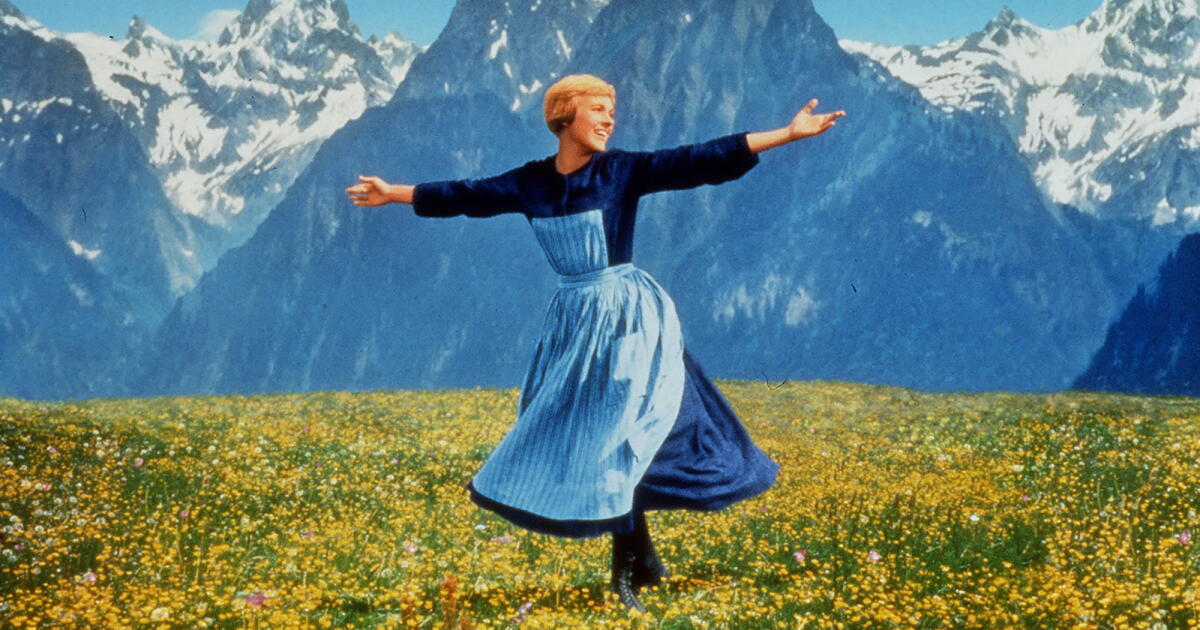
Julie Andrews is no longer trilling on the Alps, nor is she reprising her role as queen of Genovia in a “Princess Diaries” film, but her voice, and what it represented for more than 80 years, endures. It lives on not just in films and recordings but also ringing in the minds of children and adults alike, from her hometown of Walton-on-Thames to the Hill Tracts of Bangladesh. In an age of doom scrolling (and alarmingly low singing standards), her vast career offers a rare resonance and a continuing masterclass.
Shams-il Arefin Islam, a Yale-Berkeley College associate fellow who works on climate mitigation and adaptation, is a classically trained tenor.