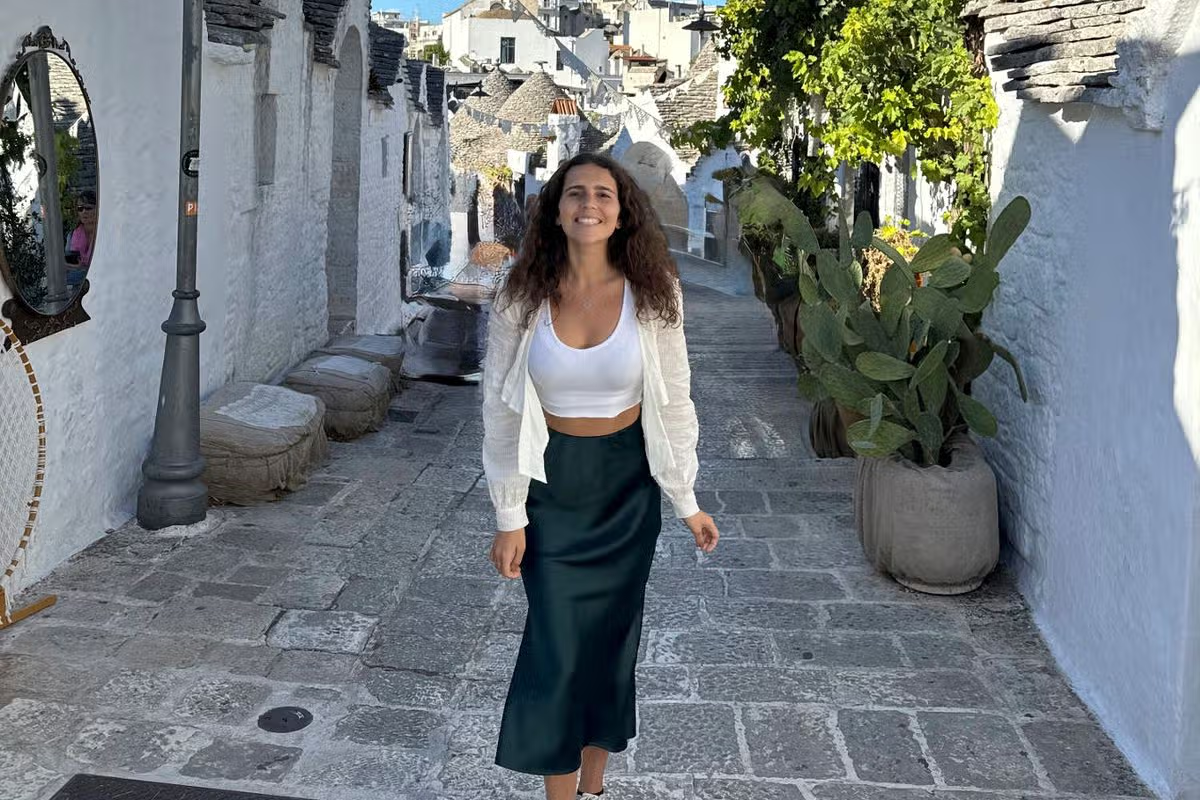
Both Puglia and the Amalfi Coast are ideal if your idea of a holiday involves spending your days wandering around pretty coastal towns, stopping for seafood and taking a dip in the Mediterranean

“I recently travelled around southern Puglia, which sits east of Amalfi across Italy, and I found myself constantly comparing the two”(Image: Supplied)
There is a reason the Amalfi Coast is one of Italy’s most famous holiday destinations. The combination of dramatic cliffs, turquoise water, colourful villages and incredible Italian food makes it almost impossible not to fall in love with it. But there is also a downside to being somewhere that beautiful and well-known: everyone else wants to visit, too.
I recently travelled around southern Puglia, which sits east of Amalfi across Italy, and I found myself constantly comparing the two. Both regions have a lot in common: they’re hot, beautiful and have an unmistakable Mediterranean atmosphere.
But one thing in particular sets them apart. Instead of huge crowds filling every viewpoint, I found myself in Puglia walking through quiet streets where locals were still going about their everyday lives. The region isn’t exactly a secret, with places such as Alberobello firmly on the tourist trail, but it’s still much easier to escape the crowds there.
So how else do the regions match up?
Do you have a travel story to share? Email webtravel@reachplc.com
Landscape and towns
The biggest similarity between Puglia and the Amalfi Coast is, unsurprisingly, the sea. Both destinations are ideal if your idea of a holiday involves spending your days wandering around pretty coastal towns, stopping for seafood and taking a dip in the Mediterranean.
The Amalfi Coast is famous for its steep cliffs, with towns seemingly built into the mountainsides above the sea. Puglia, meanwhile, is generally much flatter. I didn’t mind losing the cliffside views as Puglia’s flatness made exploring much easier. You don’t have to spend your day navigating steep roads and packed coastal viewpoints.
Otranto is a perfect case in point. Located on the Adriatic coast, the easternmost city in Italy has scenery you might expect on the Amalfi Coast, but with a much quieter atmosphere. This fortified old town is packed with tiny streets, historic buildings and restaurants, while the seafront opens out onto bright blue water.
I never felt overwhelmed by tourists there. I could simply wander around without having to constantly dodge people or wait for a gap to take a photograph. Greek and Byzantine influences have shaped the town, as did a brutal massacre in 1480 when Ottoman forces killed hundreds of residents who refused to renounce their Christian faith. The event is still remembered at Otranto Cathedral, where the remains of the 800 martyrs are kept.
Travel a little further south and you’ll reach Alberobello, the most touristy town in Southern Puglia. Alberobello is probably the most famous destination in Puglia, thanks to its extraordinary trulli: small whitewashed stone houses with distinctive conical roofs.
There are more than 1,400 trulli in the town, and the area has UNESCO World Heritage status. It is incredibly pretty, but also extremely touristy. The main streets are packed with souvenir shops, restaurants and visitors taking photographs, so if you’re expecting to discover a completely hidden Italian village, you might be disappointed.
But I found an easy way around this. Cross the town’s valley into Rione Aia Piccola and the atmosphere changes almost immediately. This is a residential area where people still live in traditional dry-stone huts, called trulli, and the streets are noticeably quieter.
The contrast summed up my experience of Puglia: even in the places that are undeniably touristy, there’s another side to discover if you’re willing to walk a little further.
Which is cheaper?
One of the biggest advantages Puglia has over the Amalfi Coast is the price. The star-studded West Coast has a reputation for being expensive, particularly in famous towns such as Positano, Amalfi and Ravello, where accommodation and restaurants can quickly add up.
Puglia isn’t necessarily a budget destination, particularly in peak summer, but I found it much easier to eat well without spending a fortune. Otranto was particularly affordable, with filling paninis and seafood dishes for around €12 or less. On the Amalfi Coast, finding a bargain is nearly impossible. You find yourself paying a premium simply for a location and view.
The food
This is an area where Puglia and the Amalfi Coast have plenty in common. Both regions make excellent use of fresh seafood, vegetables, olive oil and wine, but they have their own specialities.
In Puglia, olive oil is everywhere, used liberally along with tomatoes, almonds, fresh root vegetables and local cheeses. One of the region’s most famous foods is orecchiette, the small ear-shaped pasta traditionally served with broccoli rabe, while burrata is another staple.
I also kept coming across focaccia barese, a soft bread topped with tomatoes and olives, as well as panzerotti, fried pockets of dough usually filled with tomato and mozzarella. Along the coast, seafood naturally features heavily, with octopus, mussels and other freshly caught fish appearing on menus.
The Amalfi Coast has its own distinctive flavours. Lemons are perhaps the biggest one. The region is famous for its large Amalfi lemons, which are used in everything from desserts and drinks to savoury dishes, while delizia al limone and limoncello are two of the most recognisable treats.
Seafood is also central to the Amalfi Coast, with dishes such as seafood scialatielli, a type of fresh pasta, and totani e patate, squid cooked with potatoes.
Which Italian destination is better?
It’s not that Puglia has made me fall out of love with the Amalfi Coast. The destination is spectacular, and there is a reason millions of people want to see those famous cliffs and colourful villages for themselves.
But after travelling around Puglia, I found myself wondering whether it might actually be the better choice for a traveller who wants a quieter, more authentic experience. If you want dramatic cliffside scenery, glamorous restaurants and famous Instagram views, Amalfi is hard to beat. But if you’re after beautiful beaches, historic coastal towns, incredible Italian food and somewhere less crowded, I’d seriously consider Puglia.
Book it
You can visit Puglia as part of Great Rail Journeys’ eight-day ‘Hidden Gems of Southern Puglia’ trip, starting from £1,799 per adult, based on double occupancy.
The price includes return flights from London Gatwick or Heathrow to Brindisi, accommodation at a four-star all-inclusive resort, all coach travel, and guided tours and excursions. You can find out more and book on greatrail.com.