analysts

Spencer Pratt’s time in Santa Barbara County likely won’t affect his bid for L.A. mayor, analysts say

Living outside the community they want to represent can be a handicap for political candidates, but it’s not likely to be a problem for Los Angeles mayoral hopeful Spencer Pratt, who until recently was living in Carpinteria in Santa Barbara County, analysts say.

That’s because Pratt’s home burned in the January 2025 Palisades fire, making him a sympathetic figure among many voters — especially those living in his Westside base, they say.

“I don’t think this is going to be electorally consequential,” said Zev Yaroslavsky, a former Los Angeles County supervisor and L.A. City Council member who now runs the UCLA Luskin School of Public Affairs. “He’s a victim of the Palisades fire that doesn’t have a home to live in because it burned down.”

Pratt filed to run for mayor in February and was in second place behind Mayor Karen Bass in a recent poll by the Luskin school. He was certified by the Los Angeles city clerk on March 2 as one of 14 candidates in the June 2 primary election.

While some observers have raised questions about his eligibility, a state memorandum following the fires said that voters who were temporarily displaced from their homes can use their prior address as their permanent residence as long as they “intend to return” in the future.

A view of the coastal community of Carpinteria, Calif.

Los Angeles mayoral candidate Spencer Pratt currently resides in a private community in Carpinteria, Calif.

(Myung J. Chun / Los Angeles Times)

Michael Sanchez, a spokesperson for the Los Angeles County Registrar-Recorder/County Clerk, said this also applies to candidates.

“In situations where a candidate has been temporarily displaced (such as the 2025 wildfires), their eligibility to run for office is not impacted, provided they maintain domicile in their district,” Sanchez said in a statement.

He explained that domicile is determined by a person’s primary residence and their intent to return to that residence. “Temporary relocation during rebuilding or recovery does not, by itself, change a person’s domicile.”

The Times asked the L.A. city clerk’s office last week about Pratt’s residency and eligibility.

“We cannot comment on the specifics of a candidate’s address due to confidentiality. Any matter concerning a candidate’s eligibility or residency, such as this situation, can be formally challenged through the court,” said Josue Marcus, a spokesperson for the city clerk’s office.

Any potential challenge to Pratt’s eligibility based on residency would turn on the question of whether he had intent to return, said Jessica Levinson, a Loyola Marymount University law professor. “Those are tricky inquiries because it depends on someone’s state of mind,” she said.

Pratt and his campaign aides didn’t respond to requests for comment. Pratt released a video Monday, following inquiries from The Times, defending his decision to move to Carpinteria but saying he now intends to live in a trailer placed on his burned-out lot in Pacific Palisades.

The city of Los Angeles sprawls across roughly 500 square miles, creating logistical hurdles if nothing else for a candidate seeking citywide office from a remote location, noted Democratic political consultant Mike Trujillo.

“Anyone that has done the drive from San Pedro to Sylmar knows that L.A. is a big place,” said Trujillo, who isn’t affiliated with any of the candidates in the June 2 mayoral primary. “To add another hour and a half to the drive is not advantageous if you’re trying to campaign in every corner of the city.”

Pratt, a former reality TV star, has millions of followers on social media, but Trujillo said that Pratt will need to show a strong presence in the community to wage a successful campaign.

Pratt is a Republican running in a Democrat-majority city. Developer Geoffrey H. Palmer, a major campaign donor to President Trump, plans to host a reception for Pratt at his Beverly Hills home April 28, according to a document the Pratt campaign filed with the city Ethics Commission.

The event is being organized by Trey Kozacik, who also organized a Trump fundraiser in Los Angeles in 2019.

The UCLA Luskin poll released this month showed Pratt with the support of 11% of likely voters, behind Bass with 25% and ahead of City Council member Nithya Raman with 9%.

Mayoral candidate Adam Miller, who polled at 3% in the survey, said Pratt’s party affiliation is his biggest hurdle to winning the mayoral race.

“I sympathize with Spencer for losing his home and feeling outrage toward the city, but he is not a viable candidate. It doesn’t matter where he lives, a Republican hasn’t been elected mayor in 30 years in this city, and he isn’t going to change that now,” said Miller, a tech executive.

Others say party affiliation is less of an issue.

“This is a nonpartisan race,” said Roxanne Hoge, the chair of the Los Angeles County Republican Party. “There’s no letter accompanying anyone’s name. … I personally support him because he’s an intelligent alternative.”

Some think Pratt will also hold appeal for some Democratic voters.

“There are people I speak to who I know to be Democrats who really, really like him,” said Maryam Zar, who heads the Palisades Recovery Coalition. “To the extent that people are disappointed in this recovery, they pin their hopes on Spencer. That’s not a bad place for him to be.”

Source link

Energy prices may take ‘months’ to normalise, despite ceasefire: Analysts | US-Israel war on Iran News

Even though a fragile ceasefire between Iran and the United States and Israel has been announced, it’s going to be a long time before prices of oil and gas come back to pre-war levels, experts say.

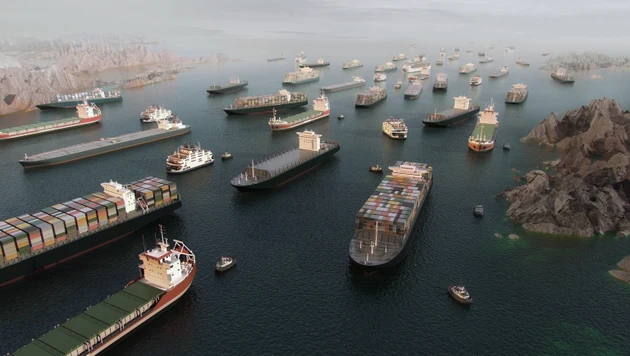
In response to the US-Israeli attacks, Iran choked off the Strait of Hormuz, the narrow channel linking the Gulf to the Gulf of Oman, through which roughly 20 percent of the world’s oil and gas exports pass from the Middle East, mainly to Asia and also to Europe.

Recommended Stories

list of 4 itemsend of list

It also attacked energy infrastructure in several Gulf countries, leading to soaring prices of not just energy but also of byproducts like helium, used in a range of products like tiles used in homes and semiconductor equipment. Fertilisers that rely on some of these inputs were hit too, impacting sowing seasons.

As a result, consumers the world over, but particularly in developing countries of Asia and Africa, have felt the brunt of those shortages and soaring prices. The question on many minds: Now that there is a ceasefire in place, how quickly will prices normalise?

“Anyone who tells you they know the answer to that question is lying,” said Rockford Weitz, professor of practice in maritime studies at The Fletcher School at Tufts University. “It’s too early to tell when we return to normal.”

There needs to be a predictable and stable flow of cargo through the strait before markets can stabilise, experts say.

“What we’re seeing is the biggest disruption in the history of global oil markets,” said Weitz.

Before this conflict, approximately 120-140 ships passed through the Strait of Hormuz every day. On Wednesday, only five vessels crossed the strait, while seven passed through the waterway on Thursday.

That shows why “to get back to normal is going to be a while”, Weitz told Al Jazeera. “And it’s too complicated to know at this stage when that will happen, as it requires collaboration with the great powers [US, China and Russia], but also regional powers [UAE, Saudi Arabia, India and Pakistan]. It’s hard to say when it will end, as there are so many parties who can make it not happen.”

There is also some concern that developments, like Iran charging a toll fee to allow ships to pass through and skyrocketing insurance fees, will keep oil prices high.

“There are reports that Iran is charging fees to tankers going through the Hormuz Strait,” US President Donald Trump wrote on TruthSocial Thursday.

“They better not be and, if they are, they better stop now.”

But experts agree that those fees, rumoured to be about $2m per vessel, are not enough to move the needle on oil prices.

“What is causing oil prices to rise is not insurance. It’s about getting tankers through. Tolls won’t be the cost driver,” said Weitz.

‘Signs of strain’

Some of that reality was on display with the reopening of the strait, showing “signs of strain just hours after the ceasefire was announced”, said Usha Haley, W Frank Barton Distinguished Chair in international business at Wichita State University.

Compounding that problem was the fact that some countries, including Iraq, had shut down production because of limited storage capacity, further taking oil supplies offline.

“That will take weeks and months to reopen,” Haley added.

“It’s going to be a contested reopening … LNG [liquefied natural gas] will take months to rebalance because of the hits to infrastructure, and can take three to six months to normalise if everything else remains normal. And it’s not.”

INTERACTIVE - Strait of Hormuz - March 2, 2026-1772714221

Slower growth

On Thursday, International Monetary Fund managing director Kristalina Georgieva warned that the fund will downgrade its forecast for the world economy next week from the current expectation of 3.3 percent. “Growth will be slower – even if the new peace is durable,’’ Georgieva said.

While the war has hit most economies, “it hasn’t really affected the two primary [US] targets – Russia and China. Russia, in fact, has benefitted enormously, and Chinese ships have been allowed to go through,” said Haley.

The US has hit Russia with multiple sanctions for its war on Ukraine, including capping sales of Russian oil to undercut its income stream. Similarly, the first Trump administration put tariffs on China and curbed US exports of certain high-end technology, measures that were held up under the administration of former US President Joe Biden and further ratcheted up by Trump last year with his tariffs blitz.

But amid the war on Iran and the effective closure of the Strait of Hormuz, the US temporarily eased some sanctions on Russian oil, and countries desperate for crude have since paid far higher prices to Moscow than the subsidised energy that President Vladimir Putin’s government was previously offering them.

“We [the US] really need to decide what we want to do long-term, who our targets are. There’s got to be some coherence to what we want to do.”

For now, “an overhang of greater risk premium of supplies out of the Gulf means oil prices will remain higher than what they were before the attack started”, said Rachel Ziemba, adjunct senior fellow at the Center for a New American Security.

While it’s possible that some of the blocked oil and oil products could be released soon, providing a short boost of supplies in the coming days and weeks, “that would be a temporary support” and is still conditional on the ceasefire holding and converting to a broader deal, said Ziemba.

For now, she’s keeping an eye on Iraq to see if it strikes a side deal with Iran. Iraq, long a proxy battleground between the US and Iran, can produce at least 3.5 million barrels of oil per day, production that it had shut off because of limited storage capacity, said Ziemba.

Should that come back online, it will help oil flows and, eventually, prices. But the uncertainty of the truce and the history of attacks on Iraq mean that the future of the country’s oil production remains unclear. “In that environment, who wants to invest in scaling up production?” Ziemba wondered.

Source link

Analysts say US threat of ‘no quarter’ for Iran violates international law | US-Israel war on Iran News

Rights groups have slammed United States Secretary of Defense Pete Hegseth for saying that “no quarter” will be shown to Iran, as the US and Israel continue their military campaign against the country.

“We will keep pressing. We will keep pushing, keep advancing. No quarter, no mercy for our enemies,” Hegseth told reporters on Friday.

Recommended Stories

list of 3 itemsend of list

Under the Hague Convention and other international treaties, it is illegal to threaten that no quarter will be given.

Domestic laws, such as the 1996 War Crimes Act, also prohibit such policies. US military manuals likewise warn that threats of “no quarter” are illegal.

Brian Finucane, a senior adviser at the International Crisis Group, a think tank, said Hegseth’s comments appear to run afoul of those standards.

“These comments are very striking,” Finucane told Al Jazeera over a phone call. “It raises questions about whether this belligerent, lawless rhetoric is being translated into how the war is being conducted on the battlefield.”

But Hegseth has publicly dismissed concerns about international law, claiming he would abide no “stupid rules of engagement” and no “politically correct wars”.

His rhetoric has provoked concern among some experts that measures designed to prevent civilian harm are being ignored in favour of a campaign of “maximum lethality”.

Hegseth’s remarks also come after a US strike on a girls’ school in southern Iran that killed more than 170 people, most of them children. The war has left at least 1,444 Iranians dead and millions more displaced.

‘Inhumane and counterproductive’

Prohibitions against declaring “no quarter” go back more than a century, part of an effort to impose restraints on conduct during war.

The Nuremberg trials after World War II upheld that legal standard, as Nazi officials were prosecuted, in some cases, for denying quarter to enemy forces.

“The basic idea is that it’s both inhumane and counterproductive to execute people who have laid down their arms,” said Finucane.

He added that the “mere announcement” of “no quarter” from a government official can itself be a war crime.

The US and Israel have already faced allegations of violating international law during their war against Iran. Experts have condemned their initial strike on February 28 as “unprovoked”, deeming the conflict an illegal war of aggression.

Iranian officials also protested after a US submarine sank a military vessel, the IRIS Dena, off the coast of Sri Lanka, as it returned from a ceremonial naval exercise in India. That attack killed at least 84 people.

While warships are considered legal military targets, Iran has said that the ship was not fully armed, raising questions about whether it could have been interdicted rather than sunk.

US forces also purportedly declined to help rescue sailors from the Dena, even though the Geneva Convention largely requires aid to the shipwrecked. The Sri Lankan navy ultimately helped collect survivors from the wreckage.

Responding to the attack, Hegseth described the sinking of the ship as a “quiet death”. He also told reporters, “We are fighting to win.”

US President Donald Trump himself remarked that he asked why the ship had been sunk, not captured.

“One of my generals said, ‘Sir, it’s a lot more fun doing it this way,’” Trump said.

‘Serious red flag’

The US military has faced criticism for killing civilians in military operations for decades.

That includes during the so-called “global war on terror”, when airstrikes resulted in thousands of civilian deaths, including a 2008 attack on a wedding party in Afghanistan.

Even before the war with Iran, the Trump administration had faced accusations that it violated international law by attacking alleged drug-trafficking vessels in the Caribbean Sea and eastern Pacific Ocean.

At least 157 people have been killed in those attacks since they started on September 2.

The Trump administration, however, has never identified the victims nor presented evidence against them. Scholars have condemned the attacks as a campaign of extrajudicial killings.

Analysts say that the Pentagon’s policies of emphasising lethality at the expense of human rights concerns has carried over into its war against Iran.

“Death and destruction from the sky all day long. We’re playing for keeps. Our warfighters have maximum authorities granted personally by the president and yours truly,” Hegseth said during a briefing on March 4.

“Our rules of engagement are bold, precise and designed to unleash American power, not shackle it.”

Sarah Yager, the Washington director at Human Rights Watch, called such rhetoric alarming.

“I’ve been engaging with the US military for two decades, and I’m shocked by this language. Rhetoric from senior leaders matters because it helps shape the command environment in which US forces operate,” Yager said.

“From an atrocity-prevention perspective, language that dismisses legal restraints is a serious red flag.”

While the impact of Hegseth’s rhetoric on combat operations is not certain, a recent report from the watchdog group Airwars found that the pace of the US and Israeli assault on Iran has far outstripped other military operations in modern history.

Reports indicate that the US dropped nearly $5.6bn worth of munitions in the first two days of the war alone. Airwars says the US and Israel hit more targets in the first 100 hours of the Iran war than in the first six months of the US campaign against ISIL (ISIS).

Following Hegseth’s remarks on Friday, Senator Jeff Merkley condemned the Pentagon chief as a “dangerous amateur”. He cited the attack on the Iranian girls’ school as an example of the consequences.

“His ‘no hesitation’ engagement rules set the stage for failing to distinguish a civilian school from a military target,” Merkley wrote in a social media post.

“The result, more than 150 dead schoolgirls and teachers from an American missile.”

Source link