Americans

Some key groups moved toward Trump in 2024. Here’s what they think now, according to AP-NORC polls

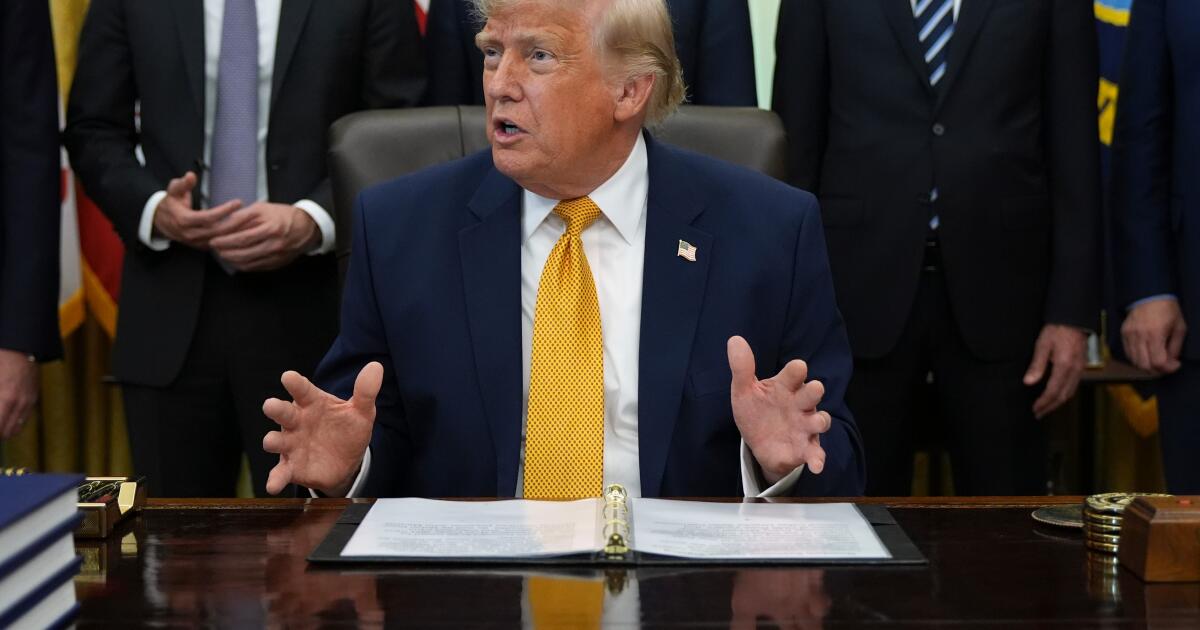
Many of the groups that helped elect Donald Trump as president again are deeply unhappy with his performance, according to a new AP-NORC poll.

Trump’s return to the presidency was fueled by a wide-ranging coalition that built on his loyal base of supporters. Now that Trump has been in the White House for more than a year, the survey of more than 2,500 U.S. adults from The Associated Press-NORC Center for Public Affairs Research finds that many key groups — including Hispanic adults, younger adults and men — are increasingly dissatisfied with his presidency.

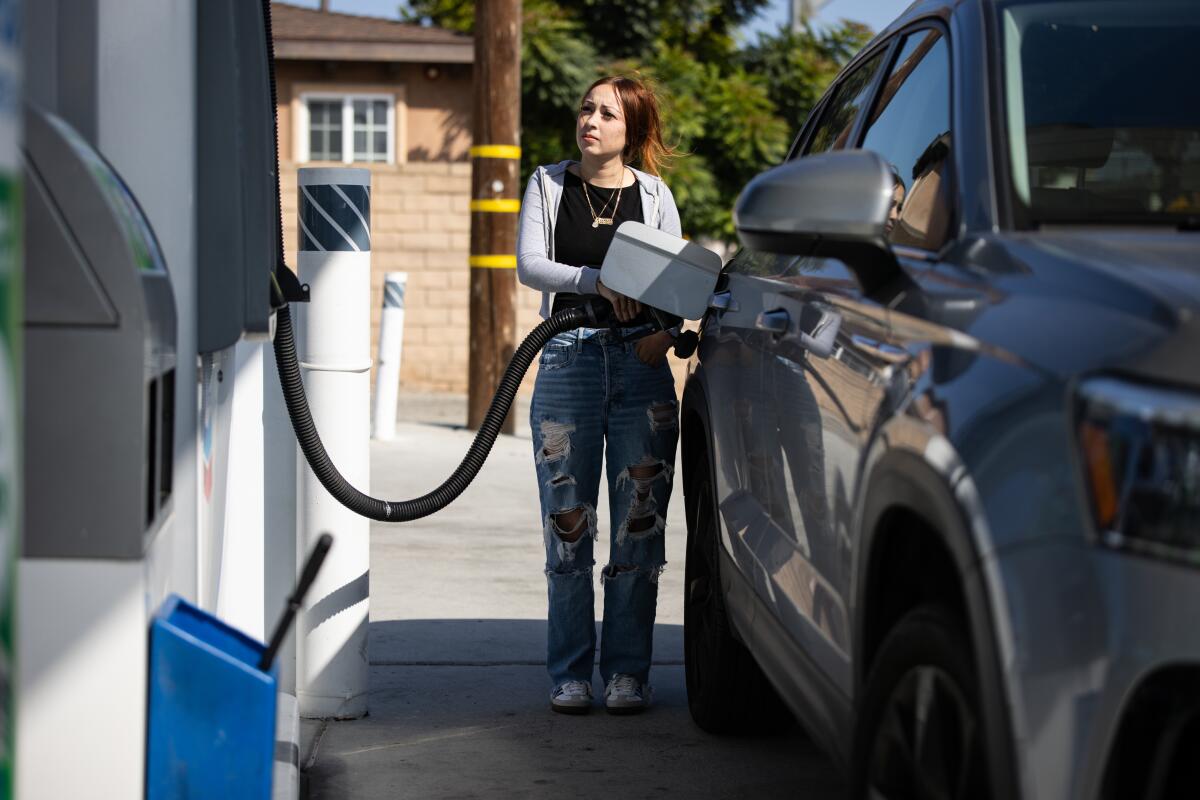
The poll was conducted from April 16 through Monday, as oil prices fluctuated and Americans spent more at the gas pump.

It’s a particularly bad moment for Trump, a Republican whose economic approval slumped over the past month as the Iran war drives prices higher. But AP-NORC polls show that discontent has been building among critical segments of the population over the past year.

Trump’s overall approval among Hispanic adults has fallen 16 percentage points since March 2025, and his support has declined by 9 percentage points among men.

And while Trump’s base is still largely behind him — most Republicans approve of his performance — there are signs that his second term may not be living up to their expectations.

Here’s what polling shows about Trump’s current status with four important groups:

Hispanic adults

Hispanic Americans have grown increasingly discontented with Trump over the past year.

About one-quarter of Hispanic adults approve of how he’s handling the presidency in the new poll, down from about 4 in 10 in March 2025.

That decline has been visible since late last year — suggesting that it’s not just the war in Iran or recent spikes in gas prices that are leaving this group unhappy.

Trump’s restrictive immigration approach may be playing a role. Only about one-quarter of Hispanics approve of his handling of immigration, down from 36% at the beginning of his term.

His immigration tactics appear to be particularly unpopular among younger Hispanics — a group with which he made gains in 2024. Only 18% of younger Hispanic adults approve of his performance on immigration, compared with 40% of Americans overall.

There is also broad discontent about the state of the U.S. economy among Hispanics. Only about one-quarter of Hispanic adults approve of how Trump is handling that issue, and about 2 in 10 say they approve of his approach to the cost of living. Few Hispanic adults, about 2 in 10, describe the nation’s economy as “good.”

Young adults

Trump’s overall approval with Americans under age 45 has slid over the past year, falling from 39% in March 2025 to 28% in the latest poll.

Younger women have a particularly dim view of Trump’s handling of the economy.

Only about 2 in 10 women under age 45 approve of how Trump is handling the economy, including only 7% of younger Hispanic women who approve of his economic approach. More young men, about 3 in 10, approve of him on this issue.

Trump’s struggles among young adults extend to other groups, too. Only about one-third of white adults under age 45 approve of his overall performance, compared with 45% of white adults age 45 or older.

A downtick among men

Trump made broad appeals to men throughout his 2024 campaign, and most male voters backed Trump in the presidential election over Democrat Kamala Harris. In particular, he made slight but significant gains with Black and Hispanic men, who were drawn by his vows to revitalize the economy.

Since he reentered office, though, American men have become slightly less likely to approve of his performance, declining from 47% at the start of his second term to 38% in the most recent poll.

There are signs that Black men, in particular, aren’t seeing Trump’s economic promises pan out. Black men are more likely than white or Hispanic men to disapprove of Trump’s approach to the presidency, as well as his approach to the economy, the cost of living and Iran. Only about 1 in 10 Black men say they approve of how Trump is handling the cost of living, and roughly 2 in 10 approve of how he’s handling the economy.

Hispanic men, too, have a relatively dim view of Trump’s overall performance. About 3 in 10 approve of how Trump is handling the presidency, regardless of their age. That support is stronger among white men, with about half approving of Trump.

While young Republicans are frustrated, MAGA still backs Trump

Trump has benefited from Republicans’ loyalty for years, but there are recent signs of frustration even within his base.

Roughly two-thirds of Republicans approve of Trump’s job performance. That is down slightly from 82% near the start of his second term and is generally in line with the GOP low point from his first term.

But only about half of Republicans overall approve of Trump’s approach to the cost of living, and a majority of Republicans under age 45 disapprove of him on that issue.

Trump is still buoyed by the support of his MAGA base, even as he faces backlash from conservative media figures on some of his recent actions in Iran.

About 9 in 10 MAGA Republicans — those who consider themselves supporters of the “Make America Great Again” movement — approve of Trump’s job performance, and a similar share approve of his handling of Iran.

It’s a good sign for Trump that his most robust supporters are still in his corner, but not all Republicans identify with MAGA. About half of Republicans, 54%, say they consider themselves MAGA supporters.

Among non-MAGA Republicans, Trump’s approval is much lower, at 44%.

Sanders and Thomson-Deveaux write for the Associated Press. The AP-NORC poll of 2,596 adults was conducted April 16-20 using a sample drawn from NORC’s probability-based AmeriSpeak Panel, which is designed to be representative of the U.S. population. The margin of sampling error for adults overall is plus or minus 2.6 percentage points.

Source link

More than 150 million Americans exposed to dangerous air pollution, American Lung Association report says

1 of 2 | A layer of smog covers downtown and the nearby areas in 2019 in Los Angeles. California has some of the worst rankings in air pollution in the United States, the 2026 State of the Air report from the American Lung Association said Wednesday. File photo by Etienne Laurent

April 22 (UPI) — More than 152 million people in the United States – about 44%– live in areas that have unhealthy levels of ozone or particle pollution, the American Lung Association said in the 2026 State of the Air report released Wednesday.

The report also noted that 44.6% of U.S. children live in counties that have failing grades for at least one measure of air pollution,while 10% of children live in counties with failing grades in all three measures. These measures include ground-level ozone (smog) and both short-term and year-round particle pollution (soot).

“Infants, children and teens are especially vulnerable to the health harms of breathing pollution,” the report said. “Their lungs are still developing, they breathe more air for their body size than adults and they frequently spend more time outdoors.”

The report showed that trends from last year’s edition continued and often grew worse, including extreme heat in many places that affected ozone levels and wildfires in Canada that affected ozone and particle pollution.

“Clean air is not something we can take for granted,” American Lung Association President Harold Wimmer said in announcing the report, the Washington Post reported. “For decades, people in the U.S. have breathed cleaner air thanks to the Clean Air Act. Unfortunately, that process is now at risk due to extreme heat and wildfires, fueled by climate change, and policy changes that are making the problem worse.”

The Clean Air Act became effective in 1963. This is the 27th edition of the State of the Air report, which was first released in 2000. The report has reflected the act’s successes over the years, but over the past decade, also the challenges of the changing climate, the American Lung Association said.

“Increases in high ozone days and spikes in particle pollution related to extreme heat, drought and wildfires are putting millions of people at risk and adding challenges to the work that states and cities are doing across the nation to clean up air pollution,” the report said.

The authors of the State of the Air report noted that levels of unhealthy air vary widely across the country and that people of color disproportionately live in areas with poor scores. A person of color is 2.42 times as likely as a white person to live in an area with poor scores for all three air pollution measures.

For the seventh year in a row, Bakersfield, Calif., was the metropolitan area with the worst level of year-round particle pollution. Fairbanks, Ala., moved to the worst spot for short-term particle pollution. Los Angeles remained the metropolitan area with the worst ozone pollution. It’s held that spot for 26 years of the report’s 27-year history.

Only one city – Bangor, Maine – had good marks in all three measures.

In county rankings, San Bernardino in California had the highest level of ozone pollution; the five worst counties in the country in this measure were all in California. In short-term particle pollution, Fairbanks North Star Borough in Alaska was ranked as the worst. In long-term particle pollution, Kern County in California held that spot.

Twenty counties throughout the United States had failing grades for all three measures of air pollution: Maricopa in Arizona; Fresno, Imperial, Kern, Kings, Los Angeles, Merced, Riverside, San Bernardino, Stanislaus and Tulare in California; Lake and Marion in Indiana; Wayne County in Michigan; Butler and Cuyahoga in Ohio; Allegheny, Dauphin and Philadelphia in Pennsylvania; and Bexar County in Texas.

Source link

Trump draws Marie Antoinette comparisons as he leans into the gilded trappings of the presidency

President Trump had something urgent to address while flying back to Washington from his Mar-a-Lago estate on a recent Sunday.

It wasn’t the Iran war, nor the partial government shutdown over Department of Homeland Security funding. He was focused on a monumental issue of a different kind, hoisting artist renderings of the $400-million White House ballroom he’s building, complete with hand-carved “top-of-the-line” Corinthian columns.

“I’m so busy that I don’t have time to do this. I’m fighting wars and other things,” Trump said before extensively detailing plans for “the greatest ballroom anywhere in the world.”

His divided attention has become a Democratic point of attack and a concern for some Republicans who worry he’s not spending enough time on issues that voters care most about ahead of November’s midterm races.

The contrast was on full display Thursday, when, as Trump flew to Las Vegas to discuss tax cuts for Americans earning tips, his administration was pushing ahead with another of his splashy projects: Plans to build a 250-foot Triumphal Arch near the Lincoln Memorial replete with a Lady Liberty-like statue and a pair of golden eagles.

The president’s ability to speak to the concerns of working people has always seemed incongruous with his biography as a billionaire real estate developer. Yet his populist policies and emphasis on the economy during his 2024 campaign helped catapult him back to the White House.

Republican strategist Rick Tyler noted that, when Trump first ran for president in 2016, his wealth was a selling point.

“While other people, like Mitt Romney, played down how rich he was, Trump was giving free helicopter rides at the Iowa State Fair,” Tyler said. “People loved it.”

Still, Trump’s preoccupation with some of the gilded trappings of the presidency, as more Americans worry about bills, has drawn accusations that he’s a modern-day Marie Antoinette.

“ ‘Fighting wars’ and surging gas prices, yet Trump has time to brag about his billionaire backed ballroom,” Sen. Andy Kim (D-N.J.) responded on X to Trump’s Air Force One presentation.

Democratic California Gov. Gavin Newsom, a potential 2028 presidential hopeful, has been more direct in comparing Trump to the last queen before the French Revolution, who has come to embody extravagant opulence — even posting an AI-generated image of Trump’s face on her body on social media.

“TRUMP ‘MARIE ANTOINETTE’ SAYS, ‘NO HEALTH CARE FOR YOU PEASANTS, BUT A BALLROOM FOR THE QUEEN!’” Newsom wrote in October 2025, at the start of last fall’s 43-day government shutdown.

White House says Trump’s success benefits all Americans

Asked about opponents invoking Marie Antoinette, White House spokesman Davis Ingle said Trump “is going to go down in history as the most successful and consequential president in our lifetime.”

“His successes on behalf of the American people will be imprinted upon the fabric of America and will be felt by every other White House that comes after him,” Ingle said in a statement.

The president faced similar critiques during his first term. But lately he’s been unabashed about accusations he’s disconnected from Americans’ worries about high costs, which could leave Republicans with an uphill battle to retain control of Congress.

Republicans have been loath to question Trump, though notably there has been little criticism of a federal judge’s ruling that work on the project must stop until it has congressional approval. The GOP-controlled House and Senate also haven’t prioritized legislation to move the ballroom project forward.

“I’m not much into architecture,” Republican Sen. John Kennedy of Louisiana said last fall.

About two-thirds of Americans said Trump is “out of touch” with the concerns of most people in the United States today, according to an ABC News/Washington Post/Ipsos poll from February, though the same percentage said the same about the Democratic Party.

Presidents are usually removed from voters, separated by layers of security and surrounded by adoring subordinates. In her book “Why Presidents Fail and How They Can Succeed Again,” Elaine Kamarck argues that presidents get too focused on their own political narratives rather than the public’s concerns. Yet, when it comes to Trump, “All of this stuff is frankly unique to him.”

She pointed to the ballroom as well as Trump’s other White House renovations, soon adding his signature to paper currency and renaming the Kennedy Center after himself.

“It’s a reflection, I think, of his own background as a businessman and somebody who made his fortune selling his name,” said Kamarck, who worked in Bill Clinton’s White House.

While Trump focuses on the ballroom and other Washington projects, some public work projects in other parts of the country have languished.

Joe Meyer, the former mayor of Covington, Ky., spent years pushing for critical improvements to the Brent Spence Bridge connecting his town with Cincinnati, a project listed as a top federal priority dating back to Trump’s first administration.

Federal funds for improvements were approved under President Biden but held up by a Trump-ordered review. Work is finally set to begin later this year, though delays will likely limit design options and slow the project, Meyer said.

“The ballroom is Washington inside-baseball,” Meyer said. “The bridge is just a wreck. It’s frustration that we’ve been dealing with forever.”

A $100 tip and a golden tractor

Trumpeting new tax deductions for tips, Trump staged ordering McDonald’s to the Oval Office — which he has adorned with gold flourishes — and tipped the grandmother making the delivery $100. When she described large medical bills from her husband’s cancer treatments, Trump said she should bring him to an upcoming UFC fight on the White House lawn.

When hundreds of farmers were invited to the White House for an agricultural policy speech, they stood on the South Lawn beside a tractor that had been painted gold. It drizzled, but Trump stayed dry, addressing them from a covered second-floor balcony.

“You don’t mind rain,” the president told the farmers below.

He then flew to Miami for a conference of Saudi investors who, the president noted, were too rich to be impressed by U.S. families scrounging to save up $5,000.

“I know they’re looking like, ‘What the hell is $5,000?’ ” Trump joked. “Their shoes cost them more than $5,000.”

When asked in February, meanwhile, for his message to young people wanting to buy a home, Trump replied: “Save a little longer. Wait a little longer.”

Members of the Cabinet have also fed the perception that Trump’s promised “Golden Age” may not be arriving for everyone. Health Secretary Robert Kennedy Jr. advised Americans to buy liver instead of beef.

“If you go and buy a steak, it’s still pretty expensive. But if you buy the cheaper cuts, it’s great meat. And it is very, very affordable. Or liver, or, you know, all these alternatives,” he told podcast host Joe Rogan.

Agriculture Secretary Brooke Rollins said people could still afford meals consisting of “a piece of chicken, a piece of broccoli, corn tortilla and one other thing.”

Texas-based Republican consultant Brendan Steinhauser said he thinks that Trump “can kind of get away with” building a ballroom because voters have come to expect that from him as a brash dealmaker and businessman.

But Steinhauser said he worries that dramatic increases in gas prices and a potentially weakening economy could resonate with voters. Ahead of the midterms, Steinhauser said, Democrats could score points “trying to make it more about Trump and his oligarch friends.”

Price and Weissert write for the Associated Press. AP writers Linley Sanders in Washington and Ali Swenson in New York contributed to this report.

Source link

Two Americans sentenced over North Korea IT worker scheme

SEOUL, April 16 (UPI) — Two U.S. nationals were sentenced to federal prison for helping North Korean operatives obtain remote IT jobs with American companies in a scheme that generated millions of dollars for Pyongyang’s weapons programs, the Justice Department said Wednesday.

New Jersey residents Kejia “Tony” Wang, 42, and Zhenxing “Danny” Wang, 39, operated so-called “laptop farms” that made it appear as though overseas workers were based in the United States, allowing North Korean IT personnel to secure jobs using stolen American identities.

The scheme used identities from at least 80 individuals and generated more than $5 million in revenue for the North Korean government, the department said in a press release.

Kejia Wang was sentenced to nine years in prison by U.S. Senior District Judge Nathaniel M. Gorton in federal court in Boston, followed by three years of supervised release, after pleading guilty to conspiracy charges including wire fraud, money laundering and identity theft.

Zhenxing Wang was sentenced to seven years and eight months in prison by the same court, followed by three years of supervised release, after pleading guilty to conspiracy to commit fraud and money laundering. He was also ordered to pay $200,000 in restitution.

The two were additionally ordered to forfeit $600,000 in proceeds tied to the operation.

“This case exposes a sophisticated scheme that exploited stolen American identities and U.S. companies to generate millions of dollars for a hostile foreign regime,” U.S. Attorney for Massachusetts Leah B. Foley said. “By operating so-called ‘laptop farms,’ these defendants enabled overseas actors to infiltrate U.S. businesses, access sensitive data and undermine our economic and national security.”

Prosecutors said the scheme ran from about 2021 through October 2024, with the defendants and their co-conspirators using stolen identities to obtain remote jobs at more than 100 U.S. companies, including several Fortune 500 firms and a defense contractor.

Companies incurred at least $3 million in losses from legal fees, network remediation and other damages, the Justice Department said.

The operation also exposed sensitive data, including export-controlled information governed by International Traffic in Arms Regulations, after an overseas co-conspirator accessed systems belonging to a California-based defense contractor, according to court documents.

Kejia Wang acted as the U.S.-based manager for the operation, overseeing multiple facilitators who hosted hundreds of company-issued laptops at their residences. He also traveled to China in 2023 to meet overseas co-conspirators, including a North Korean national, according to court filings.

Zhenxing Wang was among the facilitators who hosted company laptops and enabled remote access by connecting them to specialized hardware devices.

The two were charged in June 2025 alongside eight foreign nationals who remain at large and are wanted by the FBI.

In a related move, the U.S. State Department on Wednesday offered a reward of up to $5 million for information on the eight co-conspirators, as well as one suspected North Korean IT worker, leading to the disruption of the scheme’s financial networks.

The case comes as North Korea, under heavy international sanctions, has increasingly turned to cybercrime and illicit IT work to generate revenue for its nuclear and ballistic missile programs.

An October report by the 11-country Multilateral Sanctions Monitoring Team described North Korea’s cyber operations as “a full-spectrum national program operating at a sophistication approaching the cyber programs of China and Russia.”

The report said nearly all of the country’s cyber activity, illicit IT work and financial operations are carried out under the direction of entities sanctioned by the United Nations over Pyongyang’s weapons programs.

The U.S. Treasury Department said in November that North Korea had stolen more than $3 billion over the previous three years through cyberattacks on financial institutions and cryptocurrency platforms.

A 2022 Treasury advisory estimated that North Korean IT workers generate hundreds of millions of dollars annually, with some individuals earning more than $300,000 a year.

The Justice Department has stepped up enforcement as part of an inter-agency effort in recent years, announcing multiple related prosecutions, including the sentencing of three Americans in March and a Ukrainian national in February.

Source link

Political Involvement of Asian Americans

Re “Asian Population Surges in County,” Feb. 12: Assemblywoman Carol Liu (D-La Canada Flintridge) suggests that the reason Asian Americans lack political influence in the U.S. is Asian American cultural characteristics. Although I have the greatest respect for Liu and her work in the Legislature, I disagree. The culprit is not culture but many Asian Americans’ ineligibility to vote as they make their way through the citizenship process, and parties’ and candidates’ failure to mobilize the Asian American community.

Contrary to a public image of political complacency, Asian Americans have a long history of participation in American politics. They have participated through lobbying, litigation, petitioning, protesting, boycotting, civil disobedience and contributing to political campaigns. Liu herself is an example of such involvement. In a multi-city, multiethnic, multilingual survey of Asian Americans, my colleagues and I find that, contrary to assumptions of political apathy, Asian Americans are not culturally disadvantaged when it comes to politics. In fact, they are not at all apathetic. Only 13% express a lack of interest in American politics.

Janelle Wong

Asst. Prof., Political

Science, Program

in American Studies

and Ethnicity, USC

Source link