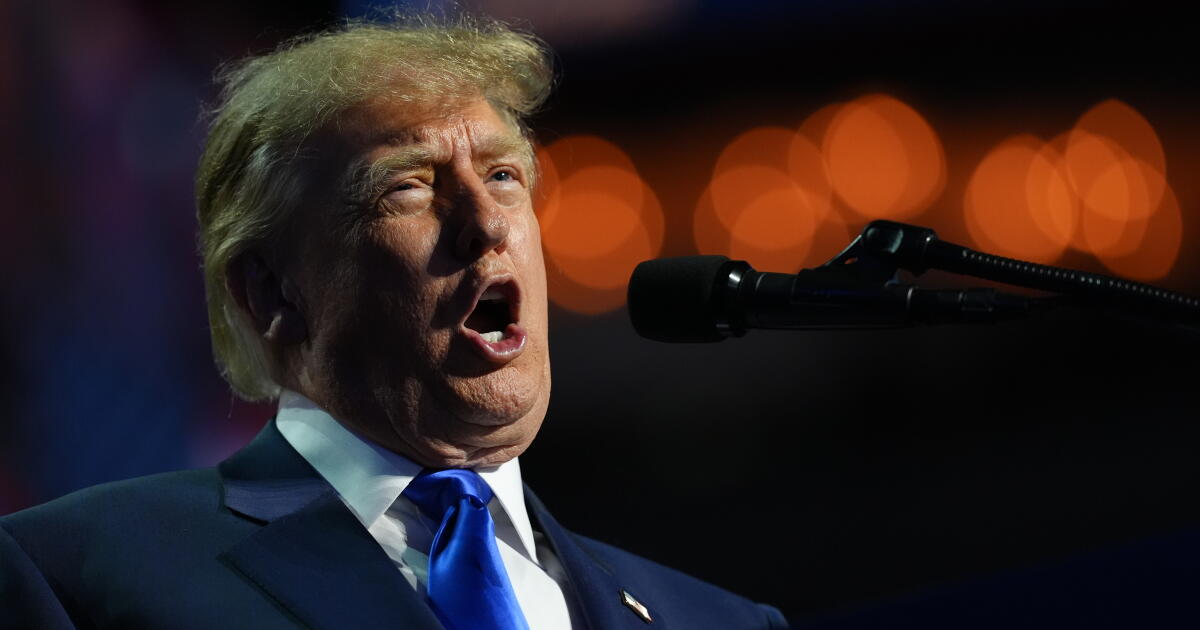
NEW YORK — Some of the loudest cheers for Sen. Ted Cruz at the Republicans’ recent midterm convention in Dallas came after the Texas politician targeted Muslim Americans and their faith’s religious code.
“Sharia law has no place in America,” said Cruz. “We need to stand together and stop it now.”
Texas Gov. Greg Abbott chimed in moments later, vowing to “fully ban Sharia law in Texas.”
Muslim American civic leaders and scholars — in Texas and other states — are responding forcefully to this latest surge in anti-Sharia rhetoric that dates back more than 15 years.
They passionately defend Sharia — the way it’s practiced in the United States — as positive guidance that has elements in common with the codes of other faiths, such as the Ten Commandments and the collective body of Jewish law derived from the Torah. They rebut the claims of GOP critics that Sharia is a coercive code that threatens the U.S. Constitution and judicial system.
Though there are multiple interpretations of Sharia, its essence is to serve as a code for how Muslims should live and worship — covering such matters as prayer, pilgrimages, fasting, charitable donations and personal virtue.
Among the most energetic of Sharia’s defenders is Illinois-based Sabeel Ahmed, director of an outreach project called GainPeace. He travels widely around the U.S., with a recent focus on Texas, speaking at mosque-sponsored workshops and open houses.
“Sharia is often misunderstood,” Ahmed posted on Instagram after a midsummer visit to Plano, Texas. “Many people think Sharia is only about punishments, but in Islam it is Allah’s guidance for living with faith, justice, mercy, and responsibility.”
Ahmed attributes the durability of anti-Sharia vitriol to politicians and social-media influencers who want to rile up their voting base or their followers.
“They gain popularity by saying it,” he told The Associated Press. “It’s the job of the Muslims to educate what is the proper meaning of the word Sharia. We cannot be angry or hateful.”
Sharia’s role varies significantly among Muslim nations
Among those appalled by the anti-Sharia surge in the U.S. is Abdullahi Ahmed An-Na’im, a Sudanese-born Islamic scholar who taught for many years at Emory University School of Law in Atlanta. He is a longtime critic of the relatively small number of governments in Muslim nations that coercively enforce Sharia, saying Muslims are better off in secular states where their religious observance is a matter of free choice.
An-Na’im says he and other Muslim Americans embrace Sharia willingly as a core part of their identity, even as they also embrace American values.
The demonization of their beliefs displays “a shocking ignorance of what Sharia means,” An-Na’im said. “It’s a total dehumanization of the other, the rejection of their right to be human.”
The rhetoric is similarly dramatic among Sharia’s opponents — epitomized by the two U.S. representatives from Texas, Republicans Keith Self and Chip Roy — who co-founded the Sharia-Free America Caucus in Congress.
“Sharia is a direct threat to our Constitution and Western values and seeks to replace our legal system and erode our basic freedoms,” Roy said earlier this year. “Our immigration system must be prepared to confront this challenge and defend our Judeo-Christian values.”
By last count, the caucus had more than 60 members. All of them are Republicans, and its members have introduced several anti-Sharia bills since the caucus was formed last December. None of those measures have been successful.
The Council on American-Islamic Relations, or CAIR, has designated the caucus as an anti-Muslim hate group.
“The bigoted rhetoric used by this caucus resembles the hatred that anti-Catholic politicians once unleashed against Irish Americans,” said CAIR research and advocacy director Corey Saylor.
“Islam is an American faith, present for over 250 years,” he added. “No one who wrote the Constitution or enforced it since has empowered these legislators to pick which religions get to exist in America.”
Texas has been a battleground for Sharia disputes
There has been substantive anti-Sharia action in Texas. In August, Attorney General Ken Paxton demanded documents from the Dallas-based Islamic Tribunal, which provides religious guidance to Muslims.
Paxton said in a news release that the investigation by his office sought to determine if the tribunal was engaged in illegal activity, such as acting as a court, applying foreign laws that conflict with Texas or federal law, or issuing rulings that imply government authority.
“This is America, and we will not be governed by sharia law,” Paxton said.
The Islamic Tribunal subsequently updated its website with a “ Clarification of Mission and Activities,” stressing that its guidance “complements, and never replaces, the legal, social, and professional services available in American society.”
“The Tribunal does not function as a court of law and does not issue legally binding judgments,” it said. “Our role is limited to mediation and religious arbitration requested by members of the Muslim community in matters related to faith, family guidance, and internal religious affairs.”
Any matters requiring legal enforcement are referred directly to the Texas judicial system, said the tribunal, which likened its work to the services provided by Jewish Beth Din courts and Catholic ecclesiastical tribunals.
Sharia defenders seek to broaden understanding of its essence
Asma Uddin, a professor at Michigan State University’s College of Law, has argued in her writings that many American politicians are depicting ordinary Muslim religious practices — such as prayer, choice of apparel, family counseling and mosque attendance — as evidence of a political danger.
In an interview with the AP, Uddin depicted the current wave of anti-Sharia rhetoric as fearmongering by politicians who view the issue as advantageous for them.
“When politicians use this, it’s giving them exactly what they’re looking for,” she said. “They’re looking for a scapegoat … and this gets people riled up.”
Sabeel Ahmed, who has made three outreach trips to Texas so far this year, plans a trip to Houston in a few weeks for another mosque open-house. He’s also working on a book to be mailed to Christian clergy across the U.S., seeking to broaden their understanding of Sharia and other Islamic practices.
“Islam is not to be feared,” Ahmed said. “People should meet a Muslim, go to the mosque, reach out to us. Let’s emphasize the commonalities we have.”
Washington, DC – Palestinian Americans have held a day of advocacy at the United States Capitol under the spectre of a new $2.8bn arms transfer to Israel reportedly approved by the administration of US President Donald Trump.
The Americans for Justice in Palestine Action (AJP Action) group, which organised Tuesday’s event, said more than 300 constituents from across the country met with the offices of more than 100 US lawmakers. They advocated on behalf of a slate of legislative initiatives related to Israel’s genocidal war in Gaza, surging Israeli settler violence in the occupied West Bank, and efforts to use immigration law to stifle Palestinian advocacy in the US.
Recommended Stories
list of 3 itemsend of list
Jenna Escheik, a 19-year-old meeting with lawmakers and staffers from Virginia, including Democratic Senator Tim Kaine and Republican Representative Rob Wittman, said she was planning to speak with “some very challenging and interesting people”.
“I think the main point that we’re trying to get across to every single office is that we’re all proud to be American, and we all have our taxpayer dollars that we just don’t want to see going to wars,” said Eschiek, who is originally from outside of Ramallah in the West Bank.
Yaseen Shaikh, a 22-year-old who travelled with a delegation from Cleveland, Ohio, said he will be meeting with the offices of Republican Senator Jon Husted, who faces a competitive midterm race against former Democratic Senator Sherrod Brown, as well as the state’s other Republican Senator, Bernie Moreno.
Both Republican senators have consistently voted against legislative efforts to limit arms sales to Israel.
“As I stand among my peers here, among people who I stand on their shoulders, I can only feel hopeful and optimistic that we will make a difference and that change will come,” Shaikh told Al Jazeera.
“We just have to be vehicles for that,” he said.
Palestinian rights ‘catching up’ with lawmakers
Successive presidential administrations, as well as Congress, have for decades resisted calls to condition US military aid to Israel, including throughout Israel’s latest war in Gaza, which will reach its three-year mark early next month.
To date, nearly 74,000 Palestinians have been killed in Gaza since October 7, 2023, with nearly 1,400 killed since a “ceasefire” agreement went into effect in October 2025.
Last week, US media widely reported the Trump administration approved a US taxpayer-funded $2.8bn military package to Israel, which included 907kg (2,000-pound) MK-84 bombs known to have already caused widespread civilian devastation in the Palestinian enclave.
The package reportedly included 20,000 of those munitions, as well as 20,000 BLU-117s, a close variant.
Several Democrats have vowed to block the transfer, with the ranking member of the House Foreign Affairs Committee, Gregory Meeks, using his leverage last week to at least slow congressional clearance.
Osama Abu Irshaid, AJP Action’s executive director, said the new weapons package runs counter to public opinion polls, which have regularly found majority support for conditioning at least some weapons to Israel, as well as surging support for Palestinian rights.
Abu Irshaid said the polls underscore a new political reality for lawmakers.
“I think now we are functioning within this context, where what happens in Palestine, the genocide that took place and continues to take place, what the terrorist settlers are doing in the West Bank, what the US and Israel are doing in the Middle East is catching up with us here,” Irshaid said, “and we’re paying a price”.
Jenna Escheik was among the Palestinian Americans meeting with US lawmakers in Washington, DC [Joseph Stepansky/Al Jazeera]
While entrenched support for arming Israel has persisted among some segments of the Democratic Party, advocates have hailed what they see as a historic shift in recent months.
In July of last year, 26 Democrats in the Senate voted to block some arms transfers to Israel, the first time in history a majority of Democratic lawmakers in the chamber did so. In April, similar resolutions gained a record 40 votes in the Senate, all Democrats, but ultimately failed to pass in the 100-member chamber.
The so-called Block the Bombs Act in the House, which calls for a partial arms embargo against Israel, reached 81 co-sponsors as of August.
Twenty-two Democratic senators also introduced a resolution last week to force the US Department of State to conduct an investigation into the violence committed by Israeli forces and settlers in the West Bank, in which at least nine US citizens have been killed in recent years.
Abu Irshaid was optimistic that headway could also be made among Republicans, who have been reckoning with an internal divide over US support for Israel, with exceedingly few members of the party currently willing to vote to limit aid.
A December poll by the IMEU Policy Project found a majority of Republicans under 45 said they would prefer to support a presidential candidate in 2028 who “supports reducing taxpayer-funded weapons to Israel”.
“I think what we’re seeing now is that the dam within the Republican Party is cracking,” Abu Irshaid said.
“But the question is, ‘What is after Donald Trump when Donald Trump no longer owns the Republican Party, owns the MAGA movement?’ I think that’s when you will see more cracks taking place.”
‘The same system’
Advocates on Tuesday also focused on what they called the Trump administration’s practice of using immigration law to stifle pro-Palestine advocacy.
Among their policy priorities, those meeting with lawmakers sought to reform language in the Immigration and Nationality Act of 1952, which the Trump administration has cited in efforts to deport individuals whose presence in the US the administration deems to have “adverse foreign policy consequences”.
Among those speaking at the US Capitol on Tuesday was Salah Sarsour, the president of the Islamic Society of Milwaukee, who was detained by ICE in April and released in June. His legal team has charged that the three-decade US resident was targeted based on a coerced confession when Sarsour was detained by Israeli forces as a young man.
Sarsour, who continues to face deportation proceedings, said the ICE detention reminded him of being held in Israeli detention.
“Those criminals that [detained me], they still exist,” he said. “The same criminals that destroy Gaza, they killed tens of [thousands] of children and women, and men and family members.”
Leqaa Kordia, who was among those targeted by immigration enforcement agents following a wave of pro-Palestine protests that swept US campuses in 2024, also recounted the “dehumanisation” of her 368 days in ICE detention.
“And then it hit me that…the same system that threw me in an ICE jail is the same system that funds and arms the military prisons in Israel,” said Kordia, who, like Sarsour, still faces deportation proceedings.
“The same dehumanisation logic that allowed a guard to humiliate me allows the Israeli soldier to kidnap Palestinians and throw them into the shadows,” she told those gathered.
“The same power that keeps my case in limbo is the same power that sends billions of US tax dollars in bombs and weapons to fuel the Palestinian genocide.”
WASHINGTON — Vice President JD Vance and other Trump administration officials said Tuesday they plan to remove 760,000 Affordable Care Act enrollees from public healthcare exchanges, alleging that the individuals were fraudulently enrolled in the program, or simply do not exist.
Vance said the discovery and canceled subsidy payments for hundreds of thousands of people from the exchanges would result in $2.2 billion in cost savings.
“We’re actually making sure that the people receiving Obamacare subsidies are actually entitled to receive them,” Vance, who leads a government-wide task force to eliminate fraud, said in a public address at the White House, Tuesday. He was flanked by Dr. Mehmet Oz, the administrator for the Centers for Medicare and Medicaid Services, and other administration officials.
The Trump administration also announced a six-month suspension on new brokers who sign up enrollees for healthcare coverage, who officials say commit a disproportionate amount of the fraud they uncovered.
Tuesday’s announcement is the latest in an administration-wide initiative to address fraud around the country, including in federal healthcare programs, which officials say is needed to rein in runaway spending and protect taxpayers.
The announcement comes as inflation and rising healthcare costs pressure the Trump administration to come up with a plan to bring down costs for Americans heading into the midterms.
The price of ACA insurance has skyrocketed for many Americans during Trump’s second term, after Republicans opposed extending COVID-era subsidies that had helped offset the costs of health insurance for most enrollees during Biden’s term.
Premiums doubled or tripled for many enrollees, prompting millions to downgrade their plans or exit the program entirely after the Republican-led Congress allowed the subsidies to expire this year.
Roughly 19.2 million Americans are actively enrolled in ACA marketplace health plans as of early 2026, according to the HHS website.
The White House referred The Associated Press to the Vice President’s team for additional comment on bigger plans to address healthcare affordability.
The Wall Street Journal first reported the news of the Trump administration’s plan to remove ACA enrollees from public exchanges.
Hussein writes for the Associated Press. AP writer Michelle Price contributed to this report.
The LA Times/SurveyMonkey poll set out to measure feelings about football and Super Bowl, both in the U.S. as a whole and in the Los Angeles region.
Each day, a huge range of organizations — schools, churches, bowling leagues, companies and more — use SurveyMonkey’s online platform to poll their members, customers or associates.
To conduct surveys on questions of broad public interest, like this one, SurveyMonkey randomly selects some of those people and asks them if they’d be willing to take an additional online poll. Those who say yes get a survey to fill out.
As with traditional telephone surveys, the results then are weighted to match standard Census Bureau measures of the nation’s population — to make sure that the sample mirrors the nation’s distribution of age, race, gender, geography and education levels.
The result is a representative sample of the adult population.
In this case, the poll, which was developed jointly by SurveyMonkey and The Times, was conducted in English and Spanish from Feb. 1-7 among a national sample of 7,590 adults. The sample included 1,659 Californians and 743 people who live in Greater Los Angeles, which encompasses Los Angeles, Orange, Ventura, San Bernardino and Riverside counties.
As with all polls, the results are subject to sampling error. For this survey, the modeled error estimates are 2 percentage points in either direction for the national sample, 3.5 percentage points for the statewide California sample and 5 percentage points for the Los Angeles metro area.
SACRAMENTO — To hear President Trump tell it, the 60% or more of Americans who worried that unchecked artificial intelligence poses a risk to humanity are just a bunch of suckers buying the latest election-rigging conspiracy peddled by his foes.
“The AI Hoax being perpetrated by the Radical Left Dumocrats is reminiscent of their Global Warming Scam of not so long ago, where everyone was going to die from extreme heat. What happened?” Trump posted recently, apparently unaware that heat-related deaths continue to rise.
By the end of the week, his circle of sycophants had adopted that language, along with the strange take that Trump alone would be able to control the rise of superintelligence should it occur. David Sacks, often billed as Trump’s AI whisperer, echoed the hoax line at a Politico event, adding that there was an “orchestrated media campaign” meant to “alarm the public.”
Meanwhile, Vice President JD Vance called the pleas for regulation from inside the industry, including from CEOs such as Dario Amodei and Sam Altman, a “Trojan horse.” He argued that “Americans shouldn’t be scared of anything,” seemingly backing Trump’s absurd declaration that “The only control or ‘guardrails’ that AI needs is a STRONG AND SMART (High IQ!) PRESIDENT, and the U.S.A. has that, in spades!.”
As someone who has covered this issue, let me just say the concern is not a hoax, not a marketing ploy meant to juice the value of companies about to have an IPO, and not a vast and sprawling plot by Trump’s adversaries.
But it is a complicated, fraught problem in a pivotal moment. The president’s confusion and inaction pose an immediate risk of slamming shut our small window of opportunity to make meaningful decisions about a technology that will almost certainly change the course of history and humanity.
So why exactly is Trump demanding this unfettered charge at oblivion, and what are the options for putting guardrails up despite him?
Trump’s reasoning
The pacifying but slightly terrified response of Anthropic co-founder Jack Clark to Trump hints at just how alarmed those deepest in AI development seemingly feel about both the president’s attitude and the unregulated future he demands.
“We’re grateful for the president’s attention,” Clark said on Fox News. “What we’re saying here is we need to get a sensible, commonsense safety framework … and we don’t roll the dice on some kind of accident.”
Like all things Trump, his position involves money. AI is currently a driving force behind the American economy, and if we just cover every inch of open space with data centers, it could keep an otherwise slumpish outlook bright.
OpenAI and Anthropic are also planning IPOs in the not-distant future.
Because these companies are valued at astonishing, 12-zero amounts and because certain stock listing rules will now require that these companies quickly be included in index funds favored by many pensions and retirement accounts, anything that crashes their value — such as investors’ jitters from regulation — could jam up the stock market.
That could affect the lives (and votes) of average Americans.
So despite the long-term risks, the short-term political benefits of the AI gravy train are substantial for Trump.
Then there is the place where Trump actually has a fair point: China. Current AI reflects the values of its creators. It would be disastrous for the free world if superintelligence were trained to favor authoritarianism.
The logic here is if we don’t build “good,” Western-values AI first, we will be at the mercy of “bad” AI, so the possibility of harming great numbers of people is a reasonable, maybe even necessary, risk.
This is where things get messy, and many folks — oligarchs in particular — become invested in keeping the general voter confused.
There is no consensus on a best course of action because we are in uncharted territory and there is actually no way to reliably predict what happens next.
Picking the best path forward, then, starts with picking a camp, a tribe, an outlook. In the broadest sense, there are three possibilities: We attempt to stuff the cat back in the bag; we all try to play nice, as companies and countries, and create rules on the fly; or we just accelerate at full speed, let it rip and what happens happens.
There are obvious problems with each of those.
As an excellent paper by the nonpartisan Rand Corp. explains, which of those camps a person chooses depends largely on just how imminent the danger feels, how feasible it seems to control development of AI and how realistic it is to bank on cooperation — or whether we believe we should and could aim to just continually win a technology war against humans or machines.
These camps, therefore, have little to do with traditional politics. Voters are feeling this issue on a visceral level, one that only a few years ago would have been deemed paranoid and fantastical, and it’s making for strange bedfellows.
Speaking at an conference this week, avowed lefty Sen. Bernie Sanders (I-Vt.) called for a pause on AI development because he’s in the camp that believes it’s currently too dangerous to go forward without a plan.
At the same conference, ultraconservative Trump loyalist Stephen K. Bannon made a similar point. He also urged Americans not to trust “anything” said by AI oligarchs, and to reject the idea championed by Trump that slowing down is dangerous or un-American.
“If you’re not accelerationist, you are supporting China,” Bannon said. “If you’re not accelerationist, you want America to lose. If you’re not an accelerationist, you’re bad, dumb and evil. Well, the last week has shown we’re none of that, and now we need the time to make the right decision.”
The issue is almost certainly going to be huge and problematic in the midterms — potentially for both parties.
For Republicans, navigating it means tiptoeing between Trump’s egomaniacal, short-term approach and voters who are increasingly intolerant of it. House Speaker Mike Johnson (R-La.), who regularly refuses to cross Trump, has been clear he doesn’t want Congress taking up the issue — despite calls from MAGA stalwarts such as Sens. Ted Cruz (R-Texas) and Josh Hawley (R-Mo.) to do so.
“If you’re about to destroy the world, how about, don’t,” Cruz quipped during a hearing on Capitol Hill this week during which he opposed waiving some antitrust rules, as AI companies have suggested — a move that could decrease their accountability if something goes awry.
For Democrats, coming out hard for safety should be an easy decision, seemingly popular with voters. But for a party that had made trademarks of infighting, flailing and uncertainty, it remains to be seen if they can muster the unity to capitalize on this silver-platter strife.
For both parties, it also means finding the courage and will to fight the enormous sums of money AI companies are funneling into elections to ensure any regulations are ones they approve. Politico reported that some Democratic strategists are warning to go soft on the issue to avoid angering those election buyers, because it turns out that even companies clamoring for rules only want the ones they choose.
Ultimately, though, it’s Bannon who cut to the chase with the most important point: Trump holds all the power here.
Congress can’t fix this. Regulation won’t be a single bill but years of work, in a moment when maybe we don’t have years. And more important, the national security aspect has to be handled by the president.
Without the U.S. president leading on a national and global solution, nothing meaningful gets done.
Trump’s position isn’t fostering innovation or safety. He’s simply sending a message of indifference, that he doesn’t really care what happens next — to oligarchs, China or American voters.
HENRICO, Va. — In-person voting for this year’s midterm elections began Friday, ushering in the final six weeks for Americans to decide which party they trust to lead Congress through a cost-of-living crisis, a prolonged war in Iran and other pressing issues.
Election administrators say they are prepared and confident the vote will be accurate and secure. Nevertheless, President Trump has continued with efforts to denigrate certain voting methods and reshape how elections are run, through court challenges, an expansive federal hunt for noncitizen voters and a pressure campaign to force election officials to share sensitive voter data.
Friday marked the start of early voting in Virginia. Voters in a handful of other states, including Idaho, Minnesota and South Dakota, can cast absentee ballots in person, typically at a local election office or voting center. More expansive early voting is scheduled to begin in those and other states in the coming weeks.
At a voting location in Fairfax, Virginia, 18-year-old college student Sanya Singhal was among the first to vote early in person Friday morning, arriving well before the site opened to get in line.
“Why not just have a little fun in life, you know, try to be the first early voter?” she said. “I really want to participate in my democracy.”
At a voting location in suburban Richmond, a poll worker rang a bell as the building opened and about a dozen voters in line began to file in. Stephen Gura was excited to be the first.
“This election is critical. We need to stop the Trump agenda. We need to start electing people who will stand up for people in this district,” said Gura, who added that he voted for U.S. Sen. Mark Warner, a Democrat, and Shannon Taylor, the Democratic nominee against Republican incumbent Rob Wittman in the 1st Congressional District.
The Nov. 3 election includes votes for governor and state legislature in most states and will determine whether Republicans maintain control of the U.S. House and Senate. If Democrats retake Congress, it will alter the trajectory of the final two years of Trump’s term, most likely leading to investigations and other oversight efforts.
Voting underway after unusual redistricting and Trump’s bid to control how elections are run
At the suburban Richmond voting center, a steady stream of voters flowed in and out for the first hour of early voting. William Curry, a 74-year-old retiree who described himself as a libertarian-leaning independent conservative, voted for Warner’s Republican challenger, Bert Mizusawa, and Wittman. Curry said he generally approves of the job Trump has done, apart from the war with Iran.
“He’s in a mess he can’t get rid of,” Curry said of the conflict.
On a rainy day in Sioux Falls, South Dakota, Bill Goehring, 67, said he voted early at the county office because he will be traveling later. He voted for a mix of Democrats and independents, and said Trump’s “dictatorial tendencies are bad for America.”
The start of early voting comes at a time of deep angst among many Americans about issues including rising gas and grocery prices, the war in Iran, the looming risks of artificial intelligence and Trump’s aggressive immigration enforcement campaign.
It also follows an unprecedented spate of mid-decade redistricting for the U.S. House that began when Trump urged the Republican-controlled legislature in Texas to redraw its congressional map to help the party. California and other states followed.
The changes affect millions of people: Research shows 1 in 10 Americans this fall is a resident of a different congressional district than in 2024.
Those partisan efforts are expected to continue before the 2028 elections after a landmark ruling this year from the U.S. Supreme Court weakened the federal Voting Rights Act’s protections against racially discriminatory redistricting.
As the start of early voting approached, Trump was focused on efforts to assert federal control over election administration, even as the Constitution bestows the power to run elections on the states and, in some cases, Congress. The nation’s highest court rejected Trump’s bid to restrict mail ballots this week, but several of his administration’s other efforts to influence the voting process and mine state voter lists for illegitimate voters continue.
Virginia’s attorney general said Thursday that Trump’s administration may have violated several of the state’s laws after a whistleblower accused federal employees of misrepresenting themselves on voter lookup tools to hunt for noncitizen voters. In a letter, Attorney General Jay Jones demanded that the Department of Homeland Security confirm in writing whether it had directed anyone to access Virginia voters’ information without first obtaining permission from those voters.
Trump for years has raised the specter of widespread noncitizen voting in U.S. elections, and this year is no exception. But despite his administration’s insistence that hundreds of thousands of people are illegally on voting rolls across the country, research continues to show noncitizen voting is exceptionally rare.
David Becker, executive director and founder of the Center for Election Innovation and Research, said he wouldn’t be surprised if the Republican president continues “his disinformation campaign and his attack on election officials.” But he said he thinks despite that and other challenges, “ultimately the process will hold as it has in past years.”
Advocates suggest voters cast their ballots early
Voting rights advocates have encouraged voters this year to cast mail ballots early, in part because of concerns about recent changes in U.S. Postal Service operations that could delay the application of postmarks to ballots.
“Voting early, whether in person or by mail, is good for all of our communities because it gives voters options, eases lines on Election Day and can even mean faster results,” said Hannah Fried, co-founder and CEO of the voting rights group All Voting Is Local.
The top official at the U.S. Postal Service also encouraged voters who cast ballots by mail to get them in early.
“We say seven days,” postmaster general David Steiner said in an interview. “Everything is solved if people vote early.”
In a news briefing Thursday, Minnesota Secretary of State Steve Simon urged people not to be swayed by stories they might have seen or read that cast doubt on election operations. They would be able to vote “just like they always have,” he said.
“I just want to reaffirm that Minnesota’s elections are fundamentally free, fair, accurate, honest and secure,” he said.
Swenson, Rankin and Raza write for the Associated Press. Swenson reported from New York and Raza from Sioux Falls, S.D. AP writer Mike Catalini in Philadelphia and AP video journalist Nathan Ellgren in Fairfax, Va., contributed to this report.
WASHINGTON — The unprecedented spate of mid-decade redistricting for the U.S. House has changed the congressional districts for one-tenth of Americans and significantly altered the makeup of at least one-fifth of districts, according to a new study.
A report by Protect Democracy found that 34.8 million people — about one in 10 Americans — now live in a different district than they did during the 2024 election cycle. And about one-fifth of all Americans now live in a district where more than a quarter of voters are new to the district compared with the last election cycle.
The findings display the stark overhaul that partisan redistricting fights kicked off by President Trump last year have caused for Americans across the country. The new congressional maps are increasingly drawn in ways that favor partisan politics over factors like geography and shared communities. That raises concerns among scholars about how the country’s hyperpolarized politics are affecting American democracy.
“If this trend continues, it really brings into question whether or not elected officials are really representing their constituents anymore, or if the voters are being randomly picked by mapmakers to squeeze out partisan advantage,” said Ben Raderstorf, a policy advocate at Protect Democracy and one of the paper’s co-authors.
The bare-knuckled partisan redistricting battle for the House began when Trump urged the Republican-controlled legislature in Texas, the second most populous state, to redraw its congressional map to help the party. The highly unusual plan prompted an immediate response from California, the most populous state, which held a successful referendum to tilt its map toward Democrats.
Other states followed, and Republicans are positioned to potentially gain nine seats because of redistricting.
The Protect Democracy report warns that such partisan tactics reduce faith in American elections generally and insulate incumbent lawmakers from public opinion. That can make political organizing more difficult, the report cautioned, potentially worsening the country’s already highly polarized politics. Both parties may also enter a “doom loop” where they embrace more aggressive and frequent redistricting efforts to avoid ceding any ground to their rivals.
In some states such as Missouri, the mid-decade redistricting has created confusion for voters about which district they live in and which candidates will appear on their November ballot. After conflicting lower court rulings, the U.S. Supreme Court last week blocked new Missouri districts backed by Trump that had been used in the primary, leaving the state to revert to its previous districts for the general election.
The report concludes with a call for new electoral structures the authors believe would eliminate the potential downsides of partisan redistricting, like proportional representation or a formal truce between the parties to implement nonpartisan districting plans.
Nine states already use nonpartisan commissions to draw congressional district lines but those provisions have limits. California, for instance, suspended its nonpartisan maps with a referendum last year in response to Texas’ redistricting measures.
Such remedies would face long odds in Congress and statehouses, but scholars believe there are few other avenues to turn down the temperature in the partisan redistricting fights.
“This is only going to get worse until somebody stops it,” Raderstorf said. “The logic of gerrymandering points inevitably towards maximalist partisan advantage on both sides. There is no off-ramp other than reform. It is the only way to break the cycle.”
Fewer than half of Americans believe the upcoming midterm elections will be “free and fair,” amid a broader decline in confidence in vote counts, according to a new nationwide poll.
While 49% of respondents said they expected the elections to be free and fair, 23% said they did not expect them to be, and 28% said they didn’t know what to expect.
Americans are more confident that ballots, once cast, will be counted accurately, though their trust in that varies depending on their political affiliation — with 63% of Democrats, 58% of Republicans and 49% of independent voters saying they are either “somewhat” or “very” confident in an accurate count, the Center for Transparent and Trusted Elections at UC San Diego poll found.
That is a sharp decline from after the 2024 election, when 77% of Democrats, 82% of Republicans and 73% of independents expressed such confidence, the same pollsters found then.
Lauren Prather, one of the center’s co-directors, said the latest findings reflect a decline in trust but also nuance in how respondents understand what it means to have a “free and fair” election — with an accurate count of cast ballots being a major factor, but not the only one.
Of those respondents who said they don’t know if the election will be free and fair, about a third — 31% — also said that they were “somewhat confident” that the vote would be counted accurately, Prather said.
The poll also asked an open-ended question, inviting respondents to share what a “free and fair” election means to them, she said, and trust in the count was a “central part of people’s definition” and a “dominant theme.” However, they also identified other things, she said — with about a quarter of respondents also pointing to “voter access and voter eligibility, as well as freedom from interference and intimidation and having a real choice of candidates,” Prather said.
“In other words, trust in the count is the anchor of how Americans understand what it means to be free and fair but it sits within a broader set of concerns about the integrity of the whole process,” she said.
The polling reflects an American electorate that has grown increasingly concerned about U.S. elections amid unprecedented claims of widespread voter fraud from President Trump and his administration, and increasing warnings from Democrats and independent election experts that those claims — which Trump has made without evidence and which experts deny — are part of a broader effort to interfere with the election and intimidate voters.
Thad Kousser, the center’s other co-director, said the findings are in line with a broader era of distrust in civic institutions in the U.S., but also a result of the fact that “people are following different signals from their leaders” as to the trustworthiness of U.S. elections — with vastly different messaging coming from leaders on the left and the right.
Poll respondents shared some concerns about the fairness of the November midterms, he said, but also split by wide margins on other concerns based on their political affiliation.
Voters across party lines shared concerns about gerrymandering, the poll found — with 48% of both Democrats and independents and 36% of Republicans saying they distrust that congressional district lines are drawn in a way that fairly reflects what voters want.
“Nobody has loved the redistricting wars that have been a big story throughout this year,” Kousser said.
After Trump urged Texas and other Republican-led states to launch unprecedented mid-decade efforts to redraw their congressional lines to bolster their party’s chances of retaining control of the legislature through the remainder of Trump’s term, Democrats fought back — including in California, where voters passed Proposition 50 to allow state Democrats to redraw congressional lines in their party’s favor.
On potential foreign interference, 32% of Democrats, 42% of independents and 48% of Republicans said they didn’t trust that U.S. elections are well-protected.
More than three-quarters of Americans — including 79% of Democrats, 76% of Republicans and 75% of independents — said they were “concerned that misleading audio or video ‘deepfakes’ created using AI will impact” the midterms.
But on other issues — including those most discussed by the political establishment — the political divide was much starker, the poll found.
For example, while 53% of Republicans said they distrust that ballots are counted accurately, just 19% of Democrats said so. While 52% of Republicans said they distrust that noncitizens are prevented from voting, just 12% of Democrats said so.
Meanwhile, Democrats and independents were more concerned than Republicans about eligible voters being able to cast their ballots without facing obstacles or intimidation, the poll found.
Many poll respondents said they expected to face intimidation from U.S. Immigration and Customs Enforcement agents at or near polling locations — with such fears being particularly pronounced among voters of color, who were about four times as likely as white respondents to say they expected such intimidation, the poll found.
While 49% of Black respondents, 45% of “Hispanic” respondents and 40% of Asian American and Pacific Islander respondents said they expected to face intimidation, just 11% of white respondents said so, the poll found.
Overall, 35% of respondents said an ICE presence would make them less confident of an accurate vote count, compared with 23% who said it would make them more confident. Those responses also varied greatly by race — and partisan leaning.
White respondents were nearly split, with 29% saying it would make them less confident and 28% saying it would make them more confident. Respondents of other races were vastly more likely to say an ICE presence would make them less confident — with 38% of Black respondents saying they would be less confident and 10% saying they would be more confident; 43% of “Hispanic” respondents saying less and 18% saying more; and 57% of AAPI respondents saying less and just 6% saying more.
Nearly 60% of Democrats said an ICE presence would lower their confidence, and less than 8% said it would increase their confidence. Among Republicans, meanwhile, about 46% said it would increase their confidence, and less than 9% said it would decrease it.
Kousser said the polling gives the sense that a “free and fair” election “means something more to people than simply tallying up correctly the votes of those who were able to cast a ballot.”
“You might doubt that the election was free and fair if you are concerned that congressional districts are gerrymanders, or that some voters stayed away from the polls because of worries about intimidation, or that some people cast a ballot who were not, in fact, eligible,” he said. “These concerns, which can come from all different parts of the ideological spectrum, could lead people to be concerned that [a] ‘correctly counted’ election was not, in fact, fully free and fair.”
Kousser and Prather said what effect diminished trust in elections will have on the midterms and how Americans view the results remains unclear, but will depend in part on how close the election is and what messaging leaders — particularly Trump — share about the results once they come in. Prather said she did not expect it to diminish turnout.
The national survey of 5,016 American adults was conducted Sept. 1-9, with a margin of error of plus or minus 1.4%.
Democratic state parties announced Monday that they are launching an operation for the midterm elections they’re calling the “New Battlefield Project,” intended to recruit 10,000 volunteers to guard polling places in case armed federal officers show up.
Activists are planning mass protests if the Trump administration tries to interfere with voting or ballot counting. And legal scholars are distributing white papers advising judges what they should do if the government tries to seize ballots.
The unprecedented efforts are in response to President Trump’s equally unprecedented moves to interfere in this year’s midterm elections, which include attempts to impose proof-of-citizenship requirements to register to vote and directing the Postal Service to play a central role in deciding which voters should get a mail ballot.
The anxious contingency planning as voting gets underway has become a marker for how fraught democracy has become in the country that once stood as an example to the world.
“We have never prepared for an election sabotage event like we have now,” said Ezra Levin of the left-leaning group Indivisible.
Trump has given Democrats plenty of reasons to organize a resistance
Democrats say they have reason to plan for doomsday scenarios. During his first term, Trump refused to accept his 2020 loss to Democrat Joe Biden and attempted to overturn the vote, only to be defied by career officials and more establishment Republicans. Upon returning to power, Trump has stocked his administration with those who helped his 2020 efforts, has used the federal government to target his political enemies and pardoned more than 1,000 people prosecuted for the Jan. 6, 2021, attack on the U.S. Capitol that was intended to halt the certification of Biden’s win.
Incumbent presidents’ parties usually lose ground in the midterms, but Trump has pulled out the stops to try to keep that from happening this time. He’s demanded Republicans redraw maps to create more safe seats for themselves in the House of Representatives, held last week’s unusual midterm convention and tried to change election rules even as states begin to send out ballots.
The advice for judges asked to approve search warrants for ballots, for example, was inspired by the Trump administration’s seizure of 2020 ballots and other election records in Fulton County, Georgia, which includes Atlanta, based on old, disproven conspiracy theories.
Rick Hasen, a UCLA Law professor and director of the school’s Safeguarding Democracy Project, noted that Trump has expressed regret that he didn’t take more aggressive action to overturn the 2020 results, such as ordering voting machines to be seized.
“All these things take what was off the wall and put it on the wall,” Hasen said. He said that while it is important not to unduly scare voters about what might happen, it’s “hard to walk the line between alarmism and complacency.”
Trump’s actions worry Democrats. Administration calls them common sense
Last year, Democrats worried that Trump might intervene in off-year elections in California, Virginia and elsewhere, only to have voting go smoothly with no clashes with the federal government.
“The only ‘fears’ Americans have about our elections are being fueled by extreme liberal Democrats who refuse to support commonsense legislation that ensures Americans, and Americans only, decide our elections and other basic election security measures like Voter ID,” White House spokeswoman Lauren Blis said in a statement.
Still, the stakes are far higher in the midterms, which will determine whether Republicans continue to control both houses of Congress. So far Trump has been unable to change voting procedures before the midterms.
Courts halted Trump’s first attempt to reshape election rules via executive order last year. The president backed a bill in Congress to make even more sweeping changes but it’s stalled in the Senate because of opposition from Democrats and some Republicans.
Then Trump tried to limit mail voting by executive order, but the courts again blocked it, saying the changes couldn’t happen before the midterms. That case is before the Supreme Court. Election officials warn that it would be impossible to implement Trump’s requirements in time for this election.
Litigation about election rules has reached such a pitch that the National Bar Association last week announced an initiative to help voters of both parties understand last-minute election rule changes and to create a hotline for those who encounter trouble casting ballots.
Concerns that polling places will become targets for immigration agents
Every election, the two major parties mobilize massive operations of attorneys, staffers and volunteers to monitor polling places and ballot counting. The Republican National Committee said it’s already recruited a record number of poll watchers.
“The RNC has spent this entire cycle preparing not just to defy history in November, but to protect it,” spokeswoman Ally Triolo said. “We’ve built the largest election integrity operation in Republican Party history because our mission is simple: secure every legal vote and ensure Americans can trust the outcome of our elections.”
Democrats also have expanded their operations, and the Association of State Democratic Parties is adding to that effort with its “battlefield” recruitment project. That also will include a network to share information about online threats and manipulation, said Jane Kleeb, the chair of the group and of the Nebraska Democratic Party.
“If they’re saying they’re going to put armed people outside polling places, we should put friendly people outside polling locations to film them,” Kleeb said in an interview. “There’s a whole new battlefield we have now.”
Kleeb was referring to widespread fears among Democrats that U.S. Immigration and Customs Enforcement officers will be deployed to the polls, something that multiple administration officials for months have denied will happen. There have been scattered instances of ICE officers at polling places over the past year, usually saying they’re in pursuit of or investigating a specific person. Homeland Security Secretary Markwayne Mullin said this month it’s possible that could happen again in November.
In an indication of the distrust of the administration’s reassurances, civil rights groups and the city of Denver last week filed a lawsuit asking a federal judge to formally bar ICE from polling places. They cited a law dating to the Civil War era prohibiting armed federal agents at election sites.
“This administration is basically using the rhetoric that undocumented citizens are voting and that they’re going to have DHS and ICE at the polls to try and intimidate and suppress the Latino vote,” said Juan Proaño, CEO of the League of United Latin American Citizens, one of the plaintiffs.
Activists see Minneapolis immigration protests as a midterms model
A staple of the election buildup is a series of tabletop exercises in which each side runs hypothetical scenarios to practice its response. As part of that, Democrats and civil rights groups are rehearsing for the possible deployment of ICE agents or the National Guard to polling sites, although the Pentagon has said it has no plans to deploy troops to the polls.
Levin, of Indivisible, said his group has run 17 different scenarios preparing for what could happen in November. But the first priority, he said, is to boost turnout.
The No Kings network, which has spearheaded large anti-Trump protests over the president’s second term and includes Indivisible, is launching a campaign encouraging early voting that will peak with rallies Oct. 17.
Others are organizing among both left-wing and more traditional groups to push back if the administration is aggressive in November. Some look to the anti-ICE protests in Minneapolis as a possible model.
Two activists were shot and killed by ICE agents during those January demonstrations, and the administration eventually backed off the aggressive crackdown the president had launched against the city.
“We recognize there might be a similar moment in November, where Trump attempts to do that again, where everyday working people and students need to band together and say, ‘Actually, no, this is our country, you don’t get to decide who gets elected or who gets to take office,’” said Kidus Girma of the left-wing Sunrise Movement.
Riccardi and Brown write for the Associated Press.
Earlier this year, an Iran-linked actor used Anthropic’s Claude artificial intelligence model to scrape and analyze data with the aim of helping target U.S. naval forces in the Middle East. A group in Yemen – very likely Iranian-backed Houthi militants – also used Claude to assist with work on guidance systems for ballistic and hypersonic missiles.
These are just some of the revelations about how adversaries and other malign actors have been using one of the premier pieces of AI software being developed in the United States that were contained in a new report Anthropic released late yesterday. The 154-page document also details instances where Claude was used directly and indirectly to support intelligence gathering and surveillance, cyberattacks, influence operations, and even worrisome biological research over the past eight months. In addition to Iran and Yemen, the human actors behind these activities were based in Russia, China, and a host of other countries.
Anthropic has shared details about what it calls the “misuse” of its models in the past, but describes the new report as its “most detailed” to date. The company has clearly been cataloging these case studies, and has assigned each one a control number. Though the entire contents of the report are cause for concern, the explicit attempt to use Claude to target American forces, as well as to develop new higher-end missiles and other military technology, are particular standouts and signs of what’s to come, as we will highlight below.
GTG-30005: Military reconnaissance
GTG-30005 is the case study dealing with the targeting of U.S. naval forces, and the summary is as follows:
“In another investigation, we identified and disrupted an Iran-nexus threat actor that used Claude to collect and analyze publicly accessible data to develop targeting recommendations against US naval forces in the region. The threat actor used Claude to compile targeting handbooks, through a Python pipeline the threat actor built with Claude’s assistance, to identify and track naval positions based on open-source information. The compiled material included a roster of US personnel scraped from captions on public military photographs; publicly accessible ship and aircraft transponder identifiers; commercial satellite-imagery query scripts; and an inventory of public websites that exposed US naval movements. The threat actor also directed Claude to compile vulnerability research on shipboard systems, cataloging known CVEs in maritime VSAT terminals, Cisco communications equipment, and industrial control products.”
“We banned the actor’s account, developed detections to reduce the risk of future misuse, and shared threat intelligence with government authorities to disrupt the threat.”
The Nimitz class aircraft carrier USS George H.W. Bush and several other US Navy warships sail together in the Arabian Sea in June 2026. CENTCOM
How exactly Anthropic defines the term “nexus” here is not immediately clear, and other entries in its new report also use “state-nexus” in addition to country-based variations. However, in this specific case, an addendum is added to the entry that explicitly says that the same account was separately tied to “domestic mass surveillance” software development work “for Iranian state systems,” clearly pointing to an actor directly linked to the regime in Tehran.
The use of AI technology by nation-state armed forces to develop target sets and engage them is already known to be growing globally. The Israel Defense Forces (IDF) have been a pioneer in this regard, but the U.S. military, China’s People’s Liberation Army (PLA), and others are also known to be developing and fielding these capabilities.
GTG-87001: Disrupting a Yemen-based guided weapons engineering cell using Claude to develop guidance software
Anthropic’s new report details an instance where an individual in Yemen used Claude as part of missile guidance work, which is given the control number GTG-87001.
“We identified a cell of threat actors based in northern Yemen running three weapons development programs: a guided rocket that used a commodity phone-class flight computer with final-phase homing guidance; a multi-stage ballistic missile with a stated range goal above 2,000 km; and a multi-variant missile (referred to as the “R2000” set) that included a hypersonic glide vehicle variant.”
“The actors used Claude Code in place of human software engineers to develop the guidance, navigation, and control (GNC) software that steers and stabilizes a flying vehicle. For example, they used Claude to integrate an open-source autopilot onto a phone-class flight computer, writing the control and position estimation software, tuning the control settings, running a firmware build pipeline, and performing a flight simulation. The actors managed several Claude instances at once, assigning each one a role, much as a lead would delegate work on a small engineering team: the actors tasked one instance with writing the code, another with research, and a third with reviewing the code the first instance produced.”
A graphic included in Anthropic’s new report summarizing the ways in which Claude was used by the actors in Yemen to support missile guidance system development. Anthropic
“Our safeguards blocked many of their requests, but not all of them. The actors used a variety of tactics to evade our safeguards, including hiding their goals and the products the software was meant for, and they split their work across multiple sessions so no single session revealed their full intent.”
“These actors carried out a sustained effort to develop guided weapons, including using Claude to design guidance software. We do not have evidence the actors succeeded in fielding an operational device; but they did test-fire a guided rocket. This field test appears to have failed: within hours, the actors returned to Claude to work out why it failed.”
“We identified this activity as part of our internal investigations into suspected weapons development. We banned accounts associated with the actors and shared threat information with public- and private-sector partners to mitigate risks posed by the actors. Nevertheless, we have evidence that the actors had already built an offline simulation toolkit that does not rely on Claude or other engineering computing environments such as MATLAB.”
As mentioned earlier, the report does not name the Houthis, but that group has historically been based primarily in the northern end of Yemen. It is also the only entity in the country known to have active missile development programs, which are conducted with critical support from Iran.
Whether this particular work directly resulted in any new capabilities is unknown. Anthropic notes that there looked to be at least one failed test launch before the accounts were banned, which would have occurred sometime after the beginning of this year, based on the stated cutoff dates for the report. By the end of 2025, the Houthis had already amassed a wide array of very real ballistic missiles, including types with at least claimed ranges of 2,000 kilometers (approximately 1,242 miles). The group also has a variety of cruise missiles and one-way attack drones that it has employed operationally.
An example of just one of the many types of ballistic missiles in the Houthis’ arsenal. Houthi-controlled media
Still, being able to leverage Claude could only have helped any domestic missile development efforts in Yemen, which might help reduce dependency on Iran, at least to a degree. Furthermore, developing functional hypersonic glide vehicles capable of prolonged stable flight has historically been notoriously difficult, even for entities with extensive relevant knowledge bases on an organizational level.
GTG-17001: Disrupting a China-based operation using Claude to draft a fire control specification and acquisition documents for undersea warfare
Use of Claude in foreign military endeavours goes beyond the Middle East, as evidenced by case study GTG-17001. This involved a Chinese actor conducting work related to a naval counter-torpedo defense system.
“We identified a China-based threat actor who used Claude to advance three parallel tracks of work on an anti-torpedo weapons system:”
“First, the actor used Claude to draft a Chinese-language specification for an anti-torpedo fire control system (the core logic that aims and times an anti-torpedo weapon’s response). The document was written to win approval from a Chinese defense manufacturer, which would move the work on to technical certification and operational testing.”
“Second, the actor used Claude to produce a Chinese-language technical proposal of more than 200 pages, accompanied by an executive briefing deck.”
“Third, the actor used Claude to benchmark their own system against specific US anti-torpedo and anti-submarine programs based on publicly accessible information. They then generated a Chinese-language briefing on US Navy systems derived from open-source reporting.”
“The actor presented themselves as an original equipment manufacturer in the US defense sector. We assess the actor was associated with a Chinese defense industry manufacturer aiming to produce a weapons specification and acquisition proposal for the People’s Liberation Army Navy.”
This picture shows a test of an anti-torpedo system fitted experimentally to a Nimitz class aircraft carrier in the 2010s. USN
“The actor used Claude to write the acquisition proposal, refining it over many drafts. After each draft, the actor instructed Claude to role-play a hostile expert reviewer to critique the proposal, then used that feedback to sharpen the next version. In parallel, the actor used Claude to build pieces of the anti-torpedo weapons system’s fire control software and a test matrix to validate them.”
“The operational lift the actor achieved was a function of using Claude to automate complex technical outputs. The actor leveraged the model to compress the development timelines for the certification registry, compliance documentation, and automated fire control logic. The actor also accelerated the traditional human review cycle by having Claude critique the acquisition proposal across multiple rounds of review while role-playing a persona.”
“We uncovered this activity as part of our internal investigations into suspected weapons development. We cannot attribute the activity to a specific entity or actor. But we have banned the account for violating our Supported Regions Policy and our Usage Policy, which prohibits weapons design and development, and incorporated our investigative findings into our safeguards to mitigate the risk of future misuse.”
Anthropic’s report does not name the U.S. programs leveraged here, but does note the information in question was publicly available. Anti-torpedo systems for surface warships and submarines have been an area of significant interest for the U.S. Navy for years now. Those developments have also produced compact torpedo designs for use in other applications.
A Very Lightweight Torpedo (VLT), a compact torpedo design developed by Northrop Grumman. Northrop Grumman
The PLAN’s interest in these same kinds of capabilities is not at all surprising. Underwater threats and countermeasures to them, broadly speaking, would play a central and vital role in any future conflict between the United States and China across the broad expanses of the Pacific.
GTG-27005: Disrupting a Russia-based operation using Claude to engineer an autonomous military drone swarm
Another case study, GTG-27005, details the use of Claude by Russian actors working on drone swarming technology.
“We identified likely freelance Russia-based threat actors who set out to build a full-stack autonomous first-person-view (FPV) kamikaze drone swarm. The actors used Claude Code to write and test the code and save it directly into the actors’ own project files. In addition to Claude Code, the actors used a software-in-the-loop simulation stack and a rented graphics processing host for model training. They called the operation ‘DronDoc’ or ‘Serafim.’”
“The actors used Claude to build the core software system, including the drones’ shared swarm memory and fault-tolerant coordination logic (FTCL); an onboard small language model to govern attack, observe, and return-to-base behaviors; a terminal guidance software system to steer drones to their target (using the onboard camera) and issue the call to detonate; a control-link geolocation module to find opposing drone operators; a passive acoustic detection layer; and low-level logic for the drones’ programmable chips. The actors designed the platform for autonomous lethal engagement; the onboard model could select targets (including a ‘person’ target class) and issue detonation commands without a human in the loop. The actors’ activity—including flashing the low-level firmware to live development boards, provisioning single-board computers, and wiring up a simulation environment over a mesh network—confirmed that they were using real hardware-in-loop testing within their sessions.”
Many were surprised yesterday by the news that a Russian fiber-optic FPV drone flew into Kramatorsk and attacked a car.
But there is nothing surprising here. The war of 2025 is already very different from the war of 2024. From LBZ to Kram — 20 kilometers. Enemy FPVs can fly even… pic.twitter.com/hTfhJFPcxZ
“The actors trained a computer vision classifier on scraped Ukrainian combat footage, splitting the target classes into “enemy” and “friendly,” and allow-listing Russian systems. They also repeatedly used a fixed coordinate in Donetsk Oblast as the demonstration strike point, with front-line cities and corridors in Ukraine as the mission geography.”
“The actors created their accounts between late 2025 and early 2026 and started the operation in mid-May 2026. The actors circumvented our geographic access controls by routing traffic through commercial virtual private servers.”
“We assess the actors were a small, specialized freelance team doing a mix of civilian and military work, not a Russian state entity. We identified nine accounts associated with this group; eight were used only for ordinary freelance work, not weapons-related software development. Based on our investigation, we assess the actors had ties to a regional university with a federal research center associated with the Russian Academy of Sciences. The actors claimed to have received funding from Russia’s Advanced Research Foundation, National Technology Initiative, and Ministry of Defence, though we cannot verify those claims. We identified this activity as part of our internal investigations into suspected weapons development, we banned accounts associated with the actors, and have incorporated our investigative findings into safeguards to reduce the risk of future misuse.”
Anthropic’s report included a table, reproduced below, detailing different types of drones and other capabilities that were fed into the model as part of this work.
GTG-17002: Disrupting a China-based operation using Claude to build targeting software for electronic warfare and air defense suppression
The last case study in the Conventional Weapons section of Anthropic’s new report, GTG-17002, covers electronic warfare-related work by a Chinese actor, with a particular focus on potential air defense targets in Taiwan.
“We identified a China-based actor who used Claude’s chat, coding, and agentic work tools to design, build, and iterate on a Chinese-language suite of about 16 modules for electronic warfare, using the electromagnetic spectrum to detect, jam, or deceive an opponent’s radar and communications, and for suppressing an opponent’s air defenses.”
“The actor used Claude to build the software system, from the underlying logic to the user interface, and iterated through 12 versions. This included implementing and optimizing the system’s radar detection and jamming physics, generating a vulnerability analysis module, and drafting Chinese-language targeting instructions. The software suite the actor built analyzed an opponent’s radars, surface-to-air missile sites, command posts, and communications nodes, then computed their detection coverage, assessed the effectiveness of jamming, ranked targets by value and vulnerability, including which to suppress first, and determined how best to assign jammer sorties to targets across multi-day campaigns. The suite also ranked which of an opponent’s assets to suppress first, and modeled specific engagement envelopes, including those of Patriot and THAAD-class [Terminal High Altitude Area Defense] systems.”
“Mid-project, we observed the actor change the simulation’s default scenario to 12 targets in Taiwan. The targets included a command bunker in Taiwan, an early warning radar site, Patriot and Tien Kung [surface-to-air missile] batteries, major air bases, and a regional combatant command headquarters.”
NCSIST – Tien Kung III Air Defense Missile & Hsiung Feng III Anti-Ship Missile Live Firing [480p]
“The actor also ran a self-hosted model on an internal network alongside Claude and connected the software suite to this model through a tool-use integration.”
“Based on our investigation, we assess the actor is a China-based defense and military-industrial researcher. Account-level metadata and content flagged by our safeguards indicated the actor was linked to PRC research institutions, including the PLA Academy of Military Sciences. We detected this activity as part of our internal investigations into suspected weapons development, we banned accounts linked to the actor, and have incorporated our investigative findings into our safeguards to reduce the risk of future misuse.”
An accompanying table, seen below, mentions several specific types of U.S.-made air defense radars, as well as the Link-16 datalink network, as having come up in the course of this work. Electronic warfare variants of the Chinese Y-8 and Y-9 aircraft, as well as the J-16D electronic warfare jet, and what appears to be a reference to the Golden Eagle drone helicopter, are also mentioned.
A Chinese Y-8GX-11, one of several electronic warfare variants of the Y-8/Y-9 design. Chinese internet via X
China’s J-16D Shows Versatility Across Reconnaissance, Attack, Defense: Designers
The suppression of enemy air defenses is an essential part of any modern air campaign, whether conducted independently or as a part of a larger operation. This would be no less critical in any military intervention against Taiwan from the mainland, or any other larger-scale conflict the PLA might find itself in.
Guardrails and ethics
Beyond the details in any of the specific case studies, Anthropic’s new report underscores growing broader concerns about guardrails for the use of AI and general ethics surrounding the technology. As noted in the instances above, Anthropic has also implemented various safeguards to try to block access to Claude from certain regions and/or to prevent the model from conducting certain types of work. At the same time, what the company has now shared makes clear that those protections can still be circumvented to a significant degree, at least for now.
TWZ has noted in the past that America’s adversaries are likely to be less worried about ethics, in general, when it comes to AI. Anthropic’s new report also shows there are few bounds to what state-aligned or even non-state actors might seek to use this technology for, including the development of potential weapons of mass destruction.
At the same time, AI models like Claude are not going away, and developments continue to advance at an ever-quickening pace, opening the door to further proliferation. Developments are rapidly intermingling globally, with companies in China notably leveraging models created in the U.S. to further their own work, which is then released publicly. The technology will increasingly become more integrated and critical to most aspects of military operations and weapons development, alongside its commercial and civilian applications. It is just as much a superweapon as anything else, and the country with the more capable models, and the willingness to deploy them, will have a major edge in future conflicts.
With all this in mind, it seems very plausible, if not probable, that the case studies described in Anthropic’s new report are just the tip of an approaching iceberg that will need a concerted effort to tackle.
NEW YORK — Americans commemorated the 25th anniversary of 9/11 on Friday, remembering the shock, the dead and the sweeping consequences of the al Qaeda attacks on symbols of U.S. might and prosperity.
The milestone anniversary brought memorial rituals — wreath-laying, flag-flying, moments of silence, vigils and readings of victims’ names — and volunteer projects in tribute to a day that about half of U.S. adults remember as the most historic event of their lifetime, according to a new poll. On Sept. 11, 2001, al Qaeda extremists hijacked four commercial jets and crashed them into New York’s World Trade Center, the Pentagon and a field near Shanksville, Pennsylvania, killing nearly 3,000 people.
Elsie Caldwell carried a photograph of her son Kenny Caldwell to the trade center to hear his name and all the others read aloud Friday morning. She last spoke to him that morning a quarter-century ago.
“Mom, I just want to let you know that I love you,” Caldwell said he told her in a final phone call. His remains, like those of many other victims, have never been recovered.
Trump attends Pentagon observance
The attacks brought down the World Trade Center’s twin towers — icons of U.S. economic power, and among the tallest buildings on Earth — and blew a hole in the Pentagon, the U.S. military’s fortress-like headquarters near Washington. The fourth plane was headed for Washington, officials concluded, but the aircraft went down in Pennsylvania after passengers and crew members stormed the cockpit and fought the hijackers.
“Sept. 11 reminded us of the terrible power of hate,” President Trump said Friday at the Pentagon’s anniversary ceremony Friday.
“The 25 years since have shown us the even greater power of the American spirit to endure and prevail, and to win,” added the Republican, who was in his native New York on 9/11.
Former President George W. Bush, who was in office on 9/11, and ex-Presidents Clinton, Obama and Biden and current Vice President JD Vance convened for the observance at the National Sept. 11 Memorial in New York. Other administration officials went to the Flight 93 National Memorial in Pennsylvania.
At ground zero, a new tribute to those who fell ill
For Angilic Casalduc, attending the New York commemoration “helps to show you’re not alone.” She lost her mother, Vivian Casalduc.
“There’s no timeline for grief, and unfortunately, no one can say how can you can grieve, but coming here once a year makes it feel just a little bit better,” she said.
Traditionally, there are no political speeches at the ground zero commemoration, where victims’ relatives read aloud the long list of names and added personal messages. They thanked first responders and the military, invoked religious faith, appealed for national unity and touched on the U.S. relationship with Saudi Arabia. The kingdom was the homeland of most of the hijackers but denied any involvement in the attacks.
Mostly, relatives spoke of, and to, loved ones — who some were too young to remember.
“You dreamed my whole life for me, and you only got eight months of it,” said Trisha Pakka, who lost her mother, Deepa Pakkala.
The ceremony has long been punctuated with moments of silence at key points in the attack timeline and this year organizers added another moment to honor people who were exposed to the clouds of toxic dust released by the twin towers’ fiery collapse and have since died of cancer and other illnesses. Questions remain about how many people developed health problems linked to the dust.
The impact of 9/11 endures
It’s a reminder of how the attacks’ long shadow has reached into many corners of life in the U.S. and beyond.
The U.S.-led global war on terrorism included invasions of Iraq and Afghanistan — the latter Washington’s longest war — and detentions and harsh interrogation of terror suspects in an international network of secret CIA prisons. The U.S. found and killed al-Qaida leader Osama bin Laden in Pakistan in 2011, but accused 9/11 mastermind Khalid Sheikh Mohammed still awaits a trial 23 years after his capture.
The attacks changed U.S. air travel, led to the creation of the Department of Homeland Security, prompted new federal surveillance and intelligence-gathering powers and banking regulations and generated ongoing debate over the balance between security and freedom.
Sept. 11 engendered a culture of individual vigilance summed up by the slogan “ if you see something, say something,” while a wave of patriotism propelled some Americans to join the military, fire departments, police forces or other public agencies.
Casey Kloepfer became a New York police officer this June. He was 4 when his father, Officer Ronald Kloepfer, was killed at the trade center.
“It’s big footsteps to fill, but it’s definitely something that I take very seriously and want to continue to honor him and be the best police officer I can,” the 29-year-old, who wears his father’s badge number, said by phone this week.
New York’s mayor comes under scrutiny
Amid the post-9/11 calls to service and appeals for national unity, the attacks also fanned mistrust, prejudice and hate crimes directed at Muslims.
In the quarter-century since, Muslim Americans have played a growing role in public life from statehouses to Congress to New York City Hall, where Zohran Mamdani is the city’s first Muslim mayor. Yet he faced some criticism for attending the anniversary ceremony at ground zero.
Republican ex-Gov. George Pataki and 9/11 victims’ relatives cited, among other things, past remarks that some of Mamdani’s political associates have made about the attacks. Former Mayor Rudy Giuliani, a Republican, also inveighed against Mamdani attending the remembrance, though the two shook hands there Friday.
Mamdani, a Democrat, said this week he loves the city and country and that he wanted the anniversary to focus on victims’ families, first responders and New Yorkers who helped one another after the attacks, which he called a “horrific act of terror.” The 34-year-old mayor was an elementary school student in New York on 9/11.
Times Square billboards pause advertisements
Remembrances extended far from the attack sites, including beams of light projecting from New Hampshire’s Mount Washington, a stair climb at Mississippi State University’s football stadium and a ceremony at Honolulu’s 9/11 memorial.
Sept. 11 isn’t a federal holiday, but Congress has designated it both Patriot Day and a National Day of Service and Remembrance.
“One appropriate way to remember is by serving,” says Jay Winuk, who lost his brother Glenn Winuk and then co-founded the volunteer organization 9/11 Day with friend David Paine. The group helps people find volunteer opportunities and this year arranged for dozens of Times Square billboards to pause their advertising at 9:11 a.m. Friday.
Instead, they simply displayed the time.
Peltz and Shaffrey write for the Associated Press. AP journalists Michael R. Sisak, Anthony Izaguirre, and Julie Walker contributed to this report.
The reporter may have misheard the comment, or maybe the person being quoted actually said it, or something odd happened in the editing process.
For the record:
4:45 p.m. Sept. 9, 2026A previous version of the story misspelled the name of the curator of a new exhibit at the California Museum in Sacramento. His name is Sean Manwaring.
Whatever: This is what appeared in the Feb. 20, 1985 edition of the Oakland Tribune, quoting a UC Berkeley professor about a protest against immigration sweeps in the Bay Area.
“This probably won’t stop the Iron Ass [federal government] from making raids in the Eastbay.”
“Iron Ass” is how someone might hear the acronym INS, the Immigration and Naturalization Service, the forerunner to ICE.
And now, 40 years on, it fits right into the kind of angry, derisory language many Americans use for the present-day hammer-handed operations of federal immigration officers, around the country, especially here in California.
California has always been — and that’s a couple of centuries of “always” — at the fulcrum of the immigration-deportation seesaw in the U.S., with national policies yo-yoing between kicking workers out and inviting them in. Consider the foreign-born who joined the Gold Rush, the Chinese railroad workers, and still and always the Latino population along the long, wide international border.
Get the latest from Patt Morrison
Los Angeles is a complex place. Luckily, there’s someone who can provide context, history and culture.
By continuing, you agree to our Terms of Service, which include arbitration and a class action waiver. You agree that we and our third-party vendors may collect and use your information, including through cookies, pixels and similar technologies, for the purposes set forth in our Privacy Policy such as personalizing your experience and ads.
That underlies the name of a new exhibition at the California Museum in Sacramento, “Help Wanted/Leave Now!” about the “revolving door” of programs and practices that have alternately enticed and expelled workers, legal and undocumented.
The U.S. border with Mexico represents a political borderline but it cannot sever many decades of complicated history and culture. And it’s left us with endless paradoxes and contradictions of who belongs where, with the U.S. government shifting to and fro on deciding and enforcing that, depending on the American economy, and American politics.
Sean Manwaring is curator of the exhibit. “We have historically recruited foreign workers who set down roots, become members of the community, and then, when there’s an economic downturn or it becomes politically expedient, it’s kind of a revolving door.”
The endless argument is that undocumented immigrants, who work for less because of their needs and their vulnerability, take jobs that Americans will, or that Americans won’t do. Something else Americans won’t do: pay higher prices for food, 90 years ago or now.
Last year, the Kansas City Federal Reserve bank, one of 12 regional Feds, noted on its website, “Historically, the supply of U.S.-born farm workers has not been sufficient to meet demand for farm jobs at the going wage rate, contributing to a largely foreign-born workforce.” Even the H-2A legal process for hiring seasonal foreign workers “would likely be more expensive than employing undocumented workers.”
A 1924 immigration law that created the Border Patrol also revealingly put it under the control of the federal labor department. Cheaper Mexican workers had been welcomed during World War I, and were still coming north more casually back then, even as a U.S. labor group was beginning to agitate for organizing American migrant farmworkers.
But when the 1929 market crash and the Depression knifed the American economy, the blame for unemployment in the southwest and California in particular fell on these Mexicans, and the government’s “Mexican Repatriation” program sent hundreds of thousands back to Mexico, some voluntarily, some not, and some numbers of them American citizens.
Once, border migration patterns resembled a loop: thousands of laborers, mostly men, commuted here once or twice a year from Mexico to jobs in the fields, then on to other jobs once harvests were over. Then they’d take their earnings home to Mexico as breadwinners and comparatively rich men, and stay until the next year’s season.
But as U.S. policies over decades squeezed the border shut on this back-and-forth commuting, some workers chose to stay on the side of the border where they could find work, and a number brought their families north to settle, legally or otherwise.
Oct. 15, 1963: Mexican workers in the bracero program work in pepper fields in the Firebaugh area in Fresno County. This image is from the Los Angeles Times Archive at UCLA.
(Bill Murphy / Los Angeles Times)
And then that pendulum swung again. In 1942, Americans by the millions left their peacetime jobs for the war and wartime industries, and the “Bracero” program — from “brazo,” the Spanish word for “arm” — filled in the gaps in the domestic workforce with contracts for employers of Mexican workers, usually in agriculture or on railroads.
Under the program, the U.S. screened Mexicans for aptitude for the work, and for attitude. Manwaring shared with me the notes of Henry P. Anderson, a historian and farm labor organizer, who took a guided tour of a Calexico bracero processing center in 1958:
“Those deemed expendable were described one at a time: this one is too tall, he is too ‘cocky,’ that one a ‘loafer,’ another ‘lazy and irresponsible,’ he’s a ‘smart aleck,’ this one a ‘ladykiller’ and not ‘peon’ enough. On the other hand the ‘right man,’ according to the guide, was ‘built right. He’s a farm worker, you can tell that … he hasn’t got any big ideas. He’s got the right attitude. He’s humble, not fresh and cocky. He’s an Indian type, probably from Jalisco or Guanajuato.’”
Feb. 1, 1954: Unpublished photo from the Mexicali border crossing during the bracero program. Not known if these men are entering or leaving United States.
(Frank Q. Brown / Los Angeles Times)
Through the bracero program’s 22-year span, as many as 4 million workers came in and presumably went home — though not always; a generation of families came here, or were born here, and stayed. About 15 years after it ended, a former Texas labor commissioner and ranking Labor Department official overseeing the program went public. He characterized wages for braceros as unconscionably low, the food substandard and the housing prison-like. “It was not altruistic at all. The bracero program was definitely created by the farmer who needed to make a dollar.”
And then America’s policy yo-yoed again: in 1953, even as the bracero program was still operating, the federal government launched “Operation Wetback,” to rid the country of undocumented immigrants.
With its heavy-handed “sweeps” of labor camps and factories, American citizens were indiscriminately caught up in the operations, just as ICE is doing now.
Consider the breezy tone of a 1931 story in the Los Angeles Evening Citizen News, reporting on 1,200 Mexicans deported from L.A. County in a day, with the casual note that “virtually none of them” was “an undesirable alien — many are American citizens.”
“L.A. was really ground zero for these raids during Operation Wetback and the Mexican deportation,” said Manwaring. Those 1,200 deportees were among at least 50,000 deported from LA County in five months of 1931 — as much as a third of the county’s Mexican and Mexican American population.
Emilia Castaneda was no more than 10 years old when her Boyle Heights family was deported in the 1930s. In an archival videotaped interview made when she was in her late 70s or 80s, and now part of the exhibition, she remembered being teased by the girls in the parochial school she ended up attending in Mexico. “You’re not one of us,” they mocked her. “Go home.”
Just like today, as agriculture and other food chain businesses were hard-hit by Trump’s aggressive deportations, some industries and regions in earlier “sweeps” also asked for carve-outs and exemptions.
“I wouldn’t say there was a backlash but it really impacted agricultural networks across California and Arizona,” said Manwaring. “We came across specific requests from county officials like in Yuma, Arizona, asking for exceptions because they needed these workers, they didn’t have enough help.”
What’s called the Texas Proviso was a wink-and-nudge agribusiness-friendly federal loophole crafted in the early 1950s that for more than 30 years made it a crime to harbor or transport undocumented immigrants — but not a crime to hire them. (Federal law criminalized that in 1986.)
From the Los Angeles Times, June 18, 1954 front page headline: 500 Nabbed by L.A. Wetback Raiders.
(Los Angeles Times)
The 1950s enforcement drive also put the word “wetback” into casual use. Official statements and news stories used it to mean anyone here without documentation. It was derived from the people who waded across Texas’ Rio Grande into the U.S., but it was sometimes used interchangeably with any Latino workers. Sometimes it just got clipped to “wets.”
In 1961, as astronaut Alan Shepard sat aboard his Redstone rocket waiting to become the first American launched in space, hours of delays forced him to urinate in his space suit. “Well,” he remarked nonchalantly, “I’m a wetback now.”
Not much has changed. Court records released this July confirmed that ICE agents had been referring to immigrants during raids with such slurs as “wet” and “tonk,” the last term reportedly derived from the sound an agent’s utility flashlight makes when hitting a migrant’s head.
A 1956 crime drama called “Wetbacks” was a B picture about a human smuggling ring victimizing the undocumented. The Los Angeles Examiner’s movie reviewer called it a “tedious, amateurishly made picture [that] supposedly deals with how illegal Mexican immigrants are smuggled into this country.”
One of the paradoxes of these periodic anti-undocumented worker campaigns is how they divided Latino communities: the “I did it the right way” people who managed to get visas, the people whose forebears may have come illegally but are now themselves established, and the paperless people who have just arrived, or who have lived here for years under the radar.
Cesar Chavez with Richard Ybarra during the 1973 Coachella Grape Strike.
(Richard Ybarra)
César Chávez lived that paradox. The co-founder of the United Farm Workers — along with Dolores Huerta, an advisor on this exhibition — was a U.S. citizen. In the 1960s and into the 1970s, he wanted immigration officials to keep out undocumented workers, believing they’d be exploited as strikebreakers for growers and erode his union’s bargaining power. By the 1980s, though, he was endorsing immigration reform and protections, especially in the face of President Reagan’s recession-era 1982 “Operation Jobs” sweeps.
A Los Angeles Times survey that same year found that within three months of those raids, 80% of the booted-out workers were back on the job. Many of the Americans hired to replace them soon quit. They didn’t like the wages or the working conditions.
The employment manager of B.P. John furniture maker, in Santa Ana, told The Times, 75 of the American-born workers soon quit on him. “They told me they found another job, that the work was too hard, that there wasn’t enough pay.”
In June 1954, The Times covered the Border Patrol’s plans for L.A. Herman Landon, the local immigration chief, described a “stockade” being built in Elysian Park to “imprison illegal Mexicans flushed out” of factories, hotels, and “skid row saloons” at the rate of a thousand or two per day.
Farmers had once requested immigrant workers from smugglers by the truckload, and counted by “the head,” like livestock. When the feds moved in, workers were deported south of the border, sometimes far south, by bus, by ship, by plane. The feds briefly charged each worker $10 each for the cost of being deported.
The caption of a June 1952 photo in the McAllen, Texas, Evening Monitor that showed men boarding a deportation plane read, “It’s a quick bite to eat then off into the wild blue yonder for these wetbacks.” The newspaper offered a $5 prize in a contest to name the airborne deportations. Not all readers were cheering. One acidly suggested calling it “Truman’s Gestapo Airlift.”
The human numbers for any of these programs, coming in or kicking out, are hardly ever confirmed, but over all this time we are talking about the movement of millions — and the deaths, still uncounted.
Trump said he always planned to model his deportations on the Eisenhower-era operation.
“We’re rounding them up in a very humane way, a very nice way,” Trump told “60 Minutes.”
In July 1954, under Eisenhower, 88 workers died of sunstroke in the desert below Calexico, where they’d been deported.
A poster size photo in San Pedro of Alex Pretti, a registered nurse who was fatally shot by ICE agents in Minneapolis.
(Gina Ferazzi / Los Angeles Times)
In the first 17 months of the second Trump administration, at least 52 people died in ICE custody. ICE agents have shot and killed at least six more people, some in their cars, and some right out in public, like Alex Pretti in Minneapolis, and Keith Porter Jr., shot last New Year’s Eve in front of his L.A. apartment building by an off-duty ICE agent.
The deaths recall a deportation sweep in 1948, when a plane carrying 28 workers back to Mexico, with a crew of four, caught fire and crashed near Coalinga. The press coverage then identified the crew but not the dead Mexican workers, whose individual stories were finally told 70 years later in Tim Z. Hernandez’s book “All They Will Call You.”
The grave marker for the Mexican nationals killed in a 1948 plane crash did not include their names.
(Michael Robinson Chavez / Los Angeles Times)
The title is a line from Woody Guthrie’s celebrated song “Deportees,” about the crash, and what it signified in a nation that used and used up its foreign workers, and it ends like this:
“Is this the best way we can grow our big orchards?/Is this the best way we can grow our good fruit?/To fall like dry leaves to rot on my topsoil/And be called by no name except ‘deportees’?”
Explaining L.A. With Patt Morrison
Los Angeles is a complex place. In this weekly feature, Patt Morrison is explaining how it works, its history and its culture.
President Donald Trump pledged Wednesday to send every American adult $5,000 if Republicans retain control of the House and Senate in the midterm elections, an extraordinary gambit to reverse his party’s sagging fortunes in November.
The dubious promise would likely cost more than $1 trillion and require congressional approval, and would further exacerbate the country’s nearly $1.8 trillion annual budget deficit and concerns about inflation.
“If the Republicans win, you win with us and you get $5,000,” Trump said during the GOP’s midterm convention in Dallas. “It will be called the Trump Dividend.”
He likened the payments to a corporation’s distributions to shareholders, citing “our tremendous strength and success economically.”
Within an hour, Vice President JD Vance appeared to try to walk back Trump’s proposal — at least in part — by suggesting the dividend payments would not go to the wealthy. Vance suggested it could be paid for by U.S. tariff revenues, though the suggested payment dwarfs what the U.S. has taken in through the protectionist measures.
The White House did not respond to a message seeking details.
Congress would need to approve or otherwise acquiesce to the payment. The sum would far exceed U.S. tariff revenues even before the Supreme Court tossed much of the president’s tariff program last year.
The national debt last month topped $40 trillion for the first time.
Trump has frequently lamented that, during the modern era, the president’s party almost always loses seats in Congress during the midterms, and he has looked for unorthodox ways to defy the trend, including this week’s convention.
“We’re going to change that,” Trump said. “There’s no reason for it.”
Marc Goldwein, the senior policy director at the Committee for a Responsible Federal Budget, a think tank in Washington, said Trump has no authority send money to Americans without approval from Congress.
Goldwein added that dividends are something that companies pay when there’s a surplus, but the U.S. is running $2 trillion annual deficits and has $40 trillion in debt.
“The idea that we’ve had fiscal success is backwards and bordering on laughable,” he said. “We don’t have surpluses to give away.”
The move was reminiscent of billionaire Elon Musk’s efforts to buy votes in last year’s Wisconsin state Supreme Court race, where he handed out million-dollar checks to voters to try to boost a candidate who ultimately lost.
Trump has discussed the possibility before but has never tied it to his party’s electoral fortunes. Earlier this year, he proposed a $2,000 dividend and said he didn’t think he needed approval from Congress.
Get our L.A. Times Politics newsletter
The latest news, analysis and insights from our politics team.
By continuing, you agree to our Terms of Service, which include arbitration and a class action waiver. You agree that we and our third-party vendors may collect and use your information, including through cookies, pixels and similar technologies, for the purposes set forth in our Privacy Policy such as personalizing your experience and ads.
Last year, Trump gave members of the military a $1,776 check that he called a “warrior dividend.”
“I will get a bill ready so that we can get the Trump Dividend passed immediately after the November 3rd election,” Republican Sen. Bernie Moreno of Ohio wrote on X late Wednesday. “Because Republicans (and America) will win!”
A $5,000 check would give each American more money than they received in direct government payments from COVID-19 relief measures during Trump’s first term.
Trump’s proposal would be legal because the payment would go to everyone regardless of how they voted, or whether they voted at all, said New Mexico-based attorney John Day.
“This is a campaign promise,” Day said. “It’s not a payment to individuals to try to get them to vote in a particular way.”
Republicans are on defense as they look to defend their narrow House majority against strong headwinds. Trump is unpopular, and Americans overwhelmingly oppose the war in Iran. Even the Senate, which Republicans once were well-positioned to keep, is up for grabs.
Cooper writes for the Associated Press. Associated Press writers Lisa Mascaro and River Zhang contributed.
WASHINGTON — A sporadic global trade war led by President Trump is fueling inflation across the U.S. economy, elevating prices on everyday goods, as the war with Iran sends the price of gas on a roller coaster.
Aggressive tax cuts have pushed the national debt past $40 trillion, driving a growing crisis in the bond market. And an unprecedented immigration crackdown is disrupting the labor supply in agriculture, construction, hospitality and food processing, raising prices even further.
Approaching the halfway point of Trump’s second term, a president who won reelection based on a promise to turn the economy around now faces a reckoning in the midterm elections centered largely on his economic record.
Trump’s economic agenda has emerged as an increasingly awkward liability for Republicans heading into the November elections, leaving lawmakers to defend policies that have delivered political pain at home, even as the White House argues they will pay off in the long run.
Polling on Trump’s handling of the economy has remained in precariously low territory throughout the summer, entering Labor Day weekend with less than a third of Americans supporting his job performance on their most pressing concerns. One recent poll, from the University of Massachusetts Amherst, found that only 22% perceive the economy in a good or fair state.
Shoppers at Lincoln Heights Certified Farmers Market in Los Angeles on Wednesday.
(Jason Armond / Los Angeles Times)
And Americans’ confidence in the economy is unlikely to improve much ahead of election day, Nov. 3, in part because bad economic news has shown to sink confidence fast. Good news takes much longer to win people back, experts said.
“Voters’ opinion of the economy has mostly hardened,” said Aaron Klein, chair of economic studies at the Brookings Institution. “People vote the economy of the spring and summer, not November.”
Good news has been harder to come by.
Heading into the holiday weekend, Trump dismissed communities opposed to data-center construction as “backwards and poor.” A rapidly escalating trade dispute with Canada threatens Republican gains in battlegrounds along the northern border that could determine control of the Senate.
Sean Zabriskie, center, helps his son Connor, 7, try on hockey pants at The Ice Box Hockey shop in Harbor City. The trade war between the U.S. and Canada is affecting products like hockey gear, most of which is made in Canada and imported to the U.S.
(Genaro Molina / Los Angeles Times)
And fresh polling found that more than 90% of Americans believe corruption is rampant in Trump’s government, even as the president spends hundreds of millions of dollars on vanity projects across the capital.
Susan Collins, the incumbent Republican senator from Maine seeking another term in a strategically critical race, chastised the Trump administration for its latest trade spat with Ottawa as “making the job harder” of securing reelection.
“There’s just nothing good you can say about them,” Collins said of the tariffs.
Trump has pushed back on criticisms of his record, declaring the country has “the greatest economy we’ve ever had” and touting what he calls a manufacturing boom, all while distancing himself from potential midterm losses.
“I’m not affected by the election,” Trump told reporters last week. “I’m not running. But my party’s running, and I’m going to help my party.”
But Rep. Mike Johnson, a Louisiana Republican and speaker of the House, said last week that the midterms would serve as a referendum on Trump’s presidency.
Rep. Aisha Wahab (D-Hayward) and Speaker of the House Mike Johnson (R-La. ) arrive for a ceremonial swearing-in at the Capitol in Washington, D.C., on Sept. 2.
(Andrew Harnik / Getty Images)
“Even though his name isn’t in the midterm, his legacy is,” Johnson said. “The America First priorities and principles are. His administration is.”
Several embattled incumbents fear that’s the case and are distancing themselves from the president. Several Republican lawmakers — including Reps. Tom Barrett of Michigan and Zach Nunn of Iowa — plan on skipping a midterm GOP convention called by Trump for this week in Texas.
Joanne Hsu, director of the University of Michigan’s Survey of Consumers, said that gas prices were a chief frustration among Americans, and found that consumer sentiment soured rapidly once it became clear the conflict in Iran would not be short-lived.
“Consumers are absolutely not feeling great about the economy right now, and the factors that are underpinning their frustrations with the economy at this time are factors that are pretty tough to turn around on short notice,” Hsu said.
Even if the Iran conflict reached a resolution, confidence in the economy is likely to change only when the prices are reflected at the gas station, she said.
“When it comes to the views of the economy, it’s really about what’s happening to my wallet,” Hsu said.
During a White House press media briefing on Thursday,Vice President JD Vance acknowledged the Iran war has led gas prices to rise and that he does not know when Americans can expect those prices to go down.
Vice President JD Vance talks to reporters during a news briefing at the White House on Sept. 3.
(Chip Somodevilla / Getty Images)
“The reason gas prices are so high now is because the Iranians are shooting at commercial shipping,” Vance said. “Gas, frankly, could have been much, much higher were it not for our efforts. But I am not going to make a promise about when it is going to return to $3.”
The day after Vance spoke, diesel hit a record all-time high of $5.85 a gallon. In California, it sold for as much as $7.71.
Yet Trump has tried to downplay the economic pressure the war in Iran is placing on Americans, in particular as the Strait of Hormuz — a vital shipping corridor for oil and gas — remains under threat by Iranian troops.
Diesel prices over $7 a gallon are displayed at a gas station in Los Angeles on Aug. 21.
(Justin Sullivan / Getty Images)
“We have the Strait of Hormuz in extremely good shape,” Trump said, adding that the U.S. Navy has escorted ships through the channel. “A lot of oil is coming out. That’s why you haven’t seen the price of oil going the way they thought it might have to go.”
Trump on Monday also touted an agreement with the Venezuelan government to develop a vast amount of the South American country’s oil reserves. Asked how he sees the deal affecting American consumers, Trump said: “Ultimately prices are going to come down.”
One of the Arts of War statues, newly covered in gold leaf, is visible at Arlington Memorial Bridge near the Lincoln Memorial in Washington, D.C.
(Andrew Harnik / Getty Images)
“Now, will it happen before the election? I can’t tell you that. But I think people are very smart,” he said.
For some Americans, the economic pressures are a key driver ahead of the midterm elections.
Monica Escalante, a home care provider who is a member of the United Domestic Workers union, said she started feeling the pinch on her wallet after Trump imposed sweeping tariffs on a number of products she buys at the grocery store. Gas, she noticed, became harder to cover after the Iran war started.
Escalante, who lives in Bakersfield, said she also has to drive her client to the grocery store, and that mileage reimbursements are not enough to cover her costs.
“It’s really hard when I don’t have the money for gas, and she doesn’t have the money for gas. Then it is like: What do we do?” she said. “It is either she’s borrowing or I’m trying to figure out how I can get gas in my tank.”
Long gone are the days of Mexican Americans’ alienation from Mexico — at least, if the Mexican government can help it.
On Sunday, hundreds of spectators gathered inside the Orpheum Theatre in downtown Los Angeles to watch the United States semifinals for “México Canta,” a binational music competition for rising artists from the U.S. and Mexico, organized by the latter’s Ministry of Culture.
Seven participants of Mexican descent from across the U.S. braved the stage with original songs, in what can only be described as a heartfelt singing contest, without the scorn of nitpicky judges or behind-the-scenes melodrama, but rather a zealous crowd made up of all age groups.
Voting was handed over to the public, as the segment broadcast live on public television across the United States and Mexico. Over 300,000 individuals tuned in to cast a vote to advance the top three contestants: Tiffany Galaviz, Joshua Soto and Rosalba Valdez. They will go on to compete in the grand finale of México Canta on Sept. 13 at the Auditorio Nacional in Mexico City for a chance at a record deal.
“There’s always that saying that if you’re Mexican American, you’re not Mexican enough, but I think that’s wrong,” said 18-year-old Soto, a Bronx native whose musical theater background and deep R&B groove gave depth to the bilingual country-corrido “Terco Callejero.”
“Ever since I was little, my parents always showed me my culture, my roots. It’s in my blood. It’s in the traditions that I follow and the music that I listen to every day,” added Soto, who is enrolled in New York University’s vocal performance program in music theater.
For 27-year-old semifinalist Valdez — a Chicagoan whose signature red hair and bedazzled fringe fit distinguished her onstage, as she sang her merengue-infused tune “Por Bonita” — being Mexican American is both a huge privilege and responsibility.
“When I was younger, I used to think the opposite, because of what our community went through,” said Valdez. “Now I see it as a superpower. [Being Mexican American is] something that I want more people to understand has power. We can create a lot of change when we realize the power that we have.”
Over 300,000 individuals tuned in live to cast a vote for the top three contestants: Joshua Soto, Tiffany Galaviz and Rosalba Valdez
(Ronaldo Bolanos / Los Angeles Times)
Speaking to The Times, Mexico Secretary of Culture Claudia Curiel de Icaza, stressed the importance of binational programming — adding that she believed that the singing contest can unite young people across the U.S.-Mexico border.
“We cannot think that we are merely divided by territory. Culture transcends borders, music transcends borders,” she said. “We are separated, but ultimately there is an extremely intimate and rich cultural development because culture has been the space of resistance, of resilience.”
As host and singer, Majo Aguilar — granddaughter of Mexican film and music legends Antonio Aguilar and Flor Silvestre — ushered vocalists on and off the stage. Large screens lit up with educational stories of the legacy of Mexican nationals, such as Pedro J. González, one of the first Spanish radio broadcasters in the U.S.
The show also paid homage to American-born individuals who have elevated Mexican music: including Texas-born Gloria Ríos, who helped pioneer rock ’n’ roll in Mexico in 1956 and Arizona-born Linda Ronstadt, whose 1987 album “Canciones de Mi Padre” became the bestselling non-English language record in U.S. history.
This year, the contest placed an emphasis on música mexicana. According to Spotify, global streams of the genre have grown by 295% since 2021; in the U.S. alone, its popularity has grown by 162% since 2021.
In large part, its popularity has been driven by corrido tumbados, or songs which blend traditional Mexican folk with trap, often underscoring street life, “the hustle” and the riches that can follow.
Its most prominent acts include Junior H, Fuerza Regida and Peso Pluma. These were the biggest streaming Latin musicians in the U.S. in 2024, just below reggaeton superstar Bad Bunny — yet none of these popular música mexicana artists were recognized during the competition.
“Mexican music is among the most consumed worldwide and it’s a matter of choosing a genre where young people feel identified and music that transcends borders,” said Curiel de Icaza. “And no, we are not censoring it.”
México Canta began in 2025 as state-sponsored programming to promote musical narratives beyond themes of violence and drug-trafficking.
Besides banning the use of artificial intelligence and other audio alterations, the contest did not permit “songs that glorify violence or drug use.” Failure to comply with the rules would result in disqualification for contestants.
“More than banning, it’s about educating, guiding, and getting young people to stop listening to that music,” President Claudia Sheinbaum said in a news conference last year when the program was first introduced.
President of Mexico Claudia Sheinbaum speaks during the daily morning briefing at Palacio Nacional on Aug. 6, 2025, in Mexico City.
(Manuel Velasquez / Getty Images)
The singing competition comes at a time when 10 out of 32 Mexican states have implemented bans or limitations on corridos in public spaces; namely narcocorridos, or ballads that recount or glamorize elements of drug culture or organized crime.
Some lawmakers assert that the lyrics in these songs promote violence, including Mexico City lawmakers who, in May, passed a law barring the songs from being played at public events.
“The bans, which come amid President Trump’s hyper-focus on drug trafficking in Mexico, have sparked debates here about freedom of expression and state censorship and have raised provocative questions: Do narcocorridos merely reflect reality in a nation gripped by powerful drug gangs? Or do they somehow shape it?” wrote Times correspondent Kate Linthicum in a May 2025 article.
In May, the second edition of México Canta was announced during Sheinbaum’s daily news conference, generating online buzz when famed corrido tumbado singer Junior H vocalized support for the contest — while also lamenting his past musical choices.
“In my initial [career], some of the stories that I shared in my music didn’t add to the positive message that reflect my current compositions,” said Junior H, whose real name is Antonio Herrera Pérez, in the news conference. “I kept growing and I learned that music, besides being a form of expression, also implies a responsibility when millions of people hear you worldwide.”
The 25-year-old rose to fame through popular narcocorridos such as 2023’s “El Azul,” which is believed to be about Sinaloan drug lord Juan Jose Esparragoza Moreno; as well as his 2022 banda-fused track, “El Hijo Mayor,” which some speculate to be about the son of Joaquín “El Chapo” Guzmán.
“When you grow up, you have a career path and you see that you have an impact on young people, you start to mature and evolve your career,” Curiel de Icaza said of Junior H. “And you realize you want to go in a different direction, that’s when he understood and decided that it was better to focus on something else.”
During the news conference, Sheinbaum denounced the idea that the music contest was a form of censorship. Curiel de Icaza also refuted those claims: “We’re not prohibiting anything. Music will continue to exist, different voices exist and we’re not prohibiting or censoring songs.”
To help amplify the values of México Canta, organizers enlisted the help of Los Tigres del Norte, one of the most successful regional Mexican acts in the U.S. The night before the semifinals in L.A., Los Tigres performed with Gustavo Dudamel at the Hollywood Bowl.
The band closed Sunday’s competition with a performance of “México Sigue De Pie,” a new song that underscores the grit of the Mexican community. “They’re legendary,” Curiel de Icaza said of the band.
Coincidentally, the esteemed guests were early pioneers of narcocorridos: including their 1974 song “Contrabando y Traición,” which details a fictional drug trade tale of Emilio Varela and Camelia la Texana, as well as their 1978 track “La Banda del Carro Rojo,” which describes cocaine trafficking across the state lines.
But over the last decade, the band, too, has been advised by concert organizers in Mexico to avoid playing these types of songs when performing in certain venues, leading them to voice concern over the criticism of corridos — which they argue provide listeners with details over real-life truths, in the same way journalists engage in storytelling.
“We’re narrators of people’s lives,” bandleader Jorge Hernández told El País last year.
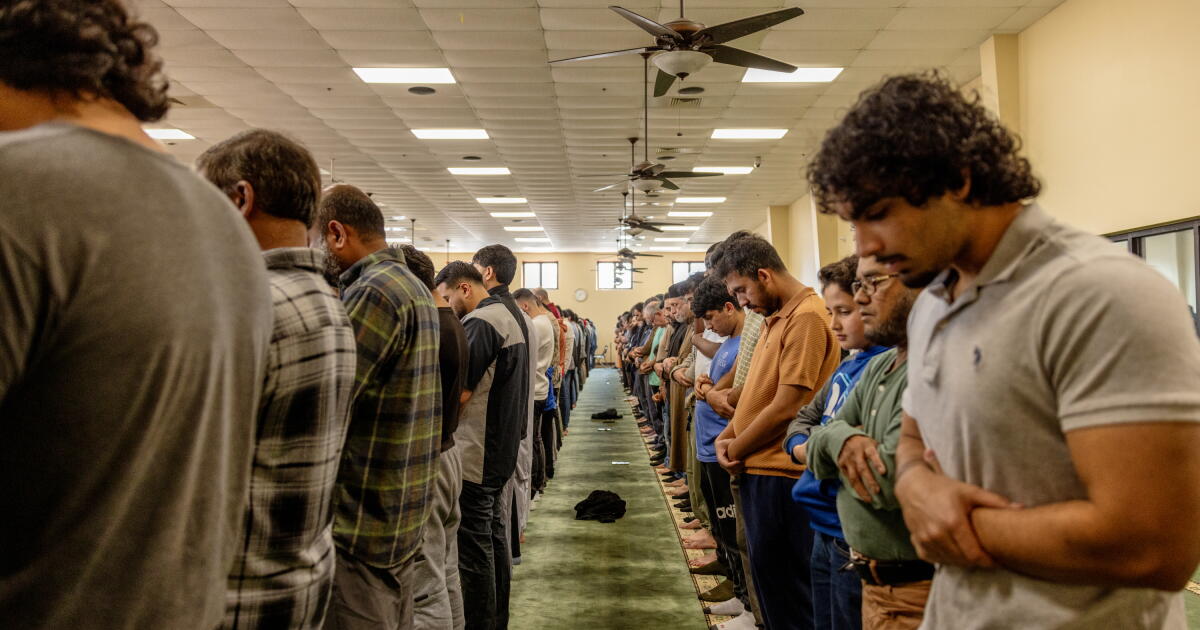
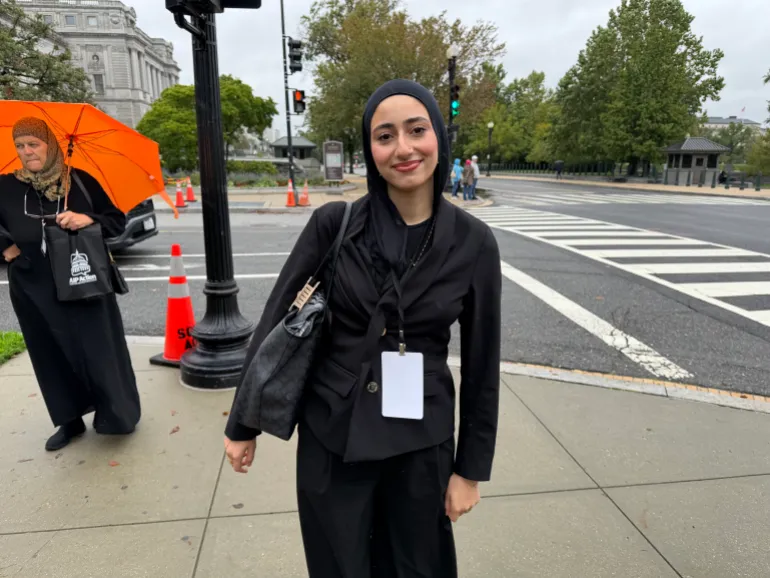

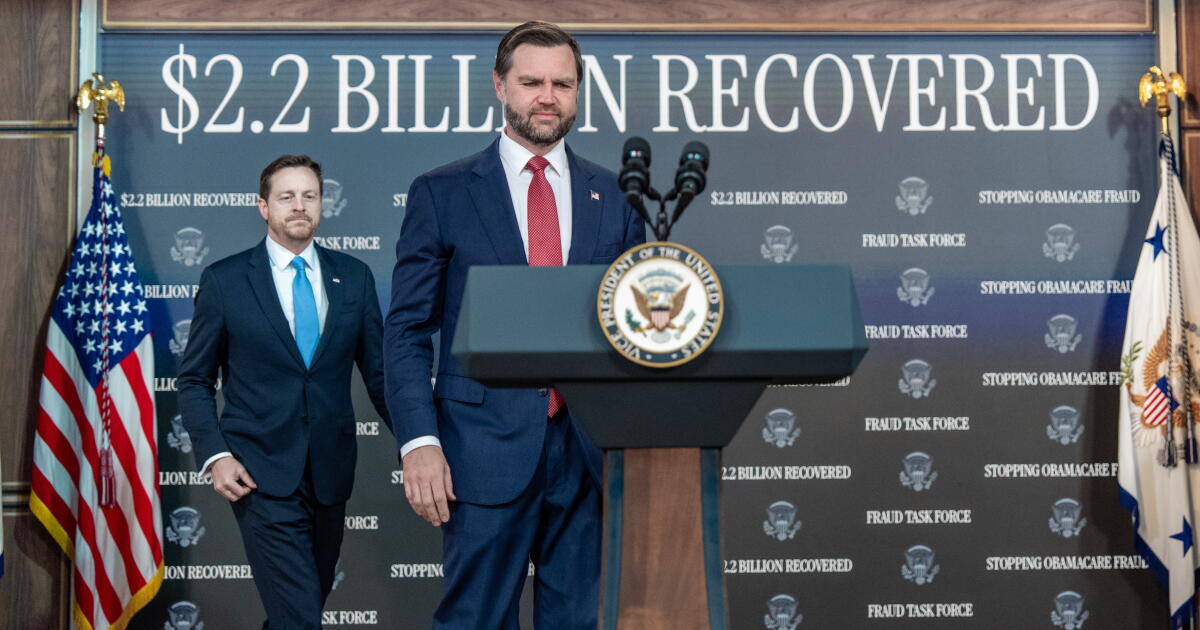


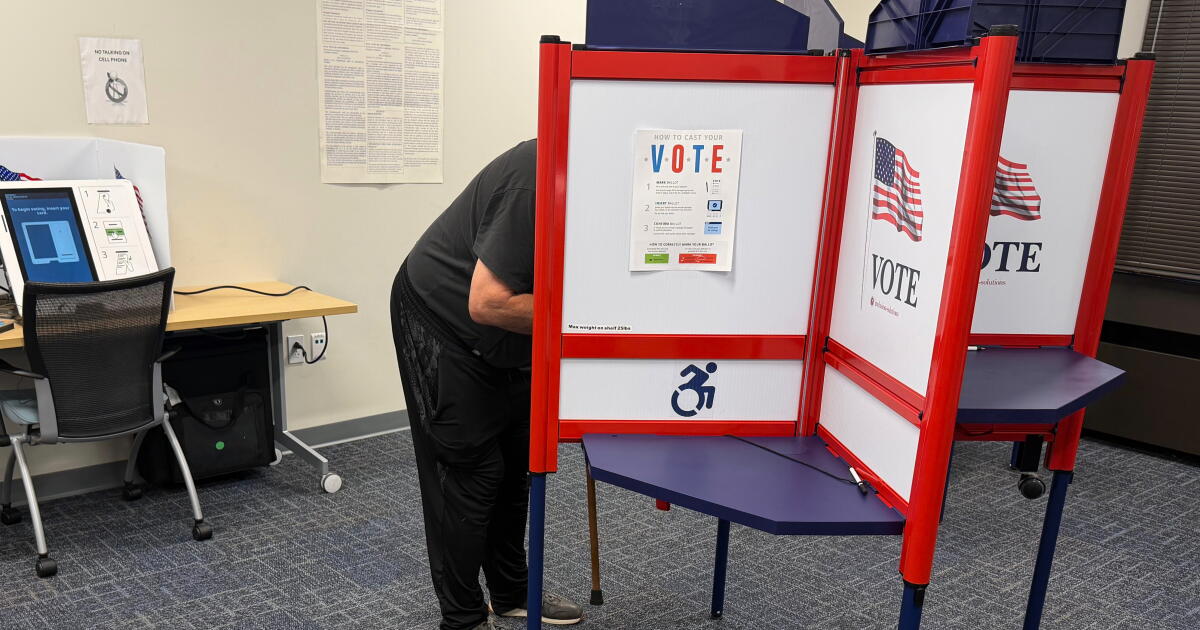
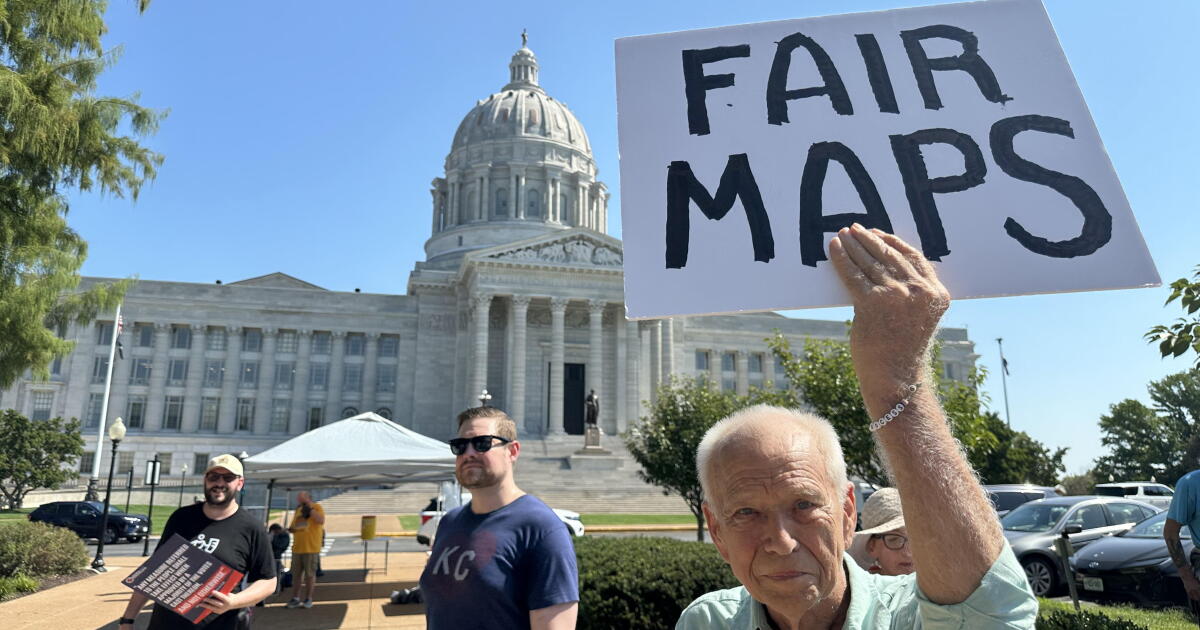

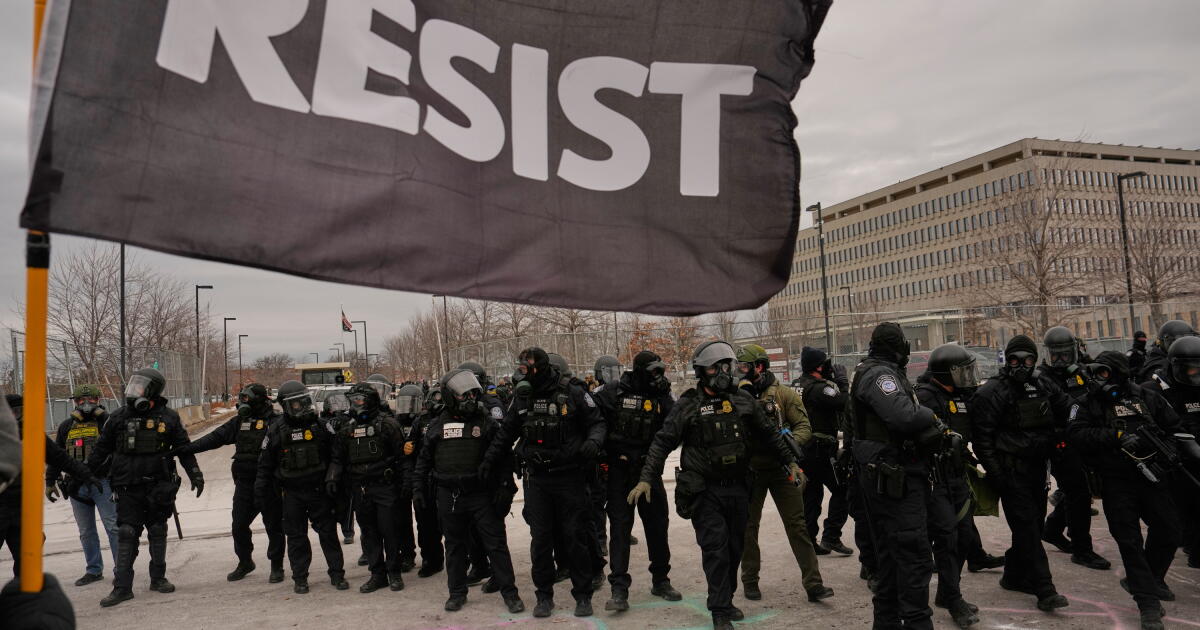


![NCSIST - Tien Kung III Air Defense Missile & Hsiung Feng III Anti-Ship Missile Live Firing [480p] thumbnail](https://i0.wp.com/i.ytimg.com/vi/uPq4iC70U0Y/hqdefault.jpg?w=640&ssl=1)