Two women reportedly injured in blast in Athens’ historic Plaka district, buildings evacuated.
Published On 26 Sep 202626 Sep 2026
Rescue teams have recovered the bodies of six people killed in a building collapse following a a blast in the historic centre of Athens, Greece, according to local authorities.
Documents and belongings found with four of the victims – two men and two women – on Saturday indicated they were United States citizens, Greek state broadcaster ERT and other local media reported.
Recommended Stories
list of 3 itemsend of list
The other two victims were reportedly an elderly couple, a British man and a Greek woman, who lived on the building’s second floor.
Two women were injured in an adjacent building, according to the fire department.
The blast that brought down the small, two-storey building in the popular tourist district of Plaka on Friday was believed to have been caused by a major gas leak, Athens Mayor Haris Doukas said. Neighbouring buildings were damaged and evacuated, he said.
“The damage extends to the entire street as well as the street behind [the building],” Doukas said. “We are talking about an unimaginable catastrophe.”
Two adjoining buildings severely damaged might have to be demolished, he said.
The Greek daily newspaper Kathimerini reported on Friday that the four tourists, who were due to leave their accommodation at about 11:00am (08:00 GMT), failed to board their flight back to the US.
Rescuers work at the scene on September 26, 2026, one day after a powerful blast hit Athens’ Plaka district [Yorgos Karahalis/AP]
Plaka residents issued warning
A group of Plaka residents had alerted the municipality and the managers of the electricity and gas networks about the risks of short circuits or gas leaks in the area a year ago.
In a letter published by Kathimerini, the group called for the organisation of a security exercise to identify any potential shortcomings in the emergency response system.
The citizen movement “We Remain Active” also stated on social media that a resident of the street where the explosion occurred had reported a smell of gas for several weeks and had warned the authorities.
A Greek police spokeswoman confirmed on ERT that residents had made the report. However, the nature of the substance and its origin have not yet been determined.
Plaka lies at the foot of the Acropolis, Greece’s most visited ancient monument.
Perhaps no one genre of music screams “Mexican” more than mariachi music.
Yet a close second is probably the melodic sound of British rock band the Smiths.
Many have pondered why Mexicans and Mexican Americans have such an affinity for those blokes from across the pond. Maybe it’s that lead singer Morrissey’s outsider mentality and melancholic words resonate with the demographic — or there’s something acutely relatable about the melodramatic musings of a romantic yearner.
He noted that Morrissey’s malaise mirrors the sentiment of many ranchera songs, also citing that his effeminate onstage persona is a perfect subversion of Mexican machismo. These elements make the singer an anglophone mash-up of Pedro Infante and Juan Gabriel, Arellano added.
Both the Smiths and mariachi music can drive even the most macho Mexican man to tears with their poetic lyrics and layered instrumentals.
To celebrate the special choke hold these musical stylings have on Mexican Americans in Southern California, the L.A.-based group Mariachi Tierra Mia is putting on a “Mariachi Meets the Smiths” show at the Ford amphitheater on Sunday. The show will merge not only the cultural resonance of the two in Mexican American culture, but also unite the sounds.
The idea to incorporate elements of mariachi music into a cover of a Smiths tune happened by happenstance in December 2024.
Members of Mariachi Tierra Mia were performing at a Christmas party when an attendee requested that the group perform the 1984 Smiths track “Heaven Knows I’m Miserable Now.”
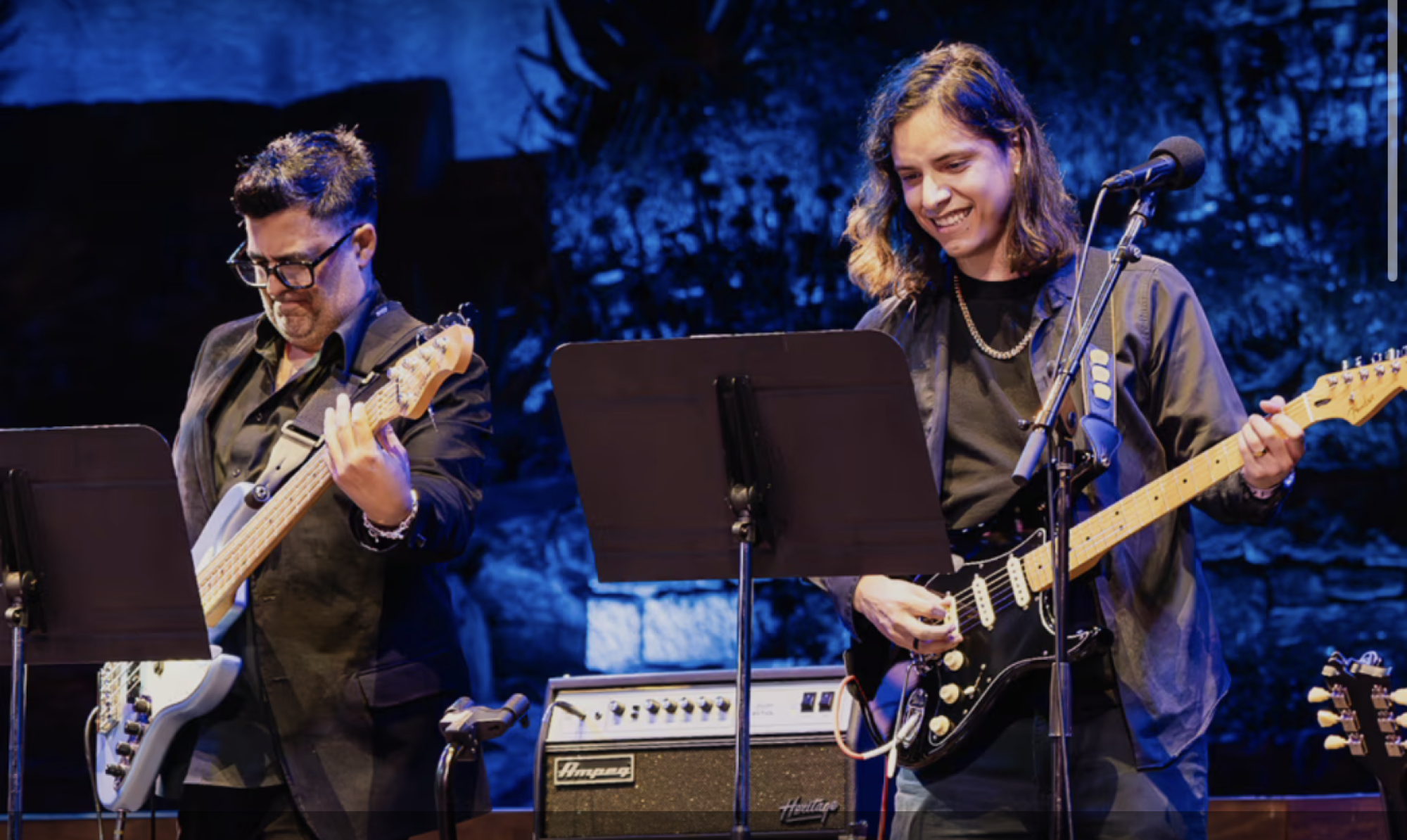
Members of rock band The Last Line of Defense who will perform at The Ford as part of “Mariachi Meets The Smiths.”
(Mariachi Tierra Mia)
The ensemble’s leader, Maira Solis, didn’t know the song — but her husband and fellow bandmate Ivan Peña signaled that he did. Later on in the night, he performed the song alongside two dancing, masked luchadors.
The video of Peña belting out the song while outfitted in his mariachi regalia struck a chord with audiences online after the group posted it on social media.
“The relationship between Mexicanos and the Smiths needs to be studied,” Peña told The Times. “[The video] seemed like a very innocuous thing, but days later, it had 3 million views. That was the first time that ever happened to us, and to me, personally.”
The overwhelmingly positive response to Peña’s rendition of the Morrissey-penned tune let him know that people had an appetite to see the Smiths and mariachi blended together.
Born in 1991, Peña was born years after the Smiths broke up, but was introduced to the group’s catalog at age 5, while his uncle drove him around in a lowrider. The first tracks he heard from the band were “Heaven Knows I’m Miserable Now” and “Ask.”
“I don’t think the music has aged a wink. It’s just gotten better with time,” he said. “It’s clearly resonated across generations. Now you even see Gen Z getting in on it too and realizing music of the past is so substantial.”
But the fandom surrounding the Smiths, and more specifically Morrissey, has entered more complex territory in light of the Smiths frontman’s past political commentary.
“I get that he’s a polarizing guy. I know he’s notorious,” Peña said. “I [say], separate the art from the people behind it … because the piece itself is not at fault for the shortcomings or views of the people who made it.”
Sunday night’s concert will be split in two acts, with the first being a bilingual mariachi set by Mariachi Tierra Mia composed of genre standards and more modern covers. For the second act, Peña’s rock group the Last Line of Defense will perform songs by the Smiths and be joined by the mariachi group to merge the sounds.
Incorporating the mariachi to create straightforward covers of the Smiths’ material proved challenging as Peña did not want to put a spin on the songs’ composition — no added notes and no new harmonies were allowed.
“You could task a mariachi band with doing a one-for-one adaptation of the Smiths’ songs, [but] most of the tracks do not work on the mariachi setting,” he said. “Whereas the guitar is leading the charge in a rock band. The guitar and the vihuela are essentially the rhythm section, so you have to translate guitar riffs to the melody section of the mariachi, [which is the] trumpets and violins.”
According to the 34-year-old musician, very few of the English band’s song fit into that mold.
He knows that fans love the original material and he wants to respect the essence of the time-tested songs. Out of that reverence for the group’s music, Peña noted that all the Smiths covers will be performed only in English.
Peña’s final take on why Mexicans are so infatuated with the Smiths?
“Mexicans love catchy music,” he said. “It’s all of the feels. It’s the good, the bad, and a bit of longing. The lyrics aren’t lying to you. [We can all relate to] Morrissey’s angst, his rebellion, his malaise, and, on the other side of that, his optimism.”
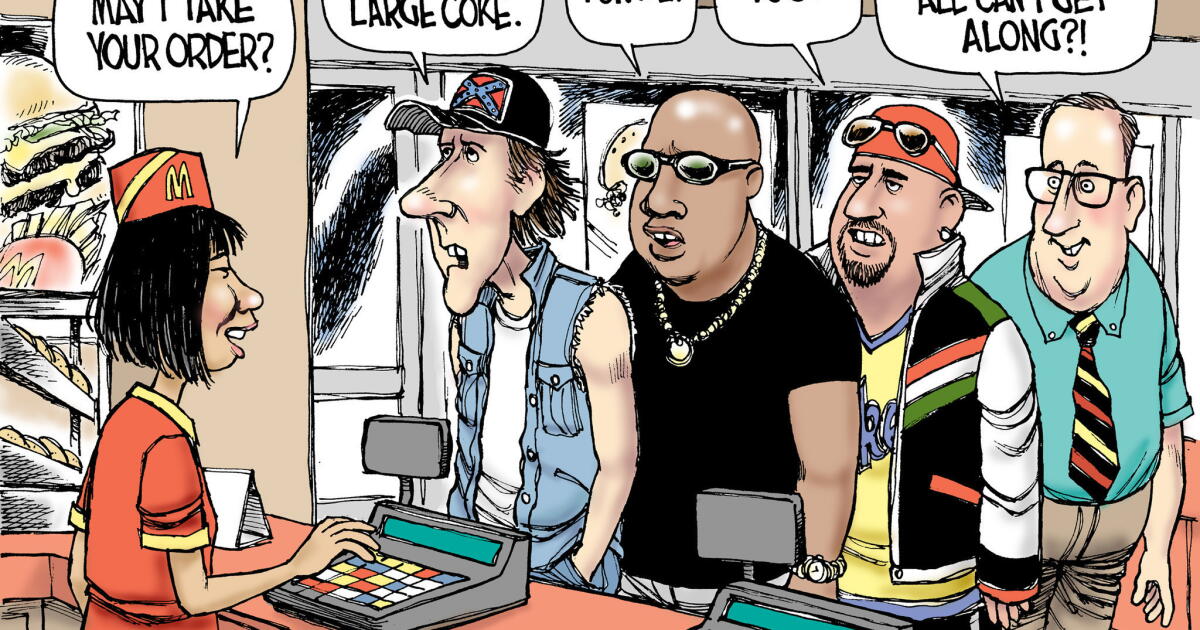
Since the beginning of the republic, there has been a dynamic tension between constantly expanding diversity driven by immigration and the relentless homogenizing force of common American culture. And there’s nothing like a long drive on an interstate highway to remind a person of that reality.
On Monday, I traveled 600 miles on I-5 cutting through the center of California, from Redding to Los Angeles. The force of homogenization was apparent at every major exit and interchange. I was hungry, but I was hoping to find something beyond McDonald’s, Burger King, Subway, Wendy’s, Arby’s or Taco Bell. That was not an easy task.
As anyone who has driven an interstate anywhere in this great nation knows, the America one sees from the freeway lanes is the same from coast to coast. The fast-food restaurant choices are the same. The slower food choices are the same – Olive Garden, Denny’s, Pizza Hut and their equivalents. The stores are the same – Target, Best Buy, Starbucks, Wal-Mart.
There is comfort in this level of reliability. A traveler can always find a familiar vendor to buy the thing that did not make it into the suitcase or a hamburger that tastes exactly like the one at the last stop. Still, it can be dispiriting, as well. I remember driving down a highway in rural Indiana marveling that not a single shop or restaurant was unique to that place. It was franchised, homogenized America at its most appalling.
The happy surprise was to discover that, within a minute or two of turning off that Indiana highway, I was rolling through pristine farmland where Amish families riding in horse-drawn buggies sustained a unique culture. And that is still true in most places. I drive to Montana a couple of times a year, and I know once I exit the freeway and bypass the fast-food emporiums, I will find a little cafe filled with ranchers and farmers lunching on homemade soup and sandwiches and talking about the weather, their cows and the upcoming potluck at the VFW hall.
On Monday’s run down I-5, though, I was in a rush and had no time to find the unique places in the countryside that I know must be there. I had to seek diversity from another source: the radio.
Just out of Redding, Christian preachers hung out at the high end of the dial while country music stations predominated in the stronger frequencies. Those stations played song after song extolling the virtues of small towns, back-country roads and girls in tank tops and tight jeans eager to park down by the river and get frisky on the tailgate of a pickup truck.
Approaching Sacramento, the country songs faded and a political talk show took over. The host was part of the legion of small-time Rush Limbaughs across the country. This particular pundit was going off on guns and immigration, sometimes making sense, other times spouting hunches that veered seriously from verifiable facts.
I also began finding more unusual stations broadcasting from the Bay Area. On one, a man with a very earnest voice described how the Earth is actually a prison where all the psychotics from other planets are sent by the overlords of intergalactic civilization. That’s news you don’t hear just anywhere. Another station was nonstop hip-hop. Like the country music, there were reliable themes: wearing gold chains and gold watches, having sex, partying in the crib, having sex, hanging with the homies, having sex, voluptuous female bodies and having sex.
The college stations kicked in at various points. Some offered BBC reports from Jamaica, Mali, the Netherlands, Brazil and other locales most Americans cannot find on a map. Others played music by undiscovered alternative musicians who should probably stay undiscovered. The bad music was, at least, distinctive. On the pop stations, homogenization was really in evidence. Interchangeable divas – was that Beyonce or Mariah Carey? – sang interchangeable songs with bland “I want you, baby, I need you, baby” lyrics.
Strangely, on the Christian music station in the Central Valley, the music was essentially the same as on the secular stations, the main difference being that Jesus was substituted for the usual love interest in the songs. Somehow, making Christ sound like a really neat boyfriend seems vaguely sacrilegious.
The closer I drew to L.A. the more the Spanish-language stations took over. I suppose this is a clear example of diversity. On the other hand, most of the music sounded as formulaic as the pop and country tunes. (Does every Mexican song contain the word corazon?). One hombre stood out, however. Like them all, he was singing with a mariachi band blaring in the traditional three-beats-to-a-measure rhythm, but his voice sounded as if he had just rolled out of bed on the third day of a tequila binge. That was distinctive.
As night fell, I entered the swirl of L.A. traffic. National Public Radio was reporting that immigration reform is suddenly a popular item in Congress. That sounded good to me. We need the different sounds, tastes, talents and ideas that are brought to our shores from all over the world to be integrated, co-opted and fused onto old forms to create something distinctively American. After all, our national motto is E pluribus unum – one from many.
So, sure, secure the borders, but let’s not lock the doors. And please, let’s build some sushi bars at a few exits on the interstate.
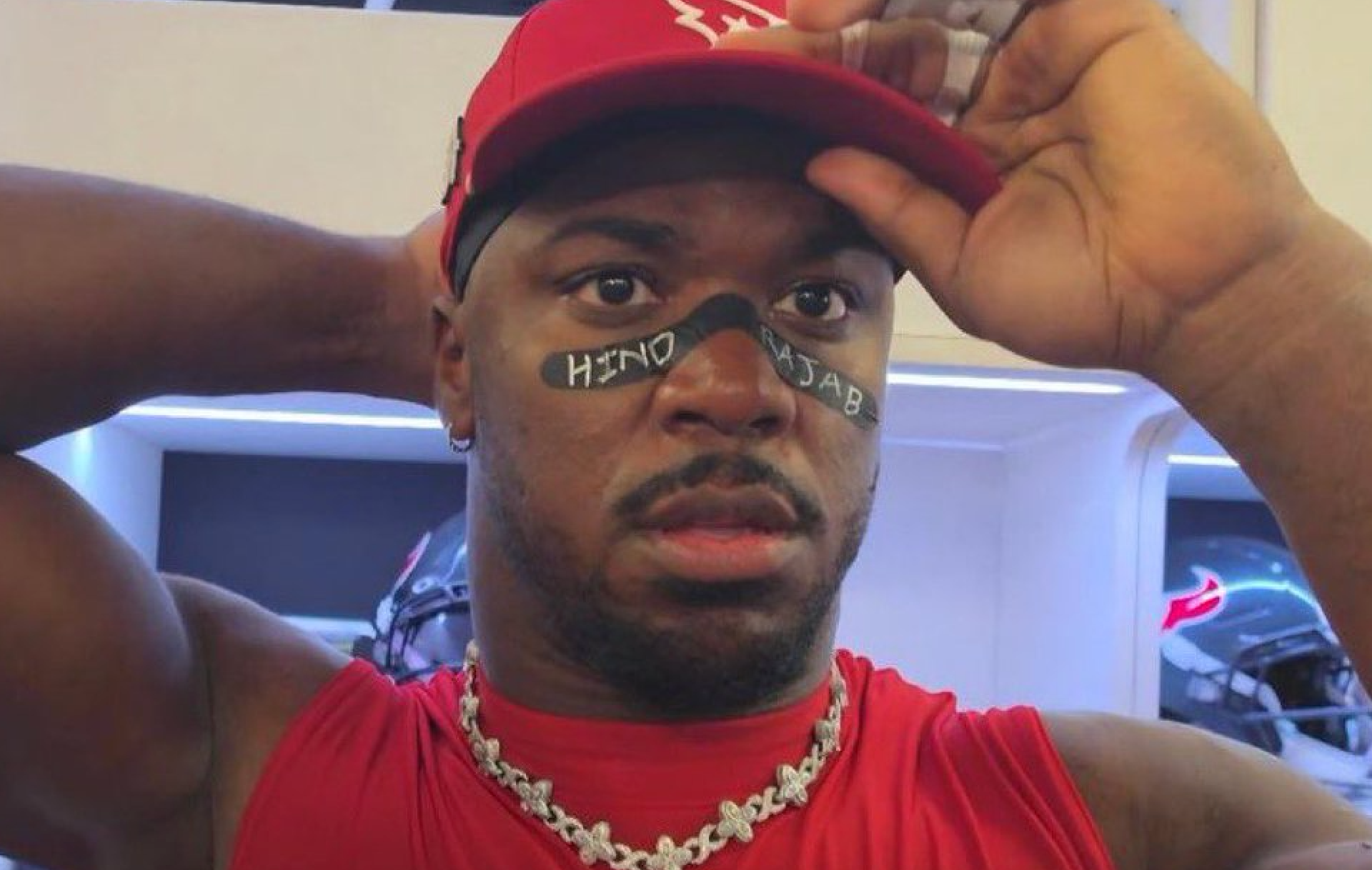
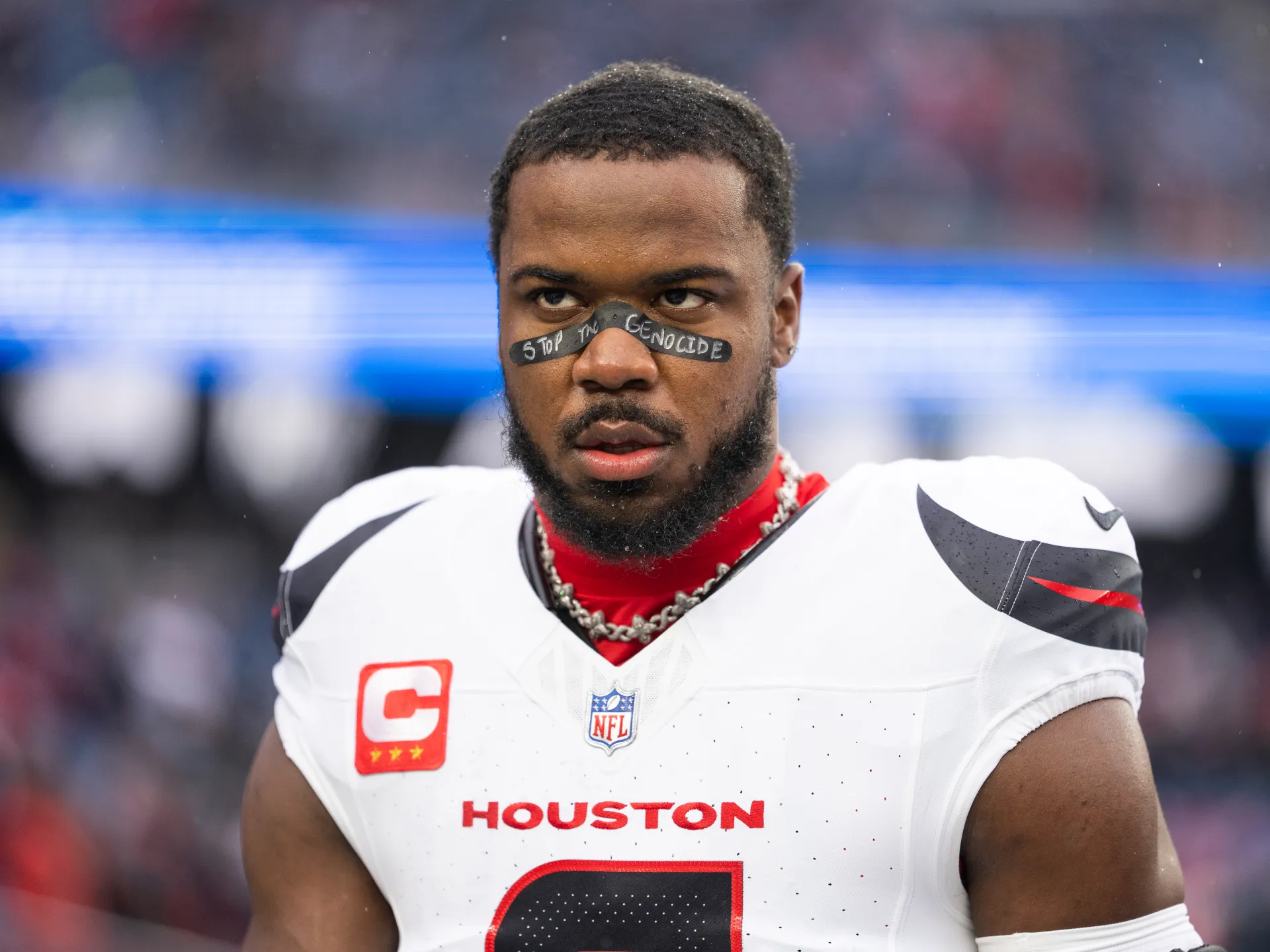
Al-Shaair wears eye black with Akila’s name despite being fined for displaying messages about Israel’s genocide in Gaza.
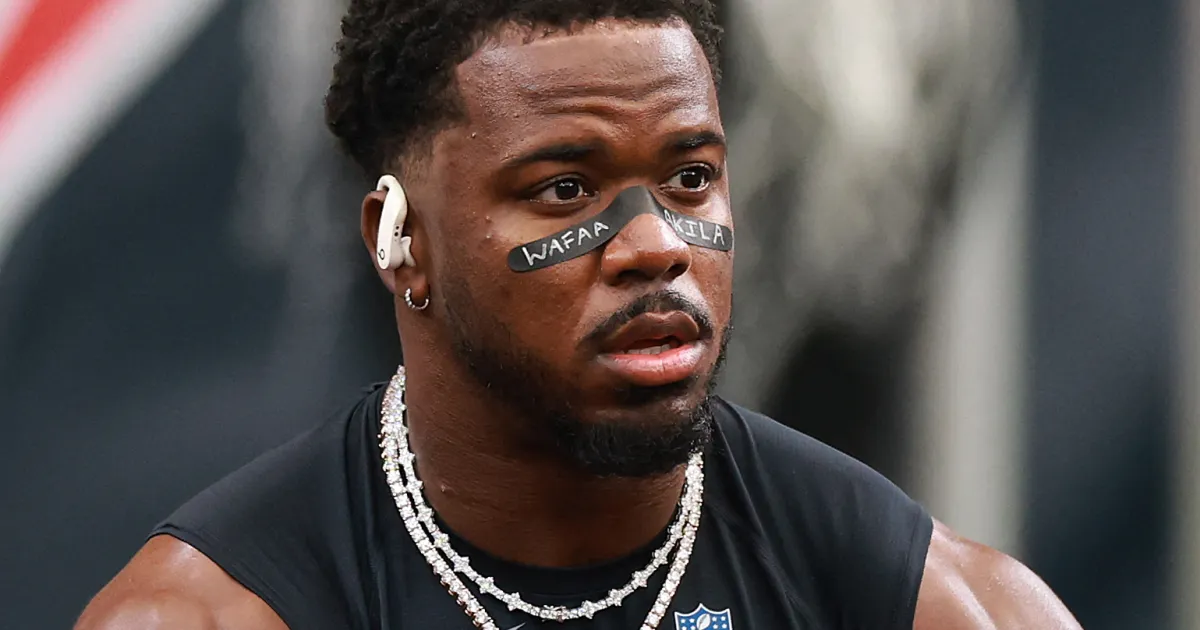
American football player Azeez Al-Shaair has persisted with his stance on raising awareness about slain Palestinian children by wearing eye black bearing the name of Wafaa Akila, an eight-year-old girl killed by Israeli forces in Gaza, during his latest appearance in the National Football League (NFL).
The Houston Texans’ linebacker wore the black tape across his nose during a game against the Cincinnati Bengals on Sunday, days after he wore the name of Hind Rajab on his eye black, which led to an $11,941 fine by the NFL as he breached the league’s code of conduct on players’ clothing and equipment during a match against the Buffalo Bills on September 13.
Recommended Stories
list of 4 itemsend of list
However, basketball player Kyrie Irving stepped in and offered to pay the fine for Al-Shaair, who later confirmed that he had been in touch with the nine-time NBA All-Star.
Al-Shaair brushed off talk of the fine while speaking to reporters last week. “It’s bigger to me; what’s a life worth? Is a life worth $11,000? No, I think it’s priceless,” he said.
In his first match appearance since being fined, Al-Shaair took the field with “Wafaa Akila” written on his eye black, a sticker or paint frequently used by NFL players to reduce glare.
On September 6, the first day of school for the eight-year-old, she was killed along with her father in an Israeli attack in western Gaza as they were making their way home.
The Israeli drone struck their car, leaving it burned and charred, with only a few pages of Akila’s school books surviving the horrific attack. A few hours earlier, a smiling Akila posed for a photo before setting off for her first day of school.
The Israeli genocide in Gaza has severely limited education for the Strip’s 660,000 children, with 90 percent of schools left damaged or destroyed.
Akila’s death was similar to that of Rajab, aged five, who was killed in Gaza after Israeli soldiers opened fire on her family’s stranded car on January 29, 2024. A phone call by the Palestine Red Crescent Society documented her final moments and was the subject of an Oscar-nominated docudrama.
Al-Shaair shared posts about Akila, as well as her mother’s reaction to the killing, on his Instagram account on Sunday.
Following the Texans’ match against the Bengals, a social media user posted a video that showed Al-Shaair interacting with children – some sporting keffiyehs, others who were amputees and were holding posters in support of the player – on the sidelines.
‘Be like Azeez Al-Shaair’
Al-Shaair, a Black American Muslim player, has frequently spoken about the plight of Palestinians and has paid the price for it.
He was also fined in January, during the NFL’s last season, for displaying the message “Stop The Genocide” on his nose tape. While it did not specifically refer to a particular conflict, it was widely understood to be about Gaza and Sudan.
Prominent American Muslim scholar Omar Suleiman has repeatedly voiced his support for Al-Shaair.
“My brother, who went to Jordan to be with Palestinian refugees this summer, who spends time with Palestinian children with missing limbs in Houston, who is using every week of his Pro Bowl NFL career to honour a Palestinian child despite the fines,” Suleiman wrote about Al-Shaair in a social media post on Sunday.
“In the sports and entertainment arenas run by many of the same types of people who run government, choose to be like Azeez Al-Shaair, Kyrie, and Macklemore.”
The NFL’s fine on Al-Shaair comes at a time when Robert Kraft, owner of the Boston-based team New England Patriots, confirmed that he pressured pop star Ed Sheeran to drop rapper Macklemore from his tour of the United States.
“High-stakes” psychological thriller American Hostage has finally landed on Prime Video.
Hayley Anderson Screen Time TV Reporter
12:16, 20 Sep 2026
American Hostage is now available to stream on Prime Video(Image: PRIME VIDEO )
American Hostage is the “harrowing” drama fans have been waiting for starring Mad Men and Land Man icon Jon Hamm.
Prime Video released the intense eight-part series that tells of a “high-stakes” kidnapping in 1970s Indianapolis on on Sunday (September 20).
A beloved radio reporter is thrown into a “life or death crisis” when a kidnapper, who continues to point a shotgun at his hostage, demands to speak to him live on air.
With listeners intensely tuning in to their ongoing conversation, the pressure is on as the radio presenter must try to talk down the kidnapper before it’s too late.
Is American Hostage based on a true story?
What makes this new Prime Video drama even more exciting is the fact that it is based on a real-life story.
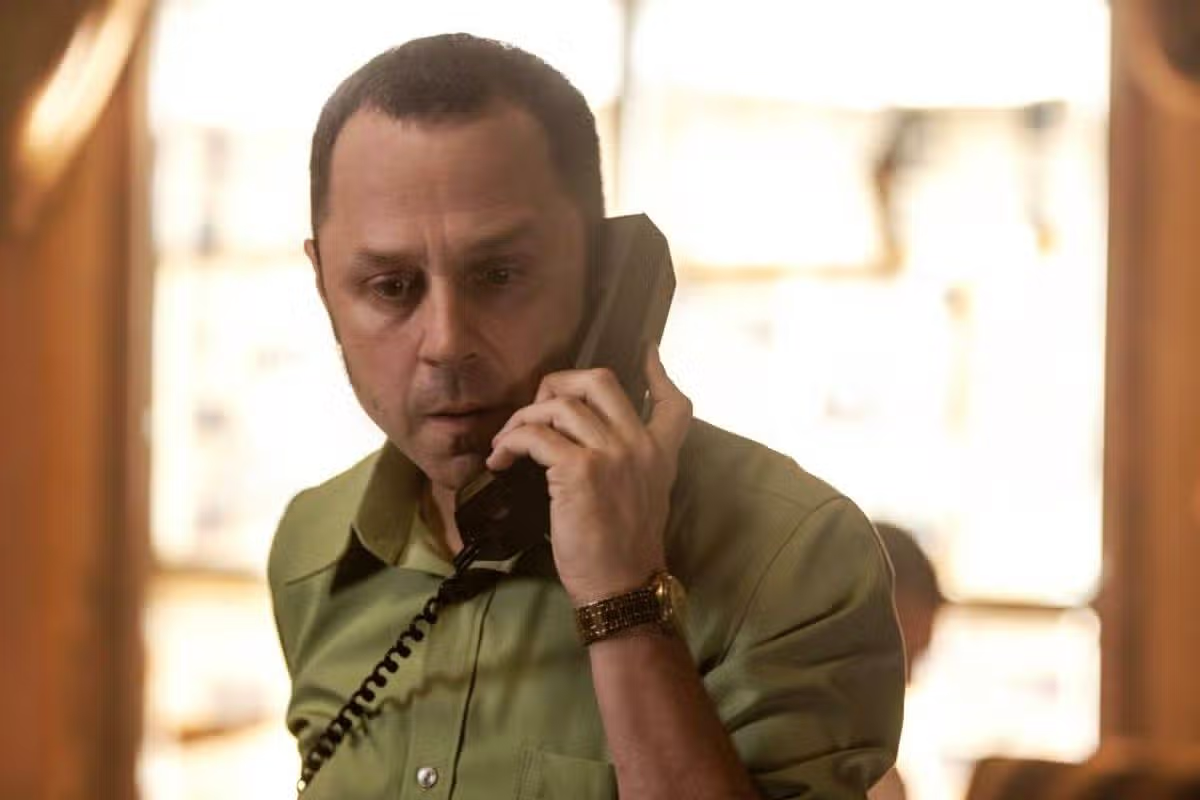
The radio reporter in question is Fred Heckman (played by Jon Hamm) with American Hostage telling his “harrowing true story” of what happened between him and kidnapper Tony Kiritsis (Giovanni Ribisi).
In real-life, Kiritsis’ victim Richard Hall was an executive at Meridian Mortgage Co which loaned him money three years prior to buy land and set up a shopping centre.
Kiritsis claimed that Meridian steered shops and business owners away from the centre, so he was confronted with the prospect of closing down and forced to default on the loan.
In an act of revenge, Kiritsis took Hall as his hostage and tied a wire around his neck attached to a shotgun that would go off if he made any sudden movements.
Kiritsis then stated that the only person he would talk to was radio personality Fred Heckman of WIBC so he could vent his feelings about Meridian live on air.
He released Hall on February 10, 1977, after holding him hostage for 63 hours.
Kiritsis was charged with kidnapping, armed extortion and armed robbery but was acquitted by reason of insanity and spent the next decade in psychiatric care.
American Hostage is based on the first season of the scripted podcast of the same name from Shawn Christensen and brought to life for the small screen by Netflix ’s The Night Agent creator Shawn Ryan.
American Hostage is available to watch on Prime Video
Houston Texans’ linebacker Azeez Al-Shaair has spoken to sports journalists about his $11,941 fine by the NFL for wearing the name of Palestinian child Hind Rajab, who was killed by Israeli forces in Gaza, on his eye black during a game.
A solitary man believes he’s been wronged by a vast, overarching system. Feeling helpless to take it on directly, he picks up a gun and violently confronts the most powerful person he can think of who embodies his grievance.
It is a chilling dynamic that keeps repeating itself in American culture, and one at the heart of “American Hostage,” a dramatic miniseries making its debut Sunday on MGM+.
The eight-episode series re-creates the true story of Tony Kiritsis, an Indianapolis man who, in 1977, kidnapped Richard O. Hall, a mortgage broker whose family Kiritsis blamed for his own financial hardships.
The standoff lasted 63 hours, during which Kiritsis kept a shotgun attached by wire to Hall’s neck, and it became a national media spectacle. Throughout the crisis, Kiritsis made live calls to Fred Heckman, a local AM radio news broadcaster, pleading to listeners for the justice he believed he was due.
A half-century after this incident, not even the creators and stars of “American Hostage” can say for certain why we find stories like this so compelling — or why they keep happening in real life.
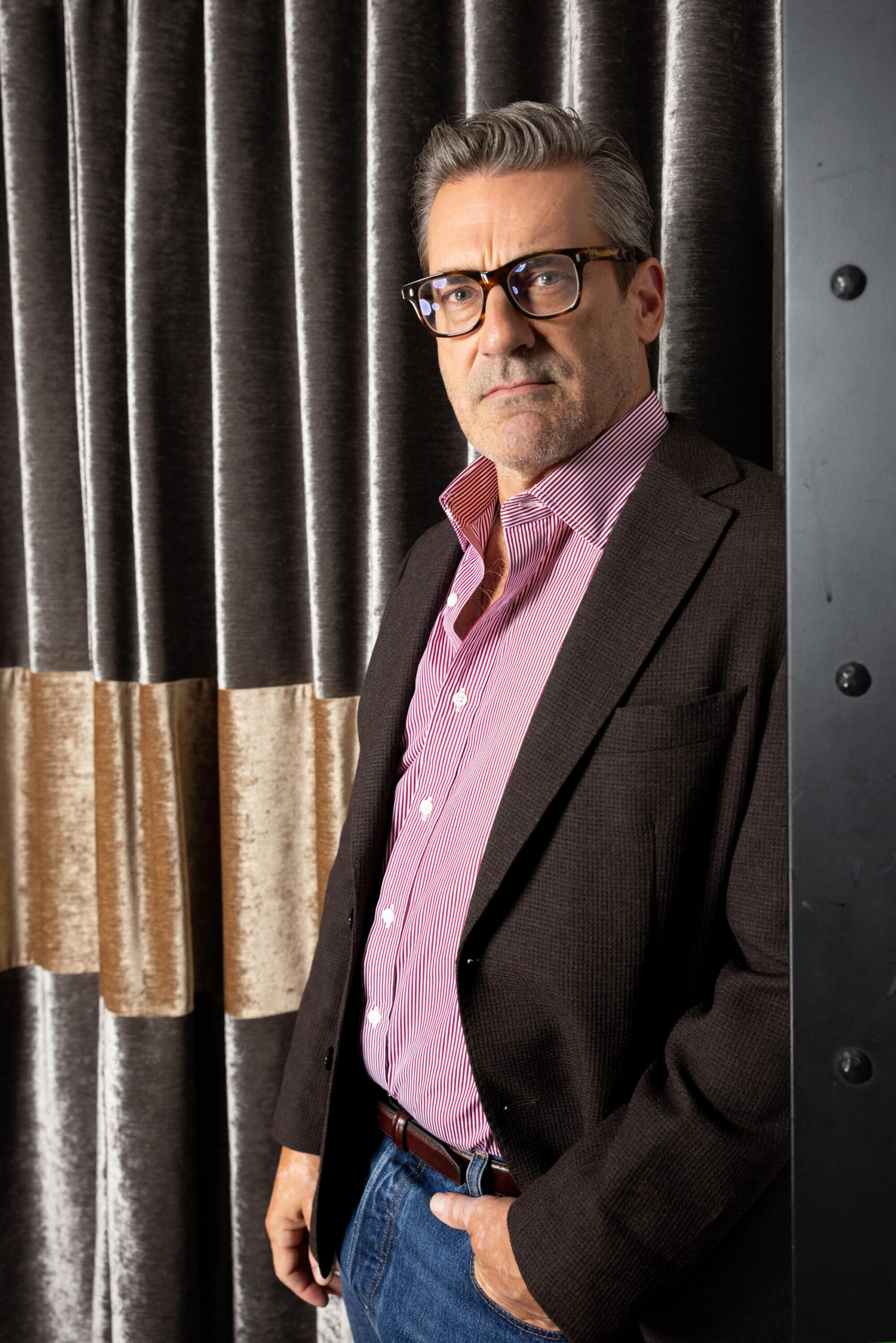
“We haven’t quite figured this situation out,” said Jon Hamm, who plays Heckman in “American Hostage” and is one of its executive producers.
Jon Hamm plays Fred Heckman, a radio news broadcaster, in “American Hostage” and is an executive producer.
(Jason Armond/Los Angeles Times)
The “Mad Men” star — no stranger to period pieces — said that beneath its retro production values and wide lapels, “American Hostage” is fundamentally about how people who feel voiceless in our society fight to be heard, even if the means is violence.
“There’s a lot that really resonates in the current media landscape and culture 50 years down the road, that people can still really connect with,” Hamm said.
Hamm and his colleagues hardly need to argue that point when the nation has been fixated on the case of Luigi Mangione, who in August pleaded guilty to federal charges in the December 2024 killing of Brian Thompson, the chief executive of UnitedHealthcare.
Though work on “American Hostage” had begun before Mangione’s crimes and the show was not inspired or motivated by them, series co-creator Shawn Ryan said that audiences have a boundless fascination with these types of stories — with or without any counterparts in current events.
“Dramatically, it’s always very interesting to see somebody do the wrong thing for the right reason,” Ryan said.
The TV series originated with a 2022 scripted podcast, produced by Criminal Content and also called “American Hostage,” on which Hamm also played the role of Heckman. It told of how Kiritsis, an Army veteran, enacted the kidnapping on his belief that the Hall family had swindled him on his mortgage — a loan for land where he had hoped to build a shopping center.
While Kiritsis sought to use Hall’s life as a bargaining chip for prosecutorial immunity, he also portrayed himself as an underdog taking on powerful financial interests. On the other end, Heckman wrestled with the moral predicament of giving airtime to a potential murderer while hoping to keep Hall alive. (Hall survived the ordeal and Kiritsis, acquitted of his crimes by reason of insanity, was later institutionalized.)
In the spring of 2022, Hamm approached Ryan, the creator of TV thrillers like “The Shield” and “The Night Agent,” with the idea of adapting the “American Hostage” podcast into a miniseries.
Ryan created the TV adaptation with Eileen Myers, a collaborator of his on shows like “Last Resort” and “Mad Dogs.” They both saw in the source material a story that was a combination of classic 1970s films like “Network” and “Dog Day Afternoon.”
(In a parallel development, Kiritsis’ story was also adapted into the Gus Van Sant film “Dead Man’s Wire,” which was a box-office disappointment earlier this year.)
Ryan and Myers said they were fascinated with how the American news media covered the kidnapping in instantaneous fashion and in an era long before the internet. In the 1970s, Ryan said, “There were fewer journalists and they were better and more trusted, and if Walter Cronkite said something, you believed it.”
Shawn Ryan, Jon Hamm and Eileen Myers executive produce the TV adaptation of “American Hostage.” Hamm approached Ryan, who brought in Myers to co-create and co-showrun the series.
(Jason Armond / Los Angeles Times)
The question that journalists like Heckman were confronted with, Myers said, was, “Do you allow a man who’s got a shotgun to somebody’s head dictate the terms of whether you’re going to put them on the air or not?”
Hamm, who has played alluring if ultimately disreputable characters on “Mad Men” and now Apple TV’s “Your Friends & Neighbors,” said he appreciated that “American Hostage” gave him a character who an audience can feel good about rooting for.
“I thought, I’m 55 years old,” Hamm said. “I was close to Fred’s age when this all went down. It was fun to play somebody morally conflicted that is actually on the good side.”
With some hesitation, Hamm pointed to the career trajectory of Bryan Cranston, who followed his celebrated heel turn on “Breaking Bad” with projects like “All the Way,” the play and TV film about President Lyndon B. Johnson.
“I don’t want to draw a comparison that’s stretching the bounds of reality,” Hamm said, “but Bryan went from Walter White to LBJ. You go, ‘All right — he’s still morally conflicted, but at least he’s on the right side of things.’”
“American Hostage” also benefited from the casting of Giovanni Ribisi (“Saving Private Ryan,” “Avatar,” “Sneaky Pete”), who brings a blend of volatility and humanity to the role of Tony Kiritsis.
Hamm recalled how Ribisi was in the midst of shooting another project — the upcoming Prime Video miniseries “The Greatest,” about Muhammad Ali — when he agreed to do a reading for “American Hostage” over Zoom.
“He brings value to every project he does, and he’s picky, as he should be,” Hamm said. “He’s a phenomenal DP — he might just go be a camera person or something if he wants to do it. So we were lucky to get him.”
Giovanni Ribisi plays Tony Kiritsis, the man who kidnapped Richard O. Hall. “So we were lucky to get him,” Hamm said.
(Steven Ackerman / MGM+/Sony Pictures Television)
There are of course unavoidable parallels between the stories of Kiritsis and Mangione, including the fact that both men were celebrated as folk heroes by some people who identified with their broader resentments.
But Hamm drew a crucial distinction between the two cases: Mangione “killed a guy,” he said. “He shot a man in cold blood. Like, I don’t care how good your point is. That’s not how we do it.”
Going back to the Boston Tea Party, Hamm said, every era of American history has had its dissidents who feel “wronged and done over by a system that is stacked against you” and are willing to take aggressive actions against it.
Hamm said that feeling persists and thrives today. “I think this is a big part of the rise of Trumpism,” he said. “I think this is a big part of the rise of the MAGA mentality, of ‘I have been done wrong and no one is hearing my complaints.’”
When those feelings go unaddressed for long enough, Hamm said, people will come to accept a certain amount of lawlessness from the figures they feel can solve their problems.
“We have a guy in the Oval Office right now who thinks that the laws don’t apply to him and a Supreme Court that said, ‘Yeah, they don’t — you can do whatever you want,’” he said.
For supporters of President Trump, Hamm said, “I think it’s fun for them to be able to flout the law and say, ‘Who cares?’ and all the things that they’re currently saying, but it’s not the principles that we were founded on.”
Hamm and Ryan make no secret of the fact that they’d like to keep “American Hostage” going as an anthology series and explore more of what Hamm called “these watershed moments of American life, to see how they rippled and how we got here from there.”
One could certainly imagine other events that would fit the show’s interest in real-life hostage crises that became media spectacles — the 1974 abduction of Patty Hearst; the 1963 kidnapping of Frank Sinatra Jr. — though Hamm kept any specific plans for the series close to the vest.
Perhaps the upper limits they face are the hours in a day to make and to broadcast the show.
“We’re living in great times right now for television,” Hamm said. “There’s so many opportunities to tell stories. Almost too many.”
Basketball superstar Kyrie Irving has offered to pay a fine for American football player Azeez Al-Shaair, who was penalised for wearing the name of Hind Rajab, a Palestinian girl killed by Israeli forces in Gaza.
Al-Shaair was handed a fine of $11,941 by the National Football League (NFL) on Wednesday as he was found to be in breach of the NFL’s rules on players’ equipment and clothing during his team Houston Texans’ game against the Buffalo Bills last weekend.
Recommended Stories
list of 3 itemsend of list
Shortly after the fine was announced by an NFL reporter on X, the pro-Palestine basketball player responded to the tweet by saying he would “take care” of it.
Al-Shaair, 29, is a linebacker for the Houston-based NFL team and a vocal advocate for Palestinian rights.
During his team’s last NFL game, Al-Shaair wrote Rajab’s name on his eye black, a sticker or paint frequently used by NFL players to reduce glare.
Five-year-old Rajab was killed in Gaza after Israeli soldiers opened fire on her family’s stranded car. A phone call by the Palestinian Red Crescent documented her final moments and was the subject of an Oscar-nominated docudrama.
Al-Shaair, a Black American Muslim player, has frequently spoken about the plight of Palestinians and has paid the price for it.
He was also fined in January, during the NFL’s last season, when he displayed the message “Stop The Genocide” on his nose tape. While it did not specifically refer to a particular conflict, it was widely understood to be about Gaza and Sudan.
NFL criticised for ‘inhumane’ fine on Al-Shaair
The NFL’s fine on Al-Shaair comes at a time when Robert Kraft, the owner of the Boston-based team New England Patriots, confirmed that he pressured pop star Ed Sheeran to drop rapper Macklemore from his tour of the United States.
The billionaire is the owner of Gillette Stadium in Foxborough, Massachusetts, one of the venues where Macklemore was due to appear on stage as the opening act for Sheeran’s US tour in late September.
Letting Macklemore perform in Gillette Stadium would, Kraft said, cross a line, as he described the rapper’s recent performances as including a “broader history of anti-Semitic rhetoric and imagery”.
Kraft is known for launching a so-called “anti-Semitic campaign” during Israel’s genocide in Gaza in 2023, when players, coaches and executives from his Patriots team wore blue pins.
On October 15, 2023, the NFL observed a moment of silence for Israel during a game between the Baltimore Ravens and the Tennessee Titans in London, United Kingdom, while the league has sanctioned its player for raising awareness for Palestinians.
The NFL was criticised on social media for slapping a fine on Al-Shaair, with one user calling the move “inhumane”.
“He is advocating for the murder of this innocent child Hind Rajab in Palestine and they fine him?! Nah, that is so inhumane. You should be ashamed of yourself,” the user wrote.
Prominent American Muslim scholar Omar Suleiman questioned whether Al-Shaair would have faced a similar punishment if his tape carried the name of Holocaust victim Anne Frank instead.
“Why is honoring murdered Palestinian children ‘an unauthorized message’?” he asked in a post on X.
Meanwhile, the Texas chapter of the Council on American-Islamic Relations backed Al-Shaair over his continued advocacy for Palestinians.
“We commend Al-Shaair for using his platform to highlight the memory of Hind Rajab, one of the many children murdered by the Israeli government during its genocide in Gaza,” the rights group said in a statement on its website.
“The NFL has no problem with coaches wearing pins developed for genocide supporter Robert Kraft’s “Stand Up to Jewish Hate” campaign, and it should have no problem with an NFL player mentioning the name of a girl killed in that genocide,” the statement went on to add.
“Al-Shaair’s message was rooted in basic human decency and concern for innocent lives. That should not be controversial, much less subject to a fine.”
Irving’s pro-Palestine stance
Meanwhile, nine-time National Basketball Association (NBA) All-Star Irving has previously made his pro-Palestine stance on Israel’s genocidal war on Gaza clear.
In February, Irving wore a shirt reading “PRESS” at the NBA All-Star Game to honour journalists who had been killed in Gaza while covering the war.
According to reports, the tag on his shirt read: “Dedicated to our beloved journalists in Gaza showing the world the truth.”
In April, Irving changed his display picture on Instagram to an image of a Palestinian child blocked from attending school by Israeli soldiers in the occupied West Bank.
During a pre-game interview in 2024, he was seen wearing a chain with the Palestine flag in the shape of Israel’s landmass.
In 2023, the basketball player wore a keffiyeh, a cotton headdress with a distinctive checkered pattern worn in many parts of the Arab world that represents Palestinian identity, during a post-match news conference.
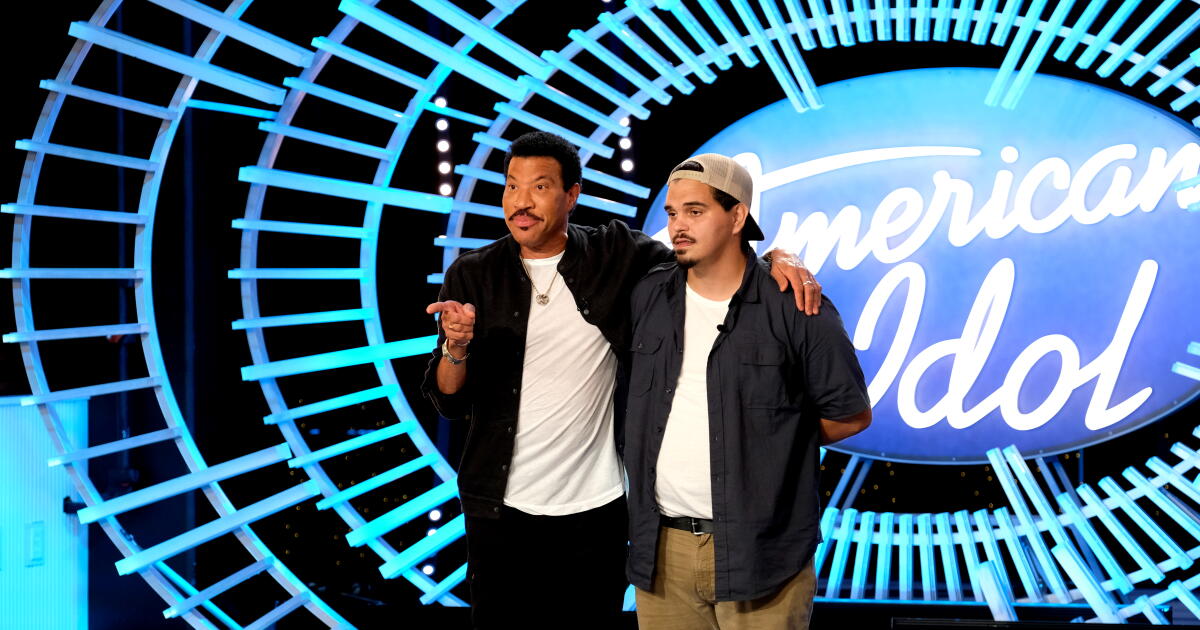
“American Idol” is packing up its stars after 25 years in Hollywood.
In the latest blow to Los Angeles film production, ABC’s long-running program will move its upcoming season to the Atlanta area, according to Fremantle, which produces the show with 19 Entertainment, owned by Sony Pictures Television.
Fremantle declined to comment further.
The move comes as Los Angeles’ production levels have tumbled, prompting concern from film workers, union leaders and elected officials who are scrambling to address the crisis. California, despite boosting its tax incentive program, has been struggling to compete against other states that offer more lucrative credits.
TV production activity in the L.A. region was down 27% in the second quarter compared with the same period a year ago, largely because of fewer reality TV shoots, according to the nonprofit FilmLA.
Earlier this year, another broadcast TV stalwart, Fox’s “The Masked Singer,” made plans to vacate its space on the Fox lot on West Pico Boulevard in Los Angeles and head to New Jersey, also in search of more lucrative tax credits. Another ABC hit, “Shark Tank,” also is relocating to Atlanta from its longtime home base on Sony’s Culver City lot.
“American Idol” has been a local economic engine since launching on Fox in 2002. For years, the show ranked as the No. 1 show on TV and employed hundreds of workers each season as aspiring singers hoped for their big break.
The most recent season originated from Red Studios in Hollywood.
Georgia offers generous tax incentives, including up to a 30% tax credit for reality television productions that spend at least $500,000 in the state. Unlike California, Georgia’s tax program allows compensation for actors and other so-called above-the-line workers to be included.
Like California, Georgia has been grappling with lower production levels. For more than a decade, its soundstages attracted colossal movie productions, but the region was dealt a blow when the Walt Disney Co. recently shifted production of its Marvel superhero films to facilities near London.
On Tuesday, a bipartisan coalition of lawmakers, the Motion Picture Assn., industry unions, Hollywood special ambassador Jon Voight and filmmaker Steven Paul made a pitch for a federal film and television tax credit to keep jobs in Hollywood and in the U.S. broadly.
Rep. Laura Friedman (D-Glendale) plans to introduce a bill into Congress as early as this month in collaboration with Rep. Brian Jack (R-Ga.), who represents a district southwest of Atlanta. The MPA released a study estimating a federal tax credit could add 143,000 film and TV jobs.
This year, in particular, has seen big swings as the California Film and TV Tax Credit Program expanded eligibility to include competition shows.
Large-scale competition shows are eligible under the state’s incentive program if they have a minimum budget of $1 million per episode. The credit, however, does not include traditional reality shows, game shows, talk shows or docu-follow television programs.
Changes in California’s formula resulted in a jump to 676 shoot days in the second quarter, compared with 463 shoot days during the first three months of the year. Nonetheless, this year’s April-June quarter still reflected an almost 40% decline when compared with the same time last year.
FilmLA said that over the last five years, reality productions have plummeted nearly 63%.
ABC in late July announced “American Idol” was returning, marking its 10th season on the Walt Disney Co. network. Producers are auditioning potential contestants this week during stops in Georgia, North Carolina and South Carolina.
ABC declined to comment on the move.
Ryan Seacrest has long hosted the show, which last season featured Lionel Richie, Luke Bryan and Carrie Underwood, a previous “American Idol” champion, as the celebrity judges.
Deadline first reported the planned move to Georgia.
Game shows are also leaving L.A.
A growing number of programs long based around Hollywood and New York have headed across the ocean to Ireland and Britain to take advantage of tax credits that bring down the cost of production as broadcast network executives contend with shrinking audiences and lower profit margins.
Fox currently has several prime-time game shows produced overseas, including “The Floor,” “Celebrity Name That Tune” and “Beat Shazam.
Staff writer Stephen Battaglio contributed to this report.
NEW YORK: Alexander Zverev won his second major championship and kept American men without a Grand Slam title since 2003, beating Ben Shelton 6-3, 7-6 (2), 5-7, 6-2 on Sunday in the US Open final.
Zverev finally broke through in the majors by winning this year’s French Open and followed up by finally adding the title in New York that he so painfully let slip away in 2020.
The No. 1 seed in a Grand Slam for the first time, he capitalized on Shelton’s shaky start in his first major final, played a nearly flawless tiebreaker on serve and then turned back Shelton’s comeback attempt in front of a crowd that desperately cheered him on.
Shelton was trying to win the first title by an American man since Andy Roddick won in Flushing Meadows in 2003, as well as the first by a Black man since Arthur Ashe in 1968.
But Zverev was too good in majors this year and apparently didn’t even know how good he was. He finished the match on his serve but didn’t seem to realize it, dropping back behind the baseline as if set to return. Only a few moments later did he figure out he had won, raising his arms in celebration.
ANCHORAGE — Alaska prosecutors are dropping voter misconduct cases against a group of residents born in American Samoa after a state appeals court threw out felony charges against a woman who wrongly checked a box saying she was a U.S. citizen.
The state’s Department of Law announced the decision Friday, after a three-judge Court of Appeals panel ruled a week earlier that state law requires proof that defendants who erroneously filled out voter registration forms had a “consciousness of wrongdoing” and intended to break the law.
The panel found flaws with a state trooper’s questioning of Tupe Smith, the woman involved in the case that was thrown out, as well as with the grand jury process that led to her indictment. It overturned a lower court’s decision that had kept the charges against her alive.
Acting Alaska Atty. Gen. Cori Mills said in a statement that after reviewing the decision and applying it to the facts, prosecutors concluded that they could not prove cases against Smith and the others beyond a reasonable doubt. Her husband, Michael Pese, had also been charged.
“We respect the role of the courts in interpreting Alaska law and will faithfully execute our duty to apply the law and carefully evaluate our prosecutorial decisions,” Mills said.
In a statement Saturday, Smith’s lawyer Whitney Brown said the dismissal would allow the community “to put this ordeal behind them and begin moving forward.”
Earlier in the week, she heralded the Court of Appeals decision, saying it “establishes an important safeguard against imposing felony liability for an honest mistake.”
The court “made clear that Alaska law requires more than simply showing that a statement was false — the State must prove a person acted with a consciousness of wrongdoing,” Brown said. “That distinction makes a world of difference to Ms. Smith and helps ensure that Alaska’s voter-misconduct statute is applied as the legislature intended going forward.”
Neil Weare, part of the legal team representing Smith and Pese, said Saturday that the decision to drop charges “raises questions about why this prosecution was even brought to begin with.”
“It’s clear that all along, they really had no evidence of any consciousness of wrongdoing on the part of Michael, Tupe or the other defendants,” said Weare, co-director of the nonprofit Right to Democracy.
In all, 11 people from the small community of Whittier, about 50 miles southeast of Anchorage, were charged with falsely claiming U.S. citizenship either when registering or trying to vote. Messages seeking comment were left for their lawyers.
American Samoa is the only U.S. territory where residents are not automatically granted citizenship by being born on American soil and instead are considered U.S. nationals. Paths to citizenship exist, such as naturalization, though that process can be expensive and cumbersome.
American Samoans can serve in the military, obtain U.S. passports and vote in elections in American Samoa, but they cannot hold public office in the U.S. or participate in most U.S. elections.
Smith was arrested after winning election to a regional school board in 2023. She has said she relied on erroneous information from election officials in Whittier when she identified herself as a U.S. citizen on voter registration forms.
Smith said she marks herself as a U.S. national on paperwork. But when there was no such option on voter registration forms, she was told by city representatives that it was appropriate to mark herself as a citizen, according to court papers.
Prosecutors contended that Smith falsely and deliberately claimed citizenship, pointing to warnings on voter registration forms she filled out in 2020 and 2022 that noncitizens “are not eligible to vote.”
The Court of Appeals panel said in its ruling that toward the end of a police interview, a state trooper asked Smith “a long compound question that implied that Smith actually knew she was not eligible to vote” but wanted to be involved in the school board.
When Smith, whose native language is not English, did not respond right away, another state trooper clarified, “He’s asking you,” and the first trooper again presented his question, which the panel described as “a lengthy and complex statement containing four individual questions.”
Smith answered “Yes,” the panel said, leading to her arrest and indictment on two counts of felony voter misconduct.
As their customer base grows fast, fintechs across the region are looking to become banks in the full regulatory and economic sense.
This article appears in the September 2026 issue of Global Finance Magazine.
After nearly a decade of explosive growth, Brazil’s fintech industry has crossed a threshold that once looked unthinkable; a digital bank now counts more customers than any of the country’s storied private lenders.
According to recent data from the Central Bank of Brazil, nearly 60% of the nation’s adults now hold an account with Nubank, making it Brazil’s largest private financial institution by customer count, albeit still far from the largest by assets. Similarly, 55% of banked Brazilians primarily identify as customers of a digital bank or fintech, according to research organization Instituto Locomotiva.
“The fintech market has decidedly moved beyond access and into becoming the central piece of the Brazilian banking economy, also from the population’s perspective,” said Álvaro Machado Dias, associate director of Instituto Locomotiva.
The Brazilian experience reflects a broader shift across Latin America. Having secured a competitive customer base, the region’s fintechs are now seeking the licenses, deposits, and balance sheets that could allow them to become the banks they once set out to disrupt.
In Argentina, digital wallets have overtaken every other payment instrument, with 70% of consumers using them over the past six months compared with 52% for cash, according to Mastercard. Nu Mexico reaches roughly 15% of the adult population just seven years after entering the market, while Mercado Pago, the fintech arm of now-Montevideo-headquartered MercadoLibre Inc., now has 83 million monthly active users across eight countries, up 29% over the past year.
The shift is also changing how consumers transact. Sixty-one percent of Brazilian and 47% of Mexican consumers used a mobile device for their latest retail purchase, according to PYMNTS Intelligence’s Global Digital Shopping Index.
Having crossed that threshold with customers, the fintechs are now moving to the next stage: becoming banks in the full regulatory and economic sense. Nubank agreed in July to acquire Banco Porto Real de Investimentos S/A, enabling it to obtain a Brazilian banking license, while its Mexican unit began operating as a bank last month, becoming the first Mexican popular financial society (SOFIPO) authorized to convert.
Mercado Pago is close behind, with its own application reportedly first in line at Mexico’s banking regulator and an ambition to build the country’s largest digital bank. Mexican fintech Plata secured its license in February, while Argentina’s Ualá Bank SAU already holds a full banking license at home and in Mexico and a financing company license in Colombia.
Why A Banking License?
The economics of the transition are straightforward. As fintechs scale, the limitations of lighter regulatory charters become increasingly binding. Nu Mexico’s SOFIPO status, for example, allows deposit insurance of just 25,000 UDIs (Mexico’s inflation-indexed units of accounts) per client; a full banking license raises that ceiling sixteenfold. Banks can also compete for payroll accounts, held by only about a third of Mexican adults and concentrated largely among four incumbent institutions.
Most important, a banking license gives fintechs access to the deposits that provide the cheapest funding for a growing loan book.
Nu Mexico already holds $5.9 billion in deposits, which makes the ability to gather and deploy them at scale an increasingly important side of its business.
“Once a digital bank holds the same license, follows the same rules, and funds itself the same way, it stops being essentially different from a traditional bank,” said Reginaldo Nogueira, national director of Brazil’s Ibmec business and economics school. “The difference shifts to technology, efficiency, and customer experience.”
Accompanying that strategic shift is a much larger investment commitment. Founder David Vélez paired Nubank’s Mexican license with a projected $4.2 billion investment in the country through 2030.
The fintechs’ current profile marks a striking reversal from where the industry began. A decade ago, they were outsiders challenging Latin America’s established banks to control the region’s customers, branches and balance sheets. Today, they have crossed the most important threshold on the customer side. The next step is to acquire the regulatory privileges and funding advantages that underpin the banking business itself.
Thomas Monteiro is a contributing writer based in Spain.
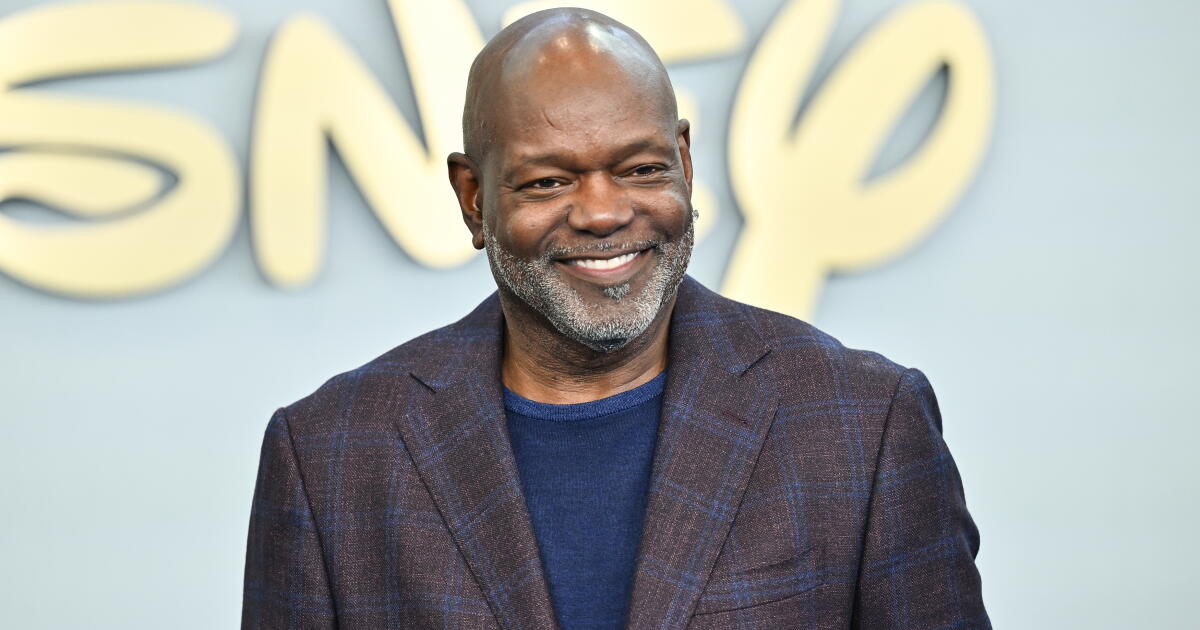
Pro Football Hall of Fame running back Emmitt Smith has been accused of taking part in a scheme that allegedly scammed $2.5 million from a Native American investment firm.
In a lawsuit filed Monday in Delaware’s Court of Chancery, a tribal owned and operated economic developmental agency for the North Carolina-based Eastern Band of Cherokee Indians claimed the former Dallas Cowboys superstar, his longtime business partner David Mosley and their real estate development and renewable energy company 4 13 Solutions Inc. borrowed the money, did not use it for its intended purpose and have not paid it back.
According to the lawsuit, Smith and Mosley convinced the tribal agency, Kituwah LLC, to help their company acquire a proposed solar energy farm in Texas.
“By using false projections and data, misrepresenting the level of interest and potential investments from other investors, making promises that they had no intention of fulfilling, and relying on the participation of other coconspirators, Smith and Mosley induced Kituwah to form a joint venture with their company, 4 13 Solutions, and to loan $2.5 million to the joint venture,” the complaint states.
“Smith and Mosley promised to use the funds to acquire an interest in a renewable energy project in Texas (‘Project Exodus’), transfer that interest back to the joint venture, and ultimately repay Kituwah’s money. But instead, they took the money and used it to improperly pay Wilson Holdings, with whom they had partnered on other ventures.”
Smith, Mosley, 4 13 Solutions, Wilson Holdings and its principal owner, Darrel Wilson, and the group’s joint venture firm, Jabez 4 10 LLC, were named as co-defendants. Representatives for Smith, Mosley and 4 13 Solutions did not immediately respond to requests for comment.
The loan came due on Feb. 1, 2024, according to the complaint, and remains unpaid despite numerous efforts to collect. Smith is accused of fraudulent inducement and breach of fiduciary duty. Seeking the return of its investment as well as interest and other costs and expenses, Kituwah says it is owed more than $3 million.
“Moreover, despite 4 13 Solutions’ representation that Project Exodus would be up and running by the end of 2024, Kituwah has not seen any evidence that Project Exodus has made any meaningful progress towards completion,” the lawsuit states.
“Kituwah commenced an investigation. It has determined that 4 13 Solutions’ representations were part of Smith’s and Mosley’s scheme to cheat Kituwah out of $2.5 million dollars. Instead of using the loan proceeds to acquire Project Exodus as promised, 4 13 Solutions used the $2.5 million to pay Wilson Holdings, apparently for money that Wilson Holdings had previously invested. Essentially, like a Ponzi scheme.”
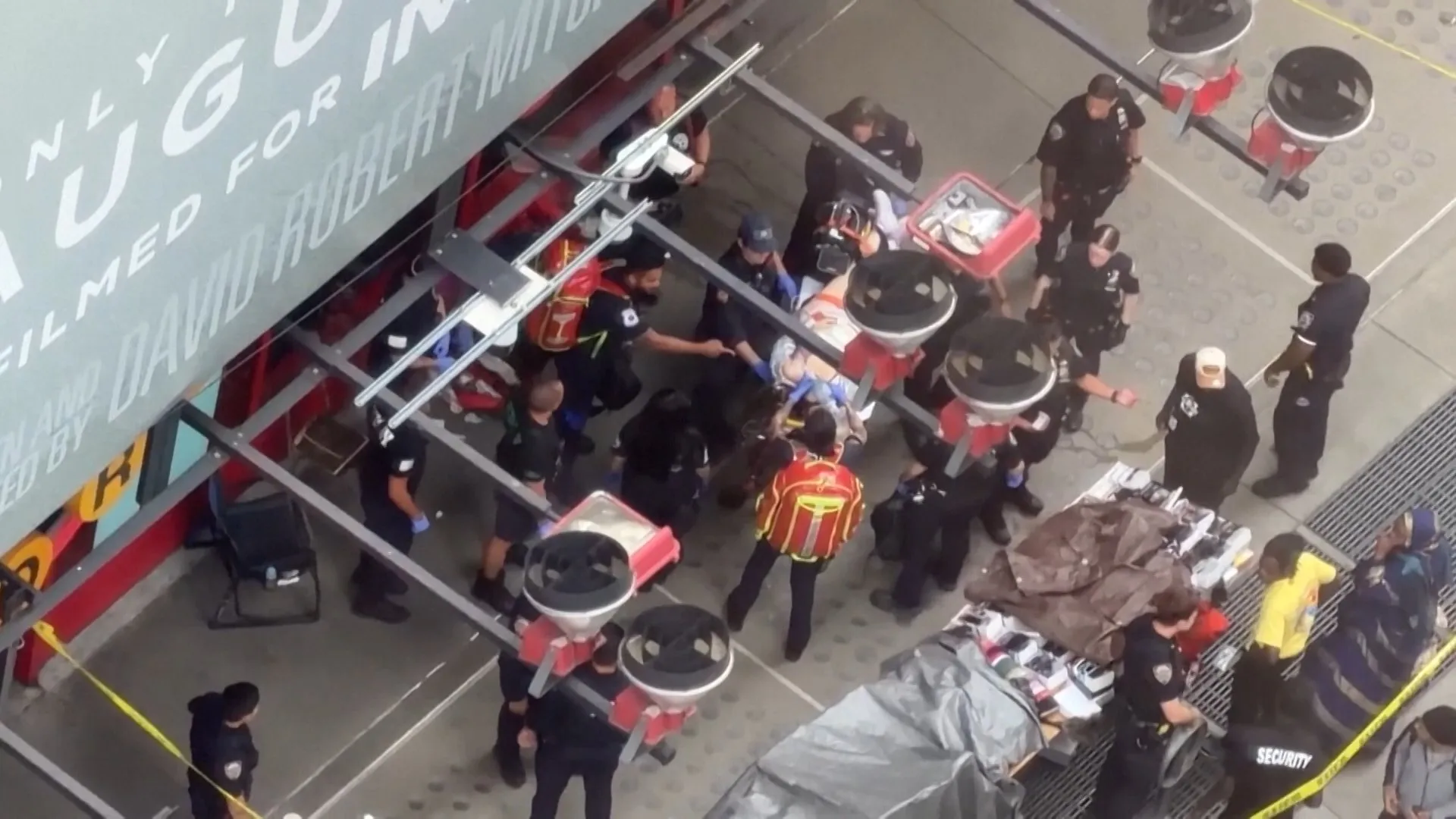
A woman has been shot dead by police in New York’s iconic Times Square. Police say the woman, who was armed with two large knives, had stabbed two people, one fatally. A warning this video could distress some viewers.

![Rescuers work at the scene following Friday's powerful blast in Athens' Plaka district, Saturday, September 26, 2026 [Yorgos Karahalis/AP]](https://i0.wp.com/www.aljazeera.com/wp-content/uploads/2026/09/AP26269443758394-1790459604.jpg?w=640&ssl=1)