Trump-appointed Ambassador Mike Huckabee calls attack in occupied West Bank a ‘despicable act of terror’.
Published On 17 Oct 202617 Oct 2026
United States Ambassador to Israel Mike Huckabee has demanded Israel prosecute and jail those responsible for the attack on Washington Post journalist Heidi Levine in the occupied West Bank.
“Attacking a female photographer is a despicable act of terror carried out by masked cowards,” Huckabee wrote on X on Saturday.
Recommended Stories
list of 3 itemsend of list
“Those who attacked unarmed reporter should spend YRS in prison,” he added. “We have called for a full investigation, arrest, and prosecution to the fullest extent of the law to whoever participated in this.”
Levine was covering Palestinians’ annual harvest of olives on Friday in the occupied West Bank when Israeli settlers brutally attacked her and several Palestinians.
Israeli settlers stormed the area, beat her and stole her passport, telephone, wallet and equipment, according to witnesses.
The perpetrators, armed with bottles and slingshots, “were kicking me for like 10 minutes, and I was trying to hold onto my cameras and my bag”, Levine said.
Jasper Nathaniel, an independent journalist who witnessed the attack, told Al Jazeera that Levine “was in very, very bad shape. She couldn’t really get up off the ground.”
American freelance photojournalist Heidi Levine lies on a gurney in the emergency room of the government hospital in Ramallah, a city in the Israeli-occupied West Bank, on October 16, 2026 [AFP]
Levine, 64, was taken to hospital after the assault in Abu Falah, northeast of Ramallah.
The American photojournalist underwent surgery on her finger, which was nearly detached from her hand, and was left with a broken rib and multiple broken vertebrae, as well as lacerations, her daughter told The Associated Press news agency.
Israeli Prime Minister Benjamin Netanyahu, who wants to shore up his pro-settlement right-wing base ahead of closely fought October 27 elections, claimed on Friday that Palestinians or “far-left” activists may have been responsible for the attack on Levine and other Palestinians.
Huckabee, a staunch ally of Israel who has sharply criticised Israeli settler attacks against Americans, did not identify the culprits as settlers after Netanyahu tried to sow doubt as to their identity.
The ambassador, appointed by US President Donald Trump, met Palestinian-Americans in the occupied West Bank town of Turmus Aya in September to hear locals’ testimony about their experiences with pogroms. In August, Huckabee called a days-long Israeli settler siege an “act of terror”.
The US State Department criticised Friday’s attack using a cautious tone on Levine’s beating, stating condemnation of “criminal violence by any party”.
WASHINGTON — President Trump’s ambassador to Greece, Kimberly Guilfoyle, resigned on Tuesday after allegations of improper conduct but insisted she’ll “vigorously defend” herself.
Trump’s administration said earlier Tuesday it had asked Guilfoyle to leave her post after she faced severe criticism over allegations she engaged in improper and possibly illegal conduct before and during her tenure in Athens.
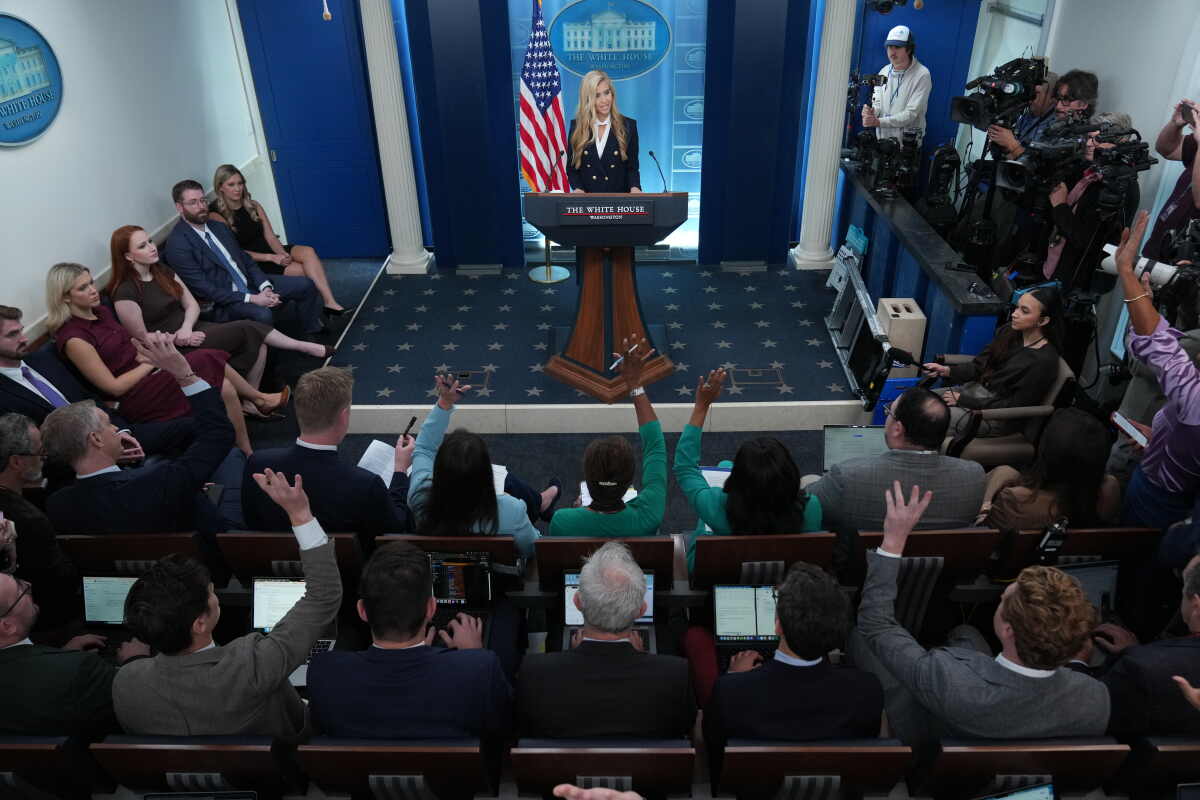
The announcement, after days of comments and speculation, came in response to a question to freshly minted White House press secretary Katie Zacharia at her first media briefing Tuesday morning. Zacharia said Guilfoyle “has been a wonderful asset to the team, and we wish her well.”
Guilfoyle’s departure comes after its possibility was previewed to the Associated Press over the weekend and Trump registered his unhappiness on Monday at reports about her alleged conduct.
“Well, we’re looking at it,” Trump told reporters at the White House when asked if he was considering firing Guilfoyle. “We’re not happy.”
Those comments came a day after the AP, citing a senior U.S. official, reported that Trump and Secretary of State Marco Rubio are “extremely pissed off” by Guilfoyle’s reported conduct and would likely decide on her future this week.
In a series of stories dating to late last month, The Wall Street Journal has reported questionable conduct by Guilfoyle, including an alleged threat to a host country official, accepting improper gifts and services and offering to use her influence inside the Republican administration in return for the payment of a large credit card bill.
White House press secretary Katie Zacharia speaks with reporters in the James Brady Press Briefing Room at the White House, Tuesday, Oct. 13, 2026, in Washington.
(Julia Demaree Nikhinson / Associated Press)
Guilfoyle addressed the allegations directly in a post on X, saying, “These allegations are false, and I intend to vigorously defend my name, my reputation, and my integrity.”
“I have dedicated my professional life to fighting for justice, standing up for what is right, and defending the values that make America exceptional,” she said. “I will not allow false accusations to define my decades of public service.”
In a statement released late Sunday, Guilfoyle’s lawyers denied she had done anything wrong and claimed that the money she was seeking from a Trump donor was payment for services — public appearances and speaking engagements that predate her ambassadorial nomination — that had not been paid.
The lawyers, David Schwartz and Jesse Binnall, also rejected allegations of impropriety related to Guilfoyle’s travel on private planes, saying that before every such trip she “sought, obtained and followed State Department guidance and followed the Department’s travel regulations.”
The allegations began surfacing weeks ago
After defending Guilfoyle following the first report, Rubio has declined to comment publicly on the growing allegations. Last week, Rubio said: “Our ambassador has been a strong ambassador here.”
But after another report appeared later, Rubio — speaking Thursday before leaving Athens — berated journalists for asking about the allegations. He said that he didn’t know if they were true and that he would not respond if he could not confirm them.
“You guys walk around thinking that because some source told you something and you reported it, it’s the gospel. It’s not the gospel. It’s not the gospel for me. That’s not the way we do things,” Rubio said at the foot of his plane as Guilfoyle, who was there to see him depart, looked on.
A second U.S. official, who also spoke on the condition of anonymity to discuss personnel matters, said the State Department’s inspector general was looking into the allegations, which first began surfacing in the Journal late last month and have since multiplied.
The second official could not say if a formal IG probe had begun. Inspectors general often conduct informal inquiries into complaints against staffers, and many times those inquiries do not result in a full-on investigation, which can result in disciplinary action up to and including dismissal.
There was no immediate response to Zacharia’s statement from the Greek government or Cabinet members.
Ahead of Tuesday’s announcement, Greek opposition parties had called on the Foreign Ministry to summon Guilfoyle to respond to the allegations made against her. “This, most importantly, is an issue of national dignity,” Sia Anagnostopoulou, a former deputy foreign minister, said in parliament Friday. Foreign Minister Giorgos Gerapetritis responded that Guilfoyle had been treated “the same way as every other ambassador” and argued that an official summons had not been necessary.
Hours earlier, Guilfoyle had posted photos of her meeting this week with the Spanish ambassador to Athens as well as birthday wishes for Lara Trump, the president’s daughter-in-law, accompanied by Dua Lipa’s “Dance the Night,” from the 2023 soundtrack of the movie “Barbie.”
Democrats call for an investigation
The top two Democrats on the House Foreign Affairs and Senate Foreign Relations committees, Rep. Gregory Meeks of New York and Sen. Jeanne Shaheen of New Hampshire, as well as the ranking member on the House Committee for Oversight and Government Reform, Rep. Robert Garcia, D-Calif., have already called for an investigation into Guilfoyle.
Since late September, the Journal has detailed numerous accounts of questionable conduct by Guilfoyle. Its first report said that she had told guests at a reception that the United States could undermine the Greek government if it chose to, promoted the business interests of one particular Greek construction and energy company and allowed its lobbyist into private diplomatic meetings.
While Rubio was in Athens, the Journal reported — citing text messages — that Guilfoyle had asked a Trump donor and supporter to pay a $100,000 credit card bill just before her confirmation hearing, promising him access to administration officials if he did.
The Journal then reported that Guilfoyle had been enraged about not being invited to a Greek-themed event at the World Economic Forum in Davos, Switzerland, earlier this year and demanded to attend while boasting about luxury travel to France with energy company executives.
Another report, from the British tabloid The Daily Mail, said that Guilfoyle had alienated staff at the U.S. Embassy in Athens and had pushed the bounds of behavior appropriate for the top representative of the U.S. government to Greece.
Guilfoyle is a former Fox News Channel host and California prosecutor who was once married to California’s Democratic Gov. Gavin Newsom and was engaged to Trump’s son Donald Jr.
Lee writes for the Associated Press. AP journalist Derek Gatapoulos in Athens contributed to this report.
Kimberly Guilfoyle has faced mounting allegations, including offering access to Trump officials in exchange for money.
Published On 13 Oct 202613 Oct 2026
United States President Donald Trump’s administration has asked the US ambassador to Greece, Kimberly Guilfoyle, to resign following a series of allegations of misconduct, including claims that she offered a political donor access to senior administration officials in exchange for money.
“We have asked Ambassador Guilfoyle to resign,” White House press secretary Katie Zacharia told reporters on Tuesday. “She has been a wonderful asset to the team, and we wish her well.”
Recommended Stories
list of 4 itemsend of list
The announcement comes after weeks of damaging reports about Guilfoyle’s conduct.
According to The Wall Street Journal, Guilfoyle asked a Trump donor to cover a $100,000 credit card bill shortly before her congressional confirmation hearing, promising him access to administration officials in return.
The newspaper also reported that she told guests at a reception that she could use US influence to undermine the Greek government, promoted the interests of a Greek construction and energy company and allowed one of its lobbyists to attend private diplomatic meetings.
Guilfoyle’s lawyers have denied any wrongdoing, saying the money she sought was payment for previous speaking engagements and public appearances that she had not received.
Trump had signalled on Monday that he was considering removing her from the post.
“Well, we’re looking at it,” he told reporters. “We’re not happy.”
Secretary of State Marco Rubio initially defended Guilfoyle, calling her a “strong ambassador,” but later declined to comment on the allegations and criticised reporters for asking about them.
Guilfoyle is a former Fox News host and California prosecutor. She is the former wife of California Governor Gavin Newsom and was previously engaged to Trump’s eldest son, Donald Trump Jr.
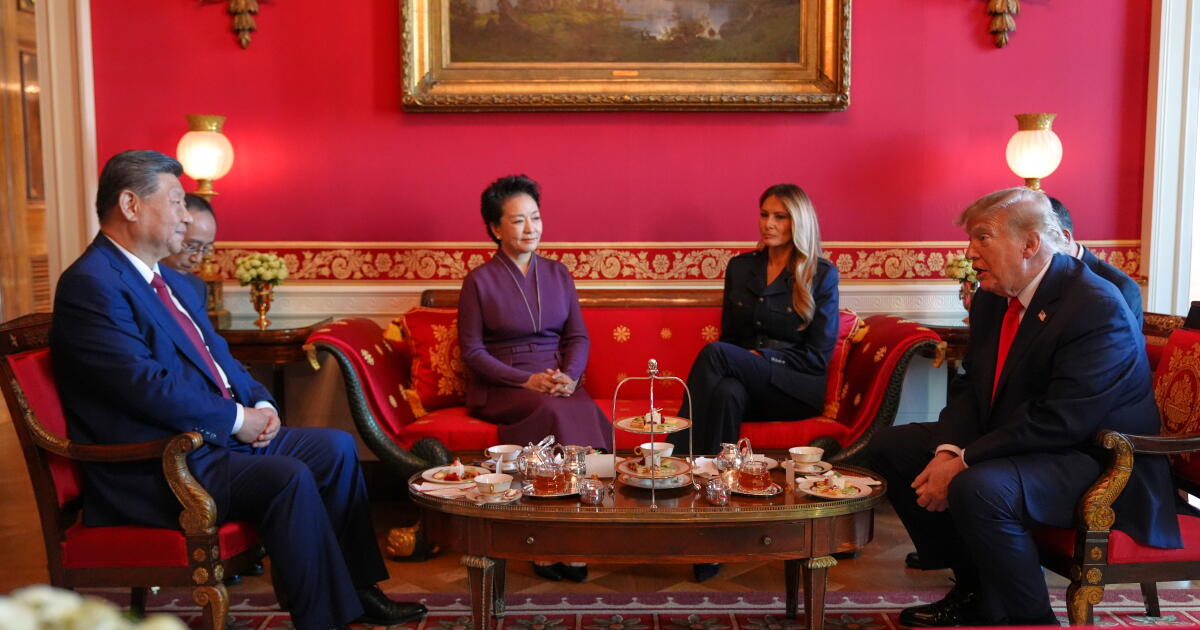
WASHINGTON — President Trump asked Chinese President Xi Jinping if he wanted to buy weapons from the United States, the U.S. ambassador to China said.
David Perdue said Trump raised the prospect of the arms sales from the U.S. to its ascendant geopolitical rival, an unlikely offer that if consummated would upend generations of U.S. policy toward China and Taiwan and expose U.S. technology to a potential foe. Perdue, speaking to Shannon Bream on Fox News Channel’s “Fox News Sunday” days after Trump hosted Xi for a state visit in Washington, didn’t specify when the offer was made.
Perdue said Sunday that Trump, a Republican, was downplaying longstanding U.S. arms sales to Taiwan — which have drawn protest from Beijing for years — by couching it as just one of many sales Washington makes around the world — and even asking Xi if he’d be in the market for U.S. weaponry.
Bream had cited concerns from Republican and Democratic lawmakers over delayed aid packages and weapons orders to Taiwan, the self-ruled democracy that seeks to defend itself from China’s threat to invade the island. Bream asked if the U.S. is denying arms to Taiwan to appease the Chinese president, who visited Trump last week.
Perdue pushed back on the suggestion, stating that Trump “is as strong on Taiwan as I’ve ever seen anybody” and has sold it plenty of weapons. Perdue also said Trump and Xi continue to talk about future U.S. weapons sales to Taiwan.
“But President Trump continues to say, ‘Hey, we sell arms to other people around the world,’” Perdue said. “He actually asked President Xi, would he like to buy some, at one point.”
The U.S. is bound by its own laws to provide Taiwan with the means to defend itself. While not recognizing Taiwan as a country, the U.S. is the island’s strongest informal backer and arms provider. But multiple U.S. leaders have left ambiguous whether they would commit military force to defend the U.S. ally should China invade.
China has pressed Washington to halt the arms sales, most prominently during a previous summit in May between Trump and Xi in Beijing. After that meeting, the United States paused the sale of a record-breaking $14 billion package — and Trump described arms sales to Taiwan as a “very good negotiating chip” with China.
In their private talks at the White House last week, Xi pressed Trump to oppose Taiwan independence, according to Chinese state media.
In Beijing, China’s foreign ministry spokesperson Guo Jiakun did not confirm Perdue’s remarks when asked about the matter on Monday. But he told reporters that China has always strengthened its national defense capabilities based on its needs and is committed to maintaining world peace and stability.