
Alzheimers

South Korean team uses brain oxidant to activate Alzheimer’s prodrug

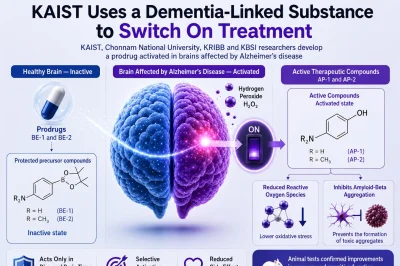
An AI-generated illustration depicts research into a disease-activated prodrug for Alzheimer’s disease. Data from KAIST. Graphic by Asia Today and translated by UPI

July 2 (Asia Today) — South Korean researchers have developed an experimental prodrug that uses elevated hydrogen peroxide in brains affected by Alzheimer’s disease as a signal to activate treatment, KAIST said Thursday.

The compounds remained largely inactive under healthy brain conditions but became active therapeutic agents after encountering hydrogen peroxide associated with Alzheimer’s pathology. The researchers confirmed their effects in animal experiments.

The research was led by Mi Hee Lim, a professor in KAIST’s Department of Chemistry. The university worked with research teams led by Min Geun Kim of Chonnam National University, Chul Ho Lee and Kyung Sim Kim of the Korea Research Institute of Bioscience and Biotechnology and Young Ho Lee of the Korea Basic Science Institute.

A prodrug is an initially inactive compound that converts into an active treatment only under specific conditions in the body.

The research team designed its prodrugs to activate only when exposed to hydrogen peroxide, a reactive oxygen species found at elevated levels in brains affected by Alzheimer’s disease.

Hydrogen peroxide has generally been treated as a harmful substance that should be removed because it can damage cells. The researchers instead used it as a biological signal to switch on the treatment.

The two prodrugs, called BE-1 and BE-2, showed little reaction under healthy brain conditions. When exposed to hydrogen peroxide in an Alzheimer’s-like environment, they converted into active compounds known as AP-1 and AP-2.

The activation process reduced hydrogen peroxide and other reactive oxygen species. It also interfered with the aggregation of amyloid beta, a protein that can accumulate in the brain and form toxic clumps associated with Alzheimer’s disease.

Advanced analytical tests showed that the activated compounds altered the structure of amyloid beta and prevented it from developing into larger aggregates, the researchers said.

Tests using mice with Alzheimer’s-like conditions showed that the prodrugs crossed the blood-brain barrier, which regulates which substances in the bloodstream can enter the brain.

The compounds then converted into their active forms inside the animals’ brains. The findings demonstrated that the prodrugs could reach their intended target and respond to the disease-related environment.

The approach differs from treatments designed to act continuously against a single protein. Instead, the KAIST-led strategy uses conditions within diseased tissue to activate treatment only where it is needed.

Researchers said this targeted activation could provide a strategy for increasing therapeutic effects while limiting unnecessary activity in healthy tissue. KAIST said the technology could also have potential applications in treatments for Parkinson’s disease and other neurodegenerative disorders.

“This study is significant because it uses hydrogen peroxide, which had previously been regarded only as something that should be removed, as a signal that activates the drug,” Lim said.

“The technology, which activates drugs only in diseased tissue, could become a new platform for treating complex diseases such as Alzheimer’s more safely and effectively,” she said.

— Reported by Asia Today; translated by UPI

© Asia Today. Unauthorized reproduction or redistribution prohibited.

Original Korean report: https://www.asiatoday.co.kr/kn/view.php?key=20260702010001077

Source link

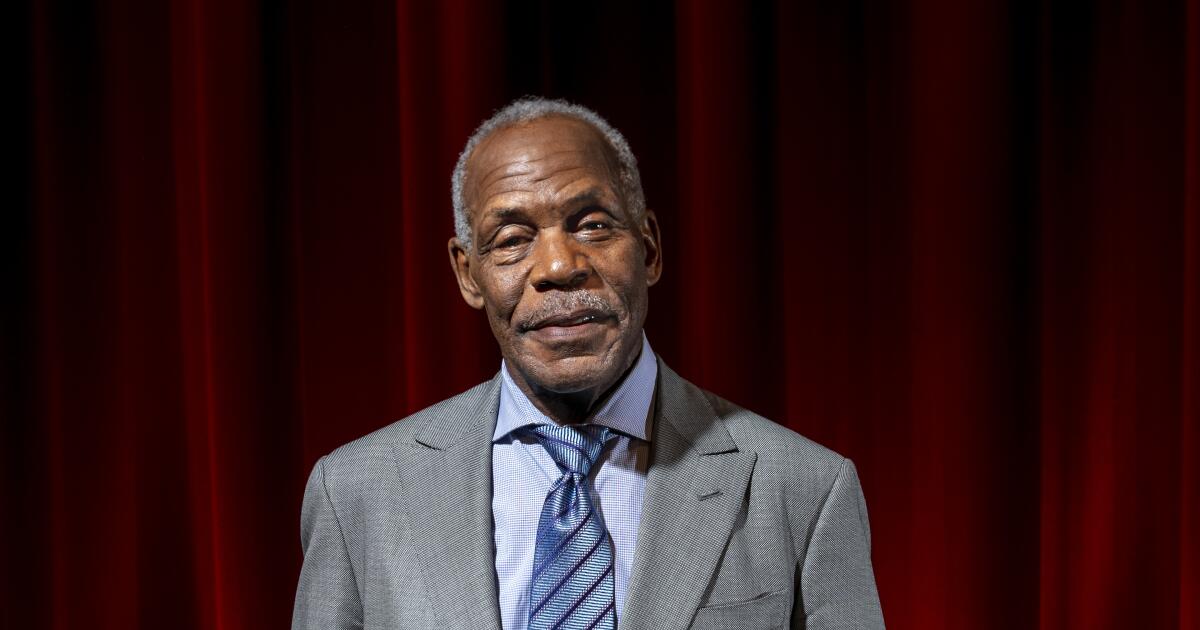
Danny Glover reveals Alzheimer’s diagnosis, says family has his back

“Lethal Weapon” star Danny Glover has revealed he has been living with Alzheimer’s disease for years.

In an interview with NBC’s Lester Holt that aired on the “Today” show on Wednesday, the 79-year-old actor and activist opened up about living with the disease. According to People, he received his diagnosis in 2023, which was not long after he was awarded an honorary Oscar in 2022.

“I could live with it, in a sense,” Glover says of his condition, which has been affecting his movement, speech and memory. “I’m sure as it advances, things are going to be different and changing.”

A neurodegenerative disease, Alzheimer’s is a type of dementia that affects memory, thinking and behavior and worsens over time, according to the Alzheimer’s Assn. Holt reports that more than 7 million Americans over 65 are living with Alzheimer’s, with Black men suffering at a rate double the national average.

Glover and his family say the Hollywood icon is sharing his story now to “have ownership of his life” and to help remove the stigma around the disease.

“They’ve got my back,” Glover says of his family’s support.

Besides his portrayal of L.A. police Det. Roger Murtaugh in the “Lethal Weapon” film series, Glover is known for roles in movies including “Places in the Heart” (1984), “The Color Purple” (1985), “To Sleep With Anger” (1990), “Angels in the Outfield” (1994), “Dreamgirls” (2006) and “The Last Black Man in San Francisco” (2019). He’s also been a vocal advocate for social justice and humanitarian causes both in the U.S. and abroad.

He was the recipient of the Academy of Motion Picture Arts and Sciences’ Jean Hersholt Humanitarian Award in 2022.

“I don’t feel like it’s the end of my life,” he said in his interview with People about living with Alzheimer’s. “There’s work to do.”

Source link

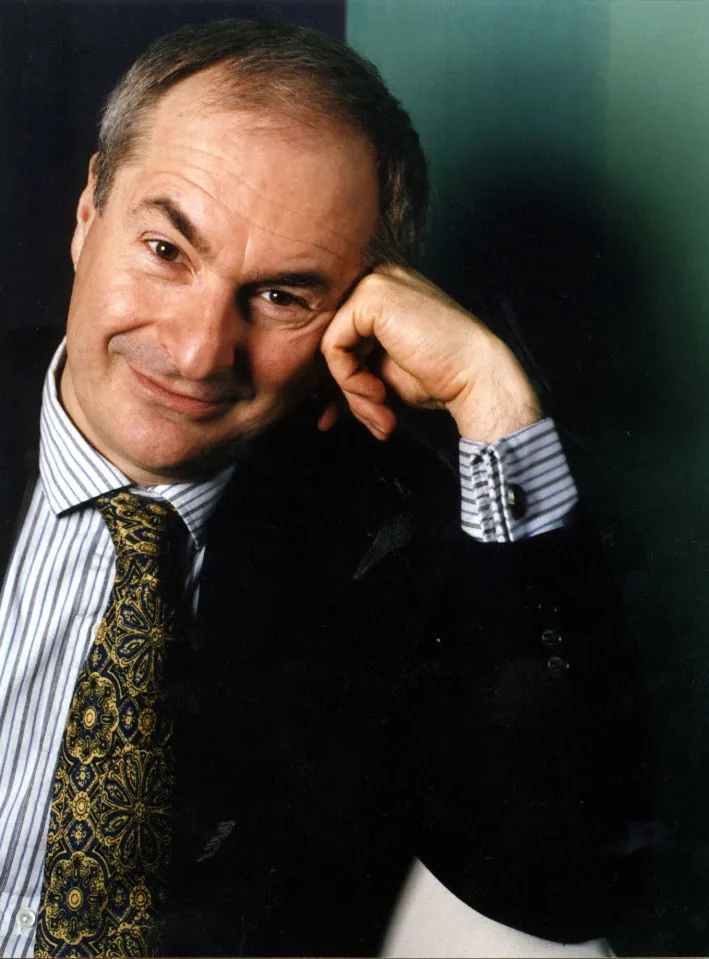
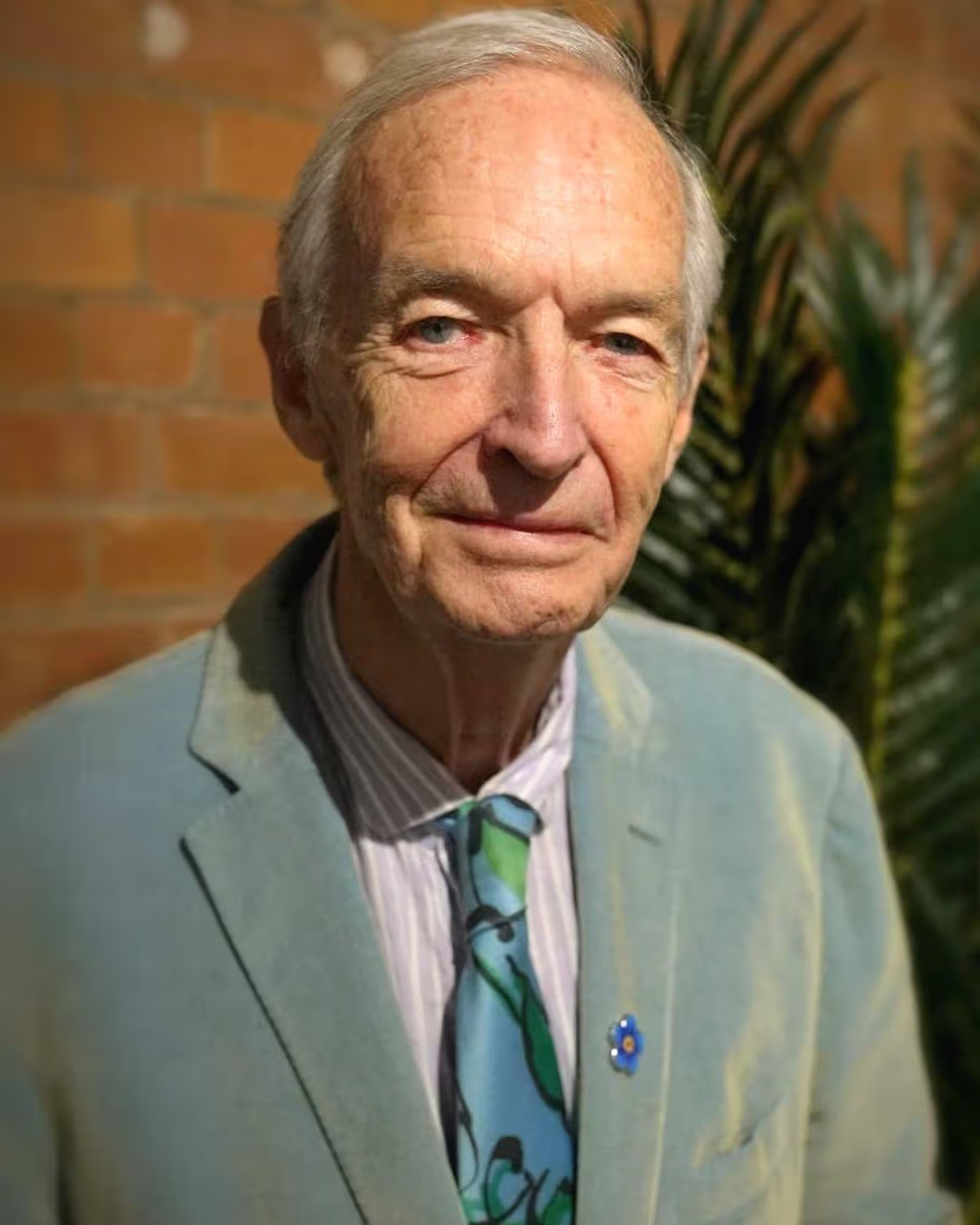
Jon Snow’s wife shares heartbreaking admission after star’s Alzheimer’s diagnosis

The news presenter has shared his Alzheimer’s journey in his new Channel 4 documentary

Jon Snow emotionally signs off final Channel 4 News show

Jon Snow’s wife has opened up about his health condition during a documentary about the star’s life.

The 78-year-old broadcaster has been flooded with support in recent weeks after sharing he was diagnosed with Alzheimer’s back in 2023.

Jon was the face of Channel 4 News from 1989 to 2021 and became one of the nation’s most trusted broadcasters before he decided to step down from his role after 32 years to focus on ‘longer-form projects’.

On Saturday evening (June 20), Jon shared his journey in an insightful Channel 4 documentary, Jon Snow: A Last Big Story, in association with the Alzheimer’s Society.

Jon’s wife, Dr Precious Lunga, starred alongside the veteran journalist on in the show. The 51-year-old is an epidemiologist and entrepreneur from Zimbabwe who left the country at 17 to study in the UK.

She graduated from the University of Edinburgh in 1998 with a degree in neuroscience, before completing a PhD in neuroscience at the University of Cambridge in 2003.

The couple first met in 2001 on the Caribbean island of Mustique, where they tied the knot nine years later in 2010.

They welcomed a child together via surrogacy in 2021, with Jon also having two children from his previous marriage.

In one scene of the documentary, the camera followed Jon into a doctor’s appointment, where he was accompanied by Precious, and informed that his health has been slowly declining.

Precious responded to the doctor by adding that she felt Jon’s health had recently changed, before opening up about his initial diagnosis.

“When we received a diagnosis, people were writing Jon off, and that’s when I realised how stigmatised Alzheimer’s is, and it made me so angry actually”, Precious explained.

“This is a progressive disease, but you can have Alzheimer’s and still will be a valuable member of society to contribute, if your loved ones are there to help you navigate it.”

Speaking about what the future holds, Precious bravely confirmed: “So, I want to give him as good a life as I can.”

Speaking about his diagnosis in the film, Jon says: “At the beginning I wanted to hide it, there’s so much prejudice. Any sort of hint of mental decay, you’re sort of dead.

“There are moments when it pops up, but it’s not an all-day, every-day condition, and that’s what I cling onto.”

He added: “I’ve witnessed a great deal, I hope I’ve learned something – but I’ve still got a huge amount to learn. We all have. There’s still more to do.”

Jon Snow: A Last Big Story is streaming now on Channel4.com

Source link

Jon Snow ‘living quietly’ out of spotlight months on from making Alzheimer’s documentary

The award-winning journalist takes centre stage one last time in an extraordinary new film made for Channel 4

Former newsreader Jon Snow Is now “living a quieter life” months on from filming a documentary with Channel 4 about having Alzheimer’s disease.

The 78-year-old cancelled a planned appearance on a panel at the Sheffield Documentary festival on Friday which coincided with a screening of Jon Snow : A Last Big Story which shows him navigating life with Alzheimer’s.

The film, which shows the beginnings of his memory fading, actually finished filming last year. Asked how he was now, the Executive Producer Ben de Pear who also worked with Jon for many years on Channel 4 News said: “He has been in Zimbabwe(on holiday) and I spoke to him recently. He was his usual self, he was feisty, funny and really excited about the film coming out. Jon is living a quieter life but I think he is still interested and engaged in the world and still fascinated by people. When he goes to the supermarket he still ends up speaking to people for 20 minutes each.”

On the original plan of him being at the event in person, Ben added: “To be honest some days it is good and he could have been on stage, we could have had a discussion and some days it’s worse. That is the nature of the disease.” He told the audience that Jon “sent his love” before the screening began.

Ben and director, Laura Warner also spoke about the unusual circumstances around making the emotional film and then showing it to Jon and his wife, Dr Precious Lunga.

Laura said she would start each day explaining who she was and what film she was making to make sure Jon was still happy. She added: “Every day we would have to re-consent Jon and he would ask why there were cameras and we would explain.

“He was extremely engaged and leading the story. But there would come a time every day, around about sort of sunset, I think it is called sundowning where Jon would really start to struggle. The cameras went down at that point every day and we would look after him.”

On the final edit, Laura recalled: “Jon and Precious watched it several times in terms of giving it send off. It was really important to Precious that he viewed it by himself the first time, so he wasn’t influenced by her reaction too it or anyone else’s.

“He had a really emotional reaction to it because I think it was the first time he had seen himself with the condition.”

Ben added: “Precious loves the film, she thinks it is really important.”

The film also sees Jon discover a news story whilst on holiday in 2025, which leads an investigation into a Zambian community whose land and water were impacted by a mining disaster.

As the Mirror previously reported, he speaks in the film about his own mortality, and seems happy with the life he has.

Jon says: “A strange old business life. I had a good innings of it. It’s understandable, you can be worried about death, but to be worried about growing older is irrelevant. It’s absurd. How old is older? You’re going to die tomorrow or the next day. Stop worrying and get on with it.”

His wife Precious says of the film: “I want it to be a story of love, laughter, acknowledging that times are hard. I don’t shy away from the fact that it’s hard caring for someone with Alzheimer’s. But we can also be on the lookout for opportunities that would lessen that burden. And yeah we do that by having our little adventures.”

* Jon Snow: A Last Big story will be available to watch and stream on Channel 4 on Sat June 20 at 8pm.

Like this story? For more of the latest showbiz news and gossip, follow Mirror Celebs on TikTok, Snapchat, Instagram, Twitter, Facebook, YouTube and Threads.


Source link