
Alzheimer

‘Miracle on the Hudson’ pilot Sullenberger announces Alzheimer’s diagnosis

Chesley “Sully” Sullenberger, the retired US Airways captain known for the “Miracle on the Hudson,” testifies during a House Transportation Subcommittee hearing in Washington, D.C., on June 19, 2019. The pilot announced Tuesday that he has Alzheimer’s disease. File Photo by Kevin Dietsch/UPI | License Photo

July 14 (UPI) — Chesley “Sully” Sullenberger, the pilot who safely landed an airliner in New York City’s Hudson River in 2009, announced Tuesday that he’s been diagnosed with Alzheimer’s disease.

He revealed the news in a post to his personal website. He described the condition as “the unwanted visitor at the door.”

“I recently found out that I have been diagnosed with Alzheimer’s Disease,” he wrote. “It is early stage. For now, this means a name may not come easily to me, I forget a story I have recently told, or I don’t sleep as well, but I am in the beginning of this long journey.”

Sullenberger was the pilot of US Airways Flight 1549, which made a safe emergency landing in the Hudson River after striking a flock of birds that disabled the plane’s engines. Aviation officials and the plane’s passengers credited Sullenberger with guiding the Airbus A320 safely to the surface of the water. All passengers and crew members aboard the flight survived, prompting observers to describe the incident as the “Miracle on the Hudson.”

In addition to working as a commercial airline pilot, Sullenberger served in the U.S. Air Force, an accident investigator and was the U.S. ambassador to the Council of the International Civil Aviation Organization.

He said the diagnosis has challenged what it means to live an act of service.

“And the answer is to speak up. It is my hope that by sharing this, other families living in the shadows with this disease will feel they too can step forward,” he said Tuesday.

“Over the years, when people would ask about the successful outcome of Flight 1549, I would say that ‘courage can be contagious,’ and on that day it helped everyone band together to get everyone off that airplane successfully. Now we need that courage to battle this disease. I am now part of a larger community with many of you, and we will be courageous together.”
Source link

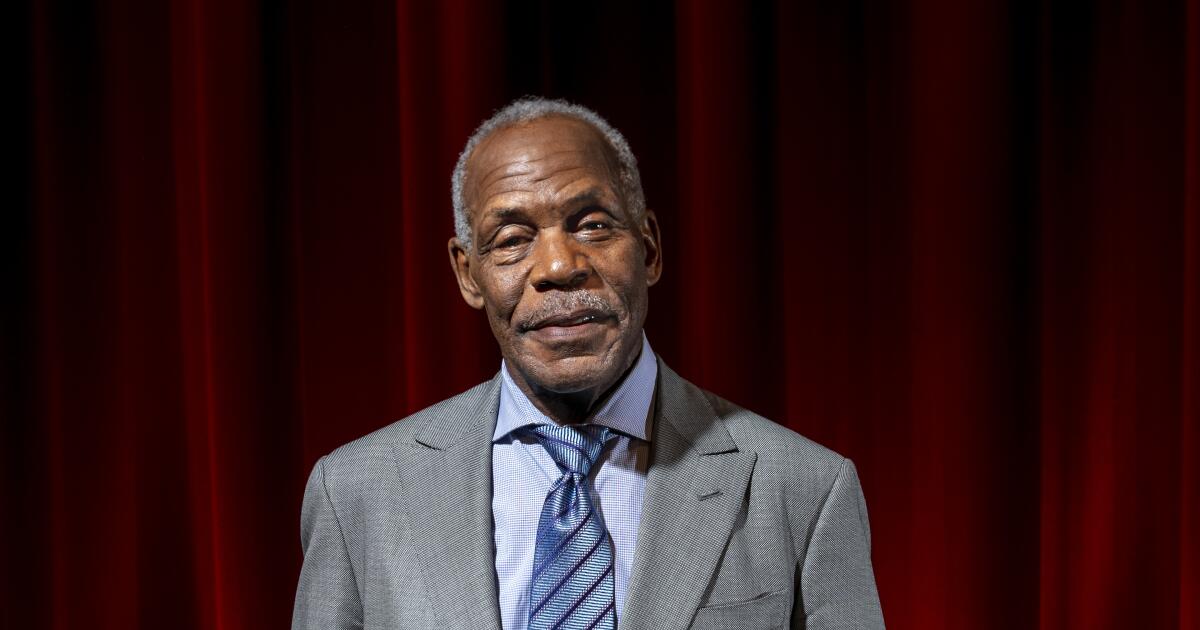
Danny Glover reveals Alzheimer’s diagnosis, says family has his back

“Lethal Weapon” star Danny Glover has revealed he has been living with Alzheimer’s disease for years.

In an interview with NBC’s Lester Holt that aired on the “Today” show on Wednesday, the 79-year-old actor and activist opened up about living with the disease. According to People, he received his diagnosis in 2023, which was not long after he was awarded an honorary Oscar in 2022.

“I could live with it, in a sense,” Glover says of his condition, which has been affecting his movement, speech and memory. “I’m sure as it advances, things are going to be different and changing.”

A neurodegenerative disease, Alzheimer’s is a type of dementia that affects memory, thinking and behavior and worsens over time, according to the Alzheimer’s Assn. Holt reports that more than 7 million Americans over 65 are living with Alzheimer’s, with Black men suffering at a rate double the national average.

Glover and his family say the Hollywood icon is sharing his story now to “have ownership of his life” and to help remove the stigma around the disease.

“They’ve got my back,” Glover says of his family’s support.

Besides his portrayal of L.A. police Det. Roger Murtaugh in the “Lethal Weapon” film series, Glover is known for roles in movies including “Places in the Heart” (1984), “The Color Purple” (1985), “To Sleep With Anger” (1990), “Angels in the Outfield” (1994), “Dreamgirls” (2006) and “The Last Black Man in San Francisco” (2019). He’s also been a vocal advocate for social justice and humanitarian causes both in the U.S. and abroad.

He was the recipient of the Academy of Motion Picture Arts and Sciences’ Jean Hersholt Humanitarian Award in 2022.

“I don’t feel like it’s the end of my life,” he said in his interview with People about living with Alzheimer’s. “There’s work to do.”

Source link