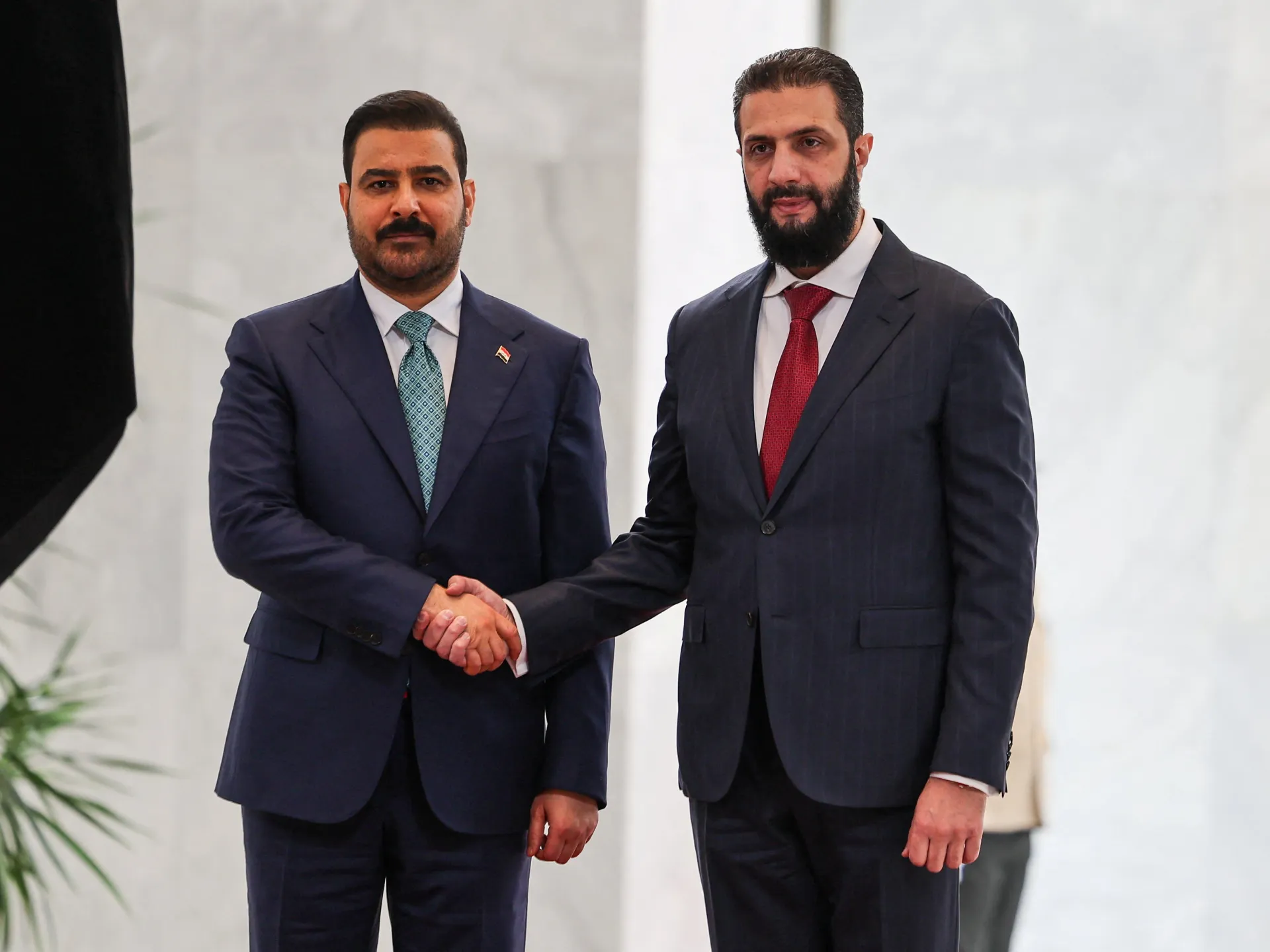
Iraq’s al-Zaidi talks to Trump as Baghdad seeks to stay out of war on Iran | US-Israel war on Iran News
Call comes as Iraq’s foreign minister urges armed groups not to join any Iranian retaliation, warning it would be disastrous for Iraq.
Published On 6 Nov 2026
Iraqi Prime Minister Ali al-Zaidi has told the United States that Baghdad will not let its territory be used to attack neighbouring countries, as his foreign minister warned that a new war on Iran would be a “disaster” for Iraq.
Al-Zaidi spoke to US President Donald Trump over the phone on Thursday, according to his office, as diplomatic efforts intensify to avert renewed US attacks on Iran.
Recommended Stories
list of 3 itemsend of list
The two men “discussed the evolving situation in the region, security developments, and prospects for the next phase”, al-Zaidi’s office said.
The prime minister reaffirmed Iraq’s call “for respect for the sovereignty of states and for Iraqi territory not to be used as a launching point for attacks against neighbouring countries”, it added.
He also stressed the need for diplomacy and dialogue to safeguard the region’s security and stability, it said.
Iraq, which neighbours Iran, has struggled to maintain a balancing act between US and Iranian interests since Trump launched the war on Iran in February.
Since taking office in May, al-Zaidi has prioritised the disarmament of all fighter groups in the country, including several powerful pro-Iran groups that have launched attacks in support of Iran across the region during the war.
Foreign Minister Fuad Hussein told Dijlah TV on Thursday that the potential of renewed US military attacks against Iran is “not a secret” and warned Iraqi armed groups against joining in any Iranian retaliation.
“Pushing Iraqi society into the war will lead to a disaster,” he said. “We are not prepared for war. Neither Iraqi society nor the armed forces are prepared for war.”
Hussein said Iraq had been turned into a battlefield after the US struck Iran, with the country coming under attack from both the US and Iran, as well as from armed groups inside Iraq.
“We are not part of any axis, and we do not want to let the Iraqi arena be turned into a battlefield,” he said. “We have good relations with the US and with our neighbour Iran… We need a clear policy that we are not a part of the war, and we do not want to be a part of the war.”
Since the war began, Iraq has lost more than $60bn in oil revenues, as about 90 percent of its oil exports normally pass through the Strait of Hormuz and were largely cut off when Tehran closed the waterway.
Oil accounts for about 90 percent of Iraq’s federal budget.
Since then, Iraq has been one of the few countries that have been granted exemption by Iran to pass freely through the Strait of Hormuz.