alternative

‘We found a charming alternative to touristy Bath’: readers’ favourite UK trips | United Kingdom holidays

A magnificent medieval cathedral in Somerset

“So this is where Officer Nick Angel [Simon Pegg] chased that swan.” As a fan of Hot Fuzz, I was excited to explore the cathedral city of Wells in Somerset, where much of the film was shot. This charming, compact and walkable city is awash with medieval architecture and magnificent buildings, such as the gothic cathedral, with one of the oldest working clocks in the UK (late 14th century) and the Bishop’s Palace and Gardens. Within easy reach of the Mendip Hills, Cheddar Gorge and the Wookey Hole Caves, Wells makes for a low-key alternative to tourist-soaked Bath.
Alison

Wild camping in the west Highlands

Sanna Bay. Photograph: Jox

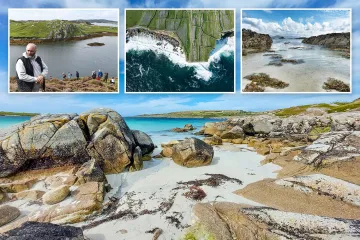
The Ardnamurchan peninsula, which includes the most westerly point in mainland Britain at Corrachadh Mòr, is stunning. With my partner, I spent a night wild camping by the shell-sand beach at Sanna Bay, surrounded by the machair grassland and wildflowers. It was absolutely stunning. We walked to Ardnamurchan lighthouse, spotted some dolphins, and swam in the sea in cold but crystal clear waters. The simplicity of the trip and not having to check in at any accommodation was a plus. I would recommend it to everybody.
Jox

Profile

Readers’ tips: send a tip for a chance to win a £200 voucher for a Coolstays break

Show

Guardian Travel readers’ tips

Every week we ask our readers for recommendations from their travels. A selection of tips will be featured online and may appear in print. To enter the latest competition visit the readers’ tips homepage

Thank you for your feedback.

Cinematic light and seabirds in East Lothian

A view of Bass Rock from North Berwick. Photograph: Westend61/Getty Images

North Berwick in East Lothian always feels like a proper holiday without needing a passport. Take the early train, walk straight down to the beach, then continue past the harbour towards the Scottish Seabird Centre, where the light over the Firth of Forth changes by the minute. If the tide is out, the views are cinematic with the sand stretching so wide. On clear early evenings Bass Rock turns gold and you wonder how somewhere so close to Edinburgh can still feel quietly remote.
Michelle

Rock-pooling and picnics in Devon

The beach at Beer. Photograph: Guy Edwardes/Alamy

I visited Beer in east Devon last summer with three friends, all of us women in our 40s, and our six children aged between four and 11. It couldn’t have been a better choice. We stayed at the lovely large YHA hostel, which was relaxed, welcoming and ideal for families. The kids were charmed by the stream running through the village and spent hours rock-pooling on the beach, discovering tiny crabs and sea anemones. We also enjoyed the clifftop walk to Seaton with its incredible views. Don’t miss Woozie’s Deli for fresh treats – perfect for picnics by the sea.
Tara

A cycling tour of the Northumberland coast

Dunstanburgh Castle. Photograph: Ashley Cooper/Getty Images

We cycled the Northumberland coast from Newcastle to Berwick over four days. We visited Dunstanburgh and Bamburgh, two of the most impressive castles in the country, the mining museum at Woodhorn and the RNLI Grace Darling Museum in Bamburgh, and swam from huge, empty beaches. Cycling over the causeway to Lindisfarne was the highlight, an incredible place to visit and awesome watching the road disappear under the sea (after we’d made it back to the mainland).
Ian

Loch Èireasort on Lewis. Photograph: Nagelestock.com/Alamy

Ravenspoint community hostel on Loch Èireasort, south of Stornoway and home to nesting sea eagles and sea otters, feels remote even by Outer Hebridean standards. I shared the hostel kitchen with a father and daughter cycling the Hebridean Way, and a psychiatrist who seemed genuinely quite unsettled by the vastness of the landscape stretching all around. The hostel has a rich history – it is owned by the Co-Chomunn na Pairc, one of the original community co-operatives established in the 1970s, and the profits from it, the shop and tea rooms all go back into keeping vital services open for visitors and locals alike year-round.
Eleanor

Happy days in West Yorkshire’s Happy Valley

Hebden Bridge. Photograph: Kelvin Jay/Getty Images

Sharing my obsession with Happy Valley, my teenage son agreed to a long weekend in Hebden Bridge. Armed with a list of filming locations, we scouted around Sowerby Bridge and Hebden, getting a buzz from the scenes we recognised. We climbed up to Heptonstall to visit Sylvia Plath’s grave, caught a film at the independent Picture House, and hiked along the river and on to the moors beyond Hardcastle Crags. An early morning run along the canal and the best pizza in town topped it off.
Lucy

Cliffs, castles and chips in Ayrshire

Culzean Castle. Photograph: Iain Masterton/Alamy

Ayrshire is beautiful, bucolic, full of family-friendly activities and often overlooked by Munro-baggers heading north to the Highlands. It has excellent local produce, coastal splendour and bountiful historic attractions. Start at Dumfries House with its marvellous gardens, enormous treetop adventure area and interactive water play (much of it free!). Visit the ruins of clifftop Dunure Castle, then stroll along the sandy Croy Bay to Culzean Castle, with its own gardens, play area and spectacular views of Arran and Ailsa Craig. Then pootle up to the Coo Shed for fab local ice-creams, before rounding off your day with some outstanding fish and chips from the Wee Hurrie on Troon harbour.
Dan Ashman

A village idyll in Snowdonia

Fairy Falls near Trefriw. Photograph: Alamy

My wife and I went for a weekend break in Trefriw on the River Crafnant in north Wales. It’s a peaceful village with lively pubs. We stayed at the Fairy Falls hotel, a perfect base for exploring the surrounding river and mountain walks, and for viewing the cascades.
Seamus

Winning tip: Hadrian’s Wall by bus and train

Milecastle 39 on Hadrian’s Wall in Northumberland. Photograph: Stock Solutions/Getty Images

Exploring the Hadrian’s Wall area stands out for us among our UK trips, not only for the places we visited but also because we travelled by train, bus and on foot. This meant the holiday began once we’d boarded the first train, not just once we’d arrived at our accommodation. We stayed at the Sill youth hostel, arriving there using the AD122 bus from Hexham station. This bus stops at several Roman sites between Hexham and Haltwhistle – we used it to visit Housesteads, “Britain’s most complete Roman fort”. Another highlight was the Vindolanda fort and museum around a mile and a half from the Sill.
Sharon Pinner

Source link

Eight of the best alternative beaches that are much quieter than their busy neighbours as UK set to hit 25C next week

THE UK is set to hit highs of 25C next week, according to the BBC – so you can expect the beaches to be busy at the weekend.

So we’ve rounded up some of the best alternative bays and coves that are quieter than their busy neighbours – and some local top tips.

Swap Margate for…. Kingsgate Bay

Expect crowds in Margate in the summer Credit: Alamy
But Kingsgate Bay is much quieter and just as pretty Credit: Alamy

The golden sands of Margate’s Main Beach can be pretty crowded come summer – but just down the road is the much quieter Kingsgate Bay.

The tiny patch of sand is overlooked by Kingsgate Castle and the Captain Digby pub, and it known for it’s rocky arch formation which you can walk through when the tide is out.

“It’s on the King Charles III England Coast Path so you’ll likely only be joined by hikers and dogwalkers.

“But the steep steps down also keep it nice and secluded – I often take a book for some peace and quiet there.” Kara Godfrey, Deputy Travel Editor.

COAST ALONG

English beach could soon reopen to the public after being closed for 18 years


JUST THE TICKET

I explored English destination with best beaches and award-winning chippies

Swap Hunstanton for… Thornham Beach

Hunstanton is well loved – meaning crowds of families Credit: Alamy
Thornham has no arcades, so far fewer crowds Credit: Alamy

Hunstanton in north west Norfolk gets pretty rammed with tourists in the summer – where the roads get clogged with holidaymakers rushing to its promenade, and it’s easy to waste half of your day sitting in traffic to get there,.

If you head just 10 minutes east along the coast, you’ll find Thornham Beach.

“Park up in a quiet spot on the side of the road and walk through the pretty pinewoods to reach a massive beach that is much less chaotic.

“You’ll find dog-walkers and the odd family with a picnic, but no flashy amusement lights and blaring music – just a gorgeous stretch of sand.” Jenna Stevens, Travel Reporter.

Swap Paignton for… Fairy Cove

Everyone knows Paignton’s beach gets busy in the summer Credit: Alamy
Fairy Cove is small, but so peaceful and quiet Credit: Alamy

Paignton is one of Devon‘s busiest seaside towns, especially in the summer.

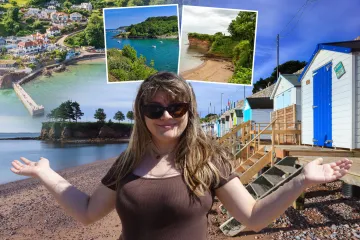
But just behind the harbour is Fairy Cove, and is a much quieter alternative.

“With a mix of sand and pebbles, this beach is ideal for getting away from crowds of people for either a quiet swim or gently walk.

“The cove is only accessible via steps at the corner of the harbour, but it does mean there are range of facilities nearby as well as the town within walking distance.” Cyann Fielding, Travel Reporter

Swap Clacton-on-Sea for… Frinton-on-Sea

Clacton-on-Sea is a well-established and built up beach so it’s no surprise it gets busy Credit: Alamy
Frinton-on-Sea is down the road and lined with pretty beach huts – but with far fewer people to fight for space on the sand with Credit: Alamy

When heading to the Essex coast, you’re likely to be drawn in by the big names like Clacton-on-Sea – but it’s so busy, it’s usually hard to even find a spot to lay your towel on the beach.

But if you want a trip to Essex without the frills and thrills, try driving 20-minutes north to Frinton-on-Sea.

“It has a sweeping golden beach with multi-coloured beach huts and is generally much less busy than its neighbout to the south.

“And there’s usually much more breathing space to explore its independent shops, not to mention the town’s only pub, The Lock and Barrel.” Alice Penwill, Travel Reporter

Swap Folkestone for…. Sandgate

Folkestone’s small stretch of sandy beach can quickly get gnarled up in the summer Credit: Jack Hill/The Times, The Sunday Times.
Locals know to go to Sandgate instead for some peace and quiet. Credit: Alamy

There is so much to do on the main Folkestone beach, so that means you can expect crowds too.

But walk along the promenade and you’ll find Sandgate, a similar pebble beach but filled with locals rather than tourists.

“It still has all the pubs, wine bars and cafes you want after a day at the beach, but has a much more peaceful vibe.

“I recommend getting an ice cream at the beach hut and watching the rowers and paddle boardings practising.” Kara Godfrey, Deputy Travel Editor

Swap Newquay for… Mawgan Porth

A typical summer day at Fistral Beach in Newquay often means huge crowds Credit: Alamy
Mawgan Porth is still loved by surfers but is much quieter Credit: Alamy

Newquay’s Fistral Beach is popular for a reason – it’s home to next level waves that surfers continuously rave about and it’s got everything from cute shops, board rental shops and cafes. So when the sun shines it tends to get extremely busy.

At the opposite end of Newquay, however, and less than seven miles away is Mawgan Porth.

“This beach is just as impressive visually – sparse softs sands backed by craggy cliffs – but tends to be far emptier thanks to its wide expanse of sand that stretches very far back, meaning you’ll always find a spot for your picnic blanket or lounger.

“It’s dog-friendly year round and my Frenchie Dora loves the vast space just as much as I do – chasing frothing waves along the shoreline.” Sophie Swietochowsi, Assistant Travel Editor

Swap Polzeath for… Hawkers Cove

Polzeath is the nicknamed UK’s St Tropez – hence the crowds Credit: Alamy
Hawkers Cove is far enough away that people can’t be bothered to visit Credit: Alamy

Cornwall’s Polzeath is often referred to as the St Tropez of Britain because of the high-end crowd it attracts and the rather lavish dining spots on its doorstep. It is, however, crowded from dawn until dusk on a hot day, with some of its bars open ’til very late.

Almost opposite this beach, across the mouth of the Camel river, you’ll find Hawker’s Cove which is far enough away from the main bay that many visitors can’t be bothered to venture here.

“If you do manage to make the walk from the main car parks, however, you’ll be rewarded with a small(ish) patch of sand and pretty much complete isolation.

“There’s not much nearby, but that’s why I love it: just you, sweeping dunes and one teeny tea shop selling scones, light bites and smoothies.” Sophie Swietochowsi, Assistant Travel Editor

Swap Durdle Door for… Man O’ War Bay

You can guarantee long queues down to Durdle Door Credit: ©Graham Hunt
But Man O’ War Bay is right next to it – and just as pretty Credit: Alamy

The unique geological gem Durdle Door is a magnet for tourists heading to the Jurassic Coast in Dorset.

But for those who can make it, Man O’ War Bay, immediately to the east of Durdle Door, offers a quieter alternative  and is less crowded.

“There are a set of steep steps to navigate to get to the semi-circular cove so getting to it isn’t for the faint-hearted.

“But make it, and you’ll be rewarded with the same views and less people.” Lisa Minot, Head of Travel.

Source link

Syria becomes alternative energy corridor for oil as Hormuz effectively blo | Oil and Gas

NewsFeed

Syria is receiving hundreds of Iraqi oil trucks hauling crude overland to its Baniyas port as an alternative energy corridor to Europe, creating a costly but crucial workaround while the Strait of Hormuz is largely blocked by the US-Israeli war on Iran.

Source link

A fashion-lover’s guide to Antwerp, Europe’s alternative style capital | Antwerp holidays

You know you’re in a city that takes its fashion seriously when even the Virgin Mary is dressed head to toe in couture. A short walk from Antwerp’s old town, with its ornate medieval guild houses and cobblestone streets, is the baroque church of St Andrews. Like many of the city’s Catholic churches, it has beautiful stained glass windows, an exuberantly carved wooden pulpit and more artworks by Flemish masters than you can shake an incense stick at. But we’re here to pay homage to an art form of a different kind.

In a quiet chapel, an elegant 16th-century wooden statue of the Madonna is clothed not in her usual blue cloak, but a dress of pale gauzy fabric, trimmed with a collar of white pigeon feathers, custom made by renowned Belgian fashion designer Ann Demeulemeester. It’s a bold statement but one that’s entirely in-keeping with a city where a love of fashion seems woven into the fabric of everyday life.

The Virgin Mary dressed by Ann Demeulemeester in St Andrew’s Church. Photograph: Joanne O’Connor

It wasn’t always so. In the 19th century this impoverished neighbourhood was known as the “parish of misery”– a reputation that endured well into the 1980s when a young designer named Dries van Noten took the plucky decision to open a shop on Nationalestraat, across the road from his grandfather’s tailor shop. Almost four decades on, the beautifully restored art nouveau building, with its curved windows, marble floor and chandeliers, is at the centre of Antwerp’s vibrant Fashion District (rebranded, presumably, because “Misery District” was a harder sell for the tourist board).

“You have to understand that there was nothing here at all before this shop opened. It changed everything,” says Yentl, a guide who is leading my daughter and I on a walk around some of the area’s key fashion sites and shopping streets.

Van Noten and Demeulemeester are both members of the “Antwerp Six” – a group of bright young graduates of the city’s Royal Academy of Fine Arts who exploded on to the international fashion scene in the late 1980s. Along with their peers, Walter van Beirendonck, Dirk Bikkembergs, Dirk van Saene and Marina Yee, they are credited with injecting new life into a fashion scene which had been dominated for decades by Paris, Milan and London.

The Antwerp Six pictured in 1987. Photograph: Philippe Costes

Their story is being told in a major new exhibition at MoMu, Antwerp’s world-class fashion museum, just a few doors along from Van Noten’s flagship store. The retrospective, which runs to January 2027, marks the 40th anniversary of the group’s first foray to London in 1986, when they piled into a rented van and caught a ferry from Ostend to show their debut collections at the British Designer Show in Olympia. The young Belgian designers won over the international fashion press and buyers alike with their talent, originality and chutzpah – creating their collections on a shoestring, often from upcycled materials, championing self-expression over marketability, hosting fashion shoots in abandoned car parks, and making their own flyers and posters.

Though it suited the foreign press to label them as the Antwerp Six (far easier than typing out all of those long Flemish names), they were never a collective and it’s gratifying to see that the exhibition has given each designer their own individually curated space. From the avant garde exuberance of Van Beirendonck’s colourful creations to the dark drama of Demeulemeester’s monochrome palette, the displays are as thought-provoking and imaginative as the clothes they showcase, combining film projections, recorded interviews, a moving conveyor belt of mannequins and an evocative soundtrack.

Ganterie Boon, which has been selling handmade gloves since 1884. Photograph: Joanne O’Connor

Emerging from the exhibition into the spring sunshine, it’s clear that the legacy of this pioneering group extended far beyond the catwalk and lives on in the city. On Nationalestraat contemporary designers rub shoulders with kilo stores where second-hand clothes are sold by weight. At Labels Inc you can browse pre-loved pieces from established Belgian designers such as Raf Simons and Martin Margiela or check out the featured collections from the city’s latest crop of fashion graduates. Nearby Kammenstraat and Steenhouwersvest are lined with vintage stores, streetwear brands and independent labels such as Arte Antwerp, which specialises in sleek, urban menswear inspired by graphic design, art and architecture. Even if you wouldn’t know a Bikkembergs bag from a Belgian waffle it’s impossible not to be inspired.

“The Antwerp Six taught people how to be entrepreneurs and to follow their inner voice,” says designer Tim van Steenbergen, who did his apprenticeship with Dries van Noten, and then went on to found the social enterprise and sustainable fashion label ReAntwerp. “They showed that if you want to do things differently, you can.”

Launched as a response to the vast amount of textile waste produced by the fashion industry, ReAntwerp sells a range of beautifully tailored, limited-edition classics, from shirts to trench coats, using leftover fabric from designers such as Van Noten and Christian Wijnants. The enterprise also provides training, employment and support to refugees, who make the clothes in the on-site atelier. “I wanted the clothes to have as much meaning and value for the people who make them as the people who buy them,” says Van Steenbergen. “We have worked with refugees from Afghanistan, Syria, Pakistan, Palestine, Brazil and Costa Rica. Our common language is textiles.”

It’s a fitting motto for a city whose wealth was built, in part, on the textile trade. In the 16th-century Antwerp was Europe’s largest river port, with cargos of English wool and Italian silks, as well as diamonds from India, spices from Portugal and sugar from the West Indies, being shipped up and down the River Scheldt. Riches from this trade were poured into the elaborate guild houses and civic buildings which surround the Grote Markt, the city’s showpiece square. The story of Antwerp’s port is told at the MAS museum, housed in a strikingly modern 10-storey building in the dockside Eilandje district. Don’t miss the panoramic views across the river and sprawling dockyards from the roof terrace, or the chance to snack on street foods from around the world at the Wolf Sharing Food Market, in an old warehouse with a waterside terrace.

The Brabo fountain and ornate guildhalls of Grote Markt, Antwerp’s main square. Photograph: Bruno Silva/Alamy

Not only was golden age Antwerp a great commercial hub, it was also an artistic and intellectual powerhouse, home to painters such as Anthony van Dyck, Pieter Bruegel the Elder, Clara Peeters and Peter Paul Rubens. You can see a collection of their works at the Royal Museum of Fine Arts but nothing compares to the impact of seeing four of Rubens’ huge altarpieces, in situ, at the imposing Cathedral of Our Lady.

The artist’s house and studio are now closed for major renovation work but, after a long day’s sightseeing and shopping, it was a relief to sit quietly among the displays of tulips and spring flowers in the Italian-style formal gardens which are still open to the public. We also stumbled upon some extraordinary family portraits by Rubens at the Plantin-Moretus Museum, the former home and workplace for nine generations of a family who completely revolutionised printing. The first atlas, countless scientific books and beautifully illustrated Bibles passed through the wooden printing presses here, some of which date back to the 1600s. With its dark panelled walls, leaded windows and creaking floorboards, it’s an atmospheric and fascinating place, where time seems to have stood still.

There’s just time for one last bolleke beer and a shrimp croquette in the sun-trap square next to our hotel, the charming Hotel t’Sandt, before we have to check out and hop on the tram to Antwerp’s central station for the 45 minute train ride to Brussels, where we’ll catch our Eurostar train home. The hotel, which is in a beautifully restored 17th-century mansion with polished wooden floors, a spiral staircase and beamed ceilings, has lived through many previous incarnations: banana warehouse, custom house, soap factory and sculptor’s studio. Today it makes a perfect base for exploring the city; friendly, stylish and wears its history well … much like Antwerp itself.

The Antwerp Six exhibition runs at MoMu until 17 January 2027. Admission is €13 per adult and free for under-18s. The trip was provided by Visit Antwerp. Double rooms at the Hotel ’t Sandt start from €217 a night

Source link

My favourite UK town that’s the perfect alternative to Cornwall is getting a new multi-million-pound rainforest

CORNWALL might be an ‘it’ destination – but it can move over as a pretty alternative is cheaper to visit and is even getting a new RAINFOREST.

Totnes in south Devon is a pretty market town known for its independent shops and huge castle.

Totnes in Devon is a medieval market town with a new rainforest nearby Credit: Alamy

Follow The Sun’s award-winning travel team on Instagram and Tiktok for top holiday tips and inspiration @thesuntravel.

And now it is home to a new multi-million-pound rainforest.

Devon Wildlife Trust has created an ‘Atlantic rainforest’ – also called a temperate rainforest that has damp and humid conditions – near the town.

Located at Bowden Pillars Farm, the rainforest sprawls across 75 acres and sits at the edge of the River Dart.

Read more on travel inspo

CHEAP BREAKS

UK’s best 100 cheap stays – our pick of the top hotels, holiday parks and pubs


BARGAIN HOL

Travel companies reveal their CHEAPEST spots this summer, with hols from £189pp

In total, over 17,000 trees have been planted including birch, willow and hazel – though don’t expect them to be quite as towering as other rainforests yet as they need time to grow.

And once they are fully grown, they are set to create a mosaic pattern with open meadows nestled among the trees.

Over time the area will become abundant with wildlife as well, including threatened bird species and creepy crawlies.

Just like the rainforests of the tropics, visitors can expect to see moss, lichen and ferns thriving, as well as species of fungi.

Visitors wanting to explore the rainforest can do so via public footpaths but as the rainforest grows over the years, the paths will gradually be removed to allow people to explore the entire forest.

The project is part of a £38million effort to restore 4,336 acres of lost temperate rainforest across the UK.

These ancient jungles once covered a fifth of the country, but now, only a tiny one per cent of them remain.

The rainforest is less than a 15-minute walk from Totnes town.

Though Devon can often be used as a stopping point for those on longer journeys to Cornwall, Totnes is quaint town not too far from the sea that beats a lot of its Cornish counterparts.

In the town centre, the main attraction is the steep high street, with medieval merchant houses on each side.

The new rainforest is about a 15 minute walk from the town centre where you will find a motte-and-bailey castle Credit: Alamy

Around half-way up the high street you’ll come across East Gate, which splits the town into the lower and higher half.

All along the high street you will find independent shops that rival the main towns of Cornwall – there’s no tourist tat here.

Make sure to dip into Penelope Tom for unique gifts, drop by Palmer By Design for stationary and homeware, visit Stag and Seer for witchy incense or head into Butterwalk to explore local makers before grabbing a cuppa.

The high street is also home to Totnes Cinema, which dates back to the 1880s – though, inside it is not your regular cinema.

Instead you can expect rustic, exposed brick walls, tasty cocktails and cosy vibes.

There’s a small museum on the high street as well, which is free to visit.

Don’t miss the market on a Friday and Saturday either – it brings the town to life with antiques stalls, rug makers, food vendors and more.

I always make a beeline for the Lebanese food stall which sells wraps big enough to feed three, stuffed to the brim with fresh veg and chicken or falafel for a tenner.

Before you head off the high street, make sure to stop by Cranch’s Sweets.

Many weekends of my childhood were spent visiting this sweet shop for their traditional treats that they have been selling since 1869.

In the town there is a popular market on Saturdays and Sundays Credit: Alamy

Our favourite UK holiday parks

*If you click on a link in this box, we will earn affiliate revenue.

Park Holidays UK Sand le Mere, Yorkshire

This holiday park in Yorkshire is a thriving family resort, just steps from Tunstall Beach. Entertainment is what this resort does best, with costume character performances, Link-up Bingo and cabaret shows. Accommodation ranges from fully-equipped Gold Caravans to Platinum Lodges with sun decks and luxury bedding.

BOOK A BREAK

St Ives Bay Beach Resort, Cornwall

This beachfront resort in St Ives, Cornwall is a true beach bum’s paradise – whether you want to laze out on the sand, or take to the waves for some surfing. Activities include disc golf, a Nerf challenge and an outdoor cinema, as well as indoor activities for the colder months like karaoke, bingo and DJ sets.

BOOK A BREAK

Billing Aquadrome Holiday Park, Northampton

This holiday park has loads of unique activities on offer, including TikTok dance classes, alpaca feeding, a pump track for BMX riding, and taking a ride on the resort’s very own miniature railway. Throw in bug hotel and den building, pond dipping, survival skills workshops and a lake for paddleboard and pedalo hire, and you’ve got yourself an action-packed park.

BOOK A BREAK

Parkdean Resorts Camber Sands, Sussex
This beachfront resort is a classic family favourite. If you’re not up to swimming in the sea, there’s four fantastic pools here, as well as water flumes, underwater jets, inflatable jet skis and kayak races. Plus if you’ve got any little fans of Paw Patrol or Milkshake!, you’ll be glad to know there’s Milkshake! Mornings and Paw Patrol Mighty Missions to keep your tots entertained.

BOOK A BREAK

Off the high street, you can visit the Norman motte-and-bailey castle with views over the town as well.

At the bottom of the high street, I always enjoy wandering along the River Dart for a picturesque walk and picnic.

Or if you prefer an activity, there’s paddleboarding and kayaking on the river as well.

There are tonnes to do in the surrounding area too, with some of Devon’s golden sandy beaches just 15 minutes away.

Unlike Cornwall, where the average stay will set you back between £100 and £120 per night in May, you can stay at the Royal Seven Stars Hotel at the bottom of the high street from just £74 per night in May.

Countryside surrounds the town as well, making it the ideal camping holiday.

A pitch at Gatcombe Park Farm Glamping costs from £34 a night, though if you want to stay in a bell tent or tipi you can do from £97.50 per night.

You can also reach Totnes on the train from London Paddington, taking under three hours and costing from around £24.50 per way.

For more holiday ideas, UK staycations are set for a record high in 2026 – so, here’s our top holiday wish list from trendy beach resorts to historic cities.

Plus, a holiday park expert reveals all her favourite resorts in the UK – plus how to get cheap stays and save money on your break.

You can catch a train from London Paddington to Totnes, taking less than three hours Credit: Alamy


Source link