alert

UK tourists to face flight ‘cancellations’ alert as 6 hotspots ‘could be at risk’

Transport Secretary Heidi Alexander is set to ‘level with’ the public as jet fuel shortages continue to affect airlines

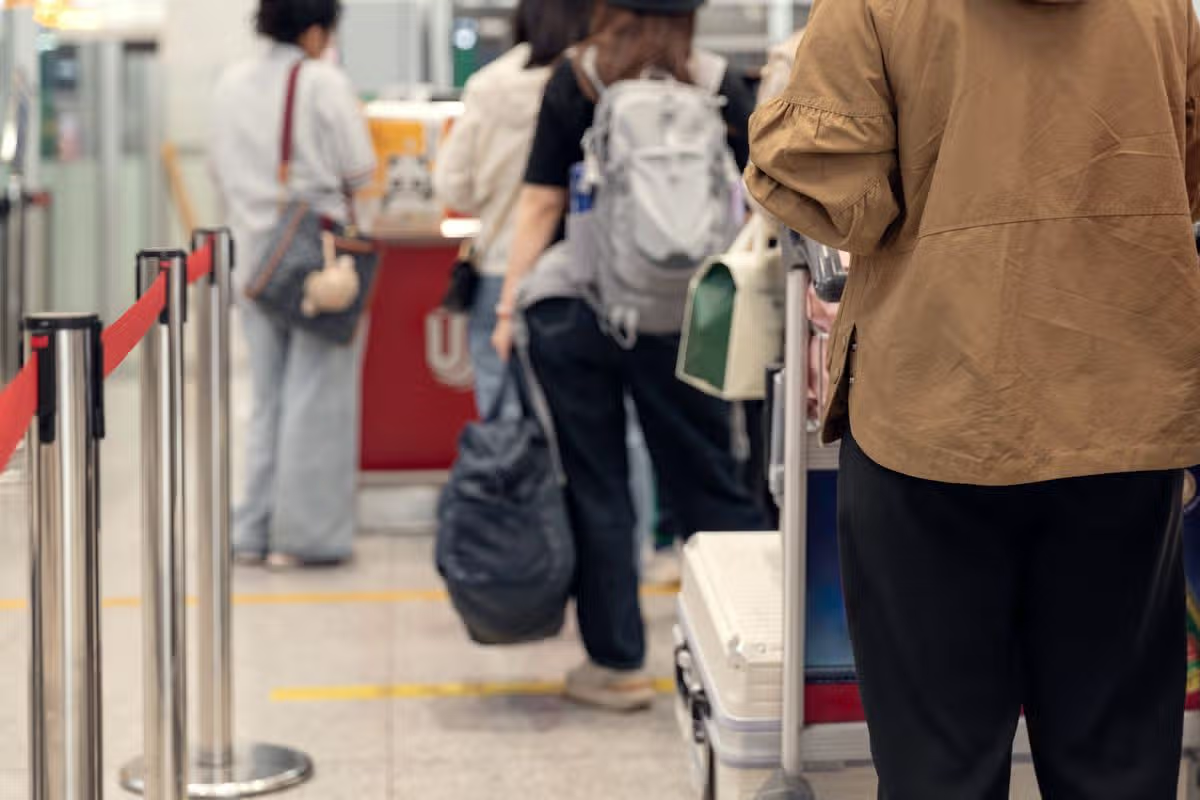
British holidaymakers are set to be warned by ministers to prepare for potential flight cancellations. The anticipated warning follows concerns from airline bosses about possible jet fuel supply shortages affecting the UK from as early as next month.

Transport Secretary Heidi Alexander is reportedly preparing to “level with” the public this weekend about the likelihood of disruption and cancellations this summer. She is also expected to outline contingency measures designed to minimise the fallout – as six tourist hotspots have reportedly been identified as being at risk of cancellations.

Government officials are drawing up plans to advise against long-haul travel to specific destinations should tensions in Iran escalate dramatically. Countries including Vietnam, Pakistan, Bangladesh, the Philippines, Myanmar and Ethiopia could be affected, sources told the Times.

Ministers are also set to highlight the “positives” of staycations as anxiety mounts over overseas bookings. A number of major European carriers have recently sounded the alarm about looming jet fuel shortages in the coming weeks, citing disruption to their primary supply route through the Strait of Hormuz.

According to UKOilWatch, Britain currently holds just 34 days’ worth of jet fuel reserves. Roughly three-quarters of Europe’s jet fuel originates from the Middle East and passes through the Strait of Hormuz off Iran. Heathrow Airport confirmed on Wednesday that it anticipates passenger figures for the remainder of the year will be impacted by Middle Eastern tensions.

Lufthansa Group plans to axe 20,000 flights over the next six months in a bid to conserve fuel. Meanwhile, other carriers including Virgin Atlantic have introduced a fuel surcharge, and British Airways has cautioned passengers about potential “pricing adjustments” to their tickets.

Sir Keir Starmer, the Prime Minister, also suggested this week that Brits might need to reconsider “where they go on holiday”. Government ministers insist the UK isn’t currently facing jet fuel shortages, as alternative supply sources remain available.

Michael O’Leary, chief executive of Ryanair, Europe’s largest airline, revealed to The Times that competitors are “desperately” hunting for flights to axe, with cancellations expected to begin within weeks. According to the newspaper, leading fuel suppliers are informing airlines that the UK has the “most limited visibility” across Europe regarding jet fuel availability, largely due to its heavy dependence on Middle Eastern imports.

These suppliers reportedly anticipate May will be manageable. Yet they warn that “mid to late June as the potential start of disruptions” if the Strait of Hormuz near Iran remains closed.

Ryanair and Jet2 reassure passengers

O’Leary explained: “There is a modest improvement in the supply situation through to the end of May, early June, but then nobody would give us any undertakings what happens in mid-June or thereafter.”

He confirmed Ryanair wouldn’t be slashing flights. However, he predicted that other prominent European carriers more “exposed” to soaring costs would likely begin scrapping routes, saying: “They are all desperately trying to take out marginal flights or any growth because they don’t have the fuel for it.

“We were worried there would be disruption to around 10 per cent of our flights but some of those worries have eased because other European airlines have taken out lots of capacity.” It comes as Jet2 has revealed that holidaymakers are increasingly making last-minute bookings following the outbreak of the Iran war, with growing concerns about the conflict’s impact and potential disruptions to jet fuel supplies.

The company reported that summer passenger bookings are currently up 6.2%, driven by growth in both its airline and package holiday operations. However, highlighting rising unease amongst travellers, it noted that the “booking profile has become increasingly close to departure” as a result of the Middle East conflict.

Jet2 confirmed it has strong protection against fuel cost increases triggered by the Iran war for the crucial summer period. It said it is “maintaining frequent dialogue with our fuel suppliers and airport partners on fuel supply”.

British refineries have meanwhile been instructed to maximise jet fuel production as part of government contingency measures amid concerns that the Iran war could lead to aircraft being grounded. Energy minister Michael Shanks said the government is closely monitoring UK jet fuel stocks and liaising with airlines, airports, fuel suppliers and international partners.

“UK airlines typically buy fuel months in advance, and aviation fuel suppliers hold bunkered stocks. The UK imports jet fuel supplies from a range of countries not reliant on the strait, including the United States,” Shanks stated in a ministerial announcement. “Airlines UK have stated that ‘UK airlines continue to operate normally and are not experiencing issues with jet fuel supply.’ The government continues to work with partners to monitor and mitigate potential disruptions,” Shanks added.

Source link

New Foreign Office alert over ‘fatal’ virus soaring in 42 countries – full list

A high number of cases were reported in the last 12 months – with a 5-fold increase in some areas – and 143 deaths

Travellers have been warned about the resurgence of a disease spread by mosquitos with ‘high risk’ in 42 countries. The Foreign Office-backed Travel Health Pro website this week issued an alert over the virus spreading in parts of Africa, Central and South America, and in Trinidad in the Caribbean.

Yellow Fever can cause a serious haemorrhagic illness that can be fatal for humans. Yellow fever vaccination and mosquito bite avoidance are important preventive measures against the disease, officials said. Yellow fevefr virus can cause an illness that results in jaundice , yellowing of the skin and eyes, and bleeding with severe damage to the major organs such as liver, kidneys and heart. The mortality rate is high in those who develop severe disease.

Travel Health Pro said yellow fever is a risk in areas of 13 countries and territories in South and Central America. A high number of cases were reported from this region in 2025, with 346 confirmed human cases (including 143 deaths) from seven countries.

This represents a 5.6-fold increase in cases compared to 2024. Since the beginning of 2026, a total of 41 confirmed cases (including 18 deaths) have been reported from four countries: Bolivia, Colombia, Peru and Venezuela.

In 2024, most yellow fever cases were reported from the Amazon region. Officials said: “While YF cases continue to be reported in this area, cases have since been reported in a wider geographic area, outside the Amazon region. This includes in Sao Paulo State in Brazil and Tolima Department in Colombia. In addition, reports suggest recent human YF cases in Venezuela have occurred in an area that had not previously been considered a risk for YF disease.

READ MORE: Foreign Office 135 countries ‘high risk’ list as vaccination supplies for lethal virus low in UKREAD MORE: UK holidaymaker hotspot hit with 180 infections as authorities ban restaurant food type

“Risk of YF outbreaks in South America remains high. An outbreak in Colombia has been ongoing since mid-2024, with 153 confirmed cases (including 62 deaths) reported. The confirmed reporting of YF cases in a wider geographic area, including cases related to jungle transmission near to urban centres, increases the risk of urban outbreaks [1]. While YF vaccination is one of the most successful public health interventions to prevent YF disease, the COVID-19 pandemic, among other factors, has led to a reduction of YF vaccine cover in the local population.”

It added that yell;ow fever risk countries in Africa continue to report probable and confirmed cases. During 2024, confirmed cases of YF were reported in countries with no recent history of transmission and suboptimal vaccination coverage.

WHO also advise that in some African countries, there may be under-reporting of YF due to surveillance and data collection issues. The risk of YF transmission remains high in endemic areas of Africa. The mosquitoes (Aedes spp.) that transmit YF are common in many urban areas in Africa. This significantly increases the risk of YF spreading, especially in heavily populated areas, which could lead to the rapid onset of YF outbreaks.

Countries with a risk of yellow fever transmission as defined by the World Health Organization

Africa

  • Angola
  • Benin
  • Burkina Faso
  • Burundi
  • Cameroon
  • Central African Republic
  • Chad*
  • Congo
  • Côte d’Ivoire (Ivory Coast)
  • Democratic Republic of the Congo
  • Equatorial Guinea
  • Ethiopia*
  • Gabon
  • The Gambia
  • Ghana
  • Guinea
  • Guinea-Bissau
  • Kenya*
  • Liberia
  • Mali*
  • Mauritania*
  • Niger*
  • Nigeria
  • Senegal
  • Sierra Leone
  • South Sudan
  • Sudan*
  • Togo
  • Uganda

Central and South America

  • Argentina*
  • Bolivia*
  • Brazil*
  • Colombia*
  • Ecuador*
  • French Guiana
  • Guyana
  • Panama*
  • Paraguay*
  • Peru*
  • Suriname
  • Trinidad and Tobago*
  • Venezuela*

*Only some parts of this country have a risk of yellow fever disease. Remaining areas either have low potential for yellow fever transmission or no risk.

Signs and symptoms

YF varies in severity. The infection has an incubation period (time from infected mosquito feeding to symptoms developing) of three to six days. Initial symptoms include myalgia (muscle pain), pyrexia (high temperature), headache, anorexia (lack of appetite), nausea, and vomiting. In many patients there will be improvement in symptoms and gradual recovery three to four days after the onset of symptoms.

Within 24 hours of an apparent recovery, 15 to 25 percent of patients progress to a more serious illness. This takes the form of an acute haemorrhagic fever, in which there may be bleeding from the mouth, eyes, ears, and stomach, pronounced jaundice (yellowing of the skin, from which the disease gets its name), and renal (kidney) damage. The patient develops shock and there is deterioration of major organ function; 20 to 50 percent of patients who develop this form of the disease do not survive [22]. Infection results in lifelong immunity in those who recover.

Source link

British Airways ticket price warning amid fuel crisis as holidaymakers on alert

The comment from the owner of BA comes after Jet2 said it would not introduce surcharges on any booked flights or holidays to cover cost increases

The parent company of British Airways has cautioned that airfares are set to climb as the closure of the Strait of Hormuz, triggered by the Iran conflict, has caused oil prices to surge dramatically.

International Airlines Group (IAG) announced on Friday that the ongoing Middle East crisis will push up the cost of flights to account for soaring jet fuel prices.

Airlines routinely purchase a portion of their fuel in advance at fixed rates to shield themselves from price fluctuations, a strategy commonly referred to as “hedging”.

Despite this, IAG warned that it remained “not immune” to the wider consequences of the Middle East conflict. The group insisted it had yet to experience any disruption to its jet fuel supply, amid growing concerns over potential future shortages as a result of the ongoing hostilities.

READ MORE: RAF fighter jets shoot down Russian drones over Ukraine as Putin launches attacksREAD MORE: Iran war live: Trump claims Tehran ‘making an offer’ as US team heads for talks

The government is “closely monitoring” fuel stocks as airlines brace themselves for possible shortages, with oil tankers still unable to navigate the Strait of Hormuz. It has also emerged that airports are set to make it simpler for airlines to cancel flights without jeopardising their allocated take-off and landing slots, should fuel shortages prevent them from operating. The Department for Transport (DfT) announced that airlines will no longer be obliged to adhere to the “use it or lose it” rule at UK airports, whereby carriers must utilise at least 80% of their allocated slots during a season in order to retain them for the following year. “Airport Coordination Limited, the independent body that manages slot allocation at UK airports, has updated its guidance so that airlines will not lose their slots if fuel shortages prevent them from flying,” the DfT statement confirmed.

“Airlines can now apply for an exemption from the ‘use it or lose it’ rule in these circumstances.”

Meanwhile, Jet2 has revealed it will not be imposing surcharges on any previously booked flights or holidays to offset rising costs, reassuring customers that the price they book is the price they will pay.

The policy covers all flights and holidays booked through any channel, whether online, via the mobile app, contact centre or through an independent travel agent. Steve Heapy, CEO of Jet2 said: “Holidaymakers should have every right to book their hard-earned break in the sun, without worrying about being hit with additional costs, and they can have that complete assurance when they book a flight or holiday with Jet2. As a result of today’s announcement, customers booking with Jet2 know that they are locking in their price without additional cost surprises later and we strongly believe that is the right thing to do by them. Ahead of a busy summer this is yet more evidence of why, on top of our incredible holidays and award-winning customer service, nothing beats a Jet2holiday.”

Source link

Spain Foreign Office alert as ‘hotels will evict you if’

Spain is the most popular holiday destination for Brits

Now that warmer weather is finally arriving, many of us are casting our eyes towards the summer months and planning holidays. Spain remains the most sought-after destination for British travellers, with millions descending on the European nation each year, eager to soak up the sunshine, lounge on its beaches and sample the local food.

When heading abroad, it’s crucial to familiarise yourself with any local laws or regulations you’ll need to abide by during your stay. And if Spain is on your radar this year, there’s one balcony rule you might not be aware of.

The Foreign, Commonwealth and Development Office (FCDO) routinely issues travel guidance for Brits venturing to more than 220 countries and territories across the globe. Within its extensive advice for Spain, the FCDO makes specific mention of balconies.

While balconies are great for offering a view and giving guests a spot to unwind in the open air, holidaymakers are expected to conduct themselves appropriately. FCDO guidance for Spain reads: “Hotels and other establishments will evict you if you behave dangerously on balconies. You could also get a fine.”

Those heading to Spain are also reminded that they must produce ID if requested by a police officer. The FCDO adds: “This includes the Guardia Civil and national, regional and local police forces.

“The police have the right to hold you at a police station until they have confirmed your identity. Ignoring direct requests of a police officer can be considered as ‘disobedience’, which is a criminal offence.”

Source link

New Spain airline ticket prices travel alert for 3 major UK tourist hotspots

Tourists travelling to some of the most popular holiday destinations in Spain have been handed an update on prices

Travel officials in Spain have warned that airline ticket prices are set to rocket this summer. The warning comes as the Iran conflict places severe strain on the supply of jet fuel to airlines across the globe.

The mounting pressures have already prompted some airlines to scale back their planned flight schedules, with knock-on effects already being felt on ticket prices. And bosses say there are further headaches ahead for holidaymakers at some of the most popular Brit tourist spots as the peak travel season approaches – with around 18 million Brits heading to Spain every year.

The latest alert was issued by travel agents in Spain. The Balearic Islands Travel Agencies Association (AVIBA) has warned those heading to popular destinations such as the 3 key tourist spots of Mallorca, Menorca and Ibiza to brace themselves for steeper ticket prices – even as it confirmed flights to the region are not expected to be reduced.

According to reports in the Spanish media, AVIBA president Pedro Fiol cautioned that ticket prices will inevitably rise sharply due to the financial pressures stemming from the conflict. He warned that the war is likely to produce a summer “with a context of greater tension and rising costs that will be gradually passed on to ticket prices”, Spanish website Ultima Hora reports.

Despite this, he maintained that the profitability of routes to the Balearic Islands makes it unlikely that flights to the area will be axed. He did, however, flag that this could become a possibility outside of peak season.

AVIBA note that airlines are currently maintaining “a certain restraint” in airfares. But the president warned that the scarcity and increased cost of fuel driven by the Iran conflict will undoubtedly result in higher airfare prices. The Airline Association (ALA) has issued a similar forecast.

Lufthansa yesterday confirmed the axing of some 20,000 flights through October as part of its operational shake-up. The carrier explained that these reductions relate to unprofitable bases, though none of these are located in Spain. The strategy is to refocus resources on the most lucrative routes.

Mr Fiol said: “We don’t foresee a summer with planes grounded due to a lack of fuel, but we do anticipate a more complex and price-driven environment.” Meanwhile, Spanish website INB3N reports that Mr Fiol also cautioned there was a danger that additional flights could be compelled to make stops so aircraft can refuel mid-journey.

This week, TUI revealed the Iran war set it back around 40 million euros (£34.8 million) last month after it was obliged to bring home thousands of holidaymakers and staff. Europe’s biggest travel operator slashed its profit forecast and suspended revenue guidance as a consequence, causing its shares to fall.

The firm is amongst travel companies to have been substantially disrupted by the conflict in the Middle East, which erupted at the end of February. It is also amongst airline operators to face strain from a spike in jet fuel prices after the conflict drove up the cost of oil.

And holidaymakers should have “no worries” about flights being cancelled this summer, despite airlines confronting a “triple whammy” as a consequence of the conflict in the Gulf, a former industry boss has maintained.

Tim Jeans, a former commercial director at Ryanair who was later managing director of Monarch Air, said that while there “may be some trimming of schedules” by airlines, he did not expect carriers to scrap routes entirely.

His remarks follow stark warnings from the trade body representing European airports, which cautioned that a “systemic” jet fuel shortage could emerge ahead of the peak summer season if the Strait of Hormuz fails to reopen in the coming weeks.

Airports Council International, which represents more than 600 airports, recently wrote to European commissioners for energy, transport and tourism, warning that if the vital strait does not reopen in a “significant and stable way within the next three weeks” then “systemic jet fuel shortage is set to become a reality for the EU”.

Director-general Olivier Jankovec said: “The fact that we are entering the peak summer season… is only adding to those concerns.” However, Mr Jeans insisted: “I don’t see a situation where flights will get cancelled because of the non-availability of fuel.”

He acknowledged that there was a “triple whammy for airlines at the moment”, pointing to “the issues in the Middle East which has caused a massive spike in the cost of fuel”.

Speaking on BBC Radio Scotland’s Breakfast programme, Mr Jeans added: “That in turn is pushing up ticket prices, and the uncertainty around whether it is going to be possible to travel, plus the increase in prices is reducing demand.

“And so you have a situation where airlines are looking at their bookings for the next three months ahead and saying ‘should we fly that flight, is it going to be profitable?'”

Source link

Anyone with summer 2026 holidays booked warned ‘keep all receipts’ in new alert

Travel insurance specialist has issued advice, as cancellations and delays may happen

As airlines continue to navigate fuel supply challenges caused by the Middle East conflict, some flights may be disrupted, or fares may increase. Some energy bosses have claimed Europe only has six weeks’ worth of jet fuel left. Tom Vaughan, a travel insurance specialist at Confused.com, has offered advice for passengers with summer holidays coming up.

He also warned that cancellations and delays may happen, and stressed the importance of preparing in advance and knowing what to do if a trip is axed. “For Brits planning to travel this summer, it’s worth being aware that flight cancellations and delays could happen as airlines respond to operational pressures,” he said.

“Disruptions like this can leave travellers unsure about their rights and what steps to take next if they are affected. The good news is that UK passengers have rights if their flight is cancelled.

“Airlines should offer a refund or an alternative flight, even if your ticket was non-refundable.” If passengers do experience disruption, Tom has shared some steps to follow.

Firstly, he says travellers should contact their airline as soon as possible to confirm their options, including rebooking or a refund. He also recommends: “Keep receipts for any essential costs like food, accommodation or transport, as these may be reimbursed”.

Tom said passengers may still be entitled to assistance (such as meals or a hotel stay) while waiting for a new flight. “If you booked a package holiday, check if it’s ATOL protected and contact your travel provider for support”, he added.

The travel insurance specialist went on to say that people who pay by credit card “may have additional protection if things don’t go to plan”. Lastly, he urged people to review their travel insurance policy and speak to their insurer to understand what extra costs they could claim back.

He also says it is “always sensible” to take out travel insurance before going away. “Even if you are able to claim directly via the airline, an insurer can guide you on how to make a claim,” he explained.

Tom continued: “With the right policy in place, you may also be able to claim back for other parts of your holiday that were affected as a result. If you’ve recently experienced flight cancellations, our flight compensation guide will help to break down your options.”

Inflation climbed higher last month as the knock-on effects from the Iran war started to hit the cost of living for UK households. The Office for National Statistics reported an annual rate of Consumer Prices Index (CPI) inflation of 3.3% for March, increasing from 3% last month.

It meant inflation picked up to its highest level since December, with higher fuel prices a significant driver. The ONS indicated that fuel prices were the main area where the impact of the Iran conflict had already been reflected in their data.

While jet fuel costs have risen, the ONS said that air fares are based on previously booked flights, meaning that the March data was not yet impacted by inflation linked to the conflict. This means airfare inflation is likely to continue rising this year as higher jet fuel costs are passed on to passengers.

KLM has made several adjustments to its flight schedule for the coming month. The airline says: “This concerns a limited number of flights within Europe that, due to rising kerosene costs, are currently no longer financially viable to operate. There is no kerosene shortage. KLM will operate 80 fewer return flights to and from Schiphol, which is less than 1% of its European flights during that period.

“Passengers affected by these changes will be rebooked onto the next available flight. As these are destinations KLM serves multiple times a day — such as London and Düsseldorf — travellers can usually be accommodated quickly. KLM expects a busy May holiday period and is making sure passengers can travel to their holiday destinations as planned.”

In a new statement, Lufthansa has said: “The Lufthansa Group has secured (“hedged”) approximately 80 per cent of its kerosene requirements for 2026 and approximately 40 per cent for 2027 based, among other things, on the price of crude oil – both at pre-crisis price levels. With this level of hedging, we are in a better position than most competitors.”

Meanwhile, easyJet has said it is not currently seeing any disruption to flights and doesn’t plan to make any changes to its flight schedule.

Source link

Holiday alert as 14 UK tourist hotspots face ‘indefinite’ strikes from Friday, April 17

Air traffic controller strikes will cause ‘indefinite’ disruption to flights from April 17, affecting some of the most popular European holiday locations

British holidaymakers are facing the prospect of indefinite disruption starting from tomorrow at major European holiday destinations. A total of 14 airports at popular holiday locations are preparing for strike action from Friday, April 17.

Air traffic controller unions are warning that the strike action is ‘indefinite’. Spanish media reports indicate that the action by USCA kicks off on April 17 at the Canary Island hotspots of Lanzarote, Fuerteventura, La Palma, La Gomera and El Hierro – with nine further locations also affected.

Other popular holiday destinations set to be hit by airport strikes include the mainland locations of Jerez de la Frontera, La Coruña, Madrid-Cuatro Vientos, Vigo and Seville. Castellón, Burgos, Huesca and Ciudad Real are also set for strike action.

Travel website Travel On World is cautioning tourists that the greatest risk is likely to be “delays, late aircraft rotations, missed connections and short-notice timetable changes.”

The site notes that for many travellers, the main concern is not a complete shutdown of operations. Instead, it is planes departing late from earlier locations, inbound flights being held up, departure slots changing around, turnaround times tightening and passengers having to put up with long waits for clear details on what is happening.

Because air traffic control is classed as an essential service, Spanish authorities have the power to impose minimum service levels. This should mean that some flights continue to operate.

Some flights are therefore likely to depart close to schedule. Yet others may face significant delays, and some could be cancelled where airlines determine the knock-on effect has become too serious.

What are my rights over the Spain airport strikes?

According to the Civil Aviation Authority, if your UK flight is delayed, and a post-Brexit regulation known as UK261 applies to it, your airline must care for you while you are delayed. This includes supplying you with food and drink depending on the length of your delay, and accommodation if you are delayed overnight.

You may also be entitled to compensation if the delay results in you reaching your destination airport more than three hours late. If the delay exceeds five hours, you can opt not to travel and receive a refund.

What is the Spain strike action all about?

The airports affected by the industrial action share a common thread – all are operated by SAERCO. Further strikes had previously been anticipated at Lanzarote and Fuerteventura, linked to a separate ongoing dispute involving Groundforce baggage handlers. However, it emerged earlier this week that this action has now been suspended.

Travellers must now contend with this latest wave of industrial unrest. Air traffic control unions say they are taking strike action over staff shortages and shift scheduling disputes – and passengers should be ready for disruption.

USCA spokesman José Luis Feliú told El Espejo Canario that delays are a real possibility. And the sunspots are busy all year long. Aena reports that 5.7million British holidaymakers visited the Canary Islands in 2023 alone.

Even outside of the school holidays, the islands remain a firm favourite with British travellers – and for good reason. According to the Hello Canary Islands website, with 4,800 daylight hours a year, the Canary Islands have the most daylight hours of anywhere in Europe.

What the unions are saying about the Spain airport strikes?

USCA spokesman José Luis Feliú told Spanish media there is currently a “shortage of air traffic controllers,” which he said directly impacts the system’s operation. “It generates greater stress, more fatigue, and makes it impossible to guarantee service continuity,” he warns.

The union spokesman highlights that the surge in air traffic has worsened the situation, compelling professionals to shoulder heavier workloads under increasingly difficult conditions, reports El Espejo Canario. One of the most pressing concerns is shift management, he alleges. “The company unilaterally changes the schedule,” alleges Feliú, leaving workers unable to plan their personal lives, he claims.

He claims that air traffic controllers are forced to “give up leave, vacations, and planned changes,” a situation he regards as unsustainable in the long run. “In the end, you work the same hours, but without any planning,” he claims.

The strike is indefinite, although minimum services will remain in place, it is understood. Spanish website Larazon reports that the union cites “staff cuts of up to 33%” as the reason for this nationwide strike.

The website reports that the action is set to affect football fans using Seville airport. The Copa del Rey final will take place in Seville between Atlético de Madrid and Real Sociedad on Saturday, April 18.

According to Diario de Jerez, as of midday Thursday, the Jerez airport schedule still showed 18 commercial flights planned for Friday (nine landings and nine takeoffs). Meanwhile, another 18 commercial operations are scheduled for Saturday, two of them with Germany.

Source link

TUI shares ‘hand luggage’ alert over common toiletries bag item

The package holiday provider issued advice to passengers in a social media post

Holidaymakers may need to think twice before packing a common grooming item in their hold luggage. Airline passengers have been advised that items containing lithium batteries must be packed in hand luggage, not in hold baggage. This could include electric shavers and any similar products, which passengers often pack in their toiletries bag.

Issuing the advice on social media, TUI highlighted its policy to passengers. The package holiday provider was responding to a question from one of its customers, who reached out to the airline on X.

Sharing a question for TUIUK, a passenger named Anthony Chesney asked where he should pack two items he wanted to take on his trip. The customer wrote: “Hi, I’m flying to the Dominican Republic next week and am wondering if I can put my rechargeable speaker and shaver in my hold luggage?”

Responding to Anthony’s message, the travel company revealed that both items would need to be placed in his hand luggage if they contain lithium batteries. A TUI team member said: “Hey Anthony, if they contain a lithium battery then we advise these need to be in your hand luggage but if not, then hold baggage is completely fine.”

Passengers can find more information about TUI’s luggage allowance and rules on its website. There are specific guidelines for passengers using electronic devices.

Content cannot be displayed without consent

Sharing advice online, TUI told customers: “You’re allowed to carry devices like mobile phones, digital cameras or MP3 players in your hand luggage. If you’re carrying any larger electrical items – a laptop, for example – you’ll need to take them out of your hand luggage before you get to the security search point.

“This is because they’ll need extra screening. Small vehicles powered by Lithium Batteries commonly known as Hoverboard, Segway, Balance Wheel, Solowheel and Airwheel are not allowed to be carried in either carry-on baggage or checked-in baggage.”

The airline added that there are ‘new airport security measures for electronic devices’. The rules require passengers to ensure they are fully charged for airport security checks.

TUI explained: “If you’re carrying any electronic devices in your hand luggage that are capable of holding a charge, you’ll need to make sure they’re fully charged when you go through airport security.

“This is part of new security measures that have been introduced by airports in the UK and abroad. We recommend you keep things like mobile phones switched on until you board the plane, as there might be more checks at the departure gate.”

Source link

EasyJet ‘flights being missed’ alert as passengers share ‘not enough time’ fears

The airline has issued guidance online after a passenger shared their concerns

EasyJet Holidays has responded after passengers shared concerns online that they may miss their flights due to long queues at popular European airports. As the European Union’s (EU) new Entry/Exit System (EES) continues to roll out across the continent, passengers face long waits because it requires non-EU travellers to register biometric data, such as fingerprints and photos, on arrival, replacing passport stamps.

The new automated digital border system launched on October 12, 2025, and is expected to be fully operational in the Schengen Area by April 10, 2026. A statement on Gov.uk reads: “EES may take each passenger extra time to complete, so be prepared to wait longer than usual at the border.”

The countries in the Schengen area include: Austria, Belgium, Bulgaria, Croatia, Czechia, Denmark, Estonia, Finland, France, Germany, Greece, Hungary, Iceland, Italy, Latvia, Liechtenstein, Lithuania, Luxembourg, Malta, Netherlands, Norway, Poland, Portugal, Romania, Slovakia, Slovenia, Spain, Sweden, and Switzerland. Many airports are reportedly facing long border check queues due to the new system.

The Republic of Ireland and Cyprus are not part of the Schengen area, so EES is not required when travelling to either country. Gov.uk adds: “You may also be asked to provide either your fingerprint or photo when you exit the Schengen area. The checks may take slightly longer than previously, so be prepared to wait during busy times.”

People have taken to social media to share their concerns about missing their flights due to long passport control queues, including EasyJet passengers. One woman, called Jenny, who goes by the username @MunchkinMumsie on X, posted about her worries of not getting through border control on time for her upcoming flight home.

Content cannot be displayed without consent

She said: “Hi @EasyJetholidays, I’m returning home from Palma tomorrow, our coach transfer is picking us up at 12.30, our flight is at 15.40 and we are 90 minutes away from the airport. I’m worried this will not give us enough time to get through the airport with my child, will this be ok?”

A spokesperson replied: “Hello Jenny, thanks for reaching out. Our transport providers are the local experts and will use their knowledge of the destination and airport experience to calculate your transfer pick up time to ensure your journey to the airport is stress free and that you arrive with enough time to drop off your bags and clear security. Do let us know if you’d prefer to make your own way, and we’ll be happy to update our suppliers! – Alex.”

Jenny then asked: “If we catch your transfer and don’t get through in time, do you cover all our expenses and book our alternate flight home?” The spokesperson told her: “Yes – our dedicated On Holiday Support teams will be more than happy to assist with rescue flights if required – Alex.”

Jenny responded with: “Thank you, there are lots of posts on Mallorca travel forums of the children’s queue for border control at Palma being 2-3 hours long. It seems crazy you are not arranging transfers for families to get to the airport earlier.”

Updating Jenny with guidance, the spokesperson issued an alert about ‘missed flights’ and what happens. They told her: “If we are alerted to any flights being missed, we will work alongside our in destination teams to address the issue at hand. As it stands, our customers have not advised us of any major issues with flights being missed – Alex.”

In another post in the thread, the spokesperson added: “Please do let us know if you are looking to make your own way to the airport on this occasion, and we’ll be more than happy to update our suppliers. We are unable to assist with adjusting your pick-up time – Alex.”

A statement on Palma Airport’s website reads: “The EES is mainly designed to save time and improve border security. It automates passport checks, identifies travellers who overstay, and helps detect fraudulent documents. It also supports authorities in preventing and investigating terrorism and other serious crimes.”

When passengers find out they might be late to their boarding gate, they should tell their airline using their app, email, or phone. They can also ask airport staff for assistance, since some airports have electric cars or allow passengers with short connections or flights leaving soon to skip to the front of the line.

It is advised that passengers arrive at the airport early to handle any unexpected delays at security or passport control. A spokesperson for ABTA, the association of travel agents and tour operators, says: “We’re advising passengers to go straight to passport control as soon as you have gone through check-in and security; that way you get the EES checks out of the way as early as possible.

“We’re also advising passengers to follow their transport provider’s advice on when to arrive at airports/ports etc. If flying, the usual rule is to arrive at the airport for a flight from Europe at least two hours before, so we’d encourage people to apply that as a minimum, but to also check with their airline and airport.”

Source link

Jet2 ‘arrive early’ alert for anyone travelling to popular European destination

The budget airline has issued fresh guidance as passengers face “congestion everywhere”

Jet2 has issued a fresh alert to passengers travelling to a popular holiday destination as holiday-goers face long queues and waiting times. The budget airline is advising people to arrive ‘as early as possible‘ to avoid disruption to their travel plans.

It comes after a passenger claimed they were facing “congestion” at Faro Airport, located in southern Portugal, approximately 4km west of Faro city centre in the heart of the Algarve region. On X, the traveller with the username @MetalJim27 tagged Jet2 in a post, saying: “Congestion everywhere.”

Jet2 issued a new alert today (April 12), emphasising the importance of arriving at the airport early due to new systems being rolled out. A spokesperson said: “We’re sorry to hear this Jim. Unfortunately due to the new systems in place, the queues are completely out of our control.”

They added: “We kindly recommend customers arrive to the airport as early as possible, to allow plenty of time to make it through. Thanks, Lily.”

A statement on Faro Airport’s official website reads: “Due to possible constraints on departures border control, longer waiting times are to be expected. Passengers to international (Non Schengen) flights please arrive early at the Airport.”

Content cannot be displayed without consent

On the website’s ‘travelling to and from the UK’ page, another statement reads: “Passport controls on arrival at Portugal may take up more time, as the passport will have to be stamped and there are additional questions that may be asked by the border control officers.”

The new system being put in place is the European Union’s European Entry/Exit System (EES), which started on October 12, 2025. It is a new digital border system that has changed requirements for British citizens travelling to the Schengen area EES checks are being introduced in a phased way for non-EU and UK travellers, with full operation expected from April 2026.

If you are travelling to a Schengen country for a short stay using a UK passport, you will be required to register your biometric data, including fingerprints and a photo, upon arrival. You do not need to take any action before you arrive at the border, and there is no cost for EES registration.

The countries in the Schengen area include: Austria, Belgium, Bulgaria, Croatia, Czechia, Denmark, Estonia, Finland, France, Germany, Greece, Hungary, Iceland, Italy, Latvia, Liechtenstein, Lithuania, Luxembourg, Malta, Netherlands, Norway, Poland, Portugal, Romania, Slovakia, Slovenia, Spain, Sweden, and Switzerland. The Republic of Ireland and Cyprus are not part of the Schengen area, so EES is not required when travelling to either country.

As soon as passengers realise they’ll be late to their boarding gate, they should let their airline know via their app, email, or phone. Passengers can also ask airport staff for help, as some airports have electric cars or let passengers with short connections or flights departing soon go to the front of the line.

It is advised that passengers arrive at the airport early to handle any unexpected delays at security or passport control. A spokesperson for ABTA, the association of travel agents and tour operators, says: “We’re advising passengers to go straight to passport control as soon as you have gone through check-in and security; that way you get the EES checks out of the way as early as possible.

“We’re also advising passengers to follow their transport provider’s advice on when to arrive at airports/ports etc. If flying, the usual rule is to arrive at the airport for a flight from Europe at least two hours before, so we’d encourage people to apply that as a minimum, but to also check with their airline and airport.”

For passengers travelling with Jet2, the airline’s website offers airport information and an FAQ section for customers with booking queries. More information about the EU Entry/Exit System is available on GOV.UK.

Source link

EasyJet issues ‘safety’ flight alert as passengers face ’14 hour delay’

The airline has responded to passenger concerns online after a 14-hour delay

EasyJet has issued an alert after passengers say they were left waiting hours and hours for their flight due to a major delay. The budget airline is popular nationwide for its wide range of flights and affordable fares.

However, as with any airline, unforeseen circumstances can lead to delays, resulting in passengers waiting longer to board their plane. In a recent online post, one EasyJet passenger claimed they had waited 12 hours, with another two hours to go, because their flight was “delayed”.

Explaining the situation and asking EasyJet for input, the passenger, called Gillian Telfer, took to X to say: “@EasyJet, our flight to Glasgow from Rome was due to depart today at 11.55am. We were told that due to a technical issue there would be a delay.”

They added: “It is now 00.20am and we have an estimated flight at 2am. There are many families here all desperately tired.”

Responding to the post in a fresh alert on its official X account today (April 11), a spokesperson for the airline said there are “many factors” that may delay a flight, including “safety reasons”. They explained: “Hi Gillian, thank you for reaching out. I’m sorry to hear that your flight to Glasgow from Rome was delayed.

Content cannot be displayed without consent

“Unfortunately, many factors come together that can lead to our flights being delayed. This may be for safety reasons and required regulatory approvals. Thanks, Anga.”

Flight delays can last for many hours since airlines have very strict schedules. Just one small problem can cause a ‘ripple effect’ that affects many other flights.

According to the UK Civil Aviation Authority, if your flight is delayed for several hours, you are typically entitled to assistance regardless of the cause. If the delay is two hours or more, passengers are entitled to food and drink vouchers.

For delays that last three hours or more, passengers may be entitled to financial compensation, especially if the delay was within the airline’s control, for instance, a technical fault. If a delay lasts overnight, however, passengers are entitled to hotel accommodation and transport between the airport and hotel.

A statement on the EasyJet website reads: “The best place to keep up to date on the status of your flight with real-time information is via our Flight Tracker, which can also be accessed via our mobile app. If your flight is more than two days in advance, please sign in by using your booking reference and last name or your account details.”

The airline says that if a delay is longer than five hours, passengers can change their flights for a later date, subject to seats being available. Alternatively, they can cancel their delayed flight and apply for a full refund.

Visit EasyJet’s Disruption Help Hub to find out more. For information on your entitlements, visit EasyJet’s notice of rights page.

Source link

Boards Under Pressure, Insurers On Alert

Multiple global forces are rewriting D&O risk, from political, economic, and social volatility to AI-related liabilities.

Corporate directors and officers are operating in a more complex environment than at any point in the past decade, and their insurers are working to keep up.

“Coverage is broadening,” says Mark Sutton, senior equity partner at Clyde & Co., a global law firm headquartered in London and known for its deep specialization in insurance, risk, and regulatory matters. “We’re slowly seeing D&O policies evolve to reflect a more complex regulatory environment, and underwriting discipline is tightening.”

Regulators, meanwhile, are stepping up their pursuit of corporate misconduct. Personal exposure for directors and officers has widened and, with rising legal costs and collective actions, D&O premiums are nudging upward. In some regions, the long trend of price decline shows signs of flattening, or in some instances even reversing.

Regulatory pressures will vary across regions.  For example, in the UK, scrutiny of ESG and AI disclosures is intensifying, and in the US, enforcement actions by the US Securities and Exchange Commission are on the rise.

But board‑level exposure is also being reshaped by geopolitical turbulence, economic uncertainty, and the growing influence of new technologies, says Jarrod Schlesinger, global head of Financial Lines and Cyber at Allianz Commercial. Geopolitics has become a core focus for boards and executive leadership teams worldwide.

“Political, economic, and social volatility across regions is affecting supply chains, capital flows, regulatory regimes, and operational continuity,” says Schlesinger. “Armed conflicts, sanctions, cyberattacks, and trade disputes are now routine considerations for multinational companies.” Heightened volatility leaves companies and their leaders exposed to a variety of operational, financial, and reputational threats, many of which could trigger litigation.

Europe: Intensifying Scrutiny

Jarrod Schlesinger, Allianz Commercial

This dynamic is especially pronounced in Europe, says Schlesinger, as companies navigate risks tied to international sanctions and politically unstable regions: “Geopolitical instability is also amplifying cross‑border compliance exposure and driving significant D&O losses, particularly in Europe and the UK.”

Corporate insolvencies—a major driver of D&O claims, particularly for private companies—are set to rise again in 2025 and 2026. According to Allianz Trade, global business insolvencies rose 10% in 2024, ending the year 12% above pre‑pandemic levels. Allianz Trade’s Global Insolvency Report, published last month, estimates they climbed a further 6% in 2025 and forecasts a 5% increase in 2026, marking a fifth consecutive year of increases.

“Financial distress typically intensifies scrutiny of board decision‑making and capital allocation,” says Schlesinger.

Shareholder activism is also reshaping the D&O landscape, he adds, as “derivative litigation” expands both in frequency and severity. Such actions now number in the dozens each year, he says, and often track securities class actions alleging breaches of fiduciary duty. Beyond traditional accounting‑related disputes, he points to the rise of event‑driven claims, with M&A activity, regulatory enforcement, workplace and consumer issues, and other operational shocks increasingly acting as triggers for D&O suits.

Another factor impacting D&O insurance in Europe is the evolving landscape of ESG-related liabilities.

As more countries introduce ESG reporting mandates, directors and officers are increasingly exposed to the costs associated with investigations, enforcement actions, and potential fines for non-disclosure or misrepresentation. The regulatory pressure can lead to claims from private litigants dissatisfied with disclosures regarding a company’s ESG commitments.

“Expanding disclosure and reporting regimes—particularly in Europe and other major markets—are elevating expectations around transparency, climate strategy, supply chain oversight, human rights, and workforce governance,” Schlesinger says. “ESG considerations are increasingly systemic, intersecting with enterprise risk management, capital strategy, and stakeholder engagement.”

Non-accounting securities class actions have more than doubled over the past decade, he adds, and environmental and product-related controversies, including emerging risks tied to “forever chemicals,” have produced costly litigation and substantial settlements.

AI Risk Arrives

Against this backdrop, another major emerging exposure is the widening gap between what companies claim about their AI capabilities and what they are implementing, a misalignment that can spur regulatory scrutiny, securities litigation, and shareholder actions.

“Boards are increasingly accountable for a widening set of AI‑related risks,” says Beena Ammanath, executive director of the Global Deloitte AI Institute, “from model inaccuracies and hallucinations to IP leakage, privacy breaches, bias, ethical lapses, and cybersecurity exposure: all of which carry growing legal and regulatory consequences.” With weak governance, she warns, these issues can “quickly lead to reputational damage.”

Scrutiny is now extending to another fast‑emerging hazard, Ammanath adds: AI‑washing, where companies misrepresent their use of AI to appear more advanced or innovative than they are. This often takes the form of vague “AI‑powered” claims without evidence, inflated descriptions of automation or risk controls, or the masking of manual processes behind the language of machine intelligence.

“We’re seeing an uptick in scrutiny in this area,” Ammanath says. “As a result, many executives and their boards are pushing harder for stronger governance, testing, and human oversight.”

How Companies Are Limiting Risk

Mark Sutton,
Clyde & Co.

As the risk environment grows more complex, boards are increasingly compelled to reevaluate the scope and substance of directors’ and officers’ obligations.

“Boards are strengthening governance and improving disclosure practices while also investing in more robust risk oversight,” says Sutton. “This is particularly the case with ESG and technology.”  Many are enhancing their scenario planning and crisis response capabilities to manage regulatory and geopolitical shocks.

Insurers, for their part, are collaborating more closely with clients to improve transparency, refine risk controls, and tailor coverage to emerging exposures, Sutton adds, with the emphasis shifting toward proactive risk management.

Given the increasingly complex global risk landscape, Schlesinger urges companies to “further integrate geopolitical intelligence and business‑impact analysis into their broader risk management, strategic decision‑making, supply‑chain resilience, and cyber security frameworks.” To this end, he recommends that corporate risk managers work closely with their insurance partners to identify and mitigate their risk exposures.

“It’s important to maintain open communication with internal and external stakeholders to navigate these complex and evolving risks effectively,” he says. Furthermore, with litigation, financial penalties, and reputational damage all potentially resulting from AI strategy, “businesses should consider proceeding deliberately, especially with regard to decision-making and disclosure.”

When it comes to AI accountability, Ammanath says, companies can reduce risk to boards and officers by establishing a formal AI governance program that provides clear board oversight and defined accountability across the AI lifecycle. “They can also embed responsible AI practices into processes and training as well as model risk management that includes risk assessments, validation, and continuous monitoring.”

Taken together, these primary forces are reshaping both the expectations corporate leaders face and the liabilities that follow. Boards are being asked to demonstrate sharper judgment, stronger governance, and more credible oversight at a time when regulators, investors, and insurers are scrutinizing decisions with unprecedented intensity.

Regulatory investigations and claims activity continue to rise across major markets, adding further pressure to a sector where years of premium declines are now flattening out and, in some regions, have begun to reverse. D&O insurers, for their part, are tightening underwriting discipline, engaging more deeply with clients to improve transparency and risk controls, and tailoring coverage to emerging exposures.

Source link

Foreign Office alert for 13 countries as study shows ‘higher odds of becoming a case’ – full list

Serious food poisoning cases for UK tourists at popular travel hotspots revealed

All UK travellers and tourists planning a trip abroad have been issued a warning by health officials after a new study showed high levels of food poisoning hitting some popular resourts. A study from Cambridge University found 13 destinations in particular having higher odds of people contracting serious food poisoning such as Shigellosis, Salmonellosis, and Giardiasis.

The Foreign Office-backed Travel Health Pro website this week issued an alert warning people to take precautions, especially when travelling to popular destinations outside the EU – although some hotspots there were flagged up in the report too.

Travel Health Pro said: “All UK travellers and tourists planning a trip abroad are reminded to follow good food and water hygiene advice. This study shows that visiting countries outside of the EU, and to high-risk areas which had low water, sanitation and hygiene scores, increases the risk of infections that can cause stomach upset, like diarrhoea or vomiting.

Between 1 July and 15 October 2023, a rise in stomach bugs was reported in travellers returning to England from popular holiday destinations, including Egypt, Mexico, Tunisia and Turkey. Many of these travellers stayed in all-inclusive tourist resorts. The study also suggests the true number of infections is likely to be higher, as it only counted cases diagnosed in travellers after they returned home.”

Destinations where high levels of food poisoning were detected in UK tourists are:

  • Egypt
  • Mexico
  • Tunisia
  • Turkey
  • Jamaica
  • Dominican Republic
  • Cape Verde
  • Morocco
  • India
  • Pakistan
  • Thailand,
  • Greece
  • Spain

The study said: ”Thirteen destinations were associated with higher odds of becoming a case, of which the highest odds were reported for Egypt, Mexico, Tunisia, and Turkey, with the odds of illness in travellers to Egypt 23 times higher than those visiting France.

READ MORE: UK tourists return with virus that ‘makes you ill for 3 years’ from 25 holiday hotspots – full listREAD MORE: Spain hotspot ‘doubles’ charge for UK travellers from today

“For those travelling to low-risk destinations, eating undercooked meat or fish, eating meat or fish purchased from local restaurants and airports, drinking purified water, and swallowing water from environmental water sources (rivers, lakes, sea, and swimming pools) were all found to be associated with higher odds of illness. In high-risk destinations, eating foods consumed on trips or excursions, swallowing water from environmental sources, drinking fruit juice or smoothies, and eating foods from hotel buffets were all associated with higher odds of being a case.”

Travel health pro this week urged people to take these steps:

  • Practice good food and water hygiene at all times, even in high-end, all-inclusive resorts.
  • Wash your hands often, including before eating or preparing food, after using the toilet, after changing nappies and before and after sex.
  • Eat recently prepared food that is fully cooked and served piping hot.
  • Where there is no clean water supply, drink only bottled or boiled tap water (this includes brushing your teeth).
  • Always avoid ice in your drinks.
  • Avoid fresh fruit that you have not peeled yourself and salads not washed with bottled or boiled water.
  • Avoid swallowing water from ponds, lakes and untreated swimming pools.

If you become ill abroad:

  • Drink plenty of ‘safe’ fluids, such as bottled water, or tap water that has been boiled and cooled, and use oral rehydration solutions so that you do not become dehydrated.
  • Get early medical advice if you are at greater risk of complications from gastrointestinal infections, this includes babies/young children, older adults, pregnant women and people who are immunosuppressed or have ongoing health conditions.
  • Seek medical help if symptoms (such as diarrhoea and vomiting) last more than a few days or are not improving.
  • Wash contaminated clothes or bedding on a hot wash and clean toilets, taps and door handles regularly.
  • Avoid using swimming pools if you have a stomach bug. Take children on regular toilet breaks and check nappies often. If you have been told you have cryptosporidium do not use a swimming pool for 2 weeks after your diarrhoea has stopped.

Source link

Martin Lewis issues alert to anyone with more than £11,000 in savings

Martin Lewis has explained the personal savings allowance and when basic rate taxpayers with over £22,000 in savings could pay tax on interest earned

Martin Lewis has issued a tax alert for savers, with a particular warning for those holding more than £11,000 or £22,000 in savings, depending on their tax bracket. On his ITV programme this week, Mr Lewis provided savers with guidance on structuring their savings to prevent unnecessary tax charges on interest.

He began by explaining the personal allowance, which permits anyone to earn £12,570 before any tax is levied. This threshold has remained frozen since 2021, and last November Chancellor Rachel Reeves controversially extended this freeze until 2031.

The freeze has faced criticism for creating ‘fiscal drag’, meaning more of the lowest earners in the country now pay tax as inflation and wage rises leave them with less disposable income whilst facing higher taxation.

On this he said: “The first one, the personal allowance, £12,570 a year that you can earn from any source, earnings, rent, savings, interest without paying tax on. Most people get that unless you start earning over £100,000 when it’s taken away.”

Starting Rate for Savings Tax.

Mr Lewis said: “The next one not that many people know about is called the starting rate for savings. This is another £5,000 of savings. savings interest you can earn a year on top of the personal allowance. And this is designed for people who have low work earnings but high interest on savings. Often people who are retired. And here’s how it works.

“For every pound of earnings you earn above this allowance, you lose a pound on your starting savings rate. So imagine you earn £13,570. You’re a £1,000 above that. You can now only have £4,000 of tax-free interest in your savings due to the starting savings rate. And by the time you earn from work £17,570, this is gone. So it’s only for people on low work earnings and high interest on savings.”

Content cannot be displayed without consent

He previously outlined that those in the ‘perfect circumstance’ would receive £12,570 from earned income. Mr Lewis explained the individual would then gain £5,000 through the starting savings allowance, plus £1,000 from the personal savings allowance on top ‘because they all go on top of each other’.

He added: “You could earn £18,570 a year tax-free with £12,570 of it coming from work or other sources, and another £6,000 of it coming from savings. I hope that makes sense. The main two for most people are the personal allowance and the personal savings allowance, but for those on lower incomes, it’s worth reading the starting savings allowance guide that’s our money saving expert just so you really understand it.”

Personal savings allowance

Mr Lewis described this as the ‘big one’ and said: “Next, we get the big one that many of you will know about, the personal savings allowance. And this is on top of those two. This is the fact that a basic rate taxpayer, 20% taxpayer, can earn £1,000 a year of interest in any form of savings at all without paying tax on it. Now, the top savings accounts at the moment pay about 4.5 per cent. So, you need about 22,000, just a little over £22,000 in the top savings account before you earned £1,000 interest.

“So, if you got less than that, you’re not going to be paying tax on your savings interest because it’s tax free. High rate tax because it’s within your personal savings allowance. High rate taxpayers pay £500 a year of interest they can make each year tax free. It’s about £11,000 saved at the top rate.

“If you’re an additional rate taxpayer earning over £125,000, you don’t get one of these. So, you got your personal allowance, your starting rate for savings, and on top of that up to another £1,000 in your personal savings allowance.”

For the 2025/26 tax year, the UK Personal Allowance stays at £12,570, with a 20% basic rate (up to £50,270), 40% higher rate (£50,271-£125,140), and 45% additional rate (over £125,140) applying to England, Wales, and Northern Ireland.

ISAs

Mr Lewis stated that this week’s show was focused on ISAs, explaining: “You can put up to £20,000 a tax year in, as you know. And crucially, the interest earned in a cash ISA does not count towards the personal allowance, does not count towards the starting rate of savings does not count towards the personal savings allowance. It is totally separate from that. So, anything you earn in there is not taxable. I should note premium bonds work roughly the same way, but it’s not an annual allowance. It’s a maximum £50,000 you can put in in total. Those are the main ways that you can save without paying tax on them.”

Source link