Airlines

United Airlines CEO approached American Airlines with merger plan

April 27 (UPI) — The chief executive officer of United Airlines confirmed Monday that he pitched a potential merger to American Airlines, but was turned down.

United CEO Scott Kirby said in a statement Monday that American Airlines rejected his proposal.

“I approached American about exploring a combination because I thought we could do something incredible for customers together,” Kirby wrote in the statement.

Kirby wrote that he was seeking “a willing partner that shared my big, bold vision.”

He said the plan was aimed at increasing coverage for customers, creating a globally competitive airline and growing the U.S. economy.

“I was hoping to pitch that story to American, but they declined to engage and instead responded by publicly closing the door,” he wrote. “And without a willing partner, something this big simply can’t get done.”

American Airlines CEO Robert Isom said last week that a merger with United would be anticompetitive and bad for customers.

Kirby had reportedly approached the Trump administration with his idea earlier this year, but President Donald Trump told CNBC last week that he would be against such a merger.

President Donald Trump speaks during a Health Care Affordability event in the Oval Office at the White House on Thursday. Trump announced announced a new drug price deal with Regeneron. Photo by Will Oliver/UPI | License Photo

Source link

Government issues new ‘cancellation’ update for airlines amid jet fuel stock concern

Passengers have been advised to check with their airlines before they travel

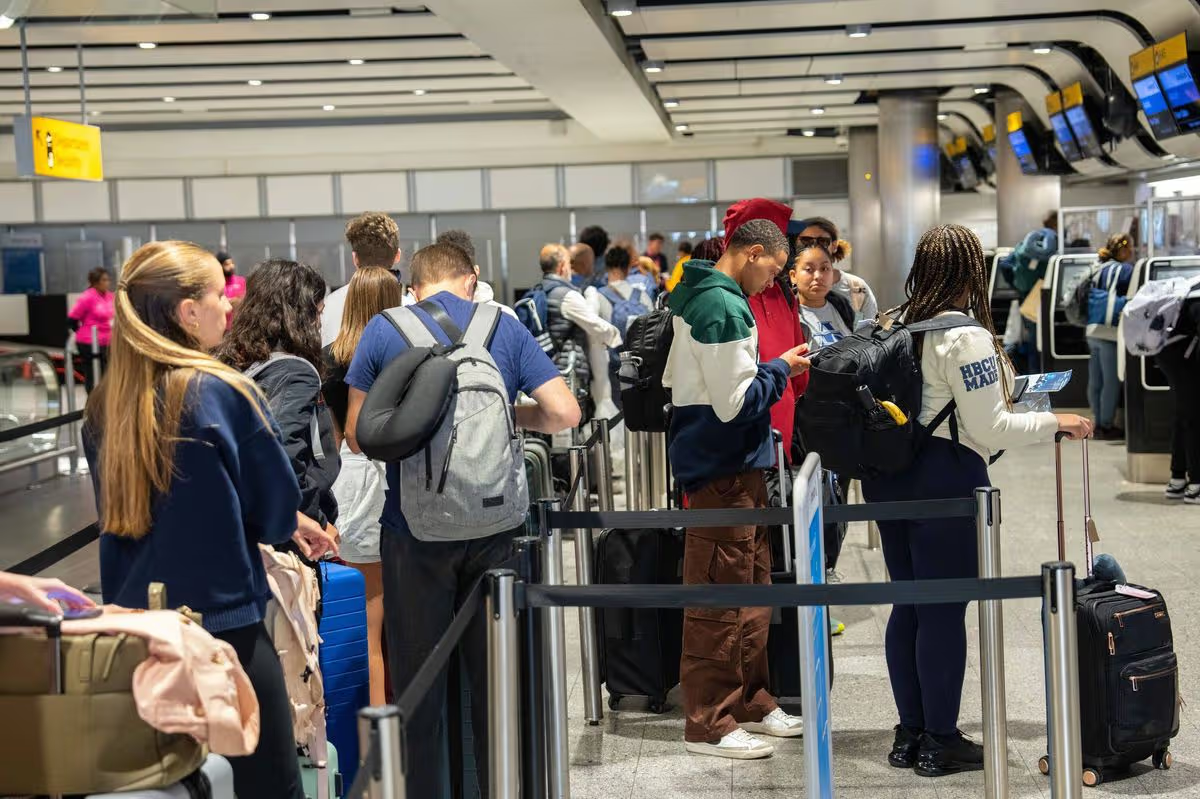
The Government has said it is “closely monitoring” UK jet fuel stocks as airlines prepare for a potential shortage. UK airlines have insisted they are “not currently seeing a shortage of jet fuel” as they buy it in advance and airports maintain stocks, the Department for Transport (DfT) said in an update published on Friday evening.

But airports will also make it easier for airlines to cancel flights without running the risk of losing their allocated “slots” – scheduled times for take-off or landing which some UK airports assign to airlines – if fuel shortages prevent them from flying.

Passengers have been advised to check with their airlines before they travel – and ensure they have appropriate travel insurance, according to the DfT.

This comes as oil prices continue to soar on the back of the US-Israel war on Iran and the closure of the Strait of Hormuz.

“There is no current need to change upcoming travel plans,” the DfT statement said.

“Since the closure of the Strait of Hormuz, we have been closely monitoring UK jet fuel stocks and working with airlines, airports and fuel suppliers to ensure passengers keep moving and businesses are supported.

“Government regularly meets with industry to monitor risks, understand pressures and ensure clear communication with passengers, should circumstances change.”

It added: “We recognise that families may be concerned, and that aviation and tourism businesses are operating in challenging global conditions.

“We are working hand in hand with industry to help flights keep operating.”

The DfT said airlines will also no longer be required to follow the “use it or lose it” rule at UK airports, whereby airlines must use at least 80% of their allocated slots during a season to keep them for the following year.

“Airport Coordination Limited, the independent body that manages slot allocation at UK airports, has updated its guidance so that airlines will not lose their slots if fuel shortages prevent them from flying,” the DfT update said.

“Airlines can now apply for an exemption from the ‘use it or lose it’ rule in these circumstances.” A spokesperson for Jet2 said its flight schedule remains unaffected for the foreseeable future.

“We remain in continual dialogue with our fuel suppliers, as is standard practice,” the spokesperson said. “Based on the conversations we have been having, we see no reason not to look forward to operating our scheduled programme of flights and holidays as normal.”

The airline also confirmed there will be no surcharge on any booked flights or holidays to cover cost increases, including those linked to jet fuel.

“Amidst speculation that some airlines and travel companies may introduce such surcharges, which would mean their customers facing additional costs after making a booking, Jet2 has removed the surcharge provision across all flights and holidays, even though the company has never previously applied them,” the airline announced on Friday.

Steve Heapy, CEO of Jet2, said: “Holidaymakers should have every right to book their hard-earned break in the sun, without worrying about being hit with additional costs, and they can have that complete assurance when they book a flight or holiday with Jet2.

“As a result of today’s announcement, customers booking with Jet2 know that they are locking in their price without additional cost surprises later and we strongly believe that is the right thing to do by them.”

It is understood that Virgin Atlantic and easyJet are also expecting to operate as normal.

Source link

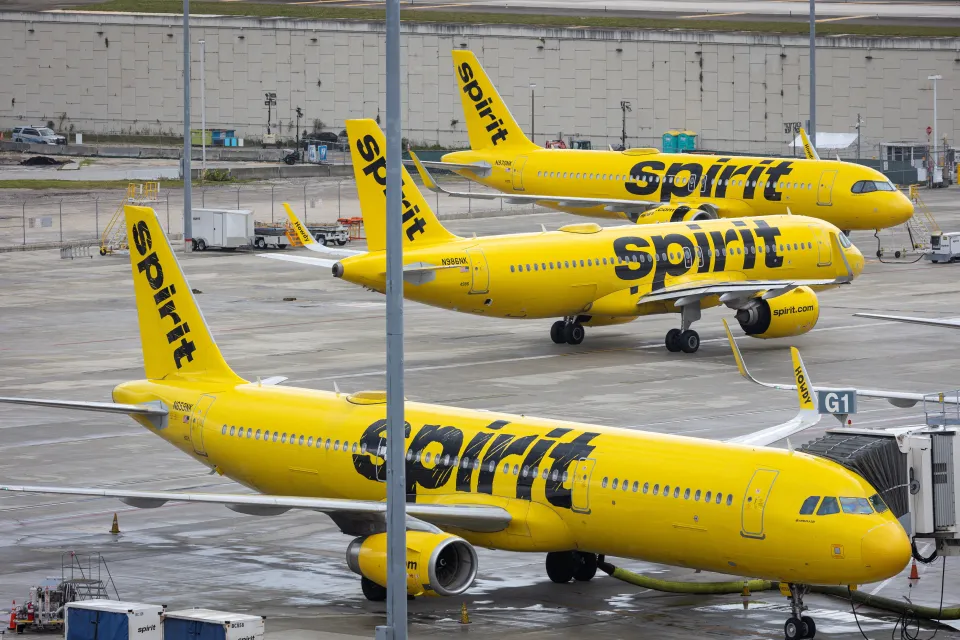
Trump administration contemplates Spirit Airlines bailout

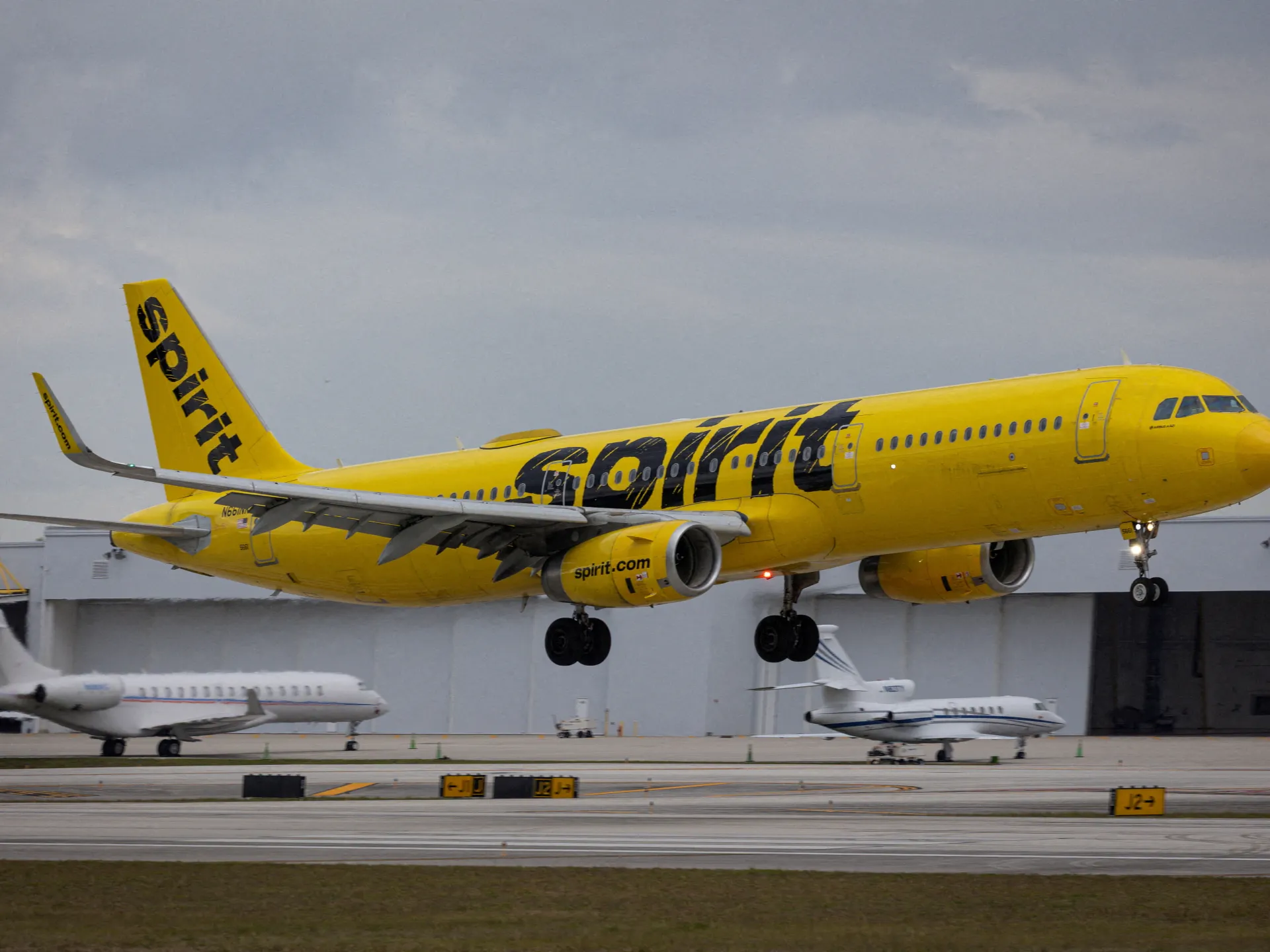
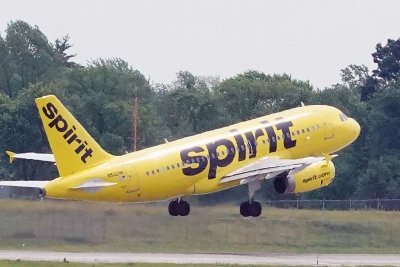
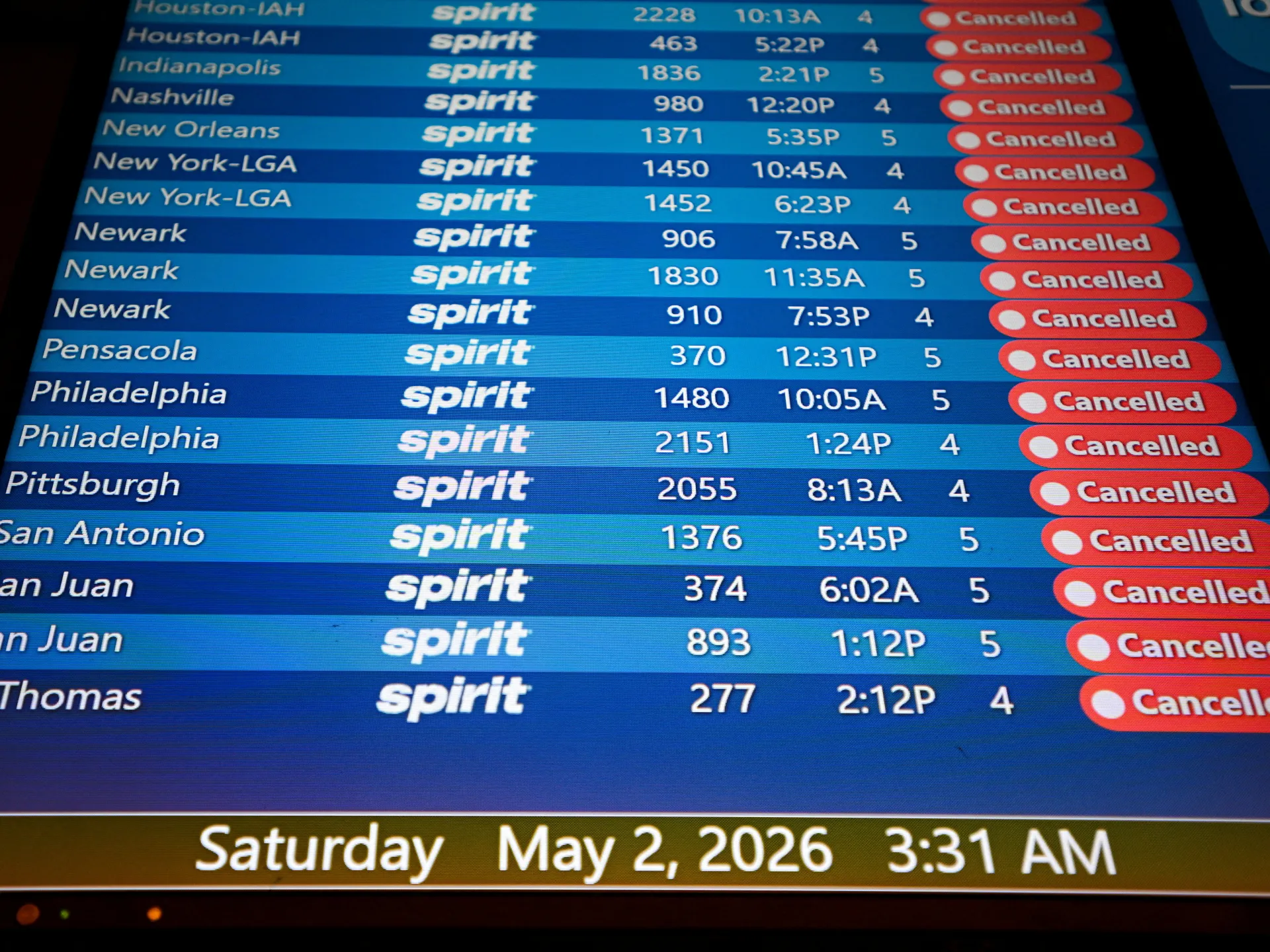
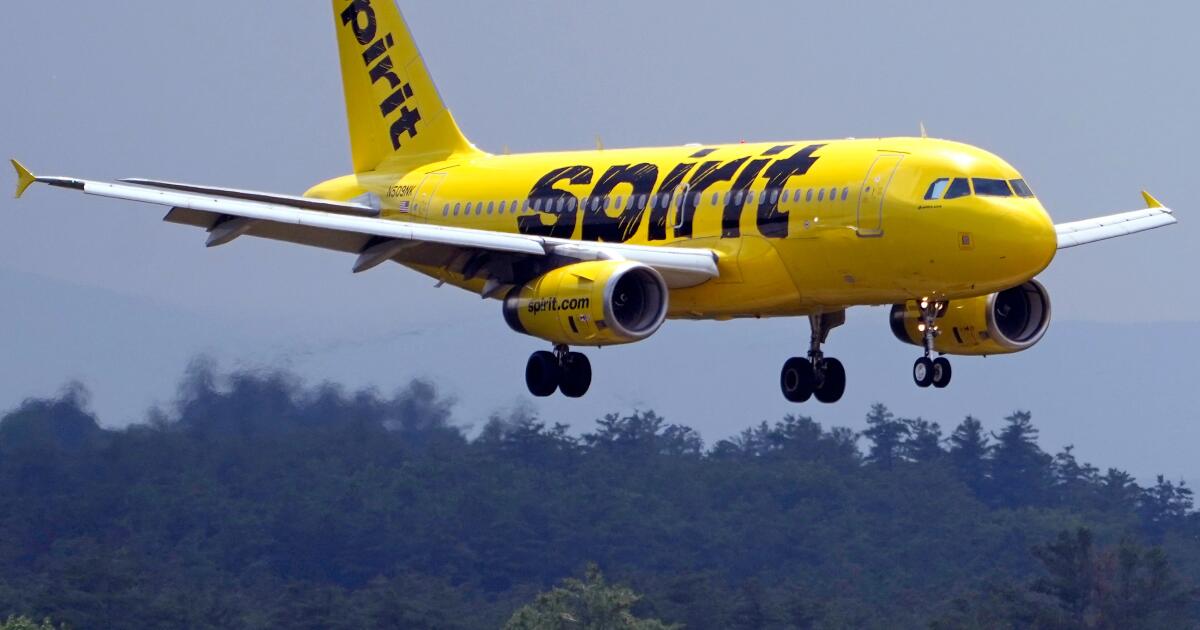
April 24 (UPI) — The Trump administration is working on a bailout of Spirit Airlines, which is in bankruptcy for the second time in a year, to keep it from shutting down.

President Donald Trump several times this week that the government may get involved in the situation — specifically highlighting his concerns about jobs and the airline industry — after increases in jet fuel cost made the airline’s situation even worse, CNBC and USA Today reported.

Spirit has not commented on the bailout negotiations, which would have to be approved by its creditors, but the administration has offered Spirit a $500 million loan, with the government receiving the right to own 90% of the company when it exits bankruptcy, CBS News reported.

“We’re thinking about doing it, helping them out, meaning bailing them out, or buying it,” Trump said on Thursday.

“I’d love to be able to save those jobs,” he said. “I’d love to be able to save an airline. I like having a lot of airlines so it’s competitive.”

Commerce Secretary Howard Lutnick has argued it is necessary for the government to step in and save Spirit because if it is shut down and liquidated during bankruptcy, at least 7,500 jobs will be lost.

The White House may use the Defense Production Act, which gives the government the ability to compel private companies to prioritize its contracts in the event of an emergency and to loan money to those companies, to give Spirit a loan.

The loan would make the government Spirit’s main debtor and, while the company is working its way through bankruptcy, the Department of Defense would use extra seats for transporting troops or moving other military cargo.

The union that represents Spirit’s ramp service employees, the International Association of Machinists and Aerospace Workers, urged the administration to prioritize employees at the airline, The Hill reported.

“IAM Union members at Spirit, and all frontline aviation workers, did not cause this crisis,” the union said in a statement.

“They should not be the ones forced to pay the price. Any federal assistance must prioritize protecting jobs, preserving pay and benefits, and maintaining the affordable air service that millions of Americans rely on,” the union statement said.

Spirit filed for chapter 11 bankruptcy protection in November 2024 after a judge blocked its proposed $3.8 billion merger with JetBlue Airlines in March of that year, and filed for bankruptcy again in 2025.

Spirit’s current bankruptcy plan includes the cost of jet fuel, which has roughly doubled for the company since the United States and Israel launched the war in Iran. The cost of fuel has also tanked their current business model, according to reports.

Spirit missed an interest payment this week, leading to it being warned that it could be in default with its creditors — to which Spirit has warned they may only have days to operate, which spurred the bailout talks.

The federal government already is working with the company’s creditors and has made a loan offer, CBS News reported, and Spirit has said it continues to operate normally, which includes deeply discounted flights.

President Donald Trump speaks during a Health Care Affordability event in the Oval Office at the White House on Thursday. Trump announced announced a new drug price deal with Regeneron. Photo by Will Oliver/UPI | License Photo

Source link

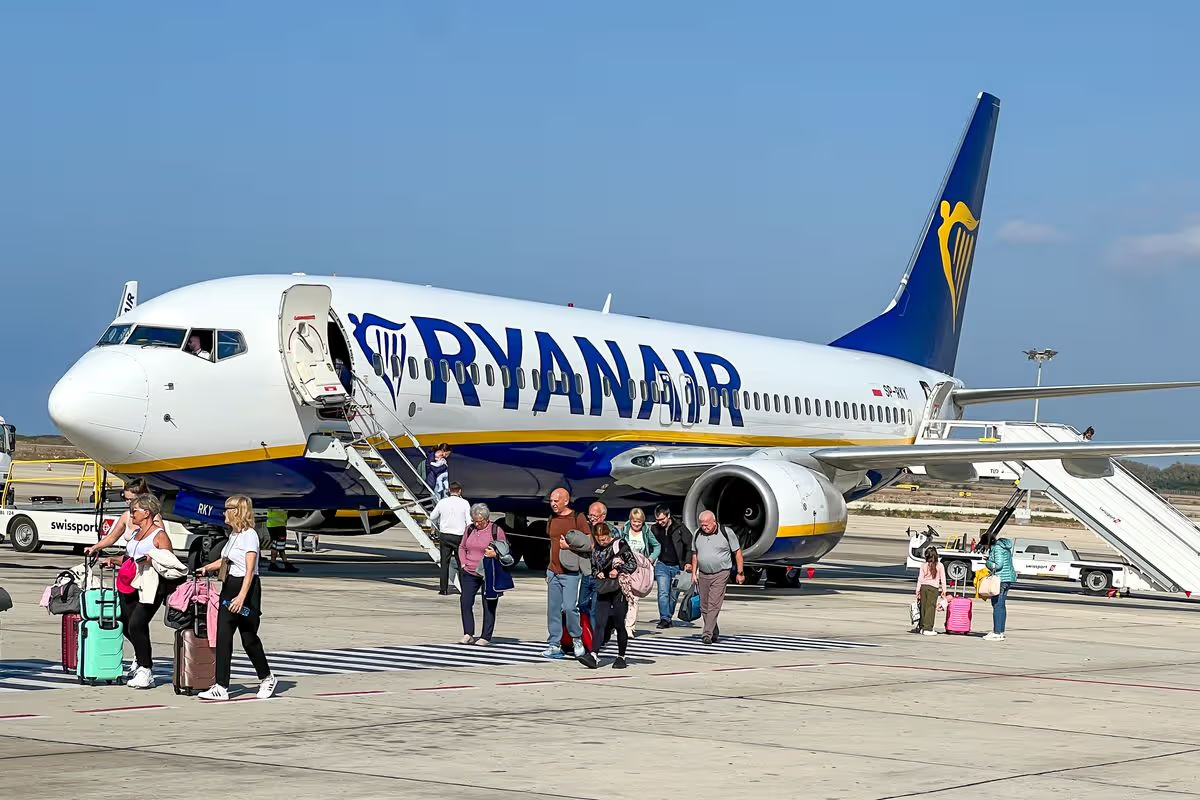
Ryanair says airlines will ‘abandon’ popular EU hotspot if new rule goes ahead

Ryanair has criticised a new aviation tax that has been imposed on a European country and urged it to be abandoned as the airline outlined its impact on travel and tourists

Ryanair has slammed the new aviation tax imposed on a major holiday hotspot and urged it to be ditched in a bid to boost visitor numbers.

The beautiful country of Austria offers a scenic escape, thanks to its dramatic backdrops of snow-capped mountains, mirrored lakes, alpine forests, rolling hills, national parks, and fairy-tale-like villages. Vienna, Salzburg and Hallstatt are among the most popular destinations for Brits.

According to the outspoken people at budget airline Ryanair, a €12 (£10.39) aviation tax imposed by the countries could severely impact airlines and, in turn, travel to the country.

Ryanair claimed the tax will see airlines such as Wizz Air, Level and easyJet “abandon Austria”, although it’s worth noting these other airlines have not issued statements to this effect. Two of Austria’s biggest airlines, AUA and Ryanair, have cut their capacity and closed routes, opting for “lower-cost neighbouring countries” such as Albania, Italy and Slovakia, according to Ryanair. The airline has long been a vocal opponent of many different forms of aviation taxes, despite a post-tax profit of £1.31 billion last year, according to AJ Bell.

READ MORE: Not the Caribbean, not the Maldives – this beautiful beach is in the UKREAD MORE: Pet owners warned new EU travel rule could see your dog banned from going abroad

Earlier this week, Ryanair called on the Government of Austria to ditch its €12 aviation tax by May 1, over concerns that it could lead to a “decline in airlines, routes and traffic serving Austrian airports”. The airline noted that the €12 tax has made “Austria uncompetitive”, as countries such as Albania, Italy and Slovakia have opted to revoke aviation taxes, lower ATC fees, and introduce growth incentive schemes to help reduce airport costs for airlines.

Ryanair has demanded that the €12 aviation tax is axed by the Austrian government, or else claims that it won’t invest in the country. The airline says it has a $1 billion (£740 million) growth plan, which could include basing 10 new B737 aircraft based in Vienna. If these proposed plans went ahead, Ryanair says the country’s traffic would grow by 70%, to 12 million passengers within the next five years.

As much as Ryanair’s bosses may not like the levy, the aviation industry has long benefitted from generous tax breaks. Even now, no fuel duty is paid on jet fuel, and no VAT is applied. This is in sharp contrast to other modes of transport. When it comes to driving in the UK, petrol is hit with a levy of 52.95 pence per litre, as well as 20% VAT.

“Aviation’s exemption from fuel duty and VAT appears more like an indirect subsidy that allows airfares to be kept artificially low. The absence of tax has helped to fuel passenger growth and the sector’s CO2 emissions have increased 125% since 1990. Over the same period, the UK’s overall emissions decreased by 43%,” writes the Aviation Environment Federation.

In a statement released on April 21, the CEO of Ryanair, Michael O’Leary, said: “Today we call again on Chancellor Stocker and Transport Minister Hanke to abandon their failed high tax policies. Austria has become totally uncompetitive, and is losing aircraft, routes and traffic to lower cost alternatives like Slovakia, Albania and Regional Italy. Even Sweden, the home of Greta Thunberg and flight shaming, has now abolished its aviation tax.

“Meanwhile, Austria has the highest aviation taxes, the highest ATC fees, and Vienna Airport has abandoned its growth incentive schemes, making Austria and Vienna hopelessly uncompetitive at a time when neighbours such as Slovakia have abolished aviation taxes, slashed ATC fees, and have lowered airport charges through growth incentive schemes, which Vienna Airport used to offer, but no longer does.

“The solution to Austria’s aviation crisis is clear. We need leadership and we need action. Abolish Austria’s harmful €12 aviation tax, cut Austria’s expensive ATC fees immediately by 50% to make them competitive with neighbouring Slovakia, and demand that Vienna Airport reinstate the growth incentive schemes, which were such a success when Vienna introduced them 8 years ago.

“Ryanair can and will deliver rapid traffic and tourism growth for Vienna, but only when Austria offers a competitive cost base to that currently offered in Slovakia, Albania and Regional Italy. Until such time as it does, it is inevitable that Austria will continue to lose aircraft, routes, traffic and jobs to lower cost countries, while “Sleepy Stocker” and “Hopeless Hanke” fiddle around with “reform” of the aviation tax, when what it needs, is abolition.

“It’s time for action from the Stocker Govt, and we call on them to abolish this stupid aviation tax on 1 May next, and give Austria an opportunity to recover the traffic, tourism and jobs it has lost as a result of its high tax policy over recent years.”

Do you have a travel story to share? Email webtravel@reachplc.com

Source link

More than 30 airlines axe flights or add charges over jet fuel crisis – full list

The sharp rise in the cost of jet fuel, driven by escalating tensions in the US-Israel war with Iran, has forced several airlines to hike fares, cut routes and reassess their financial forecasts

Multiple airlines are cancelling flights and introducing new charges as a deepening jet fuel crisis sends shockwaves through the global aviation industry.

Prices have surged dramatically in recent weeks, climbing from roughly $85-$90 per barrel to as high as $150-$200, driven by escalating tensions in the US-Israeli war with Iran.

The sharp rise in costs has now forced carriers to hike fares, cut routes and reassess their financial forecasts. The spike has triggered warnings of major disruption, with International Energy chief Fatih Birol cautioning that Europe could have as little as six weeks of jet fuel supply remaining if the Strait of Hormuz stays closed.

There are more than 30 airlines around the world who say they have been forced to cancel flights or add charges:

AirAsia X – Cut around 10% of flights and introduced a fuel surcharge of roughly 20%.

Air France-KLM – Raising long-haul fares, plus cabin fares by 50 euros per round trip, as well as cancelling flights. KLM, the group’s Dutch arm, is set to scrap 160 European services in the coming months.

Air India – Switching to distance-based fuel surcharges, warning current pricing does not cover rising costs, reports the Independent.

Air New Zealand – Reducing flights through May and June, increasing fares and suspending its full-year earnings forecast.

Akasa Air – Introducing fuel surcharges ranging between 199 and 1,300 Indian rupees ($2 to $14) on both domestic and international routes.

Alaska Air – Increasing checked baggage fees by up to $150 on North American routes, as well as for its Hawaiian Airlines unit.

American Airlines – Raising baggage fees by $10 each for the first and second checked bags and by $150 for the third checked bag, while cutting some economy benefits.

Asiana Airlines – Cutting 22 flights between April and July due to fuel costs.

Cathay Pacific – Cancelling a small portion of flights from mid-May until the end of June and increasing fuel surcharges.

China Eastern Airlines – The airline said it would raise ⁠fuel surcharges for domestic flights from April 5, with flights of 800km and below hit with a 60 yuan ($9) surcharge and a 120 yuan surcharge for flights over 800km.

Delta Airlines – Delta said it would cut capacity by around 3.5 percentage points from its original plan and raise fees for checked bags.

Easyjet – CEO Kenton Jarvis previously said European consumers should expect higher ticket prices towards the end of summer, when existing fuel hedges come to an end.

Greater Bay Airlines – Said it would raise fuel surcharges on most routes from April 1, while keeping them unchanged on mainland China and Japan routes. Its surcharge for flights between Hong Kong ‌and the Philippines will more than double, the carrier said.

Hong Kong Airlines – The airline said it would raise fuel surcharges by up to 35% from March 12, with the sharpest increase on flights between Hong Kong and the Maldives, Bangladesh and Nepal

Indigo – India’s biggest airline said it would introduce fuel charges on domestic and international flights from March 14.

Jetblue Airways – The US-based low-cost carrier said it was increasing fees for optional services such as checked baggage as it experiences “rising operating ⁠costs”. Baggage prices will rise by either $4 or $9, it said.

Lufthansa – Grounding 27 planes early and cutting more aircraft from its fleet.

Norse Atlantic AirwaysAxed its London Gatwick to Los Angeles route because of fuel costs.

Pakistan International AirlinesRaising domestic fares by $20 and international fares by up to $100.

SAS – Will cancel 1,000 flights in April after already hiking fares.

Spring Airlines – The airline will raise domestic fuel surcharges from April 5.

Southwest AirlinesHiking baggage fees to $45 for a first bag and $55 for a second.

SunExpress – The airline will add a temporary 10-euro fuel surcharge on Turkey-Europe routes.

TAP Air Portugal – Said fare rises would soften the blow from higher fuel prices.

Thai Airways – Increasing fares by up to 15%.

United Airlines – United Airlines is scaling back loss-making routes over the next six months. It has also been able to push up fares without seeing a major impact on bookings, chief commercial officer Andrew Nocella said, despite the sharp rise in oil and jet fuel costs.

United is also increasing first and second checked baggage fees by $10 for customers travelling within the US, Mexico, Canada and Latin America, according to Reuters.

VietJet AirCut flights on some routes because of fuel shortages.

Vietnam Airlines – plans to cancel 23 domestic flights a week from April. The airline reportedly requested government assistance to remove an environmental tax on jet fuel.

Virgin Atlantic – The airline is adding fuel surcharges to fares and will still struggle to return to profitability this year, its CEO Corneel ‌Koster told the Financial Times.

Volotea – Introduced a pricing policy that could add fuel surcharges of up to 14 euros per passenger.

WestJet – Cutting seats, combining flights and adding a C$60 fuel surcharge on some bookings, according to the Canadian press

Source link

Travelers brace for summer vacation chaos as airlines set to run out of jet fuel

MOUNTING fears of jet fuel shortages have US travelers on edge ahead of summer vacations.

The holiday industry is bracing for a major fallout due to the Iran war’s impact on global travel.

Will US travelers end up stuck in an overseas airport over summer due to huge jet fuel shortages amid the Iran war? Credit: Getty
Experts have warned travelers to be braced for chaos if flying to Asia or Europe over summer Credit: Getty

“Anxious” Americans are worrying about whether they can return home if they travel to Europe or Asia for their summer vacation, said one expert.

For example, will their their long haul-flight end up suddenly being chopped due to a lack of fuel while overseas?

Alternatively, “will my short-haul domestic flight to the international airport be canceled?” Patrick De Haan, GasBuddy’s head of petroleum analysis, told Forbes.

“It’s a level of anxiety that travelers have never really had to worry about, and absolutely it could worsen.”

People across the world are keen for the Strait of Hormuz to reopen to shipping, because of spiraling costs hitting everything from grocery shopping to global fertilizer supplies.

But, even if this vital, narrow corridor was to permanently reopen today, it’ll be too late to salvage this year’s summer holidays, experts have warned.

That’s because airlines have now got to stick to a hurriedly rejigged schedule with airports – which must be booked months in advance.

It comes as the global jet fuel shortage is ramping up fuel prices for US carriers, which in turn are axing cheap airfares and some flights to save money.

Some airlines are already passing on extra costs to travelers by increasing fees for baggage and other add-ons, via steeper ticket prices, and fuel surcharges.

It’s the largest energy crisis the world has ever faced Credit: Getty

And, unfortunately, it will take months for vital supplies of oil and jet fuel to return to normal, according to Kpler, an energy consulting firm.

“It’s going to take until at least July,” Matt Smith, head US analyst, warned CNN.

“And even that may be optimistic at this point.”

United, American, Delta and Southwest airlines spent about $100 million a day on average among them on fuel in 2025.

But jet fuel prices have roughly doubled since the war began, when the United States and Israel started ​bombing Iran on February 28.

Delta Air Lines — which frequently flies to destinations across Europe — said it was aware of the continent’s “potential jet fuel supply issue.”

The carrier has already slashed some flights this summer.

United Airlines announced in March that it was “tactically pruning flying that’s temporarily unprofitable in the face of high oil prices.”

It’s the “largest energy crisis we have ever faced,” IEA executive director Fatih Birol told Associated Press last Thursday.

“If we are not able to open the Strait of Hormuz… I can tell you soon we will hear the news that some of the flights from city A to city B might be canceled as a result of lack of jet fuel,” he warned.

It will take an estimated two years for the world to recover from energy shortages caused by the war in Iran, Birol added.

More than 110 oil-laden tankers and over 15 carriers loaded with liquefied natural gas are still waiting in the Persian Gulf.

In Europe, there are about six weeks of jet fuel left Credit: Getty

America’s own jet fuel supplies aren’t currently a huge concern, as local carriers are insulated to a certain extent.

The US produces 13 million barrels of oil a day and imports some four million barrels a day from Canada, De Haan told Forbes on April 16.

However, it’s a different situation in Europe and Asia, both of which are facing a potential shortage because of the ongoing conflict.

In Europe, multiple countries are now relying on less than 20 days of coverage in their fuel supplies, warned the International Energy Agency (IEA).

Asia-Pacific countries are the most reliant on oil and jet fuel from the Middle East, followed by Europe.

“The strait accounts for around 40% of Europe’s jet fuel imports, but no jet fuel has passed the strait since the war broke out,” said Amaar Khan, head of European jet fuel pricing at Argus Media, last Friday.

America has this month come to Europe’s aid to help bolster jet fuel supplies due to the war, sending about 150,000 barrels per day in April.

This is about six times the normal level, according to Jacques Rousseau, managing director at financial firm Clearview Energy Partners.

Airlines chop flights and increase fees amid the Middle East crisis

Here are just some of the impacts on travelers due to the Iran war…

Air Canada:

From June 1 to October 25, 2026, Canada’s largest carrier will chop back flights to New York due to rocketing fuel prices.

Alaska Air:

Fees for the first checked bag have risen by $5 and by $10 for the second on its North American flights. A third checked bag has increased considerably, from $50 to $200.

American Airlines:

Baggage fees have risen by $10 for the first and second checked bags, and by $150 for the third checked bag on domestic and short-haul international flights.

Delta Air Lines:

The carrier is charging an increase of $10 on passengers’ first and second checked bags and a $50 increase on the third.

Frontier Airlines:

This carrier is reviewing its full-year forecast due to rising fuel prices.

Jetblue Airways:

Baggage prices will rise by either $4 or $9.

Spirit Airlines:

This budget US carrier has begged Donald Trump’s administration for hundreds of millions of dollars in emergency funding to offset rising fuel prices.

Southwest Airlines:

Checked baggage fees will rise by $10 for the first and second bags.

United Airlines:

The airline is slashing unprofitable flights.

Also, first and second checked bag fees will spike by $10 for customers travelling in the US, Mexico and Canada and Latin America.

Virgin Atlantic:

This carrier is reducing flights and raising fares.

Westjet:

The Canadian airline ​has chopped seat capacity for June.

A C$60 ($43) fuel surcharge will be slugged on some bookings.

Source: The Independent

Be prepared for last-minute issues when traveling this summer, experts have warned Credit: Getty

Source link

Ten airlines cancelling and grounding flights because of the fuel crisis

Europe is facing a severe jet fuel crisis due to the Middle East conflict, with International Energy Agency chief Fatih Birol warning the region has ‘maybe six weeks or so’ of jet fuel left and that flight cancellations could follow

Europe has just six weeks’ worth of jet fuel remaining due to the ongoing Middle East conflict, with major airlines grounding flights.

Fatih Birol, executive director of the International Energy Agency (IEA), warned that flight cancellations could follow “soon” if oil supplies continue to be restricted by the Iran war. Iran maintains a firm grip on tankers navigating through the Strait of Hormuz, with Mr Birol telling the Associated Press this is triggering “the largest energy crisis we have ever faced”.

He warned that Asian nations such as Japan, India and China, which depend heavily on Middle Eastern energy supplies, are on “the front line”, with the pressure set to “come to Europe and the Americas” shortly after.

Europe has just six weeks of fuel left, according to the IEA director. He added that if the Strait of Hormuz remains blocked, the knock-on effect could mean “some of the flights from city A to city B might be canceled as a result of a lack of jet fuel”.

READ MORE: Jet2 holidays changes to 14 day rule for all travellers and sends emailREAD MORE: Flight cancellations over fuel as passengers told to know their rights

Which airlines are cancelling flights?

A number of airlines have warned that they might have to cancel flights if the situation continues, but the number of those that have already done so is fewer.

Swedish flag carrier SAS has said it would cancel 1,000 flights in April because of high oil and jet fuel prices, after cancelling a “couple hundred” flights in March.

United Airlines said that five per cent of flights would be cancelled in the second and third quarters of 2026, while Dutch airline KLM has cancelled 160 flights for the coming month.

South Korean airline Asiana will slash 22 flights between April and July due to the fuel cost increase.

Hong Kong airline Cathay Pacific will cut some flights from mid-May until the end of June, with about 2% of its scheduled passenger flights grounded. Its budget airline HK Express is cutting around 6% of flights.

German airline group Lufthansa said it would ground 27 planes servicing its short-haul CityLine subsidiary earlier than it had planned, blaming jet fuel prices.

Vietnam Airlines plans to cancel 23 flights per week across domestic routes from April.

Air New Zealand will be cutting back on flights over the next two months, it announced in March. It is expected that 1,100 flights will be impacted.

Norse Atlantic Airways has removed all flights to Los Angeles International Airport from its summer schedule, blaming the fuel shortage.

Although major airlines including British Airways, Ryanair and easyJet have highlighted the potential impact of the fuel price rise on ticket costs and schedules, they are yet to cancel flights as a direct consequence.

However, BA is stopping its route from London Heathrow to Jeddah, although this is due to a shift in demand, according to the airline.

Last week, easyJet chief executive Kenton Jarvis sought to reassure passengers, stating that all airports the airline serves are “operating as normal”.

He continued: “We only ever in this industry have three to four weeks’ visibility (of jet fuel supplies), and that is the same as it was pre-crisis. We have visibility to the middle of May, and we have no concerns. What we’re seeing is airports and fuel suppliers working well to bring jet fuel to the airports.”

EasyJet revealed the Middle East conflict set the airline back roughly £25 million in elevated jet fuel costs last month. The Luton-based carrier said it anticipates reporting a headline pre-tax loss of between £540 million and £560 million for the six months ending in March.

The conflict has created “near-term uncertainty around fuel costs and customer demand”, easyJet revealed.

Bookings have dropped by two percentage points for the three-month periods ending in both June and September when compared with the previous year.

The alert regarding larger-than-anticipated first half losses sent easyJet shares tumbling by as much as 9% during early Thursday trading, before stabilising around 4% down.

Source link

Tourists to endure up to eight WEEKS of travel chaos as airlines axe flights

Airlines could face ‘an existential crisis’ in just a few weeks’ time if the Strait of Hormuz crisis continues, an aviation expert has said, amid warnings that more flights could be cancelled

British tourists could face up to eight weeks of cancelled flights and airport chaos this summer as major airlines grapple with imminent fuel shortages, experts have warned.

European giants KLM and Lufthansa announced yesterday that they would be axing hundreds of flights due to the soaring cost of jet fuel – while Fatih Birol, executive director of the International Energy Agency (IEA), warned that European airports have only “six weeks or so” of supply left due to shortages caused by the Strait of Hormuz crisis.

The warnings have new sparked fears of disruption just before the busy summer holiday season, with airlines set to slash more routes and cut back on schedules if the crisis goes on.

READ MORE: EasyJet boss warns of summer price hike after £25million hit from jet fuel costsREAD MORE: KLM and Lufthansa CANCEL hundreds of flights as fuel cost soar amid Iran war

One aviation expert said that the period between now and mid-June could prove crucial, as airlines could face an “existential crisis” if the global oil shock has not by subsided by then.

Sally Gethin told the Daily Mail: “The worst case scenario is if this carries on for six to eight weeks and the shortages start really biting. This could pose an existential crisis to airlines – even if they slap on fuel surcharges they still won’t recoup the cost.

“You could be looking at tens of thousands, potentially hundreds of thousands, of flights being cancelled globally. It could affect holiday companies as well, although consumers will be protected if their trips are covered by ATOL.”

The Mirror has approached all of Britain’s largest airlines and airport operators to ask whether they are preparing contingency plans for jet fuel shortages. Simon Calder, a travel journalist, reassured holidaymakers today that Mr Birol’s warning was “a mile off” but accepted prices of foreign holidays are likely to rocket this summer. He told Channel 5’s Matt Allwright Show families should look at holidaying in the UK, such as at Bournemouth, instead.

On Thursday, easyJet chief executive Kenton Jarvis said all the airports it serves are “operating as normal”.

He went on: “We only ever in this industry have three to four weeks visibility (of jet fuel supplies), and that is the same as it was pre-crisis.

“We have visibility to the middle of May, and we have no concerns.

“What we’re seeing is airports and fuel suppliers working well to bring jet fuel to the airports.”

Chancellor Rachel Reeves told the BBC yesterday that Britain has “no issues with supply at the moment” in jet fuel, diesel or petrol as she left a meeting of the International Monetary Fund (IMF) in Washington DC.

The IMF this week urged countries to manage energy demand by adopting measures such as subsidising public transport and promoting remote work to combat a surge in energy costs caused by the conflict.

Source link

Nine major airlines that have cancelled flights as fears Europe will run out of fuel in WEEKS due to Iran war

OFFICIALS have warned that there is just weeks of jet fuel supplies left before airlines start running out.

Earlier this week, the head of the International Energy Agency warned that vital supplies remain blocked by conflict in Iran – as a result, many airlines have already started axing routes.

Certain airlines, like Norse, have started cutting back on flight routes Credit: GC Images
British Airways has axed one route completely from April 24, 2026 Credit: Getty

The blockade of the Strait of Hormuz is holding up major supply chains which has led to a huge hike in fuel costs – and shortages.

ACI Europe, which represents European airports, said the key trade route must open within three weeks or fuel reserves will run drastically low.

In response, a number of major airlines have been cancelling flights in preparation for shortages – with thousands affected.

Here are the major eight airlines that have already cut back on their routes…

SHORE WINS

How to bag yourself a stunning British seaside holiday break for just £49


TRIP UP

The Sun’s travel experts reveal their best EVER holidays & how you can do them too

United Airlines

United Airlines said that five per cent of flights would be cancelled in the second and third quarters of 2026.

With up to 5,000 flights a month – working out to around 4,000 domestic and 800 international routes – this means it affects around 250 flights a month.

United Airlines has the world’s largest airline fleet with more than 1,075 aircraft.

Scandinavian Airlines

SAS was the first major airline in Europe to axe flights because of of the cost of fuel going up.

It said in mid-March that it would cancel 1,000 flights throughout April.

Lufthansa

Lufthansa‘s subsidiary airline CityLine is to cease operations due to both the Iran crisis and ongoing strike action.

The division ran business flights between European airports but will ground its entire fleet of 27 aircraft. 

Flight routes typically connected London to Frankfurt and Munich.

It will also cut six planes from its international fleet after the summer holiday season, warning that the cutbacks could last into winter.

Lufthansa will cease operations of CityLine due to the conflict Credit: Getty

KLM

Dutch airline KLM has cancelled 160 flights for the coming month, but has said it will affect less than 1 per cent of its schedule

The airline insists there is no shortage of jet fuel, saying the move is purely down to spiralling costs.

A KLM spokesperson said: “Passengers affected by these changes will be rebooked onto the next available flight.

“KLM expects a busy May holiday period and is making sure passengers can travel to their holiday destinations as planned.”

Cathay Pacific

Cathay Pacific has confirmed that two per cent of passenger flights will be cancelled from May 16 to June 30.

This will affect a number of regional routes, as well as longer-haul connections to destinations across Australia and South Asia.

Its budget airline HK Express is set to cut six per cent of flights due to increased costs.

Air New Zealand

Air New Zealand announced in March that it will be cutting back on flights over the next two months.

Chief Executive of Air New Zealand Nikhil Ravishankar said the airline would see roughly a five per cent reduction in its services which would continue until the beginning of May 2026.

This reduction equates to around 1,100 flights which in turn will affect 44,000 passengers out of its 1.9million.

Norse

Norse Atlantic Airways has removed all flights to Los Angeles International Airport (LAX) from its summer schedule.

A spokesperson said: “Due to the continued increase in fuel constraint risks, fuel prices, and the resulting impact on our operating costs, we have had to make the difficult decision to suspend our LAX operations this summer, May to October.”

Norse operated a summer route from London Gatwick to LA.

British Airways

British Airways will drop its service from London Heathrow to Jeddah in Saudi Arabia permanently from April 24, 2026.

The airline had been operating a four flights a week service since November 2024.

BA said the terminating of the service was due to a shift in demand rather than fuel costs as hasn’t axed any flights because of that so far.

Virgin Airways

Virgin Atlantic announced earlier this month that it would be permanently scrapping its London flight to Riyadh from April 7, 2026.

It said some of the reasons were the “evolving situation in the Middle East” and “operating costs.”

Some airlines have increased prices to offset costs instead…

Rather than axing routes – other airlines have added surcharges or baggage fees…

  • Air France and KLM have have increased their round-trip fares by €100 (£87) on most of their long-haul flights– with an additional charge of €10 (£8.69) for a round trip in economy.
  • Virgin Atlantic confirmed it would do the same earlier this week – passengers in economy will pay an extra £50, in premium economy passengers will pay an extra £180 and anyone in business class will see flights cost an extra £360.
  • JetBlue has increased baggage fees by $4 (£3) for off peak, economy travellers. This will now be $39 (£30) – the cost peak economy travellers will be $49 (£37).
  • The low-cost Spanish Airline Volotea is adding maximum surcharge of €14 (£12.20) per person to flight bookings.

Here’s why you should book your summer holiday now – easyJet boss says.

And here are the European holiday destinations Brits are flocking to instead of Turkey and Egypt due to Iran crisis.

A number of airlines are cutting routes due to the conflict in the Middle East Credit: Alamy

Source link

Two more major airlines forced to increase flight prices by £86 due to fuel crisis

As airlines grapple with the soaring jet fuel prices and global shortage due to the closure of the Strait of Hormuz, two more have been forced to increase their prices for passengers

Due to the escalating fuel crisis sparked by the Middle East conflict, two more airlines have been forced to raise their prices.

Air travel has been severely disrupted with cancelled routes and a sharp rise in jet fuel prices since US-Israeli strikes erupted on February 28, 2026. The situation was further heightened by Iran’s blockade of the Strait of Hormuz, through which approximately 20 per cent of the world’s oil and gas passes, triggering a global shortage.

As a result, airlines have been grappling with rising jet fuel costs and have been forced to raise prices. Air France and KLM are the latest airlines to confirm they’ve had to increase ticket prices as a result.

READ MORE: Major European airport issues ‘arrive early’ alert for all passengers amid delaysREAD MORE: EasyJet boss warns of summer price hike after £25million hit from jet fuel costs

The airlines, which are part of the same company Air France–KLM, had previously added a surcharge last month to offset soaring jet fuel prices. At the time, economy fares were bumped up by an extra €50 (£43.47) for a round trip, reported The Sun.

Now, with another increase announced, a long-haul round trip with Air France or KLM could cost an additional €50, bringing the fuel surcharge to €100 (£86.98) on top of the standard fare. Meanwhile, flights to the United States, Canada and Mexico could increase by €70 (£60.89), and an economy round-trip could cost an extra €10 (£8.70).

The Mirror has contacted Air France and KLM for comment.

Air France and KLM aren’t the only airlines to raise prices amid the ongoing fuel crisis. Just this week, it emerged that Virgin Atlantic had increased some flight costs with an extra £50 fuel surcharge on economy-class tickets, while premium economy fares are climbing by £180 and business class by £360.

Virgin Atlantic Chief Executive, Corneel Koster, warned travellers that flight prices could climb in the coming months and potentially throughout the remainder of the year. He said: “We have never seen jet fuel at this level and airlines cannot sustain those sorts of high costs.”

“If the fuel price goes much higher, I think the surcharges may go higher. If they go up in a week and you book in two weeks’ time, you’ll be paying higher.”

While there are no fuel shortages at present, Koster acknowledged it was impossible to guarantee supplies in the months ahead. “We have contracts with multiple suppliers who have a wide range of diversity of where the jet fuel comes from,” he explained.

“We have good visibility and no concern for the coming one to two months – certainly for the remainder of April and May. Beyond that I have less visibility, but that is quite normal.”

Meanwhile, it’s also been reported that airlines, such as JetBlue, have increased luggage fees in a bid to offset the soaring fuel costs. For off-peak economy fares, bags are expected to cost $4 more (£2.95), jumping to $39 (£28.79), while peak economy fares are set to be $49 (£36.17).

Do you have a travel story to share? Email webtravel@reachplc.com

Source link

First look at airline’s new onboard bunk beds which even economy passengers can book

NEW images have revealed what to expect from the first ever bunk beds launching on a plane – that even economy passengers can book.

First announced back in 2020, Air New Zealand will be rolling out the new sleeping options later this year.

New bunk beds are being rolled our for economy passengersCredit: Skynest
Each bed can be booked for four hour slotsCredit: Skynest

Called the Skynest, there will be six bunks, each with lie flat beds, measuring around 6ft6 in length and 64cm wide.

All passengers who book them will be given fresh sheets, blankets and pillows, as well as amenity kits containing eye masks, ear plugs, socks, toothbrush and toothpaste, and hand cream.

The seats have privacy curtains, as well a small bag storage area, USB charging and flight attendant call buttons.

Each one can be booked for four hour slots, which is an additional cost on a standard economy seat or premium economy seat.

FUELLING CHAOS

Major UK airline to hike flight costs by up to £360 due to fuel crisis


CHECK IN

New European travel rules starting TOMORROW as experts and airlines warn of chaos 

Once the four hour session is over, lights will slowly turn on and crew will wake passengers up to go back to their seats.

Each flight will have two sessions, meaning 12 passengers per flight can book it.

No kids are allowed however – passengers must be over 15 to sleep in them.

Air New Zealand boss Nikhil Ravishankar told USA Today: “We really do hope that this starts a bit of a revolution in economy class travel, where sleep becomes available to more customers.

“One sleep in New York, you wake up, and you’re in one of the most beautiful countries in the world.”

Booking for the beds will open on May 18, with them being rolled out by November.

Prices start from $495 (£365).

They will initially only be on flights between New York and Auckland but they will be rolled out on other services eventually.

They could also be expanded to include more than six beds, depending on demand.

Air New Zealand previously rolled out the Skycouch seats in economy, the first in the world to do so.

Having launched back in 2010, Skycouch allows passengers to book a row of seats and turn them into a bed.

Other airlines such as United Airlines recently revealed plans for similar ‘economy bed’ options, called the ‘relaxed row’.

Thai Airways is also launching lie flat beds in premium economy.

Skynest can be booked from May 18Credit: Skynest
Each one will cost £365 which is in addition to the standard plane fareCredit: Unknown

Source link