ANOTHER airline has confirmed that luggage fees will be increasing due to the ongoing fuel crisis.
The conflict in the Middle East has resulted in the cost of jet fuel soaring due to the closure of the Strait of Hormuz, meaning airlines are looking at ways to offset costs.
Sign up for the Travel newsletter
Thank you!
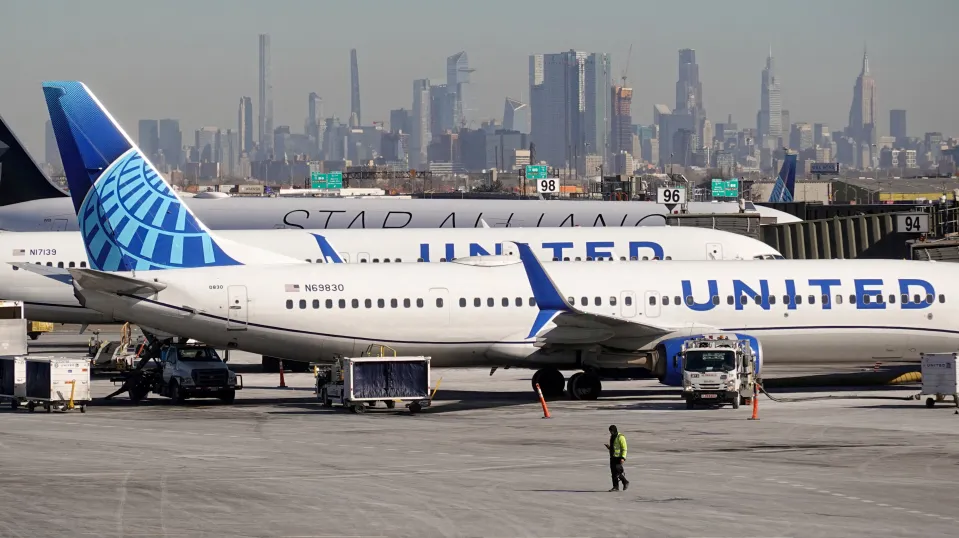
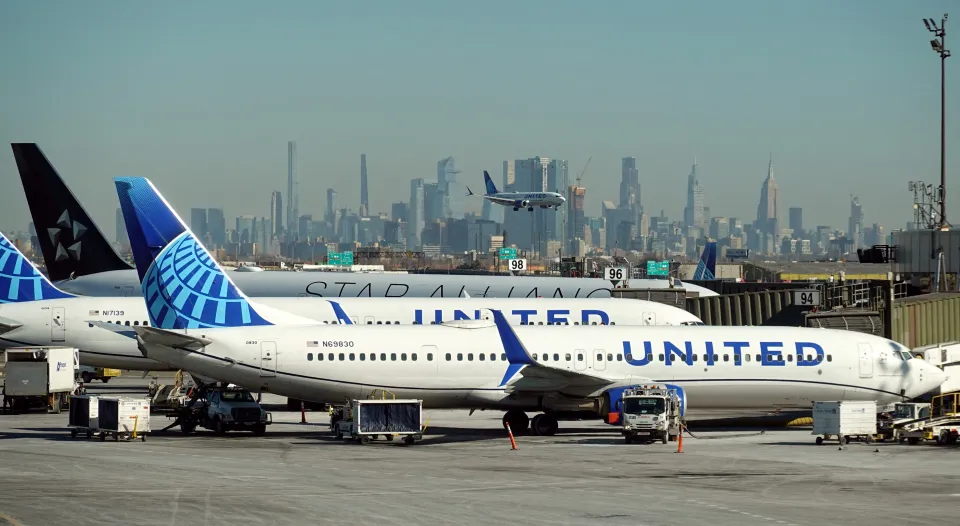
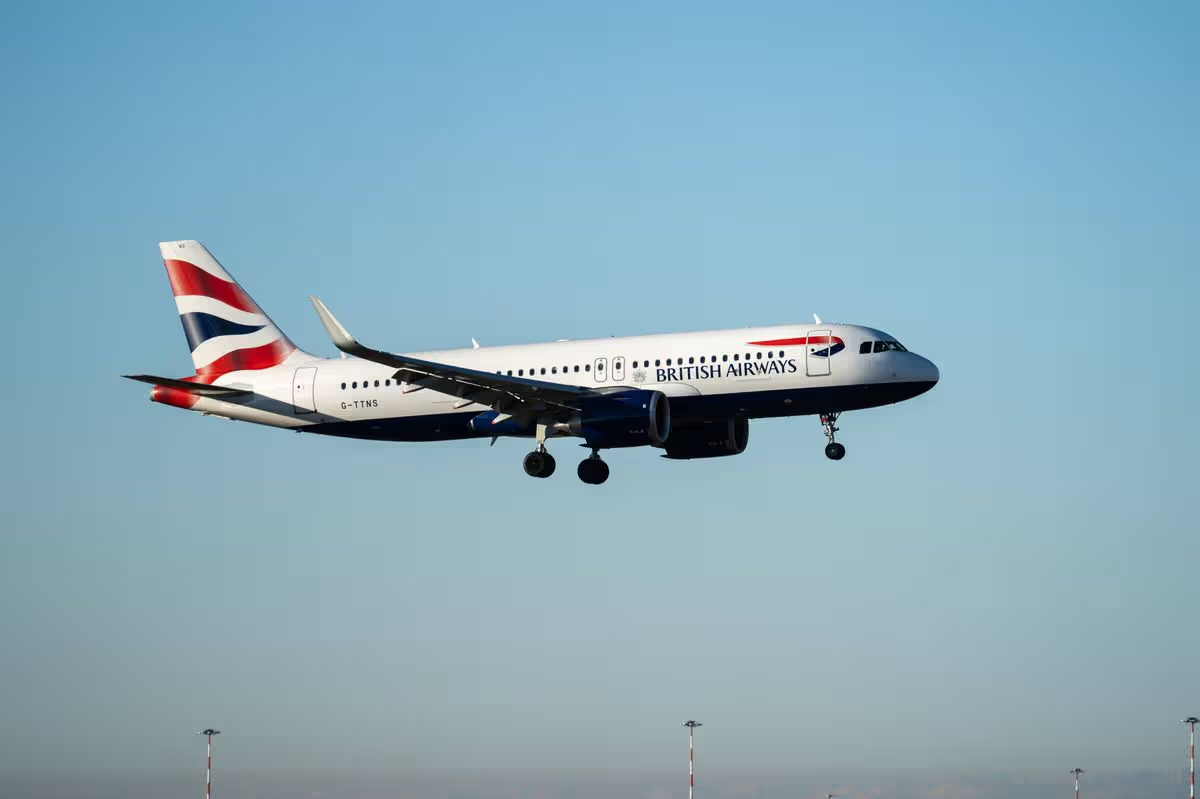
United Airlines is the latest to increase luggage costs due to rising fuel pricesCredit: Reuters
And United Airlines has since increased its baggage fees, the second airline to do so.
The new rules mean checked bags now cost $10 (£7.50) extra, working out to $45 (£33) for domestic flights, or $50 (£37) if it it booked 24 hours before a flight.
A second checked bag will now cost up to $60 (£45) if booked last minute.
The airline said: “United is raising first and second checked bag fees by $10 for customers traveling in the US, Mexico and Canada and Latin America beginning with tickets purchased Friday, April 3.”
Last month, JetBlue was the first airline to confirm that they would be increasing luggage costs in response to fuel prices going up.
Checked bags have gone up by $4 (£3) for off peak, economy travellers – who will pay $39 (£30).
Peak economy travellers will have to pay $9 (£6.80) extra, so to $49 (£37).
Passengers paying for luggage less than 24 hours before the flight will pay an extra $10 (£7.50).
A JetBlue spokesperson told local media: “Adjusting fees for optional services used by select customers, such as checked baggage, allows us to continue offering more competitive fares.”
Some airlines are already cancelling flights.
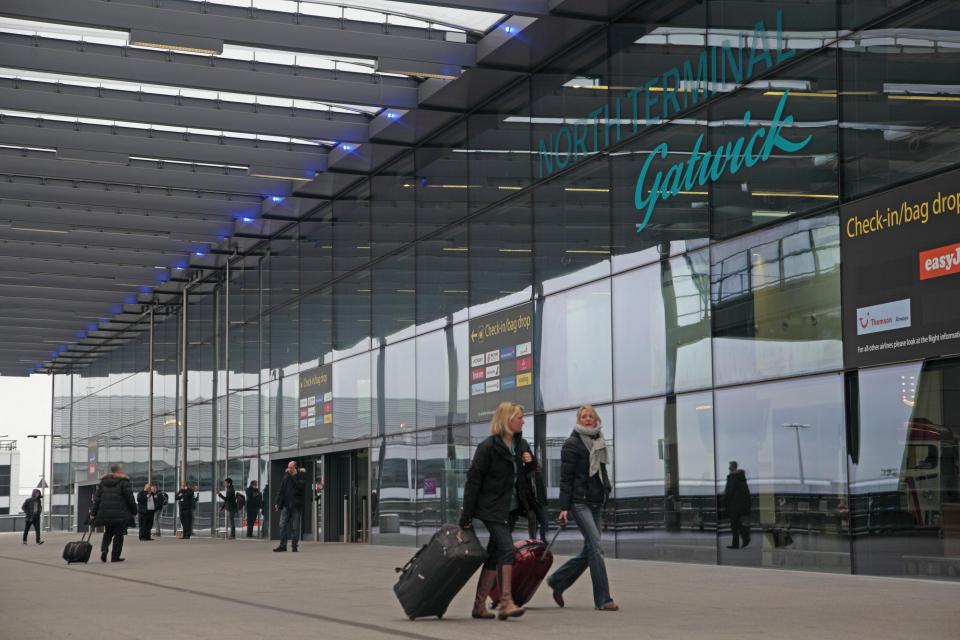
UK-owned Skybus has cancelled its daily flights between London Gatwick and Newquay earlier than planned.
Due to finish by end of May, it has since cancelled all of the routes and cited lack of passengers as well as rising costs.
A UK airline has scrapped some flights from mid-April to early June following the US and Israeli attacks on Iran, which has sent the price of aviation fuel soaring
Rising jet fuel costs could be partially passed onto flyers(Image: Getty Images)
A UK airline has cancelled flights due to the impact of the Iran war, while Ryanair is warning that up to 10% of services could be binned.
Aurigny of Guernsey has scrapped some flights from mid-April to early June following the US and Israeli attacks on Iran, which has sent the price of aviation fuel soaring, the Independent reports.
The airline, which links up the Channel Islands with the UK, described the cuts as “proactive measures to address the impact of global instability”, also adding a “temporary fuel adjustment surcharge” of £2 on all new bookings.
Demand for flights has fallen 13% in May, Aurigny has said, leading the airline to cancel some departures to and from Guernsey.
Aurigny’s chief commercial officer, Philip Saunders, told the Independent: “While a small island community, we are not immune from the realities presented by the global travel ecosystem. Current global events are impacting consumer confidence and changing travel behaviours. Furthermore, significant increases in global oil prices are now filtering through to aviation.
“Unfortunately, we have to pass on some of the resulting costs to customers to ensure sustainable air services to and from Guernsey.”
European jet fuel prices hit a record $1,900 per metric ton on Thursday, according to specialized publication Argus. It warned of potential shortfalls in the coming months.
Argus project that Portugal could run out of jet fuel in four months, Hungary in five, Denmark in six, Italy and Germany in seven, and France and Ireland in eight.
Last week, the chief executive of Ryanair warned that the airline may not be able to run its full summer schedule due to the cost of fuel if the Strait of Hormuz remains closed.
Michael O’Leary predicts that European airlines will begin canceling scheduled flights “by the end of April” if the key shipping lane is not opened.
“The Strait of Hormuz has been closed for 30 days. If it remains closed for 60 or 90 days, then we’re all facing an unknown scenario, and we are certainly looking at maybe having to cancel 5%–10% of flights through May, June and July,” he told ITV.
O’Leary explained that airlines won’t be able to choose which routes to cancel as cuts will depend on which airports suffer fuel shortages.
Later speaking to SkyNews, the Ryanair boss added: “Fuel suppliers are constantly looking at the market. We don’t expect any disruption until early May, but if the war continues, we do run the risk of supply disruptions in Europe in May and June, and we hope the war will finish sooner than that and the risk to supply will be eliminated,” he told Sky News.
“We think there is a reasonable risk, some low level, maybe 10% to 25% of our supplies might be at risk through May and June, so like everyone else in this industry, we hope the war ends sooner rather than later.
“If the war finishes by April and the Strait of Hormuz reopens, then there is almost no risk to supply.”
A MAJOR airline has slashed the price of fares by 50% for summer as the Middle East war tumbles demand for long-haul flights.
Etihad is now offering some of the lowest ever prices seen for long-haul flights from the UK for May and June as it kicks off a price war with Gulf airlines.
Sign up for the Travel newsletter
Thank you!
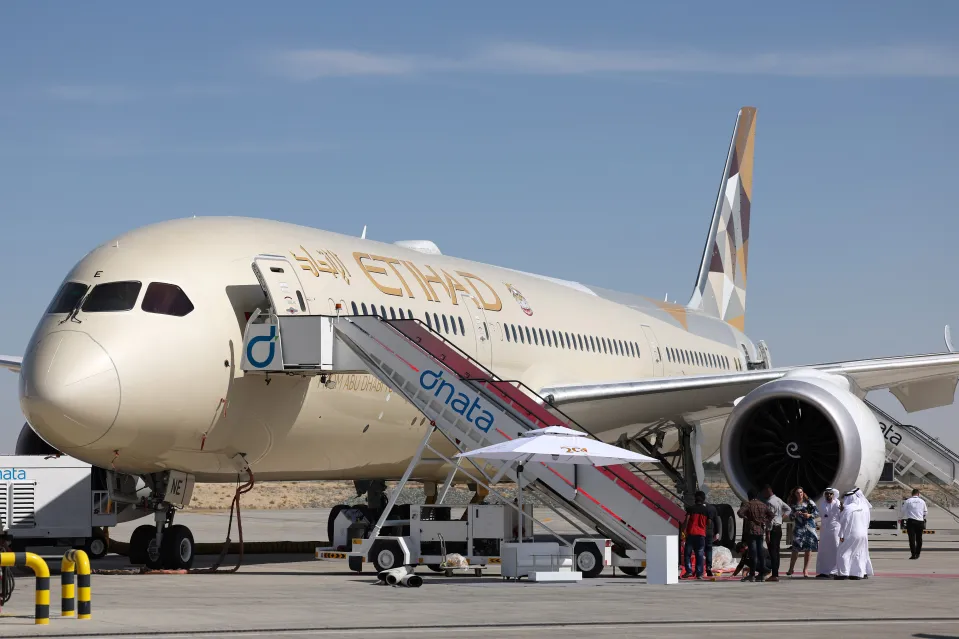
Etihad has slashed the price of fares by 50% in hopes that the Middle East conflict will ease next monthCredit: Getty
Travellers can get return economy flights with the gulf airline from London to Sydney, via Abu Dhabi, from £688.
This is almost three times cheaper than flying to the Australian capital with British Airways (BA), via Singapore, on the same dates – which is £1,850 in economy.
The Foreign Office is currently advising against all but essential travel – which doesn’t include holidays – to the United Arab of Emirates amid the ongoing conflict.
But Etihad, which is the official airline of the UAE, appears to be gambling on hopes that the situation in the Middle East will have eased by next month.
An Etihad insider told The Times, which analysed the airline’s prices: “As soon as travel picks up, we want to be back to flying planes 100 per cent full in all cabins, as we were before the conflict. These prices will help.”
The airline is also offering market-leading fares to other popular destinations from the UK, including the Maldives, Tokyo and Bangkok.
Brits can get return economy flights to the Maldives with the airline in May and June from £581 – compared with £3,380 with British Airways.
Flights to Singapore are form £391, but are £980 with BA.
Emirates and Qatar Airways, the other main Gulf airlines, have not cut their prices.
Demand for long-haul flights has plunged since the war in Iran first broke out at the end of February, with flights cancelled and the Foreign Office issuing “do not travel” warnings for countries in the Middle East.
Countries in Europe including Spain have seen demand rise, as Brits look for alternative destinations to travel to.
The UK Foreign Office states: “FCDO advises against all but essential travel to United Arab Emirates.
“Your travel insurance could be invalidated if you travel against advice from the Foreign, Commonwealth & Development Office (FCDO).”
Airlines are becoming stricter with cabin bag regulations, scrutinising the size and weight of passengers’ luggage. If your baggage exceeds the permitted dimensions or weight, you could be hit with hefty last-minute fees.
For example, easyJet warns: “We check cabin bag sizes before you board. If your cabin bag is bigger than the maximum size allowed or if you bring a large cabin bag to the departure gate without the correct seat selection or without one pre-booked for your flight, it won’t be able to go in the cabin. We’ll have to check it into the aircraft hold and charges will apply.”
Given these stricter check-in rules, it’s crucial to familiarise yourself with your airline’s baggage allowances. Here’s what some of the most popular airlines permit.
Ryanair
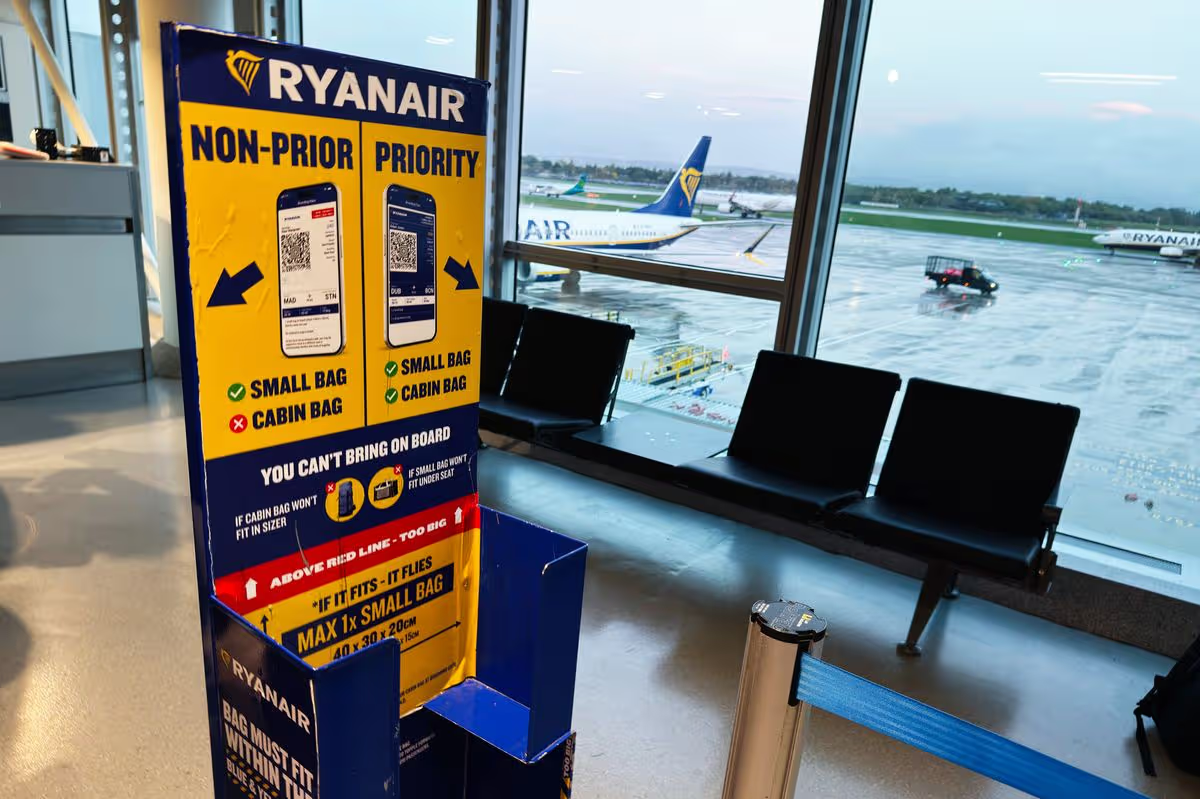
If you’re flying with Ryanair, “all fares include one small personal bag (40 x 30 x 20 cm) that must fit under the seat.”
You can add extra options like Priority boarding with a second 10kg cabin bag, checked bags of 10kg, 20kg (up to 3), or 23kg (1 allowed). Infants have no cabin allowance but may bring a 5kg baby bag and two baby equipment items free, it confirms.
Ryanair Cabin Baggage
Priority & 2 Cabin Bags: This allows you to carry a small personal bag (40 x 30 x 20 cm), which must fit under the seat in front of you and a 10kg bag (55x40x20cm) onboard, to be stored in the overhead locker. It also allows you to board the plane first using the Priority Boarding queue at the gate.
Ryanair Checked Baggage
10kg Check-in Bag: If you wish to check in a bag, you can add a 10kg Check-in Bag to your booking. Bags must be dropped at the airport check-in desk before security and will be placed in the aircraft hold.
20kg Check-in Bag: If you require a larger baggage allowance, you can add a 20kg Check-in Bag to your booking. Passengers can purchase up to 3 checked bags of 20kg on their booking.
23kg Check-in Bag: If you require an even larger baggage allowance, you can add a 23kg Check-in Bag to your booking. Passengers can purchase up to 1 checked bags of 23kg on their booking.
Ryanair Infant Baggage
Ryanair allows you to carry 2 items of baby equipment free of charge per child, to make your journey as seamless as possible. There is no cabin bag allowance for an infant (aged 8 days to 23 months inclusive). However, it allows a baby bag up to 5kg (dimensions: 45 x 35 x 20 cm) for babies travelling on an adult’s lap.
Jet2
Passengers flying with Jet2.com can bring a small under-seat bag, like a handbag or laptop bag, up to 40 x 30 x 20 cm, to fit under the seat in front of them.
The airline also confirms: “On all our Jet2.com flights, each passenger has a 10kg hand luggage allowance included as standard (excluding infants). You can also bring one small under-seat bag onboard (such as a handbag or laptop bag) as long as it fits under the seat in front of you.”
Passengers are permitted one free cabin bag, provided it weighs no more than 10kg and measures within 56 x 45 x 25 cm – including wheels and handles. If you are travelling with little ones, “you can bring along a collapsible pushchair, car seat and/or travel cot free of charge.”
British Airways (BA)
Another popular airline, British Airways, confirms that if you have no checked baggage, the following applies.
Handbag
1 handbag
Max dimensions of 40 x 30 x 15cm (16 x 12 x 6in)
Must easily fit under the seat in front of you
May contain essentials like medication, mobile phones, other electronic devices and passports
Guaranteed in the cabin
Cabin bag
1 cabin bag
Max dimensions of 56 x 45 x 25cm (22 x 18 x 10in) – including wheels and handles
You must be able to lift your cabin bag into the overhead compartment unassisted
No valuables, electronics or essential medicines
May need to go in the hold
You can also use the airline’s baggage calculator here. You need to enter your flight details, including your departure and arrival airports, travel class, departure date, and ticket issue date.
It cautions: “The weight of your bag as well as the number of bags you are allowed may be different when travelling on flights operated by our partner airlines, even if you are booked under a BA flight number. These are also called code-share flights, and the operating airline will be named in your itinerary.
“If a journey with connecting flights includes ‘BA’ and other airline codes, such as ‘AA’ or ‘IB’, your baggage allowance is generally determined by the airline that operates the longest flight in your itinerary.”
easyJet
Airline easyJet has confirmed that all passengers “can bring one small under-seat cabin bag per person on board for free.”
It adds: “It can be a maximum size of 45 x 36 x 20 cm (including any handles and wheels) and must be kept under the seat in front of you. Your bag can weigh up to 15kg, but we do ask that you’re able to lift and carry it yourself.”
The airline says passengers can bring a large cabin bag (up to 56 x 45 x 25 cm, including handles and wheels) if they book it for their flight. “Every customer who books a large cabin bag can also enjoy the benefit of Speedy Boarding”, easyJet says.
It continues: “If you’re an easyJet Plus member or customer who has booked an Inclusive Plus fare, you can also bring a large cabin bag on board (in addition to your small cabin bag) as part of your membership or fare benefits.
“Please note that the maximum number of cabin bags available per person is two; one small cabin bag for all customers and one large cabin bag for customers if it’s included with their fare or membership benefits or where they have paid to add one to their booking.”
The large cabin bag must follow these rules:
Maximum size 56 x 45 x 25 cm (including any handles and wheels)
Includes items like a trolley case and larger rucksack, but please check dimensions
Needs to fit in an overhead locker
Maximum weight 15kg. You need to be able to lift and carry the bag yourself
The airline recommends passengers purchase all their bags online, as it’s more economical and helps avoid airport charges.
He explained: “At a time of great economic uncertainty and steps being taken to conserve energy worldwide, it is neither environmentally nor economically sound for us to continue flying with vastly reduced passenger numbers.”
Passengers affected will be fully refunded.
The flights between London and Cornwall take around 1hr20 and start from £79.99 each way.
This is not only faster – trains take around five hours and include a change to Newquay – but cheaper than the average train fare which is around £85.
Some passengers use it as a way of travelling further onto Europe as well.
One Brit, who was meant to fly from Newquay to Gatwick, then onto Seville told the BBC: “Gatwick is not the easiest airport to get to so our contingency is probably to use rail.”
In the mean time, Ryanair offers flights between Newquay and London Stansted all year round.
And easyJet is due to start a new flight route to Newquay from June 23, with two a week from London Gatwick on Tuesdays and Thursdays.
A Cornwall Airport Newquay spokesperson said: “We are actively working with airline partners and stakeholders to secure sustainable London connectivity for the future.”
He said: “We don’t expect any disruption until early May, but if the war continues, we do run the risk of supply disruptions in Europe in May and June.”
While he said he didn’t see the airline having to cancel flights just yet, he warned that as much as 20 per cent of its jet fuel is costing them nearly $150 a barrel.
Other airlines around the world have already started cancelling flights.
Both Air New Zealand and SAS confirmed that more than 1,000 have been cancelled, mainly affecting domestic routes.
And United Airlines said five per cent of flights would be cancelled in the second and third quarters of 2026 – working out to around 250 a month.
The airline will still operate flights to Newquay from the Isles of ScillyCredit: Alamy
A UK budget airline has added new routes and destinations to their summer itinerary with prices of return flights only costing around £50 for British holidaymakers
The airline has announced a £50 summer sale with new routes(Image: Horacio Villalobos, Corbis via Getty Images)
A popular UK budget airline has announced a £50 summer flight sale from London airports with the launch of new travel destinations.
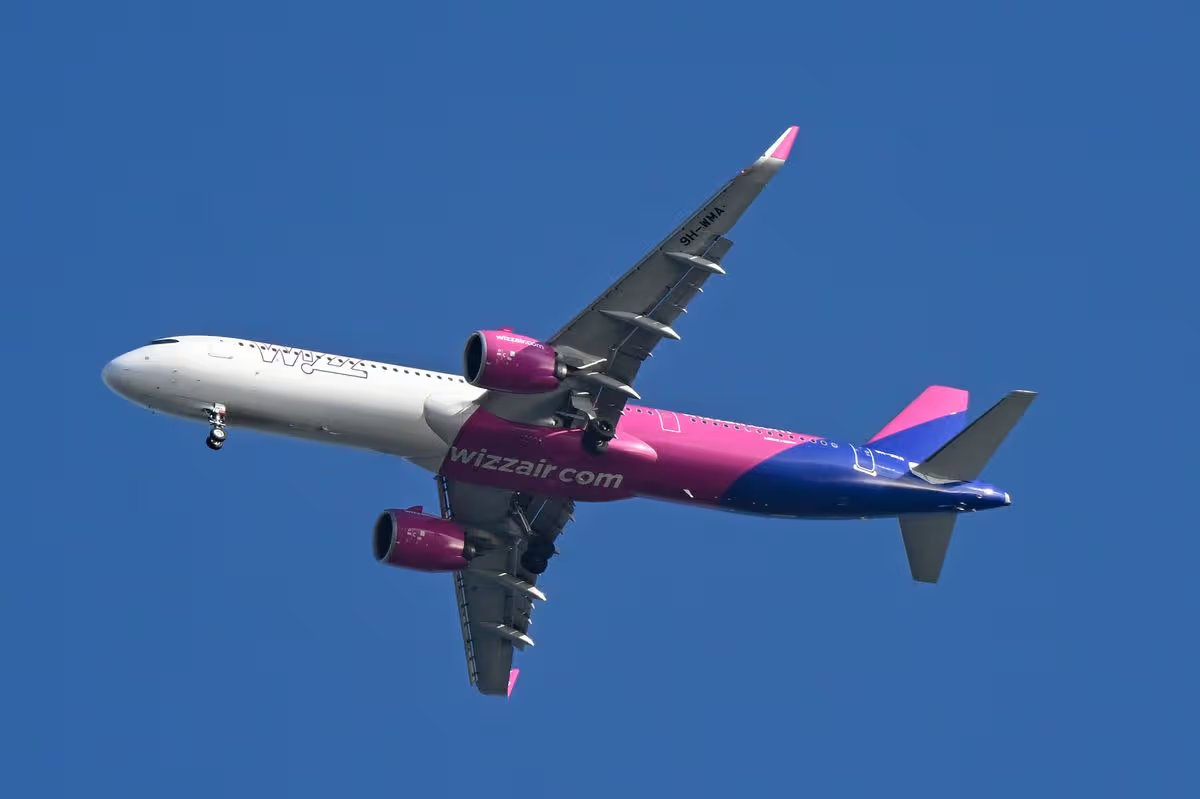
Wizz Air has announced it will take holidaymakers to 77 destinations from the UK this summer – with return prices starting as low as £50 per person.
The budget carrier will run more than 104 routes from the UK, with 69 routes from Luton Airport and 20 from Gatwick.
Luton will now carry passengers to Bilbao, Barcelona, Madrid, Valencia, Alicante and Seville.
It will also continue to run daily flights to Madrid and two daily services to Barcelona.
The airline will also serve seven destinations in Greece from London, including Athens, Mykonos and Crete.
Flights between London and destinations in Europe between June and September are currently on sale for bargain prices.
A return flight from London Luton to Kosice in Slovakia in June cost £42.98 per person and a return flight to Lyon in September is on sale for £31.98.
These prices do not include cabin bags or hold luggage.
Wizz Air UK managing director Yvonne Moynihan said: “ This summer, our customers told us exactly what they wanted – more sunshine, more choice and unbeatable value – and we listened.
“We’re stepping up while others step back, launching more routes, more flights and even better prices to Europe’s most loved destinations.
“From buzzing Spanish cities to iconic Greek escapes, we’re delivering the routes people actually want, at the best prices in the market.”
AN AIRLINE has returned to a major UK airport for the first time in two years.
ITA Airways has returned to London Heathrow Airport after two years and has launched a route to Italy.
Sign up for the Travel newsletter
Thank you!
ITA Airways is launching two daily flights from London Heathrow to Rome, ItalyCredit: Alamy
The Italian airline is operating two flights a day between the UK and Rome, Italy after securing slots from Lufthansa.
The flights from London Heathrow will depart each day at 10:30am, landing at 2:10pm and the second flight will take off at 4:30pm and arrive at 8:10pm.
Flights from Rome to Heathrow will leave at 7:50am and arrive in London at 9:40am and then at 1:50pm, arriving at 3:40pm each day.
A one-way flight in April costs as little as £57.45 with the airline.
The awards recognise destinations with a high volume of “above-and-beyond reviews and opinions from the Tripadvisor community over a 12-month period”.
TripAdvisor stated: “In Rome, you can drink from a street fountain fed by an ancient aqueduct.
“Or see the same profile on a statue in the Capitoline Museum and the guy making your cappuccino.”
Italy might be well-known for being the home of pizza and pasta, but more specifically a number of great dishes originated from Rome.
For example, Cacio e Pepe, spaghetti carbonara and tray-baked pizza were all created in the city.
Earlier this year, Rome was also named the best city for ‘noctourism’ by Radical Storage.
The luggage storage platform assessed over 50 destinations across four categories including experiences (such as the number of night tours) and natural factors (light pollution levels).
Rome came out on top scoring 6.07 overall out of 10.
The Italian capital scored particularly well in the experience category (9.2 out of 10), offering an impressive 305 night tours.
ITA Airways used to operate flights from London Heathrow but suspended operations due to high costs.
The airline also did not own its Heathrow slots, instead it was leasing them from Etihad Airways for around £3.3million per year.
The airline hasn’t flown from Heathrow in two yearsCredit: AlamyRome was named the best city in the world for food last yearCredit: Alamy
The airline’s return to Heathrow Terminal 2 has been made possible through its partnership with the Lufthansa Group, which means the airline has been given slots at the airport by Lufthansa.
According to Travel Weekly, the airline said in a statement: “The resumption of flights from Europe’s busiest airport – the most connected airport in the world – was made possible thanks to the co-operation with Lufthansa, which made the necessary airport slots available to ITA Airways.
“Connections between the British capital and Milan Linate will continue to operate via London City Airport.”
ITA Airways chief executive Joerg Eberhart added: “Today we celebrate a major milestone: our company is back at Heathrow, the UK’s only hub airport and the most connected airport in the world.
“Returning to Heathrow will bring many advantages.
“Thanks to the characteristics of the airport, we will be able to operate flights with larger aircraft and greater capacity, increasing both passengers and revenues.”
Providing extra comfort for their economy passengers, a major airline that flies from the UK to more than 340 destinations, is set to launch seats that turn into a ‘flat bed’
14:37, 26 Mar 2026Updated 14:39, 26 Mar 2026
The new seats from the airline will allow economy passengers to stretch out and sleep comfortably (Image: Getty Images)
A major airline flying to popular holiday destinations from the UK is introducing economy seats that transform into a ‘flat bed’.
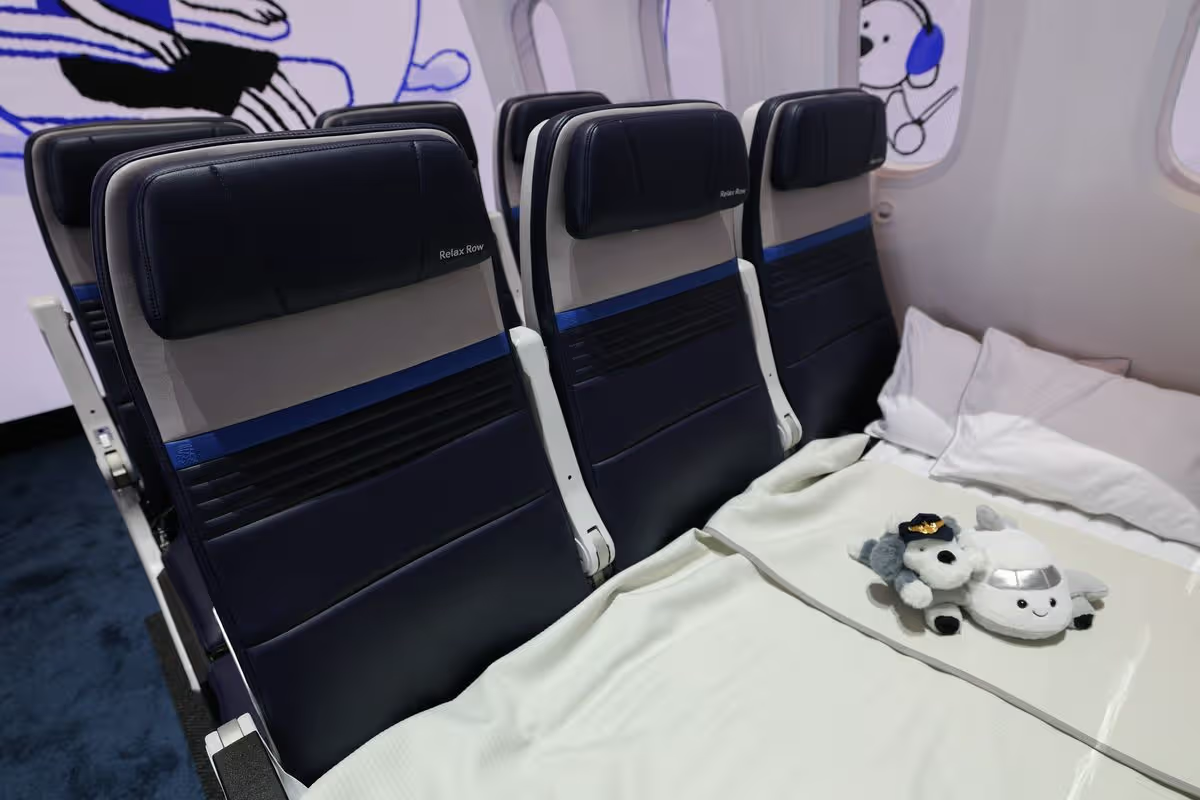
United Airlines, which flies from the UK to more than 340 destinations worldwide, will launch a new dedicated row of three economy seats that can transform into a “lie-flat mattress-like space”. It will give passengers more room on long-haul flights while flying in economy.
The new seats will be individually adjustable with leg rests that fold up to a 90-degree angle, so travellers can either stretch out while watching a movie or use it as a bed to catch a restful night’s sleep. Passengers will be treated to a “custom-fitted mattress pad, specially sized blankets, extra pillows” as the seats adjust into a flat bed after takeoff.
Children in the dedicated row will also receive a plush toy and a family travel kit as part of the additional amenities. The airline noted that the launch of the ‘United Relax Row’ will be ideal for families with young children, couples and solo travellers who would like more space.
After United Airlines shared the news on X, formerly Twitter, it was met with enthusiasm from travellers. One commented: “This is brilliant and I bet everyone is going to copy it.”
“Much needed. United is innovating faster than anyone”, a second said. A third added: “This is a brilliant and thoughtful idea to make customers feel more comfortable. Well done!”
“Gamechanger for travelling with small kids”, another traveller noted. “Brilliant, you have hooked me for many years but with this may be I am now double hooked. This is super helpful especially on those night European routes,” one more said.
Once launched, the initiative will be a first for a North American airline offering this type of seat and comfort for economy passengers. United Airlines flies from the UK to popular holiday destinations such as New York, LA, Chicago and Orlando.
The United Relax Row is expected to launch in 2027, with plans to offer the extra space on more than 200 of its Boeing 787 and 777 widebody aircraft by 2030. There will be up to 12 United Relax Row sections on each plane, located between United Economy and United Premium Plus.
United’s Executive Vice President and Chief Commercial Officer, Andrew Nocella, said: “As a leading premium airline, we’re committed to delivering new, industry-leading experiences for all of our customers – and the United Relax Row is the perfect example of that. Customers travelling in United Economy on long-haul flights deserve an option for more space and comfort, and this is one way we can deliver that for them.
“United is the only North American airline offering a product like the United Relax Row and is one of the many reasons why we’re continuing to win brand loyal customers.”
For more information or to check flights with United Airlines, you can visit their website.
Do you have a travel story to share? Email webtravel@reachplc.com
AN American airline’s plan for new couches in economy has been hailed as a “game changer.”
It means a far more comfortable flight for travelers seeking additional space to sleep.
Sign up for the Travel newsletter
Thank you!
United Airlines has revealed that it will launch a new couch option for travelers booked for economy class from next yearCredit: GettyCustomers traveling in United relax row will receive additional amenities for their flight including a custom-fitted mattress padCredit: PRNewswireYou put the arm rests up, and then angle the adjustable, flip-up leg rests to form a couchCredit: YouTube/United
United Airlines has announced a “relaxed row” to allow travelers to stretch out and have a better rest in economy class.
It involves transforming economy seats into a couch between two rows of seats.
The initiative will provide more comfortable international travel, the airline said yesterday.
“Customers will get a custom-fitted mattress pad, specially sized blankets, extra pillows and a stuffed plush for children to help create a cozy, tranquil environment,” the carrier explained.
“Sounds like heaven to me,” said one thrilled customer.
United‘s relax row option is expected to be available from 2027.
Prices for the perk haven’t been released as yet.
“Customers traveling in United economy on long-haul flights deserve an option for more space and comfort, and this is one way we can deliver that for them,” said Andrew Nocella, executive VP.
Once available, United will be “the first North American airline to offer this kind of seating option and holds North American exclusivity on the design,” the carrier said.
The lie-down couch-style seating will eventually be rolled out across some 1,000 United planes by 2030.
More on United Airlines’ ‘relaxed row’ economy seats that transform into a couch
The option will be available for United customers traveling in the economy cabin on long-haul flights from 2027
A new, dedicated row of three seats will be outfitted with individually adjustable leg rests that fold up at a 90-degree angle.
The formation of the couch will create more room to sleep, stretch out or watch a movie.
Customers traveling in United relax row will receive additional amenities for their international flight.
This includes a custom-fitted mattress pad, a specially sized plush blanket, two additional pillows, as well as a plush toy and children’s travel kit for families.
The airline plans to offer it on more than 200 Boeing 787 and 777 widebody aircraft by 2030.
The seats will be located between United economy and premium plus, with up to 12 relax row sections on each plane.
They aren’t just available for families, as single travelers can also purchase the row, added United.
Around nine to 12 couches will be available per aircraft.
The seats will have individually adjustable, flip-up leg rests.
These can then be angled to create more room to sleep, stretch out or watch a movie.
Their provision follows a similar option offered by Air New Zealand, which already offers a row of economy seats that convert into a lie-flat couch after takeoff.
Travelers commenting on United’s version have said that it will be worth the extra money.
United Airlines chief commercial officer Andrew Nocella introduces the United relax row for the economy cabin during on March 24Credit: AFPThey will eventually be rolled out across 200 Boeing 787 and 777 widebody aircraft by 2030Credit: AFP
“I’ve used the sky couch a bunch, and for traveling with young kids on long haul flights it’s an absolute game changer, worth every penny,” raved one flyer on Reddit yesterday.
“I love the skycouch on Air New Zealand and have used it multiple times between the US and Auckland,” wrote another traveler.
“Obviously you don’t get the bells and whistles of a first class seat, but the lie flat feature is the only thing that allows me to sleep on airplanes so for me it’s perfect.”
“Family and I use the Air NZ sky couch every time we travel between NZ/US,” shared one parent.
“It’s a game changer and we always choose Air NZ for that reason. Will start looking seriously at UAL now for our travels.”
Those traveling by themselves can pay for the whole rowCredit: YouTube/UnitedUp to 12 ‘relax rows’ will be available on about 1,000 United planes used for long-haul flightsCredit: YouTube/UnitedUnited hasn’t as yet revealed the price for the new couch perkCredit: Getty
IF you thought being able to lay down on a plane was just for first and business class, think again.
United Airlines is introducing a new ‘Relax Row’ making travel in economy much more comfortable.
Sign up for the Travel newsletter
Thank you!
United Airlines is adding ‘lie-flat beds’ and ‘couches’ into economy for 2027Credit: AlamyThe Relax Row of seats can be turned into a couch or bedCredit: United Airlines
Launching in 2027, the Relax Row is a dedicated row of three seats that can transform into a ‘couch’, or lie-flat bed.
The seats will be designed with adjustable leg rests that can fold up and mattress pad placed on top.
Travellers can then stretch out whether they want to spend their journey sleeping or watching a film.
The airline said: “The United Relax Row is ideal for families traveling with small children, solo travelers and couples who want the value of United Economy but with a little extra comfort.”
Along with a mattress pad, those on the Relax Row will get blankets, extra pillows, a toy and children’s travel kit.
The new Relax Row will appear on United Airlines aircraft in 2027.
By 2030, the airline said it will be on more than 200 of its Boeing 787 and Boeing 777 widebody aircraft with 12 Relax Row sections on each plane.
Andrew Nocella, United’s Executive Vice President and Chief Commercial Officer said: “Customers traveling in United Economy on long-haul flights deserve an option for more space and comfort, and this is one way we can deliver that for them.
“United is the only North American airline offering a product like the United Relax Row and is one of the many reasons why we’re continuing to win brand loyal customers.”
The cost of the new seat option is yet to be confirmed.
United Airlines has other perks for families including free family seating, which allows children under 12 to sit next to an accompanying adult for free at time of booking.
And while United Airlines will be the first North American airline to offer lie-flat seats in economy, there other airlines who already offer this for their passengers.
Air New Zealand has its Skycouch which is the same – a row of three economy seats that transform into a lie-flat bed.
Lufthansa have what they call the Sleeper’s Row which is for long-haul flights that are over 11 hours long.
Passengers get a full row of three or four seats with a mattress topper, pillow, and blanket at the airport.
The additional charge for this is between €169–€249 (£146.28-£215.52).
United Airlines is the latest to confirm that it would be cutting five per cent of flights in the second and third quarters of 2026.
With up to 5,000 flights a month – working out to around 4,000 domestic and 800 international routes – this means it affects around 250 flights a month.
And with this set to last until the end of summer, it means thousands of passengers will be affected.
While the affected flights haven’t been confirmed, it will mainly affect the “less profitable” routes so including midweek flights, as well as overnight and Saturday routes.
United Airlines has the world’s largest airline fleet with more than 1,075 aircraft.
United Airlines‘ Chief Executive Scott Kirby said the cancellations were due to fears of oil rising to as much as $175 (£131) a barrel, and remaining above $100 (£75) until the end of next year.
This would mean the airline’s fuel costs would rise to $11billion (£8.2billion) – double the profit of their best year which was $5billion (£3.7billion).
They warned: “There’s no point in burning cash in the near term on flying that just can’t absorb these fuel costs.”
It’s not just the cost of fuel but how much is being used by airlines as well.
The closure of airspaces and Middle East airports, particularly Dubai which is one of the world’s busiest, has forced airlines to fly alternative – and longer – routes, which burn more fuel.
Other airlines have already confirmed they would be cancelling flights due to expected fuel costs.
ATLANTA — Regardless of politics or destination, American air travelers are unified by one desire: It’s time to pay Transportation Security Administration employees.
“Everybody got bills they have to pay, and it’s horrible,” said Patrice Clark, whose trip to Las Vegas began Saturday with a nearly four-hour wait in a security line at Dallas Fort Worth International Airport. “Times are hard for everybody at this point. Working and not getting paid and gas prices are extremely high — like everybody needs their money. They need to pay them.”
TSA officers haven’t gotten a paycheck since the Department of Homeland Security partly shut down on Feb. 14. Democrats balked at funding the agency, demanding changes to immigration enforcement by federal agents after the shooting deaths of Alex Pretti and Renee Good in Minneapolis.
Some travelers arrive 4 hours early
Christian Childress is a private flight attendant, so when he is working, he doesn’t wait in TSA lines. But he frequently goes through a checkpoint when flying commercial to get to his job.
Childress, who lives in Redwood City in Northern California, said shutdown effects have been “hit or miss” thus far. He came to the Atlanta airport nearly three hours before his 1:30 p.m. Saturday flight to Nashville for a leisure trip. Some passengers have been arriving even earlier in Atlanta — the world’s busiest airport — worried about missing flights.
“Issue No. 1 should be paying the people who need to get paid and keeping our air travel system secure,” Childress said. “Then they can debate whatever they want to debate about Homeland Security.”
Democrats have tried to advance legislation to fund TSA separately, but Republicans have refused, saying funding for the entire Department of Homeland Security must be approved. So the shutdown continues.
Some passengers said it is time for Democrats to relent.
“I don’t want to go between the Democrats and the Republicans, but I think the Democrats are holding everything up because they can’t get their way,” said Tyrone Williams, a retiree from the Atlanta suburb of Ellenwood. He was queued up for screening before his flight to Philadelphia on Saturday.
Atlanta’s checkpoint wait time was as high as 90 minutes Saturday morning before melting away to nothing in the afternoon on what is typically one of the slowest days of the week for air travel. Staffing shortages have forced some airports to close checkpoints at times, with wait times swinging dramatically.
ICE at airports
Concerns about long airport lines are increasingly capturing attention.
President Trump has announced plans to order Immigration and Customs Enforcement officers to take a role in airport security starting Monday, which he says will continue until Democrats agree to fund the Department of Homeland Security.
He said ICE agents would bring the administration’s immigration crackdown into the nation’s airports, arresting “all Illegal Immigrants” with a focus on those from Somalia.
“I look forward to moving ICE in on Monday, and have already told them to, “GET READY.” NO MORE WAITING, NO MORE GAMES!” Trump wrote.
Funding for the whole department failed to advance in the Senate on Friday after Democrats declined to support a bill. On Saturday, in a rare weekend session, the GOP-led Senate rejected the Democrats’ motion to take up legislation to fund TSA.
Travelers ‘grateful’ for unpaid TSA workers
The vast majority of employees at TSA are considered essential, and roughly 50,000 continue to work without pay during the funding lapse. Nationwide on Thursday, about 10% of TSA officers missed work, the department reported. Absentee rates were two or three times higher in places.
Merissa Thomas arrived in Las Vegas on Saturday after a quick trip through a checkpoint at Reagan National Airport near Washington, D.C.
“I’m so grateful for people who are willing to sacrifice a lot to make sure we’re safe,” Thomas said.
Union leaders and federal officials say TSA officers are under financial pressure. Airport screeners have spent nearly half of the last 172 days with paychecks delayed by politics — 43 days last fall during the longest government shutdown in history, four days earlier this year during a brief funding lapse, and now 37 days and counting during the current shutdown.
At least 376 officers have quit since this shutdown began, according to officials, exacerbating turnover at an agency that historically has had some of the U.S. government’s highest attrition and lowest employee morale.
“From now on I would drive wherever I have to go until they get this figured out,” said Clark, the delayed traveler. “It was horrible.”
Amy writes for the Associated Press. AP writers Collin Binkley in West Palm Beach, Fla., Ty O’Neil in Las Vegas and Mary Clare Jalonick in Washington contributed to this report.
Jet2 boss Steve Heapy has issued an update to industry experts
Maria Ortega and Robert Rowlands Deputy editor, money and lifestyle, content hub
04:31, 22 Mar 2026
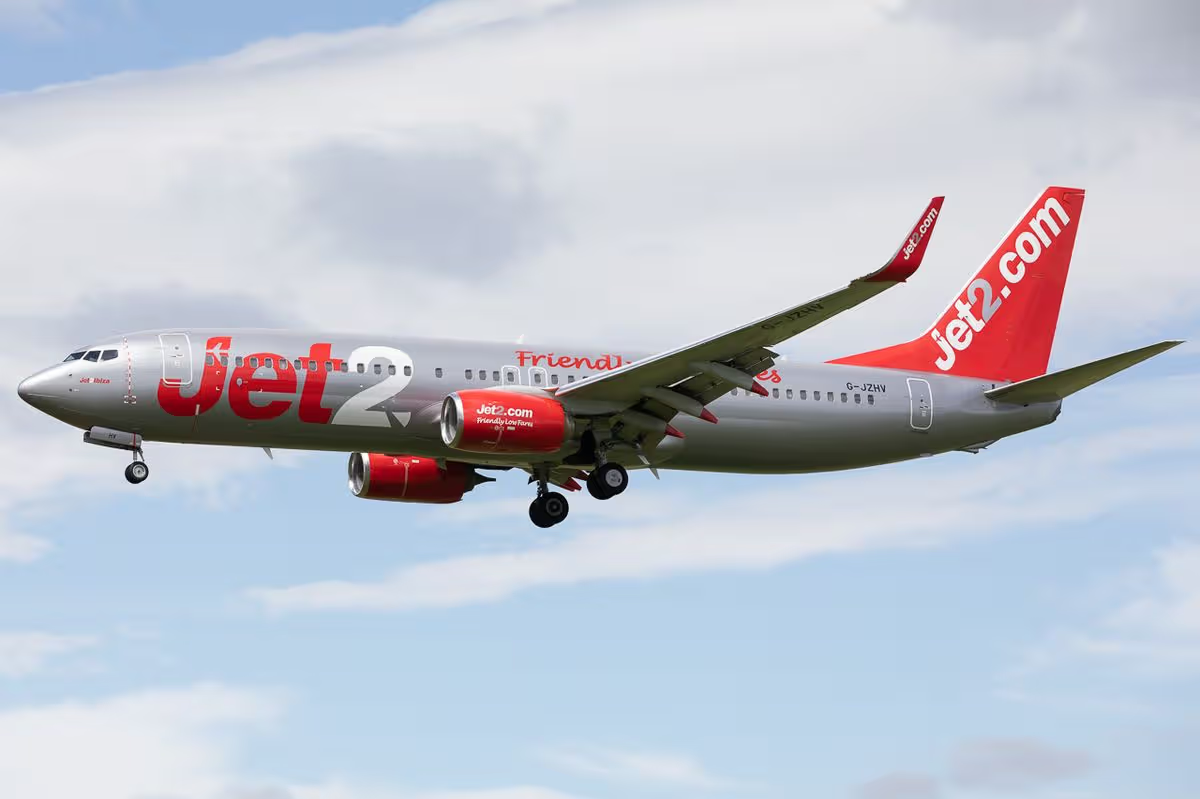
A Jet2 Boeing 737 lands at Newcastle Airport(Image: Getty)
Jet2’s boss has warned of a sharp drop in bookings to Cyprus and Turkey but said tourists could get special offers. CEO Steve Heapy said flights on these routes are becoming “empty” due to the uncertainty caused by the Middle East conflict.
The boss said demand is instead moving to destinations such as Spain and Italy. TTG reported that he spoke about the issue via video link at the airline’s annual conference in Cádiz in Spain.
He also warned hotel partners to not ‘get greedy’ in Spain and Italy and keep prices competitive. And he vowed to protect customers where that happened.
He said he expects holidays to Cyprus and Turkey to recover quickly once the war in Iran ends. “I think we should all be prepared for a fairly rapid end to the conflict and a fairly sharp recovery when that happens,” he said.
Heapy said: “Bookings to Cyprus and Turkey are drying up, cancellations are up and our aircraft are emptying.” He said Jet2 was working to cross-sell customers to western Mediterranean destinations where demand “seems to be OK”.
Heapy added that Cyprus remained a safe destination despite a drop in demand to the island, which has been targeted by Iran since America and Israel launched airstrikes on the Middle Eastern nation.
He said: “Cyprus is still far enough away that you can still travel. We’re doing what we can to understand what’s going on and how we can work our way through it.”
‘Special offers’ to lure more travellers to Cyprus and Turkey
He expects hotels in Cyprus and Turkey to introduce special offers in the weeks ahead to lure more tourists in. Speaking to travel agents at the conference, he said: “We’ll do what we can to work with you and fight to get through this the best we can,” he said. “Our job is to put our customers’ fears to one side and reassure them that these destinations are safe.
“We’re a very resilient industry. These events happen every couple of years, and I’ll do whatever I can to help all our of businesses navigate through this.”
TTG also reported that Phil Nuttall, CEO of Travel Village Group, said it is too early to offer a full assessment of the crisis’s impact. Yet he said possible price rises could create problems for many families.
Jet2’s head of overseas operations, Lee Davies, also said the operator was putting more resource into challenges arising from the conflict, TTG said. “We’ve had to adapt our service, especially across Turkey and Cyprus at the moment. We have our red team, we’ve increased our presence, we’re visiting hotels, reassuring customers.
“We’ve expanded our visiting times and ring-fenced our 24/7 team in the UK. We’re contingency planning in terms of disruption management, you always have to have a very solid plan behind the scenes ready to activate.”
He reportedly added: “You’ve got to understand why in their minds, wherever that destination is, that they possibly don’t want to travel.” He added that by helping customers now, even if they do not then travel, “they will come back”.
ANOTHER airline has announced it has axed all flights to Dubai due to the ongoing Iran crisis until at least mid-May.
Following suit of other airlines, Dutch-carrier KLM has extended its cancellation of flights to the United Arab Emirates city until spring 2026.
Sign up for the Travel newsletter
Thank you!
KLM is the latest European airline to extend cancellations of its Dubai flightsCredit: AlamyDubai has been affected by the ongoing crisis in the Middle EastCredit: Alamy
In a statement on its website, KLM said: “Due to the ongoing geopolitical unrest in the Middle East, KLM has decided to cancel all flights to and from Dubai, Riyadh and Dammam until 17 May.
“The safety of our passengers and crew is always our top priority. We understand that this decision has a significant impact on our travelers and are doing everything possible to keep them well informed.
“Passengers whose flights have been cancelled will be notified personally. They can change their flight or request a refund on the KLM website.”
The airline added that it would be closely monitoring the situation and would “remain in contact with the relevant authorities”.
The airline usually operates around 20 flights a week to Dubai so thousands of passengers are expected to be affected.
Virgin Atlantic has also altered its schedule and has ended its seasonal Dubai flights early.
Other airlines like Finnair, Lufthansa and Wizz Air have suspended flights until the end of March where they are likely to assess the ongoing situation.
Aegean Airlines has cancelled its Dubai flights until April 19.
And airBaltic has announced it won’t fly to Dubai until October 24.
Flight compensation rules
A look at your rights if a flight is delayed or cancelled, when your entitled to compensation and if your travel insurance can cover the costs.
What are my rights if my flight is cancelled or delayed?
Under UK law, airlines have to provide compensation if your flight arrives at its destination more than three hours late.
If you’re flying to or from the UK, your airline must let you choose a refund or an alternative flight.
You will be able to get your money back for the part of your ticket that you haven’t used yet.
So if you booked a return flight and the outbound leg is cancelled, you can get the full cost of the return ticket refunded.
But if travelling is essential, then your airline has to find you an alternative flight. This could even be with another airline.
When am I not entitled to compensation?
The airline doesn’t have to give you a refund if the flight was cancelled due to reasons beyond their control, such as extreme weather.
Disruptions caused by things like extreme weather, airport or air traffic control employee strikes or other ‘extraordinary circumstances’ are not eligible for compensation.
Some airlines may stretch the definition of “extraordinary circumstances” but you can challenge them through the aviation regulator the Civil Aviation Authority (CAA).
Will my insurance cover me if my flight is cancelled?
If you can’t claim compensation directly through the airline, your travel insurance may refund you.
Policies vary so you should check the small print, but a delay of eight to 12 hours will normally mean you qualify for some money from your insurer.
Remember to get written confirmation of your delay from the airport as your insurer will need proof.
If your flight is cancelled entirely, you’re unlikely to be covered by your insurance.
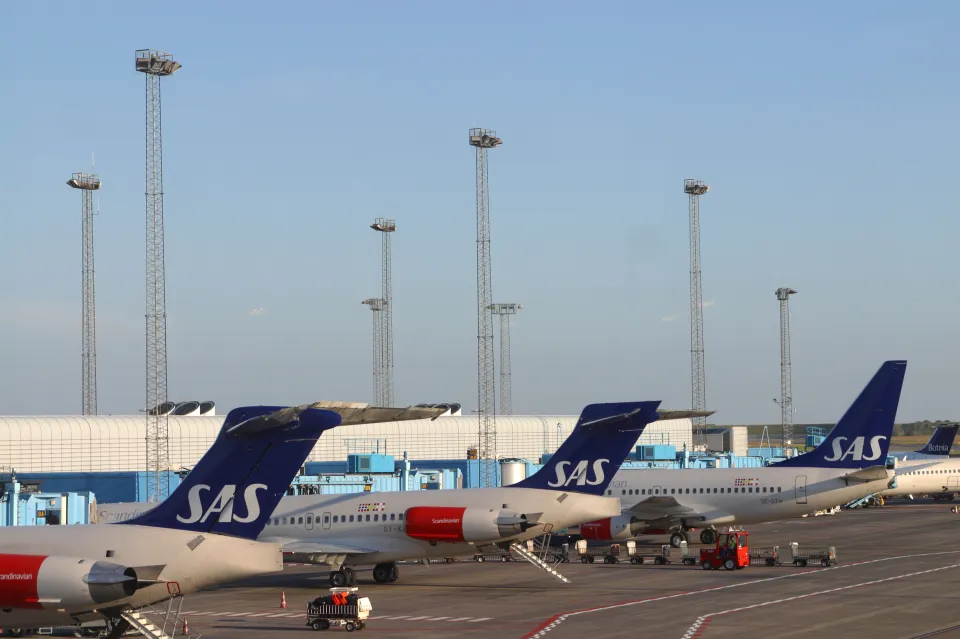
A MAJOR airline in Europe has cancelled 1,000 flights next month due to soaring fuel costs caused by the Iran crisis.
Scandinavian Airlines System (SAS) is the second airline to do so, following Air New Zealand.
Sign up for the Travel newsletter
Thank you!
SAS is the first European airline to cancel flights due to the soaring cost of jet fuelCredit: Alamy
While the majority will be shorter domestic routes, some other longer routes could also be affected.
The main flights affected are across Norway, Sweden and Denmark.
In a statement, the airline said: “Given the ongoing situation in the Middle East, including the sharp and sudden increase in global fuel prices, we are taking measures to strengthen our resilience.”
“One such measure is a limited number of short-term flight cancellations.”
The airline has also confirmed that they have increased flight prices, one of the first to do so in response to the conflict and alongside Qantas and Cathay Pacific.
SAS is the first major airline in Europe to axe flights because of of the cost of fuel going up.
Just like regular consumers at the gas station, airlines refueling in Los Angeles are being forced to adjust to higher prices at the pump.
Jet fuel prices have shot up, and experts say airfares are following suit.
With a busy summer travel season approaching, airlines are starting to pass the costs on to passengers through higher fares and fees.
“Whenever there’s a surge in oil prices, the airlines end up passing that to the consumers immediately,” said Diego Bufquin, director of hospitality management and entrepreneurship at Tulane University. “It doesn’t take a long time.”
Airlines have been struggling around the world since the U.S. and Israel began bombing Iran late last month. Flights have to take longer paths around war zones, and higher fuel costs eat into their already razor-thin profit margins.
Jet fuel prices account for about a third of airlines’ operating costs, so they “cannot afford to wait to upcharge their customers,” Bufquin said.
United Airlines Chief Executive Scott Kirby told CNBC that the spike in fuel prices will have a “meaningful” impact on the airline’s financial results.
Some airlines outside the U.S. have already added fuel surcharges to their ticket fees. Air India announced a phased increase in fuel surcharges on domestic and international routes last week. Hong Kong’s flag carrier Cathay Pacific announced it would charge extra on all fares to cover fuel costs starting Wednesday.
Airlines topping up at LAX and other regional airports are already being hit. Jet fuel prices in Los Angeles have jumped more than 40% since the conflict in the Middle East started.
Just like the price of gas for cars, jet fuel often costs considerably more in California than in other states.
California is largely detached from the rest of the fuel distribution system. With limited pipeline connectivity, it relies more on sea delivery from other states and countries. California also has higher taxes on jet fuel than many other states.
National average gas prices reached $3.71 per gallon on Tuesday, according to AAA. In California, the average Tuesday was $5.52 per gallon.
Still, spring and summer demand is likely to remain strong even if prices rise, said Alan Fyall, an associate dean of the University of Central Florida Rosen College of Hospitality Management.
“Fares are going up, but the demand is still there domestically,” Fyall said. “The only thing that really dampens demand is economic recession.”
Indeed, consumers have been booking earlier than usual to lock in lower prices for their summer travel, airlines said. Delta and American Airlines had some of their strongest-ever single-day sales in March.
“When prices did spike, we saw a spike in demand,” Alaska Airlines Inc. Chief Executive Ben Minicucci said this week, according to Bloomberg. “I think people got this initial, ‘Wow, if this thing is going to go crazy, I better book my fare now before fares go up.’”
Airlines and other industries will face tougher conditions if fuel prices remain high for a prolonged period, he added.
Airfares were already on the rise, according to the Consumer Price Index, which found that the airline fares index rose 1.4% in February compared to last year.
The impact will vary by airline, said Fyall. Many airlines hedge their fuel to negotiate a fixed price, and stock up on fuel while it’s less expensive.
“The airlines that manage their fuel-buying process very well, that hedge very well, tend to be able to offset the price charges quite well,” Fyall said.
Jet fuel prices are even more sensitive to economic forces than auto fuel prices, experts said.
It’s not yet clear if Californians will have to pay significantly higher airfares than their neighbors, but some in-state flight routes could become temporarily unavailable, according to Bufquin. As airlines look to save money, they could cut certain shorter, less profitable routes.
“Budget airlines like Spirit and flights from smaller California hubs like Burbank, San José and Fresno are at risk of being canceled,” Bufquin said.
Dubai Airport has seen substantial flight disruption as British Airways announces it will halt all flights into Dubai until June as Iranian attacks on airports across the region continue
19:18, 17 Mar 2026Updated 19:38, 17 Mar 2026
Passenger planes are parked at Dubai International Airport in Dubai (file photo)
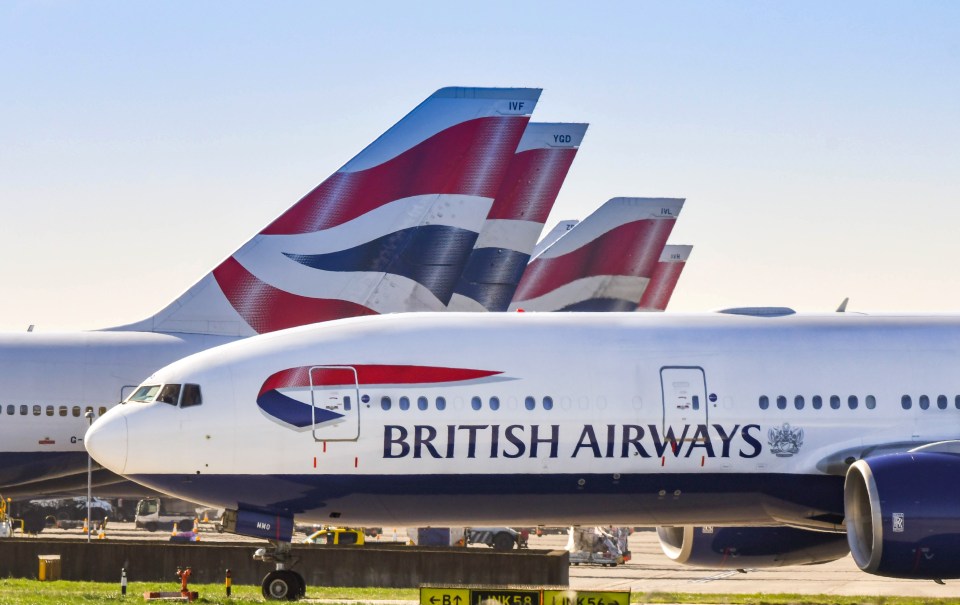
British Airways (BA) has cancelled all flights into Dubai until June as Iran continues its attacks on the UAE.
BA confirmed that flights to Amman, Bahrain, Dubai and Tel Aviv were now cancelled up to and including May 31, and flights to Doha were cancelled until April 30, the airline said in a new update.
“[The cancellations are] due to the continuing uncertainty of the situation in the Middle East and airspace instability, and to provide more clarity to our customers,” a BA spokesperson said.
Ensure our latest headlines always appear at the top of your Google Search by making us a Preferred Source. Click here to activate or add us as your Preferred Source in your Google search settings.
In 2025, Dubai International Airport was the world’s busiest airport for international passengers, accommodating nearly 90 million travellers.
December 2025 alone saw around 8.7 million passengers, the busiest single month in the airport’s history, The Express reports.
The airport connects travellers to 291 destinations across 110 countries.
The UK Foreign Office currently advises caution or against all but essential travel to the UAE and other Gulf states due to regional tensions.
Those already in the UAE are advised to follow local authorities’ instructions, register your presence with the UK government and be prepared for sudden changes in the security situation.
Despite Dubai being on the UK Foreign Office’s “No go” list, many travellers were still choosing to take the risk and fly there, Travel journalist Simon Calder told BBC Radio Scotland’s Breakfast programme.
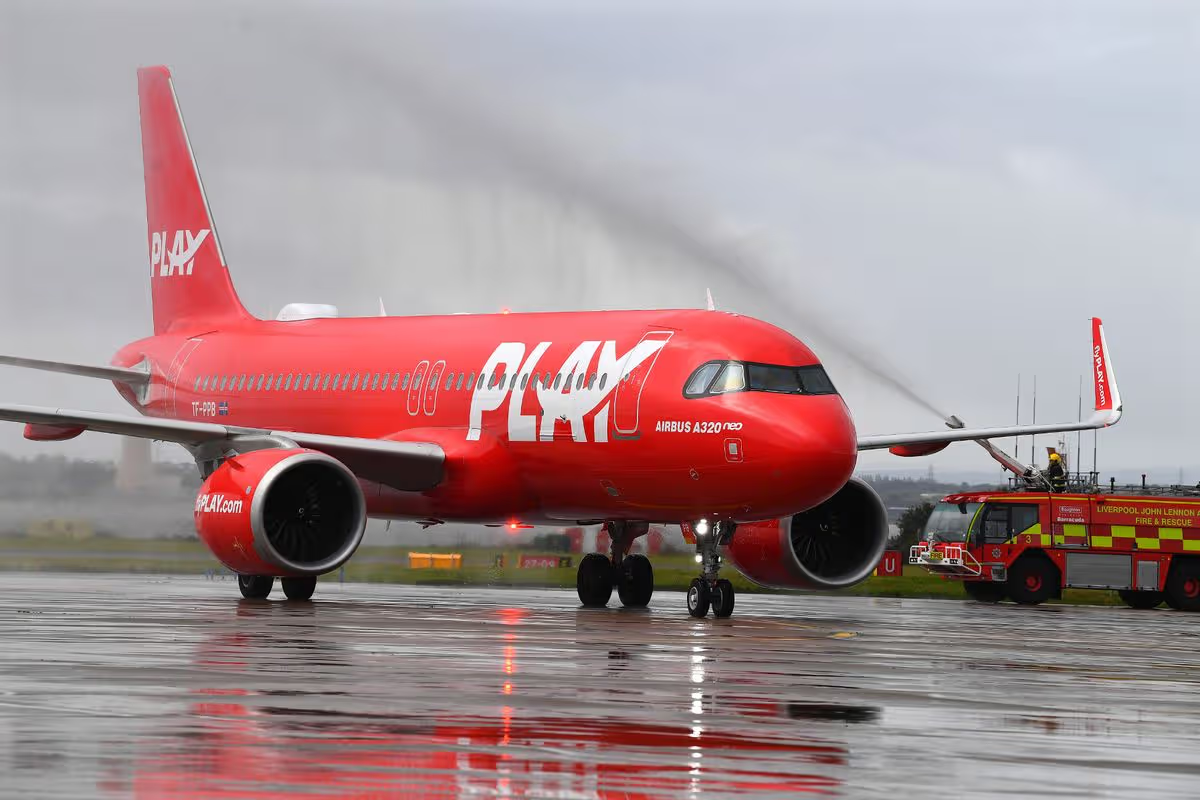
Icelandic low‑cost airline PLAY entered administration and ceased operations on September 29, 2025, with all flights cancelled and around 400 staff affected
16:35, 17 Mar 2026Updated 17:35, 17 Mar 2026
The Icelandic airline announced it was ceasing operations with immediate effect(Image: Andrew Teebay Liverpool Echo)
Hundreds of workers were made redundant after a low-cost carrier announced it had entered administration.
Icelandic airline PLAY, headquartered in Reykjavík, confirmed it had ceased operations and grounded all its flights last September. A statement on the carrier’s website at the time read: “Dear passenger, Fly PLAY hf. has ceased operations, and all flights have been cancelled.”
According to local media outlet RUV, the move resulted in 400 people facing redundancy, with the company “trying to pay staff their wages”. It is unclear whether the affected employees have received their full payments.
PLAY was established in July 2019, starting operations from its base at Keflavík International Airport, Reykjavik, in June 2021. The carrier initially served six European destinations: Alicante, Tenerife, London, Paris, Copenhagen and Berlin. PLAY also ran services between London and Reykjavik, although prior to the announcement there were no seats on sale after November 1.
Ensure our latest headlines always appear at the top of your Google Search by making us a Preferred Source. Click here to activate or add us as your Preferred Source in your Google search settings.
The board of PLAY said in a statement at the time: “The board of Fly Play hf. has decided to terminate operations, and all of the company’s flights have been cancelled. The company will work closely with authorities and employees to implement the necessary steps for winding down operations.
“There are many reasons behind this decision. The company’s performance has long fallen short of expectations, ticket sales have been poor in recent weeks and months following negative media coverage, and internal disagreements among some employees regarding strategic changes have further strained the situation.”
Information disclosed by the board concerned modifications that failed to produce the required outcomes. They added: “Last fall, Play introduced a new business model that initially inspired significant optimism.
“Unfortunately, it has now become clear that these changes cannot deliver the results needed to overcome the airline’s deep-seated financial troubles. In hindsight, these measures would have needed to be implemented much earlier.”
An spokesman said: “Due to the continuing uncertainty of the situation in the Middle East and airspace instability, and to provide more clarity to our customers, we’ve extended the temporary reduction in our flying schedule in the region.
“We’re keeping the situation under constant review and are directly in touch with affected customers to offer them a range of options.
“Since the situation in the Middle East began, we’ve helped thousands of customers return home and operated eight relief flights from Muscat in Oman.”
British Airways confirmed that they are operating more flights via other international hubs in replacement of Dubai, which is one of the world’s busiest airports.
This includes four more flights via Singapore and three more flights via Bangkok.
Passengers affected will be able to rebook with another airline, or move their travel to a different date.
Otherwise full refunds are being given to anyone with bookings up to May 31.
The ongoing Iran crisis is still causing chaos for travellers, not just those in the Middle East.
Virgin Atlantic has already ended its Dubai flights for the season early, which were due to conclude on March 28.
The popular airline has made the big announcement to relaunch the daily flights as part of its winter expansion, serving travellers and residents of both countries
07:05, 17 Mar 2026Updated 07:06, 17 Mar 2026
British Airways are launching new flights (Image: Mrkit99 via Getty Images)
British Airways have made a huge announcement that they are relaunching daily flights to a popular city for UK passengers – ahead of a couple of huge worldwide sporting events.
The airline will be returning to Melbourne after a 20-year hiatus.
Ensure our latest headlines always appear at the top of your Google Search by making us a Preferred Source. Click here to activate or add us as your Preferred Source in your Google search settings.
The flights will commence flights to Melbourne from January 9, 2027, launching in time for the Australian Open and the Melbourne Grand Prix. Flights will operate year-round from London Heathrow, via Kuala Lumpur, on a daily basis.
Passengers will be able to choose from First, World Traveller (economy), World Traveller Plus (premium economy), and Club World (business class) in both directions.
Return fares start from £1,130 (including taxes and carrier fees) and are on sale from today.
The UK airline halted all services from Melbourne Airport in March 2006 with other companies being relied on for people to make the London-Melbourne journey.
Melbourne Airport Chief Executive Officer Lorie Argus said the announcement underscored Melbourne’s place as Australia’s largest and best connected 24-hour gateway.
“We are thrilled to welcome British Airways back to Melbourne Airport and we’re incredibly excited about what this extra choice means for travellers and exporters,” she said.
“British Airways is one of the world’s most recognisable airlines and in its more than 100 years of flying has earned a well-deserved reputation for excellence and reliability.
“With the largest choice of airlines flying to the UK and Europe, 24-hour operations and the shortest minimum connection time of any Australian airport, Melbourne Airport is now the clear choice for Europeans heading to Australia or Australians looking to travel abroad.
“London is one of the world’s great global cities and a critical hub for business, tourism and education, while Melbourne was last week voted Time Out’s “best city in the world” as well as being home to the largest British expat community in Australia, so there will be no shortage of two-way demand.”
The move is part of a significant planned expansion to BA’s network for winter 2026, with the addition of Colombo in Sri Lanka as well.
WHITE SALMON, Wash. — Seth McBride’s life was forever changed on a snowy mountainside in British Columbia.
McBride was — and is — a thrill-seeker. Growing up in Juneau, Ala., with the untamed outdoors as his stomping ground, he loved to rock climb, mountain bike and, especially, strap on his skis and fly, soaring headlong off heart-pounding cliffs, crags and cornices.
A few months before his senior year in high school, McBride was at a terrain park at Whistler Blackcomb resort. He was 17. He launched a maneuver he’d completed many times before, a back flip off a steep jump. Only this time, he over-accelerated, over-rotated and came down on his neck. Right away he knew something was wrong.
“As soon as I landed,” McBride recalled more than 25 years later, “I lost all sensation in my legs and my lower back.”
The prognosis was grim; doctors told McBride he probably would never walk again, and he hasn’t.
But that’s scarcely slowed him down.
Views of the 47th president, from the ground up
Before they had kids, McBride and his wife biked 6,500 miles — McBride using a special, hand-cranked cycle — from Portland, Ore., to the southern tip of Argentina. He’s traveled the world as a wheelchair rugby player, winning gold, silver and bronze medals at Paralympic Games in Beijing, Rio de Janeiro and London.
McBride — adventurer, daredevil — appears unflappable. Until it comes to air travel.
It’s not the hassles and aggravation that most people put up with. Every trip requires McBride, 43, to undergo a special regimen, dehydrating himself so he won’t have to use the bathroom in flight. Every excursion includes the likelihood of being uncomfortably jostled or, worse, dropped as he’s being transferred to his seat. He can never be certain his wheelchair, his lifeline, won’t be damaged or missing once his plane lands.
“There are very few places or in my life that I feel less independent” than an airport, said McBride, who still plays competitive rugby at the club level. “None of the systems are set up for wheelchair users to be able to manage things on their own.”
Wheelchairs at Portland International Airport. The all-purpose equipment can’t serve the various needs of disabled travelers.
(Will Matsuda / For The Times)
For a time, as the Biden administration was winding down, it looked as though that was about to change somewhat. The federal government issued a set of regulations that would require airlines, among other things, to assume liability for damaged and delayed wheelchairs and improve training for staff working with passengers facing mobility issues.
But the Trump administration, which has made deregulation one of its highest imperatives, put those requirements on hold while a trade association and several major airlines sue to keep the changes from taking effect.
For McBride and others like him, it’s a disappointing setback that follows years of pressing Washington to make air transit just a bit more decent and humane.
“It sucks,” McBride said of the dignity-deflating status of a wheelchair traveler. “I know quite a few people who simply won’t fly anymore.”
Passengers forced to surrender their wheelchairs “must rely on airline staff and contractors to properly handle a wheelchair or scooter and return it in a timely manner in the condition it was received. Advocates have stressed … that, when an individual’s wheelchair or scooter is damaged by an airline, the individual’s mobility, health and freedom are impacted until the device can be returned, repaired or replaced.”
What’s more, “Advocates note that wheelchairs are often custom fitted to meet the needs and shapes of each user. Spending time in an ill-fitting chair can cause serious injury, such as pressure sores, and even death because of a subsequent infection.”
The Department of Transportation estimated that, in 2024, 1 of every 100 wheelchairs or scooters placed on a domestic flight was lost, damaged or delayed. Which may not seem like a terribly large number, unless you’re the person whose well-being, and even survival, depends on their wheelchair or scooter being at the ready and operational upon arrival.
Mia Ives-Rublee directs the Disability Justice Initiative at the Center for American Progress, a left-leaning think tank. She said airlines, which cater to luxury travelers and treat everyone else like sardines, have long put profit and expedience ahead of the needs of their disabled passengers.
“We’ve seen this tension continue to build as disabled people become more active and the world becomes more accessible. They want to travel, or have jobs that require travel,” said Ives-Rublee. While discrimination is plainly illegal, “Airlines aren’t doing enough to protect our devices,” which has the effect of making it “very difficult for disabled people to travel.”
Ives-Rublee has had nearly a half dozen wheelchairs broken by airlines in the last 20 years, which can be costly as well as life-threatening. A manually operated wheelchair can run as much as $2,000, Ives-Rublee said. A mechanized wheelchair can cost as much as a used car.
McBride mainly travels from Portland’s airport. “There are few places in my life” he feels less independent.
(Will Matsuda / For The Times)
(McBride said he’s suffered nicks and scrapes on his “everyday chair.” Worse, was the damage done to wheelchairs he uses in rugby competition, which “is obviously a big deal” when he’s traveling for a match.)
In their lawsuit opposing the rules change, airlines and their trade group said the Biden administration overstepped its authority and the new requirements were too burdensome. Strict liability for wheelchair damage also could expose air carriers to “unreasonable financial risk,” the suit claimed.
The wheelchair rules were supposed to take effect just before Biden left office. The Trump administration postponed them until March 2025, then pushed implementation to August 2025. Now, the Department of Transportation says it will issue a new rule this coming August, with a 60-day comment period to follow — meaning no change will come until at least 2027.
Ives-Rublee hasn’t much hope for relief.
“Given the nature of the administration right now, I doubt they’re putting much effort into protecting” the Biden-era regulations, she said
::
The last thing McBride wants is anyone feeling sorry for him. He’s no victim.
“It was something s— that happened to me,” he said of the accident that left him paralyzed. “But s— stuff happens to people all the time. What matters is how you move forward and what you can do with your life after that happens.”
McBride was seated at the kitchen table of his custom-built home, two miles above the Columbia River in rural Washington state. The house — one level, bright and airy, with concrete floors to smooth the path of his wheelchair — perches at the end of a steep dirt road. A forest in the backyard gives his children, ages 4 and 8, the same freedom to romp through nature he enjoyed growing up in Alaska. There’s also a climbing wall in his son’s bedroom.
Working remotely, McBride writes for New Mobility, a magazine for wheelchair users, and heads communications and marketing for the United Spinal Assn., a nonprofit advocacy group.
His politics run to the left side of the spectrum. (On a cold, drizzly morning, McBride wore a black Oregon Ducks hoodie, honoring his alma mater, the University of Oregon, and its home in liberal Eugene.) Yet while he’s no Trump fan, McBride doesn’t consider making life easier for wheelchair users to be a partisan issue. After all, he pointed out, it was a Republican president, George H. W. Bush, who signed into law the landmark Americans With Disabilities Act.
“We’ve made a lot of progress as a community working with Republicans, working with Democrats,” he said, as the sun made a brief appearance, illuminating the Douglas firs outside his door. “The basic issues of people being able to access the same services and the same experiences as everyone else shouldn’t be political. … It’s a safety thing.”
He’s not unalterably opposed to deregulation, per se.
“I think it’s a huge issue within systems when it’s overly complex for companies or people to do anything,” McBride said. “But lots of time regulations are there for a reason. It’s when private companies aren’t necessarily doing a good enough job protecting the safety or the rights of all people within a society.”
Given a chance to address Trump or the head of his Transportation Department, Sean Duffy, McBride would say this: Come, let’s take a plane ride.
“Go on a trip with my rugby team and see what it’s like when you have multiple wheelchair users on the same plane,” he said, “and how difficult it is and why we feel like regulations are needed so we can have a modicum of safety and dignity when we’re flying.”
The cost of accommodation might take away some from the airlines’ bottom line. But certain things can’t be priced in dollars and cents.
An airline captain with 35 years of experience shares his strategy for managing jet lag on long-haul flights cutting recovery time from days to just hours
Regular travellers will know the misery of jet lag(Image: TommasoT via Getty Images)
During the late 1970s, a new range of travel options opened for holidaymakers as transatlantic journeys became much more affordable. Yet whilst the monetary cost of long-haul travel has steadily declined, the toll it takes on the body has remained unchanged.
Jet lag stems from several contributing elements, including the oxygen-poor cabin environment on aeroplanes, but the primary culprit is an abrupt shift between time zones. The body’s internal clock cannot adapt swiftly enough, and it’s typical for long-distance passengers to experience sleep disturbances alongside digestive problems.
Flying eastwards can trigger particularly brutal jet lag, with over-60s generally suffering more severely than their younger counterparts. Veteran travellers often swear by solutions like melatonin or strong coffee, but naturally the best source of wisdom on combating jet lag comes from airline personnel themselves.
Alfonso de Bertodano, an airline captain with 35 years of experience, has a straightforward and proven strategy: “To avoid jet lag, if I’m going to be in a place for two or three days, I try to meet up with people who are eating lunch or dinner at their usual time. Otherwise, it will take you six days to get over it”.
Speaking to Mundo Deportivo, Alfonso continued: “The reality is that I try to change my schedule as little as possible. I arrive at my destination at 8pm, which is 2am in Spain, and I go straight to bed. I don’t go out for dinner, I don’t go out for a drink.”
Alfonso, an airline pilot who needs to be alert and refreshed for his job, shared: “I set myself a countdown of seven or eight hours and get up at whatever time it is, regardless of what time it is in that country.
“That way, I maintain my Spanish schedule. Because jet lag isn’t just about sleep. It’s about muscle tone, it’s about the digestive tract… It’s not the same to feed your body at 3 in the morning as it is to feed it at 10 or 11 at night.”
He emphasised that mingling with locals and adapting to their routine as swiftly as possible is the secret to overcoming jet lag. “The ideal thing is to be with people who are having breakfast, lunch or dinner at their usual time, and you’re with them maintaining neural activity, brain activity and muscle tone activity,” advised the pilot.
Alfonso further added: “You’ll adjust much more quickly than if you do it on your own. And when you return, it’s exactly the same. That’s why when you arrive, you might sleep for a little whilst, but I immediately set my alarm clock to wake myself up and get on with my daily life,” explained the aircraft commander.
“It’s tiring, but you get your body used to performing like that. In the end, you have to control your body because if you let your body control you, you’ll end up curing your jet lag, or getting over your jet lag, in six days instead of 24 or 48 hours.”