Aircraft

China’s Truck-Mounted Electromagnetic Aircraft Catapult Seen In Action For The First Time

We now have our first look at a Chinese modular, road-mobile, electromagnetic aircraft launch system (EMALS) catapult actually launching a drone. The system, which consists of multiple specially-designed trucks linked together, first emerged right at the end of last year and was soon loaded onto the deck of a cargo ship. The same vessel, named Zhong Da 79, was used to showcase a new family of containerized weapons, sensors, and other systems, images of which went viral in a big way online. It has now also been confirmed that the truck-mounted EMALS catapult is part of that family.

Video of the truck-mounted EMALS catapult in use first began circulating widely on social media earlier today, but exactly where or when it was shot is unclear. The footage looks to have originally accompanied a Chinese-language social media post from the Beijing Institute of Technology’s School of Mechanical Engineering. Screenshots said to be of the post show it was primarily on news about the development of the full family of containerized weapons and other systems, which we will come back to later on.

A screen capture from a video circulating on social media showing a drone being launched from a modular, road-mobile, electromagnetic aircraft launch system (EMALS) catapult. Chinese internet screen capture via X

The video, seen in full in the social media post below, starts by showing a propeller-driven drone being launched from a mobile EMALS catapult made up of three trucks. The drone in question has a high-wing monoplane planform with a v-tail and tricycle landing gear. When the system first appeared publicly last year, it was shown in a four-truck configuration, and paired with stealthy collaborative combat aircraft (CCA)-like drones, or what were more likely mockups thereof.

The footage continues on, showing three EMALS catapult trucks traveling in a group, unlinked, in a convoy, before joining together. The convoy clip notably shows what look to be covers on top of the trucks that do not appear to have been previously seen. There are what appear to be hinges or at least large straps on the side to hold them in place.

A screen capture showing the three EMALS trucks traveling separately in a convoy with what appear to be covers on top. Chinese internet capture via X
Another screen capture showing two of the EMALS trucks linking up with the appropriate covers still in place. Some of the hinges or straps holding them in place can be seen on both vehicles. Chinese internet capture via X

Covers would help protect the system from the elements during transit. It might also help mask its true purpose, though the trucks have other very distinct features, including a very prominent locking point at the front. The possibility that the covers hinge to either side also raises the question of whether the system could be configured to fold out to create a wider runway, though there is no evidence of this so far.

The video also reveals that the trucks have an extreme all-wheel steering capability that allows them to turn in a roughly flat circle, even when joined together. This would allow for the launching of aircraft in any direction as long as their sufficent space to turn the complete system. This would be key for pointing aircraft into the wind ahead of launches, especially in confined spaces with limited room to maneuver. This is an essential capability for enabling this concept overall. It would be extremely hard, if not impossible, to do this with normal steering, especially to account for any major shift in the wind’s direction.

A ground-level view of three of the EMALS trucks without any covers on top turning while linked together, highlighting their all-wheel steering. Chinese internet capture via X
A top-down look at the EMALS trucks turning while linked together. Chinese internet capture via X

The footage caps off with another clip of the drone being launched and then one of Zhong Da 79 as it was seen earlier this year with the various containerized systems, at least some of which turned out to be mockups, onboard.

As seen earlier in this story, the video is circulating along with a graphic showing the full family of containerized weapons and other capabilities. This includes versions armed with launchers for land-attack and anti-ship cruise missiles, as well as surface-to-air missiles. There are also ones that contain either a single Type 1130 30mm close-in-weapon system (CIWS) or two Type 726 close-in defensive launchers. There are also containerized radars, electronic warfare systems, and command and control suites. The graphic also notably shows a container loaded with a single EMALS catapult truck and another with a disassembled drone inside that looks very much like the one seen being launched in the opening clip.

The graphic showing the full family of containerized systems. Chinese internet via X
A close-up of the EMALS truck and drone containers depicted on the graphic. Chinese internet via X

Annual production of 2,000 of these containerized systems, collectively, is now being targeted, according to a machine translation of the apparent social media post from the Beijing Institute of Technology’s School of Mechanical Engineering that is the original source of the video.

The social media post from Beijing Institute of Technology’s School of Mechanical Engineering also says 70 other entities were also involved in the development of the various systems showcased on the Zhong Da 79. The China State Shipbuilding Corporation (CSSC), China North Industries Group Corporation (NORINCO), China Aerospace Science and Industry Corporation (CASIC), China Aerospace Science and Technology Corporation (CASC), China Electronics Technology Group Corporation (CETC), and the Aviation Industry Corporation of China (AVIC) are explicitly named.

Not on this list of named organizations is Tiantao Technology, a company that has been publicly discussing plans for a ground-based electromagnetic catapult system made up of modular wheeled segments since at least August 2025. As TWZ previously noted, Tiantao Technology’s renderings have shown a system that is visually different from the one now tied to the Beijing Institute of Technology’s School of Mechanical Engineering. However, its expected capabilities are in line with what have now seen in the video, especially the ability to drones weighing up to around 2.2 tons (two metric tons). The drone seen being launched is notably smaller and lighter than the CCA-type designs previously displayed with the system.

A broad view of the drone or drone mockups, as well as three EMALS trucks linked together, on the pier at Hudong-Zhonghua shipyard. All of this was later loaded onto the Zhong Da 79. Chinese internet

As TWZ wrote in our initial reporting on the truck-mounted EMALS catapult after it emerged last year:

“This [2.2 tons] is lighter than the expected takeoff weights of ‘loyal wingman’ type drones China has shown to date, based on the known specifications of comparably-sized Western designs. For example, the stated maximum launch weight of the XQ-58 is three tons, according to Kratos. As another point of comparison, the Chinese GJ-11, a larger flying-wing uncrewed combat air vehicle (UCAV), a catapult-capable version of which is now in development, reportedly has a payload capacity of around two tons. China’s J-15 family of crewed carrier-based fighters, derived from the Su-33 Flanker, each weighs around 19 tons (17.5 metric tons) empty without any fuel or ordnance, as well.”

“It is possible that the modular design of Tiantao Technology’s ground-based catapult system could allow for configurations capable of launching heavier designs. A core benefit of electromagnetic catapults over steam-powered ones, in general, is their ability to be more fine-tuned in terms of the forces they exert on any aircraft during launch. The capabilities of a modular system would also be dependent on its exact configuration, including how long the catapult track is overall. Tiantao Technology has said the total length of its system could be scaled between roughly 65 and 196 feet (20 and 60 meters). What limitations there might be on simply adding more segments to increase launch capacity are unknown.”

“Tiantao Technology has also shown models and renderings of truck and trailer-mounted electromagnetic catapults for launching even smaller drones. How much progress it has made in the actual development of any of the systems to date is unclear.”

As we noted at that time, other companies in China could very well have been working along similar lines. There’s also the distinct possibility that Tiantao Technology is among the dozens of unnamed partners that are said to have been working with Beijing Institute of Technology’s School of Mechanical Engineering on this project.

A rendering from Tiantao Technology of a modular EMALS catapult made up of multiple road-mobile segments. Tiantao Technology

There is still an outstanding question about how drones are loaded onto the truck-mounted EMALS catapult to begin with, which would impact the launch tempo. TWZ has noted previously that a cycle could be established using trucks carrying drones that would drive up, one at a time, locking into the rear of an existing track, and then detaching after launch.

What kind of power and logistical footprint is required to support the mobile EMALS catapult, either on land or at sea, is also unknown. The system is not intended to support a traditional carrier air wing, and would therefore inherently have lower capability demands. It’s worth pointing out here that questions about power demands and logistical requirements would also apply to other parts of the family of containerized systems that are now in development, as well.

What limitations might exist when it comes to employing the catapult system from the deck of a ship that was not designed to have this capability from the start is another open question. Whether the truck-mounted arrangement would be stable enough for launches with the ship rocking back and forth at sea is unclear.

Zhong Da 79 seen earlier this year with the truck-mounted EMALS catapult and other containerized systems loaded onboard. Chinese internet

Overall, much more is still to be learned about the modular EMALS catapult and its capabilities. At the same time, what we’ve learned now underscores points that TWZ has made in the past about the new operational possibilities this system could enable, both in shipboard and ground-based modes. It is tailor-made for expeditionary scenarios or other situations in which traditional runways may not be available. As a mobile system that can be moved on the ground or embarked on ships, it would allow for at least a certain tier of airpower to be more readily positioned closer to operating areas.

The system’s mobility and ability to stay in relatively close proximity to the forces it is supporting would make this a very responsive capability, even as the overall operational picture and battlespace demands evolve. The less time any aircraft has to spend in transit means more on-station endurance, which could be especially valuable when employing smaller, shorter-range drones. The choice of an electromagnetic catapult system versus a steam-powered one also means shorter reset times between launches and, by extension, increased sortie generation rates.

Since it is made up of multiple modular truck-mounted segments, it would be easier for the system to disperse when not in use, creating targeting challenges for opponents and helping to increase survivability. Being able to store components of the catapult system, as well as drones to launch from it, concealed inside unassuming shipping containers would create further benefits in this regard.

All of this is relevant for a Chinese People’s Liberation Army (PLA) that has significant standing requirements to be able to provide airpower and other support during island-hopping campaigns against various potential opponents in the Pacific, where established runways may be few and far between. Another key focus area for the PLA is supporting operations in highly remote and high-altitude areas along its disputed western border with India, where runway access is also often constrained. The truck-mounted catapult could also be combined with the elements of the full family of containerized systems to help establish more robust and defensible operating locations on land, as well as rapidly turn any ship with suitable deck space into a multi-purpose naval vessel.

An annotated image of Zhong Da 79 as it was seen earlier this year, highlighting various containerized weapons and sensors, or mockups thereof, loaded onboard. Chinese internet via X

As an aside, the fact that the new details about the truck-mounted EMALS catapult and the other containerized system have come via Beijing Institute of Technology underscores the strong ties that state-run research institutions in China often have to the country’s government-owned defense industry and to the People’s Liberation Army (PLA). This is something TWZ regularly calls attention to, especially in advanced aerospace development realms, where the academic side of the ecosystem has been shown to be very deeply involved.

With the release of the video showing actual testing of the mobile EMALS catapult, and other insights into the full family of containerized weapons and other systems, more details about these new capabilities may now start coming more rapidly.

Contact the author: joe@twz.com
Joseph is TWZ’s Deputy Editor, helping to oversee the site’s highly experienced and dedicated team, while also writing informative and impactful defense and national security content. He lives right in the thick of it in the Washington, D.C. area.


Source link

Where Are The Aircraft Carriers: June 22, 2026

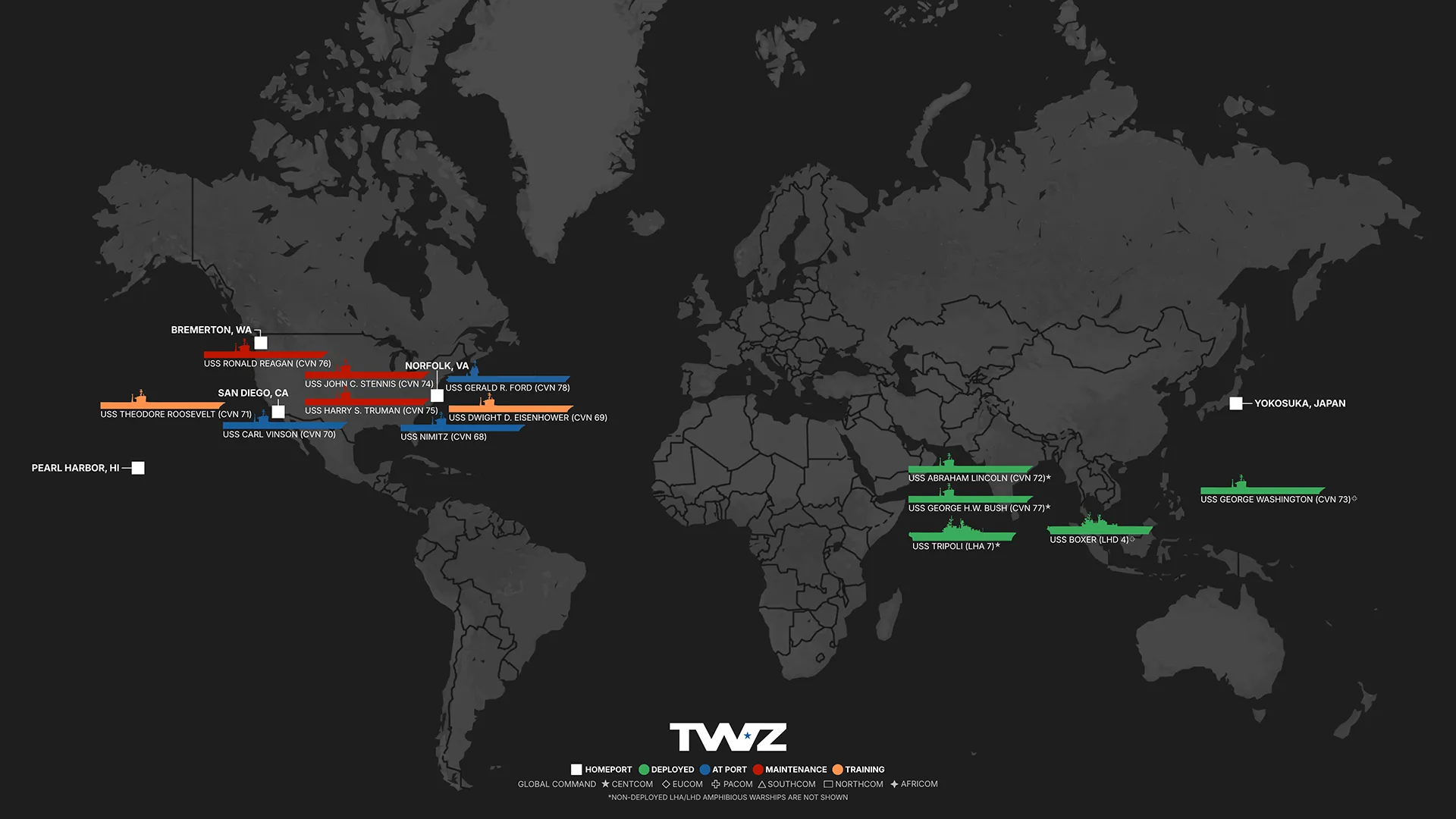
Here’s TWZ’s weekly carrier tracker monitoring America’s flattop fleet, including deployed Carrier Strike Groups (CSG) and Amphibious Ready Groups (ARG), using publicly available open-source information. Check out last week’s report here.

The United States lifted its naval blockade of Iranian ports, U.S. Central Command (CENTCOM) announced on Friday, following the execution of the Islamabad Memorandum of Understanding in Versailles. While the blockade is over, the fate of the blockade forces – and future U.S. force posture in the region – remains unclear. The “plan is to keep the current force posture” during negotiations, a U.S. official said on background, but “the agreement contemplates the reduction in military forces in the region upon the agreement of a final deal.”

Major U.S. naval assets, including two aircraft carriers, continue operating “in the general area to support freedom of navigation,” according to a press release from CENTCOM. “U.S. forces remain present and vigilant to ensure all aspects of the agreement with Iran are adhered to, obeyed, and in full force and effect.” USS Abraham Lincoln, now deployed for more than seven months, was conducting flight ops in the CENTCOM area of responsibility (AOR) as of June 21, and USS George H.W. Bush was last spotted on June 20.

USS Nimitz arrived at Naval Station Mayport in Florida on June 16, marking the completion of her participation in Southern Seas 2026. “This year’s deployment marked the 11th iteration of the Southern Seas exercise since 2007, demonstrating the United States’ enduring commitment to the Western Hemisphere. Southern Seas 2026 highlighted unprecedented diplomatic and military integration, recording the highest number of Latin American leadership visits in the exercise’s history, with approximately 339 distinguished visitors embarking and 3,100 guests hosted during port visits.” Nimitz is on the final leg of a homeport shift to Naval Station Norfolk after the Navy announced a service life extension into 2027.

USS Dwight D. Eisenhower departed Norfolk on June 17 for Fleet Replacement Squadron Carrier Qualifications (FRS-CQ) and is underway in the Virginia Capes Operating Area, according to publicly available AIS data. Eisenhower is not scheduled to deploy this year, and is preparing for a deployment in early 2027, TWZ has learned.

USS Theodore Roosevelt got underway on June 15 and is conducting exercises off the west coast in the U.S. 3rd Fleet AOR. The drills are meant to “bolster strike group readiness and capability” and the crew was spotted participating in firefighting drills, barricade drills, and crash and salvage training on the flight deck. While the upcoming deployment date is unknown, Roosevelt is the next carrier slated to deploy.

USS Carl Vinson is moored at Berth Lima at Naval Air Station North Island in San Diego. Over the weekend, Vinson was the centerpiece of NASCAR’s “Race the Base” event at Naval Base Coronado. “The event marked a historic collaboration between the U.S. Navy and NASCAR while celebrating the service’s enduring connection to the American people. It provided attendees opportunities to engage directly with Sailors, explore Navy capabilities, and learn about the Navy’s role in defending the nation around the globe.”

USS George Washington moored in Apra Harbor, Guam, from June 16-20, and then participated in a PHOTOEX to kick off exercise Valiant Shield 2026. Washington was pictured alongside cruiser USS Robert Smalls, destroyers USS Shoup and USS Benfold, fast-attack submarine USS Minnesota, and the Japan Maritime Self-Defense Force, including JS Kaga, JS Fuyuzuki, and JS Jingei. “Valiant Shield is a biennial, multilateral field training exercise conducted by the U.S. Armed Forces and partner nations in the Western Pacific focusing on joint, cross-combatant integration operating seamlessly across sea, air, land, and cyberspace.”

Note: Positions are general approximations. Non-deployed LHA/LHD amphibious warships are not shown.

Contact the author: ian.ellis-jones@teamrecurrent.io

Ian executes TWZ’s full-spectrum social media strategy, brings his interpretive graphics skills to our editorial team as an OSINT analyst and researcher, and maintains the weekly carrier tracker and newsletter.


Source link

President Trump unveils the new Air Force One, a converted Qatari jet

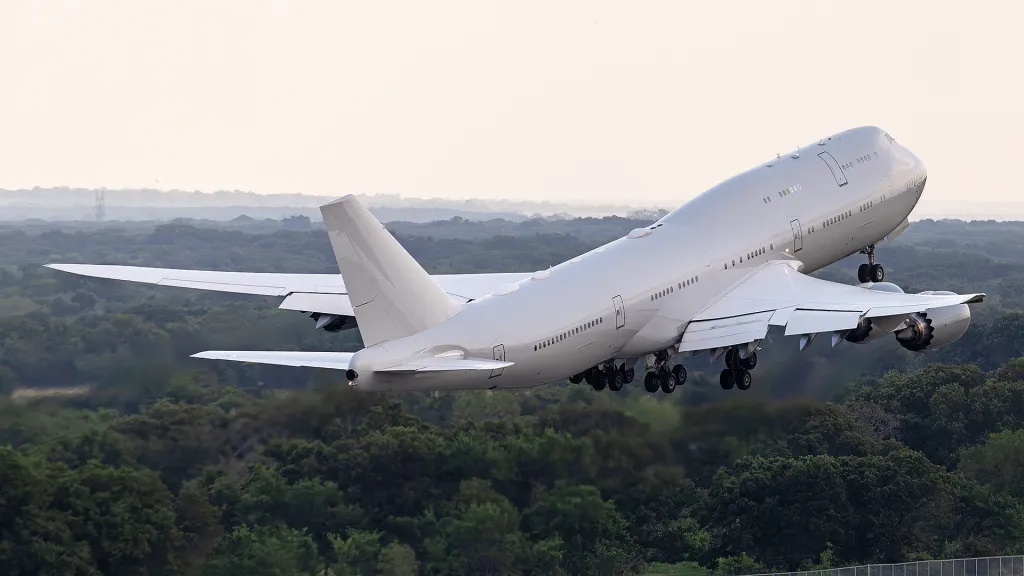
President Trump on Friday showed off the new Air Force One, a formerly Qatari-owned — and much debated — jumbo jet that has been converted into the official U.S. presidential aircraft.

The new plane — gifted from the Qatari government, raising a host of legal, ethical and security questions — will take on a new look, eschewing the Kennedy-era robin’s egg blue exterior in favor of white on the top half, its underbelly navy blue with a red stripe above it.

“This plane was transformed into a flying White House at a level of luxury that nobody has ever seen before,” Trump said from inside the massive Joint Base Andrews hangar, as a couple of hundred assembled Air Force personnel looked on. He spoke after stepping off the new plane in a dramatic flourish, as his signature tune “God Bless the USA” played.

He confirmed that he would be taking the new jet to the North Atlantic Treaty Organization summit in Ankara, Turkey, next month and indicated that he would be returning to China “at some point,” presumably a reference to the Asia-Pacific Economic Cooperation summit that China is hosting in November. His return from the Group of 7 summit in France this week was the last planned trip aboard the old Air Force One, he said.

“Now, when we land at airports in London and in Germany and different places, nobody tops this one, and that’s the way we have to have it for our country,” Trump said, noting that the colors and the design were to “my taste, I will say.”

He added that the new Air Force One will do a flyover during the July 4 celebrations next month.

The gift from Qatar is serving as a so-called bridge aircraft to carry the president until new planes ordered directly from Boeing arrive. That is currently slated for 2028.

The administration formally accepted a luxury Boeing 747 jet from Qatar last year to be used as the presidential airplane, despite questions about security and the ethics and legality of accepting such an expensive gift from a foreign government. Trump has claimed in the past that he would not fly around in the Qatari jet once he leaves office and said it would instead be donated to a future presidential library.

Trump on Friday said the U.S. was in a “little bit of a logjam” as it awaited the delivery of the new jets directly from Boeing, which had originally been scheduled for 2024 but have been delayed. He recalled asking the emir of Qatar for the use of one of their planes.

“See, a normal president wouldn’t do this. A normal president wants to stay away from aircraft,” Trump said Friday. “But our country has to be represented properly.”

Members of Congress and others have questioned the cost and effort that would be needed to make security modifications to an aircraft from a foreign government.

The Air Force said in a news release Friday that any plane deemed Air Force One “must meet rigorous security requirements” and that the Qatari plane “was modified under a disciplined engineering approach that prioritized these exact core capabilities above all else.” The Air Force also said “much of the previous head of state interior layout” of the plane was kept intact.

The Air Force has said in the past that security modifications to the jet would cost less than $400 million.

Trump’s efforts to reimagine the presidential airplane date back to his first administration, when he directed that an incoming fleet of new jets would adopt a color scheme that was nearly identical to that of his personal airplane. Then-President Biden reversed the decision in March 2023 as an Air Force review suggested that the darker colors could increase costs and delay delivery of the new jets, but once Trump returned to office, he returned to his desired colors for the plane.

Other government jets that carry other top administration officials will use a similar red, white and navy color scheme, the Air Force said earlier this year.

An Air Force spokesperson, who spoke on condition of anonymity to discuss sensitive plans, told the Associated Press that the two current planes, known as VC-25As, will not be retiring. Instead, they will remain in the fleet until the new Boeing planes, referred to as VC-25Bs, come into service, the spokesperson said.

It is unclear how the older jets will be used but the spokesperson said that both the Qatari jet as well as the VC-25As will be available for use and “the Presidential Airlift Group will select the appropriate aircraft for each mission based on operational requirements.”

Kim and Ceneta write for the Associated Press. Kim reported from Washington. AP writer Konstantin Toropin contributed to this report from Washington.

Source link

VC-25B Air Force One “Bridge” Aircraft Now Wears Trump’s Preferred Red, White, and Blue Paint Job

The U.S. Air Force has confirmed that the VC-25B “Bridge” aircraft is now wearing its new (and controversial) red, white, and blue livery as it undergoes final preparations for its official delivery.

Aviation photographer Travis Ghormley shared the first picture of the modified Boeing 747-8i with its new paint scheme yesterday. It was taken the day before in Waco, Texas. The aircraft had been undergoing modification and flight testing at L3Harris’ facility in Greenville, also in Texas, as part of the conversion into its new role, since at least April, before subsequently moving to Waco to be painted. The jet, gifted to the Trump administration by the government of Qatar last year, is set to serve as an interim Air Force One aircraft ahead of the much-delayed arrival of two fully outfitted VC-25Bs from Boeing.

The VC-25B Bridge aircraft seen unpainted sometime circa May 1. Courtesy photo via the USAF

“The VC-25B Bridge aircraft has been painted and is going through final modifications,” an Air Force spokesperson told TWZ today when asked for more information about the aircraft’s current status. “I don’t have any additional details I can provide on delivery dates at this time.”

A press release the Air Force put out on May 1 said that the “VC-25B Bridge aircraft has officially completed modification and flight testing” and was “being painted.” We have confirmed that the completed modifications referred to here were on the contractor side, but the U.S. government still has additional modifications to make to the jet.

Ghormley’s picture does clearly show the jet wearing the same red, white, and blue scheme that has already been appearing on various Air Force and other U.S. government VVIP jets. The livery also includes a large American flag, depicted blowing in the wind, painted on both sides of the tail and “UNITED STATES OF AMERICA” written on both sides of the fuselage. The paint job is virtually identical to what President Donald Trump had previously chosen for the future VC-25B Air Force Ones during his first term. President Joe Biden had previously reversed that decision, bringing back plans to paint the VC-25Bs in the iconic scheme that dates back to President John F. Kennedy’s administration.

A rendering of a future VC-25B with the livery President Trump had originally selected. Boeing
A rendering of a future VC-25B wearing the Kennedy-era scheme. USAF A rendering of a future VC-25B Air Force one jet. USAF

The Bridge aircraft’s current location is also unclear. Video posted on social media yesterday, seen below, purported to be of the jet departing for its new home at Andrews Air Force Base just outside of Washington, D.C. This is where the two current VC-25A Air Force One jets, as well as a host of other Air Force VVIP aircraft, are based.

Online flight tracking data does show that another U.S. military Boeing 747-8i flew from Waco, Texas, to Andrews on June 7, using the callsign Crane 01. However, this callsign has been associated with an ex-Lufthansa 747 the Air Force has also acquired for use as a trainer in support of future Air Force One operations. This aircraft, which may now carry the serial number 25-3200, has been tracked multiple times flying between facilities in Texas and Andrews in recent months. There does not appear to be tracking data for the VC-25B Bridge jet, which may also now have the serial number 25-3300, but it could have made the trip without broadcasting on ADS-B.

Past reports have indicated that the Bridge aircraft could make its public debut on July 4, which this year is also wrapped up in additional celebrations of the 250th anniversary of the founding of the United States. President Trump’s birthday (June 14) is also this weekend.

Otherwise, TWZ has previously laid out significant questions about the general feasibility of actually using the VC-25B Bridge aircraft in the Air Force One role, given the kinds of modifications that should be required for this demanding mission. Potential operational security concerns have been raised about using the gifted jet as a presidential aircraft, as well.

“L3Harris, known for its executive communications systems and services, was selected to undertake a complex modification of the bridge aircraft. L3Harris not only delivers secure, reliable and resilient communications for VC-25A and the executive airlift fleet but has extensive experience with self-protection and customization of VIP aircraft,” the Air Force wrote in the May 1 press release. “The accelerated timeline was further made possible by a mission-focused partnership with Boeing, who provided the necessary engineering data to support the required structural modifications.”

“Additionally, elite specialists from multiple government agencies developed advanced protocols to detect and-if necessary-neutralize potential technical hazards on previously owned aircraft,” it added. “Their rigorous approach on the Bridge aircraft has literally ‘written the book’ and set the benchmark for integrating used airframes into the secure military inventory.”

Another picture of the unpainted VC-25B Bridge aircraft, seen after arriving in Waco, Texas. Courtesy Photo via USAF

“Safety and security were at the forefront of this program. We deliberately minimized interior aesthetic modifications to focus on modifications for safety, security and mission execution. We assessed which requirements were necessary for an interim capability. We had greater flexibility in developing our mission requirements,” the Air Force also told TWZ directly at that time. “After safety and security, we focused on the mission communications systems.”

“We have made deliberate decisions such as the reduction of the number of airstairs, less chiller space, and exclusion of the Golden Eagle mission [to fly the remains of former presidents] to minimize structural modifications, while prioritizing modifications focused on safety, security and secure communications,” the service added.

Getting a new Air Force One aircraft of some kind into service on an accelerated timetable has long appeared to be a major goal for President Trump. The fully-equipped VC-25Bs from Boeing are years behind schedule. Last year, the Air Force announced that there had been some improvement on that front, but that it still did not expect to have the first of the two jets in hand until mid-2028, which would be just months before Trump is set to leave office.

What we do know for sure is that the VC-25B Bridge aircraft is now wearing Trump’s preferred red, white, and blue paint scheme ahead of its official rollout later this summer.

Contact the author: joe@twz.com

Joseph has been a member of The War Zone team since early 2017. Prior to that, he was an Associate Editor at War Is Boring, and his byline has appeared in other publications, including Small Arms Review, Small Arms Defense Journal, Reuters, We Are the Mighty, and Task & Purpose.


Howard is a Senior Staff Writer for The War Zone, and a former Senior Managing Editor for Military Times. Prior to this, he covered military affairs for the Tampa Bay Times as a Senior Writer. Howard’s work has appeared in various publications including Yahoo News, RealClearDefense, and Air Force Times.


Source link

Area 51 Mystery Aircraft Prompts Interest In “Christmas Tree” Stealth Fighter Concept

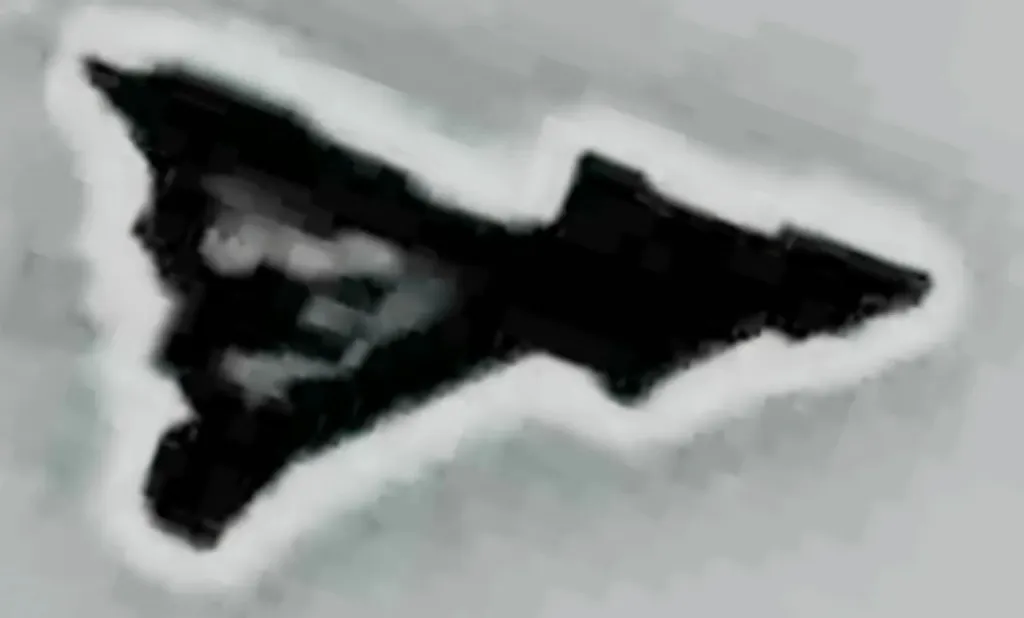
Yesterday, TWZ published an analysis of a thermal image purportedly showing a previously unseen advanced aircraft design, which appears to be a precursor to the U.S. Air Force’s forthcoming F-47 fighter from Boeing. The image, which went viral online and is from a video that has now been released, is said to have been captured near the U.S. military’s secretive Groom Lake test base, better known as Area 51. It turns out, as a number of our readers have pointed out, there may be some interesting similarities between this secret aircraft and a “Christmas tree” fighter design concept crafted decades ago by Darold Cummings, one of the top minds behind Northrop’s YF-23 Black Widow.

You can find our full initial assessment of what we may be seeing in the viral image, first posted online by the Project Fear YouTube channel earlier this week, here. What we saw initially, as shown below, appeared to feature what could be described as a “double arrowhead” profile to its forward fuselage. This is a very distinct design cue, but it could also be a result of the low quality of the image and the artifacts that come with consumer-grade thermal imagers, which was what the aircraft was recorded with.

A close-up look at what is visible in the viral thermal image. Capture via Project Fear

Project Fear has now released the full video it says it captured near Area 51, seen below, and it underscores the aforementioned points about image quality. So, it is possible the aircraft has a more traditional low-observable ‘shovel nose,’ instead. Nonetheless, the Christmas tree fighter is an interesting trip down lesser-known fighter development memory lane that is worth examining, in particular what such a unique nose configuration would provide an advanced fighter aircraft.

The full clip of the mysterious aircraft passing by starts at around 49:34 in the runtime of the video below if it does not automatically start playing at that point.

​We Filmed a Top Secret Craft Flying at Area 51 thumbnail

​We Filmed a Top Secret Craft Flying at Area 51


In a post on LinkedIn around the end of last year, Darold Cummings shared an intriguing blueprint of a relevant-looking advanced fighter concept, along with additional details about the design and its genesis. Cummings is currently the founder and president of ForzAero, but has an extensive resume in the aviation industry dating back decades. As noted, he was a key figure at Northrop in the development of the YF-23, which ultimately lost out to what became Lockheed’s F-22 Raptor. He also led the team at Boeing that developed the X-40A Space Maneuver Vehicle, which was used as a testbed in support of work on what evolved into the X-37B reusable spaceplane. He was Chief Engineer/Chief Designer of Rockwell’s Ranger 2000 Jet Trainer, as well.

“I was hired by Bob Sandusky in 1982 to be the Chief Configurator for the Northrop ATF [Advanced Tactical Fighter] program (YF-23). In early 1983 Bob said that Northrop had tried to develop a ‘4-spike’ (like the B-2) fighter, but it couldn’t be done, since a flying wing fighter was not possible,” Cummings wrote in his post on LinkedIn. “I told him I could design one, and he said to give it a try. The only way to accomplish this was with a series of highly swept (55 degree) surfaces over the entire length of the aircraft. The result was the DP-21, created in June of 1983.”

“4-spike” here essentially refers to the total number of radar cross-section hot-spots and where they are located, each pointing in a different direction in azimuth. The fewer ‘spikes’ a low-observable (stealthy) aircraft has, the easier it is to manage its radar signature, and to make it harder to detect and lock onto, but it’s also where those spikes are located that matter.

The blueprint of the DP-21 “Christmas Tree” fighter concept. Darold Cummings

A four-spike design like the B-2 critically has nothing from the head-on aspect, as well as from the rear, which helps immensely with survivability. These are the most critical signature areas, especially the front as the aircraft is heading into hostile territory. Also, because these are located along the path of flight, these spikes can stay consistent on a threat radar as the aircraft moves directly toward or away from the sensor, and are not fleeting in nature like those from the side. So a four spike aircraft would be very attractive for a tactical fighter meant to persist in contested territory.

“I never considered this to be a serious contender for the ATF program, as the aircraft was unstable beyond 10 degrees angle of attack!” he also noted.

“Back in 1983, the ‘Christmas Tree’ DP-21 would have been difficult to fly. However, with modern flight control systems, this design could be controlled, even at high angle of attack,” Cummings told TWZ directly today after we reached out for more information. “Low observability is always better served with long edges on the design, so the small arrow-shaped foreplane is not ideal, but it still has low RCS characteristics, just not the optimum.”

“Wing shaping is always a trade-off for maximizing LO. Most of the trades have to do with the leading edge contour, which is a large contributor to signature,” he continued. “The canard has to be designed to be ‘ported’ during penetration, as this minimizes the signature. On the YF-23, the V-Tail was ‘ported’ in penetration for the same reason. This is certainly possible with modern flight control systems.”

“Ported” in this instance refers to keeping the control surface locked in the same geometric plane as the wing while cruising.

A top-down look at the YF-23 during a flight test. USAF

We also asked Cummings directly whether it was possible his DP-21 concept had an influence on what is seen in the viral thermal image, assuming it is authentic. And we asked for his take on what impacts Boeing’s experimental X-36 and Bird of Prey designs may have had on the F-47, as well.

“My DP-21 aircraft image has been available publicly for quite some time, so it is possible it had some influence, but that is only speculation on my part,” he told us. “I believe the X-36 and Bird of Prey have both influenced the F-47 design. I have always been impressed by the X-36, as it seemed to be ahead of its time.”

Boeing’s X-36 demonstrator. NASA/Carla Thomas
Boeing’s Bird of Prey. USAF

“The Groom Lake images are truly intriguing,” he also noted. “It is a viable concept.”

“I think the main thing to remember is that NO ONE thought a 4-spike design (like the B-2) was possible, and my DP-21 was an example of how it was possible,” he added. “A 4-spike design for the F-47 would truly be impressive!”

An official rendering of the F-47. USAF

As TWZ already wrote yesterday, based on what is visible in the image:

“The image shows an exotic design by any interpretation. The aft-set lambda-type wings appear to have a camber and wingtip droop, as on the Boeing Bird of Prey demonstrator. There are very large canard foreplanes — a feature that appears prominently on F-47 renderings and which we have written in detail about in the past. The broad nose, too, is something that has been included in depictions of the F-47, although we have really no idea to what degree these are based in reality. It’s worth noting that in this new thermal image, it has a distinctive double-arrowhead shape, tapering in again in front of the canards. Even the canards themselves may have more than one plane, with the outer tips being drooped, matching similar architecture as the wing. The fuselage then tapers down in the center before the wing roots begin.”

“The aircraft is very likely to be tailless, a feature common to most sixth-generation concepts seen so far. However, since it’s seen from below, we cannot be sure about this aspect of its configuration.”

“As for the powerplant, it is most likely a twin-engine design, like the F-47, a theory reinforced by the sawtooth-type trailing edge. There is no obvious suggestion of any exhaust plumes, which seems odd, but that could be the result of the sensor being used in combination with the aircraft’s power setting at the time of recording, as well as general thermal signature reduction capabilities that are part of the design.”

“Soon after Boeing won the contract for the F-47, we looked at how it might have been influenced by the Phantom Works X-36, also a tailless-canard design.”

Another official rendering of the F-47. USAF

As mentioned earlier, the full video Project Fear released today does raise new questions about the exact profile of the front of the design seen in the footage. The idea of using a shovel nose profile on a stealthy aircraft dates back to Northrop’s Tacit Blue demonstrator, and it was found in its modern form the YF-23. It has since become common to see on low-observable (stealthy) designs, and has been notably present in official renders of the F-47 released to date.

Beyond the nose end, there are still some very broad similarities in the shaping of the wing and main body of the aircraft seen in the footage and Cummings’ DP-21 concept.

To date, there are no indications that an F-47 EMD prototype has flown. Air Force officials have said on multiple occasions now that first flight of the service’s new sixth-generation fighter is expected to come in 2028.

We do know that Boeing and Lockheed built flying demonstrator designs that fed into the Next Generation Air Dominance (NGAD) initiative, under which initial development of what has become the F-47 was carried out. Past reports have raised the possibility that there was a third NGAD demonstrator, which might have been built by Northrop Grumman. That company voluntarily dropped out of the NGAD combat jet competition around 2023, and is said to have been on the verge of being cut at the time.

As we noted yesterday, what is seen in the viral thermal image could be unrelated entirely to the F-47. The Navy has also been pursuing a carrier-based sixth-generation fighter, commonly referred to as F/A-XX, in recent years. There has been at least some crossover between F/A-XX and the Air Force’s NGAD effort. A rendering Boeing has shared of its proposed F/A-XX design looks very much in line with what has been shown of F-47 to date. Northrop Grumman is the other company currently competing to build the Navy’s sixth-generation carrier fighter, and has released its own renderings.

Boeing’s F/A-XX render. Boeing

In addition, it should be said that official F-47 and F/A-XX renderings released to date will have been carefully manipulated to maximize security of the programs, both of which remain highly classified, and to provide disinformation to adversaries.

As an aside, Darold Cummings also shared his take on a prospective navalized version of the F-47 in a separate post on LinkedIn last year. At that time he wrote:

“I received a DM asking if I had envisioned a Navy version of my recent F-47 fighter concept,  such as  the F-35A to F-35C approach. I recently completed my F-47 Navy version, which I call the F-47N. However, the approach I took was somewhat different: The F-35C used a larger wing for low speed lift, whereas I used my original F-47 wing planform, and added a canard for more low speed lift and control. The canard design (inspired by the X-36), coupled with the Multi-Axis Thrust Vectoring (inspired by the X-44), provided a very reasonable first cut at a Navy version. In general, a canard layout has been treated as adding more radar signature to a fighter. However, on the YF-23 we found that if the all-moving surface (it was a V-tail on the YF-23) was kept “ported”, in this case aligned with the wing plane during cruise, the impact on LO was not a large impediment to signature reduction. The ability to keep the canard ported is achievable using thrust vectoring for trim in cruise and penetration modes.”

Cummings’ interpretation of the F-47 design at that time notably did not reflect his previous DP-21 concept. The X-44 design he mentioned is also known as the Multi-Axis No-Tail Aircraft (MANTA), and was derived from F-22. At least to our knowledge, the MANTA never came to be. The designation was recycled for an entirely unrelated flying wing-type drone, the existence of which was first reported by TWZ.

Darold Cummings’ drawing of his notional “F-47N.” Darold Cummings
Renderings of the X-44A MANTA. Lockheed Martin/NASA

It’s also worth noting that the design in the newly emerged thermal video could be tied to one of many other programs, including uncrewed ones. Still, it is very much in line with what we would expect to see from a design related to the F-47 and it seems very likely this is the Boeing NGAD demonstrator, if the video is indeed authentic, which it appears to be.

It would be nice to say that we will have to wait and see whether this aircraft turns out to have a more traditional shovel-shaped nose, or even a mild Christmas tree-like design, but we may never see it again. Hopefully that is not the case, especially after the F-47 goes public, but the final design will have significant differences from its technology demonstrator forebears.

Special thanks to @ElectroFluidSys on X for bringing Darold Cummings’ posts on LinkedIn to our attention.

Contact the author: joe@twz.com

Joseph has been a member of The War Zone team since early 2017. Prior to that, he was an Associate Editor at War Is Boring, and his byline has appeared in other publications, including Small Arms Review, Small Arms Defense Journal, Reuters, We Are the Mighty, and Task & Purpose.


Howard is a Senior Staff Writer for The War Zone, and a former Senior Managing Editor for Military Times. Prior to this, he covered military affairs for the Tampa Bay Times as a Senior Writer. Howard’s work has appeared in various publications including Yahoo News, RealClearDefense, and Air Force Times.


Tyler’s passion is the study of military technology, strategy, and foreign policy and he has fostered a dominant voice on those topics in the defense media space. He was the creator of the hugely popular defense site Foxtrot Alpha before developing The War Zone.


Source link

Pentagon’s Plans To Track Aircraft From Orbit Accelerated With New $4B SpaceX Deal

The U.S. Space Force has awarded SpaceX a $4.16B deal to help accelerate work on what could be a game-changing space-based air moving-target indicator (AMTI) sensor network. The service says it now hopes to have an “early capability” in orbit by 2028, years ahead of the timelines officials have put forward in the past.

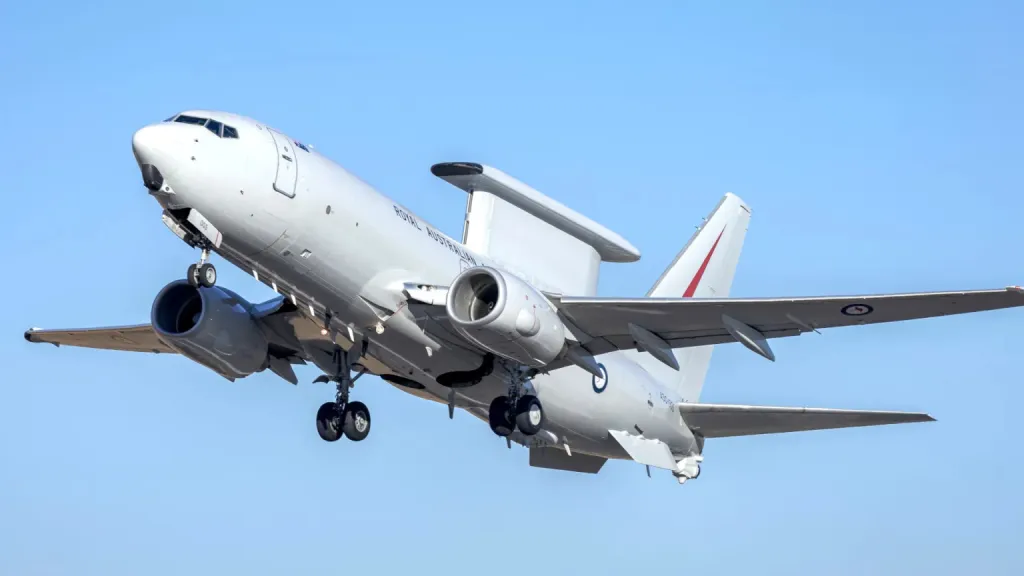
Plans for an AMTI satellite constellation were directly tied to an attempt in the past year to axe purchases of E-7 Wedgetail airborne early warning and control aircraft, something the Pentagon has now fully abandoned after Congress intervened. Though the Air Force is moving ahead again with the E-7, which will succeed its aging E-3 Sentry Airborne Warning and Control System (AWACS) jets, the end goal remains to eventually push most, if not all, AMTI tasks into space.

Aircraft like the E-7 Wedgetail seen here have historically been critical providers of AMTI capability. Australian Department of Defense

“The long-standing method of military airborne platforms to track moving targets faces continued challenges as adversaries develop increasingly sophisticated anti-access/area-denial (A2/AD) systems,” the Space Force said in its press release about the new deal with SpaceX today. “To compliment [sic; complement] traditional airborne sensing, the requirement for a layered, highly resilient tracking architecture is evident. SB-AMTI aims to enhance the Space Force’s capabilities to the Joint Force through the establishment of a persistent, global capability to sense and track airborne targets from space.”

The Space Force has described the $4.16 billion deal with SpaceX for the Space-Based Airborne Moving Target Indicator (SB-AMTI) program as a “competitive Other Transaction Authority (OTA) agreement,” rather than a traditional contract. The agreement came via the office of the Portfolio Acquisition Executive for Space-Based Sensing & Targeting (PAE SBST).

“This initial award is projected to field a constellation of satellites by 2028, providing the Joint Force with an early capability to eliminate operational blind spots,” according to the Space Force release.

DARPA

In the past, U.S. officials have generally talked about space-based AMTI becoming a reality sometime in the 2030s. Work is underway to push ground moving-target indicator (GMTI) tasks into orbit, as well.

Some degree of on-orbit prototype AMTI sensor testing has already been ongoing for at least a year, if not much longer, but this work has been heavily classified. In addition to the U.S. Air Force and Space Force, both of which fall under the Department of the Air Force, the National Reconnaissance Office (NRO). The NRO, the activities of which are shrouded in heavy secrecy, is a U.S. military organization that serves as America’s main remote sensing intelligence arm.

“The capabilities that are happening in space are far exceeding our expectations,” then-Air Force Maj. Gen. Christopher Niemi said at a hearing earlier this year as part of a response to a question about plans for the E-7. He declined to offer more details publicly. Niemi, who has since been promoted to lieutenant general, is currently Deputy Chief of Staff of the Air Force for Force Modernization, and the service’s Chief Modernization Officer

SpaceX has already reportedly been deeply involved in this work, too, as you can read about more in this past TWZ feature. This underscores the company’s ever-growing dominance globally in all aspects of the space industry, which we will come back to later on.

As mentioned, a functional, persistent, and distributed AMTI (and GMTI) sensor network in orbit has the potential to be game-changing. As TWZ wrote back in 2024, talking primarily about the future of space-based GMTI capabilities:

A larger, distributed constellation would have the ability to monitor huge swathes of the Earth simultaneously, and depending on the size of the constellation, at least far more persistently to seamlessly. This could make it difficult, if not impossible, for an opponent to hide activities of interest. A very low revisit rate, or even eliminating revisit rate altogether, could even open up the possibility of continuous ‘streaming’ coverage of a location from low Earth orbit. This would also be essential for persistent GMTI coverage that tracks ground movements in real time that will actually be high enough in fidelity to guide weapons onto those tracks. It’s possible that aerial tracking could also be a function, as well, even to a more limited degree. The E-3 Sentry Airborne Warning and Control System (AWACS) will also be replaced at least partially by space-based capabilities, along with the E-7 Wedgetail.”

A US Air Force E-3 Sentry AWACS jet. USAF

“There is also a fair chance that this is another type of system, perhaps to execute broad area optical/infrared imaging with some exotic capabilities to provide tracking. We just don’t know.”

“Regardless, yes, we are talking about the possibility of panoptic or near panoptic targeting and surveillance from space.”

“Greater collaborative capabilities, especially ones enabled by the use of machine learning and artificial intelligence (AI) technologies, could help to find targets of interest and anomalies far faster than ever before. This could also open a door to more autonomous collection, tasking/retasking, and other capabilities, as well. Areas of interest that need seamless coverage could have extra satellites retasked to the necessary orbit in order to do so automatically, without the need for human deconfliction and even direct operator direction.”

It is not hard to imagine how the satellite constellation being described here would fundamentally change the U.S. military’s ability to not just spot and track targets globally, but also close the kill chains to engage them, even at very long ranges. This has massive implications for future net-centric warfare where all sorts of tangential capabilities will increasingly be networked together. It might impact how tactical aircraft are equipped in the future, including the need for their own radars. There could at least be a reduced need for them to use their own radars to guide missiles, even when no supporting sensor network within the Earth’s atmosphere has relevant data to provide.

Unlike having to rely on a single plane in a single surveillance place, a space-based sensor network made up of a very large number of individual satellites would also be highly resilient to attacks, as well as other attrition just due to technical breakdowns or other factors.

All this being said, U.S. officials have been open about potential challenges when it comes to making space-based AMTI capabilities a reality, even just compared to establishing GMTI networks in orbit.

L3Harris

“So GMTI [ground moving-target indicator capability] and AMTI [air moving-target indicator capability] sound like they’re really close, just because one little letter that is all you changed, [but it] turns out they’re pretty different,” Chief of Space Operations Gen. Chance Saltzman, U.S. Space Force’s top officer, said during a press briefing on the sidelines of a conference in December 2025, according to Breaking Defense. “What it takes to accomplish AMTI is different than what it takes to accomplish GMTI.”

“Things on the ground move slower than things on [sic] the air, so [they] require different levels of fidelity tracks,” he added.

“The [AMTI] data the Intelligence Community and warfighter need presents a multi-phenomenology challenge that requires automated orchestration of the NRO’s collectors, low-latency data transport, and rapid data fusion by the NRO’s unmatched space communications and ground architecture capabilities,” a spokesperson for NRO also told Breaking Defense earlier this year.

It’s worth noting here that satellites with sensors are only one component of the total equation. Robust, resilient, and secure communications networks will be vital to getting the data collected where it needs to go. This is a separate area where SpaceX is already playing an increasingly central role with its Starlink and Starshield networks, as you can read more about here. Laser-based communications relays are set to be another key supporting capability.

Watch SpaceX deploy Starlink satellites into space thumbnail

Watch SpaceX deploy Starlink satellites into space


In its announcement today, the Space Force did explicitly stress that SpaceX will not be the only company supporting the SB-AMTI effort going forward, and that it has established a larger “vendor pool.”

“By utilizing this multi-vendor framework, we are capitalizing on established industry capacity and continuously evaluating and onboarding the best tech to field this essential capability at speed and scale,” Space Force Col. Ryan Frazier, the acting PAE SBST, said in a statement. “We will not leverage any one single provider; instead, we are partnering with a highly diversified pool of traditional and non-traditional vendors, each bringing various capabilities to support the SB-AMTI architecture, ensuring the Joint Force has access to a strong, competitive industrial base well into the future.”

At the same time, as TWZ has noted in the past, SpaceX’s dominance in the market gives the company a clear advantage for securing further deals. This extends to the additional demands to put all this architecture in space. At least currently, no other company has the same capacity to provide the U.S. military with the kind of reliable access to space at the required cadence, and within budget constraints. SB-AMTI is already a major budget priority, with the Space Force asking for more than $7 billion in additional funds to procure additional elements of the system in its 2027 Fiscal Year budget request.

These are all factors that are also notably set to play into how the Golden Dome missile defense initiative evolves. There has already been talk about Golden Dome leveraging existing work, including programs under the umbrella of PAE SBST, to help accelerate the fielding of at least an initial layer of capability.

It should also be reiterated that the Air Force is now moving ahead again with the E-7 program, and traditional aerial AMTI capabilities look set to remain an important element of U.S. military operations for the foreseeable future.

That being said, the new $4.16 billion agreement with SpaceX makes clear that the Space Force is pressing ahead with its plans for a space-based AMTI sensor network with hopes that at least an early operational capability could be in place within the next two years.

Contact the author: joe@twz.com
Joseph has been a member of The War Zone team since early 2017. Prior to that, he was an Associate Editor at War Is Boring, and his byline has appeared in other publications, including Small Arms Review, Small Arms Defense Journal, Reuters, We Are the Mighty, and Task & Purpose.


Source link