Air travel

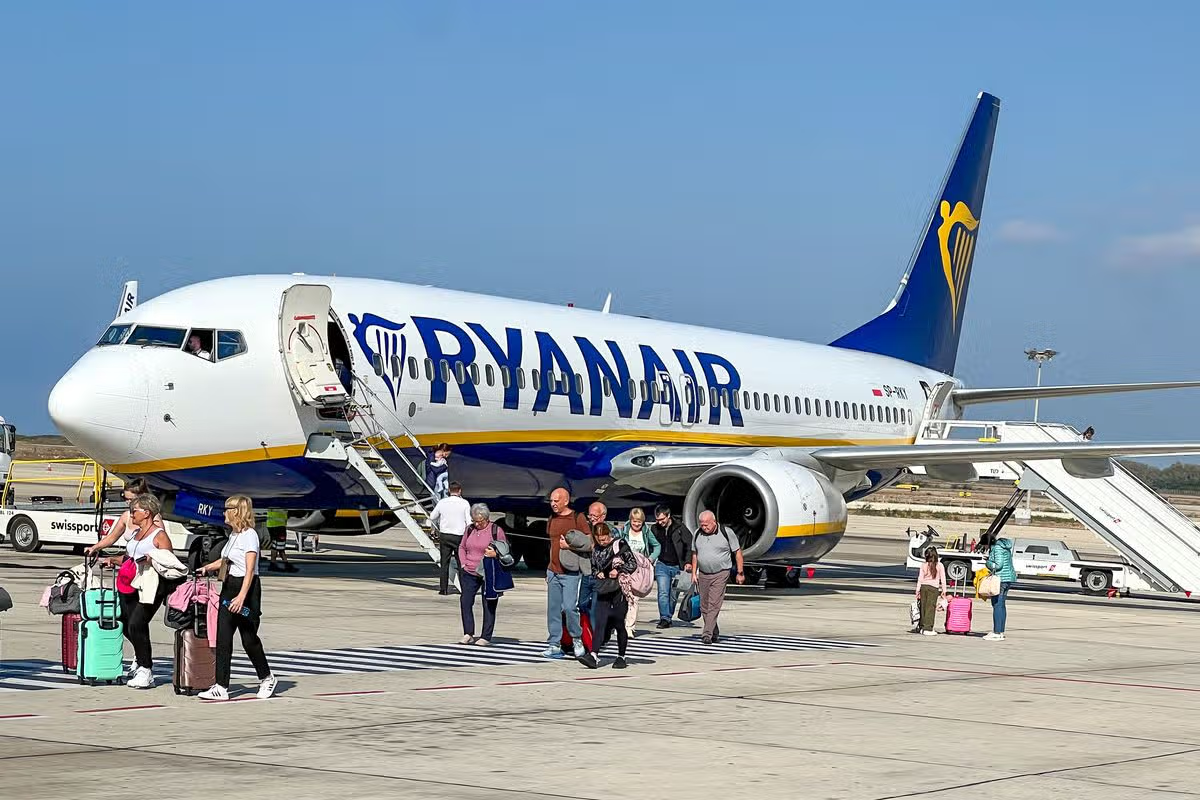
Ryanair tells all plane passengers to stop packing 1 item in suitcases

Ryanair has told plane passengers to stop placing a simple item in their suitcases. Little you may know, it should never be packed away when travelling to a different country

Jetting off on holiday is always a nice thought, but packing can be stressful when there are so many different rules to follow. In fact, you need to take another piece of expert advice on board, as Ryanair has issued a key piece of essential travel wisdom.

It turns out, there’s a specific item you should never pack in your suitcase, and it’s something you need to know about before you board a plane. When it comes to air travel, there are very specific rules you should follow, and this is one that needs to be adhered to for a super important reason.

This isn’t the only key piece of advice the airline has shared recently either. Just weeks ago, it also told passengers to stop packing a key item in their hand luggage too.

The topic previously came up on Reddit, when one person asked: “So I bought a lighter and I’m wondering if it’s legal to go from Italy to the UK via plane with it. Googled it and got no result apart from one Reddit question, but it wasn’t specified where they were going, and I’m wondering about going from Italy to the UK.”

The question got a lot of people talking, and they were quick to respond with answers too. Many seemed to have different ideas.

One person said: “If it’s an ordinary lighter, you can bring it in your hand luggage (not checked), with no issues.” Another added: “The only time I had an issue was when I had more than one lighter on me. I was told I can only carry one.”

A third also replied: “I do it all the time without any problems.” However, when travelling on planes, there are actually important rules you need to follow when carrying lighters.

It’s always best to check the airline’s guidance before you travel, but Ryanair has some vital information for customers to follow. There are some things travellers need to be aware of.

What does Ryanair say?

The Ryanair website states: “The following items are strictly prohibited on board and in checked baggage. Guns, firearms and other devices that discharge projectiles. Devices capable, or appearing capable, of being used to cause serious injury by discharging a projectile.

“Stunning devices. Devices designed specifically to stun or immobilise. Explosives and incendiary substances and devices. Explosives and incendiary substances and devices capable, or appearing capable, of being used to cause serious injury or to pose a threat to the safety of aircraft, including lighters and firelighters with a flammable liquid reservoir containing unabsorbed liquid fuel (other than liquefied gas), lighter fuel and lighter refills.”

It also listed all the other items that shouldn’t be placed in checked luggage, but there are some things you need to know about carrying lighters. Generally, you cannot pack lighters containing fuel in checked luggage, as they are considered a fire hazard in the cargo hold.

The safest and standard rule is to carry no more than one lighter on your person (in your pocket). Sometimes disposable or Zippo lighters without fuel are permitted in checked bags, but you should check what your airline’s rules are before flying.

Almost every airline bans lighters being packed in checked baggage, as the safety risk is considered too high. Torch or jet flame lighters are strictly prohibited in both checked and carry-on bags.

Another common item that’s generally banned is matches. You always need to be extra cautious when packing your suitcase.

Source link

Airport food EU ban extended into 2026 list of 8 items ‘could get £5,000 fine’

The UK Government confirmed a ban on people bringing some duty free from European Union into Great Britain will continue into 2026 to prevent spread of disease

A Government prohibition on travellers bringing food products from the European Union into Britain has been prolonged, ministers have confirmed. The rules mean that if border and customs officers discover such items, which many purchase at duty-free shops, they will be seized, disposed of, and the individual may face a financial penalty.

Ministers confirmed this week that the protective measures against the transmission of foot and mouth disease (FMD) amid increasing outbreaks throughout Europe will extend into 2026. Holidaymakers are prohibited from bringing beef, lamb, goat and pork products, alongside dairy goods, from EU nations into Great Britain for personal consumption, safeguarding British livestock welfare, farming stability and the nation’s food supply chain.

This encompasses items such as sandwiches, cheese, cured meats, raw meats or milk entering Great Britain – irrespective of packaging or whether purchased from duty-free retailers.

Restrictions on meat, dairy and animal products for human consumption

You cannot bring in any of the following:

  1. cheese, milk and dairy products like butter and yoghurt
  2. pork
  3. beef
  4. lamb
  5. mutton
  6. goat
  7. venison
  8. other products made from these meats, for example sausages

The Department for Environment, Food and Rural Affairs has verified the restriction will stay in force. Labour’s Dr Rosena Allin-Khan questioned Environment, Food and Rural Affairs Secretary Emma Reynolds: “Whether her Department plans to end temporary restrictions on the import of (a) meat, (b) dairy and (c) animal products from the European Union in the context of the World Organisation for Animal Health’s recognition of all European Union member states as free from foot-and-mouth disease.”

Dame Angela Eagle, Minister of State at the Department for Environment, Food and Rural Affairs, confirmed the prohibition remains active: “Restrictions on commercial imports of certain meat, dairy and animal products from Slovakia in response to foot and mouth disease (FMD) remain in place pending UK recognition of FMD freedom.”

“Restrictions on personal imports of certain meat, dairy and animal products from the EU will remain in place while the biosecurity risk remains. As well as FMD, these measures mitigate against incursions of other animal diseases circulating in the EU, including African swine fever, sheep pox and goat pox, peste des petits ruminants and lumpy skin disease.”

READ MORE: New Foreign Office alert as holiday hotspot bans alcohol this week, February 7, 2026READ MORE: Spain and Portugal red alert as UK Foreign Office warns British holidaymakers

While FMD presents no danger to people and Britain remains free of cases, it is an extremely infectious viral illness affecting cattle, sheep, pigs and other cloven-hoofed creatures including wild boar, deer, llamas and alpacas, with the European outbreak representing a substantial threat to agricultural enterprises and livestock.

The disease can trigger considerable financial damage through reduced productivity in infected animals, alongside the loss of international market access for livestock, meat and dairy products.

Ministers have already prohibited personal imports of cattle, sheep and other ruminants, along with pig meat and dairy products from Germany, Hungary, Slovakia and Austria following verified FMD outbreaks across those nations.

Restrictions on meat, dairy and animal products for human consumption The following items are strictly prohibited:.

These new restrictions apply solely to travellers entering Great Britain. Upon the announcement of the ban, Farming Minister Daniel Zeichner declared: “This government will do whatever it takes to protect British farmers from foot and mouth.

“That is why we are further strengthening protections by introducing restrictions on personal meat and dairy imports to prevent the spread of the disease and protect Britain’s food security.”

Information for travellers entering GB

The Department for Environment, Food and Rural Affairs clarified: “It is illegal for travellers from all EU countries entering Great Britain to bring items like sandwiches, cheese, cured meats, raw meats or milk into the country. This is regardless of whether it is packed or packaged or whether it has been bought at duty free.

“Detailed information is available for the public which sets out a limited set of exemptions from these rules. For example, a limited amount of infant milk, medical foods and certain composite products like chocolate, confectionery, bread, cakes, biscuits and pasta continue to be allowed.

“Those found with these items will need to either surrender them at the border or will have them seized and destroyed. In serious cases, those found with these items run the risk of incurring fines of up to £5,000 in England.”

Source link

British dual-citizens told to do 1 thing before travel or risk not getting back to UK

Brits with dual-citizenships have been told they could be refused entry back into the UK from February 25, 2026, under new ETA rules if they travel abroad without the correct documents

British passport holders could find themselves barred from re-entering the UK from February 25, 2026, under stringent new travel regulations that require additional documentation for entry into the country.

From later this month, the UK will get stricter with its Electronic Travel Authorisation (ETA) scheme for all visitors, including those from the EU, USA, and other visa-exempt countries, meaning they’ll need digital clearance before arrival. The system will apply across all modes of transport – aeroplanes, ferries, and Eurostar services – with strict carrier inspections in place. Whilst the average British citizen won’t be impacted by these measures, dual nationals holding multiple passports could face significant complications.

While residents under the EU Settlement scheme or Leave to Remain arrangements are exempt, as their foreign passports contain evidence of their approved UK residency, those with dual citizenship and multiple passports have been cautioned they may struggle to return back to the UK if they overlook one crucial detail.

With the Government recently announcing tougher enforcement of Electronic Travel Authorisation (ETA) and eVisa verification at border control, an immigration solicitor has issued an urgent reminder to British dual nationals to carry out one essential check before jetting off on holiday. A UK immigration lawyer and legal expert has issued an urgent warning to Brits on social media, particularly those holding dual citizenship who could face serious travel disruptions.

Skylar McKeith, who has amassed thousands of followers by demystifying British immigration laws and providing guidance on various scenarios including travel, has raised the alarm about upcoming changes that could see some British citizens refused entry to their own country.

“British citizens could be refused entry to the UK,” she cautioned in her video, before detailing how the new ETA regulations could impact British nationals.

Content cannot be displayed without consent

“From the 25th February, the UK will fully enforce its ETA system,” Skylar revealed. “British citizens cannot apply for an ETA, so if you are a dual citizen and you travel on your non-UK foreign passport, you may be refused boarding.”

From 25 February 2026, visitors from 85 countries, including the United States, Canada, and France, who previously didn’t require a visa will be unable to legally enter the UK without obtaining an ETA.

The enforcement of these new rules means that everyone wishing to enter the UK must secure digital permission through either an ETA or an eVisa, with carriers conducting checks before passengers travel.

Whilst this may seem complicated, it simply means that British citizens holding multiple different citizenships need to carefully consider which passport they use when travelling. Skylar went on to to share her essential advice on navigating this situation.

“The solution is simple,” Skylar advised. “Travel on your British passport, or a foreign passport with a certificate of entitlement.”

A Certificate of Entitlement (CoE) is an official endorsement, usually a vignette in a foreign passport, that confirms a person’s right of abode in the UK, granting them unrestricted living and working rights. Those eligible can apply for these documents via the government’s website at a cost of £589.

For those juggling multiple passports, it’s generally suggested to carry all of them while travelling as it provides more options for visa-free entry. It’s also recommended to use your home country’s passport when entering or returning to that country.

Since the introduction of ETA in October 2023, over 13.3 million travellers have successfully applied, enjoying quicker and smoother journeys. ETA has become an essential aspect of travel, including for passengers taking connecting flights and passing through UK passport control.

Source link

New Foreign Office alert as holiday hotspot bans alcohol this week, February 7, 2026

The FCDO has issued a new travel alert for Brits before the ban starts on February 7

The Foreign, Commonwealth and Development Office (FCDO) has released fresh guidance for Brits planning trips to a much-loved holiday hotspot this week. In Wednesday’s update, the FCDO has warned UK travellers about nationwide restrictions in Thailand.

A firm favourite with sun-seekers and backpackers alike, the Southeast Asian nation is preparing for its General Election later this week. While tourists might not anticipate any disruption, those fancying an alcoholic beverage could be in for a shock.

The FCDO stated: “Thailand will hold a General Election on 8 February 2026. A nationwide ban on the sale and distribution of alcohol will be in place from 6pm on 7 February until 6pm on 8 February.

“During this period public consumption of alcohol is prohibited, including at social gatherings. The restrictions apply to convenience stores, bars, restaurants, and entertainment venues, both public and private. If you do not comply with these restrictions, you could face fines of up to 10,000 baht (around £230) and up to six months’ imprisonment.”

Regions to steer clear of

The FCDO is also recommending against all but essential travel to several parts of Thailand, particularly border regions. The FCDO advises against all but essential travel to areas in the south near the Thailand-Malaysia border, including Pattani Province, Yala Province, Narathiwat Province, and the districts of Chana, Thepa, Na Thawi and Saba Yoi in southern Songkhla Province.

The FCDO has issued guidance recommending against all but essential journeys on the Hat Yai to Padang Besar railway route which passes through these regions. This warning stems from frequent attacks occurring in provinces along the Malaysian frontier. Additionally, travellers should avoid venturing within 20km of Thailand’s land border with Cambodia.

According to the FCDO: “In July 2025, Thailand and Cambodia fought along parts of the border. The fighting included the use of rocket and artillery fire. Tensions remain and fighting erupted again at various points along the border in early December. Land borders and crossings between Thailand and Cambodia continue to be suspended.

“Some tourist destinations in border areas such as the Khao Phra Wihan/Preah Vihear temple, the Ta Kwai/Ta Krabey temple and the Ta Muen Thom/Tamone Thom temple are closed. There are also unexploded landmines in the border area. We advise against all travel to the affected land border areas.”

The FCDO has also issued a stark reminder to British tourists about attempting to take cannabis outside Thailand’s borders, stating: “British nationals have been caught carrying cannabis out of Thailand. There have been arrests of British nationals caught transiting through airports in other countries. Many international airports have excellent technology and security for detecting illegal items, which may be used to scan the baggage of transiting passengers.”

Source link

Who can get a free UK passport and who needs to pay £222

How much you’ll pay for a new or replacement passport can vary

The price of a new or replacement passport rose in 2025, with some people having to shell out as much as £222 for the important travel document. Everyone in the UK needs a passport for international travel.

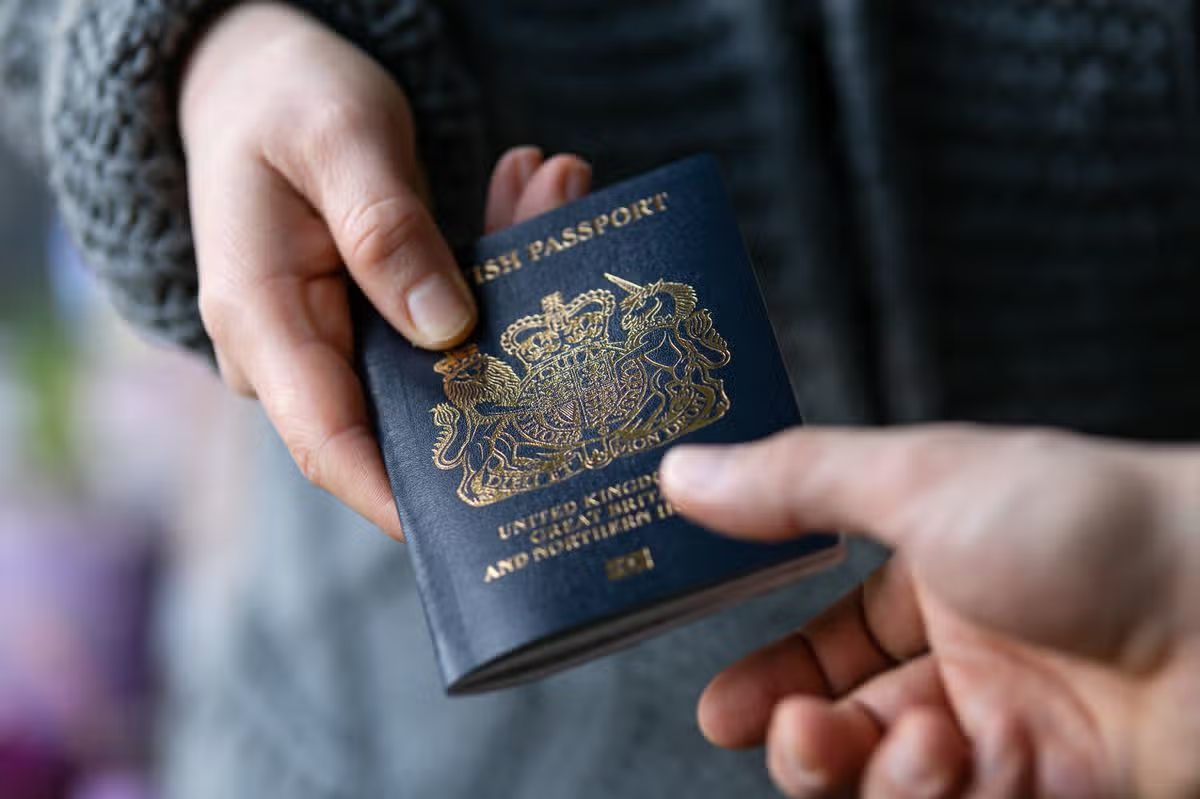
As per Gov.uk, you can apply for a British passport if you’re a British citizen, a British overseas territories citizen, a British overseas citizen, a British subject, a British national (overseas), or a British protected person. These documents are issued by HM Passport Office and currently take roughly three weeks or less to arrive.

Most people will have to pay a fee to renew an existing passport or to apply for a new one, including those for children. As of April 2025, a standard adult passport, for those aged 16 and over, costs £94.50 when applying online, or £107 when applying using the paper form.

A standard child’s passport now costs £69, or £74 for a postal application. If you need the document urgently, you can expect so pay significantly more for a passport. The fee for a Premium Service (one day) application is £222 for adults, or £189 for a child’s passport.

Those applying for a UK passport from overseas will have to pay £108, or £70 for a child’s passport. If applying internationally via the paper form, the cost is £120.50 for adults and £77 to £82.50 for children, as reported by the Liverpool Echo.

While the majority of applicants will need to pay for their passports, some people can get theirs for free. If you were born on or before September 2, 1929, you can apply for a new British passport or renew your existing one without any cost.

You can also use the Post Office Check and Send service at no charge and benefit from complimentary secure delivery. However, the government has confirmed that charges must be paid if you require a passport urgently or if you wish to obtain a frequent traveller passport (one containing more pages than the standard version).

Source link

EasyJet, Jet2 and BA cabin bag rules as big Ryanair change kicks in ahead of half term

Avoid paying a massive fee at the airport gates by checking your cabin bag size before you fly. With half term on the way, here’s the latest sizing regulations for some of the most popular airlines

One thing that often catches passengers out when flying on budget airlines is cabin baggage allowances. On busy flights, it’s common to see the dreaded bag sizer coming out, and being over just a centimetre can mean you end up paying a massive fee to check your bag at the gate.

To make things even more confusing, cabin bag size allowances change all the time, so even if you’re a frequent flyer, you can get caught out. It’s always best to check the size of the cabin bag that’s included with your ticket just before you go, so you can avoid hassle at the gates.

It’s also much cheaper to pay for extra bags when you book your flight, not once you’re at the airport, so always make sure you’ve booked the amount you need in advance.

Cabin bag allowances by airline

READ MORE: Jet2 makes major flight change for July, August and SeptemberREAD MORE: Woman living in the Grand Canyon shares reality of remote life with 1 drawback

Ryanair

Ryanair is notorious for strictly enforcing cabin baggage sizes, and if you’re taking a bag on board, you should make sure you get the tape measure out and check the dimensions before you head to the airport.

However, there’s good news for Ryanair passengers: the free underseat bag included in its basic fare can now be slightly larger. Previously, this small bag had to fit in a sizer with the dimensions of 40 x 25 x 20 cm, but since summer 2025 it can now be up to 40 x 30 x 20 cm. These free bags need to fit under the seat in front of you, and usually people bring a handbag, laptop bag, or small rucksack.

Technically, there’s no weight limit on these small bags, as long as they fit under the seat, but passengers will need to be able to carry and handle them, and an excessively heavy bag could be noticed by flight attendants.

Passengers can also pay to bring a second cabin bag of up to 55 x 40 x 20cm onboard with them, and this bag has a weight limit of 10KG. Passengers will need to lift this bag into the overhead locker above them, so bear this in mind when packing. If you prefer to check a bag, you can add a 10KG, 20KG, or 23KG bag to the hold. Prices vary depending on route and availability.

EasyJet

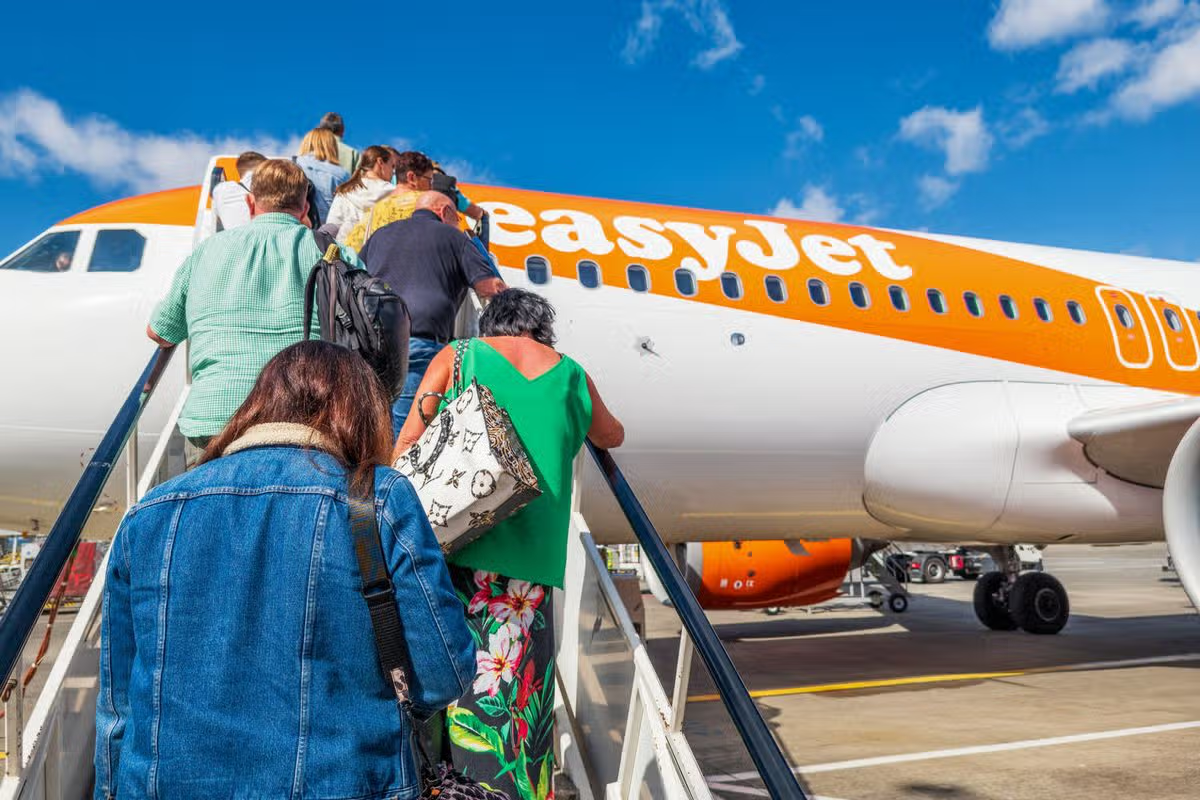
Budget airline easyJet is also known for strictly monitoring bag sizes, and you’ll see lots of orange sizers around the airport so you can check whether your luggage will fit. However, it’s best to measure bags at home when they’re packed so you can adjust accordingly.

Everyone who flies with easyJet gets one small underseat cabin bag included in the price. This can be up to 45 x 36 x 20 cm in size, and easyJet states it can’t exceed 15KG in weight.

Customers also have the option to book a second cabin bag of 56 x 45 x 25 cm maximum, including handles and wheels. As a bonus, if you book a second bag, you get speedy boarding included. When booking your flight, you also have the option to pay for up to three checked bags of 15KG, 23KG, or a whopping 32KG. Some airports offer a twilight bag drop for passengers on early flights, meaning you can check your luggage the night before heading off and head straight for security in the morning.

Jet2

Whether you’ve booked a package holiday with Jet2, or just a flight, cabin baggage allowances are the same. You get a small bag of 40 x 30 x 20cm, which must fit under the seat, and the price also includes a 10KG piece of hand luggage of up to 56cm x 45cm x 25cm. Again, you must ensure measurements include handles, wheels, and other fixtures.

Package holidays include 22KG of checked baggage, but if you’ve only booked a flight, you can still add a checked bag for a fee. Passengers can buy up to three bags of 22KG in weight, perfect for those who don’t like to travel light.

Families travelling with young kids can also bring a collapsible pushchair, car seat, and/or travel cot free of charge.

British Airways

British Airways (BA)’s economy basic fare includes a handbag and a cabin bag. The former can be up to 40 x 30 x 15cm in size and needs to easily fit under the seat in front, while cabin bags can be up to 56 x 45 x 25cm in size. However, BA can only guarantee that the smaller item will be allowed on board. If there’s not enough space in the overhead locker, your cabin bag may need to go in the hold.

BA also offers a range of options for checked bags, depending on the flight route you take and which classes are available. Economy with checked bag includes a 23KG bag in the hold, and unlike most airlines, BA put a size restriction on these checked bags of 90 x 75 x 43cm. Those lucky enough to fly business or first class get much bigger allowances.

READ MORE: Stay overnight at Alton Towers, Chessington or Legoland and get year’s free entry to top theme parksREAD MORE: PAW Patrol land first look as Chessington seeks children to test rides

TUI

If you’ve booked a flight only on TUI Airways, you’ll get a piece of hand luggage of up to 10KG in weight for free, and this can measure up to 55 x 40 x 20 cm. You can also bring a small personal item like a handbag or laptop bag of up to 40 x 30 x 20cm that’s placed under the seat in front of you. TUI emphasises that passengers must be able to lift their hand luggage into overhead storage compartments themselves.

Customers can also add a checked bag when booking their flight, with prices depending on the route and availability. However, if you book a package holiday through TUI and are flying with its airline, then 20KG of checked luggage is included. Some holiday types, such as TUI BLUE or cruises, have a 25KG allowance, so it’s worth checking your booking confirmation before you go.

Have a story you want to share? Email us at webtravel@reachplc.com

Source link

Ryanair tells all plane passengers to stop packing 1 toiletry in hand luggage

Ryanair has told passengers to stop packing a popular toiletry in their hand luggage. If you make the mistake, it could cause a few problems at airport security

There’s nothing like jetting off to a hot location during the winter months, but you need to ensure you pack your belongings in the right cases. In fact, airline Ryanair has told passengers they need to avoid placing a popular toiletry in their hand luggage if they want to travel through airport security with ease.

It’s worth paying attention to as, if you fail to follow the expert advice, it could land you in a spot of bother. In fact, it was recently brought up on Reddit after a traveller was left a little confused about the rules as to what he could carry in his hand luggage.

This isn’t the first time vital air travel information has been brought to people’s attention either. Back in December, a travel expert also shared the airport rule that all passengers should follow.

On Reddit, a social media user posted: “I recently started using safety razors and I was wondering if I could carry mine with one blade inside or a packet of blades. I don’t have a checked bag, only the carry-on.

“Previously I was always able to bring disposable razors with the blades stored in the plastic compartment. In the General terms & Conditions, Ryanair says safety razors are allowed but, I asked the support and, even though he wasn’t anywhere specific to answer my query, he said that sharp objects are not allowed.

“So, if I bring the safety razor with me with a blade in it, the worst that can happen is they are just going to remove the razor and give me the head/handle (enclosure thing) back?”

The question got a lot of people talking, as one person replied: “Safety razor will be fine. Really comes more down to the airport you are going through, not the airline, and even then it also comes down to the individual person you deal with.”

Another added: “OP (original poster) is not asking about safety razors per se. He’s asking about the blades, which are definitely prohibited items. Someone intent on causing harm could quite easily unscrew the razor and use the blade or spare blades as weapons.”

A third also replied: “NO, you cannot. Razor blades, including straight razor blades and replacement blades, are prohibited items because they could be used as weapons.

“However, as you said, fixed cartridge razors (disposable razors) generally are allowed in carry-on luggage. Safety razors (with blades in a plastic head) also are usually permitted in carry-on luggage. But NOT the type where you can unscrew the head and extract the blade.”

If you usually carry razors with you when you travel, which a lot of people do, it turns out there are some rules you need to follow. All you need to know is detailed on the Ryanair website.

What does Ryanair say?

The website reads: “The following items must not be carried on board, but may be carried as part of your checked baggage. Objects with a sharp point or sharp edge capable of being used to cause serious injury, including razors and razor blades (except safety or disposable razors with enclosed blades and razor heads held in plastic compartments).”

It also detailed all the other items that are banned in carry-on luggage. While each airline may differ slightly when it comes to its regulations, generally there are some rules you should follow.

Even though all razors aren’t banned in carry-on luggage, certain types are prohibited. Some airlines allow disposable razors, cartridge razors and electric shavers/epilators to be carried in hand luggage.

However, traditional safety razors, straight razors and loose razor blades are usually not allowed in the cabin and must be packed in checked luggage. This is due to the fact that they are so sharp.

If deemed dangerous, security can confiscate them and the mistake could see you facing delays at the airport. In a nutshell, it’s a packing mistake that’s really not worth making.

Source link

UK airports that have scrapped 100ml liquid rule ahead of half-term

UK airports that have scrapped 100ml liquid rule ahead of half-term – The Mirror


reach logo

At Reach and across our entities we and our partners use information collected through cookies and other identifiers from your device to improve experience on our site, analyse how it is used and to show personalised advertising. You can opt out of the sale or sharing of your data, at any time clicking the “Do Not Sell or Share my Data” button at the bottom of the webpage. Please note that your preferences are browser specific. Use of our website and any of our services represents your acceptance of the use of cookies and consent to the practices described in our Privacy Notice and Terms and Conditions.

Source link

Ryanair tells all passengers to stop packing 1 item in hand luggage from January

Ryanair has told all passengers to stop putting a popular item in their hand luggage from January. It turns out, it should never be stored there and could cause problems at security

With the UK being so wet and dreary at this time of year, it’s no wonder people dream of escaping to other parts of the world, but there are some things you need to know if you’re preparing to hop on a plane. When it comes to packing, there are some important rules you need to follow to ensure your airport experience goes smoothly.

According to Ryanair, certain items should never be packed in your hand luggage, and one of them is super popular at this time of year. From January, you may want to think a little more about how you’re preparing to travel.

The thought of jetting off abroad may be lovely, but air travel comes with its stresses. There are some key guidelines you need to follow when it comes to your hand luggage.

Previously, the topic came up on Reddit when a social media user asked: “Looking for a trekking pole to buy. Which kind of pole (collapsible/telescopic) would be better so that it could be brought as a carry-on bag on Ryanair/Iberia?”

It got a lot of people talking, and they were quick to point out an essential piece of information, and it’s worth noting if you’re planning on going skiing any time soon. One person replied: “I don’t think it really matters what airline you fly. You have to get past security with them, and they are usually not allowed.”

Another wrote: “You will always be taking a risk unless you put them in a checked bag.” A third also replied: “Trekking poles are not allowed in your carry-on. This rule is not always enforced, but that is the rule.

“One time I flew to a location with my poles in my carry-on, but they wouldn’t let me on the flight to come back with those same poles in my carry-on (same airline).”

However, according to Ryanair, this isn’t the only thing you need to be aware of. If you’re going skiing any time from January, you need to stop packing poles in your carry-on luggage too.

What does Ryanair say?

According to the airline, various items are prohibited in carry-on luggage, and all of these are detailed on the website. However, when it comes to poles, it offers specific advice.

It reads: “The following items must not be carried on board, but may be carried as part of your checked baggage. Objects with a sharp point or sharp edge capable of being used to cause serious injury.”

Ski poles and hiking poles feature in the list, so it’s important you don’t take them in your hand luggage. Generally, they need to be checked in, as they are deemed too sharp to carry through airport security.

Due to their length and sharp tips, they are considered potential weapons. While some travellers may find success with collapsible poles tucked away, security agents typically require them to be checked.

Though some airline guidelines may differ, the safest option is to put them in your checked luggage. This will help avoid any problems or delays at airport security.

If you opt to try and take them through, you risk having to surrender them at airport security. It’s a gamble that’s really not worth taking when you travel.

Source link