air travel

‘Cheapest’ days over Christmas to book flights and it’s not Boxing Day

Skyscanner recently shared insights into the best and worst times to buy flight tickets

Securing affordable flight deals can often seem impossible, but assistance might just be at hand. Skyscanner recently unveiled insights on the best and worst times to purchase international tickets, spotlighting both seasonal patterns and particular weekdays.

The travel search engine analysed historical data to reveal these trends and also addressed an ongoing debate in holiday planning: is it better to book early or to hold out for last-minute bargains?

Unfortunately, there isn’t a straightforward answer to this, as Skyscanner stressed that it largely depends on the route. Whilst quieter journeys or off-peak days may see price reductions as the departure date approaches, popular routes are likely to witness prices soar dramatically.

Irrespective of the season, Fridays and Sundays consistently emerge as the worst days to book flights due to high demand. However, statistics showed that cheaper fares are usually discovered on Tuesdays and Wednesdays, when bookings drop off.

“Based on past pricing trends, fares have dropped on Tuesday mornings after Monday deal releases,” Skyscanner wrote earlier this year, according to the Daily Record. When asked if prices decrease nearer a departure date, it added: “Sometimes, especially if seats are still available.

“But prices also tend to rise as departure nears. Last-minute deals exist, but they’re never guaranteed. You can also use the Skyscanner Savings Generator to find the best time to book flights based on your route.”

Skyscanner recommended that travellers book short-haul flights at least one to three months in advance to avoid disappointment. For long-haul journeys, it’s best to secure tickets two to six months before the trip.

Those wishing to monitor fluctuating flight prices can utilise Skyscanner’s alert system. To activate it, simply select a preferred route and click the ‘Get Price Alerts’ button located at the top left corner of the website.

To use this feature, you’ll need a Skyscanner account as alerts will be sent to the email linked with your account. Google also offers a similar alert system within its flight price tracking tool.

Google’s current advice states: “You can track flight prices for specific dates or, if your plans are flexible, any dates. To get flight alerts for a specific round trip, choose your dates and flights and select Search. Then, you can turn on price tracking.”

For more information on Skyscanner’s price-tracking tool, click the link here.

For the latest money-saving tips, shopping and consumer news, go to the new Everything Money website.

Get all the hottest shopping deals, cash saving tips and money news straight to your phone by joining our new WhatsApp Community – The Money Saving Club. Just click this link to join https://crnch.it/eutplxS1

We also treat our community members to special offers, promotions, and adverts from us and our partners. If you don’t like our community, you can check out any time you like. If you’re curious, you can read our Privacy Notice here https://crnch.it/jeQqC872

Source link

‘I’m a flight attendant and there’s 1 secret area no passenger is allowed on plane’

Long-haul flights can feel daunting for both passengers and cabin crew. But while travellers can sit and put their feet up, what happens to the flight attendants on a long shift?

Travelling is fun but when it’s a long flight, it can feel quite draining for everyone on board. Passengers, however, get to tuck into countless meals served by cabin crew, watch multiple movies back-to-back and relax.

So when travellers get some shut eye, especially if it’s a night flight, those working on the flight still have a job to do. Luckily there are moments of the trip where they can get their feet up for some rest. A long-haul flight shift for cabin crew can reach up to 18 hours, although it’s around 12-16 hours with in-flight rest. This can sometimes extend to longer if there’s any delays along the way.

Now have you ever wondered how they rest? One flight attendant shared a video which showed a secret area where “no passenger is allowed” and it’s only for cabin crew staff to put their feet up.

Content cannot be displayed without consent

In a video, Bryan, who boasts 5,000 Instagram followers, said: “People ask me: Where do flight attendants sleep when they have a 17-hour flight?”

Seconds later, he jumps into his pyjamas before taking his phone to show the secret area cabin crew can go to rest during their shift.

The title, which read: “A place where no passenger is allowed”, then shows the attendant walking up some stairs before showing a hidden cabin with beds and curtains.

It’s called CRC which stands for Crew Rest Compartment, and this is where they go when it’s time for their break. In the sleeping area, there is a seatbelt, which must be fastened in case of turbulence, some blankets and, of course, pillows.

There’s also overhead lights and even curtains for privacy, with a TV for “endless entertainment”.

His post garnered hundreds of likes since it was shared as one wrote: “Wow that’s awesome.” Another added: “I would sleep all the way through. No alcohol. No entertainment. Just rest. We need our bodies to perform on Earth. Thanks for sharing.”

A third posted: “Thanks for sharing! So cool to see ‘behind the scenes’ with the crew.”

How do cabin crew survive long-haul flights?

Flight attendants usually rotate their scheduled rest periods by using the hidden crew bunks. By doing this, it ensures there’s coverage during flights up to 16+ hours.

The crew members manage fatigue with routines, wellness, nutrition and use seniority to bid for better schedules, they also balance intense work with multi-day layovers to explore cities or rest before the next leg of their trip, often spanning several days.

Long-haul offers extensive travel for flight crew, while short-haul provides more home time. Often flight attendants choose this based on lifestyle preference.

Meanwhile extended periods away from home are common, with long blocks of days off after demanding trips to recover from the job.

Source link

World’s longest flight takes nearly 19 hours with no economy cabin

Singapore Airlines’ ultra-long-haul route covers 9,537 miles – but it doesn’t come cheap.

The world’s longest flight links America to Asia, with travellers buckled in for nearly 19 hours. Singapore Airlines currently holds the record for the lengthiest long-haul journey, operating from New York’s JFK Airport to Singapore Changi.

The epic 9,537-mile trek boasts a scheduled flight time of 18 hours and 50 minutes and first took to the skies back in 2018.

Singapore Airlines deploys their cutting-edge A350-900ULRs on this route, aircraft capable of remaining airborne for over 20 hours non-stop.

These planes achieve such endurance thanks to a specially adapted fuel system. This enhancement boosts the aircraft’s total fuel capacity to an enormous 24,000 litres.

Yet this mammoth journey isn’t available to all, as Singapore Airlines doesn’t provide economy seating on this route. The carrier instead provides 67 Business Class seats and 94 Premium Economy Class seats.

Premium Economy travellers can relish additional legroom, a footrest, and an adjustable headrest. Passengers also benefit from noise-cancelling headphones and WiFi throughout their journey, reports the Express.

Business class flyers experience ultimate privacy, with their seats transforming into completely flat beds for proper rest during travel. Singapore Airlines maintains that the A350-900ULR delivers passengers a “more comfortable travelling experience”.

The aircraft boasts a host of additional amenities including elevated ceilings, expansive windows and specially engineered lighting systems to combat jet lag.

The carrier maintains that the aircraft’s cutting-edge carbon composite construction also enables superior air quality throughout the cabin.

Prospective passengers will need deep pockets, as tickets routinely command prices well into five-figure territory.

Singapore Airlines’ chief executive, Mr Goh Choon Phong, has previously stated that the new service will provide the “fastest way” to journey between these two metropolitan hubs.

He said: “Singapore Airlines has always taken pride in pushing the boundaries to provide the best possible travel convenience for our customers, and we are pleased to be leading the way with these new non-stop flights using the latest technology, ultra-long-range Airbus A350-900ULR.

“The flights will offer our customers the fastest way to travel between the two cities – in great comfort, together with Singapore Airlines’ legendary service – and will help boost connectivity to and through the Singapore hub.”

Source link

Pilot explains what actually happens if you forget to put phone on airplane mode

Ever wondered what happens if you accidentally forget to put your phone on airplane mode during a flight? One pilot shared the consequences of skipping this safety precaution

There are many safety precautions that come with travelling on a flight. Not only do you spend ages passing through security, then finding your all-important gate information, there’s quite a procedure on-board the flight too.

You’re sat down waiting for your plane to leave the gate, but first, you must have your armrests down, windows up and phones on airplane mode. Now have you ever wondered why you should always put your device on airplane mode? One pilot explained what actually happens if you forget the safety precaution in a YouTube post shared by WKYC Channel 3.

The cabin crew member claimed it’s simply “not a conspiracy” and that it’s hardly the “end of the world” if you were to forget.

He said in the video which scooped more than 26,000 views: “This is just a friendly PSA the airplane mode button on your phone is not a conspiracy.

“So if you forget to put your phone on airplane mode, no it’s not the end of the world, the plane will not fall out of the sky and it won’t even mess with the systems on board.

“However, it does have the potential to mess with the headsets, if you have an aircraft with 70, 80 or 150 people on board and even three or four people’s phones start to try to make a connection to a radio tower for an incoming phone call, it sends out radio waves, there’s the potential those radio waves can interfere with the headsets the pilots are using.”

The pilot also explained a situation in San Francisco where he experienced an “annoying buzz” with his headset when one traveller forgot their phone during take-off.

Describing it as a “mosquito”, he said: “And as soon as we started to get the directions, we got this really annoying buzz with the headset.

“Not the end of the world but definitely annoying when you’re trying to copy down instructions and it sounds like there’s a wasp or something lying around you. So if you’re ever curious why you get put on airplane mode, that’s why.”
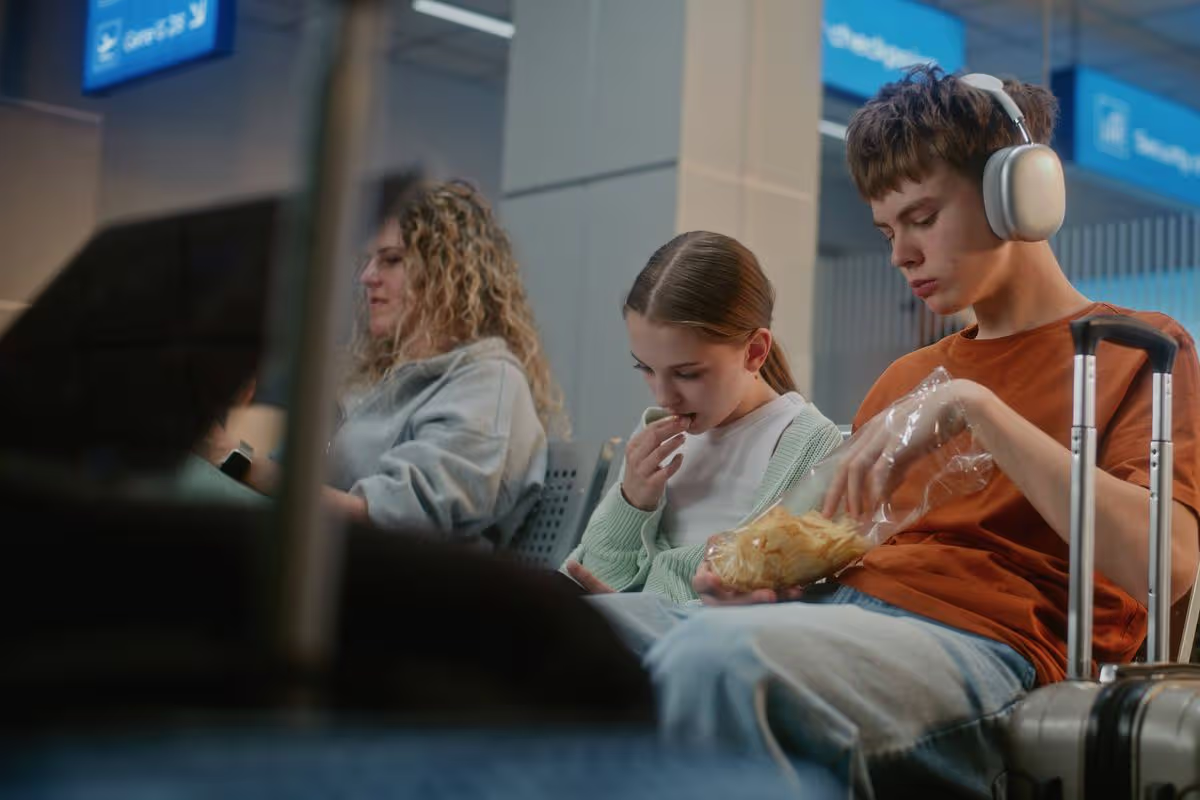
Why should you put phone on airplane mode?

Interferes with aircraft: Your phone sends out radio waves and when there’s a large number of devices involved, it could disrupt sensitive cockpit communications and navigate equipment. This could create a buzzing sound or other noise in a pilot’s headset.

Air traffic control: Having your phone on airplane mode could interfere during take-off and landing when pilots rely on clear communication.

Battery life: Without airplane mode, your phone constantly searches for cell towers which can drain your battery.

Source link

World’s longest-budget flight launches – but booze is banned on 8-hour trip

The new route will take nearly eight hours in total, but passengers will have none of the extras usually associated with long-haul flights, such as meals or entertainment screens to pass the time

Flying on a budget airline is always a bit of an endurance test. They’re usually pretty cramped and offer little in the way of service or extras. But if the flight is a couple of hours long, most people aren’t bothered about luxurious extras if it means they’ve got more money in their pocket to enjoy the destination once they land.

However, in recent years, budget airlines have been offering longer routes, meaning that even long-haul destinations can be reached on one of these minimalistic services. One of the latest offerings comes from Air Arabia, who in spring 2026 will be offering a new London Gatwick to Sharjah route. It comes in at a leg-cramp-inducing seven hours and 50 minutes.

According to the Telegraph, these flights, which are operated on a single-aisle plane, will clock in as the world’s longest budget airline flights. However, they will offer an inexpensive way to visit the Middle East, and Sharjah Airport is just half an hour from Dubai, which will no doubt make it a popular route. According to Skyscanner, the cheapest tickets available now from London to Sharjah is £182. It remains seen how much cheaper the new route will be.

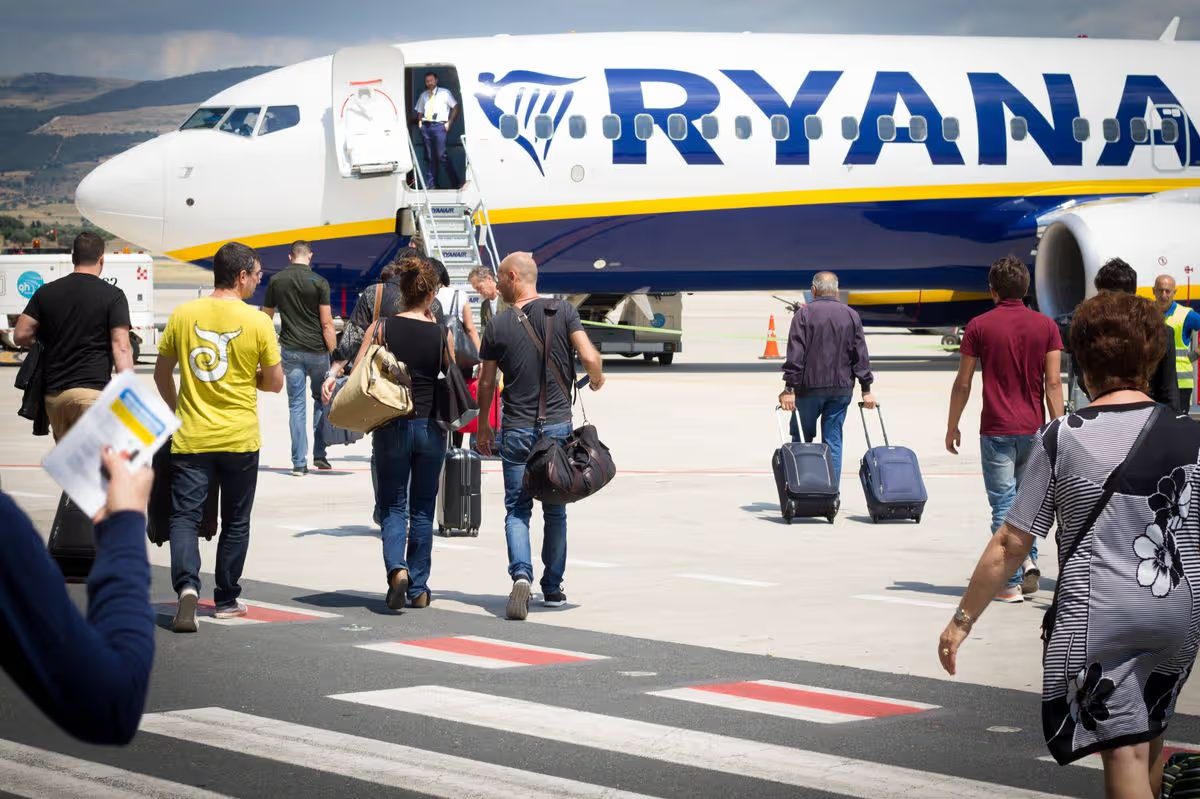
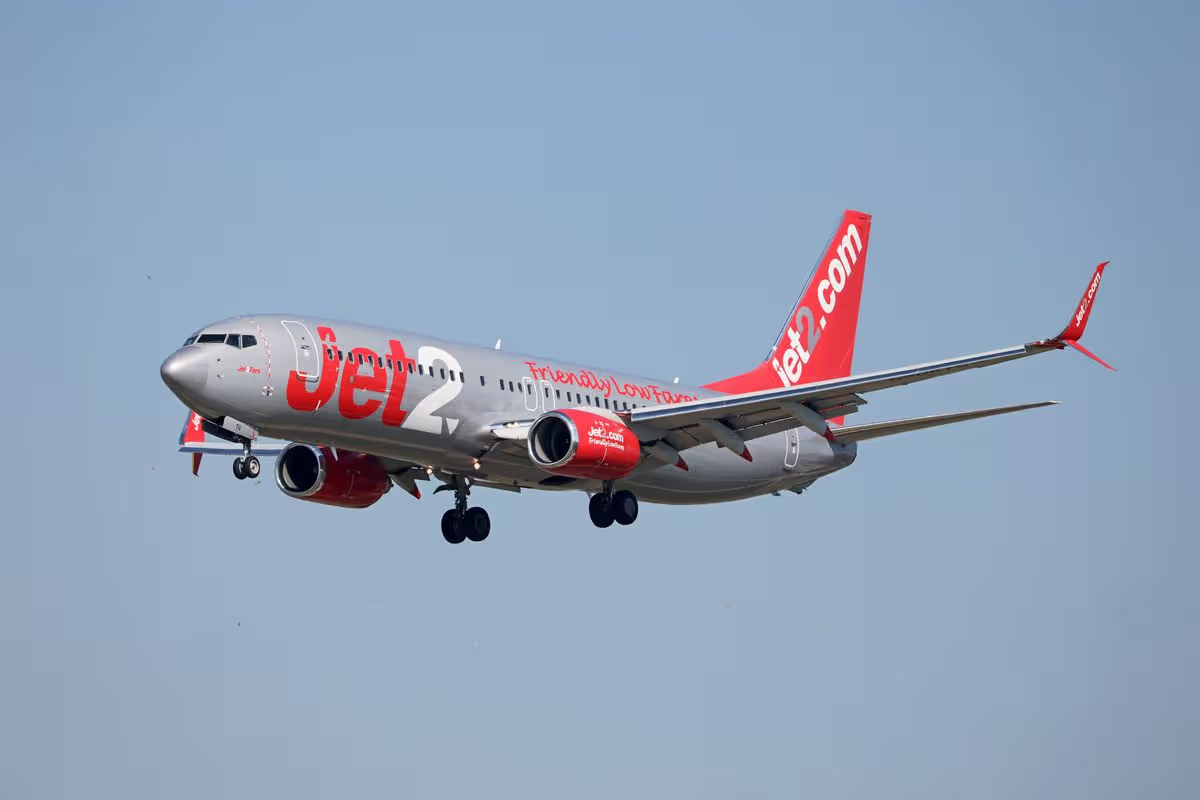
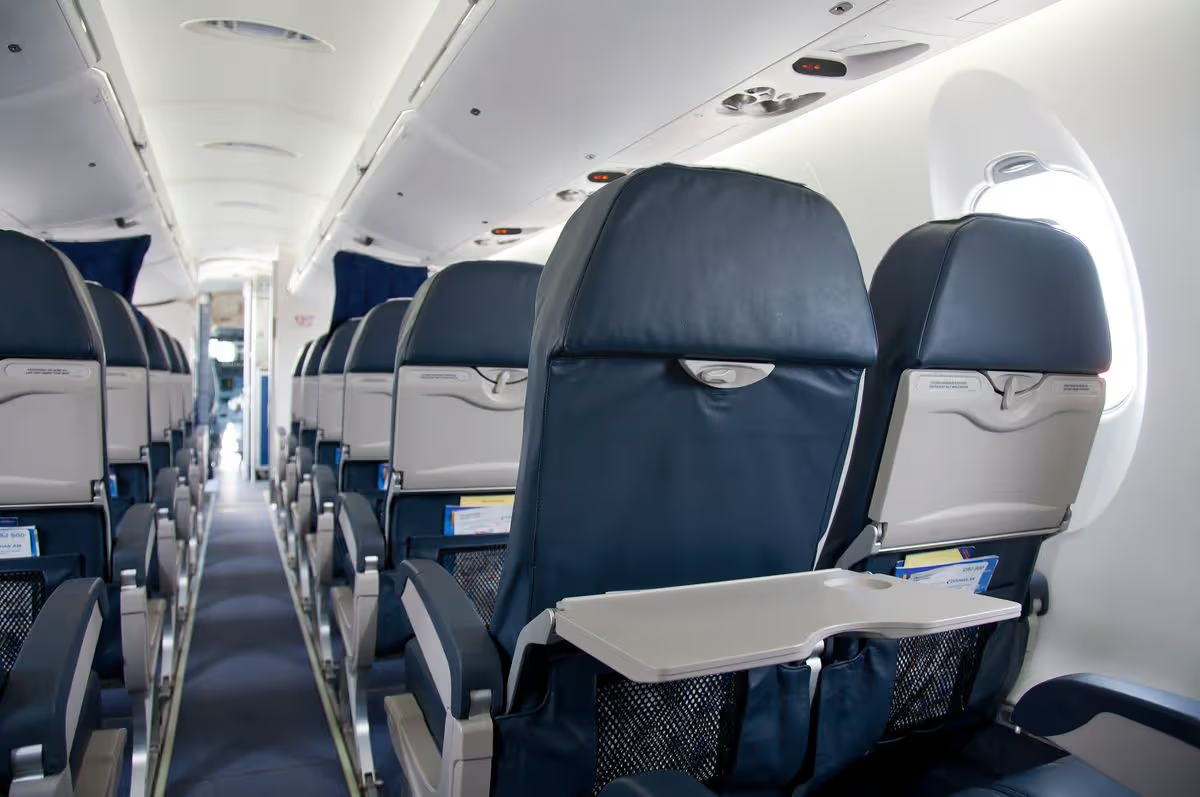
On-board, Air Arabia doesn’t look much different to easyJet, Jet2, or Ryanair. Cabins will have a single aisle with three seats on each side. Some services will have options to upgrade to extra legroom, and you can choose Basic, Value, or Ultimate packages when you book with the latter two, including checked baggage, either a sandwich or a hot meal, and water.

You won’t get seatback TVs to help you pass the time, but you can download an app called SkyTime, which allows you to access TV shows, movies, sports, and other entertainment on your personal device. Otherwise, your view for eight hours will be the seat in front of you and the in-flight magazine.

However, if you’re hoping to enjoy a cold beer or gin and tonic en route to your holiday destination, you’ll be disappointed. Air Arabia is a dry airline, so the trolley will only be stocked with soft drinks. It’s worth noting that Sharjah is a dry emirate too. While non-Muslims can drink in their homes, no alcohol is served in hotels or restaurants.

If you can make it through the flight, you have the option of staying in Sharjah, or heading to nearby Dubai for your stay. Sharjah isn’t as well-known as its neighbouring city, but it’s the third-largest emirate in the United Arab Emirates (UAE).

UNESCO named Sharjah the “Cultural Capital of the Arab World”, and it hosts the Islamic Civilization Museum, which has thousands of items from coins to calligraphy and Islamic artefacts set in a beautiful domed building.

READ MORE: Spain to introduce strict new rules on smoking and vaping including beachesREAD MORE: I went to France but post-Brexit rule caught me out on my way home

Sharjah also boasts long sandy beaches that overlook the Persian Gulf, and the Al Majaz Waterfront area is particularly popular with tourists, as this large complex features picturesque parkland, Western chain restaurants, and stunning views of the skyscrapers that comprise Sharjah’s skyline.

There’s also plenty to do for families, including the colourful Sharjah Aquarium and Sharjah Classic Cars Museum, where you can see shiny vehicles from the earliest days of automobiles through to modern cars.

Have a story you want to share? Email us at webtravel@reachplc.com

Source link

I asked travel experts the worst area to sit on a plane – they warned to avoid 1 spot

If you want your flight experience to run as smoothly as possible, some seats are definitely better than others.

Going on a winter break is always exciting, especially if your destination is somewhere warmer and sunnier than the UK. However, no matter how far you’re travelling, the journey isn’t always smooth sailing.

We’ve all suffered the ordeal of a dreadful flight before. Whether it’s due to discomfort, fellow passengers causing a disturbance, or anything else, it can cast a shadow over your holiday before it even begins. So, to help holidaymakers kick off their trips in a positive way, I sought advice from experts on the worst place on the plane to reserve your seat – and their views were clear.

Nearly all of the experts I spoke to were unanimous in their opinion that the very last row of the plane might not be the ideal choice for those looking for a peaceful journey.

Nicholas Smith, Holidays Digital Director at Thomas Cook, warned that those who are sensitive to turbulence might want to steer clear of this area.

He pointed out: “Seats at the very back are typically less desirable. They are close to the galley and restrooms, service can be slower, food choices may be limited, and it is also the area where movement during turbulence feels strongest.”

He also hailed the importance of being organised when booking seats on a plane. While this often comes with an additional fee, if you’re anxious about securing a decent seat, then it’s likely to be money well spent, reports the Express.

The expert continued: “Thinking about your priorities in advance also makes a difference – nervous flyers will be more comfortable over the wings, those with a tight connection should choose an aisle near the front, while couples booking a row of three might secure the window and aisle, leaving the middle free for a chance at extra space.”
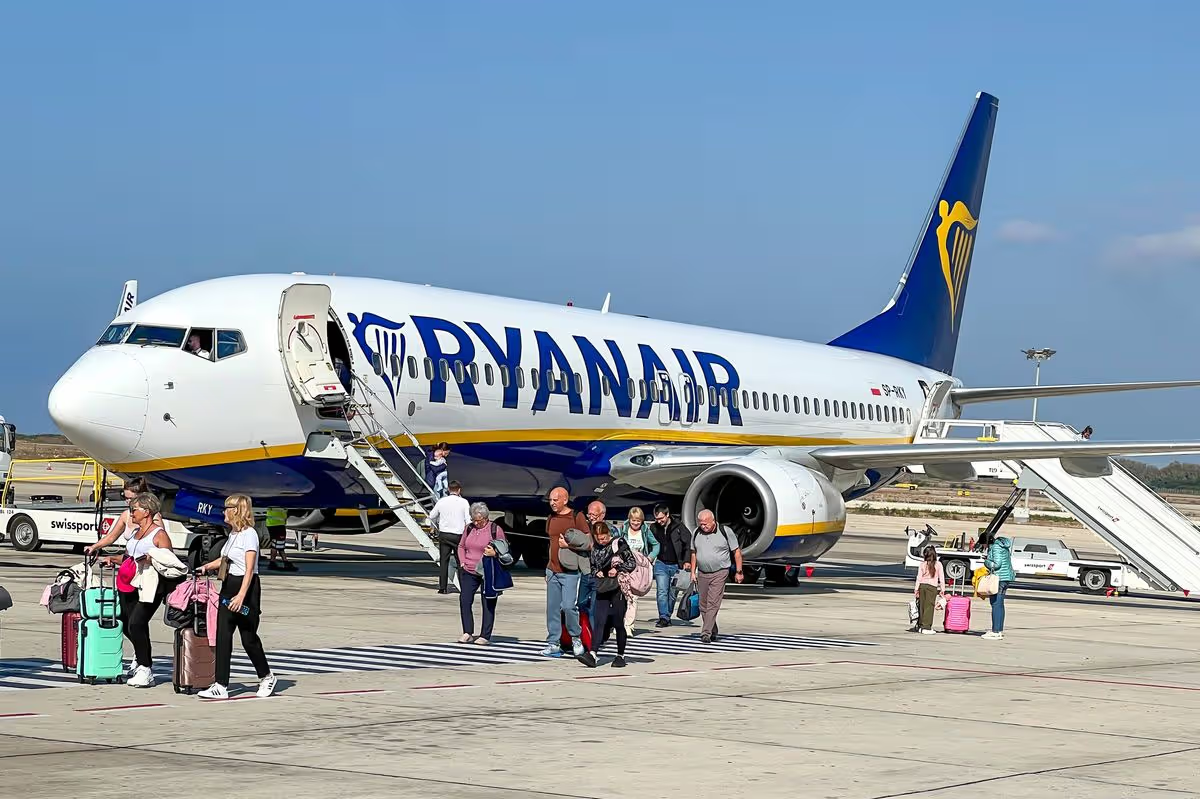
This was echoed by Izzy Nicholls, an experienced traveller and creator of road trip blog The Gap Decaders, who warned: “Seats at the back are best avoided. They’re typically noisier because of engine proximity and galley activity, and you’ll be among the last to board and leave the plane.”

Unsurprisingly, the front section of the aircraft proved to be the best location for the most pleasant experience. Izzy continued: “Travellers who want a calmer journey should book seats at the front of the plane. This area is away from restrooms and heavy foot traffic, so you’ll experience fewer interruptions.

“Choosing an aisle seat here also gives you the freedom to stretch your legs and get up easily without disturbing others. Select these placements to make long flights more comfortable and reduce the effects of motion.”

Beyond comfort, the rear section of the aircraft also throws up challenges regarding luggage storage – especially problematic if you board late. Jacob Wedderburn-Day, CEO and Co-Founder of luggage storage company Stasher, advised passengers to be strategic about their seating choices, warning: “Avoid sitting near galleys and toilets, where staff members often store their things in overhead bins, leaving less space for passenger baggage.”

He continued: “The last few rows are a concern because if you board late, the bins above you may be filled, which means you may have to store your luggage several rows away. Also, stay away from seats that are located behind bulkheads, as these spaces often have limited storage.”

Travel expert Andrea Platania from Transfeero also echoed concerns about rear seating, explaining: “The very last row is typically the least desirable: limited recline, proximity to bathrooms, and more cabin noise. Middle seats anywhere are usually least popular unless you’re travelling in a group.”

For those seeking additional legroom, Andrea highlighted specific options whilst noting their drawbacks: “Exit-row and bulkhead seats offer more space, but they come with trade-offs: fixed armrests, limited recline, or restrictions for passengers travelling with children.”

Passengers prone to motion sickness should consider a particular location, according to the expert, who recommended: “Sit over the wings. This area is closest to the aircraft’s centre of gravity, so you’ll feel less turbulence compared to the back, where bumps are magnified.”

Source link

Futuristic ‘flying taxi’ service could launch by 2029 – but there’s one big obstacle

A British company has unveiled plans for a new ‘flying taxi’ service that would whisk passengers to the airport in a matter of minutes, but there are still some regulatory hurdles to overcome

A British firm has revealed bold plans for a ‘flying taxi’ service that will transport passengers to airports, with this cutting-edge travel option expected to cost no more than an Uber.

Vertical Aerospace claims its electric Valo aircraft, engineered to reach speeds of up to 150mph across distances of up to 100 miles, could provide swift and effective city-to-airport links, enabling travellers to bypass airport traffic jams. For instance, a journey from Canary Wharf to Heathrow Airport would take just 12 minutes by aircraft versus an hour by road.

The firm, which recently conducted flight trials at Cotswolds Airport, is now targeting airline-standard safety approval by 2028 before launching commercial operations in early 2029.

Vertical Aerospace has released images of its prototype aircraft, which it claims delivers a luxurious experience for up to six passengers, featuring ample baggage capacity. Pictures of the aircraft reveal a sleek, contemporary design with an interior boasting comfortable seating and big windows, reports the Express.

Despite the aircraft’s high-end appearance, the company intends to provide an affordable and accessible service. A spokesman confirmed: “Ultimately, the potential is for this aircraft to be a similar cost as hiring an Uber.”

Vertical has also announced its proposed route network at launch, which would initially link Cambridge and Oxford -Bicester with the capital as well as Heathrow and Gatwick Airport. Aside from airport transfers, the firm suggests these innovative aircraft could be used for emergency medical services, cargo delivery, and even defence operations.

Vertical confirmed plans to build seven aircraft in the UK for testing with the UK Civil Aviation Authority (CAA) and the European Union Aviation Safety Agency (EASA).

In a statement, Vertical announced approximately 1,500 pre-orders for Valo. The company projected that manufacturing these aircraft could generate 2,000 skilled jobs in the UK by 2035.

Stuart Simpson, CEO of Vertical Aerospace, stated: “Electric flight will transform how cities move, and London is one of the best places in the world to prove it. With Skyports and Bristow, we have the aircraft, infrastructure and operational strength to lead this market. These plans show the commercial potential of services we aim to see operating following regulatory approval in 2028 and we look forward to bringing them to life with our partners.”

READ MORE: Exact easyJet and Ryanair seats to pick for extra legroom with no further priceREAD MORE: Avoid packing 4 particular items in your hand luggage – or risk delays at airport

However, gaining CAA approval could pose a challenge for these futuristic vehicles. At present, the CAA is conducting a consultation on vertical take-off and landing (VTOL) aircraft to ensure their safe operation within the UK.

The consultation commenced last month and will continue until the end of January 2026, inviting interested parties to share their views. This process will help establish safety standards for pilot licenses, aircraft, and landing sites, ensuring the proper regulation of VTOLs.

Have a story you want to share? Email us at webtravel@reachplc.com

Source link

Brits warned of four-hour airport queues this Christmas — here’s how to avoid them

The new Entry-Exit system (EES) has been rolled out across Europe, and UK holidaymakers have been warned to expect long queues at airports this festive season — here’s how to avoid delays

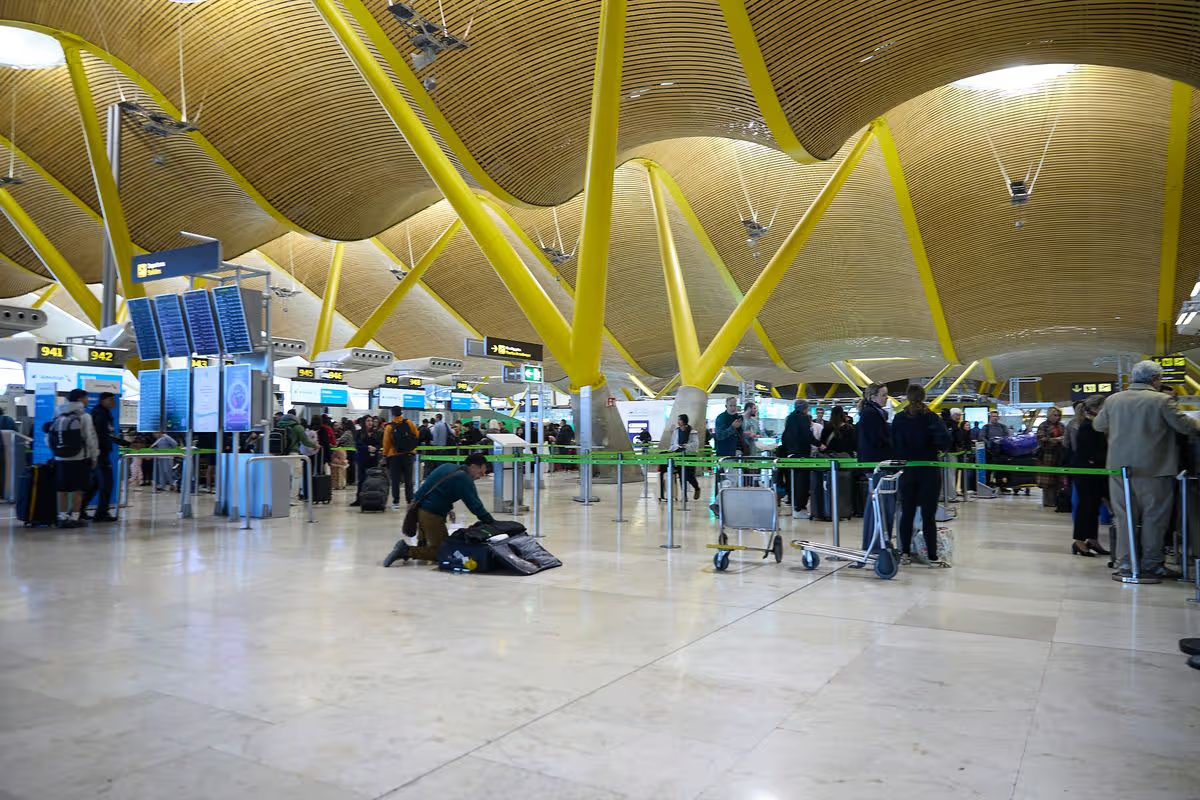
Brits planning a festive getaway have been warned to brace themselves for queues of up to four hours at European airports, following the launch of the new Entry-Exit system (EES) on October 12. The EES, which swaps traditional passport stamping for biometric checks, requires every non-EU traveller to undergo fingerprinting and facial scans.

This extra step, combined with the influx of passengers travelling during the holiday season, can cause significant delays when multiple flights land at the same time.

Early signs show that major hubs like Paris and Amsterdam are already struggling with congestion during busy times, and with Christmas fast approaching, more chaos is anticipated. Representing one of the biggest overhauls to European border control in years, the EES applies to all non-EU travellers — including Brits — entering the ‘Schengen area’ (29 EU countries including France, Italy, and Spain).

While registration only takes a few minutes per person, when multiplied by hundreds of passengers, it leads to lengthy queues.

This alert comes as winter holidays continue to rise in popularity, with 51% of Brits planning to jet off abroad between November and February. To help holidaymakers dodge the mayhem, travel guru Jane Bolton from ski holiday specialist Erna Low shares her top tips for navigating the new rules and ensuring a hassle-free trip, reports the Express.

Arrive well in advance

“Airport wait times can vary, but with the new EES checks, queues of up to four hours are expected at peak times,” Jane explains. “In the past, travellers were advised to arrive at the airport two hours prior to a domestic flight and three hours for an international flight. Now, it’s worth allowing more time than usual – especially during school holidays and weekends. I’d recommend arriving at least three to four hours before your flight to make sure you don’t miss it.”

Keep tabs on your departure airport’s latest information

Jane advises: “As the EES rolls out across Europe, it is unavoidable for airports to be at different stages of this process, given the scale of the system. Some major airports like Charles-de-Gaulle (France), Düsseldorf (Germany), and Rome Fiumicino (Italy) have already implemented self-service EES kiosks, while others will still be manually registering the biometric facial and fingerprint recognitions.

“Those doing it manually are expected to take longer, so check your airport’s website before you leave home to plan appropriately.”

Choose ‘fast track passes’ wherever available

With lengthy queues anticipated, passengers are urged to consider alternative time-saving options. The travel expert’s advice?

“Purchasing fast-track tickets for security is a great method for reducing the time needed prior to a flight. These tickets cost between £3 and £12 per person, depending on the airline, and can shave off hours within peak travel times. It’s a relatively small investment for peace of mind.”

Allow additional time when travelling with families

Jane explains: “Whilst the new system requires facial and fingerprint recognition, children under twelve are exempt from this requirement and instead must be linked to an accompanying adult who is registered on the system.

“For families or large parties travelling, allowing extra time at the airport is essential. This process will take longer than average, so plan ahead and keep all documents ready.”

Verify passport validity

Jane warns: “Since Brexit, many Brits have been caught out by new passport rules. Your passport must have been issued less than 10 years before your travel date and be valid for at least three months after departure.”

The travel specialist further adds: “The key date to look at is the issue date rather than expiration. For example, a passport issued in March 2015 and expiring in December 2025 won’t be valid for EU travel after March 2025. Checking this before you book is essential to avoid being turned away at the airport.

“Whilst the new entry/exit system may seem likely to cause chaos for your upcoming travels, holidaymakers should be assured that this process will, in the long-term, streamline your travel. Once registered, the travel process will become much smoother for those travelling within the Schengen area.”

The travel expert concludes: “If you check your passports, allow extra time for queues, purchase fast track where possible and check your departure airport for updates, your holiday should be off to a great start.”

Source link