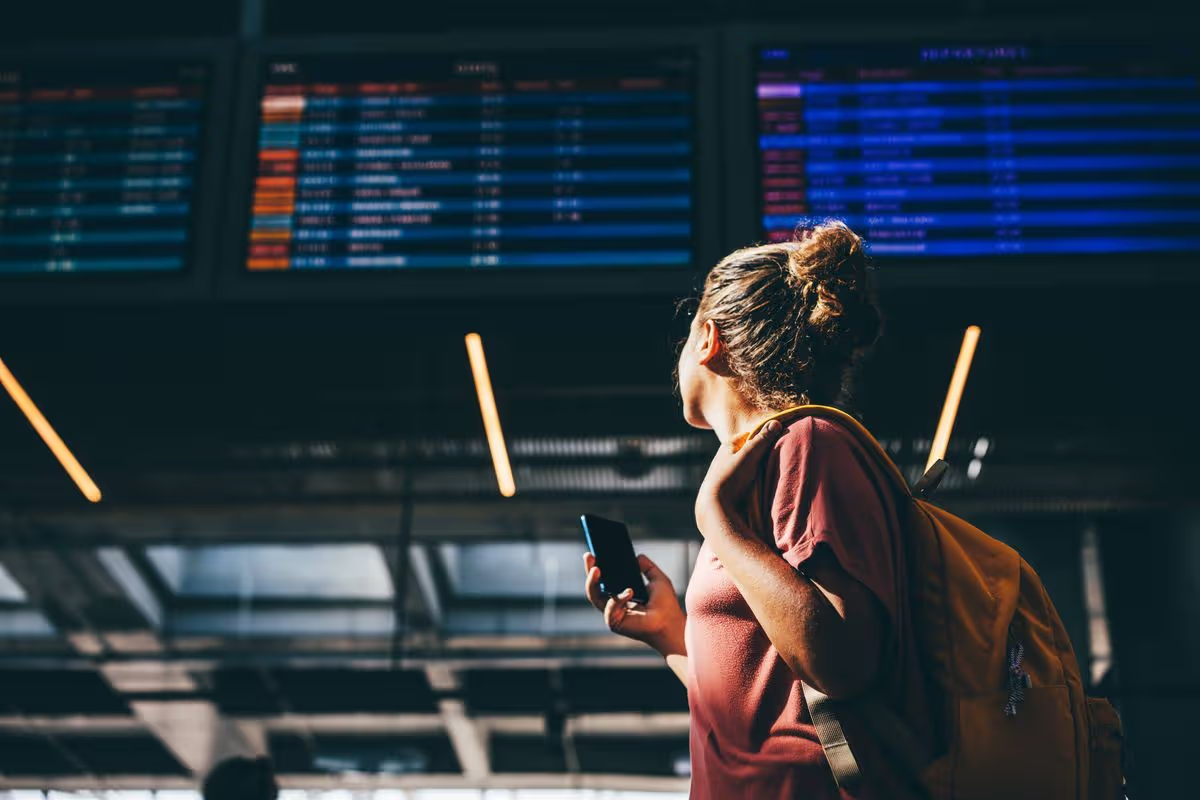
One particular route was also named the least punctual with the airline, as Birmingham to the Greek party hotspot of Zante had an average delay of 46 minutes

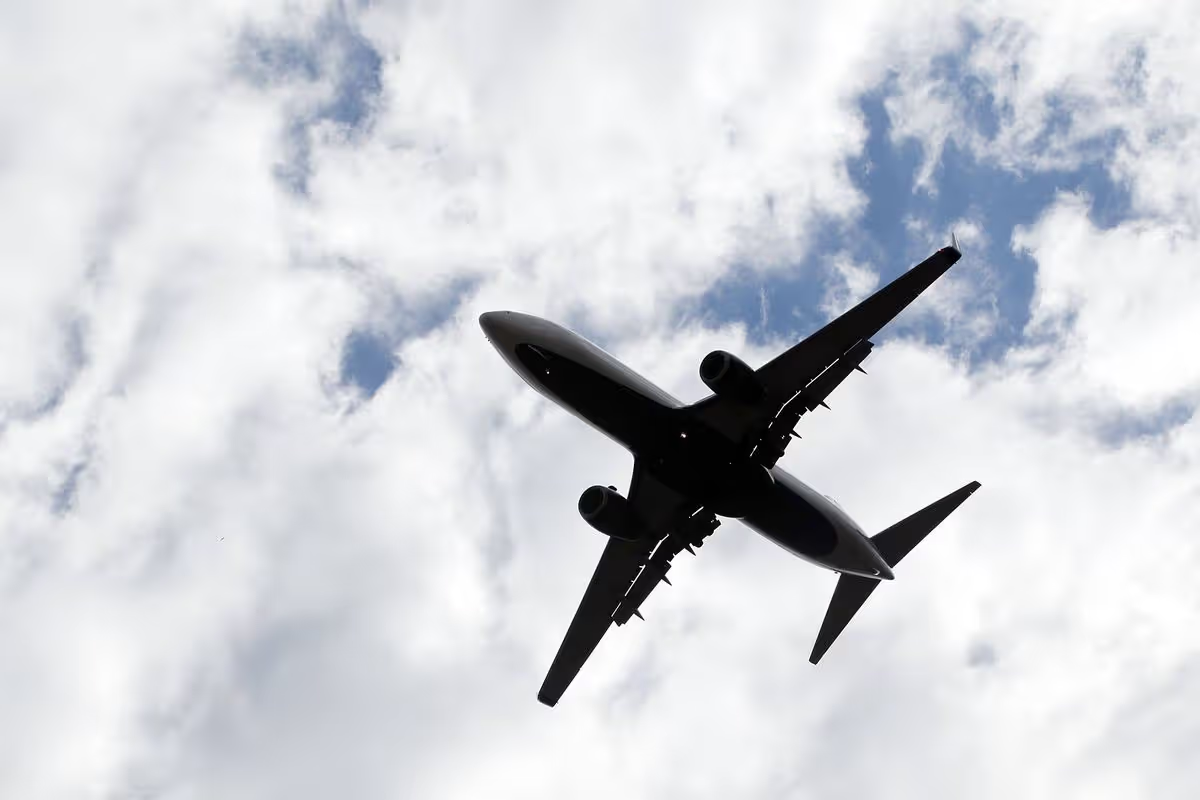
An airline loved by Brits has been rated one of the worst for punctuality (stock)(Image: Maria Korneeva via Getty Images)
A popular airline amongst British holidaymakers has been ranked among the worst for punctuality — and it isn’t easyJet, Ryanair, BA or Jet2. Budget carriers easyJet and Ryanair occasionally face criticism from passengers for a whole host of reasons, yet timekeeping doesn’t appear to be one of their shortcomings.
An airline that also offers package holidays widely favoured by Brits has apparently earned a reputation for poor punctuality.
TUI Airways has landed fifth on a list of the five worst airlines for UK flight delays, with Civil Aviation Authority (CAA) data revealing an average delay of 20 minutes and 24 seconds last year.
One particular route was singled out as the least punctual of all — Birmingham to the Greek party island of Zante — with an average hold-up of 46 minutes. Operating out of more than 20 UK airports, the carrier is owned by TUI Group.
Aage Dunhaupt, from TUI Group, told the Mail that “minimising delays remains a top priority”, noting that TUI Airways runs flights “wherever possible, even if they are delayed, rather than cancelling them”.
He said: “If we were to follow broader industry practices of cancelling flights more readily, our punctuality ranking would improve significantly. However, this would come at the expense of our customers.”
Air India was ranked the worst performer for the second year running, with average delays exceeding 36 minutes, while Scandinavian Airlines topped the table as the most punctual, averaging a mere eight minutes.
Taking second spot for the poorest performance was Blue Islands, which ceased trading at the end of last year, followed by TAP Air Portugal and Saudia.
On a more positive note, average delays have fallen from 18 minutes, 18 seconds in 2024 to 14 minutes, 48 seconds.
A spokesperson for trade body Airlines UK told ITV: “The vast majority of UK airline flights depart on time and CAA data shows customer satisfaction levels are at an all-time high.
“Most delays are the result of issues that are entirely outside airline control, such as adverse weather, forced reductions in the number of planes that are able to land and take off each hour, and industrial action.”
They added: “When these delays do occur, airlines work hard to support customers and get them where they need to be as quickly as possible.”
This follows a flight attendant revealing her top five “basic” habits she “absolutely loves” to see passengers doing. Taking to TikTok, she started by saying: “When you take your headphones out as I walk up to your row.
“Instant respect. You see me. I see you. We’re already besties.”
Her other habits were paying attention during announcements, offering a smile and a sincere thank you, keeping shoes on, and not treating the plane like your living room.
She added: “It’s really that simple. Kindness + awareness + basic hygiene = elite passenger status.”