aguirre

Mexico wins back fans, still faces familiar World Cup wall

After what may have been the most important game in the Mexican national team’s World Cup history, coach Javier Aguirre hugged each of his 26 players.

The embraces weren’t to celebrate a victory. They were hugs of gratitude, encouragement and, above all, resignation.

Minutes earlier, the players paraded around Azteca Stadium — traditionally an impenetrable fortress — to applaud El Tri fans with tears in their eyes. Mexico had just lost 3-2 to England, extinguishing the hope that it could parlay its World Cup co-host role into the deepest tournament run in the country’s history.

The goal was to advance to the quarterfinals for the first time since 1986 and, above all, to show the world that Mexican soccer finally had taken the leap that had been demanded for so long — defeating a past world champion, England, that hadn’t looked particularly dominant. But reality, once again, hit hard as the loss became Mexico’s eighth defeat in the round of 16 since 1994.

This time, Mexico had the support of its fans, playing on home soil. And it wasn’t enough.

“I’m satisfied with the work we’ve done, but when you lose — and I’ve lost a lot in my career — you never quite get over it,” Aguirre said. “It’s very painful because dreaming gives us hope; losing this way hurts a lot.”

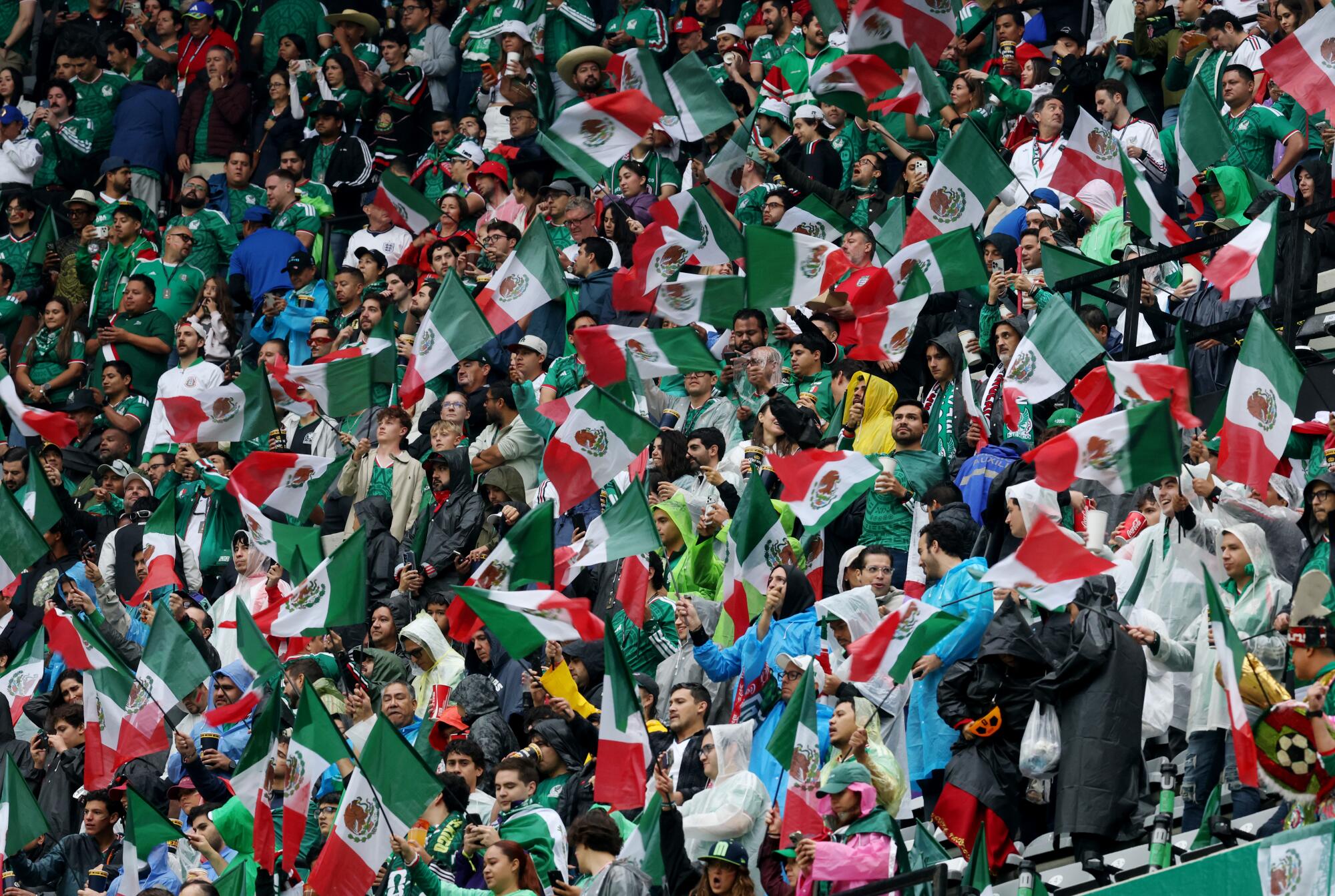
Mexico fans wave flags and show their support before their team faced England in a World Cup match at Azteca Stadium.

Mexico fans show their support before their team faced England in a Round of 16 World Cup match at Azteca Stadium on July 5.

(Richard Pelham / Getty Images)

After weeks of celebrations following wins over South Africa, South Korea, Czechia and Ecuador, Mexico failed the test against England, ranked fourth in the world. El Tri dominated possession but could not convert it into goals, while the English were clinical, led by Jude Bellingham, Harry Kane, Anthony Gordon, Bukayo Saka and goalkeeper Jordan Pickford.

For Aguirre, the loss reopened a familiar wound. In the 2002, Mexico lost 2-0 to a U.S. squad led by Landon Donovan in what many consider the most painful defeat in the country’s World Cup history. This defeat to England very well could rival it.

“I would have liked to win five games, to leave home with five victories. That hurts — it hurts a lot,” Aguirre said. “A loss is a loss. Our opponent didn’t make the same mistakes we did.”

Judging Aguirre solely on the end of this World Cup run would be simplistic given what he inherited. Two years ago, he was asked to lead the struggling team for the third time. When he arrived, Mexico was ranked 17th in the world and had not won the Nations League. He leaves with Mexico ranked in the top 10 and as Nations League champion and two-time defending Gold Cup champion.

This World Cup wasn’t the disaster that Qatar was four years ago, when Mexico was eliminated in the group stage. This summer, Mexico secured its first knockout-round victory since 1986, advanced to a fifth World Cup match for the second time and swept three games during the group stage without conceding a goal — something no other Mexican team achieved.

In 22 months at the helm — having taken over in 2024 following Jaime Lozano’s failure at the Copa América, where Mexico failed to advance past the group stage — Aguirre achieved something that went beyond the scoreboard by uniting players previously accused of having too much ego and preferring not to sacrifice to help the team.

At this World Cup, that squad gave its all — body and soul — and rebuilt a relationship with the fans that had seemed broken since the 2024 Copa América. Thousands of fans filled the Ángel de la Independencia, the Zócalo and other squares across the country, as well as watch parties in cities like Los Angeles.

“We managed to restore the pride of being part of the national team — for the national anthem and for its people. It’s a privilege to be here, and they know it,” Aguirre said of his players. “I think we’ve returned to a Mexican identity.”

Green jerseys were seen all over Mexico as people set aside their differences to cheer on El Tri.

“Mexico was the best host of the three. It had the best atmosphere — it’s a country that truly loves soccer,” Mexico City native Santiago Mondragón said before the England match.

Mexico had standout and inspired performances from Erik Lira, Gilberto Mora and Roberto Alvarado, but its lineup struggled to keep pace with English players trained at elite European clubs.

Mora, just 17 years old and with tremendous potential, made a mistake on the play leading to England’s second goal. Alvarado, who provided strong passes to Raúl Jiménez and was solid in defense throughout the tournament, lost track of Bellingham on the first goal. Raúl Rangel, who was outstanding against South Korea and who three years ago was playing for Tapatío in the Mexican expansion league, stepped too far forward on the penalty kick that sealed the match, minutes after an English player was sent off in the second half. Edson Álvarez, who did not have a good season with Turkey’s Fenerbahce because of an injury, received little playing time and made a serious mistake marking Kane, which led to Gordon’s breakaway on the play that resulted in the penalty kick.

Mexico's Raúl Jiménez gets tangled with England's Ezri Konsa while going for the ball during a World Cup match.

Mexico’s Raúl Jiménez gets tangled with England’s Ezri Konsa while going for the ball during a World Cup Round of 16 match at Azteca Stadium on July 5.

(Francois Nel / Getty Images)

Following the loss, many in Mexico still are wondering why, despite having a one-man advantage for 36 minutes —plus 11 minutes of stoppage time — the team was unable to tie England. Aguirre replaced Mora and goal-scorer Julián Quiñones, bringing on an attacking lineup that focused on sending in crosses, which the English defense easily cleared.

While it’s possible a few changes could have shifted the match in Mexico’s favor, there were limits to how much the technical staff could get out of the roster.

El Tri lacks sufficient depth to assemble a truly competitive 26-man roster, as players such as Álvarez and Santiago Giménez didn’t arrive at their best form, and players such as Brian Gutiérrez weren’t ready for the pressure of a tournament of this magnitude, in need of more time to develop.

Mexico lacked game-changing players capable of breaking down tight defenses — the role Hirving Lozano played in 2018 or Giovani Dos Santos in 2014. The lack of creativity that showed against Saudi Arabia in 2022 flared up late against England.

Thanks to Jiménez and Quiñones, the team did show firepower, scoring 10 goals in five matches, but it lacked depth to break down a well-organized English defense.

The talent pool has been hindered by the Mexico club system.

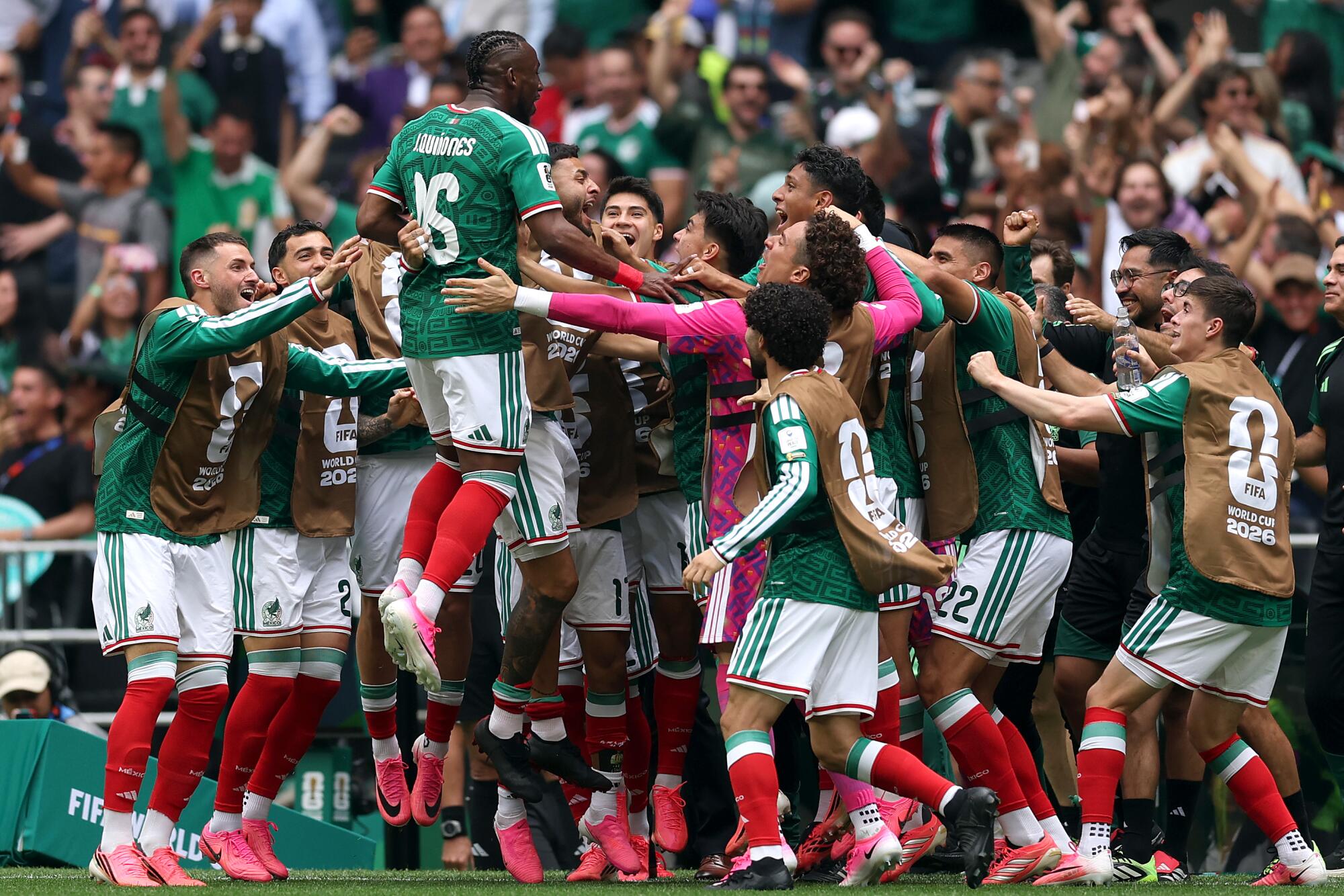
Mexico's Julián Quiñones is tossed in the air by teammates as they celebrate a Round of 32 World Cup win over Ecuador.

Mexico’s Julián Quiñones is tossed in the air by teammates as they celebrate a Round of 32 World Cup win over Ecuador at Azteca Stadium on June 30.

(Kevin C. Cox / Getty Images)

Liga MX owners maintain a narrow view of domestic soccer, prioritizing foreign signings over the development of local players and promotion and relegation remain abolished — removing competitive pressure that is the backbone of English leagues.

Top Mexican players continue to be overvalued by their home clubs, which makes it difficult for European clubs to sign them when there are cheaper options with more impressive résumés.

“This was the opportunity; that’s why it’s frustrating, that’s why it’s sad,” Mexican journalist Javier Alarcón said of El Tri’s World Cup exit. “With the Mexican federation and its owners, there isn’t much hope.”

Rafael Márquez, a former FC Barcelona star and one of the greatest players in Mexican national team history, is succeeding Aguirre after serving as one of his assistant coaches. Márquez has formed a close bond with players, who tossed the 47-year-old former defender in the air after one of their World Cup wins, and is familiar with all the reasons Mexico continues to hit the same World Cup wall.

“Rafa is a great guy, a great coach,” said Aguirre, who noted that the team’s average age has dropped and that more and more players are playing in Europe. “Hopefully he can do better than we were able to.”
Source link

Mexico coach Javier Aguirre answers critics by advancing

Before the World Cup, critics and fans of the Mexican national team debated whether Javier Aguirre’s third stint as head coach was the right decision. Two games later, the coach has led Mexico to the tournament’s knockout round.

Thursday’s 1-0 victory over South Korea at Guadalajara Stadium made the World Cup co-host the first in the tournament to advance while also clinching the top spot in Group A with one group play game remaining. After South Korea’s goalkeeper fumbled a ball, Luis Romo scored the goal that gave the Mexicans six points and pushed them to the top of the standings.

El Tri will close out the first round against Czechia (6 p.m.) at Azteca Stadium on Wednesday.

During his post-match news conference, Aguirre spoke less about the result and more about the journey that led him to this moment. At 67 and having coached Mexico in three World Cups, he explained that his experience allowed him to approach a match he described as eminently tactical.

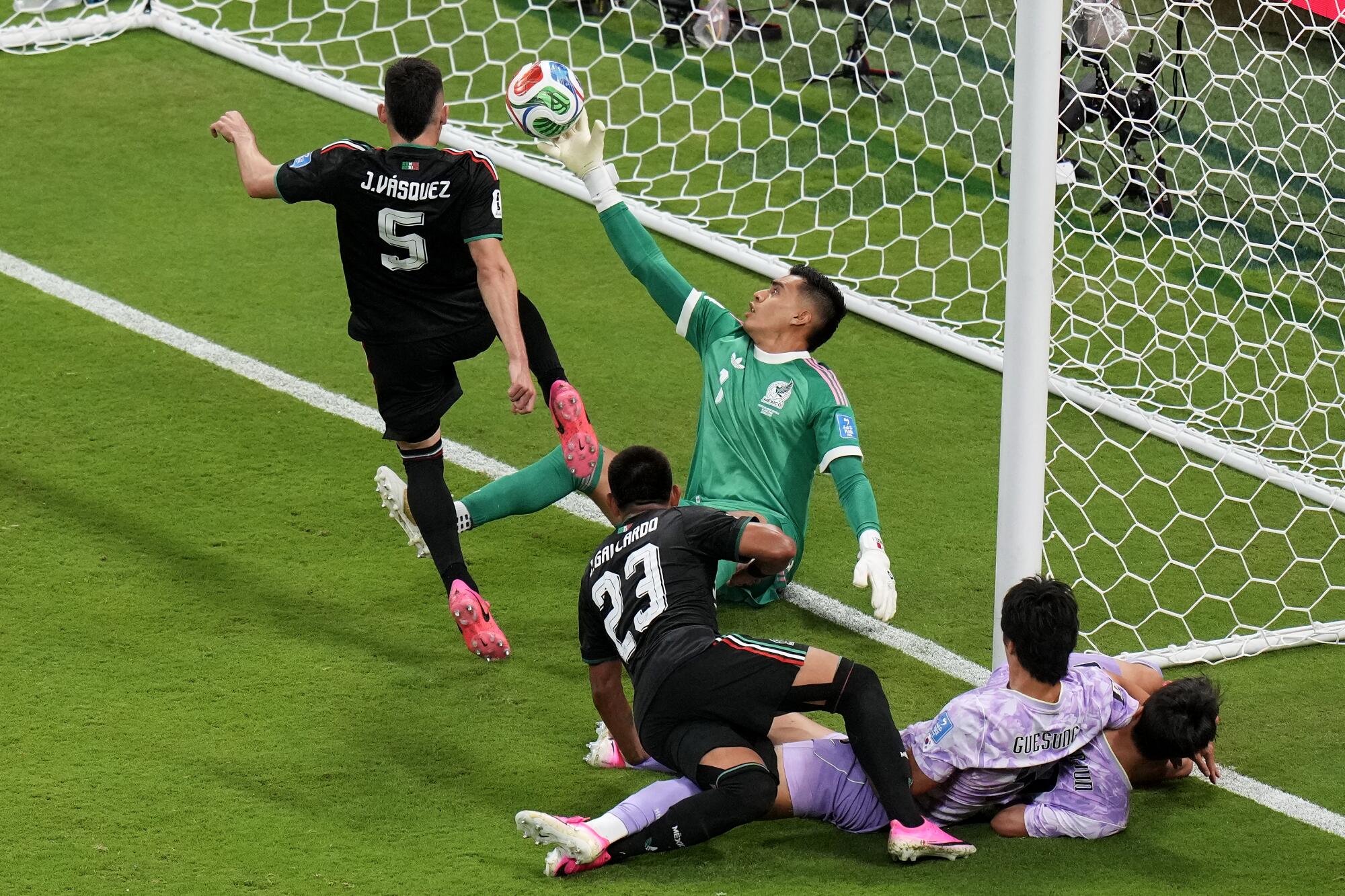
Mexico goalkeeper Raul Rangel reaches back to stop the ball from entering his goal during his team's 1-0 World Cup win.

Mexico goalkeeper Raul Rangel reaches back to stop the ball from entering his goal during his team’s 1-0 World Cup win over South Korea Thursday.

(Silvia Izquierdo / Associated Press)

“I’ve always tried to get my team to play well and to help the players and the national team develop,” Aguirre said.

For the coach, advancing to the knockout round represents the culmination of more than three decades of work on the sidelines and the support of a group of players who rose to the occasion under the most demanding circumstances.

The coach also acknowledged that advancing to the next round has eased the tension surrounding the team after the doubts that existed before the World Cup. Without mentioning personal vindication, he noted that soccer tends to judge solely based on the most recent result.

“If you win, you’re the best; if you lose, you’re the worst,” Aguirre said.

Aguirre said he remains calm because he believes his approach to coaching hasn’t changed and that the team was rewarded Thursday night against South Korea in a match marked by limited space and a high degree of tactical discipline.

With qualification secured, Aguirre said he will not alter his soccer philosophy during Mexico’s final group stage match even though it no longer faces the pressure of securing a spot in the next round.

He said Czechia will enter the game with a different competitive need and a drive to advance, while Mexico will work to maintain a high level of performance that allowed it to record two consecutive wins and keep two clean sheets at the start of the tournament.

On the South Korean side, coach Hong Myung-bo avoided making excuses and focused his analysis on the play that decided the match. Although he explained that he had not yet reviewed the goal sequence in detail, he knew the team made a series of small errors in an area of the field where he had previously warned that losing possession could prove decisive.

Mexico goalkeeper Raul Rangel blocks a shot by South Korea's Son Heung-min during the World Cup match on Thursday.

Mexico goalkeeper Raul Rangel blocks a shot by South Korea’s Son Heung-min during the World Cup match on Thursday.

(Natacha Pisarenko / Associated Press)

The coach said that one of the central focuses of their preparation had been avoiding turnovers near South Korea’s box in the face of Mexico’s high press.

Myung-bo said that during the pre-match talk, he emphasized that the first 20 minutes would be crucial and believed his players had executed that part of the plan. He said that as the minutes passed, South Korea managed to create chances and was gaining strength until its critical turnover.

“After the momentum of the match shifted in our favor … both in terms of overall pressure and the play itself, we were able to create many opportunities,” Myung-bo said. “Although it ended up being a very frustrating match and we’re left with a bitter taste in our mouths over the lost possession, there’s no time to dwell on it. We have one last match ahead of us, so we’ll prepare well.”

Source link

With calmer nerves, Mexico hopes to top South Korea at World Cup

Goalkeeper Raúl Rangel was 18 years old and playing for Chivas de Guadalajara’s youth academy the last time Mexico faced South Korea in a World Cup match in 2018.

Three years ago, when asked who might be the next great goalkeeper for the Mexican national team, Rangel named himself ahead of veteran Guillermo “Memo” Ochoa. A bold statement for a player who was just making his professional debut.

On Thursday, the 26-year-old goalkeeper will defend El Tri’s goal during his second World Cup match at Guadalajara Stadium — where he usually plays home games with Chivas — when Mexico takes on South Korea at 6 p.m. PDT on Fox/Telemundo in the second match of Group A.

“I told everyone, ‘I see myself at the World Cup.’ Some people laughed,” Rangel recalled. “I’d been picturing myself on the national team for three years.”

Mexico's Julian Quinones celebrates with teammates after scoring against South Africa at Azteca Stadium on June 11.

Mexico’s Julian Quinones celebrates with teammates after scoring during a World Cup match against South Africa at Azteca Stadium on June 11.

(Luke Hales / Getty Images)

Mexico and South Korea won their opening matches — El Tri against South Africa and the South Koreans against the Czech Republic — so the winner of this match will take first place in the group and secure its spot in the next round. The incentive is clear for Mexico, as the group winner will play the next two knockout rounds at Azteca Stadium, where El Tri has never lost a World Cup match.

The second-place team, on the other hand, would have to travel to Los Angeles for its next match. While the opponent could be tougher, Los Angeles would be a comfortable destination for South Korea — it has a strong fan base in L.A. and wouldn’t have to contend with Mexico City’s high altitude.

After an opening match in which Mexico coach Javier Aguirre acknowledged that the pressure of the first day affected the team’s performance and that the emotional atmosphere at Azteca Stadium had “weighed heavily” on several of his players, the coach and the players hope to deliver a sharper performance against South Korea.

“Yes, there was a bit of nervousness, a bit of fear,” Mexico midfielder Erik Lira admitted after the opener.

“We need to be more decisive; the win has calmed the nerves we’ve had over the last few days,” Mexico defender Israel Reyes said.

But if Mexico wants to excel, it needs not only to put its nerves behind it but also to improve tactically. Mexico, a co-host of the tournament alongside the United States and Canada, is aiming to reach the knockout stage of the World Cup and advance beyond the round of 16. El Tri has won only one match in the knockout stage — in 1986, when it defeated Bulgaria 2-0 at Azteca Stadium.

“I think that mental aspect has been missing for us. We have to believe that we can achieve great things,” Rangel said. “I truly believe I’m going to be a champion with Mexico. We have a responsibility as hosts.”

The match will be played at Guadalajara Stadium, 5,138 feet above sea level, and will mark the first time Mexico has played a World Cup match in the city.

Chivas, Mexico’s most popular club team, has the most players on the national team with five and all of them will get to play their second World Cup match on their club’s home turf. Brian Gutiérrez, the Mexican American who played a key role in the opener as South Africa was hit a with a red card while trying to stop him, and veteran Roberto Alvarado, who recorded an assist against South Africa, joined Rangel as Chivas starters in the opener. Bench players Luis Romo and Armando González, who also saw action in the opener, also play for Chivas.

Mexico captain Edson Álvarez challenges South Africa's Themba Zwane during a World Cup match at Azteca Stadium.

Mexico captain Edson Álvarez challenges South Africa’s Themba Zwane during a World Cup match at Azteca Stadium on June 11.

(Carl Recine / Getty Images)

Aguirre will have to make at least one lineup change against South Korea, with Edson Álvarez replacing César Montes, who is serving a red-card suspension. Álvarez is coming off an injury and it’s unclear how he will navigate the stress. Aguirre is also expected to give playing time to 17-year-old prospect Gilberto Mora in midfield — possibly in place of Gutiérrez — and to bring in Jorge Sánchez for Reyes at fullback.

South Korea arrives with a mix of European experience and a hunger for glory. LAFC star Son Heung-min is playing in his fourth World Cup and scored against Mexico in 2018. Kim Min-jae of Bayern Munich has been a rock in defensive midfield, while Paris Saint-Germain’s Lee Kang-in — who, interestingly, played under Aguirre at Mallorca — is a constant threat in creating plays. Joining them is Hwang In-beom of Feyenoord in the Netherlands.

The South Koreans have also been training for weeks at Verde Valle, Chivas’ training facility, which has allowed them to acclimate to the altitude. With the support of the Mexican crowd, they won their World Cup opening match against the Czech Republic at Guadalajara Stadium.

“It was like playing a game in Seoul,” Hwang said after the match, thanking Guadalajara for its support.

“[Mexico] is a good team, but, as you’ve just seen, we can take on anyone,” Hwang said after his team rallied from a 1-0 deficit to beat the Czech Republic.

The week, however, was not without controversy for the South Korean team, as the squad barred press from their home country after audio of media criticizing the mandatory military service exemption granted to Son was leaked. The audio also included criticism of coach Hong Myung-bo.

South Korea and Mexico faced off in September ahead of the World Cup, tying 2-2 in Nashville.

The World Cup stage, however, will be different and brings immense pressure.

Source link

Emotional crowd powers Mexico to World Cup win over South Africa

FIFA president Gianni Infantino described Mexico City Stadium as a venue “blessed by the gods” and a “true cathedral of soccer.”

Azteca Stadium, as most people know it, is steeped in soccer history and is now the only venue to host three World Cup opening ceremonies. But the Mexican national team had never much World Cup success at the venue.

On Thursday, spurred on by most of the 80,824 fans in attendance and forwards Julián Quiñones and Raúl Jiménez, Mexico managed to defeat South Africa 2-0 and securing its first opening match victory.

Mexico opened the scoring in the ninth minute when Quiñones capitalized on a defensive error by South Africa and fired a shot down the middle, between the legs of goalkeeper Ronwen Williams. The striker, a top scorer in the Saudi Pro League, immediately ran off to celebrate with the bench, marking the first goal of the tournament. The crowd responded by throwing beer into the air.

Mexico continued to press with numerous chances in the first half, including another shot by Quiñones that hit the post and another great save by Williams, who was South Africa’s best player.

“We were far superior in the first half; we could have been up 3-0,” Mexico coach Javier Aguirre said.

South Africa was reduced to 10 men just as the second half began when Sphephelo Sithole brought down Brian Gutiérrez, who was heading toward the goal unmarked. Brazilian referee Wilton Sampaio showed a red card.

“We played well; there were moments when Mexico didn’t know what to do and our organization was very good,” said Hugo Broos, South Africa’s coach.

It seemed the match was going to be easier for the Mexicans with South Africa short-handed, but fans began to boo the Mexican players after they stopped attacking and appeared nervous.

Seeing his players’ lackluster performance on the field, Aguirre responded with substitutions: bringing on 17-year-old Gilberto Mora, a fan favorite, as well as Luis Chávez, to reshape the midfield.

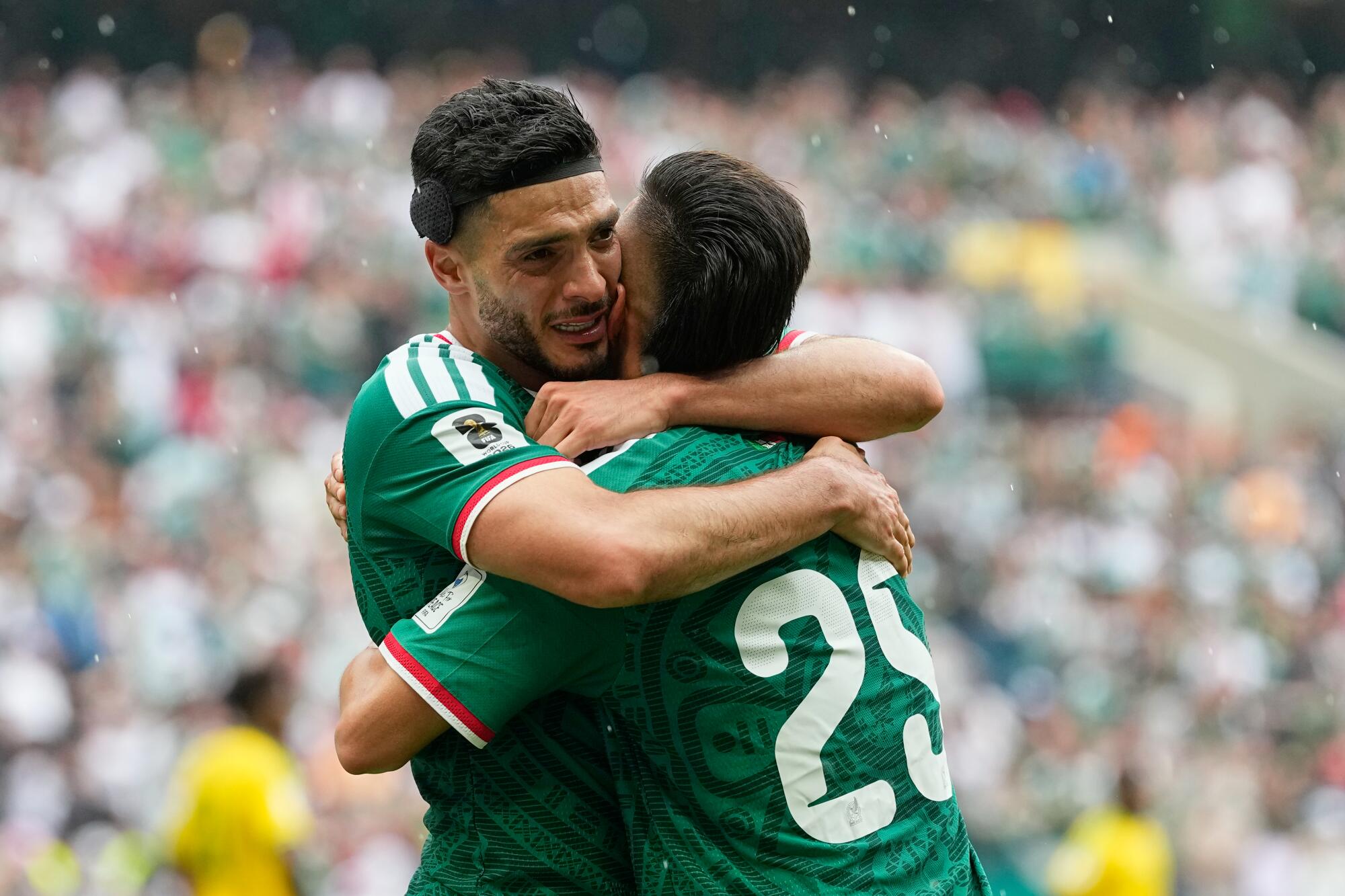
Mexico's Raúl Jiménez cries while hugging teammate Roberto Alvarado after scoring against South Africa in Mexico City.

Mexico’s Raúl Jiménez cries while hugging teammate Roberto Alvarado after scoring against South Africa in Mexico City on Thursday to open the World Cup.

(Natacha Pisarenko / Ap Photo/natacha Pisarenko)

“[It was] the start of the World Cup. It’s an intense atmosphere,” Aguirre said.

“In 25 games, we’ve never had players with cramps — today we had three. It was a very intense, emotional state. It shows that the setting weighed on them a little. Not on everyone.”

Shortly after the substitutions, Roberto Álvarado crossed the ball from the right to Raúl Jiménez, who headed it past South Africa’s goalkeeper, Williams, in the 67th minute.

South Africa was reduced to nine men after Themba Zwane struck Álvarado off the ball. After consulting the video assisted referee, the official gave Zwane a red card.

“I think you can accept the first red card,” said Broos. “I think the second one is debatable. It was a bit harsh on the referee’s part. We have two players who won’t be able to play in the next match.”

After the second red card, Mexico took its foot off the gas again and was met with whistles from the crowd, who were hungry for more goals.

Mexico and South Africa faced off in front of 80,824 fans at Mexico City Stadium to open the World Cup.

Mexico and South Africa faced off in front of 80,824 fans at Mexico City Stadium, more commonly known as Azteca Stadium, on Thursday to open the World Cup.

(David Ramos / Getty Images)

Mexico’s César Montes was sent off in stoppage time for bringing down Khuliso Mudau outside the box as he was heading toward the goal.

With the win, Mexico leads its group with three points and waited to see the result of South Korea versus the Czech Republic in Guadalajara later Thursday. South Africa has zero points. Mexico’s next match is in Guadalajara on June 18 against South Korea, while South Africa faces the Czech Republic in Atlanta.

“We need the next three days to get over the disappointment and fatigue,” Broos said, before addressing his team’s mere two shots on goal. “We have to work on our offense because it wasn’t enough today.”

The match marked the debut of Mora, the youngest player in the World Cup.

“For his first game, he didn’t disappoint,” said Aguirre.

Source link