Good morning, and welcome to L.A. on the Record — our City Hall newsletter. It’s David Zahniser, giving you the latest on city and county government.
It wasn’t that long ago that the Los Angeles Homeless Services Authority was the place to be — at least, if you were a local politician.
L.A. Mayor Karen Bass put herself on the agency’s 10-member board in 2023, saying direct oversight would help her confront the region’s homelessness crisis. L.A. County Supervisors Lindsey Horvath and Kathryn Barger joined that year as well.
Those who follow local politics — and the travails of the region’s beleaguered homeless agency — know what happened next.
Barger left the board, comprised of city and county representatives, after a single year. Horvath lasted two. Both spearheaded the effort to shift more than $300 million out of LAHSA and into a new county homelessness department, saying they had lost confidence in the agency.
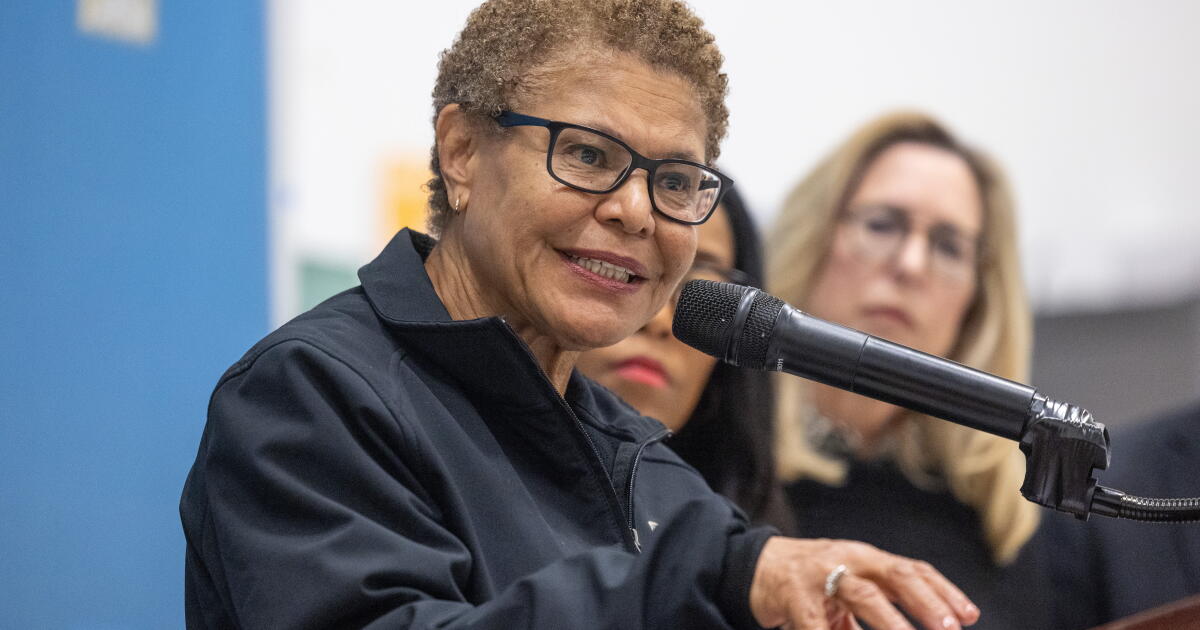
On Wednesday, Bass finally stepped down too, offering the latest and perhaps most crucial sign that LAHSA’s days could be numbered.
You’re reading the L.A. on the Record newsletter
Sign up to make sense of the often unexplained world of L.A. politics.
By continuing, you agree to our Terms of Service, which include arbitration and a class action waiver. You agree that we and our third-party vendors may collect and use your information, including through cookies, pixels and similar technologies, for the purposes set forth in our Privacy Policy such as personalizing your experience and ads.
Bass, now in a tough reelection fight, portrayed her resignation partly as a scheduling issue, saying she recently became chair of the board that oversees the Metropolitan Transportation Authority.
But Bass also said she has concluded that the city needs direct control over homeless services, replacing the joint city-county governance structure that has existed for three decades.
“To me, it is not functional at this point,” the mayor told reporters on Wednesday.
Bass was in fact Metro’s board chair when she joined LAHSA three years ago, juggling the two roles. But things are different now. LAHSA, long a subject of criticism, is under attack from all sides.
The Trump administration has spent months trying to strip LAHSA of its federal funding. Federal court battles have highlighted weak oversight at the agency. L.A. City Council members have voiced renewed frustration with LAHSA’s handling of the yearly homeless count. All of this follows years of critical news coverage and unflattering audits.
Paul Rubenstein, a LAHSA spokesperson, said the agency remains focused on its work — moving unhoused Angelenos indoors, managing public funds and “ensuring transparency and accountability across our rehousing system.”
Bass and her opponent in the mayor’s race, City Councilmember Nithya Raman, tried without success last year to dissuade county officials from pulling their funding out of LAHSA. At the time, they sent a letter telling the supervisors they were “going backwards into a silo.”
Now, LAHSA’s core responsibilities are up for grabs. County officials plan to compete for those duties, including management of the homeless count.
Bass and Raman want the city to compete as well. Asked this week if that process spells the end of the homeless agency, Raman hedged a bit.
“I don’t know what moment will be the death knell of LAHSA,” Raman said. “What I am saying right now is that the city … should be able to take greater control over the dollars that we are investing.”
Bass said Friday that she can envision a scenario where LAHSA continues to exist but is much, much smaller.
“Our $300 million would stay within the city,” she said.
Traci Park unloads on Raman
Raman has been taking her campaign to Pacific Palisades, talking to residents about her recovery plan for the community, which was devastated by the January 2025 wildfire. During one recent appearance, she told an audience that the city has let them down.
“I don’t want to let you down. I feel an urgency to show up,” she said.
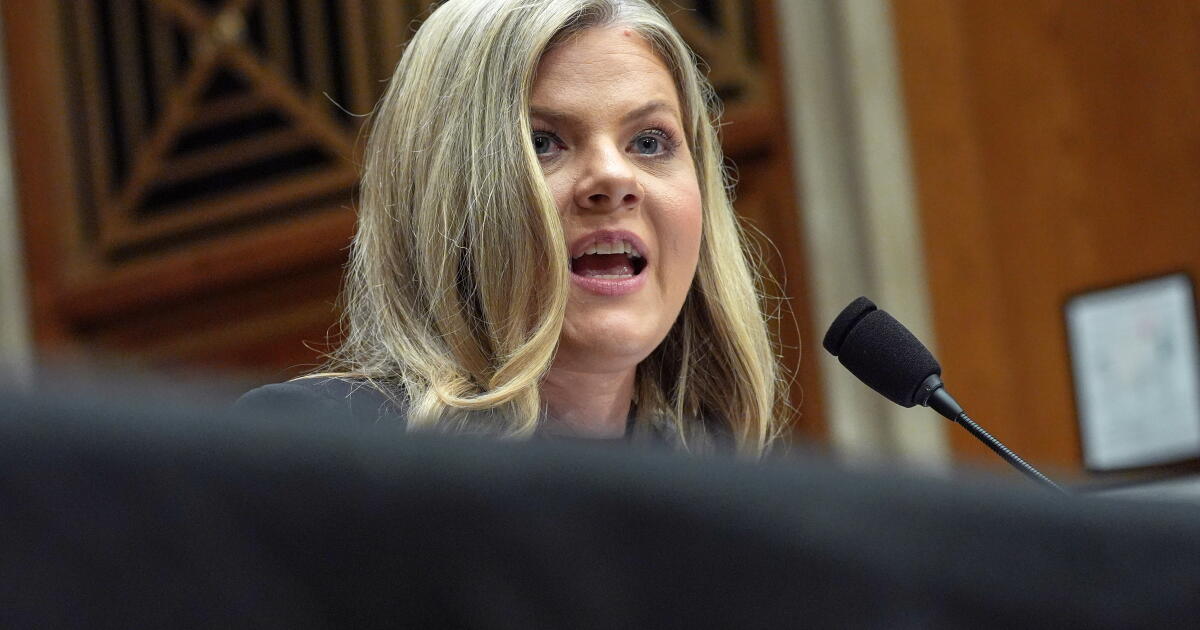
That appearance — and Raman’s social media posts on the issue — drew a testy response last week from Councilmember Traci Park, who represents the Palisades. Appearing on KFI’s The John Kobylt Show, Park said Raman never spoke with her one on one about the disaster or what her constituents needed in the aftermath.
Park said she had council members tour the burn area with her early on, to help them understand what would be required during the recovery. Although most of her colleagues took her up on that offer, Raman did not, Park said.
“The Palisades have been through enough,” Park said. “They don’t need politicians discovering their suffering, and the challenges they’re dealing with, only when it becomes politically useful.”
Raman, through a campaign spokesperson, said she did tour the Palisades both before and after launching her mayoral bid — and signed on to multiple council motions dealing with wildfire prevention and disaster recovery.
In a statement, Raman also offered praise for Park, saying she has “worked tirelessly to support the rebuilding of the Palisades.”
“As mayor, I’ll be the strongest partner to her and Palisades residents to help them rebuild and return home as quickly as possible,” Raman said.
Park remains the only council member who has not endorsed in the mayor’s race. Thirteen others are backing Bass.
Dueling controllers unite for Raman
Raman has picked up endorsements from something of a political odd couple: two city controllers who have not always had kind things to say about each other.
City Controller Kenneth Mejia, who recently won reelection, stood with Raman in Chinatown on Wednesday as she called for L.A.’s nonprofit homeless providers to be paid based on their success rates.
A day later, Raman appeared in the San Fernando Valley with former City Controller Laura Chick as the two spoke out against the city’s $2.6-billion upgrade of the Convention Center.
The back-to-back appearances brought back memories. Chick had tough words for Mejia back in 2022, calling him “unfit for public office.” She pointed to his tweets calling then-President Joe Biden a rapist and a racist, and his decision to pose for a photo with a poster of Hillary Clinton photoshopped to look like she was behind bars in an orange prison jumpsuit.
Mejia responded by blasting Chick, a former City Council member, as a career politician who recycled lies and “exaggerated attacks.”
Chick, who served as controller from 2001 to 2009, went after Mejia again this year, endorsing his opponent, real estate executive Zach Sokoloff, in the run-up to the June 2 primary. This time, she said Mejia was not producing enough reports to fulfill his office’s watchdog role.
In many ways, Chick was the Mejia of her day, railing against the status quo and turning a spotlight on the city’s shortcomings, drawing the ire of other elected officials.
So could the Raman campaign bring about a detente between the two?
Chick, in an interview, said she hasn’t spoken with Mejia but would gladly take his call. She said she wishes him well now that he has another four years in office.
“I think she’s trying to get us together,” Chick said, referring to Raman.
Chick said she’s hoping that Raman, as mayor, will receive “lots of vigorous audits” from the controller and then implement the findings.
“I yearned for a mayor, as city controller, that I could turn to and say, ‘Here. Here are the findings of my audit. Please do something about it.’ She’ll have that with Mejia,” Chick said.
We should point out that Bass has picked up support from at least two former city controllers: Rick Tuttle, who served from 1985 to 2001, and Wendy Greuel, a former city councilmember who succeeded Chick in 2009.
State of play
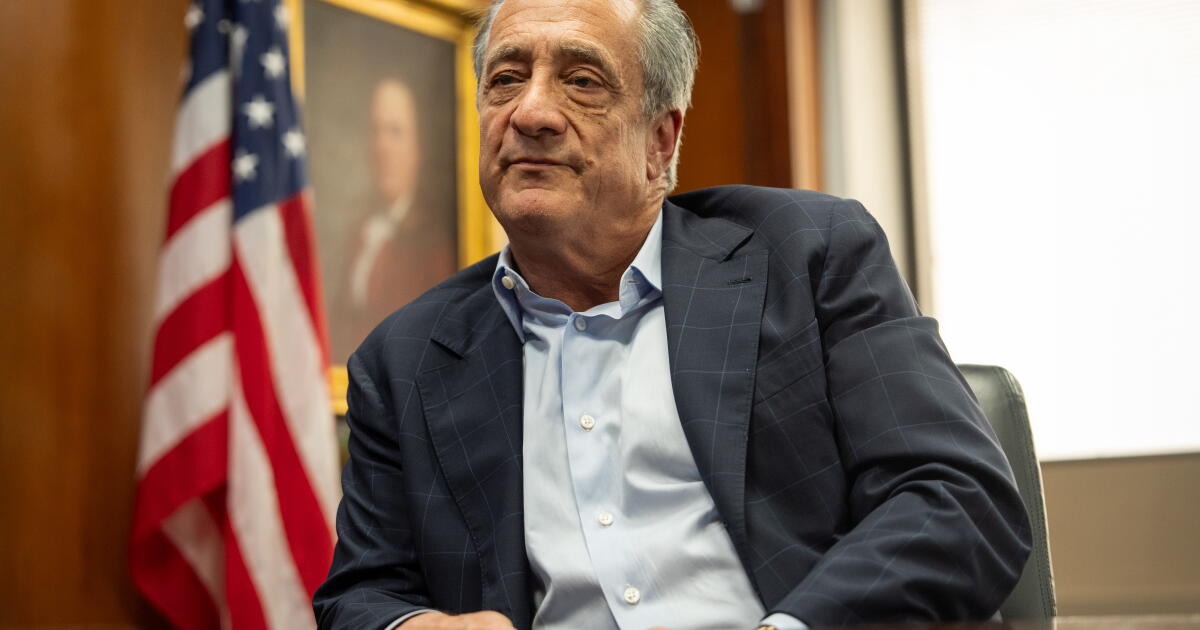
— STICKER SHOCK: A long-promised makeover of the Veteran Administration’s historic Building 13 in West L.A. will create 24 units of housing for homeless veterans, at an estimated cost of $1.25 million per apartment. “It must be one of the most unaffordable projects ever undertaken,” said Bobby Shriver, the former Santa Monica mayor.
— LINEAGE LAWSUIT: Lineage, whose cold storage warehouse recently burned down in Boyle Heights, leaving behind the stench of rotting meat, said in a new lawsuit that a company that operated a solar array on the building’s roof is to blame for the fire. Altus Power, the solar company, said it would fight the allegations in court.
— BOTHERED BY BUSES: Business owners in Eagle Rock are worried about a dedicated bus lane coming to Colorado Boulevard — and the potential impact on customer visits.
— SETTING A SCHEDULE: The City Council voted this week to draft legal language that would require fast-food restaurants to give employees notice of their work schedules at least two weeks in advance. The move would build on an existing city ordinance that currently applies to retail employees at large companies.
— BACKING A BILL: Hollywood film and TV post production workers stood with Bass and Assemblymember Nick Schultz (D-Burbank) on Thursday, urging Gov. Gavin Newsom to sign a bill that would create the state’s first standalone post-production tax incentive.
— LIFE AFTER PRATT: Bass or Raman for mayor? In Spencer Pratt’s Pacific Palisades, some say that’s no choice at all.
QUICK HITS
- Where is Inside Safe? The mayor’s signature program to address homelessness went to Skid Row, an area represented by Councilmember Ysabel Jurado.
- On the docket next week: A House subcommittee holds a hearing Tuesday to discuss waste and fraud in L.A. County’s homelessness response system — one that won’t be attended by Bass.
Stay in touch
That’s it for this week! Send your questions, comments and gossip to LAontheRecord@latimes.com. Did a friend forward you this email? Sign up here to get it in your inbox every Saturday morning.