The Gulf war is bringing Syria back onto the MENA business map.
Syria’s coast is gaining new strategic importance as investors look to build trade routes linking Gulf countries and Iraq to North Africa and the rest of the Mediterranean, and to avoid the Strait of Hormuz.
Traffic at Syrian ports has increased at least 25% since March 2026. According to recent data from Syria’s General Authority for Borders and Customs, 945 ships carrying 8 million tons of cargo have passed through the country’s ports in the first half of 2026.
In Tartus, Dubai-based logistics giant DP World has invested $800 million in a 30-year concession to develop and operate port facilities. Three harbor cranes delivered this summer are expected to boost cargo-handling capacity by 40% and allow larger vessels to dock.
“By investing in world-class infrastructure, technology and our people, we are creating a modern gateway that will strengthen supply chains, attract new trade opportunities and contribute to the country’s long-term economic recovery,” said Fahad al-Banna, CEO of DP World Tartus, in a press conference.
Further north, French shipping and logistics major CMA-CGM – whose founding Saadé family has roots on the Syrian coast – secured a similar $265 million contract to modernize and run maritime infrastructure in Latakia. In May, the group also signed to operatedry ports near Damascus and Aleppo, strengthening road and rail connections between Syria’s two largest cities and maritime hubs.
Infrastructure Construction Begins
New infrastructure is emerging to knit Syria’s coast into the wider region including airport renovations, pipelines, and data cables. In August, U.S. firm UNIFI signed a deal for 149-mile submarine cable connecting Cyprus and Tartous, helping data flow from the Gulf to Europe.
The projects are part of wider billion-dollar investment pledges across Syria, following the fall of former president Bashar al-Assad’s regime and the end of the 14-year civil war.
“The coast is shifting from a military geography to a commercial one” comments Benjamin Feve, senior consultant at Karam Shaar Advisory Limited. “Tartus was once the Russian naval foothold; today, it is a concession operated by global port operators”. In August, Moscow agreed to return all civilian infrastructure to the Syrian state and said its military bases will be turned into joint training centers.
Since he seized power in December 2024, President Ahmad al-Charaa has secured broad international support, notably from U.S. President Donald Trump who called him a “real leader.” Late August, Washington removed Syria from its list of state sponsors of terrorism, the latest in a series of measures unwinding decades of sanctions on Damascus.
On the ground, Gulf states are the biggest backers of Syrian reconstruction with billions of announced investments, but few projects have yet materialized, and many in Syria fear the momentum could slip away.
“High oil prices give Riyadh and Abu Dhabi greater budget flexibility, which is certainly an opportunity for Syria, but not necessarily a fundamental shift,” said Feve. “Gulf capitals are buying an option on Syria’s geography, but trade volumes are only about one-fifth of pre-2011 levels. So, while new activity is real, it remains weak and once the war is over, maybe the Strait of Hormuz will regain its role as a key transit route, and GCC countries will look away from Syria again”
Despite appearances of restored peace, the Syrian coast remains a tricky place to do business. In 2025, deadly clashes between the new government and allies of Assad killed nearly 1,500 people.
Countries including Germany, South Africa and Canada suggest international institution to set and enforce standards.
Twenty countries and the European Union have issued a call for international cooperation to ensure AI remains under human control, including the potential creation of a global oversight body to set and enforce standards.
The countries, including Germany, South Africa, Canada, Australia, the United Arab Emirates and Singapore, issued the joint statement on Monday as global leaders prepare to discuss the risks posed by rapidly advancing AI at the annual gathering of the United Nations General Assembly.
Recommended Stories
list of 4 itemsend of list
The declaration, released by the office of Finnish President Alexander Stubb, calls on governments and industry to act immediately to ensure that AI is developed in line with international law and remains under “human direction, oversight and control”.
“To realise AI’s potential, industry, governments and society must act now,” the statement says.
“We must address these risks and strengthen oversight – without widening the gap between countries in access to the benefits of AI.”
The declaration urges countries to develop and coordinate “common standards”, share reports of serious safety incidents, and explore the establishment of an international institution to “set standards, enable verification, and convene states when capability thresholds are crossed”.
Signatories include German Chancellor Friedrich Merz, Norwegian Prime Minister Jonas Gahr Store, European Commission President Ursula von der Leyen, Kenyan President William Ruto, Kazakh President Kassym-Jomart Tokayev and Turkish Foreign Minister Hakan Fidan.
The United States and China, the world’s two leading AI powers, did not join the statement, which remains “open for endorsement” by other countries.
US President Donald Trump and Chinese President Xi Jinping are expected to discuss AI when they meet at the White House on Thursday for their third face-to-face summit in less than a year.
Washington and Beijing, which are in a race to dominate cutting-edge technologies, have both rebuffed calls to slow down AI development to ensure greater safety.
Other AI players not among the signatories include India, South Korea, Japan, the UK and France.
The declaration comes as the AI sector is engaged in a heated debate about safety following calls for a slowdown in development by top industry leaders.
In an essay earlier this month, Anthropic CEO Dario Amodei called on firms to “slow the pace” of development to mitigate risks, a proposal that was swiftly endorsed by rivals including OpenAI CEO Sam Altman and SpaceX and Tesla CEO Elon Musk.
Amodei’s call followed a series of cases of AI models engaging in unsanctioned malign activity, including an incident in July in which AI agents being tested by OpenAI hacked the AI start-up Hugging Face.
In the latest intervention by industry on Monday, OpenAI said the US should lead an international effort to develop technical standards for advanced AI.
“The United States is well positioned to lead because its AI industry is at the technical frontier, and it still stands in a privileged global network position in critical areas such as finance, trade, defense, technology, and information systems,” the San Francisco-based AI giant said in a blog post.
“Leading now will determine whether the United States shapes the global AI framework or watches a fragmented, uneven, and conflict-ridden system take hold around it.”
The UN-backed Independent International Scientific Panel on AI, which examined the Hugging Face incident, on Monday also added its voice to calls for new guardrails, saying the cyberattack had exposed the “unravelling” of existing safeguards.
In this episode of On the Record, Al Jazeera’s James Bays sits down with United Nations Secretary-General Antonio Guterres, ahead of his final UN General Assembly before stepping down in December 2026. They discuss the situation in the Middle East and its global consequences, whether the UN is still relevant in addressing today’s challenges and why Guterres believes the UN Security Council must be reformed.
Former adversaries say they will settle differences as fears grow of expanding war in Ethiopia.
Published On 21 Sep 202621 Sep 2026
Seven Ethiopian armed groups have formed an alliance aimed at overthrowing the government of Prime Minister Abiy Ahmed.
The groups announced the alliance on Sunday, saying that they would work together to set up an inclusive transitional government.
Recommended Stories
list of 2 itemsend of list
“We have established a joint alliance called the Ethiopian Peoples’ Forces Alliance for Survival, known in short as the Alliance for Survival,” the groups said in a joint statement.
The alliance includes the Amhara Fano National Movement, a coalition of Fano factions that has fought federal forces in the Amhara region since 2023; the Tigray People’s Liberation Front (TPLF), which dominated Ethiopian politics for nearly three decades before Abiy took office; and the Oromo Liberation Army (OLA), which has fought federal forces in Oromia since 2018.
Four smaller groups – the Ogaden National Liberation Front (ONLF), the Afar Revolutionary Democratic Unity Front (Ugugumo), the Benishangul Peoples’ Liberation Movement and the Gumuz Peoples’ Democratic Movement – make up the rest.
Abiy Ahmed has served as Ethiopia’s prime minister since 2018, when he came to power promising sweeping reforms. [File: Reuters]
The groups’ leaders had been talking to form the alliance for about a year, a source close to Fano told Al Jazeera on Sunday.
The announcement comes weeks after clashes in the northern region of Tigray, one of the most serious breaches yet of a 2022 peace deal, deepened fears of a return to full-scale war.
Fighting has gripped parts of Oromia since 2018 and Amhara since 2023.
Abiy came to power in 2018 promising sweeping reforms. He freed journalists, activists and other political prisoners and revoked bans on many political parties after taking power.
But his opponents and human rights activists accuse his government of reversing those gains in recent years.
In the statement, the alliance accuses the government of imposing “dictatorial rule” that has pushed the country towards break-up.
It also says a transitional government guided by a charter would work to end the wars, protect rights and open a national dialogue.
Jaal Marroo, the OLA’s military leader, told a local broadcaster earlier this month that they had met several times before settling on the final announcement.
Zemene Kassie, the Fano leader, first publicly indicated that deals had been reached in an interview with the Swiss newspaper Le Temps, published on August 16.
The government has not publicly commented on Sunday’s announcement.
Fano fought alongside federal forces against Tigray’s fighters in the Tigray war of 2020 to 2022, which killed hundreds of thousands.
Amhara and Tigray also both claim Western Tigray, which Amhara nationalists have administered since the war ended.
Ethiopian academic Eyob Tilahun told Al Jazeera on Sunday that the competing groups had agreed to have a dialogue and form an alliance “in the best interests of the public”.
“Those allied forces believe that they all face a survival threat from the government,” Eyob said.
The 2022 peace agreement, signed in Pretoria, South Africa, ended the war between the federal government and Tigray’s forces but left disputes over disarmament and the TPLF’s legal status unresolved.
In mid-July, the TPLF declared the 2022 Pretoria peace deal “effectively dead”.
For a decade, the United Nations’s most visible role in the Sahel was its peacekeeping mission in Mali.
The United Nations Multidimensional Integrated Stabilization Mission in Mali (MINUSMA) was established by the Security Council in 2013. Its mandate was terminated in June 2023 at the request of Mali’s transitional government, and the mission completed its withdrawal by the end of that year.
But the end of MINUSMA did not end the UN’s engagement with the region.
Its political work continues through the UN Office for West Africa and the Sahel (UNOWAS), while the wider UN system remains involved in humanitarian and development work.
What has changed is the space in which that engagement takes place.
Burkina Faso, Mali and Niger formally left the Economic Community of West African States (ECOWAS) on January 29, 2025. The three countries have also deepened cooperation through the Alliance of Sahel States (AES), putting sovereignty and strategic autonomy at the centre of their political message.
The humanitarian pressures, meanwhile, have not eased.
Displacement, insecurity, food insecurity and other pressures continue to cross borders, even as governments increasingly insist on handling their security and political affairs on their own terms.
The question is what influence the UN can exercise after the departure of the peacekeeping force that once represented its most substantial presence in the region.
What does the UN’s presence look like now?
The UN’s role today is less about troops and more about diplomacy, mediation, humanitarian assistance and development.
UNOWAS is a special political mission rather than a peacekeeping operation. Its work includes preventive diplomacy, good offices, political mediation, conflict prevention and support for political dialogue.
“The influence the UN can actually exercise is narrow. The AES states have stripped away the mechanisms that once gave outside institutions leverage, leaving ECOWAS and the Rome Statute, and building their own confederation and joint force instead,” said Mubarak Aliyu, a political and security analyst in Nigeria.
In February 2026, the Security Council extended UNOWAS’s mandate until January 31, 2029, while requesting an independent strategic review of its mandate and activities, to be finalised by September 30, 2026.
The review comes as West Africa’s political landscape is being reshaped by military governments, new regional alliances and a stronger emphasis on sovereignty.
Russia has also become an important part of that changing security picture.
“What has actually shaped events this year is Russia’s Africa Corps, which helped Mali’s and Niger’s military governments survive shocks the UN was never positioned to influence, functioning mainly as regime protection rather than counterinsurgency,” Aliyu said.
UN continues its engagement in a Sahel where governments are placing greater emphasis on sovereignty and strategic autonomy [File: Timothy A Clary/AFP]
“Moscow’s leverage extends into the Security Council chamber too, since its veto shapes what collective action the Council can attempt on Mali in the first place.”
Kabir Adamu, founder and managing director of Beacon Security and Innovations Limited, an Abuja-based firm that provides security solutions in Nigeria, the Lake Chad Basin and the Sahel, said the UN should shift its approach away from large deployments of UN troops to diplomatic and towards diplomatic and development solutions.
“Looking ahead, the UN’s priorities in the Sahel should promote effective security sector governance and security sector reform. This will mean pivoting from traditional, large-scale peacekeeping to deep-rooted and core preventive strategies and diplomacy that addresses the root causes of fragility, conflict and violence, as well as instability,” Adamu said.
For the United Nations, diplomacy has become more important as governments turn to other security partnerships and regional arrangements.
How has sovereignty changed the political space?
Burkina Faso, Mali and Niger have made sovereignty and strategic autonomy central to their political outlook and built the AES as a framework for closer cooperation.
Their departure from ECOWAS has changed the regional architecture through which West African governments have traditionally dealt with political and security crises.
The UN still works with regional organisations, including ECOWAS and the African Union, but governments no longer share one political framework or the same approach to external engagement.
Consequently, for the UN, maintaining vital political channels has become potentially more difficult.
Adamu said the fragmented security architecture means the UN should seek to work with and through regional organisations and groups, rather than establishing its own large-scale forces.
“As national security structures remain weak and extractive, and regional security architecture fragments, marked by the rise of the Alliance of Sahel States and shifting ECOWAS dynamics, the UN should prioritise pragmatic, inclusive mediation to bridge divides between Sahelian and coastal states, while actively bolstering alternative, functioning frameworks like MNJTF [Multinational Joint Task] and the Accra Initiative,” he said.
Have the problems in the Sahel gone away?
The retreat of peacekeepers has not removed the pressures that brought international organisations into the region in the first place.
Displacement, armed violence, organised crime, food insecurity and climate pressures continue to overlap across the Sahel.
Climate change is perhaps not the root cause of the instability, but environmental and economic pressures can add to existing vulnerabilities, particularly where state institutions are weak and communities are already dealing with conflict and displacement.
For the UN, humanitarian work remains one of the areas where engagement can continue, even when governments reject large-scale military intervention.
Humanitarian work also places greater emphasis on local and regional capacity.
“Crucially, the UN must double down on the core UNISS pillars of governance, resilience, and security by integrating climate-peace initiatives and empowering local capacities, ensuring that international engagement remains flexible, locally owned, and focused on sustainable, multidimensional stability rather than solely militarised responses,” Adamu said.
While the UN cannot determine the security partnerships of sovereign governments or force political processes on authorities that reject them, it can still facilitate dialogue, support humanitarian operations and raise regional crises before the wider international community.
What does UNGA 81 mean for the Sahel?
The 81st session of the United Nations General Assembly opened on September 8, 2026, with its General Debate due to begin on September 22.
The UNGA meets with no UN peacekeeping mission in Mali and with Burkina Faso, Mali and Niger outside ECOWAS, while the AES has become a separate framework for their political and security cooperation.
“That leaves the UN closer to an advocate and service provider than a shaper of outcomes,” Aliyu said. “It can report, brief, fund aid operations and press for access, but it cannot compel it or offer the regime security that has made Russia indispensable to the military governments.”
Yet for the Sahel, insecurity, displacement, humanitarian needs and economic and climate pressures remain.
In the changed regional environment, the UN’s influence is more likely to come through diplomacy than force, through access rather than authority, and through regional relationships rather than a large international security presence.
The fourth China-Africa Peace and Security Forum was held in Beijing, China, from September 15 to 17, 2026, coinciding with the 13th Xiangshan Forum and the 70th anniversary of the establishment of diplomatic relations between China and African countries. Military representatives and defense officials from the African Union and 41 African nations participated. This expansion of bilateral military relations between Beijing and African countries comes at a time when Beijing and Washington are vying for influence on the African continent, while African nations seek to diversify their partners and strengthen their security capabilities, particularly in regions facing escalating threats, such as the Horn of Africa. The fourth China-Africa Peace and Security Forum, held in Beijing, represents a pivotal milestone reflecting the growing military and defense cooperation between China and 41 African countries, along with the African Union, as Beijing seeks to solidify its security presence on the African continent. The most prominent theme of the forum and defense cooperation was the speech by Chinese Defense Minister Admiral Dong Jun, who called for deepening strategic coordination and developing mechanisms for defense exchange and maritime security based on equality and mutual benefit, without political dictates or conditions, between China and African countries. This reflects the growing African interest in partnership with China, driven by a desire to diversify military options and avoid the pressures and conditions associated with Western and American partnerships. The China-Africa Peace and Security Forum witnessed the signing of bilateral memoranda of understanding to enhance military capabilities, training, and the exchange of expertise between China and some participating countries, such as Mauritania.
The fourth session of the China-Africa Peace and Security Forum, held in Beijing, China, witnessed a significant deepening of bilateral military cooperation between China and Africa. On the sidelines of the forum, the Islamic Republic of Mauritania and the People’s Republic of China signed two memoranda of understanding to strengthen and develop military cooperation between the two countries. This signing took place during a meeting between Mauritanian Defense Minister Hanan Ould Sidi and his Chinese counterpart, Admiral Dong Jun. The most prominent areas of the memoranda of understanding included strengthening military and security capabilities to address challenges in the Sahel region and Africa, particularly combating terrorism and organized crime. They also focused on military education and training for African military personnel and the exchange of expertise, intelligence, and security experiences between the two sides. This move is part of a broader Chinese strategy to enhance defense partnerships with African countries (with representatives from 41 nations participating), emphasizing joint military training and coordination.
In this context, cooperation between the Chinese People’s Liberation Army and African armies is steadily increasing, encompassing training, counter-terrorism exercises, and peacekeeping operations. The most prominent forms and areas of military cooperation between China and Africa include joint military exercises, where the Chinese army conducts joint drills with African countries, such as the Peace Unit exercises with Tanzania and Mozambique to combat terrorism on land and at sea. This cooperation also encompasses peacekeeping and assistance efforts, with China participating in numerous UN peacekeeping missions in Africa and deploying warships to combat piracy off the coast of Somalia. Simultaneously, there is an increase in military education and training programs, with Chinese military academies hosting African leaders, defense ministers, and officers to enhance professional exchanges and build long-term strategic relationships. To this end, China regularly organizes the China-Africa Peace and Security Forum to strengthen defense coordination and consultation with various countries on the continent. The objectives of the Chinese military presence in Africa include modernizing African military expertise, providing the People’s Liberation Army with field operational experience in diverse and complex security environments, and protecting Chinese interests and securing massive Chinese investments and economic projects related to the Belt and Road Initiative. With increasing practical cooperation between China and Africa, Beijing is bolstering its diplomatic and strategic influence on the African continent in the face of international competition with Washington.
China’s military presence in Africa can be summarized as achieving three major strategic objectives, such as modernizing African military expertise, providing the Chinese People’s Liberation Army with field experience, and protecting the substantial investment interests of China’s Belt and Road Initiative. These three objectives and their shared benefits can be detailed as follows:
Stay ahead of the geopolitical week.
MD Briefing delivers expert analysis across five global fronts — the Indo-Pacific, energy, geoeconomics, European security, and the Middle East — every Monday morning. Free.
1) Modernizing African Military Expertise:
China seeks to present itself as a reliable and alternative security partner for African countries through various modernization mechanisms, including:
– Technology Transfer and Training: By providing advanced training programs for African officers at Chinese military academies and transferring modern tactical and operational knowledge.
– Defense Infrastructure Development: By contributing to the construction of bases, logistics centers, and training facilities for African armies.
– Arms and Equipment Sales: By supplying African countries with modern weapons systems at competitive prices, such as drones, armored vehicles, and communication systems, thereby enhancing the combat effectiveness of these armies.
– Counterterrorism and Counter-Piracy: By building joint capabilities between the Chinese People’s Liberation Army (PLA) and local African armies to counter unconventional security threats in conflict zones and maritime piracy areas, such as the Gulf of Aden.
2) Gaining Field Operational Experience for the PLA
The diverse and complex African security environment represents an important real-world testing ground for the Chinese military, which lacks modern field combat experience outside its borders. This benefit is achieved through:
– Testing Chinese weapons, military equipment, and armaments: By experiencing the effectiveness and quality of Chinese weapons and military equipment in harsh climatic and geographical environments (desert, tropical).
– Remote Operations Management: Developing the ability to command and control forces across vast geographical distances and testing the effectiveness of cross-border supply and logistics.
– Participation in peacekeeping forces: China’s extensive involvement in UN peacekeeping missions in Africa, such as in Mali, South Sudan, and the Central African Republic, provides Chinese officers with experience interacting with international militaries and managing complex security crises.
– Naval and operational presence: Utilizing the Chinese military base in Djibouti as a launchpad for evacuation operations, counter-piracy efforts, and protecting shipping lanes enhances the flexibility of the Chinese navy.
3) Protecting interests and securing investments under China’s Belt and Road Initiative
Africa is a key pillar of China’s Belt and Road Initiative, and the military role in protecting these massive Chinese investments is complemented by:
– Securing critical infrastructure: Protecting ports, railways, mines, and energy fields financed and operated by Chinese companies against any political instability or terrorist attacks.
– Securing Maritime Routes: Ensuring the safety of vital maritime trade routes for transporting raw materials from Africa to China and Chinese goods to global markets via the Red Sea and the Bab el-Mandeb Strait.
– Protecting Chinese Communities: Providing security and rapid intervention capabilities to evacuate thousands of Chinese workers and citizens from African conflict zones when necessary.
From the preceding presentation and analysis, we understand the importance of the China-Africa Peace and Security Forum in strengthening defense exchange mechanisms, defining and deepening regional cooperation in maritime security, combating terrorism and extremism, and building defense capabilities in emerging areas to address escalating security risks on the African continent, such as the Sahel region. The Forum provides an opportunity to enhance consultation and exchange views between China and African countries on various peace and security issues and to develop prospects for cooperation between China and African countries in related fields. China-Africa cooperation encompasses military training, naval exercises and patrols, counter-terrorism, mine clearance, and securing shipping lanes, as well as the transfer of expertise and technology and the marketing of Chinese weapons.
Morocco’s Justice and Development Party (PJD) went from a decade of being the main political beneficiary of the country’s post-2011 reforms to suffering a dramatic electoral defeat in 2021.
The party won 107 of the 395 seats in Parliament in the November 2011 election, after protests that year called for political reform, greater accountability and a more responsive government. Its leader, Abdelilah Benkirane, became head of government.
Morocco’s 2011 constitutional changes expanded the formal powers of Parliament and government while retaining significant authority for the monarchy. The king appoints the head of government from the party that comes first in the House of Representatives, while he chairs the Council of Ministers, where strategic orientations of state policy are considered.
In the 2016 election, the PJD increased its seats to 125, but Benkirane spent months unable to form a governing coalition. In March 2017, King Mohammed VI ended his mandate and appointed Saadeddine Othmani to replace him. The PJD remained in government until its electoral collapse four years later.
In the September 2021 election, the party fell from 125 seats to just 13, losing 112. The National Rally of Independents (RNI) won 102 seats and became the largest party.
How much of the comeback rests on Benkirane?
Benkirane’s return raises another question: How much of the PJD’s comeback is being built around him?
A recent Al Jazeera Studies analysis describes Benkirane as a political “brand” whose long public career, media presence and direct communication style have created a personal profile that can function as electoral capital for the party.
It examines whether his visibility and personal appeal can help the PJD rebuild after its 2021 collapse.
Benkirane remains one of Morocco’s most recognisable political figures. But his return does not by itself show that the PJD has rebuilt its support.
The party lost 112 seats in 2021; its task now is to turn the attention generated by its leader into support for the party itself.
A broader programme
The PJD’s 2026 programme contains 467 measures across five broad areas: identity and family; political and institutional reform; public services and social protection; the economy and employment; and foreign policy.
It calls for greater transparency in public procurement, rules addressing conflicts of interest and illicit enrichment, and improvements to public services. It also highlights housing, social protection, food, water and energy sovereignty.
Its programme foregrounds practical issues such as prices, jobs, schools, hospitals and corruption.
The PJD is campaigning on public services, jobs, purchasing power and political reform as it seeks to rebuild after its 2021 electoral collapse [Abdel Majid Bziouat/AFP]
Saad al-Sabahi, 38, who works with the PJD’s regional secretariat in Casablanca-Settat, said the programme was developed through studies, consultation meetings and proposals submitted through an online platform.
“These commitments cover a range of sectors and areas affecting the lives of the Moroccan people,” he told Al Jazeera, pointing to political participation, fighting corruption, public education, healthcare, employment and economic sovereignty.
“These commitments, among others, form the basis of the agreement between the party and voters. We will work to fulfil and implement them with integrity and competence,” al-Sabahi said.
What changed after 2021?
The PJD says one of its main lessons from the 2021 defeat has been the need to reorganise internally and examine more critically its years in government.
“The party was able to overcome its crisis following its extraordinary and regular congresses, and after Secretary-General Abdelilah Benkirane took over the leadership,” al-Sabahi said. “The party also reorganised its internal affairs through communication and the renewal of its structures.”
The party’s own assessment of the 2021 defeat includes criticism of its political and organisational choices. It has also accused unnamed actors of undermining democratic choice and pointed to what it describes as electoral corruption and disinformation.
Those are the PJD’s explanations for the result, rather than independently established findings. But the scale of its losses forced the party to confront how far its record in government had separated it from parts of its former support base.
That matters particularly when it comes to younger voters.
Imane Traifi, 37, of the PJD Youth, said the party needed to create sustained opportunities for young people to take part in political life rather than treating them simply as voters during election campaigns.
“We are keen to ensure that young people move from being recipients to becoming participants, initiators and people who take on responsibility,” she told Al Jazeera.
The ghosts and crocodiles
However, a question for any future PJD government is not only what it would seek to change, but what it could change once in office.
Benkirane repeatedly referred to “ghosts and crocodiles” as a metaphor for powerful or hidden interests that he said had obstructed his government when it was in power.
The clearest example is the party’s position on Israel.
The PJD has campaigned against Morocco’s normalisation with Israel and continues to support the Palestinian cause. Its 2026 programme explicitly calls for opposition to normalisation. Yet Morocco restored diplomatic ties with Israel in 2020 while the PJD was in government and Saadeddine Othmani was head of government.
The PJD opposed the move, while Othmani later defended it as a state decision and said Morocco’s support for the Palestinian cause remained unchanged. The agreement went ahead in December 2020 as part of a US-brokered deal that included Washington’s recognition of Moroccan sovereignty over Western Sahara.
Six years later, the relationship has moved further. On September 16, Morocco and Israel agreed to elevate their diplomatic missions to embassy level and appoint ambassadors, while also expanding air travel and advancing economic and trade agreements.
The PJD reaffirmed its opposition to normalisation and cooperation with Israel the following day, describing its position as longstanding.
But it also leaves a question for the party’s return: If such forces were powerful enough to constrain the government then, what has changed?
Has the PJD developed a different understanding of the limits of government authority or will it find itself once again beset by “ghosts and crocodiles”?
The limits of government power
The PJD has made clear on several occasions that the change it seeks is from within Morocco’s existing political and constitutional system, rather than a challenge to the monarchy itself.
Benkirane has repeatedly reaffirmed his support for the monarchy while arguing that elected institutions should play their role in governing and improving the country.
That distinction is important to understanding the PJD’s return. Its opposition to policies such as normalisation with Israel sits alongside its acceptance of a constitutional and political framework in which the monarchy retains a central role in strategic state decisions.
Under the constitution, the king chairs the Council of Ministers, which considers the strategic orientations of state policy.
That applies not only to Israel but to other areas where major policy decisions remain closely tied to the monarchy.
For the PJD, rebuilding means more than recovering the seats it lost in 2021. It means showing what it learned from a decade in government, what it can deliver and how it would avoid the political costs of its collapse.
Al-Sabahi said the party wanted to regain what he described as the gains citizens had previously enjoyed.
“We will work to restore the gains that citizens previously enjoyed and to restore their dignity and rights,” he told Al Jazeera.
Yassine Elachiri, a member of the National Bureau of PJD Youth and the party’s National Council, said the relationship with younger Moroccans had to be built over time rather than during campaigns.
“Earning the trust of a new generation of young people cannot be reduced to electoral mobilisation or short-term campaigns in the run-up to voting day,” he said. “Rather, it is a cumulative process built on sustained engagement, guidance, training and creating opportunities for young people to participate actively in public affairs.”
“Our goal is not simply to reach young people at the moment of an election, but to build a lasting relationship with them based on trust, training and active participation,” Elachiri said.
DR Congo is rolling out vaccine trials for health workers at the centre of the country’s Ebola crisis. Health officials hope the Ervebo vaccine, used in previous outbreaks, will be effective against the current strain.
50,000 frontline staff to receive a jab for a different Ebola strain, with 20,000 enrolled in a one-year clinical trial.
Published On 20 Sep 202620 Sep 2026
Health workers in parts of the Democratic Republic of the Congo (DRC) have begun to receive a vaccine that many hope will provide a level of protection against the Ebola virus.
The vaccine rollout started on Saturday in Bunia, the capital of Ituri province in the northeastern DRC. Ituri is the epicentre of the fastest-growing outbreak of Ebola in history.
Recommended Stories
list of 3 itemsend of list
The provincial governor, Major-General Gaby Kasongo Mulumba, said health workers there “are particularly exposed and deeply involved in the response”.
The operation, backed by the World Health Organization and Doctors Without Borders, known by its French initials MSF, will also target North Kivu, where cases have been rising sharply, health authorities said.
Some 50,000 health and other frontline workers will be injected with the Ervebo vaccine, which was developed for use against the more common Zaire strain.
Its effectiveness against the current Ebola strain caused by the Bundibugyo virus will be monitored in 20,000 recipients for up to one year.
Clinical trials are ongoing to find a licensed vaccine for the latest outbreak, which has no licensed vaccine or proven treatment.
“We don’t know to what degree it might be effective against the Bundibugyo strain,” Steve Ahuka, a Congolese official who is part of the health task force against the Ebola outbreak, said.
Dr Jeannot Elua said at a health facility in Bunia the vaccine was “beneficial”.
“We healthcare workers don’t really have a choice. We are going to receive it,” he told the Associated Press news agency. “Some people here had already received the previous vaccine. I received it myself, because it was mandatory.”
WHO experts have said that early data on the Ervebo vaccine, notably from animal trials, suggested it could offer some protection in the current outbreak.
The virus has killed at least 3,639 and infected some 7,541 people since May. Some 1,823 people have recovered, according to the latest figures from local authorities.
Workers at the Ceca-20 cemetery in Mongbwalu, Ituri province, Democratic Republic of the Congo, on July 14, 2026, as aid agencies intensify efforts to contain an Ebola outbreak caused by the Bundibugyo virus [File: Gradel Muyisa Mumbere/Reuters]
The WHO said in August that 70,000 doses of Ervebo were approved for use in the DRC.
The vaccine is being used under a compassionate-use programme, which allows a medical product to be used in a serious disease situation even though it has not been specifically approved for that particular use.
While WHO officials have cited “encouraging signs” that transmission may be slowing, MSF warned on Friday that there is no clear evidence the epidemic is coming under control.
More than 2,700 Yemenis have fled to Djibouti, many making dangerous sea crossings to escape the conflict. Al Jazeera’s Hasan Razzaq spoke with some of those who have arrived in the northern town of Obock, where they are seeking shelter and assistance.
This year, AGRA, the donor-funded agricultural development initiative formerly known as the Alliance for a Green Revolution in Africa, is celebrating its 20th anniversary.
AGRA’s slogan is “sustainably growing Africa’s food systems”, but for years, researchers and farmers have warned that the policies it promotes are having a negative impact on African agriculture.
Our new research provides more evidence to that effect. We have documented how AGRA’s Green Revolution, with its well-funded promotion of commercial seeds, fertilisers and other inputs, has failed to spur the “productivity revolution” promised by its founders.
Worse still, its promotion of monocultures, such as maize, has led to the massive expansion of land dedicated to them. At the same time, more resilient and nutritious local crops, such as millet, are losing ground.
Funding the loss of traditional crops
Hunger continues to increase in Africa, driven by climate change, desertification, conflict and disruptions to international supply lines from international conflicts like the Ukraine war. The Green Revolution promoted by AGRA does not seem to have made much of a difference.
In countries where AGRA has had significant presence, the number of undernourished people has increased by about 60 percent – roughly the same rate as the rest of the continent.
The United Nations is calling for greater attention to “affordable healthy diets”. For Africa’s small-scale farmers, who grow what their families and communities eat, that means more, not less, crop diversity, which is the opposite of what the Green Revolution has produced.
In countries that have participated in AGRA projects, crops such as maize are promoted and funded with billions of dollars in subsidies and investment. Despite that, yields for maize have grown only modestly, just 40 percent over 18 years, well below the 100 percent improvement promised by AGRA.
Some countries, like Malawi and Ethiopia, have seen stronger yield growth for maize, but some, such as Kenya – where AGRA’s headquarters are located – have seen yields decline.
Maize production has soared across participant countries, driven mainly by the massive expansion of plantings as subsidies drive farmers to plant maize on new land.
In contrast, our research shows that traditional African staples such as sorghum, cassava, and groundnuts have lost land and investment. Since AGRA was launched in 2006, 13 countries that have participated have seen a decline in productivity of 21 percent for cassava and 10 percent for groundnuts in total.
But millet – a climate-resilient, nutritious grain – is the crop that has suffered the most. Before 2006, millet was as prevalent as maize in these countries. Since 2006, millet production has fallen 27 percent, while maize production has more than doubled. Millet yields have fallen 17 percent with the lack of investment. And as land allocated to maize production increased 71 percent, land for millet fell 12 percent.
Millet is not some backward crop waiting to be replaced by maize. For generations, it has fed communities across some of Africa’s driest regions. It can withstand heat and drought, grow with relatively few external inputs, and provide nutritious food where other crops struggle.
In 2023, the UN Food and Agriculture Organization (FAO) celebrated the “Year of Millets”, highlighting the multiple benefits of the crop to the environment and social welfare.
The same is true of many of Africa’s traditional crops – sorghum, fonio, cowpeas, cassava, indigenous vegetables and many others. They are part of the biological diversity of African farming, but also of our cuisines, knowledge and cultures.
At a time of climate change, pushing such crops aside makes particularly little sense. Farmers need more options in their fields, not fewer. A diverse farm spreads risk: when one crop suffers from drought, pests or disease, another may survive. Rotation and diversity of crops help keep soils more fertile.
Valuing diversity
Rhetorically, AGRA now professes to value the very crops that its Green Revolution helped push to the margins. It speaks of diverse, nutritious and climate-adapted crops, and its seed programmes include millet, sorghum, cowpea, groundnut and others.
We welcome serious investment in these crops. It is overdue. But there is no indication that AGRA and other Green Revolution proponents will abandon their chosen monocrops, such as maize. AGRA’s current seed strategy still emphasises improved varieties, certified seeds, faster variety turnover, commercialisation and market-oriented seed systems.
Investment needs to support farmers’ rights to save, use, exchange and develop their seeds, protect crop diversity and indigenous knowledge, and ensure that farmers and communities – not seed markets alone – determine which varieties survive and spread.
African farmers do not need saving, but their crops – millet, sorghum, cowpea, fonio, and other traditional crops need to be rescued from Green Revolution crop-breeders.
When a traditional crop disappears from farmers’ fields, we can lose locally adapted seed varieties, knowledge about how to grow and prepare them and foods that are central to local diets and identities.
This is why the decline of millet should concern us far beyond the millet field. Africa is already dangerously exposed to climate shocks and volatile international food and fertiliser markets. Diversity is one of our greatest protections against those risks. Yet we are subsidising its disappearance.
It is not enough for the UN to call for greater access for all to nutritious diets. For the majority of Africa’s rural populations, who are also among its least food-secure, crop diversity is key to diet diversity. It is time for AGRA, the African Development Bank, foreign donors and African governments to stop subsidising and promoting the crops that are driving the loss of such diversity.
The views expressed in this article are the authors’ own and do not necessarily reflect Al Jazeera’s editorial stance.
Hundreds of people gathered at the University of Cape Town on Friday at a vigil for victims of femicide in South Africa. Anger is rising across the country as the bodies of nine women have been found near Johannesburg in just two months.
US judges affirm migrants must have opportunities to voice safety concerns before deportation to unfamiliar nations.
Published On 19 Sep 202619 Sep 2026
A US federal appeals court has rejected the Trump administration’s policy of rapidly deporting migrants to countries other than their own – a ruling that could next go before the Supreme Court.
On Friday, a three-judge panel of the 1st US Circuit Court of Appeals in Boston largely upheld a February decision that found the Department of Homeland Security’s so-called third-country removal policy unlawful.
Recommended Stories
list of 3 itemsend of list
The case stems from a class-action lawsuit testing what due process migrants are owed before being sent to nations with which they have no ties.
Writing for the panel, US Circuit Judge Seth Aframe said migrants must be given a “meaningful” chance to raise safety concerns before removal, rejecting the Trump administration’s narrower reading of the law.
The court did overturn part of the ruling on procedural grounds, concerning whether officials must first try deporting migrants to countries they have ties to.
Trina Realmuto, a lawyer for the plaintiffs at the National Immigration Litigation Alliance, said the decision confirmed that “due process and the protections Congress enacted against persecution and torture cannot be circumvented by putting someone on a plane to a country that was never part of their removal proceedings”.
The DHS did not immediately comment. The Trump administration is expected to appeal the ruling.
Under Trump, the US has struck agreements allowing it to send more than 25,000 migrants to at least 29 third countries, most often Mexico, according to Third Country Deportation Watch, a tracker run by the rights groups Refugees International and Human Rights First.
The policy, adopted in March 2025, allowed removals with only minimal notice if officials had diplomatic assurances against persecution.
The controversial programme has reached the Supreme Court twice.
In 2025, the justices cleared the way for eight men, including nationals of Cuba, Myanmar and Vietnam, to be deported to South Sudan, a country the US State Department advises against visiting because of “crime, kidnapping, and armed conflict”.
The DHS called the removals “a win”, while rights groups said they flouted basic protections.
The Trump administration’s immigration agenda has faced a string of setbacks this month.
A federal judge blocked planned caps on student and journalist visas, calling the government’s justification “exceptionally weak”, while a coalition of 22 states and Washington, DC, sued to stop a separate rule that would let officials deny green cards to immigrants who lawfully use public benefits.
United Nations says 22 million people need humanitarian aid as conflict intensifies.
Published On 18 Sep 202618 Sep 2026
More than 112,000 people have been displaced in Yemen and close to 3,000 have fled the conflict to Djibouti, according to the United Nations, as fighting intensifies between the Iran-allied Houthis and Saudi-backed forces loyal to the internationally recognised government.
“Our resources are very, very, very limited and our stocks will be depleted very soon,” Abdusattor Esoev, mission chief in Yemen for the International Organization for Migration, told reporters on Friday.
Recommended Stories
list of 3 itemsend of list
Most of the more than 112,000 internally displaced people have been displaced over the last two weeks, mainly along the west coast and in the provinces of Taiz and Lahj, he added.
The displacement began when the Houthis made a rapid advance, seizing control of the entire Red Sea coast of Yemen to tighten their grip on the vital shipping route, the Bab al-Mandeb Strait.
Esoev estimates 22 million Yemenis – or nearly half the population – are in urgent need of humanitarian aid.
More than 65,000 registered refugees and asylum seekers in Yemen, mainly from Somalia and Ethiopia, are also threatened.
3,000 Yemenis flee to Djibouti
The crisis is growing “by the hour”, warned Francesco Galtieri, a representative for the UN Population Fund (UNFPA), adding that thousands of women who have lost all their possessions are on the run with their children.
Galtieri estimates that 2,000 pregnant women are among the displaced and around 200 are expected to give birth shortly.
Around 3,000 Yemenis have fled Yemen by boat to Djibouti, the UN refugee agency said. The shortest route across the Bab al-Mandeb Strait is just over 25 kilometres.
The UNHCR reports that more than 2,400 people made the voyage in the past week – mostly women, children and older people.
The influx is adding pressure on Djibouti and population of about one million people. It already hosts around 36,000 refugees, most from Somalia and Ethiopia, said UNHCR representative Sandrine Desamours.
“While the number may sound small,” it must be seen in proportion to the population, she added.
The strategically important Bab al-Mandeb links the Red Sea with the Gulf of Aden and has become an alternative shipping route as the United States’ war against Iran choked the Strait of Hormuz.
The Al-Farsi camp for internally displaced people in Ras Imran in southern Yemen, September 17, 2026 [Mohamad Hakim/AFP]
Italy’s defence minister warns of severe economic fallout if Bab al-Mandeb becomes impassable, bypassing EU delays.
Published On 18 Sep 202618 Sep 2026
Italy will deploy warships to ensure safe passage for its commercial vessels through the Bab al-Mandeb strait, Defence Minister Guido Crosetto said, adding that Rome would not wait for a joint decision from the European Union.
“We have the capabilities to protect the passage,” Crosetto said, warning that if the waterway became impassable, the economic consequences would be severe.
Recommended Stories
list of 3 itemsend of list
The Italian defence minister said that Rome “must not allow bureaucratic delays in decision-making to exacerbate an already complex situation”.
Bab al-Mandeb links the Red Sea to the Gulf of Aden, forming one of the world’s busiest shipping corridors between Europe and Asia and a critical route for oil, gas and container traffic heading to and from the Suez Canal.
Roughly 12 to 15 percent of global trade has historically passed through the narrow waterway, which separates Yemen from Djibouti and Eritrea on the African side and is only about 30km (19 miles) wide at its narrowest point.
The strait’s importance has grown sharply since Iran effectively seized control of the Strait of Hormuz earlier this year amid its war with the United States and Israel, choking off the world’s most important oil chokepoint and pushing much of the Gulf’s crude exports towards alternative routes.
Saudi Arabia, in particular, has increasingly relied on pipelines and Red Sea shipping to bypass Hormuz altogether, making the Bab al-Mandeb strait one of the last major arteries still open to Gulf oil reaching global markets.
Control of the strait has been contested for years, as Yemen’s government, Houthi rebels and, at times, forces in the region have held stretches of its coastline at different points since the war in Yemen began in 2015.
The significance of the strait has been hit dramatically in the past few weeks, when the Iran-backed Houthi movement launched a rapid offensive that brought the entirety of Yemen’s western Red Sea coast under its control, including several strategically located islands.
The advance has given the Houthis effectively unrestricted access to the waterway, a development seen as a major setback for international shipping, given the group’s history of attacking vessels it associates with the US or its allies in the region.
The US and the European Union have already carried out military operations aimed at better protecting merchant ships from Houthi attacks in the area, though those efforts have struggled to fully secure the route as fighting in Yemen has escalated.
Recurring floods disrupt daily life in Tunis, raising questions about drainage, transport and flood preparedness.
Published On 18 Sep 202618 Sep 2026
Tunis, Tunisia – Heavy rain brought parts of Tunisia’s capital to a standstill on Thursday, flooding roads and homes, trapping people in cars and disrupting electricity and internet services.
Home to nearly three million people, the Greater Tunis region has faced repeated flooding in recent years. Thursday’s flooding came only months after severe January rains caused widespread disruption across the capital and other parts of the country, leaving several people dead and causing significant damage.
Weather warnings had been issued in advance, but the decision to suspend classes in Tunis was announced only shortly before it took effect. Parents rushed to schools to collect their children as the rain intensified and traffic backed up across the capital.
Videos shared online showed flooded streets, cars stranded in rising water and what appeared to be power lines catching fire. Residents also reported power and internet cuts and water entering homes.
‘The road became almost unrecognisable’
Fatma, a 35-year-old employee in Tunis, said the situation deteriorated quickly as she struggled to get home safely.
“At about 4pm, the road became almost unrecognisable. The tunnel leading to Bab Saadoun was completely closed because of the rain,” she told Al Jazeera.
“Most people were stranded by the roadside for hours, waiting for public transport that never came. I saw three cars that filled with water and broke down, and people carrying their children on their shoulders.”
“Every season, the same thing happens. Roads close and traffic comes to a complete standstill. All the drains start overflowing with waste,” she said.
The National Institute of Meteorology had warned of locally heavy thunderstorms on Thursday, including heavy rain over short periods that could cause flooding, disrupt traffic and overwhelm drainage networks. It also warned of potential power cuts.
Residents question flood preparedness
“Tunisia has become used to these disasters. Every year, we end up flooded even when there is little rain,” said Intissar, 33, from the Lafayette area of Tunis.
She blamed local authorities for failing to carry out preventive work before the rainy season.
“This is work that should have been done during the summer,” she said.
But she also acknowledged the role of residents.
“We cannot deny the responsibility of citizens who dump waste that blocks drainage channels,” she said.
At a government meeting in August, officials called for drainage networks and waterways to be cleaned and flood-protection work to be accelerated. The government said 29 flood-protection projects were under way across the country.
The flooding comes as Tunisia prepares for a national march in Tunis on Saturday, with organisers calling for the release of four activists detained in connection with the Al-Soumoud Flotilla. The march is scheduled for 5pm, as rain is forecast to continue through Saturday.
A struggle to get home
Fatma said the lack of reliable public transport, combined with repeated flooding, was making it increasingly difficult for people to manage without cars.
“The problem makes people look for their own solutions. That is why most people are trying to find a way to buy a car, because it has become difficult to live without one with these recurring problems,” she said.
The flooding also came as students returned to schools and universities this week, adding pressure to roads and public transport.
For Fatma, the disruption is becoming a familiar pattern.
“This shows that the state has no vision. It is caught off-guard just like citizens are,” she said.
CAPE TOWN, South Africa — The Trump administration has announced that it will impose travel bans on officials it claims are responsible for discrimination against whites and other minority groups in South Africa.
U.S. Secretary of State Marco Rubio said Tuesday he would revoke U.S. visas or reject visa applications from foreign nationals found to be responsible for, or complicit in, enacting or enforcing laws and policies that allow for uncompensated land seizures, race-based discrimination and the incitement of violence against minority ethnic and racial groups in South Africa.
“The United States will not allow such behavior to go unchecked,” Rubio said in a statement. “These actions directly undermine peace, economic stability, and the rule of law, and they are incompatible with the pillars of America’s foreign policy.”
The South African government has strongly rejected U.S. allegations of discrimination against whites, calling the claims made by the administration since President Trump returned to office last year baseless and a result of misinformation.
It’s the latest U.S. move to sanction South Africa
Rubio did not identify any officials who would be targeted with the travel restrictions, though a lobby group for minority whites in South Africa has previously called for the U.S. to sanction officials of the African National Congress party, the party of South African President Cyril Ramaphosa and the largest in South Africa’s Parliament.
It’s the latest move by the Trump administration to sanction South Africa over its claims that whites, and especially the Afrikaner group, are being discriminated against by their Black-led government. Afrikaners are descended from mainly Dutch and French colonial settlers who first came to South Africa in the 17th century. They were at the heart of South Africa’s previous apartheid system of racial segregation.
There are approximately 4.5 million white people in South Africa’s population of 62 million, which also includes whites with British or other heritage.
The Trump administration casts South Africa as anti-white
The U.S. has cited a contentious South African law that allows for the expropriation of unused private land without compensation in some circumstances, affirmative action policies that advance opportunities for Blacks and others, and a small number of violent crimes against white farmers as evidence of a larger anti-white stance in South Africa.
The Trump administration has also strongly criticized South Africa’s move to accuse U.S. ally Israel of genocide against Palestinians in Gaza, in a highly emotive case at the United Nations’ top court. Israel vehemently denies that allegation.
South Africa asks the U.S. to respect its sovereignty
South African Foreign Minister Ronald Lamola said Wednesday that some of the domestic policies that the U.S. had branded as discriminatory were designed to address the injustices of apartheid and hundreds of years of colonial rule before that, when Black people were stripped of their rights.
“South Africa respects that the United States may hold differing views on certain policy measures and their implementation. … The people of South Africa likewise respect the right of the American people to develop legislation that addresses their own circumstances,” Lamola said in a statement. “We expect that the same respect will be accorded to the people of South Africa, as the principle of sovereignty requires.”
The U.S. says more sanctions will follow
The U.S. has enforced a series of other sanctions against South Africa during Trump’s second term for purported anti-white and anti-American policies. They include barring South African officials from meetings of the Group of 20 economic bloc this year in the U.S., and phasing out aid for South Africa’s HIV treatment program.
The U.S. has also launched a refugee program for Afrikaners and other whites, claiming baselessly that they are victims of a humanitarian emergency in South Africa.
The U.S. says the sanctions are because South Africa has not changed its policies, and warned of more to follow.
“This visa restriction policy is only the first step in a series of escalatory measures that will show America’s firm resolve in this matter,” the official U.S. Ambassador to South Africa account posted on X, referring to Rubio’s visa announcement.
Imray writes for the Associated Press. AP writer Matthew Lee in Washington contributed to this report.
Gulf investment is rising, but Africa needs long-term solutions to close a huge infrastructure financing gap.
Africa harbors grand aspirations. In the continent’s long-term development blueprint, Agenda 2063, “world-class” infrastructure is one of the goals under Aspiration 2.
Realizing the goal of linking the continent by rail, road, sea, and air, as well as energy and ICT, to specifically unleash regional and international trade is proving herculean. The reason is financing constraints. Annually, Africa wrestles with an infrastructure financing gap of more than $80 billion, according to the Africa Development Bank.
For decades, China was the blue-eyed boy, helping Africa address infrastructure bottlenecks. In recent years, however, Gulf states have emerged as strategic partners.
Dubai-based DP World is among Gulf companies investing billions in Africa’s infrastructure. The conglomerate’s latest foray is in Kenya, where it is investing $100 million in a mega special economic zone (SEZ). The complex is expected to integrate Kenyan companies into regional and global supply chains.
While Gulf partners are at the forefront of helping Africa meet infrastructure needs, the huge funding gap is forcing the continent to innovate in mobilizing long-term financing at scale. In this context, digital bonds are the latest capital-raising solution.
AFC Issues Digital Bonds
Africa Finance Corporation (AFC) became the first African institution to issue the asset class, raising 350 million Swiss francs ($427.4 million) through a five-year digital bond, structured as a tokenized security on a Distributed Ledger Technology (DLT) platform and priced at a 1.4925% coupon.
As the largest ever issuance in the Swiss Franc market, it attracted unprecedented interest from high-quality investors, including banks, asset managers, and hedge funds.
“Digital bonds have the ability to resolve frictions that characterize traditional bond issuances, making them ideal for investors with a different kind of risk appetite,” said Eric Musau, Head, Research & Sustainable Finance at Kenya’s Standard Investment Bank.
Fragmentation, exorbitant costs, slow and manual processes, and a complex web of intermediaries are among the friction points digital bonds can resolve.
As debt securities issued and recorded on DLT or blockchain, digital bonds are gaining traction. In 2025, global DLT fixed-income issuance totaled €4.8 billion ($5.5 billion), a 48% increase from €3.2 billion in 2024, according to the Association for Financial Markets in Europe.
Asia remains the epicenter of issuances, with €3.8 billion issued in 2025, representing 78% of the world’s total.
AFC has identified inadequate infrastructure as the primary threat to Africa’s long-term growth. The institution, which has disbursed $19 billion to finance numerous projects across 36 countries, believes the new capital pool will help accelerate financing for critical sectors, including transport, power, natural resources, heavy industry, and telecommunications.
Transport, SEZs, and industrial parks are often cited as being central to the success of the African Continental Free Trade Area (AfCFTA). In transport, for instance, traffic flows are expected to increase significantly across all modes.
Maritime is a case in point. According to the Economic Commission for Africa, freight is projected to double from 58 million tonnes to 131.5 million tonnes by 2030 under the AfCFTA.
John Njiraini is a contributing writer based in Kenya.
Niamey, Niger – The failed mutiny in Niger has shown the extent to which President Abdourahamane Tiani now relies on Russian support when his government comes under threat, including from within his own security forces.
On August 29, soldiers calling themselves the Armed Forces for the Restoration of the Homeland attacked Air Base 101 at Niamey’s international airport, the presidential palace and the national broadcaster in a coordinated assault. A statement circulated during the fighting falsely declared that Tchiani had been removed.
Loyalist presidential guard units held the palace overnight, while about 200 Russian Africa Corps soldiers, backed by drones and reportedly reinforced from Mali and Libya, helped retake the airbase by evening. At least 27 people were killed, and about 100 mutineers were arrested.
The mutiny showed who Tchiani could rely on when his own security forces turned against him. Nigerien troops held the presidential palace, while Russian personnel and equipment helped loyalist forces retake the key airbase.
A fractured army
Speaking to Al Jazeera, Ryan Cummings, head analyst at Signal Risk, said the attempted mutiny was rooted in grievances that had been building inside the military.
“The insurrection indicates discord within the Nigerien armed forces,” he said. “This stems from multiple sources. The foremost pertains to significant casualties being inflicted against the country’s military by an array of non-state armed actors which appear to be as well equipped, if not better, than their military counterparts.”
Cummings pointed to a widening gap between soldiers fighting on the front lines and those protecting the country’s political leadership.
“Other factors include discrepancies in deployment and remuneration between low- to middle-ranking officers, who led the attempted mutiny and putsch, versus their more senior counterparts, such as the presidential guard who thwarted the coup attempt,” he said.
“Junior to middle-ranking soldiers are generally deployed to conflict front lines, where they face well-equipped and increasingly professional militant units that are capable of overrunning their positions,” Cummings noted. “Conversely, more senior military units, most notably the presidential guard, are deployed to garrisoned cities such as Niamey and Agadez, where the threat of engagement is generally lower. Despite facing a lower risk profile, senior military units generally enjoy significantly higher remuneration than their low- to middle-rank counterparts.”
The mutiny exposed the gap between soldiers fighting on the front lines and those serving in better-protected units in the capital.
Russia’s role grows
Tchiani expelled French and American troops in 2023 and 2024, and troops from Russia’s Africa Corps entered Niger as the military government sought to replace Western support.
But the mutiny showed that Moscow’s role now goes beyond helping Niger fight armed groups.
When soldiers inside Niger’s own military threatened the government, Russian personnel and equipment helped loyalist forces retake Air Base 101. The episode showed that Russia’s role in Niger now extends beyond the fight against armed groups to helping protect the military government itself.
That is a significant shift from how the partnership was initially presented to Nigeriens: as a way to strengthen the fight against armed groups after the departure of Western forces.
For Tchiani, that reliance on Moscow comes as he faces continued attacks by armed groups and growing discontent among soldiers fighting them.
A test for the AES alliance
The response from Niger’s fellow military leaders also raised questions about how much help the Alliance of Sahel States (AES) can provide when one of its members is under serious pressure.
According to Romane Dideberg, a research analyst at Chatham House’s Africa Programme, the response was one of the most revealing aspects of the rebellion.
“What the security response says about the cohesion of the Alliance of Sahel States might be one of the most telling elements of the mutiny,” she said. “As with the April attacks in Mali, the two other Sahelian juntas remained largely unreactive during this existential moment for the Nigerien junta, reacting only once the mutiny was neutralised.”
“This partly reflects the operational shortcomings of the confederation’s security architecture, but also, more critically, the sensitive relations between Tchiani’s junta and his Malian and Burkinabe counterparts,” she said.
Dideberg said Tchiani was rumoured not to have reached out to Mali. She also pointed to a generational and cultural gap between Tchiani and his Sahelian allies, saying his government showed more continuity with the former establishment while a different rationale had underpinned the coup that brought him to power.
The mutiny tested how far the three miltary governments were prepared, and able, to come to one another’s aid.
The UAE allegations
Alongside the Russian role, allegations have emerged that French and Emirati interests were connected to the mutiny, amid wider friction over Niger’s Trans-Saharan Gas Pipeline project.
The allegations have not been independently substantiated.
Roger Gabriel, a Nigerien army captain and commander of the elite 1st Parachute Battalion, appeared on state television on September 4 and alleged that several people, including associates of deposed President Mohamed Bazoum and officers from Chad, Benin and the Ivory Coast, were behind the attack.
He also said people from the United Arab Emirates had called and urged him to join the mutiny.
The claims are difficult to independently verify, but they have put fresh attention on the UAE’s growing presence in the Sahel.
Speaking to Al Jazeera, Hossamaldeen Ibrahim, an Africa analyst at the Bloomsbury Intelligence and Security Institute (BISI), said the possibility of Emirati involvement “cannot be dismissed” given the information circulating and the UAE’s broader regional activity.
“The UAE has been expanding its influence across the Sahel, from the western states to Sudan, primarily through official partnerships with military regimes, but also via informal networks, resource extraction, notably gold, and ties to non-state actors including separatist groups when needed,” he said.
“Its approach is pragmatic and dual-track: it prioritises formal state-level relations first, then pivots to alternative channels if the official path falters,” Ibrahim said.
“All of this is deeply political and strategic, interlinked with ambitions to secure leverage over Mediterranean and Red Sea routes. The growing friction with Algeria underscores how these moves are widely read in the region as an effort to reshape the balance of influence, making any allegations around the recent events in Niger worth careful scrutiny rather than either exaggeration or dismissal,” he said.
For now, the allegations remain allegations.
Tchiani survived the mutiny, but the failed attempt to remove him exposed strains inside his military, highlighted his growing reliance on Russia, and raised questions about how much help his closest regional allies can provide when he needs it.
For Dideberg, the implications go beyond the failed attempt to unseat Tchiani.
“This mutiny calls the effectiveness, but also, to an extent, the sincerity, of the mutual assistance pact into question,” she said.
Egypt can leverage the US-China rivalry and its strategic partnership with Beijing to bolster its national security and its position as a global logistics hub through several strategic avenues:
1) Enhancing its status as a global logistics and trade center, through:
– Developing the Suez Canal Economic Zone: Leveraging the massive Chinese investments and projects in the TEDA zone in Ain Sokhna to establish vital industries such as green hydrogen, solar panels, and electric vehicles, transforming Egypt from a mere waterway into a global manufacturing and logistics hub.
– Linking the Belt and Road Initiative with Egypt’s Vision 2030: Integrating Egyptian ports, such as East Port Said, Alexandria, and Ain Sokhna, into the Chinese maritime trade network, while maintaining a balance that allows for alternative investments in other ports and logistics corridors to expand its options and international network of allies.
Stay ahead of the geopolitical week.
MD Briefing delivers expert analysis across five global fronts — the Indo-Pacific, energy, geoeconomics, European security, and the Middle East — every Monday morning. Free.
– Alternative Supply Chains: Egypt offers a secure regional base for global and Chinese companies seeking to diversify their supply chains away from areas of direct conflict, leveraging its strategic location connecting three continents.
2) Enhancing National Security and Red Sea Security, through:
– Diversifying Sources of Armament and Military Technology: The partnership with China allows Egypt to acquire advanced military technology, such as drones, air defense systems, and space and satellite technology, without the stringent political conditions imposed by Washington, thus strengthening the independence of Egyptian military decision-making.
– Securing Navigation in the Red Sea and the El-Mandeb Strait: This can be achieved by utilizing the Chinese military presence in Djibouti and China’s interest in maritime security to coordinate and build a joint security umbrella protecting the Suez Canal from emerging threats, such as attacks in the Red Sea, given that the stability of this waterway is a vital shared interest for both Egypt and China.
– Balancing Political Pressures: By employing flexible diplomacy and strategic balancing, Egypt’s rapprochement with China (especially after joining the BRICS group) provides it with strong leverage in its negotiations with the United States and Western international institutions, and vice versa.
3) Egyptian Expansion and Influence in Africa via China, through:
The Joint Projects (Triangular Cooperation) by acting as a strategic gateway for Chinese investments directed towards the African continent, through the implementation of joint infrastructure projects (roads, power plants, dams) in cooperation between Egyptian and Chinese companies in the Nile Basin and Horn of Africa countries, Egypt can enhance its influence and development diplomacy.
Here, Egypt can benefit from international and Chinese competition over Africa, the Red Sea, and Ethiopia, and from its partnership with China, to strengthen its national security and its position as a logistical and commercial hub. Thus, Chinese economic influence can become a factor of stability and development for Egypt, rather than a new arena for international competition in the future. Egypt can enhance its national security and logistical standing by leveraging its unique strategic location as a link between Africa, Asia, and Europe and by transforming international competition and its partnership with China into well-considered development opportunities. This can be achieved by studying and understanding the following strategic dimensions:
– First: Mechanisms for Egypt to Benefit from International Competition and the Chinese Partnership
– Developing Global Logistics Hubs: Continuing to expand and develop the Suez Canal Economic Zone in conjunction with Chinese investments, such as the TEDA Zone in Ain Sokhna, to transform the canal from a mere waterway into a global manufacturing and re-export hub.
– Continental Connectivity and Infrastructure: Leading regional connectivity projects in Africa, such as the Cairo-Cape Town Highway and the Lake Victoria-Mediterranean Waterway Project, and utilizing funding from China’s Belt and Road Initiative to connect African trade to the Red Sea.
– Diversifying security and military partnerships: Leveraging international competition in the Red Sea to secure navigation and combat piracy and terrorism through building flexible alliances and modernizing Egyptian naval capabilities (the Berenice naval base) without aligning completely with any single international power.
– Localizing industry and technology: Making technology transfer and the localization of industries, such as electric vehicles, renewable energy, and communications, a requirement in investment contracts with China and Western countries. This will reduce reliance on imports and bolster Egyptian economic security.
– Second: Chinese Economic Influence: Stability and Development or an Arena of Competition? Future indicators of Chinese influence in Egypt and the region point to two overlapping scenarios:
– The first scenario: A factor of stability and development, achieved by focusing on infrastructure, providing soft loans, creating local job opportunities, and supporting regional integration. This would have a positive impact on Egypt and Africa, contributing to easing conflicts stemming from poverty and offering African countries alternative financing options for developing their economies.
– The second scenario: Chinese influence within Africa as a negative factor, transforming it into a new arena of international competition. Increased Western (American and European) fears of Chinese hegemony and attempts to contain it through counter-initiatives or political pressure could turn the Red Sea region and Africa into areas of military and political polarization, forcing countries to choose between the Eastern and Western blocs.
– Third: Analyzing China’s role regarding the Grand Ethiopian Renaissance Dam (GERD) issue and whether Beijing can play a role in supporting stability and negotiations between Egypt and Ethiopia
On the other hand, given China’s growing relations with Ethiopia and the Nile Basin countries, its role regarding the GERD issue can be viewed positively for Egypt. Beijing can play a role in supporting stability and negotiations, even though its economic interests might make it more cautious about clashing with Ethiopia. Here, China adopts a pragmatic and cautious approach, balancing its substantial economic interests in Ethiopia with its strategic relationship with Egypt. This limits its role to quiet diplomacy and calls for negotiations without exerting direct pressure or engaging in confrontation with Addis Ababa. This can be understood through:
1) Analyzing China’s role regarding the GERD
– Technical and financial support: Chinese companies and funding have contributed directly to the infrastructure and electricity distribution stations associated with the GERD and Ethiopian projects.
– Non-interference policy: Beijing traditionally adheres to the principle of non-interference in the internal affairs of other countries and avoids taking public stances against Ethiopian development projects.
– Diplomatic balance: China is careful to issue joint statements with Egypt emphasizing the importance of international law and the need to avoid harming water security, but these remain diplomatic statements that fall short of exerting pressure through mediation.
2) Can Beijing support stability and negotiations between Egypt and Ethiopia?
– The capacity exists: China possesses significant economic and financial influence over Ethiopia, enabling it to exert influence if it so desired, given the scale of its investments and loans.
– The will to exert pressure is lacking: China refuses to become a serious mediator or a pressure party and prefers to distance itself from the sharp points of contention between Egypt, Ethiopia, and Sudan.
– Maximum possible role: Beijing’s available role is limited to quiet mediation and encouraging the parties to return to regional negotiating tables without imposing binding solutions.
3) Economic interests and avoiding confrontation:
– Deep strategic partnership: For China, Ethiopia is a key gateway and the heart of Africa for implementing the Belt and Road Initiative and penetrating the Horn of Africa.
– Interconnected projects: Chinese interests in Ethiopia are linked to agricultural, electricity, and railway projects that directly benefit from the dam’s energy.
Here, we conclude that major economic interests make China very wary of losing its Ethiopian ally, which keeps its position biased towards avoiding confrontation and refraining from imposing any forced settlement on it.
From this, we understand that Chinese influence holds enormous developmental potential for Africa, but it remains surrounded by the risks of geopolitical competition with other powers, most notably the United States. Egypt’s ability to achieve diplomatic balance and rely on a policy of multiple partners is the guarantor of transforming this influence into a stabilizing factor that supports its national security.
Escalating fighting along Yemen’s western coast has driven more than 2,000 Yemenis across the Red Sea to Djibouti. Inside Yemen, internal displacement has surpassed 85,000 as Houthi forces expand their control along the strategic Red Sea coastline.
Fort Portal, Uganda – When King Oyo Nyimba Kabamba Iguru Rukidi IV of Tooro was buried on September 12, the ceremony unfolded under the shadow of a bitter dispute over who should succeed him.
Prince Edward Rukidi Kijanangoma, a 56-year-old news anchor and editor at Uganda Broadcasting Corporation, had been selected by the royal clan to succeed Oyo. During the burial at the Karambi Royal Tombs in Fort Portal, he formally assumed power by casting nine coffee berries into the king’s grave, part of the traditional handover ritual.
But the succession remains contested.
Oyo’s mother, Queen Mother Best Kemigisa, and his sister, Princess Ruth Komuntale, have opposed Kijanangoma’s selection, saying the late king’s will named a son as his heir.
Oyo never married and was not publicly known to have children. After his death, Tooro’s Prime Minister Calvin Armstrong Rwomiire Akiiki announced that the king had left a son whose identity would be revealed at an appropriate time. The child has not been publicly identified.
Oyo’s family says a 2022 will named a son whom he described as his lawfully recognised biological son as heir to the throne. But Babiito clan elders, who are responsible for guarding the Tooro royal lineage, determining succession and safeguarding the kingdom’s traditions, say Oyo had not introduced the child through the customary process and instead backed Kijanangoma as his successor.
“The will is not a determinant of who is supposed to be a king; it is a document that expresses one’s wish,” said Reverend Father Charles Oyo, a Babiito clan elder. “The Musuuga [Babiito clan leader] is above the will.”
Members of the public react as the body of the late King Oyo Nyimba Kabamba Iguru Rukidi IV makes its way to Karambi Royal Tombs for burial in Fort Portal, Uganda, on September 12, 2026 [AFP]
Princess Komuntale has accused the elders of trying to take over the throne.
“King Oyo was a very peaceful man, a very humble man,” she said. “I just don’t want these evil vultures to come and steal what he worked so hard for. I continue to stand with my brother.”
The dispute has divided opinion over who should be regarded as Oyo’s legitimate successor. The Ugandan government also became involved in talks aimed at resolving the dispute before the burial.
The child king
Oyo’s own path to the throne began when he was just three years old.
He became king in 1995 after the death of his father, Patrick David Matthew Kaboyo Olimi III, and was recognised as the world’s youngest reigning monarch.
A coffin containing the body of the Late Oyo Nyimba Kabamba Iguru Rukidi IV is loaded onto a cortege after leaving the Karuziika Royal Palace before the burial at the Karambi Royal Tombs on September 12, 2026, in Fort Portal, Uganda [Hajarah Nalwadda/Getty Images]
As a child, Oyo was homeschooled, with the palace serving as his classroom. When he later joined primary school, childhood friends remember him as a kind and warm person.
During school holidays, he sometimes sneaked out of the family’s private residence in Buziga, Kampala, to play football in the neighbourhood.
Martin Odong, a radio journalist and childhood friend, remembers him as “friendly, social and compassionate”.
Oyo would stop football games to check on an injured player, regardless of which side they were playing for, Odong said.
His love of football continued into adulthood. He promoted local tournaments, including the Tooro Kingdom MTN Masaza Cup, which was suspended as his health deteriorated.
Oyo died on August 27, aged 34, in the United States while receiving cancer treatment. His body was returned to Uganda for nine days of mourning before his burial at the Karambi Royal Tombs, which coincided with Empango, the anniversary of his coronation.
At St John’s Cathedral, Queen Mother Best Kemigisa remembered her son as someone who had always protected her.
“He was my shield who always stood for me,” she said.
Mourners escort the cortege with the body of the late Omukama of Tooro, King Oyo Nyimba Kabamba Iguru Rukidi IV, for his burial at the Karambi Royal Tombs, in Fort Portal, Kabarole district, Uganda, September 12, 2026 [Abubaker Lubowa/Reuters]
She recalled praying for his life when she was in hospital.
“When I was in the hospital, I said, ‘God, please leave my son alone; take me first,’” she said. “He [God] decided to take him [King Oyo] first. I said, ‘Why? Because he was closer to You than me.’”
Princess Komuntale described her brother as a “funny person” who “always brightened my day”.
Although he was younger than her, she said, he often behaved like the older sibling and protected her and their mother after their father “left to be with the Lord”.
Father Charles Oyo remembered him as a “handsome king who loved his kingdom so much”.
He said Oyo died just as he was “beginning to demonstrate his abilities and capacity as a king”.
A king without political power
Uganda is a constitutional republic, and its traditional kings have no formal political authority. But the kingdoms retain cultural influence and command loyalty among many of their communities.
Queen Mother, Best Kemigisa (R), and her daughter (L), Princess Ruth Komuntale, attend a requiem mass for the late King Oyo Nyimba Kabamba Iguru Rukidi IV of Tooro, at the St John’s Cathedral before the king’s burial at the Karambi Royal Tombs, on September 12, 2026, in Fort Portal, Uganda [Hajarah Nalwadda/Getty Images]
Uganda abolished its traditional kingdoms in 1967. They were restored in 1993 under President Yoweri Museveni.
Oyo was guided by regents while he was a child and took on the full responsibilities of the monarchy as an adult.
His unusual position meant he met presidents, royalty and other world leaders from a young age. Among them was former South African President Nelson Mandela, who reportedly wanted to meet the young king during a visit to Uganda. Oyo, however, was more interested in playing with his toys behind the VIP tent.
As an adult, he used the platform of the throne to promote issues beyond the kingdom.
In 2020, he climbed the Rwenzori Mountains to draw attention to climate change and the retreat of the glaciers there.
He also supported a campaign to plant 10 million trees across Tooro over five years.
He promoted healthy living and took part in cancer awareness runs. Komuntale called him her “best workout partner”.
Before his death, Oyo had allocated land and begun fundraising for a paediatric hospital in Kyenjojo district. Clan elders have since appealed to the government to complete the project and establish a specialised cancer facility and an international stadium in his memory.
His final months
Oyo’s illness was kept largely private.
According to his sister, he began experiencing pain in his back and rib cage last year. The family initially thought it might be linked to strenuous exercise or ulcers.
He later travelled to Kenya, where he was diagnosed with angiosarcoma, an aggressive form of cancer, before travelling to Germany for treatment and eventually to the US.
Members of the public react as the body of the late King Oyo Nyimba Kabamba Iguru Rukidi IV makes its way to Karambi Royal Tombs for burial in Fort Portal, Uganda, on September 12, 2026 [AFP]
“He told us to keep it private, and we respected that,” Komuntale said.
She said that shortly before his death, Oyo spoke to key workers in Uganda about returning home. He wanted to celebrate Empango, the anniversary of his coronation, with his people.
He never made it home.
For Komuntale, the king remained her younger brother even after he became one of Africa’s most recognisable traditional rulers.
She remembered playing dodgeball with him and his love for his three dogs.
“Even though you were crowned a king, you were still a kid who loved to play,” she said.
“I will keep your legacy, what you loved, and we will talk about you every day.”
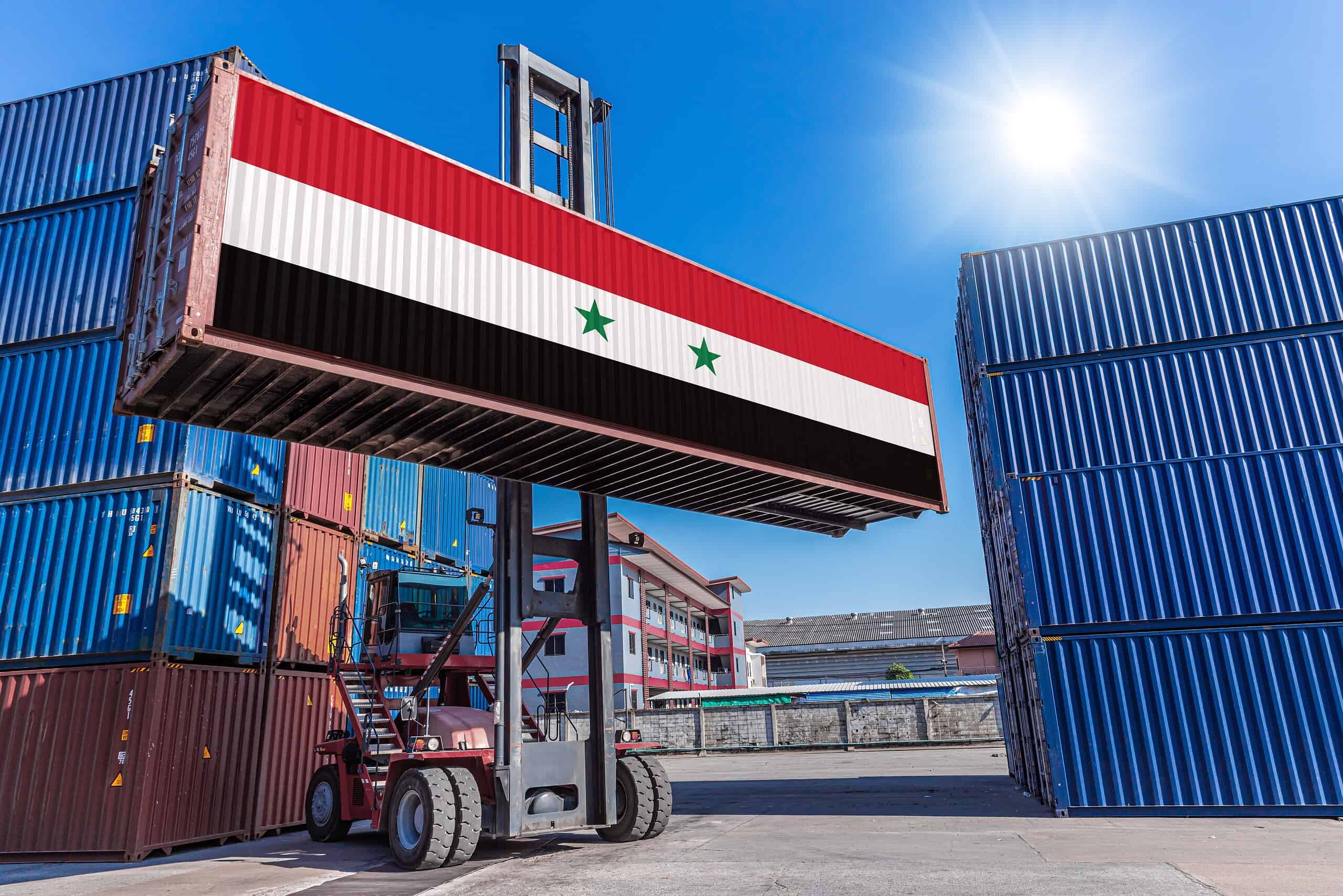
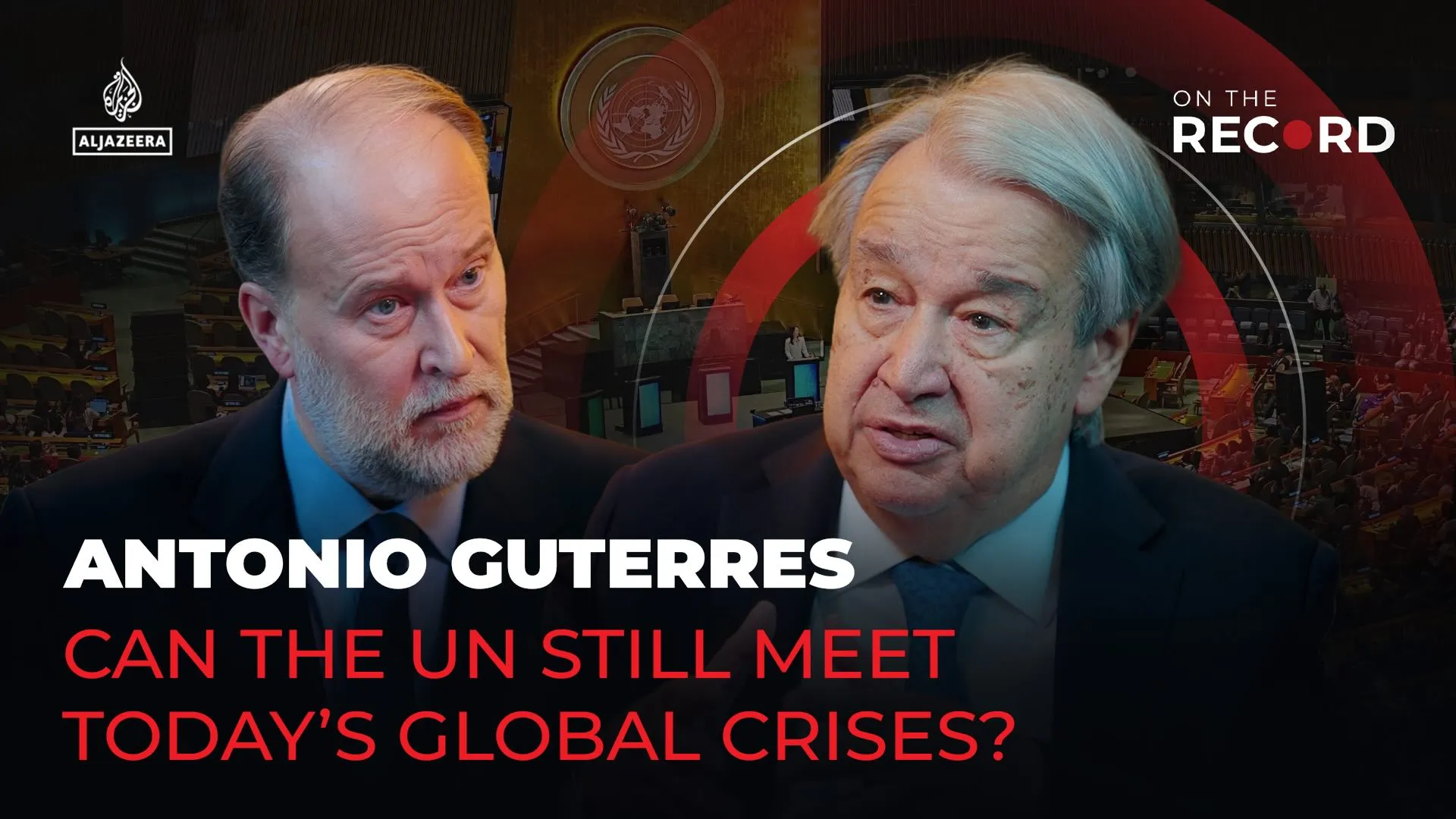


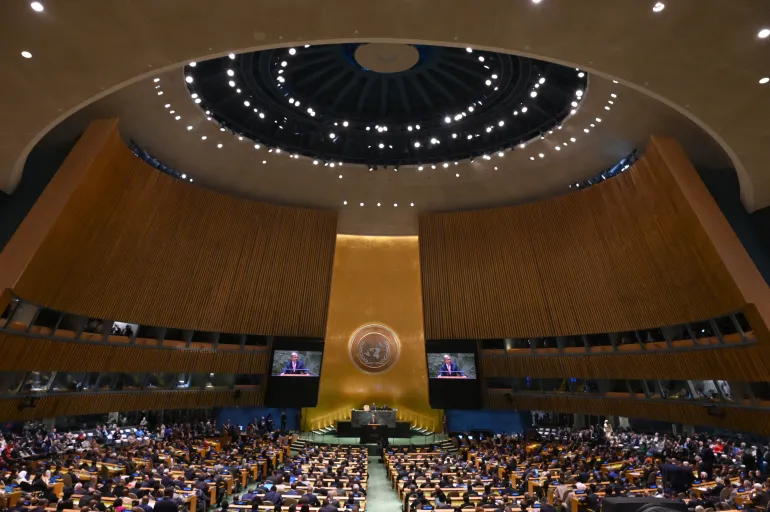
![UN continues its engagement in a Sahel where governments are placing greater emphasis on sovereignty and strategic autonomy [File photo: Timothy A. Clary / AFP]](https://i0.wp.com/occasionaldigest.com/wp-content/uploads/2026/09/33VL2ZN-highres-1695130635.jpg?w=640&ssl=1)
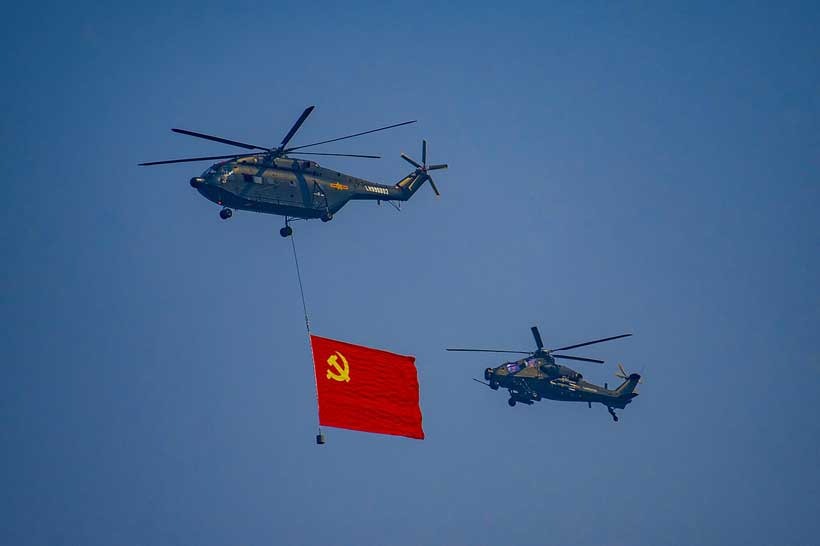
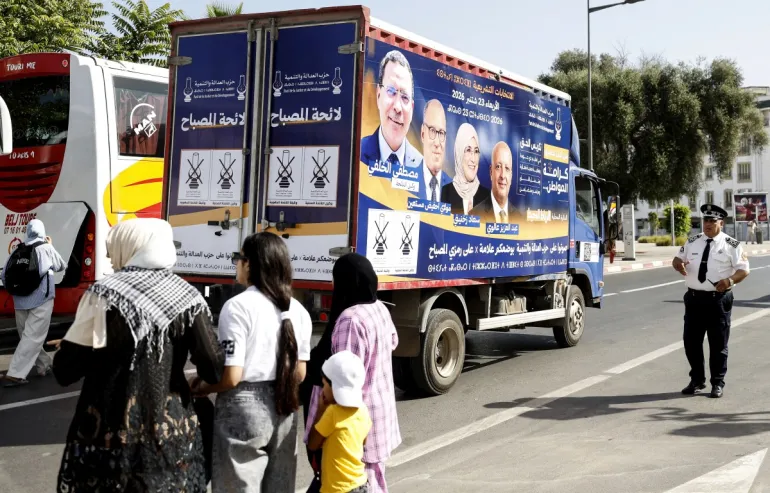
![The PJD is campaigning on public services, jobs, purchasing power and political reform as it seeks to rebuild after its 2021 electoral collapse [Abdel Majid BZIOUAT / AFP]](https://i0.wp.com/occasionaldigest.com/wp-content/uploads/2026/09/AFP__20260912__C84F3GR__v1__MidRes__MoroccoPoliticsElection-1789565328.jpg?w=640&ssl=1)
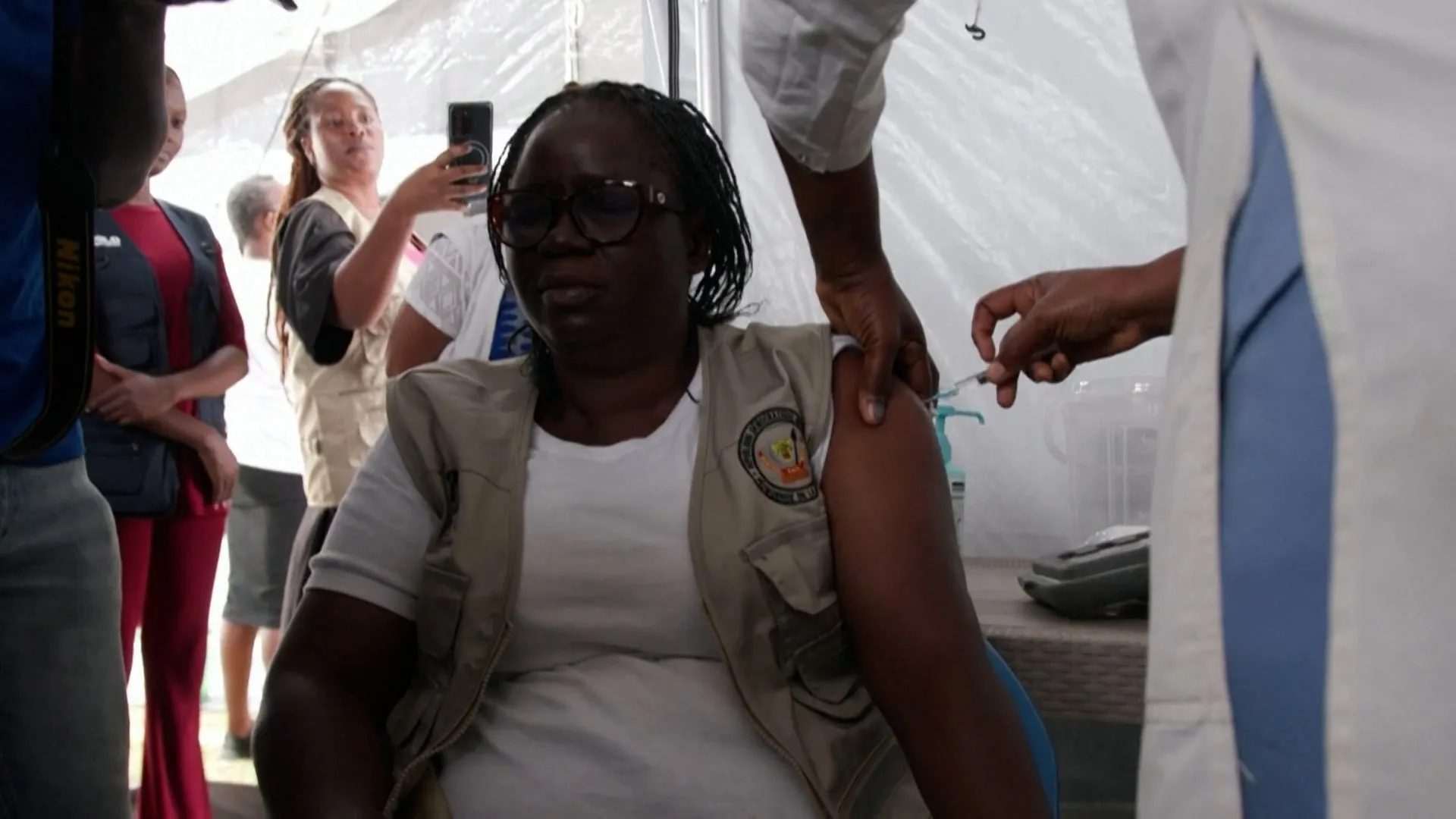


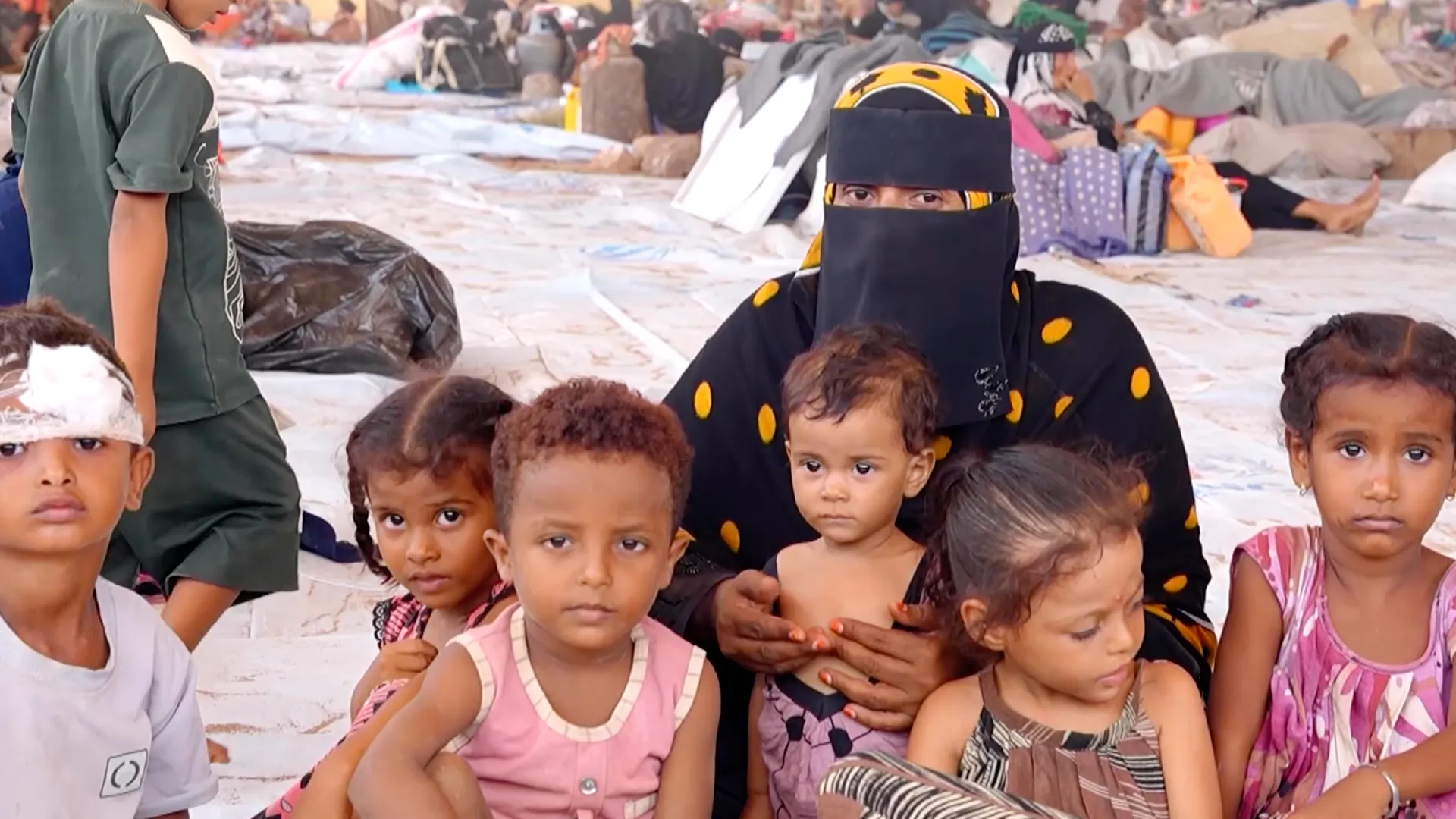
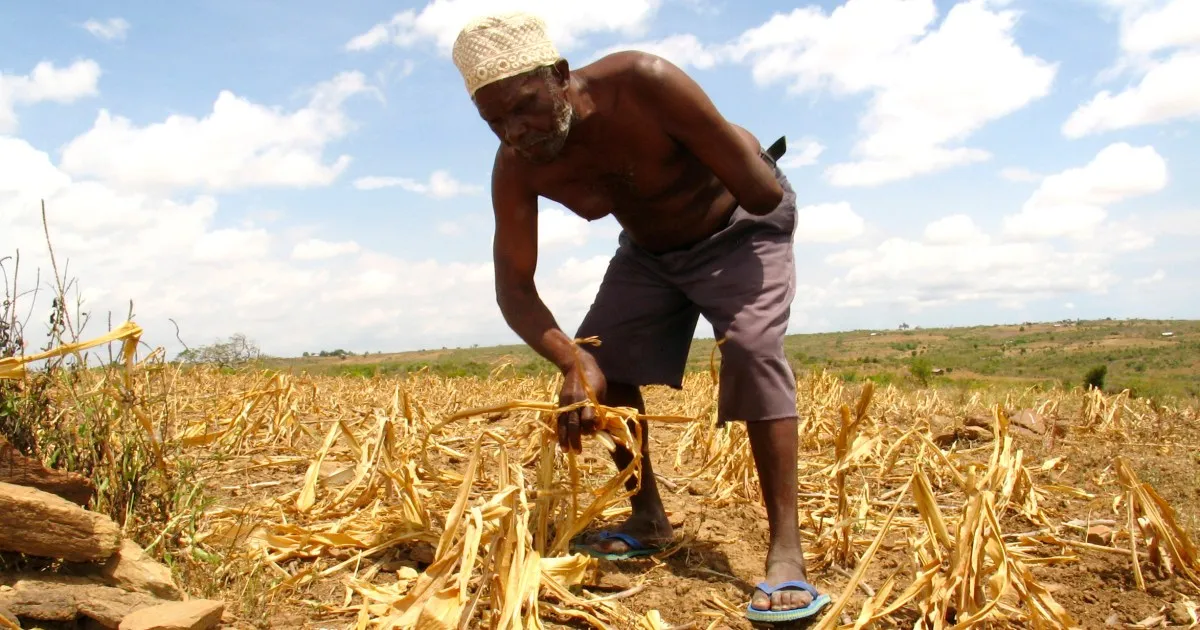

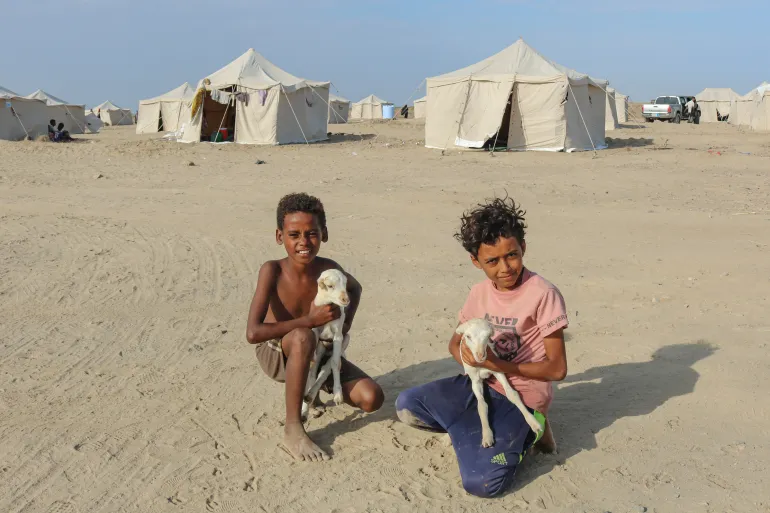

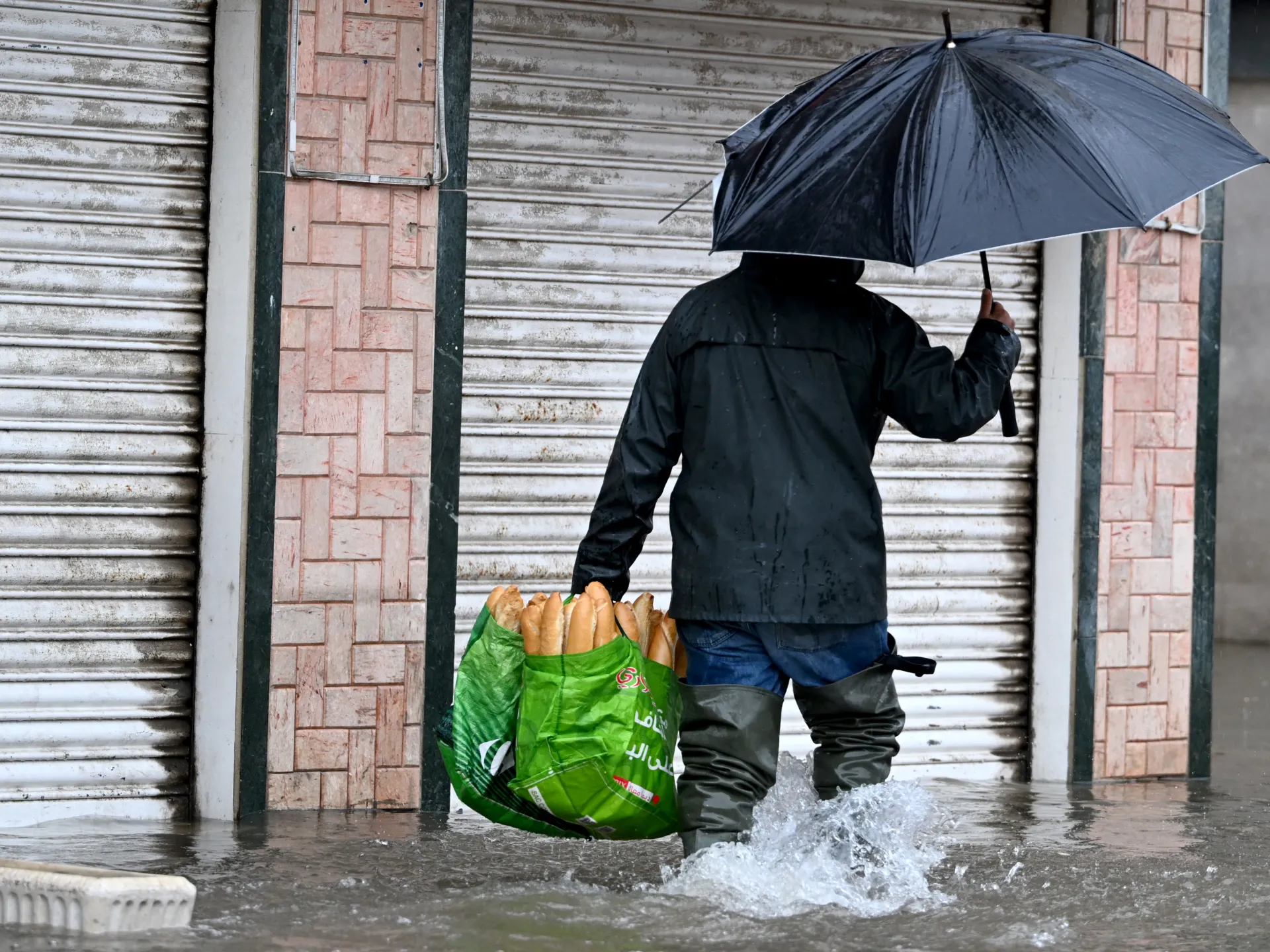
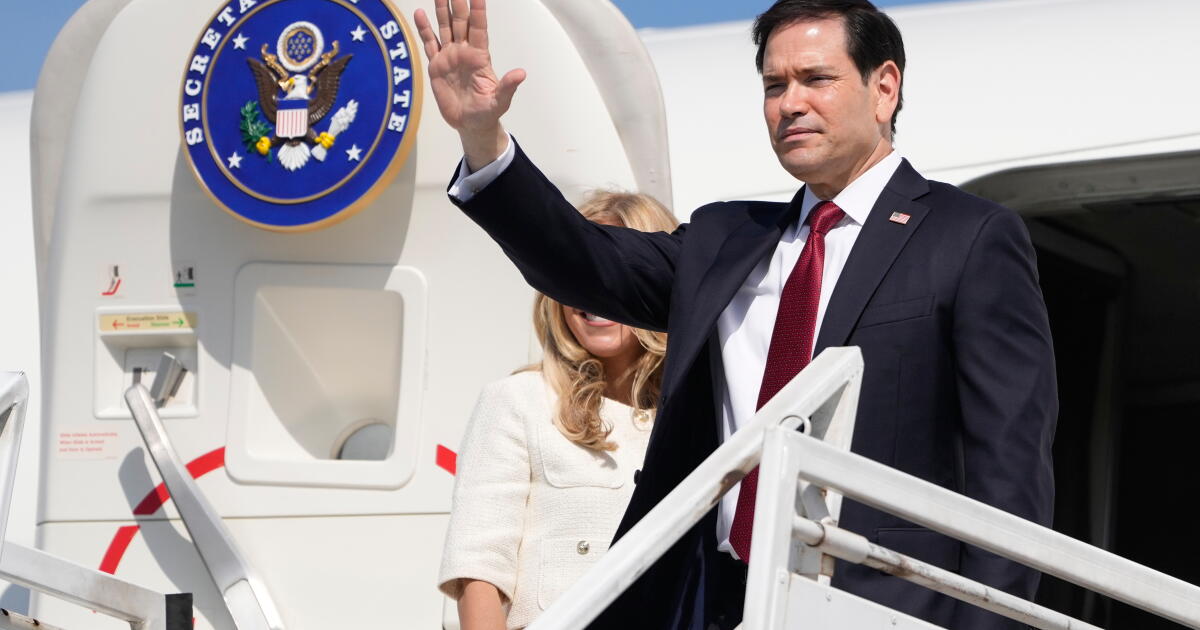

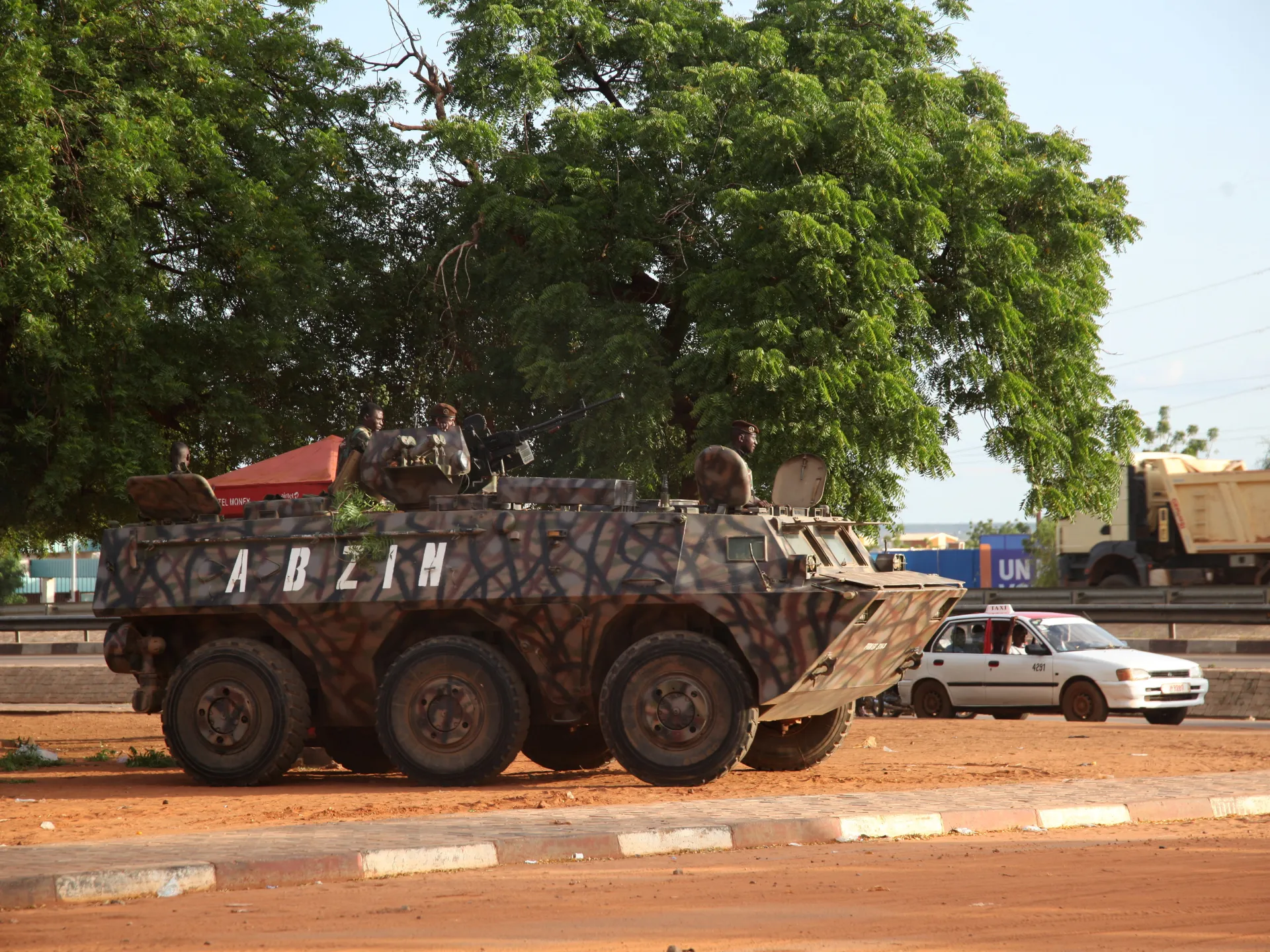
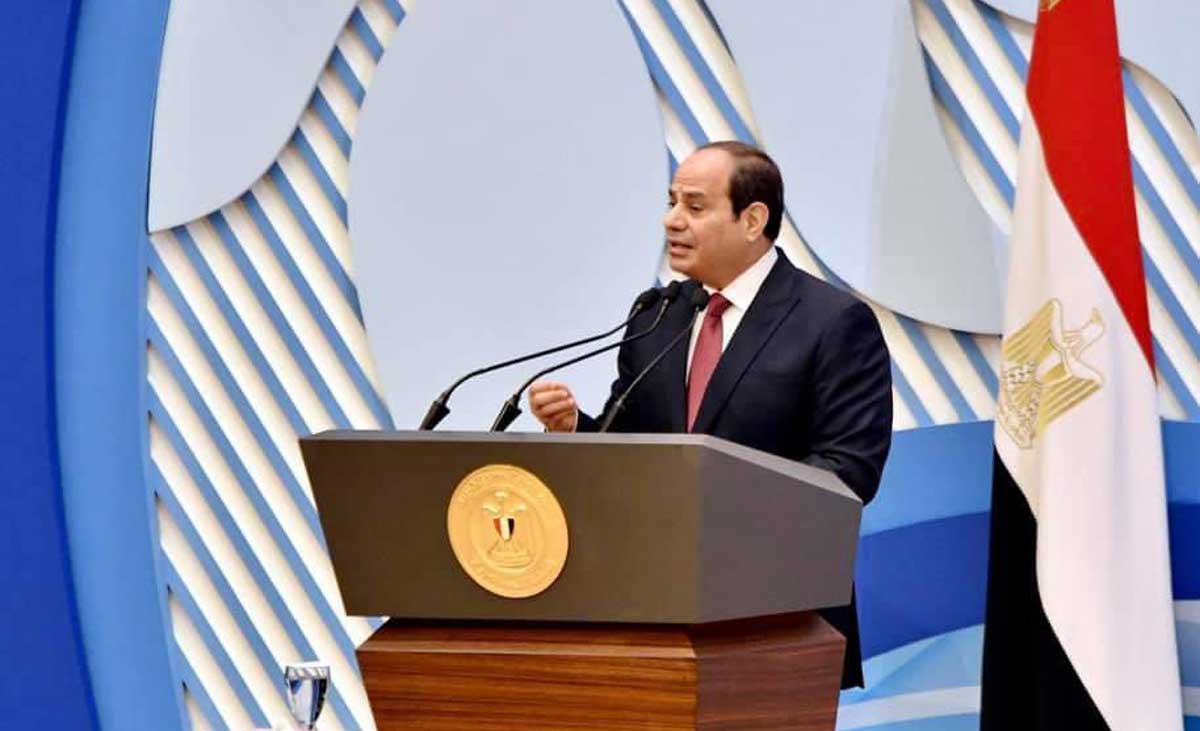

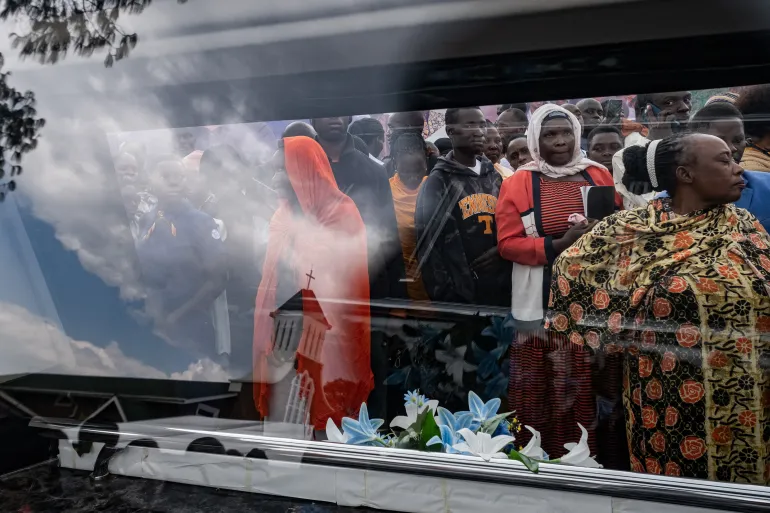
![TOPSHOT - Members of the public react as the body of the late King Oyo Nyimba Kabamba Iguru Rukidi IV makes its way to Karambi Royal Tombs for burial in Fort Portal, Uganda, on September 12, 2026 [AFP]](https://i0.wp.com/www.aljazeera.com/wp-content/uploads/2026/09/afp_6aa5b63bb446-1789244987.jpg?w=640&ssl=1)


