adventure

I paired Sweden’s pretty capital with an island adventure for one unforgettable trip

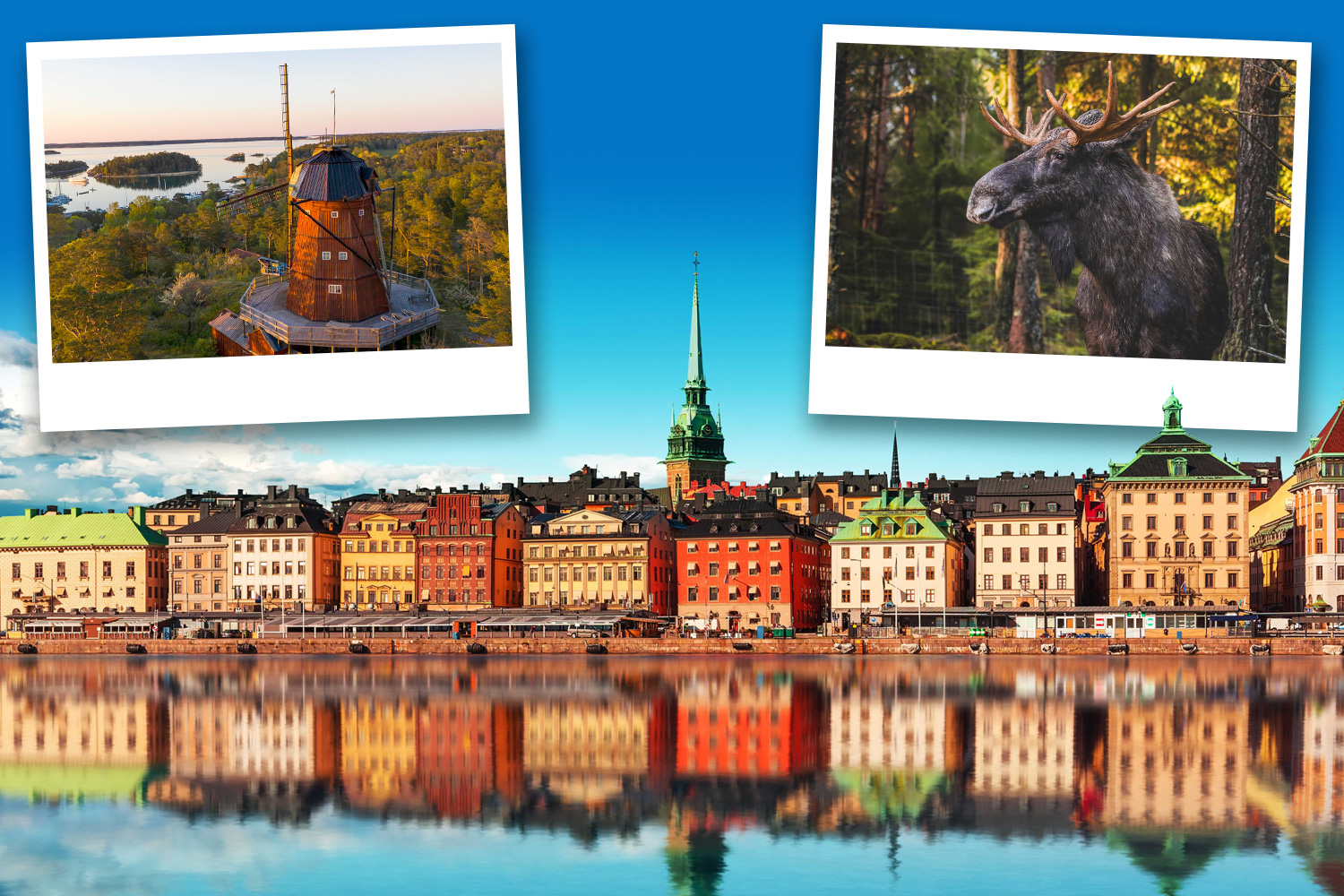
Collage of Stockholm's waterfront buildings reflecting in the water, inset with a traditional wooden windmill and a moose in the forest.

THE sound of bugles, trumpets and tubas fills the street as a parade of horses trot towards The Royal Palace.

I always thought Buckingham Palace’s changing of the guard was impressive, but shiny silver helmets off to the Swedish Army who, decked out in pristine blue uniforms, have us completely captivated for a full 45 minutes.

Stockholm’s historic old town is an incredible spectacle Credit: scanrail
Fab Mag’s Catherine got two unforgettable trips at once Credit: Supplied by Catherine Bennion-Pedley

“It’s like being in a movie!” my five-year-old son Raffy shouts above the beat of kettle drums halfway through.

And he’s right. In the picturesque setting of Gamla Stan, Stockholm’s historic old town, it is an incredible spectacle. And even better – it doesn’t cost a penny. Or krona, rather.

I like big buns

Your wallets will, however, take a hit in Gamla Stan’s winding, cobbled streets, which are brimming with gift shops, such as Liten Amanda with its Nordic home decor (Litenamanda.se), plus bistros like Petit Pastis (Pastis.se) and confectioner Konfektyr & Glass offering an eye-boggling array of treats.

We search for the tiny Iron Boy statue hidden in a courtyard, before ordering a sizeable cinnamon bun, coffees and hot chocolates with lashings of cream for £28, at Kaffekoppen in Stortorget Square (Cafekaffekoppen.se), then chancing upon vintage H&M and antique glassware at charity shop Stockholms Stadsmissions nearby (Stadsmissionen.se).

GOAT & BOAT

See Lionel Messi with Inter Miami ticket and Caribbean cruise from just £1,799


CRUISE NEWS

See Monaco Grand Prix in 2027 during all-inclusive cruise for £2,299 per person

Stockholm city consists of 14 islands connected by bridges. On Djurgården, we all stand in awe as we first set eyes on Vasa, a 17th-century warship that sank on its maiden voyage, its intricate carvings painstakingly restored.

A bonus for my teen self (in the temporary exhibition) is seeing Rose’s dress and Heart of the Ocean necklace from the film Titanic, while learning about director James Cameron’s 2012 deep-sea expedition 10,000 feet down to the ocean floor, and squeezing into a replica capsule. Adult entry costs £18.50, under-18s are free (Vasamuseet.se).

Mamma Mia!

The kids’ favourite outing is the neighbouring ABBA Museum. Poppy, seven, adores the greatest hits album (thanks to her Yoto music player), and despite being a tad overpriced, it’s undoubtedly a super-fun interactive space with lots of opportunities to dress up and perform like – and even alongside – the band (in hologram form), pose for an album cover, rock out in a silent disco and ogle the showstopping stage costumes.

Adult entry costs from £20.50, kids over seven from £8.50 (Abbathemuseum.com).

Escape to Utö on the archipelago Credit: supplied by Tourist Board.
Spot the wild moose on the loose Credit: Photosbypatrik

On one of our days on Djurgården, we tuck into shrimps piled atop egg mayo and syrup bread, £18, while the kids scoff pancakes with cream and jam, £7.50, bathed in sunshine on cafe Skroten’s terrace.

There’s free bread, butter and lingonberry juice on offer, too (Skrotens.se). Later, we hit Skansen, home to a farm, zoo, funfair and a historic town with glassblowers, pottery studio and bakery.

The children are wide-eyed at both the playful bears and the molten glass being transformed into chic confetti lampshades. Adult entry costs £23.50, under-12s are free (Skansen.se).

Viking vibes

At dinner that night, a roar fills the dining hall as our host announces the arrival of more guests – this time from the US – with a horn and a bellow.

I pause devouring my crawfish and prawn soup, £13.50, to join in the hollering.

We’re at Viking restaurant Aifur, and while it may be touristy, Raffy again gets all the film-set feels when he’s declared a “baby Viking” and presented with a giant sword to look after.

Thinking his night couldn’t get any better, and just as a musician begins playing the hurdy-gurdy (Google it!), the waitress presses souvenir coins into both his and Poppy’s palms (Aifur.se).

Continuing the theme, the next morning we learn how to fight and write like a warrior at the Viking Museum, which is worth a stop, even if it’s just to lunch at its restaurant Eld.

Highlights include Ukrainian gnocchi with smoked feta, £22, deer medallions with black garlic and potato gratin, £22.50, and the pretty harbour views (Thevikingmuseum.com).

Isle be back

The sweet spot for visiting Sweden with kids is balmy mid-August, just after the Swedes return to school. Keen to get a taste of the Stockholm Archipelago, home to more than 30,000 islands, we take the 43X train from Stockholm City station to Västerhaninge, catch the 846 bus to Årsta Brygga and then hop on the 21 boat to Utö.

Although it sounds complicated, it’s super-simple, and for our transport-mad kids, the hour-and-a-half journey in itself is thrilling.

But Utö, all rugged landscapes, pine forests and sparkling sea, is the real thrill. Photos really don’t capture its beauty.

Bistros like Petit Pastis offer an eye-boggling array of treats Credit: Cafe Kaffekoppen/Instagram
The Swedish Army, decked out in pristine blue uniforms, have us completely captivated for a full 45 minutes Credit: Alamy Stock Photo

We kip in one of hotel Utö Värdshus’ sweet self-catering cottages, which cost from £101 per night, and at the restaurant that evening, we dine on buttered kingfish with potato, leek and cheese pie and crayfish broth, £29, while the kids wolf down steak with Béarnaise sauce and fries, £10.50 (Utovardshus.se).

Holidaying on the island is all about hiking, biking and the wonderfully wild beaches.

One afternoon is spent picnicking at Barnens Bad beach, not far from our cottage – its crystal-clear shallow water is perfect for kids, and we’re joined by only one other family, who stylishly arrive and depart by kayak.

The next day, we set off on a 11km bike ride (daily hire costs £15 per adult, £11 per child).

We pass colourful wooden houses and breathtaking vistas to Stora Sand, a wide expanse of white beach, which again we only have to share with one other couple.

Sandcastle building and chasing waves makes for a blissful few hours, topped off only by a wild moose deciding to clumsily gallop across our path on our ride home.

I fear that the kids’ tales of this trip may sound a little far-fetched when they get back home and share them with friends. But Sweden really has proved super (trouper).

FYI

Plan your trip at Visitstockholm.com.

Flights from the UK to Stockholm start
from £57 return.

PSST…

Check into Stockholm’s Downtown Camper by Scandic for cool vibes, ping-pong tables on every floor and free firepit marshmallow toasting for kids.

Family rooms cost from £275 per night (Scandichotels.com).

Or try Hotel Kung Carl, set in historical buildings, for a more quaint feel, pastel decor and plants to borrow each night. Family rooms cost from £285 B&B (Kungcarl.se).
Source link

Three countries, one hike: an Alpine adventure in Austria, Slovenia and Italy | Austria holidays

‘Achtung! Staatsgrenze!” OK, the signpost marking the “state border” didn’t have exclamation marks but, with its no-nonsense Prussian font, it did feel quite shouty. The only thing was, no one on the Feistritzer Alm – a peaceful sweep of Alpine pasture at the meeting of Austria and Italy – was paying any attention to it at all.

Hikers hiked straight past. Mountain bikers used it to prop up their cycles. Cows grazed willy-nilly. And the patrons of the Schutzhütte Oisternig enjoyed their cold beers regardless of which country they were in. While official boundaries may have changed in these parts over the centuries, the magnificence of the mountains has not.

My husband and I had woken that morning in Austria, in the Carinthian village of Feistritz. After breakfast at the old Gasthof Alte Post, we’d bought a loaf from the bäckerei, climbed past the 15th-century church as its bells called worshippers for prayers and continued up through pine forest to these high Alpine meadows – and into Italy.

We were hiking the Alpe Adria, a long-distance trail jointly developed by Austria, Slovenia and Italy that runs from the foot of Grossglockner (Austria’s highest mountain at 3,798 metres) to the Adriatic coast. At 750km (466 miles), the full trail is too long for most people’s summer holidays. But a 135km (84 mile) loop – moderate-graded, doable in a week, with walking days of 15-24km (9-15 miles) – has been created where the three nations meet, to offer a multicultural taster. It’s an appealing idea; hikers love circuiting multiple countries – just look at the numbers crowding the Tour du Mont Blanc these days. While the Alpe Adria loop isn’t quite as dramatic as that, it does offer a much quieter alternative.

The writer near the Vratca Pass.

We started our journey by catching an early Eurostar to Amsterdam, where there was time for canals, beer and crispy bitterballen before boarding the Nightjet sleeper to Salzburg. In our adjoining capsule-like cabins, we watched the Netherlands segue into Germany, and woke at dawn to pasture, pines and peaks. On the final train from Salzburg to Villach, where we were beginning the loop, the Alps pressed closer, drawing us in.

Now, on the Feistritzer Alm, a day and a half into the walk, Austria was behind us (for the time being) and Italy beckoned, beautifully. Just around the hill from the Schutzhütte Oisternig sat the chapel of Our Lady of the Snows (or the Chiesa Madonna della Neve/Almkapelle Maria Schnee, depending on your linguistic preferences); beyond spread deep-green foothills and the jagged Julian Alps, sawing into a hot-blue sky.

From here, the rest of the day was all downhill, a drop through blessed shade and butterflies, on paths weaving through the pines and peeping out to the peaks, to end in the village of Valbruna, at the Valbruna Inn. We had a wonderful room, and spent time on our balcony, gazing past the geraniums to the sheer Jôf Fuart range, which reaches up to 2,666 metres.

We also spent time in the hotel’s Julius Kugy Library, a cosy den of books on alpinism, named after a writer-mountaineer legend. Born in 1858 to a Slovenian family in Gorizia – then part of the Austrian empire, now in Italy – Kugy is credited with opening up the Julian Alps. He never lost his reverence for nature, always encouraging others to explore with respect, curiosity and awe. I picked up one of his books and read from his introduction: “[This] tries to describe the mountains as a source of happiness, because such they were in my life.”

I couldn’t have agreed more and, with great happiness, we continued the next morning, following the Alpe Adria from Valbruna, across the Saisera River and up through fir and spruce to the Sanctuary of Monte Lussari, a ridge-top pilgrim church and hamlet, where the Virgin Mary is said to have appeared in 1360. I was less moved by the miracle, or the shops selling branded tote bags, liqueurs and slippers, than by the mountains scattered far and wide. We lingered to enjoy the view, then descended via alpenrose and ambling goats to Tarvisio, finding a different kind of happiness in the town’s gelaterias. Then, later that evening, we sat with cold beers on our balcony at the Hotel Nevada, watching as a storm crashed through, briefly erasing every mountain.

The village of Monte Lussari. Photograph: Marco Lissoni/Alamy

The next day brought more joy as the trail took us along the woodland-weaving Sentiero del Orso and then via a busy cycle path to the Fusine lakes. These twin glacial bowls are so arrestingly blue-green you’d think they’d been AI-ed if you weren’t standing right there. We found a quiet spot to picnic, listening to the whinnying of little grebes and staring beyond the dazzling water to the afternoon’s challenge via the rocks ahead: the haul up to Rifugio Zacchi.

skip past newsletter promotion


The Alpe Adria loop usually ends each day in a valley bottom, where there are plenty of inns. But not tonight. Zacchi sits at 1,380 metres, tight-hugged by the intimidating peaks that mark the Slovenian border. After a muggy, magical ascent through forest to the refuge, I sat on the terrace, drinking a superb Aperol spritz, and stared at them, transfixed; a few booms of thunder rippled, just in case the power of nature had been in doubt.

The blue-green Fusine lakes. Photograph: Liubomir Paut-Fluerasu/Alamy

The food at Zacchi was excellent – venison ragù, chargrilled peppers, potato-pancake-like frico, made with local montasio cheese. Also excellent was the fact that, in a stroke of luck, we had a dorm to ourselves. We woke, refreshed and ready for the next border hop.

The most striking route would have been over the forbidding-looking Vratca Pass. The Alpe Adria took us there, for views east into Triglav national park, but didn’t cross. Instead, the trail backtracked down on the Italian side to follow a path through the verdant Sava Valley to the outdoorsy town of Kranjska Gora.

It was a pleasant entrance into Slovenia; however, our exit was spectacular. To get back to Austria the next day, we had to cross the Karavanke Alps and conquer the highest point of our route, the 1,842-metre Schwarzkogel. It was an unrelenting climb, at first amid pasture and shingle roofs, with sublime views to the Julian peaks, then deep in forest serenaded by thrushes, streams trickling to our side.

As we neared the top, we could see south across Slovenia’s surging summits, north across Carinthia’s electric-blue lakes and low hills. Squat white marker-stones began to appear too, strung along the ridge’s spine – an international border marked more casually than most front gardens. We slalomed between the posts, enjoying both the freedom of movement and the majesty of nature. For millennia the Alps have been physical and cultural barriers. The Alpe Adria is a bringing together; a source of mountain happiness.

The trip was provided by Walks Worldwide; the eight-day, self-guided Alpe Adria Tri-Country Trek is from £895 B&B. Accommodation in London was provided by Generator (rooms from £75, dorm beds from £11)

Source link

10 of the best mountain huts in Europe: bunkrooms, bothies and bonhomie | Adventure travel

Cabaña Verónica, Spain

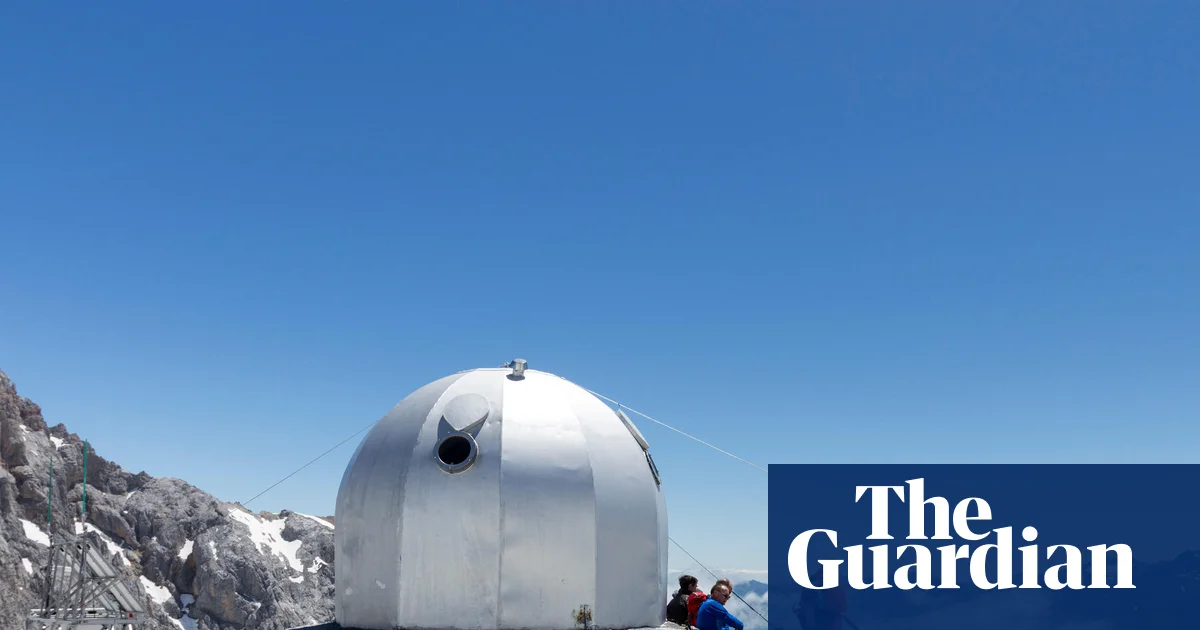
A good mountain hut, I reckon, should be small and only accessible on foot after considerable effort. Throw in a bit of historical interest and I’m bound to be happy. In which case, Cabaña Verónica in the Picos de Europa is a fine start to this list. It sleeps six, and at 2,325 metres requires a two-hour trek from the nearest cable car station, never mind road. It has incredible views and a friendly custodian who keeps things in good order. Yet the real attraction is that this place was formerly a gun turret of a US navy battleship that was scrapped in Bilbao in 1960. An enterprising engineer, Conrado Senties, had it carried up on horseback and reassembled on a plug of rock in the middle of nowhere. Don’t ask why, just enjoy the eccentricity.
€15, reservarefugios.com

Låktatjåkko, Sweden

Photograph: Wolfgang Kaehler/Alamy

An absolute gem just over 100 miles north of the Arctic Circle and 1,228 metres up a mountain, Låktatjåkko is well placed to deliver that other essential experience of a decent hut: cosy conviviality while surrounded by frequently hostile conditions. When I visited, it was hard to find the hut because it was coated in thick ice and half-buried in snow. The snug timber-clad lounge is the perfect spot to sit in front of the fire and read old accounts of Arctic explorers such as Fridtjof Nansen (there is no phone coverage). The kitchen bangs out endless plates of waffles with cloudberry jam and cream as well as more substantial fare. Be warned, however: in winter the chances of being marooned are quite high and the skiing can be a serious challenge due to extreme cold and fast-changing mountain weather.
From 515 Swedish kronor (£40), laktatjakko.se

Gaustatoppen, Norway

Photograph: Robert Harding/Alamy

Like many other huts belonging to the wonderful Norwegian Trekking Association, this place is small, well-run and traditional. It’s the route up to it that is astounding. You enter a mountainside, take a thundering old-school funicular railway one kilometre inside the granite, then wander through tunnels of military-grade concrete, before exiting through a blast-proof steel door and climbing down a short way to the hut. All that startling infrastructure is the cold war relic of a Nato communications station now doubling up as a museum and underground route to the hut, which dates back to 1893. This unique means of access gives the hut an advantage: you can stay in winter (weekends only) on the summit of the highest peak in Telemark province, Gaustatoppen, a popular ski resort, and then ski down. When I was there, the view was about 10 metres into thick mist. On a clear day, however, they say you can see one-sixth of Norway.
From 1,550 Norwegian kroner (£122), dnt.no

Chata pod Rysmi, Slovakia

Photograph: Vladimir Cuvala/Alamy

The Tatra mountains have some excellent huts, but this is my pick. Close enough to the summit of Rysy (2,501 metres) for an early start to catch dawn on the top, it is traditional, well-run and basic. The weather here can take a brutal turn at any time of year and, like all the best huts, this is in precisely the right position to be a genuine bolthole. If it looks younger than its 1933 start date, that is because it has been destroyed several times by avalanches and rock falls, which is also why it only opens 1 June to 31 October.
€65, chatapodrysmi.kst.sk

Kredarica on Triglav, Slovenia

Photograph: Mikadun/Shutterstock

This is, in many ways, a standard, old-fashioned mountain refuge, but Kredarica has the great advantage of being the last potential stop en route to the summit of Slovenia’s highest peak, Triglav (2,864 metres). Given that every Slovene feels compelled to visit the summit at least once in their lifetime, this can be a busy place in summer, especially as the views are magnificent. The hardcore, however, savour its spartan winter comforts, when the dormitories are unheated bunkholes for those about to tackle the final, rather tricky ascent to the top (ice axe and crampons essential).
€30 half-board, triglavskidom.si

Le Refuge de Ciottulu di Mori, Corsica


Photograph: Florian Neukirchen/Alamy

One of the attractions of Corsica’s epic GR20 long-distance footpath is its unapologetically old-fashioned mountain huts. No emergency helicopters swooping in when the G&Ts run out: this is gruff, mule-supplied, mountain hospitality. Ciottulu is a good example of the genre: bare bones dining room and a dormitory with communal sleeping benches for 26. Its ambience is more like a bothy set at 2,000 metres in a vast stony panorama with a slightly unpredictable caretaker.
€15, le-gr20.fr

Breiðuvik, Iceland

Photograph: Gestur Gislason/Alamy

The east of Iceland is home to a scattering of superb huts like this one. Breiðvik is actually on the coast and has the usual bunk rooms and well-appointed kitchen. The location is the big attraction: a wild, desolate coastline of volcanic sand beaches and abandoned villages. Together with 39 other locations, Brieðvik is part of a useful network run by the Icelandic Touring Association.
11,500 Icelandic kronur (£70), ferdaf.is

Scotland’s mountain bothies

Elphin Bothy in Sutherland. Photograph: Tom Richardson Scotland/Alamy

The UK has always remained aloof from the continental urge to build something cosy on a mountain top. We are much happier sitting inside our leaky waterproofs eating soggy sandwiches. The Mountain Bothy Association is doing a little to encourage us away from such Spartanism, but not too much. Most are former cottages for miners or shepherds; many now have a fireplace or even a wood burner. In some, there are a few supplies left on a shelf by previous guests. I have a soft spot for the hard charms of the least comfortable, where you may find only a stone bench and an open doorway. A few have become over-used and afflicted by visitors who don’t understand the ethos of mucking in, sharing out and cleaning up. For that reason, I’m not sure it’s worthwhile picking out any particular bothy (pictured is the Elphin Bothy in the Assynt region of Sutherland), suffice to say that the roster contains some absolute classics. Go and find them.
mountainbothies.org.uk

Rifugio Nuvolau, Italy

Photograph: Kevin Rushby/The Guardian

The Dolomites are so blessed with exceptional huts and Nuvolau is one of the best. Only accessible on foot, it was originally built in 1883 as a bequest from the Baron Richard von Meerheimb, the man who coined the term “psychodrama”, something he may have dreamed up while watching a Nuvolau sunset. The impeccable location is famous for its stunning shifts in light and colour. Inside is a dining room that serves excellent food, including a three-course dinner; upstairs is a small dormitory.
€51 B&B, rifugionuvolau.it

Rifugio Lagazuoi, Italy

Photograph: Frank Bienewald/Alamy

Many huts in the Dolomites have learned that economic survival is via tourists rather than hikers and climbers. Lagazuoi is one of them. Built as a climbers’ refuge, it has expanded over the years and been connected to the road by cable car, which enables coach parties to stay. And yet, it remains magnificent. The south-facing terrace is lovely and there are fantastic walks all around, not least through the tunnels and terraces of the first world war frontline that lie on the cliff face below. Mount Lagazuoi (2,835 metres) was one location where the Austro-Hungarian empire faced off against Italians. Many years later, in 1965, Ugo Pompanin, a local Alpine guide and rock-climbing pioneer, recognised the potential and built the first hut, which, several additions later, is still run in great style by his son Guido.
From €85 with breakfast, rifugiolagazuoi.com

Source link