
advances

Czech Republic advances media funding overhaul despite criticism | Freedom of the Press News

Journalists prepare to strike as politicians push through changes that critics say threaten independence.

The Czech Republic’s governing coalition has advanced changes to the funding of public media, despite criticism that it could weaken broadcaster independence.

In a rare overnight vote in the early hours of Saturday, the coalition voted to send the bill to committees for further discussion.

Recommended Stories

list of 2 itemsend of list

The changes include scrapping the 205 crown ($9.45) household broadcasting fee, and replacing it with funding from the state budget.

The populist government of billionaire Prime Minister Andrej Babis, backed by the far-right SPD party, has frequently criticised public and private media coverage of its policies and accused some outlets of bias.

Babis promised to scrap the broadcasting fee before taking office last December, and says his three-party government is now fulfilling that pledge to voters.

Public media employees staged a strike against the move in June, saying it would make broadcasters vulnerable to government pressure.

Opposition parties have compared the changes with reforms under neighbouring Hungary’s former Prime Minister, Viktor Orban.

Babis has said the new funding model would be fairer to poorer households and encourage outlets to become more efficient.

“There is no war for independent media,” Babis said on Facebook late on Friday. “There is no fight for democracy and no nationalisation of media is being prepared.”

The proposal would cut funding for Czech Television and Czech Radio by about 15 percent and keep nominal funding unchanged for several years.

Public media are among the most trusted news sources in the Czech Republic, with Czech Television the most-watched broadcaster across several age groups.

A civic group has called a public protest for Sunday, while journalists and other employees at the broadcasters announced a strike for November 3.
Source link

Senate committee advances Dr. Nicole Saphier’s nomination for surgeon general

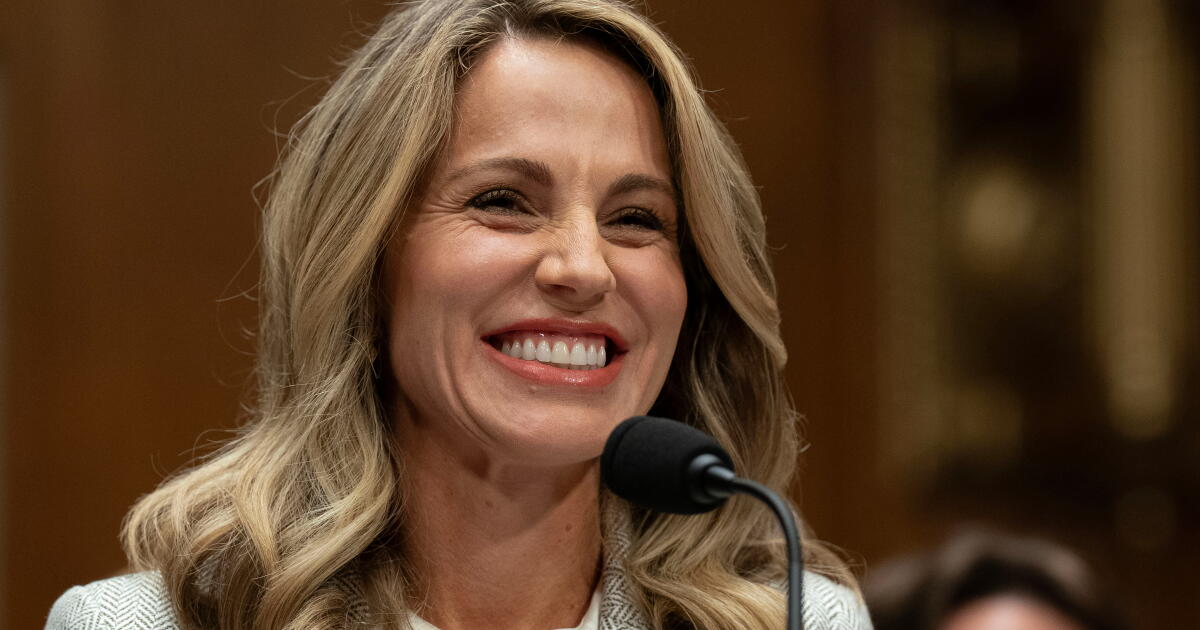
Dr. Nicole Saphier, President Trump ‘s third nominee for surgeon general, moved a step closer to confirmation after a Senate committee voted to advance her nomination on Wednesday.

Saphier, a radiologist and former Fox News Channel contributor, was advanced out of the Senate Committee on Health, Education, Labor and Pensions on a 12 to 11 vote to serve as surgeon general after she was grilled at her confirmation hearing earlier this month about her stance on childhood vaccines.

She expressed support for vaccines and told lawmakers she didn’t believe they cause autism. The Trump administration has sought to revisit claims about a link between vaccines and autism, although widespread scientific consensus and decades of studies have firmly concluded there is none.

Timothy Westlake, who was nominated to serve as assistant secretary for mental health and substance use at the Department of Health and Human Services, was also advanced out of committee on the same en bloc vote.

It was not immediately clear when the officials would face a full Senate vote for their confirmation, but they are expected to be approved.

During her confirmation hearing, Republican Sen. Bill Cassidy pressed Saphier to declare whether she believed there was a link between vaccines and autism. Saphier responded that she does “not believe childhood vaccines cause autism,” adding that “the MMR vaccine is our greatest tool for combating measles,” in response to a question by Cassidy over whether parents should give children that shot.

MMR stands for measles, mumps and rubella, and the president recently called for the shots to be spaced out, against the guidance of medical groups.

The surgeon general position carries limited policymaking power but serves as a loud megaphone as the nation’s top communicator to Americans on public health issues.

Cassidy, who led the inquiry into Saphier’s views on vaccines, ultimately voted in support of her nomination.

Sen. Bernie Sanders, the ranking member of the Senate HELP committee, said ahead of Saphier’s vote that he would vote down her nomination because in part Saphier “has questioned the need for the hepatitis B vaccine at birth, when the data science has been clear.”

“We need a surgeon general who will tell the truth about vaccines, not someone who misleads the public,” Sanders said. At her confirmation hearing, Saphier said the universal birth dose of hepatitis B was safe and effective.

Chris Klomp, who was nominated to serve as deputy secretary of the Department of Health and Human Services, was advanced out of the Senate Finance Committee last week on a 15 to 12 vote. He was questioned during the same hearing as Saphier about his duties associated with the role as the current chief counselor of the Department of Health and Human Services under the leadership of Health Secretary Robert F. Kennedy Jr. as well as about his vaccine stance.

In protesting Klomp’s nomination at the Senate Finance Committee, Sen. Ron Wyden said Klomp “tried to create the impression that he will be the adult in the room on vaccines. Yet, as we sit here today, the vaccine chaos that we’ve come to expect from Robert Kennedy’s HHS continues.”

Hussein writes for the Associated Press.

Source link