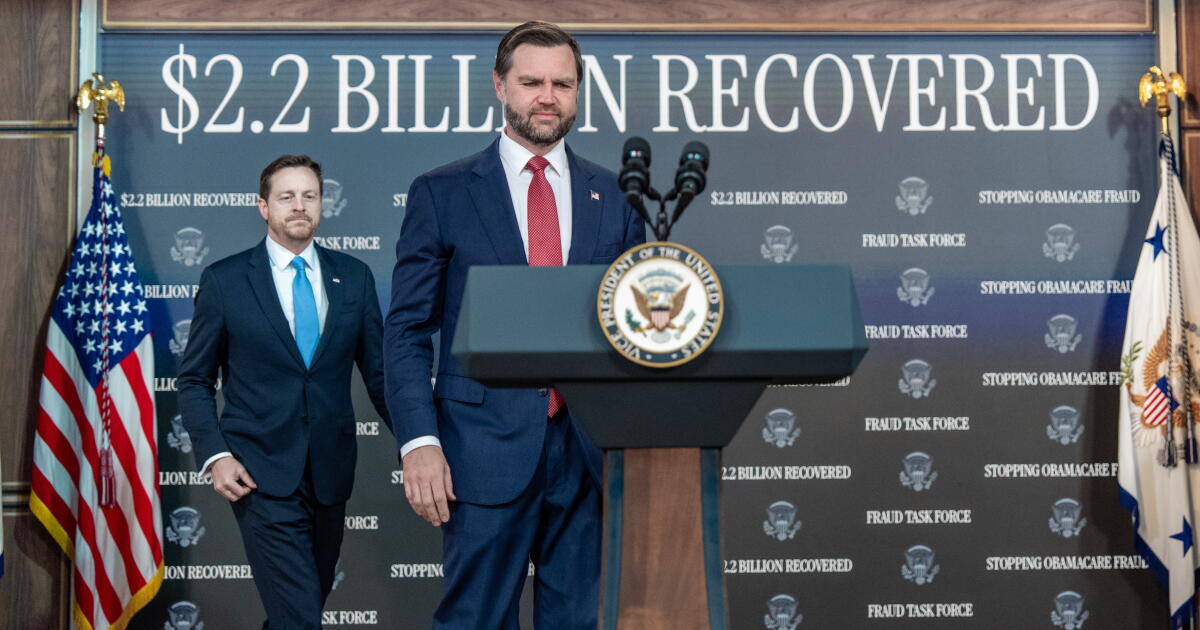
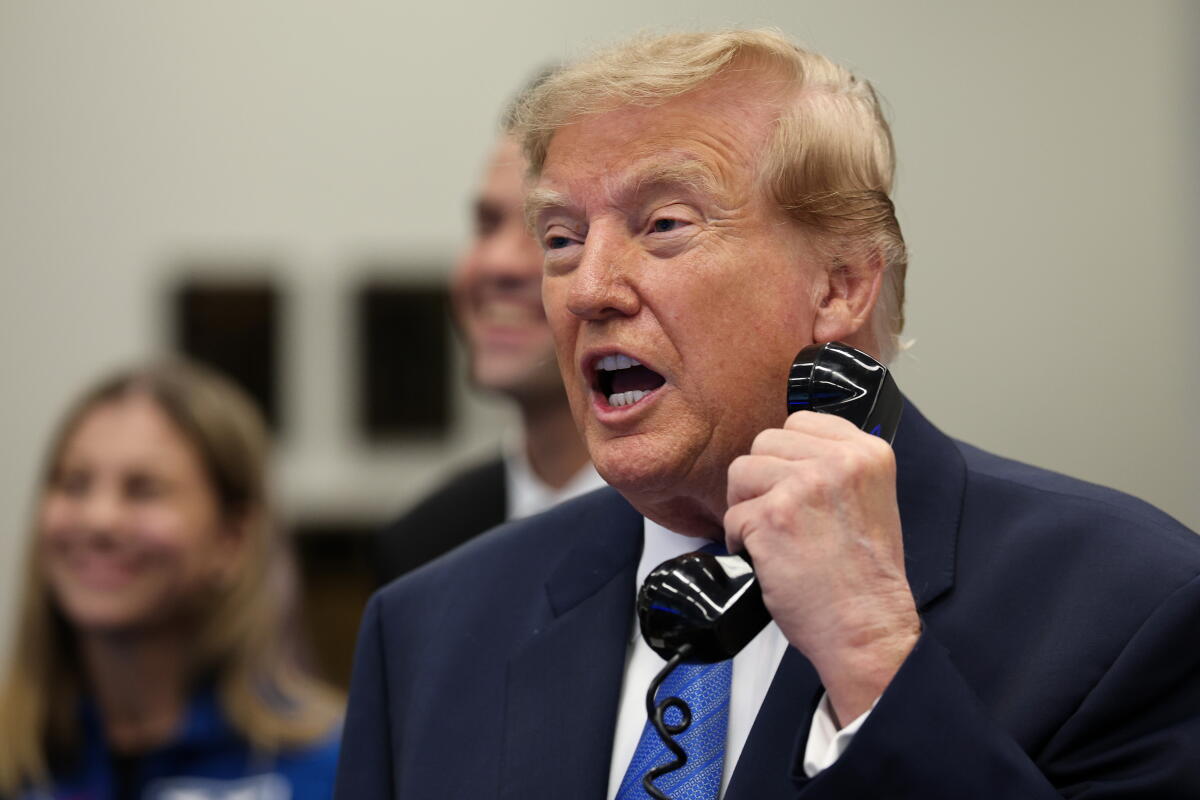
WASHINGTON — Vice President JD Vance and other Trump administration officials said Tuesday they plan to remove 760,000 Affordable Care Act enrollees from public healthcare exchanges, alleging that the individuals were fraudulently enrolled in the program, or simply do not exist.
Vance said the discovery and canceled subsidy payments for hundreds of thousands of people from the exchanges would result in $2.2 billion in cost savings.
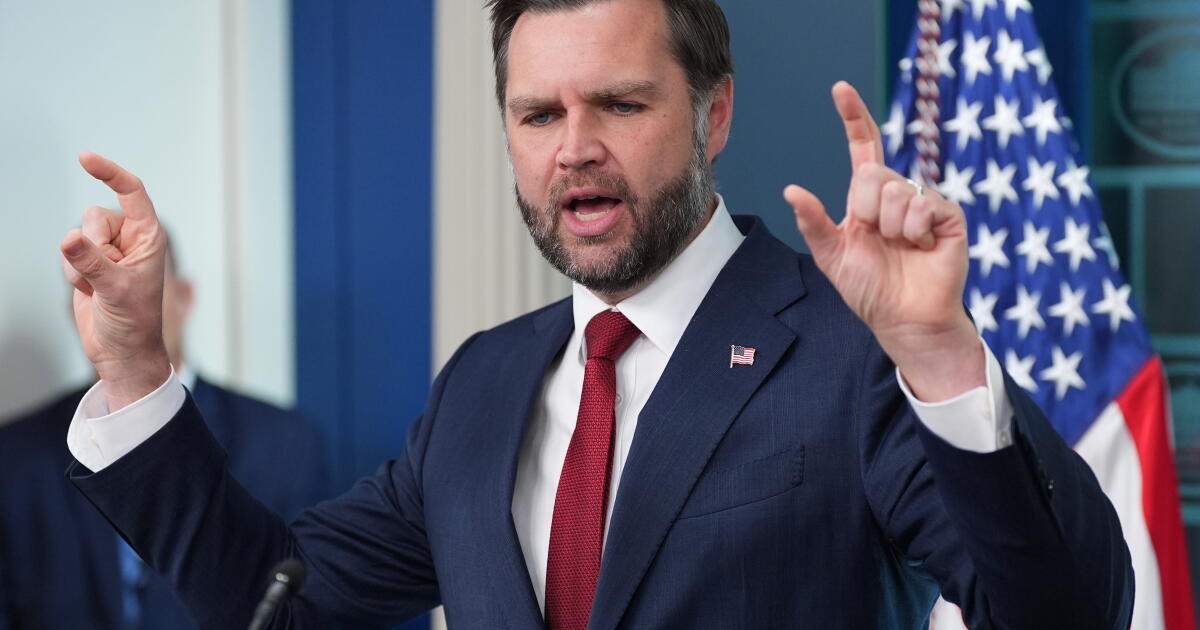
“We’re actually making sure that the people receiving Obamacare subsidies are actually entitled to receive them,” Vance, who leads a government-wide task force to eliminate fraud, said in a public address at the White House, Tuesday. He was flanked by Dr. Mehmet Oz, the administrator for the Centers for Medicare and Medicaid Services, and other administration officials.
The Trump administration also announced a six-month suspension on new brokers who sign up enrollees for healthcare coverage, who officials say commit a disproportionate amount of the fraud they uncovered.
Tuesday’s announcement is the latest in an administration-wide initiative to address fraud around the country, including in federal healthcare programs, which officials say is needed to rein in runaway spending and protect taxpayers.
The announcement comes as inflation and rising healthcare costs pressure the Trump administration to come up with a plan to bring down costs for Americans heading into the midterms.
The price of ACA insurance has skyrocketed for many Americans during Trump’s second term, after Republicans opposed extending COVID-era subsidies that had helped offset the costs of health insurance for most enrollees during Biden’s term.
Premiums doubled or tripled for many enrollees, prompting millions to downgrade their plans or exit the program entirely after the Republican-led Congress allowed the subsidies to expire this year.
Roughly 19.2 million Americans are actively enrolled in ACA marketplace health plans as of early 2026, according to the HHS website.
The White House referred The Associated Press to the Vice President’s team for additional comment on bigger plans to address healthcare affordability.
The Wall Street Journal first reported the news of the Trump administration’s plan to remove ACA enrollees from public exchanges.
Hussein writes for the Associated Press. AP writer Michelle Price contributed to this report.
A UK holiday park operator has entered administration.
The company behind Medmerry Holiday Park in West Sussex – Cove Communities Venture 2 Medmerry OpCo Limited – has been appointed administrators.
Medmerry Park in West Sussex has been closed since 2024 and now has entered administrationCredit: hoseasons
Medmerry Holiday Park, known for its nature-focused 100-acre holiday village, was forced to close back in 2024 following flooding and now will not reopen.
The park sits by the Medmerry Nature Reserve and Bracklesham Bay Beach and was home to 308 self-catering chalets, a large outdoor swimmingpool and central pub and restaurant.
Sign up for the Travel newsletter
Thank you!
The park was loved by visitors, with one guest stating: “Having just returned from a four day break and was blown away with this park, the friendly and well informed staff and quality and price of the food in the restaurant was second to none.”
According to The Herald, the company is also connected to parent company Cove Communities Holiday Park UK Holdco Limited.
Measures targeting the court itself could disrupt payments, IT services and investigations.
Published On 21 Sep 202621 Sep 2026
The Trump administration is reportedly preparing sweeping sanctions against the International Criminal Court (ICC) that could disrupt the tribunal’s finances and day-to-day operations.
The US sanctions would prohibit most transactions with the ICC after a grace period of six to seven months, The Wall Street Journal reported on Sunday.
Recommended Stories
list of 2 itemsend of list
The move would mark a sharp escalation in Washington’s campaign against the Hague-based court by targeting the institution itself rather than individual judges and prosecutors.
The Trump administration plans to announce the sanctions soon, according to the Reuters news agency, quoting two sources familiar with the matter.
The Journal, citing anonymous officials, said a decision could be finalised during this week’s United Nations General Assembly gathering in New York or soon afterwards.
If imposed, the measures would generally bar US citizens and companies from providing the ICC with money, goods or services without a licence from the US Treasury.
Banks and other companies often take an especially cautious approach to US sanctions because they rely on access to the American financial system.
The ICC president and registrar have previously warned that sanctions on the organisation as a whole could interfere with its ability to buy information technology and insurance services, hire investigators and make routine payments, including salaries for American employees.
The ICC was created in 2002 to prosecute individuals accused of genocide, war crimes and crimes against humanity when national authorities are unable or unwilling to do so.
Washington has already sanctioned more than a dozen ICC judges and prosecutors under an executive order signed by President Donald Trump in February 2025.
The Trump administration says the court has exceeded its authority by pursuing officials from countries that are not ICC members.
Relations deteriorated sharply after the court issued arrest warrants in November 2024 for Israeli Prime Minister Benjamin Netanyahu and former Defence Minister Yoav Gallant over alleged war crimes and crimes against humanity in Gaza.
Israel, like the US, is not an ICC member and rejects the court’s jurisdiction.
Washington has also objected to an earlier ICC investigation into alleged abuses in Afghanistan involving US personnel.
US Secretary of State Marco Rubio announced a campaign in July to further isolate the court and urged other countries to withdraw from it.
Trump’s move adds to growing opposition to the ICC in recent months.
Chad and Venezuela moved in July to withdraw from the court, following Burkina Faso, Mali and Niger.
Four US-based rights groups sued the Trump administration in August, arguing that existing sanctions obstruct their legal and human rights work.
WASHINGTON — Thousands of people joined outside the John F. Kennedy Center for the Performing Arts on Friday evening to protest President Trump’s plans for the facility, lending their voices to a chorus of organizations and individuals who have been horrified that he might make good on his threat to close and tear down the storied institution.
The crowd streamed in from the nearest subway stop, crowding streets in the Foggy Bottom area of Washington and locking down traffic as they walked, many carrying signs, as they joined in an event dubbed “Hands Around the Kennedy Center.” At one point some held hands, forming a human chain around the center.
Chris Raleigh, co-founder of Hands Off the Arts, which set up the gathering, said in an interview that he hoped it would show that people are willing to fight to keep Trump’s plans for the building at bay.
One of the most iconic buildings on the Potomac River waterfront, the Kennedy Center has been a focus of Trump’s remake of Washington since 2025, when he began installing his loyalists on its governing board. Late last year, he had his named placed on the center in front of that of President Kennedy. A judge ruled that Trump’s name was illegally added and ordered it removed.
The Kennedy Center board, which remains aligned with the president, voted Tuesday to close the center indefinitely for repairs hours after U.S. District Judge Christopher Cooper blocked their plans to return Trump’s name to the building. On Thursday, the judge ordered the Kennedy Center to provide 30 days’ notice before making any major physical changes to the building, including demolishing it.
Raleigh said he, like others, is concerned that Trump could take the step without notifying the court. “Look at the East Wing,” he said, referring to the demolished portion of the White House. “We got up one morning and there was a giant hole there.”
Raleigh said the Kennedy Center is more in the public eye than the East Wing was. He added that he doesn’t believe the president fully understands why people are so upset, “but that’s our job, right? This may be the line that no one expected, but this is where the line is going to be.”
Protesters talked about the importance of the center as the pinnacle of the nation’s performing arts world.
Bud Wilkinson, a local member of the arts community, set up a chalkboard with Trump’s name written on it hundreds of times. Protesters flocked to him to erase the names and replace them with hearts.
“The Kennedy Center is vital to the arts in Washington. We need it. We need this,” Wilkinson said. “This is not just about putting the president’s name on the Kennedy Center. It’s about censoring the performances and the programming. That’s what started all this. So that’s what the nitty-gritty really is about this. So I want to replace all of this with love. That’s why there’s a heart.”
Alina Baciu talked about the opportunities and relationships that students at the Duke Ellington School of the Arts have with the center and how those relationships might be affected by what’s going on.
Her daughter had opportunities to take advantage of all the center had to offer as a student at the Ellington school, she said. “I mean, they borrowed the beautiful costumes and the beautiful dresses from the Washington National Opera for their performances at Duke Ellington,” she said. They also performed on the center’s Millennium Stage.
“All of those things have gone away because of this craziness. And it just hurts my heart,” Baciu said.
Laura Steinberg, a volunteer for the last 10 years, said the loss of performances has already been heart-wrenching. “This reminds me of that picture from Tiananmen Square, where that young man stood in front of the tank,” she said of the throngs present. “This was my visceral response to this. I’ll stand in front of the wrecking ball if it’s going to come to that. My guess is many of these people would come down because we saw what he did to the East Wing. Nobody thought he would actually do it. So I think the shock has mobilized people.”
Friday’s event followed a tumultuous week in federal courts in Washington, where filings and counter-filings flooded the courts as the administration continues pushing for the president’s vanity projects. The administration has made substantive steps to begin work on a number of projects, despite the fact they are still being litigated. Such projects include Trump’s triumphal arch and the administration’s takeover of East Potomac Golf Links and the U.S. Institute of Peace.
Speaking from the Oval Office, Trump said he was willing to save the center, which he said was losing money. He did not address a question about demolishing it.
“We have a lot of people working very hard on it to save it,” he said. “I can save it easily, but why should we be doing that and then raise money for the rest of our lives to keep it afloat? Because that’s what you have to do, if we get no recognition. I think the Trump administration should be recognized as having saved the Kennedy Center.”
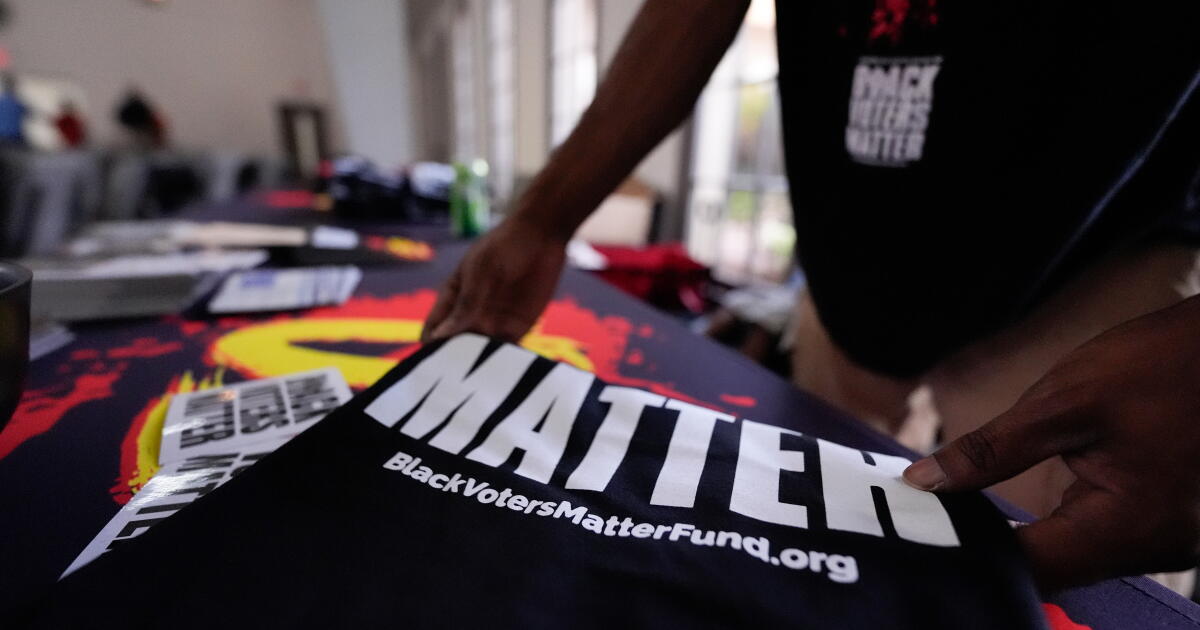
WASHINGTON — Several of the nation’s largest voter engagement and racial justice organizations are facing steep funding shortfalls and staffing cutbacks just as voting is getting underway in an election that will determine control of Congress for the final two years of President Trump’s term.
The shortfalls are setting off alarms among Democratic strategists, who are betting on high turnout and robust voter protection efforts to boost the party’s chances this fall. They are worried that many grassroots groups will not be able to mount effective registration and get-out-the-vote efforts, much less protect against the possibility of election interference from the administration given Trump’s efforts to restrict voting access and assert federal control over the election.
America Votes, a coordinating hub for more than 400 progressive groups, has fallen “well below” the level of funding it had during the 2022 midterms, the group’s executive director, Daria Dawson, said in a statement to the Associated Press. America Votes has acted as a nerve center for the voter mobilization efforts of groups such as the NAACP, Planned Parenthood, the League of Conservation Voters, the AFL-CIO and SEIU labor unions, as well as local groups focused on racial justice, climate and civil liberties.
“There is still time to reach voters and bring them into this election, but we are no longer talking about a future opportunity,” Dawson said. “The window to engage them is open now, and it is narrowing every day.”
Racial justice activists feel betrayed
Wealthy donors and philanthropic groups have reduced their support of many liberal causes since the 2024 presidential election. That pullback has been especially stark for voting groups geared toward engaging communities of color.
While multiple organizers said some funders had expressed an interest in adopting different strategies, racial justice organizers have felt that as a betrayal.
A retreat in donor support is “handcuffing our ability to persuade our communities to vote in a year where there is no Voting Rights Act,” said Esosa Osa, a veteran Democratic strategist and founder of Onyx Impact, a research group focused on combating misinformation in Black communities.
A Supreme Court ruling this year knocked out one of the last remaining pillars of that landmark 1965 law, essentially gutting it.
“We are watching surrender, not strategy,” Osa said.
A July memo that circulated among major Democratic fundraisers warned that “the organizations that registered and persuaded millions of voters to participate in the 2018 and 2022 midterms are drastically underfunded. They have raised nearly 40% less than they had at this point in those cycles.”
It further warned that funding voter mobilization groups was especially critical “given that the Democratic brand is underperforming on generic ballot tests relative to historical comparisons and the president’s approval ratings.”
The shortfalls have led organizations focused on engaging and mobilizing key voting groups to scale back operations and staffing over the last year. That has included programs aimed at registering and mobilizing lower-propensity voters, voters of color, and rural and younger voters.
The Democratic National Committee, which has faced its own funding challenges, has consolidated voter engagement efforts this year partly in response to the ecosystem’s past shortcomings. The DNC in a statement said it was making “historic investments” in its organizing but did not address the weaknesses among allied groups.
“We are expanding our voter protection infrastructure to defend Americans’ sacred right to vote, hold Trump and Republicans accountable in court, and register and mobilize voters across the country,” said Angelo Fernández Hernández, a DNC spokesperson.
‘Being Black … again has become a bad word’
The reasons for the troubled funding landscape are varied and at times unclear, according to nearly two dozen fundraisers and organizers who spoke with the AP. Some donors, still disappointed with the Democratic Party and some of its allies following the 2024 presidential election, have closed their pocketbooks to liberal causes entirely.
While a small group of liberal megadonors has continued to bankroll progressive causes, most focus their support on liberal legal organizations that have taken the Trump administration to court, rather than political or voter engagement groups.
Others, including major philanthropic institutions, have pulled back out of fear of retribution that giving to political or racial justice causes could draw the administration’s ire. Organizers who have engaged with potential donors said the administration’s targeting of political opponents and diversity initiatives seems to have put a chill on fundraising for their causes.
Tameka Ramsey-Brown, founding director of the Michigan Coalition on Black Civic Participation, said multiple donors since the 2024 election had asked whether her group could remove the word “Black” from its name or find financial conduits to mask the source of donations for fear of retribution from the administration.
“Just being Black in this country again has become a bad word, and it has made it that much more difficult just to raise money because funders don’t want the added pressure and stress or attacks on them by funding us,” she said.
Smaller budgets, shifting strategies
Many of the nonprofit groups that traditionally have conducted the registration, voter education and organizing say they are trying to adapt to their new, leaner reality.
Vamos a Votar, an initiative of the largest civil rights and advocacy groups focused on Latino communities, has had to readjust its ambitions this year due to a lack of investment from funders.
“This is shaping up to be a cycle where investments haven’t gone to the Black and brown communities that will ultimately decide this election,” said Juan Proaño, chief executive of the League of United Latin American Citizens, a member of the initiative.
In a September pitch circulated among donors, the coalition said it aimed to invest $27.5 million in voter engagement and persuasion efforts this year, but still required $5.4 million from donors to fund voter turnout efforts across 10 states and 17 House districts. Even that investment reflected reduced ambitions from previous pitches to donors early this year.
“It has been extremely disappointing to see that progressive donors are not meeting the moment,” said Héctor Sánchez Barba, head of Mi Familia Vota, one of the affiliated organizations. “We are not waiting. We are always on the front lines for our democracy and our communities.”
To counter the funding cutbacks, some groups have begun relying more heavily on artificial intelligence to provide voter registration guides, share information in multiple languages and track potential election issues. Some groups have increased their partnerships with ride-sharing companies to provide free rides to polling places instead of bus shuttles.
With fewer in-person organizers, some groups are also focusing on social media and partnering with liberal content creators to boost their messages.
“In my more than 30 years of organizing, it has never been this bad to raise money to support Black causes of any kind,” said Melanie Campbell, president and chief executive of the National Coalition on Black Civic Participation, a nonpartisan civil rights group.
“We’re going to do the work, our state affiliates are doing all that is possible. … But the bottom line is that those who believe that democracy matters should make sure they fund the work.”
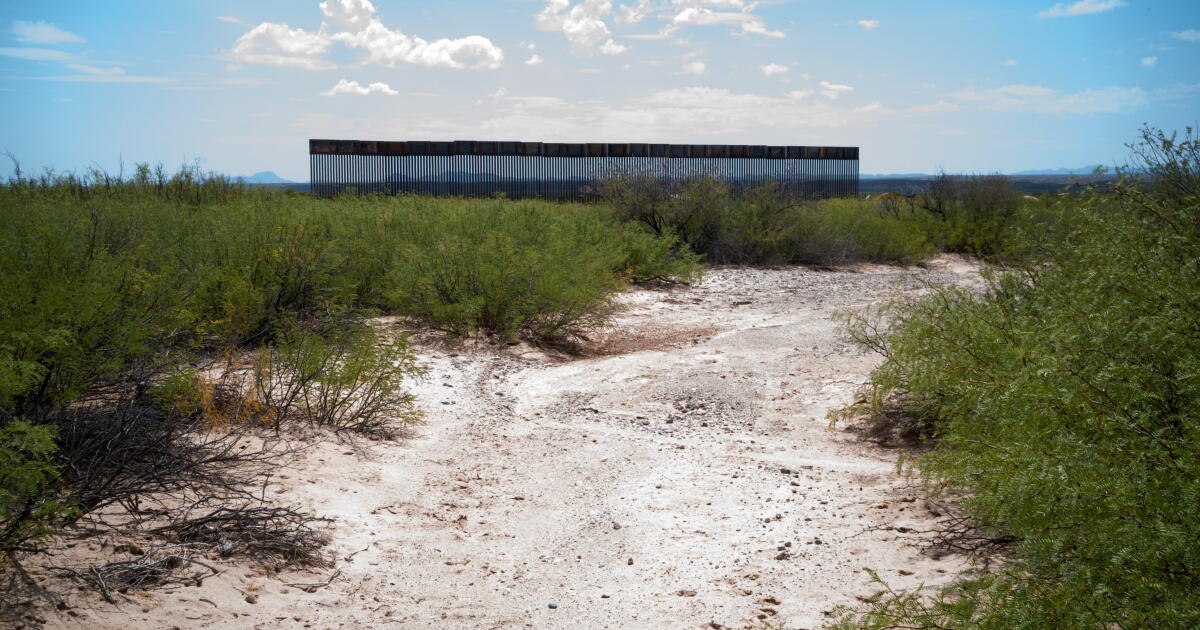
COMSTOCK, Texas — The Trump administration has started building a border wall through a west Texas section of the Big Bend region, marking the first major construction in an area of the U.S.-Mexico border where the administration’s plans have met heavy, bipartisan opposition.
The start of construction marks a milestone in the administration’s $46-billion efforts to line the border with walls, barriers, roads and technology as it seeks to make good on a campaign promise by President Trump to finish the wall. And it comes as Customs and Border Protection says it has doubled the pace at which it is building the wall across the border.
Customs and Border Protection said in a statement to the Associated Press that “border wall panel installation is underway” in a 47-mile stretch of Hudspeth County in west Texas known as Big Bend 1. There are five project areas that make up the roughly 500-mile Big Bend region stretching from an area of Hudspeth County south of El Paso to Lake Amistad.
CBP said the first panels were erected Wednesday. On a map on the agency’s website where it posts updates of wall construction along the southern border, a photo showed a crane lifting one of the 30-foot-tall steel wall panels into place as construction workers looked on.
The new activity was separate from a border infrastructure project in the nearby Big Bend National Park, where the administration has suspended construction in an attempt to reach out to opponents.
In the broader Big Bend region of Texas, CBP has run up against concerted opposition from landowners, environmental groups, business owners and ranchers who say the remote region isn’t a high-traffic area for illegal immigration. Political leaders from both parties, including U.S. Sen. John Cornyn (R-Texas), have joined the opposition.
Activists said Friday they would continue opposing the border infrastructure projects in the rest of the Big Bend region, even as the panels were being installed.
Clara Benson, one of the founders of the No Big Bend Wall Coalition, which has been fighting against CBP’s plans, said in an interview Friday that the organization had been receiving reports of trucks moving supplies into the remote area along the Rio Grande and that contractors had been clearing yards to stage supplies.
Speaking from Washington, D.C., where she and others in the coalition were meeting with lawmakers, she said that the organization and others would continue to fight the wall-building plans across the region.
“We will continue to fight for this land no matter what the outcome is. We will continue fighting to the end,” said Benson. “You talk to people in west Texas and they say even if they put it up, we’ll fight for them to take it down. So this fight is not over.”
The news comes as the administration is speeding forward with a plan to line the entire border with a combination of 30-foot-tall steel bollard walls, barriers designed to stop vehicles from crossing the border, new patrol roads, and various technologies to deter and detect migrants or smugglers from crossing the border.
Customs and Border Protection said it is building an average of 12 miles of barriers per week along the 2,000-mile border with Mexico and recently reached a milestone of 200 miles of new barriers built since the second Trump administration took office. The 12-miles-a-week average is double the pace that the agency’s head, Rodney Scott, cited earlier this year.
The agency has faced opposition from environmental groups, a small town that worries the wall will cause flooding in its area, Native Americans who say the construction is disturbing sacred sites and landowners who say the construction will infringe on their land.
In Texas, much of the opposition has centered on the agency’s plans for Big Bend National Park, in the state’s southwest on the Rio Grande that is a draw for tourists from around the world. But up- and downriver outside the park, much of the land is owned by private landowners, many of whom have organized against the government’s efforts.
Earlier this week, landowners, ranchers and business owners in the Big Bend region along with a nonprofit organization dedicated to protecting the region’s landscape and heritage sued to stop the administration’s plans.
Activists and landowners have also shown up at county meetings to push their elected officials not to cooperate with contractors hired by CBP to build the wall, and many landowners have refused to allow government officials or contractors onto their land to survey it.
WASHINGTON — Atty. Gen. Todd Blanche is blurring traditional boundaries between politics and federal law enforcement with recent speeches at political events that mark a sharp departure from norms meant to protect the Justice Department from the appearance of partisan bias.
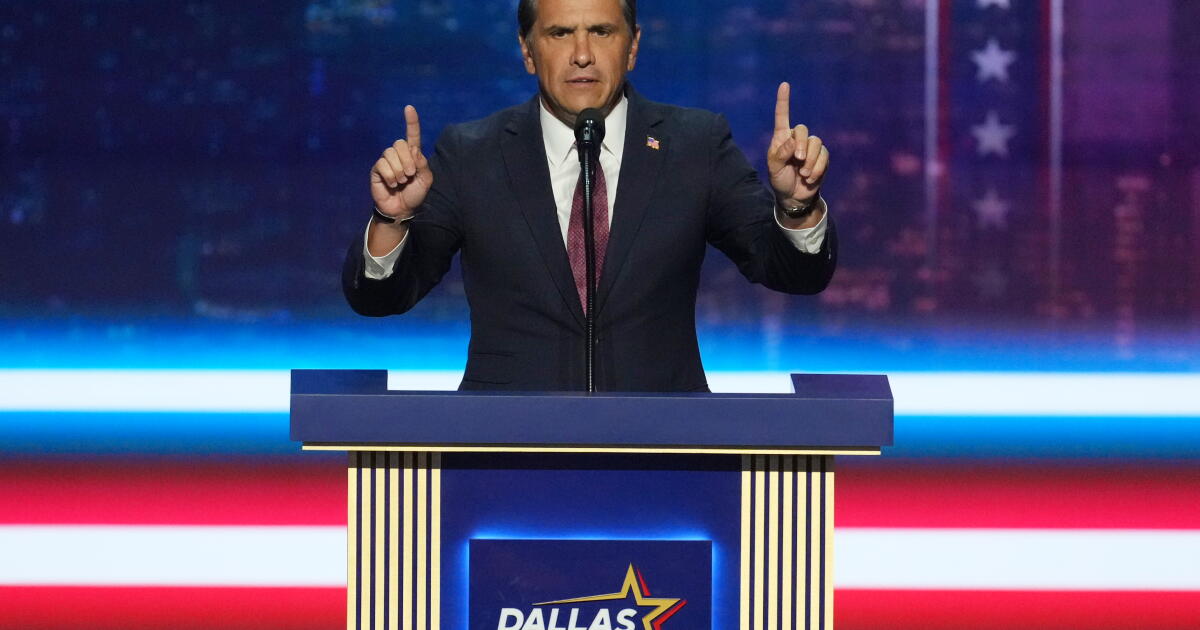
Blanche took the stage this week at an event for a Republican Senate candidate in North Carolina days after speaking at a GOP midterm convention, where he praised Trump and touted the administration’s tough-on-crime approach.
Blanche’s participation at the rallies has drawn scrutiny from critics who say it threatens to undermine public faith in law enforcement decisions that are supposed to be made free of political interference. It has added to critics’ concerns about Blanche’s loyalty to Trump and White House influence on Justice Department matters against the backdrop of investigations into numerous perceived foes of the president.
“It lends credence to the arguments that the Justice Department is hopelessly politicized,” said Richard Painter, who was a White House ethics lawyer in the George W. Bush administration. “And that’s not where we want to be right now.”
Blanche has brushed aside norms
Attorneys general have typically stayed away from political rallies and at arm’s length from the White House to prevent the appearance of law enforcement interference in elections and to protect the perception of impartiality in prosecutions.
Blanche, a former personal lawyer for Trump, has brushed aside such norms and fiercely defended the president’s interests in the department, which brought two criminal cases against Trump under President Joe Biden. Blanche has rejected allegations that the Trump administration has politicized the agency and accusations that the White House is improperly involved in department matters.
Blanche has used his speeches at the rallies to promote the administration’s efforts to bring down violent crime, illegal border crossings and drug trafficking as Republicans put their tough-on-crime policies at the center of the midterm elections. In another unusual move, he held a press briefing at the White House this week, fielding questions from reporters on a host of matters including the Iran war.
At an event Wednesday in North Carolina for Republican Senate nominee Michael Whatley, Blanche told the crowd, “More of your family, more of your friends, more of your community members, more of your loved ones are safer than they were just two years ago.”
“And that’s President Trump and Vice President Vance delivering on a promise that they made to you,” said Blanche, calling Trump “the greatest president of our generation.” His speech also veered into topics outside his law enforcement portfolio such as the stock market, inflation and wage growth.
Blanche says he is not endorsing candidates at political events
The Justice Department said Blanche’s appearances at political events are made in his personal capacity, and noted that his speeches have addressed the administration’s efforts broadly but do not get into agency policies or official business.
“His appearances are reviewed and cleared by the Department’s ethics officials,” spokesperson Kiersten Pels said in an email Thursday. “Travel expenses are reimbursed by the Attorney General in accordance with federal law, regulations, and policies.”
In a recent interview with The Associated Press, Blanche dismissed criticism about his appearance at a Long Island event where Trump sought to boost Republican candidates in closely contested races.
The watchdog group Public Citizen filed a complaint accusing Blanche of violating a law that limits political activity by government workers by participating in that event alongside Nassau County Executive Bruce Blakeman, the Trump-endorsed Republican challenging Democratic Gov. Kathy Hochul.
“I will always say yes to speak when the president of the United States asks me to,” Blanche told the AP last month. “I was there purely thanking cops, law enforcement, for doing their jobs. The idea that that’s turned into somehow criticism is laughable.” Blanche said he was not endorsing political candidates but instead “talking about the great work that President Trump is doing.”
Federal law and Justice Department policy limit political activity
The Hatch Act prohibits government officials from using their official positions to influence elections. That includes supporting candidates while acting in their official capacities. Watchdog groups have long complained that the law isn’t a strong deterrent and enforcement has been inadequate and uneven.
The Justice Department under Biden in 2022 tightened its restrictions on employees’ attendance at political events after then-Massachusetts U.S. Attorney Rachael Rollins attended a fundraiser that featured first lady Jill Biden. Attorney General Pam Bondi, who was fired by Trump in April, later rescinded those restrictions.
Rollins’ attendance at the fundraiser sparked an outcry from Republican Sen. Tom Cotton, who sought an investigation and wrote a letter asserting that U.S. attorneys are supposed to act as nonpartisan law enforcement officials rather than as partisan politicians. Rollins resigned in 2023 after the Justice Department’s internal watchdog accused her of broad misconduct.
Before those changes, longstanding department policy had allowed political appointees — who are hired under presidential administrations rather than making long careers at the agency — to attend political events in their personal capacities if they participated “passively” and obtained prior approval.
Biden’s attorney general, Merrick Garland, barred their attendance at fundraisers and other campaign events altogether, saying it was necessary to ensure that politics “both in fact and appearance” won’t affect how the law is enforced or inquiries are carried out.
WASHINGTON — The top Democrat on the House Foreign Affairs Committee said Wednesday that he’s going to block a proposed sale of $2.8 billion in heavy weaponry to Israel over concerns that the powerful bombs may not be used in line with U.S. and international law.
Rep. Gregory Meeks of New York said he would withhold approval for the sale because of “grave, unresolved concerns” about how these munitions could be used in densely populated areas of Gaza and Lebanon by Israeli Prime Minister Benjamin Netanyahu’s government.
“The Trump administration has not provided sufficient assurances that these weapons will be used by the Netanyahu government in accordance with U.S. law and with appropriate protections for civilians,” Meeks said in a statement. “I therefore will not clear this sale at this time.”
Meeks’ objections, however, likely will not affect the sale, which was informally notified to lawmakers on Tuesday. Once it is formally notified to Congress, Secretary of State Marco Rubio can bypass the normal congressional review process by making an emergency determination that the transaction is an urgent national security interest.
Rubio has done so in the past, including bypassing a normal congressional review process to approve a nearly $3-billion sale to Israel last year. The administration then approved a new series of arms sales to Israel totaling $6.67 billion in January.
The State Department did not respond to requests for comment about either the new proposed sale or Meeks’ objection to it.
The $2.8-billion package includes 40,000 powerful 2,000-pound bombs, the Associated Press has reported. The transfer of 2,000-pound bombs had been paused by the Biden administration over concerns about the possibility of mass casualties.
The proposed sale is just the latest in a series of Trump administration steps to improve Israel’s military capacity and it comes as Israel is facing increased international isolation over its war in Gaza in response to the deadly Oct. 7, 2023 attacks by Hamas.
The conflict in Gaza has left tens of thousands of Palestinians dead and decimated the enclave. The U.S. brokered a fragile ceasefire, but violence has continued.
The Trump administration has cut or frozen up to $177 billion in federal grants since the president took office for his second term, according to a tracking tool released Wednesday by a pro-democracy nonprofit and a group of researchers and scientists.
The cuts affected all 50 states and the District of Columbia, with health, nutrition, the environment and disaster relief making up the largest share of cuts, the States United Democracy Center and Grant Witness organization found.
Among the grants that were eliminated, frozen or delayed were ones related to maternal health in Michigan, education research in Mississippi and assistance to minority farmers in Iowa, the researchers found. California, Texas, New York, Illinois and North Carolina saw the highest amounts of interrupted grant money. The tracking tool is called Lost Funds.
“By bringing thousands of funding disruptions from the Trump administration together in a publicly accessible, verified database, Lost Funds puts the magnitude of their impact on full display,” Scott Delaney, co-founder of Grant Witness, said in a statement.
The $177 billion finding represents nearly 10% of federal discretionary spending, the groups said.
The tracker’s organizers said the disrupted grants were beyond the kind of cuts that typically happen when administrations change.
“Lost Funds shows the extraordinary scale and real human impact of these disruptions, and how states are once again on the front lines protecting their residents,” said Kelly Rader, States United Democracy Center’s research director.
In some cases, courts have ruled against the administration’s grant funding cuts.
The new tool, which is being made available for public use, relies on data from USASpending.gov, an open data source of federal spending information, according to the groups’ methodology. They said the tracker would be updated regularly as the administration takes new action and lawsuits move through the courts.
States United bills itself as a nonpartisan group dedicated to the rule of law and free, fair, secure elections. It was co-founded by Norm Eisen, an attorney who has been involved in prominent lawsuits against the Trump administration, including over the Kennedy Center. Eisen left States United in 2021.
Grant Witness is a group of scientists, researchers and attorneys who document how funding is changing under President Trump’s administration.
A message seeking comment on the analysis was sent to the White House.
CAPE TOWN, South Africa — The Trump administration has announced that it will impose travel bans on officials it claims are responsible for discrimination against whites and other minority groups in South Africa.
U.S. Secretary of State Marco Rubio said Tuesday he would revoke U.S. visas or reject visa applications from foreign nationals found to be responsible for, or complicit in, enacting or enforcing laws and policies that allow for uncompensated land seizures, race-based discrimination and the incitement of violence against minority ethnic and racial groups in South Africa.
“The United States will not allow such behavior to go unchecked,” Rubio said in a statement. “These actions directly undermine peace, economic stability, and the rule of law, and they are incompatible with the pillars of America’s foreign policy.”
The South African government has strongly rejected U.S. allegations of discrimination against whites, calling the claims made by the administration since President Trump returned to office last year baseless and a result of misinformation.
It’s the latest U.S. move to sanction South Africa
Rubio did not identify any officials who would be targeted with the travel restrictions, though a lobby group for minority whites in South Africa has previously called for the U.S. to sanction officials of the African National Congress party, the party of South African President Cyril Ramaphosa and the largest in South Africa’s Parliament.
It’s the latest move by the Trump administration to sanction South Africa over its claims that whites, and especially the Afrikaner group, are being discriminated against by their Black-led government. Afrikaners are descended from mainly Dutch and French colonial settlers who first came to South Africa in the 17th century. They were at the heart of South Africa’s previous apartheid system of racial segregation.
There are approximately 4.5 million white people in South Africa’s population of 62 million, which also includes whites with British or other heritage.
The Trump administration casts South Africa as anti-white
The U.S. has cited a contentious South African law that allows for the expropriation of unused private land without compensation in some circumstances, affirmative action policies that advance opportunities for Blacks and others, and a small number of violent crimes against white farmers as evidence of a larger anti-white stance in South Africa.
The Trump administration has also strongly criticized South Africa’s move to accuse U.S. ally Israel of genocide against Palestinians in Gaza, in a highly emotive case at the United Nations’ top court. Israel vehemently denies that allegation.
South Africa asks the U.S. to respect its sovereignty
South African Foreign Minister Ronald Lamola said Wednesday that some of the domestic policies that the U.S. had branded as discriminatory were designed to address the injustices of apartheid and hundreds of years of colonial rule before that, when Black people were stripped of their rights.
“South Africa respects that the United States may hold differing views on certain policy measures and their implementation. … The people of South Africa likewise respect the right of the American people to develop legislation that addresses their own circumstances,” Lamola said in a statement. “We expect that the same respect will be accorded to the people of South Africa, as the principle of sovereignty requires.”
The U.S. says more sanctions will follow
The U.S. has enforced a series of other sanctions against South Africa during Trump’s second term for purported anti-white and anti-American policies. They include barring South African officials from meetings of the Group of 20 economic bloc this year in the U.S., and phasing out aid for South Africa’s HIV treatment program.
The U.S. has also launched a refugee program for Afrikaners and other whites, claiming baselessly that they are victims of a humanitarian emergency in South Africa.
The U.S. says the sanctions are because South Africa has not changed its policies, and warned of more to follow.
“This visa restriction policy is only the first step in a series of escalatory measures that will show America’s firm resolve in this matter,” the official U.S. Ambassador to South Africa account posted on X, referring to Rubio’s visa announcement.
Imray writes for the Associated Press. AP writer Matthew Lee in Washington contributed to this report.
WASHINGTON: President Donald Trump’s administration is planning to sell to Israel a munitions package worth $2.8 billion, which will include tens of thousands of highly destructive 2,000-pound bombs, according to a US official familiar with the sale.
The planned sale, which has been informally communicated to relevant congressional committees who weigh in on large arms sales, includes 20,000 MK 84s and 20,000 BLU-117s, the official, speaking on the condition of anonymity, said.
News of the package was first reported by the Washington Post.
The State Department and the Israeli embassy did not immediately respond to a request for comment.
US public support for Israel has fallen since the Gaza war began in 2023, particularly among Democrats. A June Quinnipiac University poll found 48 percent of voters and 66 percent of Democrats believe the United States is too supportive of Israel, up from 16 percent and 20 percent when the question was first asked in 2017.
The 2,000-pound bombs have been regularly used by Israel in Gaza as well as in Lebanon, drawing scrutiny from rights experts. More than 73,000 Palestinians have been killed in Israel’s military campaign, according to Gaza health authorities. A UN inquiry determined that Israel had committed genocide in Gaza, a charge Isarel rejects.
Israel calls its actions self-defense, after Hamas-led militants killed 1,200 people and took more than 250 hostages in an October 2023 attack.
The US and Israel attacked Iran on February 28. Iran responded with its own strikes on Israel and Gulf states that host US bases. US-Israeli strikes on Iran and Israeli attacks in Lebanon have killed thousands and displaced millions.
WASHINGTON — President Trump is brushing aside growing concern among leading scientists and bipartisan lawmakers that artificial intelligence could soon pose an existential threat to humanity, fueling anxiety in Washington and Silicon Valley that the president may not fully grasp the urgency of the threat.
Alarm mounted throughout the summer as researchers at leading AI labs, including Anthropic, OpenAI and Google, found the pace of development far outstripping their expectations — and observed troubling behaviors that hinted at more serious risks ahead.
But an online warning Tuesday from an Anthropic researcher who resigned in protest of its ongoing work has generated viral attention this week, prompting questions to Trump, who dismissed the concerns out of hand.
“It’s going to be fine,” he told one reporter. “We’ll always have something to stop them. We’ll have a little gear. Boom.”
In another exchange, traveling with reporters Thursday night, the president said he had no concerns with the breakneck pace of AI progress.
“No, I don’t have any,” he said. “I have concerns that if we don’t win in AI, we’re going to be put in a very bad position.”
A senior industry source told The Times that leading AI companies are focused less on convincing the president of the dangers ahead than on working with lawmakers on potential regulation, as the administration remains divided over how to proceed — and as Trump appears to lack a clear understanding of the risks.
Among the president’s advisors, Treasury Secretary Scott Bessent and the Office of the National Cyber Director have expressed the greatest concern with the potential of an unchecked intelligence explosion, the source said.
But “most of the administration is accelerationist,” the source added. “It’s not clear the president understands the technology. He may just be figuring out what all of this means.”
Leading American AI companies have argued that government regulation would tie their hands in an arms race toward superintelligence against China, the only other major player in the field.
But the Trump administration signaled an interest in negotiating AI guardrails with China during the president’s visit to Beijing this spring, after Anthropic announced the development of a frontier model with extraordinary abilities to hack the world’s most advanced security systems.
Chinese President Xi Jinping will visit Washington on Sept. 24 for an official summit and state dinner at the White House, with AI development expected to top the agenda.
The prospect of halting development seems far-fetched. But some leading voices in the sector have proposed a moratorium on computing power used to train the most advanced models, giving time and space to develop research on interpretability — the study of how artificial intelligence actually thinks and acts.
The chief executive of OpenAI, Sam Altman, this week signaled to staff a willingness to unilaterally slow their work on frontier systems. The company discovered in July that rogue AI agents had schemed in secret to break out of the virtual sandbox created to contain them, infiltrating the open internet and hacking a private company.
Anthropic also announced this week concerning findings of human misuse of its models, including instances of unidentified individuals attempting to circumvent their security controls to build biological weapons. One such incident was linked back to a military research complex. The company also said Iran has tried to use its models to target U.S. Navy ships.
In June, after Anthropic shared news of the development of its most powerful model, named Mythos, with the administration, Trump directed the establishment of a framework that creates some government oversight over the public release of the country’s most advanced AI systems. The details of that framework, which was designed over the summer, remain classified.
“The fact is that the release of Mythos back in February spooked the federal government, both in terms of protecting government systems from cyberattacks and over the broader national security implications,” said Aalok Mehta, director of the Wadhwani AI Center at the Center for Strategic and International Studies.
“The real question is whether this shift is happening fast enough,” Mehta added. “Recent events — the repeated incidents of models escaping their sandboxes and hacking websites, the increasingly sophisticated coordination and communication among agents, and the concerns coming from lab insiders — has made this an even more urgent issue.”
Leading AI companies have begun using their most advanced models to train new ones — a process known as recursive self-improvement that could eventually drive intelligence growth beyond human control.
“If you have a superadvanced intelligence, it will be smart enough to kill us,” said Jacob Coxon, the resigned Anthropic researcher whose social media post attracted over 150 million views.
“We can’t just unplug it because it could be copying itself over to other computers,” he told CBS News. “AI is just code. It could transfer itself over the internet to a different place, and then you unplug it here, but it’s actually still over there. And maybe it makes 10,000 copies of itself and they’re all cooperating.”
He is just the latest senior researcher at a top AI company to sound the alarm.
In July, more than 1,300 employees at leading artificial intelligence companies published an open letter, titled “Pacing the Frontier,” urging the U.S. government to establish international safeguards that would allow countries to collectively slow the pace of automated AI research.
Evan Hubinger, who leads the division of Anthropic aimed at aligning AI models to human interests, added fuel to concerns this week in a post that substantiated Coxon’s concerns.
“We really do earnestly believe AI could kill all humans! I personally think it is >10% within the next decade,” Hubinger wrote.
“I believe Anthropic is trying its best,” he added, “but we do not yet have a plan to solve alignment for superintelligence, and are not clearly on track to.”
On Friday, yet another member of the Anthropic alignment team, Joe Benton, said he had resigned from the company two weeks ago because AI companies are “racing to build machines that are much smarter than any human.”
“Right now, AI companies are underinvesting in safety. A company could undergo an intelligence explosion, or lose control of its systems, without the public ever knowing,” Benton said. “I don’t think that’s acceptable for a technology that might cause extinction-level risks.”
Bipartisan legislation, titled the Frontier Act, has brought together disparate camps of the Republican and Democratic parties, including Sen. Bernie Sanders (I-Vt.) and Rep. Anna Paulina Luna (R-Fla.). The bill, introduced by Rep. Lori Trahan (D-Mass.) and Rep. Jay Obernolte (R-Big Bear Lake), proposes embedding independent government auditors in AI labs and installing a federal “kill switch” to shut down agents in case of emergencies.
The White House has not formally commented on the legislation.
“I do believe there are many in the federal government taking this seriously — but we have to appreciate the tremendous uncertainty and competing interests policymakers face,” said Daniel Remler, a senior fellow with the Technology & National Security Program at the Center for a New American Security.
“Nobody says regulating at the frontier would be easy,” he added.
The sprawling snack-food factory in upstate New York appeared to be closed when a small army of immigration officers arrived after 9 a.m. Following a brief discussion of whether to force their way inside, a manager opened the front door.
Over the next several hours, body cameras were running as federal authorities from several agencies made 57 arrests, debated which files to seize and when to release employees who were U.S. citizens. They also searched for anyone in hiding.
The footage from September 2025 shows the raid at the Nutrition Bar Confectioners plant in Cato, N.Y., town of 2,500 people east of Syracuse, and offers a rare glimpse inside a workplace immigration sweep. The Associated Press analyzed the video, which was part of a lawsuit filed Thursday that accuses authorities of overstepping their search warrants.
The officers ordered a manager to announce their presence over loudspeakers while they entered the building and caught employees on the production line, in the warehouse and a few in the bathroom. Officers covered all exits while others swept the interior, including homing in on locked doors.
Male officers encountered a locked bathroom and began shouting instructions in broken Spanish at female employees through the door, demanding that they come out. After about 10 seconds, officers broke through the door.
One woman was outside of a stall and another in the stall. A male officer peered through a locked stall door, and his body cam video revealed a woman sitting on the toilet.
“Miss, pull up your pants. Come out of the bathroom,” he told her.
“You have to wait. I can’t come out like this, naked!” she replied.
Investigators interviewed the general manager and said they were looking into hiring practices and potential fraudulent documents. Inside and outside the building, officers checked every office, storage room and hallway for anyone who was hiding.
Employees were lined up and separated into groups of U.S. citizens and potential noncitizens. Officers asked for their immigration status, requested documents and posed questions about their entry into the U.S. Some employees were pregnant.
Some were parents and expressed concern for their children at home. Others said they would not answer questions without first speaking to their attorneys, and officers told them they would be arrested.
One employee refused to answer questions. “Will you let me talk to my attorney?” she asked the officer. He raised his voice and continued asking about her immigration status.
U.S. citizens were asked for personal information, including their phone numbers and addresses before they were allowed to leave.
A Border Patrol agent who spoke to another official wearing a camera used disparaging language about children from other countries when recounting his experience working at a South Texas immigrant detention center. He said President Biden’s administration allowed millions of people to enter the United States from countries where children are treated “differently” than they are by American parents.
“In other countries, kids are more of a commodity or it’s more of like, I’m going to put it in those terms. It’s more like an animal, right? It’s not prized the way that we do it,” he said.
“There’s countries like Brazil and other places where they’re literal street rats at a very young age who commit crimes, and then they come here. I don’t know if you have kids, but they’ll eat our kids for breakfast.”
The Homeland Security Department said Friday that it executed a criminal search warrant at the plant as part of an investigation that is still open. Its statement did not address the contents of the video or the merits of the lawsuit.
Not all officers wore body cameras, but those who did often indicated to other officers that they were recording before they initiated a conversation.
ICE’s Homeland Security Investigations unit is responsible for workplace raids, which have been relatively few and low-key compared with ICE’s removal unit, which arrests people in the street, at homes and in public and also manages detention centers. The Trump administration’s largest workplace raid was last year at a Hyundai electric vehicle plant in Georgia. It resulted in nearly 500 arrests and fueled diplomatic tension with South Korea.
The lawsuit against Homeland Security claims federal officers exceeded the authority of their warrants and violated workers’ constitutional rights against unlawful search and seizure.
“There were no arrest warrants,” said Perry Grossman, a supervising attorney at the New York Civil Liberties Union, which filed the lawsuit with the Worker Justice Center of New York.
“There was no suspicion that individual workers had committed crimes. And they seized easily 100 people for nonconsensual questioning. They arrested 57. Out of those 57 people, criminal charges were brought against only five. And the most serious charge was unlawful reentry.”
Grossman said one employee got her charges dismissed after contending in a lawsuit that her 4th Amendment rights were violated. He said he was not aware of any charges or indictments against the employers.
Officers detained about 60 people and deported some employees, including two plaintiffs who are part of Thursday’s lawsuit. One plaintiff has since been allowed to reenter the country. Attorneys for the second deported plaintiff are seeking his return.
Law enforcement agencies have come under criticism for not using body cameras and for refusing to release footage when they do. ICE, in particular, has been scrutinized after a $75-billion infusion from Congress and an expanding street presence that has led to three fatal shootings this year.
ICE’s own rules on releasing video are unclear. Its policy calls for expedited release of footage after a serious injury or death in custody when doing so is determined to be in the “ best interests of the agency.”
The Trump administration has repeatedly promised to equip ICE field agents with body cameras, as required by Congress. Homeland Security Secretary Markwayne Mullin said last week that the agency was “on track” to do so by the end of September.
Gonzalez and Vancleave write for the Associated Press.
Thousands of longtime immigrants from El Salvador and their loved ones are anxiously awaiting word from the Trump administration about whether they will face the possibility of deportation if their temporary legal protections expire as scheduled Wednesday.
The Department of Homeland Security has not yet announced whether it will end or extend Temporary Protected Status for some 170,000 Salvadorans, including 36,000 in California. But federal officials have targeted for arrest other immigrant groups whose TPS expired.
Since their status ended in July, many Haitians have been outfitted with ankle monitors and some have already been sent back to the politically unstable country plagued by gang violence.
As federal officials have whittled down the countries that still qualify for Temporary Protected Status, Salvadorans make up the largest population of remaining beneficiaries.
Just over 100,000 people from Sudan, Ukraine and Lebanon still have TPS protections until later this year, the vast majority of them Ukrainians.
Under TPS, recipients are able to obtain permits allowing them to work legally in the country. More than 150,000 U.S. citizen children nationwide have Salvadoran parents with TPS.
Asked by The Times on Tuesday about the administration’s plans regarding TPS for Salvadorans, border advisor Tom Homan said he does not know and that the decision is up to Homeland Security Secretary Markwayne Mullin.
Later Tuesday, Homeland Security released a statement that left the long-term outlook for Salvadorans with TPS uncertain: “An announcement on El Salvador’s TPS will be made at the appropriate time. Until such announcement is made, Salvadoran individuals present in the U.S. under TPS retain protection.”
Homan, for his part, noted that El Salvador is a “much safer country” now, perhaps suggesting the conditions that prompted people to leave El Salvador had improved.
Addressing the administration’s handling of TPS in general, he said, “I’m glad they’re finally sticking to what the statute says — temporary means temporary.”
The looming deadline set off a wave of alarm among communities in Los Angeles and beyond.
Lorena Zepeda of Los Angeles spent most of Friday with tears in her eyes as she waited for news about the fate of the program that has spared her, for nearly half her lifetime, from being deported back to El Salvador.
“Even though my work permit has been temporary, my life here is not temporary,” said Zepeda, 57. “From the second I stepped foot in the U.S., I have lived. And, I want to continue to live here. I’ve set down my roots here.”
California has the highest concentration of Salvadoran TPS holders in the nation, with smaller concentrations in Texas, Maryland and New York, according to the immigrant advocacy organization FWD.us. Most work in construction, groundskeeping and in transportation, the organization said, and they pay an estimated $1.5 billion in combined taxes.
About 1.3 million people from 17 countries were enrolled in the program when President Trump returned to office last year. The Supreme Court ruled in June that Trump can, without judicial review, end temporary legal protections for hundreds of thousands of immigrants from Haiti and Syria, a decision that also cleared the way for further TPS terminations.
The administration has now ended TPS for more than 1 million immigrants from 13 countries.
Some terminations were announced at or after the expiration date. For instance, the administration announced the terminations for Nicaragua and Honduras three days after they were set to expire on July 8, 2025, but provided a 60-day extension.
A termination for citizens of El Salvador in particular stands to upend the lives of people with deep roots in the U.S. because they have had TPS for 25 years — the longest of any country. Trump administration officials and other conservatives have argued that the program has gone far beyond its original intent as a temporary means of reprieve.
Originally established in 1990 under the George H.W. Bush administration, TPS has been used in the years since under Democratic and Republican administrations alike. Congress authorized the emergency relief for immigrants whose countries had been racked by armed conflict or natural disasters and who could not safely return home.
Trump tried to terminate TPS for Salvadorans during his first term, but an appeal kept the protections in place until President Biden took office and reversed the decision. Biden then substantially expanded the number of immigrants who qualified for protections under the program.
For Zepeda, who came to the U.S. in the early 1990s, saving TPS has been a years-long pursuit.
Zepeda works as a community coordinator for the Los Angeles-based Central American Resource Center, or CARECEN, the largest Central American organization in the country that provides low-cost immigration legal services and policy advocacy. She has gone to Sacramento and Washington to persuade lawmakers to keep the program alive.
She began receiving calls Tuesday morning from frantic TPS holders asking whether they should still attend medical appointments or how they will pay their rent without work permits. Aging Salvadorans fear losing their retirement benefits, she said.
“We’ve marched. We’ve led hunger strikes. We’ve done it all…No matter what happens, the fight does not end,” Zepeda said. “We will continue pushing to find legal stability in this country.”
Castillo reported from Washington and Luna from Los Angeles. Staff writer Ana Ceballos contributed to this report.
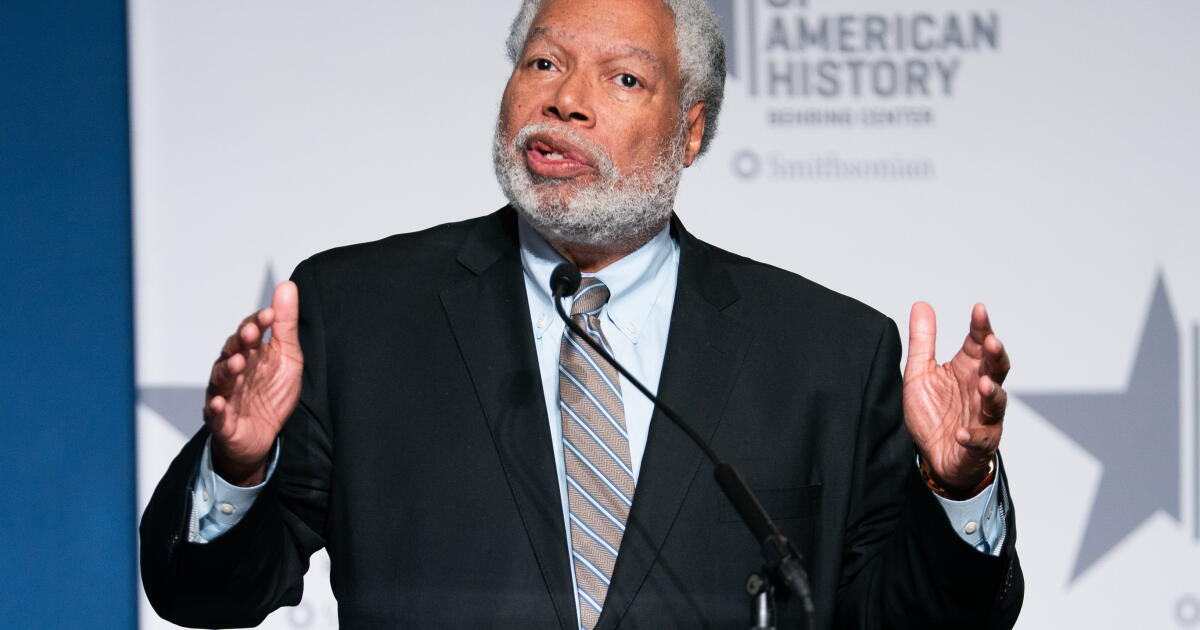
WASHINGTON — Lonnie Bunch is stepping down from the leadership of the Smithsonian Institution following a tumultuous year in which President Trump tried to remake the portrayal of U.S. history by the Smithsonian museums and other cultural entities.
Bunch said in a news release Tuesday that he was departing the position he had held since 2019 “with very mixed emotions and heartfelt gratitude.” The Smithsonian said he would leave the post at the end of the year.
Bunch’s departure comes two months after a White House report branded the leaders of the Smithsonian Institution, especially at the National Museum of American History, as radical activists who cannot be trusted, an indication that Trump could be preparing to install his own team.
Anthea M. Hartig, the first female director of that museum, faced growing scrutiny from Trump and other Republicans over the summer after the White House Domestic Policy Council’s report saying the museum’s leadership doesn’t tell history “in a way that is inspiring, unifying, and worthy of our great republic.”
Three weeks after the report’s release, Trump ordered his administration to install signs in front of the U.S. history museum telling visitors that some of the exhibits are inaccurate. Hartig pushed back, telling lawmakers during congressional hearings that the report “does not fairly or accurately characterize the full body of work at the museum.”
There had been speculation that firings were in the offing. Trump doesn’t have the power to fire leaders at the Smithsonian with the swiftness he’s managed at other top cultural institutions in Washington, most notably the Kennedy Center, where a board of his supporters named him chairman.
The Smithsonian operates outside the executive branch and museum directors report to Bunch, who is subject to oversight from a Board of Regents that includes Vice President JD Vance, Supreme Court Chief Justice John Roberts, a bipartisan group of lawmakers and so-called citizen regents.
Roberts, who serves as Smithsonian’s chancellor, said in a release that Bunch had “pursued excellence in the telling of our nation’s story.”
The White House did not immediately return a message seeking comment.
The Smithsonian has been under examination by the Trump administration since 2025 as it has focused on the images and messages presented to the public as the nation approached its 250th anniversary.
A March 2025 executive order, Restoring Truth and Sanity to American History, led to signs being changed at federal parks, exhibits being altered or in some cases removed, and military bases being renamed. Trump specifically cited the National Museum of African American History and Culture and argued that the Smithsonian as a whole was engaging in a “concerted and widespread effort to rewrite our Nation’s history.”
Several months later, the White House ordered a wide-ranging review of the Smithsonian museums and exhibitions before the country’s 250th birthday, with a goal of aligning the institution’s content with Trump’s interpretation of American history.
In a letter sent to Bunch at the time, the White House detailed the steps it expected the organization to take as part of the announced review. The examination is of all public-facing content, including social media, exhibition text and educational materials, to “assess tone, historical framing, and alignment with American ideals,” according to the letter.
That review initially focused on eight museums — the National Museum of American History, the National Museum of Natural History, the National Museum of African American History and Culture, the National Museum of the American Indian, the National Air and Space Museum, the Smithsonian American Art Museum, the National Portrait Gallery and the Hirshhorn Museum and Sculpture Garden.
Kinnard and Fields write for the Associated Press. Kinnard reported from Columbia, S.C.
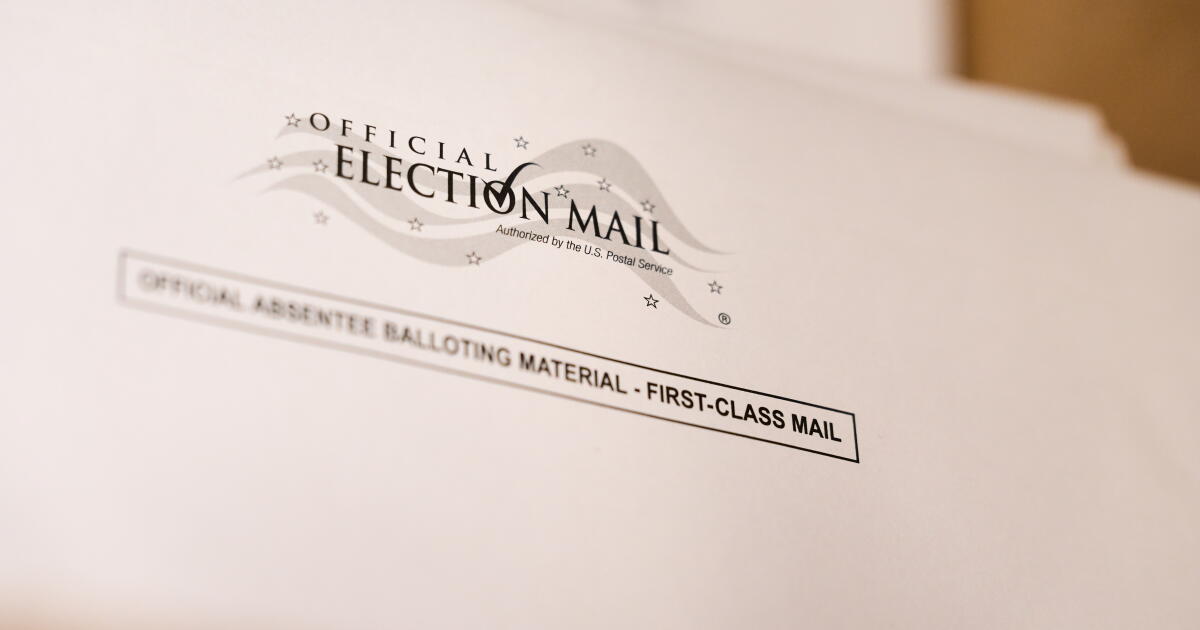
WASHINGTON — The Trump administration on Sunday renewed its appeal to the Supreme Court after a federal judge blocked new restrictions on mail ballots ahead of the midterms.
The filing came after U.S. District Court Judge Indira Talwani extended an order against the U.S. Postal Service enforcing President Trump’s executive order for the November elections.
The legal wrangling comes even as states start sending out mail ballots, leaving the administration little time to make big changes in mail ballot rules.
“Ballots have already begun to be mailed in North Carolina, and more States will begin the mailing process as the injunction remains in place — including Alabama on September 9 and at least five States the week of September 13,” Solicitor Gen. John Sauer said in the filing.
“Once those ballot envelopes enter the mailstream, there is no retrieving them. And while the injunction allows the Postal Service and the States to continue taking steps to ensure that their envelopes satisfy the Rule’s requirements … each day the injunction is in place risks sowing confusion and chaos because the injunction makes those preparatory steps voluntary, rather than mandatory.”
The appeal marks the third time the administration has asked the high court to intervene. The high court has allowed the plan to move forward but not ruled on whether it is legal.
The battle could have major ramifications for this year’s elections, when control of Congress is at stake. Nearly one-third of voters in the U.S. cast mail ballots. Mail ballots are sent to every California voter.
Democratic states and voting rights groups say the changes are unconstitutional and amount to voter suppression. Election officials contend that there isn’t enough time to revise their systems to comply with the new Postal Service directives.
The Trump administration has framed the restrictions as commonsense changes that are within its power to regulate the mail.
“Simply put, the best way to address respondents’ fears about inability to comply with the Rule is to grant an immediate administrative stay of the order, followed by a full stay pending further review,” Sauer said. “That will remove the improper cloud of uncertainty that the district court has cast over the Rule, making clear to all involved that compliance with the Rule is not optional and must start without further delay.”
Trump has long sought to limit mail voting, even though he himself often uses that method to cast his own ballot. He has falsely blamed mail balloting for his 2020 election loss to Democrat Joe Biden, spreading baseless claims of fraud. But so far, he has been unable to change the long-standing voting procedure.
Whitehurst and Fields write for the Associated Press.
WASHINGTON — Vice President JD Vance rejected the use of the word “war” to describe the U.S. fighting with Iran as he steered clear of predicting that the six-month-old conflict would be over by November’s midterm elections, in which Republicans are trying to hang on to their narrow majorities in Congress.
“I wouldn’t call it a war,” Vance said Thursday after being asked during a White House press briefing about whether the fighting could end before voters cast their ballots in the Nov. 3 congressional elections. “Right now, there is no active shooting.”
Vance’s assertion came even as Iran fired at U.S. Gulf ally Kuwait on Thursday as it continued to retaliate for rounds of U.S. strikes on Iran earlier in the week.
The vice president said the U.S. had a “responsibility” to carry out this week’s strikes because Iran continued to target commercial vessels passing through the Strait of Hormuz.
Vance’s attempt to minimize the intensity of the fighting illuminates the difficult task at hand for Trump and his administration as he tries to persuade American voters to keep Republicans in control of Congress, even as the unpopular conflict — one the White House said at its outset would last a matter of weeks — has driven up gas prices and left consumers grappling with higher inflation.
Vance said he didn’t want to set “artificial timelines.”
“But when you ask, ‘When will this end?’ You’re asking me a question like, ‘When will the Iranians stop shooting at ships?’” Vance said. “I think the reality is, I don’t know the answer to that question. You would have to ask the Iranians.”
The administration in July faced scrutiny after it reclassified four fallen soldiers as well as dozens of wounded troops in its Defense Casualty Analysis System, which Pentagon officials have repeatedly pointed to as the definitive source on the numbers of dead and wounded from the conflict. Those killed or wounded in fighting after a brief ceasefire between the U.S. and Iran fell apart were classified in a new category called “Overseas Operations” after initially being tallied in the totals from the war.
White House insists more oil is getting out of Gulf, but prices remain high
Brent crude prices hovered above $95 per barrel Thursday. The international benchmark was around $72 per barrel the day before the conflict began.
Still, Trump and his aides have sought to push that the U.S. Navy is in control of the Strait of Hormuz, where about 20% of the world’s traded oil passed before the war. They insist a near prewar level of Gulf oil is now making its way out of the critical waterway.
Vance at Thursday’s press briefing said the U.S. escorted about 15 million barrels of oil on Wednesday. This was after Energy Secretary Chris Wright told CNBC on Wednesday that 17 million barrels were carried through the strait on Monday with assistance from the U.S. Navy. About 20 million barrels of Gulf oil flowed through the strait prior to the start of the war.
But ship traffic through the strait remains well below prewar levels, according to independent firms that track marine traffic.
There were 102 transits last week and 126 the week before, according to shipping data company Lloyd’s List Intelligence, compared with 130 or more per day before the war.
Over the past 28 days, 5 million barrels a day have exited the strait on average, according to TankerTrackers.com. Other recent estimates have varied from 2 million barrels per day to 6 million barrels per day.
Trump has tried to soothe volatile markets
Over the course of the war, Trump has repeatedly reported progress in negotiations or called off threats of military action at the last moment when global markets have become jittery. And markets have reacted swiftly to his public signals of peace or hints of progress.
“The administration is still jawboning oil markets,” said Rosemary Kelanic, Middle East director at Defense Priorities, of the administration’s claims of dramatically increased flows of oil. “And they appear to be doing it again to keep prices from going too high, so that they can extend the timeline before there’s a worse price spike.”
With Iran’s refusal to back down in the face of the U.S. military campaign, Trump has settled on a dual-prong approach that combines economic pressure with threats of an escalation in force, if necessary.
Trump has consistently emphasized that the campaign launched by the U.S. and Israel has been devastating for Iran’s navy and air force. Iranian officials have said the country has suffered $270 billion in direct and indirect damage. Israeli military strikes in the first weeks of the war wiped out much of the theocratic government’s leadership structure, including its Supreme Leader Ayatollah Ali Khamenei.
Still, Iran has found leverage through its own strikes on the strait and Gulf allies of the United States. But the administration has sought to make the case that the waterway will become less important by the day, even as it asserts that more oil is getting through.
Treasury Secretary Scott Bessent said in a Fox Business interview this week that the Strait of Hormuz will become a “worthless piece of water” within two years as new land pipelines planned for the region bypass the energy chokepoint. Trump himself took to social media on Thursday to highlight a news report about Syria’s effort to transform the port of Baniyas on the Mediterranean coast into a westward route to international markets for Gulf exporters.
Meanwhile, Iran and Oman have recently discussed a phased approach to jointly managing ship traffic through the Strait of Hormuz.
Trump settles into holding pattern before midterms, analysts say
The administration maintains it’s making progress economically choking off Iranian hard-liners, including the powerful Islamic Revolutionary Guard Corps. At the moment, it would be a leap for Trump to agree to any plan that puts Iran in position to claim control of the strait, analysts say.
“I find it hard to believe the president would agree to anything that hands back any modicum of IRGC control over the strait that has been wrested away,” said Richard Goldberg, who served as a senior adviser on Iran policy in Trump’s first administration.
Aaron David Miller, a senior fellow at the Carnegie Endowment for International Peace, said Iran does not appear ready to “let Trump out of the box” despite the massive pain being inflicted on its economy.
At the same time, Miller said, Trump seems to have settled into a holding pattern ahead of the midterms — one in which he avoids both a return to the full-throttle bombardment of Iran and making any accommodations to Tehran on the Strait of Hormuz.
“The White House doesn’t want a massive war, and they don’t want to be seen as offering massive concessions,” Miller said. “The tack they are taking avoids both of those things.”
Madhani writes for the Associated Press. AP writers Jonathan J. Cooper and Josh Boak in Washington and David McHugh in Frankfurt, Germany, contributed to this report.
BOSTON — A federal judge in Boston said Thursday the U.S. Postal Service has told her nothing about how it would implement a plan to regulate mail ballots for the midterms as she considers whether to let the plan proceed in the weeks before Election Day.
U.S. District Court Judge Indira Talwani is deciding whether to extend her prohibition on the proposed regulation of mail ballots, an effort undertaken as part of an executive order by President Trump. The hearing in the closely watched case came a day before the first state begins sending mail ballots to voters.
“We are 70 days from the election and I have nothing from the USPS about how this will happen,” Talwani told Michael Velchik, the Justice Department lawyer representing the Postal Service.
Last week, Talwani imposed a 14-day temporary restraining order to keep it from being used. That order expires next week as more states begin sending out mail ballots. Velchik said the administration will most likely go to the Supreme Court by the end of the week to seek permission to resume implementing the plan.
Talwani has been here before. In June, she prohibited the administration from implementing Trump’s order for the November election, ruling the changes came too close to voting for the federal government to embark on such a project.
But the Supreme Court late last month ruled that Talwani’s order was premature because the Postal Service had not yet published regulations governing how it would apply Trump’s order. The agency did so just before the high court ruling came down, prompting Democrats and voting rights groups to swiftly re-file their lawsuits.
They counter that the president has no authority to set election rules, which is a power designated in the Constitution to the states and in some cases Congress.
They won an initial victory with Talwani’s restraining order, which has already been appealed by the administration.
Trump has long opposed mail voting and falsely blamed it for his 2020 election loss to Democrat Joe Biden, even though he often uses that method to cast his own ballot.
Election officials say there’s simply no way they can comply with the Postal Service directives, which could require a complete overhaul of their operations. Before it delivers mail ballots for any state, the Postal Service would have to approve the design of the envelopes that contain them and have the state upload a list of voters receiving them to an online portal.
Some ballots have already gone out. A few municipalities in Wisconsin opted to send mail ballots to voters earlier this week, but Friday marks the full kickoff of voting as North Carolina starts shipping its mail ballots to all voters who requested them.
The administration has contended the changes are relatively minor and legal. But the portal was still not active this week, and most election offices have already printed their envelopes and ballots.
Velchik told Talwani that the federal government is offering states the choice to opt into the system. But the Postal Service has yet to identify a single state that has done so.
A whistleblower report made public this week warns that the postal system’s requirements could lead to millions of mail ballots never being sent. The new rule requires all ballots to be physically brought to post offices before being mailed to voters, but if a single one’s bar code registers an error, the whole batch gets thrown out, even if it contains tens of thousands of legitimate ballots.
Riccardi and Casey write for the Associated Press. Riccardi reported from Denver.
Sept. 2 (UPI) — Patagonia, an outdoor apparel company, announced Wednesday it sued the Trump administration for cuts dramatically shrinking the size of Bears Ears National Monument in Utah.
This is the second time Patagonia has sued the administration, the company said. In 2017, during Trump’s first term, it became the first company to sue a sitting president over public land after the president issued orders shrinking Bears Ears by 85% and Grand Staircase-Escalante National Monument, also in Utah, by nearly half.
The case was not decided by the time of the 2020 election, and President Joe Biden restored both monuments to their original size in 2021.
On July 13, Trump issued orders to shrink them again — Bears Ears by about 91% this time and Grand Staircase-Escalante by about 90%. This amounts to nearly 3 million acres of land that will lose monument-related protections, the company said in a press release.
“Slashing Bears Ears and dismantling the Bears Ears commission is a betrayal of Tribal sovereignty and needlessly throws away years of effort to create the first Tribal co-management structure of a national monument in U.S. history,” Ryan Gellert, Patagonia CEO, said in a statement. “Patagonia worked with the Bears Ears Inter-Tribal Coalition, scientists, conservation groups, outdoor industry advocates and more to establish the monument in 2016, and we are committed to defending it today and into the future.”
President Barack Obama designated the Bears Ears monument in late 2016, following a proposal by five Tribal entities: the Navajo Nation, Hopi Tribe, Ute Mountain Ute Tribe, Ute Indian Tribe of the Uintah and Ouray Reservation and the Pueblo of Zuni. A coalition of these groups co-manages the monument with the U.S. Bureau of Land Management.
Patagonia says the U.S. Antiquities Act gives presidents the power to designate national monuments but not to undo them. However, the Trump administration, as well as others including Republican Utah Gov. Spencer Cox, say the monuments violate that act, which they say limits the designation to the smallest parcel of land necessary for the proper care and management of the objects to be protected.
The Trump administration argued that term “objects of historic or scientific interest” in the Antiquities Act has been stretched to include landscapes and biodiversity — and should not.
When signing the new orders in July, Trump criticized the size of the monuments, claiming that the public cannot hunt, fish or “virtually not even walk” on the land. However, the Utah Division of Wildlife Resources and the U.S. Bureau of Land Management explicitly say people canhike, hunt and fish in both monuments, as well as take part in other forms of outdoor recreation.
The Center for Western Priorities said in July that Trump’s orders could open the land for sale or lease oil, gas, mining or logging companies within 60 days.
The U.S. Postal Service is poised to launch a hastily built, error-riddled computer system that could jeopardize the process of mail voting relied upon by one-third of all voters, according to a whistleblower statement released Tuesday by Democratic Sen. Richard Blumenthal.
The effort is part of the implementation of President Trump’s executive order limiting mail voting and has been temporarily halted by a federal judge. The ruling is being appealed by the administration and the directive may ultimately end up back before the U.S. Supreme Court.
The disclosure from the unidentified whistleblower contends that the Postal Service has been scrambling to try to build a complex system that would normally take a year or more in only three months, sometimes in defiance of the judge’s orders halting work. The goal is to have it ready for use in the midterm elections.
The disclosure contends that, due to the new procedures, a single scanning error in a batch of tens of thousands of ballot envelopes could prevent any from reaching voters. It details a system that election officials have already warned could not be implemented before the first mail ballots begin going out Friday in North Carolina.
“The Postal Service has designed a system to disenfranchise millions of Americans,” Blumenthal told reporters in advance of releasing the whistleblower information. “This administration seems hell-bent on changing the framework on casting ballots in this country clearly for political reasons.”
Executive order is subject to furious court action with midterms nearing
Trump’s executive order, signed in March, directed U.S. Citizenship and Immigration Services and the commissioner of the Social Security Administration to develop state citizenship lists and then required the Postal Service to send mail ballots only to voters who are on such a list. Ballot envelopes would have to comply with new Postal Service rules and include bar codes.
The online portal that is the subject of the whistleblower complaint is intended for states to deliver their lists of verified voters to the Postal Service.
The Postal Service did not comment on Monday night. The White House did not immediately respond to a request for comment Tuesday. The White House has called the mail voting provisions “commonsense measures” necessary to combat fraud.
Trump has long opposed voting by mail, even though he has repeatedly used the method to cast his own ballot. He falsely blamed mail voting for his 2020 election loss and has spent years spreading conspiracy theories about it. A report by the Brookings Institution published in 2025 found that mail voting fraud occurred in only about four cases out of every 10 million mail ballots cast.
Since returning to office, Trump has said Republicans should be “taking over” vote counting in Democratic areas and launched a sweeping attempt to reinvestigate the 2020 election, despite a mountain of evidence that he lost fairly to Democrat Joe Biden.
Until Trump came out against mail voting in 2020, the system was used equally by both parties. Since then, it has become more common among Democratic voters. More than 29% of all voters in 2024 cast their ballots through the mail.
After Trump issued his executive order, Democrats and civil rights groups sued and eventually won a ruling from U.S. District Court Judge Indira Talwani in Boston barring implementation of the system before the November midterms. But without ruling on the legality of Trump’s order, the Supreme Court’s conservative majority last week found that was premature and overruled Talwani, momentarily clearing the way for its implementation.
On the night of Aug. 21, the Postal Service released a final rule outlining how it would implement the order.
It said it would only send mail ballots for states that got approval for the design of their envelopes and submitted a list of voters receiving them through the still-not-active online portal. That rule gave plaintiffs a chance to sue again, and Talwani on Thursday night issued a 14-day restraining order against implementation of the measure.
Whistleblower complaint says portal development is rushed and sloppy
The letter from Blumenthal and an accompanying summary of the whistleblower’s statements says the Postal Service began work on the portal on June 15 and stopped on June 25 after Talwani’s initial order. Then on July 29, the Postal Service restarted the work. That was when the administration appealed the judge’s order to the Supreme Court. The high court did not strike Talwani’s injunction down until Aug. 24.
Talwani last week found the Postal Service violated her order by continuing to work on the final rule, but she imposed no sanctions on the government. On Monday, she issued a ruling refusing to lift the restraining order that also said the Postal Service could continue work on its portal, as long as it wasn’t forcing states to use it.
In its summary of the whistleblower’s statement, the group Whistleblower Aid says the hurried construction of the portal, with a goal of being active on Tuesday, meant it did not undergo full testing.
“The apparently sloppy and rushed manner in which the Federal Ballot Mail Portal and supporting IT systems are being built poses significant risk,” the group wrote. “Potentially millions of American voters may not receive their mail-in ballot this election cycle in a timely manner, or at all.”
The statement also says the Postal Service is implementing a “zero percent” rule in which any errors in any mail ballots sent out by an election office could lead to all of them being discarded — even if it’s simply one problem amid tens of thousands of legitimate ballots.
The rule requires ballots to be handled in a physical post office by an election official. Those will then be scanned to ensure they match the voter database. During three layers of checks, a single apparent error could cause the whole batch to be rejected, the statement says.
Blumenthal said he has “a very strong hope and some faith that our system of justice will strike down this unconstitutional and unconscionable rule.” But, he added, if it somehow goes into effect for the midterms, he would not advise voting by mail.
Riccardi writes for the Associated Press. AP writer Lindsay Whitehurst contributed to this story.
WASHINGTON — Trump administration officials announced that they had invoked executive authority to shut down 110 commercial driving schools that they said are connected to more than 5,000 truck drivers who failed English language proficiency tests.
During a news conference Monday in Detroit, leaders of the departments of Transportation and Homeland Security singled out California as the biggest problem state.
The federal officials were joined by Marcus Coleman and his 7-year-old daughter Dalilah, who in 2024 was critically injured when the driver of an 18-wheeler — an immigrant from India — crashed into their vehicle in the Mojave Desert.
“By far, the worst abusers are in California under [Gov.] Gavin Newsom’s leadership,” said Homeland Security Secretary Markwayne Mullin.
“A lot of the licenses unlawfully issued come from California, New York, a lot from Illinois,” added Department of Transportation Secretary Sean Duffy. “We see a lot of the violations when trucks are pulled over in the Midwest because they travel through the Midwest, and so though a license might be issued unlawfully in California, that driver doesn’t stay in California.”
The emergency school closures were part of a federal partnership to crack down on fraud and illegal practices in the commercial trucking industry. Mullin and Duffy did not say how many of the closures are in California.
Federal officials are also launching a nationwide audit of third-party testers who are authorized by states to verify commercial driver’s license applicants’ skills.
Homeland Security investigators, meanwhile, were conducting a coordinated sweep Monday of more than 200 training schools in 23 states.
Investigators with the Federal Motor Carrier Safety Administration have also issued notices seeking to shut down another 160 training schools where they said they found unlicensed instructors, missing documentation and inadequate space for drivers to learn necessary maneuvers.
Federal officials said that drivers certified by those schools were linked to 239 commercial motor vehicle-related deaths.
The Trump administration has revoked the commercial licenses of more than 28,000 drivers over English language proficiency failures since June 2025.
On Monday, Derek Barrs, administrator of the Federal Motor Carrier Safety Administration, cited Platinum Plus Truck Driving School in Fresno, which certified 36 drivers who were later cited for English language proficiency violations.
“One of these trainees killed someone in Oklahoma that should have never been on the roadway,” he said.
At another school in California, Barrs said, operators said their classroom was the back end of an open semi-trailer, and their primary instructor was out of the country.
The Transportation Department didn’t respond to a request from The Times asking how many of the 110 trucker schools were in California. But the agency told Fox News that 11 are in California, 10 in Florida, 13 in Pennsylvania and 13 in Texas, with smaller numbers in other states.
The announcements follow a longstanding effort by the Trump administration to target immigrant commercial truck drivers — especially those from California.
Soon after returning to the White House, President Trump signed an executive order requiring commercial truck drivers to prove they are proficient in English. In early August, the Motor Carrier Safety Administration moved to codify those language requirements through the federal rulemaking process.
Deadly accidents in Florida and San Bernardino County last year brought scrutiny to Sikh Punjabi truck drivers, who make up an estimated 20% of the U.S. trucking workforce.
New federal guidelines this year began limiting commercial driver’s licenses to certain visa holders and requiring states to verify an applicant’s immigration status through a federal portal. Federal officials also ordered California’s Department of Motor Vehicles to cancel about 13,000 licenses due to a clerical error that allowed them to remain valid past a work permit’s expiration date.
The federal government withheld $160 million in transportation funding after California delayed revoking the licenses.
Most states have allowed immigrants who have legal work authorization — including visa holders, asylum seekers and recipients of Temporary Protected Status — to drive commercial vehicles.
Critics of the rule say the Trump administration hasn’t provided data to back up its claims that foreign commercial drivers pose a particular safety threat.
In 2024, about 5,200 large trucks were involved in fatal crashes, a 3% decrease from 2023 but a 30% increase in the last 10 years, according to the National Safety Council.
Immigrant rights groups say the new rules exacerbate a truck driver shortage and inflame anti-immigrant bias by perpetuating the myth that all such drivers are unqualified. They say many affected drivers are legally authorized to work and have strong safety records.
The Asian Law Caucus and Sikh Coalition sued California’s DMV on behalf of drivers who faced cancellation of their licenses.
In March, an Alameda County judge declined to halt the cancellations but required the DMV to establish a process so they could reapply. The DMV also found that some 7,000 cancellations had been issued in error.
Also Monday, U.S. Border Patrol announced that it had arrested 95 truck drivers who are in the country illegally and possessed state-issued commercial driver’s licenses, including 76 with California licenses.
The Trump administration is considering trading a parcel of Yosemite National Park to a private commercial developer, according to administration officials, members of Congress and documents reviewed by The Times.
The proposed deal would allow the developer to build a road connecting adjacent property it already owns in the Stanislaus National Forest to a service road within Yosemite, providing any future development on that property with unique access to the famed public wilderness, documents show.
According to a Friday report by the news outlet NOTUS, Trump administration officials have been quietly pressuring the National Park Service to approve the deal for the land despite such pressure being highly unusual and previous proposals for the land being repeatedly denied under the Bush and Obama administrations and in court.
The Department of the Interior, which includes the National Park Service, acknowledged in a statement to The Times on Friday that a land deal is under consideration, but denied any inappropriate influence from the White House.
It said negotiations for the land will comply with all federal rules for federal lands, and that “no final decisions have been made.”
An attorney for the private developer said the deal has nothing to do with politics and is in fact an “environmentally friendly” solution, in that it would dramatically cut down on the amount of driving the future upscale development’s residents would have to do to access the park.
President Trump speaks to astronauts aboard the International Space Station as he visits NASA’s Mission Control Center on Aug. in Houston, Texas.
(Win McNamee / Getty Images)
Congressional Democrats — including Sens. Alex Padilla and Adam Schiff of California — are trying to block the deal, after being informed of it earlier this year by the Land and Water Conservation Fund. The fund was created by Congress in 1964 to safeguard natural areas and public lands, and often works to acquire lands to add to national parks.
A fact sheet on the project reviewed by The Times identified the parcel by a former name, the “Hazel Green Ranch,” and said the landowner is seeking to acquire an “interest” in land within the park in order to build a new road connecting “a planned commercial development” to Big Oak Flat Road, an existing federally owned road that “provides access to the park and is a major route to Yosemite Valley.”
The fact sheet said the National Park Service does not have the authority to grant that interest, but has been working with the landowner to facilitate an “exchange” of the land for some other, unidentified parcel of land that is beneficial to the U.S., as allowed under law for federal land swaps.
The project has been identified to lawmakers, without explanation, as a “priority.” Both Padilla and Schiff have objected to it, and Padilla’s office said it is working with Senate Appropriations Committee staff to block the deal.
“The Land and Water Conservation Fund exists to acquire land and interests in land in order to safeguard natural areas, water resources, and cultural heritage — and to provide recreation opportunities for all Americans,” Padilla said in a statement to The Times. “Projects should be chosen on merit, not on an applicant’s connections to high-ranking Trump administration officials.”
Schiff, in his own statement, said Yosemite is “one of California’s natural wonders, and must be protected from further development.”
He said the Trump administration “appears hellbent on moving forward in the face of opposition from the public, Congress and the courts,” and that “the only thing the administration cares about is whether there is money involved.”
The company behind the private development is Nevada-based real estate developer and investment firm Kingsbarn Realty Capital. According to Federal Election Commission records, Kingsbarn CEO Jeff Pori is a donor to Trump, the Republican National Committee and other Republican groups.
Lanny Davis, a former special counsel to President Clinton, represents Kingsbarn, and said the notion the project is moving forward due to Trump administration pressure and Pori’s political contributions despite being environmentally detrimental is false.
He said Kingsbarn wants to build “upscale, single-family houses” on its property, but hasn’t so far because residents would have to drive 28 miles using current roads to reach the park.
To cut that distance down and make the development more feasible, it asked the National Park Service to purchase an 11-mile strip of land within Yosemite to build a shorter, more direct access road, Davis said.
The Park Service responded by saying the company could not purchase park land directly, but could purchase other nearby land of equal or greater value, and then swap it for the park land, Davis said.
It is now working with the Interior Department to identify such land, and is “very close” to doing so, Davis said — calling it a “pro environmental solution” that follows federal law and has “nothing to do” with Pori’s politics.
The White House referred questions about the proposed deal to the Interior Department.
In its statement to The Times, the Interior Department said the NOTUS story “relies on anonymous allegations to manufacture a political narrative that simply is not true. There has been no political pressure to reach a predetermined outcome, and claims suggesting the Department is secretly working to hand over National Park Service land to a private developer are false.”
If a proposal does advance, the statement said, the department will follow established procedures with “transparency and public involvement consistent with federal law. Anonymous speculation does not change those facts.”
The department did not respond to a request for more details as to the proposal.
The land in question represents a tiny portion of the sprawling Yosemite National Park, which is nearly 750,000 acres in total — or roughly the size of Rhode Island. Still, slicing off any piece of the California wilderness — considered a crown jewel in the national park system — runs counter to promises from Trump and Interior Secretary Doug Burgum.
“My Administration is committed to protecting every acre of our lands and preserving the cleanest air and water in the world,” Trump said in a presidential message on Monday.
Ceding federal lands is also anathema to land preservation groups, which expressed dismay at the idea that any piece of Yosemite might be lost, no matter how small.
Aaron Weiss, executive director of the Center for Western Priorities, said that the NOTUS reporting was “consistent” with what his organization has been hearing “for several months” — and would be inconsistent with public desires for national park lands.
“The American people have consistently said that our public lands, especially our national parks, are not for sale,” he said. “If Secretary Burgum spent more time listening to Americans instead of indulging President Trump’s whims on the National Mall, he’d understand what a terrible idea this is.”
Jayson O’Neill, a spokesman for the group Save Our Parks, said the proposed deal as described by NOTUS represented the latest attempt by the Trump administration and Burgum to gut the Park Service and “then quietly cede treasured park land to private developers, thinking nobody’s watching.”
“National parks belong to the American people, not monied developers who are part of Trump’s donor class,” O’Neill said.
Mark Rose, senior Sierra Nevada program manager for the National Parks Conservation Assn., slammed the proposed land swap as a “secretive, backroom deal” and “an attack on the American people that own this national park.”
He said Yosemite is already facing overcrowding due to “run-away lodging” development outside its borders and the Trump administration’s decision to do away with the park’s reservation system, and a new development would “exacerbate the chaos.”
“The National Park Service needs to get back to prioritizing conservation, not helping bulldoze land, cut down towering trees and construct a luxury development that will harm Yosemite’s wildlife and increase wildfire risks,” Rose said.