ad

Republicans return to tough-on-crime message before difficult midterm elections

Political advertising warns about Democratic plots to defund the police. Campaign events feature law enforcement unions and tough talk about law and order. Stump speeches boast about record low levels of violent crime.

From coast to coast, Republicans are focusing on public disorder, illegal immigration and violent crime in midterm campaigns as voters sour on their party’s handling of the cost of living and the war with Iran.

Democrats have tried to counter the attacks by recruiting candidates with law enforcement backgrounds and emphasizing their own anti-crime plans, but Republicans believe it’s a rare opportunity to go on the offensive in an otherwise challenging year.

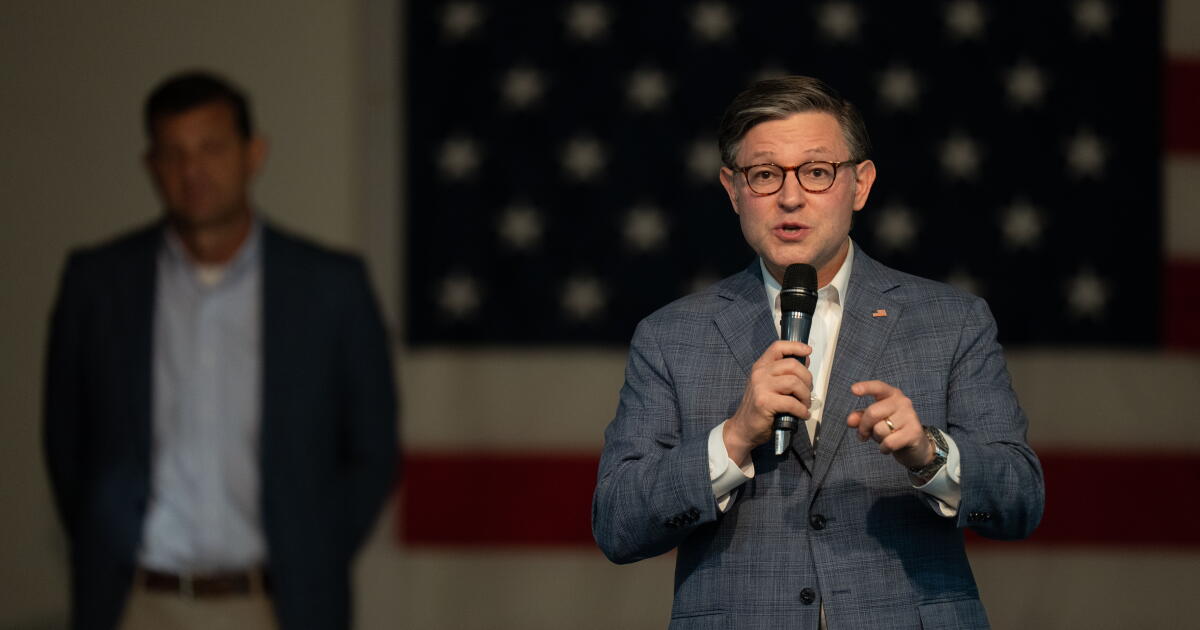
“Do you know that right now we have the lowest violent crime rate in 126 years in America right now? Because we emphasize the rule of law,” House Speaker Mike Johnson recently told an audience at Louisiana State University. Crime rates have generally trended down since the 1990s with a brief spike during the COVID pandemic. “We have the most secure border we have had in the past half century.”

President Trump returned to the topic Monday night in Nebraska, warning about how the country used to be before he returned to the White House.

“We had a border with people pouring in, crime like nobody’s ever seen,” he said.

Republicans say Democrats will ‘defund the police’

In Georgia, Michigan, Nevada, Texas and Wisconsin, Republican candidates for governor have attacked their Democratic rivals as weak on crime or warned they could cut police funding. Texas Gov. Greg Abbott, for instance, has lambasted Democratic nominee and state Rep. Gina Hinojosa for not supporting legislation that would require judges to deny bail to illegal immigrants charged with a violent crime.

Hinojosa has campaigned on her tenure as a civil rights lawyer and criticized Abbott’s crime policies as violating civil liberties.

Rick Jackson, a billionaire healthcare executive running in Georgia, has repeatedly attacked Democratic opponent Keisha Lance Bottoms over her tenure as Atlanta mayor.

“I grew up in the type of neighborhood Keisha Lance Bottoms abandoned,” Jackson said at a summer campaign rally. “I know who gets hurt when politicians defund the police.”

In an interview with Atlanta station 11Alive, Bottoms emphasized that her administration gave pay raises to police and firefighters, and said she called for increased federal funding for public safety during her time as mayor.

Crime warnings pervade congressional races

It’s a similar story in U.S. House races.

In Virginia’s first congressional district, Rep. Rob Wittman has attacked his Democratic opponent, prosecutor Shannon Taylor, over her allegedly “soft on crime” record in office. In Michigan’s 10th district, Republican Michael Bouchard is running on his service as a Bronze Star Army captain and son of a longtime local sheriff. He’s claimed his Democratic opponent, former prosecutor Christina Hines, supports “woke, soft on crime, socialist policies.”

In Colorado’s eighth district, Rep. Gabe Evans touts his time as a police officer against Democratic challenger Manny Rutinel. And in Wisconsin’s third district, Rep. Derrick Van Orden hopes to win a third race against Democratic nominee Rebecca Cooke by painting her as a communist who wants to defund the police.

Republicans hope that by reprising warnings of crime and disorder the party can reenergize their disillusioned base and win back skeptical moderate voters who have drifted over concerns like affordability.

Democratic rivals have responded in kind. Taylor aired an ad featuring 13 local sheriffs who endorsed her campaign. Rutinel aired ads with local police and rolled out a safety plan that called for greater police funding and drug prevention programs. Hines said she’ll continue to prioritize public safety and prosecute corruption in Washington. Cooke has vowed to fully fund police departments in Congress.

Not all Republicans see crime as a winning issue

It’s yet to be seen if the strategy will prove effective.

“We’ve got to talk about it. I think that in many ways, we are the victim of our own success because it’s off the headlines a little bit more,” said Sen. Eric Schmitt, a Missouri Republican and former state attorney general. “Having a completely secure border now, no one even talks about it. But that’s a huge accomplishment from where we were at before.”

An AP-NORC poll conducted in September found that border security — which Trump and Republicans often link to crime — was a relative strength for the Republican president, with 48% of U.S. adults saying they approved of his performance on the issue. But that was still a decline from a year ago, when his approval on border security was at 55%.

Not everyone in the party is sold on Republicans rehashing the crime message.

“I don’t see that bubbling up as a major issue for the voters,” said Sen. Thom Tillis, a North Carolina Republican who chose not to seek reelection this year. Aiming to make the race to succeed Tillis a referendum on crime, Republicans have run ads claiming that Democratic nominee Roy Cooper went easy on convicts during his two terms in the governor’s mansion.

Black political leaders have criticized the ads as racist and reminiscent of past Republican campaigns that used dog whistles to appeal to suburban white voters. Trump made the message explicit when he invoked the infamous 1988 “Willie Horton” ad and displayed dozens of mugshots of men of color on a jumbotron during a rally stumping for Michael Whatley, Cooper’s Republican rival.

In contrast to his party’s messaging, Tillis noted his state’s safety in recent years.

“Frankly, when I hear somebody talking about crime in Charlotte, I live 25 minutes from downtown. I’m not worried about walking through Charlotte at night,” said Tillis.

Democrats accuse Trump of corruption

National Democrats contend that Republicans’ message on violent crime is undercut by the Trump administration’s hardline immigration enforcement actions, which resulted in the killing of two American protesters in January and the fatal shootings of multiple undocumented people. They accuse Trump of corruption and have hammered Republicans for alleged complicity in the president’s self-dealing.

“This is the biggest criminal organization that we’ve ever seen,” said Sen. Ruben Gallego, an Arizona Democrat, of the current White House.

He added that, “Democrats should be pushing back with the fact that, if not for the fact that he was president, this guy would be leading some type of mafia right now.”

Lauren Bis, a White House spokeswoman, said “extreme Democrats are trying to deflect from their radical soft on crime agenda.”

Brown writes for the Associated Press.
Source link

Provocative, sexually suggestive ad by Hilton campaign condemned by political allies on the right

A provocative, sexually suggestive ad by GOP gubernatorial candidate Steve Hilton is drawing heat from his fellow Republicans while drawing millions of viewers online.

Two young women sit on a bed, with an LGBTQ+ flag in the background, with one urging the other to try a new experience.

“I can’t believe I’m doing this,” one woman says, and the other replies. “Don’t be nervous. It’s not that bad … Just try it. Look, give me your hand. Close your eyes, and I’ll do all the work.”

She leads the hesitant woman’s hand to mark her ballot for Hilton rather than Democrat Xavier Becerra, the front-runner in the race, and says, “Now lick it,” referring to the mail ballot envelope.

Fellow Republicans as well as several Democrats denounced Hilton over the messaging.

Two members of Hilton’s GOP “Golden Ticket” on the Nov. 3 ballot lashed out about the ad’s content.

“I emphatically denounce the use of young women as a political tool,” Michael Gates, the Republican candidate for attorney general who has frequently appeared alongside Hilton at campaign events, wrote on X. “California families deserve better, and as AG, I will fight every day to protect our girls, young women, and parental rights.”

Sonja Shaw, who is running to be the next state superintendent of schools, castigated Hilton, the state Republican party and its chairwoman for promoting the ad, which had been viewed by nearly 5 million people as of Saturday afternoon.

“Shame on you … for reposting and cheering this creepy, weird, disturbing garbage,” Shaw wrote on X. “This is a clear example of exactly why good people are walking away from the Republican Party. As a mother and someone who has fought to protect the innocence of children, this crosses a line. We have lost our way. Embarrassing.”

Rep. Robert Garcia (D-Long Beach), an openly gay member of Congress, and state Democratic Party chairman Rusty Hicks also condemned the ad.

“This is a bizarre and desperate ad from a person who has attacked the LGBTQ+ community and stands with Donald Trump,” Garcia said. “Hilton is losing and more interested in AI slop than actually talking about issues Californians care about.”

Hilton acknowledged the ad has provoked strong reactions, but it underscored the foundation of his campaign — that many Californians may be put off by his party affiliation but want change given the state’s myriad problems, such as growing unaffordability, that have taken place under a Democratic lock of every statewide office and the state Legislature.

“We’re just saying, you know, just try it,” he said in an interview. “It’s a provocative and humorous way of making a point, right? Which often the best communication does.”

He also said the ad does not conflict with his beliefs about restrictions on gender-affirming care and on youth sports because those would only apply to people who are not adults.

A spokesman for Becerra, who led Hilton 58% to 33% in a recent UC Berkeley/Los Angeles Times poll, was gleeful about the rift the ad was creating among Republicans.

“MAGA is melting down over Steve Hilton’s creepy ad because they’re finally seeing him for the sellout he really is, willing to abandon his own twisted values to get ahead,” said Jonathan Underland.

However, some conservatives who were dismayed by the message stood by Hilton’s side.

Pastor Jack Hibbs of Calvary Chapel Chino Hills, a Christian nationalist, called the ad “grotesque” and said it promoted lesbianism among young women, on a Facebook Live post Saturday. However, he said he still supports Hilton over Becerra. He did not respond to requests for comment.

Hilton is scheduled to speak on Monday to a chapter of the Log Cabin Republicans, an LGBTQ group, at a brewery in Palm Desert. The organization did not respond to requests for comment.

Former California GOP chairwoman Jessica Millan Patterson said that while the ad wasn’t for her, she understood the campaign’s desire to expand its reach to different voters.

“Does the ad speak to me? No. He’s not going after my vote. He already has my vote. He’s trying to think of new and creative ways to make people who wouldn’t normally feel like voting for a Republican feel safe to do so,” she said. “He’s going out of his comfort zone and going for people that wouldn’t normally feel comfortable voting for him.”

Californian Fred Karger, who made history in 2012 as the first openly gay person to run for president, had mixed views about the ad, calling it shrewd yet hypocritical. And he questioned its effectiveness.

“The audience that he’s targeting there — the hipster, young hipster, lesbian audience — probably has a 1% chance of voting for him,” Karger said. “So it’s kind of a long shot. But it is a clever ad.”

Source link

Taxpayers have funded nearly $1.5 milliom in pro-Trump ads. Criticism is mounting, including from the GOP

The White House has spent days fiercely defending three taxpayer-funded advertisements that glorify President Trump — approaching at least $1.5 million in public spending — calling them public service announcements.

“Don’t let the Fake News get away with their lies about our epic Public Service Announcements that have been running on tv,” White House communications director Steven Cheung posted on X on Sunday.

But the Republican administration’s ads attracted mounting criticism on Monday, including from members of Trump’s own party.

“It shouldn’t be paid for with taxpayer dollars,” Senate Majority Leader John Thune, R-S.D., told reporters.

“It would not have been something that I would have done. And I know that the White House is not covered by the same guidance that we are, but it’s not something that I would have done,” said Sen. Mike Rounds, another South Dakota Republican.

Multiple legal experts consulted by the Associated Press said the ads appear to run afoul of federal statutes, including a law against congressionally appropriated funds being used for “publicity or propaganda” and a law that limits the partisan political activities of government employees.

They said the new ads, which are airing on network and cable TV and streaming, differ from other administrations’ PSAs because they aren’t designed to help Americans access any specific program.

“You watch all three ads, they’re sheer propaganda,” said Richard Painter, a former White House ethics czar under Republican President George W. Bush. “This is increasingly looking like what authoritarian governments do to promote their leaders.”

The heightened scrutiny comes as the Trump administration has increased spending on the ads and bought time on popular TV shows, including college football and National Football League programming. It remains unclear which part of the government is supplying the funds.

With both chambers of Congress led by Republicans, any oversight would likely have to come from Trump’s allies, decreasing the likelihood of hearings or other accountability efforts before November’s midterm elections.

Three ads have aired in less than a week, totaling well over $1M

The first ad in the campaign, which began airing last Wednesday, features clips of Trump talking about defeating communism interspersed with onscreen text promoting the “largest tax cuts in history,” “reigniting American manufacturing” and a call to “defend law and order and police.”

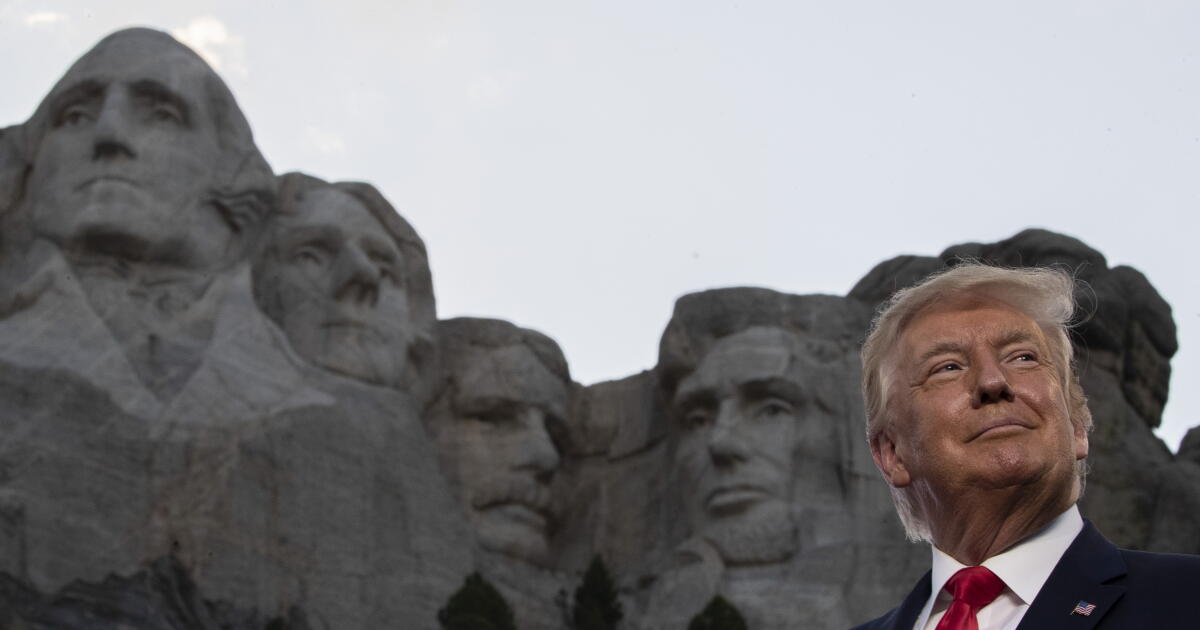
Later in the week, a second ad began running, showing scenic videos of Mount Rushmore at night with quotes and clips from Trump’s Fourth of July weekend speech there honoring the country’s 250th anniversary.

The latest of the ads, a spot first aired over the weekend, is virtually identical to an ad for Trump’s Republican reelection campaign in 2024. It shows him walking down a hallway as his voice can be heard warning of a “final battle” against “globalists” and “warmongers.”

All three ads end with a message that says: “Paid for by the U.S. Government.” The White House hasn’t responded to inquiries about which part of the government is paying.

According to AdImpact, which tracks media spending, the spots have so far cost more than $1.4 million and run across a wide range of TV networks around the country. The actual amount spent could be significantly more, depending on whether networks classified the ad as a political ad.

The ads are different from past PSAs, experts say

In defending the campaign, the White House published a list of PSAs from recent Democratic and Republican administrations.

Among the examples it cited were Bush’s Republican administration touting a Medicare law, Barack Obama’s Democratic administration promoting Affordable Care Act subsidies and Joe Biden’s Democratic administration running ads promoting COVID-19 vaccinations.

“The announcements are very clearly not campaign ads; President Trump is not on the ballot and there is no call to action,” the White House wrote. “Instead, the announcements are a reminder for Americans to love their country and know why it’s worth defending — at home, at the border, and abroad.”

Kathleen Clark, a legal ethics professor at Washington University in St. Louis, said in her view the new ads differ from the examples the White House provided because they aren’t aimed at helping members of the public benefit from specific government programs.

“These ads are nothing more than government propaganda, aimed at helping Trump,” she said.

Painter, who joined the Bush administration after the Medicare PSAs went out, said that ad campaign toed the line on appropriateness because it included misleading information about Medicare Part D. But he said Trump’s campaign is a far more egregious violation of the statute that blocks congressionally appropriated money from being spent on publicity or propaganda.

“There’s nothing in here about a particular policy that’s at all focused,” Painter said of Trump’s ads. “One of them is just about the evils of the deep state. Another one of them is about communists and Marxists.”

In its support for the ads, the White House also referenced the administrations of President Woodrow Wilson and President Franklin D. Roosevelt, both of whom used posters, radio and film to rally the country during World Wars I and II.

James Kimble, a communication professor at Seton Hall University who studies domestic propaganda, said it’s true that Wilson’s Democratic administration used propaganda to rally Americans. But he said most Americans no longer view its actions in a positive light.

“By almost any objective measure, looking back, we find what they did pretty repulsive,” he said.

Skepticism of the campaign grows on the Hill

Top Democrats on the Senate and House appropriations committees last week wrote to the White House demanding the ads be taken down and requesting more information on how much money was spent to create and air them.

In the days since, more than a dozen Democrats and a handful of Republicans have spoken up to further criticize the ads. Senate Minority Leader Chuck Schumer called the latest ad “an absolute violation of what a democracy is supposed to look like.”

“Americans sat down to watch football, not to be force-fed Trump’s propaganda on their own dime,” he said in a Senate floor speech Monday.

Sen. John Kennedy, a Republican from Louisiana, said on CBS’s “Face the Nation” on Sunday that no public official should spend public money on private ads for themselves.

And Rep. Thomas Massie, a Kentucky Republican who lost his primary to a Trump-backed challenger, had his own harsh words for the administration on Monday.

“Don’t worry, using taxpayer dollars to run ominous campaign ads of the President has been done before and is completely legal… in banana republics,” he wrote in an X post.

The Republican chairs of the Senate and House appropriation committees didn’t respond to requests for comment.

Swenson writes for the Associated Press. AP writers Mary Clare Jalonick and Steven Sloan contributed to this report.

Source link

Propaganda or a PSA, Trump’s latest ad blitz is paid for by you.

“America will never be a communist country,” states the 30-second television ad.

Never mind that socialism is a more probable scenario given the rise of New York Mayor Zohran Mamdani and Nithya Raman’s healthy lead in the Los Angeles mayoral race. This commercial is not about semantics, political systems or the health of the nation.

It’s about touting the alleged achievements of President Donald Trump, from “reigniting American manufacturing” to “defend[ing] law and order” and giving Americans the “largest tax cuts in history.”

One can argue the legitimacy of such claims if they still have the energy to do so after 10 years of relentless MAGA puffery, but the real issue here is that this particular piece of bluster is produced and funded by the U.S. government.

Laws prohibit taxpayer funds from being used for “publicity or propaganda,” even if the White House is referring to its new ad campaign as a PSA.

“This is the sort of government propaganda one might expect in North Korea, not the United States of America, and it is an egregious and utterly illegal misuse of Americans’ hard-earned tax dollars,” wrote Democratic House and Senate Appropriations Committee members in a letter sent Friday to Trump’s Chief of Staff Susie Wiles.

They demanded that the ad be immediately taken off the air and that “Federal employees who knowingly violated Federal law in working on and paying for this advertisement” be disciplined. “The law is not complicated,” they wrote. “You cannot use taxpayer dollars for political advertisements.”

The spot, which first aired Wednesday on conservative media outlets Fox News and Newsmax, cost $14,000, according to the firm AdImpact, which tracks media spending. By Friday, that number had jumped to $430,000 as the ad hit multiple markets across the country.

And it isn’t the only instance of American tax dollars at work — for Trump. A second ad paid for by you aired Thursday night on CBS.

The minute-long commercial featured footage of the president speaking against the backdrop of Mount Rushmore in an audacious display that might have turned George Washington, Thomas Jefferson, Abraham Lincoln, and Theodore Roosevelt to stone if they weren’t already immortalized in granite.

It included clips from the U.S. military’s Jan. 3 capture of Venezuelan President Nicolás Maduro and his wife, snippets from Trump’s Independence Day weekend speech, a voiceover from UFC CEO Dana White praising the president as “the toughest, most resilient person” he’s ever met, and a montage of images featuring Trump, Trump and more Trump. It ends with the star of the show proclaiming, “This is only the beginning of the golden age of America,” then comes the written disclosure: “Paid for by the U.S. Government.”

Anyone who has lived in or traveled to countries with state-run media will recognize the similarities between Trump’s ads and those of, say, former Iraqi dictator Saddam Hussein or current strongmen like North Korea’s Kim Jong Un: the intense leader-like gaze, the baseless claims, substandard production quality and music that suggests the subject of the ad should be worshipped. (Trump’s choice for the first ad was “Love Me” by R&B singer JMSN, who opposed the use with an emphatic “I would never…”)

But on U.S. television, the ad feels more desperate than dictatorial. The whiff of desperation coming from the ad blitz may have something to do with the president’s dismal polling numbers headed into November’s midterms.

The administration has argued its ads are “educational and unapologetically patriotic” public service announcements. The White House said in a statement, “These public service announcements are about reminding Americans to love their country and understand what makes it worth defending, at home, at our borders, and abroad.”

A White House official reportedly said that the PSAs “are clearly not political” and noted that “the President is not on the ballot and the ads don’t have a call to action.”

Trump has repeatedly told his base to vote like he was on the ballot.

With propaganda like this coming out of the White House, communism is hardly the biggest threat facing the country.


Source link

U.S. government foots bill for television advertisement featuring Trump’s midterm messaging

At first glance, it looks like a typical Republican campaign advertisement. As images of President Trump flash across the screen, the 30-second spot says, “America will never be a communist country” and boasts about the “largest tax cuts in history.”

But there’s something different near the end — a bit of text at the bottom that says “paid for by the U.S. government.”

According to AdImpact, which tracks media spending, the advertisement cost $14,000 and it ran during conservative shows on Fox News and Newsmax.

The White House said in a statement the ad is “educational and unapologetically patriotic.”

“These public service announcements are about reminding Americans to love their country and understand what makes it worth defending, at home, at our borders, and abroad,” the White House statement said.

Fox News and Newsmax did not immediately return a request for comment.

The White House did not say what agency paid for the spot, which includes background music with singers crooning “love me” over and over.

The advertisement does not say who voters should support in the midterms, but it meshes with campaign messaging from Trump and other Republicans, particularly during the party’s unusual convention in Dallas earlier this month.

Democratic Rep. Jamie Raskin of Maryland, who is in line to chair the House Judiciary Committee if his party wins the majority in November, said in a social media post that it’s a violation of the Hatch Act for government employees to work on such a video.

“It is blatantly unethical under numerous federal ethics provisions proscribing the use of government resources for political campaigns,” Raskin wrote.

Republicans also criticized the ad.

North Carolina Sen. Thom Tillis, who is not running for reelection, referenced the former right-wing Hungarian prime minister to critique the advertisement.

“It’s inappropriate. It’s not like they need a GoFundMe page to have the dollars to do that sort of ad and they could do it. But using taxpayer dollars, it feels like Viktor Orban,” he said.

Louisiana Republican Sen. John Kennedy said he hadn’t seen the ad but questioned whether it was legal.

“I don’t generally like to see politicians use public money to pay for their own campaign ads,” he said.

Catalini writes for the Associated Press. AP writers Joey Cappelletti and Steven Sloan in Washington contributed to this report.

Source link

Converse apologizes after ad is slammed for imagery likened to KKK

Converse has pulled a controversial ad after it was slammed online by social media users who said it evoked Ku Klux Klan imagery.

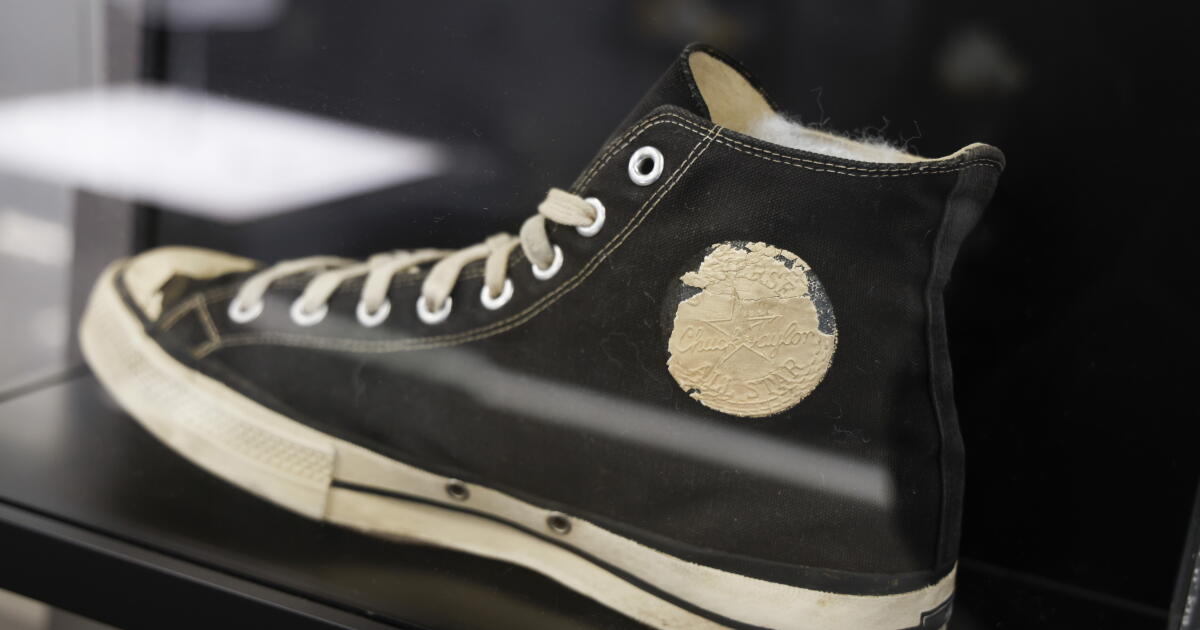
Two ads promoting Converse’s global Chuck 70 X campaign came under fire. One featured K-pop star Karina clutching a pair of the brand’s classic high-top black sneakers by her side and wearing a white skirt, with a star spotlight in center frame.

The problem, according to social media users, was that the lighting and cropping created an outline that evoked a white pointed hood, with the shoes dangling against it. The other image showed models climbing a ladder to reach shoes that hung from a tree branch.

“We’re sorry. We understand why this image is deeply upsetting and recognize that we got this wrong,” Converse said in a statement to Footwear News on Friday. “We removed it from our channels and are working to remove it everywhere it appeared. This should not have happened, and we will do better.”

Photographer Stephanie Schwartz posted on Threads that she thought the imagery was no accident.

“Shadow, light, and composition. Every photographer can tell you, whoever did this ad knew EXACTLY what they were doing,” she wrote.

Educator Kendall C. Peacock posted a video on Instagram asking followers whether a boycott of the brand was warranted.

“Converse, converse, converse! You’ve been called to the carpet. Who approved this? … As a Black man and someone who loves Converse shoes, I find this very insensitive and distasteful.”

“How and why did nobody question these visuals?” he continued. “Deliberate racist intent hasn’t been established yet, but that doesn’t erase the impact.”

Peacock acknowledged the sneaker brand’s apology, but added that “must come with accountability.” He asked who approved the ad and what will change after its removal, and further suggested that “withholding our dollars is a reasonable demand for answers … How dare you try to make a dollar off of Black pain, Converse?”

DJ SoulChild AC said on TikTok that even if it wasn’t Converse’s intention, “We can see the symbolism from a mile away.”

“That is a depiction of the triple K right there,” he continued. “Pointed hood, dangling converses, as if someone’s being strung up … Black people ain’t stupid, bro.”


Source link