‘Resident Evil’ review: Zach Cregger makes all the difference
After his existential suburban horror epic “Weapons” became an Oscar winner (for Amy Madigan’s chilling supporting performance as Aunt Gladys), filmmaker Zach Cregger has dashed off a fun little riff on one of his favorite video games. His “Resident Evil” reboot is the eighth film in the big-screen franchise based on the Japanese zombie survival game, though Cregger’s “Resident Evil” is its own beast — put those Milla Jovovich movies out of your head entirely.
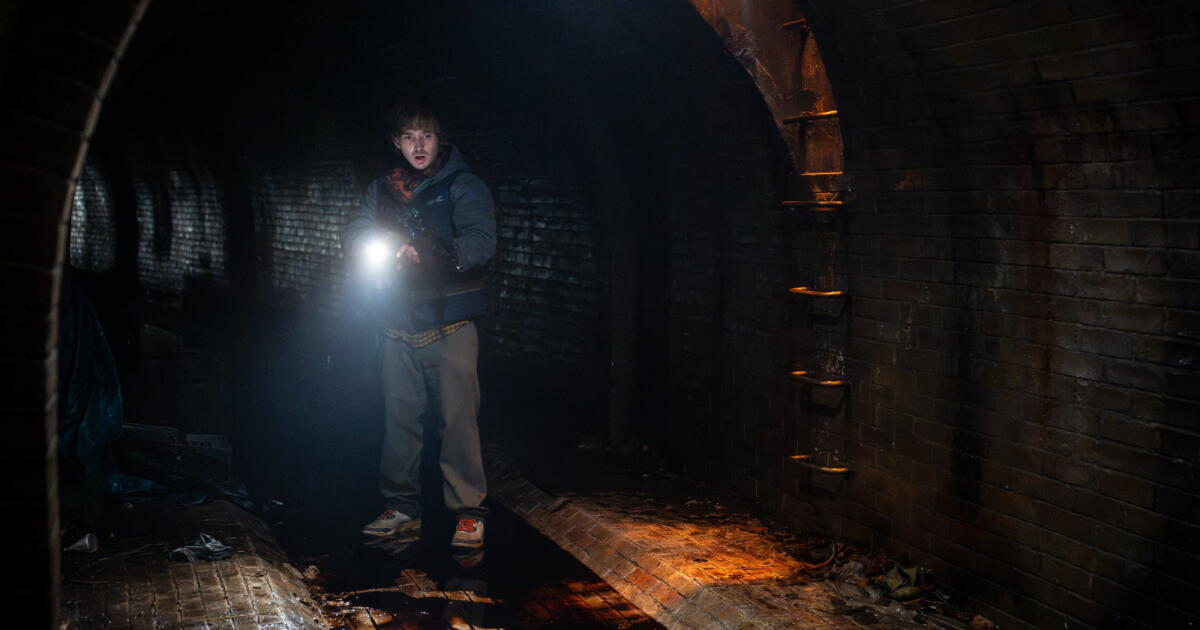
There are, of course, a few shared strands of DNA in the screenplay by Cregger and Shay Hatten: an evil company, Umbrella Corporation, responsible for a virus that mutates humans into zombies and all manner of monsters, located in the lovely Raccoon City. But our hero, Bryan (Austin Abrams), a hapless medical courier, knows none of this when he takes a gig delivering what he thinks is an organ on the snowy mountain roads to the metropolis.
Abrams, who was a standout in the ensemble cast of “Weapons,” has another big movie out this fall in which he stars as the lone protagonist, “Whalefall,” and the two films comprise an apt survival thriller double feature. In “Resident Evil,” Abrams’ Bryan spends much of his lonely mission muttering to himself in annoyance and sometimes victory, much like a gamer would. During one self-reflective moment, Bryan yells, “Yeah! Video games!” elated at how his shooting is improving.
Cregger’s approach to “Resident Evil” is to seamlessly blend the cinematic with a gaming experience and his adaptation best mimics the feeling of playing an actual game or watching someone else play one. At one point, Bryan and a comrade he meets along the way (Paul Walter Hauser) marvel at the shooting skills of Maxine (Kali Reis) as if they’re watching her play the game too.
Immediately, Cregger establishes a camera that follows closely behind Bryan, a similar motif to the cinematography he used in “Weapons.” As Bryan starts to encounter the strange beings who appear on the outskirts of Raccoon City, the game mechanisms click into place. Different characters — villains and helpers — pop up along his journey, as well as different tools and weapons. He frequently encounters locked doors, obstacles and empty spaces that he has to explore. Cregger uses first-person-shooter point-of-view shots, with the long barrel of a rifle or automatic weapon lining up our sights; one running gag sees Bryan, completely hopeless with guns, having to shoot the locks off of gates.
What was already a very darkly funny and incredibly gross film gets even more disturbing as Bryan ventures into the Raccoon City hospital, trying to make his delivery. He encounters monsters that vomit acid or explode with zombie rats; one particular ward is full of undulating sacs of bloody viscera.
Cregger remains one of our finest horror image-makers, creating surreal and snowy landscapes that are as beautiful as they are disturbing: the red and blue lights of a flipped police car in a blizzard, dark pools of blood and mysterious footsteps, tentacles greeting and meeting each other, stomach acid decimating an elevator. With impeccable sound design and an eerie score by Ryan and Hays Holladay, Cregger delivers a textured, wholly realized world.
But our guide is just a regular guy, which lends to the charm. Bryan is dealing with relationship problems that add to the urgency of his desire to survive, but he’s also just a dude with questionable self-preservation instincts, which makes for a good adventure. He has an overwhelming desire to help, which leads to some ridiculous circumstances and is a quality that Cregger plays for laughs. Abrams plays the goofball well and we’re constantly rooting for him, even as his fortunes take a turn in a tragic reversal that we’ve seen in monster movies before.
Cregger wears his influences well and they aren’t just video games but pulled from the history of horror. Still, he blends it all into his own vision so it doesn’t feel derivative. While the unwieldy ending might get away from him, the tightly controlled and efficient stretch that precedes it is the work of a new master, one who delivers imaginative, terrifying and hilarious thrills and chills, whether he’s reanimating a dead franchise or dreaming up his own uncanny vibe. “Resident Evil” might be his most playful — and gooey — film yet.
Katie Walsh is a Tribune News Service film critic.
‘Resident Evil’
Rated: R, for strong bloody violence, gore and language throughout
Running time: 1 hour, 30 minutes
Playing: Opens Friday, Sept. 18 in wide release