How Nigerians Absorb the Cost of Delayed Digital Payments
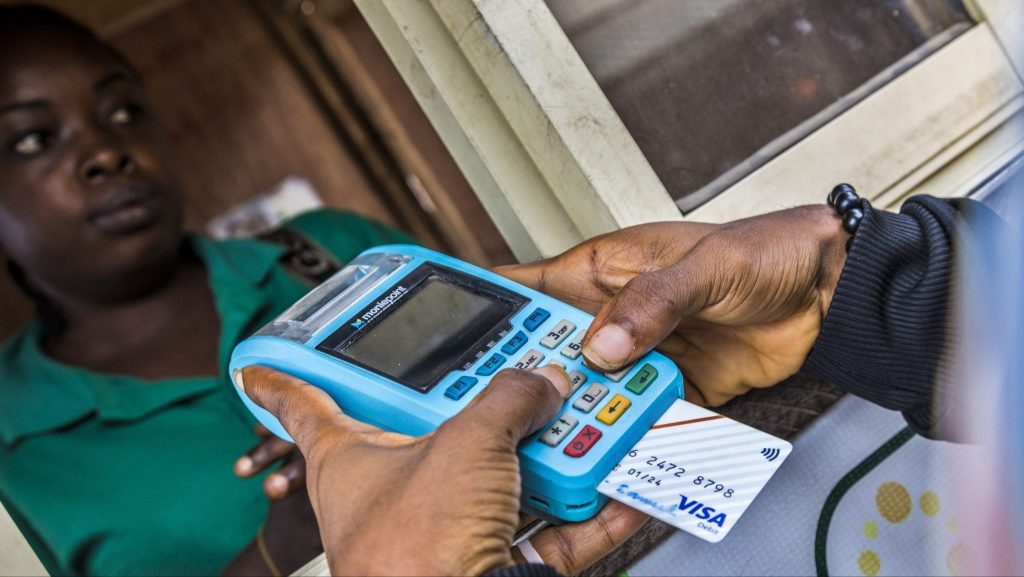
On a hot Tuesday afternoon in Yola, Adamawa State, in northeastern Nigeria, 32-year-old Fidelis Mbai walked to a point-of-sale (POS) stand to withdraw ₦35,000. The POS operator, Abu Sani, collected his Automated Teller Machine (ATM) card and inserted it into a POS terminal. Fidelis entered his Personal Identification Number (PIN). Within seconds, he received a debit alert. The money had left Fidelis’ account, but Abu’s terminal showed that the transaction had not been completed successfully.
The two men stared at their screens. One had seen ₦35,000 withdrawn from his account; the other had received nothing. For nearly 30 minutes, they kept refreshing their mobile bank apps. “I was angry because the money had left my account immediately,” Fidelis said. “As far as I was concerned, the transaction was successful.”
Abu understood the frustration, but he had a problem of his own. “The customer was debited, but I didn’t receive the money,” he said. “If I gave him cash and the transaction eventually failed completely, the loss would be mine.”
Eventually, Fidelis left without cash. His money would later be reversed. But for several hours, ₦35,000 simply disappeared into Nigeria’s digital payment infrastructure.
This experience has become familiar to many Nigerian residents. As digital payments increasingly replace cash, it is ordinary citizens, not institutions, who bear the cost of failed transactions. The consequences often extend beyond the value of the failed transaction itself. Delayed payments can prevent traders from restocking goods, force customers to borrow money while waiting for reversals, disrupt access to healthcare, transport, or other essential services, and erode trust in digital financial systems. For small businesses and low-income households that depend on immediate access to funds, even a short delay can translate into lost income, missed opportunities, and significant financial stress.
Nigeria’s digital payment revolution
Nigeria’s digital payment ecosystem has expanded rapidly over the past decade. According to data from the Nigeria Inter-Bank Settlement System (NIBSS) – which operates the core infrastructure that processes and settles electronic payments and fund transfers between banks, discount houses, and card companies in Nigeria, and is jointly owned by the Central Bank of Nigeria and all licensed banks – the value of instant digital payments reached ₦1.07 quadrillion in 2024, up from ₦600.36 trillion in 2023. The data also showed that Nigerians conducted 1.38 billion POS transactions worth ₦18.32 trillion during the same period.
These numbers reflect one of the most successful examples of digital public infrastructure (DPI) in Africa. At its core, DPI refers to the digital rails that allow citizens to identify themselves, make payments, and access services. In Nigeria, these rails include bank transfer systems, mobile money platforms, POS networks, identity systems such as BVN and NIN, and shared payment infrastructure.

Together, these systems enable millions of transactions every day. For most users, the process appears simple: send money, receive money, and move on. But when something goes wrong, the burden often shifts away from the infrastructure and onto the people who rely on it.
While there is no official national estimate of the total amount Nigerians lose annually to failed digital payment transactions, the scale is substantial. During the 2023 cashless transition, industry reports indicated that as many as 40 per cent of failed e-payment complaints remained unresolved for extended periods, with affected transactions running into millions of naira.
Given that Nigerians processed over ₦1.07 quadrillion in instant payments in 2024 alone, experts say that even a failure rate of less than one per cent could leave billions of naira temporarily trapped in failed, delayed, or disputed transactions each year.
The last mile bankers of Nigeria
Every morning, Abu begins work with a few simple calculations. How much cash does he have? How much electronic value is in his account? And how much of that money is trapped in pending transactions?
“Almost every week, we experience failed transactions,” he said. “Sometimes two or three times. During network problems, it can happen many times in one day.”
Officially, Abu’s role is to provide financial services. Unofficially, he has become something else: a lender, a mediator, and a shock absorber. He is one of an estimated 1,600 POS operators per square kilometre in Nigeria, according to the International Monetary Fund (IMF). As banks have reduced their physical footprint in some communities, these agents have become the last-mile providers of financial services, connecting millions of Nigerian residents to the formal financial system.
One afternoon, a regular customer named Musa Ibrahim arrived to withdraw ₦50,000. The debit alert arrived immediately, but Abu’s account was not credited. Musa needed the money urgently for a hospital bill, and Abu had to choose between trusting the system and trusting the customer. “I knew him very well,” Abu said. “So I gave him the money from my own cash.”
The confirmation took two days to arrive. For 48 hours, Abu had effectively given Musa an interest-free loan. Nobody paid him for the risk. Nobody compensated him for the anxiety. Yet this informal lending happens every day across Nigeria. Thousands of POS operators use their own money to bridge gaps created by delayed transactions.
At Jimeta Modern Market in Yola, 38-year-old Aisha Mohammed sells food items. More than half of her customers now pay by bank transfer. Like many traders, she has adapted to Nigeria’s cash-light economy, but that adaptation comes at a cost. Several months ago, a customer purchased a bag of rice worth ₦80,000. He presented a transfer receipt. The money did not arrive.

“The customer looked genuine,” Aisha said. “He showed me everything on his phone.”
She released the goods. The payment did not arrive until the following day. That night, she barely slept. “You start asking yourself whether you have been scammed,” she said.
Delayed transactions create a dilemma for traders like Aisha. If they reject digital payments, they risk losing customers; if they accept them, they risk losing money. Many solve the problem through selective trust. “If I know the customer, I may release the goods,” she explained. “If I don’t know them, I wait until I see the money myself.”
This has created a parallel trust economy operating beneath Nigeria’s digital economy. In theory, transactions are guaranteed by technology; in practice, they are often guaranteed by relationships.
Dr Ibrahim Sule, a financial inclusion expert at the Adamawa State Ministry of Finance described it as a hidden feature of Nigeria’s digital economy. “It shows that people are finding ways to compensate for weaknesses in the system. Personal trust often fills the gaps where technology falls short,” he said.
Borrowing money while waiting
For Ibrahim Yusuf, a resident of Damilu, a community in Jimeta, the consequences were far more serious. In October 2025, he transferred ₦43,000 to a shop owner as payment for foodstuffs he had purchased. The money left his account instantly, but the shop owner never received it.
One day passed, then two, three, four, five, and six. During that period, Ibrahim had no extra money with him. “The money was meant for foodstuffs, but I couldn’t leave the market with what I bought because the shop owner didn’t receive an alert,” Ibrahim said.
By the third day, Ibrahim borrowed ₦20,000 from a friend. The irony was difficult to ignore. His own money existed somewhere inside the banking system, yet he needed someone else’s money to survive. “It wasn’t even the financial loss that hurt the most,” he said. “It was the uncertainty. Nobody could tell me exactly where the money was.”
His experience illustrates a hidden cost rarely captured in transaction statistics. When payments fail, people do not simply lose access to money. They lose opportunities, business deals collapse, and relationships become strained.
The financial system eventually restores the funds. But it rarely restores the time, trust, or opportunities lost along the way.
How the money moves
While a bank transfer feels like a simple process for customers, financial experts say that transactions often travel through multiple systems. According to Hakeem Abdulkareem, a tech expert at NIBSS, “When you initiate a transfer on your bank app or through your bank, your bank first authenticates the transaction and verifies the beneficiary’s account details. The payment instruction is then routed through the NIBSS Instant Payment (NIP) platform to the receiving bank, which validates the request before crediting the beneficiary’s account. For the transfer to succeed, each of these systems – the sending institution, the NIP switch, and the receiving institution – must exchange information correctly and in real time,” he explained. “Each stage must communicate properly for the transaction to be completed.”
Any disruption along that chain can create problems. Not every failed transfer originates from NIBSS. Payment experts note that delays can occur at the sending bank, the receiving bank, a fintech platform, telecommunications networks, or the central payment switch. One way to determine where a transaction stalled is through the unique ‘Session ID’ generated for every transfer, which allows institutions to trace the payment through the system.
“Delays often occur when there are network issues, system outages, or communication problems between institutions involved in the transaction,” Hakeem added, noting that NIBSS continues to work with banks and fintech companies to improve transaction monitoring, automate reconciliation processes, and strengthen the resilience of the NIBSS Instant Payment (NIP) platform as transaction volumes continue to grow.
In the first quarter of 2025, electronic payment transactions reached ₦284.99 trillion, a 17.7 percent increase from ₦234.49 trillion recorded during the same period in 2024. POS transactions alone rose to ₦10.45 trillion during the same period, more than double the ₦3.62 trillion recorded in the first quarter of 2024.
While these figures highlight growth, Hakeem noted that “as transaction volumes increase, maintaining system efficiency becomes even more important.”
The institutions behind Nigeria’s digital payment system agree on one point: public confidence depends on reliability. As transaction volumes continue to grow, banks, fintech companies, and regulators say they are investing in infrastructure, monitoring systems, and consumer protection to reduce delays and strengthen trust.
Adi Dansanda, Customer Protection Officer at the Central Bank of Nigeria, Yola branch, told HumAngle that “Consumer confidence is critical to the success of Nigeria’s digital payment ecosystem. We continue to work with financial institutions and payment service providers to strengthen compliance, improve service quality, and ensure that customer complaints are resolved within established timelines.”

Despite these commitments, the experiences of everyday Nigerian residents suggest that the gap between policy and practice remains significant. For them, confidence is built every time a transfer arrives on time, every time a complaint is resolved quickly, and every time money moves when it is needed most.
Lessons from elsewhere
Building a reliable real-time payment system is not unique to Nigeria. Countries with some of the world’s most advanced digital payment platforms have also experienced outages and technical failures as transaction volumes increased.
In India, the Unified Payments Interface (UPI), which processes more than 18 billion transactions each month, experienced several nationwide outages in 2025. An investigation by the National Payments Corporation of India (NPCI) traced one of the largest disruptions to excessive transaction-status requests from participating banks that overwhelmed the system. In response, the regulator tightened technical protocols, limited repeated status checks, and strengthened monitoring to reduce the risk of similar failures.
Brazil’s Pix platform has also experienced periodic service disruptions linked to participating financial institutions and network issues. Rather than eliminating failures entirely, authorities have continued to improve interoperability, operational resilience, and incident response as usage has expanded.
Nigeria has already built one of Africa’s largest real-time payment systems through the NIBSS Instant Payment platform. Experts who spoke to HumAngle say the lesson from other countries is not that payment systems can avoid failures altogether, but that maintaining public trust depends on continuously strengthening infrastructure, improving coordination among participants, and responding quickly and transparently to disruptions.
This report is produced under the DPI Africa Journalism Fellowship Programme of the Media Foundation for West Africa and Co-Develop.