Abandoned places

Airport terminal lay abandoned for 18 years – now it’s an incredible £200m hotel

The TWA Hotel at New York’s JFK Airport is a luxury plane-themed hotel that was once a disused airport terminal – transformed into a stunning hotel after a $265million (£200m) renovation

A former airport terminal that sat abandoned for years has been transformed into a stunning aviation-themed luxury hotel — following a jaw-dropping $265million (approximately £200m) restoration to revive it to its former glory.

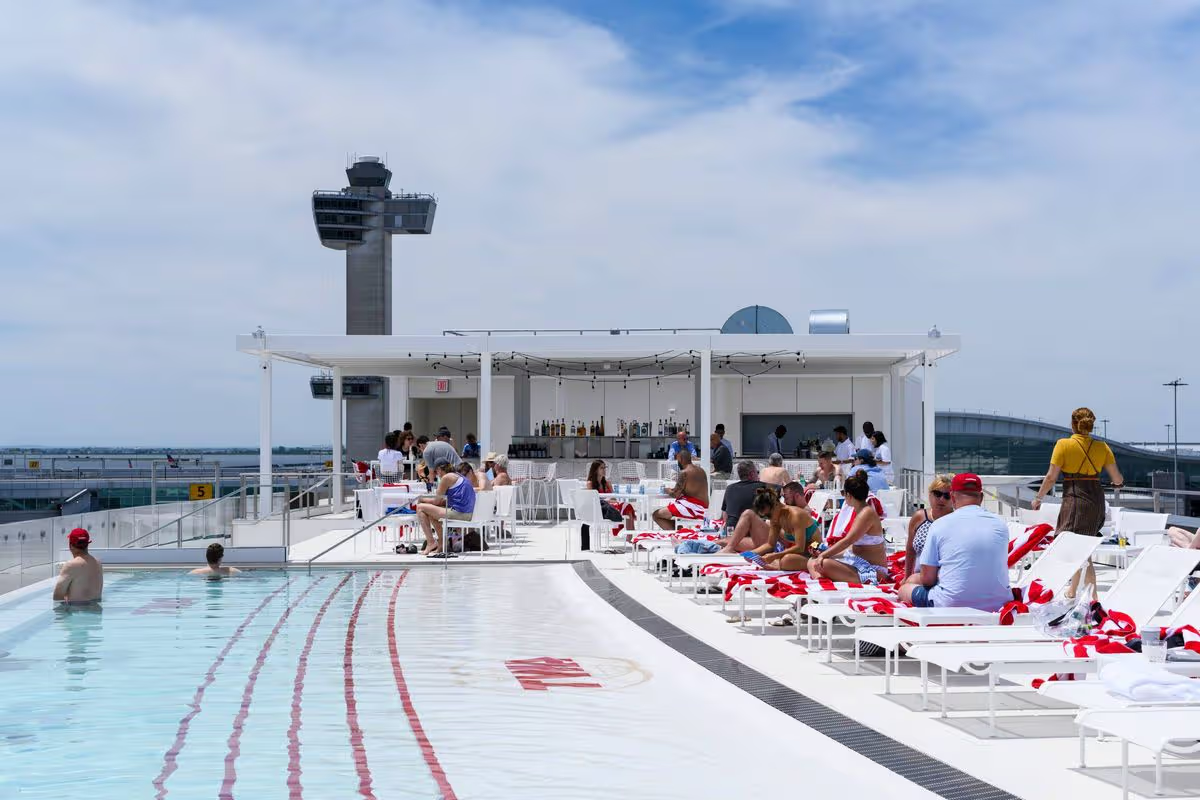
The TWA Hotel flung open its doors in 2019, boasting a rooftop infinity pool with breathtaking views over an active runway at New York’s JFK International Airport. Originally serving as a TWA flight terminal, the iconic building was designed by renowned architect Eero Saarinen before it closed its doors in 2001, only to be reborn 18 years later.

The hotel, which occupies the TWA Flight Center, now comprises two buildings at each end of the former terminal, offering 512 rooms for guests to choose from.

Designers painstakingly worked to recreate its appearance when it first opened back in 1962, hailed by the Landmarks Preservation Commission as “one of the great masterpieces of expressionistic modern design”.

Earlier this year, it was recognised as one of the top five best airport hotels on the planet at the prestigious Skytrax World Airport Awards.

The original terminal now serves as the lobby for the four-star hotel, which also features a round-the-clock 10,000 square feet gym — claiming the title of the world’s largest hotel gym — alongside a selection of restaurants.

One of the most striking highlights is a 1958 Lockheed Constellation aircraft that has been cleverly converted into a cocktail lounge, with an aviation history museum also housed within the hotel.

Time magazine previously featured it on their coveted list of “The World’s Greatest Places of 2019”, and one recent visitor was British travel YouTuber Hannah Ricketts.

She explained that she was keen to visit the hotel to get a taste of what the golden era of air travel felt like during the 1950s and 60s.

Upon reaching the lobby, she told her 489,000 subscribers that it was one of the “coolest entrances” she had ever seen.

Spotting a vintage Coca Cola machine, she remarked that it felt like stepping back in time, before adding that the place was far more impressive than she had anticipated.

She went on to reveal that she paid around $400 (approx £300) for a room with a deluxe runway view. Hannah confirmed this included taxes, with standard rooms starting at roughly $200.

Gazing out from her room, she exclaimed: “This looks so much better in person. I feel like the camera isn’t going to do it justice.”

She said it felt like being on the set of Mad Men, describing the building as “utterly stunning”, packed with period details that truly transported you back to the 1960s.

“I’ve never been anywhere like this in my life,” she added. “And it’s obviously pristine where it’s been refurbed. It’s almost surreal. Wow.”

The travel vlogger described the swimming pool as “insane”, though pointed out that it cost $25 (approx £19) to use, even as a guest.

She then savoured a Mile-High Margarita aboard the converted cocktail lounge plane, telling her audience: “Maybe you’re a Brit watching this and you’re going to come back from JFK, back to the UK, back to reality, back to work. If you want to plan this, it’s a really positive end to a trip.”

Her sole gripe was with the food, which she rated a 5/10, though she described the overall experience as immersive and one she would happily repeat.

Summing up her one-night stay, she said: “This is a four-star hotel, I would say this is literally better than quite a lot of the five-star hotels we’ve been looking at.”

Source link

Huge UK water park with Oasis link left abandoned and full of ‘rotting slides’

Many might remember the days of visiting this water park that was renowned for its lagoon and dome ceiling, but today it paints a different picture as its left to rot away

When most of us are dreaming about cooling down in an outdoor lido or planning trips to the beach over the weekend amid the blistering UK heatwave, there’s one water park that lies eerily abandoned, without a visitor in sight.

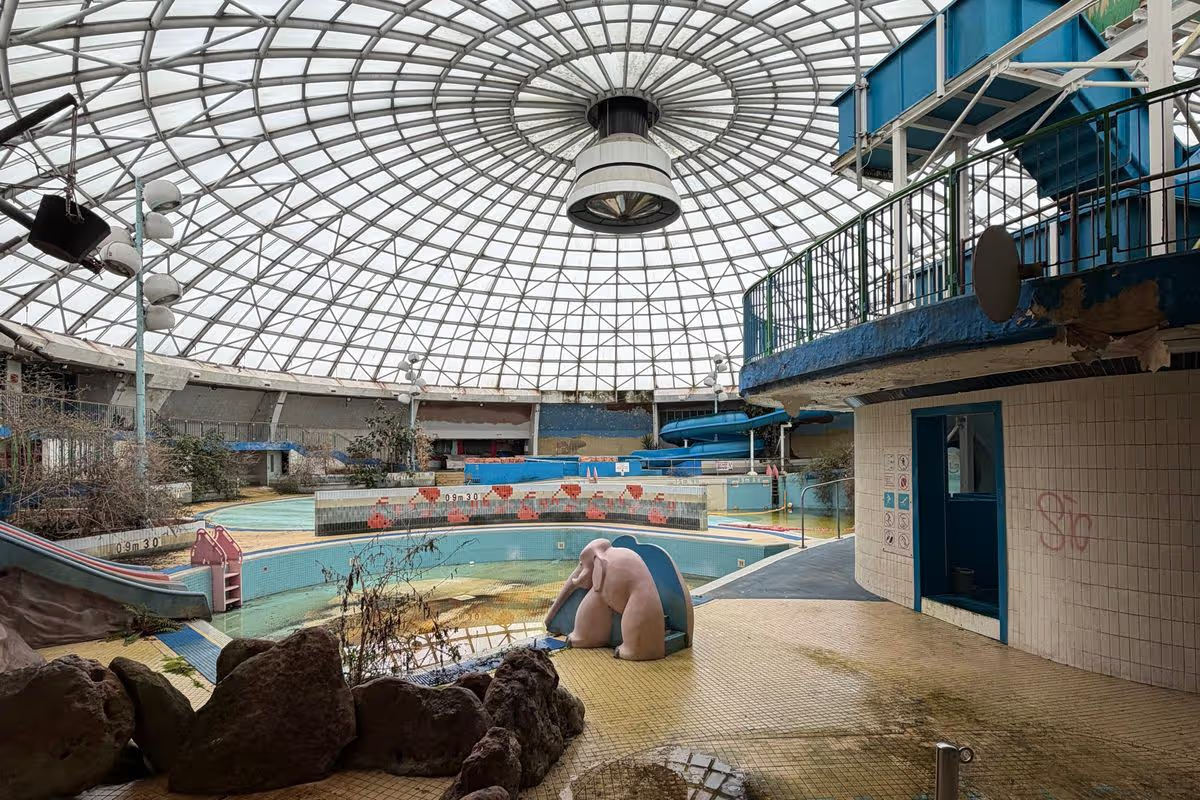
Having opened in 1976, the Oasis Leisure Centre in Swindon, or known simply as Swindon Oasis, became a standout attraction as a swimming pool, sports complex and entertainment venue all rolled into one. The Grade II-listed indoor water park boasted a lagoon, a wave machine, and colourful waterslides underneath its domed roof, providing hours of fun for the kids.

The area was decorated with artificial rocks and foliage, with smaller slides for the little ones and even an Egyptian statue in one corner. It was once a colourful, vibrant space that has now become a haunting, neglected site.

But back in the day, for those eager for a night out, there was the concert hall that could seat up to 1,620 people, or hold around 3,000 people standing. It famously hosted the rock band Inspiral Carpets in the early 1990s and even inspired the name of the band Oasis.

Liam Gallagher is said to have latched onto the name Oasis after seeing the Swindon leisure centre listed as the venue on the Inspiral Carpets tour poster. Noel had worked with Inspiral Carpets and later joined the band Rain with his brother, Noel Gallagher, and they went on to call themselves Oasis. All thanks to the iconic dome attraction.

While Oasis never performed at the venue, Liam did appear at the Oasis Leisure Centre in 2011 with his band, Beady Eye. Alongside its high-profile links, the complex welcomed thousands of visitors during its heyday and was one of Wiltshire’s most beloved attractions.

Yet, all good things come to an end, and after 44 years, the Swindon Oasis closed its doors forever. Its permanent closure in October 2020 followed five months without visitors due to the 2020 lockdowns, which required leisure facilities to halt operations.

At the time, operator GLL said: “As a charitable social enterprise, we are not in a position to continue operating a facility that requires capital investment and is losing money, while accruing significant rent liabilities.”

Today, after five years left untouched, it remains eerily neglected. Photos released earlier this year show the inside of the water park rotting away, with its surfaces covered in grime and the remnants of shallow water a murky green.

With rotting slides, rusty rails and faded tiles, it’s hard to imagine that just over five years ago, it was the first port of call for families looking for a day out or a dip in its iconic lagoon pool.

In 2025, plans were made to replace the sports hall with 700 flats while keeping the swimming pool and dome. While the latter were approved, the council rejected plans for the flats. There were then hopes that it could reopen this year, but its future still remains uncertain.

Do you have a travel story to share? Email webtravel@reachplc.com

Source link

The fishing village destroyed in one night — only one house survived

One coastal village was destroyed overnight.

A Devon fishing community was obliterated by a ferocious storm, back in 1917. By daybreak, only a single dwelling remained intact, forcing the town’s inhabitants to seek refuge in nearby settlements.

Hallsands, situated between Beesands to the north and Start Point to the south, boasts a heritage dating back to the 1600s. By 1891, the settlement had fostered a close-knit community of just 159 people.

Yet merely 26 years later, these residents would face catastrophe when all but one would see their homes claimed by the sea.

Luckily, nobody was injured, and while the inhabitants lost their dwellings, they all made it through the night. But their ordeal didn’t end there — it would take another seven years before they secured compensation for what they’d lost.

While it was a deadly combination of howling gales and surging tides that razed the village in a single night, this wasn’t the full picture — Hallsands had fallen prey to Government blunder.

During the 1890s, the UK Government determined that the naval dockyard at Keyham, near Plymouth, required expansion. To source the concrete needed for this project, the stretch between Hallsands and Beesands was dredged.

Despite fierce objections from Hallsands locals that this would endanger their community, the dredging pressed on until 1902. By 1900, the beach had begun to drop noticeably, and that autumn a storm swept away part of the sea wall.

This sparked fresh outcry from local residents — and this time, the Government started to take notice.

In September 1901, roughly a year after the town’s sea wall was lost, a Board of Trade inspector determined that future severe storms posed a real threat of significant damage and advised that dredging should cease.

Once dredging was halted, beach levels managed to recover to some extent, though storms kept battering the village and surrounding area.

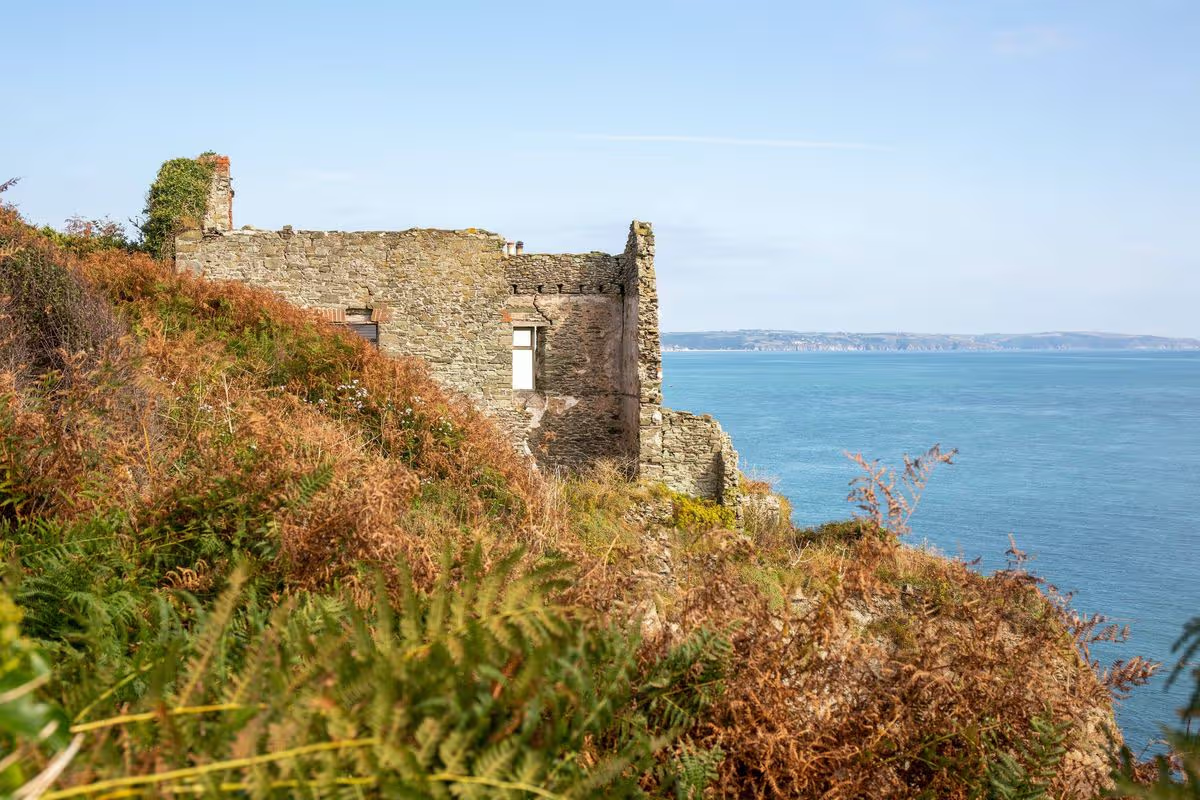
Catastrophe then hit in 1917, when a storm caused the village to tumble into the sea, leaving just one house standing intact.

That house belonged to Elizabeth Prettyjohn, who steadfastly refused to abandon the village and lived there with her chickens until her death in 1964. The property remains to this day.

Source link