30C

African island with 30C February weather where beer costs as little as £2.50

This stunning island off the east coast of Africais known for its budget-friendly prices and being the birthplace of Freddie Mercury.

Temperatures are beginning to rise across the UK, prompting many Brits to start planning their summer getaway, and jetting off to somewhere tropical doesn’t have to break the bank. One destination worth considering is Zanzibar Island, also called Unguja, a beautiful island situated off Africa’s eastern coast, just above Tanzania.

Zanzibar Island is renowned for its coastline, where the sand is remarkably fine, making it ideal for anyone simply seeking a sunny spot to unwind. Paje beach has earned recognition as one of the world’s finest beaches, thanks to its landscape featuring swaying palm trees, shimmering azure waters and a spectacular sunset vista across the Indian Ocean.

Yet Zanzibar offers far more than just beaches, particularly for wildlife enthusiasts, as it’s home to Jozani Forest, a national park sheltering creatures found nowhere else on Earth.

The red colobus monkey exists exclusively on Zanzibar and is recognised by its distinctive red-striped coat and vocal nature; you’ll frequently hear it communicating with fellow group members.

Visitors can encounter numerous wild species, including blue monkeys, bush babies, elephant shrews, and an array of exotic birdlife, reports the Express.

Zanzibar’s eastern shoreline is also famous for hosting a substantial population of vibrant starfish, and boat excursions are available for snorkelling alongside these remarkable marine animals. It’s an outstanding destination for snorkelling and scuba diving enthusiasts, as coral reefs line much of the island’s shores, teeming with parrotfish, clownfish, angel fish and occasionally even reef sharks.

Plenty of travellers also relish hiring transparent kayaks, allowing you to glide around the island whilst capturing photographs of the stunning azure waters.

Zanzibar has earned the moniker Spice Island, being amongst the world’s leading clove producers, whilst also cultivating cinnamon, nutmeg, vanilla, mace and black pepper.

Visitors can explore spice plantations to witness the island’s verdant crop gardens and join guided tours where you’ll sample fresh spices straight from the plants.

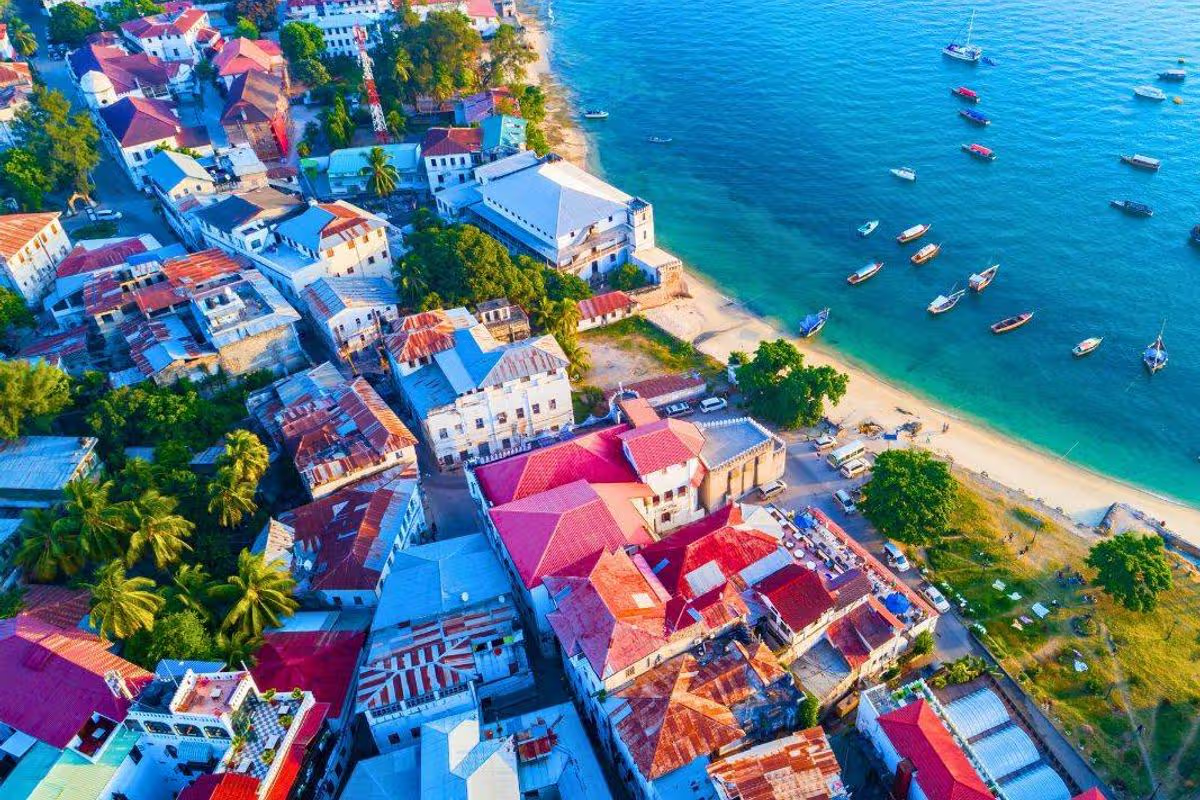
It’s equally worthwhile simply strolling through Stone Town, the capital, which holds UNESCO World Heritage status thanks to its distinctive Swahili architecture, shaped by Indian, Arab and European influences.

Stone Town is renowned for its bustling markets, narrow alleyways and exquisitely carved wooden doors adorning the structures. It’s also Freddie Mercury’s birthplace, and you can tour his childhood residence and discover a museum celebrating the legendary performer.

Countless visitors adore Zanzibar for its sweltering climate, and during this period temperatures typically hover around 30C, dropping to 25C after dark.

Nevertheless, many holidaymakers favour Zanzibar because it’s considered remarkably affordable, with TripAdvisor users reporting it’s perfectly feasible to dine out for just a few quid. One holidaymaker reported: “A local beer is about £2.50 in a nice bar. A glass of wine (always South African) is a bit more. Soft drinks are fairly cheap. The local ginger beer (Tangawizi) is worth experiencing.”

Another traveller commented: “My experience is that for dinner and drinks (a two course meal, a glass of wine and lots of bottled water) one would expect to pay around £10 per head in Zanzibar, including Stone Town.”

A third visitor noted: “In the very local style places we are eating: large bottles of water for $1.50, Sprite/Coke $2, juice $3, beer and Savannah cider $3 and a glass of wine $3-$4.”
Source link

Jet2 launches flights to little-known island with 30C weather and unspoilt beaches

The budget airline, Jet2, is offering travellers the chance to explore a lesser-known island with diverse landscapes and uncrowded beaches as they launch a new exclusive route

Jet2 has launched a new route to a beautiful island with ancient streets, traditional villages and pristine beaches, offering a laid-back ambience away from busy crowds.

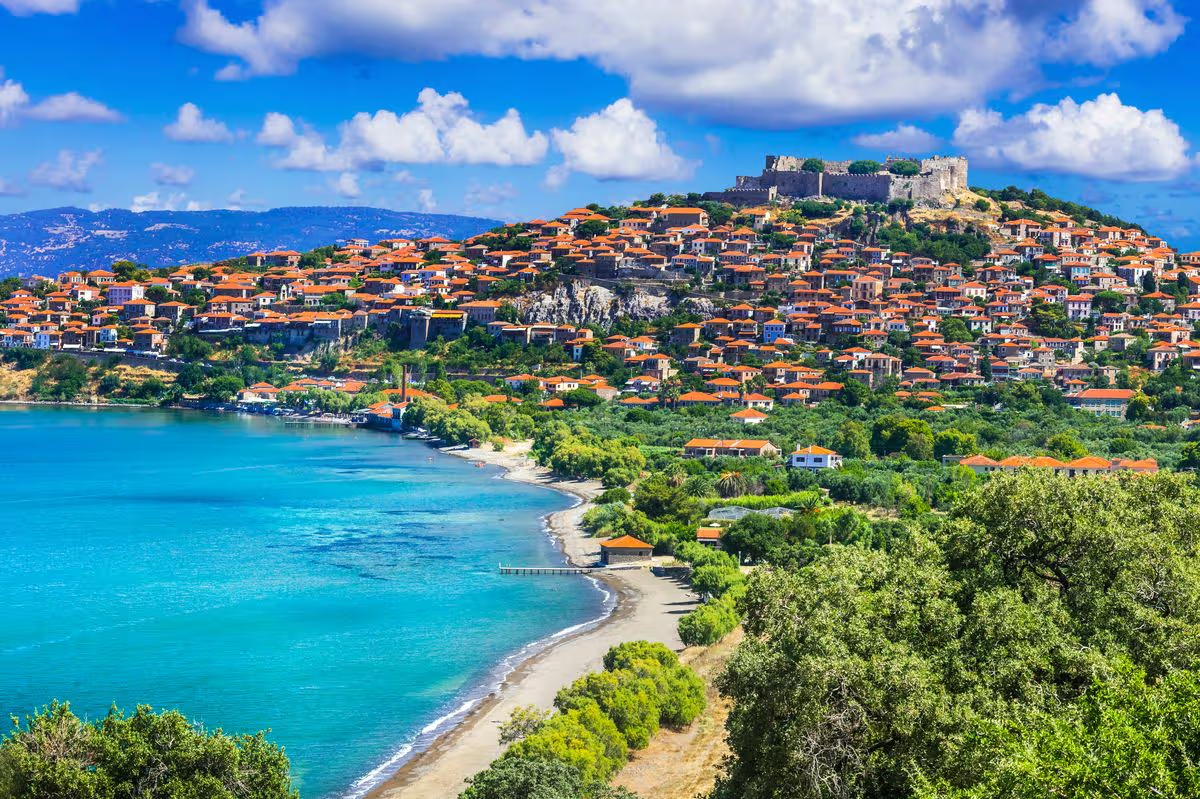
Jet2 has expanded its summer 2027 program from London Gatwick and launched a new route to the beautiful Greek island of Lesvos. The lesser-known island, also known as Lesbos, is situated in the northeastern Aegean Sea, offering turquoise waters, unspoilt sprawling beaches, hot springs, majestic forests, and dramatic volcanic landscapes.

As the third-largest island in Greece, and with its capital, Mytilini, Lesvos is brimming with history, from its charming medieval streets and traditional Mediterranean villages to its fascinating architecture. It’s renowned for its ouzo, an anise-flavoured liqueur, and its olive groves, with more than 11 million trees nestled around the island.

The new Jet2 route to Lesvos will operate weekly on Sunday, from May 2 to 10 October 2027, and when we took a look, we found fares from £123. Flights to the Greek island, which offers blistering rays of 30C during the summer months, are available to book now.

In the meantime, Jet2 has announced a major sale for 35 of its sun-soaked destinations, including Lesvos, for holidaymakers travelling from London Gatwick next summer. The destinations currently on sale include:

  • Antalya
  • Tenerife
  • Lanzarote
  • La Palma
  • Fuerteventura
  • Gran Canaria
  • Alicante
  • Malaga
  • Girona
  • Palma (Majorca)
  • Ibiza
  • Menorca
  • Faro (Algarve)
  • Madeira
  • Crete (Heraklion)
  • Corfu
  • Kalamata
  • Kefalonia
  • Kos
  • Lesvos (Mytilene)
  • Preveza
  • Skiathos
  • Rhodes
  • Thessaloniki (Halkidiki)
  • Naples
  • Verona
  • Pula
  • Reus
  • Zante
  • Agadir
  • Hurghada
  • Bourgas
  • Malta
  • Paphos
  • Sharm El Sheik

The new exclusive route to Lesvos and the summer sale come just weeks before the budget airline launches flights and holidays from London Gatwick for the very first time on March 26. The major travel change is intended to give Jet2 passengers greater flexibility for their holiday getaways.

Steve Heapy, CEO of Jet2.com and Jet2holidays, said: “Since we announced the launch of flights and holidays from London Gatwick, the reaction from customers and independent travel has been incredible, showing just how much demand there is for our industry-leading product and service. This popularity means we are significantly expanding our programme in just our second summer of operations from London Gatwick, offering holidaymakers even more choice and flexibility.

“As well as offering a fantastic selection of flights and holidays to choose from, we are giving customers the chance to get their Summer 2027 holiday booked in nice and early. With the launch of flights and holidays from London Gatwick just around the corner, and Summer 27 going on sale too, this is an incredibly exciting time, both for our company and for customers across the region.”

Ensure our latest lifestyle and travel stories always appear at the top of your Google Search by making us a Preferred Source. Click here to activate or add us as your Preferred Source in your Google search settings.

Do you have a travel story to share? Email webtravel@reachplc.com

Source link

The cheap European country with 30C weather that makes it EASY for Brits to move there… here’s how I did it

HAVE you ever dreamed of packing your bags and jetting off to find a place in the sun in Europe, but thought it wasn’t possible post- Brexit?

You might be surprised to learn how easy it is for British passport-holders to secure a visa to live in Portugal.

I love that Portugal is now my home – and have no regrets!Credit: Katie Wright
You can easily move to Portugal if you meet certain conditions – here’s how to do itCredit: Alamy

That’s exactly what I did last year, when, as a 39-year-old singleton, I rented out my one-bedroom flat in London and moved to Lisbon to work remotely on the D7 visa.

Here’s everything you need to know about why you should choose Portugal – and how to do the same thing I did.

Why move to Portugal?

When people ask me why I wanted to move to Portugal, I always say the same thing: the amazing weather!

I was thrilled to discover that temperatures reach 30C or more in July and August and rarely dip below 10C even in January, which makes a wonderful change from the endless rain and freezing winters that were really getting me down back home.

Plus, the nearest beaches to Lisbon are a 20-minute train ride along the coast at Carcavelos – or I can share an Uber with friends over the Tagus River to reach the stunning beaches at Costa da Caparica,
which is also a popular surfing spot.

I love having the culture and nightlife of the capital city on my doorstep.

But if you prefer a quieter life, you might want to head to the seaside suburb of Cascais, the picturesque former fishing town of Ericeira or the southern coastal region of the Algarve, which is particularly popular with Brits.

Wherever you go, the cost of living is much lower in Portugal than in the UK.

The rent for my modern two-bedroom apartment with a balcony and sunset views is around £1,100 a month – while I rent out my one-bedroom flat in London for £1,800.

Eating out is astonishingly cheap. I rarely pay more than £25 for two tasty courses and a couple of drinks.

A glass of delicious Portuguese white wine is around £2.50, and you can even get a whole bottle for the same price in supermarkets.

Taxis – a luxury I rarely enjoyed in London – are much more affordable too, with ride-hailing apps Uber and Bolt regularly applying automatic discounts of up to 45 per cent to try to attract customers.

My last trip back from the airport cost £6.50 for a 25-minute ride across the city.

Finally, it’s the slower pace of life that I love here.

The locals are friendly, it’s easy to make friends within the large expat community and the city is wonderfully walkable, so you don’t have to spend hours on public transport to get to work or meet up with friends (but if you do take the Metro or bus that’s super cheap too).

Since I quit my full-time job to go freelance and swapped dreary weather for sunshine and blue skies, my stress levels have plummeted and I couldn’t be happier that I chose to make Portugal my home.

What is the D7 visa?

Introduced in 2019 to attract foreign residents, the D7 is a passive income visa which requires you to prove you have an income of €10,440 (£8,825) a year from sources such as rental income, pensions or investment dividends – which works out to around £735 per month.

If, like me, you own a property in the UK and can make £735 a month in rent, you may be eligible for the D7 visa, which requires you to pay taxes in Portugal and stay in the country for eight months out of each year (or six months consecutively).

In Portugal, the locals are friendly and it’s easy to make friends within the large expat communityCredit: Katie Wright
The temperature in sunny Lisbon often gets up to 30CCredit: Getty
The country boasts stunning beachesCredit: Alamy

To apply for the two-year visa, you’ll first need proof of your passive income, such as a rental agreement, pension or investment statement.

You’ll need to obtain a NIF or Número de Identificação Fiscal (taxpayer identification number), open a Portuguese bank account and deposit savings of €10,440 (£8,825) for the first adult applying, plus 50 per cent of this amount for each additional adult and 30 per cent for each child, to prove you can support yourself or
your family financially.

You must show that you have secured one year’s accommodation in Portugal.

This could be a rental agreement or 12 months of Airbnb bookings, or if you happen to know someone who already lives in Portugal they can fill in what’s called a Term of Responsibility form to say you’ll be living with them.

You will also need six months of travel insurance and a DBS criminal record check issued by the UK government within two months of your visa application appointment.

Once you’ve ticked all these boxes, the next step is to make an appointment at the VFS Global centre Manchester or London to submit all your documents.

You will also have to hand over your passport, so make sure you don’t have any travel planned in the following 60 days, which is how long VFS Global estimates it takes to process a D7 visa.

However, my passport arrived back with my visa inside after just 22 days last May.

The D7 visa application process isn’t complicated but is time-consuming, so make a detailed to-do list that you can work through methodically.

I found Facebook groups such as ‘D7 Move to Portugal’ handy for asking questions whenever they cropped up during the six-month process.

For example, I learned there’s a branch of Portuguese bank Millennium BCP in London where you can open an account in person.

The hardest part for me was finding my apartment in Lisbon.

I viewed 17 flats during a 10-day trip, landing mine after applying for three flats in different neighbourhoods.

But now that I’m happily settled into my new life, I realise it was worth all the effort and admin.

My advice if you’re tempted to make the move and think you might be eligible for the D7 visa? Go for it!

Portugal is home to stunning architecture and attractions, like Lisbon’s famous Belem towerCredit: Getty

Source link

Stunning island ‘bursting with colour’ still sunny in February at 30C

This tropical paradise with beaches, waterfalls, rainforests and warm February weather is perfect for escaping the UK winter

With cold, wet weather blanketing much of Britain, it’s no wonder many of us are fantasising about jetting off somewhere sunny to escape the gloomy conditions. While sandy shores usually mean booking flights to the Maldives or Bali, there’s a less crowded tropical haven that’s worth considering – Mauritius.

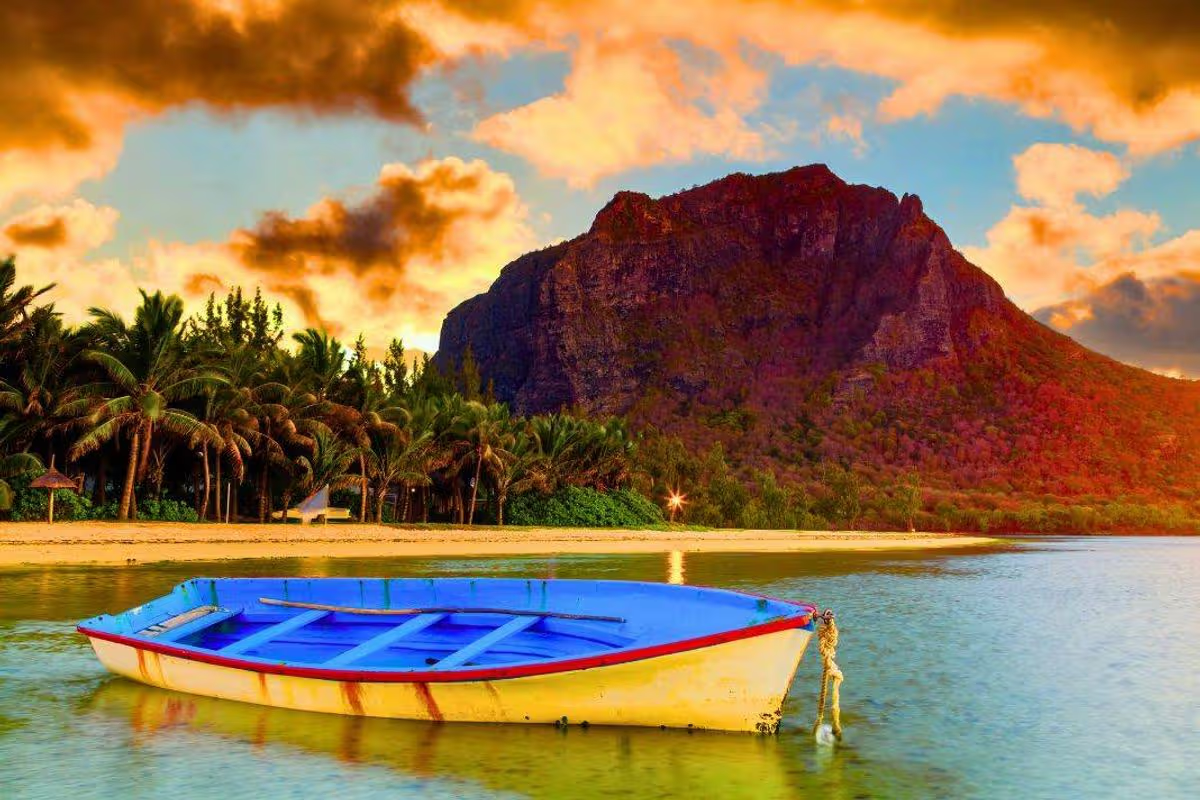
This small island sits off Africa’s southeast coast, roughly 1,200 miles from the mainland. Despite its modest size, it boasts stunning beaches thanks to the coral reefs encircling it. These natural formations create beautiful lagoons with crystal-clear turquoise waters and gentle waves, allowing visitors to spot abundant marine life without even boarding a boat.

But Mauritius offers far more than just coastline – you’ll find cascading waterfalls, lush rainforests, volcanic craters, and even giant tortoises nearby, meaning you can take in extraordinary landscapes all within a single afternoon.

According to Heather Richardson from Safari Bookings, Mauritius ranks among the “most beautiful” and “most spectacular” islands on the planet.

She explained: “An island bursting with colour, Mauritius is so much more than a beach destination (though its white-sand shores are indeed beautiful).”, reports the Express.

“With rich, green rainforests, craggy mountains, silvery waterfalls and a diverse and delicious foodie scene, there’s plenty to enjoy when you’ve had your fill of beach time.”

What makes Mauritius truly special is the versatility it offers – one day you’re lounging beside pristine turquoise waters, the next you’re embarking on a boat trip, exploring underwater worlds, trekking through nature, spotting dolphins or venturing to another island.

Among Mauritius’ most celebrated landmarks is Le Morne Brabant, a UNESCO World Heritage Site where an imposing peak emerges dramatically from the ocean.

Viewed from above, the panorama is stunning as the shoreline seems to cascade into the depths, creating the visual illusion of an enormous submerged waterfall.

In truth, it’s simply the distinctive shape of the ocean floor combined with drifting sediment that deceives the eye, yet it appears enchanting and remains a favourite spot for photography.

Mauritius is equally renowned for its distinctive cuisine, which blends Indian, French, Chinese and Creole traditions, drawing visitors specifically for the culinary experience.

Wandering through the lively bazaars of Port Louis or dining at a neighbourhood eatery can be delightful, though numerous tour companies across the island also offer guided gastronomic tours.

The island has additionally gained recognition for its rum production, with methods dating back centuries and enhanced with indigenous ingredients such as vanilla, passion fruit and aromatic spices.

There’s perpetually something distinctive to experience in Mauritius, and even during February, conditions remain pleasant, with typical temperatures spanning 24°C to 30°C.

Source link