Push to shield immigrant aid workers raising 1st Amendment concerns
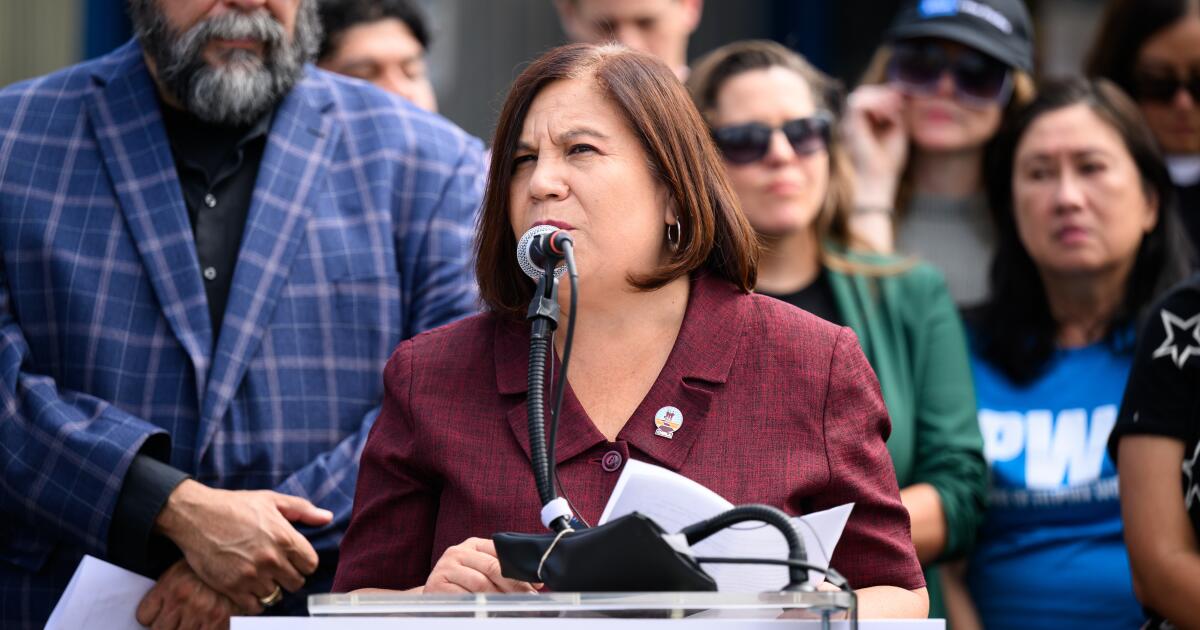
SACRAMENTO — The debate over immigration issues has reached a fever pitch nationwide, and Angelica Salas said it’s putting her employees at risk.
Salas, executive director of the Coalition for Humane Immigrant Rights, said her staff experiences harassment and death threats.
“They ask themselves, what if someone who disagrees with our work can find where I live, will my family be safe?” Salas said, addressing state lawmakers at a recent legislative hearing.”People begin to self-censor; they step away from their work and some leave the field entirely.”
Salas was speaking in support of Assembly Bill 2624, which would provide privacy protections for those facing harassment for working or volunteering with organizations that offer legal and humanitarian aid to immigrants. The bill would create an address confidentiality program, like the one already offered to reproductive healthcare workers, and prohibit people and businesses from selling or posting images or personal information about the protected individuals on the internet.
The measure has drawn ire from Republicans, who argue it could have a chilling effect on free speech and the media. Assemblymember Carl DeMaio (R-San Diego) dubbed it the “Stop Nick Shirley Act” and said it would prevent right-wing social media influencers like Shirley from conducting immigrant-related investigations in California.
Assemblymember Mia Bonta (D-Alameda), who authored the legislation, said the proposed law would help keep people safe — but several 1st Amendment experts this week told The Times the bill could have unintended consequences.
“There could be grounds for concern,” said Jason Shepard, a media law and communications professor at California State Fullerton. “It reflects a legitimate and important state interest in protecting people from harassment and threats. But at the same time, this bill punishes the publication of information.”
The legislation defines “personal information” as anything that identifies, describes or relates to the protected individuals, including their names, addresses, telephone numbers, physical descriptions, driver’s licenses, financial information, license plate numbers and places of employment.
Shepard said the potential new law could be applied unevenly, and the language could have a chilling effect on investigative journalism.
Given the polarized political environment, Shepard said the legislation also could prompt other groups to request similar protections, as those working in a range of professions are facing increasingly heated rhetoric or attacks.
“This is not unique to people who are working in immigration support services; this really could apply to anybody engaged in public debate today,” he said.
Carolyn Iodice, the policy director for the Foundation for Individual Rights and Expression, known as FIRE, said the organization has noted an uptick in laws nationwide implementing privacy protections for those in certain professions.
She pointed to a statute enacted a few years ago in New Jersey that protects the addresses of judges, prosecutors and police officers. The law was used in 2023 to block an editor with New Brunswick Today from publishing an article about the police chief living two hours outside of the city.
“It was obviously newsworthy, but this officer was able to wield the law against this journalist, and that is the kind of thing we are worried about,” Iodice said. “When you think about handing what could be a huge number of people the ability to just block anything from being posted about them online — it could easily be abused.”
David Loy, the legal director for the nonpartisan First Amendment Coalition, said the measure would censor the free speech of all citizens, not just those who defamed or threatened immigrant aid workers.
“Someone might have a legitimate dispute with them and wants to refer to it online,” he said. “But they could then basically silence [that person] from referring to them on a Yelp review or Facebook posts that has nothing to do with threatening them — and that is going way beyond the narrow exceptions of the 1st Amendment.”
Loy said the coalition reached out to Bonta’s office and hopes to help tweak the bill.
Meanwhile, the legislation continues to face scrutiny from Republicans.
“We exposed CA Democrats for the ‘Stop Nick Shirley’ Act that silences citizen journalists who expose their fraud and corruption,” DiMaio wrote this week on social media.
Shirley released a viral video last year alleging fraud in Somali-run immigrant daycare centers in Minneapolis. He recently shared videos of himself in Sacramento confronting Democrats who support Bonta’s bill.
“The enemy is truly within,” Shirley wrote on Instagram. “When our politicians would rather protect fraudsters and illegal migrants, it’s time for us to stand up or face mass oppression from the traitors.”
Bonta dismissed the assertion that the bill is intended to deter journalists, stating in a news release that “right-wing agitators” and “ineffective legislators” were intentionally spreading misinformation.
Bonta spokesperson Daniel McGreevy said the bill has a straightforward goal of protecting immigrant service providers. He said the office is working to refine the legislation to address concerns and welcomes good-faith dialogue.
The bill is progressing through the state Legislature and most recently was referred to the Assembly Appropriations Committee.