14th amendment

On birthright citizenship, Supreme Court ‘originalists’ are split

The Supreme Court’s conservative justices say they decide cases based on the words and original history of the Constitution — and not on their personal or political views.

Following the lead set by the late Justice Antonin Scalia, they say they see history and “originalism” as a guiding principle to prevent judges from changing the Constitution to adjust to new and changing times.

This text-and-history approach is said to contrast with an evolving or “living Constitution” favored by progressives and liberal activists.

But this year saw a flip of sorts on birthright citizenship.

The foremost conservatives agreed with President Trump that the surge of illegal immigration called for reconsidering the promise of citizenship at birth set out in the 14th Amendment of 1868.

“The number of illegal immigrants in this country exploded” in recent years, Justice Samuel A. Alito Jr. wrote in dissent. The rule of citizenship at birth provides “a powerful incentive to enter or remain in this country illegally,” he added.

“The Constitution is an enduring document,” wrote Justice Brett M. Kavanaugh, but its rules and meaning must adjust to “modern situations that were unknown or unanticipated by the Constitution’s Framers.”

In a concurring opinion, he said that “significant illegal immigration into the United States is a new circumstance that was largely unknown as of 1868.”

There were no federal immigration laws in the mid-19th century, but it was an era when a surge of Irish immigrants had settled on the East Coast and large numbers of Chinese immigrants came to California.

Under the law, their children were deemed to be citizens at birth.

Among the conservative originalists, only Justice Amy Coney Barrett signed the majority opinion that was written by Chief Justice John G. Roberts Jr. and joined by the three liberals.

The opening words of the 14th Amendment of 1868 say: “All persons born or naturalized in the United States and subject to the jurisdiction thereof are citizens of the United States.”

In 1898, the Supreme Court upheld the rule of citizenship at birth in the case of Wong Kim Ark, who was born in San Francisco to Chinese parents.

In an executive order, Trump proposed to end birthright citizenship for the newborns whose parents were in the country illegally or temporarily.

Writing for the court, the chief justice said the words of the 14th Amendment were clear and were clearly understood at the time. He dismissed the “dramatically revisionist view” that has been cited recently.

Kavanaugh voted with the majority to block Trump’s order from taking effect. He did so because Congress had adopted birthright citizenship in a 1952 law.

“Consistent with the 14th Amendment, Congress could … enact new legislation establishing exceptions to birthright citizenship,” he wrote.

Justices Clarence Thomas and Alito wrote long dissents arguing that the framers of the 14th Amendment did not or would not have favored birthright citizenship.

They pointed to recent scholarship by law professors that raised questions about the accepted understanding of the 14th Amendment and the citizenship rule.

Thomas said citizenship of the child should turn on whether the parents were “domiciled” in this country. Black people who were enslaved were undoubtedly domiciled here, but the same is not true of temporary visitors.

Justice Neil M. Gorsuch agreed in part with Thomas and questioned whether the newborns of temporary visitors should be deemed as citizens at birth.

Many court commentators were surprised by the close 5-4 divide on the constitutional issue.

“Given how clear the language was, I expected it to be 7 to 2,” said Melissa Murray, a New York University law professor. “I really gasped when I saw it was 5-4. This is not settled. We’re not done with this debate.”

Sarah Isgur, a podcaster and SCOTUSblog analyst, said that “originalism is getting more and more muddled. Either the history matters or it doesn’t.”

However, she agreed with Kavanaugh’s approach of leaving it to Congress to reconsider the issue.

Not all originalists are conservative.

Yale Law Professor Akhil Amar, a constitutional historian, argued that the history of birthright citizenship is clear and not subject to revisionist thinking. He said the Reconstruction Congress adopted this principle of citizenship at birth and stated their intent in clear words in the 14th Amendment.

“When a baby is born on American soil and an American flag flies above, that baby is a birthright citizen, as the Reconstruction Republicans across the land understood,” he wrote in February. This rule “has virtually nothing to do with the baby’s parents.”

Last week, he was mostly cheered by the court’s ruling.

“It’s a triumph, but it should have been 9-0,” Amar said on a review of the court term sponsored by SCOTUSblog. “Shame on the dissenters. They didn’t even the address the statute” and its wording.

But the majority led by Roberts “clearly affirmed the plain meaning of the constitutional text and its history. And that’s a win,” he said.

History has a recurring role at the Supreme Court.

Isgur noted the court will hear arguments in the fall on whether the 2nd Amendment of 1791 gives gun owners a right to have “assault weapons” like AR-15 rifles.

She said the court will decide then between history and changed circumstances.

At issue is whether these modern rapid-fire rifles fit within the history of the gun rights protected by the 2nd Amendment or instead represent a new and dangerous threat to public safety that was unknown in 1791.

Scalia’s opinion upholding gun rights in 2008 is often cited as a model of originalism, but it too emerged from a court divided 5-4.

The 2nd Amendment says, “A well-regulated Militia, being necessary to the security of a free state, the right of the people to keep and bears Arms, shall not be infringed.”

For decades, the Supreme Court had all but ignored the 2nd Amendment, viewing it as a somewhat outdated provision involving militias, akin to the 3rd Amendment. It forbids having soldiers “quartered in any house … in time of peace.”

Four liberal dissenters in 2008 said the court should stand by that understanding of history.

Justice John Paul Stevens said the 2nd Amendment was added to the Constitution to protect state militias from federal interference. Moreover, the reference to “bear arms” suggests it was about militias, he said.

But Scalia’s opinion stands as the landmark precedent, and he said the dissenters had the history all wrong.

The right to have guns for self-defense arose in England and came to the American colonies. “By the time of the founding, the right to have arms had become fundamental for English subjects,” he wrote.

The 2nd Amendment did not establish a new right, he said. Rather, it “codified a pre-existing right [of] having and using arms for self-preservation and [defense],” he wrote.

“There seems to us no doubt, on the basis of both text and history,” Scalia wrote, “that the 2nd Amendment conferred an individual right to keep and bear arms.”

Source link

Birthright citizenship ruling was a win for democracy — and a warning

This week’s narrow Supreme Court decision protecting birthright citizenship is rightly being hailed as a triumph for the American experiment.

By some, anyway.

Check out MAGA world and you’ll quickly find Trump surrogates and even elected leaders spouting a kind of extremist anti-immigrant sentiment that once, not so long ago, was considered intolerable in the public sphere.

This has included suggestions that go as far as banning pregnant women from traveling to the United States for fear they might give birth here, and — no joke — one notable commentator writing that demanding female immigrants be sterilized might be a solution.

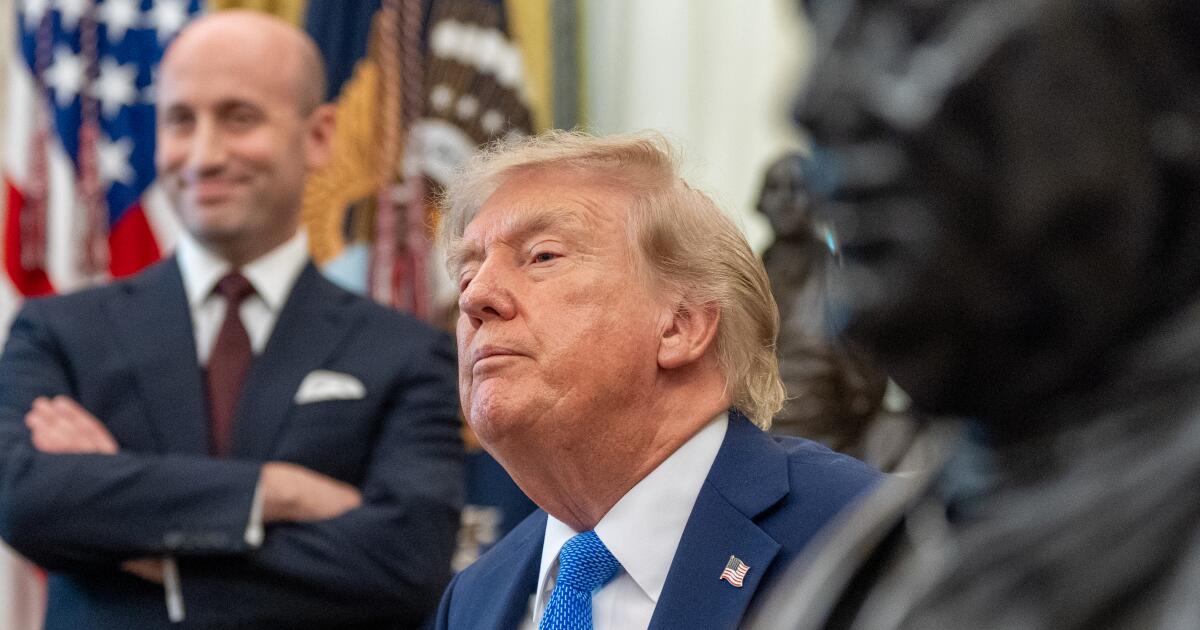
Trump’s Homeland Security advisor Stephen Miller said after the ruling that children of immigrants might not be “qualified to carry on or capable of executing the inheritance of this country.”

“We have people from all over the world, from Third World nations, nations that on their own would have never invented the wheel, let alone modern technology, let alone medicine, let alone air travel, and they can just come into the country, have a baby at a hospital, paid for it by you and me, and then that baby is automatically a citizen,” Miller said.

Before you tell me that the Supreme Court has spoken and this is a done deal, no matter if there’s more gross Miller mush, let me tell you about Supreme Court Justice Ketanji Brown Jackson’s written opinion and why it matters. It is, if read in the right light, a warning for what comes next — a fight to rewrite history to serve political aims.

“The odds were long and the stakes were high,” Jackson wrote about the creation of the 14th Amendment in 1866, which has long been understood as granting citizenship to any child born on U.S. soil and which was the focus of this case.

Still, she wrote, despite the unlikeliness of post-Civil War America rising to the challenge of inclusiveness, the amendment was always meant to do just that — because free Black people, recently emancipated but denied citizenship, “fought for the shared humanity of all people.”

An alternative interpretation by MAGA world of this amendment and this history was the center of this case.

To greatly simplify, the 14th Amendment was originally a response to a Supreme Court decision, the Dred Scott case, that said freed Black slaves could not be U.S. citizens. MAGA world was arguing that the authors of the 14th Amendment never intended much more than that — citizenship for ex-slaves and their descendants.

While concurring with the majority of the court, Jackson also wrote her own summary that makes a vital point: Without history that includes the Black experience — as most of the arguments in this case did — we are left bereft of the suffering that has shaped our values and which gives us the empathy required to be a pluralistic society.

Black history — any non-white history, really — is the history of resistance and the road map to recovery from this dark era of hate.

It’s hard to call someone your fellow citizen if you take away their humanity — which is exactly what this case was attempting to do by splitting into factions those who would fight for equality and rewriting history with only the voices that match the current administration’s goals.

It was disappointing that the court, whose individual justices bounced around arguments from a myriad of sources outside of their erstwhile adherence to the ideas of originalism, did not call out that erasure more forcefully, and that it was left to Jackson to do so.

Jackson took that narrow idea that Black people — and the white legislators sympathetic to their cause — had only themselves in mind when crafting the 14th Amendment and attacked it head-on, arguing that if we just look at what Black people were saying at the time, the larger intent of the amendment becomes clear.

“This alternative account pitches Black Americans against immigrants when the advocates who promoted the Fourteenth Amendment did no such thing,” Jackson pointed out of the MAGA version of events. “Freed Blacks fought for the shared humanity of all people.”

That “universalist vision of belonging and citizenship,” she wrote, “eventually won the day.”

The 14th Amendment was largely written by Sen. Lyman Trumbull of Illinois, who took much of the basis of it from the legal arguments of Black intellectuals, including Frederick Douglass, the most influential Black statesman of the era.

Trumbull then argued in Congress that the amendment was meant to be inclusive — even of so-called “gypsies” and Chinese immigrants, who faced extreme racism, especially in California.

One congressman opposed to the measure warned that if it passed, Chinese immigrants would “overrun” California and “will double or treble the population.” At the same time, the Romani would likely continue to “wander in gangs” and “have no homes, pretend to own no land, live nowhere, settle as trespassers where ever they go, and whose sole merit is a universal swindle,” he warned.

Asked if the amendment would grant citizenship to those two controversial groups of immigrants, Jackson points out that Trumbull gave an unapologetic “undoubtedly,” again drawing on the universalist ideas of Douglass and others.

The “child of an Asiatic is just as much a citizen as the child of a European,” Trumbull said (and Jackson quoted, drawing from an amicus brief by Evan Bernick of Northern Illinois University and Jed Sugerman of Boston University).

“There is a serious breakdown in on the court that reflects the breakdown and echo chambers in America,” Sugerman, the professor, told me Wednesday. “When it comes to history and originalism, you have to read more broadly than just the founding fathers that you liked.”

So the history of the 14th Amendment is right there — equality not just for Black Americans but for immigrant Americans — but it required Jackson to write her own opinion to put it on the court record.

Legal scholars aligned with Trump did Olympic-level gymnastics in this case to parse what the authors of the 14th Amendment meant with the phrase “subject to the jurisdiction” — words that MAGA claimed were meant to secretly exclude undocumented immigrants.

Brown instead reminded us that outside of those white-only discussions when the amendment was written, it was the activism of Black people — their demand for colorblind equality — that actually shaped the final words that granted citizenship to all babies born within our borders.

Solidarity — the unbreakable strength of American democracy.

After the ruling, Trump wrote on social media that Congress could write legislation undoing birthright citizenship. Some pundits say that wouldn’t work, but I’m here to say Trump has managed a bunch of stuff that the pundits said wouldn’t work.

More chilling, and direct, were more comments from Miller.

“It’s an abomination,” he said of the ruling.

But “because of President Trump’s courage and leadership, we are now on the precipice. Yes, we were dealt a setback, but because of his courage alone, we’re on the precipice as a nation of being in a position to end this travesty once and for all, and that’s what we have to fight for.”

Miller and his ilk are seeking to rewrite history to justify their vision of the future of America.

Jackson alone in the court offered us both a warning and a path — a reminder that our history holds indisputable facts despite politics, and we erase them at our own peril.

Source link

Supreme Court rejects Trump’s plan to limit birthright citizenship

The Supreme Court on Tuesday upheld the Constitution’s promise that all those born here are citizens of the United States, regardless of the status of their parents.

In a 6-3 decision, the justices rejected President Trump’s plan to revise the Constitution by executive order and to end citizenship at birth for newborns whose parents were here illegally or temporarily.

Chief Justice John G. Roberts spoke for the court to reject Trump’s proposed limits on birthright citizenship.

“Citizenship, then and now, was the right to have rights — to freely participate in our political community,” he said. “The Framers of the 14th Amendment extended that promise to ‘every free-born person in this land.’ We keep that promise today.”

Justices Sonia Sotomayor, Elena Kagan, Amy Coney Barrett and Ketanji Brown Jackson joined in full. Justice Brett M. Kavanaugh concurred in the outcome based on the federal law that incorporates birthright citizenship.

But the outcome was closer than most had predicted.

Justices Clarence Thomas, Samuel A. Alito and Neil M. Gorsuch dissented in agreement with Trump.

The decision is the second major defeat for Trump from a conservative court that usually supports broad presidential power.

In February, the court struck down Trump’s sweeping worldwide tariffs, his signature economic policy. Roberts said Congress, not the president, has the power to raise revenue and impose taxes, including duties on imports.

In April, Trump came to the court to hear the arguments over birthright citizenship. He sat in the gallery while the justices posed steadily skeptical questions to his solicitor general.

He left after an hour having heard enough to know he was likely to lose.

It was the rare Supreme Court case which was decided based simply on the words of the Constitution.

The justices, both conservative and liberal, say they look to what the Constitution says and how its words were originally understood.

The 14th Amendment adopted in 1868 says: “All persons born or naturalized in the United States and subject to the jurisdiction thereof are citizens of the United States and of the State where they reside.”

The amendment overturned the infamous Dred Scott decision of 1857, which declared that Black persons could not become U.S. citizens.

In its place, the Reconstruction Congress adopted the broad view of citizenship based on the place of birth, not parentage, that had been part of English law for centuries.

In the 19th Century, it was understood that the only exceptions to this rule of birthright citizenship were for the children of foreign diplomats, foreign troops on American soil or, for a time, Native Americans who lived on tribal reservations.

In 1924, Congress extended full citizenship to all Native Americans who were born in this country.

The Supreme Court had also confirmed the broad understanding of birthright citizenship in 1898. The justices upheld the U.S. citizenship of Wong Kim Ark who born in San Francisco to Chinese parents who later returned to China.

“The 14th Amendment affirms the ancient and fundamental rule of citizenship by birth within the territory,” the court said then. “In clear words and in manifest intent, [it] includes the children born, within the territory of the United States, of all other persons, of whatever race or color.”

Congress added birthright citizenship to the immigration laws in 1952.

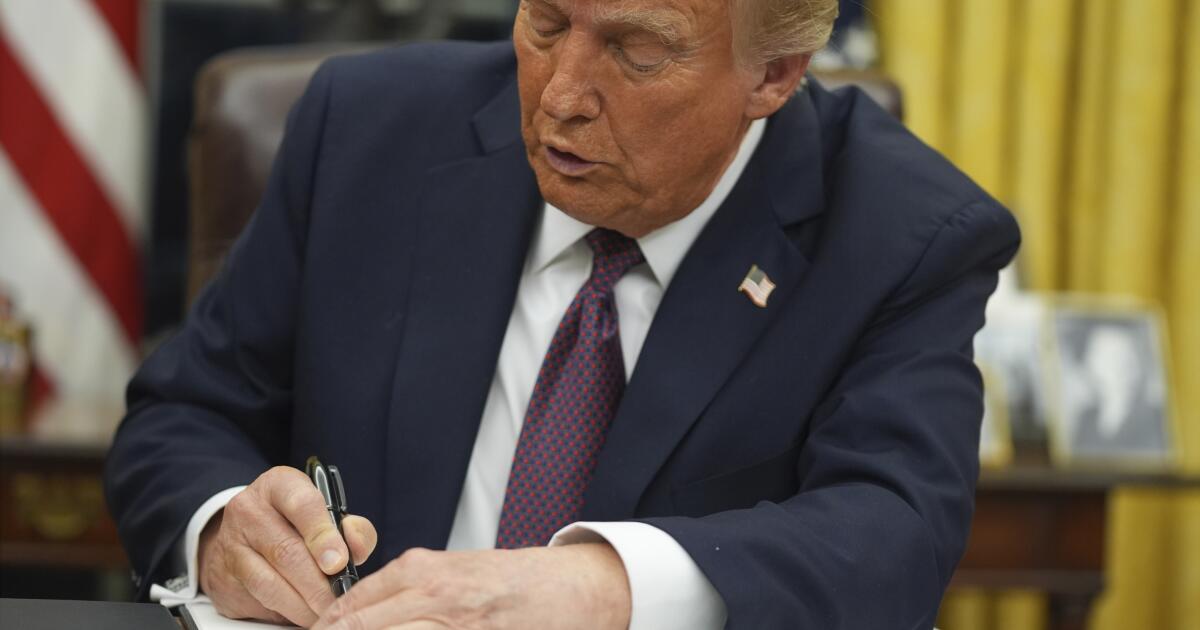
But in his first day back in the White House, Trump signed an executive order to revise the citizenship laws.

“The privilege of United States citizenship is a priceless and profound gift,” he wrote, and in the future, it will not extend to newborns whose parents are in this country unlawfully or temporarily, such as on tourist, student or work visa, he said.

His proposal was quickly blocked by judges as unconstitutional, and it never went into effect.

In his appeal, Trump’s attorney argued that judges have been “misreading” the phrase “subject to the jurisdiction.”
He said this refers to “political allegiance.”

By that standard, the children of temporary visitors and unlawful immigrants are not citizens because they and their parents “not completely subject to the United States’ political jurisdiction,” according to the administration.

Trump could have proposed legislation on tariffs and birthright citizenship and urged the Republican-led Congress to adopt new laws. Instead, he chose to try to change the law and revise the Constitution by executive order.

Before the Supreme Court, Trump’s attorney pointed to the surge of illegal immigration in recent decades.

“We’re in a new world now,” he said, one that calls for new restrictions on citizenship.

“It’s a new world. It’s the same Constitution,” responded Roberts.

Source link