A new long-range anti-ship cruise missile in development in Japan can be seen executing a series of barrel rolls in an official video clip. The spiraling trajectory is intended to make the weapon, currently referred to as the “island defense missile” or simply the “New SSM,” harder to intercept in the terminal phase of flight. Work on the New SSM has been proceeding since 2023 amid growing concerns about regional threats, especially from China. The missile could be the first of a modular family of advanced cruise missiles.
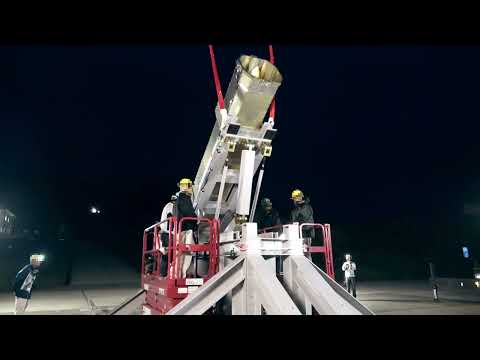
Footage of a New SSM performing the rolling manoeuvres during a test is included in a video montage recently released online by the Japanese Ministry of Defense’s Acquisition Technology & Logistics Agency (ATLA). The footage was first shown publicly to attendees at ATLA’s annual Defense Technology Symposium last year, but it has not been widely available until now. Kawasaki Heavy Industries (KHI) is the prime contractor.
The demonstration of the New SSM’s barrel roll capability can be seen in the video starting at around 0:49 in the runtime.

P-31-1_島嶼防衛用新対艦誘導弾の要素技術の研究

In its current form, the subsonic New SSM is powered by a single XKJ301-1 turbofan engine based on KHI’s KJ300 design, which was developed for use on cruise missiles, as well as uncrewed aerial vehicles. The KJ300 is a two-spool type designed to offer significant fuel economy and, by extension, greater range. To date, Japanese authorities do not appear to have confirmed the maximum range they are targeting for this weapon, but have said it will exceed that of the Type 12 anti-ship cruise missile.

The baseline Type 12 has a maximum range of around 124 miles (200 kilometers), while an improved version was reportedly subsequently developed with roughly twice the reach. A further upgraded Type 12 that can hit targets between 560 and 620 miles (900 and 1,000 kilometers) away is also now in development. The assumption then is that the New SSM will have an even longer maximum range.

The New SSM has pop-out main wings, each made up of three separate sections that lock into place after deploying. It also has two vertical stabilizers and a pair of horizontal stabilizers, all fixed in place at the tail end of the missile. The missile is intended to be fired from launchers on the ground and on ships, and to be air-launched from tactical jets like the F-2 and larger types like the P-1 maritime patrol plane. A rocket booster provides initial thrust before falling away, after which the XKJ301-1 turbofan kicks in.

The weapon has a number of stealthy features, including a pronounced chine line that extends along either side behind the beak-like nose, as well as panels with serrated and otherwise heavily angled edges. The intake for the XKJ301-1 has an S-shaped design, as well, another common feature on stealth missiles and aircraft.

The shaping of the nose also has to do with the missile’s expected guidance package. From what Japanese authorities have explained so far, the New SSM will use a GPS-assisted inertial guidance system (INS) navigation to get to a designated target. A dual-mode seeker, with imaging infrared (IIR) and radio frequency (RF) homing modes, then takes over for the terminal phase of flight. Pairing these two seeker capabilities together offers significant benefits for increasing the probability of a hit while also reducing vulnerability to jamming and other countermeasures. It would also help make the weapon more effective in the complex littoral environments where they are likely to be employed. This guidance combination is also just one of a number of potential modular nose sections that could be fitted to the missile, which we will come back to later on.

ATLA in Japan has previously said that the New SSM will be capable of some degree of maneuvering on route to target to reduce the chance of interception at extended ranges and otherwise create complications for defenders. Then there is the aforementioned terminal phase barrel rolling, which is primarily said to be focused on evading fire from gun-based shipboard close-in defense systems like China’s 30mm Gatling cannon-equipped Type 730. Official Japanese government graphics have depicted the New SSM spiraling past what looks intended to represent a Type 730, as seen in the social media post below.
An improved version of the Type 730, the Type 1130, with 11 barrels instead of seven, is also now in service in China, and that country has at least experimented with even larger designs in the same vein. Similar close-in weapon systems are found on warships in service with many other naval arms globally, including Russia, the United States, and Japan itself, to name just a few.
It is unclear whether there is any hard data yet on the effectiveness of the New SSM’s particular maneuvering capability. The idea of giving an anti-ship cruise missile a very high degree of terminal maneuverability to improve its survivability is not new. As a comparative example, the Naval Strike Missile (NSM), developed by Norway’s Kongsberg and increasingly popular globally, is also designed to perform high-G evasive maneuvers in the terminal phase of an engagement. However, it flies in a more U-shaped pattern rather than a full spiral, at least based on publicly available information.

The final configuration of the New SSM might also incorporate electronic support measures systems or other self-protection capabilities.
ATLA has also openly talked about using the New SSM as the basis for a variety of other capabilities leveraging modular nose sections. This could include land-attack variants capable of engaging fixed or mobile targets, as well as ones intended to perform non-kinetic tasks. As seen in the slide below, variations on the design could act as dedicated decoys or loitering surveillance assets with the added ability to immediately prosecute strikes on targets they find. This modularity would also make it easier to add new warheads, seeker systems, and other functionality to the design down the line. In many ways, the New SSM blurs the line between a traditional cruise missile and a drone, indicative of broader trends globally that TWZ regularly highlights.


A ‘platform’ like this with a range well in excess of 620 miles, and that can be launched from the ground, sea, or land, would open the door to a host of operational possibilities for Japan. That range could also translate to significant loitering endurance, as well. Ships, aircraft, and launchers on the ground could be positioned closer to a target area before launch, extending the system’s functional reach or ability to loiter in a particular part of the battlespace.
Just in its anti-ship form, the New SSM could give Japan a valuable new way to strike ships from multiple vectors simultaneously and do so with increased survivability. As the term “island defense missile” underscores, the weapon’s development also comes at a time when Japanese authorities see increasing maritime (and other) threats to both the country’s home island and outlying territories from long-time regional adversary North Korea, as well as Russia and China. The New SSM is one of several long-range strike capabilities, also including new hypersonic missiles, that Japan has been developing in response to this evolving security environment. In line with this, Japan’s forthcoming cruiser-sized Aegis System Equipped Vessels (ASEV) have been steadily evolving beyond floating ballistic missile defense platforms to more multi-purpose maritime strike and land-attack-capable assets.
With all this in mind, the current government in Japan has taken a particularly open and hard-line stance on responding to any potential future Chinese intervention against Taiwan. This, in turn, has prompted significant shows of force from China’s People’s Liberation Army (PLA) that have clearly been meant to send signals to Tokyo, as well as Taipei. The Japanese island of Yonaguni, which lies just 70 miles or so from the northern shores of Taiwan, has become a central point of discussion. Even just with a range of 620 miles, New SSMs based there would be able to reach targets in certain parts of mainland China, as well as out in the waters surrounding Taiwan and beyond. The Japan Self-Defense Forces have already been moving to bolster air defenses on Yonaguni.

When it comes to the New SSM, specifically, Japanese authorities have previously pointed to 2027 as the target timeframe to begin mass production and deployment of the missiles. As the video montage from ATLA shows, flight-testing of the barrel-rolling weapons is very much underway.
Contact the author: joe@twz.com