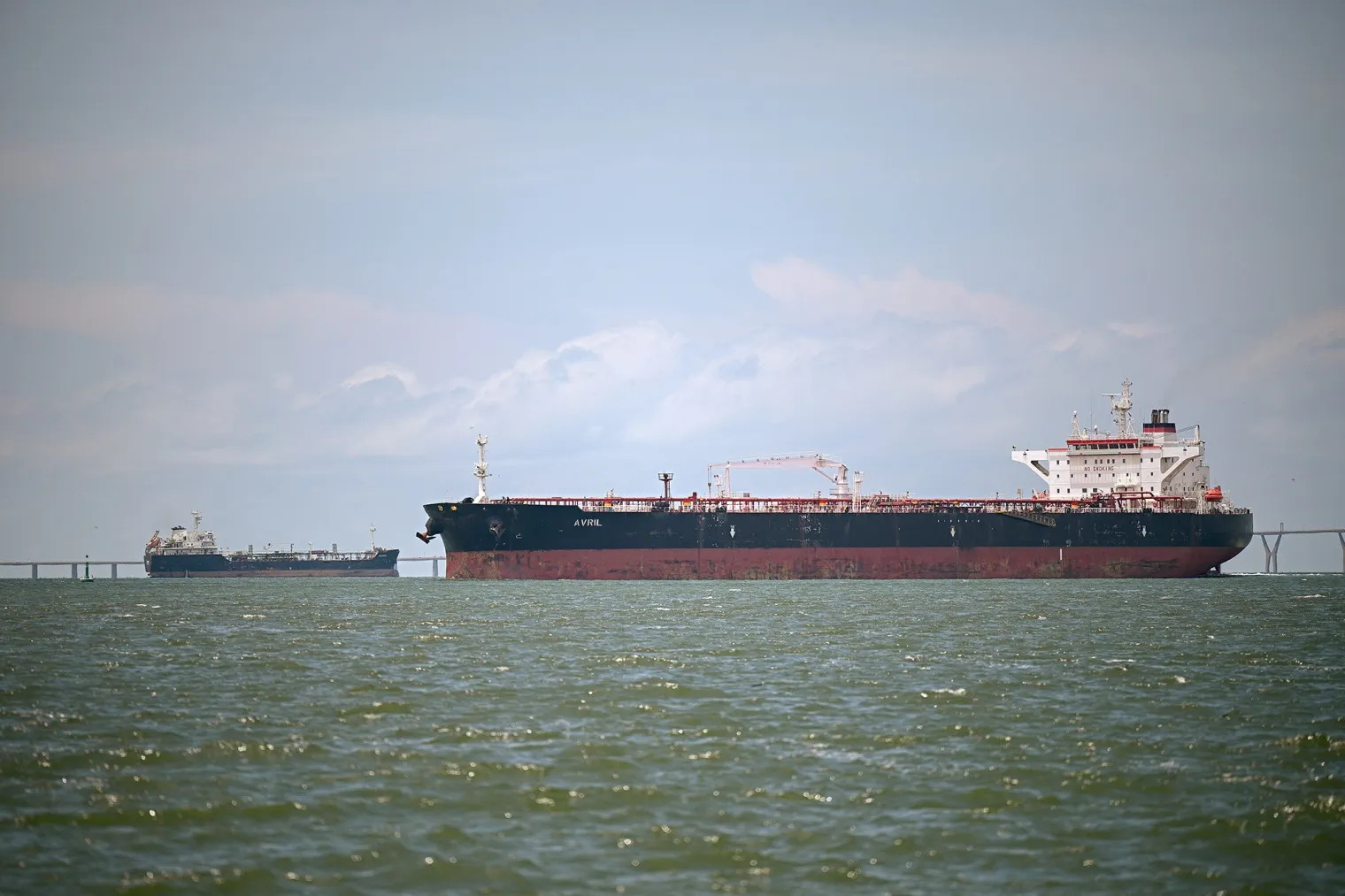
Washington has tightened a naval blockade to strong-arm the Venezuelan government. (AFP)
Caracas, January 14, 2026 (venezuelanalysis.com) – Two Venezuela-bound China-flagged oil supertankers have made U-turns in the Atlantic amidst a US-imposed naval blockade against the Caribbean country.
According to Reuters, the very large crude carriers (VLCC) Xingye and Thousand Sunny were headed Venezuela to load crude cargoes. The ships, which had made several trips to Venezuela in recent years, were anchored for weeks before turning back. China was the main destination of Venezuelan crude in recent years, with part of the cargoes used to offset debt.
The aborted shipments came in the wake of the Trump administration’s claims to take control of Venezuelan oil sales. US forces bombed Caracas and surrounding areas on January 3 and kidnapped President Nicolás Maduro and First Lady Cilia Flores.
Since December, the US has also seized five oil tankers for allegedly carrying Venezuelan crude as its navy set up a blockade aimed at strangling Venezuela’s most important revenue source and strong-arming the government.
US officials have reportedly filed “dozens” of court warrants to seize tankers allegedly involved in transporting Venezuelan oil.
Senior Trump administration officials, including Energy Secretary Chris Wright and Treasury Secretary Scott Bessent, have claimed that revenues from Venezuelan oil sales will be deposited in accounts run by the US government.
The agreement is set to begin with 30-50 million barrels that Venezuela had in storage as a result of the naval blockade, though White House officials have claimed it will extend for an indefinite period. Washington issued an executive order last week shielding Venezuelan oil proceeds in US accounts from creditors.
US President Donald Trump held a meeting with Western oil executives on Friday, urging investment in Venezuela’s oil sector and vowing that corporations will “deal” with the US directly, rather than Venezuelan authorities. Energy companies have been reluctant to pledge any major commitments to Venezuela.
Commodities traders Vitol and Trafigura have received licenses to transport Venezuelan crude and have reportedly begun moving it to Caribbean storage hubs ahead of exports to final destinations. According to reports, the two firms have transported a combined 4.8 million barrels of Venezuela’s Merey 16 blend and have offered them to customers in the US, India and China with an $8.50 discount per barrel compared to ICE Brent.
US officials, including Secretary of State Marco Rubio, have claimed that US-controlled Venezuelan oil revenues will only be used for imports from US manufacturers, including inputs for the energy sector and the electric grid. Vitol is set to deliver 460,000 barrels of US-sourced naphtha to Venezuela in the coming days, as reported by Argus Media. Caracas requires diluents such as naphtha to turn its extra-heavy crude into exportable blends, and the first Trump administration imposed sanctions on their purchase from US suppliers in 2019.
The Venezuelan government has not commented on the specifics of the new arrangement for oil sales. Acting President Delcy Rodríguez said the country remains committed to “diversified economic and geopolitical relations.” Venezuelan state oil company PDVSA has confirmed “negotiations” to ship crude cargoes to the US.
For its part, Russia’s Roszarubezhneft stated that it will not relinquish its assets in Venezuela. The state-owned company is a minority partner in multiple joint ventures with PDVSA, including crude upgrader Petromonagas. Roszarubezhneft took over from Rosneft after the latter was hit with US secondary sanctions in 2020.
Venezuela’s oil industry has been under US unilateral coercive measures since 2017. The US Treasury Department has targeted the oil sector with financial sanctions, an export embargo, secondary sanctions, and a bevy of other measures that aimed to choke off Venezuela’s most important income source.
Washington’s recent naval blockade likewise had an immediate impact on production as PDVSA began to run out of storage space, including offshore. The latest OPEC monthly report recorded Venezuela’s December output at 896,000 barrels per day (bpd), as measured by secondary sources. The figure is 60,000 bpd lower than the previous month’s.
For its part, PDVSA reported a smaller decline, from 1.14 to 1.12 million bpd. Direct and secondary data have slightly differed over the years due to disagreements over the inclusion of natural gas liquids and condensates.
The Venezuelan state oil company has begun reactivating wells that were shut down as a consequence of the US blockade, according to Reuters.