Explore new cultures, find the best travel deals, and make informed decisions with our trusted travel news. Let your wanderlust thrive as you stay connected with the ever-changing world of travel.
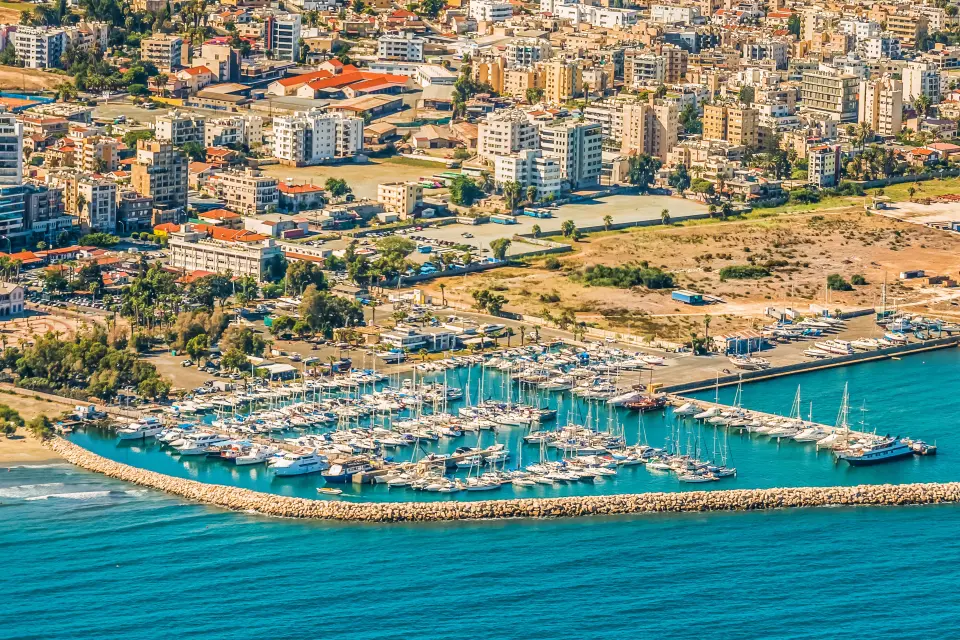
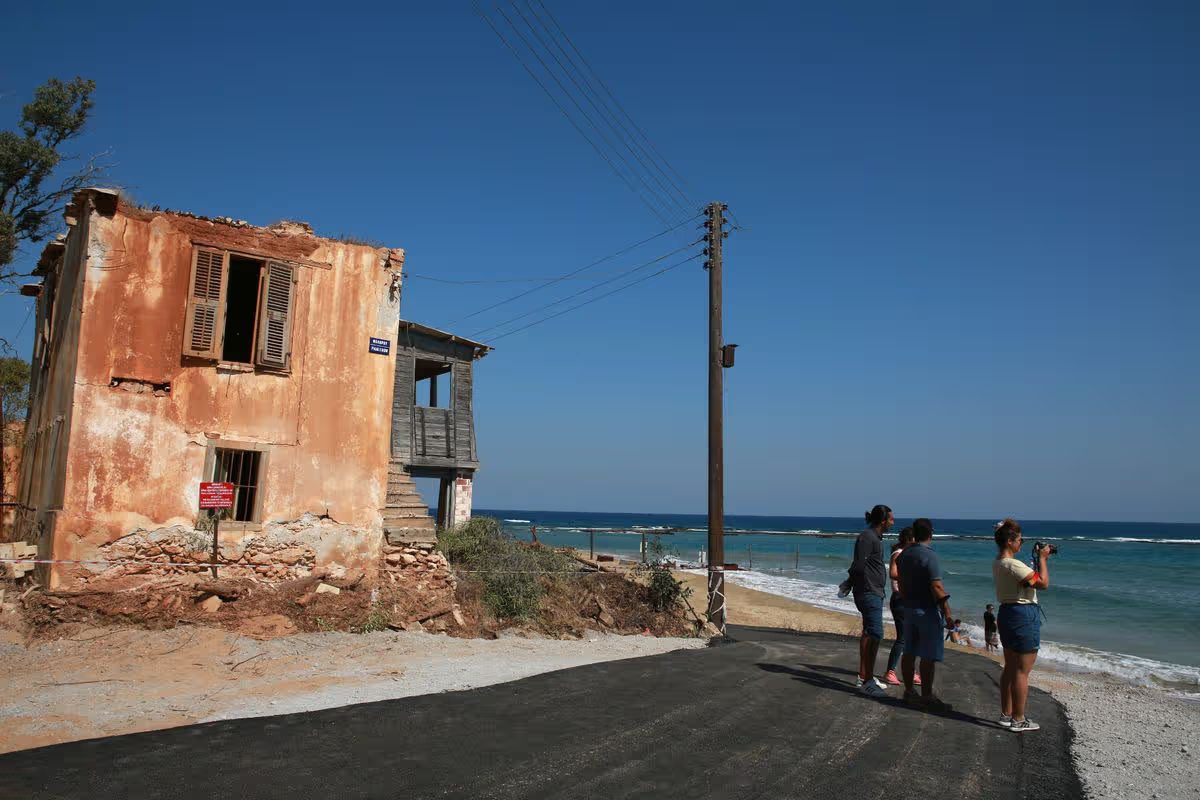
Everything you need to know about travel to Cyprus right nowCredit: Alamy
Here is everything you need to know about travelling to Cyprus right now.
Is Cyprus safe to travel to?
Cyprus is still on the safe travel list, with no areas deemed too dangerous for travel.
However, there is some updated advice following the RAF base attack.
The UK Foreign Office website currently states: “On March 2, 2026, the Sovereign Base Areas Administration confirmed a suspected drone impact at RAF Akrotiri.
“British nationals in the Sovereign Base Areas should follow instructions from the Sovereign Base Areas Administration British Bases Cyprus Facebook British nationals in the Republic of Cyprus should follow any instructions from Cypriot local authorities.”
This is mainly for Brits living in the area, rather than tourists in the resorts of Larnaca and Paphos.
The latest travel advice for the rest of Cyprus states: “Regional escalation poses significant security risks and has led to travel disruption.”
EasyJet and British Airways cancelled a number of flights from the UK on Monday and Tuesday.
Today, easyJet cancelled four flights from the UK today – London Gatwick flight to Larnaca, as well as flights from Bristol, Manchester and Edinburgh to Paphos.
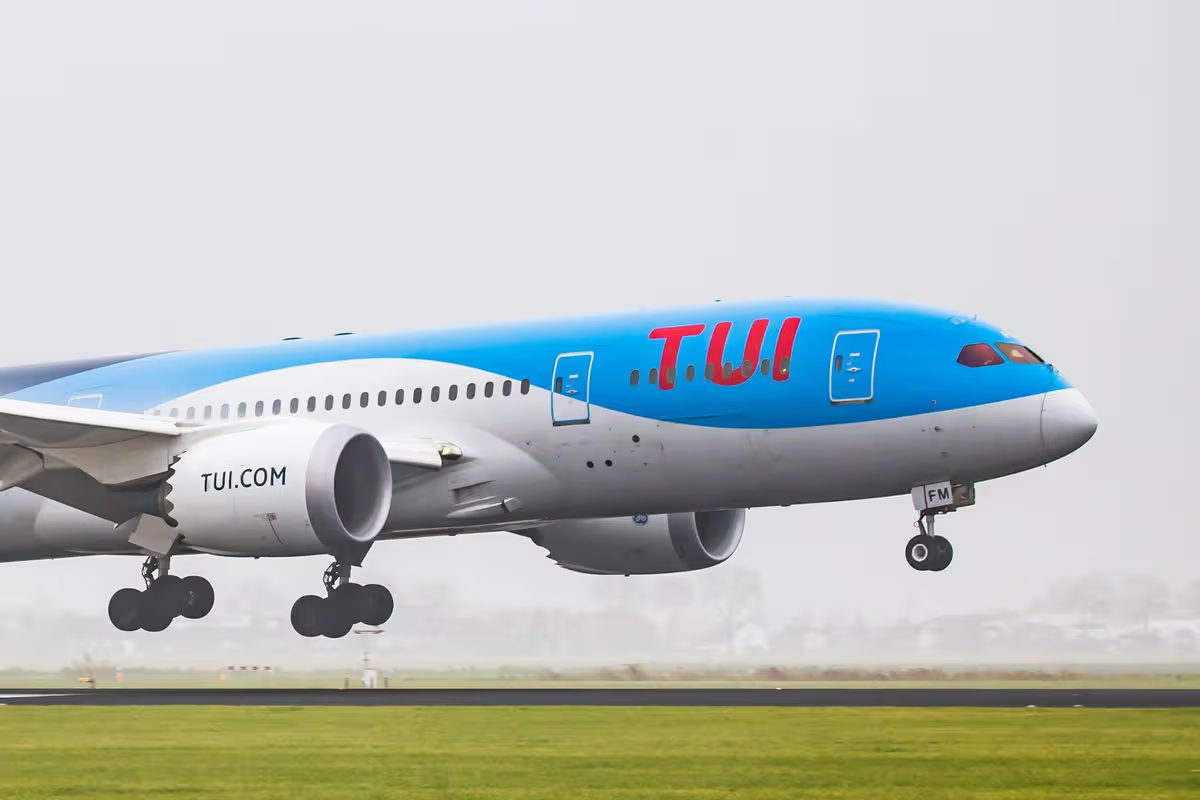
A TUI spokesperson told Sun Travel: “In light of the evolving situation in the Middle East, we have taken the decision to cancel the four TUI Airways flights scheduled to travel to Cyprus on March 4.
British Airways cancelled its London Heathrow flight to Larnaca today as well.
Brits with flights later this week should keep on eye on the current status as they could still be cancelled at short notice.
What if I have a holiday booked to Cyprus?
With travel still deemed safe in Cyprus, holidays are still going ahead.
If you decide to cancel, you will be left out of pocket as tour operators are under no obligation to issue a refund.
The Sun’s Head of Travel Lisa Minot said: “Only if the advice were to change, would your travel company have to offer you the chance to amend your travel to a different date or offer you a full refund.
“We have had lots of questions about holidays to Cyprus – both Larnaca and Paphos, later in June, July and September and the advice really remains the same.
“Unless you have paid a minimal deposit, you should continue to make payments.
“If you cancel now you could lose money – and discover that holidays are significantly more expensive when you look to book again.”
“What is important is to make sure you have bought good travel insurance NOW to cover you in the run up to your holiday dates. A lot can happen in the coming months.”
We’re giving away a spectacular seven-night stay for up to six people at Royal Marbella Golf Resort. From high-tech suites and sparkling pools to world-class golf and golden beaches, this is the ultimate prize for those who crave sun, style, and sophistication. Flights are not included.
Win a luxurious stay at the Royal Marbella Golf Resort
Swap the everyday for sun-drenched days and cloudless blue skies! We’ve teamed up with IDILIQ Hotels & Resortsto offer one lucky winner a spectacular seven-night stay at the enchanting Royal Marbella Golf Resort.
Nestled in the foothills of the Serranía de Ronda mountains with the Mediterranean Sea shimmering below, this resort hits all the right notes. Whether you’re a golf enthusiast, a sun-seeker, or a family looking for a stylish retreat, this is your chance to experience the perfect blend of Andalusian charm and contemporary elegance.
The winner will stay in a Classic Two Bedroom Apartment, where the comforts of a private home meet the service of an elite hotel.
Designed for open-plan living, your apartment features:
Space for the Whole Crew: Two spacious bedrooms and two bathrooms, plus a comfortable double sofa bed in the lounge—sleeping up to 6 people (maximum 4 adults).
Tech & Comfort: Stay connected with high-speed WiFi and three Smart TVs (a 55” in the lounge and 42” in each bedroom).
Gourmet Living: A fully equipped kitchen with an oven, hob, dishwasher, washing machine, and coffee machine—perfect for chilling a bottle of local Cava or whipping up a tapas feast.
Private Terrace: Step out onto your own furnished balcony to soak up the mountain, pool, or fairway views in the warm Spanish breeze.
Royal Marbella Golf Resort is a true “Stay and Play” destination. Golf enthusiasts are just 50 meters from the El Paraíso Golf Club —a classic Gary Player-designed course. Through the resort’s free golf booking service , you can also secure tee times at world-class nearby courses like Atalaya, Los Arqueros, and Marbella Golf & Country Club.
If you prefer a slower pace:
The pools: Wander through fragrant, flower-filled gardens to find two sparkling outdoor pools, perfect for all-day lounging on a sunbed.
Fitness & wellness: Keep your routine on track at the well-equipped gym, available free for guests.
The hub: Need to check an email? Our co-working space provides a peaceful, productive zone with high-speed connectivity.
Attentive service: The experienced concierge team is on hand to book the hottest tables in Marbella or arrange excursions into the rugged Spanish countryside.
Beyond the resort, you are perfectly positioned between Marbella, Estepona, and Benahavís . Explore world-class golf courses, glitzy marinas, and the characterful pueblos blancos (white villages) of Andalucía. This is the heart of flamenco and tapas—expect a holiday full of tradition and timeless beauty.
How to enter
To be in with a chance of winning this ultimate Spanish retreat, simply fill in your details in the form below. If you can’t see the form, click here.
PLEASE NOTE: This prize covers your accommodation only. FLIGHTS ARE NOT INCLUDED and must be arranged separately. This gives the winner total flexibility to choose their preferred departure airport and travel dates within the eligibility window!
The competition closes at midnight on 5th April 2026 and the winner will be selected at random. Good luck!
FLYING with United Airlines should be more peaceful after it vowed to boot off selfish passengers who refuse to wear headphones.
Travelers have applauded the rule change after being infuriated by audio blasting from fellow flyers binge-watching videos.
Sign up for the Travel newsletter
Thank you!
United Airlines is taking a stronger stand against annoying passengers who blast their personal devices in cabins – without headphonesCredit: GettyUnited Airlines wants passengers to stop listening to personal electronic devices without headphonesCredit: Getty
In what is believed to be an industry-first, the carrier has issued a permanent flying ban policy over noise in cabins, according to travel sources.
United Airlines updated its contract of carriage last month to include a section on listening to personal electronic devices.
It now warns that passengers who refuse to don headphones while listening to audio or watching video can be removed from the aircraft.
The threat comes under its “breach of contract of carriage – failure by passenger to comply with the rules of the contract of carriage” section.
United said it could “remove passengers who fail to use headphones while listening to audio or video content.”
UA also stated it had the “right to refuse transport on a permanent or temporary basis.”
The warning was published under rule 21 – one of 30 rules published for passengers, including service complaints and baggage policies.
“The contract of carriage was updated Feb. 27 to add the headphone language,” a spokeswoman confirmed to The U.S. Sun today.
She said it followed last year’s introduction of Starlink Wi-Fi with connectivity across both personal devices and inflight entertainment screens.
“We’ve always encouraged customers to use headphones when listening to audio content,” she added.
“And our Wi-Fi rules already remind customers to use headphones.
“With the expansion of Starlink, it seemed like a good time to make that even clearer by adding it to the contract of carriage.”
United Airlines is trying to make flyers act in a more respectful way towards fellow passengersCredit: AFP
United had “quietly amended its contract of carriage,” commented CBS News yesterday.
“It’s usually only a small number of folks on airplanes who are making noise by not using headphones, so this is a graceful way to handle those folks,” said travel expert Scott Keyes.
He told the broadcaster that he didn’t know of any other major U.S. airline with a similar rule.
Those snubbing the headphone rule could be permanently banned from flying with United AirlinesCredit: Getty
United Airlines’ strong line has been widely applauded by flyers and travel experts.
“Some flyers have become such inconsiderate pigs,” said one man.
“If you’re one of those a***holes that blasts audio from your phone without headphones, United Airlines might just ban you from their flight,” warned another on social media.
“This is a rule I can get behind!” wrote one thrilled passenger.
“The sheer volume of people who seem to think I want to hear their phone conversations/video/music in public spaces is only growing.”
United Airlines to ban passengers who don’t wear headphones
The new rule targets travelers using personal electronic devices
Rule 21 Refusal of Transport:
“UA shall have the right to refuse transport on a permanent or temporary basis or shall have the right to remove from the aircraft at any point, any passenger for the following reasons:
“Breach of contract of carriage – failure by passenger to comply with the rules of the contract of carriage.
“Passengers who fail to use headphones while listening to audio or video content.”
Co-owners Borja and Alex(Image: Kenny Brown | Manchester Evening News)
They might appear to be a relic of bygone days, but there’s still a demand for the modest cassette. CDs and digital streaming appeared to spell the end for the mixtape, yet in a corner of Manchester’s Northern Quarter they’re flying off the shelves.
That’s down to Mars Tapes, widely regarded as the last cassette shop in the UK. Operated by Alex Tadros and situated inside Manchester’s independent shopping haven, Afflecks Palace, it’s been hugely successful and is now gearing up for its next phase.
“After seven years of growth, we are entering into our third expansion. This time moving down to a much larger unit on the 1st floor of Afflecks Palace — one of the biggest units in the building,” Alex says.
Mars tapes stocks a selection of classics, a ‘Rewind’ series — official tapes missing their paper inserts — mixtapes and consignments of new music from major labels.
The new premises will showcase an enlarged library of cassette tapes, a broader selection of refurbished vintage audio equipment, and the launch of the Mars Tapes Listening Cafe — a designated area where patrons can savour a coffee whilst listening to tapes from the shop’s collection, reports the Manchester Evening News.
To mark the expansion, they’re throwing a weekend party on March 7 and 8.
The venue will feature a Dave Haslam DJ set on the Sunday and a live gig from emerging Glasgow outfit Cowboy Hunters on the Saturday — the latter will be dropping a new EP on cassette through Sour Grapes Records.
The weekend will also welcome Horace Panter (The Specials), who will be showcasing his cassette artwork throughout both days. There will be a range of in-store discounts for various cassette products, with food and drinks specials available as well.
“Our cassette shop launched back in 2019 in perhaps the smallest unit in Afflecks Palace, and we never expected to grow in the way we have,” adds Alex.
“Now in the midst of our third expansion, into one of the biggest spaces in the building we wanted to celebrate with all of the cassette aficionados that made it possible! We’re offering food, drinks and in-store deals, alongside some fantastic live music from Cowboy Hunters, and DJ sets from Dave Haslam and Glue Tape Jockeys (a cassette DJ set).
“We’re also excited to be bringing down Horace Panter of The Specials who will be exhibiting some of his fantastic cassette based artwork. It’s gonna be a tape heads dream weekend and we can’t wait to welcome everyone down to the new store.”
The launch celebration will run on March 7 and 8 at Afflecks Palace, 52 Church St, Manchester M4 1PW. Complimentary tickets can be secured via Skiddle.
WITH the current ongoing Iran crisis, Brits are quite fairly worried about their upcoming holidays.
Concerns have risen over the safety of Turkey, after NATO was forced to shoot down a missile in Turkish airspace earlier today, resulting in debris falling in the Dortyol district.
Sign up for the Travel newsletter
Thank you!
Here is everything you need to know about Turkey holidaysCredit: Alamy
Here is everything you need to know if you have any travel to Turkey this year.
Is Turkey safe to travel to?
Yes, most of Turkey is still considered safe to travel to.
The only parts of Turkey that the UK Foreign Office warns against is the border of Syria, which is along the east of the country.
It warns: “FCDO advises against all travel to within 10km of the border with Syria due to fighting and a heightened risk of terrorism.”
However, most Brits visit the west coast of Turkey, particularly the seaside resorts, which are hundreds of miles away.
The only advice currently for the rest of Turkey is: “Regional escalation poses significant security risks and has led to travel disruption.”
Do keep an eye on the latest travel advice on the government website here.
Are flights to Turkey cancelled?
No, flights to Turkey are being unaffected for anyone travelling from the UK to Turkey.
Some flights coming from the Middle East, such as from Dubai and Doha, are likely to be affected to Turkey right now.
However, Brits travelling from Britain will still be able to fly to Turkey without cancellations caused by the Iran crisis.
What if I have a holiday booked to Turkey?
If you have a holiday booked, you will not be able to cancel it without being left out of pocket.
As Turkey is safe to travel, you will not be given your money back if you choose not to travel.
Holidays to all tourist destinations in Turkey are still be going ahead.
This includes destinations such as Istanbul, Bodrum, Antalya and Fethiye.
The Sun’s Head of Travel Lisa Minot explains: “As the advice is that it is safe to travel, tour operators and airlines are under no obligation to offer you a refund if you choose not to travel.
“While some people may feel uneasy, the distances involved mean it is extremely unlikely that anything would impact your holiday.
“With all package holidays, you have enhanced protection should the situation change.
“If the Foreign Office changes its advice to all but essential travel, you will have extra rights to a refund or amended date.
“But right now, that is not necessary as trips to the popular Mediterranean Turkish resorts are safe.”
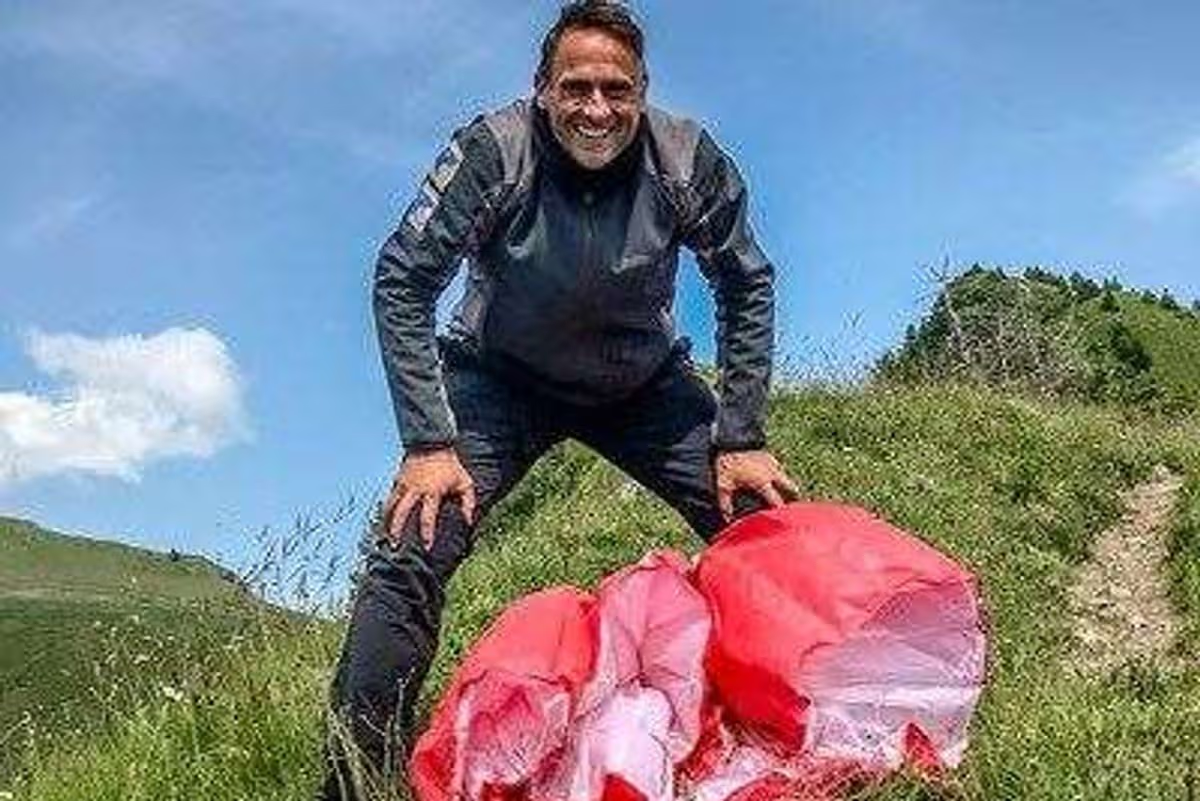
Laurence Higham died while paragliding in South Africa
The mother of a UK paraglider who died in a devastating accident in South Africa has paid tribute to her much-loved son and said the thought of him flying free brings his family comfort. Laurence Higham, 55, crashed in the mountains near Porterville in the Western Cape on the last day of an advanced paragliding event
A fellow paraglider scaled a high mountain ridge, clambering through rocks, thorns and thickets to find him. A rescue helicopter also arrived but it was too late. Laurence’s partner Victoria Turner had been due to join him for a holiday, but instead she flew out to retrieve his body.
His mother Lesley said: “Laurence was our light and inspiration. He was a highly experienced paraglider pilot and always very well prepared. His adventures and flying trips were planned meticulously. He wanted to develop and challenge himself. He was a pioneer.
“He got the most out of life in every way. Everything was an adventure. That is what I will take from his life. Our enduring desire is for him to ‘fly free’ without earthly constraints.”
Laurence spent most of his childhood in Stortford, Hertfordshire, and read business studies at Middlesex University before attending the University of California. When he returned to the UK he settled in Muswell Hill, north London.
His parents had run a travel company for schools and this inspired him to set up his own successful business, Varsity Travel Ltd, which ran European courses in languages, history and art.
Fluent in French, Spanish and Italian, he enjoyed history and philosophy. He was also a cook who delighted in creating feasts for friends and family, inspired by his travels.
When the Covid-19 pandemic began, he decided that the time was right to move out of London and return home to Stortford.
He started a new phase of life with partner Victoria and divided his time between his home and Victoria’s house in Norfolk.
Lesley said: “Laurence was very funny. He lit up any room. He was incredibly entertaining, but I knew of a side that was very contemplative, studious and curious about the world around him. He was very well read.”
Laurence and his brother Richard, four years his junior, were inseparable and Lesley said the tragedy had left her younger son absolutely devastated. “I told him to take Laurence’s courage and his sense of adventure to strengthen his heart, not break it,” Lesley said.
She added he was a “hugely fun, devoted and inspiring” uncle to his brother’s children Deen and Katherine. Laurence, a previously fearsome squash player, was a long-term member of Bishop’s Stortford Lawn Tennis Club.
Manager Natalie Dwyer said: “Laurence was a fantastic club member and will be remembered fondly by all who had the pleasure of meeting and playing with him. He would light up the court with his positive attitude and gregarious nature. Win or lose, Laurence was always smiling and showed a love for the sport. He will be sadly missed by everyone at the club.”
Laurence’s family and friends said goodbye at a funeral service at St Michael’s Church, in Broome, Norfolk, last week, which celebrated his thirst for adventure and how he lived for the joy of exploring a beautiful world. Lesley said the family was deeply grateful for the wonderful and inspiring life of their darling boy, adding: “Fly free, beloved Laurence.”
The Foreign, Commonwealth & Development Office (FCDO) is constantly updating its advice as the situation changes in the Middle East and has now issued guidance for stranded Brits trying to get home
12:36, 04 Mar 2026Updated 12:38, 04 Mar 2026
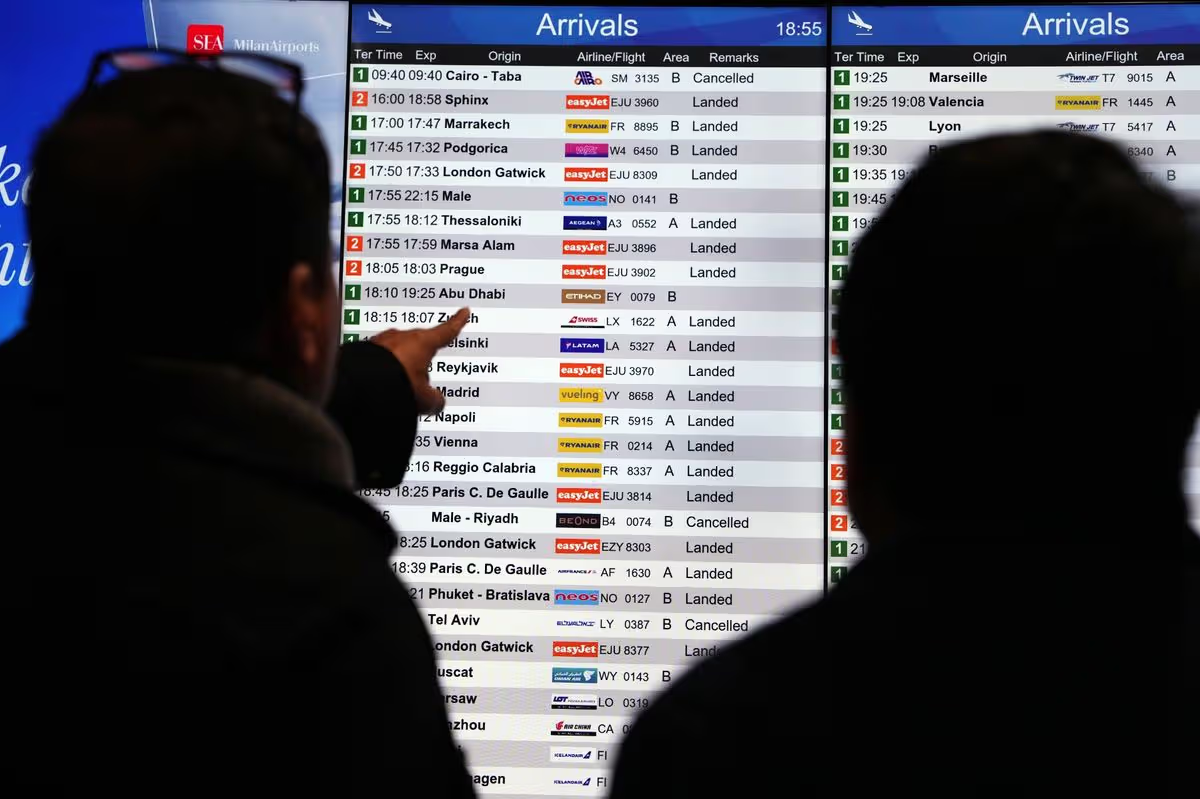
While flight cancellations are ongoing some services from the Middle East are departing(Image: Gian Mattia D’Alberto/LaPresse/Shutterstock )
In the past few days, the Foreign, Commonwealth & Development Office (FCDO) has had to update its advice several times in the wake of the constantly changing situation in the Middle East.
An estimated 132,000 Brits have registered their presence in the Middle East with the FCDO, and many will be looking to leave the area and return to the UK as soon as its safe.
Last night, the FCDO took to X (formerly Twitter) to issue a travel update for Brits currently in Bahrain, Israel, Kuwait, Palestine, Qatar, Saudi Arabia, or the United Arab Emirates (UAE).
The updates offer advice to Brits looking to leave the above countries, including which routes to avoid when travelling by road, and the latest situation with commercial air flights. It also updated information on the Taba Border Crossing, with the updated advice page stating: “International borders in Israel and Palestine could close at short notice, including the Taba border crossing between Israel and Egypt. Check with local authorities and read Israel travel advice and Palestine travel advice before trying to cross.”
Content cannot be displayed without consent
For Brits in the UAE, including Dubai, the FCDO has updated its advice on leaving the country. Its updated information says: “There are a limited number of commercial options available, including by air from UAE and from Oman. If your presence in UAE is not essential, you may wish to consider departing – if you judge you can access these options safely.
“Check for the latest updates from your airline or tour operator, as well as the instructions from local authorities, and the status of any border crossings before you travel. If you are traveling by air do not travel to the airport unless your airline has confirmed your reservation.
“Make sure you have access to emergency supplies and essential medication. Travel within or out of UAE is at your own risk.
“Keep your departure plans under review and ensure your travel documents are up to date, including any visas required for onward travel.”
Some countries also have a Regional Risks section which includes specific advice on which areas should be avoided and the alternatives. However, the FCDO is careful to state that all travel in or out of these countries is still at the individual’s own risk. Brits should still ensure they follow the advice of local authorities and get up to date information before setting off.
While travel between the UK and the Middle East is still severely disrupted, some flights have been running on limited routes to bring Brits home from Dubai since yesterday (March 3).
Emirates and Etihad have been operating a very limited service, and Virgin Atlantic confirmed it is resuming services from Dubai and Riyadh to London-Heathrow.
Brits who are still in the Middle East should register their presence on the FCDO website as this will ensure they get the latest Foreign Office advice. Only UK passport holders can register for this service.
Have a story you want to share? Email us at webtravel@reachplc.com
THE WORLD’S first Hey Duggee themed hotel rooms are launching at a UK theme park next month.
The beloved BBC preschool series, which features a friendly dog and his Squirrel Club, will soon have its own themed rooms at Alton Towers theme park.
Sign up for the Travel newsletter
Thank you!
The world’s first Hey Duggee themed hotel rooms are opening in the UKCredit: Alton Towers resort
Launching March 14, fans of Hey Duggee will be able to stay in rooms that bring the Duggee Clubhouse to life.
There will be one standard room and one suite, with each able to sleep up to five guests.
Each room will feature a double bed with a bespoke headboard, themed TV and furniture and even a dedicated children’s area with bunk beds inspired by the Squirrel Club.
Each space will also be full of familiar faces from the show including Betty, Happy, Norrie, Tag and Roly.
Kids will even be able to play a sensory game with elements from the series in the room.
For those with beady eyes, you’ll be able to spot characters hidden in corners too.
A one-night stay in March or April, in the Hey Duggee standard room costs from £343 a night and in the Hey Duggee suite, from £450.
Included in the room are tea and coffee making facilities, a bottle warmer, cot, iron and ironing board and toiletries.
You will also get a full-English breakfast, free parking and access to nine-hole golf.
And throughout the day and evening, the hotel hosts activities as well, such as a tots disco, stargazing and live shows.
It is worth noting though, that theme park tickets are not included in this price.
If you want to head into the theme park, standard entry which includes access to CBeebies Land costs £34 when booked in advance online.
You can also grab a £29 toddler and parent pass, with children under 90cm tall visiting for free.
Alton Towers is already home to a Hey Duggee themed interactive sensory play area in CBeebies Land, where kids can meet Duggee and collect a Big Adventure Badge.
The themed rooms will open on March 14 in the CBeebies Land HotelCredit: Alamy
There’s also Hey Duggee Live, where fans can help Duggee, Roly, Betty and Happy discover the mystery DJ in Big Fun Showtime.
The CBeebies Land Hotel is designed for young families at Alton Towers and features a number of other themed rooms, such as Bluey, Bing, In the Night Garden, Octonauts and Something Special.
Guests staying in the hotel also get to meet some of their favourite CBeebies characters.
Natasha Spence, Events Director – Live Entertainment at BBC Studios, said: “These world-first Hey Duggee themed hotel rooms bring the Duggee Clubhouse to life in a truly immersive way.
“It’s a wonderful extension of the show that allows fans and families to continue the fun, imagination and adventure beyond the screen and we’re delighted to be working with Alton Towers Resort again to create something so special.”
Howard Ebison, Vice President of Alton Towers Resort said: “What better way for fans to relax and continue the adventures after a fun-filled day at CBeebies Land than with a stay in our world-first Hey Duggee themed rooms.
“We have an exciting year ahead in 2026 at Alton Towers Resort for families and this themed addition to CBeebies Land Hotel is the latest example of our commitment to unforgettable memories and immersive experiences for families.”
The new Hey Duggee-themed rooms follow the announcement of the world’s first Bluey-themed rollercoaster which will open in CBeebies Land on March 28.
Bluey the Ride: Here Come the Grannies! will be based on the episode where Bluey and Bingo dress up as grannies called Janet and Rita, with the two characters causing chaos on the ride.
Ebison said: “Bluey the Ride: Here Come the Grannies! is all about celebrating energy, play and those everyday moments families love about the show.
“It’s playful, unexpected and unmistakably Bluey – and we can’t wait to welcome families from March 28 to experience the world’s first Bluey coaster right here at Alton Towers Resort.”
The Foreign Office has updated its advice for a number of destinations including Cyprus, Turkey, and Egypt as the Middle East war continues following US-Israel strikes on Iran
The Foreign Office has updated its Egypt travel advice(Image: Getty Images)
The Foreign Office has updated its travel advice for a number of destinations including Turkey, Cyprus and Egypt amidst the chaos of the Middle East war, following US-Israeli strikes on Iran.
Although at the time of writing the UK government isn’t advising against travel to all of these destinations, it has updated its advice around “regional tension” and possible escalations in the areas. For Brits who have travel plans booked, as there isn’t an advisory against travel in general to these countries, holidays and flights in theory can go ahead as planned.
If you’re due to travel in the next few weeks but don’t want to because of the ongoing conflict, you do have a few options. It’s unlikely that you’ll be able to cancel and get a full refund, but get in touch with your tour operator or airline, as they may allow you to rebook your trip to a later date, without charging you a fee.
If a company cancels your holiday or flight, then it’s a different story; in this case, you are entitled to a full refund. You may be offered rebooking options which you can take, but if you’d rather get your money back then you are entitled to do so. The same applies if the Foreign Office does issue a ‘do not travel’ warning, as it has done with the UAE. In this case, firms and airlines need to cancel your trip and offer you a full refund. If you try and travel against Foreign Office advice, your travel insurance will be invalidated.
It’s worth noting that airlines and holiday companies are currently prioritising customers due to travel within the next couple of weeks – if your trip is a few months away, you may be asked to get back in touch closer to the time.
Check out the latest travel advice for Cyprus, Turkey and Egypt below.
Cyprus travel advice
Currently, the Foreign Office doesn’t advise Brits against travel to Cyprus, with most holidays and flights currently going ahead. However, the UK government has warned of a suspected drone strike at the RAF Akrotiri base that took place on March 2. “British nationals in the Sovereign Base Areas should follow instructions from the Sovereign Base Areas Administration British Bases Cyprus Facebook. British nationals in the Republic of Cyprus should follow any instructions from Cypriot local authorities,” the guidance reads.
Authorities have also updated advice to warn of the “regional escalation” in the area. “Regional escalation poses significant security risks and has led to travel disruption,” it states, adding: “British nationals should:
“read If you’re affected by a crisis abroad – GOV.UK. This includes guidance on “how to prepare for a crisis” with suggestions on what you might include in your emergency supplies and “what to do in a crisis”
“sign up to FCDO Travel Advice email alerts
“monitor local and international media for the latest information
“sign up to local information alerts/resources and follow the instructions of the local authorities
“keep your departure plans under review, and ensure your travel documents are up to date.”
Turkey travel advice
Currently, the Foreign Office doesn’t advise Brits against travel to Turkey in general, with most holidays and flights currently going ahead. There is a ‘do not travel’ warning within 10km of Turkey’s border with Syria “due to fighting and a heightened risk of terrorism”, but this was in place before the Middle East conflict.
Like Cyprus, the advice has also been updated to warn of the “regional escalation” in the area. “Regional escalation poses significant security risks and has led to travel disruption,” it states, adding: “British nationals should:
“read If you’re affected by a crisis abroad – GOV.UK. This includes guidance on “how to prepare for a crisis” with suggestions on what you might include in your emergency supplies and “what to do in a crisis”
“sign up to FCDO Travel Advice email alerts
“monitor local and international media for the latest information
“sign up to local information alerts/resources and follow the instructions of the local authorities
“keep your departure plans under review, and ensure your travel documents are up to date.”
Egypt travel advice
The Foreign Office has updated its Egypt travel advice to warn Brits of “a heightened risk of regional tension” following the Middle East conflict. Its latest advice explains: “There is a heightened risk of regional tension. Escalation could lead to travel disruption and other unanticipated impacts.
“British nationals should take sensible precautions, considering their own individual circumstances. These include:
read If you’re affected by a crisis abroad – GOV.UK. This includes guidance on “how to prepare for a crisis” with suggestions on what you might include in your emergency supplies and “what to do in a crisis”
sign up to FCDO Travel Advice email alerts
monitor local and international media for the latest information
sign up to local information alerts/resources and follow the instructions of the local authorities
stay away from areas around security or military facilities.”
Currently it doesn’t advise against all travel to Egypt, however it does advise against travel to certain regions of the country. It’s worth noting these advisories are unrelated to the Middle East conflict, and were already in place. These include warning against all but essential travel to the Egypt-Libya border, North Sinai, Northern part of South Sinai, Eastern part of Ismailiyah Governorate. There is also advice against travelling to the Western Desert including the area west of the nile Valley and Nile Delta Regions, although there are some exceptions such as Luxor and Valley of the Kings (check the Egypt travel advice for full details).
Flights remain cancelled although airlines are starting limited repatriation routesCredit: Shutterstock EditorialSome passengers have returned to the UK from Abu DhabiCredit: PA
This lead to the closure of both major airports and, being major flight hubs, resulted in hundreds of thousands of passengers stranded abroad.
While some parts of the airspace are still closed, some airlines have confirmed a few flights will start taking off.
Emirates, one of the worst affected airlines being based in Dubai, confirmed a “limited number of passenger repatriation and freighter flights” will take off today.
This includes seven flights to the UK, to London Heathrow, London Gatwick, Manchester and Edinburgh.
However, they warned that this was for passengers with earlier bookings.
Otherwise the airline warned: “All scheduled Emirates flights to and from Dubai remain suspended until 12pm UAE time on March 4, due to airspace closures across the region.
“Please do not go to the airport unless you have been notified directly by Emirates, or hold a confirmed booking for these flights.”
Virgin Atlantic has also launched relaunched flight from Dubai and Riyadh back to the UK.
They said: “Following our latest assessments and in line with guidance from international aviation authorities, some of our flights are now operating in the region.”
And Etihad confirmed that some repositioning and repatriation flights had taken.
But they also warned that flights were suspended until at least 2pm on March 5.
British Airways is yet to restart flights from the Middle East.
Qatar Airways confirmed flights from Doha are yet to relaunch, with another update to take place on Friday.
They confirmed: “Qatar Airways flight operations remain temporarily suspended due to the closure of Qatari airspace.
“Qatar Airways will resume operations once the Qatar Civil Aviation Authority announces the safe reopening of Qatari airspace.
“A further update will be provided on March 6 by 9am Doha time (6am UTC).”
Despite this, hundreds of thousands of people are still stranded abroad.
Tourists in destinations such as Thailand, Sri Lanka, Maldives and Bali are being forced to look at alternative routes home due to the ongoing Dubai and Doha closures.
The Sun’s Head of Travel explains your rights if affected by the cancellations
For passengers meant to be flying in or out of the region, your rights depend on whether you were flying directly in or out of the UK or EU or if you are flying with an UK or EU airline.
Those who are will not get compensation as it is not the fault of the airline but they do have a duty of care to look after impacted passengers – depending on the length of the delay that could include food and drink, a means of communicating and if necessary, overnight accommodation.
Those flying on non-UK or EU carriers may find their rights are slightly different if they are not on a direct flight to the UK as different rules apply and you may not be provided with the same assistance.
They are, however, expected to offer you the right to a refund or another flight in the case of cancellations.
As well as those directly impacted by cancelled flights, the closure of so much of the Middle Eastern airspace will mean even more congestion on alternative routes that could impact flights across the globe.
For those due to travel in the coming days, staying in contact with your airline and checking before travelling to the airport is essential as schedules may change at short notice.
At the outset, Richard Baines says: “You don’t need binoculars.” This is not what I expect to hear on a walk where the main focus is birds. The sun has yet to rise, but we can see our way across muddy ground crunchy with ice. That is the next surprise in a day that will be full of them: we are still in February but Richard points out that ornithological spring is well under way. “Birds are starting to sing,” he says. “Some, like the crossbill, might already have laid eggs.”
We follow a path up to an open ridge, but bird sounds are conspicuously absent. Richard turns back and heads down into a sheltered wooded valley. We have driven up from Pickering to the North York Moors, an area he has been exploring for more than 40 years, his experiences charted in recent memoir The Rarity Garden. As a 14-year-old budding ornithologist he decided to learn bird songs and calls. “I had spent too many woodland walks being disappointed by not seeing any birds, but I could hear a great deal,” he says. “When I started to prioritise sound above sight, the trees came alive and I have never had a bad woodland walk since.” Our walk today aims to land that message for me.
Forests in the north of England are a stronghold for goshawks. Photograph: wonderful-earth.net/Alamy
As we drop down into a wooded glade, a large bird flits out of the trees, turns and is gone. “Great start!” says Richard. “Male goshawk.”
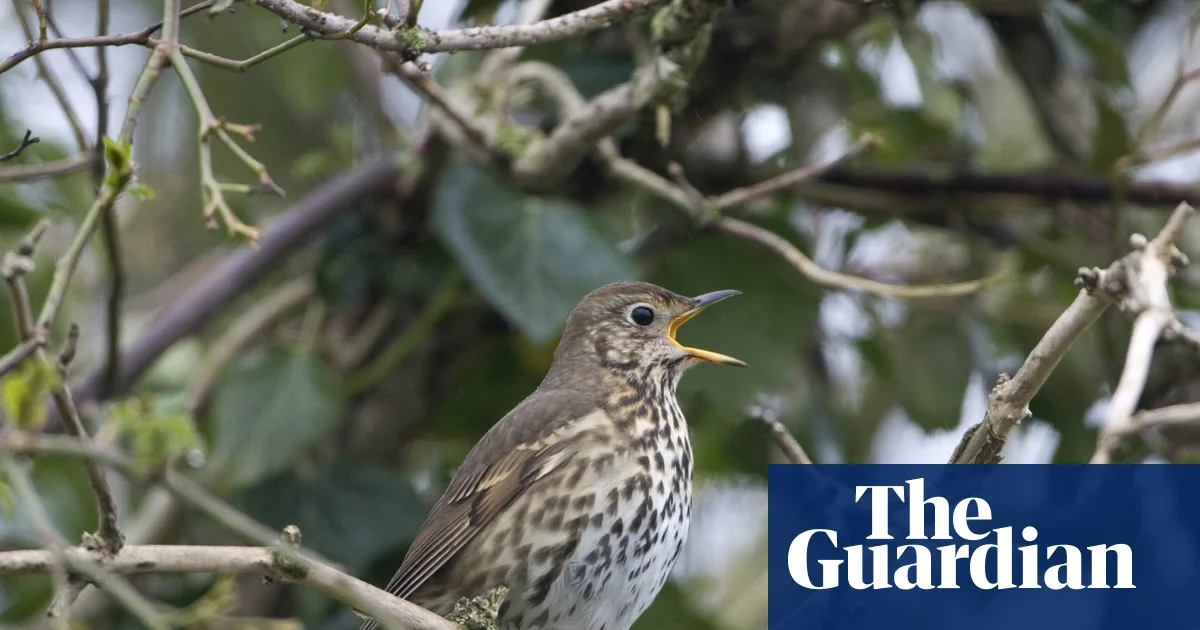
Now we stop in front of a small stand of alder and hazel. A bird is singing, so I get out my phone and load Merlin, the app that has revolutionised my ability to identify birds. “Yes, let’s see what you get,” says Richard with a twinkle in his eye.I glance down and see three bird names quickly ping on to the screen. Song thrush, chaffinch and blackbird. I look up. Something is not quite right: all the sounds are emanating from the same place. And then it happens: an unmistakable mewling cry, coming from the top of the alder, where all the other sounds have originated. Merlin duly obliges: “Buzzard.”
Richard is chuckling. “Any thoughts?”
“That thrush just did something incredible.”
We listen a little longer, then Richard explains how a lifetime of learning bird sounds took an unexpected turn in 2014 when Cornell University brought out its gamechanging app, Merlin, a bird-sound identifier that now has more than 10 million users worldwide.
“It’s a brilliant tool for learning birdsong, but it’s also revealing lots of unexpected information,” he says.
One such moment came on a walk in May 2025. Richard was leading a group looking for nightjars in clear-felled areas of plantation woodland near where we are walking. A participant who had lagged behind suddenly came running back to the group with the news that Merlin had picked up a nightingale’s song. Richard immediately turned the group around and went back. “Nightingales are rarely sighted north of Cambridgeshire, never in the North York Moors,” he says. “It would have been momentous.”
Instead, they found a song thrush.
“It may have learned the song on its spring migration, maybe even in the Mediterranean. Merlin is teaching a lot, but it’s also revealing gaps in our knowledge.”
The song thrush is not the only bird playing tricks. As the bottom of the valley flattens out, I spot a great tit landing in the willows by the stream, then singing like no great tit I’ve heard before.
Pink-footed geese migrate to the UK from Iceland in autumn. Photograph: Jon Sparks/Alamy
“It’s mimicking a marsh tit,” says Richard. By the time I get Merlin going, a song thrush has started singing. This time, with the sun risen, we can see it clearly, and Richard whispers: “It’s doing a nuthatch.”
Merlin pops up with: “Coot.”
We both stare at the screen, then replay the recording. Sure enough, there is a snippet of low quacks. This time, even Richard is staggered. “That is a first. There definitely isn’t a coot within 10 miles of here.”
Standing in a puddle of icy water, I am suddenly aware that I may have just witnessed a small addition to human knowledge. Significantly, I have not once thought about taking a picture.
For Richard, these reactions are what make the walks special. “Being thrilled by bird sound really frees people up, especially if you’ve got used to the idea that success is a good photograph.”
He has brought people with sight loss on the walks. “They are often much more sensitive to sound and so it’s fascinating to get their skills involved.”
Richard Baines out on a bird walk in North York Moors national park. Photograph: Kevin Rushby
We carry on and, with Richard’s guidance, a whole new sonic world opens up for me, including, far away, the honking of pink-footed geese arriving from Iceland. They are so high I can’t see them, but Richard thinks he knows where they might land, so we quickly transfer to the nearby flooded fields of Ryedale. Extreme cold in eastern Europe has sent thousands of geese towards the UK, and now we see hundreds of pink-footed geese coming down to land and, among them, the black barred chests of Russian white-fronted geese (“white-fronted” refers to the bird’s forehead, not chest). In a normal year, Yorkshire might welcome a couple of dozen of these, but now we are witnessing several hundred in one place. “A once in a 25-year event,” says Richard.
Having already flown about 3,000 miles from their Siberian breeding grounds to the Dutch coast, these birds have decided that an extra few hundred miles across the North Sea is a good idea. That seems like magic, but there is more. Next day, Richard phones. “I’ve been looking at the photos of those geese and there was something even more unusual among them: another Siberian visitor, a single tundra bean goose.”
I like that. Despite my new interest in sound, I’ll hang on to my camera.
Yorkshire Coast Nature offers various nature walks, including Bird Sound Safaris, from £40
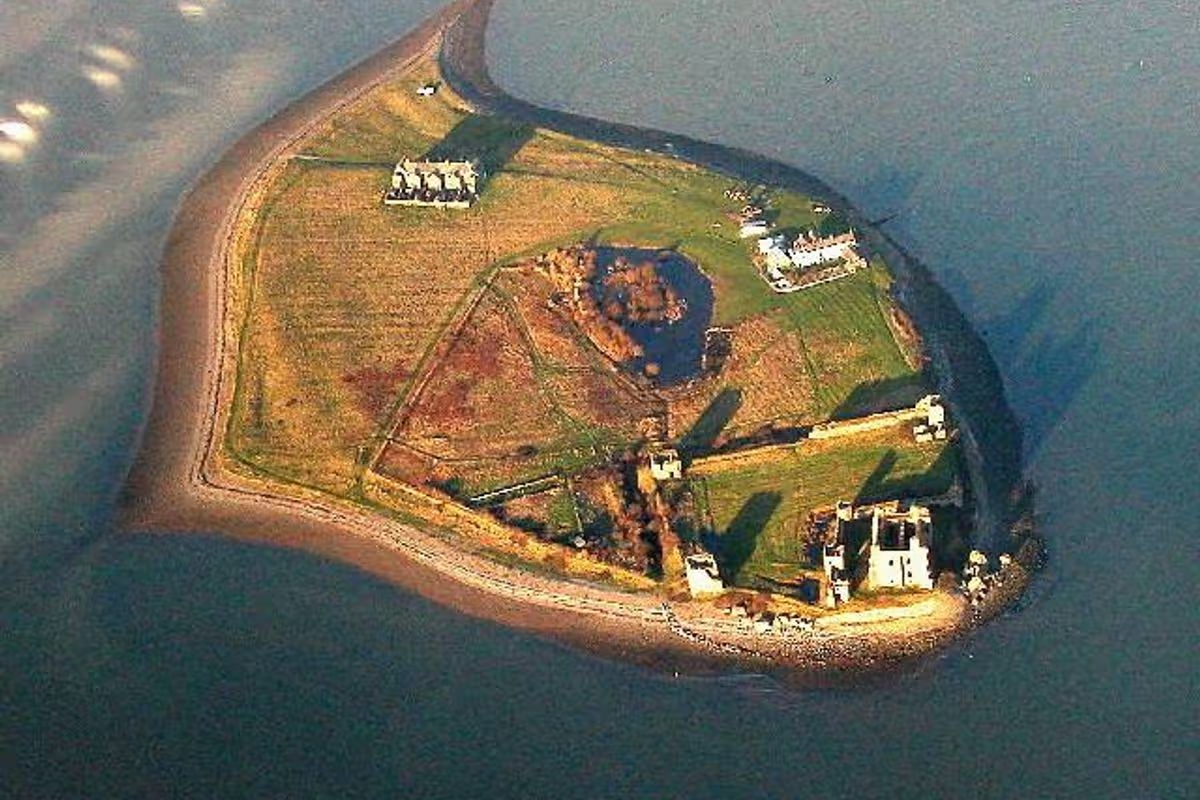
This hidden gem off the Cumbrian coast boasts a medieval castle, The Ship Inn pub, and a landlord crowned in a centuries-old tradition
The tiny island is protected by English Heritage(Image: Simon Ledingham / geograph.org.uk)
Charming and eccentric, this tiny island off the Cumbrian coastline attracts visitors eager to experience its remarkable setting and rich historical heritage.
Resembling something from a storybook, Piel Island boasts a crumbling castle and its own monarch – though not in the traditional sense.
As far as hidden treasures go, this destination epitomises the term, nestled discreetly beyond Barrow-in-Furness in Cumbria and accessible only by boat or guided crossing when tidal conditions permit.
Yet the panoramas upon arrival are spectacular, offering vistas across Yorkshire, the Lake District and even as far as Blackpool. It’s possible to spot Blackpool Tower emerging through the waves and, notably, ‘The Big One’ rollercoaster at Pleasure Beach.
Best Lancashire holiday cottage deals
This article contains affiliate links, we will receive a commission on any sales we generate from it. Learn more
Lancashire is known for its wide open skies, stunning landscapes and lively coastal resorts. Sykes Cottages has a wide range of self catering accommodation across the county from £42 a night.
One visitor described it as a secret “paradise”, saying on TripAdvisor : “We love everything about Piel, from the walk over the sands to the warm welcome at the pub and the always exciting exploration of the castle: we’ve seen it many times – always find something new!”
Historical background
Dominating the landscape stands a 14th-century fortification, referred to by some as Fouldry Castle, constructed by the Abbot of Furness with the purpose of protecting Barrow-in-Furness.
The structure served to defend against marauding pirates or Scottish invaders on the surrounding waters. Notably, it sheltered Lambert Simnel, a challenger to Henry VII’s crown, who arrived on the island in 1487.
Whilst naturally the castle in its complete form couldn’t survive such an extended period, its remains stay remarkably preserved, revealing the principal structure that once stood there.
Guests can observe the keep, both the inner and outer baileys and the towered curtain walls, which possess an unsettling atmosphere.
The Ship Inn
The origins of The Ship Inn are somewhat unclear, though it’s thought to date back more than 300 years. Whilst there is minimal evidence, accounts indicate the location was converted from a former ship chandlery at some point during the 17th century.
Over the years, numerous travellers started using the pub as a boozy refuge, which led to several issues out at sea. Indeed, following a series of boating incidents and suspected fatalities in the 19th century, a coroner is believed to have issued a statement to the pub’s landlord.
The Ship Inn’s website states that it read: “The landlord of the Ship Inn should not supply drink so as to make incapable men who may have to take charge of a boat.”
Today, the pub continues to operate as a traditional community hub from March to September, offering an extensive selection of beers from local breweries, alongside wines, spirits and even better – food. The menu features beloved pub grub favourites including pies, wraps and jacket potatoes.
One Google review states: “Absolute gem of a place. We spent a half day on the island – took the ferry across (seven quid return for adults), had delicious burger and chips from the BARBECUE at the pub before a walk round the entire island, a wander round the castle ruins and time on the beach. Everyone was super friendly. We’d definitely consider going back to camp.”
Further cementing its unique charm, the pub’s landlord, Aaron Sanderson, who has held the role since 2022, was officially – or unofficially – crowned as the king of Piel in a traditional ceremony. This is a title bestowed upon every landlord of the pub, with the inaugural version of this ritual believed to have occurred in 1856.
In an interview with the BBC, Andersen said: “It’s definitely a unique role and difficult to do, but enjoyable at the same time. ” He also proudly declared that his pub boasts “probably one of the best beer gardens in the world.”
Getting there
Adding to the allure and mystery, the island is almost exclusively accessible via a single boat, which can only accommodate up to 12 passengers. The ferry departs from Roa Island in Barrow daily throughout the summer season, running from 11am right up until 4:30pm.
Reviews indicate that the journey costs around £7, and for those not quite ready to depart, camping is available from as little as £5. The cost is per tent and there’s no need for a pre-booking system; simply arrive and pitch up by the pub.
When the tide is low, there’s an opportunity to embark on a guided walk over to the island, but only when it’s safe to do so. As for driving, only three individuals have been granted permission to drive on the land, one of them being the king, naturally, and it’s no simple task.
Ensure our latest headlines always appear at the top of your Google Search by making us a Preferred Source.Click here to activate or add us as your Preferred Source in your Google search settings.
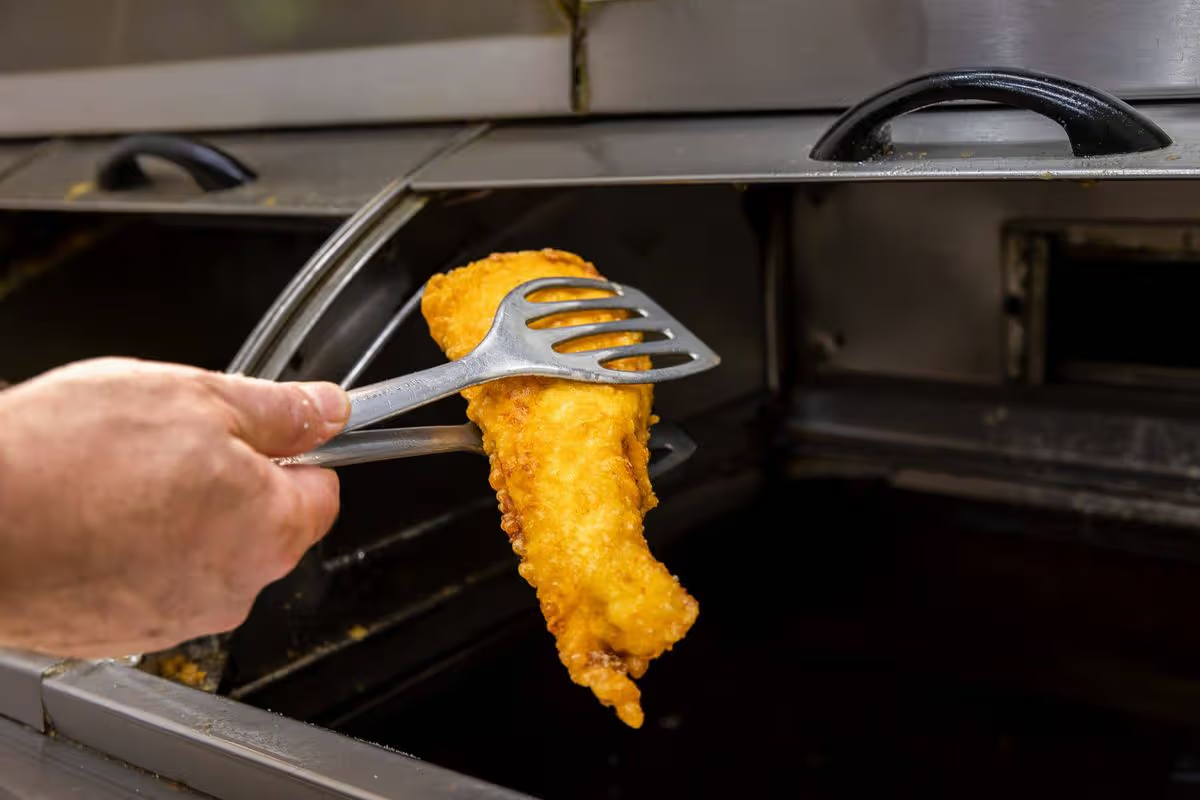
The National Fish and Chip Awards 2026 has crowned the best fish and chip restaurants and takeaways in the UK, with a pair based in the same area taking top honours
It is home to the UK’s best restaurants and takeaways(Image: Bloomberg Creative via Getty Images)
What’s been described as the ‘Oscars’ of the seafood sector has now unveiled precisely where Brits should be purchasing their fish and chips, and the answer lies in Yorkshire.
The National Fish and Chip Awards 2026 spotlighted the finest establishments within the fish and chip trade, crowning champions in both the Restaurant and Takeaway of the Year categories.
Claiming victory in both sections were two Yorkshire-based venues, alongside their runners-up, cementing the county’s reputation as the authentic birthplace of fish and chips.
For those fortunate enough to sample a chippy meal from Yorkshire, it comes as little shock that the region boasts the nation’s finest offerings.
With coastal destinations such as Scarborough and Whitby leading the sector, serving thousands of portions each day, some of the finest establishments are surprisingly those tucked away inland, where travellers stop off along their journey through the county.
Save on the best holiday cottages in Yorkshire
This article contains affiliate links, we will receive a commission on any sales we generate from it. Learn more
Famous for its dramatic landscapes, historic cities, hearty food, and rich cultural heritage Yorkshire is just waiting to be explored. Sykes Cottages has a large number of properties to choose from with prices from £31 per night.
Among these hidden gems is The Scrap Box in York, crowned 2026 Takeaway of the Year. The venture was established by two local brothers with ambitions of creating a chippy catering to all the villages scattered between York and Pocklington, whilst serving those travelling towards the coast.
Situated at Trunk Road Services on Hull Road in Dunnington, the takeaway does precisely that. The two siblings running the establishment, Aman and Gavin Dhesi, discovered the site, which was formerly a considerably less appealing toilet block next to a layby, and imagined something remarkable for their business venture.
The roadside takeaway has accumulated an outstanding 200+ ‘excellent’ TripAdvisor reviews, with countless patrons raving about their experience.
One reviewer said: “I’m always wary of places that say ‘award-winning’ and never say what award they won!” However at this venue, the honours are clearly showcased for everyone to view.
Following their Takeaway of the Year triumph, Gavin said: “There are so many outstanding fish and chip shops across the UK and countless awards, but this is the one every chippy dreams of, the ‘Oscars’ of our industry!”.
“With the most rigorous judging and the highest calibre of past winners, it’s a true honour to be recognised at this level. To represent the very best of fish and chips for the year ahead is both humbling and hugely meaningful to our team and a testament to the craft, care, and consistency we put into every portion of fish and chips.”
The Trenchers of Whitby, Whitby
The Restaurant of the Year champion at the 2026 National Fish and Chip Awards was a local Whitby restaurant, known as the Trenchers of Whitby.
Just a short stroll from the tourist hotspot of Whitby Beach, the eatery has firmly positioned itself at the centre of the coastal town, naturally attracting visitors throughout the year.
Whilst the enviable location certainly plays its part, they secured first place thanks to their self-described “traditional method of beef dripping”, enabling them to deliver the “best possible product”.
It’s these deliberate approaches to preparing their mouth-watering dishes that have allowed the establishment to distinguish itself from rivals. Popular choices on their menu feature seafood salads, crab, lobster, fresh fish alongside homemade pies and lasagnes, Whitby scampi, and numerous vegetarian alternatives.
One delighted diner praised the “gravy is out of this world”. They shared: “We travelled to Whitby for a weekend away. We popped into Trenchers Friday night, we were seated in a booth, and the drinks arrived promptly once ordered… The butcher’s gravy was absolutely delicious, and we would return just for the gravy.”
Runners Up
The Yorkshire chip shops aren’t the only ones celebrating success, outperforming other venues across their respective regions. Shaw’s Fish and Chips of Dodworth, located in Barnsley, Yorkshire, secured second place in the Takeaways category, making it the nation’s second-best fish and chip takeaway.
Additionally, the National Fish and Chip Awards 2026 named Whitby’s Restaurant and Take Away in Rotherham, Yorkshire, as the third-best restaurant of the year.
The Fry Awards
Further cementing Yorkshire’s reputation as the go-to destination for fish and chips, the esteemed Fry Awards unveiled their definitive list of the UK’s best chippies in January this year. A staggering number of establishments from the top 50 hailed from the county, with Trenchers of Whitby earning another commendable nod in their top 10 restaurants list.
Here are all the Yorkshire fish and chip shops that made it to the Fry Awards:.
Auckley Friery, Auckley, Doncaster
Hird’s Family Fisheries, Halifax, West Yorkshire
Kirbys of Horsforth, Horsforth, Leeds
Kirbys of Meanwood, Meanwood, Leeds
Lighthouse Fisheries of Flamborough, Flamborough, East Yorkshire
Portside Fish & Chips, Starbeck, North Yorkshire
Portside Fish & Chips, Kirkstall Road, Leeds
The Codfather, Wakefield, West Yorkshire
The Fish Bank, Sherburn in Elemet, North Yorkshire
Your Plaice or Mine Mobile Van, Thorne, South Yorkshire
Ensure our latest headlines always appear at the top of your Google Search by making us a Preferred Source.Click here to activate or add us as your Preferred Source in your Google search settings.
HM Passport Office has issued an urgent warning to all passport holders
HM Passport Office has issued an important warning about your travel document(Image: Getty)
Anyone holding a passport has been cautioned not to “risk it” as part of a warning from HM Passport Office. In a message posted to X, the Government agency urged Brits to “think before you share”.
In an accompanying video, the office explained: “Your passport is an important document. Here are some simple steps to help keep your identity secure.”
These steps are:
Never publicly share personal details online
Only share details with trusted sources
Keep a secure copy of your passport details page
Report loss or theft online immediately on GOV.UK
Content cannot be displayed without consent
Replace a lost, stolen or damaged passport
If your passport has been lost or stolen, you must cancel it before applying for a replacement. GOV.UK states: “If your passport is damaged you must replace it. You may not be able to travel with it.”
HM Passport Office will consider your passport damaged if:
You cannot read any of your details
Any of the pages are ripped, cut or missing
There are holes, cuts or rips in the cover
The cover is coming away
There are stains on the pages (for example, ink or water damage)
Replace online
You can replace your passport online for a fee of £94.50. To do this you’ll need:
A digital photo
A credit or debit card
If you’re replacing a lost or stolen passport, you’ll need someone to verify your identity online. You can apply for a replacement online here.
Replace using a paper application
You can obtain a paper application form by either:
Visiting the Post Office
Phoning the Passport Adviceline
The cost is £107. Payment methods include:
Debit or credit card – complete the form in the application pack
Cheque – made payable to ‘HM Passport Office’
You’ll require two new and identical printed photos of yourself. If you’re using a paper form, you can utilise the Post Office Check and Send service.
The address to post it to is provided on the form. For additional information, visit GOV.UK here.
Ensure our latest headlines always appear at the top of your Google Search by making us a Preferred Source.Click here to activate or add us as your Preferred Source in your Google search settings.
WASHINGTON — Billions fewer birds are flying through North American skies than decades ago and their numbers are shrinking ever faster, mostly due to the combination of intensive agriculture and warming temperatures, a new study finds.
Nearly half of the 261 species studied showed losses important enough to be statistically significant, and more than half of those in decline have seen losses accelerate since 1987, according to a study published Thursday in the journal Science. The study is the first to look at trends in their decrease, where they are shrinking the most and what the declines are connected to, rather than total population.
“Not only are we losing birds, we are losing them faster and faster from year to year,” said study co-author Marta Jarzyna, an ecologist at Ohio State University. “Except for forest birds, almost every group is doing poorly. So we need to ask ourselves a question. How do we protect these groups of birds?”
The only consolation is that the birds that are shrinking in numbers the fastest are species — such as the European starling, American crow, grackle and house sparrow — that aren’t yet at risk of going extinct, said study lead author Francois Leroy, also an Ohio State ecologist.
“The thing is that species extinction, they start with a decline in abundance,” Leroy said, adding that “the decline is somehow maybe giving a preview of what it could lead to in terms of species extinction.”
Cornell University conservation scientist Kenneth Rosenberg, who wasn’t part of the study, said the species declining fastest in the new research “are often considered pests or ‘trash birds,’ but if our environment cannot support healthy populations of these extreme generalists and extremely adaptable species that are tolerant of humans, then that is a very strong indicator that the environment is also toxic to humans and all other life.”
A 2019 study by Rosenberg of the same bird species found North America had 3 billion fewer birds than in 1970, but didn’t look at changes in the rate of loss or causes.
Biggest bird losses in areas warming most
The biggest locations for acceleration of bird loss were in the Mid-Atlantic, the Midwest and California, the study found. And geography proved important when Leroy and Jarzyna looked for reasons why so many bird species are shrinking ever faster.
When it came to population declines — not the acceleration — the scientists noticed bigger losses farther south. When they did a deeper analysis, they statistically connected those losses to warmer temperatures from human-caused climate change.
“In regions where temperatures increase the most, we are seeing strongest declines in populations,” Jarzyna said. “On the other hand, the acceleration of those declines, that’s mostly driven by agricultural practices.”
Farmland issues speed up bird declines
The scientists found statistical correlations between accelerating decline and high fertilizer and pesticide use and the amount of cropland, Leroy said. He said they couldn’t say any of those caused the acceleration of losses, but it indicates agriculture in general is a factor.
“The stronger the agriculture, the faster we will lose birds,” Leroy said.
Jarzyna said there is a “strong interaction” between climate change and agriculture in their effect on bird populations.
“We found that agricultural intensification causes stronger accelerations of decline in regions where climate warmed the most,” Jarzyna said.
McGill University wildlife biologist David Bird, who wasn’t part of the study, said it was done well and that its conclusions made sense. With a growing human population, agriculture practices are intensified, more bird habitats are being converted to cropland, modern machinery often grind up nests and eggs, and single crop plantings offer less possibilities for birds to find food and nests, said Bird, the editor of “Birds of Canada.”
“The biggest impact of agricultural intensity though is our war on insects. Numerous recent studies have shown that insect populations in many places throughout the world, including the U.S., have crashed by well over 40 percent,” Bird said in an email. “Many of the birds in this new study showing population declines depend heavily on insects for food.”
Birds do a lot for humans
This study is both “alarming” and “sobering” because of the sheer numbers of losses and the patterns in those accelerating declines, said Richard Gregory, head of monitoring conservation science at University College London. He was not part of the research.
The paper shows that people need to change the way they live to reduce human-caused warming, reduce agricultural intensity, monoculture of crops and broad application of chemicals, said Cornell University ornithologist Andrew Farnsworth, who wasn’t part of the study.
“Here is why this study is especially important. Birds do a lot for humans,’’ McGill biologist Bird said in an email. ”They feed us, clothe us, eat pests, pollinate our plants and crops, and warn us about impending environmental disasters. With their songs, colors, and variety, birds enrich our lives … and recent studies show that their immediate presence actually increases our well-being and happiness and can even prolong our lives! To me, a world without birds is simply unfathomable.”
POTTERHEADS can get their robes and wands ready as a major Harry Potter store will be opening in the UK this year.
Warner Bros. Global Experiences has announced that it will be opening its first premier flagship shop in London – the first of its kind in Europe.
Sign up for the Travel newsletter
Thank you!
A new flagship Harry Potter store will be coming to London, much like ones found elsewhere such as the Chicago store (pictured)Credit: Warner Bros. Global Experiences
Harry PotterOxford Street will open in autumn of this year and will be located at The Ribbon, at 134-140 Oxford Street.
In total, the store will sprawl across just under 2,000sqm (1,950sqm) and be on two floors – making it the joint biggest Harry Potter store in the world alongside New York.
Designs are currently underway to transform the inside of the building on the UK’s most famous street to “a wizarding emporium celebrating the beloved locations featured in the books and films”.
Whether you’re a fan of Hermione or can’t wait to ‘swish-and-flick’ your own wand, there will be plenty of photo opportunities throughout the store.
There will be a number of activities to complete as well and fans better get saving as there will be exclusive merchandise on sale too.
Little details are known about other features of the store, but if it is anything like the one in New York, fans can expect props from the films and potentially a Honeydukes corner.
The store will join the King’s Cross Shop as the only official Harry Potterretail destinations in the UK.
Karl Durrant, WB’s SVP Worldwide Retail said: “Harry Potter is deeply rooted in British storytelling, and this will give fans an exciting new way to experience this magical world in the city that features so prominently in the stories.
“Offering a completely new retail experience for Harry Potter fans which will delight and entertain, it’s going to be very special.”
There are a number of other official Harry Potter Shops around the world including in New York, Chicago in the USA and Harajuku and Akasaka in Japan.
Fans are allowed to go behind the scenes of the movies and explore costumes that were actually used in the films.
Assistant Travel Editor, Sophie Swietochowski recently went to the workshop and said: “Unlike the main tour, where guests just wander freely around the attraction, Mastering The Magic: Costume Creation is a 45-minute workshop that allows muggles to even create their own Potter-themed outfit.
“My small group learns that a school-aged Harry, for example, is first seen by viewers in his battered shirt and threadbare trousers, which conveys how poorly treated he is by his aunt and uncle.
The announcement comes after Warner Bros Studio Tour London recently launched a costume workshopCredit: PA
“After learning tricks of the trade, we’re talked through the lengthy process of costume creation, from initial concept, taken from scripts, through to mood boards with fabric samples and right down to the final sketches.
“Then it’s time to get stuck in – sketching our own designs and pinning scraps of fabric left over from the costumes featured in the actual films.
“I choose a ruby red and black patch of fur, pairing it with a gold satin – more Malfoy territory than Potter.
“And for a brief moment, I’ve played my part as a Harry Potter costume designer.”
Just last month, it was also announced that there will be a new experience based on the Hogwarts Express later this year.
Partnering with Rail Events Inc., Warner Bros. Discovery will launch Harry Potter: A Hogwarts Express Adventure later this year.
The magical experience will be an immersive train journey, where Potterheads can be witches and wizards heading to Hogwarts.
There will be character interactions, themed dining and even a pre-boarding experience that “nods to Platform 9 and three quarters”.
Most of the experience will actually be on a moving train as well.
The route and launch locations are yet to be confirmed.
RAF Akrotiri on Cyprus was hit by a drone, which has threatened the safety of British military personnel, and now the Foreign Office has issued a warning to tourists there
22:46, 03 Mar 2026Updated 22:52, 03 Mar 2026
Tourists stand on a beach in Varosha in Famagusta, Cyprus(Image: Getty Images)
British tourists on Cyprus should follow five key steps to ensure their safety, the Foreign Office says.
Visitors on the island in the Mediterranean Sea have been ordered to keep their departure plans under review and ensure their travel documents are up to date amid the conflict in the Middle East. RAF Akrotiri on Cyprus was hit by a drone on Monday, after which 60 flights to and from Cypriot airports were cancelled.
The UK will send HMS Dragon, one of the Royal Navy’s six Type 45 air defence destroyers, but tourists should also take action. The Foreign, Commonwealth and Development Office (FCDO)’s website reads: “Regional escalation poses significant security risks and has led to travel disruption.”
read guidance on “how to prepare for a crisis” on the FCDO website, with suggestions on what you might include in your emergency supplies and “what to do in a crisis”
sign up to FCDO Travel Advice email alerts
monitor local and international media
sign up to local information alerts/resources AND follow the advice of local authorities
keep your departure plans under review AND ensure your travel documents are up to date
The conflict and tension in the Middle East and Gulf states continues. Donald Trump, though, has said he is “not happy” with the UK after it did not initially allow the US to use its bases for strikes on Iran, and added that Keir Starmer is “not Winston Churchill”.
It is the latest in a series of broadsides from the US president over the UK’s position on the Middle East war. Meanwhile, the Foreign Secretary confirmed that a Government charter flight will take off from Muscat, Oman, “in the coming days” to bring vulnerable British nationals back.
The HMS Dragon, due to be sent from Portsmouth in Hampshire and crewed by more than 200 people, is designed for air defence, it is equipped with a Sea Viper anti-air missile system. Defence Secretary John Healey said: “We are moving quickly to further reinforce our defensive presence in the Eastern Mediterranean.
“HMS Dragon brings world-class air defence capability, and our Wildcat helicopters are armed with Martlet missiles to counter the growing drone threat.
“I am deeply proud of the professionalism and bravery of our Armed Forces personnel who have in recent days, successfully taken action across the region to protect our allies and defend British interests.”
YouTuber Dan Grec has travelled across five continents and 65 countries, including the legendary 19,000-mile Pan-American Highway from Alaska to Argentina and 35 countries in Africa
Dan Grec’s journey took three years as he drove around the entire coastline(Image: Dan Grec)
A globe-trotting YouTuber who abandoned his office job to pursue life on the road in 4×4 vehicles has identified an African nation he was relieved to leave behind in his “rear view mirror”. Dan Grec, an adventurer from Australia, chose to quit his job and chase his dream of experiencing “all the adventures that are possible out there,” journeying across five continents and 65 countries—including the iconic 19,000-mile Pan-American Highway from Alaska to Argentina.
He also explored 35 nations across Africa, an expedition that spanned three years as he drove around the entire coastline of the continent, where he created “thousands of unforgettable memories”.
Among the highlights were “hearing lions roar” whilst sitting outside his Jeep, being invited into people’s homes to share meals, observing a family of giraffes, and even “petting a cheetah”.
Content cannot be displayed without consent
It wasn’t entirely without challenges, though, as Dan also confessed there was one country where he “didn’t feel safe”.
Dan, who has also written a book about his travels, stated: “On all my travels to date, the only country I didn’t feel safe in and was happy to see in my rear view mirror was Ethiopia.
“At the time of my visit, it was a complicated place politically, and there was a lot of unrest and anger towards tourists because all the tourist money was going to tour guides from the big city, not the rural areas where the tourists were actually visiting.”
He clarified that he doesn’t want to give the country a “bad wrap”, though, and is eager to return to experience the nation properly, mentioning that he knows plenty of people who “love it”.
Dan said: “I know tons of people really love the country, so I feel bad giving it a bad wrap. I really want to go back sometime so I can properly enjoy it.”
A landlocked East African nation sharing borders with Sudan, South Sudan, Kenya, Somalia, Djibouti and Eritrea in the Horn of Africa, Ethiopia is the continent’s oldest independent country.
A rugged and diverse nation regarded as the cradle of mankind, it is believed that Ethiopia’s history could stretch back to the earliest hominids. Its population speaks an impressive 82 languages, with more than 200 dialects.
Unfortunately, however, potential travellers need to be mindful of some possible dangers. The Foreign Office has issued travel warnings for parts of Ethiopia, advising against all travel to certain areas, and all but essential travel to others.
In its safety and security section, the Foreign Office warns that terrorists are “very likely” to attempt attacks in Ethiopia, stating that they could be indiscriminate and take place in “places visited by foreign nationals”.
It has also noted that tensions between Ethiopia and Eritrea are high, with a possibility that the security situation in the north could deteriorate rapidly.
Other potential risks include civil unrest, arbitrary detentions (this has occurred with British nationals in a limited number of cases), mugging, theft near Bole International Airport, kidnapping in some areas, and landmines.
Many TUI customers due to fly in the next few days will be awaiting news of whether their flights and package holidays are cancelled. The travel operator has now issued a major update on the situation
TUI has updated customers flying out to Paphos this week(Image: Nicolas Economou/NurPhoto via Getty Images)
TUI has cancelled more flights to Cyprus as a UK Royal Navy warship heads for the region.
Sir Keir Starmer said HMS Dragon – a Type 45 Destroyer – will be sent to that section of the Mediterranean. The PM has also spoken with Cypriot President Nikos Christodoulides to let him know the UK is also “sending helicopters with counter-drone capabilities”.
It comes a day after the runway of the British air base in Cyprus, RAF Akrotiri, was hit by a drone. The Ministry of Defence said it caused “minimal damage”.
Today, flights to Cyprus’s two commercial airports were cancelled, with easyJet, Ryanair and TUI scrapping services. This afternoon, German travel giant TUI issued a major update on its coming Cyprus flights.
The spokesperson said: “In light of the evolving situation in the Middle East, we have taken the decision to cancel the four TUI Airways flights scheduled to travel to Cyprus on Wednesday, 4 March. We appreciate this may be disappointing news for those due to travel, and we are truly sorry for the disruption to our customers’ holiday plans. Our customer service teams are fully mobilised, and every affected customer will be contacted directly to discuss the options available to them.
“We want to reassure all customers that we are closely monitoring developments and keeping the situation under constant review.”
As for next steps, TUI has said: “Customers will be contacted directly and offered the option to amend their booking fee-free, with a rebooking incentive, or to receive a full refund.”
It also confirmed that its next TUI Airways flights to Cyprus are scheduled to operate on Saturday (March 7). TUI said: “At this stage, these flights are planned to run as normal. However, we continue to monitor the situation closely and, as it remains dynamic, schedules may be subject to change.”
Passengers flying out on Saturday should keep an eye on TUI’s travel alert page, as well as check its app for updates, and keep up to date with international news.
Flights cancelled on Wednesday, 4 March:
TOM7318 – East Midlands Airport to Paphos
TOM6312 – Cardiff Airport to Paphos
TOM6354 – Bournemouth to Paphos
TOM2336 – Manchester to Paphos
TUI’s website also has advice for customers currently in Cyprus. It says: “The safety of our customers is always our top priority. Our teams are working with our airline partners to monitor the situation and make arrangements to bring you back to the UK once it is safe to do so. We are working though bookings in date order and will call you to discuss your options. However, if you would prefer, please call us on 0203 451 2688.
“If you choose to call us, please be aware that we are receiving an exceptional volume of calls and there may be some delay in your call being answered.”
The Foreign, Commonwealth & Development Office (FCDO) does not currently advise against travel to Cyprus, but many airlines have been cancelling their flights in light of the current situation.
The FCDO advises that Brits planning a holiday in Cyprus should sign up to FCDO Travel Advice email alerts, monitor local news, and regularly review departure plans as the situation can change rapidly.
Have a story you want to share? Email us at webtravel@reachplc.com
Ensure our latest stories always appear at the top of your Google Search by making us a Preferred Source. Click here to activate or add us as your Preferred Source in your Google search settings.
If the advice were to change, your travel company would have to offer you the chance to amend your travel to a different date or offer you a full refund.
We have had lots of questions about holidays to Cyprus – both Larnaca and Paphos, later in June, July and September and the advice really remains the same.
Unless you have paid a minimal deposit, you should continue to make payments. If you cancel now you could lose money – and discover that holidays are significantly more expensive when you look to book again.
What is important is to make sure you have bought good travel insurance NOW to cover you in the run up to your holiday dates. A lot can happen in the coming months.
Take the time to enquire about what you would be covered for in terms of delays and cancellations as these can vary from policy to policy.
Will this affect holidays in Egypt? We’re due to fly there in May for our honeymoon
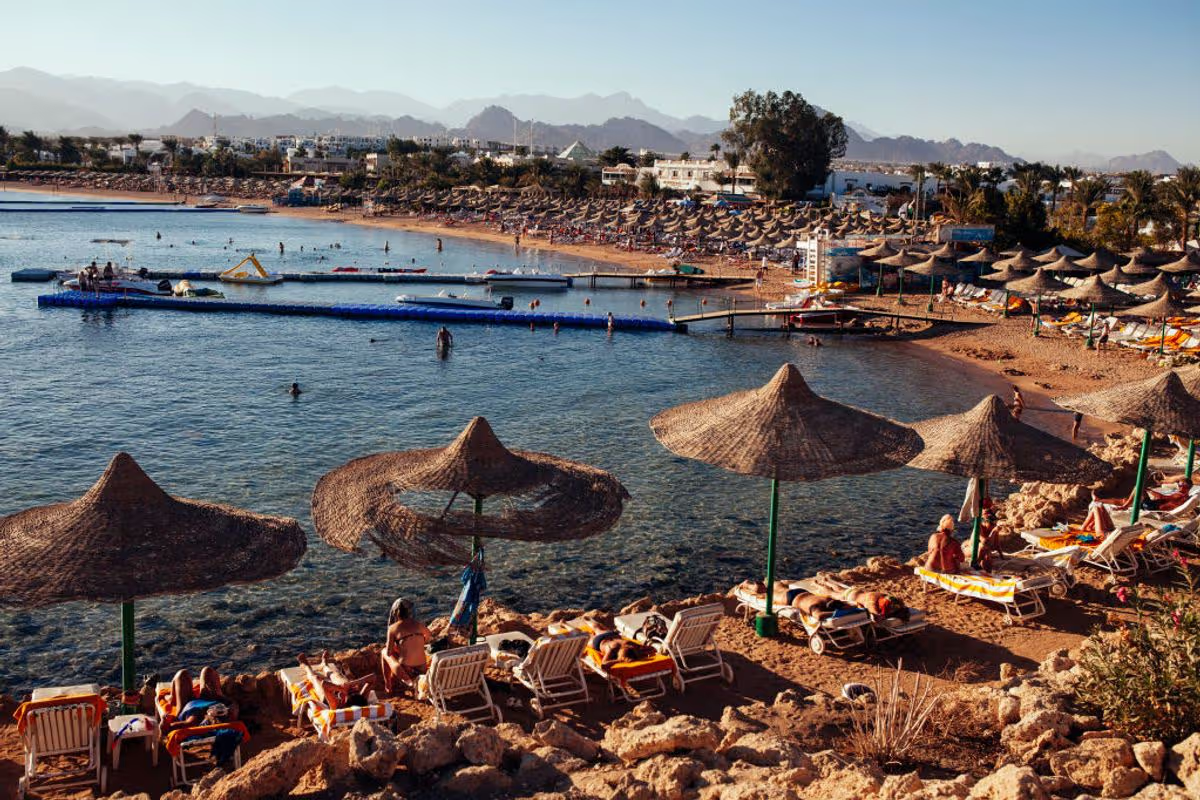
While it is very understandable that travellers would be a little nervous of the proximity of Egypt to the current crisis, the popular Egyptian Red Sea resorts of Sharm El Sheikh, Hurgahda and Marsa Alam as well as the majority of Egypt including ancient cities of Cairo and Luxor are NOT under any Foreign Office travel ban.
While no one can predict what is going to happen in the region, it is currently considered safe to travel to these destinations and your tour operator or airline is under no obligation to refund you if you chose not to travel.
Hurghada and Marsa Alam are hundreds of miles away from the conflict zone and holidays there should not be impacted at all.
Increased flights from the UK and an ever greater number of new luxury resorts mean it still offers guaranteed sunshine for all budgets.
I travelled to Luxor, Hurghada and Marsa Alam in February and could not have felt safer with the Egyptians taking security very seriously.
Is Greece safe to travel, being so close to Turkey?
Yes Greece is safe to travel to – and is not under any UK Foreign Office travel warnings.
The main popular tourist resorts in both Greece and Turkey are many thousands of miles from the current problems in the Middle East.
If you choose to cancel a holiday you have already made payments on you will NOT get your money back as your travel company is under no legal obligation to refund you.
A refund is only triggered if the Foreign Office advises against all travel or all but essential travel.
Again, ensuring you have fully comprehensive travel insurance from the moment you make your booking is really important to give you added protection in the run up to your trip.
We’ve had questions from Sun readers looking at trips to Corfu and Rhodes this summer – they should be reassured that the chance of holidays to these islands being impacted, while not impossible, is extremely unlikely.
Greece remains safe to travel to, with holidays and flights not affectedCredit: Alamy
Will travel disruption escalate to the Canary Islands travel from the UK?
While nothing can be guaranteed in these extraordinary times, there is nothing whatsoever to lead me to think that the current crisis will have any impact at all on holidays to the Canary Islands from the UK.
It is understandable that people are worried about the situation, but all of the Canary Islands – along with the rest of Spain – remain on the Foreign Office’s safe to travel list and there is no indication this will change at all.
There is not any worry about international travel as a whole at the moment and airlines and tour operators take the safety and security of their passengers extremely seriously.
There should be no issues with travel this summer, where lots of Sun readers are looking forward to holidays.
Are Turkey resorts affected? We have a holiday booked for half-term
No – at present Turkey is not impacted at all by the current situation.
While there are Foreign Office bans on travel to the border between Turkey and Syria, the entire rest of the country is safe to travel to.
The popular coastal resorts of Dalaman, Bodrum, Antalya, Side, Marmaris and more are many thousands of miles from the conflict zone.
As the advice is that it is safe to travel, tour operators and airlines are under no obligation to offer you a refund if you choose not to travel. If you decide to cancel your trip, you will lose any money you have paid.
While some people may feel uneasy, the distances involved mean it is extremely unlikely that anything would impact your holiday.
With all package holidays, you have enhanced protection should the situation change.
If the Foreign Office changes its advice to all but essential travel, you will have extra rights to a refund or amended date.
But right now, that is not necessary as trips to the popular Mediterranean Turkish resorts are safe.
We am due to fly to Dubai March 12-18, having paid £6,000 for a package through Emirates. Do you know where I stand with cancelling?
With the huge popularity of holidays to Dubai – more than 1.47MILLION British travellers headed to the Emirate in 2025 – the Foreign Office now advising against all but essential travel will have a huge impact on those with upcoming holidays.
As the situation remains so uncertain, airlines and travel companies are dealing with upcoming bookings on a rolling basis – prioritising those who are due to travel soonest first.
As of today, passengers with bookings up to March 10 can request a refund directly from Emirates via an online form – and you should expect to receive that refund within a week.
But as your holiday doesn’t depart until March 12 you will have to contact Emirates directly to see if they will allow you to amend your booking or get a refund.
I totally appreciate that this is going to be challenging with many hundreds of thousands of travellers looking to rebook flights and holidays.
Right now, British Airways Holidays are offering rebooking options for those travelling up to March 8 to request a refund.
Those travelling up to March 15 can change their holiday dates or destination free of charge if they depart before March 29.
If you amend to a holiday that is more expensive, you’ll have to pay the difference. If it is cheaper, BA will refund you the difference.
Those travelling after March 15 can change their booking up to 14 days before travel for a fee of £100 or if within 14 days of travel for a fee of £500.
Virgin Atlantic Holidays has the same options in place for the same dates.
If you have bought travel insurance – and I really do recommend everyone does this from the MOMENT they book their holiday – it would be a good idea to contact them as well to see if there is anything you can claim for.
Anyone with holidays from April onwards, I recommend keeping an eye on the current travel advice, but do not cancel holidays unless you want to be out of pocket.
Emirates passengers travelling via Dubai in the upcoming days will be contactedCredit: Reuters
My daughter is due to return from Mauritius via Dubai on March 5 with Emirates Airlines. Will this be possible & what are her options?
Emirates has only suspended flights until midnight on March 4.
However this is likely to be extended as they are currently only operating repatriation flights for passengers who are stranded in Dubai.
It is advised for your daughter to contact Emirates and see if there is an alternative way to travel home.
Emirates must provide her with an alternative flight home, or a refund.
However, be aware that if she accepts a refund, your daughter will have to pay for her own alternative flight home which might be quicker, but much more expensive and she will not be able to claim the difference back from Emirates.
Air Mauritius offers direct flights from Mauritius to UK, otherwise airlines with non-Dubai stopovers include Air France (stopover in Paris) and Lufthansa (stopover in Frankfurt).
I have a long-haul holiday planned later this year, stopping in the Middle East. Should I cancel my trip or find another airline?
We have had lots of questions from you about upcoming holidays with stopovers in Dubai, Abu Dhabi and Qatar – seeing as they’re huge hub airports for Emirates, Etihad Airways and Qatar Airways, this isn’t surprising.
This includes destinations such as Thailand, Sri Lanka, Maldives, Bali, China, Vietnam, Australia and Pakistan.
If you have partly paid for your holidays for any of the above destinations, you must still pay the remaining balance or you will be left out of pocket.
It is only if the UK Foreign Office advises against any travel to these destinations that you will be able to cancel a holiday for a refund.
Unless you are travelling in the next few days, it is likely the holidays will still go ahead.
If you are wary of booking a stop over in the Middle East, then other popular destinations include Singapore, with Singapore Airlines, or Hong Kong, with Cathay Pacific and Istanbul with Turkish Airlines.
I’m confused about the government advice and where travel companies stand – surely a holiday shouldn’t be classed as “essential travel”?
I appreciate the travel warnings can be slightly confusing, so I’ll break them down for you.
There are two travel warnings from the UK Foreign Office – “against all but essential travel” and “against all travel”.
If the advice is against all travel, package holiday companies and airlines have to give you a refund.
If the advice is against all but essential travel the legal standing is a little more complicated.
However, most travel companies will offer to refund or amend your booking as they recognise they will not be able to provide you with the trip you purchased due to exceptional circumstances.
Most holidays in Europe – including Spain and Greece – are unaffectedCredit: Getty
THE quiet town of Burnham-on-Crouch in Essex is set to be a TV star.
ITV presenter Josie Gibson was seen filming at the pretty destination on the Dengie Peninsula last week known for its top-tier sailing scene and fresh seafood.
Sign up for the Travel newsletter
Thank you!
Burnham-on-Crouch sits on the River Crouch in EssexCredit: AlamyIt’s nicknamed ‘Cowes of the East Coast’ thanks to its popular sailing sceneCredit: Getty Images/iStockphoto
Josie, along with a film crew, were seen at various different spots in Burnham-on-Crouch, which sits on the River Crouch.
The town that is just an hour outside of London was called “wonderfully understated” by The Telegraph and it even questioned whether it’s “the most peaceful town in England.”
While it might be quiet on land, Burnham-on-Crouch has a busy harbour, as well as a quayside, boat-building yards, listed buildings and sailing clubs.
Thanks to its location and popularity within the sailing circle, Burnham-on-Crouch is nicknamed ‘Cowes of the East Coast’.
This is after the world-renowned Cowes on the Isle of Wight which is the “Yachting Capital of the World”.
Throughout the year are sailing events, but what Burnham-on-Crouch is most famous for is Burnham Week.
The major sailing regatta is held every year at the end of August with plenty of competitive racing for various yacht and dinghy classes.
This year it will kick off on August 29 until September 5, 2026 – and it is a major week in the sailing calendar.
Last week though, the TV crew were spotted on dry land filming outside The Cabin Dairy on the High Street.
The cafe has been in operation since the 1990s, serving up breakfast, brunch, sandwiches, toasties, tea, coffee and ice cream.
Another spot that was seen in front of the camera was The Quarterdeck restaurant.
The seafood restaurant and bistro bar sits on the waterfront, serving dishes like the seafood board with Maldon cured smoked salmon, crevettes, pickled roll mops and anchovies.
Of course you can pick up fish and chips too, as well as a Sailor Sandwich with fish goujons, and oysters.
For oyster fans, check out Burnham Seafood and Oyster Bar which is a fish stall open on Fridays, Saturdays and Sundays.
Here, locals can pick up top quality seafood from lobsters to crab, and of course, oysters.
Seafood is a big part of the town’s history as it used to be a thriving oyster port.
In the 19th century, the River Crouch was filled with oyster beds, which were then harvested and traded into London and across Europe.
Josie Gibson and was seen filming in EssexCredit: WireImageThe Cabin Dairy is a popular cafe and has been open since the 1990sCredit: Facebook
Next door to The Quarterdeck is Harbour Delights, an American retro diner that serves up tasty drinks and desserts.
You can choose from ice cream sundaes, Belgian waffles, bubble tea, milkshakes, and enjoy a coke float.
One place the crew weren’t seen filming at, but is a Burnham hotspot is the Jolly Fryer.
The fish and chip shop in previous years was voted as the Best Chippy in Essex.
You can pick up a medium cod for two with large chips and either curry sauce or mushy peas for £21.99.
As for what’s nearby, from certain points in the town you can see across the river to Wallasea Island which has been turned into a nature reserve.
Visitors can visit by ferry, which will cost around £5 each way, to see wading birds as well as rare butterflies.
For wine fans, head to family-run Clayhill Vineyard which makes Bacchus (often referred to as England’s answer to Sauvignon Blanc) and chardonnay.
10-minutes drive away is the pretty Clayhill VineyardCredit: Unknown
One Sun Writer who visited said: “I particularly loved theEnglishsparkling wine and at £19 per bottle it’s much cheaper — and in my opinion nicer — than champagne.“
The vineyard has views of the River Crouch, and has a small cafe for lunch, tea and cake – and you can taste its wine here too.
For train enthusiasts, head to nearby Mangapps Railway & Museum which is a working railway and museum on a farm in Burnham-on-Crouch.
It has a three-quarter mile passenger line with restored stations, signal boxes, and visitors can go on as many train rides as they like with their ticket.
One visitor on Tripadvisor wrote: “Nice little museum. Lots of different trains and even a well-kept, older station where you can enjoy a small ride on an old train.”
It’s open on weekends between 11.30AM to 5PM. Ticket prices are £15 per adult, £8 per child and under three’s go free.
For anyone who is a fan of The War of the Worlds by H.G. Wells, then you might want to head up to Tillingham.
Fans of the book will know that village is where the narrator’s younger brother escapes to when London is invaded by Martians.
Burnham-on-Crouch is served by the Crouch Valley branch line.
From London Liverpool Street, it can be reached in just over an hour with one transfer at Wickford.
This Essex town has been called a ‘Cotswolds alternative’…
She said: “Its Saturday market is often a place to spot TV chef Jamie Oliver. We admired the great artisan stands, but sadly didn’t spot Jamie.
“Coffee in hand, we took a stroll to St Mary’s Church, which dates to Norman times and is still the tallest building in Essex with its spire topping out at 193ft. Then it was on to Bridge End Gardens and its maze – before a pint at the Cross Keys Hotel, also known for its great food.
“The fun continued with a visit to one of Essex’s Tiptree tea rooms. I knew Tiptree as the makers of tasty jams, often served in little jars at posh hotels.
“We got the day off to the best of starts at Tiptree’s Courtyard tea room in Saffron Walden with their traditional breakfast, a Full English complete with tasty local sausages, bacon, egg and even some traditional Tiptree brown sauce.”
“Imagine how smug, then, the local folk of Kent feel, cool bags hooked onto their arms and towels flung over their shoulders, and they descend on Botany Bay.”
It continued to add: “At low tide, wade through the puddles in search of fossils and, come high tide, take a plunge knowing how shallow and rock-free many parts of the beach are – so much so, it has long been a favourite among families.”
Botany Bay sits between trendy seaside towns Margate and Broadstairs, and its beach is easily recognisable thanks to its tall white limestone cliffs and sea stacks.
A study conducted by Parkdean looked at the rainfall patterns over the duration of one year at some of the UK’s most popular beaches.
On average, Botany Bay gets 58 days of rainfall each year – to put that in perspective, the UK gets an average 164 days of rain a year.
And while it isn’t hot, Botany Bay is also one of the warmest beaches in the UK in winter thanks to its location on the Channel with average temperatures of 9.5C.