Explore new cultures, find the best travel deals, and make informed decisions with our trusted travel news. Let your wanderlust thrive as you stay connected with the ever-changing world of travel.
Millions of pieces of luggage are lost of delayed each year, and you may be wondering where the items that can’t be returned to their owners end up. At one facility, they’ve seen all the weird and wonderful things that get left behind
Sonni Hood and her cousin Adam outside the shop
When you check your bag into the hold, there’s always the risk that you are waving it off for good. Despite technology improving at tracking our luggage, some bags seemingly disappear into the void, never to be seen again.
Lost or unclaimed luggage that can’t be reunited with its owner is sometimes sold to companies that auction it off. And if you lose your luggage in the USA, it may well end up at the Unclaimed Baggage warehouse in Scottsboro, Alabama. This vast facility resembles a huge charity shop, but instead of donations, it sells items that airlines have been unable to return to their owners. It even has agreements with some airlines to buy their unclaimed luggage.
While most unclaimed bags contain little more than dirty laundry, the facility has in the past seen suitcases full of fascinating items, leading it to release an annual Found Report. This shows some of the weird and wonderful items they’ve found in cases, the most valuable, and the most common things people lose.
“We don’t sell anything that has had skin to skin contact,” explained public relations manager Sonni Hood, who works at the shop alongside her cousin Adam. That means sex toys are thrown away, as are diaries, human ashes, used make-up and guns.
“We go through everything to ensure there’s nothing harmful, dangerous or too embarrassing inside,” Sonni continues. “Thrifts stores are full of things people want to throw away, but these are things people liked so much they wanted to take away with them on holiday.”
The weirdest find for 2026? There are some odd ones on the list, from a bionic knee to a didgeridoo, but coming in at number one was a fully assembled robot. It’s not clear what the robot was used for, though the team says it looks advanced enough to be a research project. One suitcase contained a giant stuffed goose, a frog-shaped handbag, and an entire fake skeleton.
Some valuable items have also turned up at the facility. In 2026, the most expensive item was a pair of diamond earrings valued at $43,000 (around £32,000). Rolexes, expensive camera equipment, and designer bags were among the most expensive finds.
The report also gave a breakdown of the most common items found in lost luggage. At the top of the list was men’s t-shirts, and over 200,000 found their way to Unclaimed Baggage in 2026. 128,000 pairs of trousers were found, and over 57,000 pieces of jewellery.
Fashion finds included a stunning beauty pageant outfit from a Miss Dakota competition and a lynx fur coat, while international finds included a Tibetan singing bowl and African masks. Historic items included a 1945 army magazine with a cover story on the occupation of Japan and a nuclear radiation detector.
The report also includes some interesting stories about things they’ve bought and sold, such as the time the team opened a suitcase to find it packed entirely with rat poison. An item covered in bubble wrap in the bargain basement was sold for just $2.99 (about £2.25), only to turn out to be a 1930s art deco statue worth nearly £1,500.
Previous years have also seen some unusual finds, such as a jar of whiskey containing an entire preserved rattlesnake and an old French book with instructions for performing exorcisms.
One extremely heavy bag had the team excited, until they opened it and found it was simply full of rocks. Whether it was a collection for a geologist or simply someone making the most of their baggage weight allowance, we shall never know.
Have a story you want to share? Email us at webtravel@reachplc.com
It offers world-famous sporting and medieval history, amazing food, and charming independent shops perfect for an Easter weekend staycation
Nicola Roy Multimedia content creator
03:08, 28 Mar 2026
The town is an absolute must-visit in spring(Image: Nicola Roy)
The Easter bank holiday weekend is nearly upon us, and if you’ve managed to get a few days off work and want to make the most of it, a staycation is ideal.
And if you’re after somewhere boasting exceptional food, stunning scenery, rich heritage and an truly charming atmosphere, there’s one destination that’s worth a visit.
Home to one of Britain’s oldest universities, St Andrews on Scotland’s east coast is genuinely one-of-a-kind. Where else could you stumble upon a 170 year old pub just moments away from an Oliver Bonas? It’s a place I’ve returned to so many times, but every visit reveals something different to explore.
On a recent weekend getaway to Lower Largo, a small village in Fife, we decided to spend the afternoon exploring St Andrews. From Edinburgh it’s roughly an hour and a half by car, while from Glasgow it takes about an hour and three quarters.
Whether you’re passionate about the sport or not, most people probably know that St Andrews is best known for its golfing heritage.
The Old Course, one of the world’s most famous courses, features an iconic structure that you have to get a photo with, regardless of how often you’ve visited.
The Swilcan Bridge, built over 700 years ago, was our first stop on this trip. Positioned on the course’s 18th hole, strolling onto the green feels surreal, but it offers the perfect photography moment.
You’ll inevitably encounter fellow tourists there, so you may need to queue briefly for your picture, but it’s worthwhile. Conveniently, there’s a fantastic pub named the Jigger Inn just a two-minute stroll away, which was our next stop for some food.
With roots dating back to the 1850s, the Jigger Inn is a cosy, inviting pub with crackling fires that overlooks the golf course. There’s an excellent array of beverages at the bar, or you can settle down and order food, which is exactly what we did.
You can’t convince me there’s a better combination than a caesar salad, chips and wine, and the Jigger Inn did all of these perfectly.
Well nourished, it was then time to venture into the actual town itself. It’s not the biggest, and most of the shops and attractions are located on one of about three main streets, but you could easily wander around for hours without getting bored.
St Andrews is a truly unique place with distinct medieval influences that remain very apparent as you wander around the town. The university began teaching in 1413, which is utterly mind-boggling to think about, especially as it’s still a flourishing educational institution today.
There’s no denying that it’s an incredibly affluent area. Students from across the globe flock here to study, and the multiculturalism only enhances its appeal. It’s also famously the location where William and Catherine met and sparked their romance.
One of the main attractions is the remains of St Andrews Cathedral, situated near the seafront. Constructed way back in 1158, it was formerly Scotland’s largest church. Little remains of the original structure today, and it has since been converted into a graveyard.
Unfortunately, protective barriers surrounded numerous graves due to possible safety concerns, but it’s still a haunting yet fascinating spot to wander through.
There’s so much going on in St Andrews that you can easily forget that the sea is right there. Just past the Old Course sits the West Sands Beach, which famously appeared in that memorable opening sequence of Chariots of Fire.
Had the weather been warmer, this would have been an ideal spot for a walk, but the fierce wind was battering us from all directions so we opted to retreat to the shelter of the town centre.
St. Andrews boasts an excellent range of shops, from high street names like H&M and Jo Malone to unique boutiques and retailers you won’t find elsewhere. As a passionate book lover, I was eager to check out Topping and Company, a well-known family-run bookshop with a handful of branches throughout the UK.
The team were welcoming and helpful, and the range of titles available was outstanding. An entire display of signed first editions greeted visitors at the shop entrance, and the bookcases appeared to extend upwards and deeper into the shop endlessly.
It’s the sort of place where you could easily spend hours browsing – and rack up quite a bill too. Luckily, I succeeded in limiting myself to just one book, which demonstrated admirable self-control on my part.
There was just one final destination to visit on our trip, and if you like a sweet treat, you’ll want to hear about it.
You can’t visit St Andrews without stopping at Fisher and Donaldson. Founded in Fife in 1919, this family bakery is known for one thing and one thing only – its fudge doughnuts.
Widely regarded as the very best in Scotland, these indulgent delights are filled with fresh custard and topped with a delicious fudge icing.
Naturally there are other cakes and biscuits available, but the fudge doughnut honestly beats everything else on offer. We brought some home to enjoy with a coffee later on, and it’s fair to say they didn’t last very long.
St Andrews is just a wonderful place to spend the day or even the weekend if you prefer taking things at a slightly more relaxed pace. It’s brilliant regardless of the weather, but I can’t wait to return in the summer when it’s a little warmer.
If you are planning a holiday abroad, you will want to double check your passport is valid
Sophie Buchan Money and Lifestyle Writer
21:04, 27 Mar 2026
If you’re looking to save money, it’s worth knowing that it’s £12.50 cheaper to apply for a passport online than by post(Image: Getty)
If you’re planning a trip overseas soon, it’s crucial to ensure your passport is valid for travel. This means, depending on your destination, you might need to renew it earlier than anticipated.
For example, if you’re jetting off to Spain, the Foreign Office warns travellers that the country adheres to Schengen area rules. This means your passport must have a ‘date of issue’ less than 10 years before the date you arrive.
If you renewed your passport before October 1, 2018, it may have a date of issue that is more than 10 years ago. The rules also mean that you should have an ‘expiry date’ at least three months after the day you plan to leave the Schengen area – the expiry date does not need to be within 10 years of the date of issue.
In other places, like Cyprus, you need to have “at least one blank page for stamping”. So if you need to get a new passport, here’s what you need to know before you’re set to travel abroad.
How long did it take me to get my new blue UK passport?
I submitted an application for a new passport on July 13 last year and posted my old passport, as directed, on July 14. The Passport Office received my old one on July 15 – this step is necessary as you cannot possess two passports.
I received my next update on July 23, informing me that my passport application had been approved. This was followed by an email on July 24 letting me know my new passport had been printed.
The next day, I received my blue passport with a new photo I had taken myself at home. So it took me less than two weeks to get my new travel document – and I didn’t pay for fast track.
And if you need a passport urgently, you can opt for their Online Premium or 1 week Fast Track services. They warn: “Do not book travel until you have a valid passport – your new passport will not have the same number as your old one.”
How to apply for a new UK passport?
You can submit an application via the GOV.UK website. It caters for various needs, whether you need to apply for, renew, replace or update your passport, and you can also pay for it online.
How much does a UK passport cost?
If you’re looking to save money, it’s worth knowing that it’s £12.50 cheaper to apply for a passport online than by post. It’s worth noting that prices increase on April 8, 2026.
Apply Online
Adult (16 and over) standard 34-page passport – £94.50
Adult (16 and over) 54-page frequent traveller passport – £107.50
Child (under 16) standard 34-page passport – £61.50
NEWLY reopened in the UK last year, The Hide Hotel is one for the families who love the great outdoors.
Here is everything you need to know
Sign up for the Travel newsletter
Thank you!
The Hide has some beautiful viewsCredit: As Per Licence – 2024It is great for families tooCredit: As Per Licence – 2024
Where is The Hide Hotel?
Right up in the hills on the edge of Chatsworth Estate in Chesterfield lies this The Hide Hotel.
You’ll most likely need a car to get there although there is a bus stop outside that connects to Chatsworth and Bakewell.
What is the hotel like?
The thick stone-walled hotel is complete with dog and boot washing facilities, a roaring log fire in its restaurant and a tasty local pint for walkers to reward themselves with after a ramble in the Peaks.
The views across the moorland are breathtaking, and while the building is 200 years old, it was given a complete refurb last year, so all the furnishings look shiny and new.
All neutral tones with cosy throws strewn over the beds, rooms at The Hide Hotel are comfortable and inviting.
You can choose from double, triple, quad, or like us a bunk room, where a family of four could happily stay in the king size beds and very cute cabins.
Rooms cost from £79 per night including breakfast. See here.
What is there to eat and drink at the hotel?
There’s a great restaurant focusing on big plates of ribs, brisket, burgers and more.
They also offer a terrific range of stone baked pizzas and the cooked breakfasts are worth waking up for.
For something more refined, The Beeley Inn, also owned by the Chatsworth Estate, is well worth a visit.
Here we enjoyed whipped goats cheese with balsamic beetroot, and local lamb saddle with hispi cabbage.
What else is there to do there?
There’s a footpath out of the back door that leads directly to Chatsworth House (albeit via a 9km walk), where guests can book multi-entry tickets for their stay.
The Hide is also right at the entrance to The Peak District National Park which has amazing rambles for all abilities.
You’ll find a handy walking guide in every bedroom, and the staff are super knowledgeable and inspired us to climb the nearby snow topped Mam Tor, an unforgettable experience.
Is the hotel family friendly?
Yes, there are four-person rooms with bunk beds and king beds, so perfect for families, although kids re an extra £15 a night.
They also have everything else from high chairs to cots, and a play area in the restaurant with toys and games.
The hotel team are also on hand to recommend family-friendly activities.
is it accessible?
The hotel has accessible rooms, with wide entry bathrooms as well.
Some of the rooms sleep up to four peopleCredit: As Per Licence – 2024
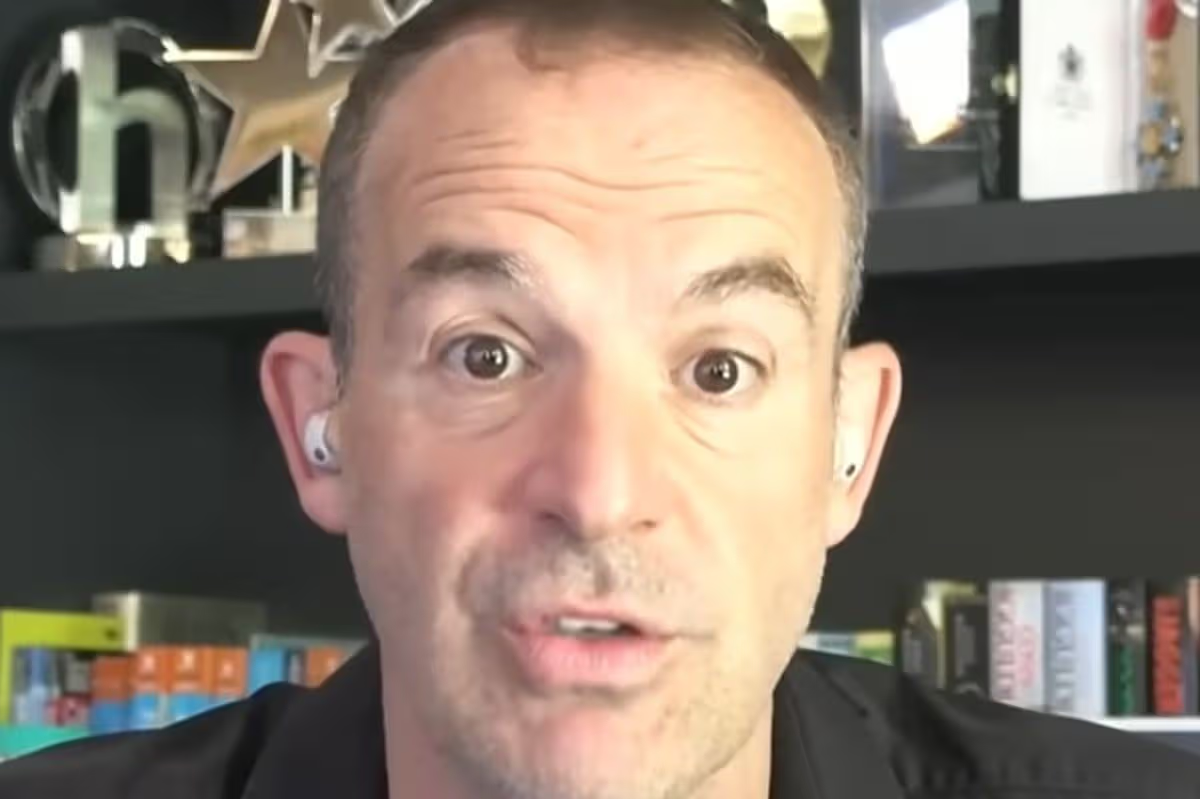
Money Saving Expert Martin Lewis urged Brits to check if they need to renew passports now
Martin Lewis has issued advice to UK travellers over their passports(Image: ITV screengrab)
Brits have been urged to “check now” or face being hit by costly passport fees come April. Next month is set to bring a hike in passport charges.
At present, a standard adult passport costs £94.50 when applying online. However, this is due to increase to £102 from 8th April. The price of a child’s passport will also climb from £61.50 to £66.50.
“Check NOW if yours is due for renewal, there’s still time to get the lower rate.” Additional guidance on securing the best deal was also published elsewhere on MSE.
“If you need a new passport, it’s cheapest to apply online,” MSE said. “The only site you’ll ever need to go to is the GOV.UK website.
“It has options for getting your first passport, renewing an old one or getting one for your child. You can apply online, which is the cheapest option, or by paper at the Post Office.
“Last year, over seven million Brits saved by applying online.”
Adult: takes up to three weeks to arrive – online cost now – £94.50, online cost from April 8 – £102, postal cost now – £107, postal cost from April 8 – £115.50
Adult fast-track – arrives one week after appointment – online cost now – £178, online cost after April 8 – £178
Adult ‘Premium’ – given at the appointment – online cost now – £222, online cost after April 8 – £239.50 Child – takes up to three weeks to arrive – online cost now – £61.50, online cost after April 8 – £66.50, postal cost now – £74, postal cost after April 8 – £80
Child fast-track – arrives one week after appointment – online cost now – £145, online cost after April 8 – £145
It’s worth noting that there’s no child equivalent one-day service. Also, for all these types, you can pay £12 extra for a 54-page passport, which is “useful” for frequent travellers.
The Government website also cautions that no refund will be issued should you cancel your application or if you’re not entitled to a passport.
Burgundy passport
If you’re still in possession of a burgundy passport, there’s no need to panic – you won’t be required to renew it until closer to its expiry date, as they remain perfectly valid. MSE added: “Got a burgundy passport? Newly-issued UK passports have a blue cover, but you DON’T need to get a new passport straightaway – you can keep using your burgundy passport until it’s due for renewal. The blue passports will only be issued when you renew or apply for a new passport.
“Passports can take up to three weeks to be processed, so apply early. The Passport Office warns that renewing can take three weeks for both online and postal applications, so don’t leave it too late if you’re planning a trip.
“If you need a passport urgently, you’ll need to book an appointment at a passport office and pay online. Alternatively, call HM Passport Office (HMPO) on 0300 222 0000 to book an appointment and pay.” Responding to the price increase, the Home Office released a statement saying: “The new fees will help the Home Office to continue to move towards a system that meets its costs through those who use it, reducing reliance on funding from general taxation. The Government does not make any profit from the cost of passport applications.
“The fees contribute to the cost of processing passport applications, consular support overseas, including for lost or stolen passports, and the cost of processing British citizens at UK borders.”
BRISTOL Airport has submitted plans to expand with thousands more flights and long-haul journeys.
Along with more passengers the terminal will be larger, there will be new shops, restaurants as well as an extended runway at the cost of £500million.
Sign up for the Travel newsletter
Thank you!
Bristol Airport has submitted new £500million expansion plans to the local councilCredit: AlamyIt has submitted new plans for a £500million investmentCredit: Farrans
New plans have been submitted to North Somerset Council for Bristol Airport to extend its runway which will allow for long-haul flights.
The proposal revealed the airport had plans to reach “world cities within Europe and beyond”.
The amount of travellers that pass through Bristol Airport is currently 10.8million.
The increased take-offs and landings mean that there could be up to 100,000 flight movements a year- up from 85,990.
On the busiest days, there could be as many as 35 aircraft movements.
Bristol Airport added: “The plans would see around £500 million invested in improvements at the airport and local infrastructure.
“These include extending the runway to accommodate larger aircraft and increasing capacity of the terminal that includes a number of improvements to enhance the customer experience, including more space, a wider choice of retail and restaurants and the ability to walk onto aircraft without getting on a bus.”
Along with the extended runway are plans for a larger terminal with more space for a bigger immigration hall, baggage handling facilities, shops and restaurants.
Other improvements detailed in the plans include travelators, better public transport and the expansion of car hire facilities.
Chief executive Dave Lees said: “Our proposals deliver what customers have told us they want to see at their local airport.
“We will open up opportunities to visit places further afield and for businesses to expand into new international markets.”
The plans reveal increased flights and a runway expansionCredit: Farrans
There are currently 14 airlines operating from Bristol Airport which go to 115 destinations including Alicante, Majorca, Amsterdam, Edinburgh, Tenerife and Barcelona.
In 2024, Amsterdam was the most popular destination, followed by Alicante and Majorca.
A GERMAN theme park is being completely transformed by a famous French theme park.
Parc Astérix in northern France, which is inspired by the iconic comic series of the same name, is taking over a destination in Germany.
Sign up for the Travel newsletter
Thank you!
Belantis Park in Germany which is being rebrand to Astérix Park Germany will open a new land this yearCredit: AlamyThe first parts of the transformation will open this year with a new land called Idefix’ AdventureCredit: Belantis Park
Currently known as Belantis Park, located near major cities including Dresden and Berlin, the theme park will be completely rebranded by 2031.
And work has already begun with the first new land opening at the theme park this spring.
The new land called Idefix’ Adventure Land will be for families with children and is themed around Idefix the dog from the Astérix universe.
There will be four new attractions and while they are yet to be announced, renders of the land show a small flume-style ride, a drop tower, a wagon ride and a spinning chair ride.
And there are some reports that they will include the ‘Aerobix Flying Machine’, ‘Driving school Frischling’, ‘Idefix’s River Journey’ and ‘Soapbox derby’.
The new land is the first part of the theme park’s transition into the Astérix and Obélix universe, with the park being completely rebranded Astérix Park Germany by 2031.
The next part of the transition – an expansion phase – is set for 2027, which includes a new family rollercoaster that will begin to be built this year.
Once fully complete, the theme park hopes to attract up to 900,000 visitors each year.
In the meantime, the park officially reopens for this year on March 28, however, the new land will not open then.
For those visiting the theme park before the new land opens, they can get a discount on another ticket if they want to return to see the new land.
Filip De Witte, Managing Director of Belantis, said: “At Belantis, we aim to create experiences where the whole family can enjoy thrilling adventures together.
“This year, we’ve lowered our admission prices to make it even easier for families to visit.
The new land will feature four rides and open in springCredit: Belantis ParkFrom the renders of what the land will look like, there will be a log flume includedCredit: Belantis Park
“At the same time, we’re expanding our offerings – from a new season pass and the Belantis app to a brand-new themed area opening later in the season.”
The park also has a new show called ‘Why do spiders spin webs?’ which is both educational and entertaining.
There’s also ‘Pirates on the Loose!’, which has been refreshed to include more music, show-fighting moments and interactions that mean audience members can train as a pirate or even discover a hidden treasure chest.
Existing rides include looping rollercoaster, a bobsled coaster and Fluch des Pharao which is a water ride inside a pyramid.
One recent visitor even noted: “There was hardly any queues when we got there, we went on a Sunday, the only time there was queues was in the evening from about 3-5pm.”
Tickets to the park cost €29 (£25.13) per person.
In other theme park news, here are nine of the best theme parks with something new in 2026 from multi-million lands to epic thrill rides.
FORGET the white sand beaches of the Caribbean – actress Michelle Keegan has opted for a quiet and beautiful village in Majorca for her latest holiday.
The tiny destination is in the heart of the Tramuntana mountains, but is right next to the coast and is within walking distance to a little bay with clear waters.
Sign up for the Travel newsletter
Thank you!
Deia is a beautiful mountain village near the coast in MajorcaCredit: AlamyMichelle Keegan has posted being in Majorca on her social mediaCredit: Instagram
We’ve all heard of Majorca, the Balearic Island loved by Brits gets over two million visitors every year.
Lots will flock to the capital of Palma, but there are so many other beautiful spots to explore – and Michelle Keegan is exploring it right now.
The former Coronation Street actress posted images of herself enjoying the Spanish sunshine on Instagram.
So what is there to do in the pretty village of Deià?
The coastal village has the best of both worlds as it’s tucked away in the mountains and is minutes from the coast.
To explore Deià, be prepared to take on a hill or two as visitors do comment on how steep the cobbled streets are, with the highest point being the church.
The roads are narrow too so your best bet to get around is taking a local taxi, walking or hiring a bike.
Just a short walk from the village is Cala Deià, a small pebbly cove that has crystal-clear waters and is popular for swimming and snorkelling.
One visitor said: “It is very rocky but absolutely gorgeous and great for swimming.”
Another added: “This cove is amazing – we are already ready to return.”
If you get peckish, there are cliffside restaurants including Ca’s Patró MarchandCan Lluc.
Cala de Deià is just a short walk from the hilltop villageCredit: Alamy
Check out this Majorca hotel near a beautiful beach cove…
*If you click on a link in this box, we will earn affiliate revenue
Gavimar Cala Gran Costa Del Sur, Majorca
This hotel sits on Majorca’s Cala Gran Beach, a beautiful cove just a short drive away from the coastal town centre, with its trinket shops and relaxed bars. The hotel itself has all the activities and entertainment you’d expect, including bingo and live music – as well as some unique extras like mini golf and archery. Week-long breaks start from £478pp.
Back in the 1980s Richard Branson transformed the crumbling mansion into a luxury hotel – which he then sold in 2002.
The Belmond Hotel has pretty suites, a swimming pool and is surrounded by palm trees.
Luckily it’s not all luxury hotels. At Hostal Villa Verde which has simple rooms with enviable views, holidaymakers can book a stay from £60 per person per night.
There are lots of local restaurants to try too. One visitor recommended sitting on the terrace at Es Punt to try padrón peppers and patatas bravas.
Another is Restaurante Miró which has a beautiful patio area and visitors have said it’s a great place to watch the sunset.
If you want to explore Deià, head to Majorca’s capital of Palma and from there it’s a 40-minute drive.
Michelle has also shared snaps of her exploring the neighbouring destination of Valldemossa.
It’s another mountain village which sits around Real Cartuja, a huge palace and monastery.
Just like Deià, Valldemossa is considered one of the most beautiful towns and villages in the country.
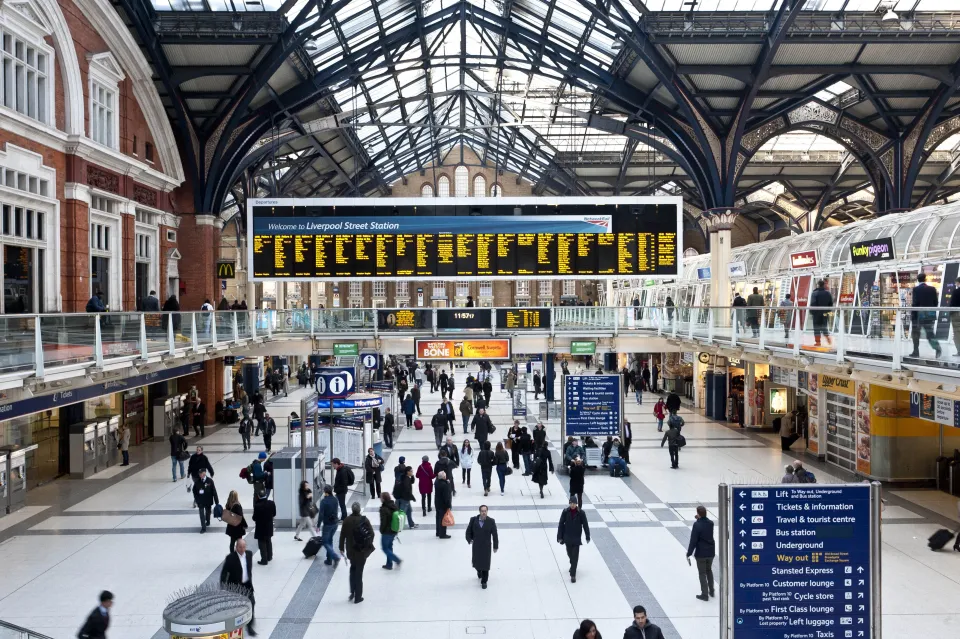
The closure at Liverpool Street Station will take place to improve roof drainage and track drainage, as well as vegetation management.
While most of the work has already been carried out, passengers have been told that Liverpool Street’s mainline station will experience its final closure on March 28 and March 29.
The Elizabeth line will still be running, however, there will be no access to the main concourse. Commuters have been also been warned that there will be no Overground Weaver line trains operating this weekend.
Train operating company, Greater Anglia, stated on its website: “On both days, Liverpool Street Main Line station will be closed (including the concourse) to all Greater Anglia, Stansted Express, c2c, Elizabeth line and London Overground services.
“Greater Anglia services to/from Cambridge, Bishop’s Stortford, Hertford East and Stansted Airport will start/terminate at Stratford.”
They added: “On both days, Elizabeth line’s low level Liverpool Street station remains open however services will not run beyond Stratford due to closures on the Great Eastern mainline.
“On both days London Overground Weaver line services will not run between London Liverpool Street and Enfield Town/Cheshunt/Chingford.”
Commuters have been directed to use rail replacement buses where possible. The services will run between Seven Sisters and Enfield Town/Cheshunt and Hackney Downs and Chingford.
Officials have urged passengers to plan their journeys ahead of time. It comes as the station recorded a staggering 98 million entries and exits between April 2024 and March 2025.
Trish Ashton, TfL’s Director of Rail, said: “We’re sorry for any disruption caused by weekend engineering work impacting London Overground and Elizabeth line services during March.
“These planned works are essential to help keep our services safe and reliable. Customers are advised to ‘check before they travel’ using the TfL Go app or at TfL.gov.uk, and allow a little extra time for their journeys.”
You can also check the Network Rail website here for more information on planned works.
Talks broke down this week that would lead to widespread disruption for travellers over Easter to airports in places like Mallorca and the Canary Islands
Robert Rowlands Deputy editor, money and lifestyle, content hub and Maria Ortega
13:52, 27 Mar 2026
Palma de Mallorca Airport is one of the airports that has been at the centre of debate over industrial action(Image: Getty)
UK tourists have been given a significant update over planned strike action at multiple airports in Spain. Talks broke down this week before officials announced that strikes would be held over several dates in March and April.
Airports set to be affected by the measures included Barcelona, Palma de Mallorca, , Gran Canaria, Málaga, Alicante, and Tenerife (South and North). Now an update has been reported in the Spanish press.
Two sets of strikes at Spanish airports have been partly cancelled, according to Spanish media reports. There had been concerns about extensive disruption at major airports throughout Spain owing to industrial action.
Larazon now reports that trade unions have postponed imminent strikes due to start today that would have seen staff at airport services operators Groundforce and Menzies walk out. The update comes after advances in wage negotiations – but strikes planned for later on have yet to be cancelled, according to local media.
Spanish reports say that trade unions have called off the first day of strike action at Groundforce, Air Europa’s ground handling company, and the first two days of the strike scheduled for this weekend at Menzies, another airport ground handling operator. This is according to sources from the UGT trade union speaking to Efe.
The partial and indefinite strikes planned Groundforce strikes were set to began this Friday. They would have coincided with the beginning of the Easter holiday exodus.
Ultimahora reports that the industrial action at Groundforce had been scheduled for the morning, afternoon and night shifts (from 5am to 7am, from 11am to 5pm, and from 10pm to midnight) with plans set to continue indefinitely. Additionally, the UGT has agreed to call off the first two days of industrial action at Menzies, planned for this Saturday and Sunday. In Menzies’ case, the strike had been called exclusively by UGT – the main union at the firm – for 28 and 29 March, and between 2 and 6 April.
The English language Majorca Daily Bulletin reports that 24-hour strikes for Menzies staff from April 2 to April 6 have not yet been scrapped. It also reported that there is no sign of further suspensions to the other planned strike action for Groundforce staff.
The strike notice at the ground handling operator covered all businesses within the group (Menzies Aviation Ibérica and Menzies Ground Services) and around 3,000 employees. The union had cautioned that, should no deal be struck with the company, the strikes would be rolled out to every weekend until the year’s end.
Groundforce operates at Madrid, Barcelona, Palma de Mallorca, Alicante, Málaga, Gran Canaria, Valencia, Ibiza, Bilbao, Lanzarote and Fuerteventura. Menzies operates at Barcelona, Palma de Mallorca, Málaga, Alicante, Gran Canaria, Tenerife South and Tenerife North.
IT MIGHT feel like we have been waiting forever for spring and now you can enjoy it by seeing lots of different sights in bloom.
National Trust sites and properties across the UK are home to an abundance of plants and trees.
Sign up for the Travel newsletter
Thank you!
There are tons of places to see blossom across the UK this spring, including National Trust propertiesCredit: Shutterstock EditorialAnglesey Abbey is less than six miles from Cambridge and features a country house that was built on the remains of a prioryCredit: AlamyThe house is surrounded by gardens, which is where you will find the blossomCredit: Alamy
And with that, there’s a lot of blossom to see.
Whether it be an apple or cherry tree, here are some of the top National Trust sites to see blossom this spring.
Acorn Bank, Cumbria
Acorn Bank is known for having an extensive herb collection as well as sprawling orchards and a working watermill.
And tucked behind its 17th-century walls, visitors will find the orchard with over 175 apple varieties.
From early May, many of the trees bloom with a soft pink-white blossom.
It costs £11 per adult and £5.50 per child to visit.
Anglesey Abbey, Cambridgeshire
Less than six miles outside of Cambridge, Anglesey Abbey features a country house that was built on the remains of a priory.
The house is surrounded by gardens, which is where you will find the blossom.
Back in 2021, Olympian Way was planted with cherry blossoms that bloom pink in March and April.
Visitors will also be able to find cherry blossom in the woodland and Rose Garden.
It costs from £19 per adult and £9.50 per child to visit.
Ardress House, County Armagh
Found in the ‘Orchard County’ of County Armagh, Ardress House features a 17th-century house with 18th-century interiors, as well as a traditional farmyard.
Each May, the property’s apple blossom appears and visitors can also head on a walk which encircles the farmhouse to see more blossom.
Attingham Park, Shropshire
Attingham Park is an 18th-century estate with a mansion and around 200 acres of parkland.
Blossom appears on the apricot trees each year in the Walled Garden from around mid-March, and then other trees follow, such as peach, pear and apple.
Admission to the house and gardens costs from £18 per adult and £9 per child.
Attingham Park in Shropshire has over 130 apple trees in totalCredit: PA:Empics SportBatemans used to be the home of Rudyard Kipling who wrote The Jungle BookCredit: Alamy
Bateman’s, Sussex
Bateman’s in Sussex is the family home of the writer of The Jungle Book, Rudyard Kipling, and was built in 1634.
Each year the orchard becomes alive with blossom from April to mid-May including apple trees and pear trees.
It costs £18 per adult and £9 per child to visit the estate.
Beningbrough, Yorkshire
At Beningbrough, visitors can explore a hall and gallery, eight-acre garden and even a wilderness play area.
And during the spring, the blossom emerges in the walled garden.
The blossom comes from many traditional and newly planted fruit trees.
It costs £16 per adult and £8 per child to visit Beningbrough.
At Beningbrough, visitors can explore a hall and gallery, eight-acre garden and even a wilderness play areaCredit: AlamyThe blossom at Beningbrough comes from many traditional and newly planted fruit treesCredit: Alamy
Blickling Estate, Norfolk
At Blickling Estate, visitors can see a Jacobean mansion which boasts a large collection of books as well as a 55-acre garden.
In the West Garden is where visitors will find magnolias blooming from March in shades of white and pink.
The orchard also features fruit trees which blossom.
It costs £18 per adult and £9 per child to visit.
Brockhampton, Herefordshire
Brockhampton estate features a medieval manor house and is home to the largest orchard in the National Trust, spanning more than 145 acres.
In the orchard, visitors will find prune damsons as well as apple varieties, all of which bloom between March and May.
There are also five interlocking ‘orchard rooms’ which have been designed to reflect the structure of an apple.
Admission to the entire estate costs £12 per adult and £6 per child.
Brockhampton estate features a medieval manor house and is home to the largest orchard in the National Trust, spanning more than 145 acresCredit: AlamyCalke Abbey has 50 varieties of rare and local apple treesCredit: Alamy
Calke Abbey, Derbyshire
At Calke Abbey, visitors can see a Baroque-style mansion that has peeling paintwork and abandoned rooms, as well as the physic garden and a sprawling estate.
In the garden, there are around 50 varieties of rare and local apple trees which means by May the garden is full of pink and white flowers.
At the beginning and end of the season, visitors can also enjoy Calke’s Festival of Blossom with a number of activities.
To visit the house, it costs £15 per adult and £7.50 per child and to visit the park and gardens it costs £8.50 and £4.25 per child.
Coleton Fishacre, Devon
Coleton Fishacre is a 1920s country retreat which also has a tropical garden.
In the garden, visitors can see apple and cherry blossom on a number of self-led trails.
As part of the Festival of Blossom, visitors can also write haiku or tanka poems using blossom poetry cards.
And there are guided mindful walks on March 31, April 13 and 29.
Coleton Fishacre costs £18 per adult and £9 per child to visit.
What’s it like to visit Coleton Fishacre?
TRAVEL Reporter Cyann Fielding has visited Coleton Fishacre and here’s what she thought:
Growing up I visited Coleton Fishacre several times and with each visit, I fell in love with it more.
The 1920s country house with a thatched roof sits on a hill overlooking the Devon coastline.
And inside the house, it is just as special with kitsch interiors that feel cosy.
Make sure to spend some time in the Library and the Saloon.
In the Library, you see tonnes of books with a huge painted map above the fireplace.
And then in the Saloon, there is a theatre-like atmosphere with lots of Art Deco features.
Coleton Fishacre features a subtropical garden with lots of blossomCredit: Alamy
Cotehele, Cornwall
Cotehele in Cornwall is a Tudor house with a mill, garden and estate.
On the estate, the orchard is the earliest to bloom with apple, cherry, plum and pear trees.
Across spring the estate also hosts a number of events including walks, music, creative workshops and community activities.
It costs £18 per adult and £9 per child to visit.
Just outside of Durham, you will find Crook Hall Gardens with a medieval hall and pretty gardensCredit: Alamy
Crook Hall Gardens, Durham
In the north of England, you can head to Crook Hall Gardens.
Here you will find a medieval hall with pretty gardens, just outside of Durham city.
In the orchard all the apple varieties bloom and as the season goes on, more species in the orchard flower.
It costs £10 per adult and £5 per child to visit the gardens.
Dunham Massey in Manchester is often noted as one of the best places to see blossom in Northern EnglandCredit: AlamyThere is also the Orangery, with small waterways and seasonal flowers to exploreCredit: Alamy
In the spring, cherry blossom blooms and is often noted as one of the best places in Northern England to see blossom.
There is also the Orangery, with small waterways and seasonal flowers to explore.
It costs £20 per adult to visit and £10 per child.
Dunster Castle and Watermill, Somerset
Dunster Castle doesn’t just feature a castle, but also a country home and subtropical gardens.
Throughout spring, blossom inspired decorations welcome visitors as well as there being a blossom themed display at the Stables Shop.
Families can also head on the ‘Bees and Blossoms Spotter Trail’ and toward the end of April, there will be a new willow sculpture by artist Woody Fox.
Outdoors, blossom will also appear in the subtropical and riverside gardens.
It costs £19 per adult and £9.50 per child to visit.
Dunster Castle doesn’t just feature a castle, but also a country home and subtropical gardensCredit: Alamy
Dyffryn Gardens, Vale of Glamorgan
At Dyffryn Gardens, visitors can see a number of small themed gardens that reflect different countries and styles, as well as a kitchen garden, arboretum, glasshouse and natural play areas.
During the spring, visitors can expect Dyffryn Gardens has a self-led Blossom Watch Walk through the estate and Edwardian garden rooms.
Visitors can grab a dedicated map which helps to show the highlights of the gardens.
It costs £14 per adult and £7 per child to visit.
Erddig Hall and Garden, Wrexham
Erddig Hall is a late 17th-century country house with an 18th-century Grade I listed walled garden.
Across the 1,200 acre estate there are meadows, lakes, ponds and rivers, to explore.
During the spring, Erddig has blossom across its walled garden, orchards and lime tree avenues.
Visitors can also see cherry, plum, pear and apple blossom appearing in stages across the garden’s fruit trees.
It costs £19 per adult and £9.50 per child to visit.
Felbrigg Estate is home to a 17th-century Hall with one of the largest collections in the National trustCredit: Alamy
Felbrigg Estate, Norfolk
Felbrigg Estate is home to a 17th-century Hall with one of the largest collections in the National Trust.
In the Walled Garden visitors can see blossom across fruit trees as well as historic varieties.
It costs £16 per adult and £8 per child to visit.
Gibside, Tyne and Wear
At Gibside – a Georgian landscape garden – visitors can explore pear, apple and apricot trees all blooming from March to May.
The Walled Garden is also colourful, with lots of pink blossom.
There are a number of events too including blossom bathing sessions, beekeeping demonstrations, pollinator counts, and creative workshops.
It costs £18 per adult and £9 per child to visit.
Greenway Mansion used to be the home of crime author Agatha ChristieCredit: Alamy
Greenway, Devon
Agatha Christie’s home in Devon is a great spot to explore the life of the crime writer as well as see blossom in spring.
Between March 21 and April 30, Greenway has its Festival of Blossom, with large magnolias blooming overhead, lots of fruit trees in bloom and wild hedgerow flowers appearing.
Admission to the whole property costs £18 per adult and £9 per child.
Gunby Estate, Hall and Gardens, Lincolnshire
Gunby Estate features an 18th-century country house with Victorian walled gardens near the Lincolnshire Wolds.
During the spring, visitors can expect to see the fruit trees in the walled gardens spring into bloom with different pastel pinks.
There is also a cherry walk which is great to visit in late April and pear blossom appears in the kitchen garden, alongside apple blossom in May.
Between March 29 and April 23, visitors can also catch some blossom indoors as the ‘Springtime Wonderland’ exhibition by Laura Andrew will be on.
And from April 13 to May 31, there is the Blossom Wellbeing Trail – a self-guided route to appreciate the sights, scents, and sounds of the season.
It costs £12 per adult and £6 per child to visit Gunby Estate.
At Hanbury Hall, there is an 18th-century house featuring original wall paintings by Sir James Thornhill as well as formal gardens.
The site is home to several species of blossom trees, including pear, apple, and cherry blossom, which all flower anytime from March to May.
Later in April and May, visitors can try out blossom bathing in the walled orchard, which has 56 varieties of heritage apple trees.
It costs £19 per adult and £9 per child to visit.
Ham House, London
Ham House is a Stuart house situated on the banks of the River Thames and boasts a unique collection of antiques and furniture.
The house even has its own cherry garden, with lavender and a 17th-century statue of Bacchus.
In the Outer Courtyard, lots of new blossom trees have been planted and even though they are young, more and more sprigs of colour are appearing each spring.
It costs £18 per adult and £9 per child to visit.
Hinton Ampner was rebuilt and today features a large house with a pretty gardenCredit: Alamy
Hinton Ampner, Hampshire
Following a fire in 1960, Hinton Ampner was rebuilt and today features a large house with a pretty garden.
During the spring blossom can be found across the orchard and wild garden.
And don’t miss the sweeping views of the Hampshire Downs.
It costs £18 per adult and £9 per child to visit.
At Killerton in Devon, visitors can head on a waymarked blossom trailCredit: Alamy
Killerton, Devon
Killerton is home to a Georgian house as well a chapel and historic garden and the gardens are one of the first to awaken in Devon according to the National Trust.
Visitors can head on a waymarked blossom route, which is around one-mile.
Along the way, they can read gardener’s notes that highlight the different blossoms.
It costs £18 per adult and £9 per child to visit.
Lyme, Manchester
Lyme in Manchester features a 600-year-old house with 1,400-acre grounds.
Visitors can explore ornamental cherry trees with soft pinks as well as creamy white blossoms.
In the Vicary Gibbs area of the garden, there’s a mindful walk where visitors can bathe beneath the Japanese Mt. Fuji cherry tree.
It costs £19 per adult to visit and £9.50 per child.
Visitors at Nostell in Yorkshire can explore a large Georgian house, landscaped gardens, parkland and stables courtyardCredit: Alamy
Nostell, Yorkshire
Nostell in Yorkshire boasts a large Georgian house, landscaped gardens, parkland and stables courtyard.
Visitors can see blossom across the Kitchen Garden, orchard and pleasure grounds with the season beginning in March.
There’s also a nice walk from the rose garden and orangery to the orchard’s heritage pear espalier.
In the pleasure grounds, make sure to look out for the magnolia with large flowers budding overhead.
It costs £14 per adult and £7 per child to visit.
Paycockes House and Garden, Essex
Paycockes House and Garden is a Tudor merchant’s house and in the gardens this spring, visitors can see blossom across the entire garden,
It costs £12 per adult and £6 per child to visit.
Sissinghurst in Kent has 1,100 fruit trees blooming each springCredit: Alamy
Sissinghurst, Kent
Sissinghurst is a castle with a world-renowned garden, where you will find 1,100 fruit trees blooming each spring.
The garden also has a particularly large blossom tree, known for its fluffy white flowers.
It costs from £20 per adult and £10 per child.
Waddesdon Manor, Buckinghamshire
Waddesdon Manor is a French Renaissance-style château, built by Baron Ferdinand de Rothschild, and it boasts Victorian-style gardens with statues and a wooded playground.
Between March 25 and April 12, visitors can head to Waddesdon’s Festival of Blossom which has fresh floral displays and a blossom trail inside the house.
In the gardens, visitors can see horse chestnut trees which have creamy-white or pink blossom in May.
It costs £27.50 per adult and £13 per child to visit.
Between March 25 and April 12, visitors can head to Waddesdon’s Festival of Blossom which has fresh floral displays and a blossom trail inside the houseCredit: Alamy
Wimpole Estate, Cambridgeshire
Wimpole Estate is home to a 17th-century mansion with Georgian interiors, a walled kitchen garden, and parkland.
Visitors heading to Wimpole’s orchard will see over 300 fruit trees which blossom between April and May.
Also in the Walled Garden are a number of cherry trees which have soft pink blossom.
It costs £21 per adult and £10.50 per child to visit.
What’s it like to visit Wimpole Estate?
TRAVEL ReporterAlice Penwill has visited Wimpole Estate and here’s what she thought:
One of my favourite National Trust spots that I visit throughout the year, in rain or shine is Wimpole Estate in Cambridgeshire.
It’s enormous, all spaced around its 17th-century hall and has a pretty garden which you can visit in the springtime.
But I love to explore the grounds (and it’s free of charge), you can walk for miles through cow fields, around the large ponds and up to the ruins in the folly – which if you’re a Slow Horses fan was used for filming in season one.
Afterwards you can duck into The Old Rectory to get a drink or something to eat, but what lots of visitors do, and myself included, is pack up a picnic and have it on the grass outside.
British holidaymakers in Tenerife admit they have “booked early flights home” recently. A specific issue seems to have impacted their holidays over the past few weeks
12:05, 27 Mar 2026Updated 12:06, 27 Mar 2026
Brits in Tenerife admitted to booking early flights home (stock image)(Image: Gabriel Mello via Getty Images)
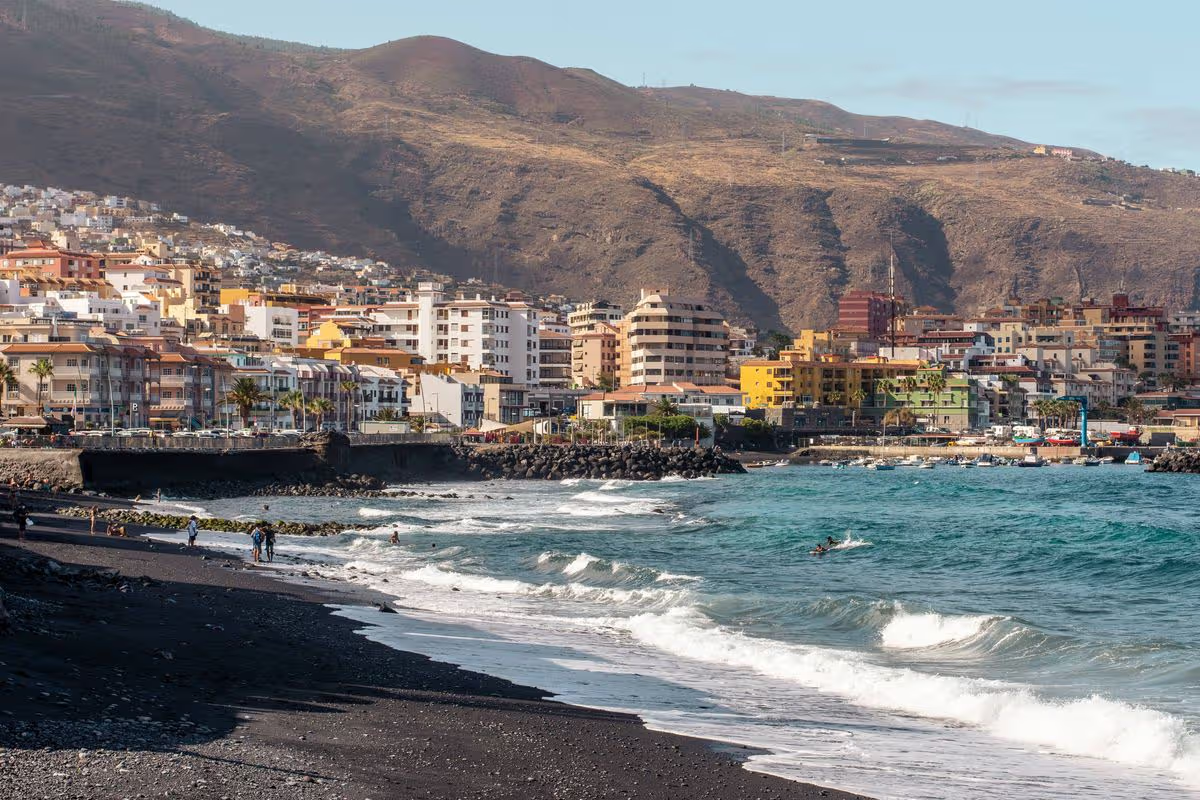
UK holidaymakers visiting a beloved travel hotspot say they’ve been “booking early flights home” after their breaks were disrupted by an unexpected issue. While many jet off abroad hoping to bask in the sunshine, unwind and enjoy some well-deserved rest, things don’t always go according to plan – no matter how much we’d like them to.
Brits in Tenerife recently discovered this first-hand, with some suggesting their holidays were “ruined” due to an unlikely problem. A string of videos have gone viral on TikTok, with visitors expressing their frustration after trips to the destination over recent weeks, catching many completely off guard.
A man, known online as Gazza, posted a video of his recent getaway, stating: “Come here every year and this is the first bad downpour experience.” He also described the weather as “brutal” for four days due to the relentless rainfall.
The clip has since racked up thousands of views, sparking hundreds of responses. It appears many fellow travellers have encountered similar situations.
Content cannot be displayed without consent
One commented: “Had wind, clouds and cold one year for four days out of the seven. Never went back.” Another added: “I was there last week and got an early flight home.”
Gazza responded to this remark, saying: “Was debating it too.” While a third chimed in: “I just got back. It was mental.”
A further user wrote: “It’s been almost a week!!! Everywhere/everything closed!!!” While another remarked: “That’s pretty unlucky. I would feel gutted.”
Others, however, claimed to have had a wonderful time during their visit, with some reporting an entirely different experience.
One holidaymaker shared: “It’s heaven. Chill.” Another added: “Here at the moment and not that bad. People need to chill out.”
Someone else also weighed in with: “Still rather be there than here. It’s the getting away that matters.”
What’s actually been going on?
While heavy rainfall is uncommon in Tenerife during March, a powerful storm has recently battered the Canary Islands. Storm Therese is reported to have wreaked havoc on the Canary Islands, particularly Tenerife and La Palma, with an unexpected mix of heavy rain, 100 km/h (62 mph) winds and even snowfall at high altitudes.
Authorities confirmed it was amongst the most devastating storms to strike the archipelago in over 10 years, which may well explain why so many visitors encountered such dreadful weather during their stays.
The silver lining, however, is that conditions appear to be on the mend. Current forecasts predict sunny spells over the coming days, with temperatures potentially reaching highs of up to 26 degrees, which could explain why some travellers have recently reported a marked improvement in the weather.
One visitor said: “It’s sunny now.” Another wrote: “I’m just back yesterday. Was there for a week. We had a ball even with the storm and rain.”
Tourism chiefs are predicting a near two million jump in the number of Brits holidaying at home this Easter
11:40, 27 Mar 2026Updated 11:47, 27 Mar 2026
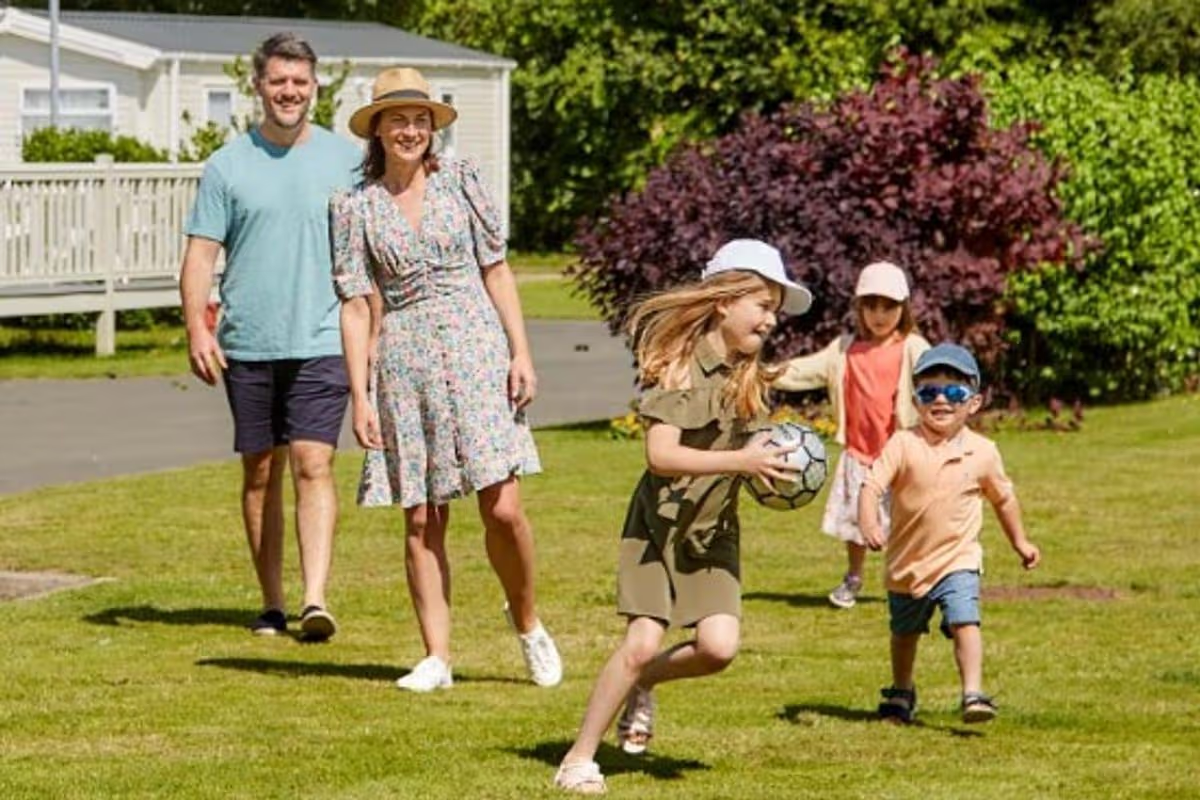
Around five million more Brits plan to holiday at home rather than go abroad this Easter(Image: Parkdean Resorts)
Around 12.5 million Brits are planning an Easter staycation – as the Middle East war deters families from jetting abroad.
The number of people who say they intend to holiday in the UK over the Easter weekend is up sharply from 10.6 million last year. The near two million surge will help deliver a bumper £4.8billion boost to tourism and the wider economy, according to VisitEngland, which published the data.
The number saying they hope to holiday at home dwarfs the estimated 7.4 million who are planning a trip abroad this Easter. Of those definitely aiming to take a staycation during the Easter break, the majority will be short breaks of one to three nights.
It came as VisitEngland’s Trip-Tracker revealed that more than a quarter of those it surveyed, 28%, were worried about the impact of the Middle East conflict on their upcoming travel plans in April and May. The top concern was having less money to spend due to the economic impact. There have already been fears of air fare price hikes and possible flight cancellations.
The number of people planning an Easter staycation this year also marks a big jump on 2024’s 11 million, and nearly double the 6.5 million in 2023. A further 5.1 million people surveyed said they were undecided about whether to take an overnight holiday trip in the UK during the Easter weekend. The top reasons were “waiting to see if I can afford it” and “waiting to see what the weather is like”. Forecasts for the weather suggest it will be a mixed bag next week, but with settled conditions over the Easter weekend itself.
However, those driving for days out and holidays in the UK face a hit to the wallet from soaring fuel prices on the back of the Iran war. The nationwide average for unleaded has jumped to 150p a litre, up 17p since before the conflict erupted. Diesel drivers have been hit even harder, with diesel now averaging 176.68p per litre, a leap of 34p in recent weeks.
RAC head of policy Simon Williams said: “Petrol has now broken through the unwelcome milestone of 150p a litre (150.11p), something drivers haven’t seen since mid-May two years ago while the average price of diesel is now approaching 180p at 177.68p.
“With the long-awaited four-day Easter weekend almost within touching distance, the cost of getting away by car is going to be noticeably higher this year.
“And with average prices at motorway services at 166p for unleaded and 182p for diesel, drivers on long journeys will need to plan very carefully where they refuel. The best advice remains to shop around for fuel and make use of free apps such as myRAC to never pay a penny more for fuel than is absolutely necessary.”
Some families may also think twice given another wave of bill increases – including water and council tax – from the start of April, and warnings that food price inflation could jump again.
Kate Allen, owner of Devon-based Finest Stays, said: “For now, we’re not seeing a slowdown. Bookings are up around 10% on this time last year, with more guests opting to stay in the UK rather than travel further afield to places like Dubai.
“The Great British holiday is very much in favour, as we’re a nation that prioritises getting away, and domestic breaks are benefiting from that shift. That said, there’s a nervous undercurrent. Fuel costs feel like a slow leak, pressure building rather than bursting.
“We’re expecting more guests to postpone or cancel, and that’s where it gets tricky. Terms and conditions may cover it, but it doesn’t make refund conversations any easier when the wider impact on businesses and homeowners isn’t fully understood.”
Tourism Minister Stephanie Peacock said: “It is wonderful that so many people are planning on having a staycation this Easter weekend, whether that’s spending time visiting our stunning landscapes and coastlines or exploring our vibrant towns, cities and cultural landmarks. Supporting domestic tourism helps local areas thrive – fuelling small businesses, boosting pride, and strengthening community economies.”
VisitEngland chief executive Patricia Yates said: “Tourism businesses and destinations will be looking to the critical Easter weekend for much needed cash flow so it’s encouraging to see so many of us are planning a holiday at home, with its ease, convenience and certainty of budgeting. We also know that the cost of living remains a concern for holidaymakers, leaving it difficult too for businesses to plan in advance.
“We have incredible activities, experiences and places to stay for all tastes and budgets, and there really is nowhere quite like Britain in springtime. From walks in our beautiful countryside with the promise of a pub lunch or discovering contemporary culture in our buzzing cities to enjoying fish and chips on the beach, there is something for everyone. So, a rallying cry to please go out and explore the amazing destinations and events here on our doorstep this spring. Tourism businesses will be very pleased to welcome you, you will have an amazing time and create memories to make you smile all year.”
It came as trade body UKHospitality stepped up criticism of what has been dubbed a new “tourist tax”. Labour is proposing to allow regional mayors in England to introduce a “visitor levy” on overnight stays, as already happens in some European countries. While details of how it would work are still to be finalised, it could either be a per head charge or a percentage of the cost of the stay. Small businesses – from guesthouses to B&Bs – say it could lead to closures.
Modelling by Oxford Economics, commissioned by UKHospitality, which assumed a 5% levy, warned it could lead to a £1.6billion tax increase for holidaymakers by 2030, and a £2.2billion hit to the economy.
POPULAR airline JET2 has launched its first flights from a major UK airport.
Jet2 flights to Tenerife and Alicante in Spain have taken off from London Gatwick, marking its first flights from the airport.
Sign up for the Travel newsletter
Thank you!
Jet2 has launched its first flights from London Gatwick AirportCredit: AlamyLebos is one of the destinations on the listCredit: Alamy
This summer, travellers can fly to 29 destinations with Jet2 from Gatwick, including the Canary Islands, Greece, Turkey, Portugal, Malta, Italy, Croatia, Bulgaria and Cyprus.
And the airline won’t stop at the end of the season either, as for the winter season it will fly to 14 winter sun destinations, ideal for Brits wanting to escape the cold.
Jet2 will also fly to five ski destinations and four Christmas market spots over the winter period.
Looking ahead to next year, even more routes will be added.
The airline’s routes will rise from 29 to 34 destinations including flights to Lesbos – a large island in Greece – which will operate weekly.
Lesbos is Greece’s third largest island and boasts a lot of history as well as sprawling olive groves.
For those flying from Gatwick with Jet2, there will be six aircraft including the new Airbus A321neo aircraft.
Jet2’s arrival at the UK’s second largest airport comes after increased demand, especially with travellers from the South East of England and marks the airline’s 14th base.
Steve Heapy, CEO of Jet2.com and Jet2holidays, said: “Today is an incredibly exciting moment for Jet2, as we welcome our first customers at London Gatwick and wave off our inaugural flight.
“After years of demand to come to London Gatwick, we are delighted to be bringing our award-winning service, recognised 11 years in a row by Which? as its recommended travel provider, to the UK’s largest beach and city leisure destination airport.
He added: “Since going on sale, we have experienced phenomenal demand from customers and independent travel agents, and we are looking forward to a hugely successful future from our newest UK airport base.”
The arrival of Jet2 at London Gatwick Airport is the airport’s largest airline launch in more than a decade.
Pierre-Hugues Schmit, Chief Executive, London Gatwick said: “Today’s inaugural Jet2 flights mark an exciting moment for London Gatwick and for passengers across the region.
“The launch of 29 new routes and the creation of more than 300 jobs demonstrate the strength of demand for travel from our airport and the confidence airlines have in London Gatwick as a place to grow.”
According to The Independent, Jet2 has been trying to get slots at Gatwick Airport for years and it was only when slots were freed up that the airline could move in, first announcing this four months ago.
The first flight to Alicante took off todayCredit: Alamy
Full list of destination Jet2 will fly to in summer 2026 from London Gatwick Airport
HERE are all the destinations Jet2 will fly to from London Gatwick in summer 2026:
An On the Beach travel influencer has shared recommendations for holidaymakers
People could save on their holidays with the expert’s tip (stock photo)(Image: Getty)
People booking holidays after payday could benefit from a travel expert’s destination tips. A travel influencer has shared six holiday trends he predicts for March and April, and the knowledge could benefit anyone looking for a ‘cheap city break’ in the coming weeks.
The tips were highlighted in a video shared by Rob Brooks, a travel enthusiast and influencer with the travel company On The Beach. Rob is well-known for posting budget-friendly travel advice, hotel reviews, and holiday tips for his 114k TikTok followers, where he goes by the username @Robonthebeach.
In a new video shared this week, the travel lover shared ‘six holiday trends’ he is ‘predicting for payday’. In the clip, Rob explained: “If I got paid today and I had seven days to book a holiday, this is exactly what I’d be doing.
“I’m Rob, I work in travel, and I spend my days deep in holiday data, what people are searching, what people are booking, what’s getting sneakily cheaper. And these are my payday predictions as a holiday expert, and more importantly, exactly how I’d use them.”
First, Rob predicted that city breaks will soar in popularity this year. He said: “Short trips are crazy popular in 2026, and I’m seeing loads of demand because people want a quick break without burning loads of annual leave. And when flights price dynamically, weekends get expensive really fast.
Content cannot be displayed without consent
“So midweek is currently where the value sits on city breaks. And if I was booking one right now, I’d be looking at a midweek break in Prague, Lisbon or Barcelona. I’d try and line them up with a May bank holiday so you can stretch your time off without paying peak prices.”
Moving on, the travel enthusiast said Turkey ‘will see a surge of bookings.’ He said: “You’re getting five-star all-inclusive holidays for the same prices that you’d pay for three-star elsewhere. And interestingly, according to the data, the longer the transfer, the cheaper the holiday.”
As for when you want to book your trip, the holiday expert suggested May. Rob told viewers: “May is a perfect crossover for holidays, and I’m seeing some pretty nuts prices in some destinations where the weather is already properly warm.
“Airlines and hotels haven’t quite pushed up the prices yet in line with peak demand, but that demand is now starting to build. So if I was booking today I would lock in a holiday in May in somewhere like Morocco or Egypt, Tunisia or Turkey because they’re hot, reliable and still really good value before summer kicks in.”
Sharing another tip, Rob added that all-inclusive holidays are proving popular. For his next prediction, the influencer said: “Last-minute bookings will spike. There’s a real wait and see behaviour with holidaymakers right now.”
He continued: “People are watching prices then jumping in to book as soon as they drop. And when airlines and hotels need to fill seats and rooms close to departure, that’s when prices on package holidays suddenly start to dip. If I were going for pure value, I would actually wait and book about seven days before departure, possibly even later than that. It’s risky. But when it works, it really works. I should say, please, only do this if you’re prepared and in a position to take that risk.”
Concluding his video, Rob added that he thinks people will treat themselves more this payday. “There’s definitely a bit of a go on then mindset in the UK right now, and I personally think it might be tied to the cost of living creeping up again cause people know prices are only going one way, so they’re locking in the good prices now before they go up. So if I were booking this week, I’d probably stretch my budget a little bit to book a better hotel or a nicer room and lock it in before prices inevitably climb over the next few weeks.”
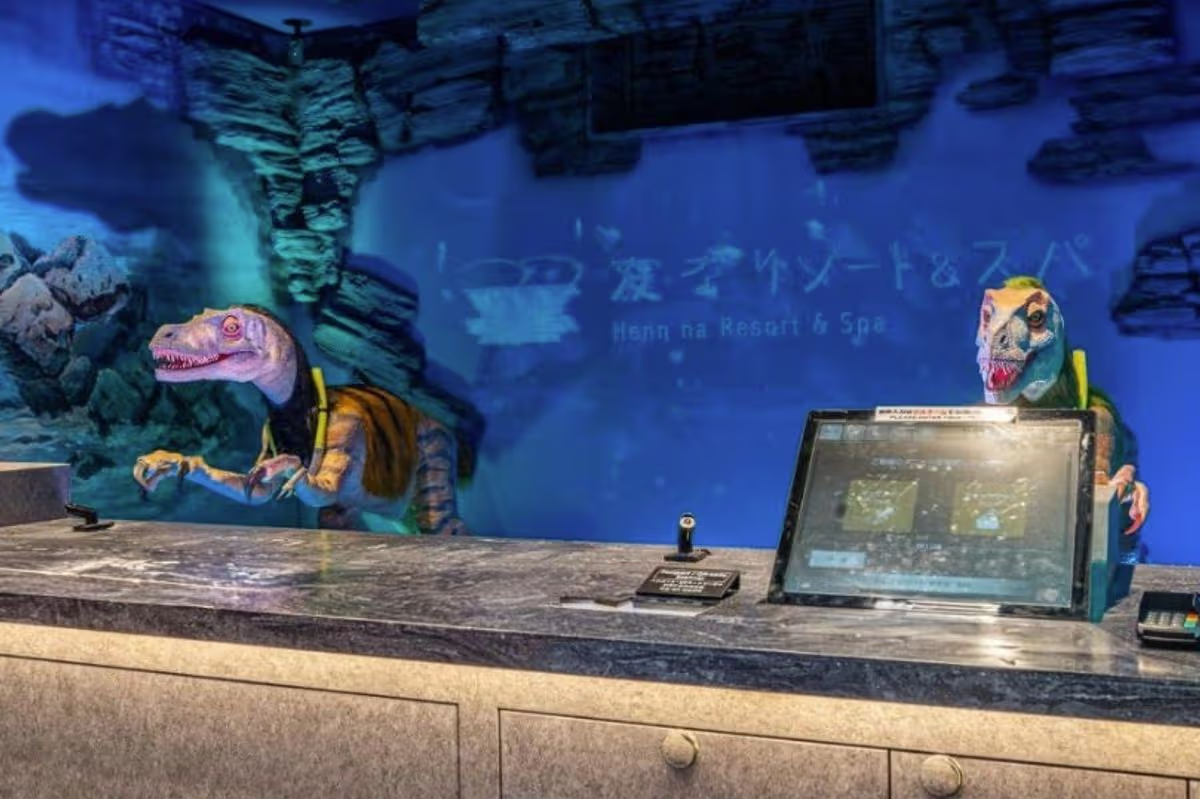
One hotel is offering a unique experience when it comes to its check-in staff. Instead of humans, guests at the hotel are greeted by robot dinosaurs to help them check-in to their room
Samantha Bartlett Assistant Editor, Social News
10:28, 27 Mar 2026
Guests at one hotel based in Japan are greeted by robot dinosaurs to help them check-in(Image: Henn na Resort & Spa)
Most of us like to encounter unique experiences when we travel, and one hotel based in Japan is certainly offering that with its check-in staff. Instead of humans, guests at the hotel are greeted by robot dinosaurs to help them check-in to their room. The unique experience was shared over on Instagram, with influencer Anna-Lynne posting a reel about it. Her video saw her walk in to a ocean-themed room as robot dinosaurs greeted her at the check-in desk.
Overlay text read, ‘POV, it’s 8pm in Japan, you’re tired and you just want to check in to your hotel…’ Following up in the caption, she wrote: “Booked this stay not knowing I’d be checked in by dinosaurs and low-key, I was terrified.
It was 8pm, I was exhausted after a flight, and I had to walk from the train station in pitch dark just to get here. Then these prehistoric receptionists welcome me and I was like uhhh the f**k.
“But real talk they were somehow more polite than some humans I know. The check-in was smooth, and this place is super clean and quirky in the best way.”
The hotel in question is Henn na Resort & Spa Kansai Airport in Japan.
The unique, high-tech hotel in the Izumisano area is famous for being the world’s first hotel brand staffed primarily by robots, including dinosaur receptionists.
It is located along the coast with scenic views of Osaka Bay and airplanes landing at the nearby airport.
As well as guests being greeted and checked in by multilingual dinosaur robots in the ocean-themed lobby, they can also make use of many facilities such as indoor and open-air baths with bay views, a mineral mist sauna, and a dry sauna.
The on-site restaurant, Seian (Aoi-an), serves Japanese cuisine made with local ingredients and is supervised by a Michelin 1-star chef.
In addition to standard rooms, the hotel offers unique concept rooms like Ninja, Pirate, and Peach Aviation collaboration.
The hotel is approximately 15 minutes by car or one train stop (6 minutes) from Kansai International Airport (KIX). It is a 10-minute walk from Rinku Town Station.
Attractions nearby include Rinku Premium Outlets, Rinku Park, and the Seacle shopping mall, which are all within walking distance.
The hotel is often highly praised for its magnificent views, clean modern rooms, and the fun novelty of the robot staff. However, some guests found the walk from the station difficult with heavy luggage and noted that the automated check-in may occasionally require human assistance.
Content cannot be displayed without consent
People were loving the look of the robot dinosaur staff from Anna-Lynne’s video, with it racking up more than 811,000 likes.
One person exclaimed: “Wait this is so epic.”
While another added: “My introverted self would prefer the awkward robot dinosaurs.”
However, many others predicted they’d encounter a few issues too.
“Lol, this would send me over the edge of laughter and despair,” one person wrote.
While another added: “Imagine trying to complain about room service and staying serious.”
American travel enthusiast Kalani made his way over to Spanish holiday hotspot Benidorm for the first time, and went on to share his honest opinions, including one thing that left him confused
Alice Sjoberg Social News Reporter
10:16, 27 Mar 2026Updated 10:16, 27 Mar 2026
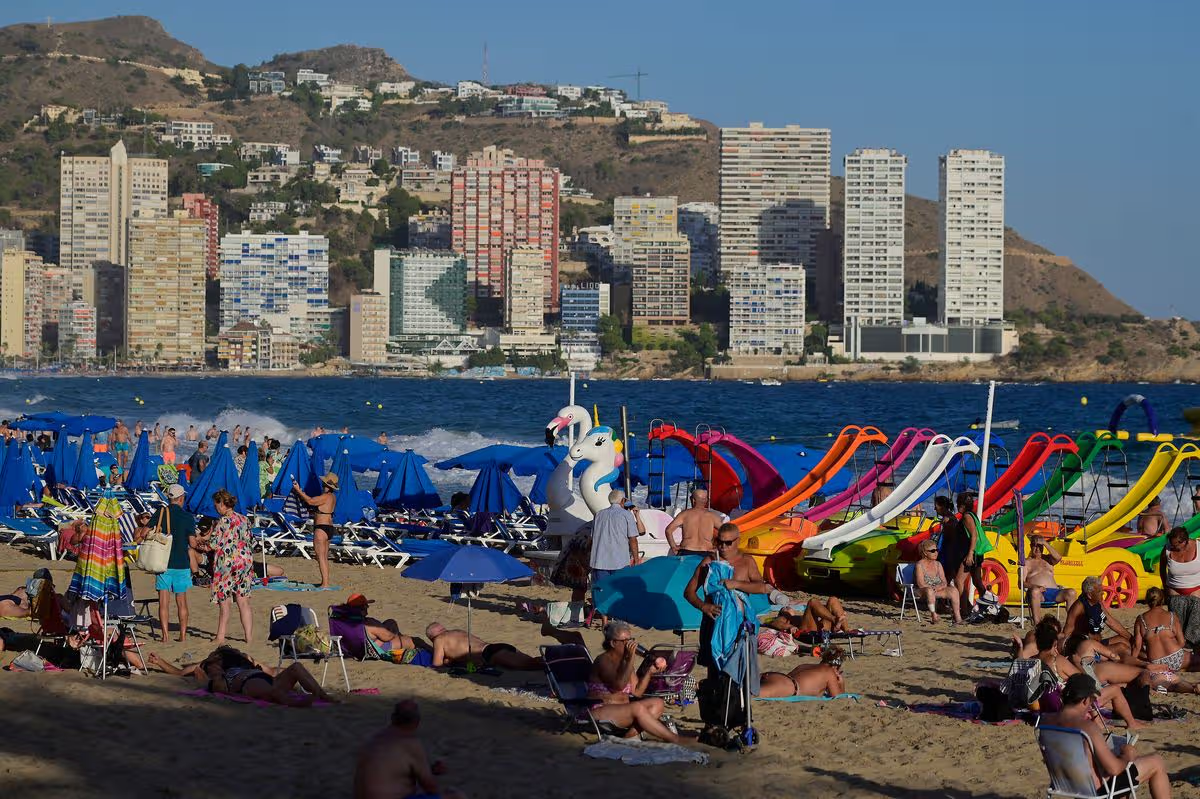
An American shared his honest opinion after visiting Benidorm for the first time (stock image)(Image: Getty Images)
The Spanish coastal city of Benidorm has long been a favourite among British holidaymakers looking to enjoy some sunshine and relax on holiday. But one American was shocked when he visited the Spanish city for the first time by just how much influence the influx of British visitors has had on the destination.
British pubs and chippies aren’t a common sight in Spain, nor is a Full English being served in every café – but they can be found all over the famous strip in Benidorm, making Brits feel like they’re in a home away from home, just with much better weather. To experience it for himself, American travel enthusiast Kalani, who has visited the UK several times, decided to head to Benidorm after having been told about it from British friends.
Taking to TikTok, where he has more than 3.3 million followers, Kalani documented his time in Benidorm and everything it had to offer. At the end, he went on to share his honest thoughts about his holiday, also revealing that there were some things that had left him confused.
Starting off by saying that a lot of people had also warned him against visiting Benidorm, describing it as ‘like Blackpool with more sun’, Kalani said he agreed the famous Strip matched this description, but argued the city also has so much more to offer.
“For me, I could probably only do about one night on the Strip, it’s just too much for me,” he said. “That’s not really my scene anyway.”
Content cannot be displayed without consent
However, he added anyone who does enjoy that sort of experience should definitely give it a go. He went on to say that his highlight had been exploring the Old Town of Benidorm.
“Really good views, and then they have Tapas Alley, which we went to last night and you can get authentic Spanish food,” he said. “It’s a really cool atmosphere.
“And if you’re looking to have a little bit more Spanish culture and not just going to Benidorm strip and having a fry up every day, it’s a good spot to go.”
The American went on to say that, while he understood why some people might have urged him to avoid Benidorm, he wondered if these people had visited Old Town, saying this was the highlight of his holiday. He said: “You can experience a part of Benidorm that isn’t as in-your-face as the Strip.”
However, Kalani also revealed that there were some parts of his visit to Benidorm that had left him confused, including repeatedly being asked about ‘Charlie’.
Content cannot be displayed without consent
“I need someone to tell me about who Charlie is,” Kalani said, explaining that several people had asked him if he wanted ‘Charlie’ after exploring the Strip one night. Viewers were soon quick to tell him that Charlie is a common nickname for cocaine.
He also explained the various ‘weird‘ things he had spotted on the Strip, including a vending machine with a variety of ‘pleasure products’, a drunk woman driving a mobility scooter with a man holding on behind her, as well as the famous Sticky show.
“But you know what, I’m having a great time,” Kalani said. “I think it’s really beautiful, great views. The other part of Benidorm, I’d have to do in very small doses.”
“What happened to my dreams? Simply put: they changed,” reads Phil Augusta Jackson aloud to a crowd in a furniture store. Tonight’s theme is change. From a podium, the television writer reflects on the long, thorny odyssey of his career. A pinball machine blinks in the background. Behind him, dreamy abstract prints hang on the wall, their shapes seeming to melt in the unseasonable spring heat.
Alongside mid-century furnishings and art in Echo Park, siblings Madeline Walter and Evan Walter host their wildly popular reading series, Essays. It’s a warm spring night. In a tender essay, Evan considers what he’s inherited from his idiosyncratic father. “I scream-sneeze like him now,” he reads. “It feels like a mess figuring out what parts of your parents you’re going to keep.”
In March 2024, the Walter siblings began the reading series in a friend’s backyard. “It was cold and wet, and we were so nervous nobody would come,” says Madeline. Since then, the show has moved through a series of venues before settling into a home at The Hunt Vintage. In just two years, it has grown into a local phenomenon, regularly drawing crowds of more than 150 people into the singular space.
The idea for Essays took shape during a conversation about creative constraints. Both writers and comedians, the siblings wanted to host a show that pushed beyond snappy punchlines and polished half-truths. “The objective is different from just being funny,” Madeline says. “It’s to tell me about yourself. Tell me something you’re thinking about.”
Siblings Madeline and Evan Walter host a popular monthly reading series called Essays at Echo Park’s Hunt Vintage.
(Ryan Wall )
Like many readings across Los Angeles, Essays taps into a growing appetite for sincerity. “People are really craving a space where you can be funny, be vulnerable, laugh at yourself — and where there’s an earnestness,” Evan says. That sensibility feels familiar to them. They grew up in what Madeline describes as a “very NPR-coded household that loved David Sedaris-style stuff.” She adds: “Doing something in the essay space feels like a surprising return to form.”
“One of my roommates describes it as a church-like experience, because everything is just so emotionally0driven and connective,” says Kaitlyn Kilmer, a longtime attendee.
The legacy of the series has begun to ripple outward. Their reading series has created a complementary Substack. Kilmer is now hosting a reading in her living room among friends.“We decided that we wanted to do our own, so I gathered a few friends who had been fans of the Essays show,” she says.
Essays exists in a larger network of reading series that make up Los Angeles’ diverse and ever-evolving literary scene. “There are so many readings now,” explains non-fiction writer Diana Ruzova, who frequently attends readings. “I’m not mad at it, though, mostly grateful that L.A. has a thriving literary community.”
In Los Feliz, Skylight Books continues to host intimate book launches for some of the most anticipated literary releases, drawing local favorites and celebrities.
“Our vibe is cozy,” says Mary Williams, general manager of Skylight Books. “We set up chairs under the big tree that grows in the middle of the store, and we hope this is a go-to place for our community to see their favorite authors while mingling with other book lovers.”
Elsewhere, at Heavy Manners Library, the tone of literary events leans more toward the experimental. “Experimental, unpolished writing can be shared and reflected on in an accessible, communal setting,” says program assistant Jane Shin.
This spring, literary events across the city run the gamut — from independent book fairs to poetry workshops, from the bizarre to the deeply vulnerable — welcoming everyone from curious newcomers to die-hard bookworms.
THE UK Foreign Office has warned Brits heading abroad to be wary of longer-than-usual airport queues ahead of new travel rules being fully rolled out next month.
The new EES requirement has already resulted in lengthy wait times at airports and are predicted to only get worse across the next few weeks.
Sign up for the Travel newsletter
Thank you!
New EES machines are set to cause length delays at airportsCredit: AlamyNon-EU citizens are required to register details before they flyCredit: Alamy
The Entry/Exit System (EES) is the new travel system replacing the need for a passport stamp by automatically checking when a person enters and exits an EU country.
Non‑EU residents have to register their details on their first visit to a Schengen area country.
This is done using the EES machines at airports and ferry terminals to log their fingerprints, facial images and scan passports.
With lots of Brits are still yet to register, and with an influx of families heading abroad over the upcoming Easter break – it’s anticipated that this will result in delays and queues at the EES machines.
New advice on the government website reads: “Ahead of the Easter holidays, Brits are being advised to be aware of extra border checks – the EU’s Entry Exit System (EES) – and allow additional time at the border when travelling to the EU.”
It added: “EES checks should take only a few minutes per person, although longer waits at border control are possible, including for your journeys back to the UK.”
Some passengers could be subject to further delays – especially those heading to Spain as ground staff are planning to strike at 12 airports across the country.
Travel Reporter Alice Penwill queued for three hours through Lanzarote Airport
Several Spanish unions are set to begin an indefinite strike too from today.
Walkouts are planned to take place on Mondays, Wednesdays and Fridays, across three time slots: from 5am to 7am, from 11am to 5pm and from 10pm to midnight.
Other baggage handling staff have planned 24-hour strikes on March 28-29 and April 2-6.
Airports that could be disrupted by these strikes include Madrid-Barajas, Málaga-Costa del Sol, Alicante-Elche, Palma de Mallorca, Barcelona-El Prat, Bilbao, Valencia and Bilbao.
It could disrupt also affect airports on popular Spanish islands too, like Gran Canaria, Tenerife Sur and Norte, Lanzarote, Fuerteventura and Ibiza.
Here are Sun Travel’s top tips on how to deal with EES travel chaos…
Sit at the front First off is quite simple,book a seatat the front of the plane. If you want to get toborder controlbefore the rest of the passengers on your flight, then by being at the front, you’ll be able to get off first.
Early flights When you’re booking, it might ease wait times if you go head out on one of the first flights of the day. There are generally fewer scheduled flights and they experience less disruption.
Anticipate delays If you are taking a connecting flight, we’d advise to anticipate delays. Of course this varies from airport to airport, but some travellers might find it will take longer to get through because of the EES requirements. Similarly, if someone’s collecting you perhaps give them a bit more time – especially if they’re in one of the pick-up zones that costs money.
Go for a bigger airport If you can go to a bigger airport and take a longer road transfer, it could be worth it At a larger airport there’s likely to be more EES machines than at one of the smaller ones For example, Assistant Travel Editor Sophie Swietochowski found there were plenty more of the machines in Spain‘s Alicante Airport than in Austria‘s Salzburg.
Bring entertainment If you have children, or are generally just bored of queues (and who can blame you?) – think about entertainment It could be worth setting the kids up with an iPad or something that will keep them occupied. Bring a reserve of snacks because standing in line means no access to the airport’s cafes and shops.
Get into the priority lane For those who are disabled and require assistance make sure to let the airline know in advance as you would usually. After landing, staff should escort you straight through to the front of border control queues. Many major airports offer priority family lanes at passport control for families with young children (usually under 12 years old).
Use the plane facilities Quite simply, if you are going to be waiting in line for yours, then you want to be comfortable. So before landing, go to the toilet on the plane. If you’re queueing along corridors before heading into border control, then the chances are there won’t be access to toilets
Ryanair chiefs have explained (Image: tupungato via Getty Images)
Thousands of Ryanair flights have been cancelled, with the budget carrier continuing its campaign to “keep EU skies open”.
Ryanair has set up a a petition, aimed at the European Commission, to reduce the impact of French Air Traffic Control (ATC) strikes on EU flights. The campaign has now garnered support from more than two million people, with thousands of flights scrapped – and more disrupted – in 2025 alone. In October of last year, Ryanair CEO Michael O’Leary said: “It is inexcusable that Europe’s worst performing ATCs in France, Spain, Germany and the UK continue to inflict avoidable delays and cancellations on millions of EU citizens every month.
“Despite warnings, Europe’s ATC performance is not improving, as national providers fail to properly staff and manage their operations. EU ATC needs reform and its passengers who are paying the price.
“ATC delays have already disrupted 33m citizens so far this year, with France, Spain, Germany and the UK consistently failing to staff and manage their services properly.”
The International Air Transport Association (IATA) reported last month that Air Traffic Flow Management (ATFM) delays in Europe have “grown sharply” in recent years, with this “far outpacing traffic growth”. ATFM delays, it said, “have cost airlines and passengers an estimated EUR 17.5 billion since 2015 (in 2025 prices), of which over 70% is linked to capacity shortages and staffing issues”.
The Council of the European Union said last year that “the air traffic control system is increasingly struggling to manage this growing demand”, noting that while “close coordination has been underway for many months between the European Commission and EUROCONTROL as well as ongoing planning between the EUROCONTROL Network Manager, airlines, airports, air navigation service providers and the military … resolving the issue also requires political will at the national level as each country is responsible for providing adequate air traffic services and making the necessary investments to support these services.”
Winning tip: puffin-watching in the Inner Hebrides, Scotland
Last April, I based myself in Oban and took my teenagers puffin-watching at Lunga, off Mull, in the Treshnish Isles, with an organised tour (Staffa Tours) by ferry and foot. It was a real delight. The guides were brilliant and helpful, especially with my mobility issues, and we were surprised and amazed at how tame and friendly the puffins were – allowing us to get great views of their faces from as near as 5ft or so. Next spring, we are going again as this is the best time to see them arriving in their thousands. April
Profile
Readers’ tips: send a tip for a chance to win a £200 voucher for a Coolstays break
Show
Guardian Travel readers’ tips
Every week we ask our readers for recommendations from their travels. A selection of tips will be featured online and may appear in print. To enter the latest competition visit the readers’ tips homepage
–
Stunning architecture in the heart of Surrey
‘A National Trust gem’ … Homewood, architect Patrick Gwynne’s 1930s villa with a woodland garden, in Esher. Photograph: BritPics/Alamy
Grade I-listed Claremont Landscape Garden near Esher is great to visit in spring. But time your trip there right and you can also visit a National Trust gem just half a mile away: the Homewood, architect Patrick Gwynne’s 1930s modernist villa and accompanying woodland garden (for pre-booked guided tours only on specific Fridays and Saturdays, April-October). The house itself is stunning, with light pouring through the sitting room’s floor to ceiling windows, but on a sunny spring day the garden, complete with rhododendron tunnel, bamboo thicket, water gardens and stepping stones, proves a tranquil spot in which to linger and view the Le Corbusier-inspired abode. David M
Sheffield’s Tudor turret
The Turret House at Sheffield Manor Lodge. Photograph: Phil Wolstenholme/Alamy
One of our favourite days out as a family in spring is to explore the beautiful Sheffield Manor Lodge. There is a wealth of history to explore in the Turret – my young daughter loves telling everyone who’ll listen that Mary, Queen of Scots was detained here. There are also children’s trails, outdoor games and craft sessions – we’ve made stained glass kites, learned about a frog’s life cycle, had Easter egg hunts and completed outdoor yoga trails. On a warm spring afternoon, it is a stunning place – with a lavender maze, apothecary gardens, wildflower meadows and the amazing rhubarb shed cafe. Susan
Artistic treasure hunt on the North York Moors
Hanging Stones by Andy Goldsworthy in Rosedale. Photograph: Julian Broad/Ross Foundation
This magical mystery tour combines fresh air, beautiful, wild landscapes and art. The project is called Hanging Stones by Andy Goldsworthy, and it’s set in Rosedale. Several buildings that were in varying states of disrepair have been rebuilt as artworks and are connected by a six-mile walk encompassing Northdale, near Rosedale Abbey. You have to book a slot to find out where the key is, which you will pick up, together with a map, to get started. It’s the treasure hunt style that will get even the youngest in the group excited about the walk, allowing the adults to do something they wouldn’t otherwise dream of doing with children: admiring art and going for a decent walk. The cost is £10 per adult, while students and under-18s go free. Annelore
Dazzling azaleas in Gloucestershire
Springtime at Westonbirt Arboretum. Photograph: PA Images/Alamy
I always take my family to Westonbirt Arboretum near Tetbury in spring to celebrate the beautiful spectacle of nature exploding into a kaleidoscope of colour and life. The Arboretum is a breathtaking place, especially under a sunny sky. The well-marked paths mean you can easily wander through its 245 hectares (600 acres) and enjoy the fresh air filled with the delicate scent of blooming cherry blossoms. With more than 15,000 specimens and 2,500 species of trees and shrubs from across the globe, it serves as a stunningly beautiful living gallery. In spring, the arboretum dazzles with azaleas and rhododendrons bursting into brilliant shades of white, red and pink. My teenagers especially enjoy exploring the treetop walkway and quiet woodland trails – and a treat of tea and cake at the well-positioned cafe at the end of it all. Nicoletta
Wild garlic and lily ponds in Pembrokeshire
‘You might spot an otter or a heron’ … at Bosherston Lakes. Photograph: Edward Dyer/Alamy
For a springtime lift, head to Bosherston Lakes set in three limestone valleys with spectacular displays of lilies. Start in ancient woodlands, where there’s a shimmering, scented carpet of white wild garlic. It feels like a fairytale. Emerge at the serene lily ponds, where you might spot an otter or a heron, then follow the path to Broad Haven South. The moment you hit the dunes and see the beach open up is one of the finest coastal views in the UK. Finish with tea and cake at the nearby Stackpole Walled Gardens; it’s run by Mencap, so your pit stop supports a fantastic cause while you soak up the Pembrokeshire sunshine. Lucy Coast
Kites fluttering in the Chiltern skies
‘Really joyful’ … A kite festival at Dunstable Downs in Bedfordshire. Photograph: PA Images/Alamy
My favourite UK spring activity is flying kites with my family in the Dunstable Downs. The open hills and steady breeze make it the perfect spot to let our kites dance in the sky. There’s something really joyful about watching the colours flutter along with other kite-flyers. After some fun, we spread out a picnic blanket and enjoy homemade treats while soaking up the sunshine and taking in the beautiful views. It’s such a simple but special way to spend a bright spring day together outdoors. Victoria
A memorable walk in the Cotswolds
‘The perfect example of an idyllic Cotswolds village’ – Bourton-on-the-Water in Gloucestershire. Photograph: Ivan Okyere-Boakye Photography/Alamy
The circular walk from Bourton-on-the Water to the Upper and Lower Slaughters provides a buffet of springtime goodness, from trees in blossom and daffodils to wildflowers and nesting swans. Oh, and don’t worry, the Slaughters aren’t as morbid as they sound. They take their name from the Old English word slohtre, meaning “muddy place”, suggesting suitable footwear is needed. While Bourton-on-the-Water remains a tourist hotspot – the perfect example of an idyllic Cotswolds village – the walk towards the Slaughters via the Windrush Way and the Gloucestershire Way makes for a calming amble soundtracked by rivers and birdsong. Maxine Harris
Luscious blooms and afternoon tea in Devon
Killerton National Trust house and garden. Photograph: Peter/Alamy
Each spring, my family makes a pilgrimage to Killerton gardens in south Devon to see the glory of magnolia blossom on the south-facing slopes of Dolbury Hill, known locally as the Clump. The luscious blooms of pinks and ivory are the main attraction. It’s wonderful to see the children enjoy the release of running on the first-cut lawn and to watch their grandparents taking in the sight of the sea of daffodils. After a wet winter of grey skies, it’s also wonderful to have tea outside the house, basking in the sunshine. Simonetta Taylor
A Northumberland beach stroll
‘A great place for a leisurely wander’ … Beadnell beach. Photograph: Louise Heusinkveld/Alamy
Can anything beat standing on a beach getting a lungful of fresh sea air? I don’t care if I’m still having to wrap up in layers with a woolly hat, being on a beach feels like the start of summer. Beadnell beach in Northumberland is a great place for a leisurely wander, with cracking views and lots of dog-friendly places to refuel in the village. The breakfasts at the Courtyard Cafe have fuelled many a walk along the beach. Hannah S
At garage has been put on Airbnb, complete with bed, bathroom and microwave cooker, and r eviewer Zac Jones said he loved it after booking in for a stay.
A video, which has amassed more than 86k likes on social media, showed the property behind an electric security shutter which rose to reveal the entrance door. Inside it was radiator-heated with a double bed, couch, TV, ensuite toilet and shower.
It even had a fridge. Before his stay, Zac said he really didn’t know what to expect. But once inside, he said he was very pleasantly surprised.
He said: “Someone has put a lot of effort in. It’s got snacks, and tea and coffee-making facilities. Shout out to the owner of this place. This has been one of my most interesting check-ins in a while.”
The garage in Bradford, West Yorkshire is available for £30. Viewers were impressed. One person said: “For the price, it actually looks good.” Another viewer added: “30 quid! I’ve stayed in worse for 100.”
And a third commenter said: “This is totally fantastic idea. If all the planning and building controls have been met. The Government should pay attention to ideas like this. Can you just imagine the very quick fix for many of homeless people.”