From breaking news to significant developments in politics, business, technology, entertainment, and more, we deliver the stories that shape our global landscape.
Demonstrators calling for heavy punishment against a woman on trial for murdering her four-month-old son block an inmate bus carrying the woman near Gwangju District Court in Suncheon on Thursday. Photo by Yonhap
A woman who brutally beat her four-month-old son and left him to die in a bathtub was sentenced Thursday to life imprisonment in a child abuse case that stunned the nation.
The Suncheon branch of the Gwangju District Court ruled that the mother, in her 30s, had “cruelly” abused her child for half of his short life before ending it.
The woman was indicted for indiscriminately beating her son and leaving him in a running bathtub at their home in Yeosu, about 310 kilometers south of Seoul, on Oct. 22. The infant died of multiple fractures and internal bleeding.
The court also sentenced the child’s father to four years and six months in prison on charges of neglecting the abuse and threatening a witness in the case.
“Despite the defendants having the infinite responsibility of raising their child safely as parents, the child died 133 days after being born due to the abuse from his own parents, who should have been the world to him,” the court said.
Prosecutors had sought a life sentence for the mother and a 10-year term for her husband.
Investigators earlier determined that the woman had abused her child on 19 separate occasions since Aug. 24, and found multiple bruises and signs of internal bleeding on the infant’s body.
The case drew nationwide attention after footage of the abuse was aired by local broadcaster SBS’ investigative series “Unanswered Questions.”
A group of protestors staged a rally outside the court earlier in the day calling for heavy punishment.
Copyright (c) Yonhap News Agency prohibits its content from being redistributed or reprinted without consent, and forbids the content from being learned and used by artificial intelligence systems.
April 23 (UPI) — Senate Republicans have again blocked the Democrats from curbing President Donald Trump‘s ability to wage war with Iran, as negotiators try to find a diplomatic end to the conflict during the fragile cease-fire.
The Senate voted 51-46 on Wednesday afternoon against Sen. Tammy Baldwin‘s War Powers Resolution, the fifth time since March 4 that the Senate has voted against directing the removal of U.S. Armed Forces from hostilities with Iran until authorized by Congress.
As with previous votes, Wednesday’s was mostly along party lines with Republican Sen. Rand Paul of Kentucky again voting with his Democratic colleagues, and Democratic Sen. John Fetterman of Pennsylvania again voting with the Republicans.
“This entire war has been unnecessary, illegal and unwise. And we need to put a check on this president before it gets even worse,” Baldwin said from the Senate floor on Wednesday.
“Unfortunately, the president has shown us that he did not have a plan after day one. The president said the war would be over in a matter of days; we are coming up on the two-month mark with no real end in sight. And over the course of 50-plus days we have seen nothing short of a disaster.”
Sen. Tammy Duckworth, D-Ill., a veteran, vowed in a statement that the Democrats will continue to do all in their power to end the war.
“It’s infuriating that Senate Republicans keep shirking their oaths and giving Donald Trump the green light to plunge our nation even deeper into his war of choice, further endangering our troops abroad and surging prices at home,” she said.
“This wanna-be dictator keeps breaking every single promise he’s made to the American people who are sick and tired of watching Republicans duck their responsibility to stop this chaos.”
The war began Feb. 28 with the United States and Israel attacking Iran.
Since then, 13 Americans have been killed. At least 3,646 people have been killed in Iran, according to HRANA.
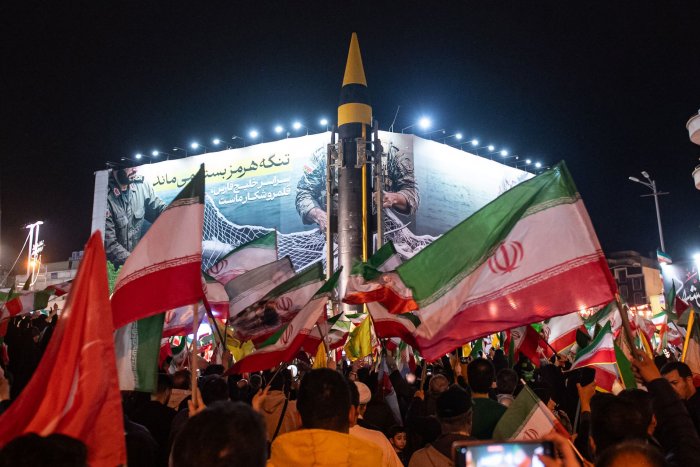
Gas prices have surged as Iran has restricted access to the important Strait of Hormuz energy transportation route, and the United States is enforcing a blockade of Iran’s ports, cutting it off from sea-based trade.
The vote was held as a two-week cease-fire was to end before President Donald Trump announced an indefinite extension amid negotiations. On Wednesday, Iran’s military claimed to have seized two cargo ships in the conflict over the waterway.
Since the war began, Democrats have been seeking to rein in Trump’s war powers, arguing the ongoing war with Iran violates the Constitution, which mandates that only Congress has the power to declare war.
Democrats in the Senate have pledged to use their powers to force weekly debates on the war as well as weekly votes, forcing Republicans to repeatedly and publicly state their position on the conflict.
The vote was held less than a week before the 60-day limit of the war passes. On April 28, the War Powers Act will compel Trump to seek congressional authorization for the war.
Sen. Lisa Murkowski, R-Alaska, has said that Trump should have sought Congress’ authorization, and appears to be leading Republican efforts to draft legislation for the continuation of the use of military force as that deadline comes.
“My focus is on the safety of America’s armed forces and the American civilians who are on the ground in the Middle East,” she said in a statement in early March, just days after the war began.
“At this point, we have little choice but to continue the military operation to degrade and destroy Iran’s capability for nuclear weapons.”
Waving a big Catla fish in his hands, Sharadwat Mukherjee went door to door canvassing for votes before Thursday’s election to the state legislature in the eastern Indian state of West Bengal.
Mukherjee is a candidate from Prime Minister Narendra Modi’s Bharatiya Janata Party (BJP), which rules nationally but has never come to power in the state, which has a greater population than Germany: more than 90 million people.
When he folds his hands to greet voters, the Catla just swings with a hook in its mouth. The big question: Can the fish also swing the election’s outcome?
Bengalis’ love for fish is legendary — on both sides of the border, in India and in Bangladesh. So much so that when a student-led uprising led to the ouster of then-Bangladesh Prime Minister Sheikh Hasina, some of the protesters who broke into her residence after she fled were seen raiding her refrigerator and walking away with fish.
But as West Bengal votes for its next government, fish has now leapt from kitchen slabs to the campaign trail, as leaders cosy up to voters in a variety of ways — and in some cases try to distance themselves from suspicions that their wins could hit the Bengali diet adversely.
Trinamool Congress (TMC) chairperson and chief minister of West Bengal state Mamata Banerjee, left, along with General-Secretary Abhishek Banerjee, gestures as they announce the party’s candidate list for the upcoming legislative assembly elections, in Kolkata on March 17, 2026 [Dibyangshu Sarkar/AFP]
What’s happening in the West Bengal election?
Nearly 68 million people in West Bengal are expected to vote for their candidate of choice on April 23 and 29, to elect 294 lawmakers to the state assembly.
The results will be declared on May 4 in the crucial state vote, which the Hindu majoritarian BJP has never governed.
A revision of the electoral list, which controversially swept away a total of 9.1 million names from the register before polling, and has been criticised for disenfranchising minorities, was among the major polling issues. Some 2.7 million people have challenged their expulsions.
Another is identity politics.
On the campaign trail, in rallies, and in interviews, the chief minister of Bengal, Mamata Banerjee, a firebrand, centrist regional leader — who has been sometimes touted as a contender for Modi’s job in New Delhi, if the opposition were to win — has doubled down on identity politics to corner the BJP, analysts say.
BJP-led governments in several states have imposed bans or restrictions on the sale of meat. Far-right mobs have carried out lynchings of Muslims in BJP-ruled states over accusations that they were transporting beef.
Banerjee, who is seeking a fourth consecutive term, has time and again warned that if the BJP were to come to power, they would “ban fish, meat, and even eggs” — effectively labelling them as outsiders, unaware of Bengali culture. The BJP has rejected these allegations.
Biswanath Chakraborty, a psephologist and political analyst in West Bengal who has authored several books on voting behaviour, told Al Jazeera that the whole issue surrounding fish had been “constructed by Mamata Banerjee.”
“For long, she has peddled that fish is parallel to Bengali politics,” he said. “In election campaigning, every issue is constructed, and Mamata is the champion of that.”
Chakraborty argued that by fiercely pushing back against these allegations, the BJP had ended up helping the governing party in Bengal make sure the debate over fish remained a campaign highlight with voters.
“They [the BJP] are entering, or rather trapped, into the discourse set by Mamata,” the analyst said.
A fishing boat is anchored in the waters of the Bay of Bengal as fish are hung out to dry along the beach at Dublar Char in the Sundarbans, November 10, 2011 [Andrew Biraj/Reuters]
Why fish, though?
“Fish is very crucial in Bengal, very crucial,” said Utsa Ray, an assistant professor at Jadavpur University, in West Bengal’s capital Kolkata. She also authored a 2015 book on Bengal’s culinary evolution in colonial India, titled Culinary Culture in Colonial India: A Cosmopolitan Platter and the Middle-Class.
“First of all, due to Bengal’s geographical location itself – along the Bay of Bengal – [and as] a place situated near rivers and streams, fish have been the most available item,” she told Al Jazeera.
Fish has also been an integral part of many rituals in Bengal on auspicious days for both Hindus and Muslims, Ray said, adding, however, that there were sects of people in Bengal who refrain from eating fish.
A 2024 study found that nearly 65 percent of people in West Bengal consume fish weekly.
Against that backdrop, Ray told Al Jazeera that Banerjee’s party was looking to leverage “regional identity or the Bengali identity”.
Banojyotsna Lahiri, a social activist and voter in West Bengal, described the BJP’s response, with candidates like Mukherjee campaigning with fish, as a “gimmick”.
“In Bengal, [the BJP] have suddenly realised that they appear as aliens with their vegetarian posturing because both fish and meat are integral to the Bengal culinary choices, caste or religion notwithstanding,” she told Al Jazeera. ”
A labourer wears a plastic sheet as it rains, while he carries Hilsa fish in a bamboo basket at a wholesale market in Diamond Harbour, in the Indian state of West Bengal, September 10, 2024 [Dibyangshu Sarkar/AFP]
What’s up with the BJP and food choices?
In the run-up to the voting on Thursday, the BJP rushed to find a senior leader who could eat a fish in front of the cameras. They finally managed to get Anurag Thakur, a member of parliament from Himachal Pradesh, to do that on Tuesday.
“Questions of what food people will eat, especially non-vegetarian [food], have been associated with the BJP’s politics to impose restrictions and dictate food options,” said Neelanjan Sircar, a senior visiting fellow at the think tank Centre for Policy Research, in Delhi.
The BJP has been dictating food choices in northern India’s Hindi-speaking belt, with its “hyper masculine, Hindutva, and vegetarianism,” said Ray. “There have been cases of lynching for eating non-vegetarian food.”
However, that falls flat in Benga.
Still, both Sircar and Ray agreed that the display of fish on the campaign trail was a novelty — even in the often-bizarre world of Indian politics.
“Creating these new images for the BJP is important,” said Sircar. “So, to create another image in voters’ minds leads to these outlandish displays.”
April 23 (UPI) — A chemical leak at a decommissioning plant in West Virginia has killed two people and left a third in critical condition, according to officials.
More than 30 people required medical treatment because of the leak Wednesday at Catalyst Refiners, a silver recovery plant in Institute, an unincorporated community west of Charleston.
Kanawha County Commissioners President Ben Salango told reporters at a press conference that workers were cleaning and decontaminating the site ahead of its shutdown when at about 9:31 a.m. EDT Wednesday a chemical reaction occurred, creating hydrogen sulfide, a flammable, colorless gas that can be fatal to those who breathe it, according to the Environmental Protection Agency.
Twenty-one people at the site were initially reported by county officials to have either been transported to the hospital or sought medical attention, a number that West Virginia Gov. Patrick Morrisey told reporters during a second press conference held Wednesday night had increased to more than 30.
“To the families we lost today, our hearts are with you and our state grieves with you,” Morrisey said.
“We stand ready to support you in every possible way.”
Among the injured were seven emergency ambulance employees who had responded to the scene, Kanawha County Emergency Management Agency Director C.W. Sigman said.
“When I got there, firefighters and EMS were doing CPR on two of the patients, trying to revive them,” he said.
He said the hydrogen sulfide was the product of nitric acid and M2000A mixing while workers were decommissioning a tank on the site. Sigman explained he was told by the plant manager that it’s “not uncommon” for workers to mix the two together as part of the decommissioning work.
“But there was something going on that was different,” he said. “But that will be for the investigators to determine.”
Officials said an investigation is ongoing and will involve local, state and federal agencies.
A one-mile-radius shelter-in-place order around the plant that was issued has since been lifted and several roads that were closed have been reopened, officials said.
Pope Leo XIV visited a prison in Equatorial Guinea on the last day of his Africa tour. The pontiff spoke to 600 detainees in the pouring rain about dignity and reconciliation, after criticising prison conditions.
April 22 (UPI) — A judge in rural Virginia on Wednesday blocked the results of Tuesday’s state referendum, barring lawmakers, at least temporarily, from implementing a new congressional map that favored Democrats in November’s midterm elections.
The five-page ruling by Judge Jack Hurley of the Tazewell County Circuit Court sided with the Republican National Committee, which was challenging the results of Tuesday’s special election.
On Tuesday, 51.4% of the more than 3 million Virginians who voted approved amending the state’s Constitution to permit a mid-decade congressional district map redraw, according to unofficial results from the Virginia Department of Elections.
The new map is expected to favor Democrats to win 10 of the state’s 11 congressional districts. The Democrats currently hold six of the state’s 11 congressional seats and Republicans hold five.
Hurley agreed with each of the RNC’s claims, including that the legislation supporting the map redraw violated General Assembly rules and that the question voters were asked — “Should the Constitution of Virginia be amended to allow the General Assembly to temporarily adopt new congressional districts to restore fairness in the upcoming elections” — was “a flagrantly misleading question to the voters, and because the ballot language did not accurately describe the proposed amendment as it was passed by the General Assembly.”
The order declares that all votes from the referendum are “ineffective,” and the state is enjoined from certifying them and instituting the new congressional district map.
“This ruling is a major victory for Virginians,” RNC Chair Joe Gruters said in a statement.
“Democrats attempted to force an unconstitutional scheme to tilt congressional maps in their favor, but the court recognized it for what it is — a blatant power grab.”
Virginia said it will immediately appeal the ruling.
“As I said last night, Virginia voters have spoken, and an activist judge should not have veto power over the people’s vote,” Virginia’s Democratic attorney general, Jay Jones, said in a statement.
“We look forward to defending the outcome of last night’s election in court.”
Virginia Democrats first moved for a mid-decade congressional map redraw in the fall after Texas, under pressure from President Donald Trump, approved a map expected to favor Republicans, kicking off a gerrymandering arms race. Four Republican-led states have approved new maps compared with two Democratic-led states, though several other states under majority leadership of each party are seeking to do likewise.
Trump — who has repeatedly warned Republicans that losing the House in November could lead to his impeachment — has taken several executive actions, including tightening voting regulations, that could affect November’s midterms and that Democrats and critics argue are unlawful measures that could help Republicans maintain their narrow House majority.
He has also repeatedly cast doubt on election legitimacy.
On Wednesday, Trump made unfounded claims that the Virginia referendum was “RIGGED,” citing mail-in voting, a common voting practice that the president has targeted as a vehicle for election fraud, though Trump himself has voted by mail in Florida.
“The Democrats eked out another Crooked Victory,” he said in a statement on his Truth Social media platform before Hurley’s ruling. “Let’s see if the Courts will fix this travesty of ‘Justice.'”
Hurley previously ruled to block the Democrats’ redistricting plan twice, though the Supreme Court of Virginia allowed the referendum to move forward amid litigation.
Democratic-led states California and Virginia pursued their redraws through voter-approved ballot measures, while GOP-led Texas, Missouri, Ohio and North Carolina passed actions through their Republican-controlled state institutions, without voter-approved measures.
Visitors look at a South Korea-developed innovative small modular reactor model during this year’s International Nuclear Energy Expo at the BEXCO exhibition center in Busan, South Korea, 22 April 2026. Photo by YONHAP / EPA
April 22 (Asia Today) — Global nuclear industry leaders gathered in Busan on Tuesday, highlighting the growing role of nuclear power in meeting surging electricity demand driven by artificial intelligence and data centers.
The Korea Atomic Industrial Forum opened its annual conference at BEXCO, bringing together policymakers, industry leaders and researchers under the theme “Nuclear energy for the AI era.”
This year’s event is being held alongside the Pacific Basin Nuclear Conference, which returned to South Korea for the first time in 14 years, and the Busan International Nuclear Industry Exhibition. Organizers expect around 19,000 participants.
The event features representatives from 19 countries and 156 companies, making it the largest exhibition of its kind to date.
Participants emphasized that rapid growth in AI technologies is fundamentally reshaping global energy demand. Electricity consumption by data centers is projected to reach 1,300 terawatt-hours by 2035, while AI-related power demand is expected to grow at an annual rate exceeding 120% through 2028.
To meet this demand, major technology companies have significantly increased investments in nuclear energy, with total spending surpassing $30 billion over the past 18 months.
Government policy is also shifting. The United States has set a target to expand nuclear capacity to 400 gigawatts by 2050 – roughly four times current levels – while about 15 new nuclear reactors are expected to come online globally in 2026.
Keynote speakers included Mesut Ozman of Fermi Nuclear, who is leading an 11-gigawatt nuclear project in Texas, and Tomas Ehler of the Czech Ministry of Industry and Trade, along with other senior officials and industry executives.
The conference also includes sessions focused on Southeast Asia, where countries such as Singapore, Malaysia and Vietnam are exploring nuclear energy adoption.
Discussions are covering a wide range of issues, including reactor lifetime extensions, carbon neutrality, artificial intelligence, energy security, small modular reactors and radioactive waste management.
South Korean companies are also expanding their global footprint. Hyundai Engineering & Construction is participating as an engineering, procurement and construction partner in negotiations for four AP1000 reactor projects, while Doosan Enerbility is supplying key components such as reactor vessels and steam generators.
The Czech Republic is also pursuing an expanded nuclear strategy, aiming to increase the share of nuclear power in its energy mix to as much as 50% to 60% through new projects at Dukovany and Temelin.
As energy demand accelerates in the AI era, industry leaders said nuclear power is increasingly being viewed as a reliable and scalable solution to ensure energy security and meet climate goals.
An old chapel stands in a field in front of cooling towers operating at the Dukovany nuclear power plant operated by CEZ AS, near the village of Dukovany, Czech Republic. Photo by MARTIN DIVISEK / EPA
April 22 (Asia Today) — The Czech Republic said its nuclear power project with South Korea is progressing on schedule, signaling potential expansion of cooperation that could extend to additional reactor construction and broader entry into the European market.
Petr Závodský, head of the Czech project company EDU II, said the Dukovany nuclear project has entered a key design phase just 10 months after the contract was signed with Korea Hydro & Nuclear Power.
“We received the first large-scale engineering package, including the conceptual design, last week,” Závodský said at a conference in Busan. “This marks a major contractual milestone, and site investigations have already been completed.”
He added that the next step is to submit licensing documents to Czech nuclear regulators within a year.
Tomas Ehler said the Czech government selected Korea Hydro & Nuclear Power based on its proven ability to complete projects on time and within budget.
“In nuclear projects, the most important factor is execution capability,” Ehler said. “The Korean proposal was evaluated as the best across all criteria.”
He emphasized that nuclear construction involves complex risks and requires close coordination between partners to identify and manage challenges early.
Officials also addressed concerns over a dispute involving France, saying the issue has effectively been resolved after being dismissed by Czech courts. They added that approval procedures with the European Commission for expanded reactor plans are ongoing and expected to be finalized by early 2027.
The Czech government reaffirmed its strategy to increase nuclear power’s share in its energy mix from about 30% currently to 50%-60% in the coming years.
A final decision on constructing additional reactors at the Temelin Nuclear Power Plant is expected next year, with progress on the Dukovany project serving as a key benchmark.
Ehler said that if both projects move forward with Korean participation, significant synergies could be achieved.
Závodský stressed that the partnership goes beyond a typical supplier relationship.
“The Czech Republic cannot build nuclear plants without Korean companies, and Korean firms cannot carry out the project without Czech partners,” he said. “This is a joint project, not just a client-supplier arrangement.”
Officials added that the cooperation could expand beyond the Czech Republic to other European countries, including Slovakia and Poland.
President of Vietnam and General Secretary of the Communist Party To Lam (2-R) and his wife Ngo Phuong Ly (R), South Korean President Lee Jae Myung (2-L) and his wife Kim Hea Kyung (L) pose for a group photo at the Presidential Palace in Hanoi, Vietnam, 22 April 2026. President Lee is on a state visit to Vietnam from 21 to 24 April 2026. Photo by LUONG THAI LINH / EPA
April 22 (Asia Today) — South Korean President Lee Jae-myung held summit talks with Vietnam’s top leader on Tuesday to strengthen cooperation in nuclear energy, infrastructure and supply chains, as both countries seek to navigate rising global uncertainties.
Lee met with To Lam in Hanoi during a state visit, where the two sides discussed expanding strategic cooperation across key sectors, including energy security and critical minerals.
The talks come as prolonged conflict in the Middle East heightens concerns over global energy supply disruptions, prompting both countries to pursue more resilient and diversified supply chains.
South Korea and Vietnam, each among the other’s top three trading partners, agreed to deepen cooperation not only in trade and investment but also in nuclear power, infrastructure, defense and other strategic industries.
The two countries have set a goal of increasing bilateral trade from $94.6 billion in 2025 to $150 billion by 2030.
Lee is expected to express support for South Korean companies seeking to participate in major Vietnamese infrastructure projects, including a new urban development project valued at about 1.1 trillion won ($740 million) and a new airport project estimated at 102.7 billion won ($69 million).
The leaders are also expected to discuss expanding cooperation in science and technology, climate response, artificial intelligence semiconductors and cultural industries, as well as boosting people-to-people exchanges such as tourism.
Ahead of the summit, Lee said relations between the two countries had reached a “comprehensive strategic partnership” following the 30th anniversary of diplomatic ties in 2022.
“Through this visit, we aim to further develop our highest-level cooperation into a more future-oriented and strategic partnership,” Lee said during a meeting with Korean residents in Vietnam.
Lee also paid tribute at the mausoleum of Ho Chi Minh before the summit and is scheduled to attend a state banquet hosted by the Vietnamese leadership.
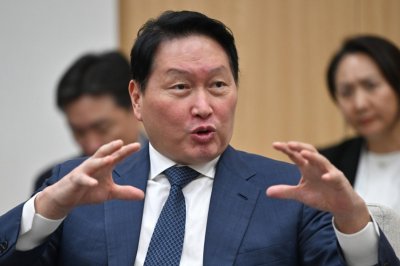
On Wednesday, Lee is expected to meet Vietnam’s prime minister and National Assembly chair, and attend a business forum with executives from major South Korean conglomerates, including Lee Jae-yong, Chey Tae-won and Koo Kwang-mo.
Two cabinet-level ministers in Peru have resigned after interim President Jose Maria Balcazar announced he would defer a decision to buy F-16 fighter jets from the United States company Lockheed Martin.
Defence Minister Carlos Diaz and Foreign Minister Hugo de Zela cited their opposition to the move in their resignation letters on Wednesday.
Recommended Stories
list of 3 itemsend of list
“A strategic decision has been taken in the area of national security with which I have a fundamental disagreement,” Diaz wrote.
The fighter jets have long been a source of controversy in Peru, where critics have questioned whether the purchase is a sign of deference to US President Donald Trump.
Last week, the left-wing Balcazar — Peru’s ninth president in a decade — announced he would leave the decision about whether to invest $3.5bn in the purchase to the country’s next elected leader.
Balcazar himself had only been in office since February, selected by Congress to replace the latest in a string of impeached presidents.
Last week, he abruptly cancelled a signing ceremony for the F-16 deal, which would have seen an initial batch of 12 new planes added to Peru’s ageing air force. The country aims to acquire 24 jets overall.
Balcazar explained he was not pulling out of the deal, but that he felt the next presidential administration should be involved in making such a hefty financial commitment.
“For us to commit such a large sum of money to the incoming government would be a poor practice for a transitional government,” Balcazar said at the time.
“We remain firm in respecting all agreements that may have been reached at the level of the armed forces, or in this case, with the relevant ministry of the air force, to carry out the corresponding negotiations.”
His decision, however, was met with pushback, both domestically and from the US. The US ambassador to Peru, Bernie Navarro, responded on April 17 with a warning posted on social media.
“If you deal with the U.S. in bad faith and undermine U.S. interests, rest assured, I, on behalf of [President] Trump and his administration, will use every available tool to protect and promote the prosperity and security of the United States and our region,” Navarro wrote.
Critics of the deal, however, have argued that Peru has received more competitive offers from French and Swedish aircraft makers like Dassault Aviation and Saab AB, respectively.
But Navarro on Wednesday denied that the US had been outcompeted. In a statement, he wrote that the “bid was made at a high level of competitiveness” and called the plane fleet “the most technically advanced fighter jets ever built”.
He also denounced the delay as an unreasonable stoppage on a deal he characterised as already signed.
“In planning the delivery of a product of this calibre, there is no such thing as an inconsequential delay,” he wrote.
“Every delay results in significant costs. The same package cannot be available in a couple of months, or even weeks.”
The decision to spend the $3.5bn on 24 fighter jets was made in 2024 under former President Dina Boluarte. The purchase was to be financed by $2bn in domestic borrowing in 2025 and $1.5bn in 2026.
In September, the US Department of Defense approved a potential sale of F-16s to Peru.
But Boluarte was removed from office in October, and her successor, Jose Jeri, lasted just four months in office before he too was impeached.
The instability in Peru’s presidency comes at a time when the Trump administration is seeking greater influence over Latin America, as part of what the US president has called his “Donroe Doctrine”.
Already, the Trump administration has pushed Peru to distance itself from Chinese investment. In February, for instance, it publicly protested against Chinese ownership in the Pacific port of Chancay.
“Peru could be powerless to oversee Chancay, one of its largest ports, which is under the jurisdiction of predatory Chinese owners,” the Trump administration wrote in a social media post.
“We support Peru’s sovereign right to oversee critical infrastructure in its own territory. Let this be a cautionary tale for the region and the world: cheap Chinese money costs sovereignty.”
Just this week, one of Trump’s allies, Representative Maria Elvira Salazar, warned that the Chinese-owned port was a danger to the US.
“That’s a direct threat in our hemisphere, right in the country of Peru,” she told a congressional committee. “For that reason, the new Peruvian government, which will be elected next June, must take it back.”
She added that, if the Peruvian government responded accordingly, “the United States will help them under the Trump administration”.
The country, however, is enmeshed in a messy presidential race replete with vote-counting delays and accusations of malpractice.
Election experts have said there is no evidence of voter fraud. But the slow vote count has left the race’s outcome undetermined, more than a week after the ballots were cast on April 12.
Right-wing leader and former First Lady Keiko Fujimori is all but assured of progressing to a run-off in June. But who will join her is uncertain.
Left-wing Congress member Roberto Sanchez is currently in the lead in the race for second place, with 12 percent of the votes tallied, but far-right candidate Rafael Lopez Aliaga, a former mayor, is close behind with 11.9 percent. Lopez Aliaga has been a vocal supporter of the Trump administration.
The final vote count for the first round of the election is expected to be delivered in May.
Traditionally, Peru’s new president should be sworn in on July 28, the country’s independence day.