From breaking news to significant developments in politics, business, technology, entertainment, and more, we deliver the stories that shape our global landscape.
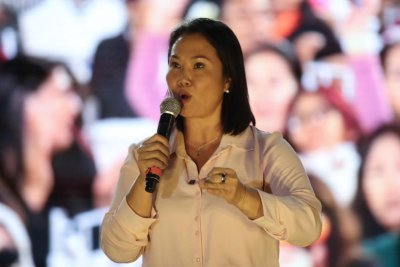
Right-wing candidate Keiko Fujimori gained the largest percentage of votes in the first round of the presidential election in Peru. Photo by Paolo Aguilar/EPA
May 15 (UPI) — Peru’s National Office of Electoral Processes finalized the official vote count Friday after 33 days of scrutiny and legal challenges, confirming that right-wing candidate Keiko Fujimori and leftist candidate Roberto Sánchez will compete in a presidential runoff June 7.
The final tally of the mid-April voting placed Fujimori first with 17.18% of valid votes.
The main battle centered on second place, where Sánchez secured 12.03% and narrowly overtook conservative candidate Rafael López Aliaga, who finished third with 11.90%, trailing by just 21,210 votes.
“The race for the runoff produced a scenario similar to 2021, with a contest between the left and the right,” electoral law expert José Tello told RPP Noticias.
The dispute over second place shifted dramatically as vote counting progressed in Peru’s remote regions. Early results favored López Aliaga, whose strongest support came from Lima, the capital and largest urban voting bloc.
However, after more than 90% of ballots had been processed, returns from rural and highland regions in southern Peru boosted Sánchez’s candidacy, repeating voting patterns seen in the 2021 election, when then-little-known rural teacher Pedro Castillo advanced to the runoff and later won the presidency.
The final outcome depended on Peru’s Special Electoral Juries, which reviewed 653 disputed and challenged voting records before electoral authorities could release the definitive results.
After the official figures were announced, López Aliaga led a protest outside the headquarters of Peru’s National Jury of Elections, rejecting the outcome, alleging fraud and demanding an international audit, according to Diario Gestión.
With the official count completed, Peru’s National Jury of Elections is expected to formally certify the runoff candidates Sunday ahead of the second-round vote that will determine who governs the country for the 2026-2031 constitutional term.
Both sides target each other despite a pause in fighting mediated in March.
Relations between Pakistan and Afghanistan have been tense since the Taliban took power in 2021.
On Monday, Pakistan summoned a senior Afghan diplomat after an attack claimed by the Pakistan Taliban, known by the acronym TPP. The group said it carried out two more attacks since, mostly against security forces.
Islamabad accuses Kabul of backing the fighters, which it denies.
The latest violence started with a major border skirmish in February. Mediation efforts by Saudi Arabia, Qatar, Turkiye and China led to a pause in the fighting.
But the two sides have continued to target each other. This includes a Pakistani strike on a drug rehabilitation centre that killed more than 250 people.
Will these breaches lead to a resumption of hostilities? And is lasting peace possible between the neighbours?
Presenter: James Bays
Guests:
Masood Khan – Former permanent representative of Pakistan, United Nations
Michael Kugelman – Senior fellow, Atlantic Council
Obaidullah Baheer – Adjunct lecturer, American University of Afghanistan
Spain, Netherlands, Ireland, Iceland and Slovenia all withdrew in protest against Israel’s participation in the midst of its war on Gaza.
Published On 16 May 202616 May 2026
As the Eurovision Song Contest took to the stage for the Saturday night final in Vienna, thousands protested outside against Israel’s inclusion, and five countries boycotted the event over the genocidal war on Gaza.
Protesters marched through the Austrian capital to highlight what critics described as a double standard. The European Broadcasting Union (EBU) organisers refused to exclude Israel, despite banning Russia following its invasion of Ukraine four years ago.
Recommended Stories
list of 3 itemsend of list
Eurovision, which attracted 166 million viewers last year, is seeing the largest boycott in its 70-year history.
Spain, the Netherlands, Ireland, Iceland and Slovenia all withdrew because of Israel’s inclusion, with some of their national broadcasters refusing to air the show.
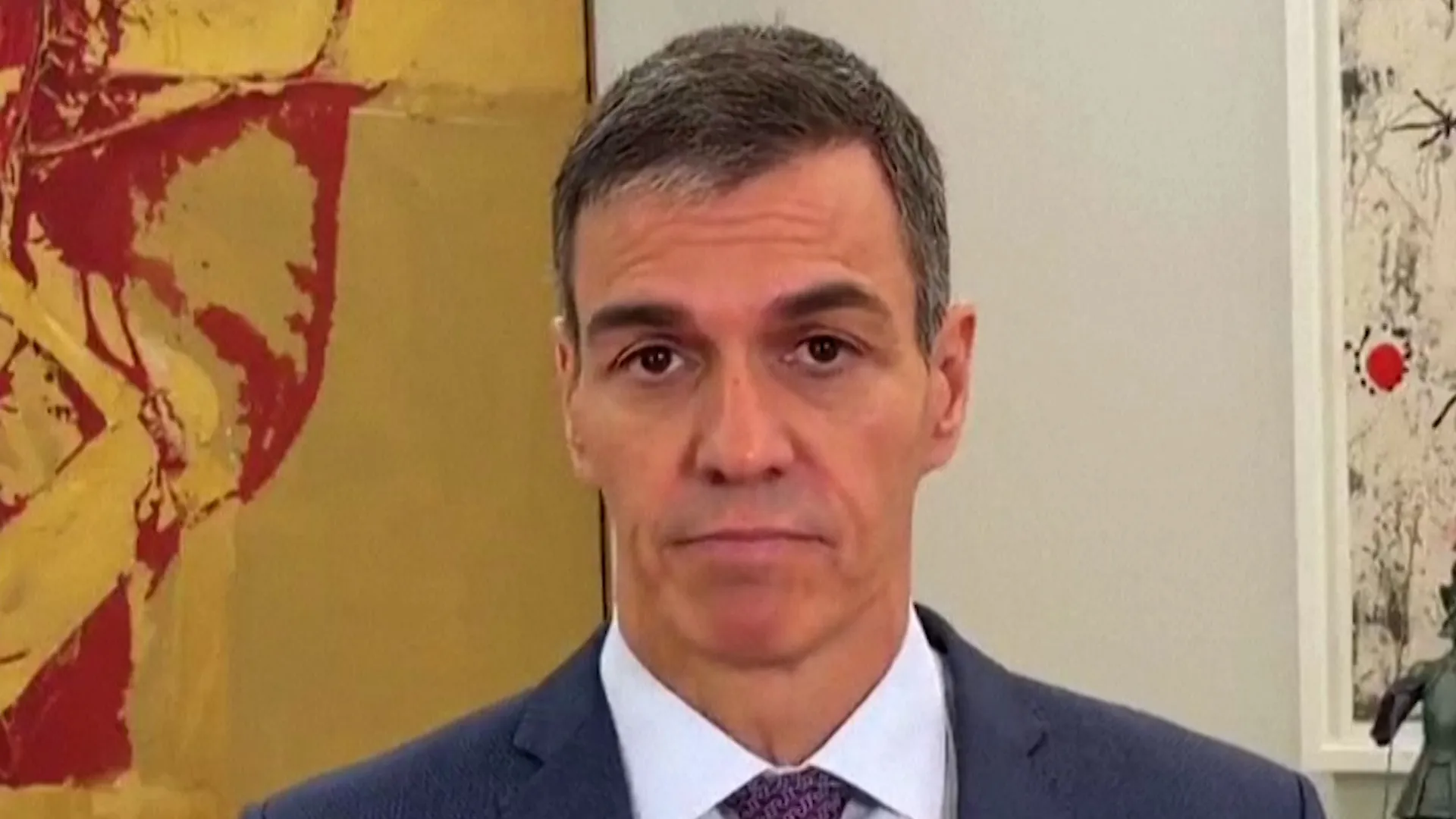
Spain’s Prime Minister Pedro Sanchez, who has emerged as one of Israel’s strongest critics in Europe, said on Friday that the decision puts Spain on “the right side of history”.
Last month, more than 1,000 artists called on fans to boycott Eurovision in an open letter against Israel’s participation. Among the artists were outspoken critics of Israel, Macklemore and Paloma Faith. Macklemore has released songs protesting against Israel’s war in Gaza.
Double standards
On Monday, Amnesty International Secretary-General Agnes Callamard denounced the EBU for allowing Israel to participate.
“The failure of the European Broadcasting Union to suspend Israel from Eurovision, as it did with Russia, is an act of cowardice and an illustration of blatant double standards when it comes to Israel,” she said.
Reporting from Vienna, Al Jazeera’s Charlie Angela said 2,000 demonstrators gathered in the city earlier on Saturday to protest against Israel’s participation.
Angela reported that protesters accused the competition of normalising Israel’s actions in Gaza, adding that Eurovision was “bending over backwards” to justify including Israel while excluding Russia.
Russia has faced a widespread cultural boycott following the Ukraine invasion. It is banned from international football tournaments, and FIFA and UEFA have excluded Russian domestic teams from all competitions, including the Champions League.
The winner of Eurovision will be selected by both a professional jury and TV viewers voting for their favourite act.
Austria won the competition last year, with Israel second.
The Israeli government was later accused of unfairly influencing voting. New rules have since been introduced.
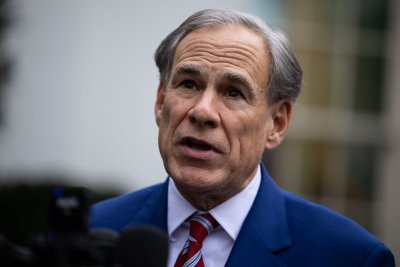
May 15 (UPI) — The Texas Supreme Court refused to remove state Rep. Gene Wu, D-Houston, from office, despite the efforts of Gov. Greg Abbott after the 2025 redistricting showdown.
Chief Justice Jimmy Blacklock, who once worked as an Abbott aide, wrote that the courts “have uniformly recognized that it is not their role to resolve disputes between the other two branches that those branches can resolve for themselves.”
“The courts’ institutional ‘reluctance … to involve themselves in contests of factional political power,’ a reluctance we reiterate and reinforce today, is a check on the judicial power ‘of ancient standing,’ not an optional preference we are at liberty to discard,” Blacklock wrote.
The fight stems from August 2025 when Texas began an effort to redistrict the state’s congressional seats to create more Republican-leaning districts. Democrats in the state’s legislature fled Texas to prevent a quorum in the House. They eventually returned, and the measure passed.
Texas House Democratic Caucus Chairman Gene Wu led the charge during the exodus of his party members, drawing the ire of Abbott. The governor had threatened to expel any Texas House members who fled the state, of whom there were more than 50.
Wu posted on X Friday: “Texas House Democrats refused to be complicit as Texas Republicans delivered Donald Trump the extra congressional seats he begged for, and now, Gov. Abbott’s final attempt at revenge has been put to rest.”
Texas House Democrats posted: “Today, we won. We’re not going anywhere.”
Republicans hold 24 of Texas’ 38 seats in the U.S. House, with one vacancy. The new map is expected to add five Republican representatives from the state.
Blacklock indicated the matter could be considered in the future.
“Whatever wrong may have been committed by the absent House members, the Texas Constitution’s internal political remedies, none of which involve the judicial branch, were sufficient to the task of restoring the House’s ability to do business,” Blacklock wrote. “Should those remedies unexpectedly prove inadequate in a future case, we might have occasion to consider whether any judicial remedy could ever be available in circumstances such as these.”
Hundreds of Tunisians have marched through the capital to denounce a worsening economic crisis and what they say is a widening crackdown on dissent. President Kais Saied is accused of undermining the country’s hard-won post-2011 revolution system.
Video shows German police violently hitting and pepper-spraying protesters as thousands gathered in Berlin to mark the 78th anniversary of the Palestinian Nakba.
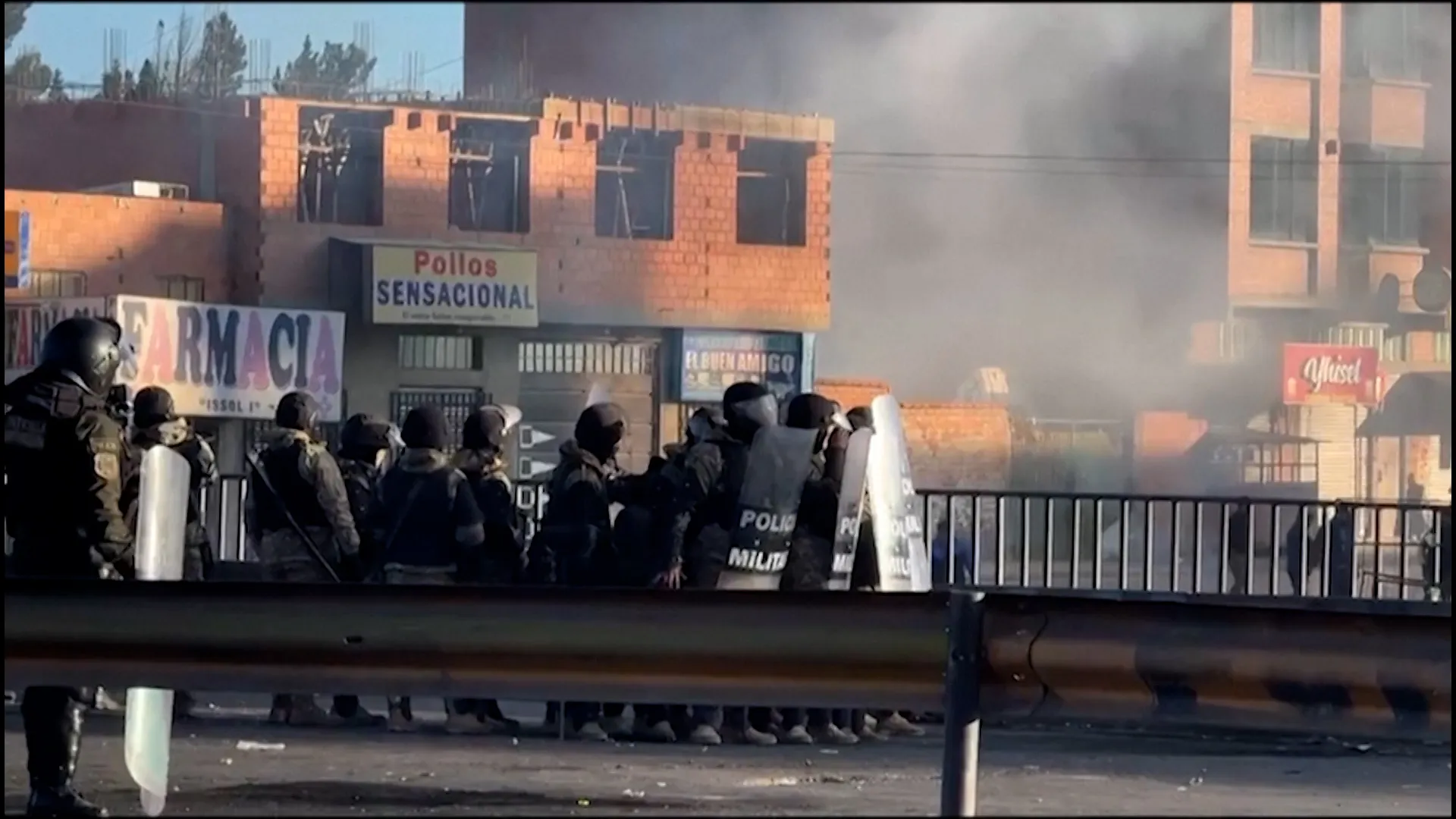
Military police in Bolivia arrested demonstrators, and used tear gas to try and disrupt road blockades after 11 days of protests. Rallies over fuel shortages, due to the effective closure of the Strait of Hormuz, blocked roads, even after a deal was signed on Friday between protesters and the government.
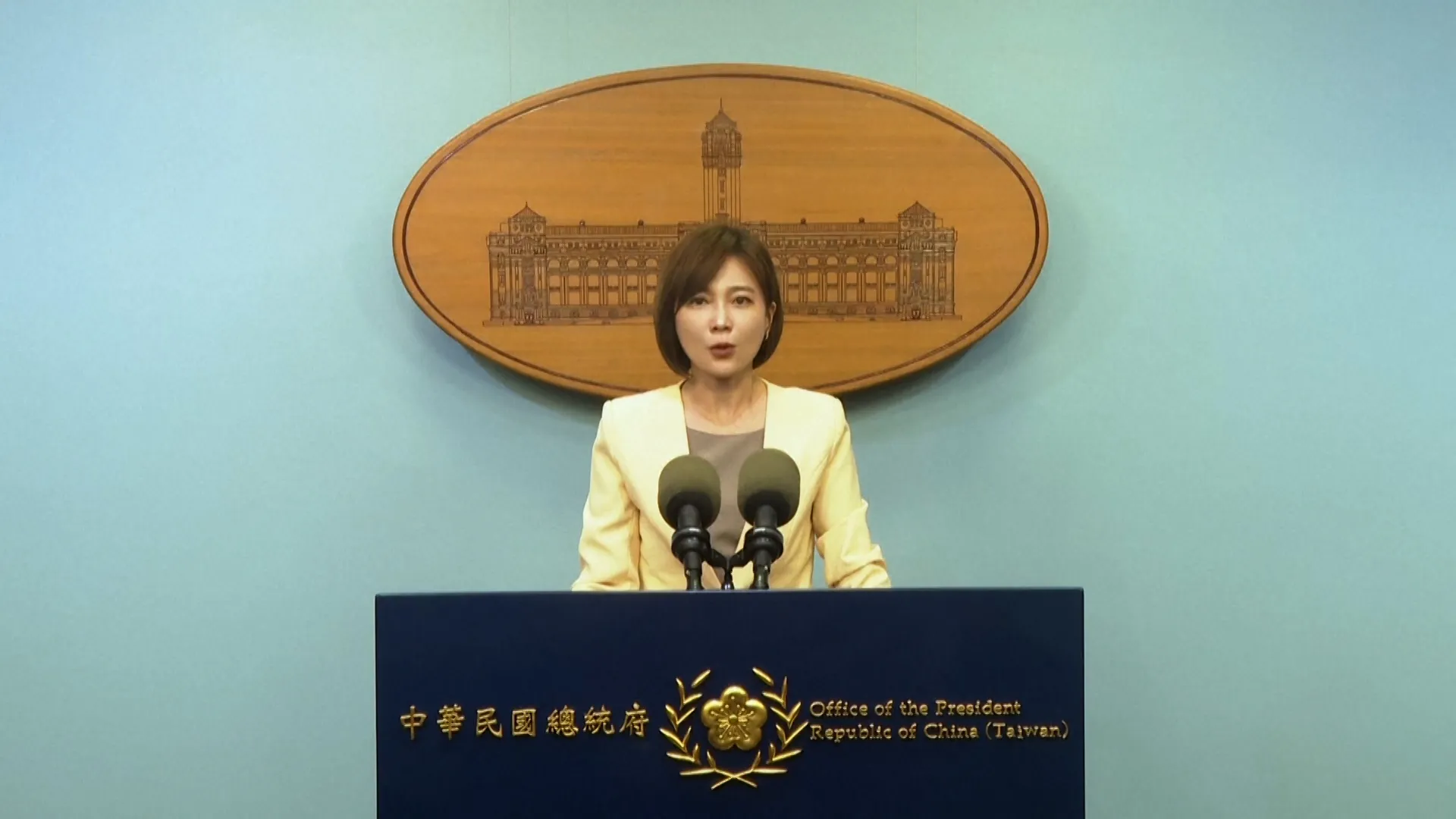
Taiwan stressed that it is a “sovereign and independent” nation after US President Donald Trump raised uncertainty over a major weapons sale to Taipei. The Chinese government pledged to deepen security cooperation with the US while insisting that Beijing has no right to claim the island.
May 16 (UPI) — The Trump administration is considering the creation of a $1.776 billion fund to compensate people allied with President Donald Trump who were investigated during the Biden administration.
The fund would be part of a settlement with Trump that would result in him dropping his lawsuit with the Internal Revenue Service over the leaking of his tax returns six years ago, ABC News and The New York Times reported.
The deal emerged after months of negotiations between the White House and Department of Justice, which had originally been aiming to directly pay Trump, but conflict of interest concerns steered toward the compensation fund.
Although Trump has the right to sue as a private citizen, his position as president means that he also can instruct agencies within the executive branch, which would make him both the plaintiff and defendant in a trial.
The concept is partially modeled on an Obama administration compensation fund for Native American farmers and ranchers that distributed $760 million from the Treasury Department’s Judgment Fund.
In addition to Trump allies’ legal fees linked to investigations during his first term, the fund also likely would be open to people charged in the Jan. 6, 2021, riot at the Capitol building that saw the building get ransacked by Trump supporters.
Critics of the plan have called it a “slush fund” for Trump and his allies.
“An insane level of corruption — even for Trump,” U.S. Elizabeth Warren, D-Mass., said of the plan earlier this week.
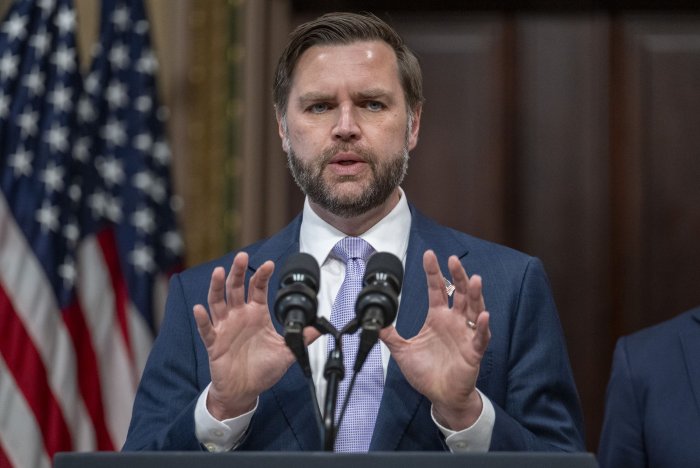
Vice President JD Vance speaks during a news conference on anti-fraud initiatives in the Indian Treaty Room of the Eisenhower Executive Office Building at the White House on Wednesday. Photo by Daniel Heuer/UPI | License Photo
Francesca Albanese speaks to Redi Tlhabi on sexual violence against Palestinians by Israeli forces and its coverage.
A recent New York Times article highlighted the sexual violence suffered by Palestinians at the hands of Israeli forces. But the allegations have been documented for years by human rights groups and Palestinian organisations. So why does the world only seem to pay attention when a Western news organisation does?
This week on UpFront, Redi Tlhabi speaks with UN Special Rapporteur Francesca Albanese about sexual violence, Israeli impunity – and the double standards of Western attention.
Thousands of protesters marched through central London on Saturday to mark the 78th anniversary of the Nakba, the forcible displacement of 800,000 Palestinians during the creation of Israel in 1948.
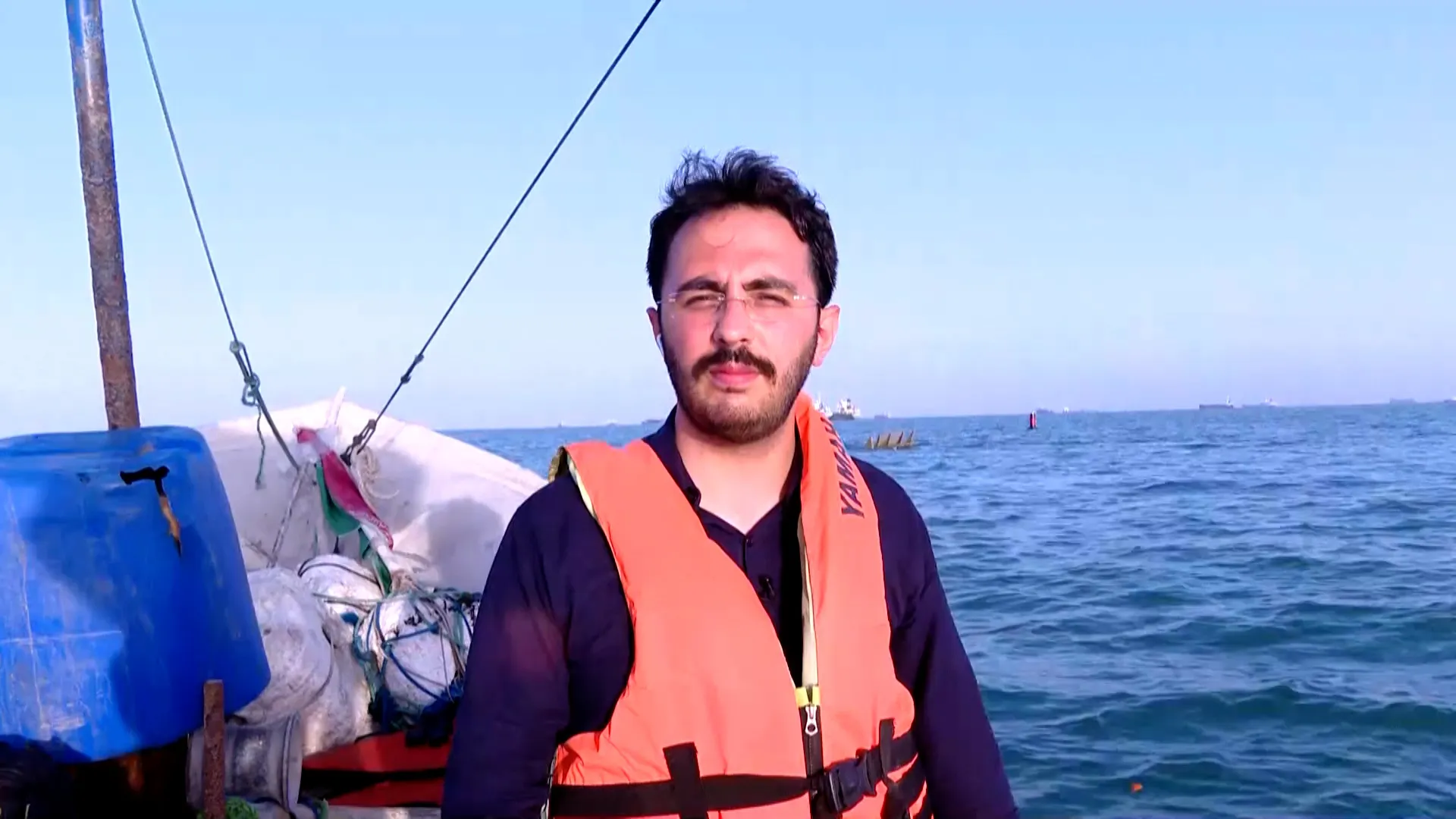
Heavy ship traffic and rising regional tensions fuel fears of a wider confrontation over one of the world’s most critical energy routes. Al Jazeera’s Tohid Asadi gets exclusive access to report from the Strait of Hormuz.
May 15 (UPI) — Texas Children’s Hospital plans to create the first “detransition clinic” in the United States as part of a settlement with the state for provided transgender care, officials announced Friday.
Texas Attorney General Ken Paxton announced the settlement, which will also require the hospital to fire and revoke the medical privileges of doctors, as well as pay a $10 million fine.
The hospital will make care at the clinic free of charge for its first five years and offer services for children to detransition to their gender assigned at birth.
Paxton investigated the Houston-based hospital in 2023 for the transgender care services it offered at the same time the state legislature was outlawing gender-affirming care for children.
“I applaud Texas Children’s Hospital for changing course and committing to being part of the solution by agreeing to form a first-of-its kind Detransition Clinic that will provide free care to those who have been victimized by twisted, morally bankrupt transgender ideology,” Paxton said in a statement.
The settlement, he said, is meant to reverse damage caused by “ideologically motivated physicians who harmed patients with their transition care, which the attorney general’s office alleged included the use of false diagnosis codes.
The hospital, in its own statement, said that it had spent the past three years cooperating with the investigation, “navigating an unconscionable campaign of mistrusts and mischaracterizations of gender affirming care.”
It said that multiple internal and external investigations support that the hospital has been compliant with all laws — before and after the state ban on transition care.
“Today, we made the difficult decision to settle with the Texas attorney general and the Department of Justice, closing a chapter that has been wrought with falsehoods and distractions,” the hospital said.
“To be clear — we are settling to protect our resources from endless and costly litigation,” it said. “This settlement will allow us to redirect those precious resources to focus on life-saving care and groundbreaking discoveries of our exceptional clinicians and scientists.”
Harare, Zimbabwe – Zimbabwe’s real estate and farming sectors are seeing a surge in diaspora-driven investment, with two young content creators quietly emerging as unexpected influencers shaping the trend.
Kundai Chitima, 31, and Kelvin Birioti, 20, each running their own social media channel, have built followings that seem to influence a growing number of Zimbabweans abroad considering return or investment.
On YouTube and Instagram, they share short videos and posts highlighting opportunities in Zimbabwe. Their popular content ranges from property tours and agricultural tips to market trend analysis.
For some in the diaspora, decisions about returning or investing increasingly appear to be shaped less by official narratives and more by social media content offering on-the-ground perspectives of life in Zimbabwe.
One of those influenced is Catherine Mutisi, who spent 17 years living in the United Kingdom working as an accountant. During that time, she had already begun investing in Zimbabwe, building two houses, buying a small plot and starting a business.
She said her thinking shifted after coming across Birioti’s content during construction.
“Gradually, my mind and plans shifted from just visiting Zimbabwe towards wanting to permanently relocate,” she said.
Mutisi said earlier narratives about Zimbabwe had made her cautious, but online content presented a different perspective.
“Previously, I was just building my houses for my family to get some money. But after watching the videos, my eyes opened,” she told Al Jazeera.
Her experience is not isolated. Both Chitima and Birioti say they hear similar accounts from the Zimbabwean diaspora reassessing their long-term plans.
UK-based Zimbabwean Nyashadzashe Nguwo, an Africa market entry and global expansion adviser, said many people like Mutisi are relocating to Zimbabwe due to what he described as a combination of emotional and lifestyle-driven factors.
“There’s a strong desire among many in the diaspora to reconnect with their roots and contribute meaningfully to national development. For some, the lower cost of living and the opportunity to build something impactful at home outweigh concerns about economic instability,” Nguwo told Al Jazeera.
Two influencers
After growing up in Chinhoyi, a town in northern Zimbabwe about 120km (75 miles) northwest of the capital, Harare, Birioti sought a new start and enrolled at Zimbabwe Ezekiel Guti University (ZEGU) in Bindura. He dropped out, however, due to financial challenges and decided to move to Harare.
There, he met Chitima and began learning content creation. From the outset, he said he avoided entertainment-style content, instead focusing on what he saw as an information gap.
“I saw a gap: the diaspora community was being scammed.”
He built his platform about real estate, rural development and farming projects, often working with diaspora Zimbabweans who granted access to their properties for documentation.
Kundai Chitima worked as a teacher in South Africa before returning to Zimbabwe in 2015 [Al Jazeera]
On the other hand, Chitima worked as a teacher in South Africa before returning to Zimbabwe in 2015.
He said workplace inequality influenced his choice: “We were earning lower than my South African colleagues. I thought of my dignity and made a decision to return home.”
Chitima returned to Zimbabwe with limited resources and a pregnant wife, entering a very different economic environment from the one he had left.
Before his time in South Africa, he had worked as a civil servant. After returning, he gradually moved into content creation, beginning in 2015 and later training younger creators who went on to build large audiences.
Today, he reflects on his platform as both educational and protective for diaspora audiences.
“I receive calls from people crying … they have been scammed.”
He says his content aims to replace uncertainty with grounded information about the realities and opportunities in Zimbabwe.
Economic pressure and unemployment
While no official figures are publicly available on the exact number of Zimbabweans leaving the country or their reasons for doing so, reports from the International Organization for Migration and independent migration studies indicate consistent migration.
The Zimbabwe National Statistics Agency (Zimstat) reported a 21.8 percent unemployment rate in the third quarter of 2024, based on strict International Labour Organization definitions.
Between 76 percent and 80 percent of workers are in the informal sector, relying on subsistence or unregulated employment. Youth unemployment is particularly acute: a 2025 World Bank report estimates it at 76.8 percent.
For many young people, stable employment is increasingly difficult to secure.
Susan Sibanda, 26, describes moving between short-term and informal work.
“I have been switching from one casual job to the next,” Sibanda said.
Her experience reflects a wider labour market where formal employment continues to shrink. In recent years, several big retailers, including Choppies, Truworths, OK Zimbabwe, and N Richards, have downsized or closed operations.
Emigration pressures remain strong
Against that backdrop, migration still features heavily in the decisions of young Zimbabweans.
Sibanda said she now considers that “leaving Zimbabwe is in my best interest”.
Economist Tashinga Kajiva said the story of emigration from Zimbabwe has largely remained high, driven by a combination of push and pull factors that encourage people to seek what they see as greener pastures.
“Zimbabwe’s economy is marked by complex and, some would say, difficult dynamics. For ordinary citizens, disposable income remains low while the cost of living continues to rise. The marginal propensity to save among working-class citizens is also low, as many are living hand to mouth,” he told Al Jazeera.
Zimbabwe’s diaspora is concentrated in South Africa, the United Kingdom, Australia, Canada, New Zealand and the United States, according to government figures.
Keeping ties alive from abroad
The economic link between Zimbabwe and its diaspora remains strong.
According to real estate agents, diaspora buyers now account for a significant share
They state that up to 50 percent of high-end residential properties sold were purchased by Zimbabweans living abroad in recent years. In some regions, land prices have risen by 20–30 percent year-on-year, a surge partly attributed to diaspora buyers.
Diaspora investment is also noticeable in agriculture. Reports from the Zimbabwe Farmers Union indicate that about 10-15 percent of new farm leases over the past two to three years involve diaspora investors, with activity concentrated in Mashonaland Central and Matabeleland regions.
Remittances reached $1.7bn in 2023 and continue to rise. In 2025, Zimbabweans abroad sent $2.45bn home, with the UK and South Africa the largest sources, according to government data. A significant portion of these funds is reportedly invested in real estate, agriculture, and small businesses.
This reflects both practical necessity and emotional attachment to home, as well as a preference for investing in familiar environments, according to economists.
Still, return seems to generate mixed reactions.
Some diaspora Zimbabweans appear cautious, citing political developments and recent protests abroad over governance concerns.
For them, financial ties to Zimbabwe are still strong, but physical return remains uncertain.
With social media reshaping perceptions of life in Zimbabwe, many in the diaspora remain caught between investment opportunities and the country’s economic realities.
As content creators like Chitima and Birioti reshape how some see opportunity in Zimbabwe, domestic economic pressures appear to be pushing others away, leaving the country’s relationship with its diaspora open-ended and still evolving.
“For many Zimbabweans living abroad, investing back home is not just about profit – it’s about staying connected to their roots and shaping the future of their communities,” said Chitima.
A Hyundai Ioniq 9 uses a bidirectional charger installed at the home of a customer participating in Hyundai Motor Group’s V2G pilot service in Hangyeong, Jeju Island. /Courtesy of Hyundai Motor Group
May 15 (Asia Today) — Hyundai Motor Group said Friday it has launched a vehicle-to-grid pilot service for general customers on Jeju Island, using electric vehicles as mobile energy storage systems.
Vehicle-to-grid technology, or V2G, allows electricity to move both ways between an electric vehicle battery and the power grid. The system can store surplus power in EV batteries and send it back to the grid when demand rises.
The pilot program will involve 40 Jeju residents who own Hyundai Ioniq 9 or Kia EV9 vehicles equipped with V2G functions. Hyundai Motor Group selected customers in cooperation with the Jeju provincial government.
The company will provide bidirectional chargers free of charge and cover EV charging costs during the trial period.
Hyundai said it selected participants with different occupations and residential locations to test the service under a range of real-life conditions. The participants include early adopters interested in clean energy and new technology.
The project fits Jeju’s power structure because the island relies heavily on wind and solar energy. Surplus electricity generated during the day can be stored in EV batteries and supplied back to the grid at night when demand increases.
Hyundai Motor Group previously operated a V2G demonstration project in Jeju with mobility platform Socar in the second half of last year. The latest pilot expands the test to ordinary customers.
Industry officials say V2G commercialization could turn electric vehicles into key assets in the energy industry, supporting local energy independence and distributed power systems rather than relying only on centralized power plants.
“We expect this pilot service, directly involving Jeju residents, to contribute to local energy production and consumption in the region,” a Hyundai Motor Group official said. “It will also play a meaningful role in achieving Jeju’s 2035 carbon neutrality vision.”
A ship was observed waiting to transit the Strait of Hormuz in the Arabian Sea off Muscat, Oman, Tuesday, May 12, 2026. The fragile cease-fire between the United States and Iran conditioned on opening the strait—has kept maritime traffic at very low levels, as tensions rise in negotiations between the two sides. Photo by Ismael Mohamad/UPI | License Photo
May 15 (Asia Today) — Leaders from 26 countries, including South Korea, issued a joint statement supporting the restoration of normal operations through the Strait of Hormuz, according to a CNN report.
The statement came as U.S. President Donald Trump and Chinese President Xi Jinping met in Beijing.
The leaders of South Korea, Britain, France, Japan, Canada, Qatar and Bahrain were among those who reaffirmed support for freedom of navigation through the strait.
“We will use the full range of diplomatic, economic and military capabilities to support freedom of navigation through the Strait of Hormuz,” the leaders said in the statement.
They said navigation must remain free under the U.N. Convention on the Law of the Sea and international law.
The leaders also pledged support for an independent and strictly defensive multinational military mission, including mine-clearing operations, to achieve that goal.
They said any military mission would be carried out only in a permissible environment and would complement diplomatic efforts to reduce tensions.
Trump, who is visiting China, said in a Fox News interview after his summit with Xi that the Chinese leader also supports reopening the Strait of Hormuz.
“President Xi wants the Strait of Hormuz open,” Trump said, adding that Xi offered to help “if he can be of any help.”
As criticism of Israel mounts over its wars on Gaza, Lebanon and Iran, along with the escalating settler violence in the occupied West Bank, the country is ramping up its PR offensive.
From a carefully managed appearance of Benjamin Netanyahu on CBS’s 60 Minutes to a major expansion of Israel’s Hasbara operation, the push includes pouring money into digital campaigns and media messaging.
The goal is to reverse the collapse of public support for Israel, especially in the US, but no amount of spin can make audiences unsee what they have watched in real time.
Contributors: Miriyam Aouragh – Professor of digital anthropology, University of Westminster Matt Lieb – Host, Bad Hasbara podcast Emily Schrader – Journalist, ILTV News Oren Ziv – Reporter, Local Call
On our radar
Israeli officials have dismissed a recent New York Times report on sexual violence against Palestinians as “blood libel”.
But while the government denounces the allegations, many of the claims in the report have been openly discussed in the Israeli media.
Nicholas Muirhead reports.
Zaragoza Data Farms
The generative AI boom is prompting a global race to build vast, energy-hungry data centres. In Spain’s Aragon region, authorities have welcomed tech giants and the jobs, investment and digital transformation they claim to bring.
But behind the glossy narrative lies a different reality – one in which enormous facilities consume natural resources and exploit legal loopholes, often at the expense of the communities that live alongside them.
Featuring: Alonso Llorente – Journalist, Arainfo Pablo Jimenez Arandia – Investigative reporter Mar Vaquero – Vice president, Aragon Minister of Economy, Employment & Industry
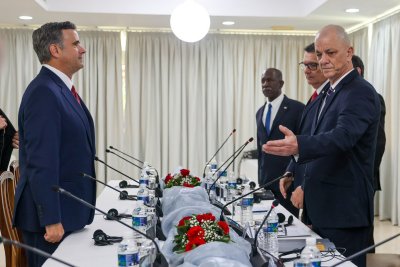
May 15 (UPI) — CIA Director John Ratcliffe’s visit to Havana this week opened a new political chapter inside and outside Cuba, with analysts and opposition figures interpreting the meeting as a sign of direct pressure from Washington on a regime battered by massive blackouts, fuel shortages and an increasingly deep economic crisis.
The trip marked an unusual development in bilateral relations. The Cuban government confirmed that a U.S. delegation led by Ratcliffe met with his counterpart Thursday at Cuba’s Interior Ministry.
Washington had requested the meeting, which was approved by “the leadership of the Revolution,” according to the state-run newspaper Granma.
The CIA released photos of the meeting — “the most significant milestone so far in the two months of opaque negotiations taking place between Washington and Havana,” Spanish newspaper El País reported.
In another twist, according to reports by CBS News, USA Today and NBC News, a U.S. Justice Department official said the United States is considering formally charging former Cuban President Raul Castro over a 30-year-old incident in which the Cuban government shot down two aircraft operated by Cuban exile group Brothers to the Rescue.
The Ratcliffe visit, which lasted a brief time, was not announced in advance. He him Air Force plane flew from Joint Base Andrews in Maryland and returned hours later.
For decades, the Cuban government systematically accused opposition figures, independent journalists and dissidents of acting as agents or collaborators of the CIA. However, it was the regime itself that officially announced the meeting with agency director.
“The Cuban government announced the CIA visit first. For Cubans, that means important things are happening or about to happen,” Sebastián Arcos, acting director of the Institute for Cuban Studies, told UPI.
“This increases expectations and anxiety inside and outside the island.”
Energy has become the central focus of Cuba’s crisis. Ratcliffe arrived on the island precisely as Cuba declared a total energy collapse, formally running out of diesel fuel because of the U.S. naval blockade, while multiple technical failures at thermoelectric plants have left millions of people without electricity for up to 22 hours a day.
According to posts shared by activists and users on Facebook, protests have spread across the Cuban capital for four consecutive nights, while reports of internet outages in areas where gatherings have taken place have increased, Diario de Cuba reported.
Professor Jorge Piñón, director of the Latin America and Caribbean Energy Program at the University of Texas’ Energy Institute, said the visit by the CIA chief to Cuban territory “puts on the table what the rules of the game are from the point of view of the United States,” amid a crisis he described as “hour zero” for Cuba’s energy system.
Piñón told UPI that Cuba has practically exhausted its fuel reserves at storage facilities, ports and refineries, while thermoelectric plants operate on the verge of technical collapse.
The consequences extend far beyond the lack of electricity.
Piñón warned that the crisis affects ground transportation, water and food distribution, agriculture and even humanitarian operations by religious organizations that lack diesel to transport aid.
The deterioration of the electrical system also stems from structural problems accumulated over decades. Cuba depends on thermoelectric plants more than 40 years old, many adapted to burn extra-heavy domestically produced oil with high levels of sulfur and contaminating metals.
According to Piñón, that fuel accelerates the deterioration of already obsolete equipment, generating a “vicious cycle” of temporary repairs and new breakdowns.
He said the island produces about 40,000 barrels a day of heavy crude, but needs about 100,000 barrels a day to cover its energy demand, leaving a critical deficit of refined fuels mainly intended for transportation.
At the same time, Professor Raúl Rodríguez, director of the Center for Hemispheric and United States Studies at the University of Havana, described a society marked by daily exhaustion, uncertainty and the progressive deterioration of living conditions.
He told UPI that prolonged blackouts affect food preservation, access to drinking water and hospital operations.
The crisis also has deep economic consequences. Tourism, one of Cuba’s main sources of foreign currency, operates at less than 50% of capacity, affecting employment and the flow of resources into the country.
Rodríguez estimated that about 300,000 workers linked to the tourism sector face direct impacts from the economic slowdown.
Additional problems include health and environmental issues stemming from the lack of fuel for fumigation, garbage collection and basic urban services. The academic warned of growing risks of mosquito-borne diseases such as dengue and chikungunya.
Despite intensifying social unrest, the experts agreed that the crisis will not necessarily lead to an immediate political change.
Rodríguez argued that protests over blackouts and shortages “do not constitute, by themselves, a trigger capable of provoking regime change,” due to the absence of an organized political alternative with social legitimacy.
Piñón, meanwhile, said that although signs of social exhaustion exist, the country currently lacks leadership capable of channeling a political transition or with enough authority to organize a possible post-crisis scenario.
According to press reports, the U.S. demands delivered directly by the CIA director focus on an ultimatum conditioned on deep and immediate structural changes.
Washington is demanding that the Cuban government carry out political reforms toward democratization, release all political prisoners and fully open the economy to the private sector.
“From the information that has emerged, the CIA director traveled to Cuba to deliver an ultimatum: either you move, or the United States will,” the Institute for Cuban Studies’ Arcos said.
The reaction of Miguel Díaz-Canel’s government has reflected pragmatism forced by extreme economic suffocation and the collapse of basic services on the island.
Although Havana agreed to receive the CIA delegation to avoid a violent social outcome, it formally maintains its rhetoric defending national sovereignty, rejecting political conditions that threaten the socialist system.
Cuban officials used the meeting to present evidence that the island does not represent a threat to U.S. security, demanding in return its removal from the list of state sponsors of terrorism and an end to the naval blockade preventing fuel shipments from reaching the island.
Describing the country’s daily deterioration, Cuban writer Leonardo Padura recently portrayed Cuba as a nation where old social protections have collapsed, while the political structure remains intact.
In an essay published on the website La Carta de las Ideas, Padura recalled that July 2021 protests represented an unprecedented social explosion on an island historically marked by strong surveillance and state control mechanisms.
The government response, he wrote, was a severe “order to fight” accompanied by exemplary judicial proceedings aimed not only at punishing, but also at discouraging future public expressions of dissent.
Padura said that precedent helps explain why, despite economic and social conditions now being even worse than in 2021, street demonstrations have been more limited than many outside Cuba expected.
Another expert thinks the United States will dominate as Cuba sinks into crisis.
“The CIA currently has the upper hand. Without the CIA, [President Donald] Trump can do nothing, and [Secretary of State Marco] Rubio knows nothing because he has never even been to Cuba,” Lillian Guerra, professor of Cuban and Caribbean history and director of the Cuba Program at the University of Florida, told UPI.
Guerra argued that the agency holds a dominant position over the Cuban state because of its understanding of the regime’s “theater and discourse of lies and subterfuge” amid the crisis.
Guerra said “nobody is buying” the government’s official explanations anymore and warned that Cuban authorities “are running out of time” as public frustration grows across the island.
She added that the meeting shows Washington is negotiating with Cuba’s “real leaders” linked to the Ministry of the Interior, a structure she described as more powerful than the Revolutionary Armed Forces and primarily focused on preserving political control.
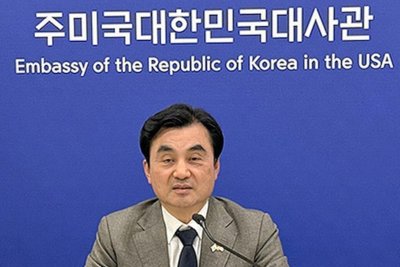
South Korean Defense Minister Ahn Gyu-back attends a press conference for South Korean correspondents at the South Korean Embassy in Washington, DC, USA, 12 May 2026 (issued 13 May 2026). Photo by YONHAP / EPA
May 15 (Asia Today) — South Korea may announce a basic plan for acquiring nuclear-powered submarines as early as this month, officials and diplomatic sources said Friday.
According to foreign policy and security sources, the government is preparing a “Korean nuclear-powered submarine basic plan” that would outline its core principles and a timeline for acquisition.
A Defense Ministry official said the plan is being developed in coordination with relevant agencies but said the exact schedule could not be confirmed.
The official also said it has not been decided whether the Defense Ministry will lead the announcement.
Although no specific date has been set, some observers expect the plan could be released before the Shangri-La Dialogue, an Asian security forum scheduled to take place in Singapore later this month.
The plan is expected to include the defensive nature of the submarines, their missions and roles, a detailed timeline, fuel procurement and financing plans and South Korea’s commitment to complying with the Nuclear Non-Proliferation Treaty.
If announced, the plan would mark a formal declaration of the government’s intention to pursue nuclear-powered submarines.
A joint fact sheet released after a recent South Korea-U.S. summit said the United States had approved South Korea’s construction of nuclear-powered submarines and would work closely with Seoul, including on fuel procurement.
Defense Minister Ahn Gyu-back recently visited the United States and discussed cooperation on nuclear-powered submarine construction with U.S. defense officials.
1 of 5 | Chicago Bulls guard Michael Jordan jams for two of his game-high 50 points during fourth-quarter action November 21, 1997, to defeat the Los Angeles Clippers 111-102 in two overtimes. On May 16, 1985, the NBA named Jordan rookie of the year after he led all players in points. File Photo by Jim Ruymen/UPI | License Photo
On this date in history:
In 1804, the French Senate declared Napoleon Bonaparte emperor.
In 1871, U.S. Marines landed in Korea in an attempt to open the country to foreign trade.
In 1920, Joan of Arc was canonized as a saint of the Roman Catholic Church.
In 1929, the Academy of Motion Picture Arts and Sciences had its first Academy Awards ceremony. Wings was named Best Picture in the event at the Hollywood Roosevelt Hotel.
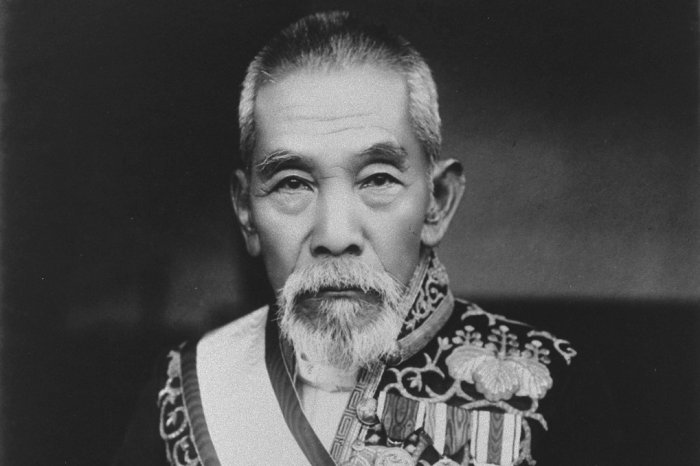
In 1932, following the assassination of Premier Inukai Tsuyoshi, fears began to spread that a militarist “super-party” was beginning to take shape in Japan.
File Photo courtesy of the Japan’s National Diet Library
In 1969, the unmanned Soviet spacecraft Venera 5 landed on Venus.
In 1985, the NBA named the Chicago Bulls’ Michael Jordan rookie of the year after he led all players in points.
In 1991, Queen Elizabeth II became the first British monarch to address a joint session of Congress.
UPI File Photo
In 1997, Mobutu Sese Seko — who ruled Zaire for more than 30 years, allegedly looting it of billions of dollars — fled the capital as rebel forces advanced. He died in exile less than four months later.
In 2014, election results in India gave Narenda Modi and his opposition Bharatiya Janata Party a major victory elevating him to prime minister.
In 2019, the final episode of The Big Bang Theory aired after a 12-season run. The comedy series starred Jim Parsons (Sheldon), Johnny Galecki (Leonard), Kaley Cuoco (Penny), Simon Helberg (Howard), Kunal Nayyar (Raj), Melissa Rauch (Bernadette) and Mayim Bialik (Amy).
Spanish Prime Minister Pedro Sanchez has defended Spain’s boycott of the Eurovision Song Contest over Israel’s participation, saying ‘silence is not an option’ while citing the genocide in Gaza and the ‘illegal war’ on Lebanon.




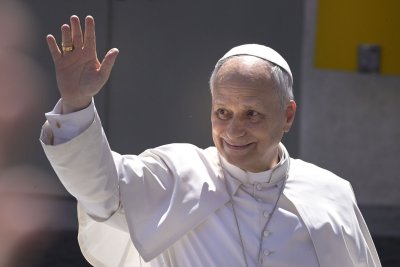
 Pope Leo XIV will travel to France in September, the Vatican announced Saturday. The apostolic journey is scheduled for Sept. 25-28.






![Kundai Chitima worked as a teacher in South Africa before returning to Zimbabwe in 2015 [Al Jazeera]](https://i0.wp.com/occasionaldigest.com/wp-content/uploads/2026/05/Kundai-Chitima-showcasing-a-modern-house-and-projects-in-rural-Zimbabwe-1778849291.jpeg?w=640&ssl=1)