From breaking news to significant developments in politics, business, technology, entertainment, and more, we deliver the stories that shape our global landscape.
May 31 (UPI) — Newark, N.J., Mayor Ras J. Baraka instituted a curfew early Sunday in the area around an immigration detention facility where protesters have gathered in reaction to a hunger and labor strike there.
Baraka’s announcement came amid growing conflict between those supporting the hunger strikers at Delaney Hall detention facility and those who support the Trump administration’s immigration crackdown. The strike has been in effect since May 22 with detainees protesting what they describe as inhumane conditions at the facility.
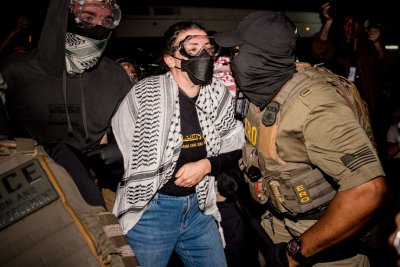
Supporters of the strikers have gathered outside the facility since the start of the strike, and some have gotten into scuffles with Immigration and Customs Enforcement officials, prompting anti-immigration protesters to join the demonstrations.
“Due to the escalating situation at Delaney Hall and the increasing need for police intervention, immediate action is required to protect public safety,” Baraka said in a statement. “Multiple individuals have already been arrested and found in possession of weapons, underscoring the seriousness of the threat.”
Baraka said the curfew went into effect at midnight and applied to a half-mile surrounding the facility. He closed Doremus Avenue to all pedestrian traffic and limited vehicle traffic to those with official business in the area.
“This curfew will remain in effect nightly from 9 p.m. to 6 a.m. until further notice,” the mayor said.
In his statement, he said those violating the curfew will be issued a warning, and non-compliance would “result in removal from the area and the issuance of appropriate summonses and/or further legal action.”
Defence Minister Shinjiro Koizumi accuses China of lacking military transparency and stresses the importance of dialogue for regional stability.
Published On 31 May 202631 May 2026
Japanese Defence Minister Shinjiro Koizumi has dismissed claims that Tokyo is pursuing “new militarism” and accused China of rapidly expanding its military with limited transparency.
China continues to increase its defence spending at a high level, Koizumi said on Sunday at the Shangri-La Dialogue in Singapore.
Recommended Stories
list of 3 itemsend of list
“China’s external approach and military activities are matters of serious concern for Japan and the international community at the same time,” he added.
“Think about it. There’s a country that has a huge arsenal of nuclear weapons and strategic bombers. Japan has neither of such weapons, and yet Japan is labelled ‘new militarism’?”
Koizumi said Japan’s record since World War II “speaks for itself”, citing its adherence to international law and commitment to the United Nations Charter alongside efforts to uphold a “free and open international order”.
In May, China’s Ministry of Foreign Affairs called on Asia Pacific countries to be vigilant and “jointly resist the reckless actions of Japan’s neo-militarism”.
At the Singapore forum, Chinese delegate Major General Meng Xiangqing criticised Japan.
“I deeply doubt whether a country that has not thoroughly eradicated the toxic legacy of militarism is qualified to talk extensively about defence cooperation on international occasions and whether it can win the trust of the international community, especially the Asian countries it once invaded,” he said.
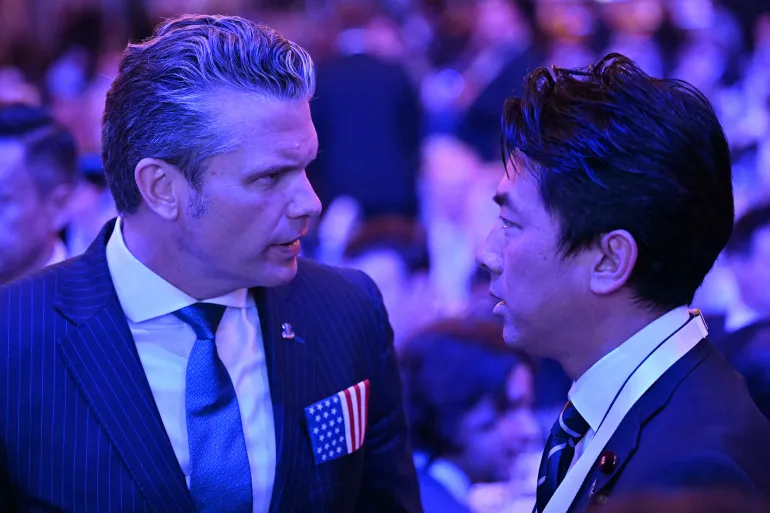
US Secretary of Defense Pete Hegseth, left, speaks with Koizumi during the 23rd Shangri-La Dialogue on May 29, 2026 [Jam Sta Rosa/AFP]
Ties between Japan and China sank to their worst level in years after Japanese Prime Minister Sanae Takaichi warned in November that a hypothetical Chinese attack on Taiwan could draw a Japanese military response.
China claims Taiwan as its own territory over the objections of the island’s government.
Koizumi said transparency comes from “discussion and dialogue” and lamented that China had not sent its defence minister to the conference, but he insisted Japan remains open to engagement.
“We keep the door open,” he said, reaffirming Japan’s commitment to dialogue with China and other regional players to foster stability.
As China has been rapidly expanding and modernising its military, Japan has been reshaping its own defence policy. Last month, Takaichi’s cabinet scrapped a ban on lethal weapons exports, a major change in its post-war pacifist policy.
Japan pushes for unity
Separately on Sunday, Koizumi praised US Secretary of Defense Pete Hegseth for his commitment to the Asia Pacific but at the same time stressed the continued need for strong coalitions globally.
“Division weakens deterrence. Unity strengthens deterrence,” he told the conference in Singapore.
“If gaps emerge among the United States, Europe and allies and like-minded countries, forces which take it as an opportunity will surely come in,” he said.
“We must prevent such a situation. We must keep our cooperation going on. Now is the time to make our cooperation even stronger.”
US President Donald Trump has been harsh about fellow members in NATO, and the comments at the Shangri-La conference came the day after Hegseth again chided Western European allies at the forum for not devoting enough resources to defence.
In 2025, Brazil’s deadliest police raid killed 120 people and exposed a pattern of mishandled evidence and impunity.
On October 28, 2025, more than 2,500 police officers launched a massive raid on two favelas in Rio de Janeiro. They were targeting leaders of Red Command, one of Brazil’s largest drug trafficking groups. By the end of the day, more than 120 people were dead, making it Brazil’s bloodiest police operation.
In the aftermath, police withdrew without securing the scene. Bodies were left behind, and forensic teams never arrived. Residents recovered the dead themselves, which erased critical evidence of what happened.
Through exclusive reporting, Fault Lines reconstructs the case of Douglas de Almeida da Silva, a father and small business owner shot by police that night. Officers say he fired first, but forensic analysis and witness footage raise serious questions about their account.
The raid reflects a broader pattern in Rio, where police routinely fail to preserve crime scenes, undermining investigations and shielding officers from accountability.
Despite repeated deadly raids, gangs continue to control the favelas, raising questions about whether these operations curb the violence or simply add to it.
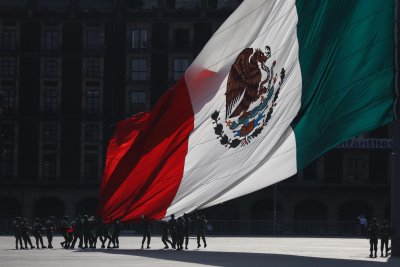
Mexico approved a constitutional reform that adds foreign intervention or interference in electoral processes as a new ground for annulling elections. File Photo by Sashenka Gutierrez/EPA
May 29 (UPI) — Mexico’s Congress approved a constitutional reform that adds foreign intervention or interference in electoral processes as a new ground for annulling elections.
The measure, promoted by the ruling party, the National Regeneration Movement, or Morena, has sparked debate over national sovereignty, electoral security and the limits of legal interpretation in future elections.
The reform amends Article 41 of the Constitution to establish that an election may be annulled when acts of foreign intervention or interference that influence electoral results are proven.
The initiative was initially approved by the Chamber of Deputies and later received Senate approval. It must now be ratified by at least 17 state legislatures before it can take effect.
The proposal was introduced by Ricardo Monreal, Morena’s coordinator in the Chamber of Deputies, who argued that Mexican law had until now lacked a specific sanction for cases of foreign interference in elections.
“Currently there is no sanction for anyone who seeks to invade our country or interfere in electoral processes,” Monreal said during the legislative debate, according to El Universal.
The lawmaker said the annulment could only be applied when there is “full and conclusive evidence” that foreign governments or external agents intervened in an election.
The Chamber of Deputies approved the reform with 307 votes in favor, 128 against and one abstention.
The ruling coalition argues that the measure seeks to strengthen national sovereignty against possible attempts at external influence, including irregular financing, disinformation campaigns, digital operations or political pressure originating abroad.
President Claudia Sheinbaum publicly backed the initiative and said there is a “real risk” of foreign intervention in future Mexican electoral processes.
Several local media outlets reported that the government has linked the reform to an international environment marked by growing geopolitical disputes, digital influence campaigns and external pressure on Latin American governments.
However, opposition parties questioned both the substance of the reform and the speed with which it advanced through Congress.
Rubén Moreira, parliamentary leader of the Institutional Revolutionary Party, warned that the initiative was introduced only days before it was debated and argued that there was not enough time to thoroughly analyze the legal implications of concepts such as “interference” or “foreign intervention,” according to reports by El País.
Lawmakers from the National Action Party and the Citizens’ Movement party also warned of the risk that the new provision could be used discretionarily to challenge election results under broad interpretations of what constitutes foreign influence.
During the legislative debate, Morena rejected those accusations and said the reform is not intended to censor news media, social media platforms or individual expressions.
Monreal said that a news article, an interview or a social media post would not, by themselves, be sufficient grounds to justify the annulment of an election.
He also said secondary legislation will be needed to precisely define the legal circumstances under which foreign intervention occurred and which authorities will be empowered to determine it.
The debate comes amid growing political tensions between Mexico and United States over issues related to drug trafficking, border security and regional cooperation.
It also coincides with a broader debate across Latin America over the influence of foreign governments, transnational digital campaigns and mechanisms to protect electoral sovereignty.
In 1790, President George Washington signed a bill creating the first U.S. copyright law.
In 1859, construction concluded and bells rang out for the first time from London’s Big Ben clock tower.
In 1889, a flood in Johnstown, Pa., left more than 2,200 people dead.
In 1902, Britain and South Africa signed a peace treaty ending the Boer War.
In 1916, the Battle of Verdun passed the 100-day mark. It would continue for another 200 days, amassing a casualty list of an estimated 800,000 soldiers dead, injured or missing.
In 1921, the Tulsa race massacre was set off when a mob of White residents attacked the Black residents and businesses in the Greenwood District. The total number of those killed in the violence is unknown, with an Oklahoma commission established in 2001 estimating between 75 to 100 people dead. The number of displaced Black residents was far greater.
In 1940, a thick fog hanging over the English Channel prevented the German Luftwaffe from flying missions against evacuating Allied troops from Dunkirk.
Troops evacuated from Dunkirk on a destroyer about to berth at Dover, England, on May 31, 1940. File Photo courtesy of the Imperial War Museum
In 1985, seven federally insured banks in Arkansas, Minnesota, Nebraska and Oregon were closed by the Federal Deposit Insurance Corp. It was a single-day record for closings since the FDIC was founded in 1934.
In 1996, Israeli voters elected opposition Likud Party leader Benjamin Netanyahu as prime minister.
In 2003, Eric Robert Rudolph, the long-sought fugitive in the 1996 Atlanta Olympics bombing and attacks on abortion clinics and a gay nightclub, was arrested while rummaging through a dumpster in North Carolina. Rudolph, whose bombings killed two people and injured many others, was sentenced to four life terms in prison.
In 2005, Mark Felt admitted that, while No. 2 man in the FBI, he was “Deep Throat,” the shadowy contact whose help to Washington Post reporters Bob Woodward and Carl Bernstein on the 1972 Watergate break-in led to U.S. President Richard Nixon’s resignation.
In 2014, U.S. Army Sgt. Bowe Bergdahl, 28, captured in Afghanistan nearly five years earlier, was released by the Taliban in exchange for five detainees held at the Guantanamo Bay detention camp in Cuba. In March 2015, the Army announced that Bergdahl had been charged with desertion.
In 2019, a shooting a a Virginia Beach, Va., municipal center left 12 victims and the shooter — a disgruntled former employee — dead.
In 2021, China announced plans to allow couples to have a third child, scrapping its controversial two-child policy amid a slumping birth rate and aging population.
US officials indicate Tehran may take days to respond to Trump’s tougher terms on a potential agreement to end the nearly three-month war.
Published On 31 May 202631 May 2026
President Donald Trump sought to change several terms of a proposal to end the US-Israel war on Iran, according to media reports in the United States, as a finalised deal remains elusive.
The New York Times reported on Saturday that Trump’s changes involved toughening the deal terms, and the US has sent the new framework back to be considered by Iran, according to officials familiar with the proceedings.
Recommended Stories
list of 3 itemsend of list
The report said it was not immediately clear what the changes entailed. However, Axios reported Trump wanted to reinforce multiple points of the deal that he felt were important, such as what to do with Iran’s nuclear material.
A senior US official told Axios that Trump was informed it could take three days for Iran to respond.
“They’re literally in caves, and they’re not using email,” the official told Axios.
“There will be a deal. The imminence of it, we’ll see. We’re willing to wait so the president gets what he asks for. It could be a week. It could be less. It could be more. At the turn of the week, we hope to have something,” the official added.
The new tweaks could prolong negotiations between the parties for days before a decision is reached on whether the deal would end the war, which began after the US and Israel attacked Iran on February 28.
US sources told the AFP news agency that the proposal had been waiting on Trump’s sign-off, but he made no decision after a White House Situation Room meeting on Friday.
Trump has said his priorities for any deal included Iran agreeing to never develop nuclear weapons and the reopening of the blockaded Strait of Hormuz, through which roughly 20 percent of the world’s oil supply transits.
On Saturday, the Iranian military’s Khatam al-Anbiya Central Headquarters reasserted the country’s control over the strait, warning that foreign commercial and military vessels would be targeted if they did not comply with regulations governing passage through the strategic waterway.
Tehran has also said repeatedly that it does not intend to build nuclear weapons. In March 2025, Tulsi Gabbard, the former US director of national intelligence, testified to Congress that Washington “continues to assess that Iran is not building a nuclear weapon”.
French Ministry of Interior says 416 people detained nationwide, including 283 in Paris, after PSG’s win over Arsenal.
Published On 31 May 202631 May 2026
Police in France have detained more than 280 people in Paris after violent clashes erupted when thousands poured onto the streets after Paris Saint-Germain’s victory in the Champions League final.
About 22,000 police were deployed across France for the game on Saturday, including 8,000 in Paris, after unrest marred PSG’s win in the competition last year. Paris tram lines were halted, several metro stations shut and bus traffic halted in places in a bid to minimise disturbances.
Recommended Stories
list of 4 itemsend of list
According to the French Ministry of the Interior, 416 people were detained nationwide, including 283 who were apprehended in Paris. It was not immediately clear how many of these individuals were remanded in custody to face further investigation.
Interior Minister Laurent Nunez said seven officers were wounded and called the unrest “absolutely unacceptable”.
Six vehicles and two businesses were damaged.
A group of supporters also stormed the Paris ring road, the Boulevard Peripherique, bringing traffic to a halt for a time and setting off flares.
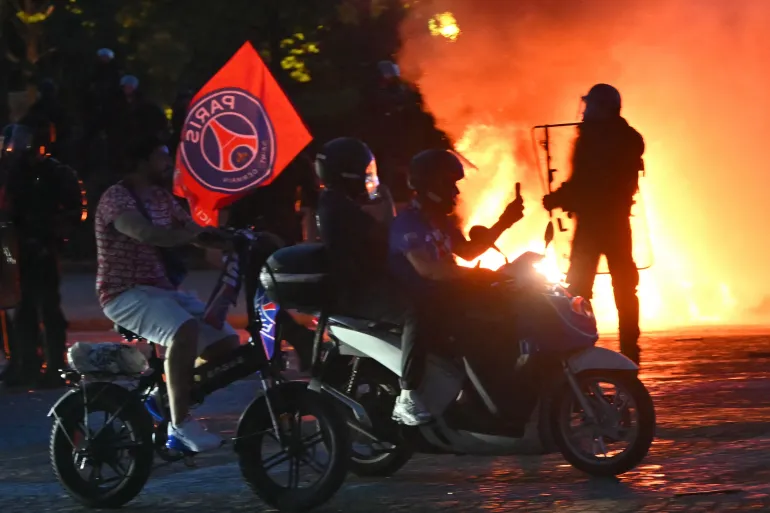
PSG supporters drive their scooters past antiriot police at the Place du Trocadero in Paris [AFP]
As fans celebrated the dramatic penalty shootout victory in the Hungarian capital, Budapest, about 20,000 people converged on Paris’s Champs-Elysees avenue, police said.
Shops boarded up their windows before the match to avoid a repeat of disturbances last year when youths ransacked shops on the Champs-Elysees and other streets. Hundreds of people were arrested.
Two dozen flares and about 100 fireworks were seized on Saturday while a bus shelter was destroyed near the Champs-Elysees.
The match was played on a hectic evening in Paris with singer Aya Nakamura performing at the Stade de France national stadium, rapper Damso at the La Defense Arena and the French Open tennis tournament in full swing.
Police said a bakery and a restaurant were damaged near PSG’s Parc des Princes stadium, where tens of thousands of people had gathered inside to watch the match. Another 4,000 to 5,000 people loitered outside with projectiles that were thrown at officers.
About 150 people “attempted to enter through one of the gates” at the stadium, but police pushed them back, a police spokesperson said.
Some also tried to erect a barricade with rental bikes, which was cleared by police.
Clashes broke out between police and supporters near the stadium, and officers responded with tear gas when fireworks were thrown at them.
PSG supporters gather on the Champs-Elysees after the club’s win [Romeo Boetzle/AFP]
‘Only in France’
The scenes angered the French far right. Three-time presidential candidate Marine Le Pen wrote on X that “only in France does a football club’s victory spark riots.”
“Only in France does everyone feel compelled to lock themselves in their homes on the evening of a victory to avoid being confronted with violence,” she added.
Nunez said there was a “very robust, very solid system in place” to curb violence.
“Our responsibility is to guarantee everyone a festive celebration that is calm and fully secure,” a police spokesperson said.
PSG’s players will take part in a parade on Sunday afternoon on the Champ de Mars in front of the Eiffel Tower in front of an expected crowd of 100,000 people before they are received by President Emmanuel Macron at the Elysee Palace.
Videos on social media show people on a beach in northern Israel running for shelter as Hezbollah rockets are launched towards the region, according to Israeli media. It was the first barrage fired from Lebanon towards Nahariya in three weeks.
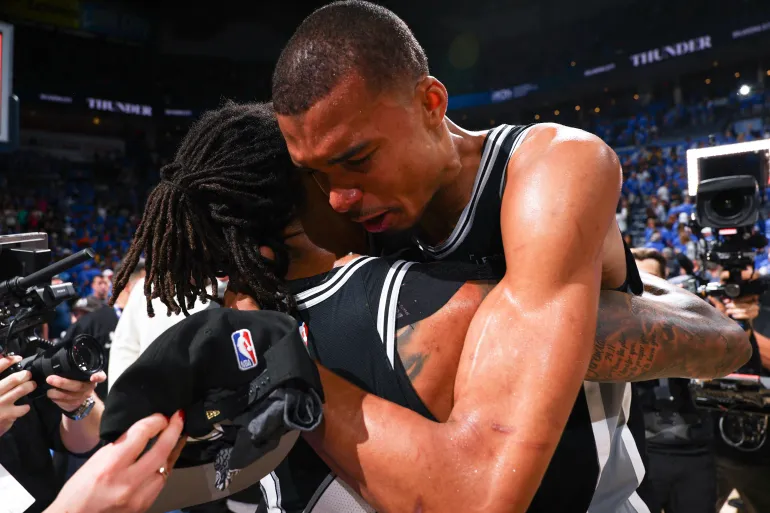
The San Antonio Spurs, sparked by superstar Victor Wembanyama, have advanced to the NBA Finals for the first time since 2014 by dethroning the defending champions, the Oklahoma City Thunder, 111-103, to book a championship showdown against the New York Knicks.
The Spurs captured the best-of-seven Western Conference finals 4-3 on Saturday and reached the NBA Finals, which begin on Wednesday against the Knicks in San Antonio.
“Though we’re still hungry for one more, this feeling is, I can’t explain it, it’s so powerful,” Wembanyama said. “We want four more. We’re not done. Go Spurs go.”
French 7-foot-4-inch (224cm) centre Wembanyama scored 22 points and grabbed seven rebounds, Julian Champagnie added 20 points, including six three-pointers, and Stephon Castle had 16 points for the Spurs, who led the winner-take-all contest almost the entire way.
“We had a good team, a great team,” Champagnie said. “We had to stay the course and play a good game.
“We were passing the ball. We were playing as a team. We come out here and play together.
“We never knew if we were going to get this far, but when you’ve got the greatest player in the world, things happen.”
That was a nod to Wembanyama, the Most Valuable Player of the Western Conference finals and the NBA Defensive Player of the Year.
“It doesn’t mean anything for me other than the fact we are a team,” Wembanyama said of his series MVP award. “I got this for all of us and all the fans right here.”
Wembanyama was emotional after securing his first appearance in the NBA Finals [Zach Beeker/Getty Images via AFP]
Of his teammates, Wembanyama added, “They don’t even know how much I love them. They are just incredible. Everybody stepped up tonight.”
“Wemby” dominated in his first playoff game seven and was emotional at the finish, laughing, crying and hugging teammates over reaching his first NBA Finals.
“Realising that some part of the childhood dream was going to come true,” the 22-year-old Frenchman said of his reaction.
The win sets up an NBA Finals repeat of this season’s NBA Cup final, which the Knicks won with a 124-113 defeat of San Antonio last December in Las Vegas.
“A lot of physicality, hit first, and rebounding,” Champagnie said of the Knicks. “It will be a nice challenge for us.”
San Antonio Spurs guard Devin Vassell hangs on the rim after a dunk [Tony Gutierrez/AP]
NBA Most Valuable Player Shai Gilgeous-Alexander led Oklahoma City with 35 points.
“He was brilliant. He had a great game,” Thunder coach Mark Daigneault said. “He delivered. It was a really big-time game for him.
“That would have been one of the stories of the game if we had been able to figure out a way to win it.”
Daigneault said the challenge to repeat was not among the things that led to the defeat.
“You can be proud of effort and progress and the level we played … and we can also be really disappointed,” he said.
“Felt like we could have won the series. We were right there. There’s nobody we don’t think we can’t beat.
“I thought we had enough to win, but credit San Antonio – they’re the ones who did.”
Oklahoma City Thunder guard Shai Gilgeous-Alexander shoots [Nate Billings/AP]
A Spurs squad with only one player who had been in a game seven before overcame a more experienced Thunder squad that won the title in a game seven last year.
“Back in October, we knew we had a chance to be pretty good,” Spurs coach Mitch Johnson said.
“There’s a lot being talked about, words like competitiveness, resolve, togetherness, execution – who gives a damn about the word experience?
“They had to go out and execute, and they did.”
Wembanyama hit two three-pointers in a 17-9 run to start the fourth quarter that lifted the Spurs ahead 97-86 with eight minutes remaining.
“Wemby” was whistled for his fifth foul seconds later and went to the bench, boosting Thunder hopes in the dying minutes while Gilgeous-Alexander tried to rally the reigning champions, only to fall short at the finish.
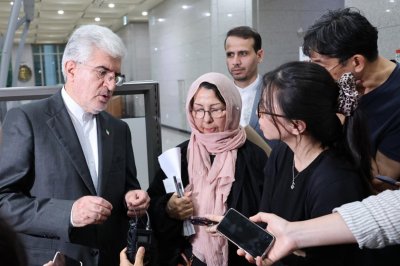
Iranian Ambassador to South Korea Saeed Koozechi (L) speaks to reporters as he exits the foreign ministry building in Seoul, South Korea, 27 May 2026. The ministry summoned Koozechi to lodge a protest over a 04 May attack on the HMM Namu, a South Korean-operated vessel, in the Strait of Hormuz. The ministry said Iranian-developed anti-ship missiles were likely used in the attack earlier this month. Photo by YONHAP / EPA
May 29 (Asia Today) — South Korean defense experts said the government should take a tougher position toward Iran after investigators concluded that an Iranian-developed anti-ship missile was likely used in an attack on the HMM Namu.
Experts said Thursday that Seoul needs a firm diplomatic response to the results of the government investigation into the unidentified aerial objects that struck the HMM-operated vessel.
The government said Wednesday that the objects were highly likely to have been Noor-series anti-ship missiles developed by Iran. Technical analysis found the engine resembled an Iranian-made turbojet engine, and some components carried markings believed to be from an Iranian manufacturer.
South Korean officials said the evidence points toward Iran but stopped short of making a final judgment on who carried out the attack or whether it was intentional. The government summoned Saeed Koozechi, Iran’s ambassador to South Korea, but Koozechi denied that Iran was involved.
“If it was actually confirmed to be an Iranian missile, it should be viewed as an act by the Iranian government,” said Kwon Yong-soo, professor emeritus at Korea National Defense University. “The missile’s maximum range is short, and because of the flame at launch, it would have been visible where it came from.”
Kwon said the government should be able to explain whether the missile was fired from land, a ship or a fast boat.
“If it was not Iran’s act, Iran itself should present evidence,” he said.
Yang Uk, a research fellow at the Asan Institute for Policy Studies, said the evidence points to an Iranian-made anti-ship missile.
“Even if Iran denies it, that denial is not persuasive,” Yang said. “Anti-ship missiles are weapons that only states, governments and militaries can operate.”
Yang said Iran may have provided missiles to an armed group, such as the Houthi rebels, but the distance would have been too far for such a launch.
“If the Islamic Revolutionary Guard Corps fired it and the Iranian government pretends not to know, that would prove Iran’s own command and control is inadequate,” he said.
Some experts said the South Korean government’s response has been too weak, even though it summoned Koozechi immediately after announcing the investigation results.
A Foreign Ministry official said summoning Iran’s ambassador was a serious diplomatic measure.
“Summoning the Iranian ambassador to South Korea is by no means meaningless,” the official said. “The measure itself shows our firm position.”
The official said Seoul had sent investigation teams twice, collected debris, reached its conclusion through analysis by expert agencies, publicly announced the findings and explained them to the other country.
“That itself is a serious diplomatic step,” the official said.
Yang said some may argue South Korea does not need to create unnecessary conflict with Iran. But he said Seoul should at least secure something from the Iranian government if it takes that position.
“Given that the evidence points to Iran, we should at least apply pressure to ensure our ships are allowed to return safely,” Yang said. “If we do not even do that, then we are refusing to do what a state should do.”
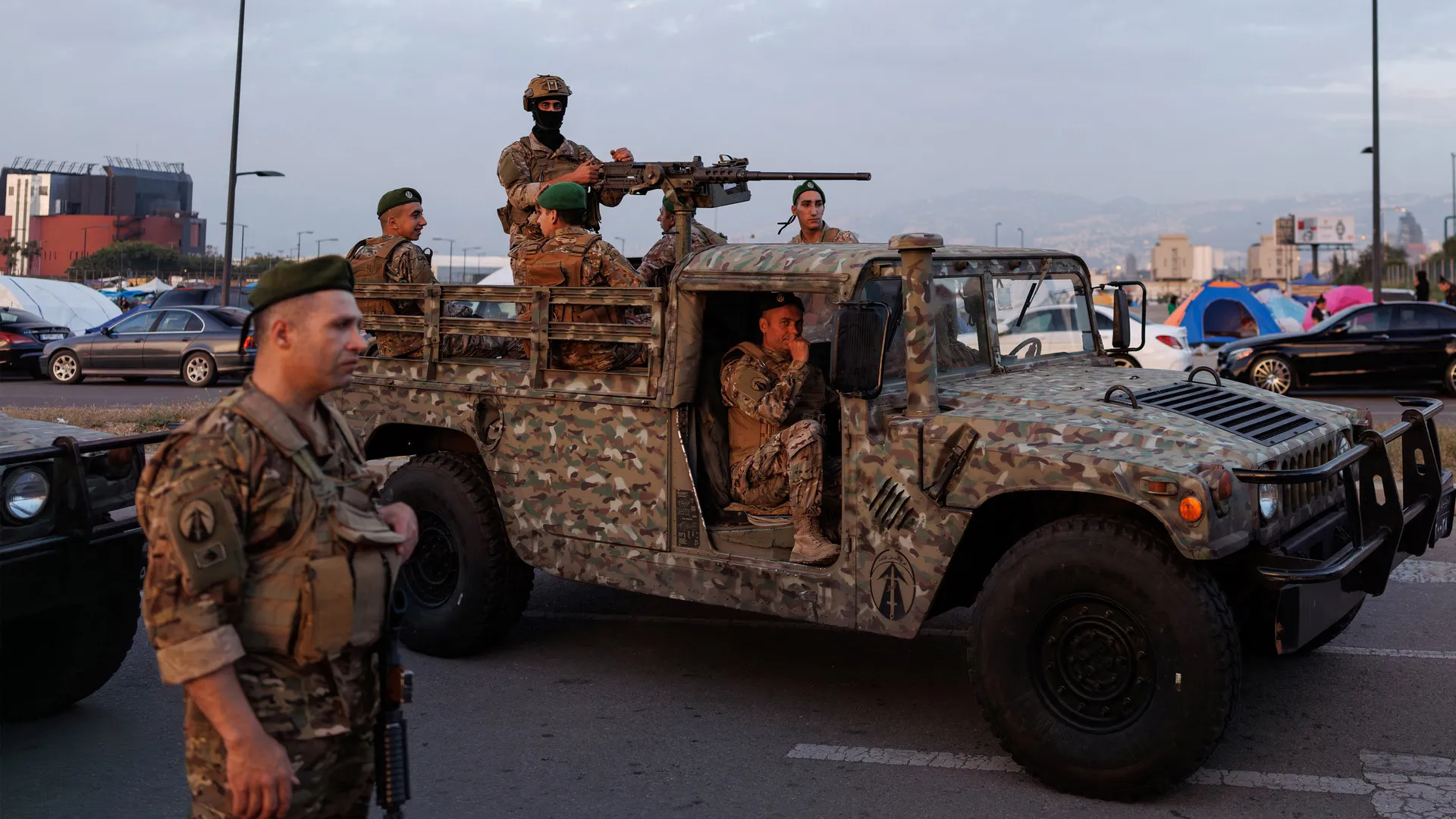
Geopolitical analyst Joe Macaron says the Lebanese army is ‘overly stretched’ as Israeli troops expand their occupation of Lebanese territory. The Israeli army has pushed north of Lebanon’s Litani River and appears poised to encircle the major city of Nabatieh.
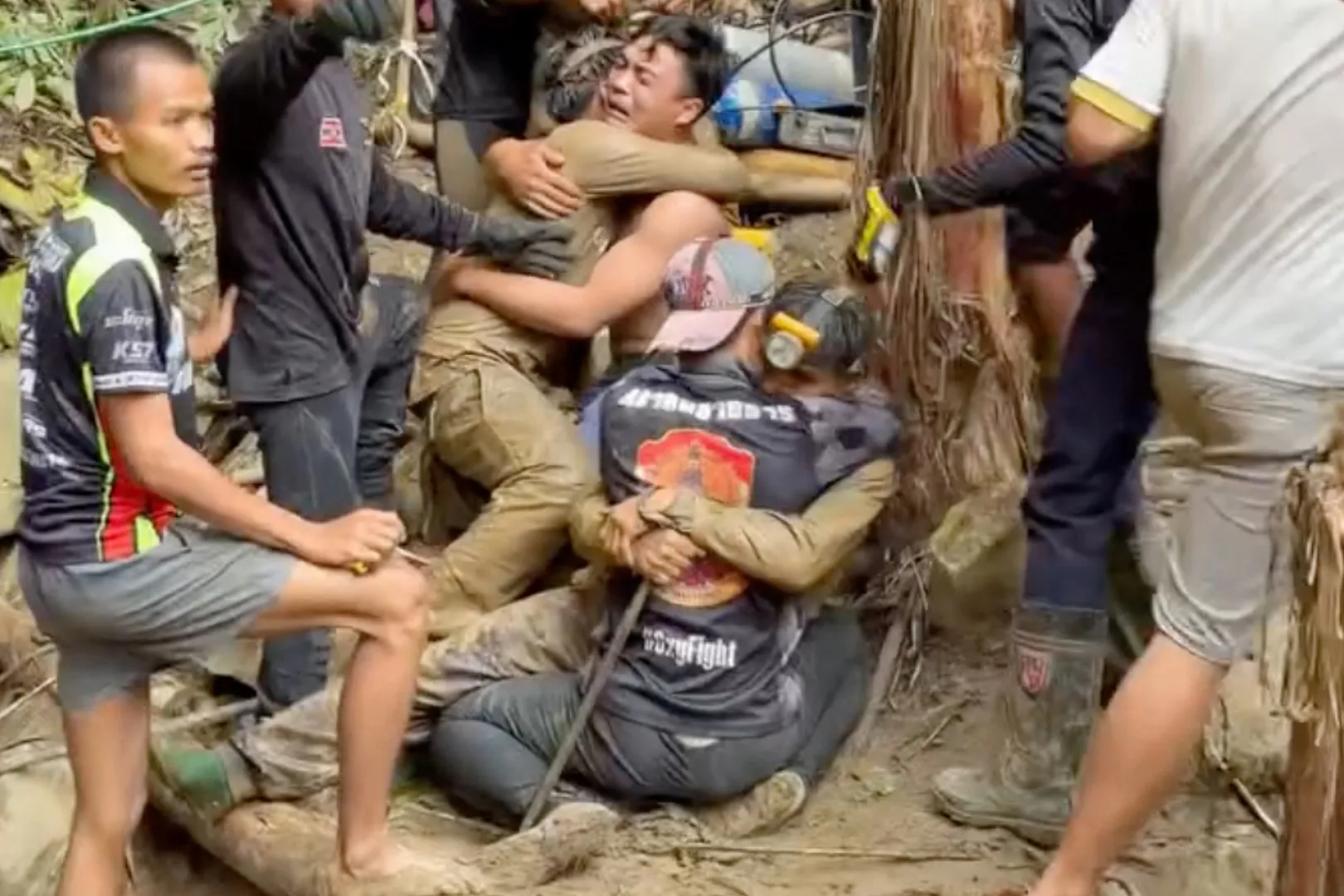
Divers in Laos have rescued four more villagers trapped in a flooded cave. The first survivor was pulled out on Friday. Two more men remain missing. They entered the cave to look for gold before flash floods blocked their escape 10 days ago.
Immigration and Customs Enforcement agents wait during a protest against the treatment of detainees at the Delaney Hall Detention Facility in Newark, New Jersey, earlier this week. File Photo by Olga Fedorova/EPA
May 30 (UPI) — Dueling groups of protesters gathered at an Immigration and Customs Enforcement facility in New Jersey on Saturday morning over the agency’s treatment of people detained under the Trump administration’s immigration crackdown.
A group of detainees at the Delaney Hall facility have been on a hunger and labor strike since May 22 over inhumane conditions there.
Protests in support of the striking detainees have continued since last Friday, but after protestors and ICE officials got into scuffles in recent days protesters in support of the administration’s deportation efforts gathered at the facility as well, The Guardian and NBC News reported.
The protests were met with state police with riot shields blocking the entrance, as well as barricades that were set up to separate and protect protesters, who yelled at each other from the two protest zones.
New Jersey Gov. Mikkie Sherill moved to replace federal officers managing the situation with state law enforcement on Friday in order to establish the “protected speech zone.”
“This was absolutely necessary to protect public safety, and avoid escalation from ICE,” Sherill said Saturday.
“As Americans, we have a right to protest — and we will continue to ensure New Jersey residents can peacefully exercise their First Amendment rights,” she said.
The decision followed days of tension between federal officers and protesters who have decried the treatment of detainees, which since the hunger and labor strikes started has resulted in what the GEO group called “control measures to safely resolve the situation, including the limited use of chemical agents.
Mullin thanked Sherill for working with DHS to “restore law and order” in a statement on X.
“We support every Americans constitutional right to peacefully protest,” Mullin said. “No one has the right to RIOT and ASSAULT law enforcement. We hope to build on this partnership and work together to remove the worst of the worst from New Jersey communities.”
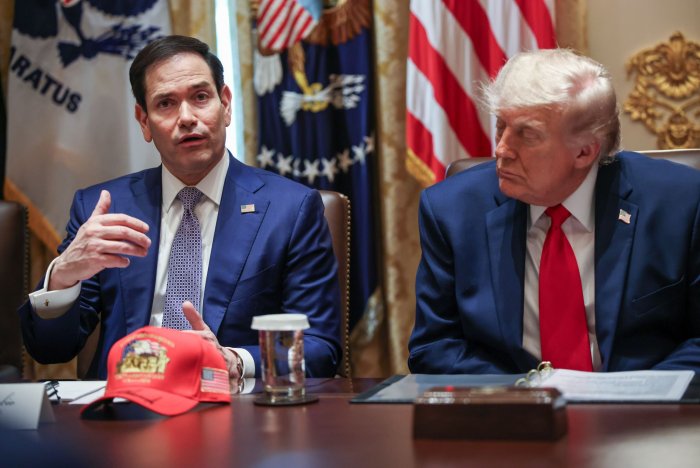
Secretary of State Marco Rubio and President Donald Trump participate in a Cabinet meeting in the Cabinet Room of the White House on Wednesday. Photo by Samuel Corum/UPI | License Photo
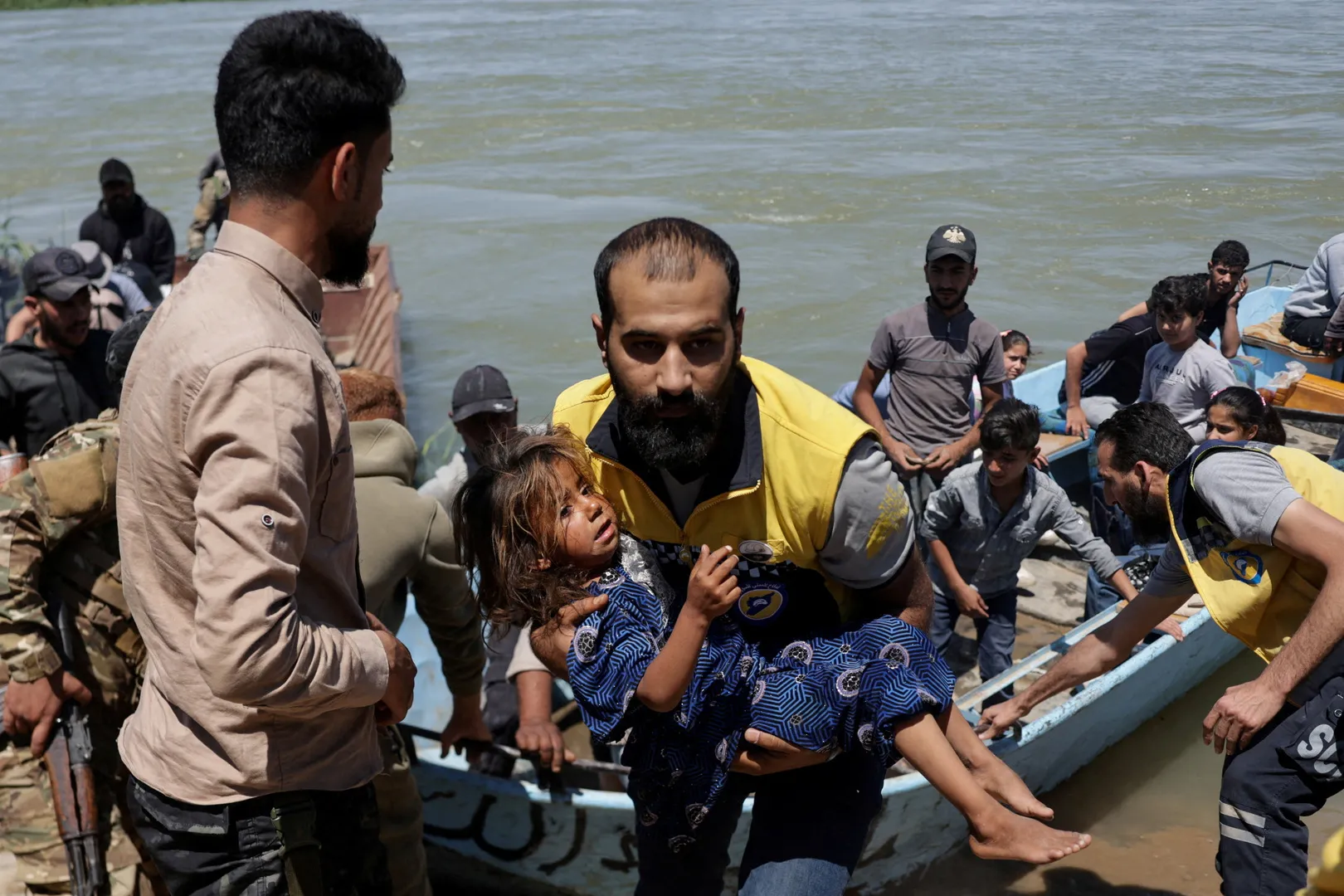
Rescue workers have pulled stranded farmers from flood waters in eastern Syria after the Euphrates burst its banks. Among the worst-affected areas was Deir Az Zor, where the flooding caused a bridge collapse and cut-off communities.
May 29 (UPI) — Louisiana’s Republican-led legislature on Friday voted to approve a new congressional map that eliminates one of two majority-Black districts in favor of Republican-leaning districts, pushing forward the national redistricting race.
The new map contains one majority-Black district — in a state with a population that is one-third black — that covers an arc running from Baton Rouge to New Orleans, covering a smaller section of the state, NBC News and The New York Times reported.
Louisiana is the latest state to enact rare mid-decade congressional redistricting efforts, which were kicked off when President Donald Trump last year started pushing Republican led states to do so, leading to Democratic-led states to join in a year-long tit-for-tat contest.
The new map follows a Supreme Court ruling in the Louisiana vs. Callais case earlier this month that invalidated a 2024 map because the state’s legislature was not justified in using race to construct the districts.
The map, based on voting records, is expected to send five Republicans and one Democrat to the House from Louisiana, compared to the old map’s four-to-two split.
“We focused on Democrat numbers, not the racial numbers, when drawing,” Republican state Rep. Beau Beaullieu said during debate over the map.
“We focused in this case on partisanship, which is what Callais said, and I mentioned in my intro, is clear permissible,” Beauillieu said.
Republican Louisiana Gov. Jeff Landry is expected to sign the new map into law.
Landry had pushed off the state’s May 16 congressional primaries, for which some mail-in votes had already been cast, and delayed it until Nov. 3 so that the legislature could produce a new map for use in this year’s federal elections.
During the debate on the Thrusday, Democratic state Rep. Kyle Green Jr. pointed out that the map reduced Black Louisianians’ “minority opportunity representation to a single seat out of six, from 33% of the population to 16% of the representation numbers.”
The map is expected to be challenged in court, but members of both parties in the state legislature said that the map is unlikely to change again before November’s elections.
A provision in a bill before the United States Congress could tie the American and Israeli militaries far more closely together, deepening their cooperation on weapons research, production and technology.
The proposal, titled the “United States-Israel Defense Technology Cooperation Initiative,” appears as Section 224 of the House Armed Services Committee’s version of the fiscal year 2027 National Defense Authorization Act (NDAA), the annual US defence policy bill.
Recommended Stories
list of 2 itemsend of list
The measure is still at an early stage. The NDAA is passed by Congress each year to set US military policy and authorise defence programmes and spending levels.
If enacted, the provision could mark a major change in one of the world’s closest military relationships, shifting the two countries from a partnership centred largely on American military aid towards one in which their defence industries are more deeply intertwined.
Section 224 would require the US defence secretary to appoint an “executive agent”: a single official to coordinate military cooperation between the US and Israel.
That work would cover joint research and development, the shared production of weapons, and the linking of military systems and data.
“What Congress is trying to do now is find different ways of entrenching the relationship so deep in America’s own defence industrial base that it’s impossible to root it out,” Josh Paul, a former US State Department official and founder of the advocacy group A New Policy, said about the controversial provision.
“A new section of law in the National Defense Authorization Act (NDAA) would give Israel unprecedented access to American technology and would force the United States military to integrate Israeli defence technologies into our own critical military supply chain, giving Israel incredible leverage over America’s own defence priorities,” he added in a video posted on social media on Friday.
The two countries already build missile defence systems together, such as the Iron Dome.
The bill would extend their joint work into many more areas of modern warfare, from artificial intelligence (AI) to drones and cyber operations.
In February, US and Israeli forces attacked Iran together, triggering five weeks of war; Iran struck back at Israel and at US bases in the Gulf before a ceasefire took hold in April.
Israel is also facing genocide allegations in a case brought by South Africa at the International Court of Justice, the UN’s top court, over its war on Gaza.
Decades of support
The bill must first clear the House Armed Services Committee, which is due to take it up in early June, and then pass the full House and the Senate.
It was proposed by the committee’s Republican chairman, Mike Rogers, and its most senior Democrat, Adam Smith, giving it support from both main parties, even as opinion polls suggest growing opposition among American Democrats and some Republicans to further military support for Israel.
The US has supported Israel’s military for decades.
Since 2008, US law has required Washington to protect Israel’s “qualitative military edge”, keeping its forces stronger and more advanced than those of any rival in the region, on the grounds that a small country must rely on better weapons rather than greater numbers.
Under the current aid deal signed during the administration of former President Barack Obama, Washington provides Israel with about $3.8bn a year in military assistance. The 10-year agreement runs through 2028.
Israel is the largest recipient of US foreign aid since 1948, almost all of it now military and worth well over $300bn when adjusted for inflation.
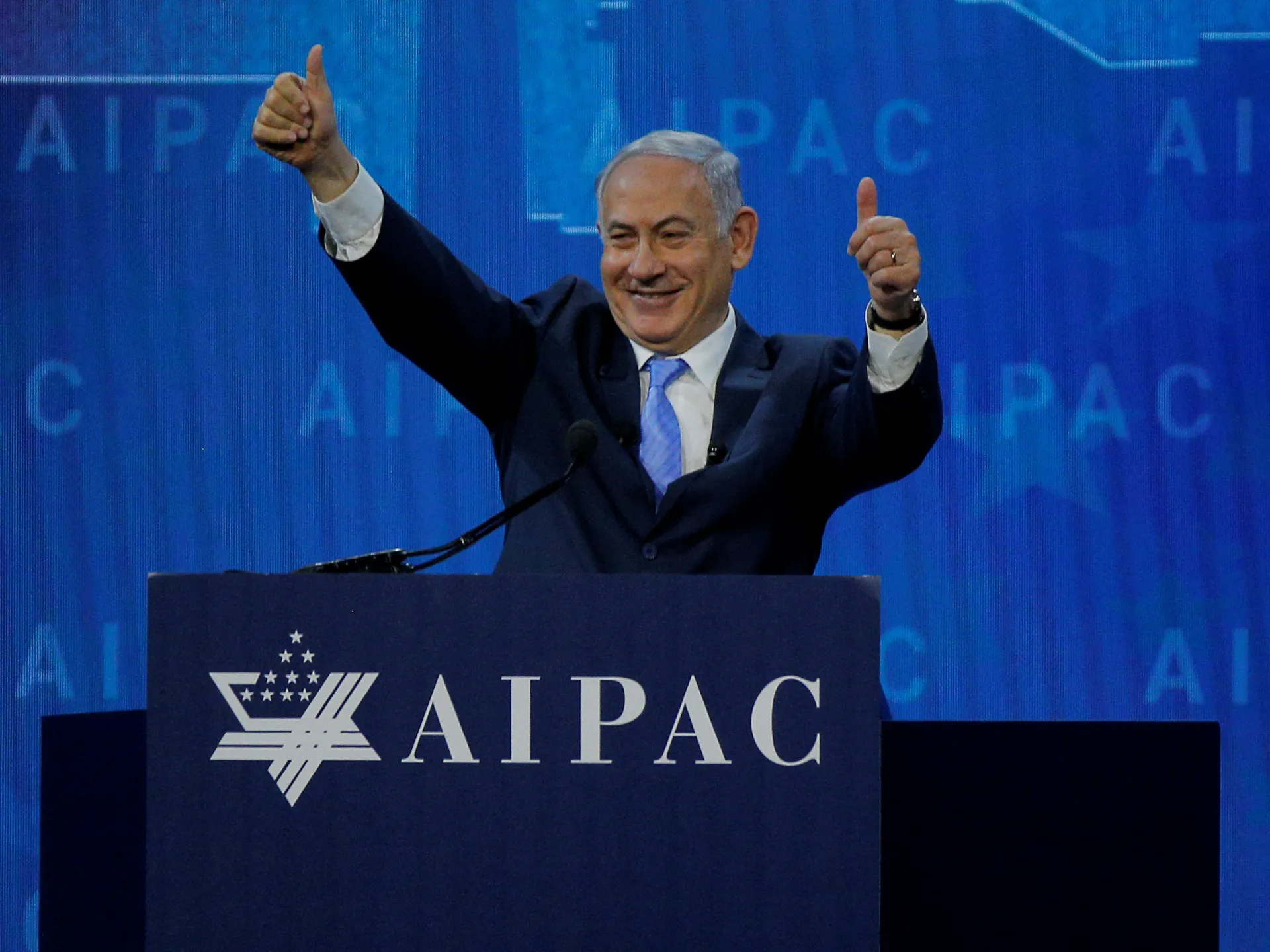
The nature of that support may now be changing. Israeli Prime Minister Benjamin Netanyahu said recently that he wants to end Israel’s reliance on US military aid within 10 years, saying his country had “come of age”.
Closer cooperation between the two defence industries, rather than cash, would likely fit that goal.
May 30 (UPI) — A United Airlines flight traveling from Chicago to Minneapolis had to be diverted after an unruly passenger attempted to breach the cockpit.
The Minnesota-bound flight instead safely landed at Dane County Regional Airport near Madison, Wisc., “to address a security concern with an unruly passenger,” the airline told The Guardian and NBC News.
The Federal Bureau of Investigation and local police responded to reports about the passenger, who was detained at the airport after the flight landed.
“I do not believe they ever cuffed him, but they were able to finally get control of him after multiple attempts to try to breach the cockpit,” a crew member told air traffic controllers.
“I believe at this point he is seated in a seat and flanked with law enforcement officers on either side,” the crew member said.
The Dane County sheriff’s office told USA Today that the 75-year-old passenger who attempted to breach the cockpit several times appeared to be having a mental health crisis and seemed to be confused.
None of the 147 passengers and six crew members aboard the Boeing 747 was hurt in the incident.
Police said that the man’s family was traveling to Madison from Minneapolis to meet him and that no criminal charges are expected to be filed against him.
Secretary of State Marco Rubio and President Donald Trump participate in a Cabinet meeting in the Cabinet Room of the White House on Wednesday. Photo by Samuel Corum/UPI | License Photo
May 30 (UPI) — A meteor exploded just off the coast of Massachusetts, causing a loud boom, Saturday afternoon.
Locals reported on social media that they heard a loud blast at about 2 p.m. EDT, and meteorologists have said it was likely a meteor.
Officials at the National Weather Service told WBUR that it was up to NASA to confirm that it was a meteor, but it may require finding pieces of debris to confirm it, 1 Degree Outside meteorologist Danielle Noyes told the station.
The U.S. Geological Survey did not detect an earthquake, Noyes added.
Meteorologist Nick Stewart posted on X, showing images from the National Oceanic and Atmospheric Administration: “The flash density product really shows this anomalous ‘flash,’ which is pretty distinctive of a bolide/meteor reentry. East of Boston. This is the likely source of the loud boom/explosion.”
Reports of an explosion hears around Boston I believe are going to be a rather significant bolide/meteor entering the atmosphere. Very large “flash” detected by GOES-19 GLM that does not correlate with active thunderstorms. #MAwxpic.twitter.com/EHKVxCc2vU— Nick Stewart (@NStewWX) May 30, 2026
WBZTV in Boston posted on its Instagram account that meteors cause a sonic boom because, “They enter Earth’s atmosphere at anywhere from 25,000 to 160,000 miles per hour, and larger space rocks can travel deep enough to create pressure waves.”
The station’s meteorologist Eric Fisher posted about the blast on his Instagram account. “CONFIRMED: Meteor exploding on entry caused that big boom across the Boston area Saturday afternoon!”
“Yes, I did, thought it may have been an explosion from the power plant next door. It vibrated my apartment. Though it lasted about 3 to 4 seconds … longer than most explosions. Did not sound like thunder,” one viewer said.
Another said there were two explosions.
“I was outside in Framingham with my dog. Heard and felt two huge blasts. Felt the shockwave. Definitely not thunder. Was from the east/southeast from where I was standing. Scared the crap out of us,” another viewer told the TV station.
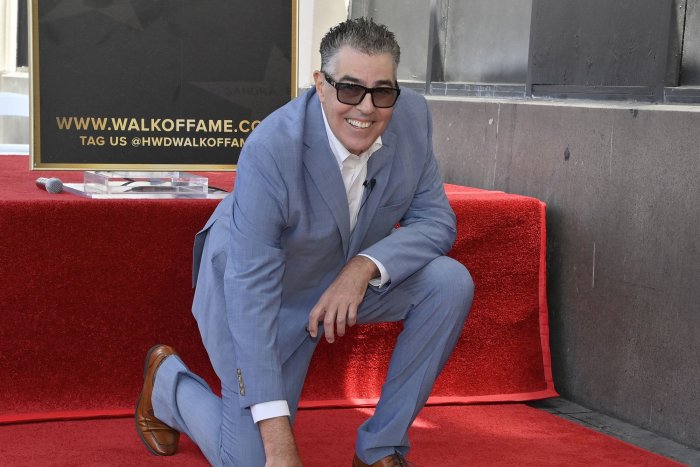
Comedian, actor and podcaster Adam Carolla touches his star during an unveiling ceremony honoring him with the 2,846th star on the Hollywood Walk of Fame in Los Angeles on May 27, 2026. Photo by Jim Ruymen/UPI | License Photo
Iran has reasserted its control over the Strait of Hormuz, warning that foreign commercial and military vessels will be targeted, if they do not comply with regulations governing passage through the strategic waterway.
The announcement on Saturday came after the United States signalled that President Donald Trump was close to a decision on a potential deal with Iran, but Tehran denied an agreement had been reached.
Recommended Stories
list of 3 itemsend of list
“The management of the Strait of Hormuz is exercised with full authority by the Armed Forces of the Islamic Republic of Iran,” the operational headquarters of Iran’s armed forces, Khatam al-Anbiya Central Headquarters, said in a statement reported by Iranian media on Saturday.
“All ships, commercial vessels, and tankers are only required to travel through the designated routes and obtain permission from the Islamic Revolutionary Guard Corps [IRGC] Navy. Any violation of these regulations will seriously jeopardise the security of their traffic,” it added.
Iran also issued a warning to foreign military forces operating in the area, saying any attempt to interfere with maritime management or shipping movements would trigger a response.
On Friday, Trump met with advisers in the White House Situation Room and said a “final determination” on a possible deal with Iran would soon be made. But no statement followed the meeting.
US sources had told the AFP news agency the deal was waiting on Trump’s sign-off, but he made no decision after Friday’s meeting.
Iran’s Foreign Ministry spokesperson, Esmaeil Baghaei, said on Friday that while messages continue to be exchanged “no final agreement has been reached” on a deal with the US.
US Central Command (CENTCOM) posted on social media that American forces “remain present and vigilant across the region”.
The efforts to reach a deal were thrown into question this week by US strikes on the Iranian port of Bandar Abbas, countered by retaliatory Iranian fire.
Iran’s IRNA state news agency said air defences shot down a drone “belonging to the US-Zionist aggressor enemy” on Saturday, citing a statement from the army.
Trump said his priorities in any deal include Iran agreeing to never develop nuclear weapons, and the reopening of the blockaded Strait of Hormuz.
“President Trump will only make a deal that is good for America and satisfies his red lines,” a White House official told AFP, adding: “Iran can never possess a nuclear weapon.”
Trump ‘betraying diplomacy’
Also on Saturday, Mohsen Rezaei, an adviser to Iran’s Supreme Leader, Mojtaba Khamenei, said in a social media post that Trump was “betraying diplomacy for the third time” by continuing the US naval blockade in the strait, and making what he described as “excessive demands in negotiations”.
In a social media post on Friday, Trump said Tehran would remove mines from the strait and end its closure of the waterway with “no tolls”, while the US would lift its blockade.
Both countries would coordinate on removing and destroying Iran’s enriched uranium, he said, adding that “no money will be exchanged, until further notice”.
Iran’s Fars news agency, however, cited sources as saying Tehran was demanding “the immediate release of $12bn” in frozen assets before moving to the next phase of negotiations.
On the toll-free reopening of Hormuz, the sources said “no such clause appears in the text of the agreement”, while Trump’s comment on destroying Iran’s nuclear material “is fundamentally baseless”.
Iran’s ISNA news agency cited legislator Alireza Salimi as saying a plan “to implement Iran’s management and sovereignty over the Strait of Hormuz will soon be approved by parliament”.
Iran’s Tasnim news agency said the US blockade remains in place, and its ships “are receiving warnings from CENTCOM to stop and not cross the blockade line”.
The ATLAS prototype robot by Boston Dynamics walks on stage during a press conference at the 2026 International CES, at the Mandalay Bay Convention Center in Las Vegas, Nevada on Monday, January 5, 2026. File. Photo by James Atoa/UPI | License Photo
May 29 (Asia Today) — Hyundai Motor Group released a new campaign linking advanced robotics and soccer, highlighting its physical artificial intelligence technology ahead of the World Cup.
Hyundai Motor Group said Friday it released its “School of Football” campaign video, which shows Atlas, a humanoid robot developed by Boston Dynamics, learning and improving through soccer movements.
The campaign is part of Hyundai Motor’s World Cup campaign, “Next Starts Now,” which is rooted in the company’s vision of “Progress for Humanity.”
The video series consists of five parts, including a launch film featuring Atlas and training scenes showing the robot practicing various soccer movements.
The launch film follows Atlas as it becomes interested in soccer after observing the emotions, energy and dynamic movements of players.
The training videos show Atlas gradually learning basic soccer skills such as footwork, passing and shooting, as well as more advanced techniques including crossed-leg shots and crosses.
Hyundai Motor said it plans to release a making-of film June 4 featuring interviews with Boston Dynamics officials who led Atlas’ training during preparations for the campaign.
“The campaign is meaningful because it presents the future of robotics through soccer in an engaging and human-centered way as part of Hyundai Motor’s World Cup campaign,” said Jee Sung-won, executive vice president and head of Hyundai Motor’s brand marketing division. “We plan to continue creating diverse brand experiences using mobility and robotics.”
May 30 (UPI) — President Donald Trump announced on Truth Social Saturday that he may take the stage for a rally at the “Freedom 250” event series set for June 25 to July 10 at the National Mall in Washington, D.C.
Trump posted at noon Saturday that “Artists are getting ‘the yips’ having to do with their performance[s]” so he may step in.
“I am thinking about bringing the Number One Attraction anywhere in the World, the man who gets much larger audiences than Elvis in his prime, and he does so without a guitar, the man who loves our Country more than anyone else, and the man who some say is the Greatest President in History (THE GOAT!), DONALD J. TRUMP, to take the place of these highly paid, Third Rate “Artists,” and give a major speech, rallying the Country forward like I have done ever since being President!”
He went on to say he would do an “America is Back” rally on “Wednesday,” though he didn’t clarify which day. It appears he means June 25, which is when Martina McBride was scheduled to perform, though she and Brett Michaels both backed out on Friday.
“Two years ago, the United States was DEAD. Now we have the ‘HOTTEST’ Country anywhere in the World. I don’t want so-called ‘Artists’ that get paid far too much money, who aren’t happy. I only want to be surrounded by Happy People, Smart People, Successful People, and People that know how to WIN. So, by copy of this TRUTH, I am ordering my Representatives to look at the feasibility of doing an AMERICA IS BACK Rally on Wednesday, Washington, D.C., same time, same location. Only Great Patriots invited — It will be a Wild and Beautiful Celebration of America! President DONALD J. TRUMP”
The concerts were scheduled for each Thursday, Friday and Saturday night of the 16-day festival, also billed as “The Great American State Fair.”
As of now, only two artists appear to still be on the bill: Vanilla Ice and Flo Rida.
On Sunday, voters in the South American country of Colombia are facing a choice.
Four years ago, they elected the first left-wing president in the country’s modern history, Gustavo Petro. Now, they must decide whether to continue with Petro’s leftist push — or restore the political right to power.
Recommended Stories
list of 3 itemsend of list
Fourteen candidates will be on the ballot for the first round of voting in Colombia’s presidential election. The packed field includes contenders from the left, right and centre, who are slated to face off over issues like security and the cost of living.
But Petro will not be among them: Presidents in Colombia are limited to a single four-year term.
The right wing is expected to have the advantage, particularly if the race proceeds to a second round. Petro is struggling with low poll numbers, and voters have expressed frustration with crime and violence, driven in part by the country’s six-decade-long internal conflict.
But leftist candidate Ivan Cepeda has surprised observers, consistently placing at the top of the polls ahead of the first round.
When is the election, who are the candidates, and which issues are top of mind for voters? We look at those questions and more in this brief explainer.
When is the election?
The first round of voting is set to take place on May 31, 2026.
Will there be a second round of voting?
A candidate would need to win more than 50 percent of the vote in the first round to avoid a run-off.
If no single candidate meets that threshold, a run-off will be held between the top two finishers on June 21.
Why is this election important?
In recent years, across Latin America, long-entrenched left-wing governments have met defeat at the ballot box.
Last year alone, right-wing candidates have been elected to replace left-wing presidents in Bolivia, Chile and Honduras.
But Colombia does not have a long history of left-wing presidents. Petro was the first. That makes this race one to watch, according to Gimena Sanchez, a Colombia expert at the Washington Office on Latin America (WOLA), a human rights nonprofit.
“This is the first election to be held after the first-ever leftist administration in Colombia’s 200-year history,” Sanchez explained.
Colombia now stands at a fork in the road. One of the dominant issues in the election is how to resolve the country’s internal conflict, which forced more than 235,619 individuals from their homes in 2025.
Another 87,069 people were caught up in mass displacement events due to the fighting, according to the International Committee of the Red Cross.
Petro has embraced negotiation as a tool to end the conflict, which has seen government forces, criminal networks, left-wing rebels and right-wing paramilitaries all battling one another.
But the political right has advocated a return to the more militarised approach backed by the United States, according to Sanchez.
“The leading candidates fall into two camps: continuity with the leftist government of Petro and an approach to security that focuses on negotiations with armed groups, and right-wing candidates who very much want to go back to a hardline security model that Colombia had in the past,” Sanchez said.
“You have polar opposite visions for the country.”
Who is the main candidate on the left?
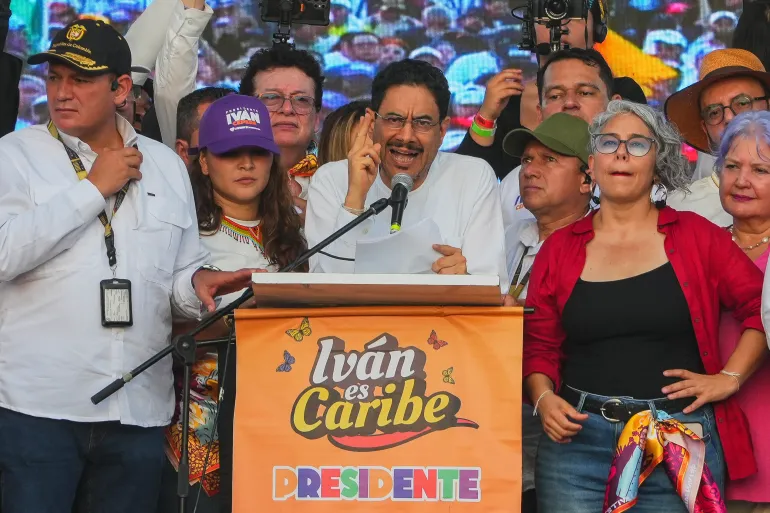
Senator Ivan Cepeda has emerged as the primary candidate of the political left, running as the head of the governing coalition, known as Historic Pact.
Cepeda has largely pledged continuity with Petro’s platform, including social and economic policies meant to reduce inequality.
He has also embraced Petro’s “Total Peace” approach, which aims to resolve the country’s internal fighting by negotiating with armed groups and criminal networks, as opposed to solely relying on military force.
Confronting state-backed violence has become a hallmark of Cepeda’s life and career.
His father, who was also a senator, is believed to have been assassinated by a government-backed paramilitary. For years, Cepeda was also embroiled in a legal battle for accusing former President Alvaro Uribe of connections to right-wing paramilitaries.
Presidential candidate Ivan Cepeda speaks to supporters during his final campaign rally in Barranquilla, Colombia, on May 24 [Vanessa Romero/AFP]
Who are the main candidates on the right?
While Cepeda has become the standard-bearer for the left, the political right has had to contend with a more fractured field of candidates.
Running on the far right is Abelardo de la Espriella, a lawyer for the Defenders of the Homeland Party who has generated comparisons with Salvadoran President Salvador Bukele and Argentina’s Javier Milei.
Like those leaders, de la Espriella has offered a hardline vision for his country’s security. If elected, he says he would end negotiations with armed groups, bomb rebel camps, and resume the aerial fumigation of coca crops, which produce the raw material for cocaine.
Senator Paloma Valencia, a candidate with the Democratic Centre Party, is running as a more moderate alternative to de la Espriella. She too has promised a stricter approach to crime. Her platform involves expanding the police and armed forces, while cutting taxes and promoting pro-business policies in the economic realm.
Their election-season competition has become a source of acrimony for Valencia and de la Espriella, who have accused each other of paving the way for a leftist election victory.
“There is a more familiar, establishment right, represented by Valencia, and a far right in the form of de la Espriella, who pitches himself as an outsider,” said Sanchez.
Valencia, for her part, has criticised de la Espriella as two-faced, defending criminals in his legal practice but advocating for tighter security on the campaign trail.
De la Espriella, meanwhile, has dismissed Valencia as a member of the country’s political establishment and chided her in a social media post, stating that the presidential election is “not for little games”.
Paloma Valencia of the Democratic Centre Party speaks to supporters during her final campaign rally in Bogota on May 24 [Raul Arboleda/AFP]
What are the polls saying?
Polls generally show Cepeda ahead of his rivals, with de la Espriella in second place and Valencia in third.
A May 24 poll from the National Consulting Centre (CNC) and the publication Cambio suggested that Cepeda had drawn 33.4 percent of voter support, the most of any candidate.
But de la Espriella was on the upswing with 30.9 percent. Valencia, meanwhile, trailed with 12.6 percent.
The same surveys, however, suggest that Cepeda would struggle to win a run-off against either of the two right-wing candidates, with de la Espriella eking out about three points in a head-to-head contest, and Valencia coming within a percentage point of victory.
Undecided voters could play a key role in deciding the outcome, though. An analysis cited by the Spanish paper El Pais estimates that undecided voters could account for as much as 28 percent of the electorate.
Presidential candidate Abelardo de la Espriella, of the Defensores de la Patria party, speaks behind bulletproof glass during his closing campaign rally in Medellin, Colombia, on May 24, 2026 [Jaime Saldarriaga/AFP]
Which issues are front and centre?
Concerns over crime, security and economic issues like unemployment and affordability have dominated the election.
In a poll from the firm Invamer, the highest proportion of voters — 37 percent — identified security as the top issue facing the country.
Basic needs and unemployment ranked second and third, with 17 percent and 16 percent, respectively. Eleven percent of voters, meanwhile, named corruption as a leading concern.
The threat of violence has lingered over the presidential campaign over the past year.
Two political staffers with de la Espriella’s campaign were killed by gunmen on motorbikes earlier this month. And in June 2025, presidential candidate Miguel Uribe Turbay was shot while leaving a campaign rally. The 39-year-old died two months later from his injuries.
Political violence is a serious concern in Colombia, and all of the frontrunners in the race travel with heavy security.