TOP NEWS

From breaking news to significant developments in politics, business, technology, entertainment, and more, we deliver the stories that shape our global landscape.

Ukraine’s forcibly transferred children must not be a bargaining chip | Child Rights

It has been more than four years since Russia launched a full-scale invasion of Ukraine, expanding its occupation of Ukrainian lands, which started in 2014. In the chaos and violence of the first months of the invasion, families were separated, and childcare institutions were cut off from the control of the central authorities in Kyiv. As a result, the occupation forces forcibly transferred more than 20,000 Ukrainian children to Russia.

Russian officials claimed that they did not abduct Ukrainian children, but “saved” them through humanitarian evacuations. However, international investigations have since found that many such transfers were unlawful under international humanitarian law. In many documented cases, transfers were carried out without the consent of the living parent or legal guardians of the child.

International humanitarian law prohibits all forcible transfers and deportations of protected people from occupied territory, except for evacuations strictly required to ensure the population’s safety. Even then, evacuation must happen within occupied territory, be temporary, preserve family unity and return evacuees home as soon as hostilities cease.

Today, the lives of thousands of Ukrainian children are devastated by this forcible transfer. Instead of abiding by international legal obligations and returning them to their homeland, Russia has transformed the issue into yet another bargaining chip against the Ukrainian people.

But Ukraine refuses to abandon its children. For the past four years, there have been intense efforts from families, NGOs and the Ukrainian government to bring them back.

Take the case of Lesya (the name has been changed to protect her identity), whose testimony was recorded by The Reckoning Project— a global team of journalists and lawyers documenting and publicising atrocities committed in the war. Lesya was 15 years old when Russian forces occupied her village in the Kherson region in 2022. When the occupation authorities imposed a mandatory evacuation, she was put on a truck with more than 30 other children and was sent to a rehabilitation centre in Feodosia, Crimea. A woman accompanying the children told her that her mother would join her shortly.

At the facility, Lesya and other Ukrainian children were subjected to a strict routine, forced to do chores and study in Russian, using Russian textbooks. They were kept under surveillance indoors most of the time in a building with windows that could not be opened. Two days a week, the children underwent military training.

Eventually, a relative located her, and with the help of Save Ukraine, a Ukrainian NGO facilitating children’s return, her mother managed to bring her back.

But Lesya’s case is the exception rather than the rule. More than 2,000 Ukrainian children have been brought back thanks to efforts by NGOs, the government and foreign mediators.

Pressure through international institutions has also been pursued, but that has not accelerated the process of return.

In March 2023, the International Criminal Court issued warrants of arrest for Russian President Vladimir Putin and Commissioner for Children’s Rights Maria Lvova-Belova for the unlawful deportation and transfer of Ukrainian children.

In July 2025, the European Court of Human Rights, in Ukraine and the Netherlands v Russia, found Russia responsible for a number of human rights violations, including the organised removal of children. The court also required Russia to cooperate in establishing a mechanism to find and safely return children.

In March this year, the United Nations Independent International Commission of Inquiry on Ukraine concluded that Russia’s deportation and forcible transfer of Ukrainian children amount to crimes against humanity. The report identifies the removal of Ukrainian children as a part of a well-planned and systematically executed policy, conceived at the highest level.

On May 11, the European Union sanctioned 16 individuals and seven entities, while the United Kingdom sanctioned 29 individuals and entities responsible for the deportation, forced transfer, forced assimilation, indoctrination, militarisation and unlawful adoption of Ukrainian children. Overall, the EU has sanctioned more than 130 people and organisations for these actions. The United States, Canada, Australia, Japan, Switzerland and several other countries have introduced similar measures.

The lack of progress on this issue has driven families to desperation. Some have tried to bring their children back on their own or through often-daring missions by Save Ukraine and five other Ukrainian NGOs.

There should be no need for these risky missions. Under international humanitarian law, Russia is obligated to identify and register Ukrainian children in their care, facilitate family reunification, and permit access to neutral actors assisting Ukrainian children.

As negotiations for the end of the war have stalled and other global events have displaced Ukraine from global headlines, we urgently need to put the issue of the abducted Ukrainian children back in the spotlight.

There are several areas in which existing efforts can expand.

First, a comprehensive tracing mechanism needs to be established and financed to track abducted Ukrainian children and prevent their disappearance into dispersed care and adoption systems.

Second, ongoing legal efforts to hold to account Russian officials involved in the abduction should be intensified. This means coordinated prosecutions in states where the universal jurisdiction principle can be applied, as well as joint investigation strategies supported by Eurojust, the EU’s judicial hub. Ukraine’s partners should support its judicial processes launched against Russian officials and cooperate where needed, including through extraditions where legally applicable and other lawful transfer mechanisms. While justice may be slow, the prospect of accountability can have a deterrent effect.

Third, states can and should fully implement sanctions, trade restrictions and other obligations they assumed but did not consistently observe in practice. The sanctions regime on Russia has severely hurt its economy, but it has also seen continuous evasion. A strict implementation can help put more pressure on the regime in Moscow.

While stories of family reunions are heartening, they are just a drop in a bucket compared with the number of children who continue to be separated from their families and absorbed into a system of indoctrination and militarisation.

We must not allow the issue of returning Ukrainian children to be yet another negotiating chip for Moscow. It cannot be put on hold because negotiations have stalled or because other priorities have captured the world’s attention.

Four years is a long time in a child’s life. Each passing day further erodes their national identity and deepens the pain of separation, as they grow up in a hostile environment. There is no principle more universal than the belief that children belong with their parents and loved ones, and Ukrainian children deserve this basic human right today, not at some point in the future.

The views expressed in this article are the author’s own and do not necessarily reflect Al Jazeera’s editorial stance.
Source link

Greece reopens Syrian and Afghan asylum cases, hoping for returns | Migration News

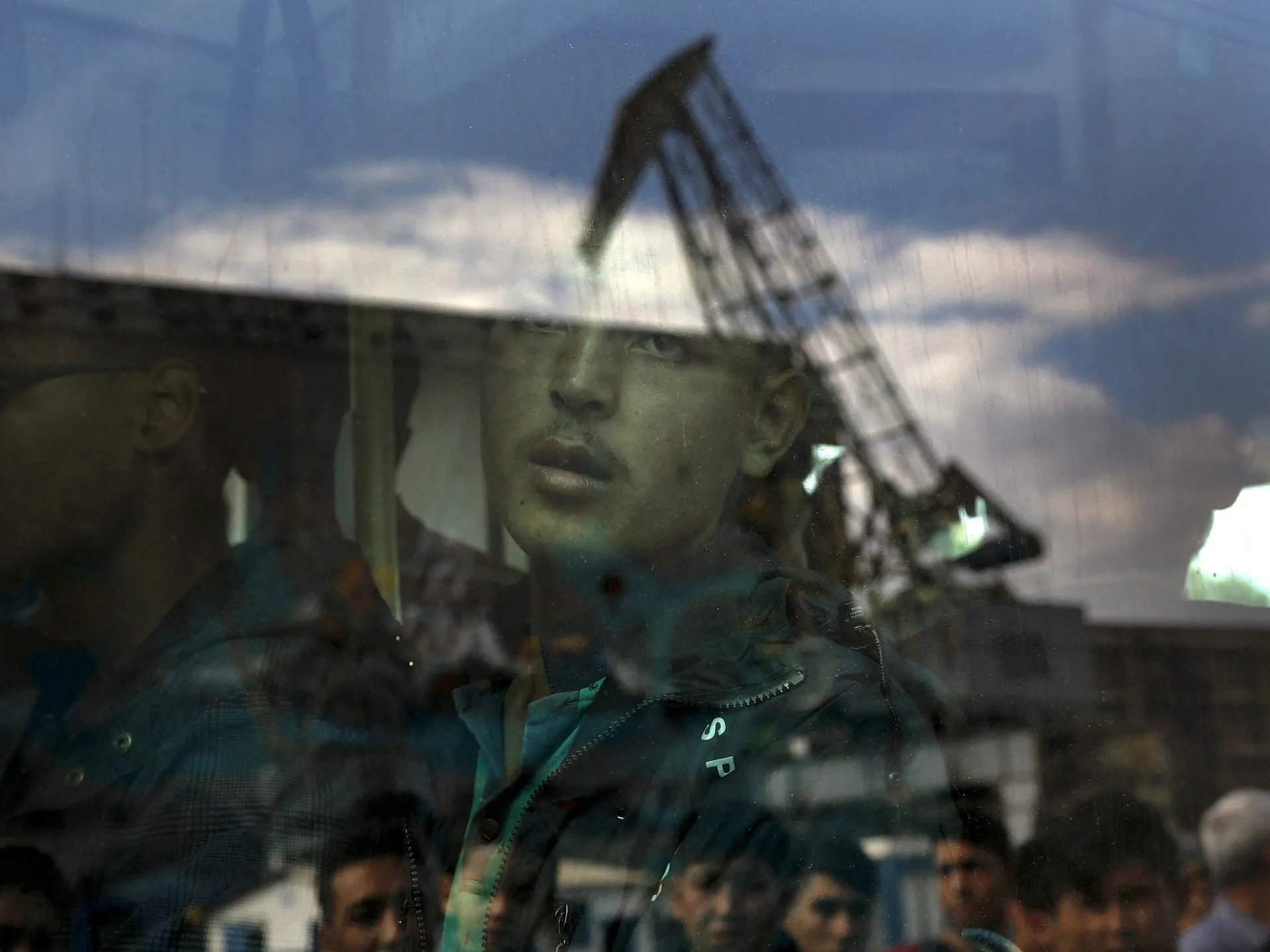
Athens, Greece – Bashir is a Syrian Muslim who has lived in Greece since 2014. He married a fellow Syrian in the country, and three months ago, they had a son. After years of picking olives and oranges, learning Greek and a trade in metalwork, and finally buying his own equipment to start work as an independent trader, Bashir felt his life was finally coming together.

Two months ago, the authorities handed him a piece of paper asking him to restate his reasons for coming to Greece and why he should now return to Syria.

Recommended Stories

list of 4 itemsend of list

Bashir, who requested to withhold his surname, had been granted asylum in Greece in 2015 because of the civil war then raging in Syria. The war ended in December 2024, and Bashir became one of 1,200 Syrians whose asylum cases were reopened in February.

“It’s a catastrophe,” he told Al Jazeera. “I don’t understand how this can happen. If they decide I should leave the country, should my family stay here?”

Bashir’s lawyer said only men are currently receiving such notices – and not just from Syria but Afghanistan, another country whose civil war is deemed to have ended, with the Taliban’s sweeping victory in August 2021.

But neither Syria nor Afghanistan is necessarily safe to return to, said the lawyer, Angeliki Theodoropoulou.

“We believe this has to do with the European Union’s stance towards Syria and Afghanistan, and with the fact that there are quite a few voluntary returns, which encourages authorities to say, ‘Let’s see if these people can return’,” Theodoropoulou told Al Jazeera.

She said the entire regime of international protection was being tightened for these two nationalities. “We’re also seeing asylum being given in very few cases, and a lot of rejections,” she said.

“We don’t understand on what criteria they decided Syria is safe,” Bashir said.

Earlier this year, renewed clashes erupted between the Syrian government and the Kurdish-led Syrian Democratic Forces (SDF), while Israel has continued attacks on the country sporadically.

Bilal said he feels uncomfortable about the idea of living in Syria for cultural and political reasons, having spent 15 years away.

“Many of the refugees here are like me,” he said.

Jihad, who requested to withhold his surname, has similar concerns but for the opposite reason. He has lived in Greece legally since 2001 and runs a small clothes shop. When the regime of Bashar al-Assad fell, the rest of his family also fled, because he and his family were Assad supporters.

He fears that he would be mistreated in Syria over his views.

“If they just look at my Facebook page or look at things I wrote in the past, they will send me to jail for sure,” Jihad said. “I’m afraid even to go to the embassy. I have never held a gun, I have never killed anyone, I just have an opinion.”

Both men have clean criminal records, pay taxes and social security contributions, and have nurtured families in Greece. Both say they would flee to another country rather than return to Syria. So why is Greece considering their eviction?

Greece’s turn to exclusion

Greek Migration Minister Thanos Plevris announced in February that he had ordered a reopening of any asylum cases that could be revoked. As a temporary status, it can be.

Last year, Greece revoked the asylum of almost 200 people, compared with 400 in the previous decade. Dozens more cases are under review this year. And there appears to be a religious element to the policy.

Greece suspended asylum applications for mainly Muslim asylum seekers arriving from Libya for three months last year. Most of the people whose asylum is being revoked are from majority-Muslim countries.

At a recent parliamentary committee hearing, Plevris stated clearly that Greece prefers non-Muslim migrant workers.

“There are countries with which we don’t have common values, and that’s mainly because of religion, let’s be clear, it’s because of hardcore Islam,” Plevris said. “So, you have to pick countries that are religiously neutral or Christian. We’re talking to Georgia, the Philippines, Armenia, India.”

Greece has been tightening its migration policy in other ways as well.

In September 2025, it adopted what Plevris described as “the strictest returns policy in the whole EU”, empowering the government to imprison people who refuse to be deported. Rejected asylum applicants can be fitted with ankle monitors and given just two weeks to remove themselves voluntarily. If they don’t, they face a 5,000-euro fine ($5,870) and two to five years’ confinement in closed camps.

In February, the governing conservative New Democracy party passed a law stipulating that if any aid worker is charged with helping to smuggle asylum seekers into Greece, their entire aid organisation can be delisted from the ministry’s registry. That means they could lose their funding and access to refugee camps, and could shut down.

The broader context

Europe is undergoing a transition as it prepares to put into force an Asylum and Migration Pact next month. The pact demands a hard-border policy and a returns policy for rejected asylum seekers, both of which each member state must manage itself.

“We’re at a pivotal point in time. We’re about to see the implementation of the European pact. This will fundamentally change the way that migration works,” Kristin Fabbe, chair in Business and Comparative Politics at the European University Institute, recently told a Delphi Economic Forum event in Athens.

The largest bottleneck, she said, “is that Europe has not yet figured out how to do returns at scale … in order to reform asylum and reform migration, you have to execute returns at scale, and the data show that that has been impossible”.

Greece, an EU front-line state, already has 938,000 legally resident migrants in a population of 10.3 million, a relatively high number. Of these, more than 137,000 are recipients of asylum or international protection.

As the Middle East and North Africa region remains unstable, the government is worried about the potential scale of future refugee flows.

More than a million asylum seekers crossed the Greek borders in 2015. In the years that followed, certain EU members took on thousands of asylum cases from Greece and Italy in a show of solidarity, and tens of thousands more asylum recipients in Greece moved to other EU states. Those states have agreed to keep them, but that would not necessarily happen again under the pact.

Observers say this explains Greece’s hardline attitude.

Commenting on the political mood in Europe, Fabbe said, “The legality, the sanctity of the [returns] solutions is being challenged, but I think we’re going to see the proliferation of those solutions and new institutional mechanisms.”

Source link

Ex-President Yoon made preparations for martial law since late 2023: special counsel

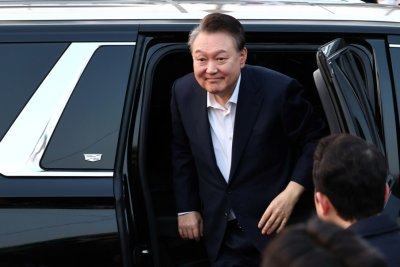
Former President Yoon Suk Yeol had prepared to declare martial law since late 2023, special prosecutors said Monday. In this March 2025 file photo, Yoon arrives at his official residence. File Photo by Yonhap/EPA-EFE

A special counsel team has determined former President Yoon Suk Yeol had prepared to declare martial law since late 2023, about a year before his failed bid in December 2024, officials said Monday.

Assistant special counsel Kim Ji-mi said in a briefing that the team has determined that Yoon had made preparations for martial law since November 2023 after questioning former Joint Chiefs of Staff Chairman Kim Myung-soo.

The now-retired admiral is said to have told the team last month that Yoon asked him whether he would do anything he would order when they met on Nov. 29, 2023.

Yoon allegedly flew into a rage when he said he would follow them if they were just orders.

The team, led by special counsel Kwon Chang-young, has left open the possibility that Yoon’s alleged remarks may have been part of preliminary efforts to recruit top military officials for his martial law bid.

Kwon’s team earlier said Yoon appeared to be preparing for martial law since the first half of 2024, citing the outcome of its questioning of a military counterintelligence official.

Meanwhile, a separate special counsel team that ended its mandate late last year after a probe into Yoon had determined that martial law preparations took place before October 2023. The team cited a notebook belonging to a retired general convicted in connection with Yoon’s martial law bid.

A Seoul court, however, did not recognize the notebook as evidence during Yoon’s insurrection trial, where he was sentenced to life imprisonment over his failed martial law bid.

Copyright (c) Yonhap News Agency prohibits its content from being redistributed or reprinted without consent, and forbids the content from being learned and used by artificial intelligence systems.

Source link

Five killed in explosion at Hanwha Aerospace factory in S. Korea

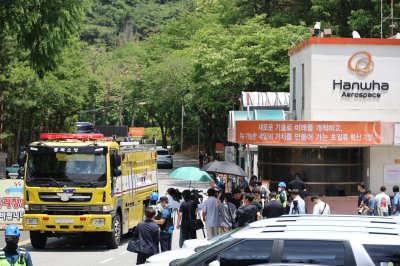
A fire truck exits the Hanwha Aerospace facility in Daejeon on Monday, following an explosion at the company’s factory that killed five and injured two. Photo by Yonhap

SEOUL, June 1 (UPI) — Five workers were killed and two others injured Monday after an explosion and fire at a Hanwha Aerospace defense facility in the central South Korean city of Daejeon, officials said.

The blast occurred around 10:59 a.m. at Hanwha’s plant in Yuseong District, fire authorities told reporters. Some 100 personnel were dispatched and extinguished the blaze shortly after 1 p.m.

All five fatalities were found inside the work area, while two injured workers were rescued and taken to nearby hospitals, officials said. One suffered burns over his entire body and remained in critical condition, while the other sustained relatively minor burns to the neck.

Authorities said the bodies of the victims were severely damaged, making identification difficult.

Hanwha officials said the explosion occurred during a cleaning operation involving tools and equipment used in the rocket-propellant manufacturing process. The company said the exact cause of the blast remains under investigation.

A company official said the cleaning process had not previously been regarded as particularly hazardous because it involved washing equipment with water. The seven people involved in the accident were site workers rather than researchers, he added.

South Korean President Lee Jae Myung ordered authorities to mobilize all available resources for emergency response efforts and conduct a thorough investigation into the cause of the accident, according to his office.

Prime Minister Kim Min-seok issued similar instructions, calling for all available personnel and equipment to be deployed for firefighting and rescue operations and to prevent additional casualties.

Hanwha Aerospace Chief Executive Officer Son Jae-il apologized to the victims and their families following the deadly incident.

“We failed to protect the lives of those who were working at what should have been a safe workplace,” Son said. “As the company’s chief executive, I feel a heavy responsibility for this accident.”

Son pledged full cooperation with authorities investigating the cause of the explosion and said the company would conduct a comprehensive review of its safety systems to prevent a recurrence.

The company said it had established an emergency response headquarters at the site and was working with fire, police and other authorities on response and recovery efforts.

The Daejeon facility is one of Hanwha Aerospace’s key defense production sites and develops propulsion systems and tactical weapon technologies.

The accident was the latest in a series of deadly incidents at the complex. Explosions at the facility killed five workers in 2018 and three more in 2019.

Source link

Iran war day 94: US strikes Iranian sites; Kuwait intercepts missiles | US-Israel war on Iran News

While a peace deal between the US and Iran remains elusive, Israel has deepened its offensive into southern Lebanon.

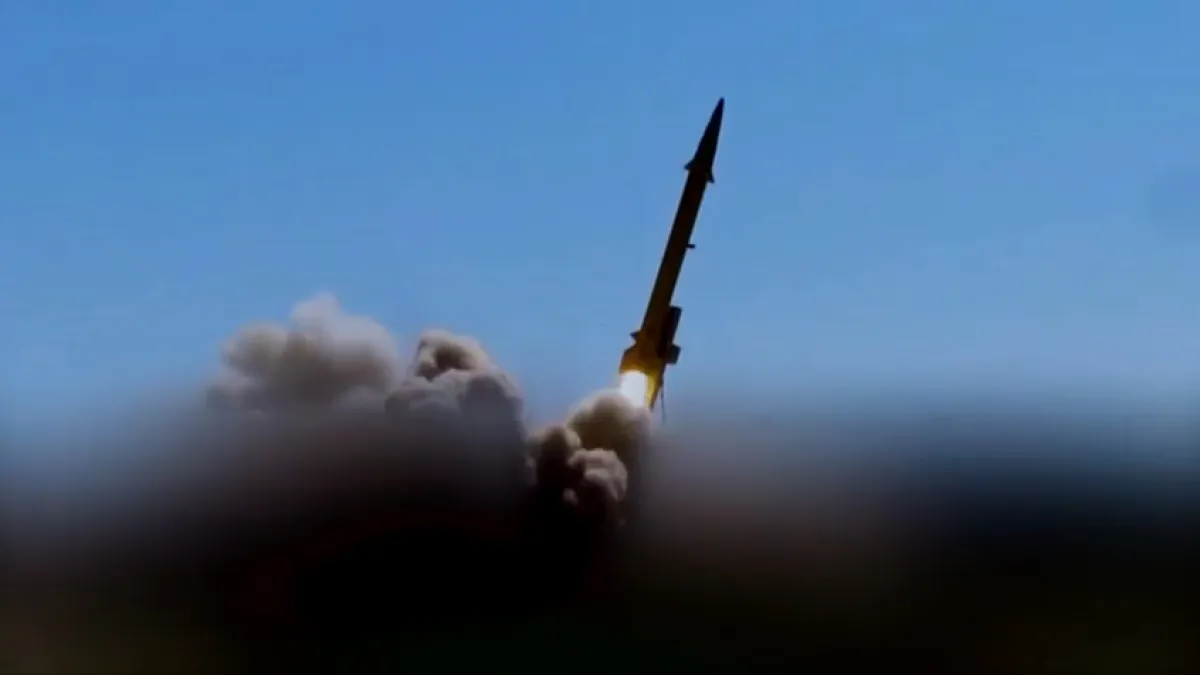
The United States military says it has struck Iranian military sites, and Iran’s Islamic Revolutionary Guard Corps (IRGC) says it has targeted a US base in response, the latest in a series of exchanges as negotiations to end the three-month US-Israel war on Iran are conducted.

US President Donald Trump also on Monday described Iran as eager to reach an agreement.

“Iran really wants to make a deal, and it will be a good one for the USA and those that are with us,” he posted on his Truth Social platform.

Here is the latest on the US-Iran negotiations as both sides announced on day 94 of the war on Iran that they traded attacks:

In Iran

  • Production restored at South Pars: Iran has restored gas production at three offshore platforms in the South Pars gasfield after Israel attacked them in March.
  • US says it attacks Iranian military sites: The US military’s Central Command (CENTCOM) said it conducted “self-defense strikes” on Iranian radar and drone sites in the city of Goruk and on Qeshm Island at the weekend.
  • Iran executes two men over January protests: Iran executed two men convicted over their role in antigovernment protests in January, according to the Mizan news agency. The men were found guilty of setting fire to a mosque in Tehran, damaging public property and clashing with security forces, Mizan reported.

War diplomacy

  • Iran says messages being sent to US: Iranian Foreign Minister Abbas Araghchi said Tehran is continuing to exchange messages with the US on a deal to end the war.
  • Trump’s stance: Araghchi’s comments came after US media reported that Trump has called for tougher terms in the preliminary agreement.

In the Gulf

  • Kuwait intercepts missiles and drones: The General Staff of the Kuwaiti army said its air defences were “confronting hostile missile and drone attacks”. If sounds of explosions are heard, they are the result of air defences intercepting the projectiles, the army added.

In Lebanon

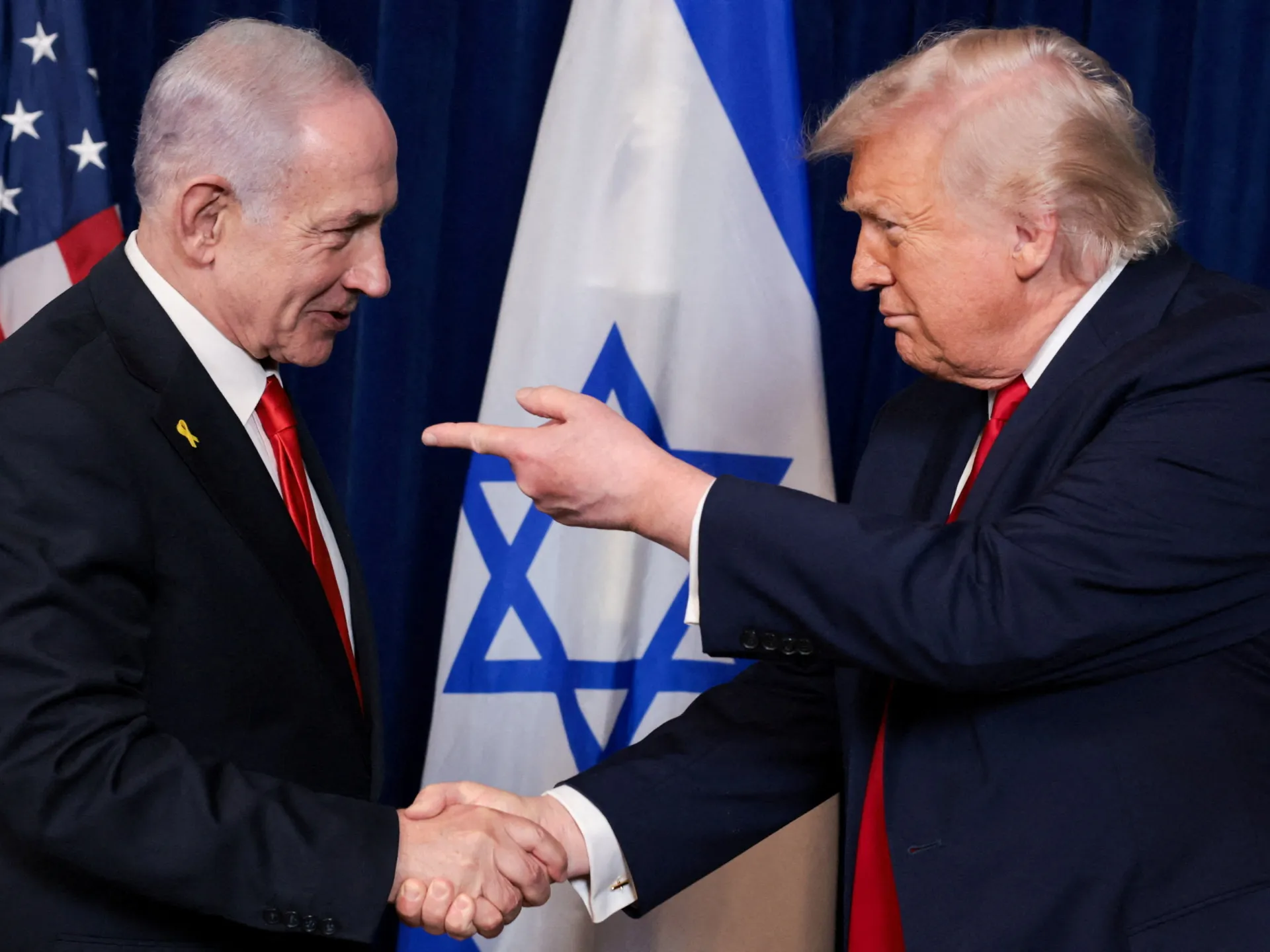
  • Israel pushes farther into Lebanon: Prime Minister Benjamin Netanyahu has ordered Israel’s military to push farther into Lebanon after Israeli forces made their deepest incursion into the country in more than 25 years.
  • Hezbollah says it downs Israeli drone: The Lebanese armed group said it shot down an Israeli Hermes 450 drone over the western sector of southern Lebanon using a surface-to-air missile on Sunday evening. It said in a statement on Telegram that the strike was in response to Israeli violations of a ceasefire that went into effect on April 8.
  • Hezbollah strikes Israeli forces in southern Lebanon: Hezbollah also said its fighters fired a large number of rockets and artillery shells at Israeli forces on the eastern outskirts of the town of Yohmor al-Shaqif in southern Lebanon early on Monday.
  • US proposes new plan: The US has put forward a proposal to de-escalate hostilities in Lebanon, a US official told Al Jazeera, adding that Secretary of State Marco Rubio held separate talks with Lebanese President Joseph Aoun and Netanyahu.

In Israel

  • Israel said rocket fired from Lebanon intercepted: The Israeli military said it intercepted a rocket that set off sirens in northern Israel and destroyed the launcher from which Hezbollah fired the projectile. Earlier, Israel’s Ynet News website reported that air raid sirens had been heard in Western Galilee, the town of Kiryat Shmona and surrounding areas.

In the US

  • The IRGC says it strikes US airbase: The IRGC said it struck an airbase that was used for an attack on a telecommunications tower on Sirik Island, located in the southern province of Hormozgan, Iran’s Fars news agency reported. The IRGC did not specify the location of the facility.
  • Trump says Iran wants to make a deal: In a new Truth Social post, Trump claimed Tehran “really wants to make a deal” and whatever deal is reached will “be a good one” for the US “and those that are with us”.

Source link

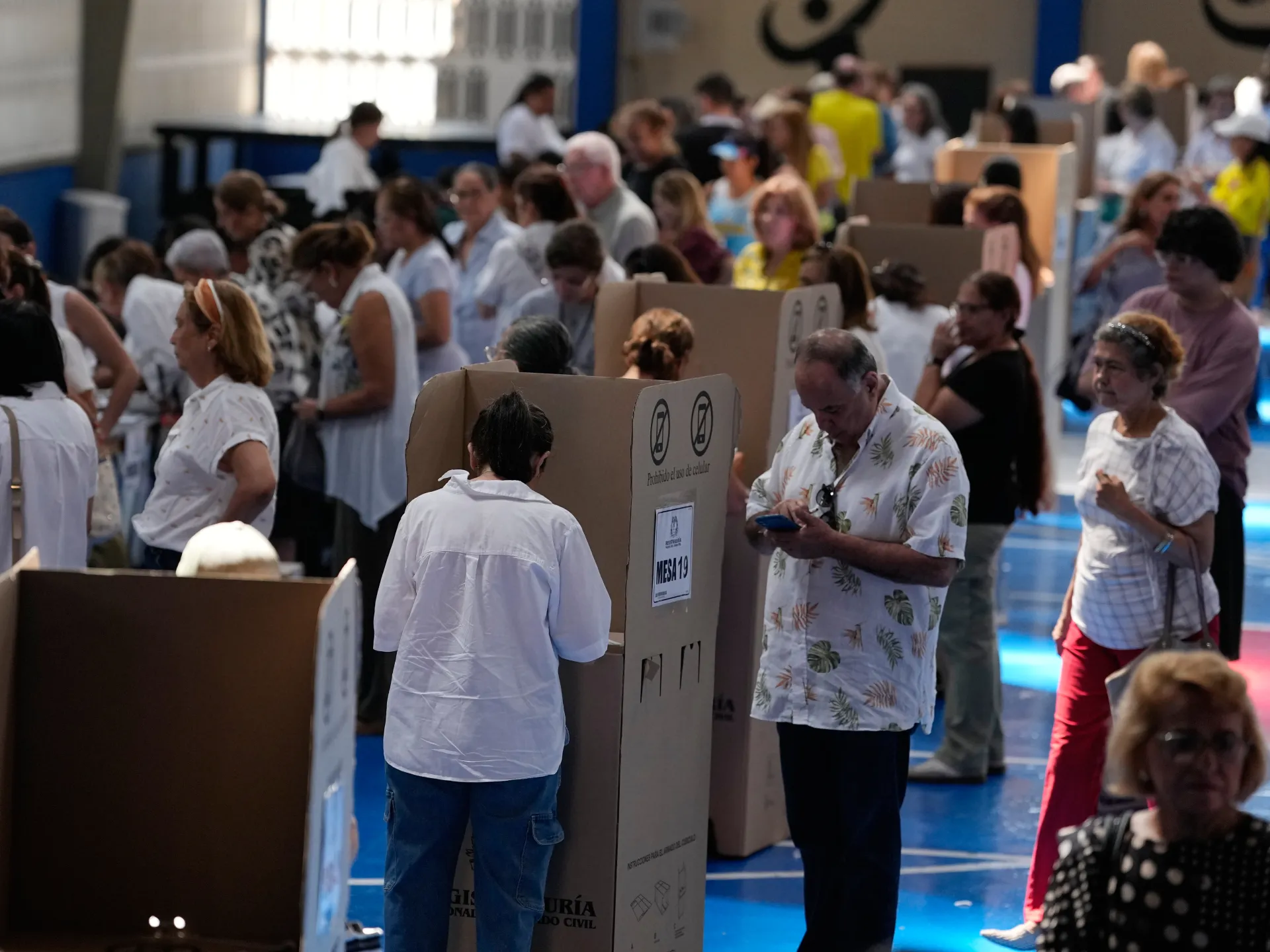
Tense election night in Colombia as country heads to presidential runoff | Elections

NewsFeed

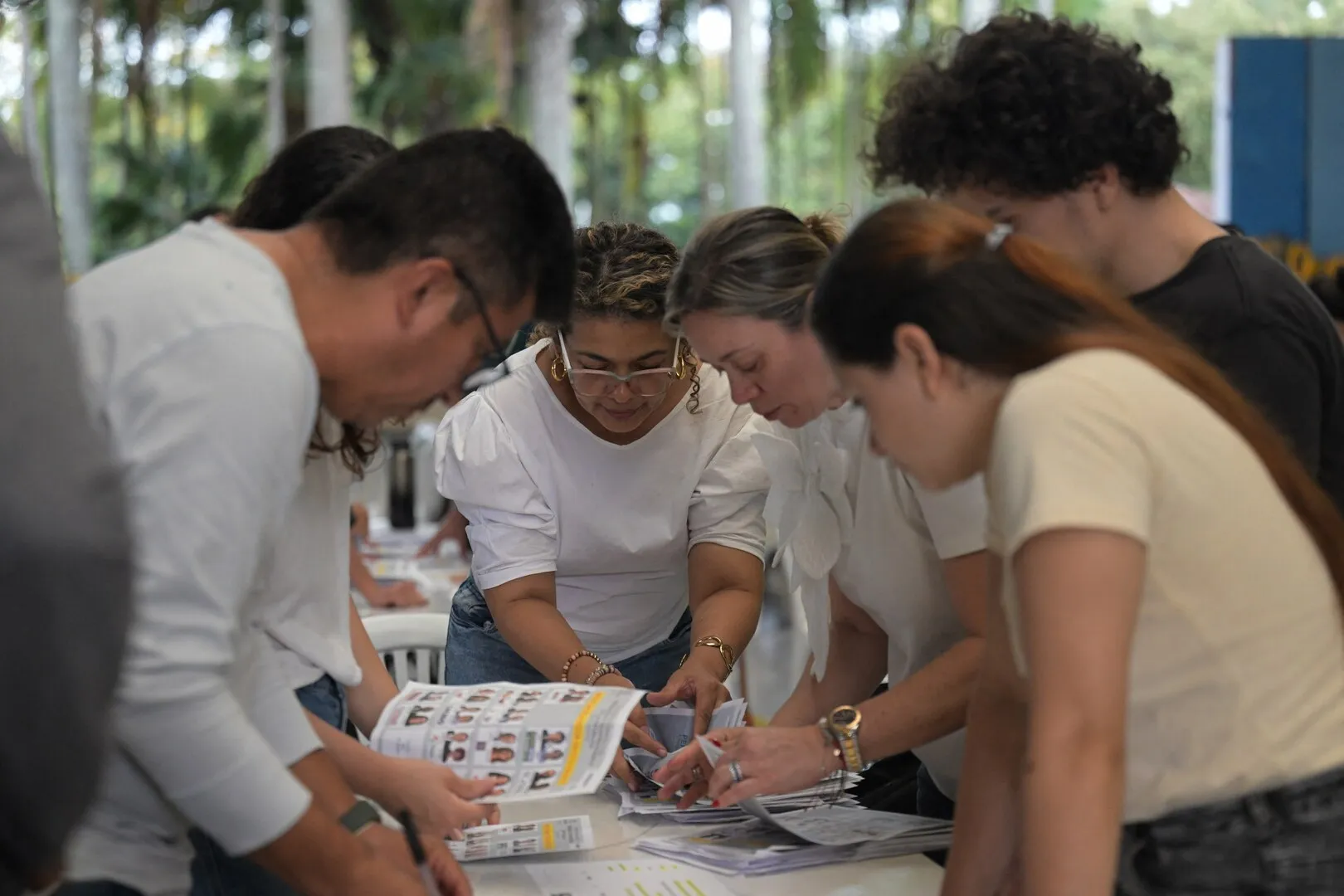
Colombia’s election heads to a June 21 runoff after a tight first round between Abelardo de la Espriella and Ivan Cepeda. The night was marked by mutual accusations, with Cepeda calling for verification of results and De la Espriella celebrating his lead.

Source link

Israel airstrike kills at least two Palestinians at Gaza port | Gaza News

NewsFeed

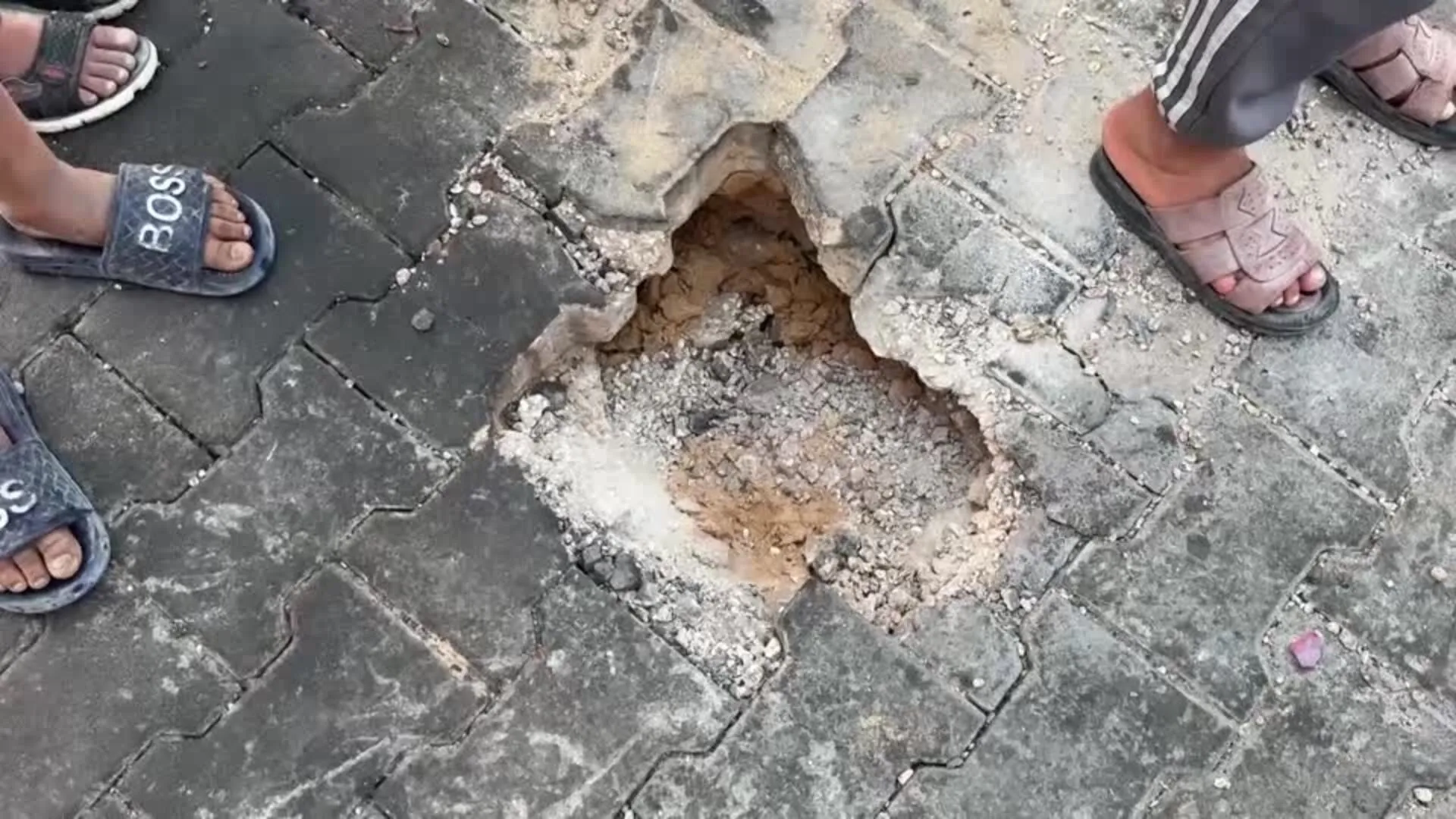
At least two Palestinians were killed and around a dozen wounded when an Israeli air strike hit a crowded cafe at Gaza’s seaport. Witnesses said people had gathered there to escape the heat and enjoy a public holiday, as attacks continue despite an October ceasefire.

Source link

Opposition files election law complaint against President Lee jae-myung

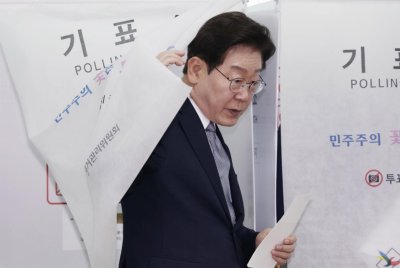
President Lee Jae-myung prepares to cast his early vote at a community center near Cheong Wa Dae in Seoul, South Korea, 29 May 2026, ahead of the 03 June local elections. Photo by YONHAP / EPA

May 31 (Asia Today) — South Korea’s main opposition People Power Party has filed a police complaint against President Lee Jae-myung, accusing him of violating election law by exposing a marked ballot during early voting for the June 3 local elections.

People Power Party Chairman Jang Dong-hyeok and other party officials visited the Seoul Metropolitan Police Agency on Saturday to file the complaint against Lee and officials from the National Election Commission who were present at the polling station. Yonhap reported the complaint alleged violations of the Public Official Election Act.

The controversy began Friday when Lee stepped out of a voting booth during early voting and asked an election official whether a partially stamped ballot would still be valid. The opposition party said Lee’s handling of the marked ballot violated the principle of secret voting and the election law provision barring disclosure of a marked ballot.

Jang said Lee’s action could not be dismissed as a simple procedural mistake.

“This is not about one person,” Jang said. “It is about protecting the law and the principles of elections.”

The People Power Party also raised concerns about Lee’s public appearances ahead of the local elections, including visits to traditional markets, arguing they could violate restrictions on election involvement by public officials.

The party also accused election officials at the polling station of failing to take proper action after the ballot was allegedly exposed, saying they should face allegations under election law and possible dereliction of duty.

The National Election Commission previously said Lee did not leave the polling station and did not intentionally expose the ballot, meaning the incident did not constitute a legal violation. The commission also said Lee returned to the booth and completed voting after receiving guidance from officials.

The ruling Democratic Party rejected the opposition’s claims, saying Lee had merely asked an election official to confirm whether the stamp mark was valid.

The party said Lee did not reveal support for any candidate and accused the People Power Party of turning a minor incident into a political offensive before election day.

The dispute has added to the political tension surrounding South Korea’s local elections, which are being closely watched as an early test of public support for Lee’s government.

— Reported by Asia Today; translated by UPI

© Asia Today. Unauthorized reproduction or redistribution prohibited.

Original Korean report: https://www.asiatoday.co.kr/kn/view.php?key=20260601010009198

Source link

US says ban on AI chip shipments applies to Chinese firms outside China | Technology News

Department of Commerce issues guidance on chip restrictions amid concerns about loopholes in export control regime.

The United States has issued a notice affirming its restrictions on shipments of semiconductors to subsidiaries of Chinese companies located outside China amid concerns about loopholes in Washington’s export control regime.

The Department of Commerce said in the guidance issued on Sunday that its licensing requirements for the export of advanced AI chips applied to all businesses with headquarters or a parent company in China.

Recommended Stories

list of 4 itemsend of list

The Bureau of Industry and Security (BIS), which falls under the Commerce Department, said it issued the clarification in response to questions about whether it was enforcing preexisting licence requirements after it had overturned former President Joe Biden’s AI Diffusion Framework.

“The answer is yes,” the BIS said in the notice.

Unveiled in the final days of the Biden administration, the AI Diffusion proposed the implementation of a globe-spanning framework to control access to AI chips, including export caps for all but the closest US allies.

The framework drew backlash from tech firms, including Nvidia, the world’s most valuable chip company, which cast the proposal as a threat to innovation and cross-border collaboration.

President Donald Trump’s administration scrapped the framework last May, ahead of its implementation, citing the “burdensome new regulatory requirements” and the harm it would do to Washington’s diplomatic relations with other countries.

Chip giant Nvidia, whose top-of-the-line Blackwell GPUs are banned for export to China, said it had already been operating in keeping with the clarified rules.

“The guidance reaffirms that NVIDIA’s sales and vetting process is correct – consistent with our existing approach, licences are required to ship controlled products to PRC headquartered companies,” a Nvidia spokesperson told Al Jazeera, using the acronym for the People’s Republic of China.

AMD and Intel, Nvidia’s main competitors in the GPU space, did not immediately respond to requests for comment.

TSMC, which manufactures the most advanced chips on behalf of clients such as Nvidia, did not immediately return an email seeking comment.

The BIS also did not respond to inquiries.

Chris McGuire, a former State Department official who worked on technology policy in the Biden administration, accused the Trump administration of providing Chinese companies a loophole to buy export-controlled chips.

“Chinese companies have been buying these chips, very likely at scale. And because BIS has not updated export control regulations to clearly state what it IS enforcing, all of this was legal,” McGuire said in a post on X.

“This clarification does make clear that Blackwell shipments to China-headquartered companies outside of China are now illegal again – which is good, although obviously we have to see how many shipments have already gone to assess how much damage was done,” McGuire said.

“BIS’ statement acknowledges these shipments have been happening when it says companies who bought chips under this loophole don’t have to stop using them.”

The US has rolled out numerous restrictions on the supply of high-end technology to China, as Washington and Beijing battle for dominance in AI.

In December, Trump announced that he would allow Nvidia to sell its H200 chip to China, in a major loosening of Washington’s export controls.

While not Nvidia’s most advanced chip, the H200 is about six times as powerful as the H20, the most advanced chip previously allowed for export to China.

Source link

Colombia’s outsider candidate defied the polls | Elections

NewsFeed

Colombia’s presidential election is headed to a runoff on June 21. Far-right outsider, Abelardo de la Espriella, will face leftist senator, Ivan Cepeda. Professor Jorge Restrepo describes de la Espriella’s rise in the polls as a punishment vote against Colombia’s long-established political class.

Source link

55 killed, Myanmar village destroyed in accidental gunpowder blast

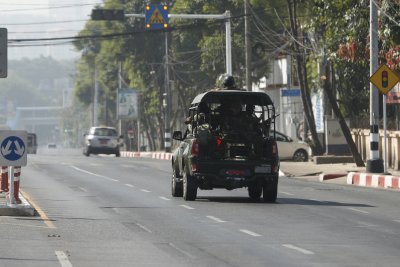
A military vehicle patrols on the road in Yangon, Myanmar, in February 2022. An accidental explosion in a rebel-held part of the country on Sunday killed 55 people and injured many more, rebel leaders said. File photo by Stringer/EPA-EFE

May 31 (UPI) — Fifty-five people were killed, including six children, in an accidental detonation of mining explosives in a rebel-held area of Myanmar, the armed group said Sunday.

The Palaung Self Liberation Front/Ta’ang National Liberation Army, also known as the PSLF/TNLA, said in a statement that many others were also hurt in the blast, which happened Sunday afternoon local time in northern Shan State.

Rescuers told the Shwe Phee Myay News Agency the entire village of Kaung Tat in Namkham Township had been virtually destroyed and that “dozens” had been injured in the disaster.

Local officials have sent out an urgent call for blood donations as emergency workers tried to free victims trapped in rubble.

The PSLF/TNLA confirmed that many homes in the village were damaged when soft gunpowder stored for mining operations accidentally exploded at around 12:30 p.m.

The fatalities included 25 females and 30 males, they said, adding that the cause of the explosion will be investigated in detail.

Authorities, they said, “will take action in accordance with the law.”

The Ta’ang National Liberation Army is one of the main ethnic rebel groups in Myanmar fighting for independence from the central government, which along with its ally the Palaung Self Liberation Front comprise a front of resistance to the country’s military government.

Source link

Can AI cure loneliness? South Korea’s robot companions for seniors | Newsfeed

NewsFeed

South Korea is using AI-powered companion dolls to help tackle loneliness in its ageing population. The robots remind seniors to take medication, monitor wellbeing and call for help in emergencies. As AI expands, concerns remain over whether it can ever replace human connection.

Source link

Newark mayor imposes curfew at Delaney Hall immigration detention centre | Protests News

Ras Baraka, the mayor of Newark in New Jersey, has imposed a curfew on the area surrounding Delaney Hall, the immigration detention centre that has become a flashpoint in the debate over United States President Donald Trump’s mass deportation drive.

The Sunday morning announcement came amid a flare-up in tensions outside the detention centre, which is run by the private contractor GEO Group, as part of a 15-year deal with Immigration and Customs Enforcement (ICE).

Recommended Stories

list of 3 itemsend of list

“Due to the escalating situation at Delaney Hall and the increasing need for police intervention, immediate action is required to protect public safety,” Baraka wrote in a statement.

“Multiple individuals have already been arrested and found in possession of weapons, underscoring the seriousness of the threat.”

As part of the curfew, movement will be restricted within half a mile (0.8km) of the detention centre between the hours of 9pm and 6am US Eastern time (1:00 to 10:00 GMT).

A nearby road, Doremus Avenue, will also be closed to pedestrians and vehicles that cannot verify their need to be in the area.

Since the reopening of Delaney Hall as an immigration detention facility last year, it has been the site of confrontations between law enforcement and protesters, including Mayor Baraka himself.

The month of May has seen more than a week of daily protests outside Delaney Hall, after lawyers for the detainees at Delaney Hall announced a hunger strike was unfolding inside.

Detainees have denounced the living conditions to human rights groups, reporting expired food, a lack of medical care and abuse at the hands of authorities.

The Trump administration has justified its mass deportation campaign as an effort to rid the US of “the worst of the worst”, framing undocumented immigrants as a criminal threat.

But critics point out that many of those detained have no criminal record, and some who do have only been cited for minor offences.

The Transactional Records Access Clearinghouse, a data-tracking service from Syracuse University, found that, as of April, roughly 71 percent of those in ICE detention had no criminal conviction.

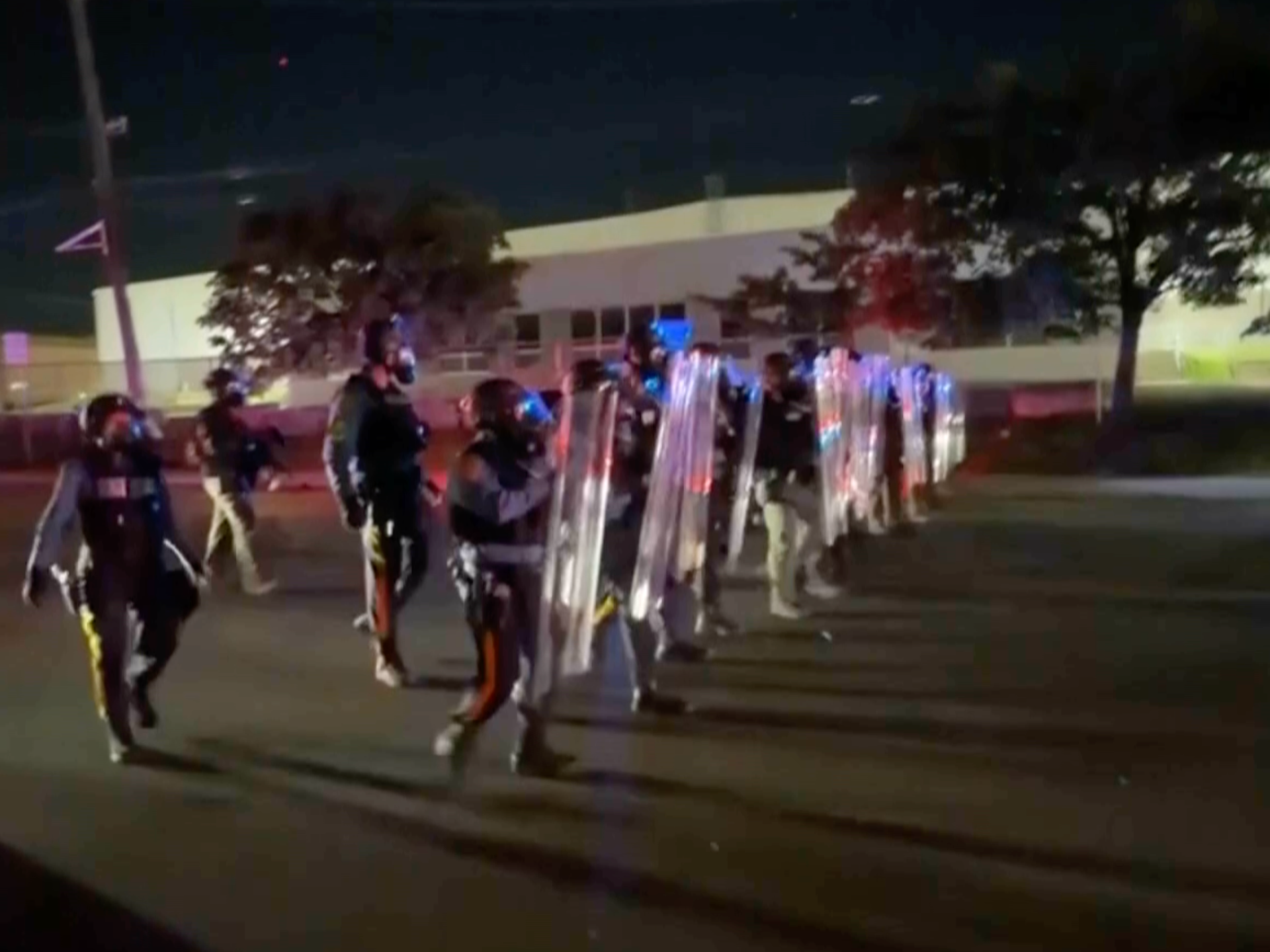
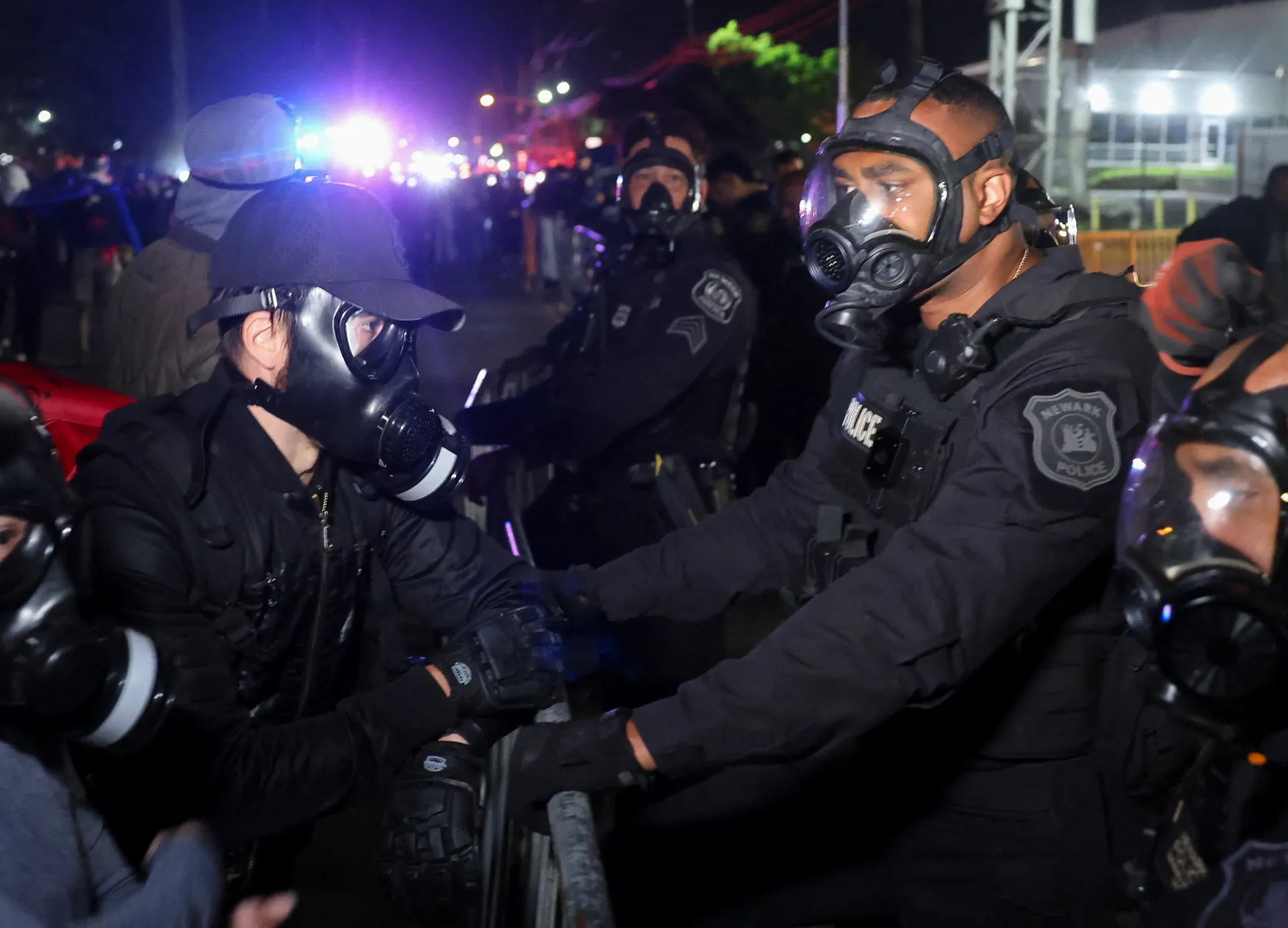
To show solidarity with the hunger strike, protesters have been gathering outside Delaney Hall, locking arms to form human chains and creating barricades to prevent access.

But that has led to tense confrontations with law enforcement, who have used batons and pepper spray to try to clear roads to the facility.

Governor Mikie Sherrill called for the establishment of designated protest zones, to mitigate the likelihood of conflict between officers and demonstrators.

But clashes have continued. Overnight on Wednesday, six protesters were arrested.

Politicians themselves have encountered tense interactions at Delaney Hall.

A year ago, one protest resulted in trespassing charges against Mayor Baraka and assault charges against US Representative LaMonica McIver, after a disagreement over which officials could enter the facility for an inspection.

While the charges against Baraka were dropped, McIver continues to face legal proceedings. She has denied the charges and called the prosecution politically motivated.

“One year ago, the Trump administration threw baseless charges against me for conducting oversight to protect immigrants at Delaney Hall,” McIver wrote on social media on Saturday.

“Have they tried to silence me? Yes. Have the stakes risen? Yes. Am I backing down from speaking up for you? Never.”

This past week, Governor Sherrill was also denied access to the facility. She has since issued a statement calling for Delaney Hall to be shut down.

At a news conference on Saturday, she blamed “national extremist groups” for arriving from out of state and escalating tensions. She added that the current precautions were designed to protect the safety of peaceful protesters.

“I urge those protesting outside of Delaney Hall to bring the temperature down, so we can focus on the detainees and their families,” Sherrill said.

She suggested that the actions of state and local officials would help head off any expanded ICE operations in New Jersey.

“I will not give ICE a pretext to expand operations at Delaney Hall or across our state. I will not put lives at risk,” she said. “I’m grateful to the vast majority of protesters who have assembled peacefully and raised their voices about Delaney Hall’s conditions.”

Source link

US Congress moves to deepen military ties with Israel: Why it matters | Military News

Lawmakers in the United States are quietly advancing a proposal that could deepen military ties between the US and Israel in unprecedented ways, at a time when public support for Israel among Americans is increasingly fractured.

Among the provisions included in the 2027 National Defence Authorisation Act (NDAA) released this week is Section 224, the “United States-Israel Defence Technology Cooperation Initiative”.

Recommended Stories

list of 4 itemsend of list

The NDAA, which Congress passes annually to set military policy and authorise defence spending, will undergo further debate and amendments before becoming law. Some legislators have already signalled opposition, with Representative Thomas Massie saying he would seek to remove the provision if it reaches the House floor.

The measure remains at an early stage, but analysts say if passed, it would limit political oversight over the defence relationship.

Analysts added that it could mark a significant shift in the US-Israel relationship, moving beyond a model centred on American military aid towards deeper institutional integration between the two countries’ defence industries and militaries.

Critics argue that such a move would make support for Israel less a matter of political choice and more a structural feature of US national security policy, embedding the relationship within joint military and industrial programmes that would be difficult to unwind.

What does the proposal include?

Section 224 incorporates elements of the US-Israel Future of Warfare Act legislation introduced by Representative Ronny Jackson, according to Track AIPAC. While the legislation did not advance as a standalone bill, key elements of it were instead folded into the NDAA.

The provision would require the US defence secretary to designate an official responsible for coordinating military cooperation between the two countries. According to the text, that official would be tasked with “synchronising cooperative efforts between the United States and Israel”, including “bilateral defence technology research, development, testing, evaluation, integration and industrial cooperation”.

The legislation envisages cooperation across a wide range of military technologies. It specifically identifies as priority areas; “counter-unmanned systems including aerial, maritime and ground platforms”, “anti-tunnelling and subterranean threats”, and “missile and air defence technologies”.

The proposal also seeks to deepen collaboration on emerging technologies, including “artificial intelligence, quantum machine learning and autonomous systems”, as well as “directed energy and advanced sensing”, “cyber defence, electronic warfare and digital resilience”, and “biotechnology, biomanufacturing, and medical defence”.

The inclusion of “network integration” and “data fusion” has drawn particular attention because it suggests significantly closer integration of military information systems between the two countries.

The United States and Israel already cooperate on defence projects, including missile defence systems such as Iron Dome. However, analysts say that Section 224 would expand cooperation into nearly every major area of emerging military technology, and could create a “lock-in” between the two countries military infrastructure.

Mark Hilborne, a senior lecturer, the School of Security Studies at King’s College London, told Al Jazeera the proposal goes well beyond the traditional foundations of the US-Israel defence relationship.

“While historically, the US-Israel defence relationship has included US military aid and weapons transfers, joint missile defence programmes such as Iron Dome, David’s Sling and Arrow, and intelligence and operational cooperation, the proposed agreement increases cooperation to include a wider set of emerging technologies,” he said.

“So this all suggests a much tighter integration – less about provision and perhaps sharing technologies and capabilities, and more about jointly developing these.

“It would point to a more institutionalised relationship, and perhaps one that might survive changing administrations in the US, as some of the development cycles could be very long and would become entrenched,” he said.

Why is it controversial?

The proposal comes amid growing debate in the US over military support for Israel, particularly as Israel’s genocidal war on Gaza continues, and concerns mount over the use of US-made weapons.

Human rights organisations and United Nations experts have repeatedly raised concerns about Israeli military actions in Gaza, where despite a so-called ceasefire in place since last October, at least 850 Palestinians have been killed. Israel is also advancing into southern Lebanon, where it has killed more than 3,000 people since the beginning of March.

These wars have led to increasing scepticism among Americans towards unconditional support for Israel, recent opinion polls suggest.

A New York Times poll in May found that only 30 percent of respondents believed Donald Trump made the right decision in ordering military strikes against Iran, while 64 percent said it was the wrong decision.

An Institute for Global Affairs poll released last week found that only 16 percent of Americans support continuing weapons transfers to Israel without additional restrictions. Thirty-eight percent said the US should stop supplying weapons entirely, while 24 percent said military aid should be conditioned on how the weapons are used.

Opposition has also emerged from parts of the Republican Party, which traditionally has always been aligned with Israel.

Former Representative Marjorie Taylor Greene criticised the proposal on social media, writing: “This is what complete capture to a foreign government looks like, and there hasn’t been a single shot fired.”

Massie, who has opposed military aid to Israel, likewise pledged to introduce an amendment removing the provision from the NDAA. The Republican senator was defeated in the primary elections last month, highlighting the financial and political influence of pro-Israel lobby groups in the US.

Influential conservative commentator, Tucker Carlson, has increasingly criticised US support for Israel, reflecting divisions within the broader MAGA movement. Criticism has also intensified among left-wing Democrats, with many calling for restrictions on military aid to Israel.

What could it mean in practice?

Critics of the measures warn that the proposal could create a form of institutional “lock-in” that makes both countries simultaneously reliant on each other for military development and procurement.

Some analysts say such integration would move key aspects of the US-Israel relationship away from highly visible aid votes or commercial contracting, and into the less transparent world of defence procurement and industrial partnerships at a state-to-state level.

Hilborne from the King’s College said the initiative could also have direct implications for Palestinians. “If joint R&D produces more effective technology, then systems related to surveillance, autonomous vehicles, AI and targeting, and various counter-drone or counter-missile technology would be improved, providing a capability boost to Israeli forces operating in Gaza or the West Bank,” he said.

“This enhanced integration would further embed US technology into Israeli forces. These would all be concerns from a Palestinian perspective.”

Critics also point to the economic implications, where expanded co-production agreements could lead to new manufacturing facilities and defence jobs in the United States, creating a further reliance on Israel.

Hilborne also argued that deeper integration could reduce Washington’s leverage over Israel. “The deeper integration may also mean that the US loses some degree of leverage over Israel, as it would be less able to withhold certain capabilities from Israel,” he said.

“As a consequence, Israel might be emboldened in its policies.”

The proposal could also have implications beyond the US-Israel relationship, according to Imad Salamey, an international relations professor at the Lebanese American University. “The proposed US-Israeli defence integration can be seen as the next phase of the Abraham Accords: moving from normalisation toward a US-backed regional security regime centred on Israel as the dominant military and technological hub,” he told Al Jazeera.

Such a framework would strengthen efforts to contain Iran, limit Turkiye’s independent regional influence and deepen security cooperation with Arab partners, he said.

“For Lebanon and Gaza, it may translate into greater pressure to accommodate Israeli-led security arrangements as part of a broader emerging Middle Eastern order.”

Whether Section 224 survives the legislative process is uncertain.

But its inclusion in the NDAA shows how some politicians, many backed by the pro-Israel lobby group AIPAC, are attempting to bind the two countries’ militaries closer together, creating long-term industrial links that future administrations may find difficult to reverse.

Source link

Police arrest 780 in Paris soccer team victory riots

Paris Saint-Germain fans react in Parc des Princes stadium after the team defeated Arsenal in Paris on Saturday. Photo by Valentina Camu/EPA

May 31 (UPI) — Police in France arrested hundreds of people late Saturday after celebrations for the Paris Saint-Germain soccer team turned violent, local authorities said.

Interior Minister Laurent Nuñez said the riots injured 57 police officers in Paris and other cities across the country, The Guardian reported. Some of the soccer fans also set fires, vandalized businesses and attempted to storm a Paris police station.

Police arrested 780 people and deployed tear gas to break up the riots, Politico reported.

“Most of the celebrations took place peacefully, Nuñez said, adding that most of the violent clashes took place near the Parc des Princes stadium where fans had gathered to watch the match between Paris Saint-Germain and Arsenal for the Champions League title.

French leaders took to social media to criticize the rioters and call for peace.

“Only in France does a football club’s victory spark riots,” far-right leader Marine Le Pen wrote in a post on X. “Only in France does everyone feel compelled to lock themselves in their homes on the evening of a victory to avoid being confronted with violence.”

Valérie Pécresse, the head of the Île-de-France region, said those involved in the riots should be punished.

“The brainless thugs who think they can smash everything are tarnishing the image of Paris and France!” Pécresse said in a post on X. “We must be able to celebrate on victory nights peacefully in Paris and the Île-de-France Region!”

Source link

Juan Manuel Santos on Colombia’s peace process, 10 years on | Politics

Ten years after Colombia’s landmark peace agreement, former president Juan Manuel Santos assesses its legacy. The Nobel Peace Prize laureate discusses renewed violence, political divisions and what Colombia’s experience can teach a world facing growing conflict.

Source link

Rescuers race to save two people still trapped in cave in Laos | Floods News

Rescuers face heavy rains, equipment failures in search for two people trapped in central Laos cave by flash floods.

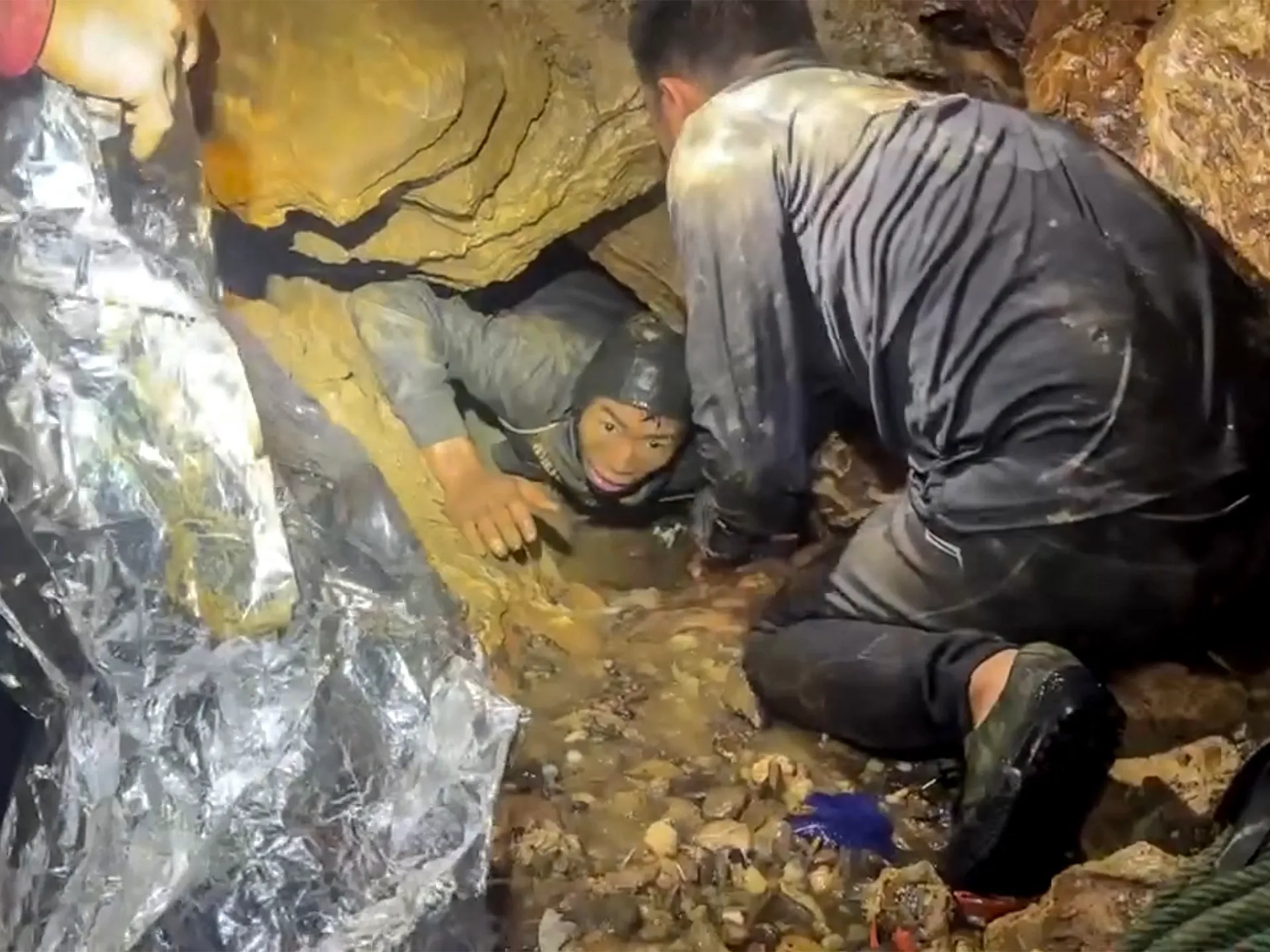
Heavy rains have threatened to delay the search for two people who remain missing in a flooded cave in Laos, after five others were rescued after being trapped underground for more than a week.

Finnish diver Mikko Paasi, one of the first international rescuers to arrive at the site, told The Associated Press news agency that rains on Sunday had filled the cave up to the second chamber, preventing divers from entering until pumps can lower the water level.

Recommended Stories

list of 3 itemsend of list

A drainage pump also broke, making the situation even more difficult, said fellow diver Yoshitaka Isaji of Japan.

Rescue teams from Laos and neighbouring Thailand have been working together over the past week to rescue the trapped villagers, alongside divers from countries including Finland, Malaysia, Japan, Indonesia, France and Australia.

Seven people entered the cave in a remote mountainous area of central Xaysomboun province last week to look for valuable minerals such as gold, before being trapped by a flash flood that blocked their way out, according to local media reports.

One other person escaped and alerted the authorities.

A Laotian rescue group said on Sunday it had received “substantial” information on the cave system from the five men who were rescued earlier this week. “The hope is that today’s mission will locate both remaining victims,” the group wrote on social media.

The rescued men were being treated at a local hospital and were doing well, Malaysian diver Lee Kian Lie, who is taking part in the operation, told AP.

“We interviewed them about how the deeper part of the cave looks like. We will continue to search based on the information we have, and perhaps we will be able to get to the other two,” he said.

Rescuers said they navigated more than 200m (650 feet) into the cave and discovered five chambers in the system. The five people rescued so far were found in the fifth chamber.

Paasi, the Finnish diver, told AP that the survivors reported a narrow crack in the fifth chamber that could be a passage leading to a deeper part of the cave system.

“This was the only place that we haven’t checked in the mine, where the two lost miners could still be,” he said in a video interview.

The five men who were rescued – identified by their first names as Khamla, Mued, Ee, Ing and Laen – were first found last Wednesday.

The first man was safely extracted on Friday, guided through a narrow flooded passage by an expert diver. The remaining four left the cave on Saturday, after the water receded enough for them to walk out on their own, rescuers said.

Videos posted online on Saturday showed emotional moments as the men emerged one by one from the cave. Some collapsed on the ground at the cave’s entrance, and were hugged by a group of workers who cried with joy.

Later moments showed them lying on stretchers, wrapped in foil blankets and fitted with oxygen masks before being transported out.

Source link