From breaking news to significant developments in politics, business, technology, entertainment, and more, we deliver the stories that shape our global landscape.
An AI-generated illustration depicts research into a disease-activated prodrug for Alzheimer’s disease. Data from KAIST. Graphic by Asia Today and translated by UPI
July 2 (Asia Today) — South Korean researchers have developed an experimental prodrug that uses elevated hydrogen peroxide in brains affected by Alzheimer’s disease as a signal to activate treatment, KAIST said Thursday.
The compounds remained largely inactive under healthy brain conditions but became active therapeutic agents after encountering hydrogen peroxide associated with Alzheimer’s pathology. The researchers confirmed their effects in animal experiments.
The research was led by Mi Hee Lim, a professor in KAIST’s Department of Chemistry. The university worked with research teams led by Min Geun Kim of Chonnam National University, Chul Ho Lee and Kyung Sim Kim of the Korea Research Institute of Bioscience and Biotechnology and Young Ho Lee of the Korea Basic Science Institute.
A prodrug is an initially inactive compound that converts into an active treatment only under specific conditions in the body.
The research team designed its prodrugs to activate only when exposed to hydrogen peroxide, a reactive oxygen species found at elevated levels in brains affected by Alzheimer’s disease.
Hydrogen peroxide has generally been treated as a harmful substance that should be removed because it can damage cells. The researchers instead used it as a biological signal to switch on the treatment.
The two prodrugs, called BE-1 and BE-2, showed little reaction under healthy brain conditions. When exposed to hydrogen peroxide in an Alzheimer’s-like environment, they converted into active compounds known as AP-1 and AP-2.
The activation process reduced hydrogen peroxide and other reactive oxygen species. It also interfered with the aggregation of amyloid beta, a protein that can accumulate in the brain and form toxic clumps associated with Alzheimer’s disease.
Advanced analytical tests showed that the activated compounds altered the structure of amyloid beta and prevented it from developing into larger aggregates, the researchers said.
Tests using mice with Alzheimer’s-like conditions showed that the prodrugs crossed the blood-brain barrier, which regulates which substances in the bloodstream can enter the brain.
The compounds then converted into their active forms inside the animals’ brains. The findings demonstrated that the prodrugs could reach their intended target and respond to the disease-related environment.
The approach differs from treatments designed to act continuously against a single protein. Instead, the KAIST-led strategy uses conditions within diseased tissue to activate treatment only where it is needed.
Researchers said this targeted activation could provide a strategy for increasing therapeutic effects while limiting unnecessary activity in healthy tissue. KAIST said the technology could also have potential applications in treatments for Parkinson’s disease and other neurodegenerative disorders.
“This study is significant because it uses hydrogen peroxide, which had previously been regarded only as something that should be removed, as a signal that activates the drug,” Lim said.
“The technology, which activates drugs only in diseased tissue, could become a new platform for treating complex diseases such as Alzheimer’s more safely and effectively,” she said.
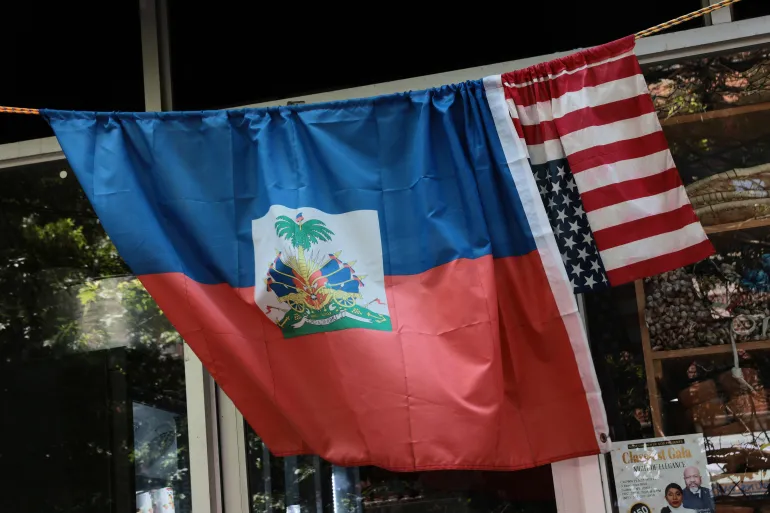
On June 25, the United States Supreme Court decision allowed President Donald Trump and his administration to end Temporary Protected Status (TPS) for Haitians, paving the way for their legal immigration status to be removed.
Trump has pushed to end TPS for several groups, as part of his efforts to restrict immigration into the US.
Recommended Stories
list of 3 itemsend of list
But lawmakers from both political parties have argued that stripping Haitians of their TPS status could create a caregiving crisis, given their presence in key industries like healthcare.
“Of the 350,000+ lawful Haitian TPS holders, roughly 1/3 work in our healthcare system. Immediately shutting off TPS will create a crisis in our hospitals, nursing homes, and in the [intellectual disabilities] community,” Republican Representative Mike Lawler wrote on the social media platform X.
Democratic Representative Ayanna Pressley echoed that sentiment in a statement.
“Seniors will lose their caregivers when we already have a caregiving crisis, and seniors will lose their ability to age in community with much-needed assistance,” she wrote.
The Temporary Protected Status programme allows nationals from countries experiencing crises, such as natural disasters or armed conflict, to live in the United States for up to 18 months. The federal government had previously renewed the designations, making them effectively permanent, before President Trump took office for a second term in 2025.
Lawler’s estimates about how many Haitians with TPS work in the US healthcare system are within the range of what the data show.
The Trump administration decision — and Supreme Court ruling — affect about 330,000 Haitians whose TPS-related work authorisations expire on July 10. They face deportation unless they qualify for another status. The ruling also applies to Syrians and Venezuelans.
About 158,000 Haitians in Florida have TPS, the majority of whom are in South Florida. The Sunshine State has the largest population of TPS recipients in the US: nearly 404,000 people. More than half are from Venezuela and about one-third are from Haiti, according to the nonpartisan Congressional Research Service.
With an ageing population and an existing caregiver shortage, healthcare experts say the end of TPS for Haitians will have a significant effect on the US healthcare industry.
Of the 330,000 Haitian TPS holders, about 13,000 work daily as nursing assistants, caring for 65,000 patients, The Boston Globe found. Another 8,000 Haitian caregivers serve 12,000 children and ageing people, according to Americans for Immigrant Justice, a Miami-based nonprofit law firm that provides free representation to low-income immigrants.
Experts said the TPS healthcare workforce exodus will be felt most acutely in New York, Massachusetts and Florida.
With its high populations of older people and immigrants, Florida is expected to be particularly hard-hit.
David Grabowski, a Harvard Medical School healthcare policy professor, said the decision will “have a major impact on nursing homes, assisted living facilities and home care agencies”.
What will happen if most Haitians with TPS are deported?
Healthcare researchers say deporting Haitian recipients of Temporary Protected Status will add pressure on a strained system.
Immigrants who have TPS are more likely to work in healthcare, with one 2025 study finding that recipients represent 15 percent of all noncitizen healthcare workers. (TPS recipients make up about 2.1 percent of the total immigrant population.)
Immigrants make up a large share of direct care workers — people who are home health aides, personal care aides and nursing assistants.
There is already a national shortage of home health aides, personal care aides, nursing assistants and other long-term care and eldercare workers, but the US will need even more in the future. The US 65-and-up population is expected to rise from 58 million to 82 million by 2050 — a 42 percent increase.
Nearly half of US nursing homes report limiting admissions due to staffing shortages, and 19 percent recently met the minimum staffing levels set by the Centers for Medicare & Medicaid Services. In 2023, shortages of nurses and other employees caused about two-thirds of US hospitals to operate below capacity.
“People who run nursing homes, chronic care hospitals and home care agencies – they are all saying this is a crisis,” said Dr Steffie Woolhandler, a distinguished professor of public health at City University of New York’s Hunter College. “There has long been a shortage of folks who are willing to do direct care work as nursing aides, and there’s still a shortage now, so, of course, if the US deports them all, it’s just going to make it worse.”
Drishti Pillai, the director of immigrant health policy at the research nonprofit KFF, said, “The long-term care industry is already facing shortages prior to these immigration policy changes, so I think it’s accurate to say that this is going to further exacerbate the situation.”
Hundreds of thousands of Haitian TPS holders live in the US, in neighbourhoods like New York City’s Little Haiti [Michael M Santiago/Getty Images via AFP]
Why do so many Haitians with TPS work in caregiving?
Healthcare experts pointed to several reasons for TPS holders’ high numbers in direct care, including job availability, an easier certification process compared with other healthcare jobs, and prior experience caring for family members.
“We do not have sufficient native-born workers to fill all the caregiving jobs,” Grabowski, the healthcare policy professor, said.
These positions also typically have lower barriers to entry for licensure, or no English language requirements, experts said. Refugee settlement organisations often recommend the work to immigrants for those reasons.
The positions are “extremely difficult to fill” because they’re physically and emotionally demanding, with low pay and with little or no employee benefits, said Priya Chidambaram, senior policy manager with KFF’s programme on Medicaid and the uninsured.
Some Haitians also have experience caring for sick family members in their homes, given the lack of nursing home infrastructure in their home country.
In the end, experts said there will be many more people who need this care than people who will be able to provide it.
“This was true before the ruling,” Chidambaram said. “Now, the impact will only be worse.”
Dakar, Senegal – The silence came before kickoff. Not from fear but anticipation, a nation holding its breath.
Across Dakar, radios crackled from open windows. Men gathered shoulder to shoulder in cafes, their eyes fixed on flickering television screens. Families crowded into living rooms. Friends leaned over phones, tea growing cold as conversation gave way to concentration.
Recommended Stories
list of 3 itemsend of list
The city’s usual rhythm horns, its markets, its arguments, its laughter – did not disappear. It simply yielded to something larger.
Senegal were in the first knockout round of the World Cup, playing against Belgium.
On the 25th-minute mark of the game, the boy from the suburbs of Dakar, Habib Diarra, delivered the nation from its anxiety, sweeping a loose ball beyond the Belgian goalkeeper: 1-0 to Senegal.
Eight thousand kilometres away from the game in Seattle, the United States, Dakar became the stadium. The celebrations only grew after Senegal scored a second goal early in the second half. Confidence turned into complacency. Five minutes from full-time, car horns blared and firecrackers echoed through the night. Victory was near.
But the celebrations came too early.
Belgium scored once. Then again. All in the space of five minutes, completing an astonishing comeback. And then, in the final minutes of extra-time, Senegal gave away a penalty: 3-2 to Belgium.
Problem is preparation
A day later, the silence remains.
Not quite mourning, but more disbelief.
“It’s incomprehensible,” says former Senegal international footballer Ferdinand Coly. “When you control a match with such quality until the 85th minute, you have to finish it. But psychologically, everything changed.”
Coly believes the turning point was not Belgium’s resurgence, but the Senegal coaching team’s decisions.
“The substitutions completely changed the midfield. There was no reason to make them. Once Belgium scored, they gained the psychological advantage. Senegal became fragile. They retreated, played with fear, and never recovered.”
Coly was part of Senegal’s 2002 World Cup squad, the team that famously stunned France in the tournament’s opening match.
“It’s never over… until the final whistle,” he said, reflecting on Belgium’s dramatic comeback.
Since retiring, Coly has swapped his football boots for farming. He has also worked with the Senegalese Football Federation, and believes the national team has lost sight of the basics.
For him, the problem is not talent but preparation.
He criticises what he sees as an over-reliance on data, statistics, and performance apps, instead of building a coherent team identity and developing a clear tactical strategy.
As Belgium searched for an equaliser, their coach was still scribbling notes on a sheet of paper, adjusting and reacting until the very last minute.
“What a contrast!” Coly said. “We’re relying on technology when football is still about reading the game, adapting and thinking.”
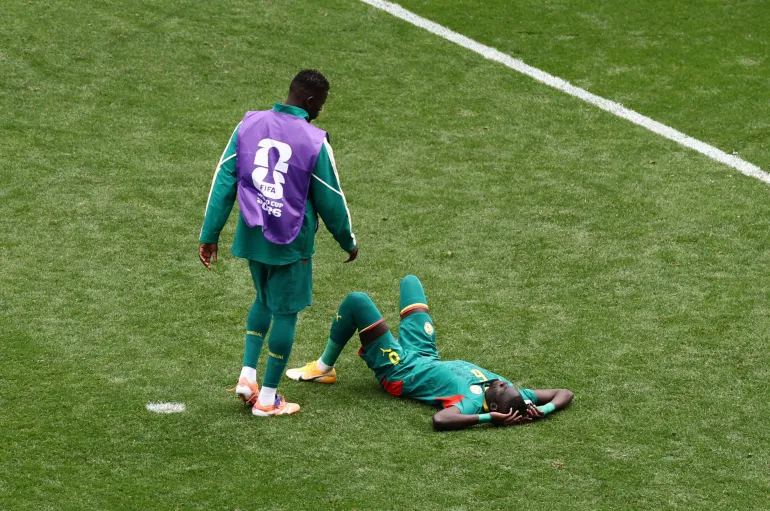
Senegal’s Pathe Ciss looks dejected after the match as the team are eliminated from the World Cup [Lee Smith /Reuters]
Same old struggle
Coly’s analysis echoes that of supporters still trying to process a defeat that slipped away in the closing minutes.
Ibrahima Diop is a die-hard fan of the Lions of Teranga. He travelled to the 2022 FIFA World Cup in Qatar. He was even jailed in Morocco after trouble during the Africa Cup of Nations Final earlier this year.
In that controversial final – played against the hosts, Morocco – Senegal’s coach controversially called his players off the pitch after a disputed penalty decision. Senegal went on to win the match, but later lost the title over the incident.
For Diop, the lesson was the same as against Belgium.
“It comes down to concentration,” he says. “For 85 minutes the team was organised and united. Then it disappeared. European teams are prepared psychologically to fight until the very end. We still struggle in those final minutes.”
Diop also believes Senegal were missing something impossible to measure.
“The team played without its supporters. Visa restrictions and the economic crisis meant many fans could not travel. The players know what that atmosphere gives them. Mentally, it made a difference.”
US President Donald Trump signed a proclamation in December declaring that no visas would be given for business or tourism to nationals of Senegal, and several other countries. This meant that fans with only Senegalese nationality were unable to travel to the tournament.
Diop sees a pattern in this World Cup. Ivory Coast, DR Congo, and now Senegal led until the closing minutes, only to watch victory slip away in stadiums empty of their fans.
Senegal supporters watch as their national football team snatches defeat from the jaws of victory in the World Cup round-of-32 game against Belgium [AFP]
Cruel for country
Football is rarely just football. This World Cup – meant to unite – has revealed the deep inequalities beyond the stands. A nation may be united in victory. But when the referee blows the final whistle, another game begins: the blame game.
Football is opium for the masses, says Coly. It has become one of the few moments when political loyalties disappear. For 90 minutes, everyone wears the same colours.
“The national team is a bridge,” Coly said. “When Senegal plays, there is no political affiliation. It’s simply Senegal. Sport has this unique ability to unite people beyond their differences.”
The unity makes defeat feel disproportionately heavy.
Social media quickly filled with frozen moments from the match: missed chances, defensive mistakes, and coaching decisions replayed endlessly.
Under pressure, football often reveals more than just sporting weaknesses.
Babacar Fall, a Senegalese journalist who has closely followed the national team, argues that the problems began long before kickoff.
According to him, uncertainty over the coach’s future, disagreements inside the federation, and unresolved contractual issues created instability during the tournament.
“There were already problems before the Norway match,” he says. “The coach’s contract wasn’t settled. There were disagreements over player selection. Then, 10 minutes from the end against Belgium, one substitution broke the defensive structure completely.”
He draws an even broader comparison.
“The country is paralysed. There was so much hope after the Africa Cup of Nations, just as there was so much hope politically. Today, there is disappointment. In many ways, the team’s collapse reflects the country’s mood.”
Those views capture a feeling repeated by many supporters in Dakar this week. There is frustration, not simply because Senegal lost, but because of how it lost.
The talent was there. The opportunity was there. For much of the match, Senegal looked like the stronger side. That is perhaps why the silence lingers.
This generation has raised expectations. Winning continental titles transformed how Senegal sees itself. Reaching the knockout stages is no longer enough; supporters believe this team should compete with the world’s best.
Ultimately, it is only football. But in Senegal, football has become something larger than sport. It is a source of national pride, a rare moment of collective unity, and a reflection of possibility.
That is why this defeat feels so cruel. Not because a match was lost. But because, for one evening, it felt as though an entire country’s potential had slipped away in the space of just five minutes.
1st Lt. Franklin H. McKinney is shown in a photo provided by the Defense POW/MIA Accounting Agency. McKinney’s remains were identified May 15, nearly 82 years after his plane vanished on a mission. Photo courtesy of the DPAA
July 2 (UPI) — A young World War II pilot who disappeared during a flight in1944 has been accounted for, the Defense POW/MIA Accounting Agency announced Thursday.
The remains of 1st Lt. Franklin H. McKinney, 21, of the U.S. Army Air Forces were identified May 15, nearly 82 years after his plane vanished on a mission, the agency said.
McKinney was a pilot with the 35th Photo Reconnaissance Squadron, 14th Air Force, the announcement said. On Nov. 5, 1944, he left a U.S. base on a reconnaissance mission from Yunnanyi, China, over Burma and Thailand.
McKinney, who was flying an F-5 Lightning aircraft, failed to return from the mission. Personnel from the American Graves Registration Service searched along his planned flight path to the Chinese/Thailand border, but found no sign of a crash, the DPAA report said.
His remains were not recovered immediately after the war, and his name was engraved on the Tablets of the Missing at the Manila American Cemetery in the Philippines.
McKinney’s personnel profile on the DPAA website says that a wartime report from the Royal Thai Air Force Museum later led researchers to new information. The report said that a plane was hit by lightning, exploded and crashed in a wooded area in Lampang Province, Thailand, near the time McKinney’s aircraft vanished.
In 2018, the profile said, third-party researchers found a crash site in the region that they matched with McKinney’s plane. In 2022, a recovery team excavated the site and found human remains. Modern forensic techniques eventually identified them as McKinney’s.
The pilot’s family will be briefed by the DPAA, CBS News reported. A rosette will be added next to his name on the Tablets of the Missing. McKinney will be laid to rest with full military honors.
McKinney’s home of record is listed as Rhode Island. This does not necessarily mean he from the state, but that he joined the service there, the DPAA said.
The agency is a department within the U.S. Department of Defense. It identifies its mission as providing “the fullest possible accounting for our missing personnel to their families and the nation.”
July 2 (UPI) — The couple who climbed to the top of the Empire State Building’s spire to hang a flag and get engaged was arraigned and released Thursday morning.
Angelina Nikolau and Ivan Kuznetsov were charged with burglary, reckless endangerment, criminal mischief and criminal tampering for trespassing in a nonpublic area of the building and scaling the spire, ABC News and the New York Daily News reported.
The couple has made a name for themselves with a series of dangerous climbs around the world, but making it to the top of the Empire State Building gained national attention — and they were arrested when they climbed down.
“These activities continually create a risk to their own lives, as well as the lives of New Yorkers and first responders,” Assistant District Attorney Anthony Giliberti told reporters.
Prosecutors told the court that they believe the duo observed a security door to the building’s 104th floor with a broken lock, accessed it and climbed to the top of the spire.
Although Kuznetsov’s father said that they had already been officially married — and that the proposal at the top of the building was just a stunt — after hanging a flag at the top of the spire, Ivan got down on one knee and asked Nikolau to marry him.
Nikolau and Kuznetsov have been released on supervised bail ahead of their trial.
Students and supporters of a Luxembourg teacher fired over social media posts held a demonstration for her this week. Fatima Kurtic was fired in October over a post deemed anti-Israel. She told Al Jazeera about the motivations and costs behind her pro-Palestinian activism.
Damage is shown on the facade of Citic Tower, also known as China Zun, in Beijing on June 27. The pilot died in the accident, and authorities said the crash was intentional. Photo by Jessica Lee/EPA
July 2 (UPI) — The pilot of a small plane that crashed into Beijing’s tallest building was a 66-year-old man who was suffering from “chronic insomnia and anxiety” and wrote about “ending his life” in his diary, authorities said Thursday.
“The comprehensive investigation concluded that this was a case of endangering public safety caused by personal reasons,” the statement said.
One of the injured people has been discharged from the hospital, officials said.
Liu had taken off from an airport in the Pinggu district. That day he had flown accompanied and solo flights, the Chaoyang government’s statement said.
“During his solo flight, he deviated from the designated area and lost contact with the airport, subsequently colliding with the high-rise building and dying at the scene,” the statement said.
The plane was a two-seat, single-engine Aurora SA60L manufactured by Chinese company Sunward Aircraft, according to Flightradar24. It’s designed for touring, aerial photography and recreational aviation.
All references to the crash, video and images were scrubbed from social media in China. The state media, whose headquarters is across the street from the tower, didn’t report anything about the crash until the following day.
Chinese authorities often attribute random acts of violence to people seeking “revenge on society,” offering little information on the exact motive.
Israel has rejected a UN Commission report that says its army deliberately targets Palestinian children. But there are cases of children being shot by precision weapons, making it difficult to argue they were accidents.
Al Jazeera’s @emmawithrow explains.
A child eats a snow cone Monday at the Great American State Fair on the National Mall in Washington. As the nation moves into the holiday weekend, a record-setting heat wave has settled over parts of the Northeast, including Washington. Photo by Bonnie Cash/UPI | License Photo
July 2 (UPI) — As the United States heads into a milestone July 4 holiday this weekend, parts of the Northeast are preparing for hazardous levels of heat and humidity, with a heat index of more than 110 possible in some places.
“‘It’s summer, it’s hot,’ ” the National Weather Service posted on social media this week. “We hear ya, but this is no ordinary heat.”
“Numerous daily temperature records are possible, while warm overnight lows in the 70s and 80s will provide little relief,” the NWS said.
Major to extreme heat risk conditions will prevail across the Midwest — where temperatures soared mid-week — into the East Coast, with the “extreme” zone centered around portions of the Northeast including New York City, Washington and Philadelphia. About 160 million people are in this zone.
Roughly 180 million Americans are in the grip of a life-threatening heat wave impacting almost the entire eastern half of the country.
“Extreme” heat conditions are defined by the weather service as “rare and/or long-duration heat with little to no overnight relief.”
The heat index, which combines temperature and humidity readings to show how hot it feels out, could reach 110 to 115. High humidity compounds the health risks from high temperatures, as it prevents sweat from evaporating efficiently, CNN reported.
This comes as the United States prepares for milestone 250th anniversary Independence Day celebrations Saturday. The weekend marks one of the busiest travel and outdoor-activity times of the year, but many local officials have urged people to stay inside in air-conditioning and to check on neighbors, The New York Times reported.
Many cities and smaller municipalities are opening cooling centers and adapting holiday plans. The federal Department of Energy declared an emergency and directed the PJM Interconnections electrical grid in the Mid-Atlantic region to “take action” to avoid power outages, ABC News reported.
“It’s really going to strain the grid,” Ramanan Krishnamoorti, vice president of energy and innovation at the University of Houston, said to ABC News. “I think we’re going to see peak demand that is going to be a record across different geographical areas.”
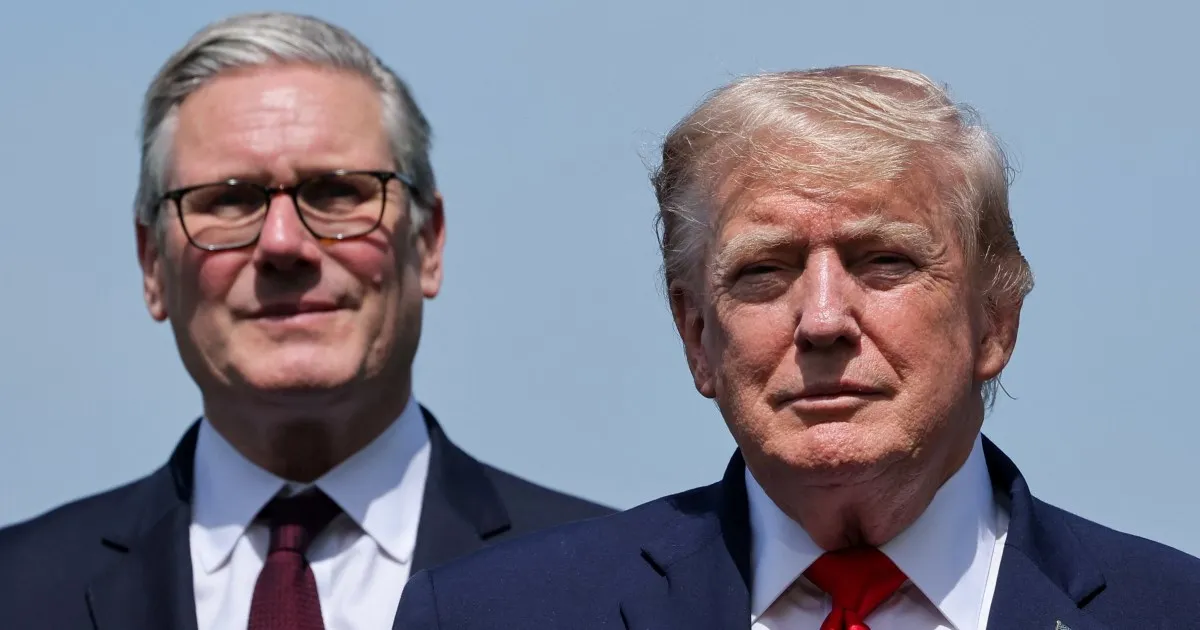
British Prime Minister Keir Starmer formally apologized Thursday to women and their children caught up in a historic forced adoptions scandal in England and Wales over an almost three-decade long period between the 1950s and 1970s. File Photo Betty Laura Zapata/EPA
July 2 (UPI) — Outgoing British Prime Minister Keir Starmer apologized in person Thursday to women and some of their children who were caught up in a historic forced adoptions scandal in England and Wales dating back to the 1950s through the 1970s.
Stamer issued a formal apology on behalf of the British state, calling the taking of an estimated 185,000 babies from unmarried women, railroaded into allowing their children to be put up for adoption, a “stain on our history.”
The shame is not yours. The shame was never yours. The shame is ours,” he said in a statement to the House of Commons after earlier hosting a group of survivors in Downing Street.
“Mothers, many young, vulnerable, and without support were coerced, bullied, or misled into feeling that they had no choice but to have their children taken away from them. What a thing to do,” he said.
Speaking as some of those whose lives were severely impacted watched on from the public gallery, Starmer said that what happened to them and to tens of thousands of mothers, children and families “should never have happened.”
“It is a stain on our history,” he said.
Starmer said the victims had “very powerfully” relayed to him the “gut-wrenching” shame they were made to feel and how it was drummed into them that they were immoral young women whose children would be better off without them.
The experiences stayed with them through their lifetimes, while their children grew up believing they were unwanted, he said.
“We are deeply and profoundly sorry to the mothers who were told they were unfit, who were prevented from caring for the children they desperately wanted to help and to keep, and who have carried this loss for decades,” said Starmer.
Starmer acknowledged that the practice was deliberate and widespread, particularly between 1949 and 1976 when it was, he said, “embedded within systems across local authorities, across voluntary and faith-based institutions, and in health and social care services,” including parts of what is now the National Health Service.
“All institutions that operated with power over people’s lives, yet they did so without compassion, without consent, and without dignity or proper safeguards,” said Starmer.
He said some women, including those placed in Mother and Baby Homes and other institutions, were prevented from seeing their families and partners, denied education and job opportunities and kept in harsh living conditions.
Some of the treatment meted out to the women was tantamount to manipulation and abuse, said Starmer.
Mothers and adoptees campaigned for years for the state to acknowledge wrongdoing but no offer of compensation was forthcoming, although the government has announced a $5.3 million fund to improve access to adoption records and assist family reunions.
Survivor Ann Keen, whose baby son was adopted in 1966 after she was sent to a mother and baby home in Swansea in Wales at the age of 17, told the BBC she had “no say” in the decision.
The former Member of Parliament in the ruling Labour Party, told BBC Radio ahead of Starmer’s statement to lawmakers that she was eagerly anticipating the moment she would finally be “released from my shame.”
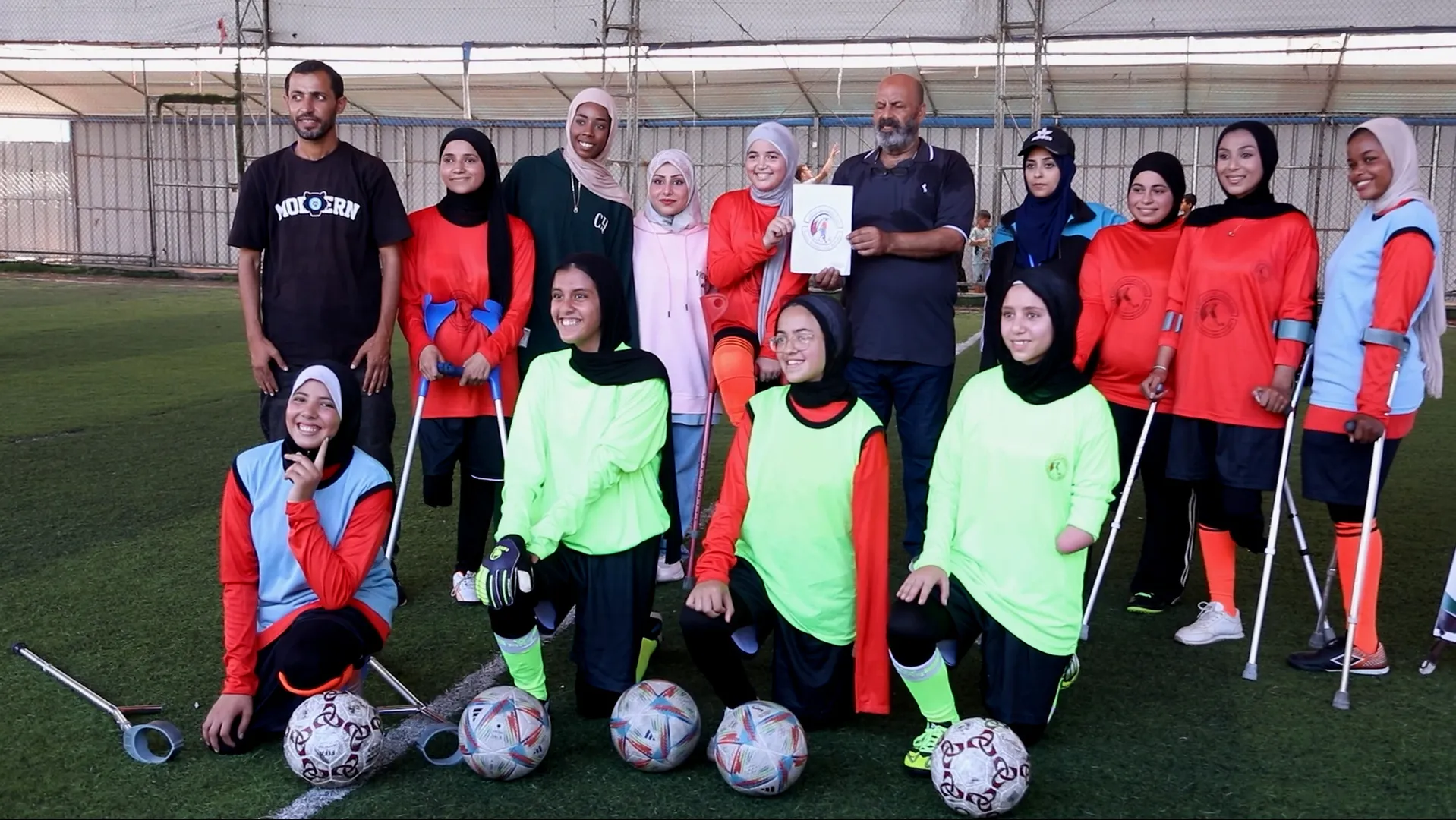
Gaza’s first women’s amputee football team is reclaiming a space that war tried to take from them, challenging stigma around women and people with disabilities in sport.
The penalty awarded against the Senegalese national team in the final moments of their match against Belgium on Wednesday caused widespread controversy after it led to their elimination from the Round of 32 at the 2026 World Cup, in a harsh turn of events that saw the “Lions of Teranga” go from leading 2-0 to losing 3-2.
Honduran referee Said Martinez awarded a penalty kick at the end of the second period of extra time, after a VAR review, following a challenge by Senegal’s Lamine Camara on Belgian captain Youri Tielemans, with the score tied 2-2 and the match heading towards a penalty shootout.
The “Archivo VAR” platform, which specialises in analysing refereeing decisions, said that VAR intervened excessively during the match, confirming that it was Tielemans who extended his foot in front of Camara, causing the contact.
The platform added, via its account on “X,” that the incident did not warrant VAR intervention, explaining that it was the Belgian player who forced the contact entirely, and that the situation did not amount to the clear and obvious error needed to justify the referee reviewing the decision.
Recommended Stories
list of 4 itemsend of list
The decision triggered a wave of controversy on social media, with one fan writing: “This is 100% robbery. Senegal have been robbed. How is this a penalty? Belgium do not deserve to go through corruption.”
Sports content creator Sneako blamed the result on match ‘”rigging”.
“Rigged! Senegal should storm the pitch right now. Leave the pitch and go home. This is rigged!”
Another sports fan wrote: “I’m sorry, but this was never a penalty. Camara went to clear the ball, but it was Tielemans who got in his way. Senegal was robbed, and it should have been Belgium going out.”
Spanish sports journalist Manolo Lama commented: “They stole the Africa Cup of Nations from them, and now they’re stealing all the solidarity with Senegal at the World Cup too.”
Senegal’s Habib Diarra, front, celebrates scoring their first goal with Ismail Jakobs, back, during the World Cup round of 32 soccer match between Belgium and Senegal in Seattle, Wednesday, July 1, 2026. (AP Photo/Abbie Parr) (AP)
Egyptian journalist Mohamed Saeed linked the incident to what happened in the 2025 Africa Cup of Nations final against Morocco, writing: “You can feel that the penalty awarded against Senegal in the final seconds was a harsh lesson and a difficult test. After the scenes from the Africa Cup of Nations final, I think that if it weren’t for the change in the rules around the withdrawal incident, this scene could have repeated itself.”
Another sports fan, Fares Ahmed, wrote that football ”teaches lessons” and the outcome brought back the memory of Senegal at the tournament in Morocco.
“They took advantage of the tournament’s vulnerable position and the host’s need to make it a success, and used that to impose their pressure,” Ahmed wrote. “Today, the scene was almost repeated against Belgium — a penalty in the final minutes, objections, and disbelief over the decision — but this time there was no threat of withdrawal, because you can’t risk penalties like that in a tournament the size of the World Cup.”
Drawing a connection between the two events, one follower wrote on “X”: “When there was a clear penalty in the Morocco final, they rebelled against the decision and tarnished the reputation of African football, just because the tournament was in Morocco. But when an unclear penalty came along that eliminated them from the World Cup, they stayed silent, because this time it was in the West.”
Senegal’s Pathe Ciss #6 kneels on the pitch after Belgium were awarded a penalty during the World Cup Round of 32 match in Seattle, on Wednesday, July 1, 2026 [Maddy Grassy/AP Photo]
After the dramatic penalty was awarded, Tielemans stepped up to take it and scored successfully, netting Belgium’s third goal and capping off an unexpected comeback that eliminated the Lions of Teranga.
But back on the pitch, Senegal had the run of play for 85 minutes. The African team held a two-goal lead, and had all but secured a spot in the round of 16 at the World Cup.
Within five minutes, it crumbled and the players were feeling it.
“We were at the heart of writing the beautiful pages of the history of our football in this world,” defender Krepin Diatta said. “And we have to accept that we failed at our mission.”
Senegal midfielder Habib Diarra said. “We had a good first half, but it wasn’t enough. A match lasts 90 minutes, and we’re devastated. It’s very tough. I don’t know what to say. When you’re on the pitch, you have to give your all, and that’s not what we did. We’ve only got ourselves to blame.”
July 2 (UPI) — A Ukrainian national has been charged in Germany in connection with the 2022 bombing of the Nord Stream pipelines bringing natural gas 760 miles via the Baltic Sea from northwestern Russia to Lubmin in northeastern Germany.
Authorities allege the suspect, named only as Serhii K, led and coordinated an operation with seven others to sabotage the $17 billion gas projects on Sept. 26, 2022, according to reports in German media Wednesday. He is also charged with attacking and destroying civilian energy infrastructure and causing an explosion.
Prosecutors said he is the same individual who was detained by Italian authorities in August and extradited to Germany in November.
He denies all wrongdoing.
German prosecutors further allege he was a serving Ukrainian officer and that he and the others, who were also members of the Ukraine military, were “acting on behalf of state bodies in Ukraine” to deprive Moscow of energy revenues from the pipelines to fund its war against Ukraine.
The finger has variously been pointed at Ukraine, along with Britain and the United States, and even Russian itself, but the Federal Public Prosecutor General’s claim the attack was ordered by Kyiv was highly significant because Germany is one of Ukraine’s staunchest allies, providing military aid and political support.
Kyiv , which has always denied involvement, did not immediately respond to the accusation.
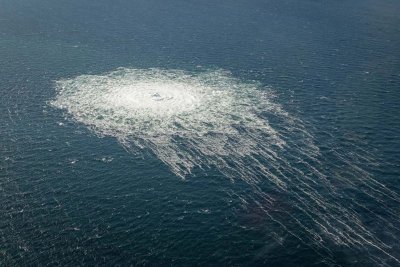
Three of the four pipelines were ruptured east of the Danish island of Bornholm in the attack. Nord Stream 1 was shut down at the time due to technical problems.
Nord Stream 2, a subsidiary of the Russian state-run energy giant Gazprom, was completed in September 2021 after being plagued problems including legal wrangles and U.S. sanctions targeting companies party to the project.
However, it never opened because Germany cancelled its certification process shortly before Russia’s full-scale invasion of Ukraine in February 2022 as it moved to wean itself from its reliance on Russian gas.
The project, which would have doubled Nord Stream’s gas capacity to 110 billion cubic meters annually — said by the company to be sufficient to supply to 26 million homes in Europe and critical to efforts to guarantee the European Union’s “security of supply of natural gas.”
Research published in the British Medical Journal (BMJ) has found that a United Kingdom-United States pharmaceutical deal could cause 229,000 excess deaths as a result of the diversion of billions of pounds away from Britain’s National Health Service (NHS).
In December, the UK and US signed a pharmaceutical trade deal, under which the US government agreed not to impose tariffs on UK pharmaceutical and medical technology exports for the next three years.
Recommended Stories
list of 3 itemsend of list
In return, the British government committed to increasing NHS spending on new US medicines from 0.3 percent in 2026 to at least 0.6 percent of its gross domestic product (GDP) by 2036. This means that medicine spending overall should increase from 10 percent to 12 percent of the NHS budget.
UK politicians defended the deal with Science Minister Patrick Vallance saying in April that the arrangement gives patients across the NHS access to “life-changing new medicines that they previously would have been denied”.
“Not only this, but as the first country in the world to benefit from a zero percent tariff on pharmaceuticals to the US, Britain’s life sciences sector will be further boosted,” Vallance argued.
But the research published in the BMJ found that the commitment to spend so much more on new branded medicines over the next decade without any increase in NHS funding will “create substantial opportunity costs elsewhere, having a direct effect on population health”.
Samuel Cross, a professor in the department of pharmacology and therapeutics at the University of Liverpool, who coauthored the report, said the agreement “benefits pharmaceutical companies and comes at a cost of NHS patients”.
“There’s really no way to sugar-coat that. The numbers speak for themselves,” Cross told Al Jazeera.
Here’s what we know about the report:
What is in the US-UK deal?
The agreement signed on December 1 was hailed as a landmark deal between British Prime Minister Keir Starmer and US President Donald Trump on pharmaceutical trade and pricing.
The US agreed not to impose tariffs on UK pharmaceutical and medical exports for the following three years – until January 19, 2029.
According to a policy paper published by the British government, the preliminary understanding of the agreement recognised that the US and UK shared a “mutual interest in developing a global medicines system that supports development and commercialisation of new innovations”.
What did the research find?
In February, Vallance disclosed that funding for the increased spending on medicines would come from the Department of Health and Social Care, which funds the NHS in England, rather than the Treasury.
The study in the BMJ forecast that if spending targets are met and the economy grows as forecast by the Office for Budget Responsibility, the NHS would need to spend an extra 1.3 billion pounds ($1.73bn) a year by 2028 – about 25 million pounds ($33.4m) a week. By 2036, this would rise to an extra 8.8 billion pounds ($11.74bn) a year – about 170 million pounds ($227m) a week). Over the course of the agreement, that would add up to about 44.7 billion pounds ($59.7bn) by the end of 2036.
“Costs are even higher if the impact on publicly funded adult social care is also considered – modelling of English local authority data indicates that every £1bn [$1.33bn] the NHS must find to fund this deal will increase the costs of adult social care by £118m [$157.5m] because of increases in morbidity and mortality,” the report found.
Ultimately, the study predicted, excess deaths are likely as a result.
“Even if we restrict attention to the direct effect of reductions in available NHS expenditure, by 2036 this deal is likely to result in roughly 229,000 excess deaths – more than during the COVID-19 pandemic between March 2020 and June 2022 (137,000). If the indirect effect on adult social care is also included, the increase in excess deaths is even greater (291,000),” the report stated.
The report added that the findings are “unsurprising” given the existing pressures on the NHS and the “large burden of unmet need in highly cost-effective areas of care”.
It also referred to shortfalls in NHS funding and pharmaceutical pricing as “opportunity costs”.
Cross said that in health economics, opportunity costs are the “key to all of this”.
“In the NHS, we have a finite budget – we’re not made of money – and if you take money away to pay for, in this case, more medicines. then that comes at an opportunity cost of the places that the money has been diverted away from,” he explained.
Which health sectors will be worst affected?
The research predicted that the greatest number of deaths would occur in cardiovascular, respiratory, gastrointestinal and cancer patients.
It added that there will also be broader harm caused to quality of life for patients in those sectors as well as “neurological, endocrine, musculoskeletal, and mental health problems”.
“Despite this evidence and reassurances that ‘frontline services’ will be protected, the NHS will need to fund this deal from allocations made six months before the deal was agreed. The evidence suggests that if additional public expenditure was available, it could be more effectively deployed within the NHS itself,” it added.
The report also called the government’s claims that the US-UK agreement would encourage pharmaceutical innovation in the country “uncertain”.
“Pharmaceutical research and development operate within a global market, of which the UK represents a relatively small share. As such, there is limited evidence that UK domestic pricing materially influences global investment decisions,” the report stated.
“Even so, evidence suggests in most cases the UK is already paying more than 100 percent of the long-term value of new medicines; incentivising production of new medicines under this deal will do long-term harm to the public health objective of the NHS,” it added.
Cross added that because money has in effect been diverted away from the NHS, there is no way for the government to offset the impact on the service.
“If the funds are used to pay for new medicines, we will lose positive health outcomes elsewhere, and that is as simple as that,” he said.
He called for the government to release an impact assessment to trigger a public discussion about how good the US-UK deal really is for Britain.
Toronto, Canada – The year was 2009, and a sculpted, spiky-haired, 24-year-old Ronaldo was greeted by hundreds of adoring fans in Toronto dying to catch a glimpse of the newly signed Real Madrid superstar as he graced the city with his presence for the first time.
Fast forward 17 years, and the visuals are almost identical, give or take a few differences.
Recommended Stories
list of 4 itemsend of list
Hundreds of Toronto residents took to the streets on Wednesday, lining highways, thronging downtown intersections, climbing onto each other’s shoulders and peeking out of high-rise buildings, all to get a 10-second glimpse of Ronaldo passing by, as Portugal arrived in the city ahead of their World Cup round of 32 clash with Croatia.
The last time the football icon was in Toronto was August 2009 when Real Madrid played a friendly against Toronto FC, coincidentally at the same stadium where Portugal will take on Croatia on Thursday evening.
Wednesday being a public holiday increased the chances of fans catching a glimpse of the 41-year-old football legend at what is likely to be his last ever World Cup, and potentially last World Cup match if Portugal are knocked out of the tournament.
The city was buzzing with Ronaldo fever right from the minute Portugal landed at Pearson airport early Wednesday afternoon.
Biker groups lined Gardiner Expressway to escort the Portuguese team bus to the Delta Hotel, where hundreds of fans gathered to get a glimpse of Ronaldo as he exited the bus, and then again when the team headed to Centennial Park for their training session.
Even at the grounds in Etobicoke, dozens of starstruck fans sporting red #7 jerseys stood outside the field as Ronaldo and the Portugal team warmed up on what was supposedly the hottest day of the year in Canada.
The fan frenzy was valid; for most Portugal fans in the city, this was the closest they would get to seeing the one and only Cristiano Ronaldo in person.
Sky-high ticket prices for the match, some as ludicrous as $30,000 Canadian dollars ($21,000), were unaffordable to the average football fan.
Tickets to the sold-out game have averaged $2,500-3,500 Canadian dollars over the past week on resale platforms, even though Ontario laws forbid third-party sales above face value.
“I’m a dad and a husband, and I couldn’t justify spending that kind of money on a ticket no matter how much I want to see Portugal play in Toronto,” Joey, 33, told Al Jazeera, as he closed out his shift at Bairrada Churrasqueira on the fringe of Little Portugal in Toronto.
“But it still feels surreal that Portugal is playing here in Toronto, who would have ever thought that,” the restaurant worker beamed, as he flipped chairs onto the tables before mopping the floor.
Worlds collide
Joey, who declined to share his surname, was one of tens of thousands of Portuguese-Canadians who have called Toronto home for several decades now.
The first wave of immigrants arrived in the 1950s seeking better opportunities for themselves and their families. Just last year, the city inaugurated the Azores Parkette in the heart of Little Portugal to honour the 18 “pioneering men” who departed Sao Miguel, Azores, and landed on the shores of Halifax to build a new life.
So when Portugal take the field in Toronto Stadium on Thursday, it’ll be more than just a game for generations of hyphenated Canadians in the city; for them, it’s two worlds colliding in a once-in-a-lifetime moment.
For Shannon Medeiros, 46, the match holds even more significance. The football fanatic fell in love with the sport aged six, inspired by her father, who attended every game and coached her as she delved into the sport.
The game has been a crucial part of her life, and her family’s, since her father and his family arrived in Canada when he was 16 years old, in the 1950s.
Like many immigrants at the time, schooling had to be abandoned in favour of a job to help make ends meet for the family, which, in his case, arrived in Montreal with a single suitcase and lived in another family’s basement until they could afford a place of their own.
Football was the only non-negotiable, axiomatic staple in the Portuguese community that grew from a few hundred to more than 300,000 people.
“It’s something we do as a family now; that’s how much the game means to us,” said Medeiros, who now coaches her two sons in the sport the way her father did for her.
The storyline is almost identical to that of Stephen Eustaquio, Canada’s wonder boy who scored against South Africa to send his team to the World Cup round of 16 for the first time in history.
Canada’s Stephen Eustaquio celebrates after winning the 2026 World Cup round of 32 match against South Africa at the Los Angeles Stadium in Inglewood on June 28, 2026 [AFP]
The Ontario-born, partially Portuguese-raised football star was guided into the sport by his father and his Portuguese background for a love of football. The sport was a way for the community to come together and enjoy a shared sense of identity, as Canada welcomed dozens of ethnicities decade after decade.
“The one thing you’ll see in the Portuguese community is how proud we are – of our heritage, our culture, to wear the jersey, put a flag up,” Medeiros told Al Jazeera.
A walk through Little Portugal during the World Cup would show you just that; flags split diagonally with Canada and Portugal in each half, fluttering on porches or glued to bedroom windows, an omnipresent CN Tower needle peeking above the neighbourhood anywhere you stand.
Match predictions
Medeiros admitted that while the team has not been playing to their full potential at the tournament, they have a strong chance of winning against Croatia. She’ll see whether her prediction comes true or not as she watches the game with her father at his house.
Elsewhere in the city, fans without match tickets are heading to sports bars, match screenings and fan festivals to see whether Ronaldo will score his first knockout-round goal at a World Cup that saw an unimpressive start for the Portuguese captain.
“I think Portugal will win 2-1, or maybe 3-1. But don’t tell my girlfriend I said that,” Josh Madeiros grinned, as he waited for his drink at Garrafeira. The Portuguese-Canadian 35-year-old will be supporting his side away from his girlfriend, who is Croatian.
He thought long and hard before admitting that Portugal’s team has had a shaky run so far, and that there’s only so much Ronaldo can do as a player in his forties.
“But he’s still my guy, and he’s still the GOAT [greatest of all time].”
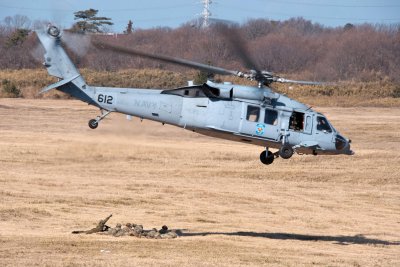
A U.S. Navy MH-60 helicopter, like the one seen here, made a water landing in the Arabian Sea on Wednesday. A search has been launched for one aircrewman aboard the helicopter was has since reported missing. File Photo by Keizo Mori/UPI | License Photo
July 2 (UPI) — A search is ongoing for an aircrewman who went missing after the Navy helicopter they were aboard performed an emergency landing in the Arabian Sea, the U.S. military said.
U.S. Naval Forces Central Command said in a brief statement that the MH-60S Sea Hawk helicopter with four people on board made the emergency landing at 3:30 a.m. EDT Wednesday.
Three of the helicopter’s crew were recovered and were listed in stable condition, while the fourth member remained missing.
U.S. Navy assets in the region are searching for the missing aircrewman, it said.
Little information about the incident has been made public. U.S. Naval Forces Central Command said there was no indication that hostile activity prompted the emergency landing.
“The cause of the incident is under investigation,” it said.
The helicopter was assigned to the aircraft carrier USS George H.W. Bush, which departed Norfolk, Va., on March 31, according to U.S. Fleet Forces Command. The aircraft carrier has been in the Arabian Sea since at least May 3, according to a statement from U.S. Central Command, which said it was deployed to the U.S. 5th Fleet area of operations to support maritime security and stability in the Middle East.
The United States has been at war with Iran since Feb. 28. The two sides are negotiating an end to the war amid a cease-fire.
Authorities have been investigating the disappearance of Nancy Guthrie, who was reported missing Feb. 1, as a kidnapping and ransom case. File Photo courtesy Pima County Sheriff’s Department/UPI
July 2 (UPI) — Federal authorities said that some of the ransom notes they have received over the course of their investigation into the kidnapping of Today host Savannah Guthrie‘s mother were not legitimate.
The FBI has received several purported ransom notes during its five-month investigation into the disappearance of 84-year-old Nancy Guthrie, who was reported missing from her Arizona home on Feb. 1.
In a statement Wednesday, the FBI’s Phoenix field office revealed that some of those notes “have been deemed to be extortion attempts without legitimacy” while others “may potentially be legitimate and are still being investigated as such.”
The statement seemed to be in response to recent reporting stating authorities believe notes from the purported kidnappers in February that claimed Nancy Guthrie had died and that they didn’t mean to kill her were authentic.
The reports referenced a note sent to local media on Feb. 2 demanding millions in ransom, and a second note from Feb. 6 that stated Nancy Guthrie had died.
On Feb. 7, Savannah Guthrie, appearing alongside her siblings in a video posted to Instagram, said to the kidnappers that “We received your message, and we understand.”
The FBI did not mention any specific notes.
The Pima County Sheriff’s Department, the lead investigating agency in the case, also issued a statement Wednesday, confirming that it has also received information regarding potential ransom notes without commenting further.
“Every tip and lead is taken seriously and is forwarded directly to our detectives, who continue to work in coordination with the FBI,” it said, directing further questions about ransom notes to the federal law enforcement agency.
The FBI said the investigation is ongoing.
“This case continues to be investigated as a kidnapping for ransom case,” it said.
The de facto US ambassador Raymond Greene says drones represent a ‘game-changing opportunity’ to enhance Taiwan’s security.
Published On 2 Jul 20262 Jul 2026
Taiwan needs a “hornet’s nest” of drones to help deter conflict and provide security, says the top United States diplomat to the self-governing island that China claims as part of its territory.
Speaking at a forum on drones in the central city of Taichung, Raymond Greene, director of the American Institute in Taiwan and the de facto US ambassador, said on Thursday that drones represented a “game-changing opportunity” to enhance Taiwan’s security and reinforce peace in the broader region.
Recommended Stories
list of 3 itemsend of list
The US, Taiwan’s most important international backer and arms supplier despite their lack of formal diplomatic ties, has strongly supported the government’s military modernisation plan and increased defence spending.
Taiwan has said it needs to bolster its defences in the face of a stepped-up threat from China.
China regards Taiwan as part of its territory and opposes Washington’s continued, though informal, backing of Taipei.
The US and Taiwan can anchor “democratic” drone production and strengthen the collective deterrence posture of the free world, Greene said.
“Fortunately for Taiwan, drones have significantly boosted defenders, even when facing overwhelming odds,” he added, referring to the war in Ukraine.
“Nothing will deter conflict more effectively than turning Taiwan into a hornet’s nest of air, surface and subsurface drones.”
While Taiwan’s government has prioritised drones and other asymmetric military systems, in May, the opposition-dominated parliament passed only two-thirds of the $40bn in extra defence spending that President William Lai Ching-te had asked for, earmarking funds only for US arms.
The government has now proposed a new 210 billion Taiwan dollars (US$6.59bn) package to pay for surveillance, coastal attack and small unmanned surface drones through the end of 2031.
However, in May, a senior US military official said Washington was putting a $14bn arms sale to Taiwan on hold to preserve munitions for the US-Israel war against Iran.
The Kuomintang (KMT), Taiwan’s main opposition party, this week proposed its own drone legislation with a spending cap set at 240 billion Taiwan dollars (US$7.5bn) over six years and annual spending capped at 40 billion Taiwan dollars (US$1.25bn).
Its plan would fund drones from the main budget rather than a special budget, which is what the government wants.
On Wednesday, Lai called the need for drones pressing.
“Facing changes in the geopolitical situation and the evolution of modern warfare, building asymmetric combat capabilities is a national defence project that is a race against time,” he said at a meeting of his Democratic Progressive Party.
Lai rejects Beijing’s sovereignty claims, saying only the island’s people can decide their future.
Brent falls below $71 a barrel amid reports of progress in talks to end the war.
Published On 2 Jul 20262 Jul 2026
Oil prices have fallen to levels not seen since the start of the US-Israel war on Iran amid rising hopes for a breakthrough in negotiations aimed at sealing a permanent peace deal.
Brent crude fell more than 1 percent on Thursday to below $71 a barrel, returning the international benchmark to pre-war prices.
Recommended Stories
list of 4 itemsend of list
Brent futures for August delivery stood at $70.82 per barrel as of 04:30 GMT, lower than at any point since February 27.
Following the latest drop, Brent prices are down more than 38 percent from their post-war peak of more than $126 a barrel on April 30.
The slide came after Qatar, a key mediator between Washington and Tehran, said that US and Iranian officials had made “positive progress” in indirect talks aimed at resolving issues related to their memorandum of understanding (MoU) on ending the war.
US President Donald Trump also cast a positive light on the talks on Wednesday, saying the “denuclearisation of Iran is moving along well”.
Vandana Hari, the founder of the Singapore-based oil market analysis provider Vanda Insights, said a steady uptick in oil flows out of the Gulf and “cautiously optimistic geopolitical sentiment” had driven prices lower.
“Several key issues in the MoU remain unresolved, but the two sides appear to have backed off confrontation on the issue of the interim Hormuz transit regime, at least for the time being,” Hari told Al Jazeera.
“I expect crude to continue grinding lower until the backlog of stranded barrels has cleared, and prices could even swing into oversold territory,” she said.
“The real test of normalisation of Persian Gulf supply will come after that, necessitating fresh supply-demand balance recalibration.”
Shipping in the Strait of Hormuz, a conduit for one-fifth of the global trade in oil and liquefied natural gas in peacetime, has shown tentative signs of recovery in recent days after a sharp decline following attacks on two commercial vessels in the waterway on Thursday and Saturday.
At least 40 vessels transited the strait on Tuesday, according to data from MarineTraffic, up from 27 crossings on Monday and 22 on Sunday.
Maritime traffic nonetheless remains far below its pre-war level of roughly 130 daily crossings amid persistent concerns about safety in the waterway.
While Iran agreed to make its “best efforts” to arrange the safe passage of vessels in the MoU it signed with the US on June 17, Tehran has since repeatedly claimed the sole right to control movement through the strait.
At least 49 attacks on commercial vessels have been recorded in the strait since the start of the war, according to MarineTraffic, most of which were claimed by Tehran or blamed on its forces.
Prosecutors allege a yacht was used in the sabotage of pipelines, with the suspect leading the operation.
By Reuters and The Associated Press
Published On 2 Jul 20262 Jul 2026
German federal prosecutors have filed charges against a 50-year-old Ukrainian national over a series of explosions that destroyed two Nord Stream underwater gas pipelines linking Russia to Europe in 2022.
The federal prosecutor’s office declined to comment on the specifics of the indictment on Wednesday against the accused, who is identified only as Serhii K in court documents under German privacy rules.
Recommended Stories
list of 4 itemsend of list
Serhii K is accused of attacking civilian energy infrastructure, causing an explosion, and destroying structures, according to the German public broadcaster ARD.
The underwater explosions damaged both the Nord Stream 1 and Nord Stream 2 pipelines so severely that no gas could be transported through them, knocking out the key routes for Russian gas to Europe for months after Moscow’s full-scale invasion of Ukraine in February 2022.
In a December 2025 detention filing by the Federal Court of Justice, prosecutors allege that Serhii K helped coordinate a team that used a sailing yacht, the Andromeda, to place explosive devices on the pipelines near Denmark’s Bornholm Island in September 2022.
According to those documents, Serhii K is suspected of acting as the on-board coordinator and team leader, not as a diver or bomb expert.
The Berlin law firm Menaker, which is representing the accused Ukrainian, has not provided any details on the indictment.
Federal prosecutors confirmed to the AFP news agency that Serhii K was the same suspect who was arrested in August 2025 in Italy and extradited to Germany the following November, and who was named at the time as Serhii Kuznietsov.
At the time of his arrest, German prosecutors said Kuznietsov had used forged identity documents to charter a yacht, which departed from the German city of Rostock to carry out the attacks.
Kuznietsov has denied being part of the sabotage operation. He said he was a member of the Ukrainian armed forces and in Ukraine at the time of the incident, a claim his defence team has said would give him “functional immunity” under international law.
Answering a question from Germany’s Der Spiegel magazine during a news conference in Dublin on Wednesday, Ukrainian President Volodymyr Zelenskyy said it was too soon to comment on the charges against Serhii K in detail.
“We have not officially received any details; at least I have not seen them”, Zelenskyy said. “It is too early to say yet,” he added.
Ukraine’s government has previously denied any involvement in the sabotage or knowledge of the plot to bomb the Nord Stream 1 and Nord Stream 2 pipelines.
European airlines and airports call for flexibility to suspend digital border system amid severe delays.
Published On 2 Jul 20262 Jul 2026
The European Union’s new digital border check system is causing severe disruption to travel, with passengers facing five-hour queues and departure gates closing with planes only half-full, industry representatives have warned.
In an open letter published online on Wednesday, the top representative bodies for Europe’s airports and airlines said that delays caused by the bloc’s recently-implemented Entry/Exit System (EES) had reached a “critical point”.
Recommended Stories
list of 4 itemsend of list
“The current implementation of the EES is creating severe operational consequences, disrupting passengers and putting border authorities, airports and airlines under unsustainable pressure,” Airports Council International Europe, Airlines for Europe, and the International Air Transport Association said in a joint letter addressed to European Commission President Ursula von der Leyen.
“We therefore urge your immediate intervention before the situation deteriorates further during the peak summer travel season.”
With European airports expected to handle 40 million more passengers in July and August than the previous two months, EU leaders “must take stock of the reality of the current situation and of what our air transport system will face over the coming weeks”, the lobby groups said.
“Without additional flexibility, existing challenges will inevitably intensify,” they said.
“As representatives of Europe’s aviation sector, we have a responsibility to warn that this would result in a significant worsening of an already very difficult situation for passengers.”
Warning that the travel disruption was undermining the reputation of the EU and European tourism, the industry groups said it was crucial that the continent continued to be an “efficient, welcoming and competitive” destination.
“Reports already suggest that some international travellers are reconsidering trips to Europe because of the prospect of excessive border delays,” they said.
A police officer scans a passport during a presentation of an automated terminal for registration to the Entry/Exit System (EES) at the Vaclav Havel airport in Prague, Czech Republic, on October 14, 2025 [David W Cerny/Reuters]
Until the stability of the EES is ensured and adequate staffing levels are in place, EU member states should be immediately granted the flexibility to “completely suspend” the new system whenever passenger numbers exceed the “operational capacity” of border facilities, the lobby groups said.
The World Travel and Tourism Council, the world’s largest representative body for tourism-related businesses, said on Wednesday that it endorsed the letter’s calls, warning that the delays could put up to 41 million arrivals and $45.4bn in visitor spending at risk.
“If lengthy delays become accepted practice, travellers will look elsewhere,” WTTC President and CEO Gloria Guevara said in a statement.
“Europe cannot afford to compromise its competitiveness or the experience it offers millions of visitors.”
The European Commission did not immediately respond to a request for comment sent by Al Jazeera outside of regular business hours.
The EU began rolling out the EES in October as a replacement for passport stamping.
The system records each traveller’s name, passport information, fingerprints and facial images, and his or her date and place of entry and exit.
The European Commission announced that the ESS was “fully operational” across the Schengen Area in April, but the system has been blamed for lengthy delays since its introduction, including cases of flights leaving before many of their passengers were able to board.