From breaking news to significant developments in politics, business, technology, entertainment, and more, we deliver the stories that shape our global landscape.
Football’s global governing body is expected to change a rule that allowed a red card for USA forward Folarin Balogun to be controversially overturned during the World Cup, according to media reports on the agenda for Thursday’s FIFA council meeting in Zurich.
The decision-making body is convening for the first time since this year’s tournament, and a motion to prohibit such actions in the future will be top of the agenda. Members will also discuss the organisation’s funding, rules and other matters amid a turbulent time in the sport.
During the World Cup’s round-of-32 match, Balogun received a red card for stepping awkwardly on the right ankle of Tarik Muharemovic of Bosnia in a 2-0 win for the home team. It triggered an automatic one-game suspension.
However, United States President Donald Trump urged FIFA President Gianni Infantino to review the case, and Balogun’s red card was overturned, allowing him to play in the USA’s round-of-16 match against Belgium.
The decision to overturn Balogun’s red card ignited one of the tournament’s biggest controversies, with widespread criticism from football federations, former FIFA officials, experts and coaches.
The 37-member FIFA council is expected to vote on whether to prohibit disciplinary committees from overturning automatic match suspensions at the World Cup, but the Balogun controversy is unlikely to go away.
FIFA Vice President Debbie Hewitt is among the sport’s leaders who have asked Infantino to release all documents related to the case.
Thursday’s FIFA council meeting is the first since Infantino came under fire earlier this year for a now-shelved plan to sell a 20 percent stake in the World Cup’s commercial business to private investors.
Infantino has faced calls to resign from the leaders of three regional football confederations – UEFA (Europe), AFC (Asia) and CONCACAF (North and Central America and the Caribbean) – and their representatives will be present in Zurich for the FIFA meeting.
They will be joined by their counterparts from Africa, South America and Oceania.
Under the plan, Infantino proposed selling a minority stake in a FIFA commercial subsidiary to private investors, with a company launched by Joshua Kushner, the brother of Donald Trump’s son-in-law Jared Kushner, identified as the proposed lead investor.
The council will also address FIFA’s governance, with some of the sport’s most powerful figures determined to limit Infantino’s powers if they cannot force him out of office.
Infantino, 56, will stand for re-election in March 2027, with a November 18 deadline looming for potential candidates to submit their nominations.
China and North Korea have officially opened the New Yalu River Bridge after a 12-year delay. The 3 kilometre bridge is expected to become the main land route between the two countries as they seek to improve relations.
Baghdad, Iraq – Sitting anxiously in his small office in Jameela market, one of Baghdad’s main wholesale markets, food trader Hamza al-Rudayni is waiting to see what the coming days will bring.
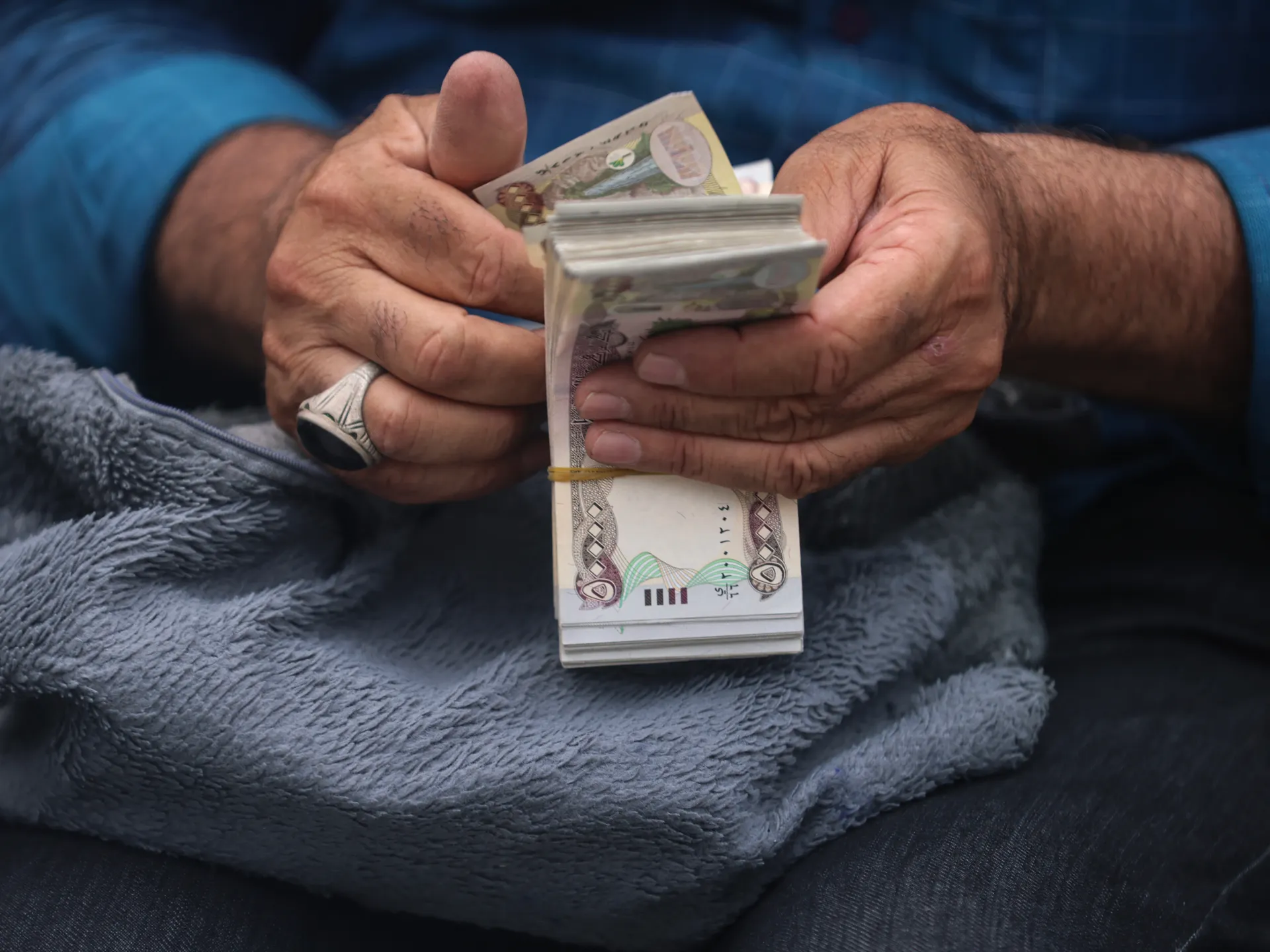
A decision by the Iraqi government to devalue the country’s currency, the dinar, against the US dollar has left traders like him facing sudden losses and uncertainty over the prices they should charge for their goods.
Recommended Stories
list of 3 itemsend of list
“I don’t know what to do,” al-Rudayni told Al Jazeera after the devaluation reduced the dollar value of his dinar holdings, leaving him with less money to purchase imported goods.
“All I know is I woke up a few days ago to discover that I had lost 25 million Iraqi dinars (roughly $16,500 at the new exchange rate) because of this decision, while larger merchants lost billions,” he said.
Al-Rudayni entered the wholesale trade market last year after losing his previous job at a private Iraqi bank that he says was sanctioned by the United States Treasury. He sold his car and used his savings to start trading with a larger merchant before recently launching his own business.
With exchange-rate fluctuations making prices unpredictable, al-Rudayni said he and many other traders have chosen to suspend buying and selling until the situation stabilises.
“Market activity has ground to a halt,” al-Rudayni said. “Traders buy goods in dollars but sell them in dinars, as regulations prohibit them from selling in dollars.”
That is the root of the problem for traders: A weaker dinar means they have to pay more in local currency for goods imported in dollars, while making it harder to determine the right price they should charge customers for goods they already have in stock.
Why devalue?
On October 7, the Iraqi government introduced a new official exchange rate against the US dollar, in an attempt to ease a financial crisis triggered by the US-Israeli war on Iran and the disruption of oil exports through the Strait of Hormuz.
Before the war, Iraq exported around 3.5 million barrels of oil per day through the Strait of Hormuz, accounting for 90 percent of Iraq’s government revenue.
The Central Bank of Iraq decision set the rate at 1,520 dinars per US dollar for cash sales to the public. It was previously set at 1,320 dinars per dollar.
Devaluing the Iraqi dinar by almost 15 percent against the dollar allows the government to receive more local currency for every dollar of oil revenue it converts, helping it cover public spending, including government employee salaries.
“It is my decision and I am responsible for it,” Iraqi Prime Minister Ali al-Zaidi said during a meeting with parliamentary leaders on Thursday.
“I was facing three challenging options to cover salaries and other mandatory expenditures,” al-Zaidi added. “The first is to cut salaries by 35 percent … the second is to pay the salaries every 45 days … while the third is to resort to foreign loans.”
Al-Zaidi, a former banker, also said that his government had inherited public debt exceeding 208 trillion Iraqi dinars ($139bn at the new rate) when it took office in May. He said the government needed approximately 10 trillion dinars ($6.7bn) each month to cover salaries and other essential expenditure.
A shortage of liquidity
The crisis in the Strait of Hormuz had caused a severe financial squeeze for the Iraqi government.
Although the situation has eased somewhat in recent weeks after Iraq’s oil exports partially recovered, they have yet to return to their pre-war levels.
Mudher Mohammed Salih, the Iraqi prime minister’s financial adviser, said in August that the Central Bank of Iraq’s foreign currency reserves had declined from $106bn to approximately $80bn.
To make up for the loss of revenue, the Iraqi government has also turned to borrowing from domestic banks to cover salaries and other expenses.
A Finance Ministry official told Al Jazeera that ensuring salaries were paid on time remained the government’s main priority, describing this issue as a matter of domestic economic stability.
“Our hands are tied regarding the revenue and how to maintain enough money to ensure that we can pay the salaries,” the official, who asked to remain anonymous because he was not authorised to speak publicly, said.
Economists have warned that while adjusting the exchange rate could ease some immediate fiscal pressures, it would not address the deeper weaknesses in Iraq’s economy.
“Nothing in economics is sacred, including the exchange rate,” said Nabil al-Marsoumi, professor of economics at Al Maaqal University in Basra. “It can be adjusted, but only after all other options have been exhausted.”
“In any case, the exchange rate shouldn’t be used as a cover-up for failures in the state’s economic and fiscal policies,” he added.
Coworker alerted police after receiving disturbing messages from 19-year-old suspect.
Published On 15 Oct 202615 Oct 2026
A teenager arrested in a Chicago suburb had shared a document expressing white supremacist views and outlined an alleged plan to carry out a mass shooting, potentially targeting a Hindu place of worship, police in the US state of Illinois have said.
Alexandros Paporakis, 19, of Palatine, was arrested on Sunday after an individual reported receiving concerning electronic communications from him, Palatine police said on Wednesday. It was not immediately clear whether he had legal representation.
Recommended Stories
list of 3 itemsend of list
Detectives searched Paporakis’s home and recovered a rifle, multiple loaded rifle magazines and hundreds of additional rounds of rifle ammunition.
“Among the recovered items was a tactical vest containing body armor and a patch displaying imagery associated with white supremacist extremism,” a police statement said.
Paporakis’s coworker reportedly told police that he openly identified himself as a white supremacist at work and said he “couldn’t wait” to kill Indian people, according to prosecutors from the Cook County State’s Attorney’s office.
Detectives recovered a document called “Why I fought: A.K.A.: (Aurora Shooter’s Manifesto)” which had sentiments expressing white supremacist and extremist ideologies, referencing violence towards South Asians, specifically Indians.
Authorities believed Paporakis was planning to carry out his attack on Sunday, possibly targeting a Hindu temple in Aurora, 40 miles (65km) southwest of Palatine.
“However, the specific intended location has not been confirmed and remains under investigation,” the police said, adding the FBI was assisting in the probe.
Police said Paporakis is facing felony charges of “making a terrorist threat” and possessing an unlawful weapon.
The suspect appeared for a detention hearing on Wednesday and his next court appearance is scheduled for the end of October.
Human rights advocates said hate against South Asians has surged in the United States in recent years due to rising anti-immigration policies and a rise in white supremacist ideology.
A string of mazy runs down Barcelona’s right flank, two goal assists within three minutes, and a player of the match award cap off yet another impressive night in European football; Lamine Yamal continues to rack up remarkable statistics and mesmerising performances eight weeks into the club football season.
While this isn’t Yamal’s breakthrough year by any means – the Spanish forward first burst onto the scene as a 16-year-old in the 2023-24 season – his consistency for both club and country in the past eight weeks has led to comparisons with some of the greatest prodigies of recent years.
Recommended Stories
list of 3 itemsend of list
Since returning from the FIFA World Cup as a champion, Yamal has enjoyed scintillating form with the Catalan side.
Across the eight match weeks in club football, the 19-year-old has scored eight goals and provided nine assists in his 10 matches in all competitions for Barcelona, bringing his total number of goal contributions to an impressive 17.
All-time Barcelona and Argentina great Lionel Messi had 14 goal contributions – eight goals and six assists – to his name in the 2008-09 season, when he won his first Ballon d’Or award as a 19-year-old.
Barcelona’s Lamine Yamal vs Real Madrid’s Kylian Mbappe
Yamal has made no secret of his desire to win the award in 11 days, but he will face stiff competition from French star Kylian Mbappe and England captain Harry Kane.
Mbappe, who has broken goal-scoring records of his own, leads the attack at Real Madrid – Barcelona’s fiercest rivals and the undeniable kings of European football.
While Real have not won the Champions League since the 2023-24 season, which brought their record-extending 15th trophy, Mbappe helped them beat Italian giants Inter Milan in their first match last month.
Before joining Real in 2024, Mbappe was on a goal-scoring spree with French champions Paris Saint-Germain. He joined the club as an 18-year-old in 2017 and enjoyed great success a year later.
As a then-19-year-old, Mbappe scored 12 goals and made four assists in his first 10 games, bringing his goal contribution to 16 – one behind Yamal’s current record after the same number of matches.
The master Messi vs apprentice Yamal?
While comparisons between Yamal’s overall career with Messi’s would be grossly unfair, the Spaniard is following in his club legend’s footsteps.
Both players enjoy the unique statistic of having scored braces in their first five La Liga games. Messi’s came as a 25-year-old in the 2012-13 season, while Yamal has achieved the same feat this season.
In April 2007, Messi scored his famous solo goal against Getafe, dribbling from his own half past five players as Camp Nou watched in awe.
Three months later, Lamine Yamal was born, and not long after, Messi was seen with baby Yamal in a photo that went viral this year.
The hype reached fever pitch during the World Cup as a young Messi bathed baby Yamal during a TV commercial. At first, many thought it was an AI-generated image, but it’s indeed real and dates back to 2007.
During a UNICEF fundraising shoot at Camp Nou stadium, a 20-year-old Messi met Yamal, who was only five months old at the time.
The two Barcelona stars faced off in the World Cup final on July 19, with the Argentinian walking away in tears as Yamal’s Spain lifted the trophy, but not before they exchanged a warm embrace.
Yamal later revealed what he said to Messi on the pitch in New York.
“I said thank you for everything you gave football,” Yamal told a British newspaper.
Before the final, much of the attention had centred on the battle between 39-year-old Messi and 19-year-old Yamal, with the match likened to a master vs apprentice clash.
Nineteen years on from that iconic photo, Yamal is already chasing Messi’s Barcelona milestones. Here’s how old each of them was when they played their 150th game for the club.
Barcelona boss says ‘Everyone’s watching Lamine’
During the current season, Yamal’s incredible goal tally overshadows that of three other La Liga teams.
His seven individual goals in the league are more than what Valencia (six), Getafe (four) and Malaga (four) have managed as teams.
The forward’s form and skills are not lost on his manager, Hansi Flick.
The Barcelona boss heaped praise on his number 10 after the 4-1 win over Galatasaray in Istanbul.
“When you see the chances Lamine creates in every training session, it’s the same in matches. I have a lot of top-quality players. Everyone’s watching Lamine – that’s only natural.”
“It’s incredible to have players like that; he’s turned the game around for us.”
The G20 finance ministers and central bank governors are gathering in Bangkok, Thailand, on Thursday amid an uncertain global outlook shaped by the US-Israel war on Iran.
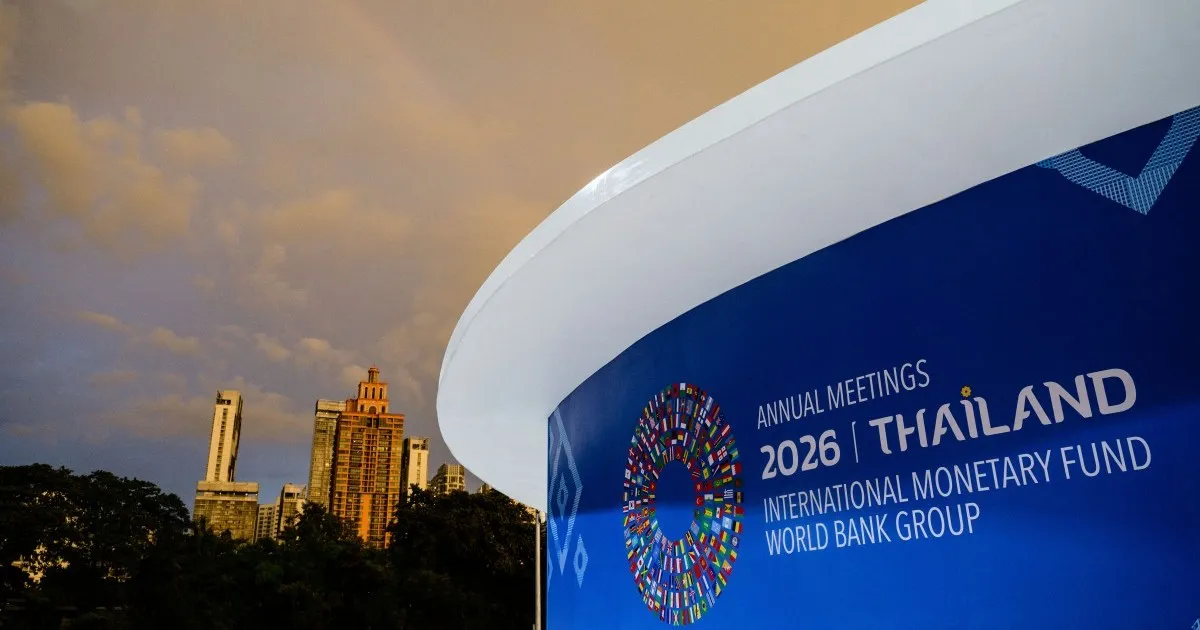
The meetings are being held in conjunction with the annual meetings of the International Monetary Fund (IMF) and the World Bank, taking place in the Thai capital from October 12 to October 18.
Recommended Stories
list of 4 itemsend of list
Here are some of the key details about the meetings:
What are the G20, the IMF and the World Bank?
The G20 is an economic forum comprising 19 large economies, including the United States, China, the United Kingdom, Australia, Brazil, India, Japan, Indonesia and Saudi Arabia, as well as the European Union and the African Union.
The grouping has an annually rotating presidency, currently held by the US.
Together, the G20 countries account for about 85 percent of global gross domestic product (GDP) and three-quarters of global trade.
The G20 was established in 1999 as a forum for finance ministers and central bank governors to address shared economic concerns in the wake of the Asian Financial Crisis, before expanding into a broader forum for national leaders.
The IMF, based in Washington, DC, is an international financial institution that promotes international cooperation on monetary policy, trade and economic growth.
Its membership includes all but a handful of the world’s sovereign states, including North Korea, Cuba, the Vatican City and Monaco.
The World Bank, also based in Washington, DC, primarily serves as a provider of loans and grants to developing countries. It has 189 member countries.
The IMF and the World Bank were created at the 1944 Bretton Woods conference in the US, convened by the Allied Powers to establish the contours of the post-World War II international financial order.
Who will be attending the meetings?
Most finance ministers and central bank governors of the G20 will be in Bangkok, along with IMF Managing Director Kristalina Georgieva and World Bank Group President Ajay Banga.
US Treasury Secretary Scott Bessent will be a notable absence from the gatherings, as the top economic official of the world’s biggest economy and G20 chair.
US officials have cited “domestic engagements” for Bessent’s decision to skip the events, at which Washington will be represented by Deputy Secretary Francis Brooke and Undersecretary for International Affairs Erin Browne.
The G20 meeting, one of several gatherings of the group’s finance ministers each year, will help shape the agenda for the headline leaders’ summit in Miami, Florida, taking place on December 14-15.
What is on the agenda?
The economic fallout from the US-Israel war on Iran is expected to dominate discussions.
Attacks across the Middle East have upended economic activity across the region, while disruption to shipping in the Strait of Hormuz has driven a surge in energy prices worldwide.
Crude oil prices have exceeded $100 a barrel for much of the past eight months, placing a strain on government coffers and household budgets, particularly in the Gulf region and the rest of Asia.
In advance of the meeting, Australia’s Treasurer Jim Chalmers MP said he would use the discussions to call for an end to the conflicts in the Middle East and the reopening of the Strait of Hormuz “because that’s what the global economy desperately needs”.
“The war in the Middle East is having a devastating economic impact and is pushing up fuel prices, inflation and interest rates around the world,” Chalmers said in a statement.
Other issues likely to feature on the agenda include the ballooning debt levels of many countries, which exceed 100 percent of GDP in the US, Canada, Japan, Italy and France.
In a speech on Wednesday, Georgieva warned that mounting debt posed a threat to the global economy and that there was no “magic” formula that would allow governments to avoid tax hikes or spending cuts.
G20 members will also bring more specific individual concerns to the table based on their economic and geopolitical priorities.
The US, for example, has repeatedly expressed concern about “global imbalances”, a veiled reference to China’s state-driven industrial model that has allowed Chinese exporters to flood overseas markets with cheap goods.
US President Donald Trump has long claimed that China’s large trade surplus, which stood at a cumulative $938bn in September, proves that international trade is stacked against US manufacturers.
In a statement addressed to the IMF on Wednesday, Bessent called for action to address mismatched trade balances.
“This especially includes strengthening its analysis and engagement on the role non-market policies and practices and exchange rates play in driving external imbalances,” Bessent said.
“Policymakers around the world are having difficult discussions about how to sustain market-based systems amid distortionary policies from some economies that skew competition and hurt employment.”
Divisions and competing interests cloud the prospects for coordination, however.
At the last meeting of G20 finance ministers in Asheville, North Carolina, US, held on August 31 and September 1, member countries failed to issue a joint communique after China objected to language to do with trade.
Flooding left vehicles piled up and people stranded inside Sao Paulo’s Anhangabau tunnel. People had to wait for the floodwaters to recede before rescue teams could reach them.
The President’s ally says conservatives “cannot give an inch” in Latin America as he accepts an award in Washington.
Published On 15 Oct 202615 Oct 2026
Argentine President Javier Milei has urged his ally, US President Donald Trump, to come out of the United States midterm elections in a stronger position, calling the vote important for the West as a whole.
Milei made the appeal on Wednesday at a Hispanic Heritage gala in Washington, where a Hispanic association gave him an award, ahead of November’s vote.
Recommended Stories
list of 2 itemsend of list
Conservatives, he said, “cannot give an inch in our reconquest of the hemisphere”, according to Agence France-Presse (AFP).
Milei flew into the US capital on Wednesday for meetings with investors and the gala. He is due to address the US Chamber of Commerce on Thursday.
Argentina’s President Javier Milei attends the Hispanic Heritage Gala in Washington, DC, on October 14, 2026 [Alex Wroblewski/AFP]
Milei’s lifeline
Trump firmly backed Milei a year ago, when his government also faced crucial legislative elections. He has called Milei his “favorite president”.
That backing, together with a currency swap agreement with the US Treasury, helped Milei to success in those polls, analysts have argued.
The centrepiece of the package, announced by Treasury Secretary Scott Bessent, was a $20bn swap with Argentina’s central bank, in which the US exchanged dollars for pesos. The swap came shortly after Milei’s party lost a key provincial election.
Trump made clear at the time that the support hinged on a Milei victory. “I’m with this man because his philosophy is correct,” he said ahead of a White House lunch with the Argentine leader. “If he wins, we’re staying with him. And if he doesn’t win, we’re gone.”
Trump also warned that the US would not be “generous” if Milei lost. The remarks unsettled Argentine markets, with the main stock index giving up earlier gains and falling about 2 percent, The Associated Press reported.
The package drew criticism in the US. Democratic lawmakers accused Trump of prioritising a foreign bailout while the US government was shut down.
Nairobi, Kenya – Kenya’s response to an imported Ebola case has demonstrated its ability to mobilise a national response in the capital.
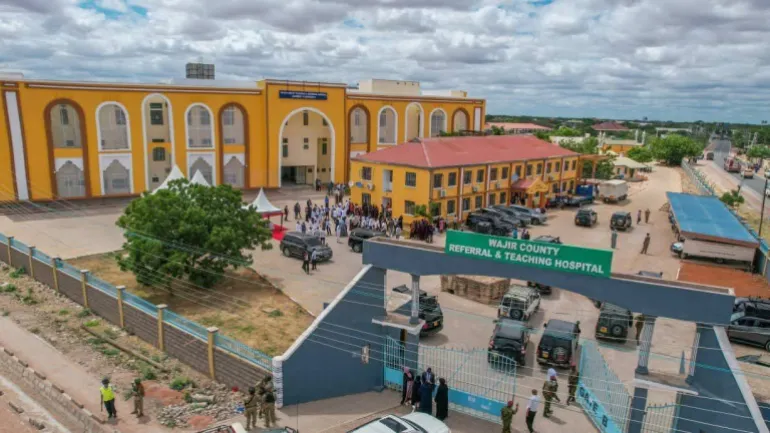
But a suspected case in the northeastern county of Wajir has raised a critical question: whether the country’s preparedness measures can protect communities far from major hospitals, laboratories and transport hubs.
The suspected case in Wajir tested negative, according to county officials, easing fears of wider transmission. Yet the incident highlighted the importance of local health facilities being able to recognise suspected infections, isolate patients safely and communicate reliable information to residents.
For communities near Kenya’s borders, preparedness requires more than screening travellers at airports and official crossings.
It also depends on trained health workers, appropriate protective equipment, functioning isolation facilities and clear referral procedures. Residents must know where to seek care and how to respond when health authorities raise the alarm.
Wajir’s readiness under scrutiny
Garad Saney Mohamed, communications director for Wajir county, told Al Jazeera that the county had established an isolation centre in Wajir town and formed a rapid response team to strengthen its preparedness.
He said the county was also using radio campaigns, community health promoters, school health programmes and posters to raise awareness about Ebola. A preparedness plan and budget had been put in place, he added.
However, the county did not provide details on the isolation centre’s capacity, the number of health workers trained specifically in Ebola response or the budget allocated to these efforts. Without that information, it is difficult to assess whether the county has the personnel and resources needed to manage suspected infections safely or respond to a wider outbreak.
The suspected case involved a 20-year-old man who had travelled from the Democratic Republic of the Congo through Uganda before reaching his home in Wajir on September 20. He was assessed at Habaswein Subcounty Hospital in Wajir South after presenting with a severe febrile illness.
His sample tested negative for Ebola, according to county officials. He was to remain under observation while receiving medical care.
The case prompted precautionary action, but it does not establish whether Wajir’s wider preparedness systems would be sufficient during an outbreak. That would depend on factors including the availability of protective equipment, staff trained in infection prevention and control, safe sample transport and reliable links between local facilities and designated testing laboratories.
Wajir’s proximity to Somalia, which lies 110km (70 miles) to the east, and the movement of people and goods across the border make surveillance and public communication particularly important. Screening at formal entry points remains essential, but it cannot replace the ability of local health facilities and community health workers to recognise warning signs and guide people towards appropriate care.
National screening, local challenges
Kenya’s national response intensified after an Ebola case was linked to a Kenyan travelling from the Democratic Republic of the Congo through Uganda. The patient arrived in Nairobi on October 3, was diagnosed with Bundibugyo virus of the disease and died on October 5, according to the World Health Organization (WHO). Kenya notified the WHO on October 6.
The patient had fallen ill while living in the Democratic Republic of the Congo and travelled by road to Kampala before flying to Nairobi. Laboratory tests at the National Virology Reference Laboratory and the Kenya Medical Research Institute confirmed the infection, according to the Ministry of Health.
On October 14, Kenya confirmed a second case of Bundibugyo virus disease involving a 39-year-old man who was a close family member of the first patient. He was already in quarantine and under daily monitoring when he developed symptoms, including fever, fatigue and joint pains, on October 13.
Laboratory tests confirmed the infection, and he was transferred to a designated treatment centre for supportive care. The Ministry of Health said the two cases were linked and there was no evidence of transmission in the wider community.
Authorities subsequently intensified surveillance at points of entry, contact tracing and public communication. The negative test result in Wajir underscored the importance of investigating suspected infections promptly and using laboratory testing to establish whether the virus is present.
As of October 6, Kenya had screened 652,584 travellers, tested 267 samples and trained 4,971 healthcare workers in Ebola prevention and management, according to the Ministry of Health.
Wajir’s health facilities are on the front line of detecting and responding to suspected infectious disease cases [File: Hafsa Sheikh/Al Jazeera]
By October 12, the WHO reported that more than 665,000 travellers had been screened and 127 contacts had been listed, with 94 in quarantine. Five laboratories had been designated to test for the disease, and nearly 5,000 health workers had received training.
These figures demonstrate the scale of the national response. But the number of travellers screened or health workers trained does not, on its own, establish how effectively those resources are distributed or whether individual counties can manage suspected infections.
For Wajir, the key questions concern the readiness of local facilities, the availability of trained personnel and protective equipment, and the speed with which samples can be transported for testing. The county has outlined the measures it has taken, but the available information does not provide a complete picture of its operational capacity.
Preparedness means more than the numbers
Health workers need to recognise suspected cases, follow infection-prevention protocols, collect and transport samples safely, and refer patients without exposing others. Facilities must also have appropriate protective equipment and clear procedures for managing suspected infections.
The WHO reported that Kenya’s national preparedness score rose from 66 percent in May to 82 percent in July. The assessment covered measures including surveillance, laboratory testing, isolation and treatment facilities, and trained response teams.
The improvement suggests that preparedness measures had advanced before the imported case was confirmed. However, a national score cannot establish whether every county has the equipment, staffing and referral arrangements needed to respond effectively. Assessments of local capacity are essential to identifying gaps that national figures may not reveal.
The Kenya Red Cross has also supported preparedness and public awareness efforts. Dr Paul Olale, a representative of the organisation, told Al Jazeera about a preparedness assessment. However, the basis of the separate figure attributed to the organisation was not established in the information available for this report, making it difficult to determine what it measured or whether it identified county-level weaknesses.
The organisation has highlighted the need to counter misinformation. During an outbreak, rumours can leave people uncertain about symptoms, how the virus spreads and whether they should seek medical attention.
For residents, information needs to be practical. People should know where to seek care, how to report a suspected illness and what to do while awaiting medical advice. Communication must also address stigma and reassure people that reporting a suspected illness can help protect their families and communities.
Community health promoters, local radio stations, schools and trusted community leaders can help deliver information in languages and formats residents understand. But awareness campaigns are most effective when they are consistent and backed by health services capable of responding promptly to concerns.
Wajir’s experience illustrates why Kenya’s Ebola preparedness must be measured not only by national screening figures and training totals, but also by the ability of individual counties to respond safely when a suspected case emerges.
An isolation centre, a rapid response team and public awareness campaigns are important components of an effective response. Their existence alone, however, does not establish whether facilities have adequate equipment, staff can follow established protocols or residents can access reliable information when they need it.
Questions remain over how prepared remote communities such as Wajir county are to respond to a potential Ebola outbreak [File: Hafsa Sheikh/Al Jazeera]
Kenya has demonstrated its ability to mobilise a national response, expand screening and undertake laboratory testing. The challenge is ensuring that these measures translate into effective protection beyond major transport hubs, including in remote communities where access to healthcare and timely information may be more difficult.
Dr Mary Muthoni, Kenya’s principal secretary for public health and professional standards, underscored the importance of protecting frontline staff in remarks delivered on behalf of Health Cabinet Secretary Aden Duale, according to a WHO statement released on October 12.
“No health worker in this country should be asked to attend to a suspected Ebola case without the right protective equipment.”
The US president has long been unhappy with inside information about his administration being leaked to the media.
United States President Donald Trump has suggested that those who leak information to the news media should be shot as punishment.
Trump made the remarks at a campaign rally in Bullhead City, Arizona, as he urged supporters to vote in the November 3 midterm elections.
Recommended Stories
list of 3 itemsend of list
“In my opinion, leakers should be shot,” Trump told the crowd. “In the old days, we used to shoot leakers, you know, when they leak what time you’re going to attack a country.”
Trump made the statement in an apparent reference to Operation Midnight Hammer, which saw the US launch a surprise attack on Iran in June 2025 during the 12-day war between Israel and Iran.
In the aftermath of the attack, several media outlets published findings from a preliminary report by the US Defense Intelligence Agency.
That report – which had not yet been released to the public – indicated that Iran was able to move some of its enriched uranium away from the sites the US had bombed.
It also suggested that the extent of the damage to Iran’s nuclear facilities was more modest than what Trump had asserted.
Trump, however, appeared to signal that the timing of the US attacks was among the leaked information. He accused the news media of putting military members in danger, calling out The New York Times and CNN in particular.
“They leaked the time we were leaving, the time we were arriving,” Trump said, claiming he had to reschedule the bombing campaign two days later as a result.
“Somebody leaked. Some sleaze-bag, they ought to go to jail or be shot. For the rest of their life, they should be in jail.”
Trump has long had an adversarial relationship with the news media, and he has previously called for harsh punishment against any official who passes on confidential information to news outlets.
After parts of the Defense Intelligence Agency report became public, he blamed lawmakers in the Democratic Party for its release.
“The Democrats are the ones who leaked the information on the PERFECT FLIGHT to the Nuclear Sites in Iran,” Trump wrote on social media at the time. “They should be prosecuted!”
Under Trump, the White House has taken aggressive action to track down the source of leaks.
Staff in his administration, as well as officers in the military, have also been asked to take polygraph tests.
Journalists at several news outlets, including The New York Times, The Washington Post and The Wall Street Journal, have also received subpoenas aimed at determining the sources of internal information made public.
The newspapers had reported on stories such as a botched Navy SEALs raid in North Korea and how Trump ignored internal Pentagon warnings against launching the Iran war.
Last year, the Department of Defense demanded that journalists who wished to access the Pentagon sign an agreement not to publish unauthorised material.
Much of the Pentagon press corps refused to agree, and a federal court struck down many of the new demands made on journalists at the department.
Trump has long raged against leakers, going back to his first term as president from 2017 to 2021.
Former White House official Alyssa Farah Griffin told a podcast in 2024 that Trump had called for leakers to be executed, after media outlets reported that he had taken shelter in a White House bunker during racial justice protests in 2020.
Trump appeared to reprise that sentiment in his speech to Arizona voters on Wednesday, less than three weeks before the November 3 midterms.
“Leakers should be dealt with very, very strongly,” Trump said. “To me, they are the scum of the earth.”
Victims’ groups, however, have denounced the ruling as ‘selective’ justice that exonerates a former government head.
Published On 15 Oct 202615 Oct 2026
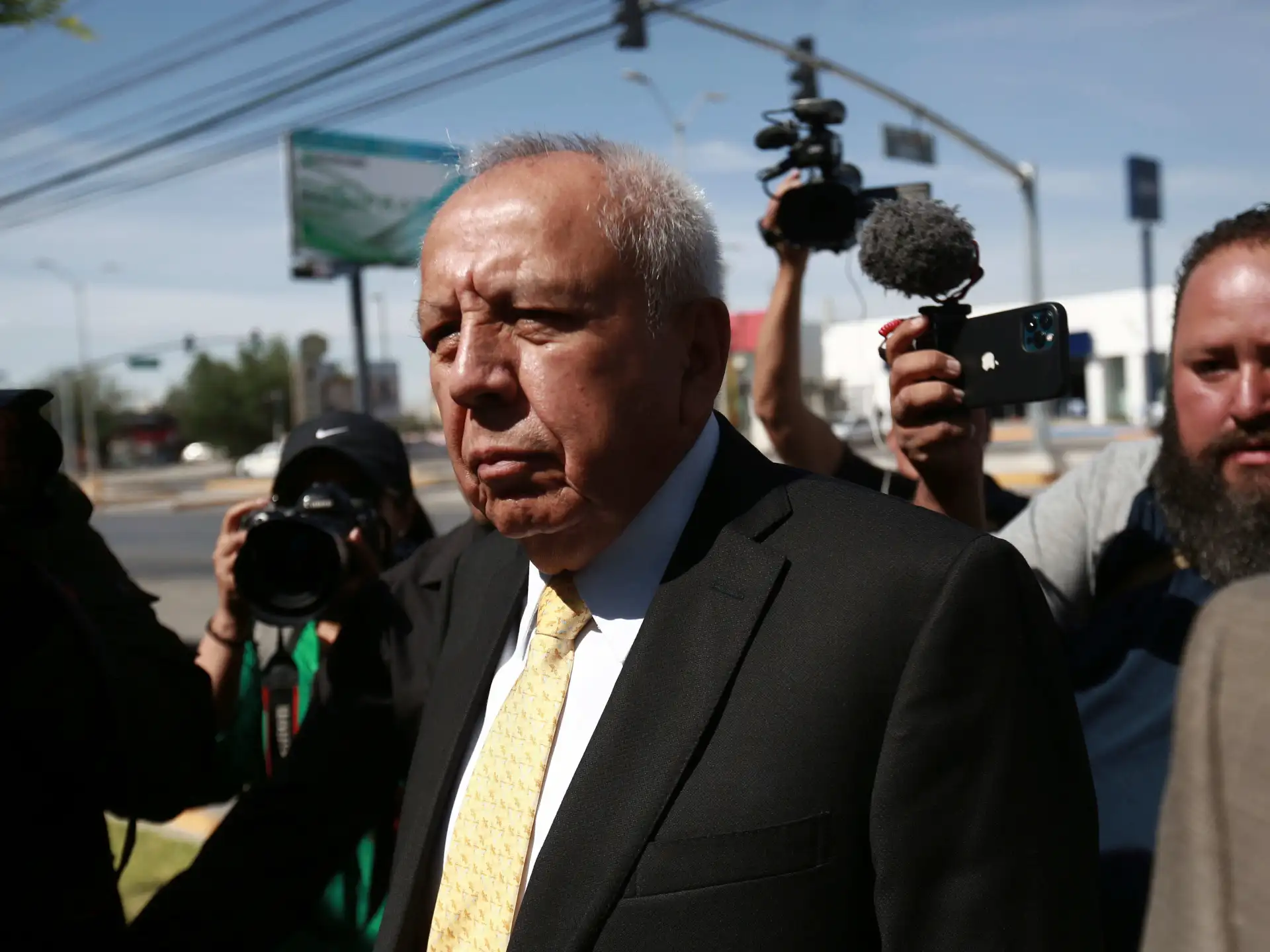
A Mexican judge has closed the case against Francisco Garduno, former head of the country’s immigration agency, for crimes related to the 2023 fire at a Ciudad Juarez detention centre that killed 40 migrants and injured 30 others.
The incident was the deadliest event ever to occur at a Mexican immigration centre, and critics said it exposed the shortcomings and irregularities in the country’s detention system.
Recommended Stories
list of 3 itemsend of list
Garduno faced trial for the crimes of abuse of public office and dereliction of duty after footage from the fire showed guards had failed to respond to cries for help.
On Tuesday, Judge Victor Manlio Hernandez Calderon ruled that Garduno had fulfilled the court-mandated measures required to address the damage. But victims rejected that decision and announced they would appeal.
“Yesterday, corruption and the impunity of politicians protected by power won again,” the Foundation for Justice, one of the NGOs representing some of the victims, wrote on social media on Wednesday.
The victims have also compared the judge’s decision to close the criminal case to a de facto exoneration for Garduno.
In their view, the ruling “confirms that justice in Mexico is selective” and denies the victims “full reparations” and concrete guarantees that such an event will not be repeated.
Miguel Zenteno, one of the foundation’s lawyers, noted that the ruling is not yet final because it will be appealed and because another injunction is pending against the court-mandated reparations, which critics say failed to meet the standards for serious events.
On March 27, 2023, some 70 men were crammed into a locked dormitory with no ventilation and barely any water at the Ciudad Juarez immigration detention centre, on the border with El Paso, Texas.
As night fell, a small group set fire to some mattresses in protest, and within seconds, smoke engulfed the entire area.
Security cameras recorded the guards leaving the area despite cries for help. They made no attempt to open the gates of the dormitory. Only the women, held in another cell, were released. Most of the victims were Central Americans and Venezuelans.
Garduno, a former prison guard and current official at the Ministry of Education, led the National Migration Institute (INM) starting in 2019 and continued in the role until 2025 despite the fire.
The judge had previously ordered Garduno to compensate the families, provide them with free specialised medical care, issue a public apology, provide human rights training to migration personnel and guarantee that the events would not be repeated.
Zenteno acknowledged that the measures were implemented only partially because Garduno did not pay the damages as stipulated by the legal process.
Instead, Zenteno pointed out that the funds came from the INM, and the payments did not fully compensate the families. Furthermore, he added, the victims were not even informed how to access free medical services, and the apology “was a mere formality, not substantive”.
In addition to Garduno, prosecutors accused another former director of the institute of the same crimes.
Six immigration agents – including a military officer and a private security guard – and the two migrants accused of starting the fire are charged with homicide and assault. Most of the officials remain free pending trial.
Recent US-Greenland-Denmark agreement excludes mining or drilling rights while reinforcing Greenland’s sovereignty.
Published On 14 Oct 202614 Oct 2026
Denmark has demanded that US resource exploration in Greenland respect the island’s laws amid President Donald Trump’s claim that oil, gas and mineral extraction will soon begin there.
The Danish Foreign Ministry reaffirmed on Wednesday that last month’s agreement between Denmark, Greenland and the US did not alter the rules for extraction.
Recommended Stories
list of 3 itemsend of list
The agreement “does not grant investors from the US any preferential treatment” over investors from other NATO and EU countries when it comes to access to natural resources in Greenland, the ministry said.
In a post on Truth Social, US President Trump called the semi-autonomous Danish territory “our new and beautiful Greenland”.
“Massive Oil, Gas, and Mineral Exploration is getting ready to begin,” he wrote, without providing details.
What the deal covers
Trump, Danish Prime Minister Mette Frederiksen and Greenland’s Prime Minister Jens-Frederik Nielsen signed the 10-page agreement on the sidelines of the United Nations General Assembly in New York on September 22, ending months of tensions over Trump’s threats to control Greenland.
The deal allows the US to “modernise and expand” its activities at the Pituffik Space Base, a remote US military installation in northwest Greenland.
It also paved the way for two new military bases and Trump’s “Golden Dome” missile defence system, while reaffirming Danish sovereignty and Greenlanders’ right to self-determination.
It did not allocate any rights for mining or drilling.
Greenland’s ban
Greenland banned uranium mining and all future oil exploration in 2021.
Its government is reviewing whether a Texas firm, Greenland Energy, can use permits that predate the ban.
The company said in August it planned to drill for oil in 2027 at an untested basin on Greenland’s east coast, although it lacked its own permit.
Danish security policy adviser Jacob Kaarsbo said Trump’s comments could signal that his desire to control Greenland remains unchanged.
“It is extremely dangerous to view this agreement between the Trump administration and Denmark as something that has altered Trump’s intentions,” he said.
Mikkel Olesen, a senior researcher at the Danish Institute for International Studies, told Al Jazeera that details regarding mining and exploration rights remained unclear and that information coming mostly from the US side should be taken “with a grain of salt”.
Richard Weitz, a fellow at the NATO Defense College in Rome, said Trump “backed down and settled for less” than he sought, but still “got pretty much everything he wanted, except formal annexation”.
Jose Mourinho enjoyed a Roma reunion to remember as Real Madrid completed an astonishing comeback by scoring three late goals to claim a 4-3 away win in the Champions League on Wednesday.
Marten de Roon gave the hosts a deserved opener before Kylian Mbappe struck back on his 100th Champions League appearance to level the scores at the break.
Recommended Stories
list of 4 itemsend of list
Two Donyell Malen strikes in the space of six minutes early in the second half seemed to take the game away from the 15-time European champions as Roma ran rampant.
But Real scored three goals in the space of seven minutes late on, all stemming from corners, to turn the game on its head as Carlos Espi, Endrick and ex-Roma defender Antonio Rudiger struck at a stunned Stadio Olimpico.
Mourinho was a popular figure, leading Roma to the UEFA Conference League title and an Europa League final during two-and-a-half years in charge.
The home crowd honoured the Portuguese with banners and chants in Roma’s first home Champions League match in more than seven years, and the hosts started strongly as Mario Hermoso forced Thibaut Courtois into a flying fingertip save.
Roma took a deserved lead when De Roon swept a shot past Courtois from 25 yards in the 20th minute, and almost doubled it when Malen’s powerful shot squirmed under Courtois before being plucked off the line.
However, one costly moment of switching off proved enough to send them back to square one within five minutes of the opener being scored.
Hermoso misjudged an interception to allow Mbappe a clear run at goal, and the French striker’s deflected shot flew into the roof of the net to level the scores with Real’s first meaningful chance of the game.
Mbappe marked his Champions League centurion status – he is the youngest player to reach the milestone, aged 27 – with his 72nd tournament goal, one that moved him into the all-time top five ahead of Real legend Raul Gonzalez.
The equaliser appeared to subdue Roma and steady Mourinho’s men, who twice threatened a second before the break as Marc Cucurella and Jude Bellingham came close.
Roma take game to Real Madrid
But Roma boss Gian Piero Gasperini insisted pre-match that Roma would not compromise on their full-throttle style regardless of opposition, and he was true to his word as they came out firing after the break.
Roma quickly retook the lead when half-time substitute Rodrigo Mora fed the ball to Malen, who finished brilliantly by taking the ball in his stride with his first touch and lifting it over Courtois with his second.
Things got even better for the Italians just six minutes later when Malen raced onto a through ball to power home his second, given following a VAR review after initially being flagged for offside.
Real looked for a response as Mbappe twice tested Pierluigi Gollini, before having his second goal of the night ruled out for offside.
But set-pieces proved to be the key to unlock the Roma defence, as Espi tucked home a close-range rebound from a header to pull one back before Endrick powered home a header from another corner just two minutes later.
The final blow was struck by Rudiger in the 90th minute, the defender getting in front of his marker to guide home a close-range finish and complete an extraordinary turnaround.
The result leaves Real Madrid with six points from their opening two league phase matches, while Roma are on one point.
Shakhtar Donetsk beat AEK Athens in London debut
Nomadic Ukrainian champions Shakhtar Donetsk celebrated moving into their new Champions League “home” at Stamford Bridge by storming back to beat AEK Athens 3-1.
Fans of the club turned up in the thousands to support the team, who emerged from the tunnel draped in blue-and-yellow national flags.
The Greek side took the lead in the 28th minute through Lovro Majer but Pedrinho levelled confidently from the penalty spot just six minutes later.
With about 10 minutes of normal time to go, Vinicius Tobias found the net from a tight angle and substitute Gleiker Mendoza made the game safe, smashing home after cutting in from the left.
The result leaves Shakhtar on four points after two games, following a draw against PSV Eindhoven in their opening match in the league phase of the Champions League.
Giant-killers Bodo sink Dortmund in Champions League
Fredrik Sjovold’s 52nd-minute strike secured a 1-0 victory for Bodo/Glimt over Borussia Dortmund, extending the Norwegian side’s remarkable home record against Europe’s elite.
Bodo were a cut above the 2024 Champions League runners-up and took the lead through Sjovold just after the break.
Dortmund improved in the final half hour but were unable to strike back, despite a late chance for Felix Nmecha.
Dortmund join Manchester City, Inter Milan and Sporting as recent big-name scalps on the artificial turf of Bodo’s Aspmyra stadium.
Aston Villa put six past Fenerbahce in record rout
Aston Villa recorded their biggest ever European victory as Nicolas Jackson inspired a 6-0 rout of Fenerbahce.
Unai Emery’s side won at Villa Park for the first time this season to maintain their 100 percent start in Europe’s elite club competition.
Swiss forward Johan Manzambi put Villa in front, and Jackson was on target twice before the interval.
Ross Barkley scored twice in the second half before Tammy Abraham’s late strike completed the rout.
Mexico will require the digital platforms to protect minors from violent and sexual content.
Published On 14 Oct 202614 Oct 2026
Mexican President Claudia Sheinbaum signed a presidential decree requiring digital platforms, including TikTok, Meta and X, to protect children from violent, sexual and other harmful content online.
The decree establishes that digital platforms must, by design, restrict exposure to content involving violence, harassment or sexual abuse, as well as immediately remove any risky material from the profiles of minors.
Recommended Stories
list of 4 itemsend of list
Sheinbaum said on Wednesday that the government would back legislation to penalise companies that fail to implement the decree.
“If no progress is made, it would become a law,” she told a news conference on Tuesday.
“The goal is for digital platforms to take on some of the responsibility and refrain from disseminating, promoting, or spreading content related to this type of information — including criminal acts or violent behaviour,” Sheinbaum had said earlier when she indicated she would introduce the decree.
The decree comes after an attack by two 18-year-olds on their former high school in the northern state of Coahuila in early October that killed one and wounded three others.
Digital platforms will have one month to comply with the decree, government adviser Luisa Maria Alcalde said.
Officials said they had already discussed the matter with representatives of social media outlets and streaming platforms such as Meta, Microsoft, Apple, TikTok, Google, X and Huawei.
Instagram, TikTok, Snapchat, Kick, YouTube, Facebook, Twitch, Reddit, Threads and X applications are displayed on a mobile phone [File: Hollie Adams/Reuters]
Last August, Meta, for example, agreed to pay an $18bn settlement in a major US federal case accusing it of endangering children, and was forced to introduce new safety features to platforms including Instagram and Facebook. The lawsuit alleged Meta had violated the Children’s Online Privacy Protection Act by collecting, retaining, and using personal data from children under 13 without proper parental consent.
Mexico’s move follows a broader global push to protect minors online, with governments in Europe and Australia tightening oversight of digital platforms and US states pursuing a range of child-safety measures.
Brazil has also moved to strengthen protections for children online. Such measures have raised questions over how to protect minors while safeguarding privacy and freedom of expression.
The former head of Israel’s domestic security agency Shin Bet has sued Prime Minister Benjamin Netanyahu for defamation over claims of his responsibility in the October 7, 2023 Hamas-led attack.
Coming just before Israel’s close-fought October 27 election in which Netanyahu is fighting for his political life, the case filed on Wednesday is set to ramp up the country’s political drama.
Ronen Bar, the former director of Shin Bet, accused Netanyahu of “lying to cover himself” and said it was slanderous of the prime minister to have accused him of “criminal failures” over the attack, in a 134-page court document.
Bar said he telephoned the prime minister’s military secretary as soon as signs of a possible attack became apparent, but that he did not have Netanyahu’s direct number.
Netanyahu has said he was not alerted by Bar on the morning of the Hamas-led assault, insisting that he could have stopped the attack had the Shin Bet’s then-director or military leaders called to wake him up the day of the early-morning attack.
Bar’s lawsuit says Netanyahu made accusations “that he knew to be false, with the aim of diverting the debate from his own responsibility for the events of October 7”.
Instead, it was Netanyahu’s policies over several years that had “increased the dangers posed by terrorist organisations in Gaza”, it said.
Likud response
On Wednesday, Netanyahu responded to Bar’s accusations in a statement issued by his Likud party saying, “Ronen, are you serious?”
“You had my number on the red line and could have called me immediately, as all security chiefs do,” Netanyahu asked, adding, “How many lives could we have saved if only you had called in time?”
Bar resigned as head of Shin Bet in June 2025 amid recriminations over the deadliest attack in Israel’s history, while insisting he had informed Netanyahu of the threat in advance.
He is seeking three million shekels (about $968,500) in damages from Netanyahu.
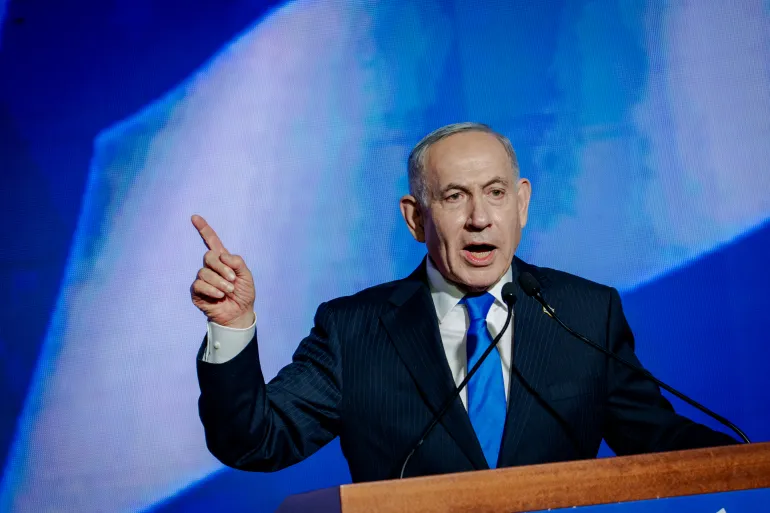
Israeli Prime Minister and Likud party leader Benjamin Netanyahu speaks at the lectern to supporters during a party campaign rally at Expo Tel Aviv on September 17, 2026 in Tel Aviv, Israel [Erik Marmor/Getty Images]
Warnings, lies, manipulation
The allegations in Bar’s lawsuit come days after Netanyahu’s former military secretary, Avi Gil, told Israel’s Channel 12 that the prime minister’s office had “falsified records related to October 7, 2023”, including altering the recorded time of a key phone call.
Gil, who served as Netanyahu’s military secretary from July 2021 to May 2024, said a stenographer in the prime minister’s office approached him in January 2024 with instructions from Netanyahu’s chief of staff to change the time of a four-minute call from 6:40am local time (03:40GMT) to 6:29am (03:29 GMT).
“She told me, I’m not allowed to change it,” said Gil, accusing the head of Netanyahu’s office of manipulating telephone records, adding, “Those are facts, and there is no dispute about them.”
Last month, the Wall Street Journal reported that Netanyahu had been warned of the attack by Egypt’s intelligence chief, Abbas Kamel.
In a rare move, Kamel reportedly phoned the prime minister just days before the attack, underscoring previous warnings in September 2023, when he is said to have flown to Israel to warn security officials in person that Hamas was planning an attack.
Polls show Netanyahu is in a tight race to stay in power in the October 27 election, after being hammered by former staff and government officials as well as the opposition for failing to prevent the bloodshed.
At least 1,221 Israelis were killed on October 7, 2023, after Hamas broke through the fence separating Israel and Gaza, according to Israeli official figures.
Also, 251 Israelis were taken captive, including the bodies of 44 Israelis killed that day.
In the three years since, Israel has killed more than 74,300 people in Gaza, according to the Health Ministry in the enclave.
More than 1,400 Palestinians in Gaza have been killed in Israeli attacks since a tentative “ceasefire” backed by the US was reached last year.
The former British Army member harboured ‘extreme right-wing’ views and was ordering explosives components, say police.
Published On 14 Oct 202614 Oct 2026
A British court has handed a former army chef a nearly four-year jail term for possessing weapons for “terrorist purposes”.
Mark Broadhurst, 28, was given the sentence on Wednesday at Sheffield Crown Court in England, two years after police uncovered online messages in which he expressed racist views and an intention to sell homemade firearms to right-wing groups.
Recommended Stories
list of 3 itemsend of list
Police found a stockpile of weapons at Broadhurst’s home address when they took him into custody in September 2024, including knives and crossbows, black powder, ammunition, air pistols and what officials described as “an improvised homemade cannon”.
The former British Army member was also found to be part of an online chat group with three other men who last year were jailed for planning to carry out a “terrorist” attack at mosques or synagogues as part of what they believed to be a coming “race war”.
Frank Ferguson, head of the special crime division of the UK’s public prosecution agency, the Crown Prosecution Service (CPS), said Broadhurst was “clearly interested in violence and developing weapons that had the ability to cause untold harm to innocent people”.
Detective Chief Superintendent James Dunkerley, who heads “counterterror” policing in the northeastern region, said Broadhurst was found to be harbouring an “extreme right-wing mindset” and was “proactively ordering components to make explosives”.
Broadhurst pleaded guilty to firearm possession and possessing an explosive under suspicious circumstances, but denied they were for “terrorism” purposes. A judge, however, ruled that Broadhurst’s offences were connected to “terrorism”.
His conviction comes against a backdrop of rising racial tensions and hate crimes in the UK, with marginalised communities increasingly targeted.
British police in July arrested 12 people in connection with an “extreme right-wing terrorism threat” targeting an Islamic gathering in eastern England.
Six months earlier, UK prosecutors said they were handling the highest number of hate crime cases referred by police in its history.
Tehran municipality has launched a series of welfare initiatives to help residents cope with soaring living costs, but the measures have raised questions about their financing and effectiveness, as well as whether the local authority is taking on responsibilities better handled by Iran’s national government.
The local authority has launched four projects it says are aimed at protecting citizens, including a housing project, freezes on the prices of 12 basic goods, and a maternity package.
Recommended Stories
list of 3 itemsend of list
Questions have been raised about how they will be funded and whether the municipality is overstepping its traditional functions.
In Iran, municipalities are responsible for local services and urban management, while the national government oversees broader economic policy, including efforts to control inflation.
Iranian law does give municipalities some responsibilites beyond conventional urban services, but Article 55 of Iran’s Municipal Law does call for municipalities to provide for public food markets, make certain essential goods more affordable, and provide social welfare facilities and low-cost housing.
The dispute is therefore less about whether Tehran municipality can provide the services, and more about their scale and financing.
The municipality’s price-freezing initiative, dubbed the “Zero Inflation” project, has been the most controversial. It comes as year-on-year inflation reached nearly 90 percent last month, while annual food inflation hit 108.8 percent.
Doubts have been raised about how the project will be funded and its effectiveness. Others believe that the measures could fuel inequality between the capital and other cities.
They are viewed as steps to address the huge economic challenges faced by Tehran residents, worsened since the United States and Israel launched a war on Iran on February 28.
Tehran Mayor Alireza Zakani said the municipality had recently guaranteed prices ranging between 5 percent and 50 percent below market rates for the next six months.
Yousef Akandeh, a political activist, told Al Jazeera that freezing the prices of some goods or providing free services will not reduce inflation to zero alone.
“Even if we assume that the Tehran municipality succeeded in stabilising the prices of 12 basic goods, what about the rise in rents, medicines, transportation prices, and the rest of living expenses,” Akandeh asked.
Real steps to tackle inflation, Akandeh said, would have to begin with controlling liquidity growth and monetary discipline, which he said are nearly impossible amid the ongoing war.
The municipality has also introduced a maternity support programme offering mothers of children born this year monthly credits worth up to 40 million rials ($15) for two years for each newborn.
Akandeh raised the issue of institutional overlap, noting that a similar national scheme already exists.
“The government implements a similar package and provides monthly financial amounts for all newborns across the country and not just in Tehran, and if the municipality’s package is independent of it, the Tehrani family may benefit from the national and municipal programme simultaneously,” Akandeh said.
Receiving support from both programmes would not, in itself, indicate wrongdoing. But critics are instead raising the question of whether it is an appropriate use of Tehran’s municipal resources, particularly when the city faces competing spending demands.
Amir Dabiri Mehr, a former adviser in the Tehran municipality, told Al Jazeera that although supporting the homeless falls under the municipality’s social responsibilities, the problem lies in a lack of transparency. The municipality is funded by taxes and building density licences.
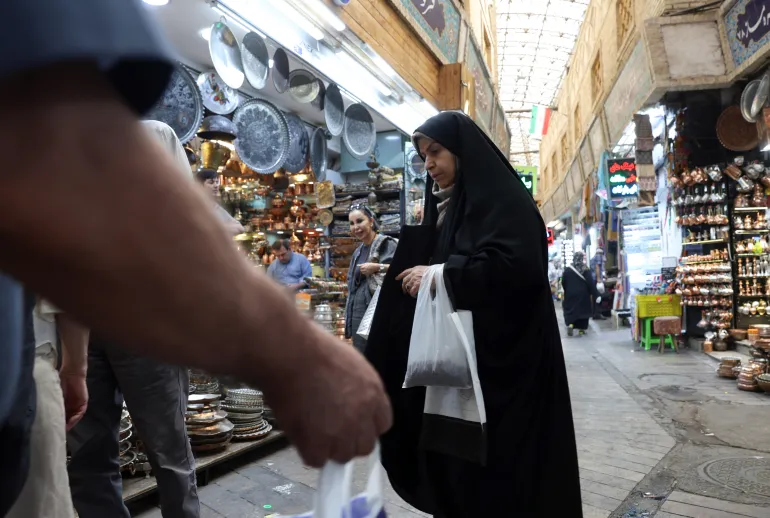
People shop at Tajrish Bazaar in northern Tehran, Iran, September 30, 2026 [Abedin Taherkenareh/EPA]
“The people have the right to know what the municipality spends within the framework of its original tasks, and in tasks it has chosen for itself, and where it gets its resources from?” Dabiri Mehr said.
The municipality-affiliated Hamshahri newspaper said that the “Zero Inflation” project is not funded by municipal budget subsidies, but through direct purchases from producers and reducing commercial profit margins in council-run stores.
The biggest crisis facing Tehran’s residents is housing, which is the national government’s responsibility, Mehr said. Food and living expenses are the national government’s responsibility.
“If the goal is to solve the people’s problems, it seems that the biggest problem facing the residents of Tehran today is the housing crisis, and this dilemma cannot be solved by building an apartment building consisting of a few residential units,” he said.
Al Jazeera attempted to contact the Tehran municipality for comment but received no response.
Tehran Mayor Zakani has, however, defended the financing arrangements, telling a local newspaper, Hamshahri, that the Zero Inflation initiative would not rely on direct subsidies from the municipal budget, but instead on purchasing goods directly from producers and reducing commercial profit margins in city-run stores.
Zakani also said that the programme would draw on municipal resources, bank financing, and partnerships.
Without a quick deal to move fertiliser through the strait, agricultural productivity would ‘significantly drop’.
Published On 14 Oct 202614 Oct 2026
A senior United Nations official has warned that parts of Asia and Africa could face a food security crisis unless Iran and the United States quickly agree on a UN-backed plan to move fertiliser through the embattled Strait of Hormuz.
UN Under-Secretary-General Jorge Moreira da Silva said on Wednesday that it was “absolutely critical” that the two countries agree to the proposal within weeks as planting season approaches. It calls for a UN-staffed coordination centre in Oman to help register vessels and oversee their safe passage in the waterway, through which a large portion of key global fertiliser inputs traditionally flow.
Recommended Stories
list of 3 itemsend of list
“If we miss that planting season, the productivity of agriculture would significantly drop and the impact on prices will significantly increase,” Moreira da Silva told Reuters on the sidelines of International Monetary Fund and World Bank meetings in Bangkok, Thailand.
Farmers operate strict crop calendars, and even slight delays could severely affect yield.
‘Negligible’ fertiliser shipments
Traffic in the Strait of Hormuz has been severely disrupted since the start of the US-Israel war on Iran, with Iran targeting vessels in the strait and the US and Iran exchanging fire in and around the waterway.
The disruption has hit global supplies of urea, the world’s most widely used nitrogen fertiliser, as well as seaborne sulphur, a key input. Before the war, roughly a third of global urea shipments and nearly half of seaborne sulphur passed through the strait.
Although some ships have been able to sail through amid the crisis, fertiliser products have made up a “very negligible” share of moving cargo, according to the Washington-based International Food Policy Research Institute.
Moreira da Silva said the UN-backed fertiliser mechanism, drawn up in March, could be activated within seven to 10 days if both Iran and the US agree.
Under the plan, UN monitors would work alongside local authorities at Gulf ports to verify cargo loading. Ships would be tracked during transit, and additional inspections could be carried out if countries raised concerns about a vessel or its cargo, said Moreira da Silva. He did not say why the US and Iran have not yet agreed.
The passage of only five vessels per day through the Strait of Hormuz could keep fertiliser supplies flowing to countries in critical need, he added.
‘Let us do our job’
The UN mechanism could work alongside negotiations for a “comprehensive deal” to restore freedom of navigation in the strait, Moreira da Silva said.
Iran and the US have exchanged proposals through intermediaries since a June interim ceasefire collapsed. Efforts to reopen the Strait of Hormuz have stalled over Tehran’s conditions and Washington’s insistence on addressing Iran’s nuclear programme from the outset.
“What we are telling them is, while you continue your discussions towards a comprehensive deal, let us work, let us do our job,” said Moreira da Silva.
His plea comes amid growing concern that fertiliser shortages could hit global food supplies.
In May, the UN’s Food and Agriculture Organization warned that fertiliser scarcity could tighten food supplies from late 2026 into 2027, and would likely hit countries facing climate or other crises much harder.
In South Asia, where most rely on imported fertiliser, farmers are already struggling because of soaring costs and fertiliser scarcity. On Wednesday, farmers in Spain took to the streets to protest rising production costs amid high oil and fertiliser prices.
United States federal agents have arrested a Saudi national and charged him with planting a hidden audio recording device in a conference room at the California offices of OpenAI, where he was working as an engineer.
Abdulrahman Alfozan, 35, had been working at the AI company since July 2025, the US Department of Justice said in a statement on Tuesday.
Recommended Stories
list of 2 itemsend of list
OpenAI discovered the device plugged into a USB port behind a television in an executive conference room at one of its San Francisco buildings on September 30, according to a criminal complaint filed by the Federal Bureau of Investigation (FBI).
Following the discovery, the company placed a camera in the room, which captured Alfozan entering last week and checking behind the television where the listening device had been installed, the FBI alleges.
The case highlights growing security concerns around sensitive AI research as companies and governments compete for the best talent and technology with the potential to alter regional economic and strategic dynamics.
Who is Abdulrahman Alfozan and what is he charged with?
Alfozan has been a legal permanent resident of the US since September 2020.
According to a LinkedIn profile in his name, he studied at the Massachusetts Institute of Technology (MIT) and the University of California, Berkeley. He previously worked at Meta and Microsoft, it said.
Before he joined OpenAI, he was a venture partner at Raed Ventures, headquartered in Riyadh in Saudi Arabia, which invested “in seed and early-stage startups in Saudi Arabia and MENA”.
Al Jazeera could not independently verify the details mentioned in this LinkedIn profile.
Alfozan made his first court appearance on Tuesday on a charge of “using or endeavouring to use an electronic, mechanical, or other device to intercept oral communications”.
It was not immediately clear if he has legal representation. He is expected to return to court on October 19.
If convicted, Alfozan faces up to five years in prison, a $250,000 fine, and three years of supervised release.
What happened at OpenAI?
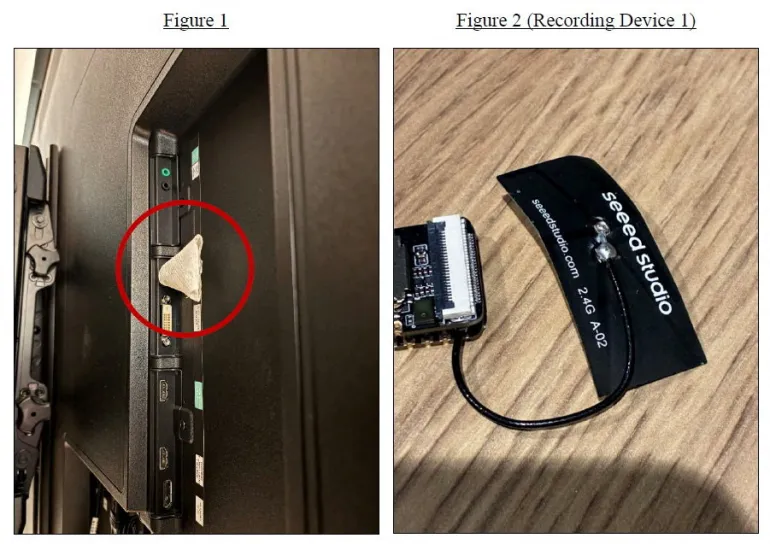
The FBI says a thumb-sized device with a microphone, and which could connect to a camera, had been concealed in toilet paper and placed behind a television set in the conference room. It was installed around September 28, the FBI said. Its stored data was encrypted and inaccessible. Investigators later found a similar device in Alfozan’s personal bag.
In a post on X, OpenAI said it had evidence that the employee intended to place other listening devices throughout sensitive areas of its offices to secretly record meetings.
“At this time, we have no indications of this individual inappropriately accessing or exfiltrating model weights, source code, or customer data. The employee was terminated,” the company said.
The FBI complaint also alleges that Alfozan used an AI productivity tool to make multiple inquiries about the company’s building addresses, meeting rooms, meeting-room capacities and calendars, despite not having the authority to access these spaces or participate in meetings there.
“This alleged attempt by a Saudi national to steal sensitive communications from OpenAI was taken extremely seriously. Theft of intellectual property involving cutting-edge super intelligence technology poses a serious threat to our national security,” Attorney General Todd Blanche said in a statement on X.
A device, which the US Justice Department says is a hidden audio recording device installed in an OpenAI executive conference room by Saudi national Abdulrahman Alfozan [File: US Department of Justice handout/Reuters]
Hasn’t OpenAI been accused of helping to spy on civilians?
In an X post by OpenAI explaining how its own systems were used to trap Alfozan, the company said: “Our security program is designed to protect against a wide range of threat actors, from insider risks to cybercriminals to nation states, and this case is an example of how AI can help address these sophisticated security threats.”
But AI technology is used not only to catch spying, but conversely, to engage in it as well.
In February 2025, an investigation by The Associated Press found that US tech giants had enabled Israel to track and kill people in Gaza and Lebanon through AI and computing services. The AP reported that the Israeli military had bought advanced AI tools from tech companies including OpenAI, the maker of ChatGPT, through Microsoft’s Azure cloud platform, to assist with surveillance.
OpenAI denies having a relationship with the Israeli military. But OpenAI also faced criticism when it signed a deal with the US Department of Defense in February this year to supply its technology to the US military for use in classified settings, including intelligence gathering. OpenAI’s competitor, Anthropic, refused to sign the same deal unless the Pentagon barred mass surveillance of Americans.
There have been several incidents in which OpenAI models have gone “rogue” by independently breaking out of a testing environment and then hacking into other organisations and even government sites, leading to calls for stronger regulations against unchecked AI surveillance.
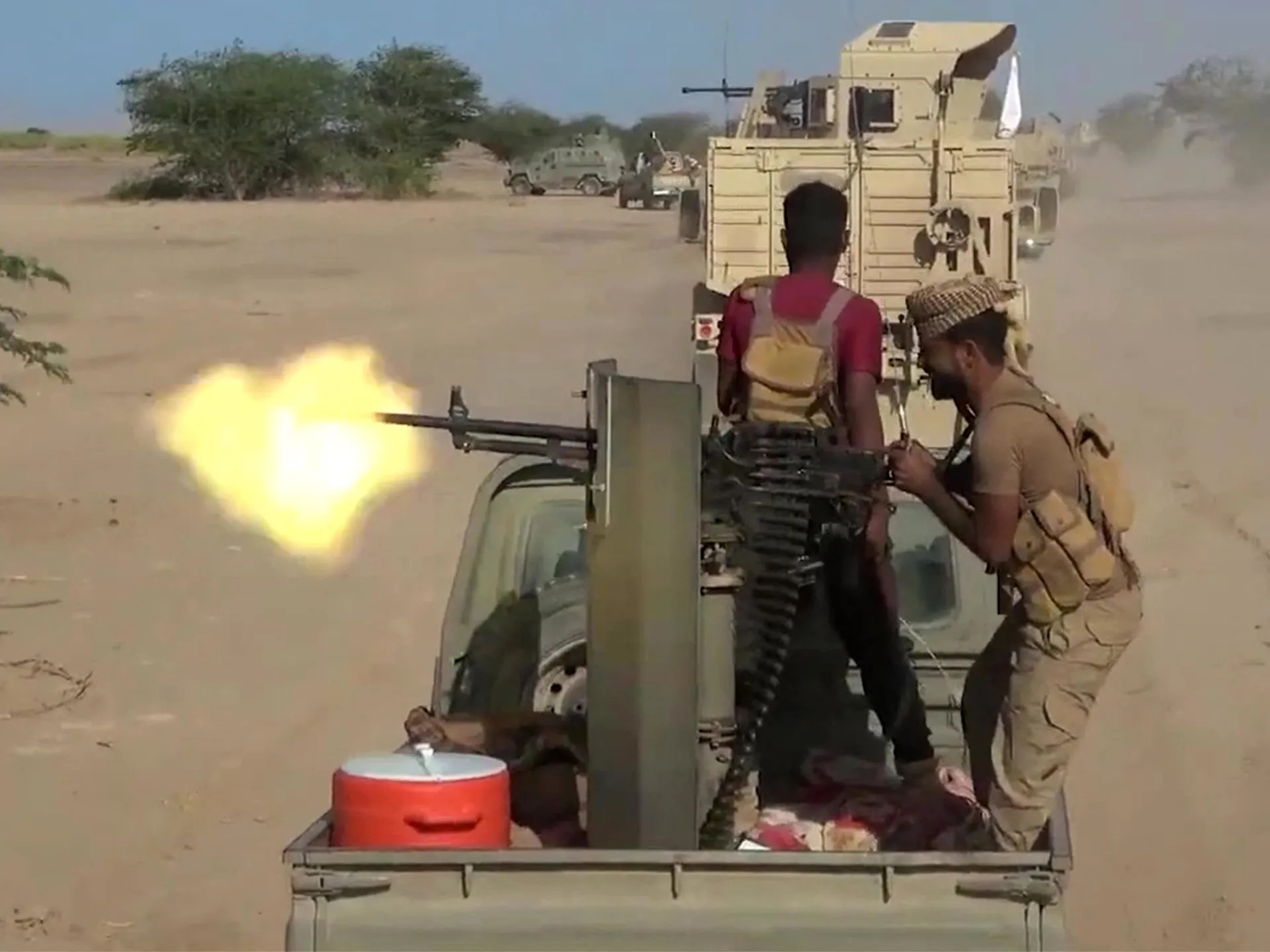
The attacks by the Iran-backed Houthis on Saudi Arabia have pushed the war in Yemen to a new level. The targeting of civilian infrastructure, including airports, which has killed at least a dozen people and injured hundreds, has left no room to maintain the “red lines” that previously outlined the limits of escalation.
This is a reckless gamble by the Houthis which is not in their interest. They are aware that the retaliation will be fierce, yet they continue to attack Saudi Arabia to fulfil Iran’s agenda that seeks heightened tensions before the United States midterms.
Given the motivation to escalate, the present situation has the potential to develop into two scenarios: A major region-wide operation against the Houthis or a war of attrition.
Scenario one: A united front against the Houthis
In response to the Houthi escalation, Saudi Arabia is striving to garner maximum international support while deepening its regional and international alliances. The aim is to come up with a united front capable of taking on what has become a regional threat.
Riyadh is certainly looking to its Gulf neighbours who, themselves, are impacted by the continuing conflict in the region. There is a collective realisation that everyone is in grave danger, not just Saudi Arabia.
Therefore, Gulf states – perhaps with the exception of Oman – will support Riyadh both directly and indirectly in the fighting in Yemen.
Pakistan and Turkiye are also likely to join the front, having signed with Saudi Arabia a defence agreement known as the Mecca Pact. The pact is to be ratified by the Turkish parliament in the next few days, opening the way for Turkish military deployment in support of Saudi Arabia. Meanwhile, indirect involvement by Turkiye and Pakistan, along with logistical and intelligence support, appears to be already well under way.
A US intervention is also possible, although it seems unlikely before the US midterms, as military engagements in the Middle East remain unpopular among US voters.
A region-wide coalition can help support the counteroffensive of the forces loyal to the internationally recognised Yemeni government already under way. This could give the necessary push to retake the western coastal region, including areas beyond Bab al-Mandeb and Dhubab.
Such gains could ease pressure on Red Sea shipping and potentially shift the military balance in favour of the government. The opening of additional fronts across other Yemeni cities and governorates could stretch Houthi forces, disperse their resources, and increase the likelihood of further government advances.
Retaking Sanaa could also be on the horizon. The primary obstacle delaying the Yemeni government’s recapture of the city is internal discord among the various factions within the government itself, compounded by negative external interference that exacerbates these rifts and weakens the collective effort to confront the Houthis.
Recent measures taken by the government, specifically efforts to unify its decision-making and consolidate its military operations command, have yielded noticeable progress on the ground. However, achieving the ultimate objective of retaking Sanaa requires sustained effort and focused determination.
If government forces make substantial gains, that could force the Houthis to offer concessions in exchange for a pause in fighting. They have done that before. Their purpose would not be to seek peace but to get enough breathing room to regroup and eventually go back to fighting. Negotiators should keep that in mind when approaching talks with the Houthis.
Scenario two: A war of attrition
If the Saudi-led coalition and the Yemeni government succumb to internal divisions and disagreements, this may slow progress against the Houthis. This would allow the Houthi fighters to hold on to their positions while increasing their pressure on the strategic town of Taiz and maintaining the campaign against civilian targets in Saudi Arabia.
Such a development could further complicate the conflict, increase civilian casualties and displacement, and prolong the war without producing a decisive military outcome.
This will have a significant economic impact on Saudi Arabia and complicate the implementation of its development goals, as it would have to prioritise defence spending.
The rest of the Gulf economies will also be negatively impacted because Saudi Arabia plays such a central role in the region. What is more, losing ground to the Houthis would mean that the crisis in the Strait of Hormuz would also continue, disrupting energy exports from the region.
In this scenario, there will be “no victor, no vanquished” deadlock in Yemen, but Iran would emerge as winner. A war of attrition along the Red Sea coast would provide Tehran with significant breathing room, allowing it to alleviate pressure on its own war efforts.
This would enable Iran to use the Houthi card as leverage in the intermittent negotiations it conducts with the international community, emboldening it to raise the bar regarding its conditions and demands during those talks.
This means that the only way to resolve the crisis in Yemen is decisive military action led by the Yemeni government and supported by a region-wide coalition. For that to happen, the government has to get its internal affairs and its relations with allies in order.
The views expressed in this article are the author’s own and do not necessarily reflect Al Jazeera’s editorial stance.













![Instagram, TikTok, Snapchat, Kick, YouTube, Facebook, Twitch, Reddit, Threads and X applications are displayed on a mobile phone. [File: Hollie Adams/Reuters]](https://i0.wp.com/occasionaldigest.com/wp-content/uploads/2026/10/2026-07-06T180423Z_238814398_RC2QCIAB6I5D_RTRMADP_3_USA-COURT-TEXAS-APP-STORES-1784172342.jpg?w=640&ssl=1)