LIVE: Fighting breaks out in eastern Yemen along border with Saudi Arabia | Military News
Live updatesLive updates,
The separatist Southern Transitional Council accuses Saudi Arabia of bombing its forces near the border.
Published On 2 Jan 2026
From breaking news to significant developments in politics, business, technology, entertainment, and more, we deliver the stories that shape our global landscape.
The separatist Southern Transitional Council accuses Saudi Arabia of bombing its forces near the border.


Published On 2 Jan 20262 Jan 2026
Share
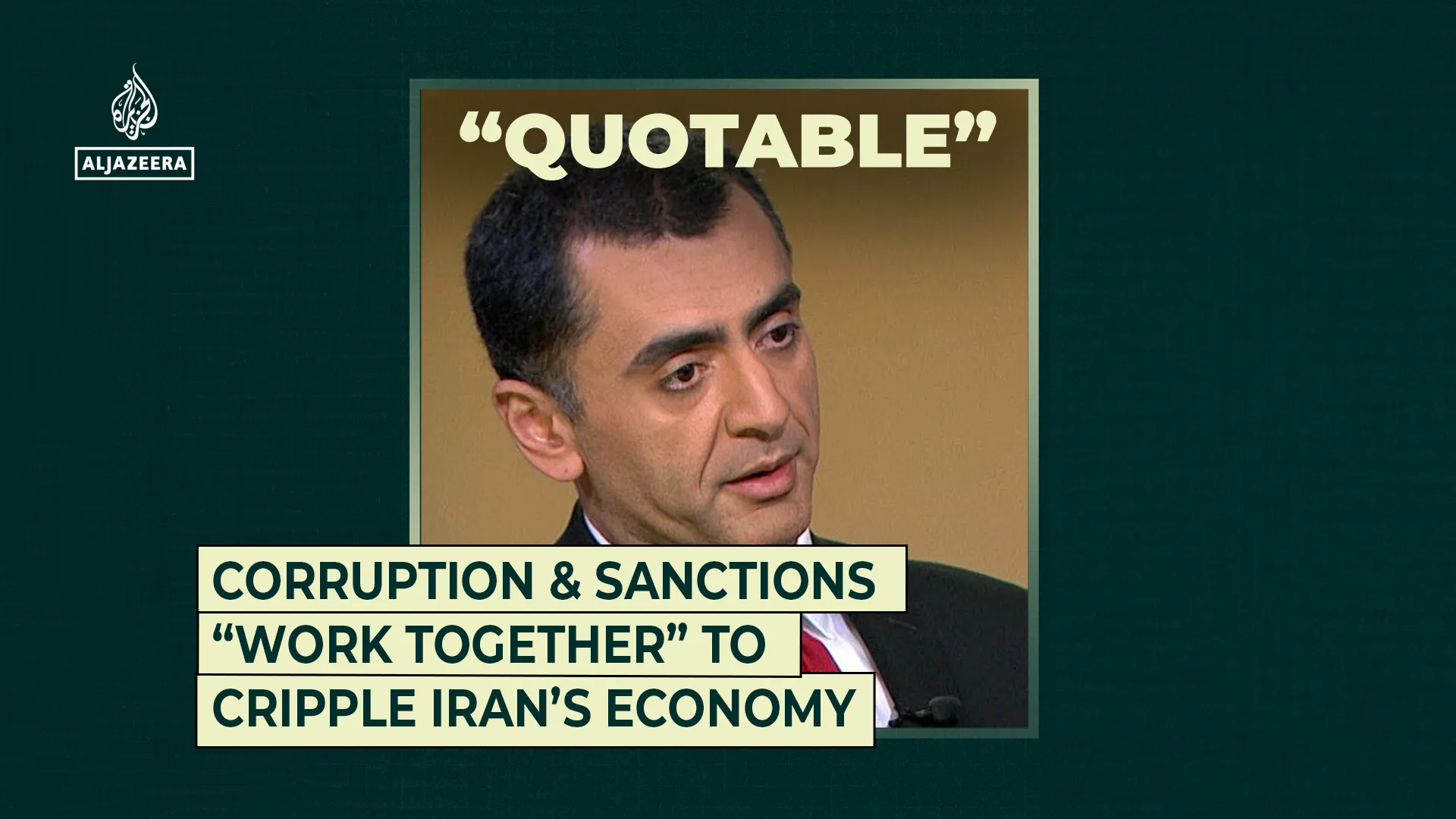
Sina Azodi on escalating protests in Iran and how sanctions and corruption are deepening the country’s economic crisis.
Sina Azodi, a professor at George Washington University, discusses escalating protests in Iran and how sanctions and corruption are deepening the country’s economic crisis.
Published On 2 Jan 20262 Jan 2026
Share
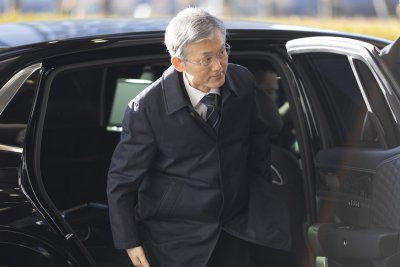

Supreme Court Chief Justice Cho Hee-dae arrives for work at the court as the ruling Democratic Party was set to introduce a bill the same day to establish a special tribunal for insurrection cases linked to former South Korean President Yoon Suk Yeol’s failed imposition of martial law in Seoul, South Korea, 22 December 2025. Photo by YONHAP /EPA
Dec. 31 (Asia Today) — Supreme Court Chief Justice Cho Hee-dae said the judiciary will seek to ensure court system reforms benefit the public as debate over judicial changes continues in the National Assembly.
In a New Year’s address released Wednesday, Cho said the courts will “reflect from the public’s perspective” and deliver decisions “based on law and principle.” He added the judiciary will act responsibly so reforms move in “the most necessary and desirable direction” from the standpoint of citizens.
Cho said 2025 brought a major social crisis involving an emergency declaration and impeachment, prompting renewed reflection on democracy and the rule of law. He said public interest and expectations toward courts and trials have grown, and he acknowledged concerns raised about the judiciary.
He said the judiciary will prepare to open additional rehabilitation courts in Daejeon, Daegu and Gwangju to provide more specialized bankruptcy services without regional disparities, expanding opportunities for faster rehabilitation for businesses and individuals under economic strain.
Cho also said expanded staffing and budget will allow further support for expedited trials and initiatives aimed at ensuring courts free of discrimination for socially vulnerable groups. He said the judiciary plans to pilot specialized courts to resolve disputes closely tied to daily life, including lease conflicts.
He said the judiciary will continue to broaden access to justice based on the next-generation electronic litigation system and criminal electronic litigation system launched this year.
Cho said overseas participants at a 2025 Sejong International Conference expressed admiration for South Korea’s rule-of-law philosophy, and he said the judiciary will seek closer international cooperation through the Asia-Pacific Chief Justices Conference scheduled for September 2026.
Separately, Constitutional Court Chief Justice Kim Sang-hwan said in his own New Year’s address that 2025 led South Koreans to reconsider the meaning of the Constitution, citing Article 1’s principle that sovereignty resides with the people. He pledged to conduct constitutional adjudication fairly and independently to meet public expectations.
— Reported by Asia Today; translated by UPI
© Asia Today. Unauthorized reproduction or redistribution prohibited.


Maj. Gen. Lee Ho-jong (R), commander of the South Korean Marine Corps’ 1st Division, and Maj. Gen. Valerie Jackson, commander of the U.S. Marine Corps Forces Korea, raise their fists in a show of solidarity as South Korea and the United States conduct combined drills on the coast of Pohang, North Gyeongsang Province, southeastern South Korea, 06 August 2025. File Photo by YONHAP/EPA
Dec. 31 (Asia Today) — South Korea’s Marine Corps will regain operational control of its 1st and 2nd divisions from the Army for the first time in 50 years under a Defense Ministry plan that would expand Marine Corps command authority and move toward what officials called a quasi-fourth-service structure.
Defense Minister Ahn Kyu-baek announced the reorganization plan Wednesday at a news conference at the Ministry of National Defense in Seoul. The plan keeps the Marine Corps under the Navy while strengthening the authority of the Marine Corps commandant to a level comparable to the Army, Navy and Air Force chiefs of staff, the ministry said.
Ahn said the overhaul is intended to “institutionally guarantee the independence and professionalism of the Marine Corps,” adding that the ministry will gradually return operational control of the 1st and 2nd Marine divisions to the service.
Under the plan, the 1st Marine Division will be removed from the Army’s 2nd Operations Command, with peacetime and wartime operational control returning to the Marine Corps by the end of 2026. The 2nd Marine Division would regain peacetime operational control by 2028, while wartime operational control would remain with the Capital Defense Command.
Ahn said the wartime control issue for the 2nd Marine Division will be reviewed over the medium to long term as the military evaluates restructuring and changes in capability, manpower and unit organization.
The ministry also said it is reviewing steps to expand promotion opportunities for Marine Corps officers to general-level posts. Rather than elevating the commandant position to full general, the ministry is considering allowing Marine officers to move into positions such as deputy commander of the ROK-U.S. Combined Forces Command or vice chief of the Joint Chiefs of Staff after completing a term as commandant.
The plan also includes establishing a separate Marine Corps Operations Command, a structure the service has not previously had. The ministry said it is considering upgrading the Northwest Islands Defense Command into a Marine Corps Operations Command aligned with the return of divisional operational control.
A three-star general is a leading candidate rank for the operations commander role, which would give the Marine Corps two three-star posts: the commandant and the operations commander. The commandant would handle administrative and logistics duties, while the operations commander would oversee operations and intelligence, the ministry said.
Ahn said Marine Corps personnel account for 5.7% of the total military but that the service has relatively few general officers. He said the ministry will seek to secure the Marine Corps share by adjusting general officer positions in units directly under the ministry rather than increasing the overall military quota.
The Defense Ministry said it will also accelerate capability upgrades for the Marine Corps, noting budgets have been allocated for 10 areas including firepower, protection and detection radar. It said it will expand placement of Marine personnel in higher-level units such as the Joint Chiefs of Staff and rename the Marine headquarters building to strengthen its symbolic significance.
Ahn said the Army, Navy, Air Force and Marine Corps will operate as a joint force to build what he called a trusted advanced military.
— Reported by Asia Today; translated by UPI
© Asia Today. Unauthorized reproduction or redistribution prohibited.

Jan. 2 (UPI) — On this date in history:
In 1788, Georgia ratified the Constitution, the fourth of the original 13 colonies to do so, and was admitted to the Union.
In 1811, Timothy Pickering, a Federalist from Massachusetts, became the first U.S. senator to be censured after being accused of publicly revealing secret presidential documents.
In 1935, Bruno Hauptmann, “The Most Hated Man in the World,” went on trial for the kidnapping and murder of Charles Lindbergh, Jr., eldest son of famed aviator, Charles Lindbergh.

File Photo by Bill Greenblatt/UPI
In 1942, Japanese forces occupied Manila, forcing U.S. and Philippine forces under U.S. Army Gen. Douglas MacArthur to withdraw to the Bataan Peninsula.
In 1959, the Soviet Union launched Luna 1, the first unmanned spacecraft to travel to the moon.
In 1967, Ronald Reagan was sworn in as 33rd governor of California.
In 1974, U.S. President Richard Nixon signed a bill requiring states to limit highway speeds to 55 mph or lose federal highway funds.
In 1981, police in Britain arrested the so-called “Yorkshire Ripper,” after five years on the run. Peter Sutcliffe was convicted of murdering 13 women and attempting to murder seven more.
In 1990, Britain’s most-wanted terrorism suspect, Irish Republican Army gunman Patrick Sheehy, was found dead of a self-inflicted gunshot wound in the Republic of Ireland.
In 2006, 12 men were killed in a methane gas explosion in a coal mine in West Virginia’s Upshur County. One man was found alive after 41 hours trapped underground.

File Photo by Kevin Dietsch/UPI
In 2011, Prince Harry, grandson of England’s Queen Elizabeth II, was sent home from military service in Afghanistan after a magazine revealed his presence in the war zone. He later returned to continue training as a gunship pilot.
In 2019, two Indian women entered the Hindu Sabarimala temple, the first to do so since the courts ended a longtime ban on women in 2018.
In 2024, Lee Jae-myung, the leader of South Korea’s main opposition party, was stabbed in the neck during an appearance in Busan. Lee survived and a real estate worker was arrested and confessed to attempting to assassinate the politician.

File Photo by Darryl Coote/UPI
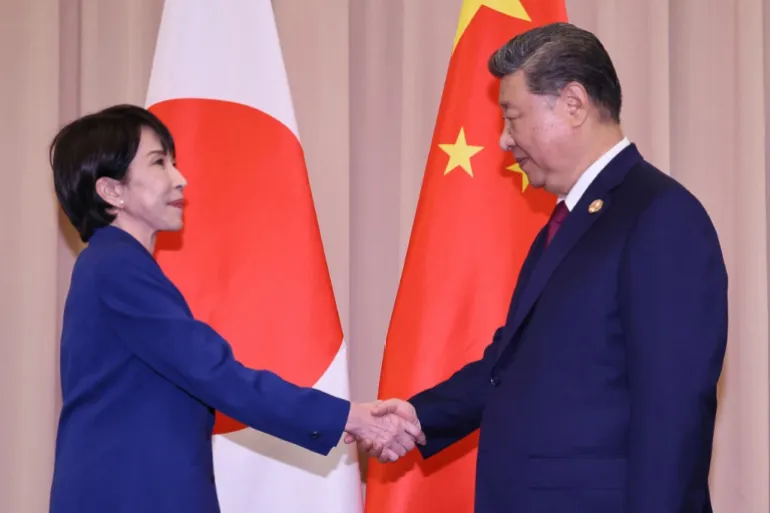
Chinese President Xi Jinping has invited South Korean President Lee Jae Myung to a state visit in Beijing, signalling China’s desire to reinforce relations with South Korea amid regional turbulence.
South Korea’s national security adviser, Wi Sung-lac, told reporters on Friday that Lee will meet Xi in Beijing on Monday before travelling to Shanghai to visit the historic site of South Korea’s provisional government during Japan’s 35-year colonial rule.
list of 4 itemsend of list
Wi said the leaders are expected to discuss “practical cooperation” in areas including supply-chain investment, tourism, and responses to transnational crime, according to Yonhap News Agency.
Lee is also expected to persuade China to take a “constructive” role in achieving “a breakthrough in resolving issues on the Korean Peninsula”, Wi added.
It will be the second meeting between Xi and Lee in just two months, in what analysts have described as an unusually short interval, reflecting Beijing’s interest in bolstering ties before the next meeting between the leaders of South Korea and Japan takes place.
Relations between China and Japan remain at a low point after Japanese Prime Minister Sanae Takaichi suggested in November that a hypothetical Chinese attack on Taiwan could provoke a military response from Tokyo.

On Friday, Wi reaffirmed South Korea’s position on Taiwan, saying the country does “respect the one China policy and act in accordance with that position”. The position acknowledges Beijing’s view that Taiwan remains part of its sovereign territory, while allowing for separate ties with the self-governing island.
Kang Jun-young, a professor of political economics at Hankuk University of Foreign Studies, said “China wants to emphasise South Korea’s importance slightly more than before.
“China appears to have strategically decided that it would be better to have [Lee] visit China before South Korea holds a summit with Japan again,” Kang told the Reuters news agency.
For its part, the Lee administration has stressed its goal of “restoring” ties with China, which remains South Korea’s largest trading partner. At the same time, it has said Lee’s approach of “practical diplomacy” aims to maintain strong ties with Japan and the United States, South Korea’s most important ally.
Under Lee’s predecessor, Yoon Suk Yeol, Seoul leaned closer to Washington and Tokyo and increased criticism of China’s stance on Taiwan.
Lee, in contrast, has said he will not take sides in the dispute between China and Japan, a position he maintains as tensions around the Taiwan Strait rise following Beijing’s recent large-scale military drills near Taiwan.
The two leaders may also address contentious issues such as efforts to modernise the South Korea-US alliance, which some see as a counterbalance to China’s dominance in the Asia Pacific region, according to Shin Beom-chul, a former South Korean vice defence minister and senior research fellow at the Sejong Institute.
Currently, roughly 28,500 US troops are stationed in South Korea to deter threats from North Korea. US officials have signalled plans to make those forces more flexible in responding to other regional challenges, including Taiwan and China’s growing military reach.
“Korea is not simply responding to threats on the peninsula,” General Xavier Brunson, commander of US Forces Korea, said at a forum on December 29. “Korea sits at the crossroads of broader regional dynamics that shape the balance of power across Northeast Asia.”
As China remains North Korea’s principal ally and economic lifeline, experts expect Lee to seek Beijing’s assistance in encouraging dialogue with Pyongyang.
North Korea dismissed Lee’s outreach last year, calling him a “hypocrite” and “confrontational maniac”.
China and North Korea have, in turn, continued closer coordination, with North Korean leader Kim Jong Un appearing alongside Xi at a major military parade in September.
Lee’s visit is also expected to focus on cooperation in critical minerals, supply chains, and green industries, his office said.
Nearly half of South Korea’s rare earth minerals, which are essential for semiconductor production, come from China. The trading partner accounts for a third of Seoul’s annual chip exports, its largest market.
Last month, officials from both countries agreed to work towards stable rare earth supplies. The visit may also explore partnerships in AI and advanced technologies.
Huawei Technologies plans to launch its Ascend 950 AI chips in South Korea next year, providing an alternative to US-based Nvidia for Korean firms, Huawei’s South Korea CEO, Balian Wang, said at a news conference last month.
Another potential topic is Beijing’s effective ban on K-pop content, which stretches back to 2017 following the deployment of the US’s THAAD missile defence system in South Korea.
SM Entertainment’s chief executive, who heads one of the country’s leading K-pop agencies, will join Lee’s business delegation, according to local media.


This file photo shows the 5th Air Cavalry Squadron, 17th Cavalry Regiment, taking part in the Spur Ride event at Camp Humphreys, a key U.S. base in Pyeongtaek, on Sept. 25, 2025. File Photo by Pfc. Kalisber Ortega/U.S. Army/UPI
A U.S. Army squadron tasked with a reconnaissance mission in South Korea was deactivated last month, a congressional report showed Thursday, amid speculation that Washington could consider a troop drawdown in the allied country in a force posture adjustment.
The 5th Air Cavalry Squadron, 17th Cavalry Regiment (5-17 ACS) at Camp Humphreys, a key U.S. base in Pyeongtaek, some 60 kilometers south of Seoul, ceased its operation on Dec. 15, a recent Congressional Research Service (CRS) report said, citing information from the U.S. Army. It had served in Korea to support the 2nd Infantry Division since May 2022.
Its deactivation as part of an Army transformation initiative came amid lingering concerns that U.S. President Donald Trump‘s administration could seek a ground troop reduction of the 28,500-strong U.S. Forces Korea (USFK) as part of an adjustment to better counter threats from an assertive China.
5-17 ACS is known to have had hundreds of personnel, as well as aviation and reconnaissance assets, including AH-64E Apache helicopters and RQ-7B Shadow drones. It is unclear whether the deactivation means the pullout of the unit’s personnel and assets or whether there will be a replacement unit.
Comment from the U.S. Army on the deactivation was not immediately available.
A day after the 5-17 ACS deactivation, the Army restructured the 2nd Infantry Division’s Combat Aviation Brigade Medical Evacuation (CAB MEDEVAC) unit, the CRS report said without elaboration.
5-17 ACS was activated in 2022, taking over the role of what had been rotational air cavalry squadrons to provide more stability to U.S. defense operations and enhance defense readiness in South Korea.
Speculation about a potential U.S. troop cut in Korea has persisted as Washington calls for Seoul to take greater responsibility for its own defense while seeking to bolster U.S. capabilities to better address potential China-related contingencies, including those related to Taiwan.
That speculation was reinforced as last year’s key security document between Seoul and Washington omitted language committing the U.S. to maintaining the “current” USFK troop level, with U.S. officials emphasizing the importance of “capabilities” rather than the troop numbers.
Last May, The Wall Street Journal reported that the U.S. was weighing the idea of pulling out roughly 4,500 troops from South Korea and moving them to other locations in the Indo-Pacific, including Guam. The Pentagon dismissed it as “not true,” reaffirming that America remains “fully” committed to the defense of South Korea.
Copyright (c) Yonhap News Agency prohibits its content from being redistributed or reprinted without consent, and forbids the content from being learned and used by artificial intelligence systems.

Gambian authorities say 96 people rescued after boat capsizes along popular West African migration route.
Published On 1 Jan 20261 Jan 2026
Share
At least seven people have died after a boat carrying more than 200 people capsized along a popular migration route off the Gambian coast, with dozens more believed to be missing, local authorities say.
The boat was reported to have capsized around midnight on Thursday in the vicinity of a village in The Gambia’s North Bank region, the Ministry of Defence said in a statement.
list of 3 itemsend of list
Authorities said seven bodies were recovered, and at least 96 people were rescued, many of whom were seriously wounded.
Alerted by a distress call, the Gambian navy launched a search-and-rescue operation after midnight, involving several naval vessels and a fishing boat that came to assist, according to the statement.
The shipwrecked vessel was later found “grounded into a sandbank”, the Defence Ministry said.
Several of the victims have been identified as not being of Gambian nationality, and the authorities are currently verifying their identity, the statement added.
The Gambia has become a jumping-off point for migrants and asylum seekers seeking to reach Spain’s Canary Islands, a gateway to continental Europe, by boat from West Africa.
According to the European Union, more than 46,000 migrants reached the Canary Islands in 2024.
More than 10,000 people died attempting the journey across the Atlantic, a 58 percent increase over 2023, according to the rights group Caminando Fronteras.
However, irregular migration into the EU along the West African route fell 60 percent during the first 11 months of 2025, according to the Frontex border agency, which credited stronger prevention efforts by departure countries for the drop.
Still, migrants and asylum seekers continue to try to reach Europe on flimsy and often overcrowded vessels.
In May, seven women and girls died when a small boat transporting more than 100 people capsized while approaching the Canary Islands.
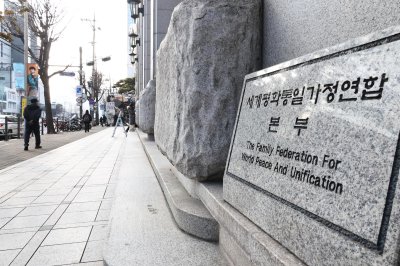

The Unification Church’s headquarters in Yongsan Ward, Seoul, South Korea, 15 December 2025. Police investigators raided the facility on 15 December to secure evidence in connection with an alleged bribery case involving politicians from both ruling and opposition parties. File. Photo by YONHAP/EPA
Dec. 31 (Asia Today) — South Korean police investigating lobbying allegations involving the Unification Church raided the home of Jeong Won-ju, a former chief secretary to church leader Han Hak-ja, on Wednesday, authorities said.
The National Police Agency’s National Investigation Headquarters special task force carried out a search and seizure at Jeong’s residence in Gapyeong, Gyeonggi Province, in connection with allegations that former Democratic Party lawmaker Jeon Jae-su accepted bribes, police said.
Investigators also searched the office of the special prosecutor handling a case involving former first lady Kim Keon-hee in Seoul’s Jongno district, police said, adding they secured materials related to the bribery allegations.
Jeong was sent to prosecutors the previous day on suspicion of violating the Political Funds Act over what police described as split donations to politicians from both major parties in early 2019. In the Jeon case, police are treating Jeong as a witness, according to the report.
Jeon is accused of receiving 20 million won (about $15,000) in cash and a luxury watch worth 10 million won (about $7,700) from the Unification Church in 2018 along with requests tied to church-related issues.
Police previously summoned Jeon as a suspect on Dec. 19 on allegations including violating the Political Funds Act. Investigators executed search warrants on Dec. 23 targeting Bulgari Korea and Cartier as they sought to verify the timing and value of the alleged gifts, the report said.
Police are expected to summon Jeon again after reviewing materials seized in the latest searches, it said.
Separately, police began questioning a former chair of the Universal Peace Federation, a Unification Church affiliate tied to the Korea-Japan undersea tunnel project, as a witness Wednesday, the report said. The tunnel project is considered one of the major issues the church lobbied for in political circles.
— Reported by Asia Today; translated by UPI
© Asia Today. Unauthorized reproduction or redistribution prohibited.

New York, United States – Sprawling crowds, a seven-block-long party and chants to “tax the rich” in the world’s wealthiest city marked Zohran Mamdani’s public inauguration as New York City mayor on Thursday, as the metropolis welcomed a new year with a new leadership.
Political inaugurations are usually more stolid affairs. But, as he had in his campaign for the mayoralty, Mamdani flipped the script with his swearing-in events.
list of 4 itemsend of list
In act one, just after midnight, as the ball dropped in Times Square to ring in 2026, Mamdani took the oath of office in a small ceremony on the steps of the landmark New York City Hall subway station.
New York State Attorney General Letitia James administered the oath as Mamdani stood beside his wife, Rama Duwaji, on a staircase inside the transit hub, which has not been used for passenger service since 1945. He used a historic Quran borrowed from the New York Public Library for his swearing in, and a second one that belonged to his grandfather.
The public celebration arrived later, on New Year’s Day, when Mamdani repeated the oath on the steps of City Hall before a crowd that spilled across the surrounding plaza and into the streets. Despite the blistering cold, tens of thousands of supporters streamed into Lower Manhattan to watch the new mayor – along with the city’s comptroller, Mark Levine, and Public Advocate Jumaane Williams – formally assume office.
National political heavyweights, including Representative Alexandria Ocasio-Cortez and Senator Bernie Sanders of Vermont, flanked the city’s new leadership and delivered speeches outlining the progressive movement’s governing ambitions in New York and the national reverberations the race has already sent to lawmakers across the country.
“The most important lesson that can be learned today is that when working people stand, when they don’t let them [the ultra-wealthy] divide us up, there is nothing that we cannot accomplish,” Sanders said before swearing in Mamdani.
While guests and the press gathered inside the City Hall grounds, the city staged a seven-block-long public block party – a new twist on the traditionally ticketed inauguration format. In addition to a closed event capped at a few thousand attendees, anyone willing to RSVP and endure the frigid air and blustering winds after a night of snowfall could try their luck at getting in.
And many did, bundled New Yorkers shuffled through security checkpoints, hoping to glimpse the swearing-in of a 34-year-old democratic socialist now charged with running the largest city in the United States, streaming on large monitors stationed throughout the surrounding area outside City Hall.
Some supporters told Al Jazeera they waited in line for hours, and many never made it through the checkpoints in time. While crowds cheered and horns blasted in solidarity from a distance, a handful of protesters lingered behind police barricades.
The block party in and of itself was symbolic in its effort to reach more New Yorkers who have normally been left out of the political process, Democratic strategist Nomiki Konst told Al Jazeera.
“It was a way of opening up something that hasn’t been accessible for anybody, you know, that wasn’t part of the inner circle of New York politics and media,” Konst told Al Jazeera.
“It was an opportunity to give back to the people who helped him get into office.”
![New Yorkers gathered in a first of its kind inauguration open to the general public [Andy Hirschfeld]](https://i0.wp.com/occasionaldigest.com/wp-content/uploads/2026/01/IMG_6332-1767314647.jpg?w=640&ssl=1)
Mamdani, Williams and Levine spoke about unity for all New Yorkers, delivering remarks in English, Spanish, Hebrew and Greek, and appearing alongside faith leaders of several different faiths, including Islam, Christianity and Judaism.
“We have three swearings-in. One by a leader using a Quran, one by a leader using a Christian Bible, and one using a Hebrew Bible. I am proud to live in a city where this is possible,” Levine said after taking the oath of office.
Mamdani echoed that sentiment.
“We will draw this city closer together. We will replace the frigidity of rugged individualism with the warmth of collectivism. If our campaign demonstrated that the people of New York yearn for solidarity, then let this government foster it,” Mamdani said in his address.
“We will deliver nothing less as we work each day to make this city belong to more of its people than it did the day before.”
But the core message, voiced repeatedly by Mamdani, Levine, Williams, Sanders and Ocasio-Cortez, was the same one that defined the campaign: that the ultra wealthy should pay higher taxes.
“Demanding that the wealthy and large corporations start paying their fair share of taxes is not radical. It is exactly the right thing to do,” Sanders said, as supporters chanted, “Tax the rich.”
One of Mamdani’s core promises was to raise the corporate tax rate in New York City from 7.25 percent to 11.5 percent, equivalent to that of neighbouring New Jersey, as well as a 2 percent increase in taxes on those who make more than $1m a year. Any tax plan would need the approval of the governor to move forward.
“This movement came out of eight-and-a-half million somewheres – taxi cab depots and Amazon warehouses, DSA [Democratic Socialists of America] meetings and curbside domino games. The powers that be had looked away from these places for quite some time – if they’d known about them at all – so they dismissed them as nowhere. But in our city, where every corner of these five boroughs holds power, there is no nowhere and there is no no one,” Mamdani said.
Housing policy has been central to that affordability message for Mamdani. One of his signature campaign promises was to freeze the rent on the city’s rental stabilised apartments, which represent about half of the city’s rental housing stock.
“Those in rent-stabilised homes will no longer dread the latest rent hike – because we will freeze the rent,” Mamdani said in his remarks.
Only hours later, Mamdani introduced a slate of executive orders all aimed at housing.
“On the first day of this new administration, on the day when so many rent payments are due, we will not wait to deliver action,” Mamdani said at a news conference.
He announced three executive orders inside a rent-stabilised building in Brooklyn, including the creation of two new city task forces on housing policy: one to take inventory of city-owned land that could be used for housing, and another to identify ways to spur development.
“The housing crisis is at the centre of our affordability crisis. There are a number of things we are going to be focused on: protecting tenants, going after bad landlords, and building more housing. A huge part of how we get out of our housing crisis is to build more affordable housing across the city,” Leila Bozorg, the Deputy Mayor for Housing and Planning, told Al Jazeera on the steps of City Hall hours before announcing the new policies.
“These are policy decisions we can address if we have the political will and if we put the resources behind it. And that is what he [Mamdani] is committed to doing.”
With Congress failing to extend subsidies for health insurance bought through federal and state Affordable Care Act online exchanges, the roughly 24 million people who obtain coverage through the ACA are set to see their monthly premiums double. Screenshot via Healthcare.gov
Jan. 1 (UPI) — Insurance premiums are set to rise exponentially for Americans who have bought their health care policies through an Affordable Care Act exchange because Congress failed to extend subsidies for them.
Without the extension of the subsidies, people who have bought their health insurance through an ACA exchange will see their premiums increase by roughly 26% on average, with the increases expected to be higher in states that use the federal Healthcare.gov exchange while states that run their own exchanges may see lower increases, The Hill reported.
In 2025, about 24 million Americans bought health insurance through an ACA exchange, which are often referred to as Obamacare, which is the highest number of people who bought policies through the program since it debuted in 2010.
The government shutdown in the fall — which, at 43 days, was the longest in history — was centered around Democrats in the U.S. Senate pushing for an extension of enhanced ACA subsidies that were introduced during the COVID-19 pandemic to help Americans obtain insurance and care.
In recent weeks, bipartisan plans to extend the subsidies have emerged, including one in the Senate that calls for a three-year extension of the subsidies.
Among the Republicans who support the bipartisan bill are Missouri Sen. Josh Hawley, who has not specifically commented on extending the subsidies but has said that he is concerned about people whose health insurance costs may increase in the ongoing absence of Congressional action, Fox News reported.
“I think who it’s most disappointing for are the people whose premiums are going to go up by two, three times,” Hawley told reporters this week. “So, it’s not good.”
During the shutdown, Democrat members of Congress pushed for an extension — it was their stated reason for voting against several bills to fund the federal government, causing and extending the shutdown — which Senate Majority Leader John Thune, R-S.D., promised a vote on in mid-December.
Once the government reopened, the Senate voted on two health care related bills, one from Democrats and the other from Republicans, and both failed on party line votes.


Jan. 1 (UPI) — The Italian government said Thursday that the United States has pulled back on tariffs the Trump administration had placed on several pasta brands based in Italy.
The U.S. Department of Commerce reduced tariffs on 13 Italian pasta brands, rolling back levies that had been announced as the administration alleged that the companies had been trying to undercut U.S. manufacturers, CBS News and The Financial Times reported.
The tariffs, which were originally announced as 92% on brands that include Barilla, La Molisana and Pastificio Lucio Garofalo, would have nearly doubled their cost.
With the rollbacks, the brands will only carry a 2% to 14% tariff: La Molisana will see a 2.26% tariff, Garofalo will see a 13.98% tariff and the other 11 companies will face a 9.09% tariff.
After a preliminary review of the companies’ operations revealed that they had not been trying to undercut the price of U.S. manufactured pasta.
“The recalculation of the duties is a sign that U.S. authorities recognize our companies’ constructive willingness to cooperate,” the Italian foreign ministry said of the shift.
According to a business association in Italy, the tariffs would have affected about half of the pasta that is typically shipped to the United States.
In 2024, roughly $788 million of pasta was imported from Italy to the United States.
Over the course of 2025, the Trump administration introduced high tariffs on a wide range of products — from food and clothes to furniture and kitchen cabinets — but many have been rolled back or canceled as officials have negotiated with other countries’ officials or, such as in the case of Italian pasta, consumers were primed to see significantly increased costs.


In an exclusive interview, Somalia’s president Hassan Sheikh Mohamud told Al Jazeera that terror groups ISIL and al-Shabab are responsible for destroying the Somali people’s livelihood and security, and says the groups opened the door to Israeli recognition of Somaliland.
Published On 1 Jan 20261 Jan 2026
Share
Second release of prisoners related to 2024 election protests seen as possible conciliatory move from Maduro.

Published On 1 Jan 20261 Jan 2026
Share
The government of Venezuelan leader Nicolas Maduro has released dozens of prisoners held for protesting his disputed victory in the country’s 2024 election.
The release of at least 87 prisoners comes as the administration of United States President Donald Trump has continued its pressure campaign against Caracas.
list of 3 itemsend of list
It was the second release within a week, in what some observers have viewed as an effort by Maduro to strike a more conciliatory tone, even as he has accused Trump of seeking to topple his government and seize Venezuela’s vast oil reserves.
Two rights groups, the Committee for the Freedom of Political Prisoners and the Committee of Mothers in Defense of the Truth, confirmed the release on Thursday.
“On the morning of January 1, mothers and relatives reported new releases of political prisoners from Tocoron prison in Aragua state” in northern Venezuela, the Committee for the Freedom of Political Prisoners wrote on social media.
Venezuela’s government had previously announced the release of 99 prisoners on December 25, calling it “a concrete expression of the State’s commitment to peace, dialogue and justice”.
However, Foro Penal, a leading Venezuelan rights group, said afterwards it was only able to verify the release of 61 prisoners at the time.
Maduro claimed victory in the July 2024 vote, maintaining he had secured a third six-year term. The opposition has alleged widespread fraud, publishing results later verified by independent experts showing that Edmond Gonzalez had won by a landslide.
Gonzalez ran in place of opposition leader Maria Corina Machado after she was banned from standing in the election. Machado recently emerged in Oslo, Norway, after spending months in hiding.
The disputed vote prompted widespread protests across the country, resulting in at least 28 deaths and thousands of arrests.
Official records show that at least 2,000 people have since been released, while more than 700 people are still believed to be held for political reasons.
The disputed election has, in part, undergirded the Trump administration’s pressure against Maduro, whom they have accused of running a drug trafficking operation that aims to destabilise the US.
The Pentagon has surged military assets off the coast of Venezuela since August, with Trump earlier this week revealing the first attack on Venezuelan soil targeting a dock allegedly used to load drug boats earlier this week.
The US has also blockaded sanctioned oil tankers entering and exiting Venezuela, while simultaneously carrying out strikes on alleged drug boats in the Caribbean and eastern Pacific, in what rights groups say amount to extrajudicial killings.
More than 100 people have been killed in the strikes so far.
From exile, Machado has vocally supported the US pressure campaign. She has been more circumspect on strikes on Venezuelan territory, while maintaining that Venezuela has been “invaded” by “terrorist groups” and “drug cartels”.
Venezuela experts have warned that many opposition groups in the country oppose US military action.
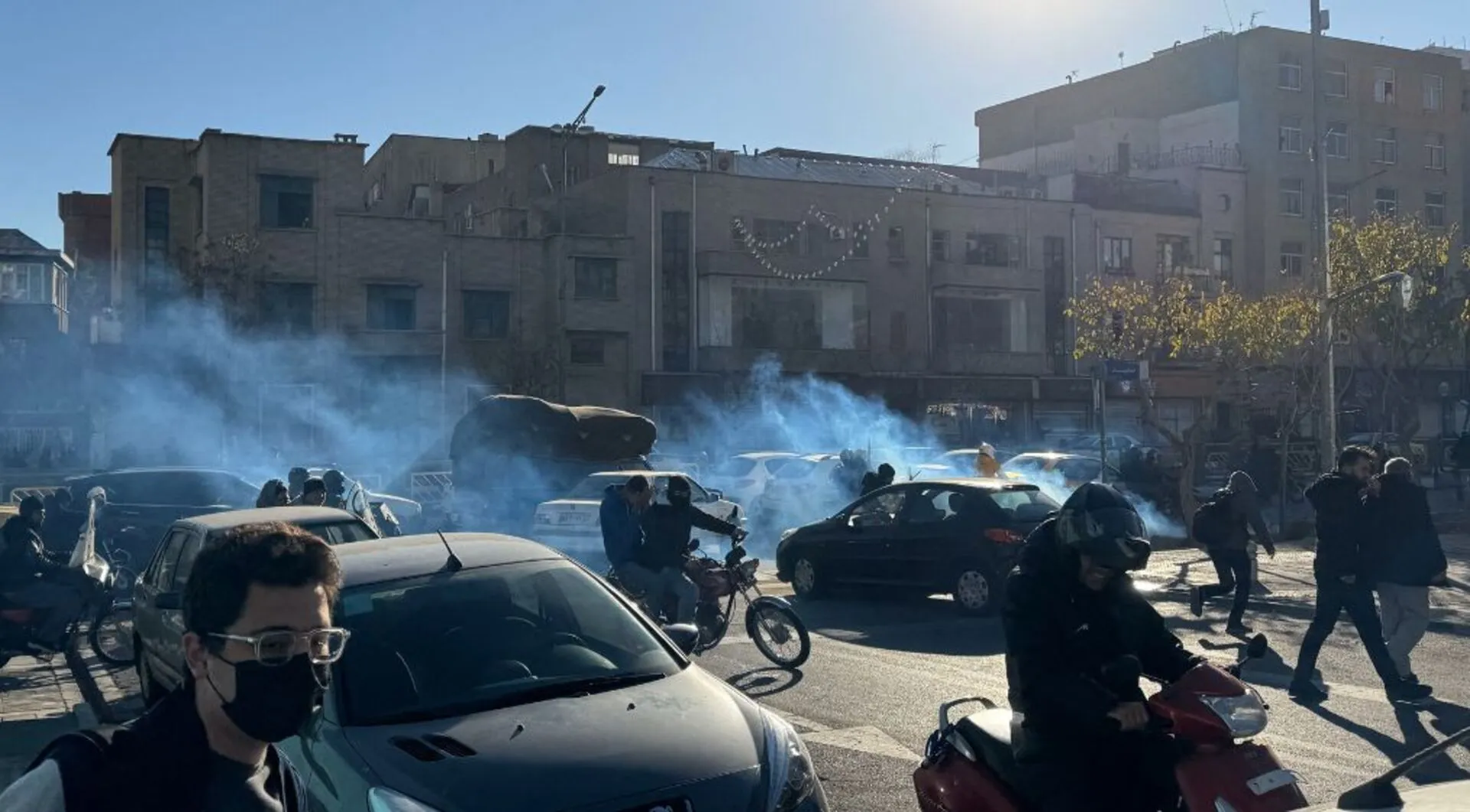
Thousands of people in Iran have been protesting as a dire economic crisis takes a heavy toll on their daily livelihood.
From a sharp fall in the currency’s value to a steep rise in inflation, Iran’s economy has reached what many describe as a breaking point.
This time, the government has adopted a different approach as protests continue, calling for a dialogue mechanism.
But as the country reels from longstanding sanctions, what does the leadership have to offer?
And what would the consequences be if the protests escalate?
Presenter: James Bays
Guests:
Ali Akbar Dareini – Researcher at the Center for Strategic Studies
Marzie Khalilian – Political analyst and academic researcher
Stephen Zunes – Professor of politics and founding chair of Middle Eastern studies at the University of San Francisco
Published On 1 Jan 20261 Jan 2026
Share
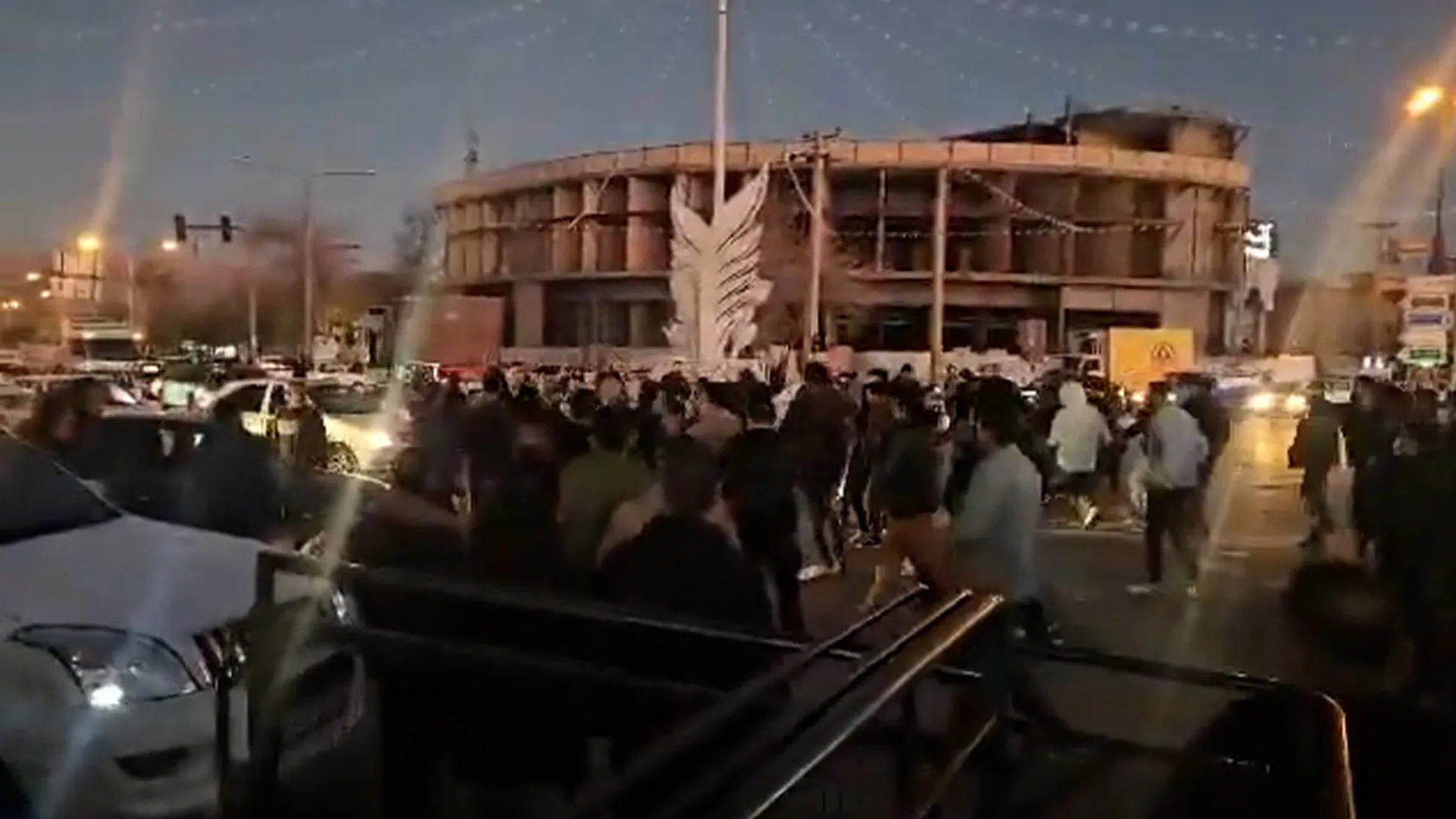
At least 6 protesters and a member of the security forces have been killed in demonstrations against rising living costs across Iran. The anger is driven by a cost-of-living crisis. The government has appealed for solidarity and says it will engage in dialogue.
Published On 1 Jan 20261 Jan 2026
Share
Jan. 1 (UPI) — President Donald Trump ended the lease for the National Links Trust, which manages Washington, D.C.-area public golf courses owned by the National Parks Service.
The Department of the Interior sent a letter Tuesday formally cutting ties with NLT, which has managed three golf courses on public land in the District since 2020 — Langston Golf Course, Rock Creek Park Golf and East Potomac Golf Links.
The letter said that NLT had failed to complete required capital improvements and to provide a plan to fix alleged defaults in the lease.
The goal of the lease was for the NLT to redesign and renovate the historic sites where the golf courses lie. It would use money from donors and the District’s government.
“The Trump administration prides itself on getting the job done for the American people and partnering with others who share that same goal,” the Interior Department told The Hill.
The NLT said it was “devastated” to get the notice and is “in fundamental disagreement with the administration’s characterization of NLT as being in default under the lease.”
“We have always had a productive and cooperative working relationship with the National Park Service and have worked hand in hand on all aspects of our golf course operations and development projects,” the organization said.
NLT will stay in place to keep the courses running, but all renovation projects will stop.
Michael McCartin, NLT co-founder, told the Washington Post that it opted to keep the courses open for the workers and golfers.
“Our mission is to provide affordable and accessible golf,” McCartin said, “and our obligation is to our employees and the community. These are important places, and without an alternative, we can’t let them sit, closed and unavailable to the community.”
The Washington Post reported that Trump has expressed interest in the East Potomac course, wanting to redesign it and potentially host the Ryder Cup. But those potential plans have worried residents who are concerned about access and affordability.
“The DNA of municipal courses is a bit different than those owned and operated privately and much different than country clubs,” Jay Karen, chief executive of the National Golf Course Owners Association, told The Post.
“Munis are all about supporting the widest-possible access to the game, while also preserving critical green spaces, for perpetuity. … There is a greater sense of history and pride in a community around their public parks that happen to be golf courses,” Karen said.
A source told The Hill last week that NLT had hired a lawyer and was considering litigation.
“This is not the update we wanted to send, and we worked tirelessly to try to avoid this outcome,” the NLT said Wednesday. “While this termination is a major setback, we remain stubbornly hopeful that a path forward can be found that preserves affordable and accessible public golf in the nation’s capital for generations to come.”

Isiah Whitlock Jr.
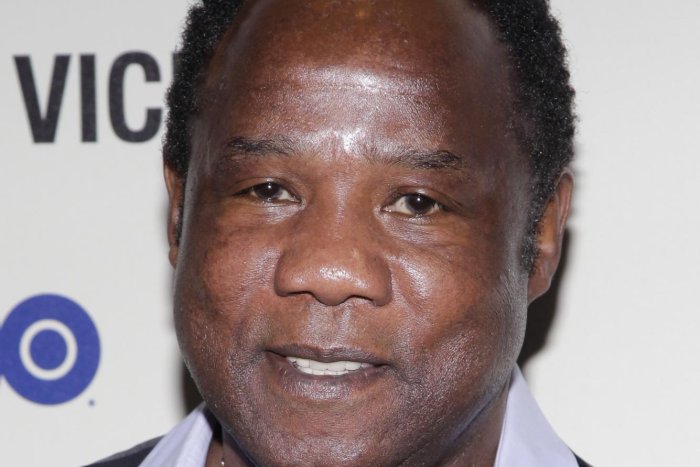
Actor Isiah Whitlock Jr. arrives on the red carpet for the premiere of HBO’s “Vice” in New York City on April 2, 2013. Whitlock Jr., known for his roles on “The Wire” and “Veep,” died at the age of 71 on December 30. Photo by John Angelillo/UPI | License Photo
Jan. 1 (UPI) — New York City has a new mayor Thursday after the private swearing-in ceremony in an abandoned subway tunnel just after midnight.
Zohran Mamdani became mayor of New York early Thursday morning. He was sworn in by New York Attorney General Letitia James, with his wife Rama Duwaji holding two Korans for the first Muslim mayor to swear on.
One of the Korans belonged to his grandfather, and another belonged to Arturo Schomburg, a Black historian and writer who was an important intellectual figure in the Harlem Renaissance.
The small ceremony took place in the old City Hall station, which is one of 28 original subway stations that opened in 1904. It was closed in 1945.
“This is truly the honor and the privilege of a lifetime,” Mamdani said.
Mamdani called the station “a testament to the importance of public transit to the vitality, the health and the legacy of our city.”
A public inauguration will happen at 1 p.m. Thursday on the steps of City Hall. Sen. Bernie Sanders, I-Vt., will administer a ceremonial oath of office, and Rep. Alexandria Ocasio-Cortez, D-N.Y., will make an opening speech. About 4,000 people were invited to that ceremony, Mamdani said, but the block party will be open to all.
“We wanted to ensure that as we celebrated the beginning of our administration, it was a celebration that was not simply for the typical people who would be invited to an inauguration, but in fact, for everyone,” Mamdani told reporters last week.
“This is not my success. It’s our success. It’s not my administration. It’s our administration. Similarly, it’s not my inauguration. It’s for all of us,” the new mayor added.
Mamdani has an ambitious agenda, including free buses, rent freezes and more. He has said funding will come from raising taxes on those who earn more than $1 million. But he needs the state to approve any taxes, and Gov. Kathy Hochul, a Democrat, is opposed to raising taxes in the state. She has implied that she supports finding other revenue to fund his plan.
“It is my job as governor to make sure that whomever the mayor is, they’re successful,” Hochul told WNYW-TV in December.
ws


1 of 2 | Police officers inspect the area where a fire broke out at the Le Constellation bar and lounge in the early hours of New Year’s Eve, in Crans-Montana, Switzerland, Thursday. According to the police, several dozen people died in the fire and around 100 people were injured. Photo by Jean-Christophe Bott/EPA
Jan. 1 (UPI) — About 40 people are believed to be dead and about 100 injured — many of them severely — after a fire broke out at a New Year’s Eve celebration at a bar in Switzerland.
The bar, Le Constellation in Crans-Montana in the Swiss Alps, was a popular place for tourists and young people. Many of the injured were between 16 and 26 years old. The victims are believed to be from several different countries.
Smoke began pouring out of the bar at around 1:30 a.m., witnesses said, and emergency services were called soon after. They sent 10 helicopters and 40 ambulances to take the injured to hospitals, officials said at a press conference Thursday morning. The nearest hospital had run out of space in the emergency department and surgical suites. Three specialized planes took burn victims to Zurich, which is about 90 miles away.
Le Constellation had a dance floor in its basement with a narrow stairway, which may have made it difficult for people to escape.
Officials have ruled out the possibility of a terrorist attack, though they haven’t yet determined the cause of the fire.
There was an explosion during the fire, but officials have said it was from a flashover. A flashover is when all combustible materials in a room ignite at once from the heat.
Witnesses said many people struggled after coming out of the heat of the bar and into the outside cold. Victims were treated at makeshift triage centers in a nearby bar and a branch of UBS bank.
“And then it was just ambulances coming back and forth as much as possible,” Dominic Dubois, who witnessed the frantic scenes as the bodies were brought out, told The Guardian.
Doctors and counselors were sent to the area to offer psychological help for the survivors.
“Significant resources have been deployed from a forensic medicine perspective, primarily to identify the victims,” said Beatrice Pilloud, prosecutor general of the canton, at the news conference. Pilloud said that authorities were doing everything they could to get the victims’ bodies to their families.
Crans-Montana is a resort town of about 10,000 people that’s popular among wealthy Europeans. It’s in the canton of Valais in the French-speaking part of Switzerland.
“What was a moment of joy turned into a tragedy in Crans-Montana last night, felt across the country and beyond,” Swiss President Guy Parmelin said on X. “The Federal Council has taken note of this with deep dismay. Its thoughts are with the victims, the injured and their families and it extends its deepest condolences.”
Parmelin postponed a scheduled New Year address because of the fire.
“While this evening should have been a time for celebration and gathering, it turned into a nightmare,” Mathias Reynard, a member of the Swiss National Council from Valais, said at the press conference.
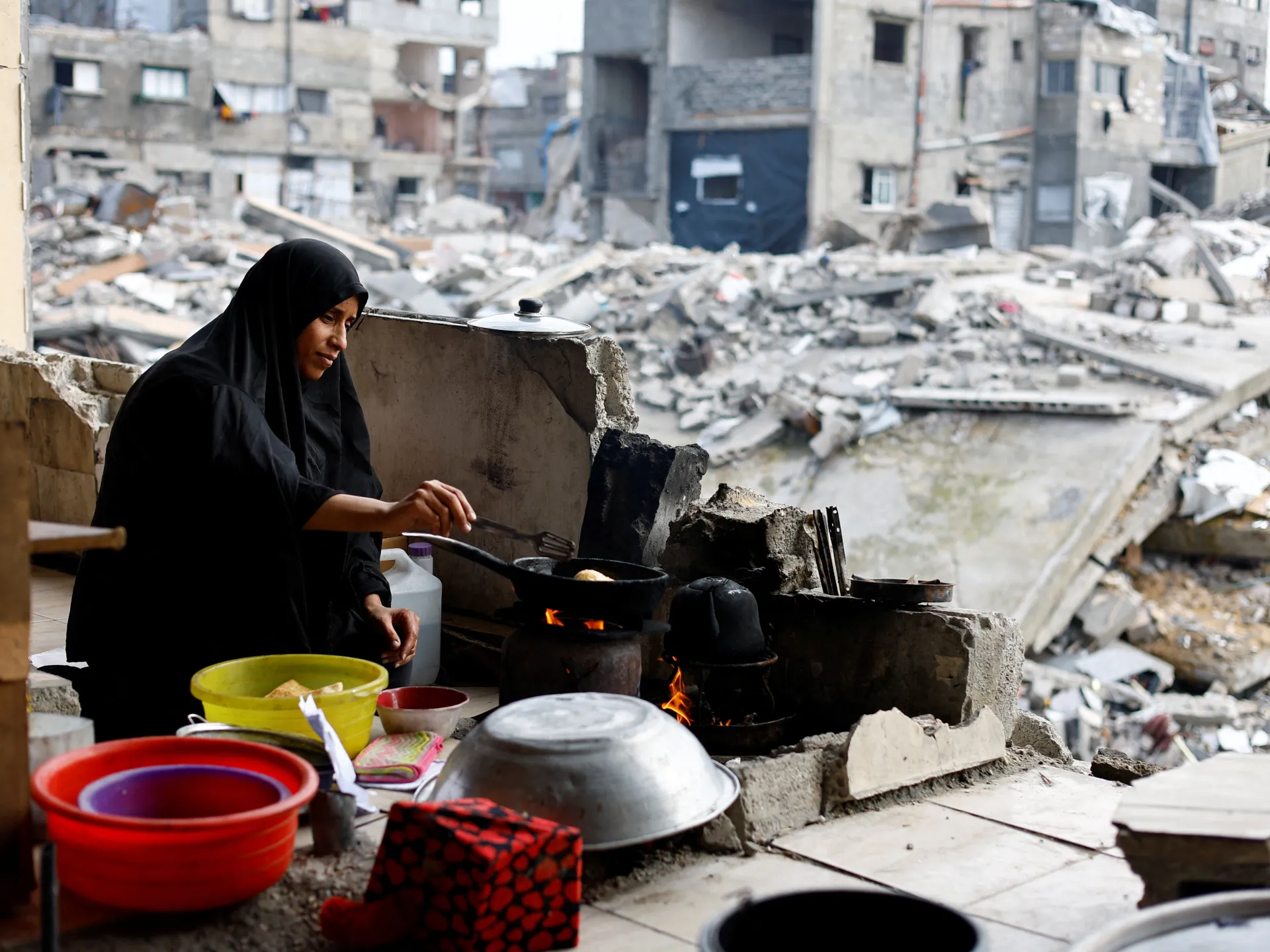
Ban could cut hundreds of thousands of Palestinians in Gaza off from essential care, Doctors Without Borders warns.
Israel faces mounting global condemnation as a ban on dozens of international aid organisations working to provide life-saving assistance to Palestinians in the war-ravaged Gaza Strip has come into effect.
On Thursday, a group of 17 human rights and advocacy organisations in Israel condemned the prohibition, saying it “undermines principled humanitarian action, endangers staff and communities, and compromises effective aid delivery”.
list of 3 itemsend of list
“Israel, as the occupying power, has an obligation to ensure adequate supplies to Palestinian civilians. Not only is it failing to fulfil that obligation, but it is also preventing others from filling the gap,” the groups said.
Israel has revoked the operating licences of 37 aid groups, including Doctors Without Borders, known by its French initials MSF, and the Norwegian Refugee Council, for failing to comply with new government regulations.
The new rules require international NGOs working in Gaza and the occupied West Bank to provide detailed information on staff members, as well as their funding and operations.
Israel has defended the move by accusing international organisations that work in Gaza of having links to Hamas and Palestinian Islamic Jihad – without providing any evidence.
But experts say the requirements contravene humanitarian principles and follow a longstanding Israeli government campaign to vilify and ultimately impede the work of aid groups providing assistance to Palestinians.
“The new registration framework violates core humanitarian principles of independence and neutrality,” the Israel-based rights groups, including B’Tselem and Physicians for Human Rights-Israel, said in Thursday’s statement.
“Conditioning aid on political alignment, penalizing support for legal accountability, and requiring the disclosure of sensitive personal data of Palestinian staff and their families all constitute a breach of duty of care and expose workers to surveillance and harm.”
The ban comes as Israel has waged a genocidal war against Palestinians in the Gaza Strip, imposing restrictions on food, medicine and other humanitarian aid deliveries to the coastal territory.
Israeli violence has also soared in the occupied West Bank, with the military forcing tens of thousands of Palestinians out of their homes in what Human Rights Watch has described as war crimes and crimes against humanity.
Against that backdrop, United Nations human rights chief Volker Turk said earlier this week that Israel’s NGO ban is “the latest in a pattern of unlawful restrictions on humanitarian access” in the occupied Palestinian territory.
Doctors Without Borders said in a social media post that, as of Wednesday, it was still waiting on the renewal of its registration to operate in Gaza and the West Bank under the new Israeli rules.
“The Palestinian health system is decimated, essential infrastructure is destroyed, and people struggle to meet basic needs. People need more services, not less,” MSF said.
“If MSF and other INGOs lose access, hundreds of thousands of Palestinians would be cut off from essential care.”
Former UN humanitarian chief Martin Griffiths, who sits on the board of the Norwegian Refugee Council, told Al Jazeera he was not optimistic about what will happen next.
“The reality is these agencies are essential to aid delivery – [and] aid delivery in particular in the Gaza Strip,” Griffiths said. “They are the last mile, the phrase used in humanitarian operations to those who actually deliver the aid to the people involved.”

Four members of the Palestine Action group, which has been proscribed as a terrorist organisation in the United Kingdom, are continuing with their hunger strikes in different prisons around the country.
Four other Palestine Action members have ended their hunger strikes – some after being hospitalised.
list of 4 itemsend of list
Here is what we know about the four remaining hunger strikers.
Imprisoned Palestine Action members have been on hunger strikes in prisons around the UK for more than 50 days.
The Palestine Action members are being held on remand in prisons over their alleged involvement in break-ins at the UK subsidiary of Elbit Systems in Filton near Bristol, where equipment was reportedly damaged, and at a Royal Air Force base in Oxfordshire, where two military aircraft were sprayed with red paint.
The prisoners deny the charges against them, which include burglary and violent disorder.
Of the four still on hunger strikes, three were imprisoned in November 2024 for their alleged involvement in break-ins at the UK subsidiary of Israeli weapons group Elbit Systems in Filton near Bristol, where equipment was reportedly damaged. One has been in prison since July 2025 for alleged involvement in damage at a Royal Air Force base in Oxfordshire, where two military aircraft were sprayed with red paint.
Palestine Action, a protest group launched in July 2020, describes itself as a movement “committed to ending global participation in Israel’s genocidal and apartheid regime”.
The UK parliament voted in favour of proscribing the group on July 2, 2025, classifying it as a “terrorist” organisation and bringing it into the same category as armed groups like al-Qaeda and ISIL (ISIS). Critics decried the move, arguing that while members of the group have caused damage to property, they have not committed acts of violence that amount to terrorism.
More than 1,600 arrests linked to support for Palestine Action were made in the three months following the ban’s introduction. The ban has been challenged in court.
The hunger strikers have five key demands: immediate bail, the right to a fair trial – which they say includes the release of documents related to “the ongoing witch-hunt of activists and campaigners” – ending censorship of their communications, “de-proscribing” Palestine Action and shutting down Elbit Systems, which operates several UK factories.
“The UK government has forced their bodies to a breaking point,” pro-Palestine activist Audrey Corno told Al Jazeera Mubasher.
“A promise to the government is that the prisoners’ resistance and the people’s resistance against the genocide [in Gaza], Israel’s occupation and apartheid of genocide will not stop until it ends.”
Heba Muraisi, Kamran Ahmed, Teuta Hoxha and Lewie Chiaramello are the four people, aged between 20 and 31, who are continuing their hunger strikes.
Muraisi, 31, was on day 60 of her hunger strike on Thursday. She is being held in HMP [His Majesty’s Prison] New Hall in Wakefield, a prison in West Yorkshire about 180 miles (290km) north of London.
Muraisi was arrested in November 2024 for her alleged role in an August 2024 raid on the Israel-based Elbit Systems in Bristol, which is believed to have cost the Israeli weapons manufacturer more than $1.34m.
According to social media posts, Muraisi is of Yemeni origin. However, Al Jazeera could not independently verify this.
She was transferred to the West Yorkshire prison in October 2025 from HMP Bronzefield in Surrey, about 18 miles from the UK capital.
“Heba is demanding to be transferred back to HMP Bronzefield. She was transferred very suddenly, very far away from her entire support network and family, which is based in London. She’s been experiencing consistent medical negligence. Her body is, as you’d imagine, increasingly weak,” Corno said.
In a statement shared with Al Jazeera on December 29, Muraisi said: “I’ve been force-fed repression and I’m stuffed with rage and that’s why I’m doing what I’m doing now. I am bringing acute awareness to the unjust application of UK laws by our Government and I’m glad that people can now see this after a year of imprisonment and human rights violations. Keep going, keep fighting.”
Muraisi’s trial is set for June 2026, according to the protest group Prisoners For Palestine.

Ahmed, 28, was also arrested in November 2024 and is being held in HMP Pentonville in north London. He was also arrested for his alleged involvement in the raid on Elbit Systems in Bristol. Ahmed has been on a hunger strike for more than 50 days.
According to a report by Middle East Eye, Ahmed is a mechanic.
Ahmed was hospitalised for a third time on December 20 after he refused food, his sister, Shahmina Alam, told Al Jazeera.
“We know that he’s rapidly been losing weight in the last few days, losing up to half a kilogramme [1.1lbs] a day,” Alam told Al Jazeera in late December.
Ahmed, who is 180cm (5′11′), entered prison at a healthy 74kg (163lbs), but his last recorded weight was 60kg (132lbs).
“Kamran has been hospitalised for the fourth time recently,” Corno said.

Hoxha, 29, was on day 54 of her hunger strike on Thursday. She is being held at HMP Peterborough. She was also arrested in November 2024 on allegations of involvement in the Elbit Systems raid.
According to Prisoners for Palestine, Hoxha was moved from HMP Bronzefield on the day UK parliamentarians voted to proscribe Palestine Action – July 2, 2025.
Corno told Al Jazeera that she is in regular contact with Hoxha and that she has been having heart palpitations. “She’s not been able to sleep through the night for weeks on end. I can see her memory start to deteriorate.”
In a statement published on the Prisoners for Palestine website, Hoxha said: “This is a witch hunt, not a fair fight, and that behind the arrests of dissenting voices under counterterrorism powers, holding us on remand without trial for nearly two years and targeting protesters who condemn Palestinian suffering, is the palpably desperate attempt to force us all under the imperial boot of submission.”

Chiaramello, 22, has type 1 diabetes and hence, he has been fasting every other day. He is on day 28 of his hunger strike.
He has been held in HMP Bristol since July 2025 in connection with an incident at RAF Brize Norton, according to Prisoners for Palestine, and faces charges of conspiring to enter a restricted area for purposes harmful to the UK’s safety and interests, as well as conspiracy to commit criminal damage. His trial is set for January 18, 2027.
On June 20, a group of Palestine Action activists broke into RAF Brize Norton, the largest Royal Air Force base in Oxfordshire, and sprayed two military planes with red paint, causing an estimated $9.4m worth of damage.
“He’s been having to manage his insulin intake on his own with no medical supervision,” Corno said.

Four other imprisoned Palestine Action activists have ended their hunger strikes, mostly after being hospitalised.
This includes Qesser Zuhrah, 20 and Amu Gib, 30, who are being held at Bronzefield prison in Surrey. The pair began their hunger strikes on November 2 to coincide with the Balfour declaration of 1917, when Britain pledged to establish a national home for the Jewish people in Palestine.
Umar Khalid, 22, who has muscular dystrophy, ended his hunger strike after 13 days. Jon Cink ended his hunger strike after 41 days when he was hospitalised. Qesser Zuhrah ended her hunger strike after 48 days and was hospitalised. Amy Gib was also hospitalised.

Move comes nearly two decades after the Balkan country entered the EU as hope for stability clashes with fear of rising prices.
Published On 1 Jan 20261 Jan 2026
Share
Bulgaria has officially adopted the euro, becoming the 21st country to join the single currency nearly two decades after entering the European Union, a move that has led to both celebration and anxiety.
At midnight on Wednesday (22:00 GMT), the Balkan country abandoned the lev, its national currency since the late 19th century.
list of 3 itemsend of list
Images of Bulgarian euro coins lit up the central bank’s headquarters in Sofia as crowds gathered in freezing temperatures to mark the new year.
“I warmly welcome Bulgaria to the euro family,” said Christine Lagarde, the president of the European Central Bank.
Some residents welcomed the change with optimism. “Great! It works!” said Dimitar, 43, speaking to The Associated Press after withdrawing 100 euros from a cash machine shortly after midnight.
Successive Bulgarian governments have backed euro adoption, arguing it would strengthen the country’s fragile economy, anchor it more firmly within Western institutions and shield it from what officials describe as Russian influence. Bulgaria, with a population of about 6.4 million, remains the poorest member of the EU.

Yet public opinion has long remained split. Many Bulgarians fear the euro will drive up prices while wages stagnate, worsening living standards in a country already struggling with political instability.
In a televised address before midnight, President Rumen Radev described the euro as the “final step” in Bulgaria’s integration into the EU.
However, he criticised the absence of a public referendum on the decision.
“This refusal was one of the dramatic symptoms of the deep divide between the political class and the people, confirmed by mass demonstrations across the country,” Radev said.
Bulgaria recently plunged into further uncertainty after anticorruption protests toppled a conservative-led government in December, pushing the country towards its eighth election in five years.
“People are afraid that prices will rise, while salaries will remain the same,” a woman in her 40s told the AFP news agency in Sofia.
At city markets, vendors listed prices in both levs and euros. Not everyone was worried.
“The whole of Europe has managed with the euro, we’ll manage too,” retiree Vlad said.