From breaking news to significant developments in politics, business, technology, entertainment, and more, we deliver the stories that shape our global landscape.
William DeFoor, 26, damaged Vice President JD Vance’s family home in Cincinnati early Monday morning due to mental health issues and not politics, his attorney said. Photo Courtesy of the Hamilton County Sheriff’s Office
Jan. 6 (UPI) — The man accused of vandalizing Vice President JD Vance’s home in Cincinnati has a history of mental health issues, his defense attorney said in court Tuesday.
William DeFoor, 26, was arrested and is accused of vandalizing the Vance home at 12:15 a.m. EST on Monday while the vice president and second lady Usha Vance were in Washington, D.C.
DeFoor’s attorney, Paul Laufman, made the mental health claim during his client’s arraignment hearing in Hamilton County Municipal Court on Tuesday.
Laufman said the vandalism was not politically motivated, and Judge Janaya Trotter Bratton ordered DeFoor to post an $11,000 bond to be released from custody.
DeFoor writes “peaceful” prose in his poems, and his using a hammer to damage a vehicle driven by a federal agent watching Vance’s home and then several windows on the home were not intended as a political statement, Laufman told the court.
“I just don’t think there’s anything political going on,” Laufman said.
DeFoor is accused of felony damage, criminal trespass, criminal damage and obstructing official business.
He has a history of mental health-related cases heard by the Hamilton County Mental Health Court and has been arrested multiple times for vandalism.
When DeFoor arrived outside of Vance’s home, he tried to break the windows of a Secret Service vehicle that was blocking the driveway, according to a criminal complaint filed by FBI Assistant Special Agent Gavin Hartsell.
A Secret Service agent and Cincinnati police announced their presence and ordered DeFoor to “stop and drop the weapon” he was holding, Hartsell wrote.
“DeFoor ignored all commands and began to use a hammer to break glass windows,” located on the front of Vance’s home, he said.
Hartsell described the windows as “large, historic windows” that contained “enhanced security assets” owned by the federal government. He estimated the cost of damage at $28,000.
Vance on Monday said a “crazy person tried to break in by hammering the windows” on his family’s home and thanked the Secret Service and Cincinnati police for quickly responding to the matter in a social media post.
The ex-president’s wife says he fell out of his prison bed while sleeping and hit his head.
Published On 6 Jan 20266 Jan 2026
Share
Brazil’s jailed ex-president, Jair Bolsonaro, fell and struck his head in his prison cell, but his request to go to a hospital was denied by the country’s top judge.
The 70-year-old right-wing leader fell out of bed while sleeping and hit his head on a piece of furniture, his wife, Michelle Bolsonaro, wrote on Instagram on Tuesday.
Recommended Stories
list of 3 itemsend of list
“We are going to the hospital. My love will undergo exams,” Michelle Bolsonaro said.
However, Supreme Court Justice Alexandre de Moraes denied Bolsonaro’s request to immediately leave prison for tests at a hospital in Brasilia.
The federal police said in a statement that Bolsonaro received initial medical treatment in the morning, adding that a federal police doctor “found minor injuries” and saw no need for hospitalisation.
“Any referral to a hospital depends on authorisation from the Supreme Court,” it added.
Bolsonaro, who was stabbed in the abdomen during a 2018 campaign event, has a history of hospitalisations and surgeries related to the attack.
Citing the police report, de Moraes said in his decision that there is no need for Bolsonaro to be immediately taken to hospital. The judge said his legal team has the right to request exams for Bolsonaro, but lawyers must schedule them in advance and provide information justifying the procedures.
He was discharged from hospital on January 1 and taken back to the Federal Police Superintendency in Brasilia, where he is serving a 27-year sentence for plotting a coup after losing the 2022 presidential election.
From left, Ukraine’s President Volodymyr Zelensky, France’s President Emmanuel Macron and Britain’s Prime Minister Keir Starmer shake hands during the signing of the declaration on deploying post-cease-fire force in Ukraine during the Coalition of the Willing summit on security guarantees for Ukraine, at the Elysee Palace in Paris Tuesday. Photo by Ludovic Marin/EPA
Jan. 6 (UPI) — The leaders of the Britain, France and Ukraine signed a trilateral agreement Tuesday to pave the way for French and British forces to deploy to Ukraine after it signs a peace agreement to end the war with Russia.
Macron, British Prime Minister Keir Starmer and Ukrainian President Volodymyr Zelensky signed the agreement Tuesday evening.
“Following a cease-fire, the U.K. and France will establish military hubs across Ukraine,” Starmer said.
Military officials from France, the United Kingdom, and Ukraine worked in detail on force deployment, numbers, specific types of weapons, and the components of the Armed Forces required and able to operate effectively. We already have these necessary details. We understand which… pic.twitter.com/3WrdOTHDnz— Volodymyr Zelenskyy / Володимир Зеленський (@ZelenskyyUa) January 6, 2026
“The ‘Multinational Force for Ukraine’ will act as a reassurance force to bolster security guarantees and Ukraine’s ability to return to peace and stability by supporting the regeneration of Ukraine’s own forces,” Starmer said in a statement.
“The signing of the declaration paves the way for the legal framework to be established for French and U.K. forces to operate on Ukrainian soil, securing Ukraine’s skies and seas and building an armed forces fit for the future.”
“Military officials from France, the United Kingdom, and Ukraine worked in detail on force deployment, numbers, specific types of weapons, and the components of the Armed Forces required and able to operate effectively. We already have these necessary details. We understand which country is ready for what among all members of the Coalition of the Willing. I would like to thank every leader and every state that truly wishes to be part of a peaceful solution,” Zelensky said.
He also discussed the role of the United States in the post-war coalition.
“We had very substantive discussions with the American side on monitoring — to ensure there are no violations of peace. The United States is ready to work on this. One of the most critical elements is deterrence — the tools that will prevent any new Russian aggression. We see all of this,” he said.
U.S. Special Envoy Steve Witkoff said the talks led to “significant progress on several critical workstreams.”
“We agree with the Coalition that durable security guarantees and robust prosperity commitments are essential to a lasting peace in the Ukraine and we will continue to work together on this effort.”
He said talks will continue Tuesday night and Wednesday, and “we are hopeful to achieve additional positive momentum in the near future.”
The leaders of about 35 countries calling themselves the “Coalition of the Willing” met Tuesday afternoon in Paris to continue work on the joint statement released by European leaders after a summit in Berlin in December.
In his New Year’s speech, Macron said he expects “firm commitments” to be made in protecting Ukraine against Russian aggression after any cease-fire.
Zelensky recently met with U.S. President Donald Trump in Florida and said that the peace plan is about 90% agreed. But Russia hasn’t agreed to the plan since revisions were made.
Trump suggested there would be a security agreement for Ukraine and said “European nations are very much involved.”
“I feel that European nations have been really great, and they’re very much in line with this meeting and with getting a deal done. They are all terrific people,” Trump said.
The 10% that’s left in the plan is about territorial disputes. Kyiv hasn’t agreed to cede land.
Russia controls about 75% of the Donetsk region and 99% of Luhansk. Together, they are the industrial region of Donbas. Ukraine doesn’t want to let them go.
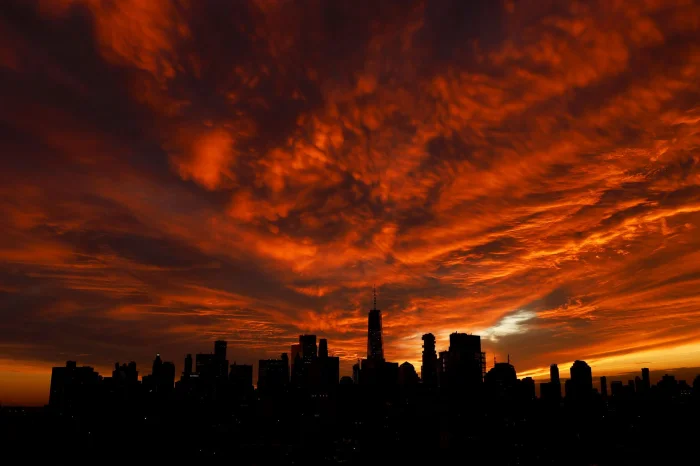
Clouds turn shades of red and orange when the sun sets behind One World Trade Center and the Manhattan skyline in New York City on November 5, 2025. Photo by John Angelillo/UPI | License Photo
Washington, DC – United States Secretary of State Marco Rubio has not been shy about his desire to see the toppling of Venezuelan President Nicolas Maduro.
Infamously, the former Florida senator even posted a series of photos of slain deposed leaders, including a bloodied former Libyan leader Muammar Gaddafi, as tensions with the US and Maduro’s government spiked in 2019.
Recommended Stories
list of 3 itemsend of list
But it wasn’t until the second administration of US President Donald Trump that Rubio’s vision of a hardline approach to Latin America and his longtime pressure campaign against leftist leaders was realised – culminating on Saturday with the illegal abduction of longtime Venezuelan leader Maduro.
Experts say Rubio has relied on an ability to capitalise on the overlapping interests of competing actors within the Trump administration to achieve this, even as his broader ideological goals, including the ousting of Cuba’s communist government, will likely remain constrained by the administration’s competing ambitions.
“It took a tremendous amount of political skill on his part to marginalise other voices in the administration and elsewhere who were saying: ‘This is not our conflict. This is not what we stand for. This is going to upset our base,’” Alejandro Velasco, an associate professor of history at New York University, told Al Jazeera.
Those agendas included US President Donald Trump’s preoccupation with opening Venezuela’s nationalised oil industry, US Secretary of Defense Pete Hegseth’s desire for a more pugilistic military approach abroad, and adviser Stephen Miller’s fixation on migration and mass deportation.
“So that’s the way that Rubio was able to bring into line not quite competing, but really divergent agendas, all of them to focus on Venezuela as a way to advance a particular end,” Velasco said.
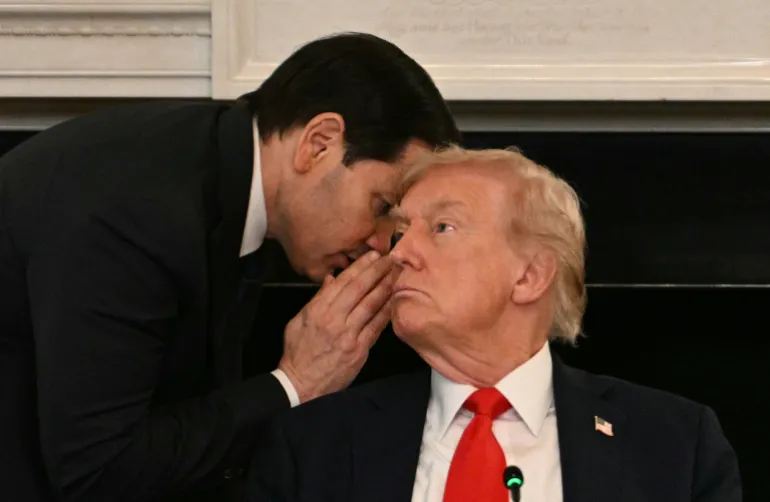
US Secretary of State Marco Rubio whispers in the ear of President Donald Trump during a roundtable discussion about antifa in the State Dining Room of the White House in Washington, DC, on October 8, 2025 [File: Jim Watson/AFP]
A hawk in ‘America First’
A traditionalist hawk who has regularly supported US military intervention in the name of spreading Western democracy and human rights abroad, Rubio initially appeared to be an awkward fit to be Trump’s top diplomat in his second term.
His selection followed a campaign season defined by Trump’s vow to end foreign wars, eschew US-backed regime change, and pursue a wider “America First” pivot.
But the actual shape of Trump’s foreign policy has borne little resemblance to that vision, with the administration adopting a so-called “Peace Through Strength” doctrine that observers say has resulted in more room for military adventurism. That has, to date, seen the Trump administration launch bombing campaigns against Yemen and Iran, strike armed groups in Nigeria and Somalia, and attack alleged drug smuggling boats in the Caribbean.
The approach of Trump 2.0 has more closely aligned with Rubio’s vision of Washington’s role abroad, which has long supported maximum-pressure sanctions campaigns and various forms of US intervention to topple governments.
The US secretary of state’s personal ideology traces to his South Florida roots, where his family settled in the 1960s after leaving Cuba three years before the rise of Fidel Castro, in what Velasco described as an “acerbically anti-communist” political environment.
“I think for him, it started as a question of finally making real the hopes and dreams of Cubans in Florida and elsewhere to return to their homeland under a capitalist government,” Velasco explained.
“It went from that to what this could represent, if we think about it more hemispherically – a bigger shift that would not only increase, but in fact ensure, US hegemony in the region for the 21st century.”
‘Vacuum was his to fill’
After tangling with Trump in the 2016 presidential election, in which the future president deridingly dubbed his opponent “Little Marco” while Rubio decried him as a “con man”, the pair forged a pragmatic working relationship.
Rubio eventually endorsed Trump ahead of the 2016 vote, helping to deliver Florida. In Trump’s first term, Rubio came to be seen as the president’s “shadow secretary” on Latin America, an atypical role that saw the lawmaker influence Trump’s eventual recognition of Juan Guaido as interim president in opposition to Maduro.
Analysts note Rubio’s approach to Venezuela has always been directly aimed at undermining the economic support it provides to Cuba, with the end goal of toppling the island’s 67-year-old Communist government. Following Maduro’s abduction on Saturday, Rubio quickly pivoted to the island nation, telling reporters: “If I lived in Havana and I was in the government, I’d be concerned”.
Still, in the early months of Trump’s second term, Rubio appeared largely sidelined, with the president instead favouring close friends and family members to spearhead marquee negotiations on ceasefires in Gaza and Ukraine.
During this time, Rubio was slowly amassing a sizeable portfolio. Beyond serving as secretary of state, Rubio became the acting administrator of the Trump-dismantled US Agency for International Development (USAID) and the acting archivist of the US National Archives. Most notably, he became the acting director of National Security, making him the first top US diplomat to also occupy the impactful White House role since Henry Kissinger.
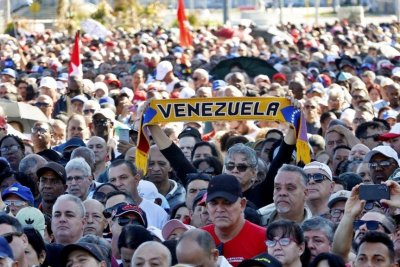
A Venezuelan in Miami holds a picture of US Secretary of State Marco Rubio during a rally in response to US military strikes in Venezuela; in Miami, Florida, the US, January 3, 2026 [Cristobal Herrera-Ulashkevich/EPA]
Rubio eventually found himself in a White House power vacuum, according to Adam Isacson, the director of defence oversight at the Washington Office on Latin America (WOLA).
“Rubio’s somebody who understands Washington better than the Grenells and Witkoffs of the world,” Isacson told Al Jazeera, referring to Trump’s special envoys Richard Grenell and Steve Witkoff.
“At the same time, other powerful figures inside the White House, like Stephen Miller and [Director of the Office of Management and Budget] Russ Vought haven’t cared as much about foreign policy,” he said, “so the vacuum was his to fill.”
Meanwhile, Rubio showed his ability to be an “ideological weather vane”, pivoting regularly to stay in Trump’s good graces, Isacson said. The National Security Strategy released by the White House in December exemplified that approach.
The document, which is drafted by the National Security adviser with final approval from the president, offered little in tough language towards Russia, despite Rubio’s previous hard lines on the war in Ukraine. It supported the gutting of US foreign aid, despite Rubio’s years-long support for the system. It offered little of the human-rights language with which Rubio had earlier in his career styled himself as a champion.
It did, however, include a “Trump corollary” to the Monroe Doctrine, which dovetailed with Rubio’s worldview by calling for the restoration of US “preeminence” over the Western Hemisphere.
A pyrrhic victory?
To be sure, the toppling of Maduro has so far proved a partial, if not pyrrhic victory for Rubio, far short of the comprehensive change he has long supported.
In a news conference immediately following Maduro’s abduction, Trump doused support for exiled opposition leader Maria Corina Machado, who has hewed close to Rubio’s vision for a future Venezuela. Several news agencies have since reported that US intelligence assessed that installing an opposition figure would lead to widespread chaos in the country.
Rubio has so far been the point man in dealing with Maduro’s former deputy and replacement, Delcy Rodriguez, who has been a staunch supporter of the Hugo Chavez-founded Chavismo movement that Rubio has long railed against. Elections remain a far-off prospect, with Trump emphasising working with the government to open the oil industry to the US.
The secretary of state has not been officially given a role connected to the country, but has earned the less-than-sincere title in some US media of “viceroy of Venezuela”.
On news shows, Rubio has been tasked with walking back Trump’s claim that the US would “run” the South American country, while selling the administration’s oft-contradicted message that the abduction of Maduro was a law enforcement action, not regime change, an act of war, or a bid for the country’s oil.
“I think he’s sort of lying through his teeth,” Lee Schlenker, a research associate at the Quincy Institute for Responsible Statecraft, told Al Jazeera.
“Even he doesn’t seem to believe a lot of the sort of rhetorical and discursive pretexts that have been deployed about drugs, about narco-terrorism, about a law enforcement-only operation, about just sort of enforcing a Department of Justice indictment,” he said.
Having to work with Rodriguez, and reportedly, Venezuela’s security czar and Minister of Interior Diosdado Cabello, has been a “bucket of cold water on Rubio’s broader illusions”, Schlenker added, noting that Rubio’s end goal still remains “the end of the Chavista project”.
Rubio is also likely to face further reality checks when it comes to his expected attempts to pitch the overthrow of what he will likely argue is a weakened Cuba.
The island, without the economic resources of Venezuela and no known drug trade, is seen as far less appealing to Trump and many of his allies.
“Compared to Venezuela,” Schlenker said, “there are a lot more reasons why Trump would have less interest in going after Cuba.”
Jan. 6 (UPI) — British Technology Secretary Liz Kendall said Elon Musk must deal with “appalling and unacceptable” images of women without their consent generated by the platform’s Grok artificial intelligence service.
The Grok bot service has been digitally undressing women and putting them in sexualized situations without their consent.
Kendall called it “absolutely appalling.”
“We cannot and will not allow the proliferation of these demeaning and degrading images, which are disproportionately aimed at women and girls,” she said. “Make no mistake, the [United Kingdom] will not tolerate the endless proliferation of disgusting and abusive material online. We must all come together to stamp it out.”
X said in a statement: “We take action against illegal content on X, including Child Sexual Abuse Material, by removing it, permanently suspending accounts, and working with local governments and law enforcement as necessary.”
X user Daisy Dixon told the BBC that she found sexualized images of herself made by Grok.
She noticed that everyday pictures she had posted of herself on the platform were changed to undress her or sexualize her. It made her feel shocked, humiliated and afraid for her safety, she said.
“Myself and many other women on X continue to report the inappropriate AI images/videos we are being sent daily, but X continues to reply that there has been no violation of X rules,” she said. “I just hope Kendall’s words turn into concrete enforcement soon — I don’t want to open my X app any more as I’m frightened about what I might see.”
Jessaline Caine told The Guardian that the government’s action is “spineless.” Caine, a survivor of child sexual abuse, said that as of Tuesday morning, Grok was still obeying requests to change an image of her at age 3 to put her in a string bikini. ChatGPT and Gemini rejected the same requests.
“Other platforms have these safeguards so why does Grok allow the creation of these images?” Caine asked. “The images I’ve seen are so vile and degrading. The government has been very reactive. These AI tools need better regulation.”
Thomas Regnier, spokesperson for tech sovereignty at the European Commission told the BBC Newshour that the Commission is taking it very seriously.
“We don’t want this in the European Union … it’s appalling, it’s disgusting,” he said.
“The Wild West is over in Europe. All companies have the obligation to put their own house in order — and this starts by being responsible and removing illegal content that is being generated by your AI tool.”
It’s illegal to create or share non-consensual intimate images or CSAM, including AI deepfakes. Fake images of people in bikinis may also qualify.
Online child safety campaigner Beeban Kidron said AI-generated images of children in bikinis may not be CSAM but they disrespect children’s privacy and agency.
“We cannot live in a world in which a kid can’t post a picture of winning a race unless they are willing to be sexualized and humiliated,” The Guardian reported she said.
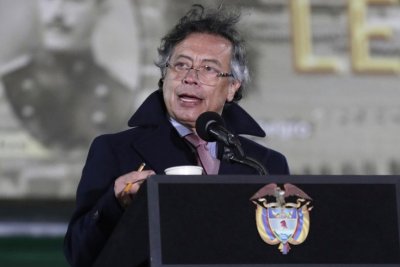
Colombian President Gustavo Petro called for a nationwide mobilization Wednesday and urged citizens to “defend sovereignty,” in response to statements by U.S. President Donald Trump that left open the possibility of military intervention. Photo by Carlos Ortega/EPA
Jan. 6 (UPI) — Colombian President Gustavo Petro has called for a nationwide mobilization Wednesday and urged citizens to “defend sovereignty,” responding to statements by the U.S. President Donald Trump that in Colombia have been widely interpreted as threats of intervention and direct attacks against the head of state.
The call, posted by Petro on X and echoed by government officials and political allies, urges rallies in public squares across the country starting at 4 p.m. local time, with the main protest planned for Bogota’s Plaza de Bolivar, the historic square that houses Colombia’s main government institutions. Petro said he will address the crowd.
The escalation follows remarks by Trump in which he referred to Petro in disparaging terms, accused him of backing drug production and left open the possibility of military action, according to reports by Colombian media.
In recent comments, Trump said a military operation against Colombia “sounds good,” following a U.S. military incursion in Venezuela. He also accused Petro of links to drug trafficking and said Colombia is “very sick.”
Petro publicly rejected the accusations and framed the dispute as a matter of national sovereignty. He said he would carefully assess the scope of Trump’s words before issuing a broader response but insisted that dialogue should be “the first path” and defended the legitimacy of his government.
“Although I have not been a soldier, I know about war and clandestinity. I swore not to touch a weapon again after the 1989 peace pact, but for the homeland, I would take up arms again, which I do not want,” Petro wrote, referring to the agreement that led to the demobilization of the M-19 guerrilla movement in which he once participated.
“I am not illegitimate, nor am I a drug trafficker. I own only my family home, which I am still paying for with my salary. My bank statements have been made public. No one has been able to say I have spent more than my salary. I am not greedy,” he added.
Separately, Colombia’s Foreign Ministry issued a statement after remarks attributed to Trump on Sunday and said it rejects what it considers unacceptable interference in matters of sovereignty and bilateral relations.
Vice President Francia Marquez joined those describing Trump’s statements as “threats” and called on Colombians to defend national sovereignty, according to local radio reports.
Demonstrations planned for Wednesday are expected in cities including Bogota, Medellin, Cali, Bucaramanga, Cartagena and Santa Marta, with calls to gather in central squares.
Petro described the protests as “peaceful” and urged Colombians to fly the national flag at their homes and bring it to public squares, El Espectador reported. He warned of the risks of military escalation and reiterated that the armed forces must follow their constitutional mandate to defend sovereignty.
The episode unfolds amid regional upheaval linked to Venezuela’s crisis and rising diplomatic tensions in Latin America.
According to daily El Tiempo, the situation has pushed Petro’s government to return to street mobilization as a political tool while Bogota seeks to manage relations with Washington without losing internal control.
People attend an event held at the Anti-Imperialist Tribune in support of Venezuela in Havana on Saturday. Cuban President Miguel Diaz-Canel condemned the United States’ attack on Venezuela and the capture of President Nicolas Maduro and his wife, Cilia Flores. Photo by Ernesto Mastrascusa/EPA
BUESNOS AIRES, Jan. 6 (UPI) — Cuba is navigating another delicate moment in its recent history after the capture of Venezuelan President Nicolás Maduro by U.S. forces Saturday.
The operation that removed him from Caracas and left him facing a court in New York killed 32 Cuban soldiers, part of Maduro’s praetorian guard, and abruptly dismantled the island’s main economic lifeline.
The blow comes amid an energy and health crisis already considered the worst in decades — and one that could now deepen rapidly.
For more than 20 years, the alliance with Venezuela served as a strategic pillar for the Cuban government. The exchange of subsidized oil for medical and security services allowed Havana to sustain its economy after the Soviet collapse and cushion the impact of the U.S. embargo.
Maduro’s fall and the prospect of a regime change in Caracas directly disrupt that balance and place Cuba in a position of heightened economic and political vulnerability.
In the days after the Venezuelan leader’s arrest, the Cuban government responded with a mix of public gestures of support, internal political mobilization and tighter security.
On Saturday, President Miguel Díaz-Canel led a protest outside the U.S. Embassy in Havana, where he said Cuba was prepared to defend its alliance with Venezuela “even at a very high cost.”
The next day, the government decreed two days of national mourning in response to events in Venezuela. Senior officials dominated state television broadcasts to reinforce the idea of a “shared homeland” and a historic resistance to adversity.
The official narrative sought to counter statements by U.S. President Donald Trump, who publicly warned that allies of chavismo would face direct consequences.
Speaking about the island nation just 90 miles from Key West, Fla., Trump said, “Cuba is ready to fall … going down for the count,” while aboard Air Force One on Sunday.
On Monday, according to diplomatic sources, Cuban authorities stepped up surveillance at strategic facilities and convened emergency meetings. At the same time, reports of prolonged blackouts multiplied across several provinces — a concrete sign of the fragility of the energy system, as Venezuelan assistance could disappear or be sharply reduced within weeks.
Cuba’s energy crisis stems from a combination of obsolete infrastructure, chronic lack of maintenance and fuel shortages.
Most electricity generation depends on decades-old thermoelectric plants that are frequently offline due to breakdowns. Limited alternative capacity forces the state to rely on floating plants and diesel generators, whose operation depends on imports the country cannot secure due to a lack of hard currency or the loss of free supplies from traditional allies such as Venezuela.
Venezuelan lawyer and former prosecutor Zair Mundaray told UPI that for decades, Cuba depended entirely on Venezuelan oil, and that the collapse of Petróleos de Venezuela, S.A., Venezuela’s state‑owned oil and gas company, which started around 2014, broke that anchor. That left the island exposed to more frequent blackouts and a deeper economic downturn.
“In that vacuum, Mexico’s assistance emerged,” Mundaray said.
Press reports indicate that during the peak years of cooperation with Cuba, Caracas sent between 90,000 and 120,000 barrels per day. Since 2023, the Mexican state has shipped hundreds of thousands of barrels of crude and diesel to Cuba in operations valued at more than $300 million.
For economic historian Leandro Morgenfeld at the University of Buenos Aires, one of the objectives of U.S. intervention in Venezuela is to deepen Cuba’s isolation.
“The United States sees the Western Hemisphere as its exclusive domain. It will not accept the presence of extra-hemispheric forces and is willing to remove governments if it believes its interests or national security are at risk,” Morgenfeld said.
From that perspective, he added, the goal goes beyond Venezuela and seeks to dismantle the political and economic ties that sustain adversarial governments in the region, including Cuba.
“That is why they want to cut the political and economic link with Venezuela and further suffocate the island. Despite the blockade, they aim to intensify financial pressure to achieve what they have pursued for decades: the fall of the Cuban revolutionary government,” he said.
Morgenfeld said concern in Havana is real and deep. Cuba has faced a complex economic situation for years, marked by sanctions, lack of hard currency and low productivity.
“It is no longer, as in other times, an economy with easy sources of financing. If chavismo were to fall, the impact on Cuba would be very severe, economically and politically,” he said, while noting that a full regime change in Venezuela has not yet occurred.
From another angle, Colombian political scientist Christian Arias Barona said it is premature to anticipate an immediate collapse of the Cuban model.
He told UPI that as long as Delcy Rodríguez remains in power and U.S. hostility does not intensify, an abrupt shift is unlikely.
“Cuba would not face a drastic alteration in its economy or international relations, especially in its ties with Venezuela, from which it receives significant assistance, particularly in energy,” Arias Barona said. “Nor would its links with Russia and China be immediately affected.”
He recalled that Cuba’s recent history reflects an ability to adapt to adverse scenarios. Since the 1959 revolution, the island has faced what he described as constant “aggressions and hostilities” from the United States, including the ongoing economic embargo.
“That experience has allowed it to develop mechanisms of political and diplomatic survival,” he said.
Arias Barona also noted that the U.N. General Assembly has repeatedly voted against the U.S. embargo on Cuba, calling it a unilateral measure without backing in international law.
However, he said the United States, as a permanent member of the Security Council, has maintained its position and secured occasional support, including from Israel and, in recent votes, Argentina, Ecuador and Paraguay.
“What we are seeing today is a situation that increases Cuba’s vulnerability,” he said.
Sociologist Luis Wainer, also an academic at the University of Buenos Aires, agreed it is too early to project definitive scenarios.
“We do not know whether there will be a change in the political and economic model, how such a transition would look or even whether a transition will exist,” he told UPI.
“We are at a moment of negotiations, where what will be defined is who manages to impose the conditions,” he said.
Wainer said strong interest exists in framing this moment as a return to the Special Period, the severe economic and social crisis that began in 1991 after the collapse of the Soviet Union, Cuba’s main ally and supplier, and resulted in extreme shortages of fuel, food and medicine.
“There is a tendency to think Cuba will return to that scenario, but Cuban experience itself shows the country has developed creative responses to sustain itself without surrendering sovereignty,” he said.
Those responses include selective openings to new trade schemes, agreements with strategic sectors in other countries and the promotion of activities such as international tourism.
In that context, he highlighted the political and economic impact of Latin America’s leftward shift following Hugo Chávez’s electoral victory in 1998.
“That progressive cycle was a key lifeline for Cuba,” Wainer said. “It enabled regional integration, political cooperation and economic agreements that were fundamental for the island, especially with Venezuela.”
George Conway, shown with his ex-wife Kellyanne Conway, has joined the race for the House of Representatives in Manhattan. He’s running for the seat being vacated by the retiring Rep. Jerry Nadler, D-N.Y. File Photo by Erik S. Lesser/EPA
Jan. 6 (UPI) — Vocal Trump critic George Conway officially announced his run for the House of Representatives as a Democrat in New York for the seat being vacated by Rep. Jerry Nadler.
“We have a corrupt president, a mendacious president, a criminal president whose masked agents are disappearing people from our streets, who’s breaking international law, and he’s running our federal government like a mob protection racket,” Conway said in his video.
Conway is a formerly conservative lawyer who rose to widespread fame when his then-wife, Kellyanne Conway, became an adviser to President Donald Trump in his first term. Despite his wife’s position, he was an outspoken voice against the president. They divorced in 2023.
“I know how to fight these people. They are corrupt, amoral people,” Conway said. “They will stop at nothing to rig the system for themselves. I’ve been fighting Trump for years, and nothing will stop me.”
Nadler, D-N.Y., announced in September that he would retire from Congress. The 78-year-old Nadler said he wanted to make room for a younger generation. He represents New York’s 12th District, which includes Midtown and the Upper West and Upper East sides of Manhattan.
The 12th District voted for Vice President Kamala Harris by 64 points in 2024.
The field for that primary is crowded. Other candidates include Jack Schlossberg, President John F. Kennedy‘s grandson; New York State Assemblypeople Micah Lasher and Alex Bores; activists Cameron Kasky and Mathew Shurka; journalist Jami Floyd; civil rights lawyer Laura Dunn; fundraiser Alan Pardee; nonprofit founder Liam Elkind; entrepreneur Micah Bergdale; and software engineer Christopher Diep.
“We’re at a crossroads in our country, and Donald Trump is the greatest threat to the Constitution and the rule of law and democratic government that we have ever seen in our lifetime,” Conway told NBC News.
Conway only recently moved back to the district, a point his opponents have made.
“This campaign welcomes George to the race. And the city. And the party,” Bores said in a statement. “I personally would be delighted to offer George local dining tips. Tell him to give me a call when he’s in town.”
Pardee made a statement and mentioned Conway’s “years living in D.C. advancing a conservative agenda before discovering the monster he helped create.”
Floyd, who was a White House fellow under President Bill Clinton, said, “I’m not concerned about George Conway.” She said he “is a life-long conservative Republican and not even from here. So why isn’t he running in Bethesda, Md., or Alpine, N.J., where he belongs?”
Conway said he spent his legal career working in the district and that it has “been the epicenter of my life.”
“I lived in this district for decades before moving out to the suburbs,” he said. “All four of my kids were born in this district, and my life is centered around this district.”
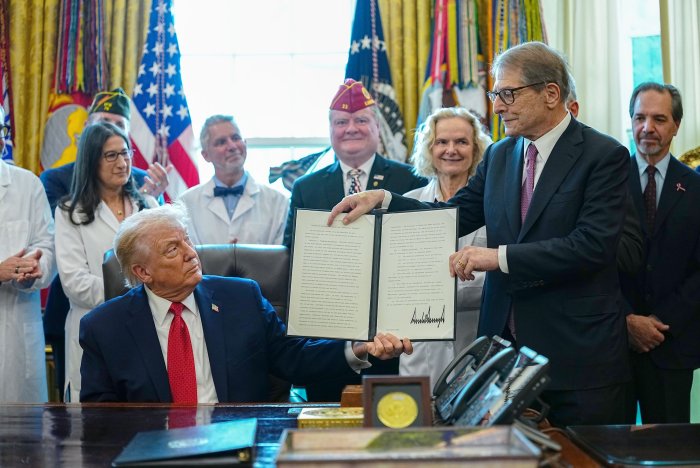
President Donald Trump holds a signed executive order reclassifying marijuana from a schedule I to a schedule III controlled substance in the Oval Office of the White House on Thursday. Photo by Aaron Schwartz/UPI | License Photo
Jan. 6 (UPI) — The 2026 midterm elections are coming later this year with 33 seats in the U.S. Senate and all 435 House seats on ballots across the country.
The Nov. 3 midterms are an opportunity for voters to respond to President Donald Trump‘s second term. Midterm elections are often viewed as a measure of voters’ response to the sitting president’s policies.
After a year of aggressive deportation practices, a withdrawal from the international arena and economic upheaval, 2026 has begun with the Trump administration abducting a foreign leader and launching offensives on foreign nations.
Republicans will seek to maintain a 219-213 majority in the House and three-seat majority in the Senate while Democrats hope to make gains and offer a check on Trump’s power. The results will signal approval or disapproval of how the country is being run and will set the landscape for the final two years of Trump’s presidency.
Retirements to bring changes to Senate
Nine senators have announced they are retiring from the chamber in 2026, including one of the most senior lawmakers.
Sen. Mitch McConnell, R-Ky., the longest-serving Senate party leader in history, will end his 40-year career at the end of the current term. He is one of four Republicans retiring from the Senate.
Six Republicans launched campaigns to succeed McConnell last year, along with eight Democrats. Kentucky has been a firmly Republican-leaning state, voting more than 65% for Trump in 2024.
Alabama voted similarly in 2024, with about 64% of votes going to Trump. Sen. Tommy Tuberville, R-Ala., is ending his time in the Senate to run for state governor.
Like Tuberville, Sen. Marsha Blackburn, R-Tenn., and Sen. Michael Bennet, D-Colo., will leave the Senate to run for governor of their respective states. Bennet has been a senator since 2009 while Blackburn entered the chamber in 2019.
Of the senators not running for re-election, Sen. Joni Ernst, R-Iowa, is leaving open a seat that is considered to be the most competitive. Ernst has been a senator since 2015.
Republicans are backing Rep. Ashley Hinson to take Ernst’s seat. Hinson was elected to the U.S. House in 2020.
Three candidates are in the Democratic primary seeking to challenge Hinson in November: state Sen. Zach Wahls, state Rep. Josh Turek and Nathan Sage, a military veteran.
Wahls was the youngest Iowa Senate Democratic Leader, serving in that role from 2020 to 2023.
The race for an open seat in North Carolina features former Gov. Roy Cooper on the ticket for the Democratic Party. Cooper served two terms as governor.
On the Republican side, former Republican National Committee Chairman Michael Whatley has earned the endorsement of Trump but he is being challenged in the primary by Michele Morrow. She ran an unsuccessful campaign for North Carolina’s superintendent of public instruction in 2024 and has never held public office.
North Carolina has historically been a tightly contested state. Trump earned about 50% of the vote there in 2024. Prior to that, the last time a presidential candidate received 50% of votes was 2012 when Mitt Romney received 50.4%.
North Carolina’s Senate seats have been held by Republicans since 2014. Kay Hagan was a state senator from 2009 to 2015 before being succeeded by Sen. Thom Tillis, R-N.C. Tillis is retiring at the end of the term.
The Democratic Party has tapped former Sen. Sherrod Brown to attempt a return to the chamber in 2026 after he lost a bid for re-election in 2024 to Republican Bernie Moreno.
Brown has launched a campaign to challenge Sen. Jon Husted, the Republican who was appointed to fill Vice President JD Vance’s seat that he vacated when Trump was elected president.
Sen. Jon Ossoff, D-Ga., is running for re-election in a state won by Trump in 2024. Three Republicans have entered their party’s primary to challenge Ossoff: Rep. Buddy Carter, Rep. Mike Collins and former college and pro football coach Derek Dooley.
Georgia Gov. Brian Kemp has given Dooley his endorsement.
Georgia’s 6th Congressional District re-elected Democrat Lucy McBath to the House in 2024 by nearly 50 points over her Republican challenger. Democrats hold both of the state’s Senate seats.
Sen. Susan Collins, R-Maine, will be challenged in 2026 but who will be on the other side of the ticket will not be known until the Democratic primary in June. Collins represents a state that former Vice President Kamala Harris carried by about seven points in 2024.
Maine Gov. Janet Mills and military veteran Graham Platner are campaigning in the Democratic primary.
Texas Sen. John Cornyn is running for re-election but will first have to win a contested Republican primary. Attorney General Ken Paxton, who has been a key figure in Texas’ redistricting battle and often opponent to Biden administration policies, will challenge Cornyn, along with Rep. Wesley Hunt.
In another battleground state, the retirement of Democratic Sen. Gary Peters will leave the race for a Michigan Senate seat open.
Former congressman Mike Rogers is expected to be on the ticket for Republicans after receiving an endorsement from Trump. Three candidates have entered the Democratic primary: Rep. Haley Stevens, state Sen. Mallory McMorrow and physician Abdul El-Sayed.
Congresspeople seeking new offices
Several members of Congress are running for different offices outside of the House chambers, including 11 running for governor. Meanwhile 18 members of the House are retiring, including former House Speaker Nancy Pelosi.
Republicans running for governor in their respective states include Iowa Rep. Randy Feenstra, South Dakota Rep. Dusty Johnson, Florida Rep. Byron Donalds and South Carolina Rep. Nancy Mace.
Rep Chip Roy, R-Texas, will not run for re-election as he will try to succeed Paxton as his state’s attorney general.
New Mexico’s 2nd Congressional District is held by Democrat Gabriel Vasquez but was won by Trump in 2024. New Mexico has voted for Democrats in every presidential election since 2008.
Vasquez faces a challenge from Republicans Greg Cunningham, a veteran of the U.S. Marines and former Albuquerque police officer. Cunningham ran for a seat in the state legislature in 2024 and lost.
Arizona’s 6th Congressional District seat, held by Republican Rep. Juan Ciscomani, had several Democrats looking to challenge Ciscomani in November.
Some candidates have begun dropping out of the Democratic primary as 2026 has arrived. JoAnna Mendoza, a military veteran, and engineer Chris Donat remain in the race. Mendoza has vastly outraised Donat, tallying $1.9 million in receipts compared to Donat’s $21,061, according to Federal Elections Commission data.
Trump won Arizona in 2024 with about 52% of the vote.
Colorado’s newest seat, District 8, is held by Republican Rep. Gabe Evans. He represents the district located in the northern Denver area after flipping the seat for Republicans in 2024.
Evans has a new challenger in the Republican primary as of November with former Air Force cadet and current Colorado Army Reserve Capt. Adam DeRito filing to run against him.
DeRito has been in a long legal battle with the U.S. Air Force which expelled him hours before he was set to graduate in 2010. He was denied a diploma for allegedly violating academy rules by fraternizing with a subordinate. DeRito claims these allegations were retaliation for him reporting sexual assaults at the academy.
The Democratic primary is set to feature five candidates, former state legislator Shannon Bird, state lawmaker Manny Rutinel, Marine veteran Evan Munsing, Denis Abrate and self-proclaimed former Republican John Francis Szemler.
Michigan is one of the biggest battleground states in 2026 with three seats expected to feature close races, along with an open Senate seat.
District 7, held by Republican Tom Barrett, has flipped in consecutive elections. Barrett, a U.S. Army veteran, will seek re-election with seven Democrats declared for their primary. He assumed the seat after Democrat Elissa Slotkin ran for and was elected to the Senate.
Among the Democrats vying to challenge Barrett is former U.S. Ambassador to Ukraine Bridget Brink, Michigan State professor Josh Cowen and William Lawrence, the founder of nonprofit environmental advocacy organization the Sunrise Movement.
District 10 will feature an open election as Rep. John James, a Republican, enters the state gubernatorial race.
FEC campaign data shows a field of six Democrats seeking their party’s nomination. Eric Chung, a former U.S. Department of Commerce official under the Biden administration, has raised the most out of any candidate, followed by Republican Robert Lulgjuraj, a former county prosecutor.
After some delay, District 4 Rep. Bill Huizenga, a Republican, announced last month that he will seek re-election. Four Democrats have filed to appear in the primary, including state Sen. Sean McCann.
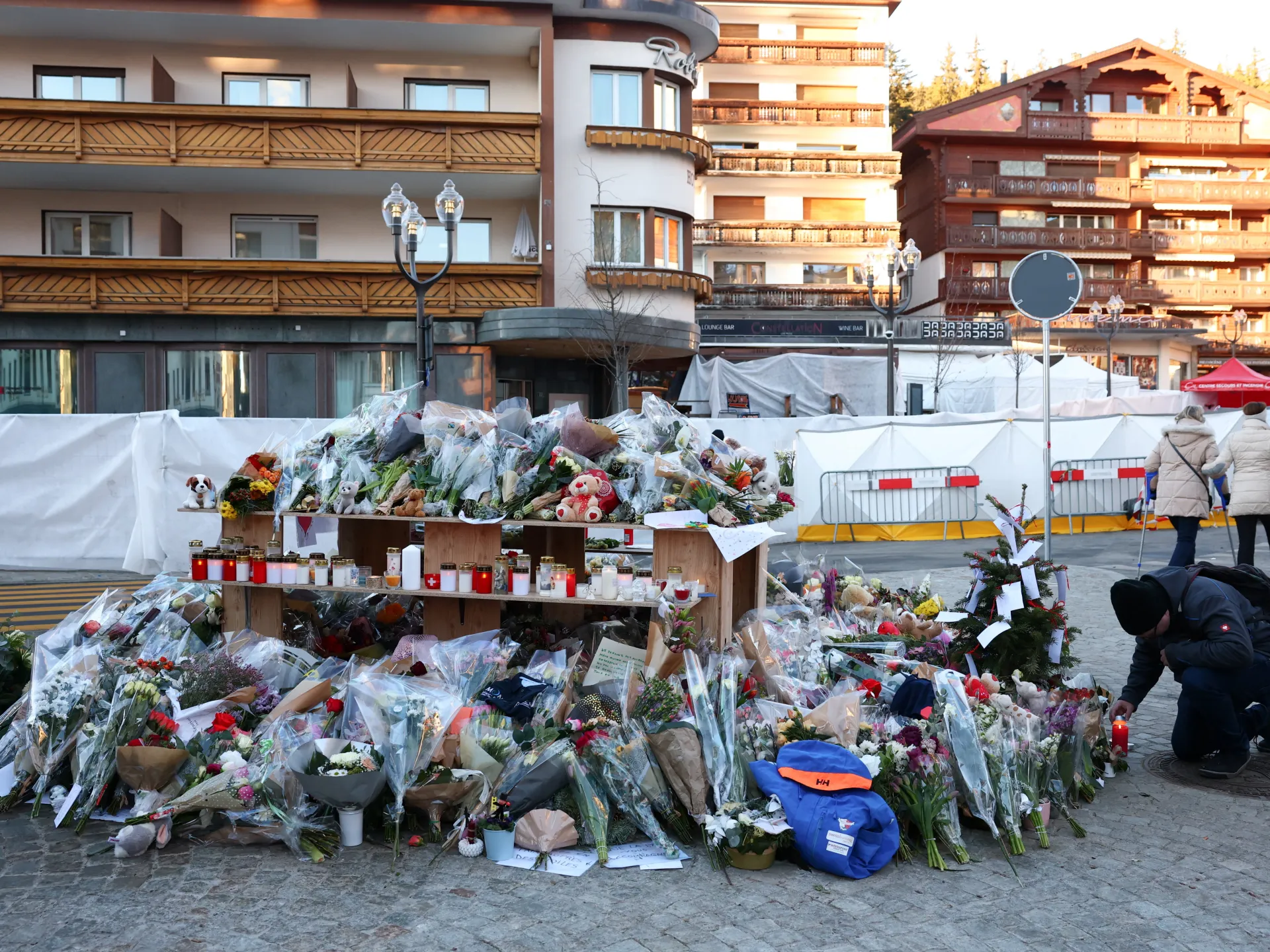
The investigation into a deadly New Year’s blaze that tore through a Swiss bar packed with young people celebrating took a twist Tuesday after the local mayor admitted safety code failings. File photo by Jean-Christophe Bott/EPA
Jan. 6 (UPI) — The bar where 40 people were killed and 116 injured in a blaze in the Swiss ski resort of Crans-Montana on New Year’s Day had not undergone an annual safety inspection since 2019, the town’s mayor admitted Tuesday.
Mayor Nicolas Feraud offered his apologies at a news conference, saying the municipal council was “profoundly sorry” but said he had no explanation as to why no checks on The Constellation bar had been carried out for so long.
“I have no answer for you today. We regret that — we owe it to the families and we will accept the responsibility. We’re profoundly sorry about that and I know how hard that will be for the families,” said Feraud.
He said the town had a five-strong team of people responsible for inspecting more than 10,000 buildings but did not give that as the reason for the failure and insisted he and other councilmen and women would not be resigning.
He said now was not the time to “jump ship” after being elected by Crans-Montana residents.
An outside contractor will now be brought in to carry out a safety audit and inspection of 128 public establishments in the town, but the failure has raised questions over Switzerland’s system of local politics run by non-career officials, many of them part-timers who often have day jobs.
However, Feraud did announce a local ban on use of sparklers — believed to have set the ceiling of the bar ablaze when pyrotechnic champagne bottles were carried too high aloft — inside all commercial premises.
Soundproofing foam on the ceiling that has been blamed for the rapid spread of the fire was within code when The Constellation was last inspected but Feraud said the use of sparklers in spaces fitted with the foam was irresponsible.
Feraud also pointed to crowding in excess of the legally permitted capacity of the premises, which he said was the responsibility of the management of the bar, but said it would for judges to decide whether local officials should fall under the criminal investigation being pursued by prosecutors.
He said the French owners of the bar, Jacques Moretti and Jessica Moretti, were under investigation, but had not been arrested. A second venue they owned had been shut, he added.
The prosecutors’ office for the Valais region said the couple were being investigated on suspicion of manslaughter by negligence, bodily harm by negligence and arson by negligence.
Feraud said the council had provided prosecutors with all relevant documents and would join the case as a civil party.
The developments came as authorities completed identification of all the victims and began the process of returning them to families in Switzerland, Italy, France and countries around the world.
The majority of those caught up in the tragedy were young with an average age of 19.
Clouds turn shades of red and orange when the sun sets behind One World Trade Center and the Manhattan skyline in New York City on November 5, 2025. Photo by John Angelillo/UPI | License Photo
Jan. 6 (UPI) — Venezuelan opposition leader Maria Corina Machado praised U.S. President Donald Trump for ousting former President Nicolas Maduro, calling it a giant achievement for humanity, for which Trump should rightly receive the Nobel Peace Prize.
“Jan. 3 will go down in history as the day justice defeated tyranny. It’s a milestone, and it’s not only huge for the Venezuelan people and our future, I think it’s a huge step for humanity, for freedom, and human dignity,” Machado told Fox News on Monday night.
She said Trump’s action to begin dismantling Maduro’s “narco-terrorist regime,” bringing him to justice, and with it, bringing democracy within reach for 30 million Venezuelans, proved beyond doubt that he deserved the Nobel Peace Prize, said Machado, herself the recipient of this year’s peace prize.
However, she issued a warning to the Trump administration that the woman who was sworn in as Maduro’s replacement, interim president Delcy Rodriguez, was not to be trusted, accusing her of being “one of the main architects of torture, persecution, corruption, narco-trafficking,” in Venezuela.
“She’s a main ally and liaison of Russia, China, Iran, certainly not an individual who could be trusted by international investors and she’s really rejected by the Venezuelan people.”
Trump said Monday night that Rodriguez was cooperating with his administration but insisted there had been no deal with any individuals or group inside Venezuelan to take down Maduro.
He said there was no communication with Rodríguez prior to Friday night’s military operation to capture Maduro, adding that a decision was imminent on whether earlier sanctions imposed on her would remain in place.
He also strongly denied that his preference for Rodriguez had anything to do with the fact he beleived the peace prize should have gone to him, rather than Machado.
The Wall Street Journal repored Monday that Trump determined Rodriguez and other members of Maduro’s inner circle were best placed to head a transition administration and keep stability in Venezuela in the event Maduro lost power, based on a CIA intelligence assessment of various scenarios.
The classified report was, in part, responsible for Trump’s decision to support Maduro’s vice president over Machado.
Publicly, he has said she lacked sufficient “support” and “respect” in her home country, despite the fact that Machado won the presidential primary in December 2023, but was barred from running by Maduro.
Machado was replaced on the ballot by Edmundo Gonzales, who is widely regarded to have won the presidency by most Western countries.
Machado, who is in Norway after being smuggled out of Venezuela in December to travel to Oslo to collect her award, vowed to return to Venezuela as soon as possible and that her opposition movement, which had the 2024 election stolen from it by Maduro, wanted the transition to democracy to move forward.
“We won an election by a landslide under fraudulent conditions. In free and fair elections, we will win over 90% of the votes, I have no doubt about it,” said Machado.
However, Trump quashed speculation that elections could be held as soon as next month, saying Venezuela had to be fixed first.
“You can’t have an election. There’s no way the people could even vote. No, it’s going to take a period of time. We have — we have to nurse the country back to health,” said Trump.
Clouds turn shades of red and orange when the sun sets behind One World Trade Center and the Manhattan skyline in New York City on November 5, 2025. Photo by John Angelillo/UPI | License Photo
Swiss authorities say fire safety inspections had not been carried out at the bar in Crans-Montana since 2019.
Published On 6 Jan 20266 Jan 2026
Share
No safety inspections had been carried out for more than five years at a Swiss bar where 40 people were killed during New Year’s celebrations, local authorities have revealed.
Crans-Montana Mayor Nicolas Feraud said at a news conference on Tuesday that no fire checks had taken place at the Le Constellation ski bar since 2019.
Recommended Stories
list of 3 itemsend of list
“Periodic inspections were not conducted between 2020 and 2025. We bitterly regret this,” Feraud told reporters in the Alpine ski resort.
The fire tore through the popular ski bar early on New Year’s Day. Most of the victims were teenagers. The youngest who was killed was a 14-year-old Swiss girl, followed by two 15-year-old Swiss girls. The oldest was a French national, aged 39.
Police said on Monday that 83 people are still being treated in hospital. In total, 116 people were injured in the blaze.
Authorities believe the fire started when revellers raised champagne bottles with lit sparklers attached, setting light to sound-insulating foam on the ceiling of the bar’s basement.
Feraud said the foam was considered acceptable at the time of the last fire safety check at the bar in 2019.
The mayor announced that all sparkler candles have now been banned inside bars and clubs in Crans-Montana. A statement from the local council said an external agency has been commissioned to further inspect all public establishments.
Authorities are investigating the two people who ran the bar on suspicion of crimes, including homicide by negligence. On Sunday, police said circumstances did not currently merit them being put under arrest and they did not see any flight risk.
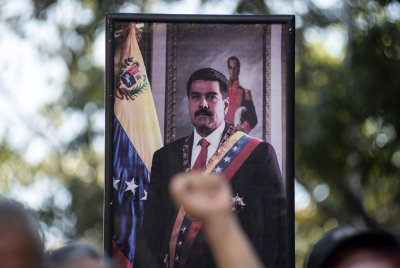
Supporters of ousted Venezuela’s President Nicolas Maduro carry his portrait during a rally outside the National Assembly in Caracas, Venezuela on Monday, January 5, 2026. Photo by Jonathan Lanza/UPI | License Photo
Jan. 6 (UPI) — Switzerland has frozen any assets in the country owned by U.S.-detained Venezuelan President Nicolas Maduro and others associated with him to ensure that if they were stolen from the Venezuelan people, they can be rightly returned.
The asset freeze went immediately into effect when it was announced on Monday, but does not impact members of the current Venezuelan government, Switzerland’s Federal Council said in a statement.
The freeze is to prevent funds from leaving the country. In the case that future legal proceedings show that the assets were illicitly acquired, Switzerland said it will “endeavor to ensure that they benefit the Venezuelan people.”
“The Federal Council wants to ensure that any illicitly acquired assets cannot be transferred out of Switzerland in the current situation,” it said. “It has therefore decided, as a precautionary measure, to freeze any assets held in Switzerland by Mr. Maduro and others associated with him.”
Maduro and his wife, Cilia Flores, were captured by the U.S. military in an early Saturday operation that involved air and ground assets in Caracas. Dozens of people were killed. There were no U.S. military casualties.
The authoritarian Venezuelan president has been indicted in the United States on narcotrafficking and other related drug charges. The operation has raised domestic and international legal questions over Maduro’s detention and has drawn condemnation, including from U.S. allies.
On Monday, Maduro and his wife pleaded not guilty to the charges, and Vice President Delcy Rodriguez was sworn in as the country’s new president.
Switzerland called for de-escalation, restraint and compliance with international law following the United States’ Saturday military operation and said it was “closely monitoring” the situation.
The new asset freeze is in addition to sanctions imposed against Venezuela under Switzerland’s Embargo Act in 2018. The new measure targets the assets of 37 individuals who were not previously blacklisted by sanctions, according to an ordinance on the action. Maduro’s wife and other relatives were named.
Switzerland said neither the reason for Maduro’s ousting nor whether it was legal plays a role in its decision to apply the asset freeze.
“The decisive factor is that a fall from power has occurred and that it is now possible that the country of origin will initiate legal proceedings in the future with regard to illicitly acquired assets,” the Federal Council said.
The benchmark Korea Composite Stock Price Index (KOSPI) is displayed on a screen in a dealing room of Hana Bank in Seoul on Tuesday after having surpassed the 4,500 mark for the first time. Photo by Yonhap
Seoul shares jumped more than 1.5 percent Tuesday to close at above the historic milestone of 4,500 on the back of a rise in semiconductors, brokerages and shipbuilders. The Korean won fell against the U.S. dollar.
The benchmark Korea Composite Stock Price Index (KOSPI) climbed 67.96 points, or 1.52 percent, to finish at a new record high of 4,525.48, breaking the 4,500-point mark for the first time.
The index broke through the 4,400-point threshold the previous session on continued gains in technology stocks.
Trading volume was heavy at 492.84 million shares worth 25.27 trillion won (US$17.4 billion), with losers outnumbering gainers 482 to 394.
The index opened lower, bucking overnight gains on Wall Street, but later turned higher as retail investors scooped up technology and other large-cap stocks.
Individuals bought a net 597.55 billion won worth of shares, offsetting net selling by foreigners and institutions totaling 618.83 billion won and 68.93 billion won, respectively.
Foreign investors turned net sellers Tuesday after purchasing more than 2.8 trillion won worth of shares over the past two sessions.
“Technology stocks remained weak on profit taking in the morning session, but turned higher on retail buying in the afternoon trading. Individual investors also purchased defense and shipbuilding stocks on expectations of strong earnings results in 2025,” said No Dong-kil, an analyst at Shinhan Securities Co.
Technology, defense, brokerage and shipbuilding stocks led the gains.
Market behemoth Samsung Electronics rose 0.58 percent to 138,900 won, while chip giant SK hynix jumped 4.31 percent to 726,000 won.
Leading shipbuilder HD Hyundai Heavy Industries soared 7.21 percent to 550,000 won, and Korea Aerospace Industries surged 9.41 percent to 136,100 won.
Defense giant Hanwha Aerospace gained 0.99 percent to 1,022,000 won, and Mirae Asset Securities jumped 12.55 percent to 28,700 won.
Among decliners, No. 2 carmaker Kia slipped 0.08 percent to 122,500 won, and national flag carrier Korean Air declined 0.44 percent to 22,500 won.
No. 2 steelmaker Hyundai Steel shed 1.33 percent to 29,650 won, and leading chemical firm LG Chem dropped 0.45 percent to 328,500 won.
The local currency was quoted at 1,445.50 won against the greenback at 3:30 p.m., down 1.7 won from the previous session.
Bond prices, which move inversely to yields, ended mixed. The yield on three-year Treasurys rose 1.5 basis points to 2.948 percent, while the return on the benchmark five-year government bonds fell 0.5 basis point to 3.244 percent.
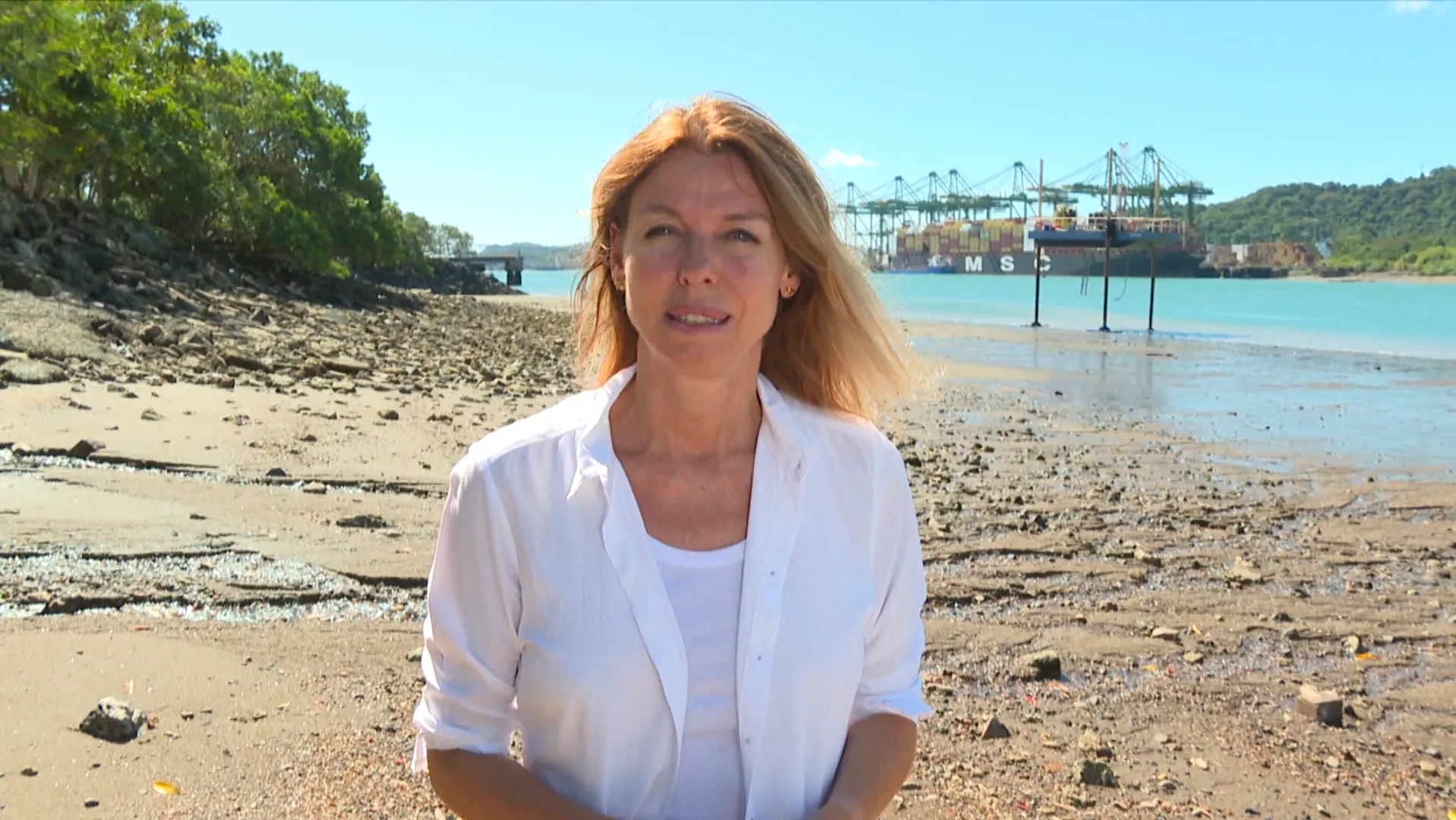
The Panama Canal has become the focus of increased US pressure as the Trump administration tries to curb Venezuelan oil shipments. Al Jazeera’s Teresa Bo breaks it down.
Aceh Tamiang, Indonesia – Rahmadani and her nine-year-old son Dimas lost their home when catastrophic flooding ravaged their rented residence in Aceh Tamiang, located in Indonesia’s eastern Aceh province.
Initially seeking refuge on a roadside immediately following the disaster, they relocated to a tent just metres from their ruined house three weeks later.
The devastating floods in December killed at least 1,170 people across North Sumatra, West Sumatra, and Aceh provinces. Weeks after the disaster, numerous displaced victims continue to shelter in temporary tents.
Aceh province suffered the most severe impact, with Aceh Tamiang among the regions hit hardest.
For Rahmadani, her son’s health remains her primary concern. Dimas, who sustained an injury as an infant, is unable to walk or speak.
“Before the floods, we always took him to the doctor, and he was well cared for, so he was healthy. After the floods, we could not go to see a doctor. Even if there is assistance, it is just food aid,” she said.
“His head is swollen, so he needs to take medication and vitamins. The medication isn’t expensive, but now we don’t have any money. My child is in pain, but I can only put him in a sling while I try to earn some money.”
In a small tent overshadowed by the sound of nearby gunfire, seven-year-old Tulin prepares for her first day of school in two years.
For most children, this would be a moment of excitement. For Tulin and her mother, it is a chapter of terror.
The relentless Israeli war has destroyed the vast majority of Gaza’s educational infrastructure, forcing families to create makeshift “tent schools” in dangerous proximity to Israeli forces — an area demarcated by Israel as the “yellow zone” west of the separation line, often just a few metres away from danger.
“Until my daughter gets to school, I honestly walk with my heart in my hand,” Tulin’s mother told Al Jazeera correspondent Shady Shamieh.
“Many times, I find myself involuntarily following her until she reaches the school. I feel there is something [dangerous], but I want her to learn,” she added. “If not for this situation, she would be in second grade now. But we are determined.”
‘Take the sleeping position’
The journey to the classroom is perilous. Walking through the rubble of Beit Lahiya, Tulin admits she is terrified of the open spaces.
“When I go to school, I am afraid of the shooting,” Tulin said. “I can’t find a wall to hide behind so the shelling or stray bullets don’t hit us.”
Inside the tents, protection is nonexistent. The canvas walls cannot stop bullets, yet the students sit on the ground, determined to learn.
Their teacher describes a harrowing daily routine where education is frequently interrupted by the crack of sniper fire.
“The location is difficult, close to the occupation [forces],” the teacher explained. “When the shooting starts, we tell the children: ‘Take the sleeping position.’ I get goosebumps, praying to God that no injuries occur. We make them lie on the ground until the shooting stops.”
“We have been exposed to gunfire more than once,” she added. “Despite this, we remain. The occupation’s policy is ignorance, and our policy is knowledge.”
Among the students is Ahmed, who lost his father in the war. “We come with difficulty and leave with difficulty because of the shooting,” he told Al Jazeera. “But I want to fulfil the dream of my martyred father, who wanted to see me become a doctor.”
‘One of the biggest catastrophes’
The desperate scenes in Beit Lahiya reflect a wider collapse of the education system in the enclave.
Speaking to Al Jazeera Arabic on Monday, Kazem Abu Khalaf, the spokesperson for UNICEF in Palestine, described the situation as “one of the biggest catastrophes”.
“Our figures indicate that 98 percent of all schools in the Gaza Strip have suffered varying degrees of damage, ranging up to total destruction,” Abu Khalaf said.
He noted that 88 percent of these schools require either comprehensive rehabilitation or complete reconstruction.
The human toll is staggering: approximately 638,000 school-aged children and 70,000 kindergarten-aged children have lost two full academic years and are entering a third year of deprivation.
Trauma and speech impediments
While UNICEF and its partners have established 109 temporary learning centres serving 135,000 students, the psychological scars of the war are surfacing in alarming ways.
Abu Khalaf revealed that field teams have observed severe developmental regression among students.
“In one area, [colleagues] monitored that approximately 25 percent of the children we are trying to target have developed speech difficulties,” Abu Khalaf said. “This requires redoubled efforts from educational specialists.”
The ban on books
Beyond the structural destruction and trauma, the education sector faces a logistical blockade. Abu Khalaf confirmed that since the war began in October 2023, virtually no educational materials have been allowed into the Strip.
“The biggest challenge, in truth, is that … almost no learning materials have entered Gaza at all,” he said.
UNICEF is currently preparing to launch a “Back to Learning” campaign targeting 200,000 children, focusing on Arabic, English, maths and science, alongside recreational activities to “repair the children’s psyche before anything else”.
However, Abu Khalaf emphasised that the success of any campaign depends on Israel lifting restrictions.
“We are communicating with all parties, including the Israeli side, to allow the entry of learning materials,” he said. “It is not in anyone’s interest for a child in Gaza not to go to school.”
Jan. 6 (UPI) — The Department of Energy has announced it would award $2.7 billion in funding to three companies to increase domestic uranium enrichment over the next decade.
The announcement by the Department of Energy comes as President Donald Trump has sought to reinvigorate the United States’ nuclear energy industry as it moves away from foreign sources of energy.
However, the funding authority for the awards originated under President Joe Biden‘s Investing in America agenda and related legislation that aimed to increase uranium enrichment capacity in the United States to bolster U.S. energy security and resilience, while reducing dependence on Russian energy.
With the announcement, American Centrifuge Operating, General Matter and Orano Federal Services will each receive an award of $900 million.
ACO and GM will be tasked with creating domestic high-assay, low-enriched uranium enrichment capacity, while OFS will expand U.S. domestic low-enriched uranium enrichment capacity.
The three companies were chosen from six that were permitted last year to bid on future work.
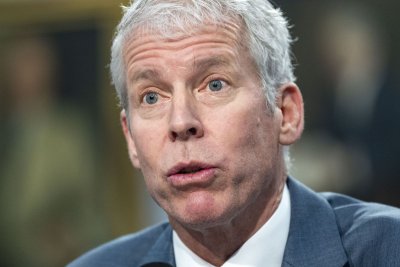
“President Trump is catalyzing a resurgence in the nation’s nuclear energy sector to strengthen American security and prosperity,” Energy Secretary Chris Wright said in a statement.
“Today’s awards show that this administration is committed to restoring a secure domestic nuclear fuel supply chain capable of producing nuclear fuels needed to power the reactors of today and the advanced reactors of tomorrow.”
Orano said the funding marks a “key milestone” in accelerating the development of its $5 billion facility in Oak Ridge, Tenn.
According to the company, the United States imports two-thirds of the LEU needed to power the U.S. nuclear fleet from foreign sources, including Russia, and its new IKE facility will help reduce the United States’ dependence on Moscow, especially after the ban on Russian imports begins in 2028.
“The decision by the U.S. Department of Energy is a great source of pride as it identifies Orano as a proven nuclear fuel supplier,” Orano CEO Nicolas Maes said in a statement.
General Matter said under its contract with the Department of Energy, it will build domestic enrichment capacity that will help fuel “the next generation of American nuclear power” and enable “American leadership in AI, manufacturing and other critical industries.”
“Rebuilding U.S. domestic enrichment capacity will reduce our reliance on foreign providers, strengthen our nuclear industrial base and lower energy costs for utilities and consumers,” it said in a social media post.
“American reactors need American uranium. In partnership with the Department of Energy, we will deliver it.”
Kim Myung-ho, visiting professor at Konkuk University’s Graduate School of Journalism and Public Relations. Photo by Asia Today
Jan. 5 (Asia Today) — By 2026, understanding international relations and shaping national core-interest strategies should start from a geoeconomic perspective. Geoeconomics links geopolitics and economics. It describes the use of economic tools as weapons to achieve political and security goals and the study of how those tools work.
The term is not widely used, but the idea has been around for decades. In 1990, strategist Edward Luttwak argued in an essay, “From Geopolitics to Geoeconomics: The Logic of Conflict, the Grammar of Commerce,” that competition among nations was shifting from geopolitical rivalry to geoeconomic rivalry. In other words, economic instruments were becoming as consequential as military ones.
Traditional geopolitics explains international relations mainly through territory and military power. The reality today looks different. Tariffs, supply chains, exchange rates, finance and standards have become powerful tools aimed at rivals.
The start of President Donald Trump’s second term and the intensifying U.S.-China confrontation highlight what the author calls the arrival of the geoeconomic era. The erosion of free trade and de facto globalization, the “America First” approach and broad tariffs, and the cycle of retaliation and sanctions between Washington and Beijing are presented as signals of that shift.
In the past, globalization prioritized efficiency. That made strategies such as “security with America, economy with China” workable for South Korea. The author argues that economic interdependence itself is now a weapon. Globalization is no longer a stable order. Trump’s tariff policy, the author writes, should be understood not only as an economic move to improve the trade balance but as part of a broader security strategy intended to shrink rival industries, rebuild supply chains inside the United States and push China out of key nodes of the global supply chain.
China’s countermeasures, the author adds, reflect similar logic. The U.S.-China confrontation has expanded beyond military tensions into economic conflict. The author says the superpower rivalry will place increasing pressure on allies and neighboring states to choose sides, as each power blends hard and soft approaches. The author describes an emerging world of overlapping sanctions that could reshape international order.
The author argues such pressure is already visible in currency and tariff measures and in battles over standards tied to technological leadership in telecommunications, semiconductors and artificial intelligence. The author also cites energy security, the restructuring of battery and electric-vehicle supply chains and debates over the burden of security costs. Without a geostrategic plan, the author warns, South Korea could face a compound crisis spanning industrial diplomacy and security.
The column cites U.S. State Department criticism of South Korea’s proposed revision of the Information and Communications Network Act, a measure described as aimed at rooting out false and manipulated information. The author says the U.S. raised “serious concerns,” arguing it could harm the business of U.S.-based online platforms and impede freedom of expression. The author writes that the episode shows how Washington may intervene in other countries’ domestic law when it sees national interests at stake, including through potential trade disputes.
The author links that criticism to what is described as controversy involving Coupang, which is listed in the United States. While the author says Coupang deserves criticism over a personal data leak, the column argues that influential politicians in Washington have spoken up on the company’s behalf, while responses in South Korea have largely focused on calls for hearings and political pressure.
The author also points to a U.S. airstrike on Venezuela and the operation to arrest President Nicolás Maduro as an illustration of how economic interests and security strategy can converge. The author argues that while the stated rationale included counternarcotics, remarks cited in the column about “taking back the oil” reveal a geopolitical calculation tied to energy and supply chains.
The column concludes that no national interest can be protected without a tough geoeconomic strategy and that patriotism rooted in anger or emotion cannot substitute for strategy. The author argues that domestic-focused politics risks being pushed aside in a geoeconomic order and urges South Korea to rethink its national survival strategy rather than remain a passive object of great-power competition.
Editor’s note: The views expressed in this column are those of the author and do not necessarily reflect the views of this publication.
Kim Myung-ho is a visiting professor at Konkuk University’s Graduate School of Journalism and Public Relations.
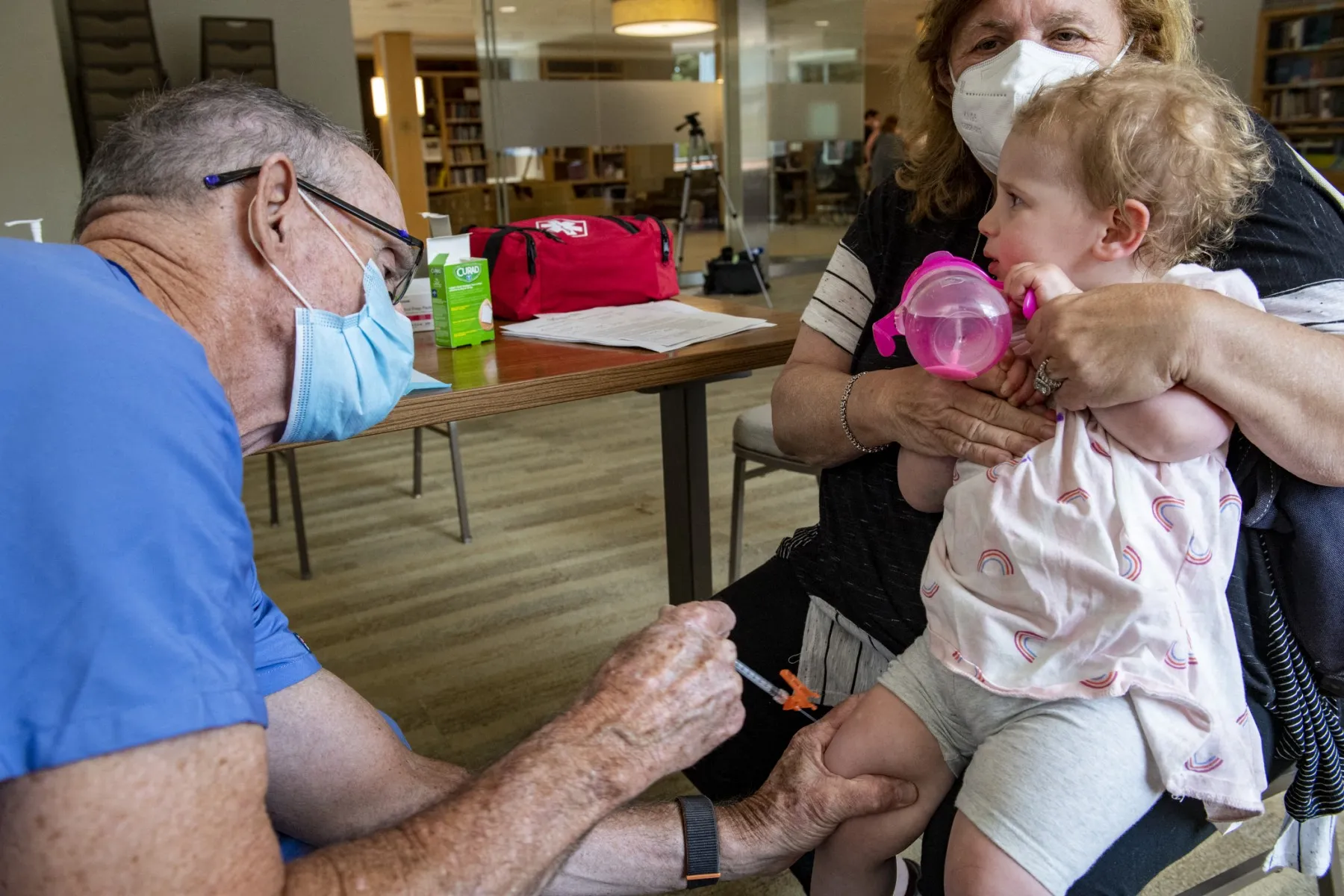
Leading medical groups in the United States have raised alarm after the Centers for Disease Control and Prevention (CDC) under President Donald Trump took the unprecedented step of cutting the number of vaccines it recommends for children.
Monday’s sweeping decision, which advances the agenda of Trump-appointed Secretary of Health Robert F Kennedy Jr, removes the recommendation for rotavirus, influenza, meningococcal disease and hepatitis A vaccines for children.
Recommended Stories
list of 3 itemsend of list
It comes as US vaccination rates have been slipping, and the rates of diseases that can be protected against with vaccines, such as measles and whooping cough, are rising across the country, according to government data.
“This decision protects children, respects families, and rebuilds trust in public health,” Kennedy said in a statement on Monday.
In response, the American Medical Association (AMA) said it was “deeply concerned by recent changes to the childhood immunisation schedule that affects the health and safety of millions of children”.
“Vaccination policy has long been guided by a rigorous, transparent scientific process grounded in decades of evidence showing that vaccines are safe, effective, and lifesaving,” Sandra Adamson Fryhofer, a doctor and AMA trustee, said in a statement posted on the group’s website.
She pointed out that major policy changes needed “careful review” and transparency, which are lacking in the CDD’s decision.
“When longstanding recommendations are altered without a robust, evidence-based process, it undermines public trust and puts children at unnecessary risk of preventable disease,” she said.
The change was effective immediately and carried out following the approval by another Trump appointee, CDC acting director Jim O’Neill, without the agency’s usual outside expert review.
The changes were made by political appointees, without any evidence that the current recommendations were harming children, Sean O’Leary, chair of the American Academy of Pediatrics, said.
“It’s so important that any decision about the US childhood vaccination schedule should be grounded in evidence, transparency and established scientific processes, not comparisons that overlook critical differences between countries or health systems,” he told journalists.
Protections against those diseases are only recommended for certain groups deemed high risk, or when doctors recommend them in what’s called “shared decision-making”, the new CDC guidance stated.
States, not the federal government, have the authority to require vaccinations for schoolchildren.
But CDC requirements often influence the state regulations, even as some states have begun creating their own alliances to counter the Trump administration’s guidance on vaccines.
Kennedy, the US health secretary, is a longtime vaccine sceptic.
In May, Kennedy announced that the CDC would no longer recommend COVID-19 vaccines for healthy children and pregnant women, a move immediately questioned by public health experts who saw no new data to justify the change.
In June, Kennedy fired an entire 17-member CDC vaccine advisory committee, later installing several of his own replacements, including multiple vaccine sceptics.
In August, he announced that the US is to cut funding for mRNA vaccine development, a move health experts say is “dangerous” and could make the US much more vulnerable to future outbreaks of respiratory viruses like COVID-19.
Kennedy in November also personally directed the CDC to abandon its position that vaccines do not cause autism, without supplying any new evidence to support the change.
Trump, reacting to the latest CDC decision on his Truth Social platform, said the new schedule is “far more reasonable” and “finally aligns the United States with other Developed Nations around the World”.
One in three Americans opposes the Venezuelan leader’s abduction by US forces, a poll shows, while others are unsure.
Published On 6 Jan 20266 Jan 2026
Share
Americans are evenly split in their support for the US military operation to abduct Venezuelan President Nicolas Maduro, an opinion poll has found.
Thirty-three percent of Americans support Maduro’s abduction, compared with 34 percent who are against it and 32 percent who are not sure, the Reuters/Ipsos poll showed on Monday.
Recommended Stories
list of 4 itemsend of list
Supporters of President Donald Trump’s Republican Party are much more likely to support the military operation, with 65 percent in favour, compared with 11 percent of Democrats and 23 percent of independents.
On the question of who should govern Venezuela, Americans lean against Washington taking control of the country, according to the poll.
Forty-three percent oppose Washington governing Venezuela until a new government is established in Caracas, compared with 34 percent in favour and 20 percent who are unsure.
Americans lean against the US stationing troops in Venezuela – 47 percent to 30 percent – according to the poll.
More Americans than not also oppose the Trump administration taking control of Venezuela’s oil fields, with 46 percent against the idea and 30 percent in favour.
On the question of whether the US could become “too involved” in the Latin American country, 72 percent are very or somewhat concerned.
Trump said on Saturday that the US would “run” Venezuela, though officials in his administration have sought to downplay the prospect of Washington occupying the country.
On Sunday, Trump threatened further military action against Venezuela if it “doesn’t behave”.
Maduro, who was abducted in a raid by US special forces over the weekend, on Monday made his first court appearance to face charges related to “narcoterrorism”, drug trafficking and weapons possession.
Maduro pleaded not guilty to all charges, declaring himself the victim of a kidnapping and a “decent man”.
“I am still president of my country,” Maduro told a US federal court in New York through an interpreter.
Maduro, his wife, Cilia Flores, son Nicolás Ernesto Maduro Guerra, and three others face the possibility of life in prison if convicted.
On Monday, Maduro’s deputy, Vice President Delcy Rodríguez, was sworn in as Venezuela’s interim president.
“I come with pain over the kidnapping of two heroes who are being held hostage: President Nicolás Maduro and First Lady Cilia Flores,” Rodriguez said during a swearing-in ceremony at Venezuela’s National Assembly.
Delcy Rodriguez, formerly Venezuela’s vice president, has been formally sworn in to lead the South American country following the abduction of Nicolas Maduro in a United States military operation.
On Monday, Rodriguez appeared before Venezuela’s National Assembly to take her oath of office.
Recommended Stories
list of 3 itemsend of list
Speaking before the legislative body, composed largely of government loyalists, Rodriguez reaffirmed her opposition to the military attack that led to the capture and removal of Maduro and his wife, Cilia Flores.
“I come with pain over the kidnapping of two heroes who are being held hostage: President Nicolás Maduro and First Lady Cilia Flores,” Rodriguez, 56, told the assembly.
“I swear to work tirelessly to guarantee the peace, spiritual, economic and social tranquillity of our people.”
A former labour lawyer, Rodriguez has been serving as acting president since the early-morning attack that resulted in the abduction. Explosions were reported before dawn on Saturday in the capital, Caracas, as well as at nearby Venezuelan military bases and some civilian areas.
Monday’s swearing-in ceremony was overseen by Rodriguez’s brother – the president of the National Assembly, Jorge Rodriguez – and Maduro’s son, Nicolás Maduro Guerra, who held a copy of the Venezuelan Constitution.
Other members of Maduro’s inner circle, including Interior Minister Diosdado Cabello and Defence Minister Vladimir Padrino, were also in attendance.
The ceremony took place as Maduro, her predecessor and former boss, faced an arraignment proceeding in a New York City courthouse.
Federal prosecutors in the US have charged Maduro with four counts related to allegations he leveraged government powers to export thousands of tonnes of cocaine to North America.
The charges include narco-terrorism conspiracy, cocaine importation conspiracy, the illegal possession of machine guns and other destructive devices, and conspiracy to possess such guns and devices.
Maduro and his wife have pleaded not guilty to the charges, and their allies, including Rodriguez, have denounced the pair’s abduction as a violation of international law, as well as Venezuelan sovereignty.
In court on Monday, Maduro maintained he remained the rightful leader of Venezuela, saying, “I am still president.”
The administration of US President Donald Trump, however, has signalled that it plans to work with Rodriguez for the time being, though Trump himself warned that her tenure as president could be cut short, should she fail to abide by US demands.
“If she doesn’t do what’s right, she is going to pay a very big price, probably bigger than Maduro,” Trump told The Atlantic magazine in a Sunday morning interview.
A day earlier, in a televised address announcing the attack, Trump had said his administration plans “to run the country until such time as we can do a safe, proper, and judicious transition”.
On Air Force One on Sunday, as he flew back to Washington, DC, Trump doubled down on that statement.
“Don’t ask me who’s in charge, because I’ll give you an answer that will be very controversial. We’re in charge,” he told reporters.
He added that Rodriguez is “cooperating” and that, while he personally has not spoken to her, “we’re dealing with the people who just got sworn in”.
The Trump administration’s seeming willingness to allow Rodriguez, a former labour lawyer, to remain in charge has raised eyebrows.
Rodriguez, who served as vice president since 2018, is known to be a stalwart “chavista”: an adherent of the left-wing political movement founded by Maduro’s mentor, the late Hugo Chavez. She has held various ministerial roles under Maduro, including leading the Ministry of Foreign Affairs.
But Trump’s allies in the Republican Party have argued that keeping Rodriguez in place is simply a practical reality.
“We don’t recognise Delcy Rodriguez as the legitimate ruler of Venezuela. We didn’t recognise Nicolas Maduro as a legitimate ruler,” Republican Senator Tom Cotton told CNN on Sunday.
“It is a fact that she and other indicted and sanctioned officials are in Venezuela. They have control over the military and security services. We have to deal with that fact. That does not make them a legitimate leader.”
While on Air Force One, Trump largely avoided committing to new elections in Venezuela, indicating he would instead focus on “fixing” the country and allowing US oil companies access to its vast petroleum reserves.
One reporter on the aeroplane asked, “How soon can an election take place?”
“Well, I think we’re looking more at getting it fixed, getting it ready first, because it’s a mess. The country is a mess,” Trump replied. “It’s been horribly run. The oil is just flowing at a very low level.”
He later added, “We’re going to run everything. We’re going to run it, fix it. We’ll have elections at the right time. But the main thing you have to fix: It’s a broken country. There’s no money.”
Recent presidential elections in Venezuela have been widely denounced as fraudulent, with Maduro claiming victory in each one.
The contested 2018 election, for example, led to the US briefly recognising opposition leader Juan Guaido as president, instead of Maduro.
Later, Maduro also claimed victory for a third term in office during the 2024 presidential race, despite election regularities.
The official vote tally was not released, and the opposition published documents that appeared to show that Maduro’s rival, Edmundo Gonzalez, had won. Protests erupted on Venezuela’s streets, and the nonprofit Human Rights Watch reported that more than 2,000 protesters were unlawfully detained, with at least 25 dead in apparent extrajudicial killings.
The opposition has largely boycotted legislative elections in Venezuela, denouncing them as rigged in favour of “chavistas”.
Monday’s swearing-in ceremony included the 283 members of the National Assembly elected last May. Few opposition candidates were among them.